
Introduction: The Girl Who Fell Into the Tree
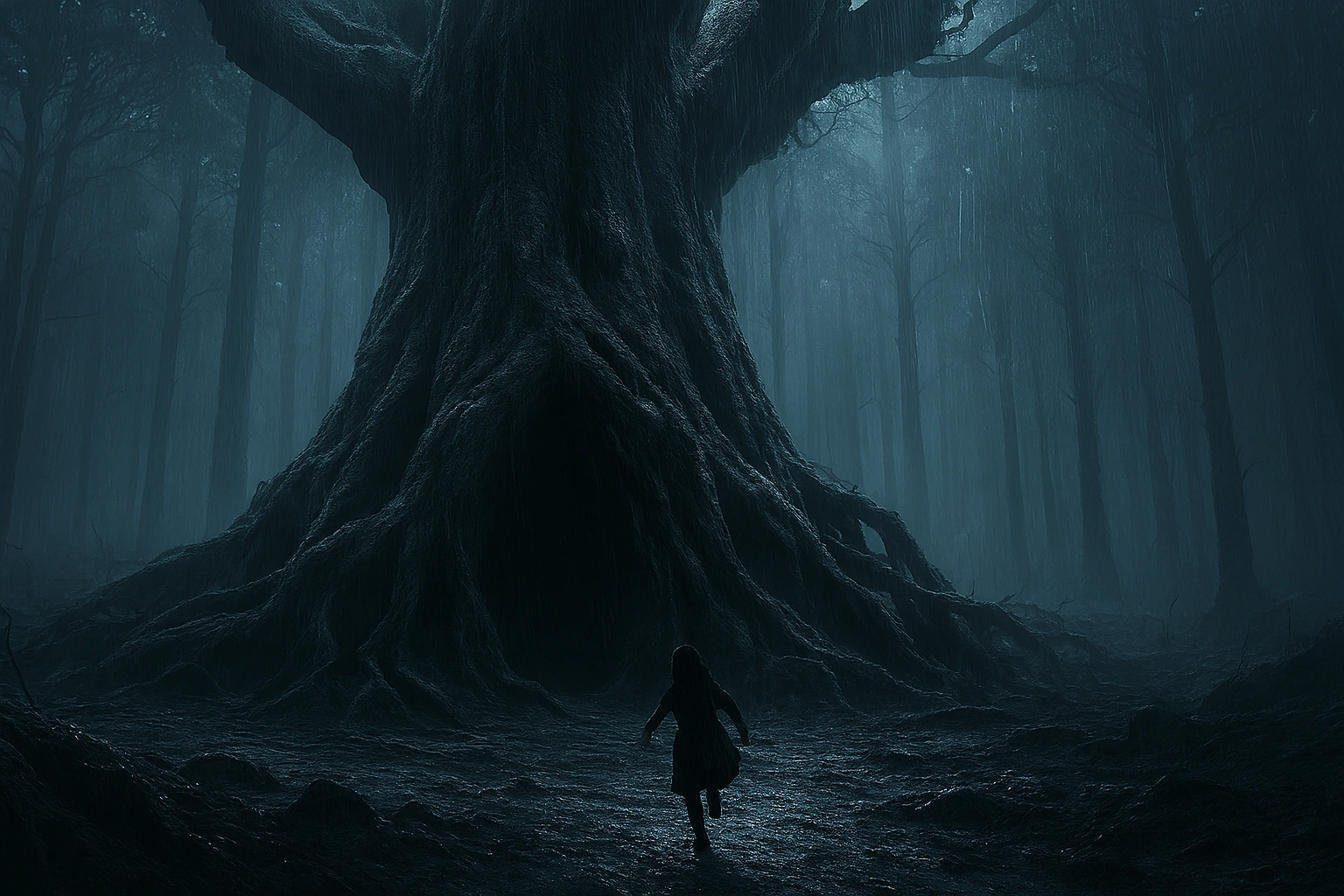
Every system has an origin, and every contract has a signatory. For 2,000 years, the world trembled at the mention of the “Power of the Titans.” Nations rose and fell on the back of this absolute might.
We have spent the last nineteen articles dissecting the biology of regeneration, the physics of the maneuvering gear, the politics of Marley, and the tactical brilliance of the Scouts.
We have looked at the “how” and the “what” of this world. But we have yet to truly confront the “who.”
The world forgot the “person behind the Titan.” The history books, written by the victors and the fearful, spoke of a deal with the Devil or a gift from God.
They spoke of Ymir Fritz as a deity, an origin point of supreme power. But the truth of the Meso-System is far darker and far more human. It began not with a god descending from the heavens, but with a slave girl running for her life.
This article serves as the conclusion to our Meso-System analysis. Here, we strip away the layers of political propaganda and biological marvels to deconstruct the life and legacy of Ymir Fritz.
We will reveal the ultimate Price of Power. We argue that the true cost of the Titan power was never just the curse of Ymir—the shortened 13-year lifespan—or the political isolation of Eldia.
Those were merely symptoms. The true cost, the unseen debt paid across two millennia of bloodshed, was the total annihilation of Free Will.
The Analytical Bridge
In the world of Attack on Titan, Hope is often a mask worn to hide a grotesque Reality. The “Hope” perpetuated by the Eldian Restorationists was that Ymir was a benevolent goddess who brought cultivation, bridges, and roads to the world—a maternal figure of abundance.
The “Hope” of Marley was that she was a witch who made a pact with the Devil of All Earth, justifying their current cruelty as penance for ancient sins.
The “Dark Reality,” however, crushes both narratives with equal indifference. The power did not make Ymir a goddess, nor a devil. It made her an eternal slave. It trapped her in a timeless purgatory—The Paths—where time stretches into infinity.
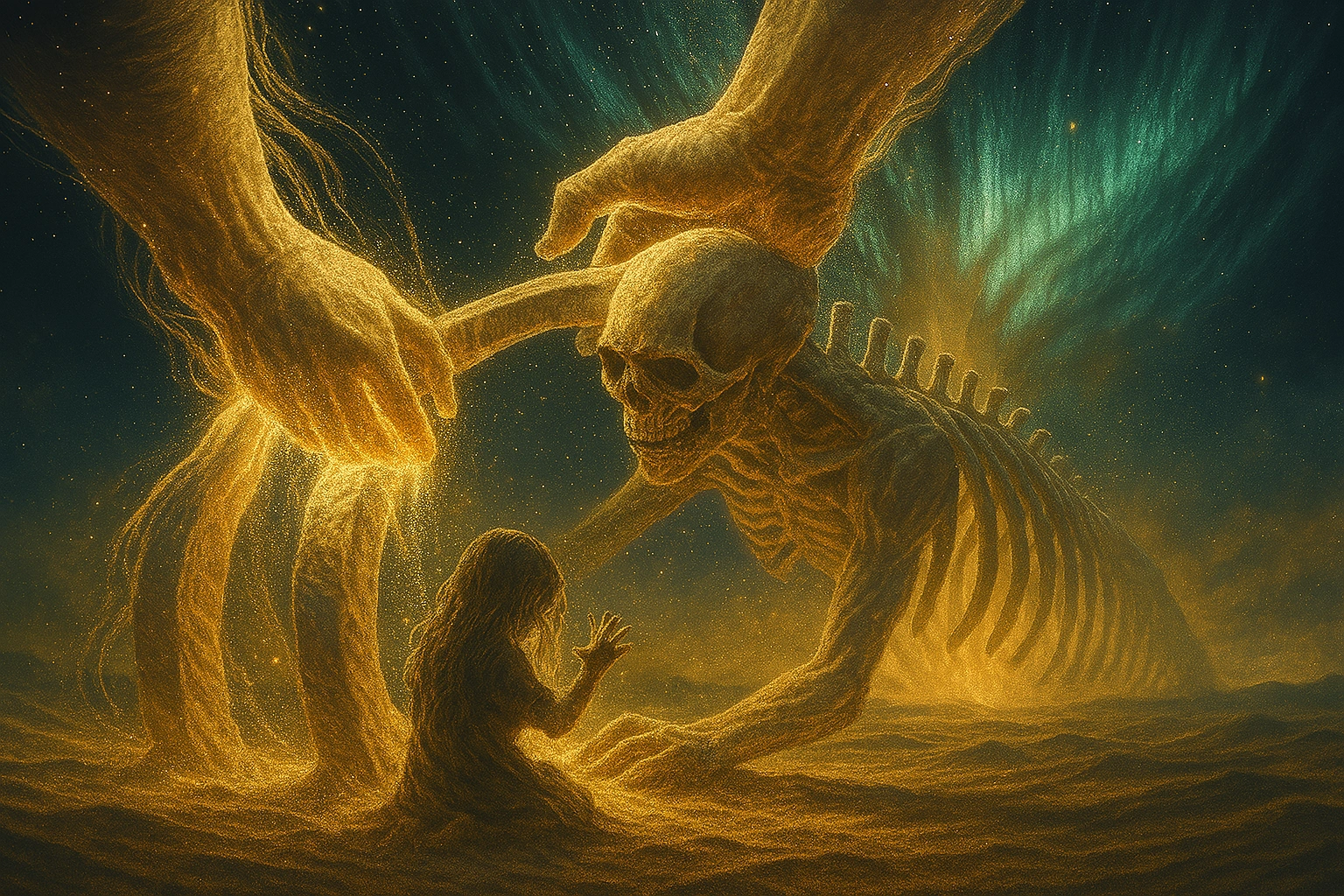
For eons, while humanity fought wars using “Titan Power,” it was Ymir, alone in the dark, building every single Titan body by hand out of sand. When we saw the Colossal Titan kick the wall, we saw a weapon; we didn’t see the eternity of subjective time a child spent sculpting that muscle in a dimension without sleep.
The reality of power in this world is that it is built on the broken back of a child who never learned to say “no.”
Roadmap to the Finale
In this final analysis of the Meso-Phase, we will dissect the machinery of this tragedy:
- The Zero Point: We analyze the source of the power itself—not as magic, but as a biological survival response to a desperate need.
- The Infrastructure of the Cost: We enter the Paths to understand the mechanics of Ymir’s slavery and how every ability (Hardening, Regeneration) is a product of her labor.
- The Ledger of History: We tally the final bill, analyzing who paid the highest price for this power—from the Fritz Kings to the Scouts—and how Eren Yeager became the only one willing to burn the ledger.
Section 1: The Zero Point: Deconstructing the “Deal with the Devil”
To understand the price, we must understand the purchase. The moment Ymir Fritz fell into the subterranean water beneath the great tree is the “Zero Point” of this universe.
It is the moment the laws of physics were rewritten. But contrary to the legends, there was no devil waiting with a contract. There was only biology.

A. The Source of All Living Matter
The entity that fused with Ymir—often referred to as the “Source of All Living Matter” (or the Hallucigenia by fans)—is the key to de-mystifying the Titan power.
Through our lens of Magic/Power Systems, we must view this not as a rigid magical event, but as a flexible interaction between a biological organism and a host’s will.
The creature acts as a supreme survival mechanism, a remnant of the Cambrian explosion that sought solely to propagate life. When it encountered Ymir, it didn’t judge her morality or check her royal lineage;
it responded to her current state. She was hunted, wounded, terrified, and desperate. She was a girl with arrows in her back, wishing for a body that could not die, a body that was larger and stronger than the men hunting her.
The “Magic” here followed the First Rule of Titan Biology: Power responds to Need. Ymir did not “ask” to be a god. She “needed” to survive. The Source provided a biological solution to that need: a massive, regenerative, immortal body.
This distinction is crucial. The power was never designed to rule the world; it was designed to prevent a little girl from dying. The tragedy is that the tool for survival became the weapon of oppression. The creature magnified her desire to live, but because her will was subservient, it also magnified her desire to serve.
B. The Price of Servitude
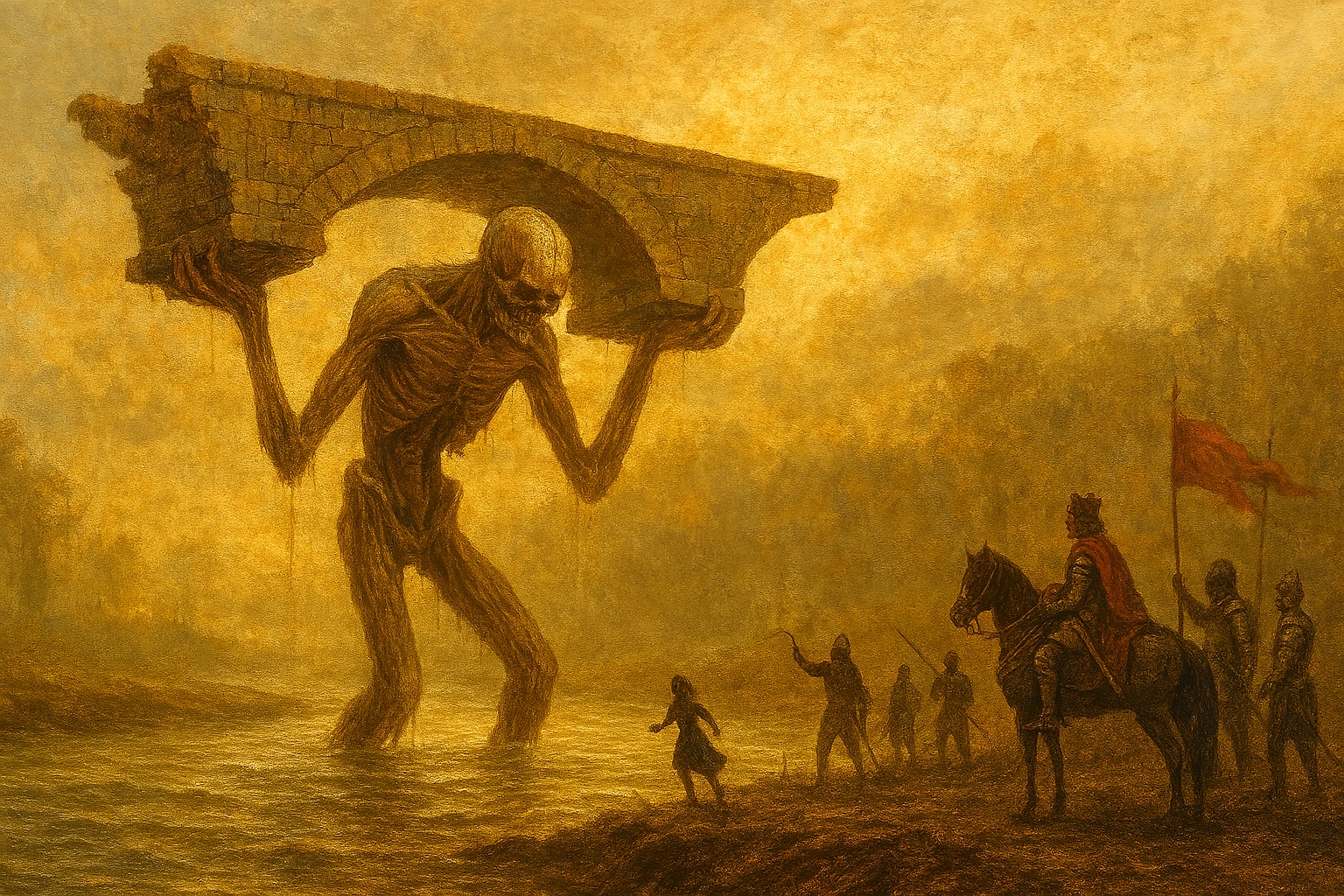
Here lies the most critical psychological analysis of the series. Why did Ymir, suddenly possessed of the power to crush armies and level mountains, return to King Fritz?
Why did she bow her head to the man who ordered her hunted? Why did she use her Titan form to cultivate his lands and crush his enemies rather than crush him?
This is where the Price of Power becomes clear. The Source gave her physical omnipotence, but it could not heal her mind. Ymir was a slave before she was a Titan.
Her identity was so thoroughly dismantled by the brutality of her life—tongue cut out, village burned, scapegoated by her peers—that she possessed no concept of “Self” outside of servitude. She suffered from a kind of metaphysical Stockholm syndrome.
In many Shonen stories, obtaining power liberates the hero . Power is usually the reward for effort that grants freedom.
In Attack on Titan, the dynamic is inverted. Ymir’s acquisition of power cemented her slavery. She didn’t kill the King because she was psychologically incapable of imagining a world where she wasn’t serving him.
She confused her enslavement with “love” or “purpose” because she had never known anything else.
The very structure of the Titan power—where the Founding Titan commands and the subjects obey—is a reflection of Ymir’s broken psyche.
The power was absolute, but the will was bound. This establishes the core thesis of the Meso-System: Power is useless without the Free Will to direct it. In the hands of a slave, the power of a god is merely a more efficient shovel for the master.
C. The Creation of the Vow
The ultimate tragedy occurred at her death. Ymir threw herself in front of a spear to save King Fritz—a final act of a slave protecting her master. But Fritz’s reaction was cold indifference: “Get up. You are my slave. You know slaves don’t die.”
Her physical death was not an escape; it was the locking of the cage. Because her will was still bound to the King’s command to “serve forever,” her consciousness did not dissipate.
Instead, it retreated into a dimension where time does not exist—the Paths. By dying with the mindset of a slave, she “hardened” her servitude into a metaphysical law.
This became the foundation of the Vow Renouncing War and the mechanics of the Founding Titan. She created a realm where death was impossible so she could continue to obey the King’s order: “Serve me, Ymir.”
Even more horrific was the aftermath in the physical world. King Fritz forced their daughters—Maria, Rose, and Sina—to consume Ymir’s corpse raw.
This cannibalistic act ensured the power would not be lost, turning Ymir’s descendants into a biological dynasty of eaters and eaten.
This moment symbolically “births” the tree we later see in the Paths—three branches from the trunk, eventually splitting into nine, and then into millions, all fed by the suffering of the root.
Section 2: The Paths: The Infrastructure of the Cost
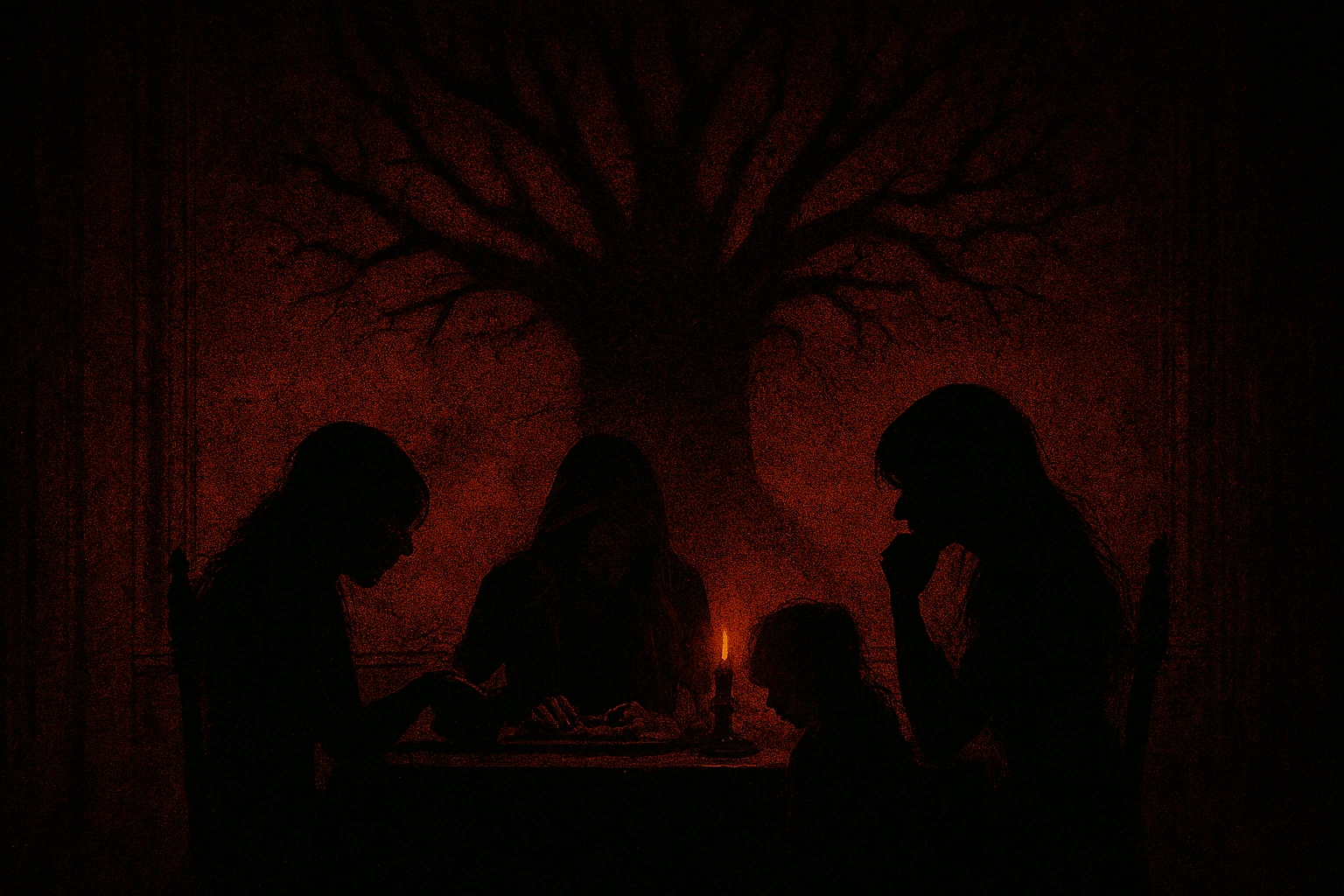
If the physical world is where the Titans walk, the Paths are the factory floor where they are built. This is the infrastructure of the Price.
It is here that we realize the “coolness” of the Titan abilities we analyzed in Articles #1-19 is paid for by the horrific labor of a child.
A. The Architecture of Eternity
The Paths are not an afterlife. They are a workstation. A sweatshop that exists outside of linear time. When we analyzed the Warhammer Titan’s creation (Article #16), we marveled at the structural integrity of the hardened crystal.
When we studied the Colossal Titan’s steam (Article #14), we looked at the thermodynamics. But the metaphysical explanation is far more disturbing.
Every time a Shifter transforms, lightning strikes. That lightning is the transfer of matter from the Paths to the real world.
But where does that matter come from? It comes from Ymir. In the split second it takes for Eren to transform in the real world, Ymir spends an eternity of subjective time in the Paths, slowly sculpting the muscle, the bone, and the skin out of the sand.
She builds the eyes. She builds the heart. She builds the weapons. She is the architect of every nightmare.
The sand is infinite, and so is the time. The Price of Power is her eternal labor. Every time Reiner creates armor plates to protect himself, Ymir is there, molding the hardening.
Every time a Scout slices a Titan’s nape and it regenerates, Ymir is forced to rebuild the neck, stitch by stitch, cell by cell. The system of Titan warfare is a parasitic engine running on the stolen time of a single girl.
When a Pure Titan roams for 60 years outside the walls, Ymir has maintained its form for an eternity in the Paths.
B. The Memory Trap
The Paths connect all Subjects of Ymir. This connection acts as a neural network, transcending space and time. But this connectivity comes with a terrifying price: the dissolution of privacy and identity.
We analyzed the Attack Titan in Article #17, noting its unique ability to see future memories. However, the loss of self applies to all Shifters to a degree. The “Path” is a two-way street of memory.
- The Attack Titan Exception: Only the Attack Titan possesses the unique ability to peer into the memories of future inheritors (as Eren did with Grisha and Kruger).
- The Inheritance of the Past: For all other Shifters, they inherit the memories and emotional residue of their predecessors. Armin Arlert, after eating Bertolt, began to feel strange detachments and affections that were not his own, visiting Annie in her crystal not purely out of his own volition, but perhaps influenced by Bertolt’s lingering longing. Porco Galliard eventually saw his brother’s death through the eyes of Ymir (the Scout), realizing the sacrifice made for him.
The Price of holding a Titan power is the Loss of Self. You are no longer an individual; you are a vessel for history. Your thoughts are contaminated by the ghosts of the past. In this system, true individuality is impossible because everyone is plugged into the same central mainframe—Ymir.
C. The Coordinate
The Coordinate (the Founding Titan) is the point where all Paths meet. It is the visual representation of the hierarchy. Ymir stands at the base, and the branches extend to every living Eldian.
This structure proves that the “Common Man” (Subject of Ymir) has almost no agency. Structurally, their agency is always at risk; it exists only until the Founder chooses to override it.
- Genetic Manipulation: They can be made immune to diseases (as mentioned in the history of the Eldian Empire regarding a great plague).
- Sterilization: Zeke Yeager’s Euthanasia Plan relied on this absolute biological authority—to simply command the bodies of millions to stop reproducing.
- Weaponization: They can be turned into Colossal Titans (The Rumbling). The millions of Wall Titans were once people, now suspended in an eternal nightmare of heat and size, waiting for a command.
The Common Man in the Meso-System is not a citizen; they are a component. They are biological clay that can be reshaped at the whim of the master. The price of being a “Subject of Ymir” is the surrender of biological autonomy. You do not own your body; the Founder does.
Section 3: The Ledger of History: Who Paid the Most?
Image Prompt: A triptych (three-panel image) showing the cost of power. Left Panel: King Fritz sitting on a throne of skulls, looking bored and hollow.
Center Panel: Erwin Smith standing atop a mountain of corpses (his soldiers), reaching for a truth he can’t touch. Right Panel: Eren Yeager, with glowing green eyes, standing alone in the fire of the Rumbling, weeping blood.
The style is gritty, charcoal-heavy, emphasizing the darkness and the weight of their choices.
Every transaction has a cost. Over 2,000 years, the bill for the Titan Power grew astronomically high. Let us audit the ledger to see who paid what.
A. The Price Paid by the “Winners” (Marley & Fritz)
- Marley: They sought the power for imperialism. They “won” the Great Titan War and gained control of seven Titans. Their price? As analyzed in Article #19, Marley became so reliant on Titan dominance that they neglected conventional military technology. They became a hollow superpower, rotting from the inside, drunk on borrowed power. Their reliance on the “Devil” made them weak, leading to their eventual devastation when technology finally caught up.
- The Fritz Kings: They sought peace through the Vow. Their price? A cage of lies. By erasing the memories of the Paradisians (Article #15), they created a false paradise. They bought peace by selling their people’s freedom and future. The Reiss family, inheritors of the Founder, paid with their sanity—Uri, Frieda, and Rod were all slaves to the ghost of the First King, possessing the power to save their people but forbidden by their own blood from using it. They lived in constant fear of the day the walls would fall, never truly living, just waiting to die.
B. The Price Paid by the “Heroes” (The Scouts)
The Scouts paid the most visceral price. They paid in blood.
- Erwin Smith: He paid with his Dream. He had to die right before the basement to give humanity a chance. His “effort” was monumental, but the system demanded his life as a down payment for the truth. He had to become a devil to lead others to hell, only to stop at the gates himself.
- Hange Zoë: She paid with her Morality and Curiosity. A scientist who loved discovery was forced to become a commander of war, torturing prisoners and sending children to die. The wonder of the world was stripped from her (Article #18), replaced by the grim calculus of survival.
- Levi Ackerman: He paid with his Heart. He watched everyone he ever loved die, one by one—Furlan, Isabel, his squad, Erwin, Hange. He became the strongest soldier, but the loneliest man. His power saved humanity, but it couldn’t save his friends.
C. The Final Calculation: Eren Yeager
And then, there is Eren. Eren Yeager is the singularity. He is the only character who looked at the “Price of Power”—Slavery—and refused to pay it. But the universe demands balance. If he would not pay with his freedom, he had to pay with his humanity.
Eren chose the path of the Villain to achieve the goal of the Hero. He saw that the only way to end the cycle, to free Ymir from the Paths, and to destroy the Titan power forever, was to push the system to its absolute breaking point. He became the monster to kill the monsters.
He paid the Great Price: He sacrificed his own innocence, his friends’ trust, and the lives of millions outside the walls. He destroyed the world to save the concept of Freedom. His “Unwavering Effort” was not to build a better cage, but to burn the cage down, even if he burned with it. He accepted the role of the devil so that his friends could be the heroes who slew him.
V. Conclusion: The End of the Contract
This concludes the Meso-System phase of our Attack on Titan analysis. We have traveled from the chemistry of gas canisters to the metaphysical deserts of the Paths.
What have we learned? We have learned that the “Power of the Titans” was never a gift. It was a curse born of suffering.
The entire biological and magical framework of this world—the regeneration, the lightning, the hardening—was sustained by the agony of a trapped soul.
The Hope was that Titans were tools for human advancement. The Reality was that Titans were the shackles of human history.
For 2,000 years, humanity stopped moving forward because they were trapped in Ymir’s nightmare. The world relied on a power they didn’t understand, bought with currency they didn’t own.
The ultimate lesson of the Meso-System is this: There is no such thing as free power. If you do not provide the will, the power will enslave you.
True victory, as we transition into our final phase—The Macro-System (The Philosophy of Freedom)—did not come from mastering the Titans. It came from rejecting them.
It came when a boy walked into the infinite desert, wrapped his arms around the slave girl, and said the words she had waited 2,000 years to hear: “You are not a slave. You are not a god. You are just a human being.”
The contract is void. The Meso-System is closed. Now, in the Macro-System, we will finally ask what “Freedom” means in a world that tried to mechanize human will.