
1. Introduction: The “Can He Beat Goku?” Question
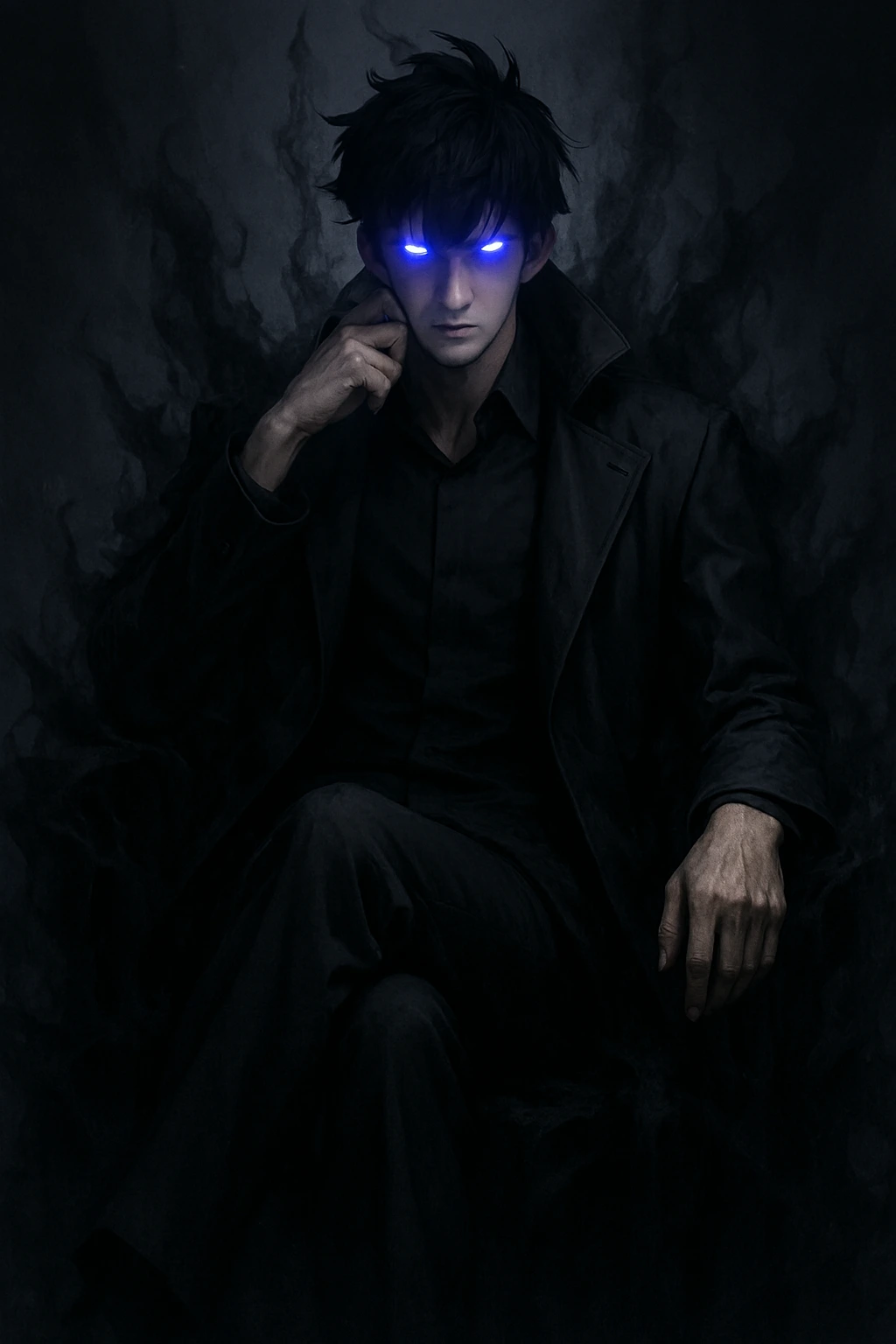
It is the internet’s favorite pastime. The moment a new anime character demonstrates a feat slightly above blowing up a mountain, the question floods forums, Twitter threads, and YouTube comment sections: “Okay, but can he beat Goku?”
For decades, Son Goku from Dragon Ball has been the gold standard of power scaling. He is the barrier to entry for the “God Tier” of anime. If you can’t survive a planet-busting energy beam, you don’t even get a seat at the table. We have seen contenders rise and fall. Naruto Uzumaki? Too rooted in earthly chakra. Monkey D. Luffy? Too physical. Ichigo Kurosaki? Powerful, but inconsistent. Even characters like Gojo Satoru, with his “Infinity,” usually hit a wall when faced with characters who can scream loud enough to tear holes in dimensions.
But then, Solo Leveling arrived. And with it, Sung Jin-woo rose from the Weakest Hunter of All Time to the Shadow Monarch.
This analysis is not your standard “Who punches harder?” debate. If this were a simple fistfight in a tournament ring with rules and referees, Sung Jin-woo might struggle against the upper echelons of Dragon Ball Super. But Sung Jin-woo does not fight in tournaments. He does not care about martial arts, honor, or testing his limits. He fights to exterminate.
Sung Jin-woo is not a fighter. He is a Conceptual God. He represents the absolute concept of Death.
To understand if he can beat the likes of Goku, Saitama, or Naruto, we have to throw away standard power scaling metrics like “Island Level” or “Planet Level.” You cannot measure the darkness of space with a ruler, and you cannot measure the Shadow Monarch with a scouter. When you fight Jin-woo, you aren’t fighting a man; you are fighting the inevitable end of your own existence.
In this ultimate analysis, we are stripping away the fanboy bias and looking at the raw, terrifying stats. We are comparing infinite mana against infinite stamina. We are pitting the concept of “Training Hard” against the concept of “Inevitable Death.”
Welcome to the war.
2. The Stats: Infinite Mana vs. Infinite Stamina

When analyzing Sung Jin-woo, most casual readers stop at his “Level.” They see him leveling up and assume he has a cap. But by the end of the light novel and the epilogue stories, the “System” that allowed him to level up has been deleted. He absorbed the full power of Ashborn, the original Shadow Monarch. He is no longer a player in a game; he is the Administrator of Death.
The Mana Factor: Why He Never Tires
The most critical stat in this entire debate is Mana. In the Solo Leveling verse, Mana is not just fuel for spells; it is atmospheric pressure. It is existence itself. For a normal human, exposure to high-density mana causes “Eternal Slumber,” a comatose state where the body cannot handle the magical pressure. For Jin-woo, this pressure is his lifeblood.
Endgame Sung Jin-woo possesses Infinite Mana. This is not a hyperbole. He fights a war against the Monarchs of Destruction and Transfiguration for 27 years in a dimensional gap where time flows differently. He fought without sleeping, eating, or resting. He constantly resurrected millions of shadow soldiers, cast world-altering magic, and sustained a transcendental physical form for nearly three decades without running dry.
Compare this to Goku. Goku has incredible stamina, but he does run out of Ki. He requires Senzu beans. He needs rest. Even in Ultra Instinct, his body breaks down under the strain, tearing his muscles apart as seen in the Tournament of Power. Vegeta constantly runs out of energy, panting after unleashing a Final Flash. Naruto has massive chakra reserves thanks to Kurama, but even those have a bottom—he ran dry against Sasuke and Isshiki.
Sung Jin-woo does not tire. He does not run out of fuel. In a battle of attrition—a fight that lasts days, weeks, or years—Jin-woo wins by default because his tank has no bottom. He can spam his strongest attacks (which would be “Ultimate Moves” for other characters) as if they were basic punches, effectively turning nuclear-level attacks into a standard jab.
Durability: Surviving Existence Erasure
The durability argument usually revolves around “Can he tank a Kamehameha?”
The answer lies in the battle against Antares, the Monarch of Destruction. Antares is the conceptual embodiment of destruction. His “Breath of Destruction” is designed to erase things from existence, not just burn them. It is a power capable of incinerating worlds instantly, wiping them from the timeline.
Sung Jin-woo tanked this. He didn’t just dodge it; he engaged physically with a being made of pure destruction. Furthermore, as a spiritual entity (having fully merged with Ashborn), Jin-woo technically doesn’t have a “physical” body in the traditional sense when he goes all out. He is a mass of mana given form. You cannot break his bones if his bones are made of magical density.
To hurt Sung Jin-woo, you need an attack that targets the astral plane or the soul directly. Physical force, no matter how strong, is like trying to punch the ocean. You might displace the water for a second, but it immediately fills the gap. Even if you destroy his avatar, the “Monarch” resides in the darkness itself, ready to reform instantly.
Speed: The Dimensional Gap
Speed is where anime scaling gets tricky. Goku creates afterimages; Saitama jumps from the moon to Earth in seconds.
Sung Jin-woo possesses “Shadow Exchange,” which was originally a teleportation skill with a cooldown. However, in his final form, the cooldown is non-existent. He can traverse dimensions instantly. But his speed goes beyond teleportation.
In the Dimensional Gap (the space between worlds), Jin-woo moves outside of linear time. He has reacted to attacks that occur at the speed of light (light-based attacks from the Rulers). While Goku uses Instant Transmission (which requires sensing a Ki signature and concentrating), Jin-woo can step into a shadow and appear anywhere darkness exists. In the vacuum of space, where shadow is omnipresent, Jin-woo’s mobility is absolute.
He doesn’t just move fast; he occupies the space between movements. He is effectively omnipresent wherever there is a shadow, which, in a universe filled with light sources, is everywhere.
3. The Army Factor: It’s Never 1v1

The biggest mistake challengers make when fighting Sung Jin-woo is assuming it is a duel. Sung Jin-woo never fights alone. “Solo Leveling” is an ironic title; he is the only one leveling up, but he brings a legion with him.
The Numbers Game
By the end of the series, Sung Jin-woo commands an army exceeding 10 million soldiers.
Let that sink in. This isn’t an army of mindless zombies. These are elite warriors, dragons, high orcs, and mages. It is a combined arms force with air support (Sky Dragons), heavy infantry (Iron Body Monarch’s army), and magic artillery (High Orc Shamans). But the numbers aren’t the scary part. The scary part is the mechanic of Shadow Extraction.
Infinite Regeneration: The Moral Breaker
In Dragon Ball or Naruto, if you kill a generic soldier, they stay dead. If Goku blasts a shadow soldier into vapor, Jin-woo simply says “Rise” (or mentally commands it), and the soldier reforms instantly.
This regeneration consumes mana. Since Jin-woo has infinite mana, his army has infinite lives.
Imagine fighting an opponent who brings 10 million immortal soldiers. You blast them away; they reform. You chop them up; they reassemble. You burn them to ash; they rise from the smoke. Even if Goku kills 100,000 soldiers per second, after a full minute of fighting, 6 million soldiers are still standing, and the 6 million he killed are already reforming.
For a character like Naruto or Luffy, this is a mental nightmare. Naruto’s chakra is finite. Luffy’s Haki runs out. They would eventually succumb to exhaustion while Jin-woo stands back, hands in his pockets, watching them tire themselves out against a black tide that never recedes. It is psychological warfare of the highest order.
4. The Marshals: Verse Solos in Their Own Right
We need to address the “Commanders” of Jin-woo’s army. Casual fans often overlook them, but the Marshals in Jin-woo’s army are strong enough to solo entire anime verses on their own. They retain their personalities and skills but are boosted by Jin-woo’s power.
Bellion: The Grand-Marshal
Bellion is the original shadow of Ashborn. He has served the Monarch of Shadows since the beginning of time. He wields a centipede-like sword that extends infinitely and moves at speeds that defy physics, behaving more like a whip of pure energy than a blade.
- Scaling: Bellion casually tanked a hit from Beru (who was S-Rank+) without flinching. In the epilogue, he fights alongside Jin-woo against the Itarim (Outer Gods), holding the line against universal threats.
- Verse Threat: Bellion alone could likely clear the entirety of My Hero Academia, Demon Slayer, or Jujutsu Kaisen (excluding Gojo due to Infinity mechanics) without Jin-woo lifting a finger. His durability is high enough that attacks from Deku or Tanjiro wouldn’t even scratch his armor.
Beru: The Ant King
Beru was born to kill S-Rank hunters. He adapts instantly. He has “Gluttony,” meaning he gains the powers of anything he eats.
- The Horror Scenario: If Beru manages to take a bite out of a Saiyan, or a Kryptonian, or a Chakra user, he gains their biological advantages. He is a biological weapon that evolves mid-fight. Imagine an Ant King with Zenkai Boosts or a Healing Factor.
- Speed: He was faster than S-Rank hunters before he even became a Shadow. After leveling up with Jin-woo for 27 years, his speed is relative to light, allowing him to blitz most opponents before they realize the fight has started.
Igris: The Blood-Red Commander
Igris possesses the “Ruler’s Hand” (Telekinesis) and master swordsmanship. He creates lightning storms and can decapitate enemies before they perceive movement. He is the ultimate duelist, capable of parrying energy blasts with his sword and engaging in high-speed combat that would overwhelm characters like Zoro or Sasuke in pure swordsmanship.
These Marshals can regenerate just like the foot soldiers. To beat Jin-woo, you have to get past 10 million immortals, then three planetary-threat generals, just to touch the boss.
5. Vs. Goku (Dragon Ball): The Battle of Gods

This is the main event. The Unstoppable Force (Goku) vs. The Immovable Object (Jin-woo).
Goku’s Advantage: Raw Destructive Power
We must be fair. In terms of raw, explosive output, Goku holds the edge. Goku in Mastered Ultra Instinct (MUI) shakes infinite voids. His punches create shockwaves that threaten to crumble the macrocosm. If Goku charges a full-power Kamehameha and hits Jin-woo squarely in the face at the start of the fight, there is a chance—a slight chance—that the sheer energy output could disrupt Jin-woo’s mana form temporarily.
Goku is a “Universe Buster.” Jin-woo is a “Dimension Creator/Controller.” In a contest of who can blow up a bigger rock, Goku wins. Goku’s Susanoo-like Ki avatars in the manga also give him a size advantage against base Jin-woo.
Jin-woo’s Advantage: Hax and The Territory of Eternal Rest
However, battles aren’t decided by who blows up rocks better. They are decided by abilities.
- Ruler’s Authority (Psychokinesis): Jin-woo can manipulate matter and gravity with his mind. While Goku trains under intense gravity, Ruler’s Authority is magical in nature. It doesn’t just make things heavy; it controls their vector. Can Goku fly if the space around him is being warped by the will of a God? It acts almost like telekinesis on a molecular level, bypassing physical strength.
- Dragon’s Fear (Status Effect): This ability instills absolute despair in opponents weaker than the user. While Goku is strong willed, biological fear is hard to override. It’s a stun mechanic. A split-second stun in a battle at light speed is fatal.
- The Win Condition: Jin-woo’s ultimate trump card is the Territory of Eternal Rest. This is the dimension where the Shadow Monarch resides. In this world, Jin-woo is Omnipotent. He controls reality, physics, and life and death within this dimension.
If Jin-woo drags Goku into his shadow (which acts as a portal to his territory), Goku loses. Instantly. In the Territory of Eternal Rest, Jin-woo can simply decide that Goku has no Ki. He can decide that gravity is infinite. He can decide that there is no oxygen. He creates the rules.
Goku has no feats of resisting reality warping on a dimensional scale where the opponent is the creator of that dimension. He has broken into dimensions (like Hit’s time skip), but he has never fought a creator inside their own creation.
The Verdict
If Goku speed-blitzes instantly with full killing intent (which is out of character for him), he might win. But Goku likes to test his opponents. He ramps up slowly. That is his fatal mistake. If he gives Jin-woo time to analyze him or drag him into the Shadow Realm, the Saiyan dies.
Winner: Sung Jin-woo (High Difficulty due to attrition and magic).
6. Vs. Saitama (One Punch Man): The Gag Character
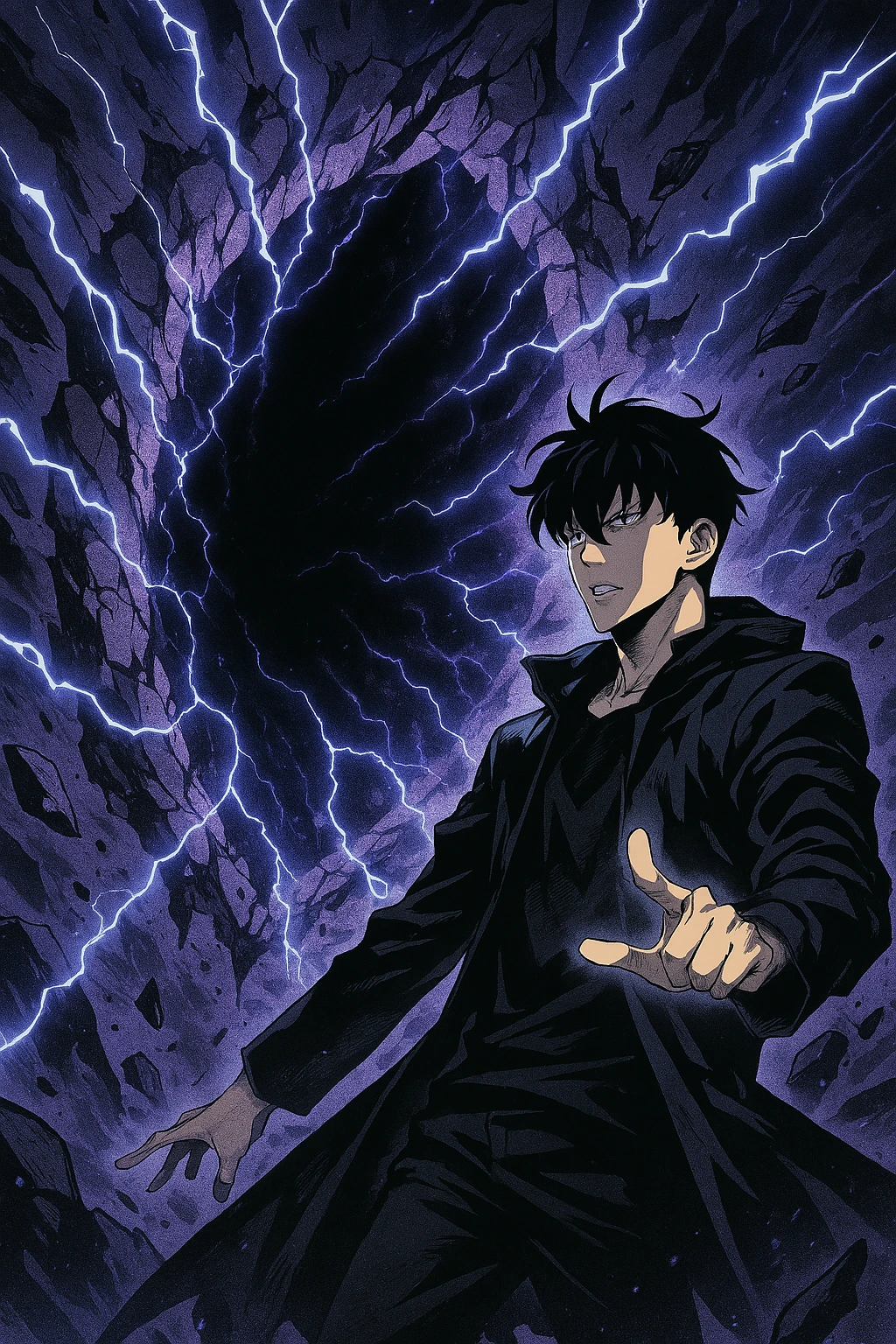
Saitama is the most difficult character to scale because he is a “Gag Character” (or at least, a character defined by breaking limits). His defining trait is “One Punch.”
The Limitless Problem
Saitama’s growth is exponential. As seen in the fight against Garou, if pushed, Saitama simply gets stronger instantly. His durability is insane; he can grab hyperspace gates and kick them away. He can sneeze away Jupiter’s gas layers.
The Counter: Non-Physical Interaction
However, Saitama’s feats are strictly physical. He punches hard. He runs fast. He sneezes Jupiter away.
But how do you punch a shadow?
Sung Jin-woo in his final form is essentially a spiritual/magical entity. If Jin-woo turns his body into pure shadow or mana, Saitama’s punches might just pass through him. You cannot punch a ghost. You cannot punch the concept of death. Saitama has interacted with portals, but he has never punched a concept.
BFR (Battlefield Removal)
Jin-woo is a genius tactician. He would realize instantly that a physical brawl with Saitama is a bad idea. The solution? Teleport him. Jin-woo can open a gate to the “Land of Nothingness” or a dimension without air and simply leave Saitama there. While Saitama can hold his breath for a long time, he still needs to breathe eventually. If Jin-woo leaves him in a dimension with no matter to kick off of, Saitama is left drifting in an infinite void forever. Unlike Goku, Saitama cannot teleport. If he is stranded in a dimension with no exit, he is trapped.
The Horror Scenario: Shadow Saitama
Here is the thought that keeps power scalers awake at night: Shadow Extraction. Saitama is human (mostly). He has a soul. If, by some miracle of magic or hax, Jin-woo manages to kill Saitama (perhaps by aging him to death or suffocation), he could say “Arise.”
A “Shadow Saitama” with infinite regeneration, obedient to Sung Jin-woo, is the single most powerful entity in fiction. It would combine the “One Punch” limit breaker with the “Immortal Army” mechanic.
Verdict
Stalemate or Jin-woo via BFR. Saitama cannot kill Death itself, and Jin-woo likely cannot damage Saitama physically. But Jin-woo can trap him, strand him, or outlast him.
7. Vs. Naruto/Luffy/Ichigo (The Big Three)
This tier is where the debate becomes one-sided.
Naruto Uzumaki
Naruto is strong. He has Baryon Mode, Truth-Seeking Orbs, and immense chakra. But he is mortal.
- Clones vs. Shadows: Naruto’s Shadow Clones divide his chakra. If he makes 1,000 clones, each has 1/1000th of his power. They pop after one hit.
- Jin-woo’s Shadows: They do not divide Jin-woo’s power. They are autonomous and immortal.
- Baryon Mode Drawback: Naruto’s strongest form drains his life force and kills Kurama. Jin-woo has no such drawback. He can fight at 100% capacity forever.
- The Result: Jin-woo doesn’t even need to fight Naruto personally. He sends Beru and Igris to handle it. Naruto has no counter to infinite regeneration. Eventually, Kurama’s chakra runs dry.
- Winner: Sung Jin-woo (No Difficulty).
Monkey D. Luffy
Luffy’s Gear 5 is basically “Toon Force.” He can turn reality into rubber. It’s a formidable ability. However, Luffy is weak to cutting attacks and non-physical damage.
- Ruler’s Authority: Jin-woo can lift Luffy into the stratosphere and leave him there. Luffy cannot fly freely without something to bounce off.
- Darkness vs. Rubber: Jin-woo’s domain is darkness. Darkness absorbs. Even if the ground is rubber, the shadows are not. Luffy’s imagination has limits; Jin-woo’s darkness is the absence of limits.
- Winner: Sung Jin-woo (No Difficulty).
Ichigo Kurosaki
This is the most interesting matchup of the Big Three because Ichigo deals with spirits (Reishi). He can hurt spiritual bodies. He fights for the Soul Society.
- The Yhwach Parallel: In Bleach, Ichigo struggled immensely against Yhwach, a villain who could see and alter the future (The Almighty). Sung Jin-woo is very similar to Yhwach in terms of sheer “Boss Energy” and conceptual power.
- The Difference: Yhwach had to be defeated by a plot-specific arrow that disabled his powers. Ichigo didn’t beat Yhwach with raw power alone; he needed help and a specific counter. Ichigo possesses no specific counter to the Shadow Monarch.
- Winner: Sung Jin-woo (Mid Difficulty).
8. The Ragnarok Factor: Why the Sequel Changes Everything
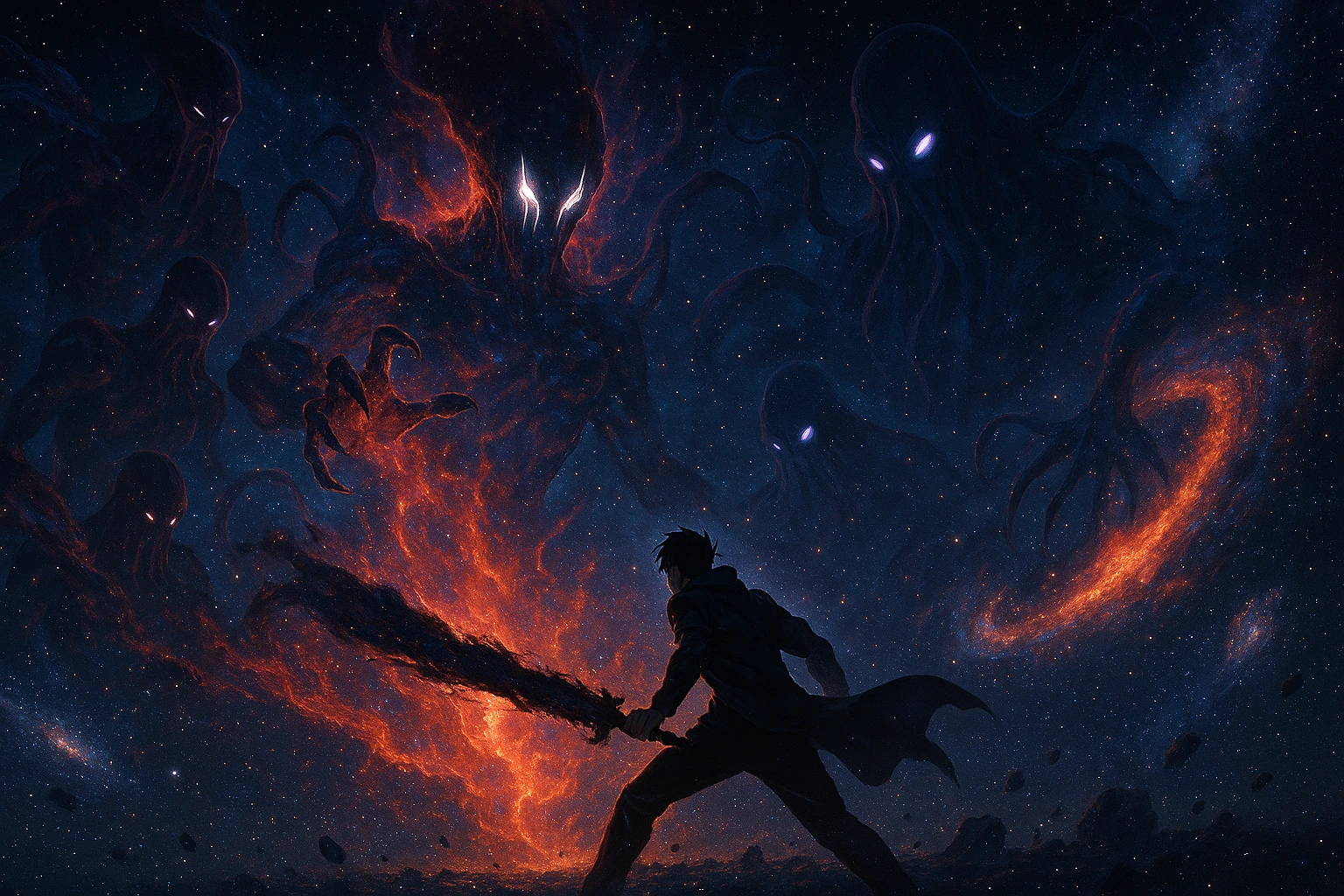
Most analysis stops at the end of the original Solo Leveling manhwa. This is a mistake. The sequel, Solo Leveling: Ragnarok, introduces feats that push Jin-woo from “Planetary” to “Outer Universal.”
In Ragnarok, Sung Jin-woo is not on Earth. He is in outer space, fighting a war against the Itarim.
Who are the Itarim?
The Itarim are “Outer Gods” from a different universe. They are beings that create and destroy universes. They are the same species as the Absolute Being (the creator of the Monarchs and Rulers).
Jin-woo is currently fighting an entire race of Creator Gods. He has been holding back their invasion for years, single-handedly. This isn’t fighting a strong alien; this is fighting the Architects of Reality.
- Creation Feats: In Ragnarok, it is confirmed that Jin-woo creates customized gates and dungeons to train his son, Suho. He is literally designing pocket dimensions with their own ecosystems, monsters, and rules. He creates realities for fun/training.
- The World Tree: Jin-woo possesses the seed of the World Tree, allowing him to restore magical energy on a universal scale. This implies he can terraform universes and seed life.
If Jin-woo is fighting on par with beings who create universes, his durability and attack potency scale to Low Complex Multiversal. This puts him firmly above Goku (who is Universal+) and arguably in the same tier as Anti-Spiral or high-tier DC/Marvel heralds.
The Jin-woo seen in the Manhwa is just the “tutorial completed” version. The Jin-woo in Ragnarok is the Administrator of the Universe.
9. The Trump Card: Astralization (Spiritual Body)
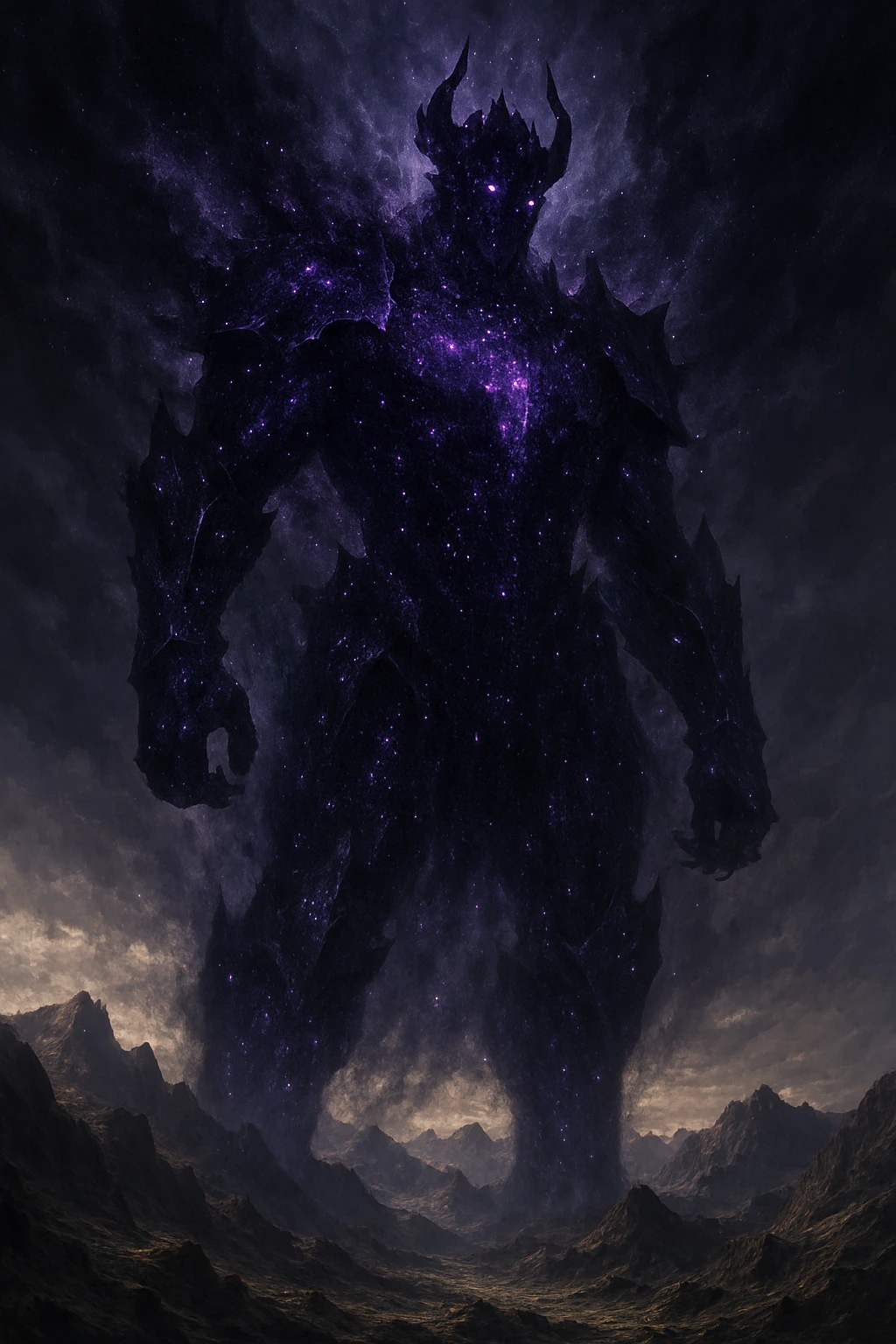
Why is Sung Jin-woo so often placed in the “God Tier”? It comes down to his final transformation: Astralization of the Shadow Monarch.
In this form, Jin-woo becomes a gigantic entity made of pure, condensed mana. He resembles a towering knight of darkness clad in armor that dwarfs skyscrapers, radiating an aura that turns the sky black.
Physical Immunity
When in Astral form, he is effectively non-corporeal to physical attacks. A punch, a kick, or a missile simply passes through the mana. To hurt him, you need attacks that damage the “Soul” or “Concept.”
- Goku has no soul-destroying attacks (Hakai is erasure, but arguably distinct from soul manipulation).
- Saitama deals physical damage.
- Naruto deals physical/energy damage.
Existence as a Concept
Sung Jin-woo is the Monarch of Shadows. In the lore of Solo Leveling, light and dark were the primordial forces of creation. By becoming the Monarch, Jin-woo became a fundamental pillar of the universe.
You cannot kill him by stabbing him in the heart. He doesn’t have a heart anymore. He is the concept of death. As long as death exists, he exists. To kill him, you would have to rewrite the laws of the universe to remove the concept of shadows and death.
This is why he beats 99% of Shonen protagonists. They are fighting a man; he is fighting as a law of nature.
10. Conclusion: Where Does He Rank?
After analyzing the mana, the army, the hax, the Ragnarok feats, and the conceptual immortality, where does Sung Jin-woo land on the cosmic scale?
He is Low Multiversal.
He created his own world (the Territory of Eternal Rest). He fought against Monarchs capable of destroying worlds. He holds back Outer Gods (Itarim) who create universes.
The Hierarchy of Power
- Omnipotent Gods: (The One Above All, Zeno, The Presence). Jin-woo loses here. These beings can blink him out of existence because they wrote the code of reality.
- High Multiversal: (Anti-Spiral, Simon the Digger, Rimuru Tempest). Jin-woo struggles here. Characters who can throw galaxies like shurikens or rewrite the past present a threat to his mana reserves.
- Low Multiversal / Universal: (Goku, Sung Jin-woo, Kratos). This is the toss-up. Goku has the raw explosive power; Jin-woo has the hax, regeneration, and conceptual immortality. It is a battle of “Burst Damage” vs “Infinite Sustain.”
- Planetary/Star Level: (Saitama, Naruto, Ichigo). Jin-woo clears this tier effortlessly. They simply lack the dimensional interaction required to touch him.
Final Verdict
Sung Jin-woo is the Strongest Necromancer in Fiction.
He is a glitch in the anime power scaling matrix. He combines the stats of a brawler with the magic of a sorcerer and the immortality of a god. He doesn’t fight fair, and he doesn’t fight alone.
Can he beat Goku? In a raw power struggle, no. But in a fight to the death? Goku dies. Because Goku is mortal, and he is fighting Death itself. And as the old saying goes: Death always wins in the end.
RISE.