
1. Introduction: The Gift from the Dimension Gap
For over one hundred and fifty chapters of Solo Leveling, the narrative architecture was built on a single, crushing foundation: struggle. We watched Sung Jin-woo, the E-Rank hunter known as “The World’s Weakest,” scrape, claw, and bleed for every single ounce of power he gained. His journey was not a destiny handed to him on a silver platter; it was a grueling ascent up a cliff face covered in razor blades. We watched him start with nothing but a rusty dagger in a double dungeon, trembling before the unsettling, god-like smile of the Statue of God, realizing for the first time how small humanity truly was.
We watched him plead with Igris in the Job Change Quest—a fight he barely survived, winning only by the skin of his teeth and a desperate tackle—just to gain a single knight. We watched him painstakingly hunt down high-ranking orcs in a high-level dungeon, risking his life to build a squad of bodyguards. We watched him travel to the hellscape of Jeju Island, a graveyard for S-Rank hunters, just to secure a commander capable of speech.
Jin-woo’s rise was a game of incremental, hard-fought gains. He was a gamer grinding for XP, building an army one soldier at a time, celebrating every “Arise” as a monumental victory. By the time he faced the Monarchs, he had amassed a formidable force of roughly one thousand soldiers. To us, and to Jin-woo, this felt like an empire. He had Beru, the Ant King who terrorized the Korean and Japanese elite. He had Igris, the chivalrous knight who guarded the empty throne against all intruders. He felt strong. He felt ready. He felt like a King.
But then, the sky over Japan tore open.
It wasn’t a Gate in the traditional sense. It wasn’t a dungeon break spilling random beasts into the streets. It was a royal procession that shattered the power scaling of the entire series. The Shadow Monarch, Ashborn, did not just leave Jin-woo his black heart and his terrifying title; he left him an inheritance. And like a billionaire leaving his fortune to a son who only knew how to work minimum wage, the scale of this inheritance was incomprehensible to the human mind.
One hundred and thirty thousand soldiers.
Let that number sink in. 130,000.
This wasn’t a mere reinforcement; it was an invasion force capable of conquering the planet overnight. In a single instant, Jin-woo’s personal army—the one he spent the entire series building through blood, sweat, and near-death experiences—became a mere fraction, a drop in the ocean compared to the Shadow Army that descended from the Dimension Gap. The sheer volume of mana released was enough to make the atmosphere tremble, turning the sky into a sea of darkness that blotted out the sun. The world watched in horror and awe as a literal sea of soldiers poured forth, not to kill them, but to kneel.
But the true shock wasn’t the number. It was the man leading them. As the black smoke cleared and the mana shook the atmosphere, a figure emerged that defied the system Jin-woo knew. Above the Elite Knights, above the Generals, and even above the Marshals, there stood a rank that had never appeared in the system window before.
Grand-Marshal.
This is the story of Bellion, the true shadow, and the army that waited in the void for eons. This is why the power structure of Solo Leveling changed forever in a single chapter, shifting the genre from a hunter’s journey to a mythological epic.
2. Bellion: The First Shadow
To fully grasp the anomaly that is Bellion, we must delve into the deep, often overlooked timeline of the Solo Leveling universe. Most of Jin-woo’s shadows are “recycled” souls. They are the echoes of the defeated. Igris was a loyal knight in a human kingdom (or a dimension similar to it) before death claimed him. Beru was a chimera ant born on Earth, engineered by a queen to kill hunters. Iron was a frantic A-Rank hunter named Kim Chul. Greed was a villainous S-Rank hunter named Hwang Dong-Su. They all had lives, deaths, egos, and personal histories before they became Shadows. They were second-hand souls, repurposed for war by the Monarch’s authority.
Bellion is different. Bellion is the primordial soldier.
He was not a monster Jin-woo killed. He was not a foe that had to be conquered in battle. Bellion was born from the fruit of the World Tree, created by the hands of Ashborn himself when the Shadow Monarch was still one of the Rulers (or transitioning into his role). This distinction is critical: Bellion was not converted into a soldier; he was designed as one from his very inception. This makes Bellion ancient in a way that is hard for the human mind to grasp. He has existed for millions of years, fighting wars that predate the existence of humanity, the Earth, and perhaps even the current structure of the universe itself.
The Analysis of Design: A Visual Paradox
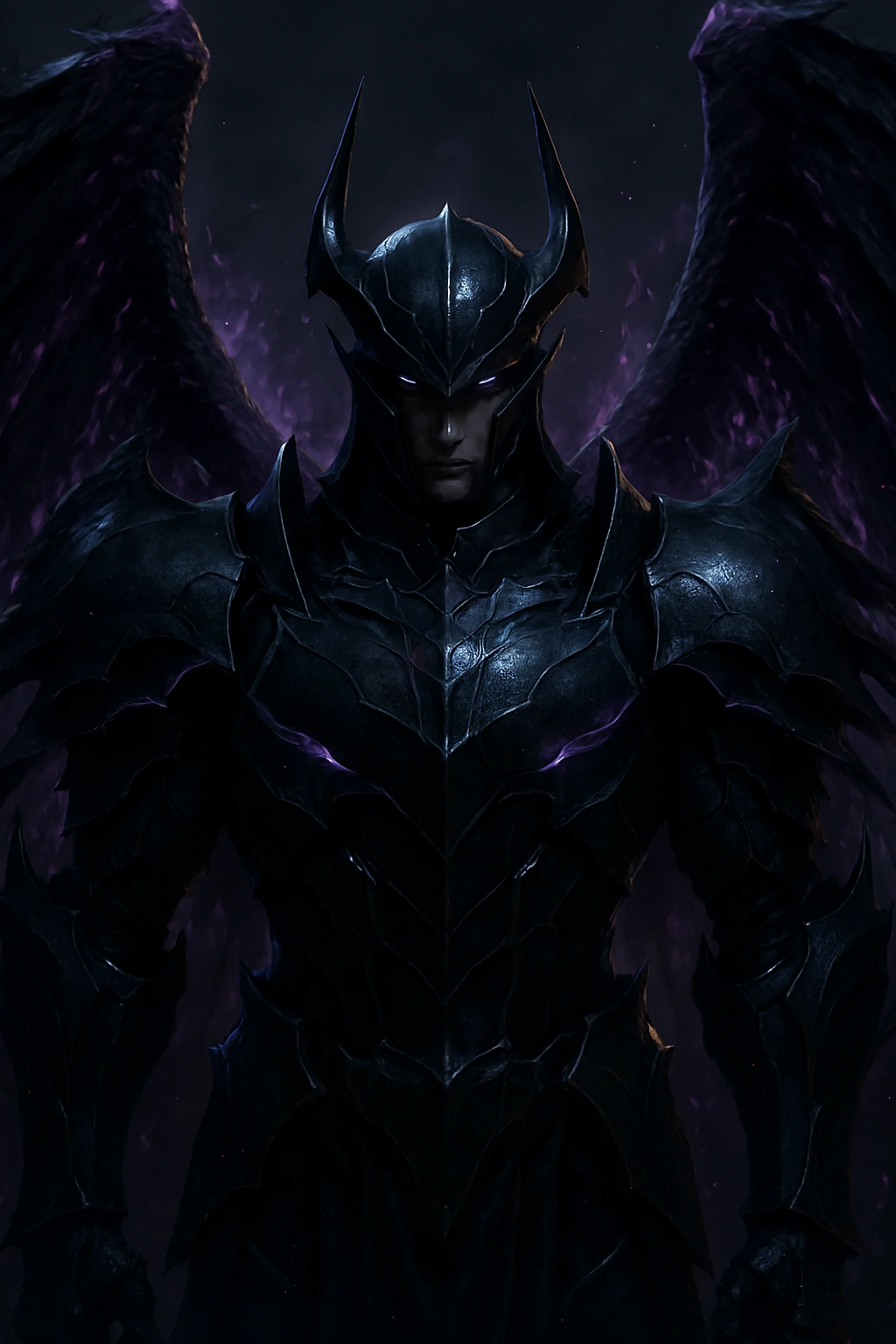
When we first see Bellion, his character design screams “contradiction,” serving as a visual storytelling masterpiece that hints at his origins. Most shadows are jagged, smoky, and monstrous. Igris looks like a corrupted knight with a glowing plume; Beru looks like a demon from hell with insectoid features; Tusk looks like a shamanistic ogre. But Bellion? Bellion looks like a fallen angel.
He possesses four wings. In the lore of Solo Leveling, wings—specifically varying numbers of wings—are usually reserved for the Rulers and their emissaries, beings of brilliant light. This visual cue tells us instantly that Bellion originates from the era when Ashborn was still the “Greatest Fragment of Brilliant Light.” He is a living hybrid of Light and Dark. He carries the holiness and celestial majesty of the Rulers but is draped in the pitch-black armor of the Shadow Monarch. He is a relic of the transition between the two greatest powers in the universe, embodying the duality of his master. His armor is not just protective gear; it is a uniform of an era long forgotten.
The Whip-Sword: A Weapon of Mass Destruction
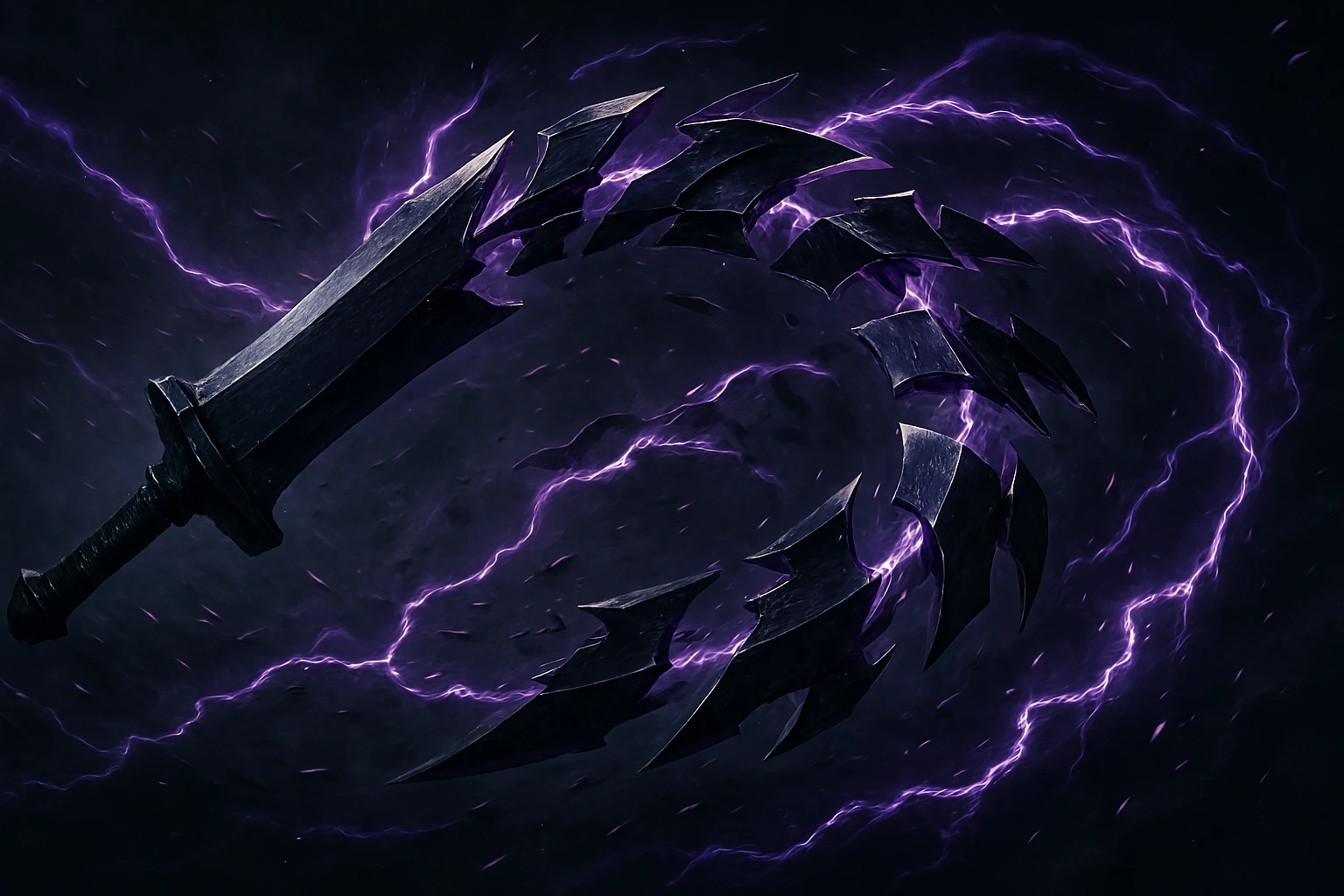
His choice of weapon further separates him from the brawlers in Jin-woo’s army. He wields a heavy greatsword that functions like a “Whip-Sword” (reminiscent of Renji Abarai’s Zabimaru from Bleach or Ivy from Soul Calibur).
Why is this significant? A standard sword implies honorable dueling (like Igris). A claw implies savage, single-target tearing (like Beru). A whip-sword implies absolute control over the battlefield. It is a weapon that requires immense dexterity and spatial awareness. It allows Bellion to strike from a distance, wrap around shields, strike enemies behind cover, and decimate crowds of enemies in a single swing. It is not a weapon designed for a 1v1 duel; it is a weapon designed for slaughtering armies.
The segmented blade represents his flexibility as a commander. He can be rigid and crushing like a greatsword when holding the line, or fluid and unpredictable like a whip when on the offensive. It suggests that Bellion is used to fighting thousands of enemies at once, requiring a tool that can extend his reach across the entire front line. In the hands of a Grand-Marshal, it is not a sword; it is a perimeter denial system.
The Personality Gap: Ego vs. Duty
The most terrifying aspect of Bellion, however, is his demeanor.
- Beru is frantic, obsessed, and screeching. He acts like a fanatical cultist, constantly seeking validation and screeching his loyalty to the heavens. His loyalty feels manic, born of gratitude and biological imperative.
- Igris is loyal, silent, and chivalrous. He is like a royal guard, displaying a quiet dignity and a sense of honor.
- Bellion is stoic. He is absolute. He is the void itself.
There is a heaviness to Bellion’s presence that the others lack. He doesn’t need to scream his loyalty; his loyalty is a fundamental law of the universe, as natural as gravity. He is the perfect soldier—one who has seen empires rise and fall, stars burn out, and dimensions collapse, all while standing silently by his master’s side. He is the “First Shadow,” and his existence proves that Jin-woo was playing in the shallow end of the pool until this very moment. He possesses no ego, only duty. While Beru fights to prove he is useful, Bellion fights because it is what he was created to do.
3. The Spar: The King of Ants vs. The Grand-Marshal
This is the moment every reader was waiting for. The hierarchy of the Shadow Army had always been clear: Igris was the first, but Beru was the strongest. Beru, the Ant King, who soloed the S-Rank hunters of Korea and Japan with ease. Beru, who could evolve, absorb skills, and heal himself. He was the apex predator of the series thus far.
When Bellion arrived, Beru’s position as the “Right Hand” was threatened. And true to his nature—a creature born to be the strongest, a biological weapon engineered to dominate—Beru didn’t take it lying down. He challenged the newcomer immediately.
The Hype vs. The Reality
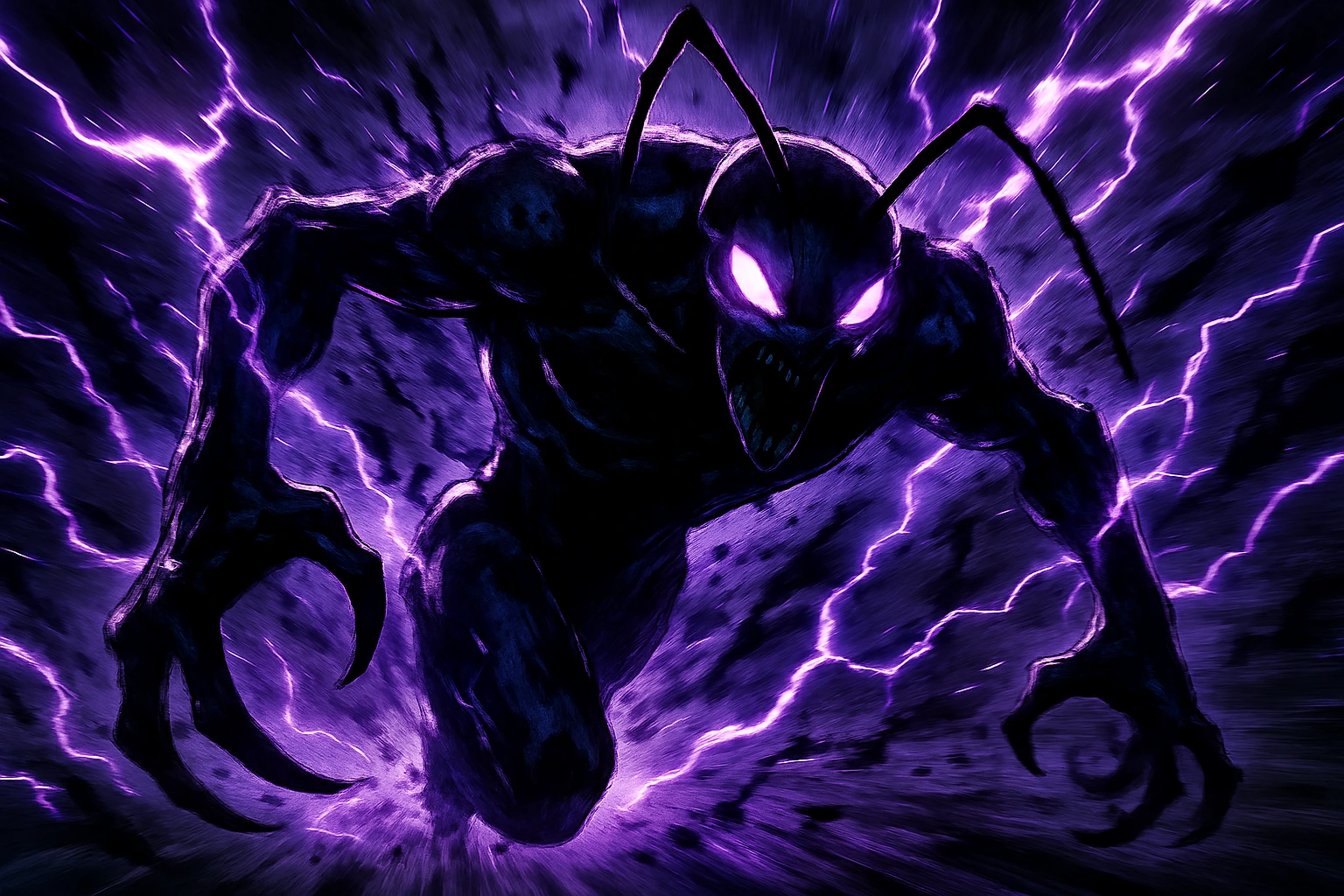
The buildup to this spar was intense. Beru had recently evolved. He had achieved the rank of Marshal (General grade in some translations), unlocking the ability to command his own legion of ants. We, the audience, expected a war. We expected Beru’s speed, which rivaled light, and his savagery to at least push Bellion to use his full power. We wanted to see if the “Old Generation” could keep up with the “New Generation” of biological perfection.
The result was a cold bucket of water to the face of every Beru fanboy.
It wasn’t a fight. It was a discipline session. It was a father stopping a toddler’s tantrum.
Beru launched himself at full speed—a speed that S-Rank hunters couldn’t even track with their eyes. He used his claws, his screech, his overwhelming killing intent. He came at Bellion with the intent to kill, or at least to maim. And Bellion? Bellion didn’t even use a skill. He didn’t use mana. He didn’t use a flashy ultimate move or roar in exertion.
He simply… moved.
Analyzing the Gap
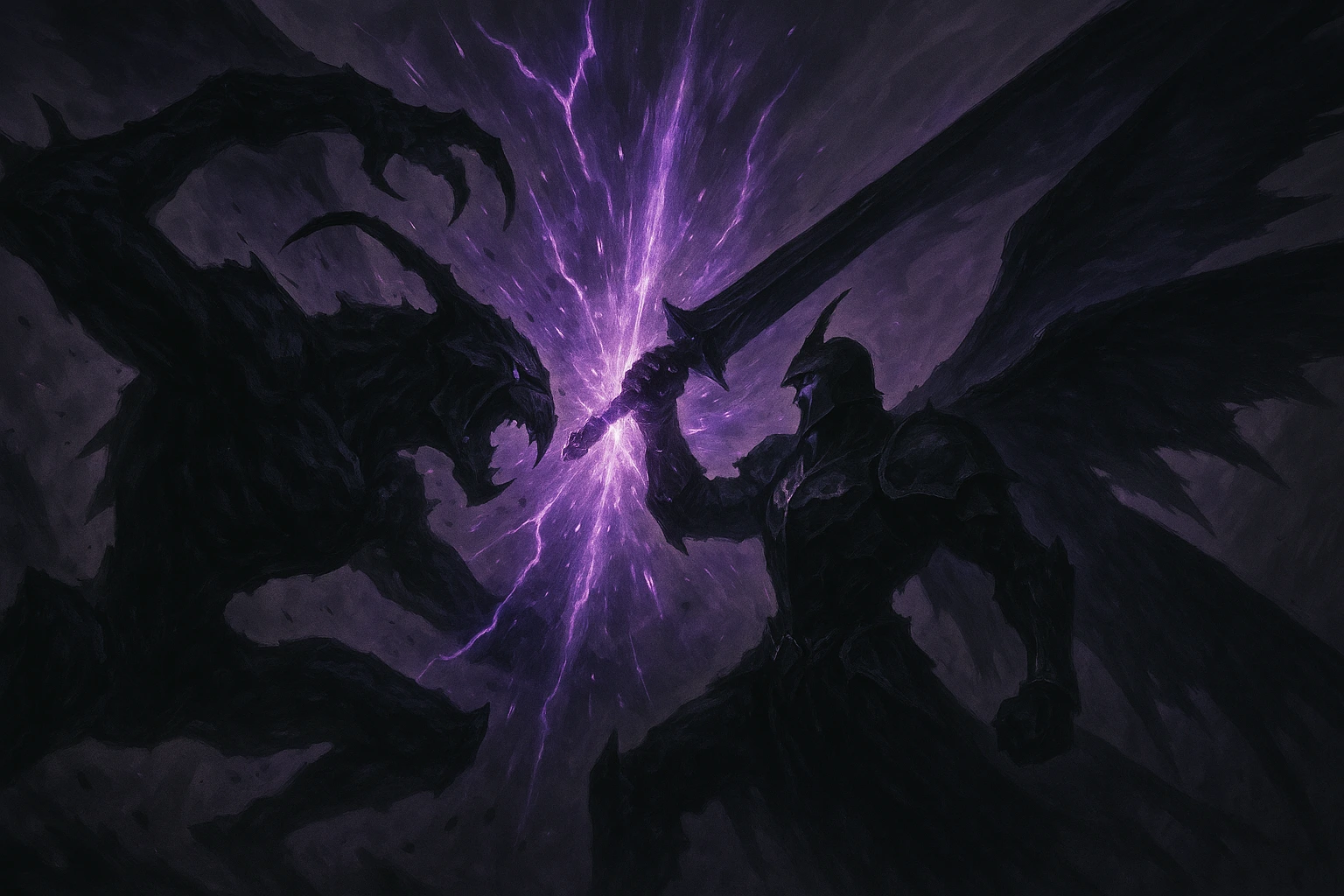
The choreography of this fight (or beating) reveals the difference between “Strength” and “Experience.” Beru fought with the instinct of a predator. He aimed for vitals, moving in straight, aggressive lines, relying on his superior stats to overwhelm opponents. He relied on the assumption that he was faster and stronger than his opponent.
Bellion fought with the wisdom of a general. He deflected Beru’s full-power strike with the flat of his sword, barely moving his feet. This specific detail—using the flat of the blade—showed that Bellion wasn’t even trying to cut Beru. He was swatting him away. When Beru tried to outmaneuver him, Bellion’s whip-sword extended with impossible precision, striking Beru from angles the Ant King couldn’t calculate, swatting him out of the air like a fly.
There is a specific panel where Bellion catches Beru’s attack with one hand. In that moment, the power scaling of the series shifted. Beru is a creature born on Earth, a planet with weak mana. He is the apex predator of a small pond. Bellion is a creature born of the celestial war. He has fought against the armies of the Monarchs of Destruction, Plagues, and Pain for thousands of years. He has fought dragons, demons, and gods.
As Bellion stood over a defeated, face-down Beru, he offered not an insult, but a lesson: “I have fought by the Liege’s side since the beginning of time. Do you truly believe a few months of service can compare to eons of war?”
This wasn’t just about stats. It was about weight. The weight of Bellion’s sword was the weight of history. Beru, for all his power, was a child throwing a tantrum in front of a war veteran who had forgotten more about killing than Beru had ever learned. This spar proved that while Beru was the “Commander of the Mutants,” Bellion was the “Commander of Death itself.”
4. The 130,000: The True Legion
While Bellion stole the spotlight, we cannot ignore what stood behind him. The 130,000 soldiers that fell from the sky were not mindless drones. If we analyze the composition of this army, we realize that Jin-woo’s original forces (the High Orcs, the Naga, the Shadow Bears) were essentially a neighborhood gang compared to a nuclear superpower.
Quality Over Quantity: A Modern Military Analysis
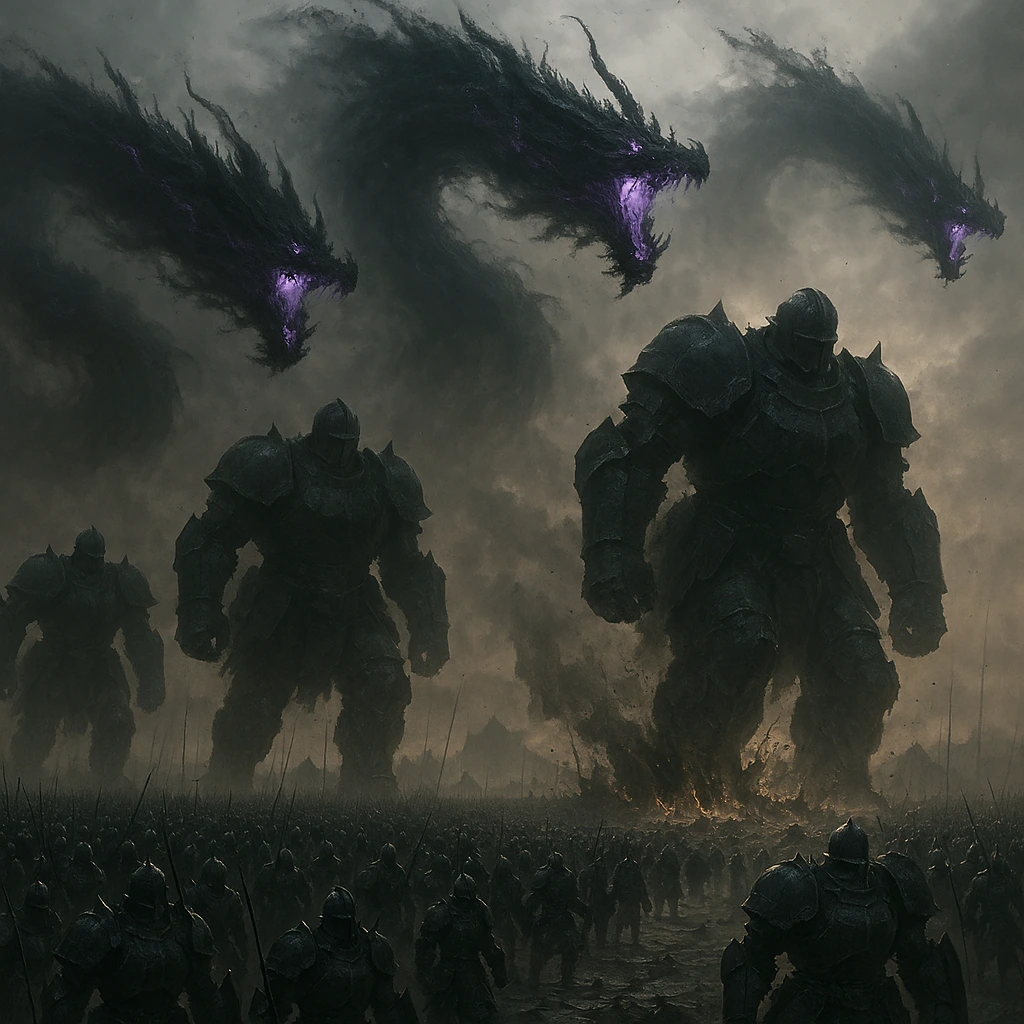
It’s easy to get lost in the number 130,000. But look at the quality of the units. This wasn’t a rabble; it was a highly specialized, combined-arms military force that utilized tactics far beyond simple charging.
- The Three Ancient Dragons: Included in this army were three dragons. Not wyverns. Not drakes. True Dragons. Remember Kamish? The dragon that nearly wiped out humanity and required five National Level Hunters to kill? These three dragons are of a similar breed. They are ancient beasts capable of leveling cities with a single breath. Jin-woo struggled to get one Kamish (and failed due to the time limit). Ashborn handed him three for free. These dragons serve as the Strategic Bombers of the Shadow Army, providing air superiority that Kaisel alone could never achieve. They essentially gave Jin-woo three tactical nuclear warheads that he could deploy anywhere on the battlefield.
- The Heavy Infantry (Ancient Giants): These weren’t the giants Jin-woo fought in the Japan gate. These were soldiers clad in armor forged in the abyss. They are larger than Tusk and possess physical strength that rivals the best Tankers in the world. They form an unbreakable wall, a moving fortress that grinds the enemy line to dust. Unlike the dungeon giants who fought with clubs and rage, these giants fight with discipline and formations. They are the Main Battle Tanks of the army, designed to absorb punishment and crush defenses.
- The Shadow Mages: We saw Tusk using the Orb of Avarice to cast devastating magic. But Bellion’s army contains Liches and Arch-Mages who know spells lost to time. They can cast wide-area curses, gravity magic, and void blasts. They are the Artillery, raining destruction from the backlines while the infantry holds the front. Their mana reserves are likely tied directly to the ancient power of Ashborn, making them infinitely sustainable siege weapons. They don’t just shoot fireballs; they alter the physics of the battlefield.
- The Cavalry: Death Knights riding nightmare beasts. Fast, lethal, and coordinated. Unlike Igris, who is a duelist, these knights operate as a cavalry unit. They are the Shock Troopers, designed to break enemy formations and hunt down fleeing targets. Their coordination allows them to act as a single, fluid entity on the battlefield, flanking enemies and cutting off retreats.
The Neighborhood Gang vs. The Military Superpower
Comparing Jin-woo’s original army to the Army of the Dead is almost laughable.
- Iron was a sturdy shield, but a single Giant from Bellion’s army could crush him like a tin can.
- Tank was a strong beast, but the Nightmare Cavalry would run circles around him and cut him to ribbons.
- Jima (the Naga) was good for crowd control, but the Ancient Dragons make him look like a garden snake.
This army was the true power of the Shadow Monarch. Jin-woo had been playing the game on “Easy Mode” with a starter deck. Bellion brought the “End Game” deck that was designed to fight gods.
5. Loyalty Beyond Time
The most chilling aspect of Bellion and his 130,000 soldiers isn’t their physical strength—it’s their mental fortitude. To understand this, we must look at where they came from and what they endured.
Imagine the scenario. Ashborn, the original Shadow Monarch, disappears. He goes to Earth to find a successor. He dies (conceptually) to pass his power to Jin-woo. What happens to his army?
They were left in the “Dimension Gap”—a void between worlds. A place of nothingness. No time. No light. No sound. No stimulation. It is a purgatory of absolute sensory deprivation. For a human, isolation for a week causes hallucinations. Isolation for a year causes madness. For these soldiers, they waited for what could be perceived as thousands of years in this void.
The Ultimate Test of Faith
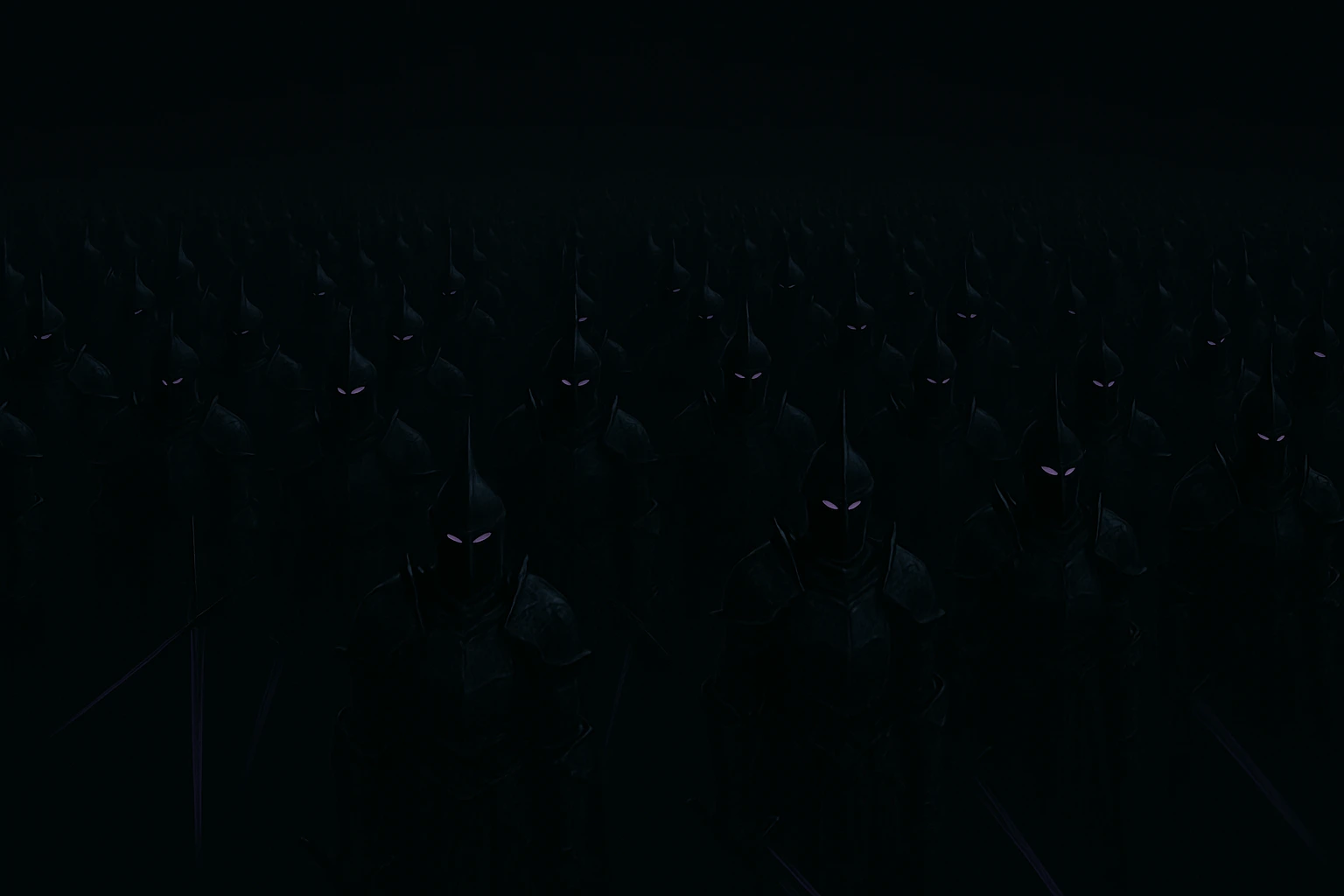
They could have left. In the chaos of the Monarchs’ war, they could have scattered. They could have sought a new master. Strong entities usually despise weakness, and waiting for a “human” successor seems beneath them. But they didn’t move. They stood in formation. For eons.
This is a loyalty that transcends the concept of “programming.” It is spiritual. It is a devotion so deep it defies the laws of psychology. When the sky opened and they fell into the human world, they didn’t rampage. They didn’t celebrate. They formed ranks immediately. They were ready to fight the second their feet touched the ground.
The Recognition
When Bellion landed, he walked up to Jin-woo and knelt. He didn’t see a weak human hunter. He didn’t see a kid from Korea. With his spiritual eyes, Bellion saw the Soul of Ashborn merged with Jin-woo. He recognized the lineage.
The line, “My liege, we have awaited your command,” is perhaps the most heavy line in the series. It carries the weight of centuries of silence. It confirms that Jin-woo is no longer just a player of the system; he is the Monarch. He has inherited the loyalty of beings who watched the universe be born. This loyalty gives Jin-woo an authority that no other Monarch possesses. Antares rules through fear. The Rulers rule through duty. Jin-woo rules through a loyalty that defied time itself.
6. The Final War: Why They Were Necessary
Some critics might ask: “Was this power-up too much? Did it make Jin-woo too OP?” The answer is no. In fact, without Bellion and the 130,000, Jin-woo would have been annihilated in the final arc.
We have to look at the enemy. The Army of Destruction led by Antares (The Dragon Monarch). Antares commanded an infinite legion of dragons, dragon-kin, and destruction monsters. These were beings made for one purpose: to erase existence. The scale of Antares’ army was not in the thousands; it was a tide that covered the horizon.
If Jin-woo had gone into that war with just Beru, Igris, and his 1,000 soldiers:
- Beru would have been overwhelmed by sheer numbers. Even the King of Ants cannot fight a million dragons alone.
- The High Orcs would have been vaporized by a single dragon’s breath before they could even lift their clubs.
- Igris would have been surrounded and cut down, his chivalry useless against a tsunami of destruction.
The Shield of the Monarch
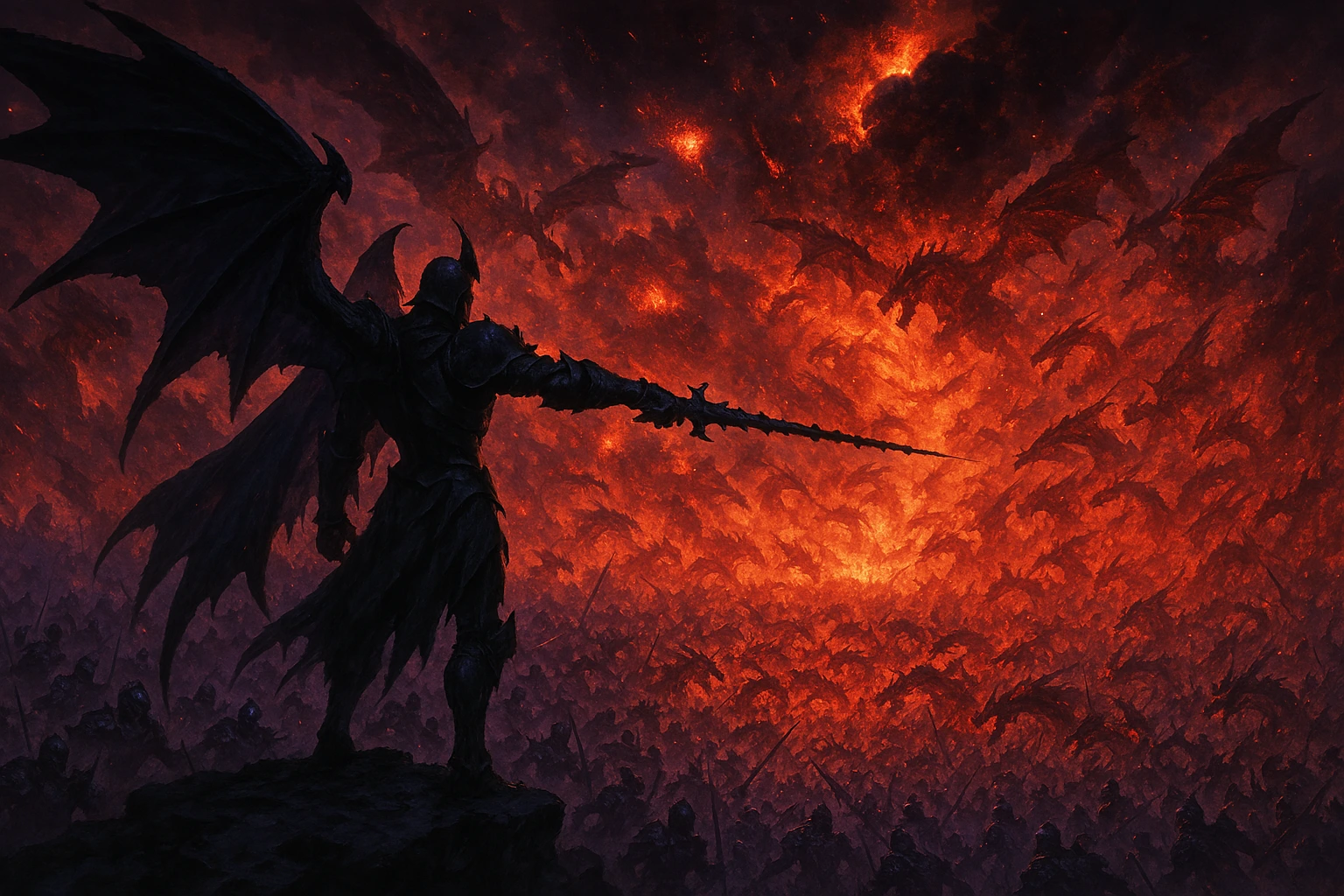
Bellion and the Old Army were the only force capable of holding the line. While Jin-woo engaged Antares in a 1v1 battle of gods, someone had to keep the millions of enemy soldiers off his back. That was Bellion’s role.
We see Bellion commanding the battlefield with the precision of a supercomputer. He uses the Ancient Dragons to counter the enemy air force, creating dogfights that shattered the sky. He uses the Giants to block the charges of the Destruction Army, creating a physical wall of iron and muscle. He uses his whip-sword to create “zones of death” that no enemy can cross, protecting Jin-woo’s flank.
The “New Army” (Beru and the Ants) acted as the mobile strike force, using their speed to harass the flanks. The “Old Army” (Bellion and the 130,000) acted as the Anvil. They took the heavy hits. They held the ground. They bought Jin-woo the time he needed to drag Antares away. Without the brute force and resilience of the 130,000, the war would have been lost in the first ten minutes. Bellion wasn’t just a soldier; he was the equalizer.
7. Conclusion: The Complete Monarch
The arrival of Bellion marks the completion of Sung Jin-woo’s character arc. He started as the “Weakest Hunter of All Time,” relying on his wits to survive. He became a “Player,” relying on the System to grow. He became a “King,” ruling over his own small army.
But with Bellion, he finally became the Shadow Monarch.
The trio of commanders represents the three aspects of his power:
- Igris represents Chivalry: The noble protector, the sword of the King. He represents the honor of the Monarch.
- Beru represents Savagery: The overwhelming force, the terror of the King. He represents the dominance of the Monarch.
- Bellion represents Authority: The absolute command, the history of the King. He represents the divine right of the Monarch.
Bellion proved that while Jin-woo is the main character, the power he wields has a history much older than him. The Grand-Marshal didn’t just bring soldiers; he brought the legacy of the greatest war in existence. He humbled Beru not to shame him, but to show him the standard required to fight the ultimate evil.
The 130,000 soldiers were not just a cheat code; they were the answer to a question asked at the very beginning of the series: How can one man stand against the world? The answer? He doesn’t. He stands with an army that waited eons just to serve him. He stands as a King who inherited the night.