
1. The Pathology of the Victim: A Diagnosis of Upper Moon 4

When evaluating the apex predators that comprise Kibutsuji Muzan’s Twelve Kizuki, one typically encounters entities defined by overwhelming martial prowess, centuries of refined combat experience, or an insatiable, aggressive bloodlust.
Akaza represents the pinnacle of martial arts evolution; Doma is the embodiment of sociopathic apathy armed with absolute zero cryokinesis; Kokushibo is the tragic, corrupted zenith of the samurai ethos. However, occupying the incredibly prestigious rank of Upper Moon 4 is an anomaly that completely subverts the standard archetype of a demonic powerhouse.
Hantengu is not a warrior. He is not a tactician. He is, from a purely diagnostic and biological standpoint, a clinically delusional parasite. He stands as the most dangerous hypocrite within the entire Demon Slayer universe, an entity whose terrifying power is derived entirely from a profound, foundational weakness.
To understand Hantengu is to frame his entire existence as a biological manifestation of pathological lying and narcissistic victimhood. Most demons develop Blood Demon Arts that reflect their deepest desires, their combat styles, or the traumas that ended their human lives.
Hantengu’s Blood Demon Art is fundamentally different; it is not a system of magic or elemental mastery, but rather a hyper-evolved, autonomous defense mechanism triggered exclusively by his utter inability to accept accountability. His physical mutations and combat abilities are the literal, fleshy incarnations of cognitive dissonance.
He is a creature who has weaponized the concept of being a victim, using his own perceived helplessness as the ultimate shield and sword against those who seek to hold him responsible for his atrocities.
A deep analysis of his human life reveals the architecture of a uniquely criminal brain. Long before he consumed a single drop of Muzan’s blood, Hantengu was a thief, a murderer, and a serial manipulator who possessed a terrifying psychological quirk: he genuinely believed his own lies.
When he committed a crime, his brain would instantly fabricate a narrative in which he was the innocent party, forced into the act by circumstance, or framed by those who envied him. He lacked the capacity for guilt because, in his subjective reality, he was perpetually the abused, the blind, the weak, and the hunted.
This is not mere deception; it is a severe, ingrained psychiatric disorder akin to a malignant narcissistic personality disorder combined with extreme dissociative tendencies.
When Muzan Kibutsuji injected his blood into this deeply flawed human vessel, the mutagenic properties of the demon progenitor’s cells acted as a catastrophic catalyst. Muzan’s blood does not merely grant strength; it reads the genetic and psychological blueprint of the host and forces an evolution based on those parameters.
For Hantengu, the demonic cells physically transformed his neurological delusions into distinct, physical entities. His inability to process guilt, his suppressed rage at being accused, his twisted joy in getting away with murder—all these compartmentalized aspects of his shattered psyche were given biological mass.
The demon Hantengu is thus a walking, breathing psychiatric ward, a creature whose mind was so fractured by its own lies that his demonic biology had no choice but to splinter his body to accommodate the overwhelming weight of his pathological victimhood.
2. Cellular Mitosis under Duress: The Biology of Splitting
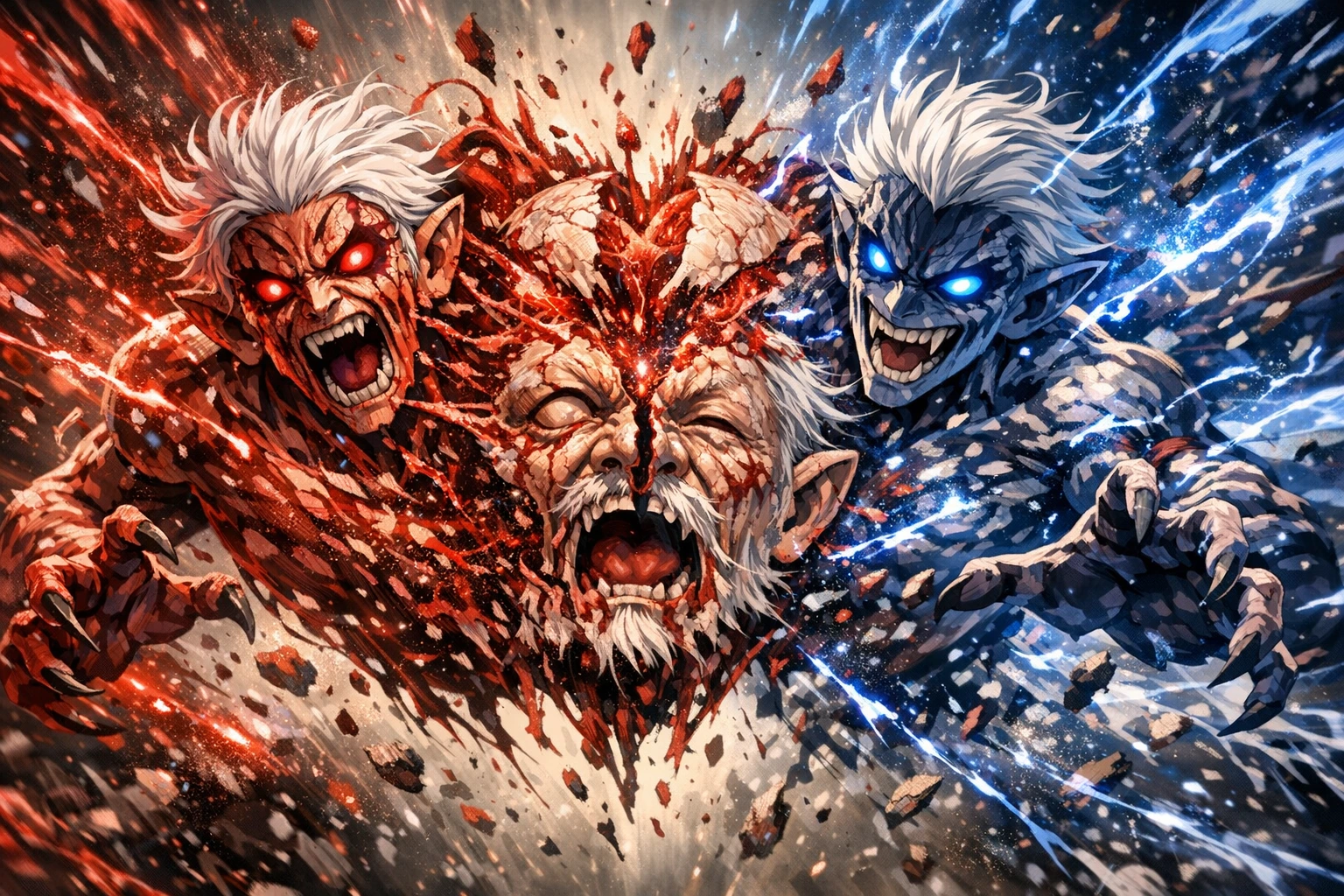
The core mechanic of Hantengu’s Blood Demon Art is frequently misunderstood by both the Demon Slayers who face him and the audience observing him. It is not an illusion, nor is it a simple summoning technique. From a physiological and medical perspective, Hantengu’s ability is an extreme, rapid form of cellular mitosis triggered exclusively by mortal duress.
In standard cellular biology, mitosis is the process by which a single cell divides into two identical daughter cells, usually for the purpose of growth or tissue repair. Hantengu’s demonic physiology takes this fundamental biological process and scales it up to a macroscopic, combat-oriented level.
When his core body is threatened—specifically, when his neck is severed by a Nichirin blade—his central nervous system does not shut down. Instead, the trauma of the decapitation acts as a high-stress biological trigger.
His cells do not die; they violently and aggressively divide, instantly distributing his total mass, his demonic energy, and his psychological trauma into two new, fully formed bodies. This is a stress-induced hyper-proliferation of demonic stem cells. The severing of the neck, which is the ultimate lethal strike for any other demon, is subverted into the exact biological catalyst required for his reproduction. He literally weaponizes the act of his own execution.
This violent cellular division is deeply intertwined with his psychological instability, leading to the creation of his clones, which are masterclasses in emotional compartmentalization. When Hantengu splits, he does not just duplicate his body; he segments his core emotions. Medical analysis of this phenomenon suggests a complete anatomical restructuring of the brain’s neural networks upon division.
The original, cowardly Hantengu is paralyzed by a cacophony of fear, denial, and suppressed traits. The mitosis isolates these traits: Anger (Sekido), Pleasure (Urogi), Sorrow (Aizetsu), and Joy (Karaku). By isolating these emotions into separate neurological networks, each clone is granted the ability to fight with hyper-focused efficiency.
Sekido’s brain is literally wired solely for rage and aggression, devoid of fear or hesitation. Karaku processes combat strictly through the dopamine receptors of joy and entertainment. This emotional isolation removes all conflicting thoughts, cognitive dissonance, and psychological latency. They are perfect, specialized biological weapons because their brains are unburdened by the complexities of a complete human (or demonic) psyche.
This cellular mechanic creates an absolute mathematical nightmare for the Demon Slayer Corps, effectively exposing the ultimate regeneration loophole. Traditional demon slaying relies on a universally accepted axiom: decapitation via sunlight-infused steel severs the life force and disintegrates the cellular structure.
Against Hantengu, this traditional methodology spectacularly fails. Explaining this requires understanding the biological loophole he has evolved. Slicing his neck does not sever his life force because his life force is not centralized in his brain stem or spinal cord during the moment of impact. The Nichirin blade acts not as an executioner’s axe, but as a surgical scalpel that triggers his latent, pre-programmed cellular cloning sequence.
Every time a Slayer successfully lands a lethal blow, they are unwittingly providing the kinetic and biological stress required for Hantengu’s cells to multiply. One demon becomes two. Two demons become four. A lethal strike is transmuted into a biological upgrade, instantly doubling the threat level on the battlefield.
The Slayers are trapped in a paradoxical combat loop where their primary win condition (beheading) actively facilitates their defeat. This evolutionary adaptation makes Hantengu a biological anomaly even among the Upper Moons; he is an organism that has conquered the fundamental weakness of his species by turning his greatest vulnerability into the precise mechanism of his propagation.
3. Avian Genetics and Aerodynamic Weaponry
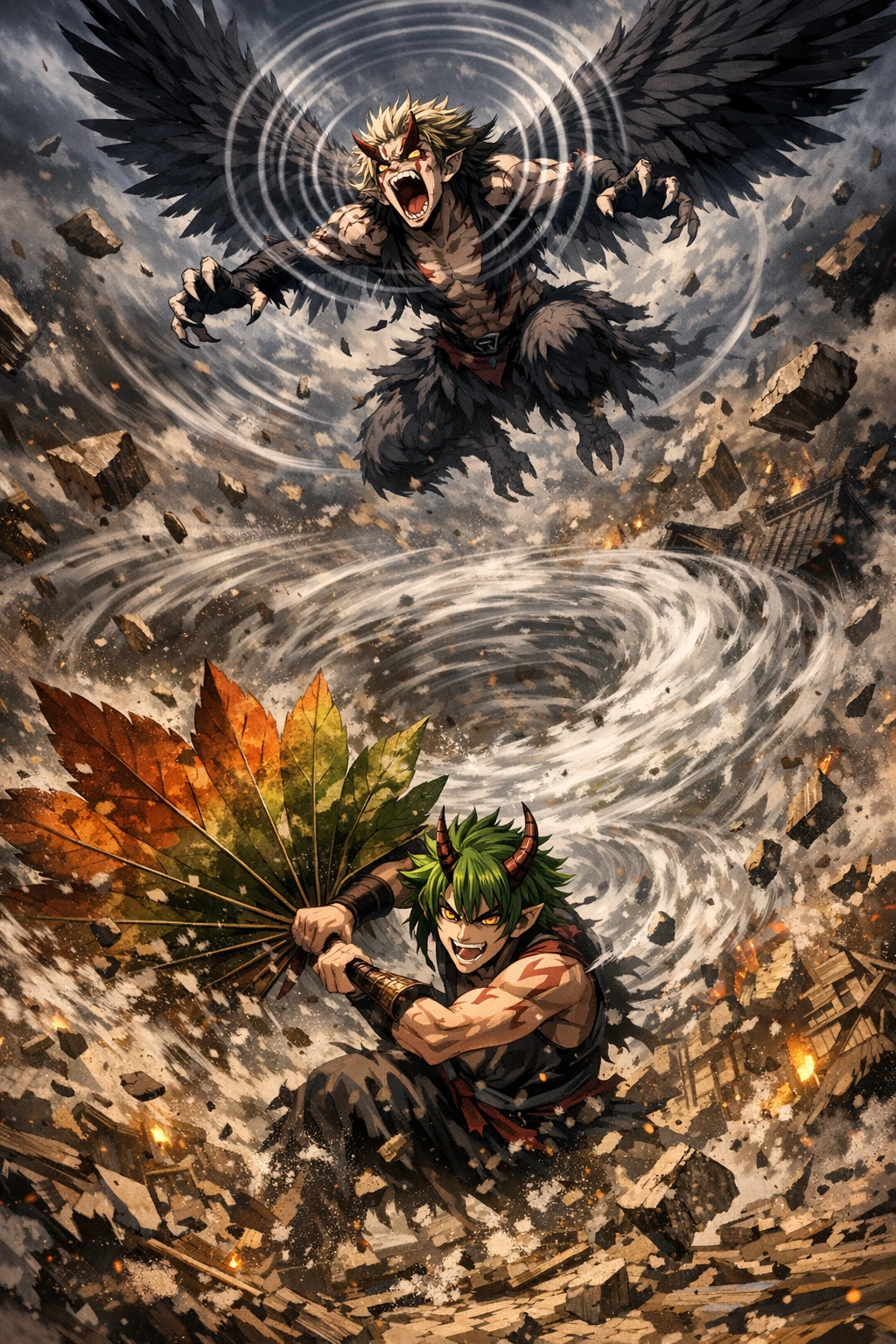
Upon the second division, Hantengu’s cellular structure rapidly mutates to adapt to different environmental and combat scenarios, yielding four distinct entities with highly specialized, hyper-evolved anatomies. The most structurally fascinating of these is Urogi, the embodiment of Pleasure.
A deep dive into Urogi’s biology reveals a spectacular integration of avian genetics fused with demonic regenerative capabilities. To achieve functional, high-speed flight while maintaining humanoid mass, Urogi’s cellular structure has undergone massive internal mutations. His skeletal system is comprised of pneumatized (hollow) bones, heavily reinforced by demonic calcification to prevent shattering upon high-speed impacts.
Furthermore, Urogi possesses hyper-dense, highly efficient muscle fibers, specifically the pectoral muscles required to drive his massive, feathered appendages. However, his most devastating weapon is an adaptation of his respiratory and vocal systems.
Urogi is capable of generating localized sonic blasts of terrifying magnitude. This implies a hyper-developed syrinx (the vocal organ of birds) combined with a diaphragm capable of producing extreme lung pressure. By forcefully expelling air through this modified structure, Urogi generates high-decibel acoustic shockwaves.
These are not merely loud noises; they are concentrated concussive waves of sound energy designed to instantly rupture human eardrums, induce severe vertigo by destroying the vestibular system of the inner ear, and completely disrupt a Slayer’s equilibrium and spatial awareness, rendering them helpless in a three-dimensional aerial battle.
Operating in tandem with Urogi’s acoustic warfare is Karaku, the clone representing Joy, whose anatomy is designed around the manipulation of fluid dynamics and physics. Karaku’s primary weapon, his maple leaf fan, is a tool used to manipulate barometric pressure and generate hyper-compressed aerodynamic bursts.
To understand the physics of the Pleasure clone is to recognize him as a localized weather anomaly. When Karaku swings his fan, he is not simply blowing wind; he is instantaneously creating a massive pressure differential in the atmosphere.
By forcefully displacing air at hypersonic speeds, he creates temporary vacuums and corresponding high-pressure walls of kinetic force. These aerodynamic bursts possess the physical density and impact force of solid matter.
Karaku is capable of instantly crushing bone, shattering Nichirin steel, and leveling entire swathes of infrastructure without ever needing to make physical contact with his target. The kinetic energy generated by these pressure waves is so immense that it turns the very air surrounding the battlefield into a concussive bludgeoning weapon.
His biological enhancement lies in the immense tensile strength of his arms and shoulders, which are required to swing the fan with enough velocity to shatter the sound barrier and compress the atmosphere.
Rounding out this ultimate elemental squad are Aizetsu (Sorrow) and Sekido (Anger), who bring biological electromagnetism and non-euclidean spatial manipulation to the fray. Sekido’s ability to generate localized lightning requires an internal biological structure similar to that of an electric eel, but scaled to apocalyptic proportions.
His flesh contains millions of specialized cells called electrocytes, stacked in dense arrays within his nervous system. By simultaneously discharging these cells, Sekido channels massive volts of biological electromagnetism through his flesh-crafted Khakkhara (staff), creating grid-wide area-of-effect electrocution that bypasses physical durability and attacks the nervous system directly.
Conversely, Aizetsu manipulates the fluid dynamics of his own demonic flesh to generate non-euclidean spear thrusts. His Yari (spear) is an extension of his body, and he can instantaneously alter its cellular density and mass, allowing it to stretch, bend, and strike from impossible angles and distances.

Aizetsu’s combat style is a masterclass in exploiting spatial blindspots, turning his physical trauma and sorrow into a relentless, physically unpredictable barrage that defies standard geometry. Together, these four clones represent a perfectly balanced, biologically devastating ecosystem of elemental and kinetic warfare.
4. Zohakuten: The Amalgamation and Botanical Warfare
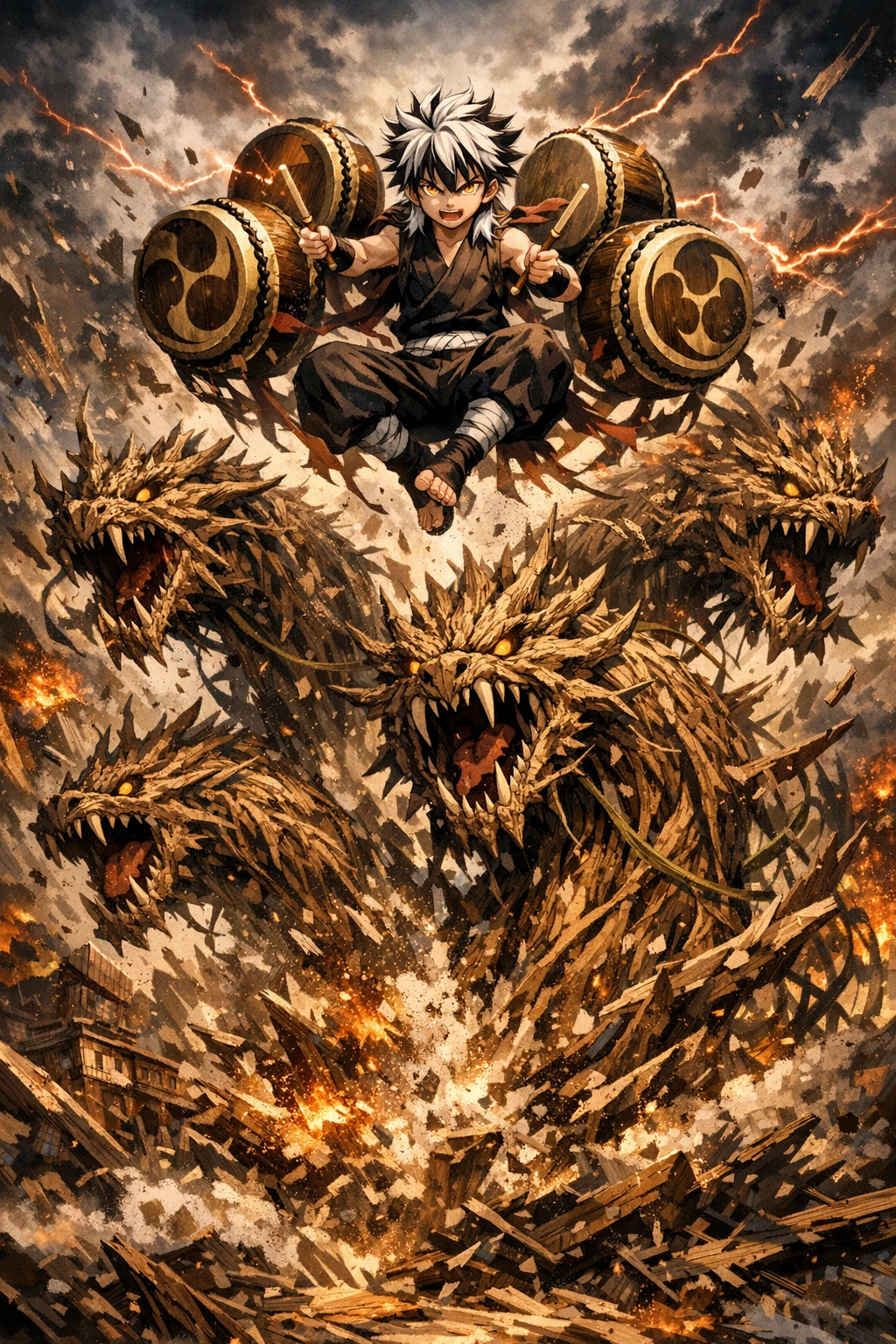
When the individual clones of Hantengu are pushed to their absolute biological brink—when their regenerative capacities are taxed by prolonged combat against elite Hashira—the organism initiates its ultimate failsafe protocol.
This is not a simple transformation; it is a terrifying biological reversal of his prior mitosis. The clones, realizing that divided they may fall, are biologically programmed to cannibalize each other to form Zohakuten, the absolute embodiment of Hatred. This cellular fusion is a process of extreme thermodynamic and biological condensation.
As Sekido forcefully absorbs Karaku, Urogi, and Aizetsu, their distinct cellular masses, neurological networks, and specialized genetic traits are violently compressed into a single, hyper-dense entity. Zohakuten is a composite organism.
He is significantly younger in appearance, denoting a purer, more concentrated form of demonic vitality, and possesses the complete genetic data of all four prior emotions. By reversing the mitosis, the biological energy that was previously spread across four bodies is now concentrated into one, resulting in a creature whose physical strength, reaction time, and demonic aura are exponentially magnified.
Zohakuten does not just wield the powers of the previous clones; he optimizes them, utilizing them in perfect, synchronized harmony without the delay of verbal communication between separate entities.
However, Zohakuten’s most defining and catastrophic attribute is his primary weapon: the Wood Dragon ecosystem. To understand the true threat of these constructs, one must frame the multi-headed wood dragons not as mere manipulated flora, but as highly aggressive, fast-growing biological extensions of Zohakuten’s own demonic flesh.
The material they are composed of simply mimics the cellular structure of trees. The dragons possess a hyper-accelerated form of demonic lignin and cellulose, making them infinitely harder, denser, and more resilient than natural timber.
Because they are an extension of his own nervous system, Zohakuten controls them with the precision of his own limbs. These are not static traps; they are a living, writhing ecosystem of botanical warfare that constantly regenerates, expands, and hunts.
The dragons possess massive kinetic force, capable of crushing buildings and pulverizing human bodies, and their sheer volume allows Zohakuten to dominate the entire battlefield, turning the environment itself into a hostile, predatory organism.
The true insidious nature of the Wood Dragon ecosystem lies in its oxygen depletion tactic. Fighting these massive, regenerating wooden structures is designed to systematically exhaust and break a Hashira. The dragons do not rely solely on dealing blunt force trauma to secure a kill.
Instead, they force the Demon Slayer into a relentless, unending war of attrition. To cut through the hyper-dense, demonically enhanced “wood” requires an insane amount of physical stamina and perfect breathing techniques. Every swing of a Nichirin blade against a dragon head drains a microscopic fraction of the Slayer’s cardiovascular limits.
Because the dragons regenerate almost instantaneously, the Slayer is forced to continuously exert maximum effort simply to survive, let alone advance on Zohakuten himself. This tactic systematically drains the Slayer’s oxygen reserves. In a combat system reliant on Total Concentration Breathing, oxygen is the equivalent of magical mana; it is the fuel for their superhuman feats.
By forcing the Hashira to over-exert their lungs and cardiovascular systems to clear the endless waves of botanical flesh, Zohakuten ensures that even if they avoid a direct, lethal blow, they will eventually succumb to muscular failure, asphyxiation, and total systemic exhaustion. It is an overwhelming, suffocating strategy born of pure, distilled hatred.
5. The Parasitic Core: Evolutionary Miniaturization
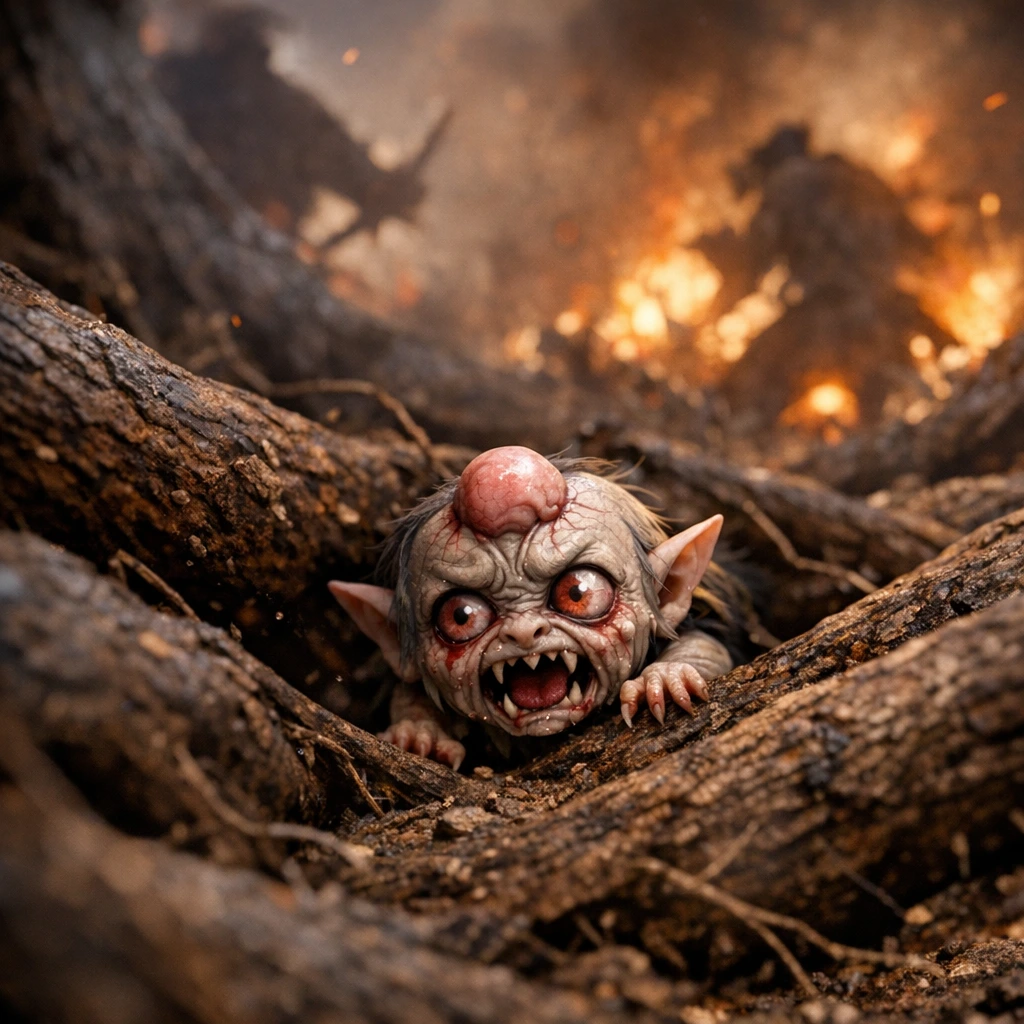
While Zohakuten wages an apocalyptic war of elemental and botanical destruction on the surface, the absolute core of Hantengu’s cowardice operates in the shadows. The most baffling and crucial aspect of Upper Moon 4’s biology is his ability to undergo evolutionary miniaturization.
To survive the trauma of his initial beheading and the subsequent summoning of his clones, Hantengu condenses his true, original body down to the size of a mouse. Medically analyzing this process reveals an astonishing feat of biological manipulation.
Shrinking a humanoid body to such diminutive proportions requires an immense expenditure of biological energy to compress his cellular mass. He is not shedding mass; he is aggressively compacting his atoms, forcing his cellular structure to become incredibly dense. This miniaturization is the ultimate expression of his parasitic psychology.
He abandons his dignity, his size, and his presence, transforming into a pathetic, scurrying rodent whose only objective is to remain visually undetectable while his powerful, avatar-like clones fight the actual war on his behalf. He is the puppeteer hiding deep within the stage, a parasite relying entirely on the host bodies he spawned to ensure his own survival.
This evolutionary miniaturization provides a profound defensive advantage that completely halts standard decapitation attempts, answering the critical question of why Genya Shinazugawa, possessing immense physical strength, could not cut the tiny core’s head off. The answer lies in the physics of physical density. By shrinking his body without losing his overall demonic mass, Hantengu exponentially increases the density of his skeletal structure and muscular tissue.
If you take the mass and durability of an Upper Moon and compress it into an object the size of an apple, the resulting physical density is unfathomable. He effectively turns his tiny neck into a biological diamond. The molecular bonds of his flesh become so tightly packed that standard Nichirin steel, which relies on the kinetic force of a human swing, simply cannot penetrate the surface tension of his skin.
The blades chip, dull, and shatter against a creature that looks like a fragile rodent but possesses the structural integrity of an armored vault. His cowardice, physically manifested through this miniaturization, grants him an almost impenetrable armor against conventional slashes.
Furthermore, Hantengu utilizes this tiny form to exploit a massive sensory blindspot on the battlefield. The colossal scale of the conflict above him serves a dual purpose: destroying the Slayers and providing absolute sensory camouflage. The localized thunderclaps of Sekido, the sonic booms of Urogi, the massive kinetic shockwaves of Karaku, and the grinding, roaring growth of Zohakuten’s wood dragons create an environment of total sensory overload. The collateral damage acts as an acoustic and thermal flashbang.
Amidst earthquakes, lightning strikes, and falling buildings, the microscopic thermal footprint and the tiny, frantic heartbeat of the real Hantengu are completely masked. He hides within the acoustic shadows of his own destruction. This forces the Demon Slayers to rely entirely on superhuman, non-visual senses to even locate the real target.
If Tanjiro Kamado did not possess an olfactory system capable of smelling the distinct “scent of hatred” amidst a battlefield thick with blood, ozone, and pulverized wood, Hantengu would have been virtually impossible to track. He is a parasite that perfectly understands how to use the chaos of its own making as an impenetrable cloak of invisibility.
6. Conclusion: The Execution of a Coward
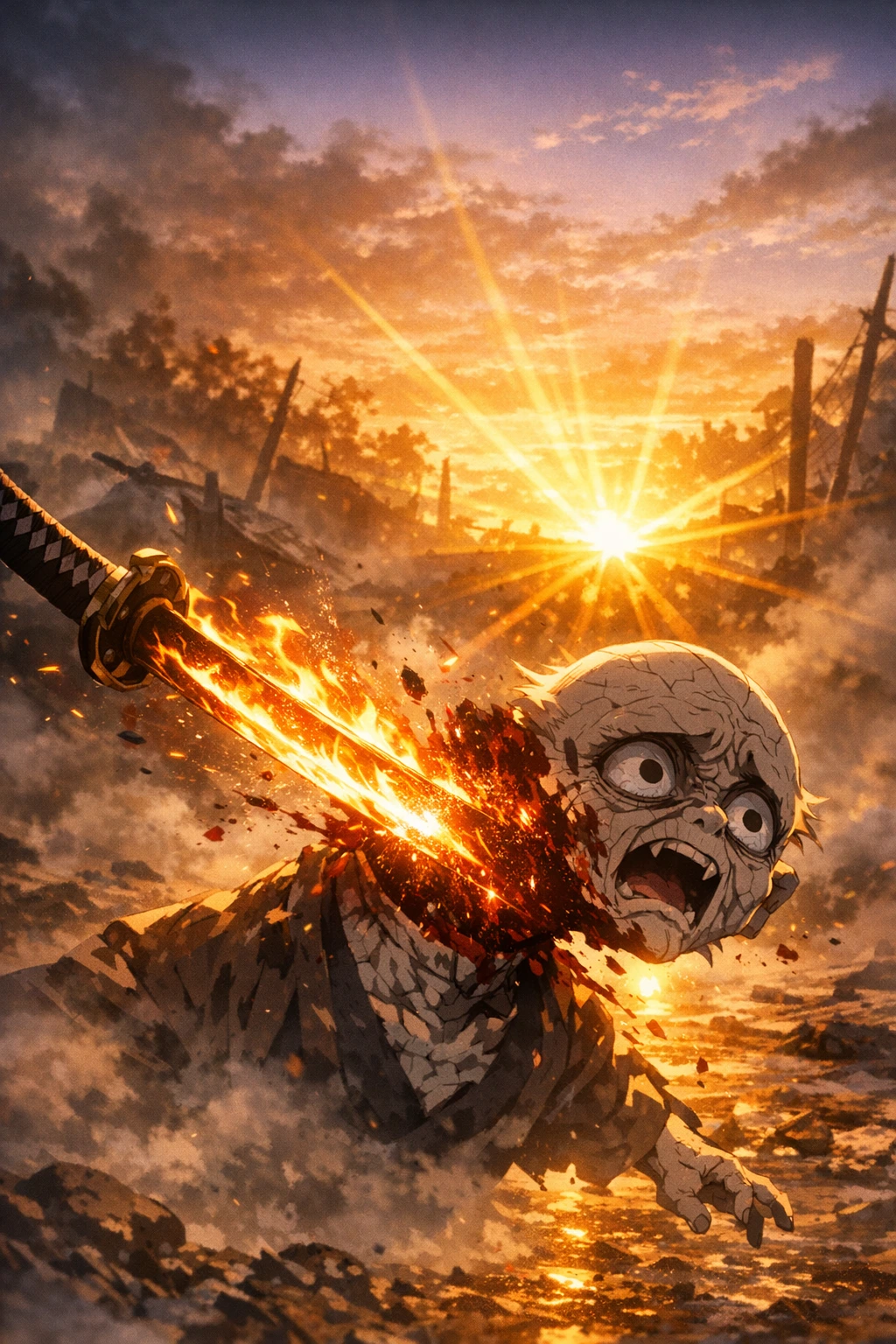
The final moments of Upper Moon 4 are steeped in a profound, poetic irony, culminating in the ultimate Sunrise Verdict. Hantengu’s absolute refusal to fight for himself, his defining trait of narcissistic victimhood, was the precise mechanism that ultimately doomed him.
Having been chased relentlessly by Tanjiro, and with his biological defenses exhausted, the true core of the demon found itself fleeing into the dawn. As the sun began to rise, the ultimate sterilizer of demonic anomalies breached the horizon, presenting Hantengu with a fatal ultimatum.
He was forced into a desperate, pathetic scramble, choosing between burning to ash instantly under the solar radiation or consuming humans (the nearby swordsmiths) to rapidly replenish his cellular energy and manifest a flesh shield.
Even at the very precipice of death, his instinct was not to stand and fight with honor, but to victimize the innocent to prolong his own miserable existence. His running, his constant deflection of responsibility, had simply stalled the inevitable until the environment itself turned against him.
Tanjiro Kamado’s uncompromising strike against the true body represents a significant shift in the psychological weight of the series’ executions. Throughout his journey, Tanjiro is defined by his profound empathy. He often smells the lingering human sorrow within the demons he kills, offering them a prayer and a moment of genuine grief as they crumble to ash.
For Hantengu, however, there was no such grace. Tanjiro’s heightened senses allowed him to see entirely through Hantengu’s pathetic, fabricated victim complex. He smelled no underlying tragedy, no remorse, and no genuine sorrow—only pure, distilled hypocrisy, selfishness, and an arrogant sense of entitlement.
When Tanjiro finally utilized the Hinokami Kagura, enhanced by Thunder Breathing, to sever the hyper-calcified neck of the massive flesh-puppet Hantengu hid within (and subsequently the true tiny core), he delivered the final blow without a single shred of the empathy he usually reserves for the dying.
It was a cold, calculated, and absolutely necessary execution of a creature completely devoid of redeeming qualities. Tanjiro recognized that validating Hantengu’s victimhood with sympathy would be an insult to the countless lives the demon had violently ended.
In final expert insight, Hantengu must be cemented as the ultimate parasitic organism within the lore of Demon Slayer. He was not a warrior who fell to stronger swordsmen, but an infestation that was finally eradicated. He stands as a terrifying masterclass in how extreme psychological cowardice, when weaponized by highly adaptive demonic biology, can stall, frustrate, and nearly annihilate even the most powerful Hashira.
His Blood Demon Art was a masterpiece of evasion, cellular cloning, and sensory misdirection, all serving the singular purpose of protecting a microscopic core of ego and lies. By transforming his refusal to take responsibility into a biological fortress of avatars and dragons, Hantengu proves that the most difficult monsters to kill are not always the ones with the sharpest claws, but the ones who refuse to admit they are monsters at all. He died as he lived: running away, screaming that he was the victim, right up until the blade severed his delusions forever.