

The Shonen battlefield is defined by vibrant displays of friendship, perseverance, and the collective spirit of the ‘Nakama’.
We have already analyzed the profound influence of guiding figures—the Sensei Trope—who shape the hero’s growth through discipline and wisdom.
But what happens when a character rejects that path? What force molds the few who rely on isolation rather than instruction?
Operating in the cold, analytical fringe of this genre is a darker, more compelling archetype: the Genius Loner Trope.
This figure—be it the silent strategist L Lawliet, the calculating avenger Sasuke Uchiha, or the intellectual survivor Senku Ishigami—is defined by an unnatural proficiency in a specific area combined with a deliberate or circumstantial choice to operate in isolation.
This archetype is more than a mere plot device; it is a critical component that injects complexity and realism into the often-idealistic Shonen narrative, forcing both the hero and the audience to confront the difficult psychological realities that underpin exceptional power.
The loner’s genius is often misattributed to a twist of destiny, but a deep analysis will prove that their formidable strength is, in fact, the direct, earned consequence of their solitary path.
For those who walk alone, the maxim holds true: Solitude is Power.
Deconstructing the Loner Archetype: Defining Genius in Isolation
The Genius Loner Trope is the intentional convergence of intellectual or martial mastery with profound social isolation, creating a figure who exists as both an aspiration and a warning.
This archetype is significantly more complex than a mere outcast; the loner’s isolation is usually a defining trait linked to their proficiency.
They establish an immediate, compelling contrast with the heroes who thrive in groups, often setting up a dynamic between the naturally talented and the hard-working ‘normals’.
Their genius is not merely high IQ, but a psychological complex rooted in the deliberate detachment that allows for singular, unmatched focus.
The Psychological Profile of the Isolated Genius
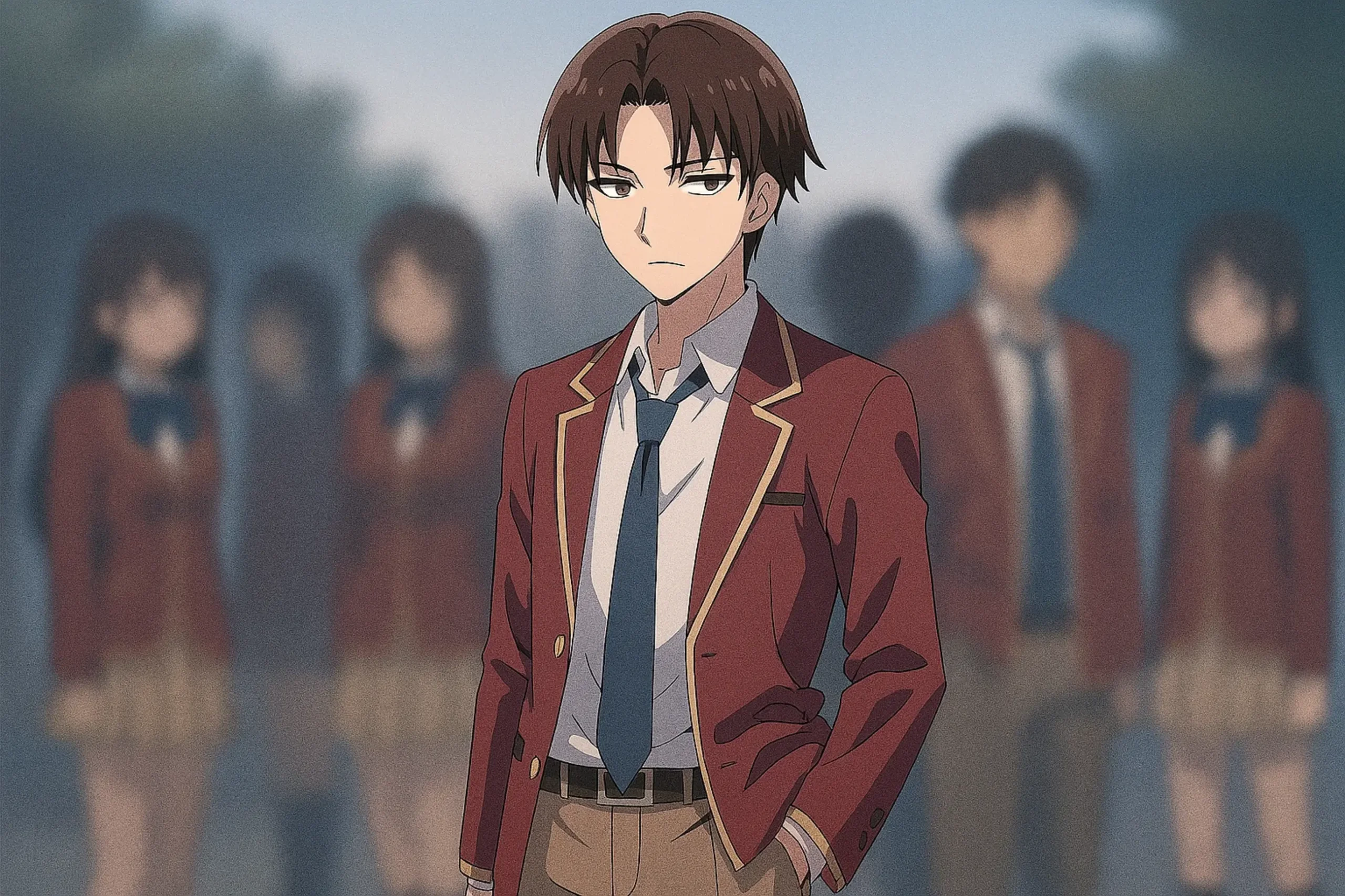
The loner’s isolation is built upon a foundation of specific psychological and behavioral traits.
The Loner is often characterized by a socially awkward or deliberately antisocial behavior.
Characters like L Lawliet exemplify this, with his numerous eccentricities—such as his perpetual crouch and exclusive consumption of sweets—being surface manifestations of an inherent difficulty emotionally connecting with peers.
This detachment fosters a private, observant, and philosophical nature, confirming the trope’s complexity.
L Lawliet’s characteristics as a misanthropic recluse are an accurate description of a figure whose intellect requires total removal from societal norms to function at peak capacity.
In contrast, figures like Kiyotaka Ayanokoji (Classroom of the Elite) show a more calculating approach, where his aloof energy and isolation are a conscious, strategic choice to maintain distance and ensure unpredictability.
This deliberate separation from the collective creates a mysterious aura that transforms their lack of allies into a unique tactical advantage: unpredictability.
Their common strengths are numerous: they are alert, cautious, highly focused, and studious.
Above all, they possess self-reliant survival skills that make the presence of others optional, a necessity in a survival-driven Shonen world.
Limiting Factors: The Necessary Flaw
However, this genius is almost always checked by limiting factors essential for narrative conflict and realism.
These restrictions prevent the Loner from becoming an uninteresting, overpowered figure.
The limitations can range from physical impairments or chronic diseases to the more devastating psychological trauma and fear that caused their initial isolation, such as the massive loss that shaped Levi Ackerman and Sasuke Uchiha.
Additionally, the concept of the “Brilliant but Lazy” syndrome can act as a natural psychological limiter, where their talent leads to apathy when unchallenged.
The Genius Loner is a character who is naturally capable but severely internally restricted, forcing them to evolve through brutal discipline rather than communal support.
The brilliance of the trope lies in presenting a character who is naturally capable but internally restricted, setting the stage for a difficult, earned journey where every ounce of power is paid for.
The Core of Victory: Why Solitude Forces Unwavering Effort
Authors’s first analytical perspective, The Core of Victory (Effort Triumphs Over Destiny), is nowhere better demonstrated than in the Loner’s journey.
The prevailing myth in Shonen is that the Loner is simply a “prodigy” blessed by fate.
Our analysis proves this is a narrative misdirection; the Loner’s strength is acquired, a relentless pursuit of mastery driven by necessity and stripped of the distractions of the collective.
This principle is fundamental to the very definition of Solitude is Power.
Effort Triumphs Over Inherent Destiny
The loneliness of the genius is not a side effect; it is the engine for work.
The Loner has no emotional safety net, no team to pick up the pieces, and no master to offer comfort.
Their detachment means they cannot rely on collective morale or a “power of friendship” boost.
Their only companion is the training regimen, and their only metric for success is a self-imposed, ruthless standard of unwavering effort and hard work.
This sets them apart from the hero, whose final power often relies on latent destiny or inherited strength.
The Loner is a proof statement that effort triumphs over destiny.
This constant drive from a point of isolation is what makes the dynamic between naturally talented and hard-working ‘normals’ so compelling.
The Training Arc of Isolation: Vegeta and Killua
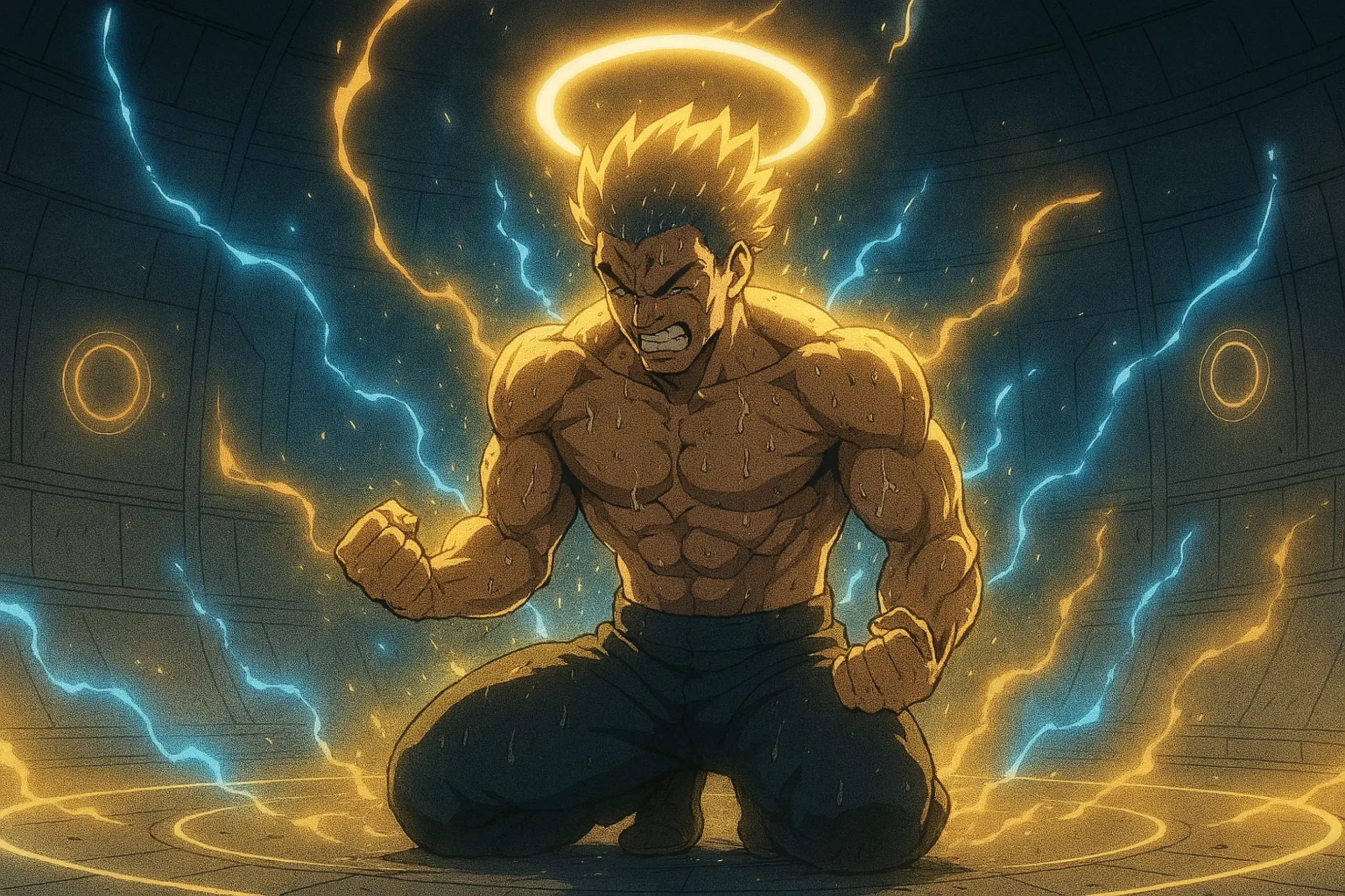
The arc of Vegeta, the Saiyan Prince, is the quintessential Effort vs. Destiny narrative.
Initially, he relies entirely on his “Elite” birthright, his genetic advantage as a royal Saiyan.
He is repeatedly humbled by Goku, the “low-class” warrior who achieves new plateaus through sheer, tireless dedication.
Vegeta’s subsequent, dramatic power-ups—specifically the early Super Saiyan transformations and the mastery of Super Saiyan Blue—are forged in solitary, brutal training environments, notably the Hyperbolic Time Chamber.
His ability to repeatedly surpass his own limits is a monument to a lifetime of self-inflicted discipline and effort.
His loneliness is his lab, where his power is perfected.
While he eventually seeks mentorship (like his training with Beerus, which leads to forms like Ultra Ego), those moments of external guidance serve primarily to highlight the intense solitary training he undertakes after the instruction, underscoring the contrast between the Loner’s self-made power and the Hero’s communal support.
Similarly, even characters with inherent talent, like Killua Zoldyck, must back that talent with brutal, personalized effort born of isolation.
While Killua is undeniably a prodigy with an assassin lineage, his most profound skills—including the lightning-quick Godspeed—are mastered only through years of forced isolation, torture, and a self-inflicted psychological conditioning designed to make him feel he doesn’t “deserve to have friends”.
The very isolation of the Zoldyck Estate—isolated atop a mountain—symbolizes the fact that his genius is not a gift, but a survival mechanism honed by solitude.
This unrelenting pressure environment ensures that when the Loner appears, their power is not a sudden plot device, but the logical, earned result of endless hours spent in the dark where Solitude is Power manifests as perfected technique.
Solitude as a Catalyst: The Rival’s True Role in the Hero’s Journey
author’s fifth perspective—that the rival is the hero’s supporter person—provides the ultimate reframing of the Genius Loner’s purpose.
The Loner’s solitary strength is the ultimate narrative tool that advances the hero and accelerates their growth.
They are not the hero’s ultimate enemy, but rather a constantly moving, seemingly unattainable benchmark whose primary function is to elevate the protagonist.
The Shadow that Defines the Light: Sasuke Uchiha

The Loner provides the existential threat that the hero cannot afford to ignore, forcing them to evolve at an impossible pace.
Much of Naruto’s power progression can be traced to his rivalry with Sasuke Uchiha.
Sasuke, the definitive loner-by-choice who deliberately severs bonds to pursue power and vengeance, is the single most significant catalyst for Naruto.
Every one of Naruto’s major power-ups—from mastering Sage Mode to controlling the Kurama Link—is fundamentally driven by the emotional and physical necessity to match, understand, or bring back his missing rival.
Sasuke’s formidable, isolated strength provides a constant, looming deadline for Naruto’s effort.
Without the rival’s relentless, power-hungry trajectory, the collective-minded hero would have comfortably plateaued far earlier.
The Pressure of the Loner’s Progress
This dynamic illustrates how Solitude is Power for two characters simultaneously.
The Loner operates on a different, faster trajectory.
Their self-reliance means they cut all corners not related to power acquisition, embracing morally gray paths if necessary.
This hyper-efficient, often cynical, progress forces the collective hero to ask: Is our slow, moral method fast enough?
The Loner’s shadow acts as the narrative’s whip, ensuring the protagonist is never complacent.
This independent decision-making and unpredictable nature make them harder for enemies to understand, but most importantly, they force the collective hero to mature beyond simple friendship and develop sophisticated counter-strategies.
The lonely pursuit of strength by the rival ironically secures the ultimate collective victory of the hero, proving that the rival’s isolation is a sacrifice made for the hero’s progress.
The Genius Loner is the shadow that defines the light.
Hope vs. Harsh Reality: The Cynicism of the Isolated Genius
In a genre often built on the earnest, pure-hearted ideals of its protagonists, the Genius Loner serves as the narrative’s essential dose of Cynicism.
This aligns with Pwn’s second principle: Hope often works to mask the dark realities, difficulties, and pains of Anime worlds.
If the hero embodies the unyielding light of optimism—the belief that bonds can conquer all—the Loner embodies the cold, hard, analytical realism of a world that rewards pragmatism over sentiment.
Their solitude is frequently a psychological reaction to trauma, or a cold acknowledgment of the world’s fundamental cruelty, a truth that the hero’s unwavering hope often comfortably ignores.
Isolation as a Shield: The Trauma-Induced Loner

The loner’s isolation is frequently rooted in a history that defies the Shonen ideal of “The Power of Friendship.”
For Levi Ackerman, his stoic demeanor and emotional distance are the direct consequences of childhood isolation and devastating loss.
His character explores “The Loneliness of Levi Ackerman” as his tactical genius requires him to maintain a protective barrier against further emotional pain.
Having witnessed mass loss and the horrific true nature of his world, Levi’s decision to maintain distance is not a whim, but the practical requirement of a commander who must survive to protect those beneath him.
His cynicism is earned; it is the emotional cost of surviving a brutal, unforgiving world where collective safety is an illusion without extreme personal sacrifice.
The Psychological Burden of Realism

Similarly, L Lawliet’s characteristics as a misanthropic recluse are a practical application of cynicism.
His brilliant mind concluded early on that emotional trust is a liability.
His isolation serves his work by eliminating bias and emotional interference, allowing him to perceive reality objectively.
He holds no Hope in the inherent goodness of society; he deals only in provable facts and logical deductions.
While highly effective, this analytical detachment tragically highlights the profound loneliness of being an outsider whose intellectual capacity separates him from the very people he is trying to save.
The Loner’s presence ensures that the audience—and the hero—cannot entirely escape the difficult, dark truths of the Shonen world, acting as the grounded conscience that prevents the story from descending into pure, unearned optimism.
The Loner’s internal conflict between their deep-seated desire for connection (often realized late in their arc, like Killua with Gon) and their self-imposed isolation is the perfect dramatic fuel for character development.
Pushing the Limits: The Loner’s Creative Use of Flexible Power Systems
The Genius Loner’s strength is often expressed not just in raw power, but in innovation—the ability to expand or outright rewrite the rulebook of a Shonen world.
This exemplifies Pwn’s fourth perspective: Magic/Power Systems are not rigid laws, but a flexible narrative tool where new rules are created through creativity and willpower.
Innovation Born from Necessity
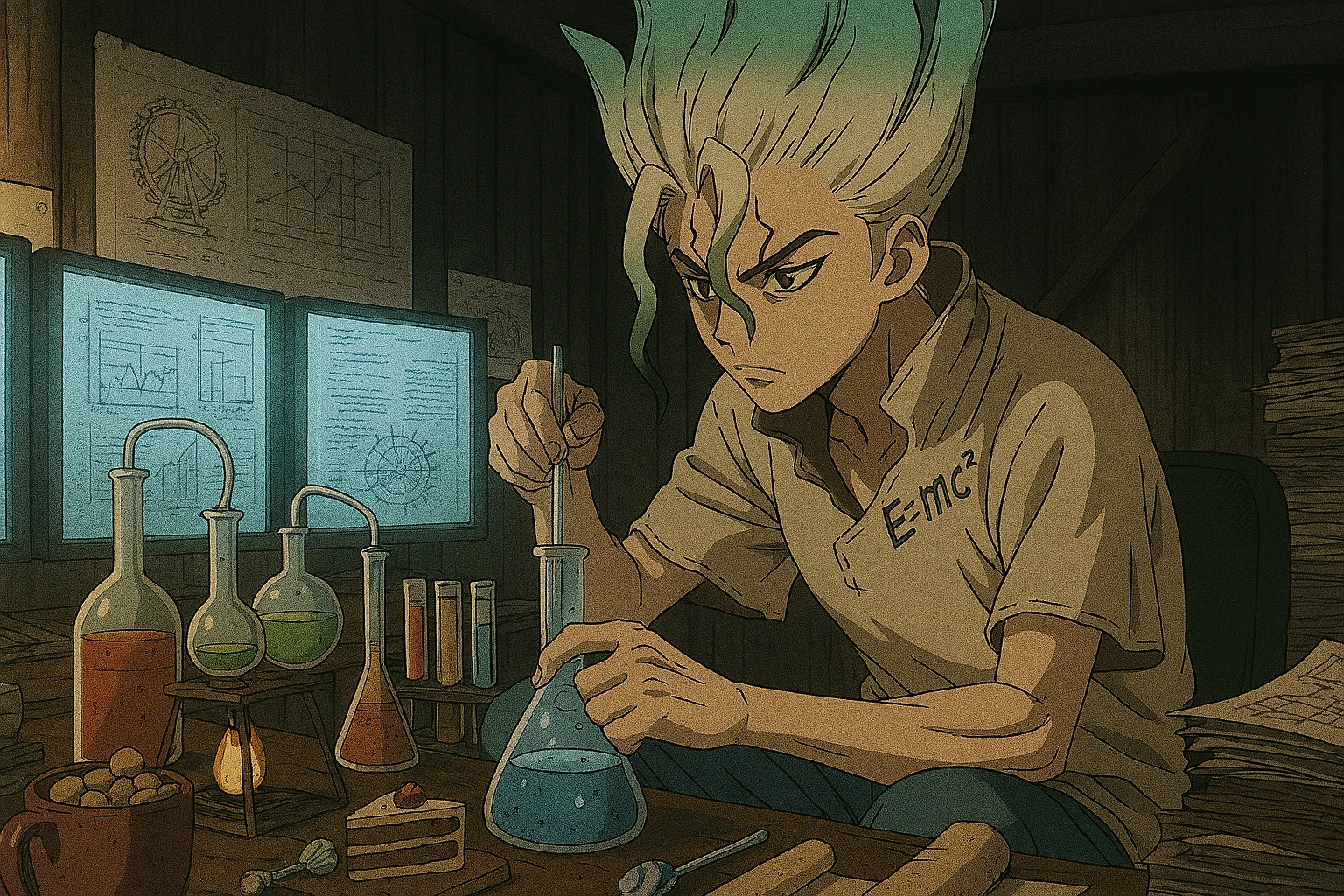
The Loner’s genius is necessary for intellectual breakthroughs because they are deprived of the communal tradition of a school or the direct guidance of a powerful master.
They must invent or perish. They treat the power system as a grand puzzle, and their sheer force of will, driven by their singular ambition, is what unlocks new potential.
This leads to unique, often personalized, and devastating techniques that the collective cannot replicate.
The ultimate intellectual Loner is Senku Ishigami (Dr. Stone), the self-proclaimed “Einstein of the Stone world” who possesses thousands of years worth of humanity’s knowledge.
His scientific isolation is not an emotional choice but a necessity for human survival and the rebirth of civilization.
His vast scientific knowledge—a power system based on logic—is the perfect example of a flexible system being manipulated.
Senku constantly introduces “new rules” (new inventions, technologies) through relentless individual effort and mental ingenuity to overcome insurmountable magical or physical obstacles.
He constantly changes the terms of the fight, proving that pure will and knowledge can transcend established strength.
The Willpower to Break the Rules
In battle-centric Shonen, this translates to the Loner being the ultimate outlier in power dynamics.
Because the loner is frequently hunted or on a different path, they cannot wait for a master to teach them the next level.
This pressure leads to unique perspective and the ability to see solutions others miss.
Their techniques—from a new kind of Jutsu, a specialized Haki technique, or the mastery of a new form like Ultra Ego—are personal, devastating, and entirely self-made.
This consistent innovation confirms that power systems are ultimately pliable, yielding to creativity and willpower born from dedicated solitude.
Their genius is the engine that prevents the Shonen world from becoming stagnant, ensuring the narrative always has a new power level to strive for, even if that breakthrough comes from the dark, solitary corners of the story.
The Open Question: What Price Does the Genius Loner Pay for Solitude?
While the Loner’s journey proves that Solitude is Power, it simultaneously forces a deeper contemplation of the enduring consequences.
This brings us to the open-ended questions of the Price of Power and The Role of the Common Man, concepts we explore without forming a final, definitive conclusion.
The Steep Price of Solitude: Emotional Stunting

The power achieved through isolation invariably extracts a devastating psychological toll.
The Price of Power is measured not in physical injury, but in emotional stunting.
We see this in the chronic inability to form healthy relationships that plagues these characters, leaving them vulnerable to external manipulation, such as Killua’s psychological binding to his brother Illumi.
Even when the Genius Loner eventually chooses to return to the group, the emotional scars remain—the inherent paranoia, the difficulty in accepting help, and the constant psychological burden of being self-reliant.
The emotional stunting and psychological trauma prevent them from achieving the holistic strength that comes from true bonds.
This constant internal battle raises the question for the audience: Is this psychological price—this persistent loneliness—a necessary and acceptable cost for the magnitude of the strength that ultimately saves the world?
Or is it a fundamental narrative warning that true, holistic power cannot be achieved alone?
The Role of the Common Man in a World of Geniuses

Finally, the existence of the Genius Loner implicitly questions The Role of the Common Man in a world of super-powered heroes.
When victory is secured by those who operate outside the rules—whether through destined power or, more compellingly, through isolated, genius effort—what active purpose remains for the average individual?
Does the Loner’s sacrifice (their solitude) and the Hero’s destiny fully justify the safety of the common, non-powered populace?
Or do the common folk simply exist as a backdrop, forever reliant on the unpredictable, often morally questionable, decisions of the isolated genius?
The most compelling Shonen arcs suggest that the Loner’s power is insufficient alone.
The slow-burn connection arc, where the loner must learn to value the collective, ultimately reasserts the common man’s collective value, suggesting that even the greatest power forged in solitude is fundamentally unstable without the anchors of human connection.
The common man’s role is ultimately to provide the emotional anchor and societal stability that the isolated genius sacrificed for their power.
Conclusion: The Enduring Paradox of the Loner
The Genius Loner Trope endures as a cornerstone of Shonen because it provides the ultimate paradox: the strength of the individual, purchased at the cost of the soul, yet often serving the greater good of the collective.
The Loner, defined by a unique perspective and unparalleled effort, is the necessary friction that keeps the Shonen engine running, challenging its idealistic conventions at every turn.
They are the analytical, cynical proof that while destiny may offer a path, unwavering effort in the silence of solitude is the only way to earn truly world-changing power, even if that power is a heavy, indelible burden.
Their story is a powerful reminder that while connection offers happiness, it is often through profound isolation that the most brilliant and devastating forms of strength are forged.
Continue the Shonen Analysis
If the Genius Loner represents the isolated extreme of effort, the Sensei Trope provides the compassionate counterpoint of guided development.
Do you prefer the self-made power forged in isolation, or the disciplined mastery passed down by a mentor?
Explore the contrasting path of growth in our related deep dive: [The Sensei Trope: Why the Mentor is the Ultimate Catalyst for Shonen Heroes]