
Have you ever wondered why the powerful anime Sensei role always seems to be either dying, retiring, or just disappearing? It’s not bad luck; it’s by design.
The mentor is the most essential character in shonen storytelling, serving as the architect who blueprints the hero’s journey from novice to legend.
They are the Unsung Architects, designing the foundation of the hero’s strength not just through technique, but through the crucible of philosophy and personal sacrifice.
For the analytical mind, the Sensei trope represents one of anime’s most structurally essential narrative devices.
These mentors—from Master Roshi guiding Goku to Jiraiya training Naruto—are not mere educators; they are catalysts.
Their primary function is to compress generations of hard-won wisdom into accelerated timelines, allowing stories to rapidly escalate from humble beginnings to world-shaking conflicts.
The mentor’s ultimate purpose extends beyond instruction: they exist to eventually disappear, forcing the protagonist to abandon the blueprint and become the true creator of their own path toward heroism.
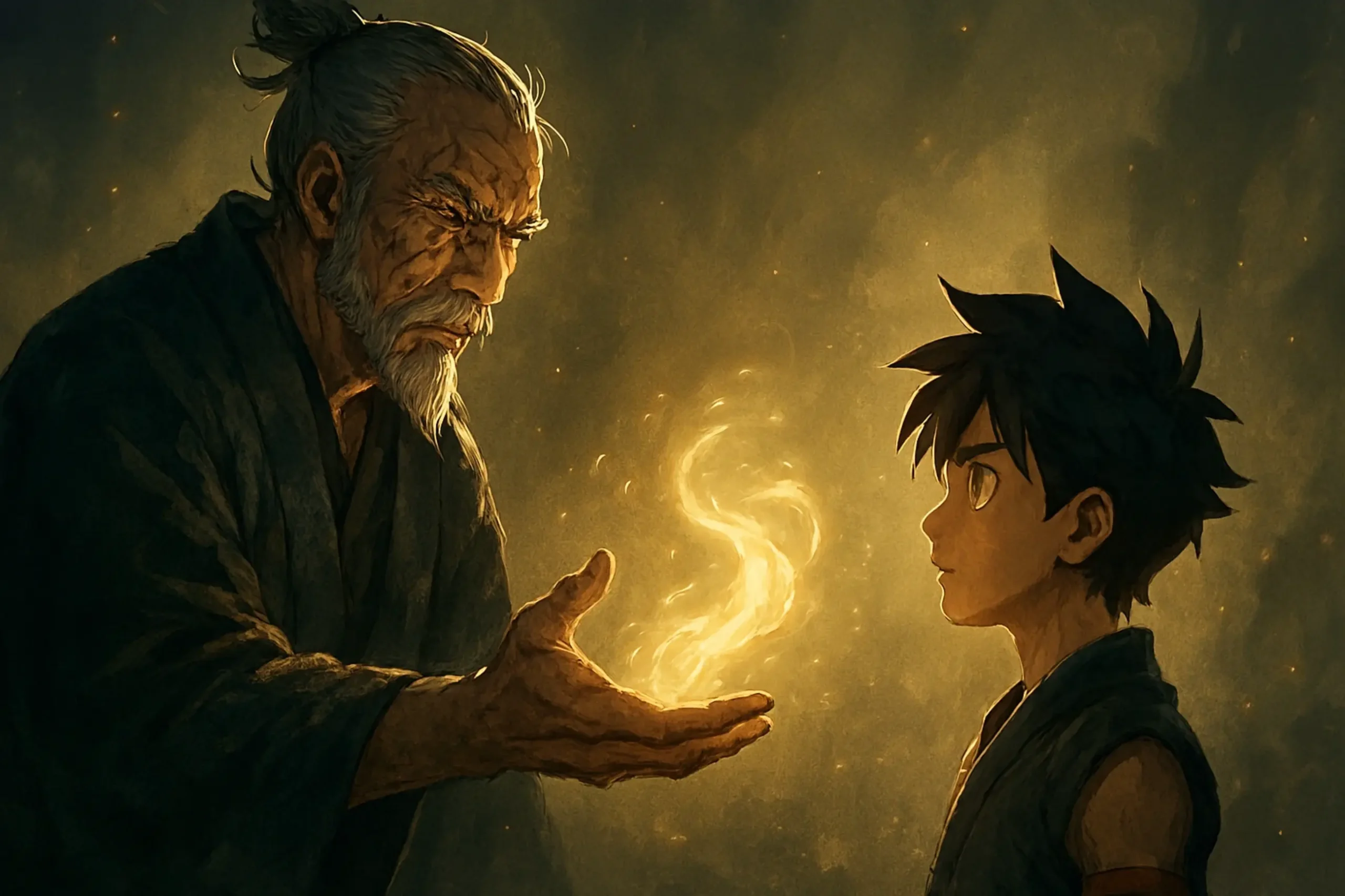
1. The Core of Victory: The Blueprint of Unwavering Effort
The Sensei’s ultimate lesson is that mastery is achieved through sustained commitment, not accident of birth. They teach effort over destiny.
In a world often defined by prophecies and secret bloodlines, the Sensei serves as the first and most crucial lesson in The Core of Victory: unwavering effort triumphs over destiny.
The mentor’s value lies in their ability to systematize the seemingly mystical process of becoming a hero, translating raw talent into disciplined, replicable tenacious labor.
The Sensei functions as a narrative shortcut that bypasses decades of trial-and-error learning, but they never bestow an easy victory.
Instead, they provide the necessary framework for earning one.
The power they transfer is never innate; it is a system of labor.
Master Roshi doesn’t just teach Goku martial arts; he provides the foundational philosophy of discipline, control, and the wisdom of restraint.
He demands the tireless labor of the spirit and the body.
Jiraiya transfers devastating techniques like the Rasengan and Sage Mode to Naruto, but concurrently teaches resilience, self-worth, and the ability to endure profound loneliness.
The techniques were earned through sweat and psychological fortitude.
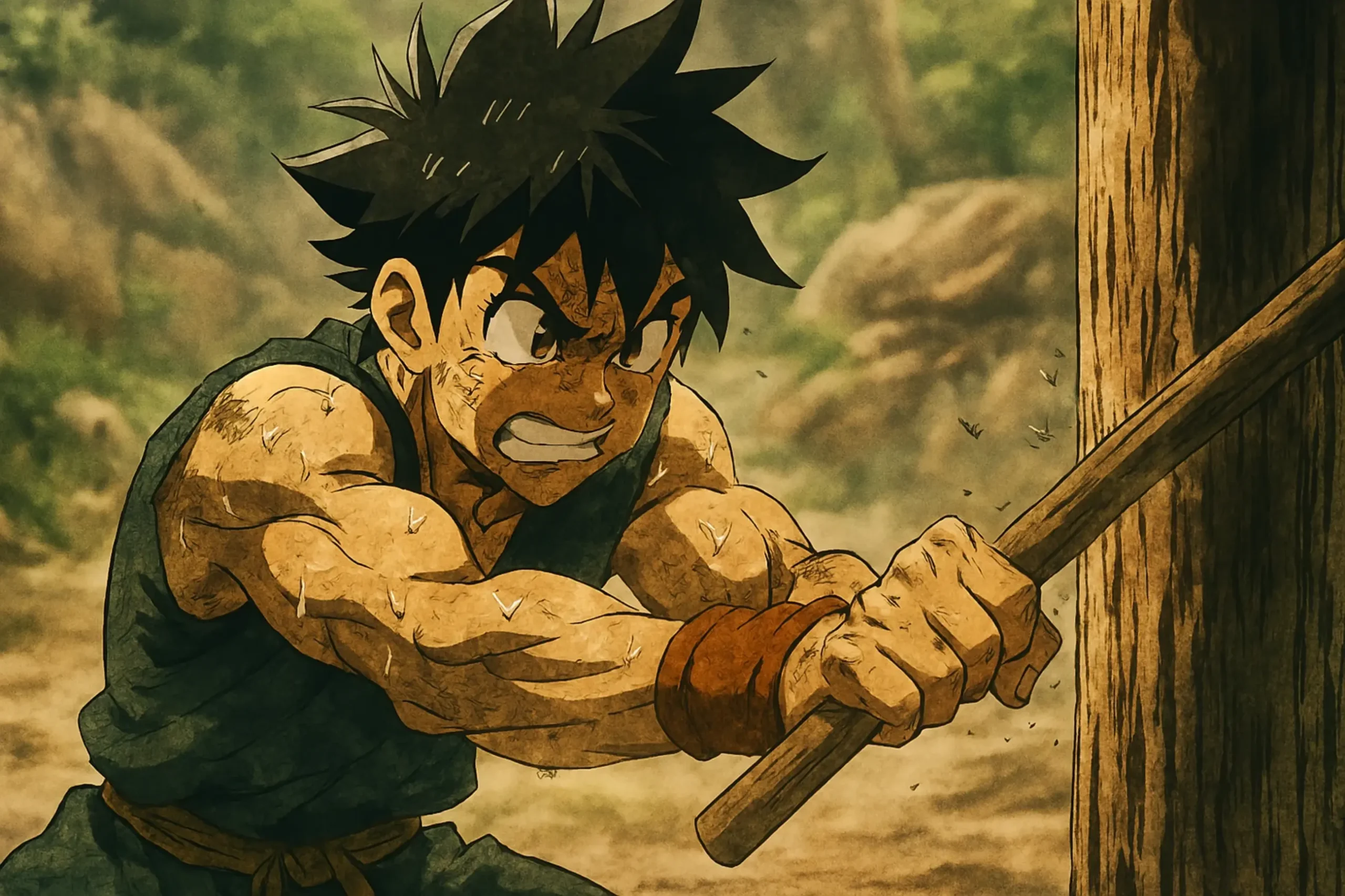
This transfer establishes the power ceiling the hero must eventually surpass.
Kakashi teaches Team 7 the basic jutsu and, more importantly, the necessity of teamwork, creating the foundation upon which Naruto builds his world-changing abilities.
The techniques are the walls, but the Sensei instills the structural integrity—the commitment to relentless dedication—that prevents the hero from collapsing under the weight of true power.
This focus ensures that the eventual triumph is a result of unwavering effort, making the hero’s ultimate success a verifiable act of meritocracy.
This focus is what makes the shonen genre fundamentally different from those defined by arbitrary chosen ones; the mentor’s role is to ensure the chosen one earns their status through merit.
The Flexible Law of Power Systems: Creativity as the Master Key
The understanding of the Sensei’s role requires viewing Magic/Power Systems not as rigid laws, but as a flexible narrative tool where new rules are created through creativity and willpower.
The mentor’s role is to reveal the inherent potential for flexibility and innovation within the rules of the world.
They challenge the student to go beyond rote memorization and instead apply their own creativity and sheer willpower to the system.
This mentorship validates the principle that anything is possible in magical worlds through force of will, making the power system a reflection of the character’s internal journey.
This is seen in systems that appear strict, only to be broken open by the student’s creativity and sustained effort:
- Roshi and the Kamehameha (Dragon Ball): Goku’s true power came not from using the technique, but from his ability to replicate and then invent upon that foundation, pushing his body with disciplined perseverance far beyond what his teacher required. The mentor provided the seed; the student provided the evolution.
- Wing and Nen (Hunter x Hunter): Wing and Biscuit teach Gon and Killua the principles of Nen, knowing that true mastery comes from the student’s personalized application (Hatsu) driven by their unique psychological will. The techniques themselves are secondary to the student’s mental architecture.
- Aizawa and Quirks (My Hero Academia): Aizawa teaches his students that even powerful Quirks have limits. His mentorship emphasizes strategy, physical conditioning, and effortful control over raw ability. He forces students to treat their unique abilities as a science of application rather than a divine gift.
By transferring power through intensive, willpower-driven training, the Sensei ensures that the hero’s victory will always be attributed to effort. They are the engineers of the meritocracy.
2. The Flawed Architect: Exposing the Dark Reality
The mentor’s personal failure is the hero’s true lesson, injecting cynicism that elevates the realism of the world, teaching that hope is often a mask.
Perhaps the most profound narrative innovation within the mentor archetype is the Flawed Architect.
The tragic or flawed Sensei is the necessary counterweight to the hero’s idealism, serving as the character that introduces the dark reality of their world.
This dynamic engages the principle of Hope and Reality: Hope often works to mask the dark realities, difficulties, and pains of Anime worlds.
The Sensei’s flaws are the first crack in the narrative’s hopeful veneer.
This analysis must carry a touch of cynicism to increase the realism of the character journey, demonstrating that true heroism requires an understanding of systemic brokenness.
The Cynical Core of Mentorship and Character Analysis
The mentor’s personal trauma is the ultimate lesson plan.
They carry the psychological scars of their past, which they inadvertently or intentionally transfer to the student.
This focus on World/Character Analysis is crucial, as the hero’s internal journey is defined by learning to cope with this inherited burden.
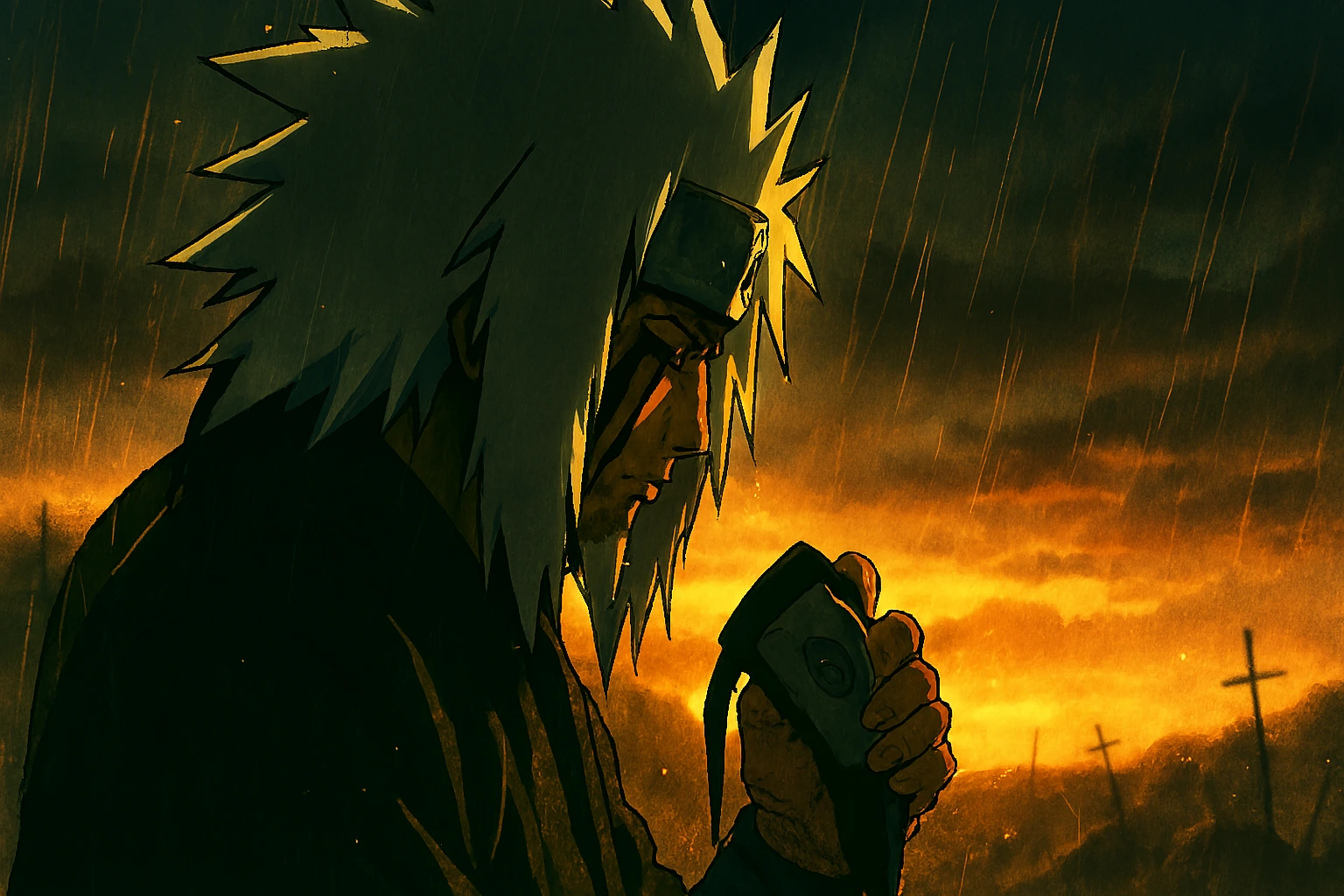
- Jiraiya’s Tragedy (Naruto): Jiraiya perished at the hands of former students (Pain) who were attempting to fulfill his dream of peace through a warped ideology.
- Jiraiya’s flaw was his inability to save all his students, creating a profound emotional debt.
- His death strips away Naruto’s “safety net” of hope, forcing him to face the very real, cynical pain of loss.
- The tragedy teaches Naruto that optimism is meaningless without a concrete, non-violent political solution—a painful reality check.
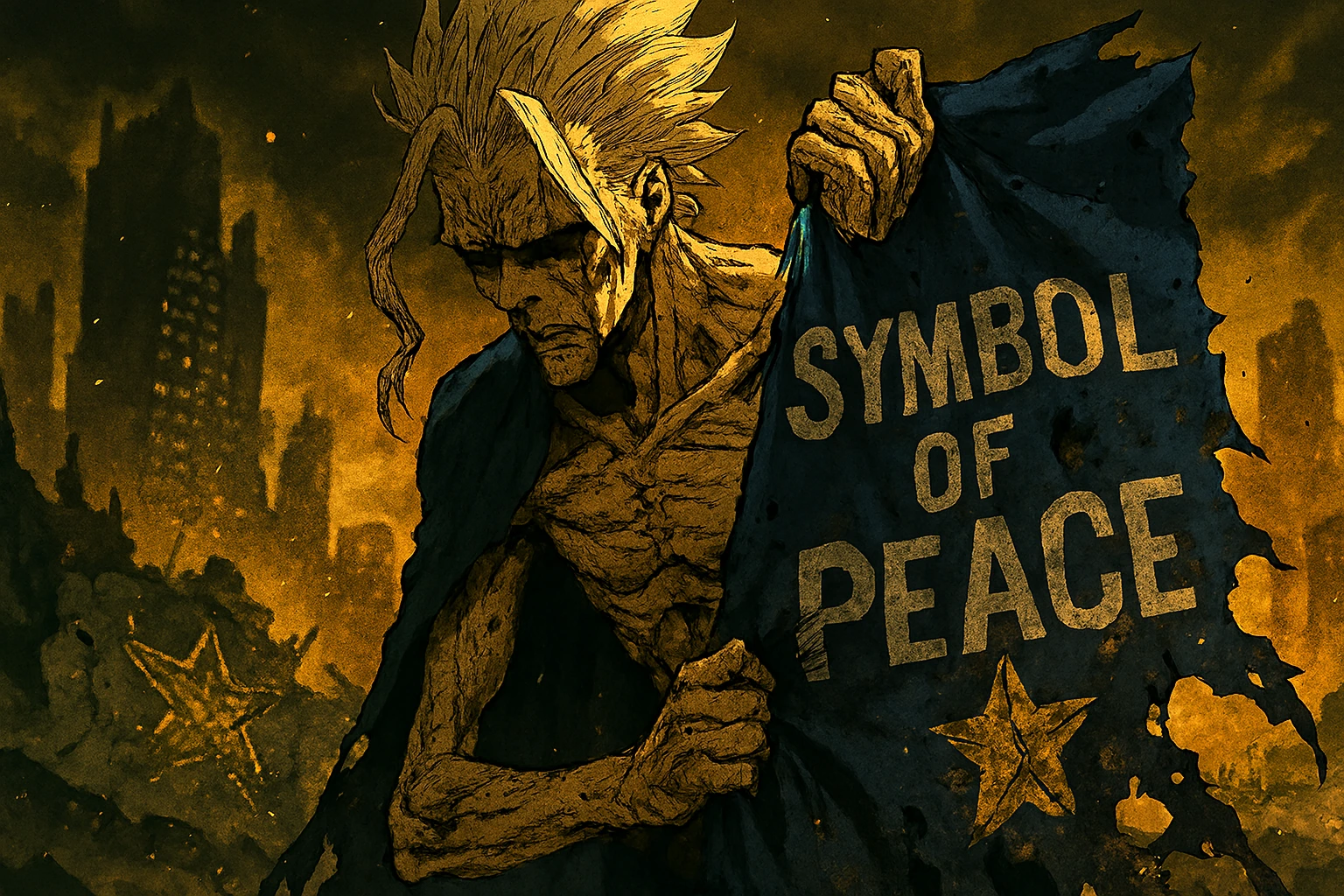
- All Might’s Self-Sacrifice (My Hero Academia): All Might’s entire trajectory showcases the danger of an unsustainable, solitary heroism.
- His retirement exposes the dark reality that the symbol of hope was a mask for a deep-seated institutional problem that Deku must now fix.
- The lesson is that solitary heroism is unsustainable—a profoundly cynical view of the “Symbol of Peace.” He hands Deku a future where the cost of maintaining hope has destroyed his own body.
- Female Mentors and Sacrifice: The pattern holds even for figures like Tsunade (carrying the guilt of her lost loved ones and her crippling fear of blood) or Genkai (Yu Yu Hakusho), whose mentorship is harsh and focused on the limits of sacrifice.
- Genkai doesn’t coddle Yusuke; she teaches him through extreme challenge, emphasizing control, humility, and the painful price of power.
- Their flaws are what make them effective: they teach caution where the protagonist only sees glory.
These character flaws serve essential functions: they establish moral stakes and show the consequences of philosophical extremism.
The Sensei’s past failures offer cautionary tales more valuable than any technique. They are a broken mirror, reflecting the hero’s potential future failures.
The Sensei and the Mask of Hope
The mentor often acts as the primary figure who maintains the societal mask of hope while fully understanding the terrible mechanism behind it.
They absorb the existential dread of the world so the young hero can grow untainted for a time.
Gojo Satoru in Jujutsu Kaisen exemplifies this: he is the strongest, the one who carries the entire burden of preventing total chaos, allowing his students to focus on training without the full crushing weight of the world’s inevitable suffering.
When he is removed from the narrative, the reality of the world—its constant, cynical cruelty—crashes down on the students, forcing an accelerated, painful maturation. This moment confirms the mentor’s secondary role: they are temporary shields against reality.
Exploring the Price of Power
The Flawed Architect trope forces us to directly confront the crucial open-ended question: The Price of Power.
The heroic journey is often paved with the psychological and literal sacrifices of those who taught the hero how to walk. Jiraiya’s death was necessary for Naruto’s ultimate power surge against Pain.
- Did the hero inherit the knowledge, but also the debt?
- Is the mentor’s life or psychological well-being the first installment on the hero’s power?
- What cost will the hero eventually have to pay to maintain the power they gained?
The Sensei demonstrates that overwhelming power does not grant immunity from the tragedies of the human condition—it often accelerates them.
3. The Necessary Departure: Why Anime Mentors Must Disappear
The mentor must become a ghost whose wisdom haunts the hero’s choices, forcing true independence.
The Rival inherits the mentor’s function of accelerating growth.
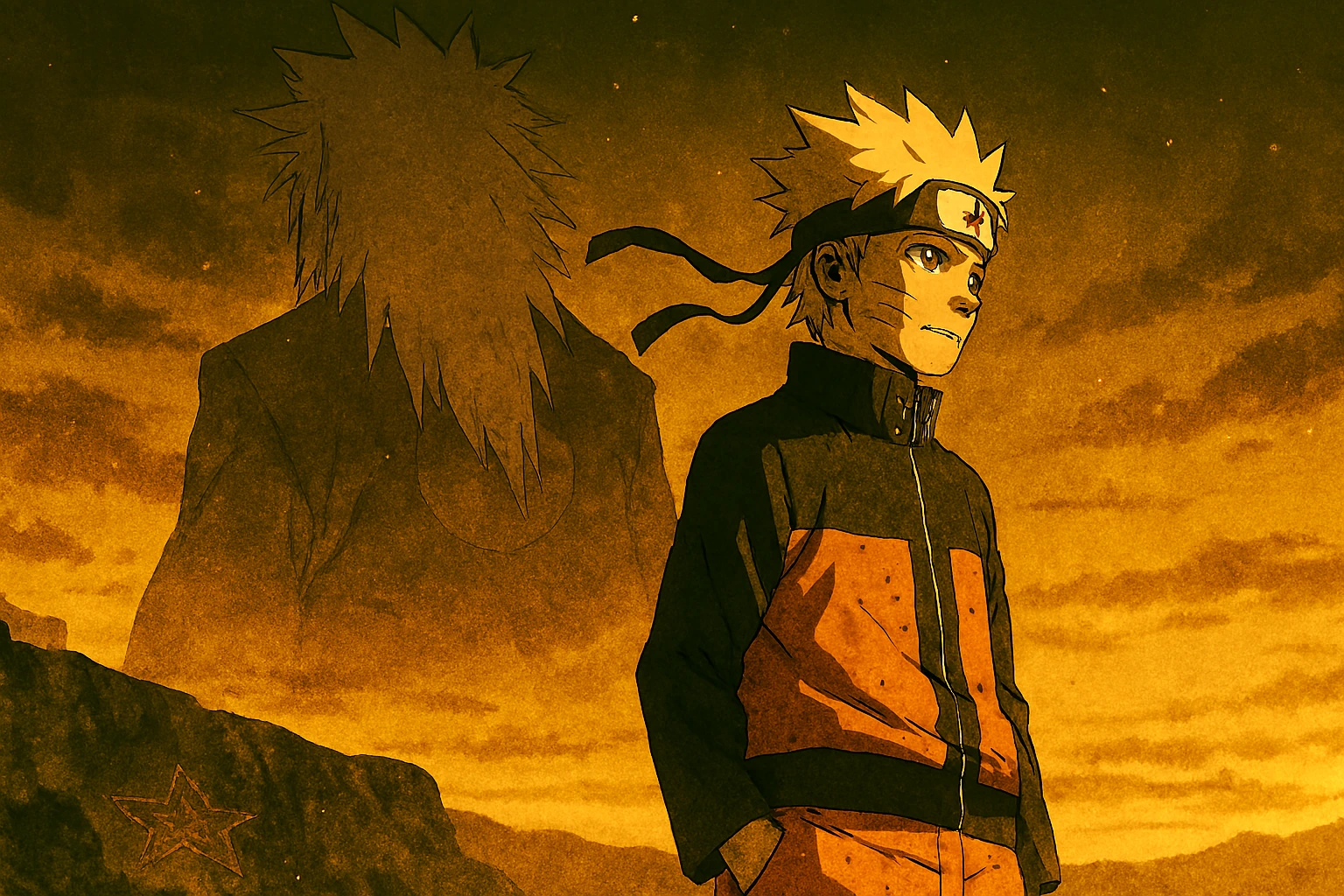
The mentor’s disappearance is the single most structurally critical moment in the hero’s arc.
It represents the final, ultimate transition to independence, serving as the final argument in the effort versus destiny debate.
All Might’s retirement symbolizes the end of one era and Deku’s forced evolution.
Jiraiya’s death removes Naruto’s immediate protection, compelling him to confront loss while applying every lesson independently.
Losing the mentor provides the incentive for the hero to step into their destined role—a role that must be fully self-constructed through accumulated effort.
Abandoning the Blueprint to Create the Self
The Character Analysis focuses on this moment of forced solitude.
The Sensei’s blueprint is now abandoned.
The student is no longer an apprentice working on someone else’s plan; they are the true creator.
Every decision is now theirs alone, driven only by their internalized wisdom and the memory of their hard work.
The legacy of the Sensei outlasts their physical presence: Urokodaki’s sacrificial mentorship in Demon Slayer instills values of perseverance and compassion in Tanjiro.
The ultimate act of honoring the Sensei is to surpass them—Naruto exceeding Jiraiya’s achievements, Deku forging a greater symbol than All Might.
This achievement is not an act of pre-ordained destiny; it is the ultimate proof that the hero’s unwavering effort was the sole, indispensable engine of their success.
The final, critical lesson of the Sensei is teaching the student how to navigate the world without their presence, thereby ensuring the student’s legacy will not be a mere copy, but a genuine act of self-creation.
The Rival’s Accelerated Role
Following the Sensei’s departure, the Rival’s Role shifts dramatically and takes on the new mantle of the hero’s principal supporter person.
The Rival (like Sasuke or Vegeta) is now the primary accelerant for the hero’s growth.
The Sensei provided the initial knowledge; the Rival provides the ongoing, necessary pressure that demands continuous evolution.
The Rival’s main job is to advance the hero and accelerate his growth, not just to be his enemy.
The Rival acts as a living, breathing metric that the Sensei cannot be once they’ve stepped away.
The Sensei is the benchmark for potential; the Rival is the ongoing benchmark for current progress.
This relationship is defined by intense, competitive effort.
Vegeta’s pride forces Goku to unlock new transformations out of competitive necessity, knowing his very existence demands Goku constantly breach his limits.
Similarly, Sasuke’s descent into darkness drives Naruto to achieve Sage Mode and master the Nine-Tails, purely out of the desperate necessity to save his friend/rival.
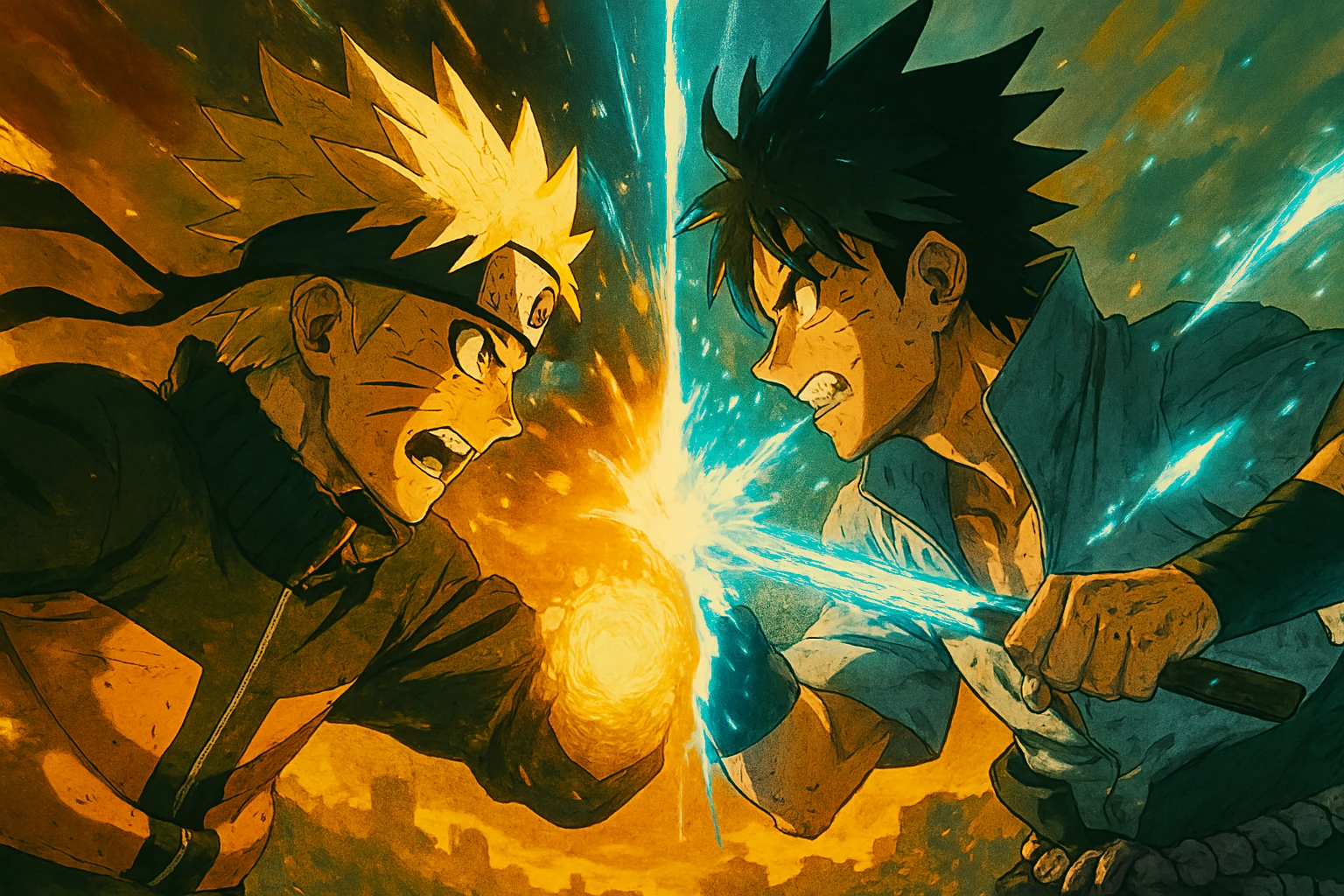
The intensity of their conflict—a conflict often driven by a broken version of the Sensei’s own ideology (Sasuke’s revolutionary path being a broken mirror of Jiraiya’s desire for peace)—forces the hero to find new levels of power and philosophical conviction.
The Rival replaces the Sensei as the one who demonstrates the “next level,” ensuring the hero’s effort never wanes.
The Sensei sets the philosophical stage; the Rival acts as the constant, immediate crucible.
4. Modern Subversions: The Sensei as a Flexible Narrative Tool
Contemporary anime defines the mentor not by wisdom or age, but by their function as an accelerant for the student’s growth.
Contemporary anime has increasingly subverted the traditional “wise old master” convention, transforming the Sensei into an even more flexible narrative tool that challenges expectations of morality and power dynamics.
The mentor role now transcends age, moral purity, or even conventional competence.
It is defined solely by the power dynamic where one character holds the key to accelerating another’s growth.
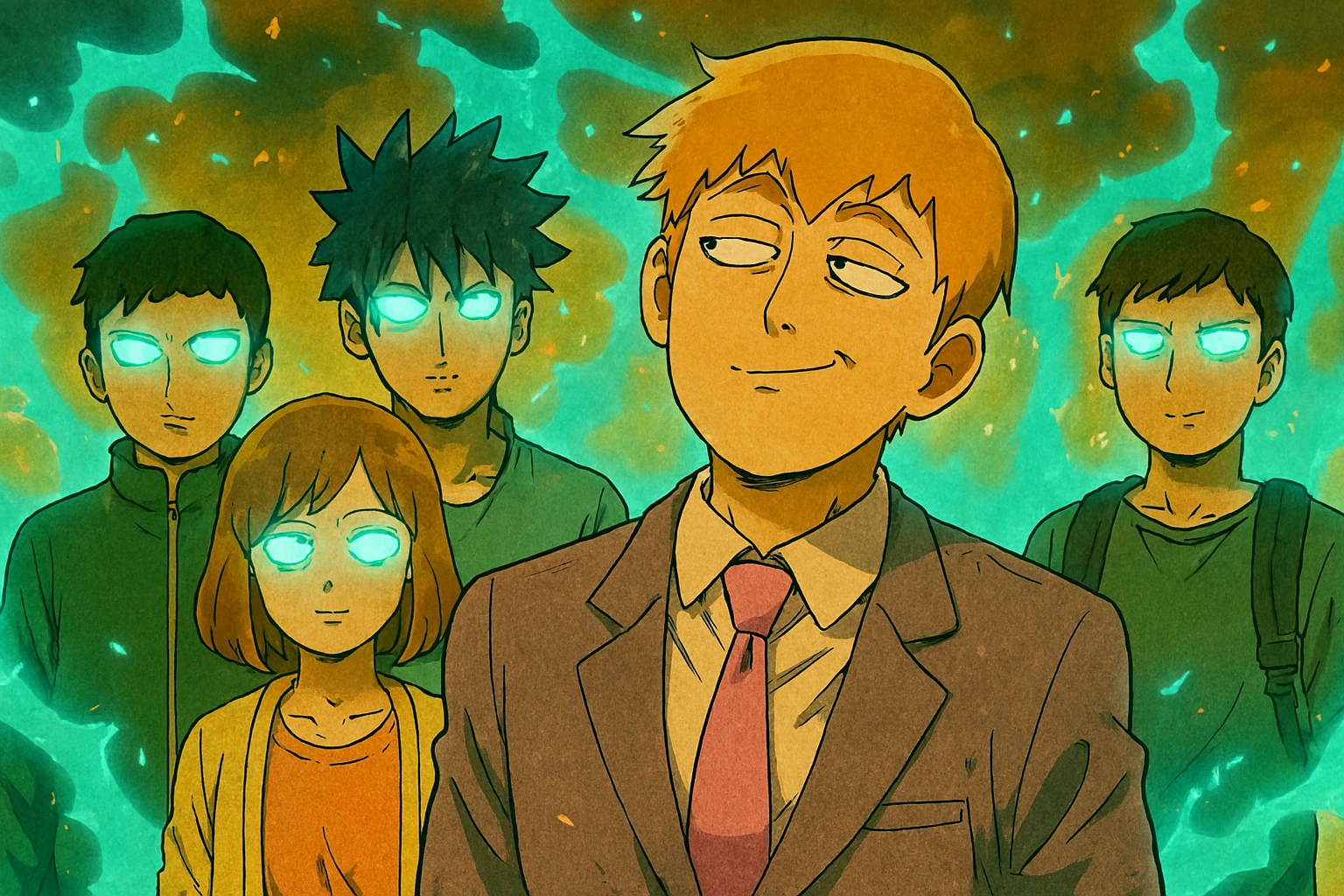
- The Morally Gray Mentor (Reigen Arataka, Mob Psycho 100): Reigen begins as manipulative but evolves into genuine support, teaching Mob life lessons that entirely transcend psychic abilities. He teaches Mob self-worth and social confidence—skills more valuable than his unlimited power.
- The Radical Subversion (Koro-sensei, Assassination Classroom): Earth’s greatest threat becomes the most devoted teacher. Koro-sensei tailors lessons to individual student needs, modeling selfless mentorship despite his adversarial position.
- Isekai and System Mechanics: In many modern Isekai series, the mentor is replaced entirely by a system mechanic (a status screen). This subversion confirms that the function of the Sensei is fundamentally narrative: to provide accelerated knowledge transfer and the illusion of earned effort, whether through human wisdom or digital parameters. The hero still has to work, but the guide is reduced to a non-human function.
Exploring the Role of the Common Man
The shifts in the Sensei trope allow us to explore the critical open-ended question: The Role of the Common Man.
When a mentor is a subversion—like the apathetic Saitama or the manipulative Reigen—what does the resulting hero’s journey say about who is qualified to hold power or guide the powerful?
The presence of the unconventional Sensei often elevates the common man’s wisdom over the elite’s dogma. Koro-sensei teaches a class of societal outcasts, empowering those deemed failures to become the world’s saviors.
- When the Sensei is a subversion, what does the resulting hero’s journey say about the Role of the Common Man in a world saturated with power?
- Can true change and the guidance of the most powerful individuals only come from those operating outside the established, “elite” system?
This subversion confirms the power system’s flexibility: the rules of the world can be broken, not just by an epic blast, but by a teacher who operates with unconventional creativity and a rejection of traditional hierarchies.
The Sensei—even a common one—holds the keys to unlocking the extraordinary.
5. The Enduring Legacy: The Ghost in the Creator’s Mind
The Sensei archetype persists because it provides the structure, the wisdom, and the necessary emotional trauma for profound character growth.
While the mentor’s death has become predictable, its narrative power persists.
Series that innovate—like keeping Uncle Iroh alive in Avatar: The Last Airbender to allow for the organic, prolonged evolution of his relationship with Zuko—demonstrate that power lies in the quality of the influence, not just the tragedy of the absence.
The mentor’s ultimate value lies not in perpetual guidance, but in the final act of catalyzing independence.
They must disappear for students to truly become heroes, transforming from architects who design the foundation to ghosts whose wisdom haunts, directs, and defines every major decision.
The Sensei is the initial architect of the system, imparting the blueprints of effort and the cynical realities of the world.
But the Student, through the force of their unwavering effort, is the ultimate creator, forging a unique legacy that honors the architect by demolishing the ceiling they built.
explore our whole category character trope.