
Introduction
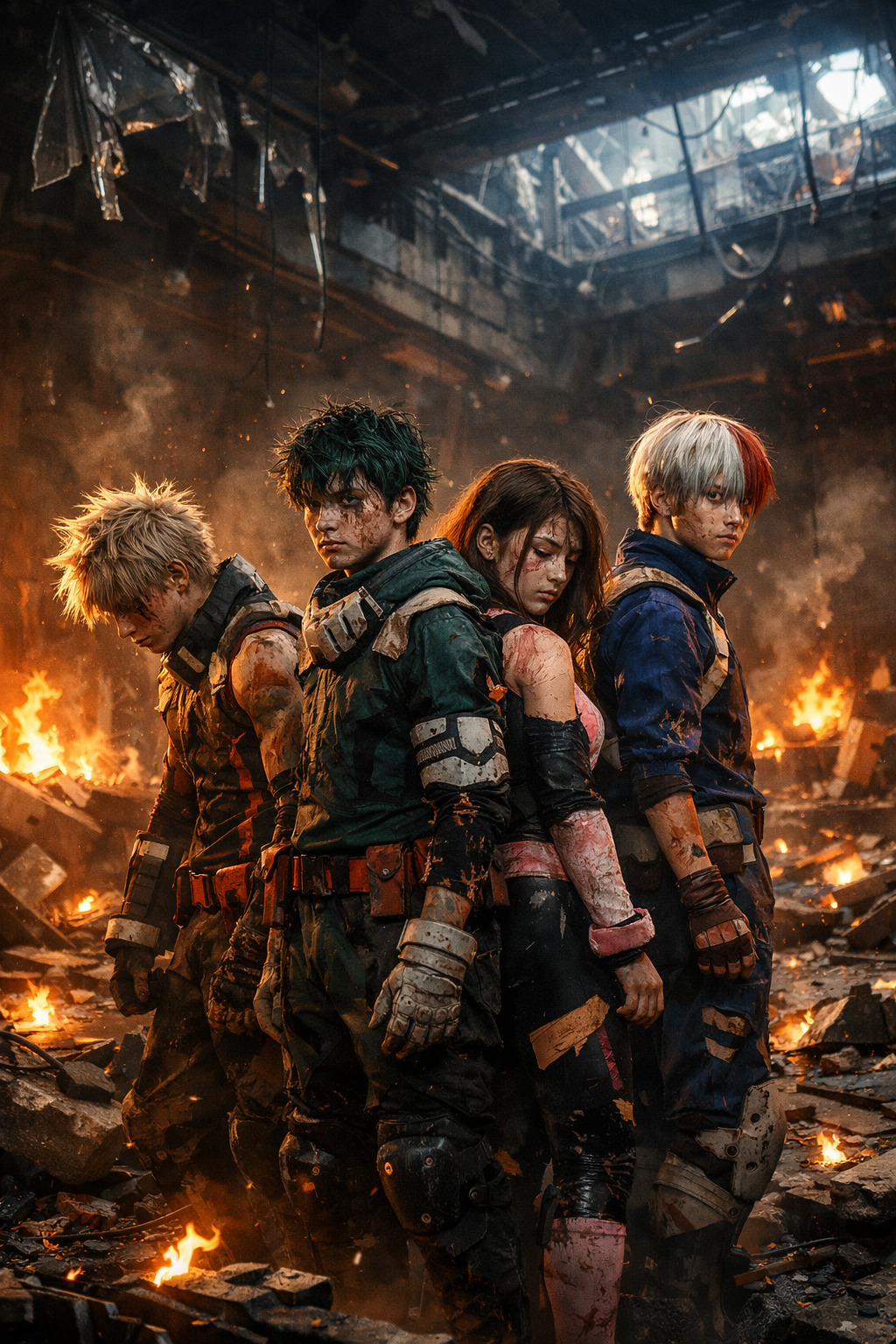
The Apex of Heroic Infrastructure To the uninitiated citizen of the My Hero Academia universe, U.A. High School stands as a gleaming beacon of hope, a prestigious educational institution where the bright-eyed youth of tomorrow learn to harness their Quirks for the betterment of society.
However, stripping away the polished veneer of school festivals and brightly colored uniforms reveals a fundamentally different reality. U.A. High School is not merely an educational facility; it is the absolute apex of heroic infrastructure. It operates as a heavily funded, highly classified paramilitary training facility cleverly disguised as a high school.
Financed by exorbitant government budgets and private sector investments, it serves as the literal beating heart of the Hero Public Safety Commission’s future operational capabilities. The institution is designed to take raw, volatile genetic potential and forge it into standardised, government-sanctioned weapons of peace.
Every hallway, every training ground, and every syllabus is meticulously calibrated to produce elite combatants capable of enforcing the status quo. To call U.A. a “school” is a gross oversimplification; it is the premier defence contractor of a superhuman society, manufacturing the ultimate deterrents against societal collapse.
From Academy to Apocalypse Bunker: The architectural and functional evolution of U.A. High School perfectly mirrors the escalating deterioration of the society it was built to protect. In its earliest iterations, the campus projected an aura of open prestige. It featured sprawling, sunlit courtyards, easily accessible public arenas, and glass-panelled facades that spoke of transparency and peace. It was an academy that welcomed the world.
However, as the structural integrity of Hero Society began to fracture under the unified assault of the League of Villains and the Paranormal Liberation Front, U.A. was forced to shed its academic skin. The metamorphosis was stark and terrifying. The glass and open spaces were replaced by multi-layered defensive grids, mechanised blast doors, and subterranean bunker systems.
By the time of the final war, the once-prestigious campus had transitioned into the last surviving fortress of humanity. It became a militarised citadel, an apocalypse bunker housing thousands of refugees while its very foundations were weaponised to fight a god-like threat. This transition from a place of learning to a desperate, heavily fortified stronghold is a grim testament to the collapse of the very peace it once symbolised.
Article Scope This article will serve as the definitive, expert-level breakdown of U.A. High School’s unparalleled evolution. We will move far beyond the superficial narrative of student rivalries and classroom antics to deconstruct the terrifyingly brilliant security architecture devised by Principal Nezu.
We will explore the harsh sociological and psychological conditioning inflicted upon its teenage student body, transforming them from children into child soldiers. Furthermore, this analysis will deeply investigate the devastating tragedy of the U.A. Traitor—the single psychological flaw in an otherwise impenetrable physical fortress.
Finally, we will dissect the jaw-dropping engineering masterpiece of the “Floating Fortress” or the “Coffin in the Sky,” breaking down the physics, logistics, and brutal human cost required to keep an entire mechanized battlefield suspended in the atmosphere against the ultimate villain.
The Curriculum of Trauma (Weaponizing Youth)

The Spartan Philosophy The stated educational philosophy of U.A. High School revolves around the motto “Plus Ultra”—going beyond one’s limits. While this sounds inspiring on promotional brochures, the actual, functional syllabus of U.A. is built upon a deeply unsettling Spartan philosophy.
The institution actively, and sometimes intentionally, subjects fifteen-year-old children to severe, life-threatening trauma under the guise of “practical experience.” The Unforeseen Simulation Joint (USJ) attack, while technically a breach, set a terrifying precedent that the school administration ultimately leaned into. When first-year students were nearly butchered by a bio-engineered monstrosity (the Nomu) and a legion of murderous criminals, the school’s response was not to offer long-term psychiatric care, but to accelerate their combat training.
Similarly, the Forest Training Camp was designed to push their Quirks to the point of physical breakdown, only to thrust them into a nocturnal guerrilla war against seasoned serial killers and terrorists. The true curriculum of U.A. is not mathematics or hero history; it is the brutal art of psychological compartmentalization.
These teenagers are taught to witness death, suffer agonizing bodily mutilation, and immediately repress that trauma so they can wake up the next morning, put on a uniform, and pass a written exam. It is the systematic weaponization of youth, forging emotional calluses thick enough to withstand a crumbling society.
The Sports Festival (A Societal Panem) To fully understand the dystopian undertones of U.A. High School, one must critically analyze the U.A. Sports Festival. Within the narrative, it is framed as a joyous replacement for the Olympic Games, a celebration of youthful potential.
In reality, it operates with a dark, almost predatory sociological function closely resembling the Hunger Games of Panem. The Sports Festival is not merely a school event; it is a ruthless, nationally televised auction block. Teenagers, barely accustomed to their own changing bodies, are thrust into a gladiatorial arena where they are forced to violently showcase their genetics to an audience of corporate sponsors, Pro Hero agencies, and government talent scouts.
The stakes are existentially high: a strong performance ensures a lucrative career, state backing, and societal adoration, while failure relegates a student to the margins of the hero industry. The festival commodifies adolescent bodies and their Quirks, forcing them to physically brutalize their classmates on live television to secure future funding.
It is a stark display of a hyper-capitalist society where biological superiority translates directly to socioeconomic power, and U.A. proudly serves as the auctioneer, perfectly willing to let its students break their own bones to entertain the masses and secure their market value.
The Accelerated Licensing The fundamental collapse of the Pro Hero system following the Kamino Ward incident and the subsequent Paranormal Liberation War forced U.A. into a corner that revealed its true function. With seasoned Pro Heroes retiring out of fear, dying in the streets, or abandoning their posts, the established infrastructure shattered.
In response, U.A. was forced to abandon the pretense of education entirely. The implementation of the Accelerated Provisional Licensing exam was not a reward for gifted students; it was an act of absolute desperation. The government and the HPSC essentially drafted child soldiers, legally authorizing first-year high school students to engage in lethal combat operations.
Teenagers who should have been studying for midterms were instead deployed to the front lines of a national terrorist war, tasked with subduing hardened, bloodthirsty zealots. By legally classifying these children as active-duty combatants, U.A. crossed a point of no return. They were no longer a school protecting its students; they were a military academy throwing its youngest cadets into a meat grinder because the adults had failed to hold the line.
The Mind of Nezu (The Architect of Paranoia)
High Spec Biology To understand the architectural and operational marvel that is U.A. High School, one must first dissect the mind of its creator: Principal Nezu. Nezu is not human; he is an animal granted the Quirk “High Spec,” an ability that grants him intelligence, perception, and analytical processing power that vastly eclipses human genius.
When an animal with hyper-intelligence looks at human society, it does not see the emotional nuances, political rhetoric, or social contracts that bind humanity together. It sees systems, inefficiencies, vulnerabilities, and variables. Nezu perceives the world through a lens of probability and structural integrity. This results in an unparalleled, almost psychopathic level of tactical foresight.
He does not plan for the next battle; he plans for the next ten decades of socio-political shifts. Every hallway in U.A., every seemingly innocuous rule, and every staff hire is part of a massive, multi-dimensional chess game that Nezu is playing against both villains and the very society he serves. His intellect allows him to detach from human sentimentality, making cold, mathematically perfect decisions that prioritize the survival of his institution above the comfort of the individuals within it.
The Product of Experimentation The dark, obsessive nature of Nezu’s fortress cannot be fully understood without acknowledging his deeply traumatic past. Before becoming an esteemed educator, Nezu was a test subject, enduring horrific, agonizing experimentation at the hands of human scientists. While he presents a cheerful, tea-drinking persona, beneath that facade lies a simmering, indelible understanding of human cruelty and unpredictability.
His hidden resentment towards humanity—or at least, his profound distrust of human nature—has heavily fueled his obsession with security. U.A. High School is, fundamentally, Nezu’s trauma response projected onto a massive architectural scale. He built a completely impenetrable, self-sustaining fortress because it is the only place on earth where he controls every single variable.
He refuses to ever be a victim again, and by extension, he refuses to let those under his protection become victims. The labyrinthine defenses of U.A. are not just meant to keep villains out; they are meant to keep the chaos of the human world at bay. Nezu’s past taught him that the world is inherently dangerous and untrustworthy, so he built a synthetic world of his own design, governed strictly by his infallible logic.
Political Supremacy As the crisis in Japan deepened, the true extent of Nezu’s authority came into blinding focus. While the Prime Minister of Japan and the upper echelons of the Hero Public Safety Commission supposedly governed the nation, Nezu operated U.A. completely independent of their oversight. He achieved a level of political supremacy that made him untouchable.
Because U.A. produced the highest yield of top-tier heroes, and because Nezu’s intellect was deemed indispensable for national security, he was granted unilateral authority over his domain. He controls billions in private and government funding, commands a staff of the most dangerous individuals on the planet, and makes autonomous military decisions that dictate the fate of the country.
When the nation fell, the government did not look to the military for a solution; they looked to the principal of a high school. Nezu holds more raw political, logistical, and infrastructural power than any elected official in Japan, acting as an autonomous sovereign entity whose word overrides federal law when it comes to the defense of his fortress.
The Evolution of the Barrier (Pre-War Security)
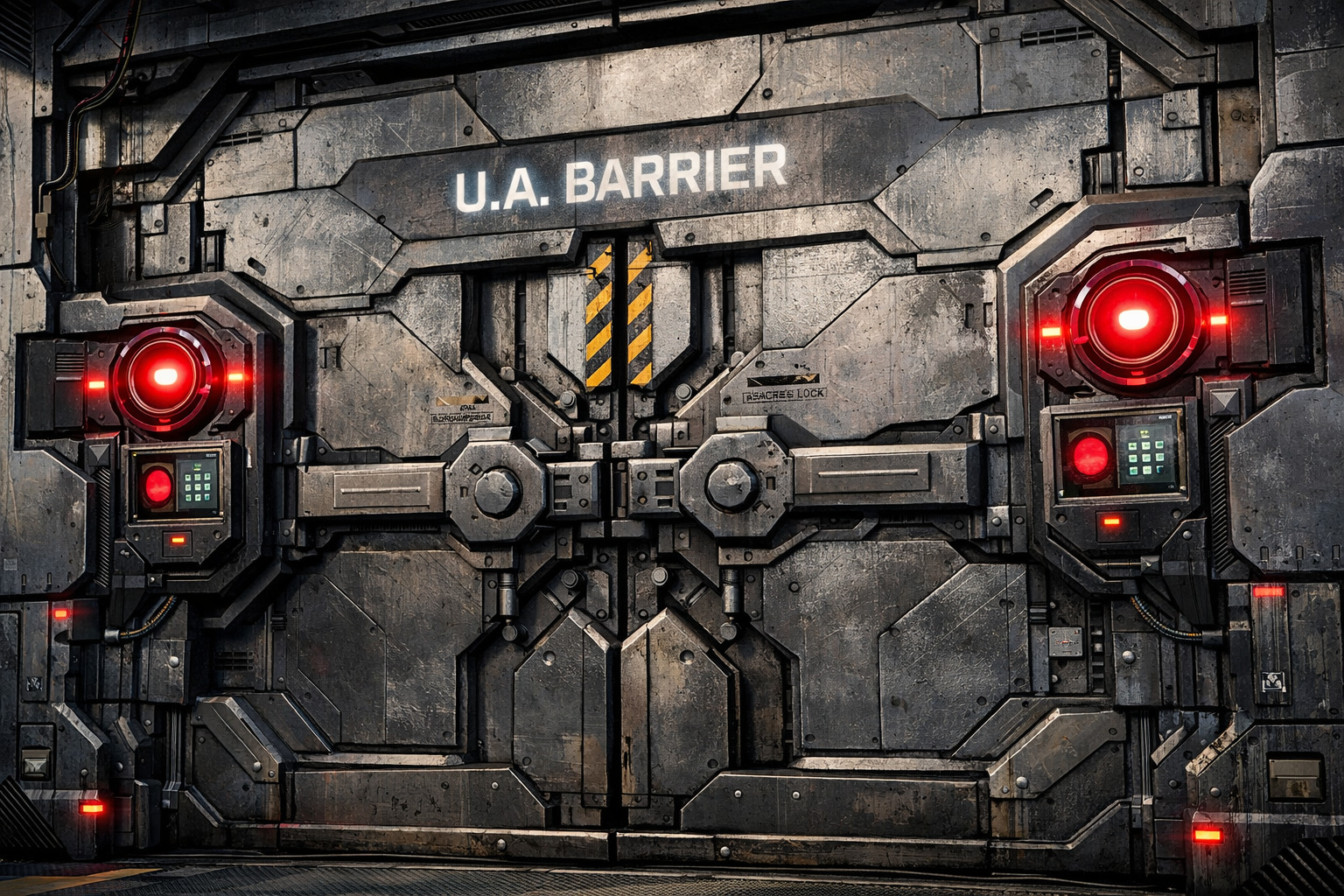
The “U.A. Barrier” Mechanics In the days before all-out war, U.A.’s security was considered the pinnacle of modern defense, centered around the infamous “U.A. Barrier.” This original security grid was a marvel of conventional deterrents.
It utilized an intricate web of biometric scanning, requiring localized DNA, retinal, and voiceprint confirmation for entry. The grounds were lined with hyper-sensitive weight sensors calibrated to differentiate between a stray animal, a student, and an unauthorized adult. At the perimeter, massive, reinforced blast-proof gates stood as a physical testament to the school’s invulnerability.
These mechanical defenses were highly effective at their intended purpose: keeping the rabid press, obsessive fans, and low-level street villains out of the educational sanctuary. It projected an aura of absolute safety, reassuring the public that the next generation of heroes was incubating behind an indestructible, technologically flawless wall.
The USJ Stress Test However, the illusion of the U.A. Barrier’s invincibility was violently shattered during the Unforeseen Simulation Joint (USJ) incident. The League of Villains completely bypassed the multi-million dollar security perimeter without triggering a single physical alarm or breaking a single blast door.
This event served as a catastrophic stress test that exposed a fundamental flaw in traditional architectural defense in a superhuman society. Nezu was forced to confront a terrifying reality: physical barriers, no matter how thick or technologically advanced, are completely useless against spatial distortion and teleportation Quirks. Kurogiri’s Warp Gate rendered the concept of a “wall” obsolete.
The realization that an enemy could bypass miles of steel and concrete simply by folding space forced Nezu to completely overhaul his understanding of security. He recognized that keeping the enemy outside was no longer guaranteed; therefore, the security system had to evolve from an external shield into an internal, pervasive net.
The Dormitory System This realization triggered a massive strategic pivot: the implementation of the Heights Alliance Dormitory System. Publicly, the school administration and Pro Heroes framed the move of all students to on-campus housing as a necessary, compassionate protective measure for the children. They assured furious parents that keeping the students within the U.A. grounds was the only way to ensure their safety from villainous kidnappings.
Tactically, however, this was a masterful, cold-blooded maneuver by Nezu. The dormitories were not just safe houses; they were a panopticon. By consolidating the students, teachers, and staff into a single, tightly controlled geographic location, Nezu created an environment where everyone could be monitored twenty-four hours a day, seven days a week. It was a dragnet disguised as a sleepover.
Nezu already suspected that a mole existed within the U.A. ecosystem, feeding schedules and coordinates to the League. The dormitory system was explicitly designed to drastically reduce the variables, limit external communication lines, and apply psychological pressure to flush out the suspected traitor from within their own ranks.
The Invisible Breach: The U.A. Traitor
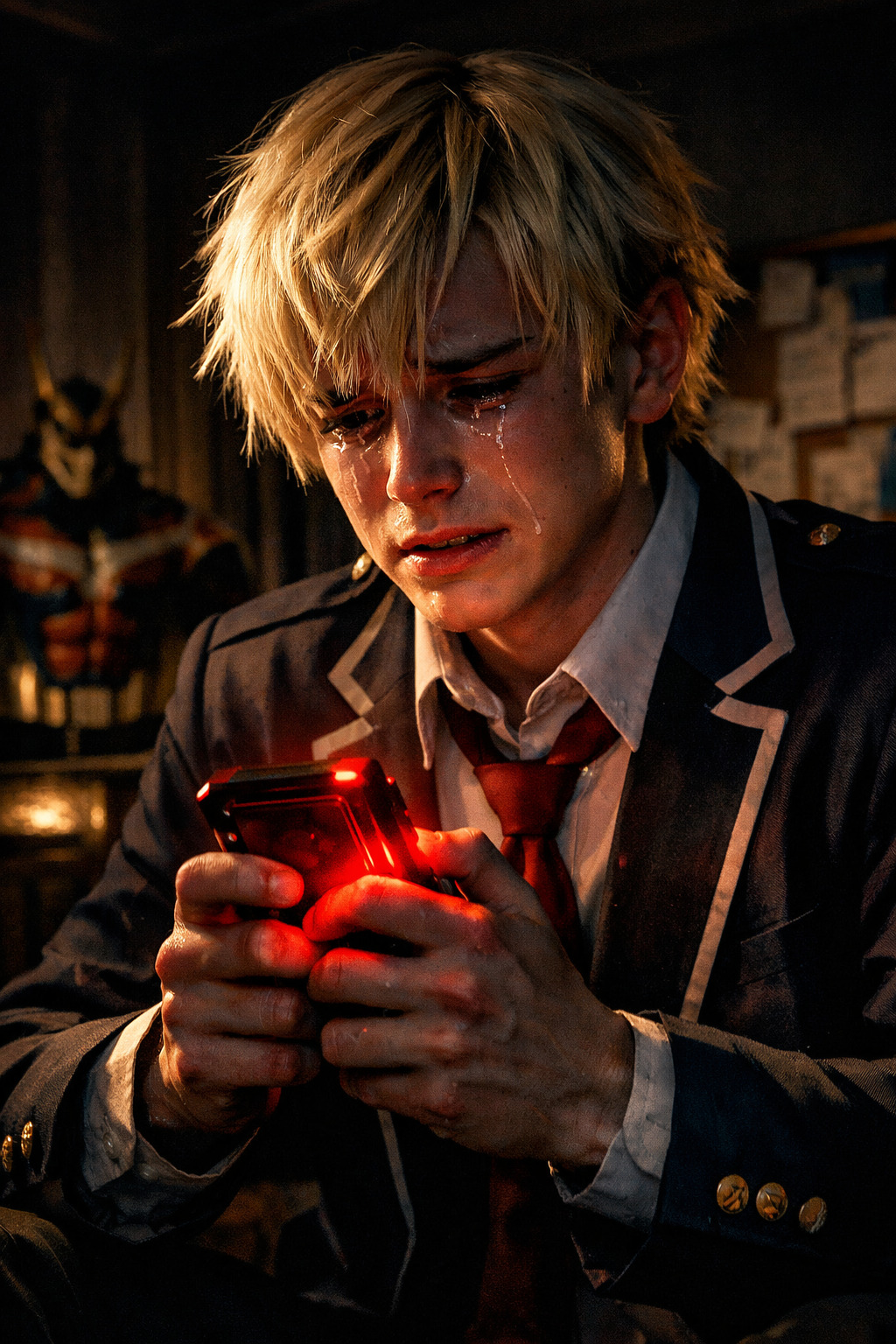
The Aoyama Tragedy Despite Nezu’s brilliant multi-layered security protocols, the most advanced, expensive, and paranoid defense network on the planet was entirely compromised without a single shot being fired, a single alarm being tripped, or a single firewall being breached. The invisible breach was executed by All For One (AFO) through the devastating psychological extortion of a student: Yuga Aoyama.
AFO understood what Nezu temporarily forgot: fortresses are manned by humans, and humans are inherently vulnerable. Aoyama was born Quirkless, a genetic defect that caused his parents immense, suffocating grief in a society obsessed with powers.
To “fix” their son, they made a literal deal with the devil, purchasing a Quirk from AFO. This act placed a permanent, invisible gun to the heads of the Aoyama family. Yuga did not betray U.A. for ideology, money, or malice; he leaked classified information—leading directly to the USJ and Forest Camp massacres—because AFO threatened to murder his parents if he refused. It was an agonizing, silent tragedy occurring right under the noses of the greatest heroes on earth.
The Blind Spot of Logic The Aoyama revelation exposed the single, glaring blind spot in Nezu’s infallible logic and Shota Aizawa’s hyper-observant vigilance. Why did they fail to catch the traitor for so long despite exhaustive investigations? The answer lies in their preconceived profiling. Nezu’s hyper-logical mind and Aizawa’s hardened cynical experience had them searching for a specific archetype.
They were looking for a mastermind, a highly trained villainous infiltrator, an ideological zealot, or someone harboring deep-seated hatred for Hero Society. They were analyzing data patterns looking for a sociopath. What they completely failed to anticipate was a terrified, weeping, flamboyant child who was slowly dying inside from the guilt of his forced compliance.
Aoyama’s mask of eccentric vanity was so flawlessly maintained by his sheer terror that he slipped beneath the radar of suspicion. The heroes were looking for a villain, but what they had in their classroom was a hostage. This oversight highlighted the terrifying effectiveness of AFO’s manipulation—he weaponized love and fear, bypassing the physical U.A. barrier by exploiting a psychological one.
The Reverse Sting Operation However, once the tragedy of Aoyama was uncovered, the heroes executed one of the most brilliant tactical maneuvers of the entire war: the Reverse Sting Operation. Aizawa, rather than punishing the broken boy, offered him a path to redemption.
They realized that AFO, for all his power and centuries of experience, suffered from a fatal psychological flaw of his own: absolute arrogance and a narcissistic belief that he completely owned his pawns. The heroes weaponized AFO’s god-complex against him.
They forced Aoyama to use his established, undetected communication line to lie to the Demon King, drawing him out into the open. AFO was so confident in the terror he had instilled in the Aoyama family that he never once suspected the weeping boy would have the courage to defy him.
By using the very breach that almost destroyed U.A. as the bait, the heroes lured AFO and his entire army into a meticulously prepared, fatal trap. Aoyama’s redemption transformed him from the fortress’s greatest weakness into the key that unlocked the final, decisive battlefield.
The Evacuation Facility (The “Troy” System)
The Post-War Sanctuary Following the devastating fallout of the Paranormal Liberation War, the very fabric of Japanese society disintegrated. Cities were leveled, infrastructure was shattered, and the civilian population completely lost faith in the Pro Heroes who had failed to protect them from the rampant destruction.
In the wake of this apocalyptic scenario, U.A. High School underwent its most dramatic transformation yet. It ceased being a school entirely and evolved into a colossal mega-shelter, a sanctuary in a wasteland. Thousands of terrified, disillusioned civilian refugees flooded into the campus, seeking the protection of the U.A. Barrier.
Nezu recognized that the campus could no longer just protect students; it had to bear the weight of surviving humanity. U.A. became a self-sustaining city-state, responsible for housing, feeding, and managing the psychological trauma of a populace that viewed the heroes with a mixture of desperate reliance and bitter resentment. It was a powder keg of civilian anxiety contained within heavily militarized walls.
Segmented Armor Plates To ensure the absolute survival of these refugees against villains who could level city blocks with a flick of the wrist, Nezu, alongside top engineers, conceptualized and built the “Troy” system. The architectural engineering required for this system borders on the impossible.
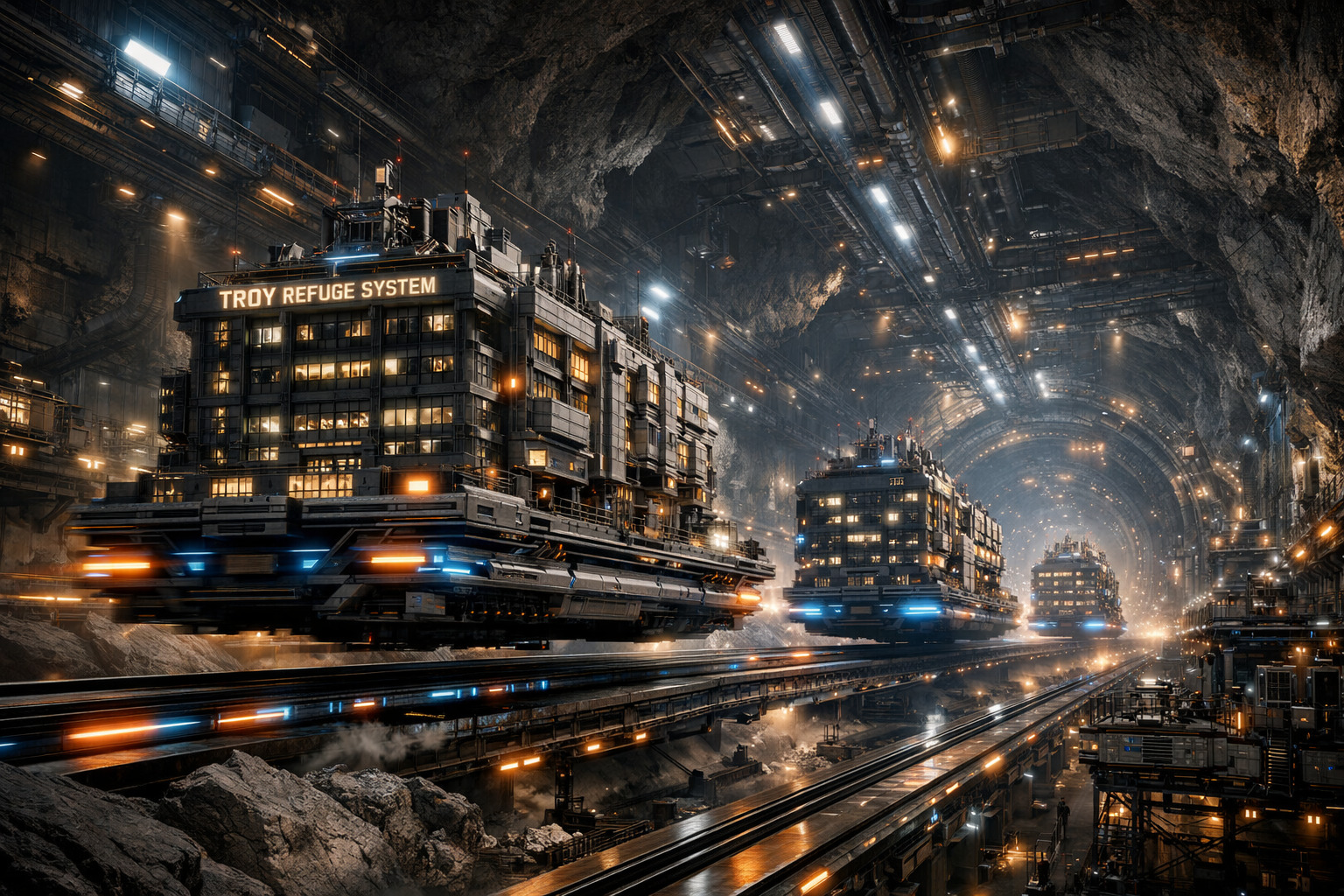
The entire sprawling campus of U.A. High School was meticulously sliced and divided into 3,000 separate, heavily armored hexagonal blocks. The school was no longer a single, continuous structure; it was a massive, interlocking puzzle box. Each specific block—whether it contained a dormitory, a cafeteria, or a medical wing—was outfitted with independent life-support systems, reinforced titanium armor plating, and massive motorized treads.
This segmentation meant that if the perimeter barrier was breached, the school would not fall as a single entity. It allowed for surgical quarantines, meaning an invading force would have to conquer the facility room by room, block by block, while the rest of the structure actively reconfigured itself to keep the civilians out of reach.
The Underground Rail Network The true genius of the Troy system, however, lay beneath the surface. The 3,000 hexagonal blocks were not stationary; they were seated atop a subterranean labyrinth of staggering proportions. The underground rail network stretched for miles beneath the school and the surrounding areas.
In the event of an overwhelming surface-level attack—such as an assault by Tomura Shigaraki—these modular blocks were designed to instantly detach from the surface, plummet down reinforced elevator shafts, and lock onto a high-speed underground magnetic rail system. Once submerged, these blocks would disperse, traveling autonomously through a massive network of tunnels at breakneck speeds.
This system was designed to completely isolate threats. If a villain breached Block A, Block A could be jettisoned or locked down, while Blocks B through Z evacuated miles underground, essentially turning the school into a subterranean shell game. It was an engineering marvel that prioritized the evasion and survival of non-combatants, ensuring that the horrors of the surface war could never touch the refugees hidden in the mobile depths.
The Coffin in the Sky (The Final Battleground)
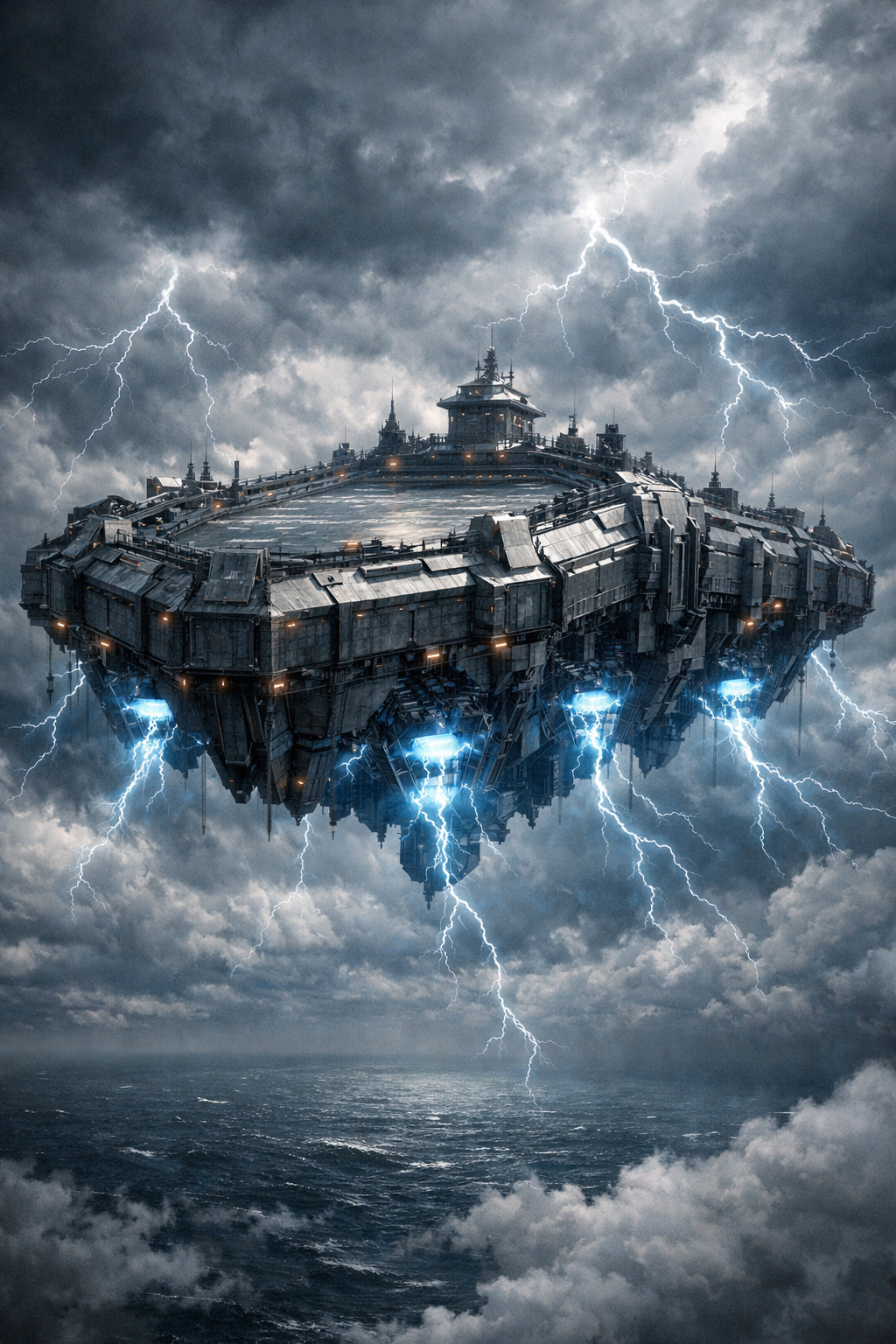
Electromagnetic Levitation The absolute pinnacle of U.A.’s architectural, physical, and strategic evolution was deployed during the final war: The “Coffin in the Sky.” Faced with a god-like entity in Tomura Shigaraki, traditional battlefields were obsolete. To trap him, Principal Nezu and the genius inventor Mei Hatsume conceptualized an engineering feat that defied the laws of physics.
They heavily modified the U.A. Sports Festival stadium, outfitting the massive steel-and-concrete structure with vast, interconnected arrays of electromagnetic generators. Harnessing raw, unprecedented electrical power, they created a localized, inverted magnetic field so powerful that it literally ripped the entire multi-million-ton stadium out of the earth.
The sheer kinetic and electromagnetic force required to counteract gravity on that scale is staggering. They did not just build a flying ship; they tore a chunk of the earth into the troposphere and held it suspended in the atmosphere, creating an inescapable, floating colosseum designed specifically to house the apocalypse.
The “Decay” Countermeasure The terrifying necessity behind suspending the battlefield in the sky was born purely from mathematical survival. Tomura Shigaraki possesses the Quirk “Decay,” an ability that instantly disintegrates anything he touches, with the destruction aggressively spreading to anything connected to the initial point of contact.
If Shigaraki touches the ground, the entire city, and everyone standing on it, turns to dust. Therefore, the only tactical way to neutralize the most dangerous Quirk in history was to systematically remove the ground. By suspending the fortress in the sky, they isolated his Decay. The Coffin was engineered with a horrific but necessary failsafe: the arena floor was composed of hundreds of detachable plates.
The moment Shigaraki’s Decay infected a section of the arena, sophisticated sensors would instantly detect the disintegration wave, detaching the infected chunk of the stadium and ejecting it into the ocean miles below before the Decay could spread to the main structure. It was a continuous, brutal game of shedding mass to survive.
They mathematically neutralized his power by ensuring that his destruction had nowhere to spread, turning his god-like Quirk into a useless parlor trick isolated in the sky.
The Electrification Grid (The Kaminari Engine) However, the logistics of keeping millions of tons of steel levitating in the air against gravity required an unfathomable amount of energy, exposing the terrifying, human cost of this engineering marvel.
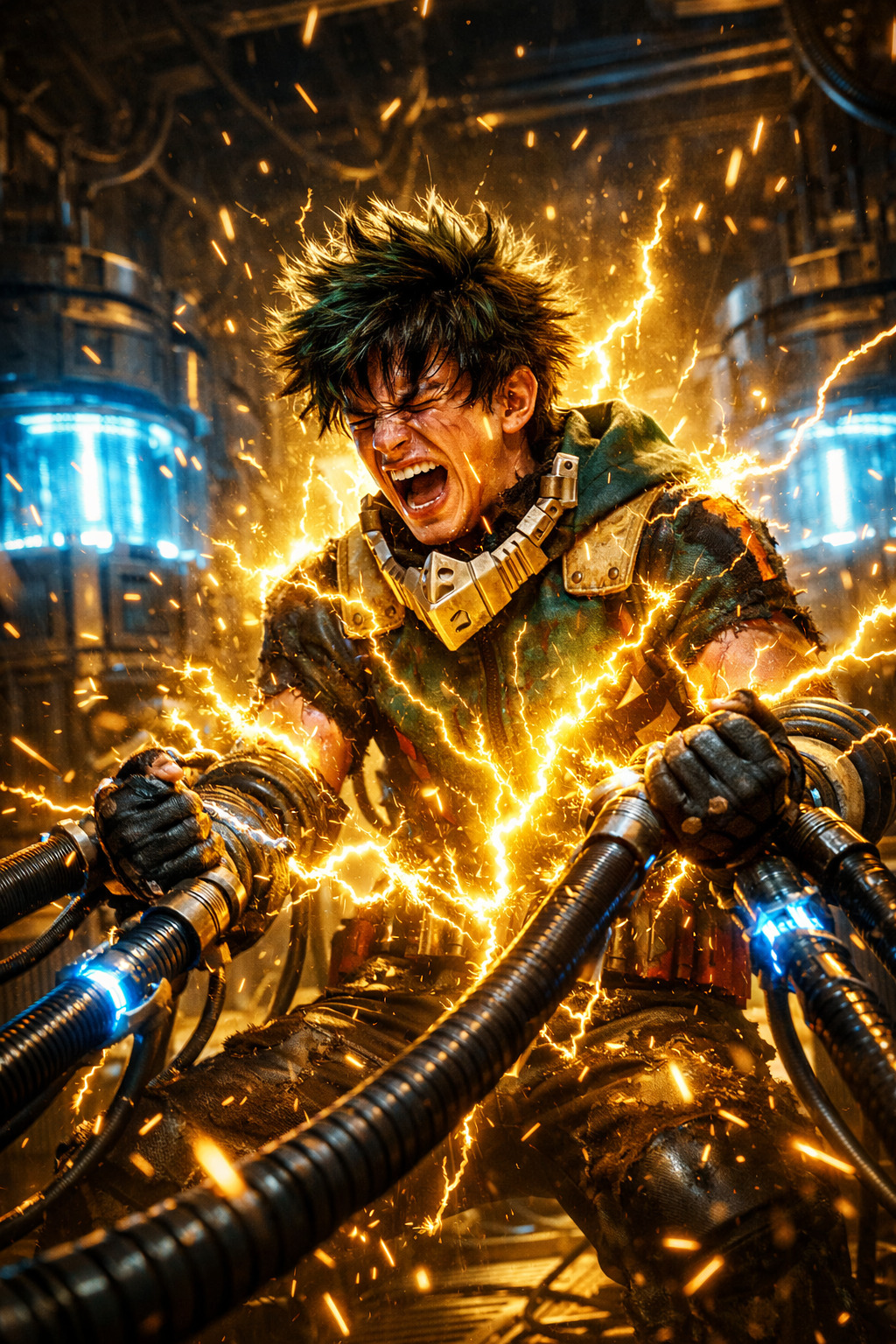
The Coffin in the Sky could not be powered by conventional nuclear or electrical grids; it required dynamic, fluctuating, immense power output to constantly adjust to the shifting weight and the violent battle occurring on its surface. This necessity gave birth to the Electrification Grid, grimly functioning as a living battery system. Heroes like Denki Kaminari, Manga Fukidashi, and other electric-type Quirks were stationed deep within the bowels of the fortress.
They were forced to act as living engines, constantly pumping millions of volts of raw electricity from their own bodies into the electromagnetic generators. This was not a simple task; it was a grueling, torturous process. These heroes were physically frying their own nervous systems, pushing their internal biology past the breaking point, enduring agonizing short-circuits and brain trauma to keep the fortress afloat.
While the titans clashed above, the structural integrity of the entire battleground rested on the shoulders of teenagers heavily modifying their own bodies with agonizing voltage, desperately powering the generators while the structure was simultaneously being assaulted by villains from below. It was a nightmarish, awe-inspiring display of human endurance.
Conclusion
The Ultimate Support Item When analyzing the sweeping narrative of My Hero Academia, it becomes abundantly clear that U.A. High School cannot be classified merely as a setting where events take place. It is, unequivocally, the single greatest “Support Item” ever built in the history of Hero Society.
Support items are traditionally designed to enhance a hero’s Quirk, cover their weaknesses, or facilitate their combat prowess. U.A. High School fulfilled this exact function on a macro, societal scale. It was a living, breathing fortress that continuously evolved, adapted, and mechanized itself to meet the escalating demands of an apocalyptic war.
From its initial blast doors to the panopticon dormitories, the subterranean Troy network, and finally the gravity-defying Coffin in the Sky, the school actively fought alongside the heroes. It mitigated catastrophic damage, protected the vulnerable, neutralized the ultimate villain’s primary weapon, and provided the absolute bedrock upon which humanity made its final stand. Without the physical and technological intervention of U.A.’s infrastructure, the heroes would have unequivocally lost the war.
Closing Thoughts Ultimately, U.A. High School serves as the perfect physical manifestation of the core thematic message of the series. Throughout the story, characters grapple with the concept of power—specifically, raw, genetic, individual power versus the power of the collective. Shigaraki and All For One represent the absolute pinnacle of individual, destructive might.
They believe that power alone dictates the future. U.A. High School proves them wrong. The true strength of humanity is not found in a single, god-like Quirk; it is found in the collective, engineered infrastructure built by thousands of hands to protect the weak.
Nezu’s brilliant paranoia, Hatsume’s sleepless engineering, Aoyama’s tearful defiance, and Kaminari’s agonizing electrical output all combined to create a structure that could defy a god. U.A. stands as the ultimate testament that when society is pushed to the brink of annihilation, salvation is not delivered by a single hero descending from the heavens; salvation is meticulously engineered, built from steel, sweat, and the unbreakable will of the collective standing their ground together.