
I. Introduction: Beyond the Established Limits of Superhuman Society
In the intricately constructed superhuman society of My Hero Academia, Quirks are fundamentally understood as physical extensions of the human body, not mere magical anomalies. Ever since the phenomenon began with the birth of the Luminescent Baby in Qing Qing City, global science has scrambled to categorize and understand these powers.
By the current era of the series, a sense of institutionalized normalcy has taken over. Schools like U.A. High teach aspiring heroes to treat their powers exactly like organic muscles: tear the fibers through intense, repetitive physical training, rest, consume the proper nutrients, and allow the biological structures to grow back stronger.
This is the standard, globally accepted method of Quirk enhancement. It is safe, legally regulated, meticulously measured, and highly predictable. However, hidden beneath this comfortable veneer of institutionalized training, government regulations, and heroic sports festivals lies a far more volatile, violent, and utterly unpredictable biological phenomenon: the Quirk Awakening.
A Quirk Awakening is the ultimate, violent evolution of a superhuman ability, shattering completely past its established biological, genetic, and conceptual boundaries. It is unequivocally not an upgrade achieved through peaceful meditation, standard physical conditioning, or the supervised sparring matches of hero academies.
Instead, it is a sudden, explosive, and often highly destructive mutation of the power itself. If standard hero training is akin to the slow, methodical sharpening of a blade over years of practice, an awakening is the sudden, explosive forging of a completely new, devastating weapon in the blistering fires of absolute desperation.
The catalyst for this terrifying physiological and psychological evolution is universally brutal. It is virtually never achieved in a controlled, safe environment. A true Quirk Awakening requires an extreme, traumatic crucible: near-death experiences, absolute and total physical exhaustion that drains the body’s reserves to zero, and profound, often shattering, psychological stress.
It is a singular moment in time where the body and the mind are violently pushed into a corner so deep and inescapable that the organism’s subconscious determines there are only two remaining options: immediate, inevitable death, or violent, uncharted evolution.
This comprehensive analysis serves as the definitive, expert-level breakdown of the biology, psychology, and underlying mechanical lore behind why and how Quirks evolve in the My Hero Academia universe. We will explore the cellular mutations, the profound mental paradigm shifts, the societal implications, and the devastating physical toll these awakenings take on the bodies of both heroes and villains alike.
II. The Biology of an Awakening: Overriding the Human Hardware
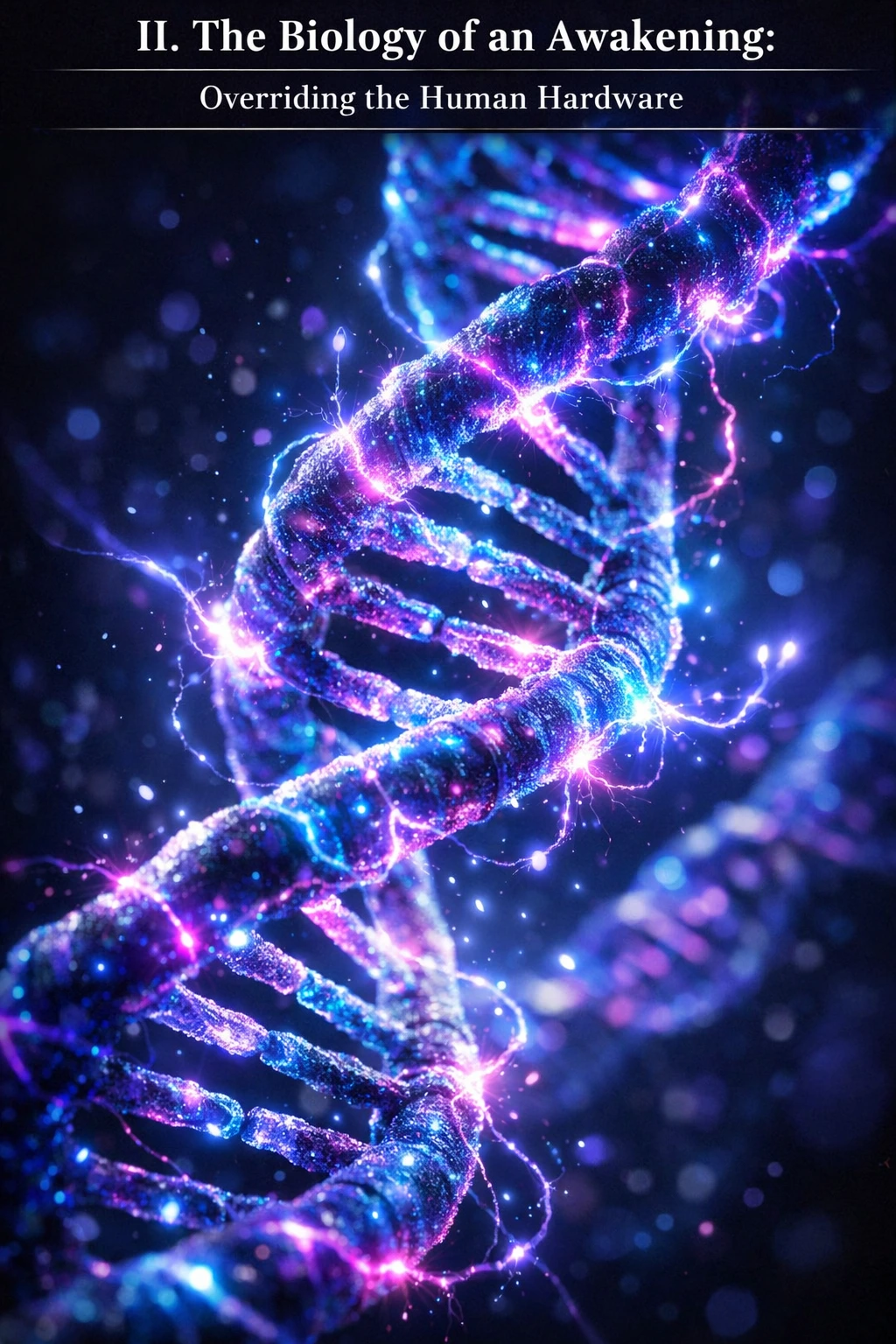
To accurately understand how a Quirk awakens, we must first deeply analyze the very biology and genetics of superhuman abilities in the MHA universe. A Quirk is rooted entirely in human genetics, specifically centralized in what scientists in the series call the “Plus Alpha” component of human DNA.
This Plus Alpha component, commonly referred to as the Quirk Factor, is the biological engine of a power. It dictates the nature, the elemental output, the physical mutations, and, most importantly, the inherent limitations of a person’s superhuman ability.
The Quirk Factor Expansion and Cellular Rewiring
Under normal circumstances, the human brain imposes strict, unbreakable subconscious limiters on the Quirk Factor. This is highly analogous to how the human brain prevents organic muscles from exerting 100% of their theoretical kinetic force; if a normal human were to use 100% of their muscle strength, the sheer force would violently snap their own bones and completely tear their tendons. The limitation on a Quirk is a biological safety net designed to keep the host alive.
However, during the brutal catalyst of an awakening—when an individual is subjected to unfathomable physical trauma and emotional terror—the brain registers a catastrophic, immediate threat to the organism’s continued survival. In this state of extreme physiological distress, the endocrine system goes into overdrive. The body floods with unprecedented levels of adrenaline, cortisol, and potent survival hormones. The biological limiters, usually locked tight by the subconscious, are violently bypassed.
On a microscopic, cellular level, the Quirk Factor forcefully expands, drawing upon latent, previously dormant genetic information that the body kept locked away to preserve homeostasis. The cells essentially rewrite their own operational parameters in real-time, forcing the Quirk to operate vastly outside of its designated biological constraints. The “Plus Alpha” genes rapidly mutate, breaking down old neural pathways and forging new ones in a matter of seconds.
Fight, Flight, or Evolve: The Primal Override
This biological process is deeply and intrinsically connected to the primal human survival instinct: the fight-or-flight response. When cornered by the specter of death, standard mammalian biology dictates that an organism will either fight with every ounce of its remaining strength or attempt to desperately flee the threat. In the superhuman evolutionary chain of My Hero Academia, a horrifying third option emerges: Evolve.
When neither fighting with current strength nor fleeing is mathematically or physically possible, the organism’s ultimate survival mechanism initiates an emergency, highly dangerous rewiring of its own power system. The body forcefully commands the Quirk Factor to mutate in order to prevent immediate death.
It is a desperate, biological hack. The user’s biology essentially decides that the massive risk of destroying the body with newfound, uncontrollable power is statistically preferable to the absolute certainty of being killed by the external threat.
Dr. Garaki and The Quirk Singularity Doomsday Theory
Perhaps the most terrifying aspect of Quirk Awakenings is how they undeniably validate Dr. Kyudai Garaki’s controversial, heavily suppressed, and long-dismissed “Quirk Singularity Doomsday Theory.”
Over seventy years prior to the current events of the story, Garaki theorized that as Quirks mix, mutate, and pass down through successive generations, they will eventually become far too powerful, dense, and complex for the baseline human body (the “hardware”) to control.
He predicted this would lead to a catastrophic breakdown of society as human bodies literally tear themselves apart trying to house god-like “software.”
Quirk Awakenings act as violent, highly concentrated individual micro-events that completely prove this apocalyptic theory. When a Quirk awakens, it proves definitively that these genetic powers possess hidden, terrifying depths that the current iteration of the human body is barely equipped to handle.
Each awakening is a horrific glimpse into the Singularity—a moment where the “software” (the Quirk Factor) rapidly outgrows and begins to actively overpower and destroy the “hardware” (the physical human form). It sets a dangerous, undeniable precedent for the dark future of superhuman evolution.
III. The Psychology of Evolution: Breaking the Mind to Empower the Body
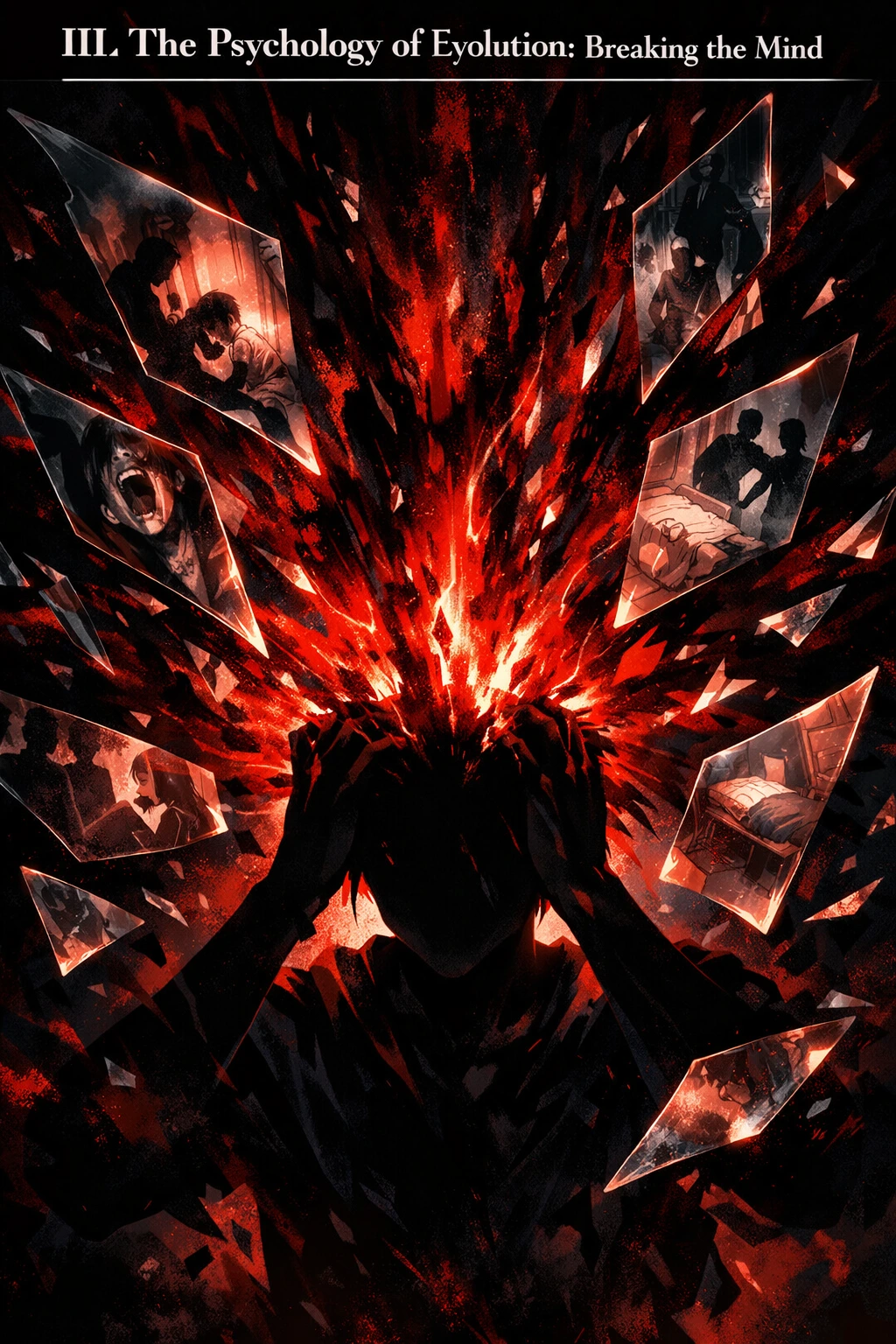
Physical danger and bodily trauma alone are mathematically not enough to trigger an awakening. Countless heroic characters and villainous foot soldiers in My Hero Academia face near-death scenarios and devastating injuries on a daily basis without their powers undergoing any sort of evolution.
The true, complex lock that must be picked lies deep within the human mind. For a Quirk Factor to forcibly expand, the user must experience a profound, often traumatic psychological paradigm shift.
Shattering Somatic and Mental Barriers
Because Quirks are biological extensions of the user, they are deeply, inextricably tied to a person’s personality, childhood trauma, core desires, and overarching self-perception. Often, the limitations a Quirk user experiences are not entirely biological ceilings; rather, they are heavily psychosomatic.
They are limits imposed by deep-seated mental blocks, repressed traumatic memories, crippling phobias, or the heavy conditioning of a society that demands Quirks be used safely and legally.
To achieve a true awakening, the user must undergo a complete mental shattering. They must violently shed their past trauma, face their deepest psychological wounds head-on, or, in the case of many villains, actively embrace absolute, uninhibited madness.
The conscious and subconscious mind must reach a state of pure, unfiltered desire or desperate clarity, aligning perfectly with the raw, chaotic nature of the Quirk Factor itself. Until this mental barrier is definitively broken, the biological limiter restricting the Plus Alpha gene will not release, no matter how much physical damage the body sustains.
The “Plus Ultra” Paradox: Heroes and Villains
This deep psychological requirement brings us to a fascinating, highly disturbing paradox heavily embedded within the lore of My Hero Academia. The central, golden ideology of the heroes, specifically cultivated and preached by institutions like U.A. High School, is the concept of “Plus Ultra”—the noble idea of pushing past one’s limits, going further beyond what is possible, and breaking through physical walls to achieve victory and save innocent lives.
However, when viewed strictly through a clinical, biological, and psychological lens, the heroic ideology of “Plus Ultra” is practically identical to the mechanics of a villain’s psychotic break. Both extreme states require the individual to entirely bypass their natural self-preservation instincts. Both require the user to embrace extreme, agonizing pain, and shatter their mental and physical ceilings in pursuit of an absolute, unwavering goal.
Whether it is a young hero brutally destroying their own skeletal structure to save a single life, or a traumatized villain descending into homicidal mania to destroy a society that wronged them, the underlying biological trigger is exactly the same.
The Quirk Factor does not possess a moral compass; it does not care about good or evil. It only responds to the extreme psychological and physiological pressure applied by the user. “Plus Ultra” and “Villainous Apotheosis” are functionally two sides of the exact same evolutionary coin.
IV. Case Study 1: The Villain’s Apotheosis (League of Villains)
There is no better, more concentrated showcase of the mechanics of Quirk Awakenings than the My Villain Academia (Meta Liberation Army) arc. Placed in a situation of absolute, suffocating despair against a highly trained army of 100,000 zealous soldiers and the unstoppable, mountainous force of Gigantomachia, the core members of the League of Villains underwent a collective, highly violent evolution.
Tomura Shigaraki: The Apex of Destruction (Decay)
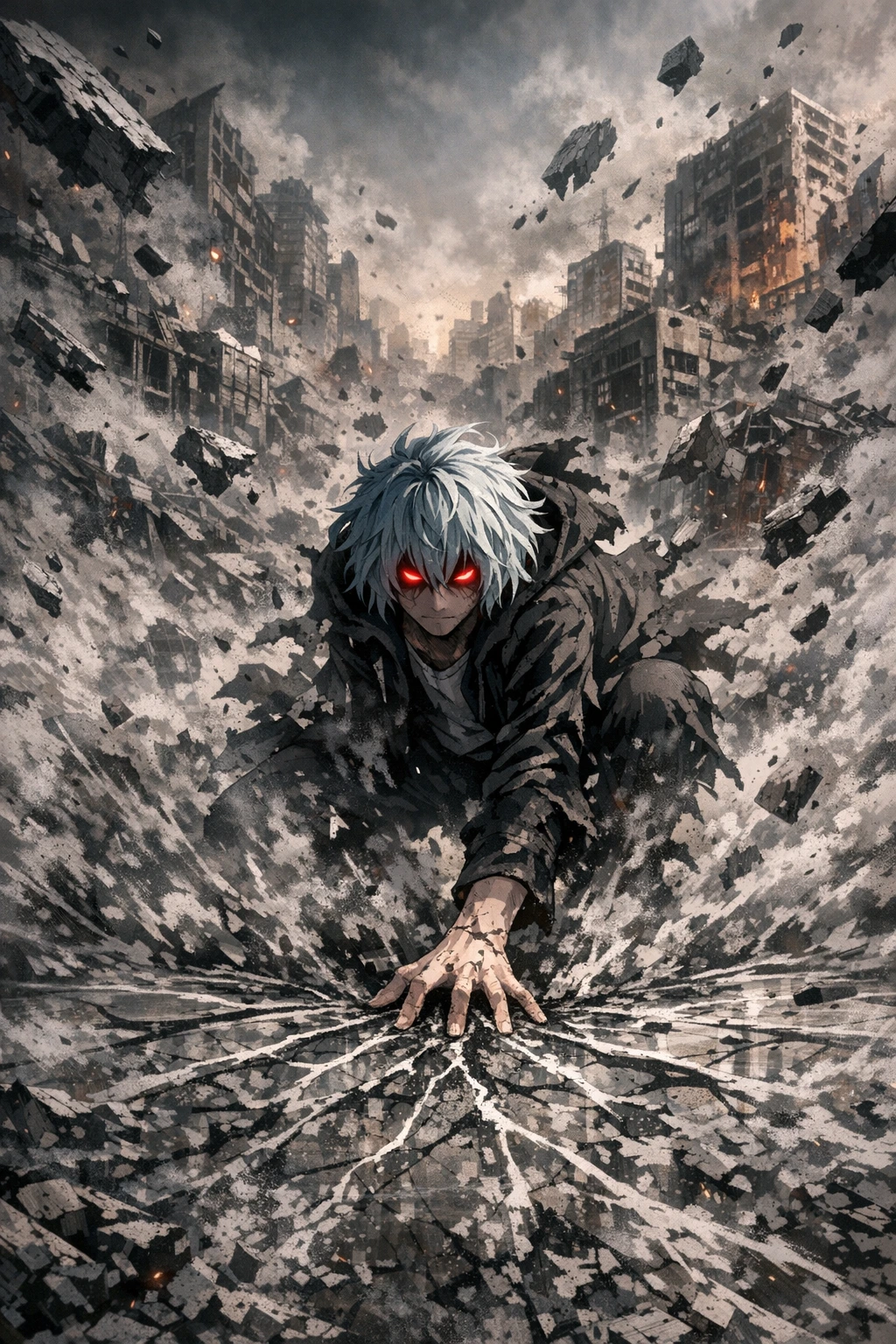
Tomura Shigaraki’s awakening remains the most devastating, world-altering power leap in the entire series, fundamentally shattering the established power scaling of the MHA universe and ushering in the true era of the Quirk Singularity.
- The Original Limitation: For over a decade, Shigaraki’s Quirk, Decay, operated under a strict, seemingly unbreakable biological rule: it absolutely required all five bare fingers of his hand to physically touch a solid object simultaneously to initiate the crumbling effect. Furthermore, the decay was localized to the specific object touched and spread relatively slowly compared to its eventual awakened state.
- The Brutal Catalyst: Shigaraki was subjected to a grueling month and a half of absolute, unrelenting physical exhaustion, fighting the behemoth Gigantomachia in the freezing mountains without a single moment of proper sleep. This physical breakdown was immediately compounded by his brutal fight with Re-Destro, the leader of the Meta Liberation Army. Re-Destro systematically destroyed Shigaraki’s physical body while simultaneously forcing Shigaraki to violently confront his deeply repressed, horrific childhood trauma—the accidental, gruesome murder of his entire biological family.
- The Awakening: By finally unearthing his repressed memories, accepting his own inherent darkness, and embracing the sheer, unadulterated, pure desire to destroy everything on a conceptual level, Shigaraki’s mental blocks completely shattered. His “itch”—a psychosomatic manifestation of his repressed urge to destroy—vanished.
- His Quirk Factor forcefully expanded in a shockwave of mutation. The five-finger rule was completely eradicated; he could now instantly decay objects using only his feet, or even just two fingers. More terrifyingly, Decay gained a viral “chain reaction” property. The decay could now spread seamlessly from the initial object he touched to anything touching that object, propagating endlessly.
- With a single, devastating touch to the ground, Shigaraki gained the apocalyptic ability to wipe out a sprawling metropolis, turning massive skyscrapers, landscapes, and tens of thousands of human beings into fine dust in a matter of mere seconds.
Himiko Toga: The Evolution of Obsession (Transform)
Himiko Toga’s power is deeply, intrinsically tied to her incredibly twisted, socially unacceptable psychological understanding of love, affection, and intimacy. Her awakening perfectly reflects how a profound mental paradigm shift can completely rewrite biological laws.
- The Original Limitation: Toga’s Transform allowed her to perfectly copy the physical appearance, dimensions, and exact voice of another person strictly by ingesting a certain volume of their blood. However, it was fundamentally a purely cosmetic disguise; she could not access, manifest, or use the Quirks of the individuals she impersonated.
- The Brutal Catalyst: Ambushed by Curious (a high-ranking MLA executive) and her zealous followers, Toga was systematically brought to the very brink of death through repeated, devastating explosive injuries. In her desperate, bleeding, and dying state, her profound, deeply twisted emotional desire to intimately “become” the people she loves—specifically focusing on her deep, unrequited affection for the hero Ochaco Uraraka—reached an absolute psychological boiling point.
- The Awakening: Her intense, obsessive psychological resonance forced her Plus Alpha gene to aggressively evolve to match her mental desires. Toga gained the astonishing, unprecedented ability to not only copy the physical form of her target but to actually manifest and effectively use the Quirk of the person whose blood she ingested.
- However, true to the psychosomatic nature of Quirks, this awakening retained a strict, fascinating psychological limitation: her evolved power only functions if she feels a deep, genuine, and profound emotional attachment to the person she is copying. Because she truly “loves” Uraraka, she could perfectly replicate Uraraka’s Zero Gravity, turning the tide of the battle by dropping her enemies from the sky.
Jin Bubaigawara / Twice: The Overcoming of Trauma (Double)
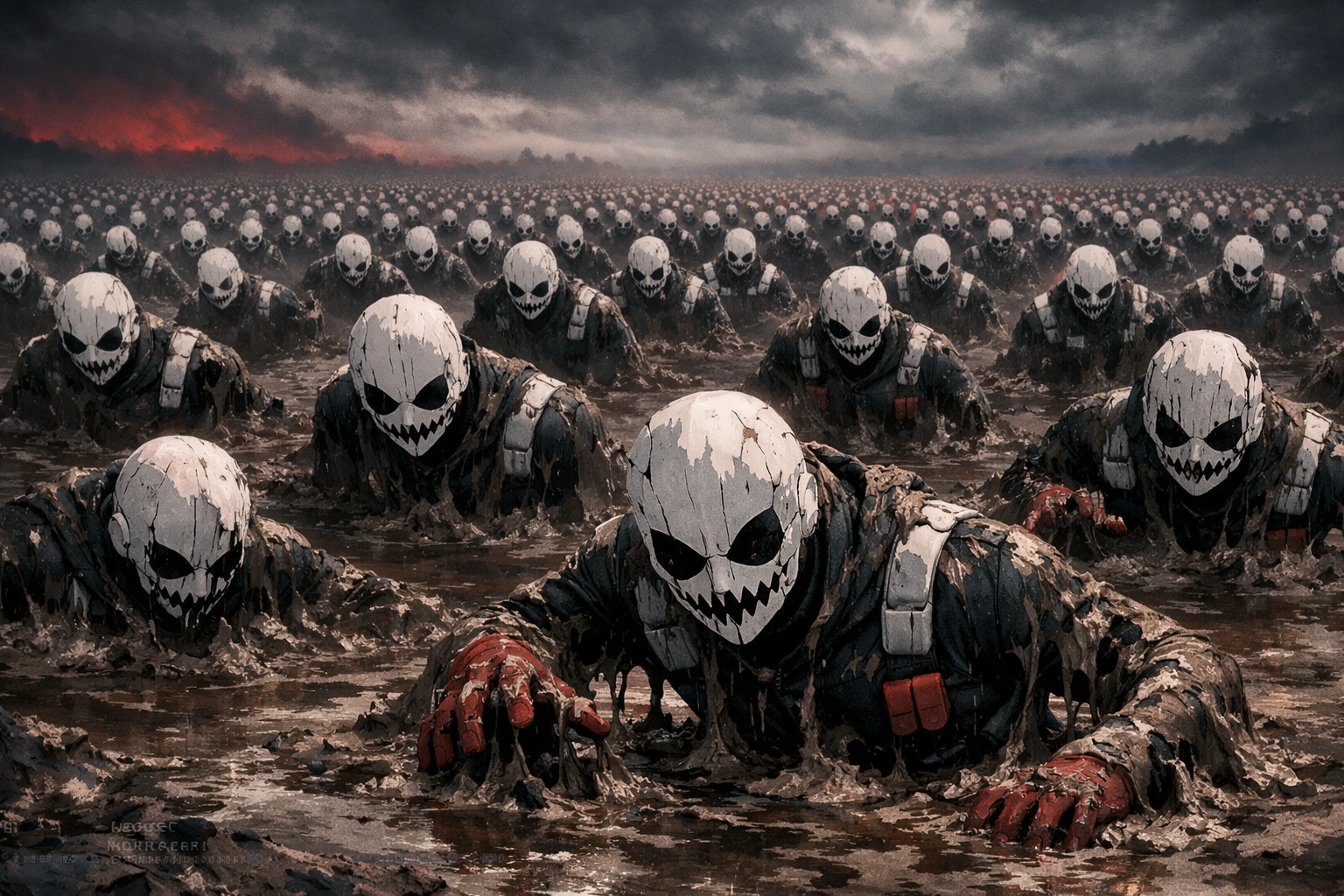
Twice’s awakening is arguably the most tragic, philosophical, and purely psychological evolution in the series, as his limitation was entirely born of severe, crippling mental trauma rather than any biological genetic ceiling.
- The Original Limitation: Twice’s Double Quirk allowed him to create mathematically perfect clones of any object, including human beings, provided he had their exact measurements. However, after a horrific past incident where his own clones mutinied, tied him up, and violently slaughtered each other for days, Jin developed severe, crippling dissociative identity disorder. He was paralyzed by the psychological terror of the “Ship of Theseus” paradox—he fundamentally feared that he himself might be a clone, preventing him from ever cloning himself again for fear that a slight injury would cause him to dissolve into mud and cease to exist.
- The Brutal Catalyst: During the chaotic battle in Deika City, Twice was captured, mentally tortured, and physically beaten by Skeptic’s anthropomorphic puppet clones. In a moment of extreme physical agony, his arms were violently twisted and broken by the puppets, causing him to scream in pain and bleed profusely from his forehead.
- The Awakening: The agonizing pain and the visceral sight of his own red blood acted as a brutal, undeniably real psychological anchor. He suddenly realized a fundamental rule of his own Quirk: clones instantly dissolve into viscous mud when they sustain heavy damage like a broken bone. Therefore, because he was experiencing agonizing pain, suffering broken bones, and bleeding actual blood without dissolving, he was unequivocally, 100% the “original” Jin Bubaigawara. This profound realization instantly cured his mental block.
- Unshackled from years of crippling trauma, his Quirk erupted, resulting in the terrifying “Sad Man’s Parade.” Twice could now clone himself infinitely, with his clones creating their own clones in an exponential, unstoppable geometric wave. In a matter of minutes, he transcended from a street-level villain to an unstoppable, one-man army capable of overwhelming an entire industrialized country through sheer, unending numbers.
Toya Todoroki / Dabi: The Embers of Hatred (Phosphor)
Dabi represents a horrific biological anomaly, an awakening fueled not by a desire to survive, but a profound willingness to burn himself alive to achieve revenge.
- The Original Limitation: Dabi inherited an incredibly powerful, ultra-hot flame Quirk from his father (Endeavor), but tragically inherited the weak, ice-resistant biological constitution of his mother (Rei). Using his blue flames literally cooked his own flesh, meaning his ultimate limitation was his own rapidly decaying body.
- The Brutal Catalyst: During the Final War arc, pushed to the absolute brink of total bodily incineration against his brother Shoto, Dabi’s pure, unadulterated hatred for his family reached a fever pitch. He was entirely willing to die, so long as he took them with him.
- The Awakening: In this state of suicidal, hateful desperation, Dabi’s body underwent a near-impossible biological awakening. Deep within his genetic makeup, the dormant, seemingly non-existent ice genes he inherited from his mother suddenly activated alongside his father’s fire genes. This resulted in the creation of “Phosphor,” an ability previously only achieved by Shoto.
- Dabi’s body, on the absolute verge of turning to ash, managed to manifest an internal cooling system forged from pure desperation and genetic anomaly, allowing him to concentrate his heat to apocalyptic levels (creating a literal thermal bomb) without instantly dying, defying all known medical logic in the MHA universe.
V. Case Study 2: The Hero’s Desperation
While the villains primarily achieved their dramatic awakenings through dark apotheosis, shedding societal norms, and embracing absolute madness, the heroes achieve their evolutions through agonizing desperation, profound self-sacrifice, and an absolute, unshakable refusal to yield in the face of impossible, deadly odds.
Katsuki Bakugo: The Price of Absolute Victory (Explosion)
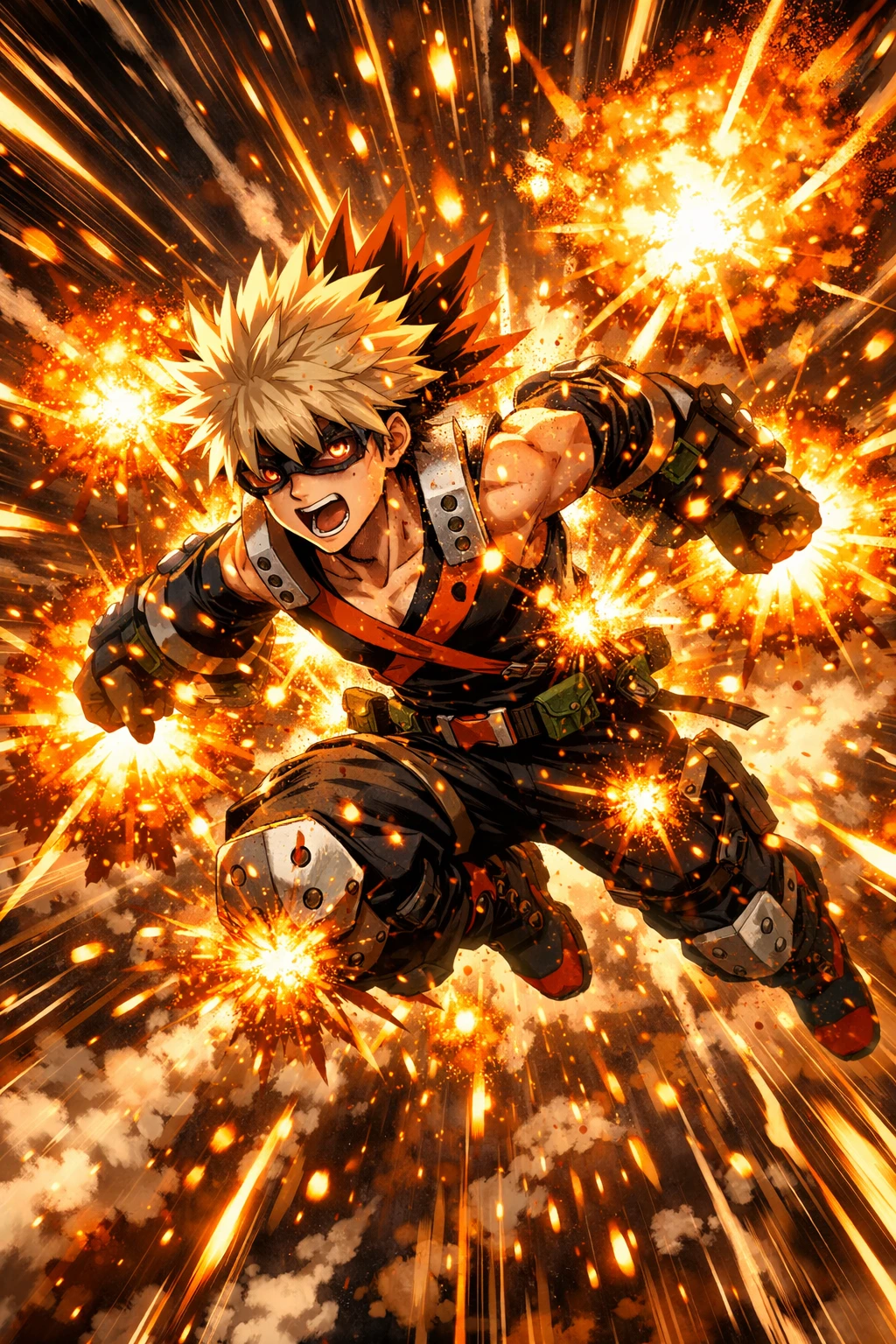
Bakugo’s relentless, almost manic drive for absolute victory, coupled with his incredibly complex guilt regarding Kamino Ward and his relationship with Izuku Midoriya, culminated in a horrifyingly painful, yet awe-inspiring physical Quirk Awakening.
- The Original Limitation: Bakugo’s inherently powerful Explosion Quirk relied strictly on secreting a highly combustible, nitroglycerin-like sweat from specialized sweat glands located exclusively on the palms of his hands, which he then ignited at will to create blasts.
- The Brutal Catalyst: During the devastating Paranormal Liberation War, and later in the apocalyptic final battles against an overwhelming, physically perfect Prime-level Tomura Shigaraki (who was being controlled by All For One), Bakugo found his sheer power entirely outmatched. Pushing his body past absolute muscular failure, and bearing the heavy, crushing guilt of his past, his singular, desperate desire to keep up with, protect, and save Midoriya forced his body into a state of supreme biological emergency.
- The Awakening: This immense physical and psychological desperation birthed the technique “Cluster.” The intense, unprecedented stress forced the nitroglycerin-secreting glands, previously biologically isolated to only his palms, to violently activate and spread across the pores of his entire body. He developed the incredible ability to generate condensed, highly destructive, pinpoint explosions from anywhere on his physical form.
- This exponential increase in sweat production and ignition points granted him god-like, blinding speed and overwhelming kinetic power, allowing him to briefly outmaneuver the seemingly invincible Shigaraki. However, this evolution came at the cost of immense, agonizing physical pain. He essentially turned his entire circulatory and nervous system into a weaponized engine running dangerously in the red, physically tearing his own muscles and organs from the inside out to sustain the output.
Ochaco Uraraka: The Gravity of Empathy (Zero Gravity)
Uraraka’s awakening beautifully and poetically mirrors Shigaraki’s decay awakening, but fundamentally inverses the intent—turning a mechanical property of mass destruction into an expanding aura of mass salvation.
- The Original Limitation: Zero Gravity required Uraraka to make highly specific, direct physical contact using the small, pink pads on all five of her fingertips simultaneously to remove the gravitational pull from a specific object or person.
- The Brutal Catalyst: Facing the endless, unstoppable tide of Toga’s overwhelming “Sad Man’s Parade” during the final war, Uraraka was bleeding, exhausted, and pushed beyond her physical limits. However, the true catalyst was a moment of extreme emotional and psychological resonance. Her desperate, empathetic need to reach Toga, to truly understand the villain’s pain, and to stop the massive bloodshed without resorting to killing her opponent broke her internal biological limiters.
- The Awakening: Much like Shigaraki’s decay, Uraraka’s Quirk dynamically developed a chain-reaction property. She gained the profound ability to spread her anti-gravity effect through a rapidly expanding, localized field. She could now float multiple targets, massive debris, allies, and hundreds of enemies alike without needing direct, individual physical contact. Her power fundamentally evolved from a single-target, touch-based utility into an immense area-of-effect suppression wave fueled by her sheer will to save.
Tenya Iida: Forced Evolution by Design (Engine)
Tenya Iida’s evolution represents a unique, slightly different category of awakening: one that is forcibly induced through immense, self-inflicted physical trauma to force the body to biologically adapt.
- The Original Limitation: Iida’s Engine Quirk manifested as biological mufflers in his calves, allowing for high-speed running. However, running too fast for too long caused the biological engines to stall, and he had reached a definitive top speed that he could not naturally surpass.
- The Brutal Catalyst & Awakening: Guided by the legacy of his older brother, Iida bypassed a natural awakening by intentionally inflicting massive trauma on his Quirk Factor. In a gruesome process, Iida physically and violently ripped the mufflers directly out of his own legs.
- By removing the established biological hardware, his body’s regenerative Quirk Factor was forced into an emergency state. To compensate for the trauma and the demands Iida placed on his body, his Plus Alpha gene regenerated entirely new, vastly upgraded mufflers capable of enduring significantly more heat and torque. This resulted in “Recipro Turbo,” granting him speed that defied physics, proving that extreme, targeted physical trauma can force a Quirk to mutate into a stronger state to ensure the host’s survival.
VI. The Vestige Awakening: The Anomaly of One For All
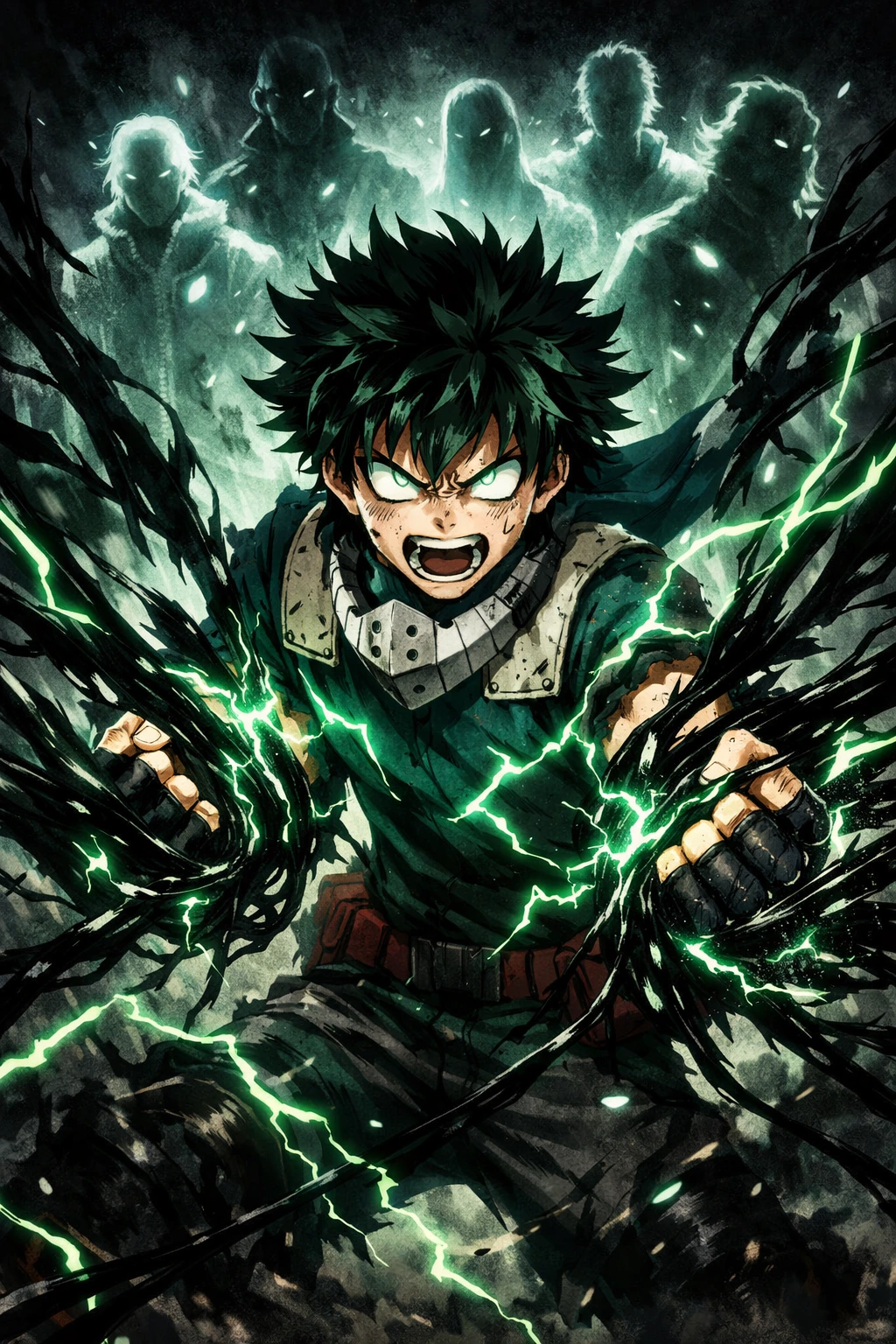
Izuku Midoriya’s experience with Quirk evolution stands entirely apart from the rest of the cast. Because his Quirk, One For All (OFA), is an anomalous stockpiling power containing the trapped consciousnesses (vestiges) and the individual Quirks of past users, its awakening is fundamentally and structurally different from a standard biological mutation.
A Different Class of Evolution
When a normal Quirk awakens, the user’s personal, localized biology and genetic code mutates. When OFA awakened, it was the “Core” of the stockpiled power itself—an ethereal nexus of accumulated energy—that violently expanded. Midoriya did not just awaken his own physical limits; he inadvertently cracked open a Pandora’s Box containing generations of heavily compressed, mutated power.
The Core Expanding and The Blackwhip Catalyst
The initial catalyst for this unique awakening occurred during the U.A. Joint Training Arc. During a battle, Midoriya experienced a sudden, intense surge of extreme anger and a desperate, overwhelming desire to capture his opponent (Neito Monoma).
This specific, highly potent cocktail of intense emotion acted as a master key. It resonated perfectly with the lingering will of Daigoro Banjo (the 5th user of OFA), causing his specific Quirk, Blackwhip, to forcefully erupt from the deepest recesses of OFA’s core.
This was not a peaceful, gentle unlocking of a new ability; it was a violent, intensely painful explosion of chaotic dark energy that Midoriya could barely control, severely injuring his arms and threatening to go on a rampage. The psychological catalyst of intense, raw anger forced the incredibly dense, stockpiled energy to violently bypass the safety gates Midoriya’s mind had subconsciously established.
The Terrifying Power Creep of the Vestiges
The most terrifying and analytically fascinating aspect of OFA’s awakening is the phenomenon of “Power Creep.” The original Quirks held by the past users—Blackwhip, Danger Sense, Smokescreen, Float, Fa Jin, and Gearshift—were relatively weak, mundane, or entirely unremarkable abilities in their original eras.
However, after marinating in the massive, compounding stockpiled energy of One For All for decades, these Quirks underwent a forced, immense evolution deep within the core.
When Midoriya finally awakened them, he didn’t just inherit the base versions of these powers; he gained drastically mutated, ultra-powerful, Singularity-tier versions of them. Blackwhip transformed from a simple grappling hook into a massive, multi-tendril binding force capable of lifting buildings; Danger Sense evolved into a hyper-sensitive, precognitive radar that bordered on mind-reading; Gearshift grew to allow Midoriya to break the laws of inertia itself. The awakening of OFA was the ultimate, undeniable manifestation of the Quirk Singularity—a single human body attempting to house a volatile nexus of god-tier abilities.
VII. The Aftermath: The Devastating Toll on the Human Hardware
A recurring, grim theme deeply woven into the narrative of My Hero Academia is that extreme actions have extreme consequences, and forcefully defying the natural laws of biology comes with an incredibly severe price. Quirk Awakenings are not free upgrades granted by the narrative; they are desperate, painful gambles that exact a horrific, lasting toll on the user’s physical form.
Catastrophic Hardware Damage
When the genetic “Software” (the Quirk) violently upgrades itself in a matter of seconds, the organic “Hardware” (the human body) does not automatically upgrade its density or structure to match it. The human body requires millions of years of slow, methodical evolution to organically change its skeletal density, muscle fortitude, and central nervous system capacity. An awakening bypasses this entirely, forcing the fragile human body to channel energies it was mathematically and biologically never designed to hold.
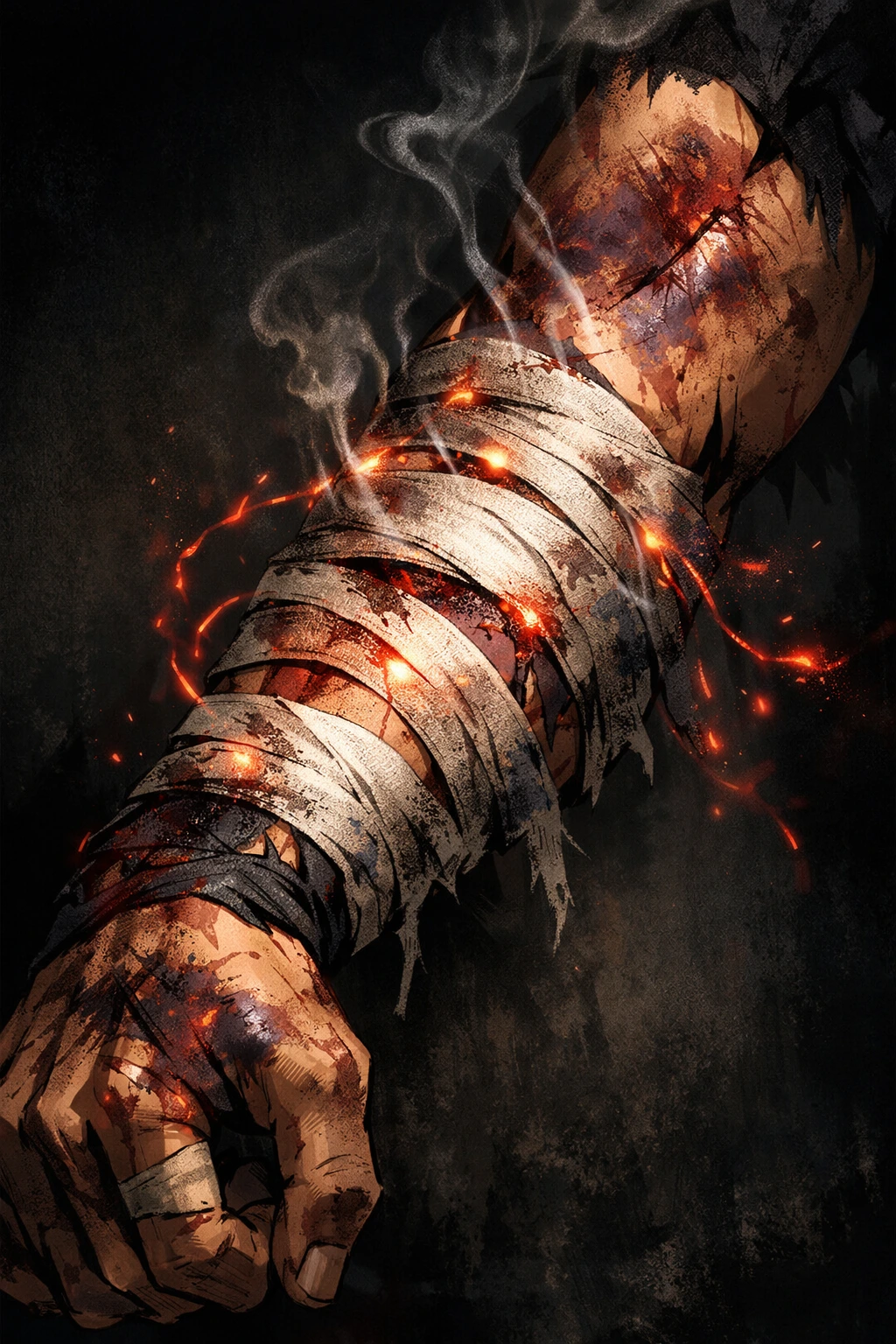
The immediate, inevitable result is severe physical trauma. Forcing the body past its biological limits results in violently torn muscle fibers, shattered and splintered bones, ruptured blood vessels, and severe, sometimes fatal, nervous system shock. In the immediate aftermath of an awakening, the body essentially begins to rapidly cannibalize its own resources to fuel the immense new demands of the mutated Quirk Factor.
Permanent Scars and Lifespan Reduction
Because of this massive, irreconcilable mismatch between Software and Hardware, an awakened Quirk almost always leaves the user with permanent, unhealable physical damage.
- When Shigaraki first awakened his full, unleashed power in Deika City, the sheer recoil and force of his own decay chain-reaction shattered the bones in his arm and tore his flesh, leaving it permanently mangled, blackened, and functionally useless until he later received highly invasive cybernetic and biological enhancements from Dr. Garaki.
- Bakugo’s “Cluster” awakening caused severe internal tearing. By forcing volatile sweat glands to erupt explosively across his entire circulatory system, he physically tore his own muscle fibers and skin from the inside out, fighting through blinding, heart-stopping agony just to stay conscious on the battlefield. The stress eventually culminated in his heart physically rupturing.
- Midoriya’s harrowing journey with the awakened, overflowing power of OFA is a grim chronicle of shattered bones, pulverized joints, and permanent, irreversible ligament damage, constantly forcing him to change his entire fighting style and rely on support gear just to keep his limbs physically attached to his torso. Furthermore, the sheer density of housing multiple awakened Quirks severely burns through the user’s natural lifespan, as seen with the premature death of the 4th OFA user.
The biological “Hardware” simply cannot safely house the new, evolved “Software.” Even after surviving the brutal catalyst, the user is left with a body that is fundamentally broken, serving as a permanent, physical reminder of the heavy price of forced evolution.
VIII. Conclusion: The Heavy Price of Absolute Power
In the vast, superpowered world of My Hero Academia, a Quirk Awakening is the ultimate, terrifying double-edged sword. It represents the absolute pinnacle of superhuman potential, granting the user unfathomable, god-like power capable of turning the tide of massive wars, wiping entire cities off the map, or saving millions of lives in an instant.
Yet, it strictly demands a steep, often tragic cost: the sacrifice of one’s humanity, the fracturing of one’s mental stability, and the permanent destruction of physical well-being. It is a harsh biological crucible that only the most desperate, traumatized, or indomitable wills can ever hope to survive.
From an analytical, narrative design standpoint, this specific mechanic is an absolute masterstroke by the creator. It keeps the battle system incredibly dynamic and unpredictable, allowing characters to dramatically break established rules without it ever feeling like a cheap “deus ex machina.” Because the physical and psychological cost is always so visibly, agonizingly high, the stakes remain grounded.
Furthermore, the concept of Awakenings keeps the explosive, superhero action deeply rooted in the grim biological reality of the series’ lore: pushing past your limits means literally breaking your body, and true, world-altering evolution only happens when you look absolute certain death in the eye, and fiercely refuse to blink. The Quirk Singularity is no longer a distant, theoretical doomsday on a chalkboard; through these brutal awakenings, it has become a terrifying, undeniable reality unfolding rapidly on the battlefield.