
I. Introduction: The Prophecy and the Paradigm Shift

For decades, the power hierarchy of Jujutsu society was stagnant, defined by a rigid conservatism that prioritized bloodline over innovation and tradition over talent. At the apex of this hierarchy sat Satoru Gojo, a being so transcendent that he was less of a sorcerer and more of a localized force of nature. His existence shifted the balance of the world, but Gojo was acutely aware of his own mortality and the limitations of being a solitary pillar holding up the sky. He knew that eventually, the “ceiling” of the Jujutsu world had to be raised, or the structure would collapse under the weight of a new age of curses.
Early in the narrative, Gojo Satoru made a declaration that would serve as the thesis for the future of the series: “Hakari, Okkotsu, and Itadori… they will become sorcerers on par with me.”
This was not merely a teacher boasting about his students; it was a prophecy of a regime change. Gojo envisioned a generation that would not just inherit the title of “Special Grade” but would fundamentally rewrite what it meant to be a sorcerer. Among this generation, three specific individuals have risen to occupy the vacuum left by the modern era’s strongest: Yuta Okkotsu (The Prodigy), Kinji Hakari (The Gambler), and Maki Zenin (The Monster).
While Yuji Itadori remains the protagonist and the spiritual center of the story, these three—often referred to by fans and characters alike as the “Heavy Hitters” of Tokyo High—represent the pinnacle of combat capability in the post-Shibuya landscape. They are the “New Big Three.”
What makes this trio fascinating is not just their raw power, but how they achieved it. They are antithetical to the desires of the Jujutsu Higher-Ups. Yuta is a living anomaly who wields the power of a “Queen of Curses” in the name of love. Hakari possesses a technique so modern and convoluted that it offends traditional sensibilities, effectively weaponizing probability itself. Maki, forcing her way into this conversation through sheer will and tragedy, represents the complete rejection of Cursed Energy, standing as the only being capable of rivaling the ghost of Toji Fushiguro.
This article provides an exhaustive analysis of these three anomalies. We will dissect their complex techniques, explore the philosophical implications of their powers, and examine how they have collectively shattered the rules of the Zenin clan, the dogma of the Higher-Ups, and the very laws of Cursed Energy to stand against the King of Curses, Ryomen Sukuna.
II. The Prodigy: Yuta Okkotsu
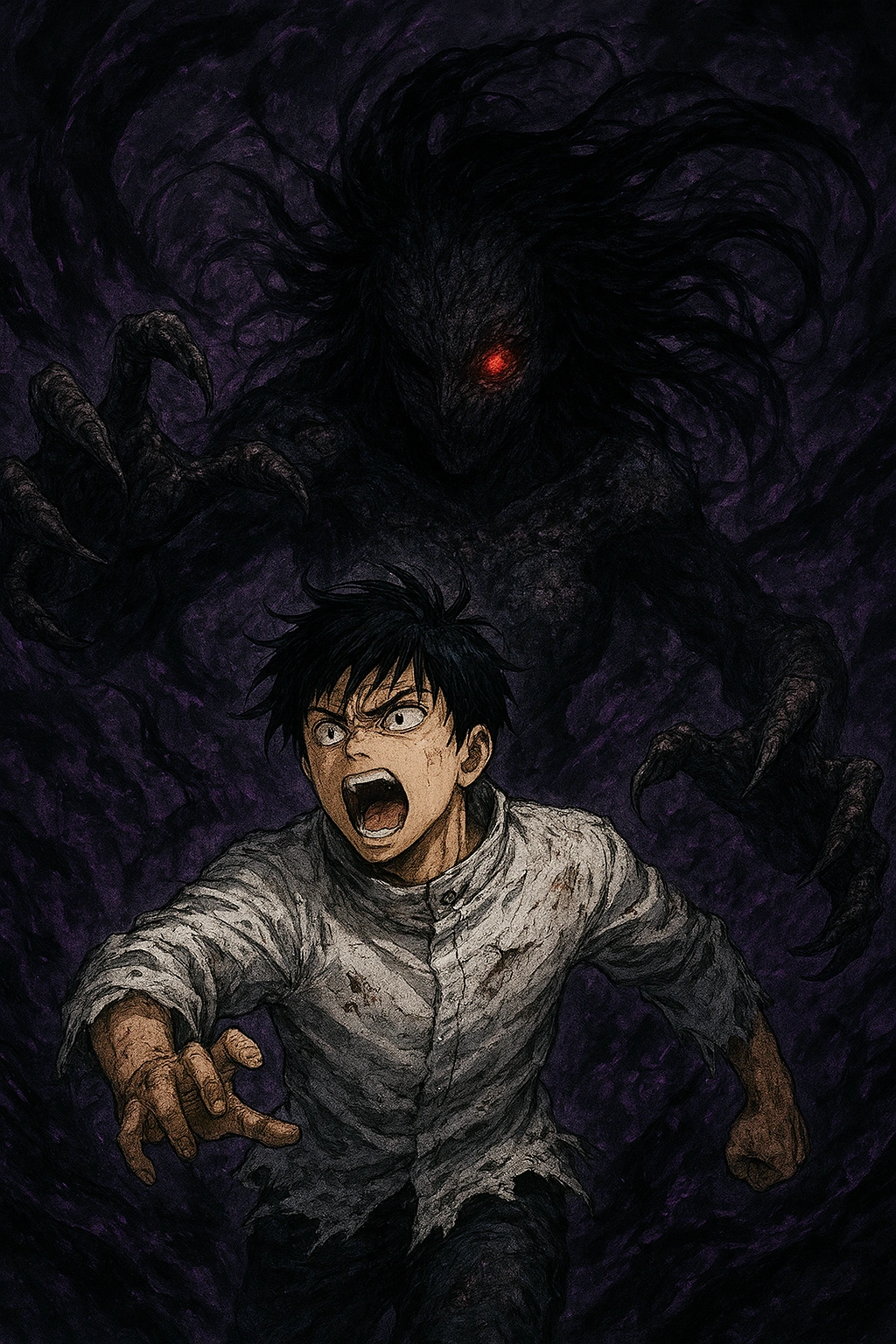
The Successor to the Strongest
If Satoru Gojo is the “Honored One,” Yuta Okkotsu is the “Blessed Child.” From his introduction in Jujutsu Kaisen 0, Yuta was established as a terrifying irregularity. Even Gojo admitted that Yuta possesses a bottomless well of Cursed Energy, stating it exceeds even his own. While Gojo relies on the extreme efficiency provided by the Six Eyes, Yuta relies on sheer, overwhelming volume. He is the closest thing the modern era has to a traditional RPG hero—infinite mana, versatile skills, and a driving motivation rooted in love rather than selfishness.
Yuta’s position as “second only to Gojo Satoru” is not a title given lightly. In a world where Cursed Techniques are usually fixed at birth (approx. 80% of a sorcerer’s talent), Yuta breaks the mold by theoretically possessing all of them.
Technique Analysis: “Copy” (Mimicry)
Yuta’s innate technique is Copy. On the surface, this is a standard “blue mage” ability common in fantasy, but in the context of Jujutsu Kaisen, it is devastating. The conditions for Yuta’s copy ability were a subject of debate for years, but the Culling Games and the Shinjuku Showdown clarified the mechanism: Consumption.
For Yuta to copy a technique, Rika must consume a part of the target’s physical body.
- Lethal Consumption: Eating a substantial body part (like an arm) allows for unconditional copying.
- Non-Lethal Consumption: In the fight against Sukuna, it was revealed that Yuta could copy techniques by having Rika consume something as small as a finger (which he did with Sukuna’s finger) or by utilizing the blood of the user alongside a binding vow.
This requirement makes Yuta a predator. To gain power, he (or Rika) must literally feast on his enemies. Once copied, Yuta stores these techniques within Rika. This leads to his only major limitation: The 5-Minute Timer. Yuta can only access his stockpile of copied techniques and fully manifest Rika for five minutes. However, within that window, he is effectively a god of versatility.
His arsenal includes:
- Cursed Speech (Inumaki): Used to control opponents or deal massive area damage. Because of Yuta’s immense Cursed Energy reserves, he suffers far less backlash than Inumaki.
- Sky Manipulation (Uro): A defensive and offensive masterpiece. Yuta can bend space like a lens, redirecting attacks (even distinct blasts like Granite Blast) back at the sender.
- Shikigami Summoning (Dhruv): Creating independent trajectories for his domain barriers, using giant shikigami as automated turrets.
- Jacob’s Ladder (Angel): Perhaps his most potent anti-sorcerer tool. This technique extinguishes Cursed Techniques, allowing him to bypass defenses and even threaten Sukuna by burning away the cursed object incarnated within a vessel.
- Future Sight (Charles): By drawing blood into his weapon, he can see seconds into the future, allowing him to pre-emptively counter attacks.
Rika Orimoto: The Queen of Curses vs. The Shikigami
It is crucial to distinguish between the two versions of “Rika.”
- Vol 0 Rika: This was the vengeful spirit of the human girl Rika Orimoto, cursed by Yuta’s refusal to accept her death. She was a boundless engine of energy, essentially a glitch in the world’s logic.
- Current Rika: After Rika’s soul passed on, she left behind a “shell”—a Shikigami that acts as an external storage drive for Yuta’s Cursed Energy and Copied Techniques.
Current Rika acts autonomously to protect Yuta, offering him a 2v1 advantage in almost every duel. She can store weapons, restrain opponents with physical strength rivaling Yuji Itadori, and fire beams of pure Cursed Energy. She is not just a summon; she is a sentient inventory system that bites back.
Domain Expansion: Authentic Mutual Love
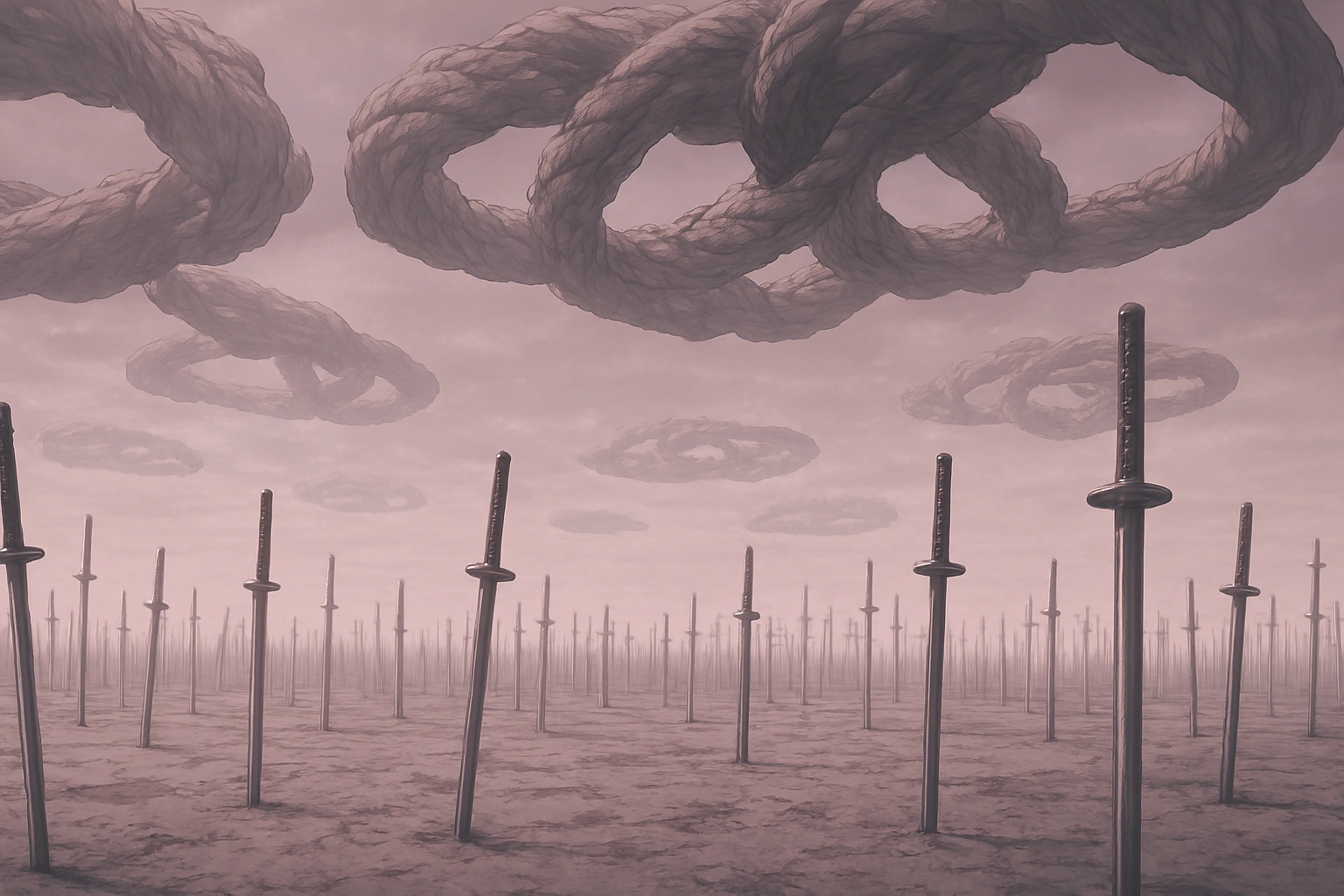
Yuta’s Domain Expansion, Authentic Mutual Love, is the ultimate expression of his mimicry. The domain takes the form of a desolate landscape filled with an infinite number of katanas stuck in the ground, surrounded by “knots” of rope (symbolizing the connection between him and Rika).
The Mechanics:
- The Sure-Hit: Yuta can imbue one of his copied techniques into the barrier of the domain as the “sure-hit” effect. This attack will automatically strike the opponent without needing to be aimed.
- The Infinite Swords: The scattered katanas each contain a random copied technique from his stockpile. Yuta does not know which technique is in which sword until he grabs the hilt. Once used, the sword vanishes.
This creates a chaotic environment where the opponent has to defend against a guaranteed hit (like Jacob’s Ladder) while simultaneously fighting Yuta, who is picking up swords and unleashing random high-tier sorcery (Sky Manipulation, Cursed Speech, etc.) in rapid succession. It is a domain of infinite possibilities, forcing the enemy to process an overwhelming amount of information.
The Sendai Colony Feat: A Masterclass in Endurance
The true testament to Yuta’s placement as a “Big Three” member occurred in the Sendai Colony. Yuta entered a deadlock between four high-level combatants: Dhruv Lakdawalla, Kurourushi (a Special Grade Cursed Spirit), Takako Uro, and Ryu Ishigori (the sorcerer with the highest Cursed Energy output in history).
Yuta didn’t just survive; he systematically dismantled the deadlock.
- He killed Dhruv immediately.
- He exorcised Kurourushi twice (once with Positive Energy—a kiss of death—and once via raw blast).
- He fought Uro and Ryu simultaneously.
In this gauntlet, Yuta showcased his ability to use Reverse Cursed Technique (RCT) to heal himself constantly while outputting massive damage. He adapted to Uro’s space manipulation and tanked Ryu’s blasts, which are described as being like cannon fire. The battle proved that Yuta is not a “glass cannon”; he is a fortress. He has the tactical intelligence to utilize the environment, the ruthlessness to consume his enemies for power, and the compassion to protect civilians while doing so.
III. The Wild Card: Kinji Hakari
The Glitch in the System
If Yuta is the model student, Kinji Hakari is the suspension. He was suspended from Jujutsu High not for lack of strength, but because his technique violated the conservative aesthetic of the Higher-Ups. They couldn’t understand it, they couldn’t control it, and therefore, they hated it.
Hakari represents the “Modern Era” of sorcery. His power isn’t derived from ancient bloodlines or vengeful spirits; it is derived from modern entertainment and vice. He is a gambler, a fight promoter, and a man who lives for the “Fever.”
Technique Analysis: “Idle Death Gamble”
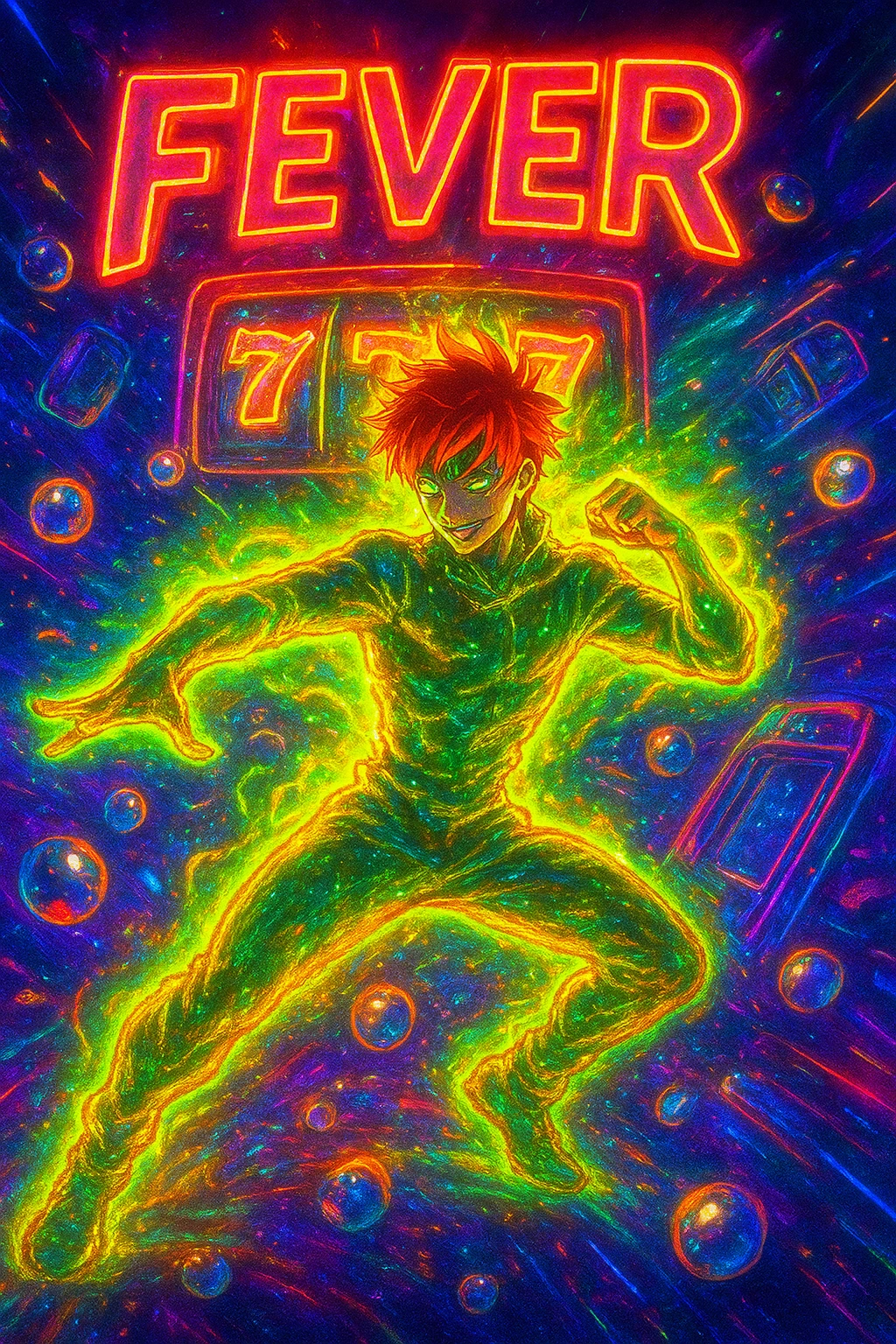
Hakari’s technique is arguably the most complex in the series, but it boils down to a single concept: Weaponized Probability.
His Domain Expansion, Idle Death Gamble, is a pachinko machine manifested into reality. The theme of the domain is a romance manga titled Private Pure Love Train.
- The Rules: Upon trapping an opponent, the sure-hit effect forces the rules of the domain directly into the opponent’s brain. This is non-lethal, but it ensures the enemy understands exactly how they are about to lose.
- The Gameplay: Hakari engages in a visual scenario (riichi). He uses attacks (balls, doors, shutters) to cycle through probability scenarios. He needs to line up three symbols (777) to hit a Jackpot.
- Probability Manipulation: Hakari can use “visual effect indicators” (green, red, gold) to increase his chances. If he fails a spin, the probability of the next spin increases. He can essentially “rig” the game through skill and luck.
While inside the domain, Hakari is technically vulnerable, but he is protected by the game mechanics. He can reset scenarios, rewind time briefly within the game logic to retry a spin, and physically batter his opponent while the slots are turning.
The Jackpot State: 4 Minutes and 11 Seconds of Immortality
The terrifying aspect of Hakari is not the gambling; it is the Jackpot. When Hakari lines up three 7s, the theme song “Tuca Donka” (or the romance anime theme) begins to play. For the duration of the song—exactly 4 minutes and 11 seconds—Hakari gains:
- Infinite Cursed Energy: His reserves become boundless. He cannot run out.
- Automatic Reflexive RCT: Because his body is overflowing with infinite energy, his body automatically heals any damage the instant it occurs. This is not a conscious effort; his body simply rejects death.
In this state, Hakari is unkillable. He does not need to block. He does not need to dodge. He can have his arm blown off, his stomach impaled, or his face melted, and it will regenerate before the blood can hit the ground.
Furthermore, because he has infinite energy, he can constantly replenish his “burnt out” Cursed Technique. Once the 4:11 timer ends, he can immediately cast his Domain Expansion again. As long as he keeps hitting Jackpots, Hakari is ostensibly immortal.
Strategic Role: The Tank

In the hierarchy of the New Big Three, Hakari is the Tank.
His battle against Hajime Kashimo—the God of Lightning—demonstrated this perfectly. Kashimo’s Cursed Energy has the property of electricity; it is unblockable and hits instantly. Against anyone else, a lightning bolt to the head is instant death. Against Hakari, it was a minor inconvenience.
Hakari expelled the lightning through his nose as he healed. He sacrificed his arm to land a hit, knowing it would grow back. He fights with a manic grin, overwhelming opponents not with technique, but with sheer, relentless oppression. He drags enemies into an attrition war they cannot win because he has infinite resources and they do not.
This makes him the perfect counter to elemental users like Uraume. In the Shinjuku Showdown, Hakari was tasked with stalling Uraume (Sukuna’s loyal servant). Uraume uses Ice Formation, a technique that freezes opponents to the bone. Hakari’s automatic RCT counters the frostbite instantly, allowing him to fight naked in a blizzard without slowing down. He is the ultimate stall-tactic, a wall that simply refuses to break.
IV. The Monster: Maki Zenin
The Anomaly: Toji Fushiguro Reborn
Maki Zenin’s journey is the most transformative of the three. She began as a “Grade 4 failure,” mocked by the Zenin clan for having low Cursed Energy and needing glasses to see curses. She ended up as a “Monster” who stands outside the logic of the Jujutsu world entirely.
Maki is the realization of Heavenly Restriction. By sacrificing all Cursed Energy, a human gains immense physical prowess. However, Maki was initially incomplete because she still had a tiny amount of Cursed Energy (linked to her twin sister, Mai).
The Mai Sacrifice and Zero Cursed Energy
In Jujutsu Kaisen, twins are considered one soul. As long as Mai had Cursed Energy, Maki could never be truly free. The turning point came when Mai sacrificed herself, taking all the Cursed Energy with her in death.
This resulted in Maki achieving 0 Cursed Energy. This is a critical distinction. She doesn’t have “low” energy; she has none.
- Invisibility to Barriers: Most barriers and domains target things with Cursed Energy. Maki is treated like a building or a rock. She can walk through barriers freely. She cannot be trapped in a Domain Expansion unless the user targets physical objects specifically (like Sukuna’s Malevolent Shrine).
- Invisibility to Sensing: Sorcerers sense opponents by their energy flow. To them, Maki does not exist. She is a stealth predator who cannot be tracked.
Sensory Perception: The Sakurajima Awakening
During the Sakurajima Colony arc, Maki fought Naoya Zenin (cursed spirit form). Despite her physical speed, she was struggling against Naoya’s Mach 3 velocity. The breakthrough came via an impromptu sumo match (a domain-like mental space) where she learned to stop “thinking” and start “feeling.”
Maki unlocked a level of sensory perception that rivals the Six Eyes, but for the physical world. She can perceive changes in air density, temperature, and surface tension. She can “see” the air itself. This allows her to predict movements by feeling the disturbance in the atmosphere before the attack lands. She can step on the air by utilizing density shifts. In this state, she is functionally untouchable.
Weaponry: The Split Soul Katana

Maki’s primary weapon is the Split Soul Katana (replicating Toji’s weapon). This sword ignores the physical durability of any object.
- The Mechanism: It cuts the soul directly.
- The Requirement: To use the sword effectively, the wielder must be able to perceive the outline of the soul of inanimate objects.
Because Maki can now “see” everything, she can utilize the sword to its full potential. Even if an enemy reinforces their body with Cursed Energy (like Sukuna or Hanami), the Split Soul Katana bypasses that armor and severs the soul beneath. Damage to the soul is notoriously difficult to heal, even with RCT.
Breaking Fate: The Zenin Massacre
Maki’s role in the “Big Three” is the Destroyer. Her massacre of the Zenin clan is a dark mirror to Itadori’s desire to save people. Maki realized that the system (the Clan) could not be fixed; it had to be excised. She slaughtered the entire combat force of the Zenin clan—including her father and uncles—single-handedly.
This act solidified her status. She is no longer bound by the hierarchy of sorcerers. She is a force of karmic retribution. While Yuta fights for love and Hakari fights for the thrill, Maki fights to assert her existence in a world that wanted her dead.
V. Synergy & The Shinjuku Showdown
The Raid Team

The battle against Ryomen Sukuna in the ruins of Shinjuku required the coordinated efforts of the entire cast, but the strategy hinged entirely on the unique capabilities of the New Big Three. They formed the backbone of the resistance.
Role Allocation
The tactical deployment of these three highlights their synergy:
- Hakari (The Wall): He was deployed immediately to separate Uraume from Sukuna. If Uraume had stayed by Sukuna’s side, the heroes would have lost instantly due to Uraume’s massive Area of Effect (AoE) freezing attacks. Hakari was the only one capable of fighting Uraume alone for an extended period without dying, effectively turning the fight into a 1v1 isolation cage.
- Yuta (The Assassin & Strategist): Yuta took on the burden of the heavy lifting. First, he was sent to assassinate Kenjaku (the secondary antagonist), preventing a merger with Tengen. Using his speed and Takaba’s distraction, he decapitated Kenjaku swiftly. He then returned to fight Sukuna, opening his Domain to trap the King of Curses. Inside the domain, Yuta acted as the commander, coordinating with Yuji to whittle down Sukuna’s soul and output.
- Maki (The Ambush Predator): Maki’s lack of Cursed Energy allowed her to strike when Sukuna was distracted. She stabbed Sukuna through the heart with the Split Soul Katana from behind—a feat only possible because she has no presence. While Yuta and Yuji drew Sukuna’s attention with flashy jutsu, Maki waited for the moment his guard dropped.
Comparison and Coverage
They cover each other’s weaknesses perfectly:
- Yuta has the versatility and high output to damage anyone, but his 5-minute timer is a vulnerability.
- Hakari lacks a lethal finishing move (he relies on punches and kicks), but he has infinite endurance to stall enemies until Yuta arrives.
- Maki is a glass cannon regarding magical defense (she has no CE reinforcement), but her physical durability and stealth allow her to bypass defenses that Yuta and Hakari cannot.
Together, they represent a complete combat unit: The Mage (Yuta), The Tank (Hakari), and The Rogue (Maki).
VI. Thematic Comparison: Modern vs. Traditional
Gojo’s Education
The existence of the New Big Three is the validation of Gojo Satoru’s teaching philosophy. The Higher-Ups wanted to mold students into obedient tools who followed the standard categorization of grades. Gojo, conversely, encouraged their unique insanities.
He allowed Hakari to gamble. He protected Yuta from execution. He nurtured Maki despite her family’s wishes. Gojo understood that to fight the curses of the modern era—which are stronger and more complex—sorcerers needed to be adaptable.
The Triad of Motivations
- Yuta (Blessed Love): Yuta represents the power of connection. His strength comes from his refusal to let go of others. He proves that “Love is the most twisted curse,” but also the greatest source of strength. He is the Heart of the new generation.
- Hakari (Modern Fever): Hakari represents the chaos of the modern world. He rejects the stoicism of the samurai era. He fights with the energy of a gambler in a casino. He brings Passion and unpredictability, proving that sorcery doesn’t have to be rigid to be strong.
- Maki (Rejection/Freedom): Maki represents the breaking of chains. She embodies the physical perfection of the human form, unburdened by the convoluted politics of Cursed Energy. She is Freedom.
The “New Big Three” vs. “The Old Special Grades”
Comparing them to the previous Special Grades (Yuki Tsukumo, Suguru Geto, Gojo Satoru):
- The Old Guard were “Gods.” Gojo and Yuki had world-breaking powers (Infinity, Black Hole).
- The New Guard are “Survivors.” They are scrappier. Yuta copies, Hakari gambles, Maki sneaks. They are less dignified but perhaps more suited to the dirty, chaotic warfare of the Culling Games. They represent a shift from “One Strongest” to “Many Strong.”
VII. Conclusion
The “New Big Three”—Yuta Okkotsu, Kinji Hakari, and Maki Zenin—have permanently shifted the power balance of the Jujutsu world. They have proven that strength is not monolithic. It can look like a boy possessed by a ghost, a gambler addicted to the thrill, or a woman with zero magic in her veins.
Regardless of the final outcome against Sukuna, their legacy is secured. They have surpassed the limitations placed upon them by the Zenin clan and the Higher-Ups. They have fulfilled Gojo’s prophecy. They are not just on par with him; in terms of versatility and teamwork, they have created a new standard.
The Golden Age of Sorcery has returned, not through the resurrection of ancient sorcerers, but through the awakening of these three modern monsters. The question is no longer “Can they save the world?” but rather, “What will the world look like when they are done with it?”
VIII. Frequently Asked Questions (FAQs)
Q: How does Hakari’s Domain Expansion actually work in simple terms? A: Think of it like a slot machine. Hakari traps you inside the machine. He spins the slots. If he gets a “Jackpot” (three matching symbols), he becomes immortal for 4 minutes and 11 seconds. He uses visual attacks (doors, balls) to keep the fight going while the slots spin. He can manipulate the luck to ensure he hits the jackpot eventually.
Q: Is Yuta Okkotsu stronger than 15-finger Sukuna? A: This is highly debated. Yuta has more Cursed Energy than Gojo, but Sukuna has vastly superior efficiency and mastery. In a direct 1v1, 15-finger Sukuna likely wins due to his Domain (Malevolent Shrine) being “open” (barrier-less), which would destroy Yuta’s barrier. However, Yuta is one of the few who can survive an encounter with him.
Q: Why can’t domains trap Maki Zenin? A: Domain Expansions usually target anything with Cursed Energy to enforce their “sure-hit” rule. Since Maki has zero Cursed Energy, the domain treats her like a rock or a building. Unless the user consciously changes the conditions of the barrier to trap a physical object, Maki can simply walk out of the barrier wall.
Q: What techniques has Yuta copied so far? A: Confirmed copies include: Cursed Speech (Inumaki), Shikigami (Dhruv), Sky Manipulation (Uro), Granite Blast (Ryu – implied/attempted), Jacob’s Ladder (Angel), Future Sight (Charles), and Cleave/Dismantle (Sukuna).
Q: Is Maki exactly equal to Toji Fushiguro now? A: Yes. The narrative explicitly states that after the Sumo training in Sakurajima, Maki became an existence “equal to Toji Zenin.” She possesses the same physical stats, the same sensory perception, and wields the same weapon (Split Soul Katana). She is Toji reborn.
Q: What happens if Hakari doesn’t hit a Jackpot? A: If Hakari runs out of spins or dies before hitting a Jackpot, he dies. However, his Domain is rigged so that the probability of hitting a Jackpot increases as time goes on (via “pseudo-spins” and “probability shift” modes). It is statistically nearly impossible for him to miss a Jackpot if he survives long enough to spin a few times.