
I. Introduction: The Accidental Monster
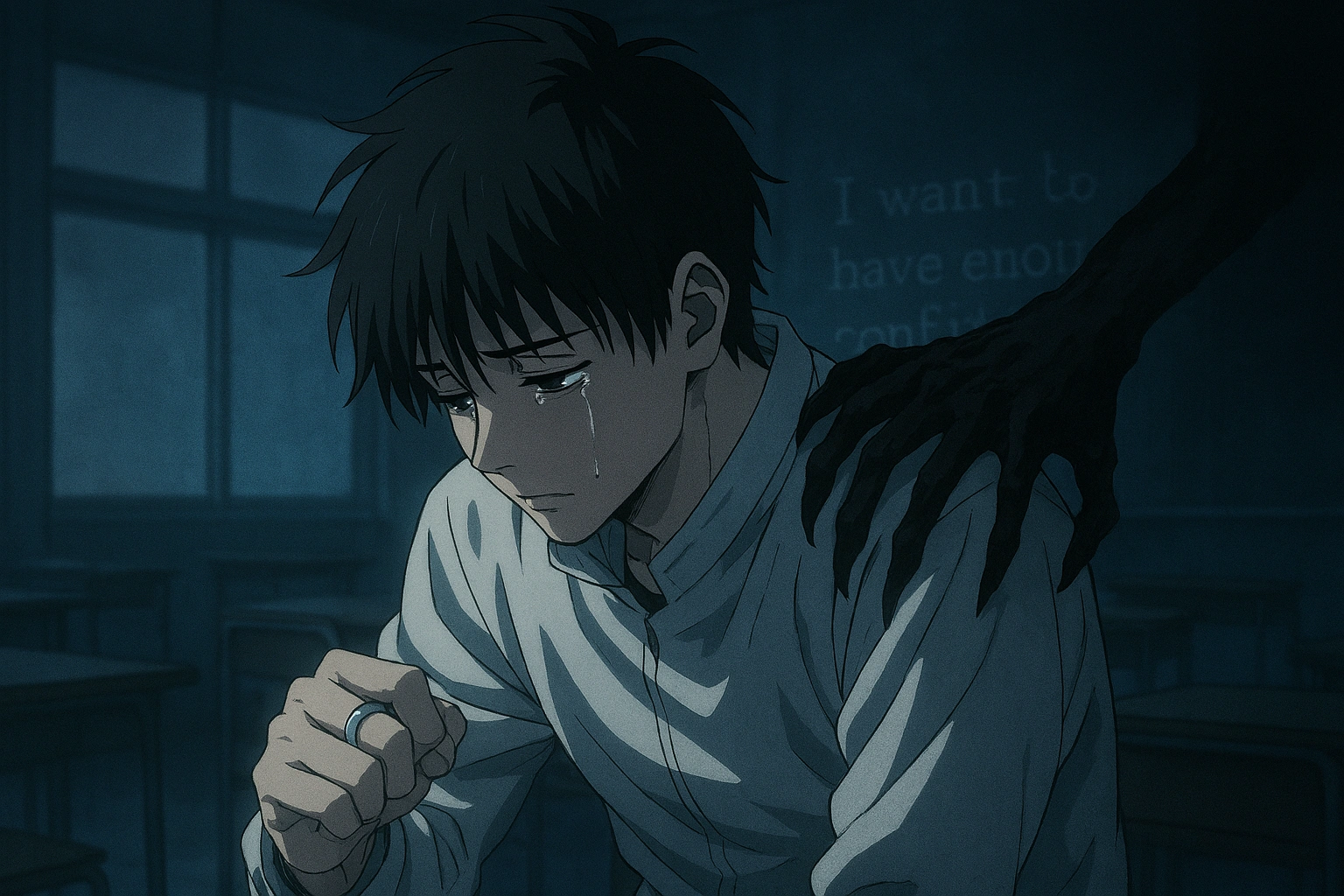
“I want to have enough confidence to feel like it’s okay for me to live.”
This singular sentence, uttered by a trembling, dark-circled teenager in the opening moments of Jujutsu Kaisen 0, encapsulates the entire paradoxical existence of Yuta Okkotsu. In a world defined by ego, where the “King of Curses” Ryomen Sukuna claims that strength is merely the ability to crush others and Satoru Gojo declares “I alone am the honored one,” Yuta Okkotsu stands as a glaring anomaly. He is the “Inverse Gojo.”
Where Satoru Gojo was born with the world at his feet—blessed with the Six Eyes, the Limitless, and an arrogant certainty of his own godhood—Yuta Okkotsu was born into fear. His journey did not begin with a desire to be the strongest; it began with a desperate plea for permission to exist. He is a character study in trauma, a boy who was haunted not just by a ghost, but by his own subconscious refusal to let go of love. This fundamental difference defines his trajectory in the Jujutsu world. While others fight for dominance, pleasure, or grand ideals, Yuta fights for connection. He fights to justify the space he occupies in the world.
Yet, this gentle disposition masks a terrifying reality: Yuta Okkotsu is a monster. He is a sorcerer of such catastrophic potential that he was classified as Special Grade immediately upon entering the Jujutsu society—a feat even Gojo took time to mature into. The “paradox of Yuta” is the central tension of his character.
He is the sweetest, most polite boy you will ever meet, yet he fights with a visceral, unhinged brutality that unnerves even ancient sorcerers. He does not revel in violence, but he is unsettlingly good at it. When he decides to kill, there is no hesitation, no speechifying, and no mercy. He effectively becomes a natural disaster of cursed energy, fueled by love rather than malice.
In this extensive analysis, we will dissect the anatomy of this “Accidental Monster.” We will explore the tragedy of Rika Orimoto, the mechanics of his unparalleled “Copy” technique, his dominance in the culling games that solidified his status as the modern era’s heavy hitter, and finally, his heartbreaking descent into monstrosity during the Shinjuku Showdown. This is not just the story of a sorcerer; it is the story of a boy who cursed his first love, and in doing so, cursed himself to be the strongest.
II. The Queen of Curses: Rika Orimoto

To understand Yuta Okkotsu, one must first dissect the entity that serves as his shadow, his sword, and his tragedy: Rika Orimoto. In the lexicon of Jujutsu Kaisen, love is often described as the most twisted curse of all, and nowhere is this more literal than in the bond between Yuta and Rika.
The Origin of the Curse
The tragedy begins with a childhood promise. A pinky swear, a ring, and a vow to marry when they grew up. It is the kind of innocent affection found in any playground, but in the context of Jujutsu, intent is power. When Rika was tragically crushed by a car in front of Yuta, his mind fractured. In that split second of grief, denial, and immense latent cursed energy, Yuta did the unthinkable. He rejected reality.
For the majority of Jujutsu Kaisen 0, both the audience and Yuta operate under the assumption that Rika is a Vengeful Spirit haunting him—that she is the one clinging to the living world. The revelation dropped by Satoru Gojo is one of the most significant plot twists in the series: Rika didn’t curse Yuta; Yuta cursed Rika. His refusal to accept her death, his screaming soul demanding that she not leave him, bound her soul to the mortal plane. He transformed the innocent soul of a young girl into a grotesque, towering monstrosity of boundless violence.
This recontextualizes Yuta’s entire character arc. He is not a victim of a haunting; he is the perpetrator of a spiritual kidnapping. His “kindness” in the beginning is actually a form of guilt. He walks with his head down not just because he is scared, but because, on a subconscious level, he knows he is holding a soul hostage. The “Queen of Curses” is a monument to Yuta’s selfishness—a selfishness born of pure love, but selfishness nonetheless.
Rika II: The Shikigami vs. The Soul
Following the events of the Night Parade of a Hundred Demons, Yuta releases Rika’s soul. She passes on to the afterlife, thanking him for the “time they spent together.” However, when Yuta reappears in the main storyline (post-Shibuya), “Rika” is still with him. This has caused immense confusion, but the distinction is crucial for understanding Yuta’s current power set.
The entity currently accompanying Yuta is known as the “vessel” or “Rika as a Shikigami.” It is the empty husk left behind after Rika Orimoto’s soul departed. Think of it as the hard drive of a computer after the user has logged off. It retains the memories, the personality quirks, and the boundless cursed energy storage of the original Rika, but the human soul is gone. This “External Rika” serves a specific mechanical function in Yuta’s arsenal:
- Storage: Yuta cannot manually carry the dozens of Cursed Tools and weapons he utilizes. Rika acts as a sentient inventory, handing him gauntlets, katanas, and tools mid-combat.
- Energy Bank: While Yuta has more Cursed Energy than Gojo Satoru, even he has a bottom. Rika serves as an external battery. When he fully manifests her, his reserves are effectively refilled.
- The Sentient Defender: unlike most Shikigami which require conscious command, Rika acts on the residual “will” to protect Yuta. She can operate independently, grappling opponents or shielding Yuta from blindside attacks.
The 5-Minute Timer
This current iteration of Rika comes with a significant limitation: The Connection Limit. Yuta can only fully manifest Rika—gaining access to his full stockpile of copied techniques and fully refilled energy—for exactly 5 minutes.
This timer creates a fascinating dynamic in his fights. Without the full manifestation, Yuta is “just” a master swordsman with massive energy reserves and partial Rika manifestation (usually just her arms or head). When the timer starts, he becomes a god. He has infinite ammo, access to every technique he has ever encountered, and a 2-on-1 advantage against any opponent. It turns his battles into a frantic race against the clock, forcing him to be overwhelming and decisive. It forces the “Monster” to come out, because he doesn’t have the luxury of a prolonged duel.
III. The Copy Technique: A Limitless Arsenal
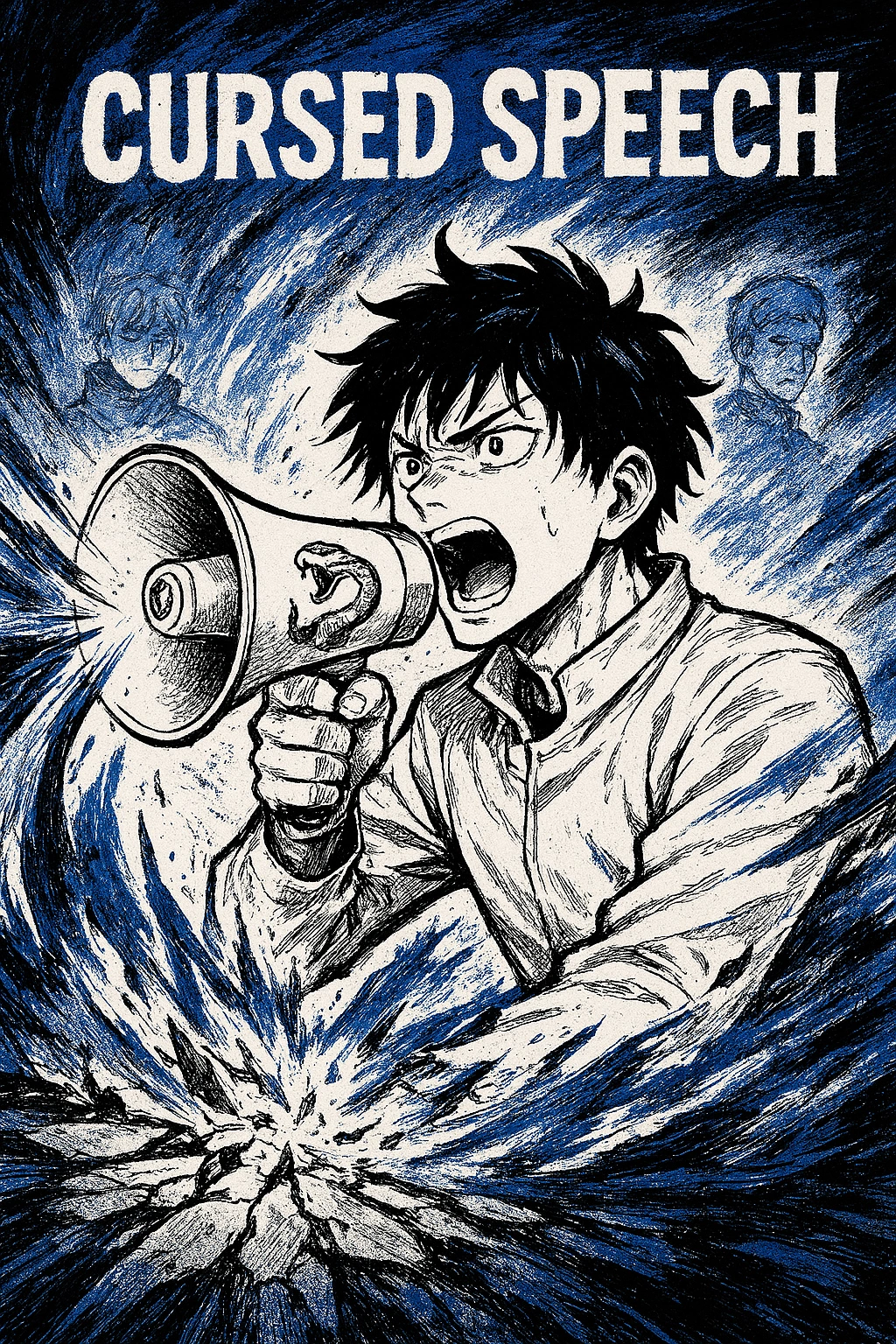
If Satoru Gojo represents the pinnacle of “Quality” (with the precision of the Six Eyes), Yuta Okkotsu represents the pinnacle of “Quantity.” His innate technique, simply known as “Copy” (Mimicry), is arguably the most versatile ability in the entire series. It allows him to bypass the years of training and genetic lottery required for most sorcerers and simply take what he sees.
The Mechanic: Consumption
For years, the fandom debated the condition for Yuta’s copy ability. Was it unconditional? Did he need to understand the technique? The Culling Games clarified the grim reality: Consumption.
For Yuta to copy a technique, Rika must consume a part of the target. This can be as significant as a severed arm (as seen with Uro) or as minor as blood (implied in other encounters). This requirement fits the “Monster” motif perfectly.
To gain power, Yuta must literally devour his enemies. It is a primal, predatory condition that contrasts sharply with his polite demeanor. The more fatal the consumption, the likely higher the proficiency or limit of the copied technique, though the exact ratio of “body part size to technique proficiency” remains one of Gege Akutami’s vaguer systems.
The Versatility: An Analysis of Copied Techniques
Yuta’s arsenal is a graveyard of other sorcerers’ identities. Let’s break down the known techniques he has assimilated and mastered:
1. Cursed Speech (Toge Inumaki)
This was Yuta’s first copied ability. In the hands of Inumaki, Cursed Speech is a double-edged sword; telling a strong opponent to “Die” could cause Inumaki’s throat to explode. Yuta, however, bypasses this limitation through sheer horsepower. Because his Cursed Energy reserves are so vast, and his reinforcement ability so high, he can use high-level commands like “Die” or “Get Crushed” with significantly less backlash, or heal the damage instantly with Reverse Cursed Technique (RCT). He effectively takes a support-class ability and turns it into a primary offensive weapon. Using a megaphone created by Rika to amplify the range, he can control entire battlefields.
2. Sky Manipulation (Takako Uro)
Acquired during the Sendai Colony arc, this technique allows Yuta to treat “space” as a tangible surface. He can pull the sky like a curtain, deflect attacks by bending the space they travel through, and create unblockable attacks like “Thin Ice Breaker.” This gave Yuta the one thing he lacked: a perfect defense. By bending space, he can redirect redirected blasts (like Ryu’s Granite Blast) back at the user. It adds a layer of spatial dominance that is usually reserved for Gojo.
3. Shikigami Trajectory (Dhruv Lakdawalla)
This is perhaps the most technical ability he copied. Dhruv’s technique involves summoning massive Shikigami, where the “track” or “orbit” of the Shikigami becomes a domain itself. Yuta utilizes this without the massive Shikigami, instead applying the “trajectory domain” principle to his own movements or Rika’s movements. It allows him to create slashing zones that exist independent of his sword swings. It is a complex, area-of-effect ability that makes approaching him a death sentence.
4. Jacob’s Ladder (Angel/Hana Kurusu)
The ultimate trump card. Jacob’s Ladder is a technique that extinguishes Cursed Techniques. It is the “anti-magic” nuke of the JJK world. By copying this, Yuta gained the ability to nullify even the most broken abilities in the series. He utilized this against Sukuna, burning the King of Curses with holy light. The fact that he can spam such a high-output technique is a testament to his energy reserves.
5. Future Sight (Charles Bernard)
By consuming blood from the manga artist Charles, Yuta gained the ability to see a few seconds into the future. While Charles required a special pen to mark his target, Yuta seems to integrate the foresight more naturally into his close-quarters combat. In a high-speed battle where reaction times are measured in microseconds, knowing where the opponent’s fist will be is an insurmountable advantage.
6. Body Swapping (Kenjaku)
The final, most grotesque addition. We will discuss this in Section VII, but the ability to swap brains is the ultimate culmination of his Copy technique.
Cursed Energy: The Engine
None of these techniques would matter if Yuta didn’t have the gas to run them. Techniques in JJK are fuel-inefficient for anyone without the Six Eyes. However, Yuta is described as having “boundless” Cursed Energy. He is a walking nuclear reactor. This allows him to play “sloppy.” He doesn’t need the pixel-perfect efficiency of Gojo because he can afford to waste energy. He can reinforce his entire body to 100% toughness at all times, rather than shifting the energy flow to block specific hits. This makes him a tank, a DPS, and a Healer all at once.
IV. Jujutsu Kaisen 0: The Origin Story
To truly appreciate the “Monster” of the modern era, we must look back at the “Victim” of the prequel. Jujutsu Kaisen 0 is Yuta’s origin story, and it presents a character arc that mirrors the famous Shinji Ikari from Neon Genesis Evangelion, but with a crucial deviation.
Initially, Yuta is passive. He is suicidal, isolated, and terrified of the harm he causes others. He allows himself to be bullied because he believes he deserves punishment. This is the “Zero” state. However, his admission to Jujutsu High changes the variable. Through Maki Zenin, Panda, and Toge Inumaki, Yuta learns that connections are not just sources of pain—they are sources of strength.
The Ideological Clash: Pure Love vs. The World
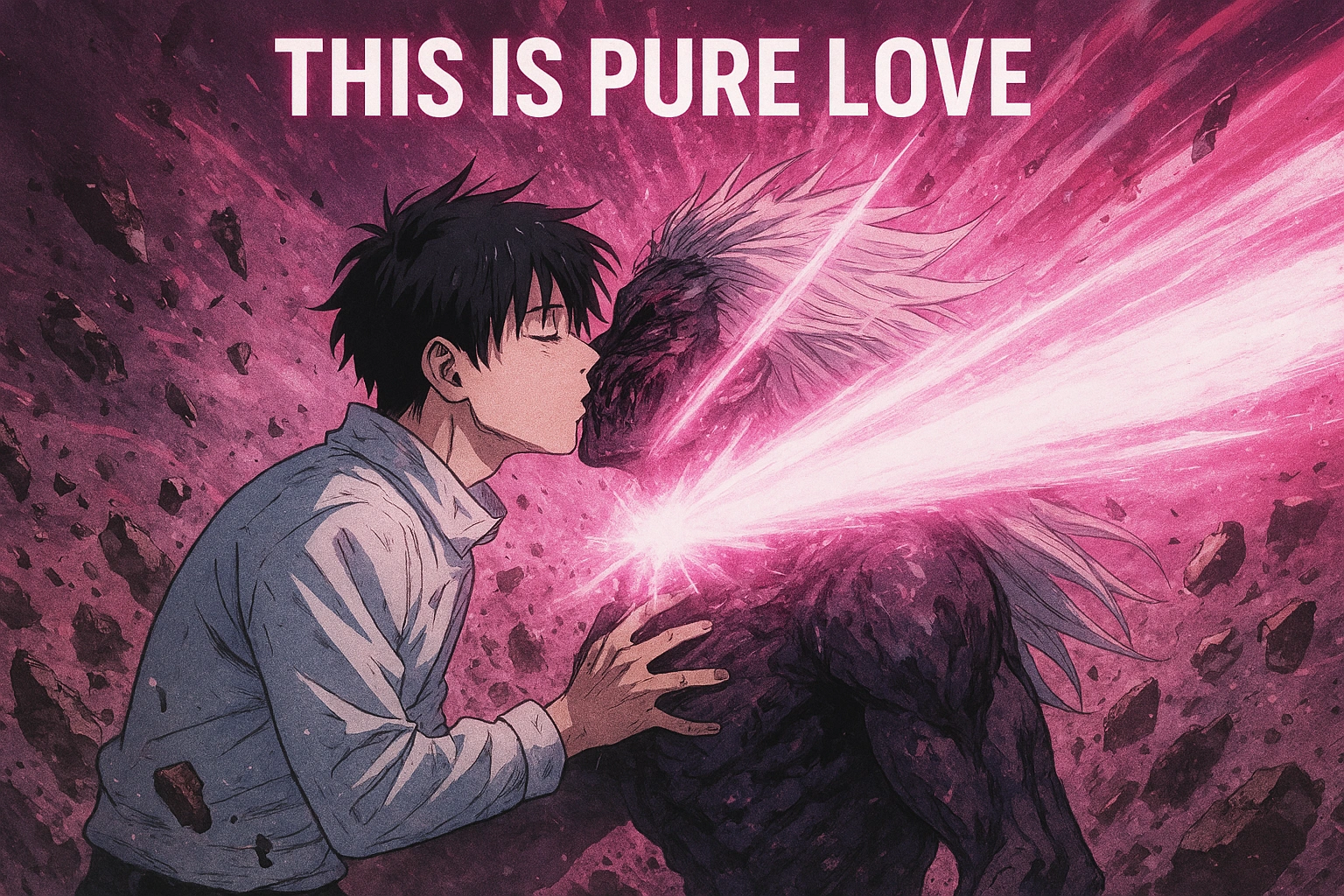
The climax of Jujutsu Kaisen 0 is not just a battle of power; it is a battle of ideologies. Suguru Geto, the antagonist, represents a worldview of supremacy and utilitarianism. He sees Rika as a tool, a battery to be harvested to wipe out non-sorcerers. He mocks Yuta, calling him a womanizer for enslaving a girl’s soul.
Yuta’s retort is legendary: “This is pure love.”
This line is chilling. It is romantic, yes, but it is also insane. It acknowledges the twisted nature of his bond with Rika but accepts it wholeheartedly. Yuta stops apologizing for his existence. He stops apologizing for Rika. He accepts the monster he created because that monster is born of love.
The Black Flash
It is also worth noting that Yuta performs a Black Flash in the movie (and manga), a technique that requires immense concentration and distortion of space, as a complete rookie. This signals his prodigy status. He is an instinctive learner. He mimics Maki’s swordplay, Toge’s movement, and eventually, the very essence of Jujutsu. By the end of JJK 0, Yuta has transformed from a shivering boy into a man willing to sacrifice his life to protect his friends. He is no longer surviving; he is living.
V. The Sendai Colony: The Heavy Hitter
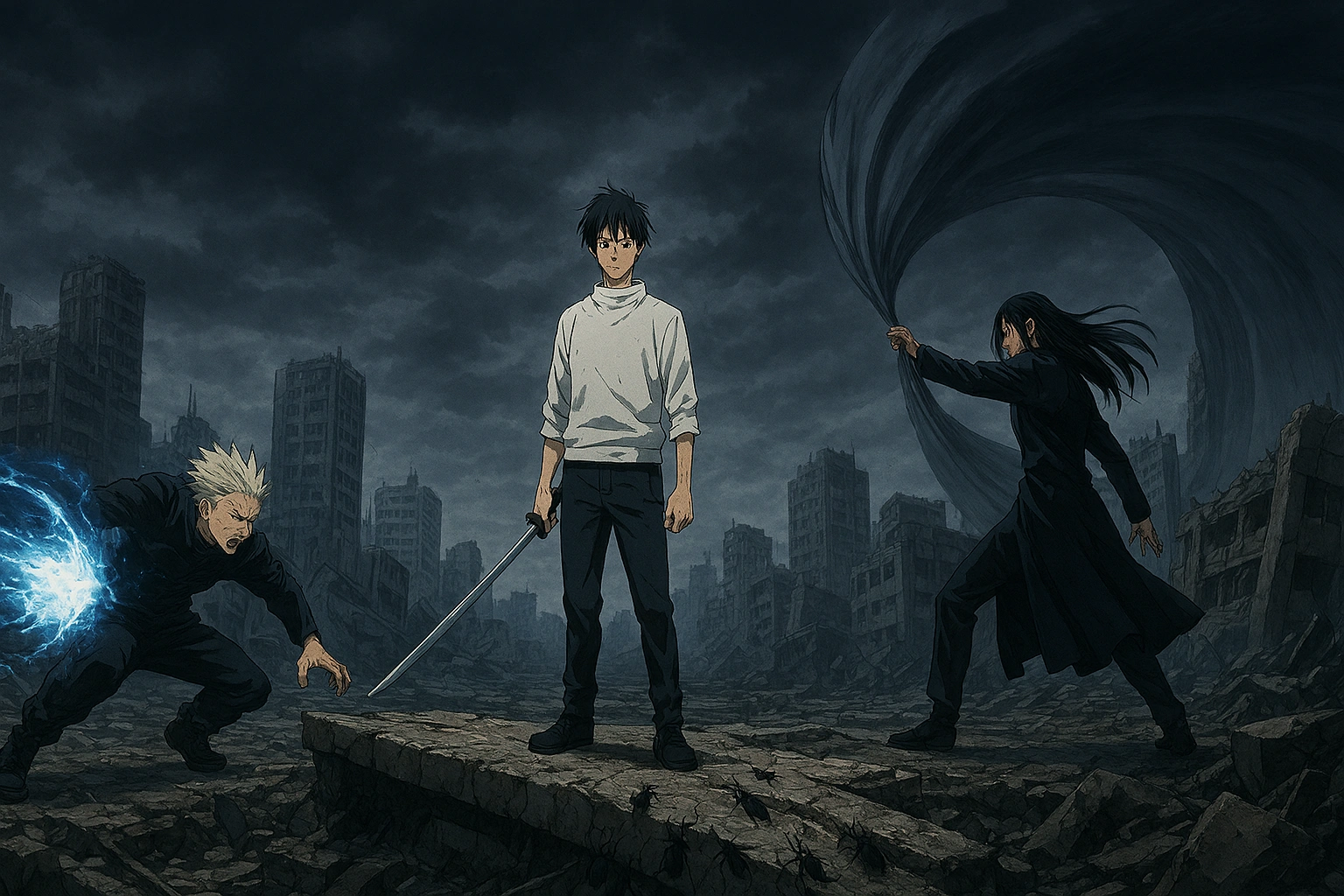
If JJK 0 was the introduction, the Sendai Colony arc in the main series was the coronation. This was Yuta’s reintroduction to the story after a long absence, and Gege Akutami needed to prove that the “Special Grade” title wasn’t a fluke.
The Gauntlet
Most characters in the Culling Games struggled in 1v1 fights. Yuta dropped into the Sendai Colony and engaged in a free-for-all against the four strongest players in the region simultaneously.
He killed Dhruv (an ancient sorcerer) off-screen, then immediately engaged Kurourushi (a Special Grade Cockroach Cursed Spirit), then fought Takako Uro (leader of the Sun, Moon, and Stars squad from the Heian era), and finally Ryu Ishigori (the sorcerer with the highest Cursed Energy output in history).
This wasn’t a duel; it was a gauntlet. Yuta fought back-to-back-to-back, managing his energy, hiding his true abilities (Rika), and systematically dismantling opponents who would be final bosses for any other character.
The “Monster” Allegations
During this fight, Uro and Ryu both comment on Yuta’s nature. They are ancient sorcerers who lived in an era of ruthlessness. They look at Yuta—soft-spoken, wearing a ring, fighting for “others”—and they are disgusted yet terrified. They realize that his “gentleness” is a veneer. Beneath it lies a bottomless void of capability.
Yuta fights without ego. He doesn’t care about “honor” or “being the strongest.” He bites Kurourushi’s face to output positive energy directly into its brain (a grotesque, feral move). He uses Uro’s own technique against her. He brawls with Ryu. He does whatever is necessary to win. This adaptability is what makes him a monster. He has no “style” to counter because his style is “winning.”
Ryu Ishigori and the Battle of Dessert
The fight with Ryu is particularly symbolic. Ryu is obsessed with “dessert”—he wants a fight that satisfies his hunger, a battle where he burns out completely. He finds this in Yuta. Yuta, despite trying to save points and not kill, obliges Ryu. He meets Ryu’s Granite Blast with his own pure energy discharge.
The conclusion of the fight shows Yuta’s unique charisma. He defeats Ryu but doesn’t kill him (initially). He “satisfies” Ryu not just by overpowering him, but by acknowledging him. Yuta has a strange ability to connect with even his enemies. He is a conduit for emotions, absorbing the desires of those around him and reflecting them back with overwhelming force.
VI. Domain Expansion: True Mutual Love
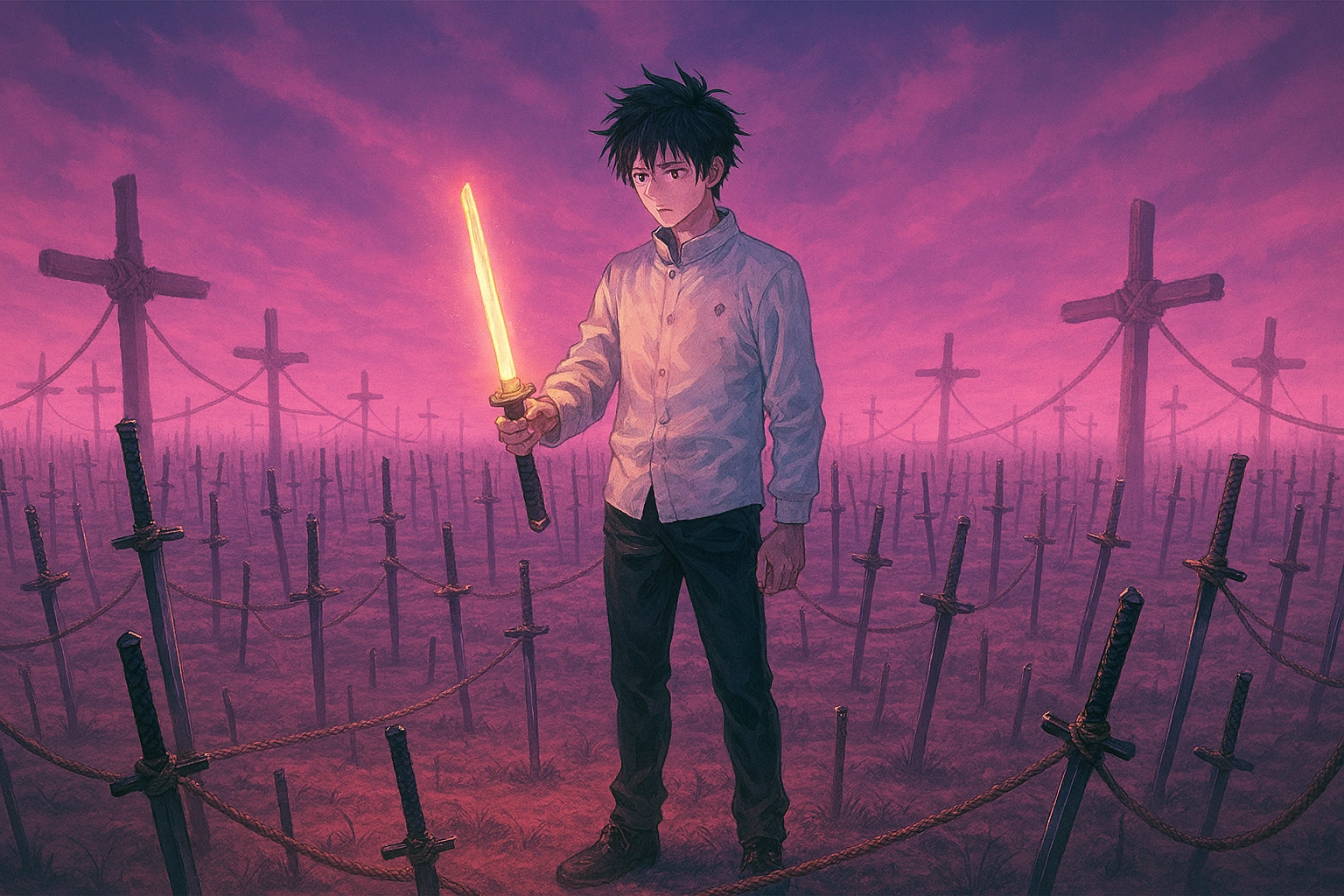
For a long time, Yuta’s Domain Expansion was the biggest mystery in the series. When it was finally revealed in the Shinjuku Showdown, it did not disappoint. The name itself, “Authentic Mutual Love” (or True Mutual Love), perfectly encapsulates his character.
The Visuals: A Graveyard of Swords
The Domain manifests as a desolate landscape, a field of ruined crosses and scattered katanas. It evokes imagery of the “Unlimited Blade Works” from the Fate franchise, symbolizing a world of endless conflict and copied tools. The entire domain takes place inside the “ring” of the marriage vow, twisting the symbol of commitment into a cage of death.
The Mechanic: The Ultimate Gacha
The mechanics of the Domain are a brilliant adaptation of his Copy technique:
- The Environment: The floor is littered with katanas. Each katana holds one of Yuta’s copied techniques.
- The RNG Element: Yuta does not know which technique is inside a katana until he picks it up. This adds a layer of chaos to the fight. He grabs a sword, realizes it holds “Sky Manipulation,” and immediately adapts his strategy.
- The Sure-Hit: One specific copied technique is imbued into the barrier of the Domain as the “Sure-Hit” effect (guaranteed to land on the opponent).
- Infinite Usage: Inside the Domain, the techniques in the swords are single-use, but there are infinite swords. This allows Yuta to spam high-level abilities without burnout.
Tactical Genius
This Domain is terrifying because it makes Yuta unpredictable. Even he doesn’t know what’s coming next, which means the opponent cannot plan a defense. One moment he is hitting you with “Thin Ice Breaker,” the next he is using “Clairvoyance,” and the next he is hitting you with a Shikigami trail. It forces the opponent to be purely reactive. Against Sukuna, this allowed Yuta to create openings for Yuji Itadori. He used the chaos of his own Domain to fracture Sukuna’s focus.
VII. The Final Sacrifice: Becoming the Monster
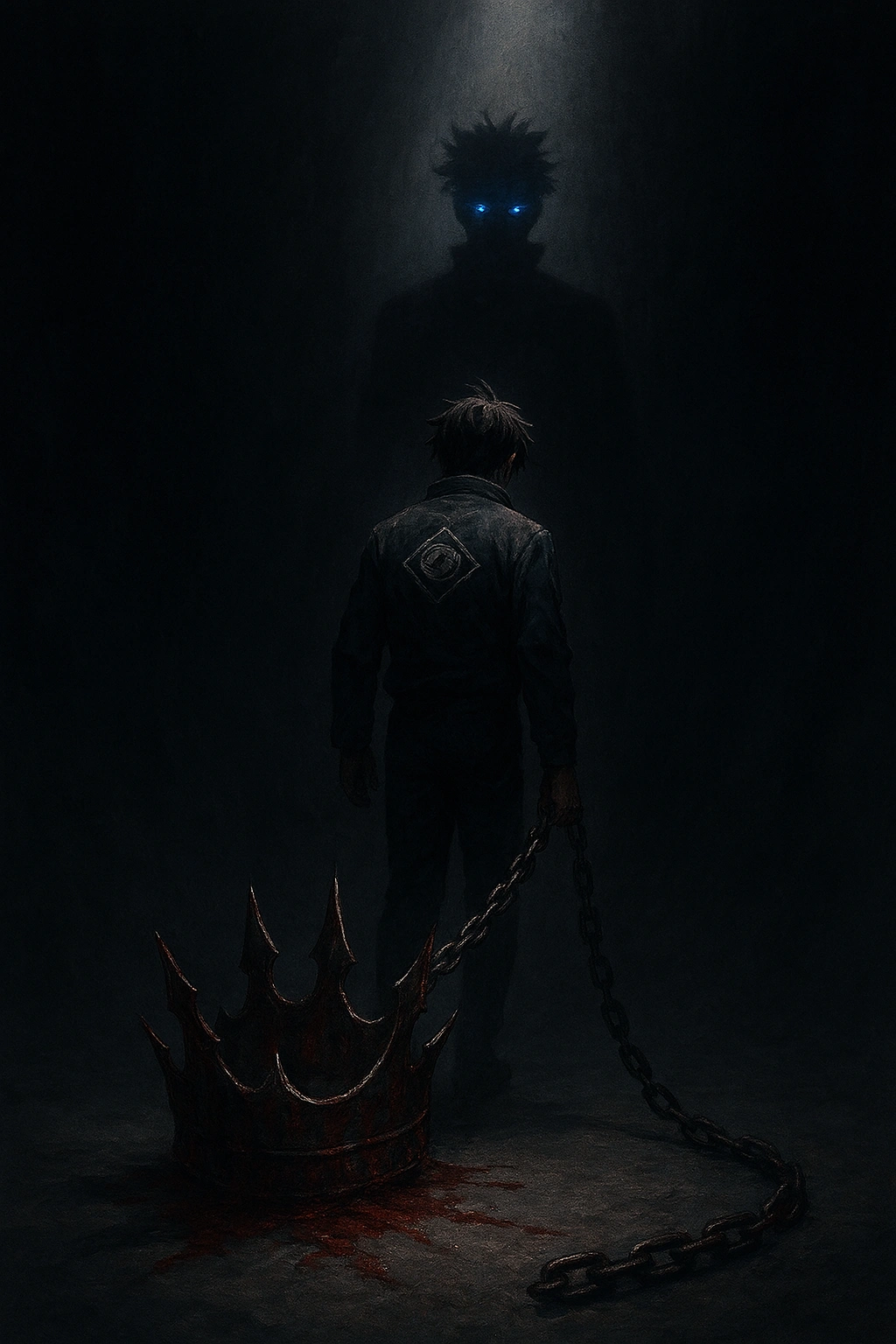
The climax of Yuta Okkotsu’s character arc occurs in the final battle against Ryomen Sukuna. When Satoru Gojo falls, the safety net of the world is removed. The plan shifts to desperation.
The Unthinkable Swap
Yuta reveals a contingency plan that sickened his allies: If Gojo dies, Yuta will have Rika consume Kenjaku (the brain-hopping villain), copy his body-swapping technique, and transplant his own brain into Satoru Gojo’s corpse.
This is a violation of the highest order. To desecrate the body of his beloved teacher, to wear his face, to use his body as a meat suit—it is an act of pure monstrosity. Yet, Yuta suggests it without hesitation. Why? Because he believes he must take on the burden of the “Monster.”
“I Will Be The Monster”
Yuta recognizes that Gojo was isolated because he was the only “monster” on the side of good. He bore the burden of being the strongest alone. Yuta, in his love for his teacher and his friends, decides that he will not let Gojo be the only one with blood on his hands. He volunteers to throw away his humanity.
When Yuta enters the battlefield in Gojo’s body, wielding the Limitless and the Six Eyes, it is a moment of horror and awe. It brings the narrative full circle. The boy who just wanted to be “okay to live” is now piloting the corpse of a god to save the world. It highlights the central tragedy of Jujutsu Sorcerers: to defeat evil, one must often abandon the conventional morality of the good.
Yuta’s struggle in Gojo’s body—failing to coordinate the long limbs, struggling with the information overload of the Six Eyes—also serves to humanize Gojo retroactively. It proves that Gojo wasn’t just born perfect; he mastered a body and a power set that even a prodigy like Yuta struggled to pilot for five minutes.
The Burden of the Era
This sacrifice is the ultimate expression of Yuta’s love. He destroys his own soul (risking getting stuck in Gojo’s body or dying when the technique ends) to ensure a future for Yuji and the others. He acts as the bridge. He isn’t the protagonist who lands the final punch (that is Yuji), but he is the shield that ensures the protagonist survives long enough to throw it.
VIII. Conclusion: The Power of Gentle Strength
Yuta Okkotsu is a deconstruction of the “Chosen One” trope. He wasn’t chosen by destiny; he was chosen by tragedy. He didn’t seek power; he sought forgiveness.
In the end, Yuta Okkotsu proves that strength in Jujutsu Kaisen is not just about Cursed Energy output or Domain Expansions. It is about the resolve to carry the weight of others. Gojo Satoru’s strength was one of isolation; he stood above everyone. Yuta Okkotsu’s strength is one of connection; he stands in front of everyone.
He is the Cursed Child who learned to bless others. He is the monster who fights for humanity. He is the Inverse Gojo. And in a world filled with selfishness and curses, Yuta Okkotsu remains the enduring symbol of how terrifying, grotesque, and powerful “Pure Love” can truly be. He is the proof that sometimes, to defeat a monster, you must become one—but you don’t have to lose your heart in the process.