
I. Introduction
The Existential Dread of Jujutsu Kaisen
In the vast landscape of shonen manga, threats are usually tangible. A villain wants to conquer the world, destroy a city, or become the Pirate King. These are physical stakes—measurable, visible, and often reversible. Jujutsu Kaisen, however, presents a threat that is fundamentally different. While Ryomen Sukuna stands as the pinnacle of physical jujutsu violence—a natural disaster in human form—there is a shadow stretching far longer and deeper than the King of Curses. That shadow is the “Great Merger.”
The Merger is not simply a bomb waiting to go off; it is a metaphysical apocalypse. It represents the total erasure of individual humanity, a rewriting of the biological and spiritual laws that govern existence. It is the end of the “self.” In a world already teeming with cursed spirits born from human negativity, the Merger promises to take that negativity and compress it into a singular, writhing entity of unfathomable power. The dread here is not just about dying; it is about the cessation of the soul’s individuality. It is the terrifying prospect that 100 million people could be kneaded together like clay into a cosmic abomination, all for the sake of one sorcerer’s twisted scientific curiosity.
Defining the Stakes
In simple terms, the Great Merger is the forced assimilation of every non-sorcerer in Japan with Master Tengen. Tengen, the immortal sorcerer who maintains the barriers protecting the jujutsu world, has evolved to a point where they are more spirit than human. Their ego has dissolved, making them compatible with the masses.
Kenjaku, the body-hopping sorcerer who has lived for over a millennium, intends to use the Culling Game as a ritual to generate enough cursed energy to trigger this assimilation. If successful, every man, woman, and child in Japan who cannot manipulate cursed energy will lose their physical form. They will be absorbed into Tengen, creating a singular cursed entity of unprecedented scale. If one soul within that merger screams in agony, the entire entity screams. If one feels rage, the entity becomes an avatar of destruction. It is a hive mind born of suffering, a “Kaiju” made of souls.
The Thesis: Beyond Good and Evil
This article serves as a definitive dissection of Kenjaku’s 1,000-year plan. We will move beyond the surface-level action of Jujutsu Kaisen to analyze the biological mechanics of the merger, the theological implications of Tengen’s existence, and the nihilistic philosophy driving Kenjaku. This event is not merely a plot device; it is the “endgame” of the series in the truest sense. It transcends the binary of “Sorcerers vs. Curses.” It questions the very trajectory of human evolution. Is humanity meant to stagnate, protected by barriers and limited by weak bodies? Or is there a grotesque next step waiting in the dark? Kenjaku believes the latter, and he is willing to sacrifice an entire nation to prove it.
II. The Architect: Deconstructing Kenjaku’s Motivation
The Scientist of Curses
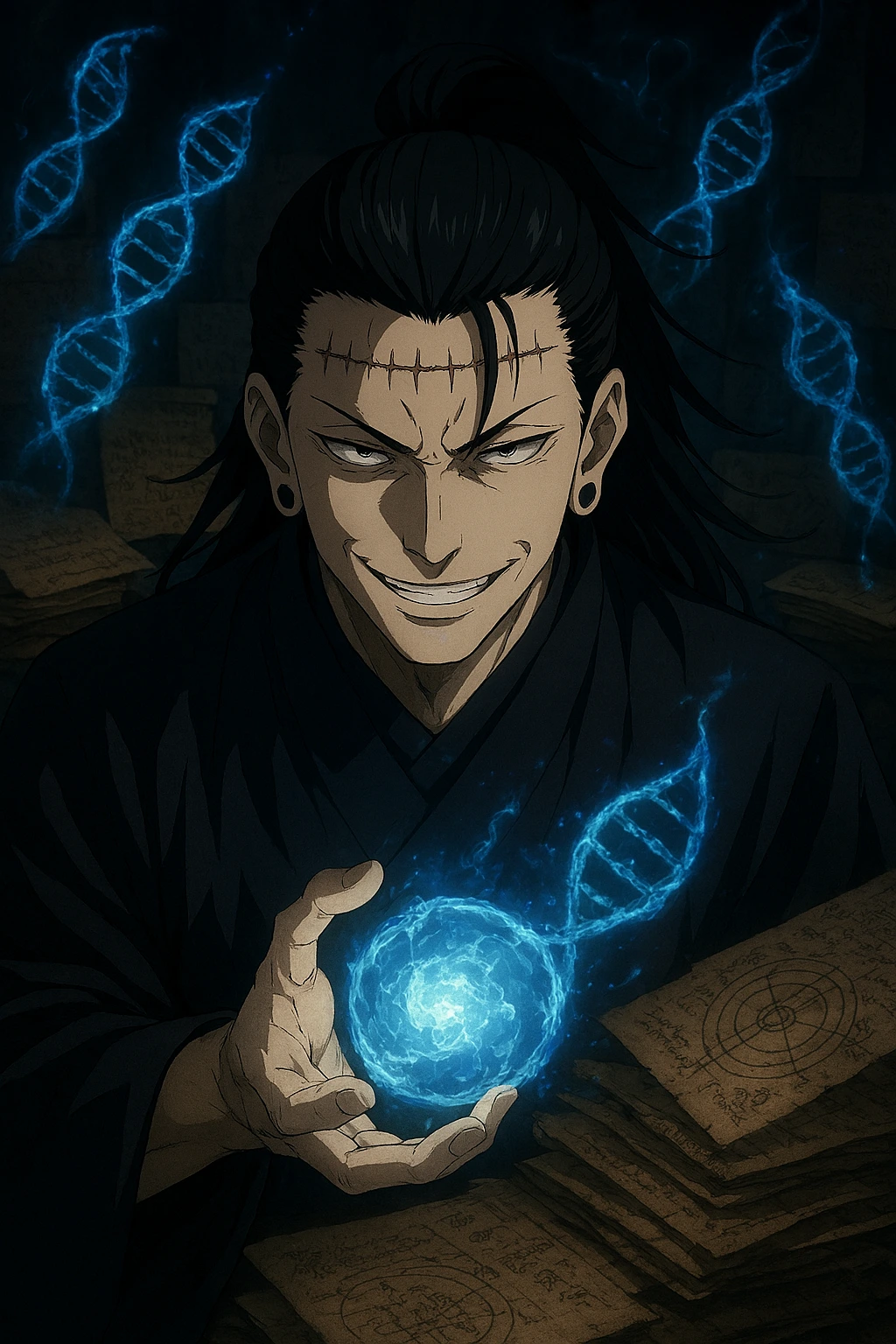
To understand the Merger, one must first understand its architect. Kenjaku is often categorized as a “villain,” but that label feels insufficient for a being of his age and intellect. He is better described as a “Scientist of Curses.” A traditional villain acts out of malice, revenge, or a desire for dominance. Kenjaku acts out of a desire for optimization.
He views the current state of humanity and jujutsu as a bottleneck. For a thousand years, he has watched sorcerers rise and fall, curses spawn and dissipate, and humanity remain largely the same. To a being who has transcended death by swapping bodies, this stagnation is unbearable. He treats the world not as a home, but as a petri dish. The Great Merger is his grandest experiment, the final hypothesis in a millennium-long dissertation on the potential of cursed energy. He doesn’t want to rule the rubble; he wants to see what crawls out of it.
The Curiosity Factor: “I Thought It Would Be Interesting”
Perhaps the most chilling moment in Kenjaku’s character arc—and indeed, in the entire series—is his admission of motive. When pressed on why he would orchestrate such carnage, why he would birth the Death Painting Wombs, or why he would orchestrate the Shibuya Incident, his answer is terrifyingly simple: “I thought it would be interesting.”
This is the “Curiosity Factor.” Kenjaku is driven by a chaotic whimsy that belies his calculated demeanor. He explicitly states that he wants to create something “beyond his own potential.” This is a crucial distinction from Sukuna. Sukuna believes he is the apex; he measures the world by how it relates to his own pleasure. Kenjaku, however, is bored by his own limits. He knows that anything he creates with his own hands is limited by his own imagination.
The Merger is his attempt to create “chaos he cannot control.” He wants to birth a creature so vast, so complex, and so fundamentally alien that even he, the mastermind, cannot predict its behavior. It is the ultimate act of scientific humility twisted into monstrosity. He is willing to destroy the lab (Japan) just to see a reaction that has never occurred in history.
The 1,000-Year Patience
Kenjaku’s plan is a masterclass in long-term strategy, spanning eras.
- The Heian Era: Here, he likely interacted with Sukuna and the original powerful sorcerers, laying the groundwork for binding vows that would endure for centuries.
- The Failures: Kenjaku admits to failure. In the past, he attempted to prevent the “Star Plasma Vessel” from merging with Tengen, but fate—manifested through the Six Eyes user—always stopped him. The Six Eyes, the Star Plasma Vessel, and Tengen were bound by fate.
- The Turning Point: To break this chain of fate, he needed an anomaly. That anomaly was Toji Fushiguro. Toji, a man with zero cursed energy, existed outside the bounds of fate. By killing the Star Plasma Vessel (Riko Amanai) in the Hidden Inventory arc, Toji broke the cycle.
- Acquiring Suguru Geto: Even with fate broken, Kenjaku needed a specific tool to absorb Tengen. Tengen is essentially a massive cursed spirit. Therefore, Cursed Spirit Manipulation—the innate technique of Suguru Geto—was the final piece of the puzzle. Kenjaku waiting for Geto to die, seizing his body, and inheriting his memories is a testament to his opportunistic patience. He played the long game, waiting for the perfect vessel to appear.
Contrast with Sukuna: Evolution vs. Hedonism
While they are essentially partners in crime during the Culling Game, Kenjaku and Sukuna represent two different poles of evil.
- Sukuna is Hedonism: He lives entirely in the present. He eats when hungry, kills when annoyed, and plays when entertained. He has no grand plan for humanity; he simply exists as a force of nature.
- Kenjaku is Evolution: He lives entirely for the future. He is willing to suppress his desires, hide in the shadows, and act weak for centuries if it means advancing the species (or destroying it) later.
Sukuna is the fire that burns the house down; Kenjaku is the architect who rigged the wiring 50 years ago. The Merger doesn’t benefit Sukuna directly—it’s not something he can fight or eat in a traditional sense—but for Kenjaku, it is the only thing that matters.
III. The Catalyst: Master Tengen’s Role
Who is Tengen?
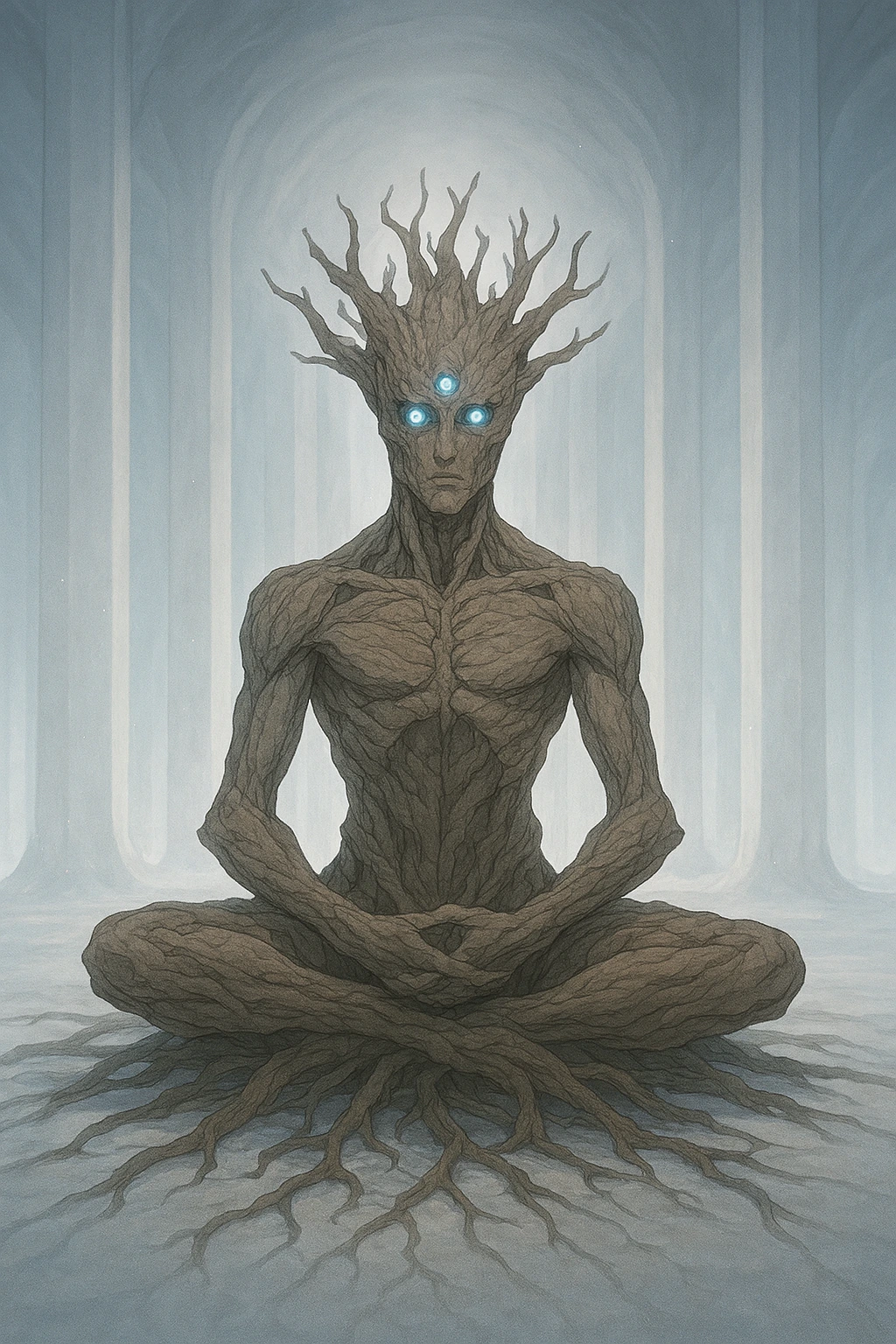
Master Tengen is the most important “passive” character in Jujutsu Kaisen. Known as the “Star,” Tengen is an immortal jujutsu sorcerer who has lived since the Nara period. Their primary function is strictly defensive. Tengen maintains the “barriers” that surround Japan. These barriers optimize cursed energy, allowing jujutsu society to flourish in Japan while it remains practically non-existent in the rest of the world. Without Tengen, the foundational systems of jujutsu—like the summoning of “Curtains” (Eishou) or the security of Jujutsu High—would collapse.
However, Tengen’s immortality comes with a catch. They do not stop aging. To prevent their body from evolving into something non-human, they must merge with a “Star Plasma Vessel”—a compatible human host—every 500 years. This resets their body while retaining their soul.
The Evolution Problem
The catalyst for the Great Merger lies in the failure of the last assimilation. Because Toji Fushiguro killed Riko Amanai (the intended vessel) in 2006, Tengen did not reset. Over the subsequent 11 years, Tengen underwent “evolution.”
They are no longer human. Tengen has evolved into a higher state of existence, becoming more akin to a cursed spirit or a phenomenon than a person. Tengen admits that “I am everywhere and I am nowhere.” Their ego has dissolved into the barriers themselves. This evolution is critical for two reasons:
- Susceptibility: Because Tengen is now closer to a Cursed Spirit than a human, they are valid targets for Suguru Geto’s Cursed Spirit Manipulation. Kenjaku can absorb Tengen just like he would a low-level fly head.
- Compatibility: As an evolved being, Tengen is capable of merging with humanity as a whole, not just a specific vessel. The barriers that once protected Japan can now act as the womb for this mass assimilation.
The Barrier System and the Womb
Tengen’s barriers are the nervous system of Japan’s jujutsu world. Kenjaku’s brilliance lies in repurposing this existing infrastructure. He doesn’t need to build a machine to process 100 million souls; the machine is already there.
The “Pure Barriers” established by Tengen normally suppress the release of cursed spirits. Kenjaku plans to invert this function. By manipulating the barriers, he intends to cast a vast containment field over Japan, ensuring that the energy generated during the Culling Game remains trapped and is funneled directly into Tengen. The barriers transform from a shield into a pressure cooker.
The “All is One” Concept
The spiritual implication of the Merger is the concept of “All is One.” In many Eastern philosophies and even in series like Neon Genesis Evangelion, the dissolution of the self is sometimes portrayed as a return to the source. However, in Jujutsu Kaisen, this is framed as horror.
If humanity merges with Tengen, individual boundaries vanish. Your memories, your love, your hate—they all bleed into the person next to you. But because Cursed Energy is born from negative emotions, this merger won’t be a peaceful nirvana. It will be a psychic storm of fear, regret, and malice. As Kenjaku notes, if even a fraction of the population endures a negative thought, that thought will ripple through the entire billion-soul construct instantly. It is the democratization of suffering.
IV. The Engine: How the Culling Game Fuels the Merger

The Ritual, Not a Tournament
Readers often mistake the Culling Game for a simple battle royale tournament arc, similar to the Dark Tournament or the Chunin Exams. This is a misunderstanding of its function. The Culling Game is a ritual. Every fight, every death, and every transfer of points is a ceremonial act designed to generate energy.
The colonies set up across Japan act as capacitors. They trap the players inside and force them into conflict. The violence is the friction needed to generate heat (cursed energy). Kenjaku needs a vast amount of energy to “cross the other side”—to push Tengen and humanity past the breaking point of individual existence.
Cursed Energy Accumulation
The mechanics are brutal but efficient.
- Awakened Sorcerers: Kenjaku cast Idle Transfiguration (extracted from Mahito) remotely to awaken thousands of potential sorcerers. These are people who had the potential for techniques but lacked the brain structure to use them. By altering their brains, he forced them into the game.
- Reincarnated Sorcerers: He also awakened the “cursed objects” he had planted in people over the centuries. These are ancient sorcerers like Kashimo Hajime, Ryu Ishigori, and Yorozu.
The clash between modern sorcerers (inexperienced, fearful) and ancient sorcerers (bloodthirsty, powerful) creates a disparity that maximizes death. The death of a sorcerer releases a massive amount of cursed energy. By concentrating these deaths within the colonies, the energy saturates the barriers, preparing the ground for the merger.
The Binding Vows
Kenjaku is a master of Binding Vows, the “contracts” of the jujutsu world. The Culling Game is built on a complex web of them.
- Administrator Vows: Kenjaku is not the “Game Master” in a direct sense. To make the game self-sustaining and impossible to simply “turn off,” he removed himself from the role of administrator, assigning it to the abstract system “Kogane.”
- The Exit Clause: To initiate the merger, Kenjaku made a vow to “end the game.” However, the game is designed to be eternal. The only way to end it is to eliminate all players except for Geto (Kenjaku) and Megumi Fushiguro (Sukuna).
- The Fairness Vow: To make the barriers effective, he had to give the players a chance. This is why players are given the option to enter colonies and why rules can be added. These concessions increase the “risk” for Kenjaku, which in turn increases the potency of the ritual.
The “Regret” Factor
Why did Kenjaku choose sorcerers from the past? It wasn’t just for their strength. It was for their regret. Many ancient sorcerers accepted Kenjaku’s offer to be turned into cursed objects because they died with unfinished business or a hunger for battle they couldn’t sate in their era.
This lingering regret is a potent fuel. When these sorcerers are reincarnated, they are burning with a desire to prove themselves. Ryu Ishigori wanted “dessert” (a satisfying fight); Kashimo wanted to fight the strongest. This intense emotional drive creates higher spikes of cursed energy than a standard fight for survival. Kenjaku weaponized their glory-seeking nature to fuel the furnace of his machine.
V. The Mechanics of Assimilation: What Actually Happens?

Biological vs. Spiritual
The most disturbing question regarding the Merger is: What happens to the body? Based on the mechanics of Tengen’s assimilation, the process is likely both biological and spiritual. The Star Plasma Vessel doesn’t just “spiritually” join Tengen; their physical body ceases to exist independently.
In the Great Merger, the bodies of non-sorcerers would likely dissolve. We have seen precursors to this with Mahito’s Idle Transfiguration, where human bodies are twisted and reshaped. The Merger is Idle Transfiguration on a macro scale. The boundaries of the flesh melt away. The physical distinction between “Person A” and “Person B” is erased, leaving only a soup of biomass and soul information.
The “Abomination”
Kenjaku has offered a glimpse into his vision of the result. He imagines it as a giant Cursed Spirit. However, unlike normal spirits that take humanoid or animalistic forms based on specific fears (e.g., a cockroach curse or a volcano curse), this entity would be the amalgamation of all human fear.
Visual hints in the manga—specifically the “centipede” imagery often associated with Kenjaku and the swirling, distorted faces seen in the realm of Sukuna’s Domain or Tengen’s barrier—suggest a creature of infinite limbs and infinite faces. It might not even have a cohesive form. It could be a shifting cloud of cursed energy that alters reality around it, a living natural disaster that spans the entire Japanese archipelago.
The Loss of Self
The horror aspect cannot be overstated. In Jujutsu Kaisen, the soul leads the body. If the souls of millions are forcibly merged, the resulting consciousness would be insanity. Imagine a stadium filled with people screaming. Now imagine those screams aren’t coming from different mouths, but are all internal thoughts within a single mind. The “Self” is obliterated. There is no “I,” only “Us,” and “We” are in agony. This is the definition of Hell: the inability to be alone, the inability to die, and the forced intimacy with the darkest thoughts of strangers.
The Trigger
The trigger for this event is specific. Kenjaku implemented a rule that the Merger begins when all players in the Culling Game (except him and Sukuna) are dead. This is the “Endgame” condition. This implies that the Culling Game was never about finding a winner. It was a slaughterhouse. The “players” were merely livestock being processed to grease the gears. The final key turns when the noise of the game falls silent, leaving only the Architect and the King of Curses standing amidst the quiet, ready to push the button.
VI. Thematic Analysis: Chaos vs. Stagnation

Jujutsu Kaisen’s Core Theme
At its heart, Jujutsu Kaisen battles with the concept of “How should one live?” Yuji Itadori seeks a “proper death.” Gojo Satoru seeks to nurture a strong generation to reset the system. Kenjaku, however, represents the rejection of Stagnation at any cost.
The world of Jujutsu is conservative. The higher-ups cling to tradition. The clans protect their bloodlines. Nothing changes. Kenjaku views this stability as a disease. To him, chaos is health. Evolution requires mutation, and mutation requires instability. The Merger is the ultimate break from stagnation. It is a gamble that says, “Whatever comes next, even if it is a monster, is better than staying the same.”
Buddhism Parallels
The series is steeped in Buddhist imagery, and the Merger can be interpreted as a dark inversion of Enlightenment.
- Nirvana: In Buddhism, Nirvana is the cessation of suffering and the dissolution of the individual ego into the universal truth. It is “oneness.”
- The Merger: Kenjaku forces a type of “oneness.” He dissolves the ego. But instead of achieving it through enlightenment and peace, he achieves it through violence and curse energy. It is a “Samsara” trap—a cycle of suffering made eternal and singular. Tengen’s appearance (often resembling statues of Sokushinbutsu, or self-mummified monks) reinforces this. Tengen achieved a state near godhood but remained tethered to the world. Kenjaku wants to drag humanity into that same twisted divinity.
The Future of Cursed Energy
If the Merger succeeds, the nature of Cursed Energy fundamentally changes. Currently, Cursed Energy flows from humans. If all humans become a single Cursed object, the distinction vanishes. Does the world become a Cursed Realm? Does the entity consume the planet? Kenjaku speculates that the energy might not be contained within Japan. The “impurity” might spill over, infecting the world. This aligns with his chaotic alignment; he doesn’t know if the world will end or begin anew, and that uncertainty is what excites him.
VII. The Counter-Strategy: Can It Be Stopped?

The Heroes’ Dilemma
The protagonists are trapped in a cruel dilemma. To stop the Merger, they must end the Culling Game. But to end the Culling Game, they essentially have to kill the players or find a loophole, all while trying to save Megumi Fushiguro from Sukuna. Kenjaku designed the game so that altruism is a weakness. Every moment they spend trying to save someone is a moment the ritual progresses.
Yuta and Maki’s Roles
The “Heavy Hitters” of Jujutsu High have taken a two-pronged approach.
- Maki Zenin: Having broken away from Cursed Energy entirely (via Heavenly Restriction), Maki is the antithesis of the Merger. She is the one being who cannot be assimilated, as she lacks the cursed energy to be manipulated by the barriers. She acts as a wrench in the gears, moving through colonies undetected.
- Yuta Okkotsu: Yuta’s role is the executioner. While Yuji fights for the soul, Yuta fights to kill Kenjaku. His ability to copy techniques makes him the only one versatile enough to counter Kenjaku’s millennium of experience.
The Rule Changes
The heroes managed to institute rules to allow transfers of points, aiming to save Tsumiki Fushiguro and others without killing. However, Kenjaku anticipated this. He utilized the “bug” in the system—the fact that Yorozu was inhabiting Tsumiki—to manipulate the rules back in his favor. The heroes’ attempts to civilize the game were met with Kenjaku’s ruthlessness.
The Variable: Yuki Tsukumo and Takaba
We must acknowledge the ideological counter-weights.
- Yuki Tsukumo: Her goal was to eradicate cursed energy entirely (create a world of Tojis). She failed to stop Kenjaku physically, but her research (the Soul Research notes given to Yuji) provides the theoretical framework to separate souls—vital for saving Megumi and potentially undoing a merger.
- Fumihiko Takaba: The comedian. His technique, Comedian, is capable of altering reality based on what he finds funny. In the battle against Kenjaku, Takaba served as the “Chaos” that Kenjaku so deeply desired. Ironically, Kenjaku’s end began not with a grand duel of domains, but with a comedy routine. This proves that while Kenjaku sought controlled chaos, he couldn’t handle true, nonsensical chaos.
VIII. Conclusion

The Scale of the Plan
Kenjaku’s plan is arguably the most ambitious in Shonen history. It isn’t about ruling a country; it’s about rewriting the biological definition of a species. It required 1,000 years of planning, the manipulation of death itself, and the precise orchestration of fate.
The Legacy of the Merger
Whether the Merger activates fully or is halted at the last second, the threat has changed the world. The secrecy of Jujutsu is gone. The major powers of the world (USA, China, etc.) are now aware of Cursed Energy. Tokyo is a wasteland. The “Japan” that existed in Chapter 1 is gone forever. Kenjaku destroyed the status quo even before the final ritual was complete.
Final Verdict
Is Kenjaku the greatest antagonist? He lacks the raw charisma of Aizen (Bleach) or the physical intimidation of Kaido (One Piece), but he possesses an intellectual horror that is unique. He is a villain who treats genocide as a science experiment. His legacy is the terrifying question he poses to the reader: Is humanity worth saving as it is, or are we just waiting to become something else?
Call to Action
The Culling Game nears its climax. The barriers are humming with energy. The pieces are set. Do you believe the Great Merger will be stopped, or will Gege Akutami show us the “Abomination” that Kenjaku dreamed of? The end of Jujutsu Kaisen will likely hinge on this singular event.
IX. Frequently Asked Questions (FAQs)
Q: What exactly is the Great Merger in JJK? A: The Great Merger is a forced assimilation ritual orchestrated by Kenjaku. It aims to merge all non-sorcerers in Japan with the immortal sorcerer Master Tengen. This would cause all individual humans to lose their physical forms and merge into a single, massive entity of pure cursed energy.
Q: Why does Kenjaku want the Merger to happen? A: Kenjaku is driven by twisted scientific curiosity. He believes humanity and jujutsu have hit a dead end in their evolution. He wants to create “chaos he cannot control” to see a new form of existence that surpasses his own potential. He treats it as a grand experiment.
Q: Can Master Tengen refuse the Merger? A: No. After the events of the Hidden Inventory arc (Star Plasma Vessel Riko Amanai’s death), Tengen evolved into a being more akin to a Cursed Spirit than a human. This makes them susceptible to Cursed Spirit Manipulation, the technique Kenjaku stole from Suguru Geto. Kenjaku can control Tengen against their will.
Q: What happens to non-sorcerers during the Merger? A: It is implied that their physical bodies will be destroyed or dissolved. Their souls and consciousness would be absorbed into the collective entity. They would cease to exist as individuals, becoming part of a hive-mind of cursed energy.
Q: Is the Culling Game necessary for the Merger? A: Yes. The Culling Game serves as a ritual to generate the massive amount of cursed energy required to prepare Tengen and the barriers for the assimilation. The deaths and conflicts within the colonies fuel the process.