
1. Introduction: The Girl Who Was Born to Die
In the brutal, unforgiving economy of the Jujutsu Kaisen world, life is often measured in potential—potential to exorcise, potential to destroy, and in rare cases, the potential to serve as a container.
While sorcerers like Satoru Gojo are born to rule the world through strength, others are born simply to sustain it through sacrifice. This is the tragic, silent reality of the Star Plasma Vessel (Seishōtai).
To the average viewer, Riko Amanai might appear as a fleeting plot device in the Hidden Inventory arc—a vibrant, loud-mouthed girl whose death serves merely as the catalyst for Satoru Gojo’s awakening and Suguru Geto’s fall.
It is easy to dismiss her as a “damsel in distress” trope, a narrative object to be moved from point A to point B. However, a deeper, expert-level analysis reveals that she is the linchpin of the entire 1,000-year history of Jujutsu society.
Her existence, and more importantly her death, is the singular event that derailed a metaphysical train that had been running on schedule for centuries. She is the butterfly whose flapping wings summoned the hurricane that is Sukuna and the Culling Game.
Defining the Star Plasma Vessel: The Biology of Sacrifice

What exactly is a Star Plasma Vessel? It is not a title one earns; it is a curse one is born with. In biological terms within the Jujutsu world, a Star Plasma Vessel is a human born with a unique, ultra-specific biological and spiritual compatibility with Master Tengen.
Tengen is not merely a powerful sorcerer; he is the foundational pillar of Japan’s jujutsu protection. He is the “God” of the barrier techniques. His barriers maintain the curtains (veils) that hide curses from the public, stabilize the auxiliary managers’ techniques, and essentially keep the Jujutsu society functional.
Without Tengen, the concentration of cursed energy in Japan would spiral out of control, likely destroying the country and leaking chaos into the rest of the world.
However, Tengen is immortal, not eternally youthful. This distinction is the source of the tragedy. Every 500 years, Tengen’s body ages to a point where his soul begins to overwrite his flesh. The physical vessel degrades, but the spirit expands. If this evolution is allowed to proceed unchecked, Tengen transcends humanity. He ceases to be a sorcerer and evolves into a higher dimensional entity—essentially becoming one with nature, energy, and the world itself.
While this sounds like enlightenment or nirvana, in the context of Jujutsu, it is a catastrophe. In this evolved state, Tengen loses his sense of self (ego). He would no longer care about protecting humanity. His will would dissolve into the ether, and he could potentially become a threat greater than any Special Grade curse.
Imagine a being with the power to manipulate the fabric of reality across Japan, but with the moral compass of a thunderstorm. That is the danger of an evolved Tengen.
The Star Plasma Vessel is the “reset button.” By merging with a fresh, compatible human vessel, Tengen’s body is refreshed. The aging process resets, the evolution is halted, and the barriers remain stable for another 500 years.
The Vessel is not just a sacrifice; they are a battery, a replacement part for a biological machine that keeps the world from falling into chaos. The process rewrites the vessel’s existence; Riko Amanai ceases to be Riko Amanai. She becomes the flesh of Tengen, her soul submerged into his ancient consciousness, technically “alive” but effectively erased.
The Weight of Existence
For Riko Amanai, this meant her life was never her own. From the moment her compatibility was discovered, her humanity was secondary to her utility. She was raised with the knowledge that her future did not involve adulthood, career, romance, or family. Her timeline was finite. It ended at the base of the Great Tree in the Tombs of the Star Corridor.
This introduction sets the stage for one of the most poignant thematic conflicts in Gege Akutami’s work: the struggle between Individual Will and Systemic Necessity. The Jujutsu world is a utilitarian machine; it demands the sacrifice of the one for the safety of the many.
It quantifies the value of a teenage girl against the safety of millions and decides she is expendable. Riko Amanai’s arc questions the morality of a society that builds its peace on the bones of children. Her death didn’t just break a cycle; it shattered the illusion that this system was ever just, revealing the rot at the core of the Jujutsu headquarters.
2. The Chain of Fate (The 500-Year Cycle)

To understand why the events of 2006 (the Hidden Inventory arc) were so catastrophic, we must look backward. We must understand the invisible gears turning beneath the surface of the story. The Jujutsu world operates on a concept often referred to as “Fate” or “Destiny.” This isn’t just a poetic term; in Jujutsu Kaisen, fate is a tangible, binding force that has orchestrated history for over a millennium.
The Triad of Destiny
This cycle of fate revolves around three specific entities, linked by a binding vow of causality that has held firm for centuries:
- Master Tengen (The Pillar): The anchor of the world’s barrier techniques. He requires a reset every 500 years to maintain his humanity.
- The Star Plasma Vessel (The Sacrifice): The compatible human born precisely when Tengen needs to merge.
- The Six Eyes User (The Bodyguard): A member of the Gojo clan born with the Six Eyes (Rikugan) and the Limitless technique. Their destiny is to escort and protect the Vessel until the merger is complete.
This triad is not accidental. History implies that whenever Tengen needs to reset, a Star Plasma Vessel is born. And whenever a Star Plasma Vessel is born, a Six Eyes user appears to ensure the merger happens. It is a perfect, self-correcting system designed to maintain the status quo.
Fate manipulates the variables to ensure the survival of Tengen’s barriers. The Six Eyes allow the user to perceive cursed energy at an atomic level, making them the ultimate guardian, virtually impossible to ambush or deceive.
In the past, ancient sorcerers and groups like the Time Vessel Association (who worship Tengen’s pure human form) or Q (who want chaos) have attempted to interfere. Every time, they failed. Why? Because the Six Eyes user is essentially the enforcer of Fate. No matter how strong the assassins were, they could not overcome the “strongest” sorcerer destined to protect the Vessel. The universe essentially rigged the game in Tengen’s favor.
The Kenjaku Factor: Centuries of Failure
To truly appreciate the difficulty of breaking this cycle, we must look at Kenjaku. Kenjaku, the body-hopping sorcerer who serves as the series’ overarching antagonist, spent over a thousand years trying to evolve Tengen. He wanted to create a “chaos beyond his control.”
Twice in history, Kenjaku attempted to stop the merger.
- In one instance, he tried to kill the Star Plasma Vessel.
- In another, he tried to kill the Six Eyes user while they were still an infant.
Both times, he failed to stop the merger. Even when he killed the Vessel, another compatible vessel appeared. Even when he killed the Six Eyes, another Six Eyes user would seemingly manifest or the merger would succeed regardless through the machinations of fate.
The system was redundant. Fate would bend over backward to correct Kenjaku’s interference. This led Kenjaku to a terrifying conclusion: he could not defeat the Six Eyes, and he could not stop the merger through conventional violence because destiny was actively fighting against him. He needed an anomaly.
The Anomaly: Toji Fushiguro
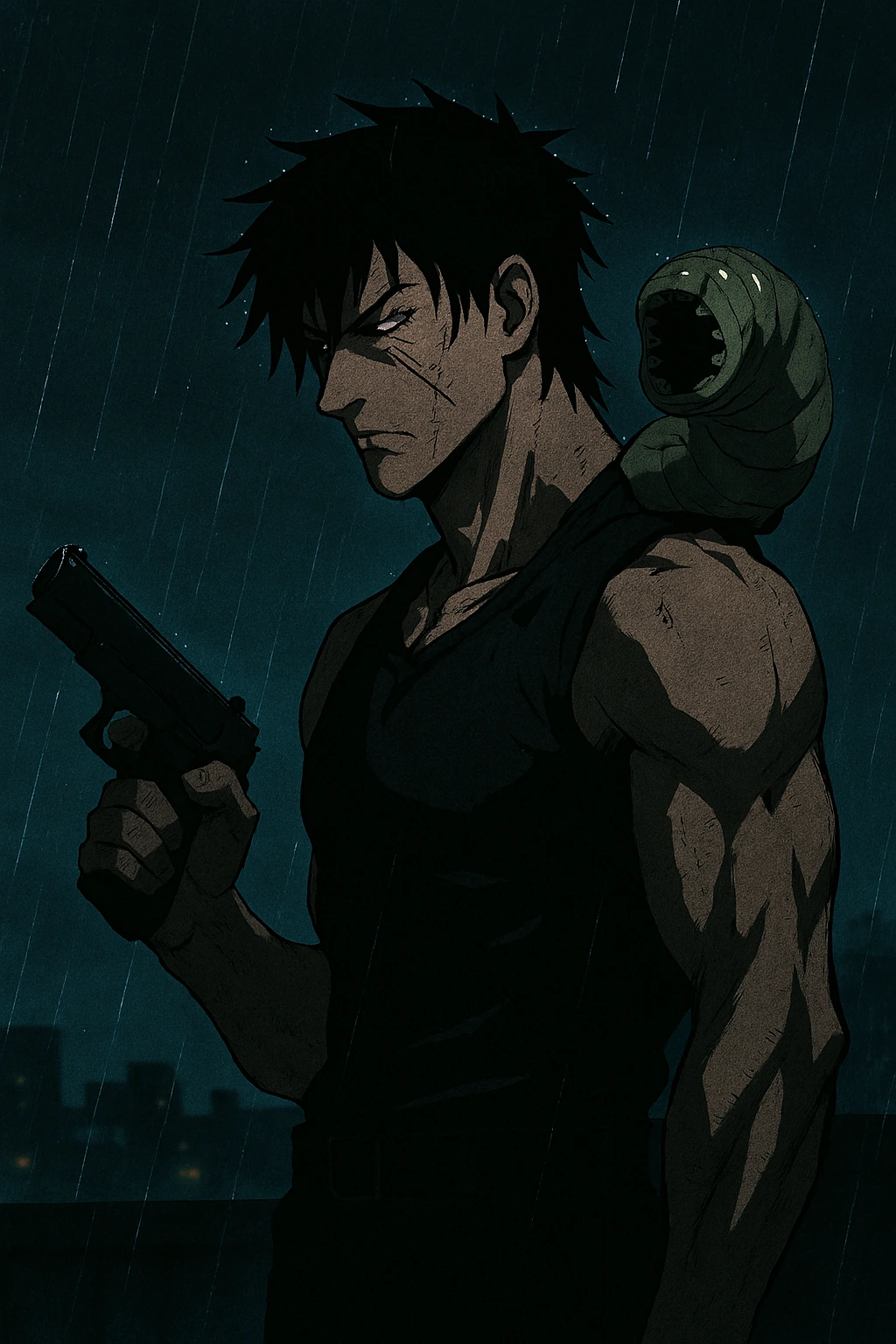
Enter Toji Fushiguro (born Zenin). To understand Toji’s impact, we must look beyond his physical strength. Toji is the “Sorcerer Killer,” but metaphysically, he is the “Fate Breaker.”
Toji possesses a Heavenly Restriction. In exchange for having absolutely zero cursed energy—not a drop—his physical prowess was boosted to superhuman levels. In the world of Jujutsu, everyone and everything emits some level of cursed energy, which allows them to be tracked, sensed, and “read” by fate. Even non-sorcerers leak small amounts.
Because Toji had zero cursed energy, he was invisible.
- He was invisible to barriers (he could walk through them without triggering alarms).
- He was invisible to the Six Eyes (which perceive the flow of cursed energy; Toji appeared as nothing more than a building or a rock).
- Metaphorically, he was invisible to Fate itself.
He was a glitch in the system. A man who had discarded his cursed energy completely to gain true freedom.
While Kenjaku failed because he was part of the system (a sorcerer bound by cursed energy), Toji existed outside of it. His lack of cursed energy made him the only entity capable of severing the connection between Tengen, the Star Plasma Vessel, and the Six Eyes. When Toji stepped onto the battlefield, he didn’t just fight Satoru Gojo; he fought the 500-year-old script that the universe had written. And he won.
By killing Riko Amanai with the Inverted Spear of Heaven (a tool that nullifies cursed techniques) and a standard handgun, Toji didn’t just murder a middle school girl. He snapped the chain of destiny. For the first time in history, the Star Plasma Vessel died without a replacement, and Tengen failed to merge. This act was the pebble that started the landslide, leading directly to the Shibuya Incident and the Culling Game.
3. The Hidden Inventory Tragedy (Riko’s Story)
The Hidden Inventory arc is often praised for its sleek animation and cool fights, but its heart lies in the tragic narrative of Riko Amanai. This section is not just a recount of events, but an analysis of the psychological burden placed on a child destined to die and the failure of the “Strongest” to save her.
The Mission: Babysitting the Savior
The arc begins with Satoru Gojo and Suguru Geto, the two strongest students of Tokyo Jujutsu High, being assigned a mission: escort Riko Amanai to Master Tengen. The mission parameters were simple—keep her alive for three days, then hand her over to be erased.
What makes this tragedy palpable is Riko’s personality. The audience might expect a Star Plasma Vessel to be somber, holy, or resigned—a martyr in waiting. Instead, Riko is introduced as arrogant, loud, and undeniably alive. She refers to herself as “Warawa” (a feudal term for ‘concubine’ or royalty), masking her fear with a facade of importance.
She tries to convince herself that she isn’t dying, but “becoming one with Tengen.” It is a coping mechanism, a desperate lie she tells herself to endure the countdown to her own cessation. She clings to this persona because if she admits she is terrified, she might crumble.
The Illusion of Normalcy: Okinawa
Gojo and Geto, despite their initial annoyance, make a critical decision: they decide to satisfy Riko’s desires before the merger. Recognizing that she has only days left to be a human, they take her to school, they fight off kidnappers, and crucially, they take her to Okinawa.
The Okinawa segment is vital. It acts as the calm before the storm. We see Riko interacting with her caretaker, Misato Kuroi, whom she loves like a mother. We see her laughing at Gojo wearing sunglasses in the ocean, arguing with Geto about food, and collecting shells. These moments serve to “humanize” the vessel. They strip away the title of “Seishōtai” and reveal Riko Amanai, the 14-year-old girl who likes takoyaki and music.
For Gojo and Geto, this was the trap. The more they allowed her to be human, the harder it became to view her as a resource. They began to question the mission. Geto, the moral compass at the time, explicitly tells Gojo that if Riko refuses the merger at the last second, they will fight Tengen and the entire Jujutsu society to protect her. This marks the peak of their youth—the arrogant, beautiful belief that they could rewrite the rules and save everyone just because they were strong.
The Aquarium and the Choice

The scene at the aquarium is visually and thematically symbolic. Riko stares at the fish in the tank—beautiful, protected, but trapped behind glass. It mirrors her existence within the barriers of the Jujutsu world. She is safe as long as she stays in the tank, but she is never truly free.
When they finally arrive at the Tombs of the Star Corridor, the atmosphere shifts. The architecture is ancient, roots of the great tree intertwining with the stone, symbolizing the deep, entrenching nature of tradition. Geto offers her the choice: proceed and merge, or turn back and live.
Riko’s breakdown is one of the most heartbreaking moments in the series. The facade of “Warawa” drops. She cries. She admits she wants to live. She wants to see more things. She wants to be with everyone. She wants to go to high school. She chooses life. She chooses her ego over the world. It is a triumph of the human spirit.
The Gunshot that Ended Youth
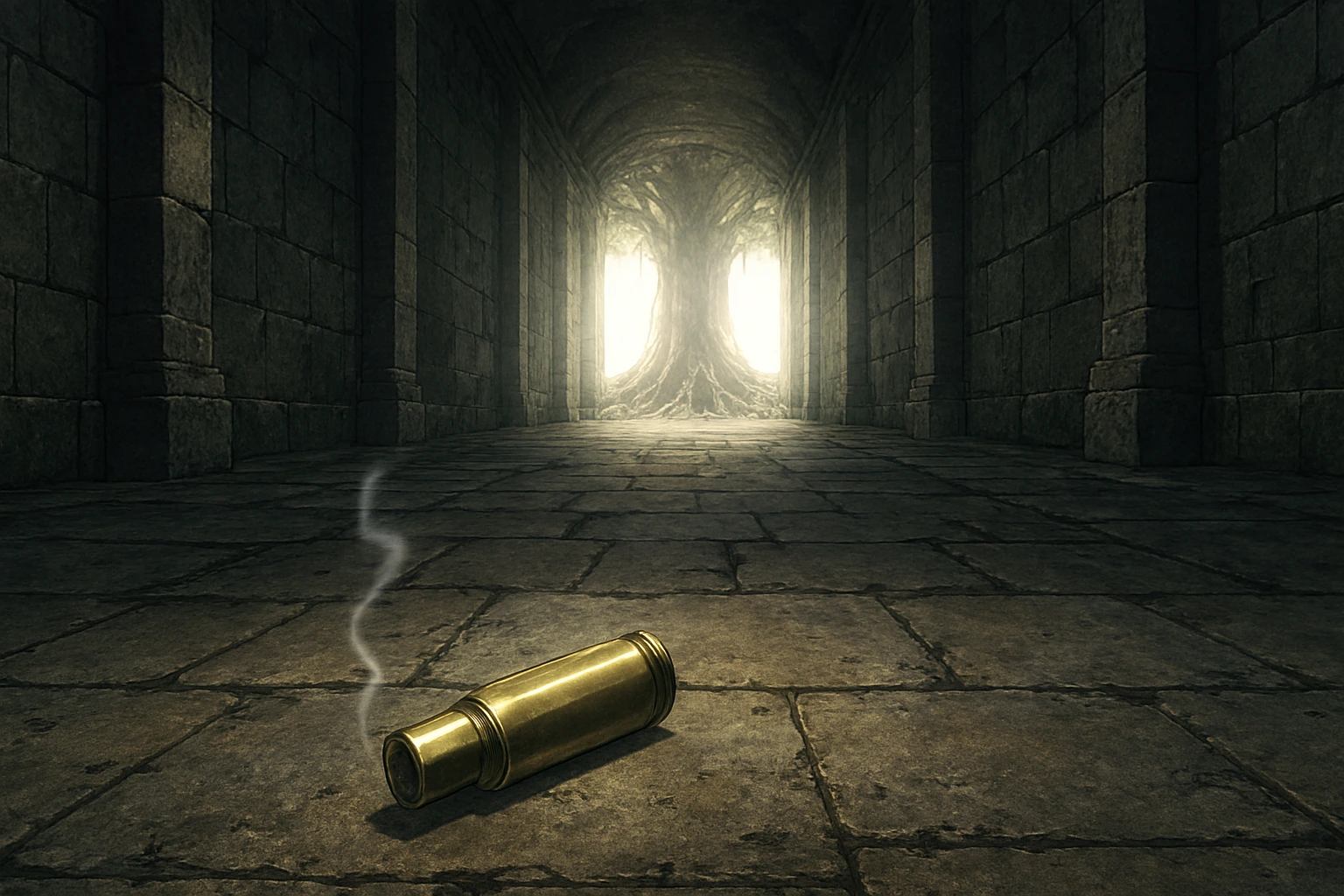
The brilliance of Gege Akutami’s storytelling is in the brutality of the interruption. Just as Riko extends her hand to Geto, accepting the offer of freedom, a bullet pierces her skull.
There is no fanfare. No final words. No slow-motion realization. Just a loud bang and the collapse of a small body. Toji Fushiguro appears, weapon in hand, having bypassed the “Six Eyes” through sheer tactical brilliance and his lack of cursed energy. He wore down Gojo’s senses over three days, utilized a swarm of fly-heads to create signal noise, and struck the moment Gojo deactivated his Infinity.
This moment is the “Death of Youth” for Gojo and Geto. For Riko, it is the end of everything. The tragedy is that she died right after deciding she wanted to live. She didn’t die as a noble sacrifice; she died as a victim of a power struggle she barely understood. For the audience, the shock is visceral.
We are trained by shonen tropes to believe that if the heroes try hard enough, they can save the girl. Jujutsu Kaisen subverts this. The heroes were the strongest, and they still failed. Riko Amanai’s death is the cold water that wakes the story up to its dark reality. The “Strongest” duo was broken by a man with no magic, holding a gun.
4. The Butterfly Effect: Consequences of Failure
Riko Amanai’s death was not an isolated incident. It was a nexus point. The failure of the merger triggered a domino effect that ruined the lives of every major character, destabilized the political landscape of Jujutsu society, and paved the way for the apocalypse.
Impact on Master Tengen: The Evolution

The immediate consequence was biological. Without a Star Plasma Vessel, Tengen began to evolve. He maintained his rationality through sheer force of will and barrier techniques, but his existence shifted. He became “more like a curse than a human.” Visually, he transformed from a humanoid into a grotesque, thumb-like entity with four eyes, resembling a Sukuna finger or a cursed spirit.
This evolution had a catastrophic side effect: Tengen became susceptible to Cursed Spirit Manipulation. Previously, as a human sorcerer, Tengen could not be controlled by Suguru Geto or Kenjaku’s technique. Cursed Spirit Manipulation only works on curses, not humans. However, once he evolved, his biological composition became similar enough to a cursed spirit that Kenjaku could absorb him.
This was Kenjaku’s long game. He no longer needed to fight the Six Eyes or kill the Vessel; he just needed to wait for the merger to fail so he could eventually absorb Tengen and use his barrier mastery to force the “evolution” of all humanity (the Culling Game). Riko’s death unlocked the win condition for the main villain. It turned the ultimate protector (Tengen) into the ultimate tool for destruction.
Impact on Suguru Geto: The Fracture
If Gojo was the body of the duo, Geto was the heart. Riko’s death shattered that heart. Following the assassination, Geto arrives at the Time Vessel Association headquarters to find the cultists applauding. They are cheering over the corpse of a teenage girl because, to them, her death preserves the “purity” of Tengen. They don’t see a dead child; they see a successful ritual.
This applause haunts Geto. It is the sound of his moral compass breaking. He had dedicated his life to the ideology of “the strong exist to protect the weak.” Ideally, sorcerers swallow the filth of curses to protect the innocent public. But here, the “weak” (the non-sorcerers) were monstrous, celebrating the murder of a child that he, the “strong,” failed to protect.
This cognitive dissonance festered. It led to his isolation. We see Geto showering, trying to wash away the “stench of the monkey,” trembling as he swallows curse orb after curse orb. The act of exorcism became nauseating to him. “Why am I doing this? Who am I doing this for?” The death of Riko Amanai is the direct reason Suguru Geto became a genocidal villain.
He couldn’t reconcile the pain of losing Riko with the duty of protecting the people who paid for her murder. He decided that to create a paradise for sorcerers, he had to eliminate the source of curses: non-sorcerers.
Impact on Satoru Gojo: The Lonely God
For Gojo, the impact was inverse. Toji pushed Gojo to the brink of death, slashing his throat and stabbing his legs. This near-death experience forced Gojo to unlock the full potential of the Limitless and learn the Reverse Cursed Technique to heal himself. He then unlocked “Red” and “Purple.” Gojo returned from the grave as “The Honored One.”
He killed Toji with ease. He became the strongest being on the planet. But the victory was hollow. He had gained godlike power, but he had lost the mission. He couldn’t save Riko. He couldn’t save Geto from his spiraling depression because he was too busy perfecting his new powers.
This failure taught Gojo a painful lesson: “Whatever I do, it’s not enough if I’m the only one who is strong.” If he had been stronger earlier, or if he had capable allies, maybe Riko would be alive. Maybe Geto wouldn’t have fallen into darkness. This realization drove Gojo to become a teacher at Jujutsu High.
He realized he couldn’t fix the world alone; he needed to raise a generation of sorcerers who were as strong as him so that no one would have to be left behind again. Riko’s death is the reason Yuji, Megumi, and Nobara have a teacher. It is the reason Gojo tolerates the higher-ups—he is playing the long game to revolutionize the system that killed Riko.
5. The Other Vessel: Yuki Tsukumo
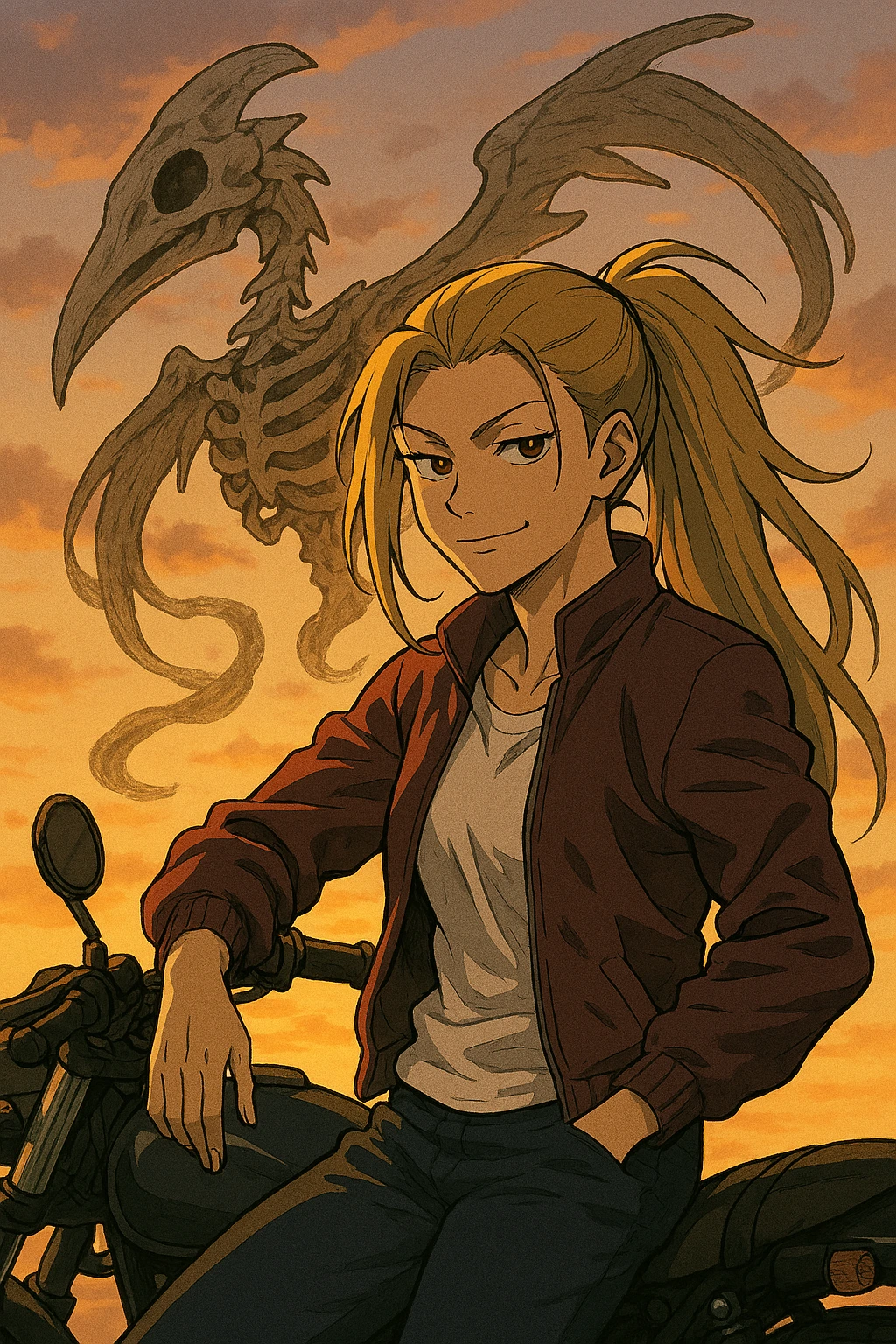
While Riko represents the tragedy of the vessel system, Yuki Tsukumo represents the rebellion against it. Her involvement in the lore adds another layer of depth to the Star Plasma concept.
The Survivor
Yuki Tsukumo is one of the four Special Grade sorcerers, but she is distinct because she is a former Star Plasma Vessel. We are never told exactly how she survived or why she wasn’t merged, but her existence proves that there were others before Riko. She is the “what if” scenario—a Riko who grew up, got strong, and got angry.
Having lived through the system, Yuki despises it. She refuses to take missions from the Higher Ups. She travels the world, ostensibly researching, but largely avoiding the politics of Tokyo Tech. She hates Tengen deeply for maintaining a peace built on child sacrifice. Her ideology focuses on “breaking away from cursed energy” entirely, rather than just managing it. She wants to cure the disease, while the higher-ups are just treating the symptoms.
The Unintentional Catalyst
Yuki’s role in the tragedy is subtle but vital. After Riko’s death, she meets a grieving Geto. In their conversation, she casually mentions her theory: that if all humans were sorcerers, cursed spirits wouldn’t be born. Or, if all humans had zero cursed energy (like Toji), curses would vanish.
She didn’t mean to radicalize him, but her words gave Geto the logical framework for his genocide. She planted the seed that “killing all non-sorcerers” was a valid, scientifically sound solution to the problem of curses. Geto took her “Thought Experiment” and turned it into a “War Plan.” Yuki carries the burden of knowing her research helped create Geto the villain.
The Irony of her End: The Black Hole
Yuki’s story concludes in the Stars and Oil arc, where she finally faces Kenjaku within the Tombs of the Star Corridor—the very place Riko was meant to die. The tragic irony is that the woman who hated Tengen and refused to serve the Higher Ups died protecting Tengen.
She fought Kenjaku to stop him from absorbing the evolved Tengen. She unleashed her ultimate technique, a literal Black Hole, sacrificing her life in a desperate attempt to destroy the villain. Yet, she failed. Kenjaku used an anti-gravity technique (stolen from Yuji’s mother, Kaori Itadori) to survive. Tengen was absorbed, and Yuki’s sacrifice—like Riko’s—felt ultimately futile in the face of Kenjaku’s millennia-long plotting.
However, Yuki left behind her “Soul Research” notes, given to Choso. These notes are currently being used by Yuji Itadori to fight Sukuna. Even in death, the Star Plasma Vessels are fighting back.
6. Conclusion: A World without Destiny
The story of the Star Plasma Vessel is the story of Jujutsu Kaisen’s pivot from Order to Chaos. It is the definitive turning point of the lore.
For 1,000 years, the train of history ran on the rails of the Tengen-Vessel-Six Eyes cycle. It was a predictable, safe, and cruel system. It prioritized stability over humanity. Riko Amanai’s death was the derailment. Toji Fushiguro broke the rails with a heavenly restricted hammer.
Suguru Geto set the wreckage on fire with his despair. Satoru Gojo stood atop the ashes, trying to build something new, but finding himself trapped in a box (the Prison Realm) because of the very chaos that was unleashed.
We are now living in the world created by Riko’s absence. The Culling Game is a direct result of Tengen evolving. Sukuna’s rampage is possible because the balance of the world shifted. The potential merger of humanity with Tengen—the “Kaiju” scenario Kenjaku envisions—is only possible because Riko Amanai was shot in 2006.
Riko Amanai was not a warrior. She had no domain expansion, no cursed technique, and no combat ability. Yet, her ghost haunts every panel of the manga. She represents the innocent joy that the Jujutsu world crushes to sustain itself. She represents the “blue” days of Gojo and Geto that can never return.
As we look at the current state of the manga, with the world teetering on the edge of annihilation, we must remember that this isn’t just a battle of strong sorcerers. It is the violent, messy aftermath of a broken destiny. The players—Yuji, Megumi, Yuta, Hakari—are fighting to survive in a world where the safety net of “Fate” no longer exists. They are writing their own future, one page at a time, in the blank space left by the Star Plasma Vessel.
We have now covered the World, the History, the Politics, and the Power System. Now that we understand the Stage, it is time to meet the Players who must survive on it. The tragedy of Riko Amanai is a reminder: in Jujutsu Kaisen, nothing comes without a cost, and sometimes, the price of peace is too high to pay.