
Introduction
The Ultimate Casualty
In the expansive and often morally complex universe of My Hero Academia, the dichotomy between good and evil is frequently presented through the lens of dazzling Quirks and spectacular battles.
However, beneath the veneer of flashy heroism lies a deeply flawed sociological architecture. To understand the character of Tenko Shimura—who would later become the apocalyptic threat known as Tomura Shigaraki—is to look directly into the bleeding heart of this universe’s greatest failure. Tenko Shimura is not merely the tragic backstory of a supervillain; his existence is the most damning piece of evidence against the structural integrity of Hero Society itself.
He represents the ultimate casualty of a system that prioritized public spectacles of salvation over the quiet, unglamorous necessity of basic human empathy. To view Tenko merely as a “bad guy” is to fundamentally misunderstand the narrative intent of Kohei Horikoshi’s magnum opus. Tenko is the dark mirror reflecting the arrogance of a society that believed it had solved the problem of human suffering simply by outsourcing it to a designated class of super-cops.
The Boy Who Was Ignored
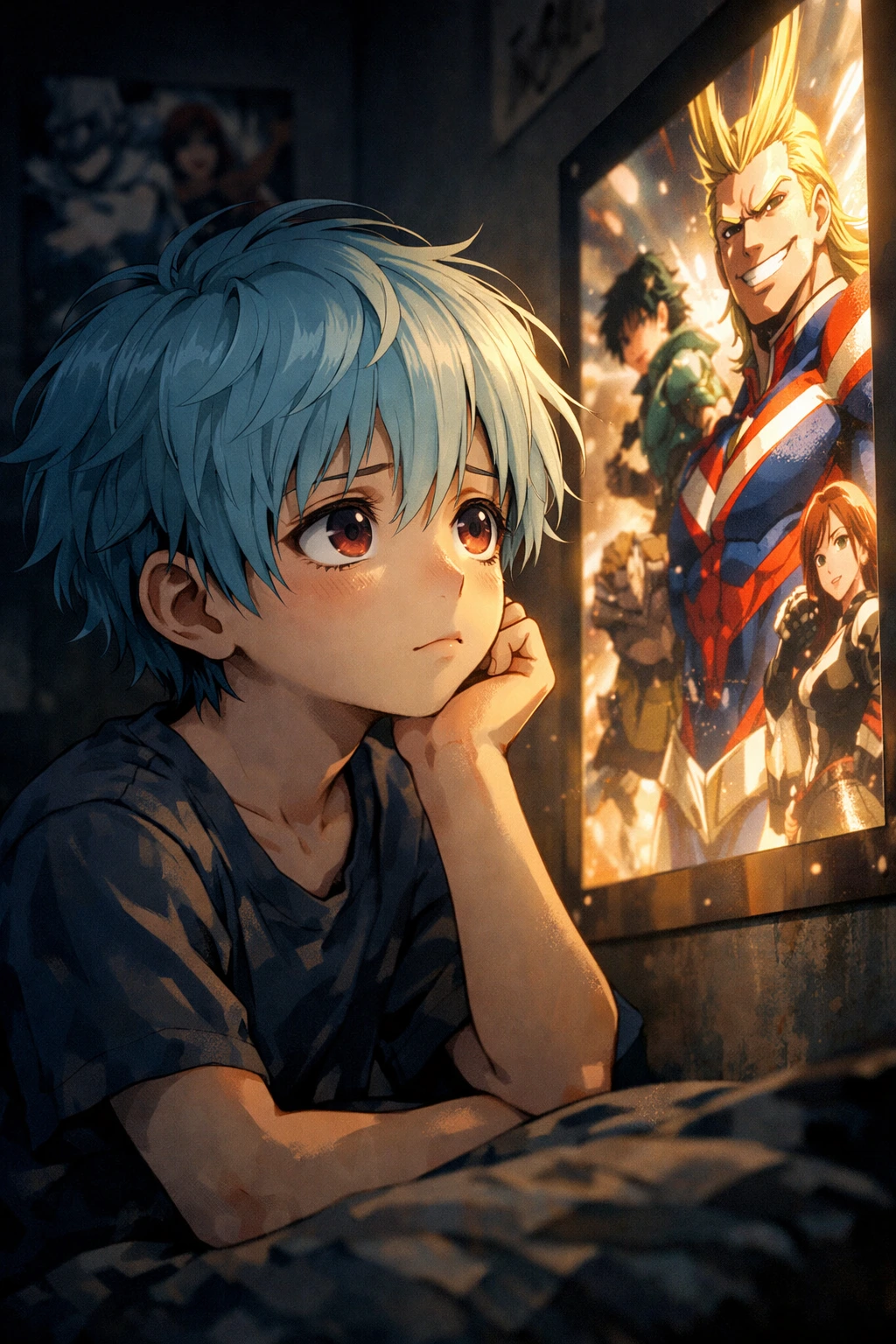
Before he was the Symbol of Fear, Tenko Shimura was just a little boy who wanted to be a hero. His childhood dream was no different from that of Izuku Midoriya, Katsuki Bakugo, or millions of other children raised in the Golden Age of All Might.
Yet, his innocent aspiration was violently inverted, twisted into an ideology of absolute destruction. This inversion did not occur in a vacuum; it was incubated within the suffocating walls of domestic abuse and finalized by the chilling complacency of the society outside his front door.
Tenko was a boy who was systemically ignored by everyone who had the power to save him. He was abused by his father, failed by his family’s passive enabling, and finally abandoned by a civilian populace that had forgotten how to look after their own. His metamorphosis into a monster was not an act of spontaneous evil, but a tragic chain reaction of neglect.
Article Scope
This article serves as the definitive, expert-level psychological and narrative breakdown of Tenko Shimura’s life. We will go far beyond a simple retelling of events. We will dissect the generational trauma that poisoned the Shimura household, anatomize the psychosomatic and biological triggers of his terrifying Quirk, and analyze the masterful, sociopathic manipulation enacted by All For One.
Furthermore, we will explore the profound societal critiques woven into his origin story, examining how the Bystander Effect in a superhero-dependent world birthed its own destroyer. By the conclusion of this exhaustive analysis, the permanent scarring of Tenko’s psyche will be laid bare, proving that villains of this magnitude are painstakingly manufactured by the societies they wish to destroy.
The Shimura Household: A Breeding Ground for Tragedy
The Sins of the Mother
To comprehend the horrors inflicted upon Tenko, one must first trace the venom back to its source: his father, Kotaro Shimura. Kotaro’s deep-seated trauma is the grim foundation upon which Tenko’s nightmare was built. Kotaro was the son of Nana Shimura, the heroic seventh wielder of One For All.
In a desperate bid to protect her young son from the demonic reach of All For One—who had already murdered her husband—Nana made the agonizing decision to place Kotaro in foster care, severing all ties with him. While Nana’s intentions were entirely rooted in protective love, to a child, abandonment is simply abandonment.
Kotaro grew up feeling discarded, utterly convinced that his mother chose the glory of heroism and the salvation of strangers over the love and safety of her own flesh and blood. This perceived betrayal metastasized into a virulent, generational hatred toward heroes.
To Kotaro, heroes were not saviors; they were narcissists who destroyed their own families to save complete strangers. He carried this open psychological wound into his adulthood, allowing it to dictate the tyrannical manner in which he built and ruled his own family. Nana’s sacrifice, tragically, planted the seeds for the darkest villain the world would ever know.
The “No Heroes” Rule
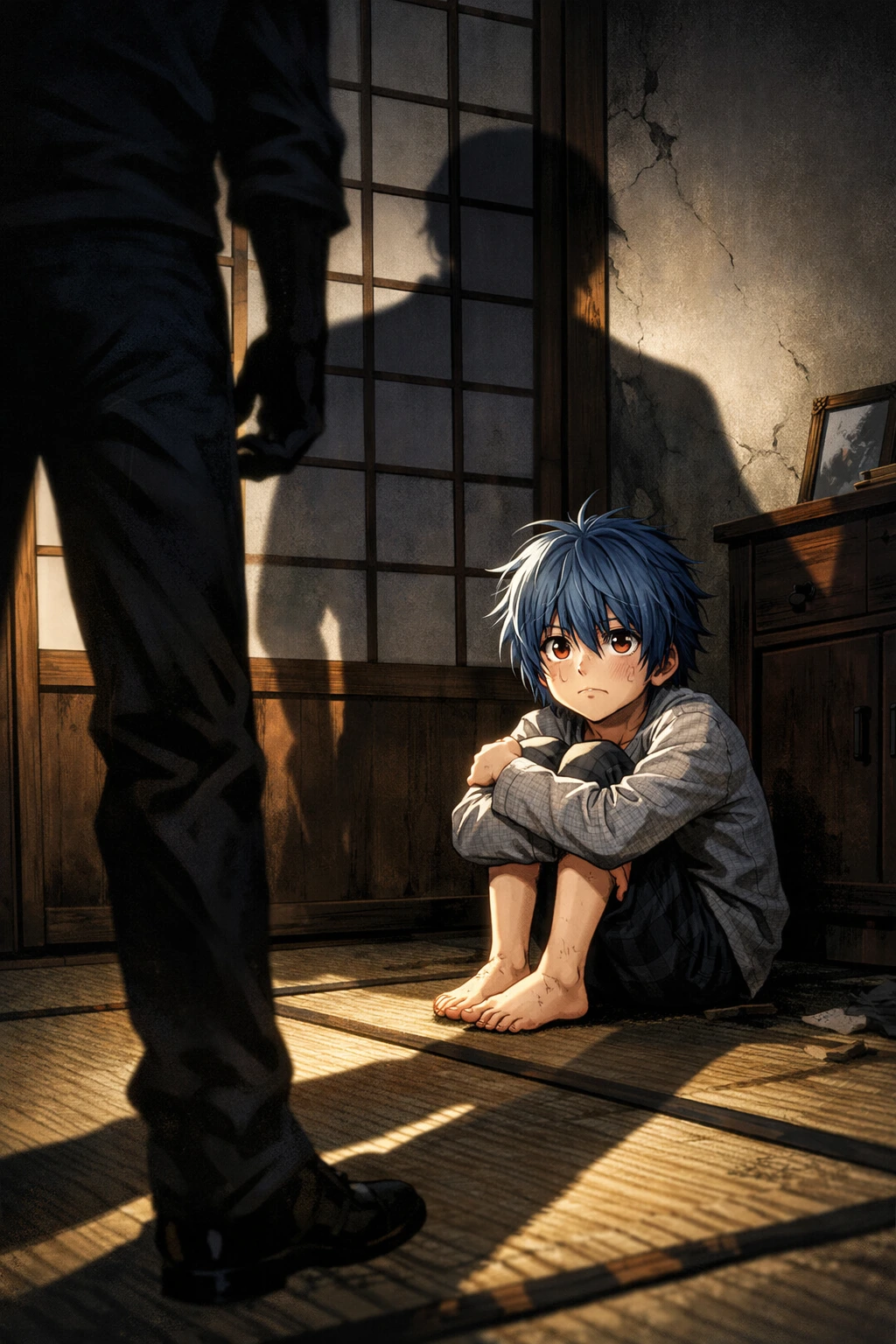
Driven by his unresolved trauma, Kotaro transformed the Shimura household into a psychological prison. He instituted a draconian, absolute “No Heroes” rule within his home. Any mention of heroes, any admiration for their deeds, and any expression of a desire to become one was met with swift, disproportionate punishment.
For young Tenko, who naturally idolized figures like All Might just as any child of that era would, this rule was a death sentence for his spirit. Kotaro wasn’t merely setting household boundaries; he was attempting to forcefully exorcise his own mother’s ghost from his son. When Kotaro physically struck Tenko and locked him outside in the cold for the “crime” of finding a picture of his grandmother, he was engaging in severe emotional and physical abuse. This environment of terror forced Tenko to suppress his core identity.
He was taught that his dreams were not just silly, but inherently sinful and damaging to his family. This constant, brutal suppression of his natural childhood joy fostered a volatile environment of severe emotional starvation and fear.
The Enabler Dynamics
Perhaps even more tragic than Kotaro’s active abuse was the passive failure of the rest of the Shimura family. Tenko’s mother, his grandparents, and his older sister, Hana, all recognized that Kotaro’s behavior was deeply wrong and psychologically damaging.
Yet, they did nothing to meaningfully stop it. They represented the tragic dynamic of the enabler. His mother would comfort him after the abuse, applying bandages to wounds that never should have been inflicted in the first place, but she would never stand up to her husband to prevent the next strike. His grandparents remained silent, prioritizing domestic peace over the safety of their grandchild.
Even his sister, Hana, who initially shared his secret love for heroes, ultimately threw Tenko under the bus to save herself from Kotaro’s wrath when they were caught looking at Nana’s photograph. This collective cowardice led to Tenko’s total psychological isolation. He learned a devastating lesson before he even reached the age of six: those who say they love you will not protect you when it actually matters. The family’s passive sympathy was utterly useless against Kotaro’s active tyranny, leaving Tenko entirely alone in a house full of people.
The Decay Mutation: A Biological Reaction to Trauma
The Itch
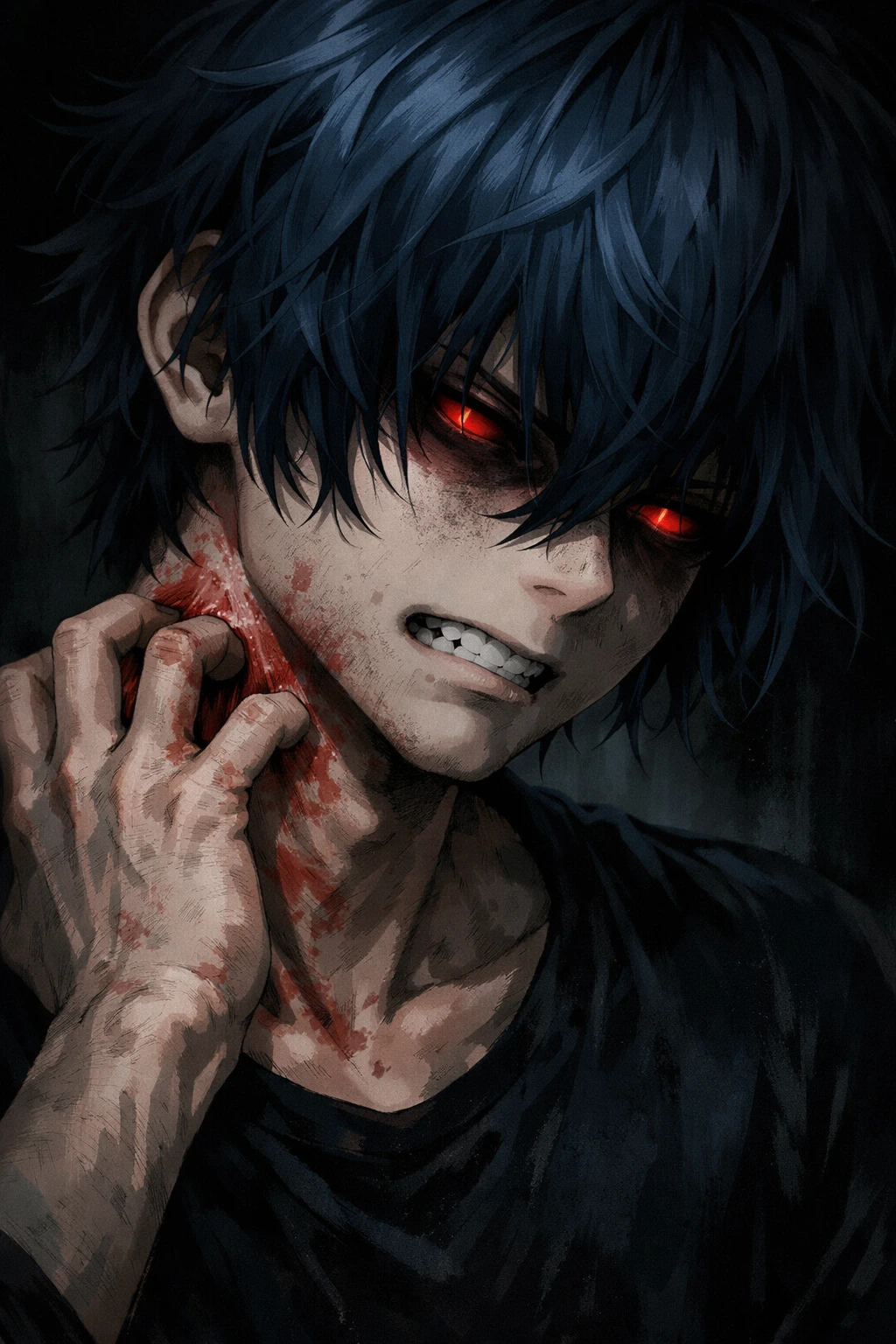
One of the most brilliant and disturbing narrative devices in Kohei Horikoshi’s storytelling is the physical manifestation of Tenko’s repressed stress—the relentless, unbearable “itch.” Throughout his childhood, Tenko suffered from what his family dismissed as severe “allergies.” He would scratch at his eyes, his neck, and his arms until they bled.
However, this was no ordinary dermatological condition; it was a profound psychosomatic symptom. The itch was his unresolved anger, his suffocated dreams, and his profound sadness physically manifesting and attempting to claw its way out of his body. Because he was strictly forbidden from crying out in anger or expressing his frustration verbally, his body absorbed the psychological trauma and translated it into physical agony.
His Quirk, Decay, was intrinsically linked to this urge to destroy. The itch was the biological pressure-cooker of his Quirk reacting to the toxic environment of his home. It was the feeling of his own power tearing his body apart from the inside because it was given no healthy outlet for expression.
The Catastrophic Awakening
Quirks in the My Hero Academia universe typically manifest by the age of four and usually come with natural, biological limiters that allow the child to adapt to their new power safely. Tenko’s awakening, however, was catastrophic.
Triggered by a crescendo of physical abuse and the ultimate emotional betrayal by his sister, his Quirk did not simply manifest; it violently erupted. Because the Quirk had been suppressed by immense psychological stress for so long, when the dam finally broke, it bypassed all normal biological safety mechanisms. The Decay Quirk awakened at full, uncontrollable lethality.
It was an anomaly of Quirk genetics, a mutation fueled by pure, unadulterated trauma. The very nature of the Quirk—turning whatever he touched into crumbling dust—was the perfect, tragic reflection of his mental state: a deep, subconscious desire to dismantle the environment that was causing him so much pain.
The Slaughter
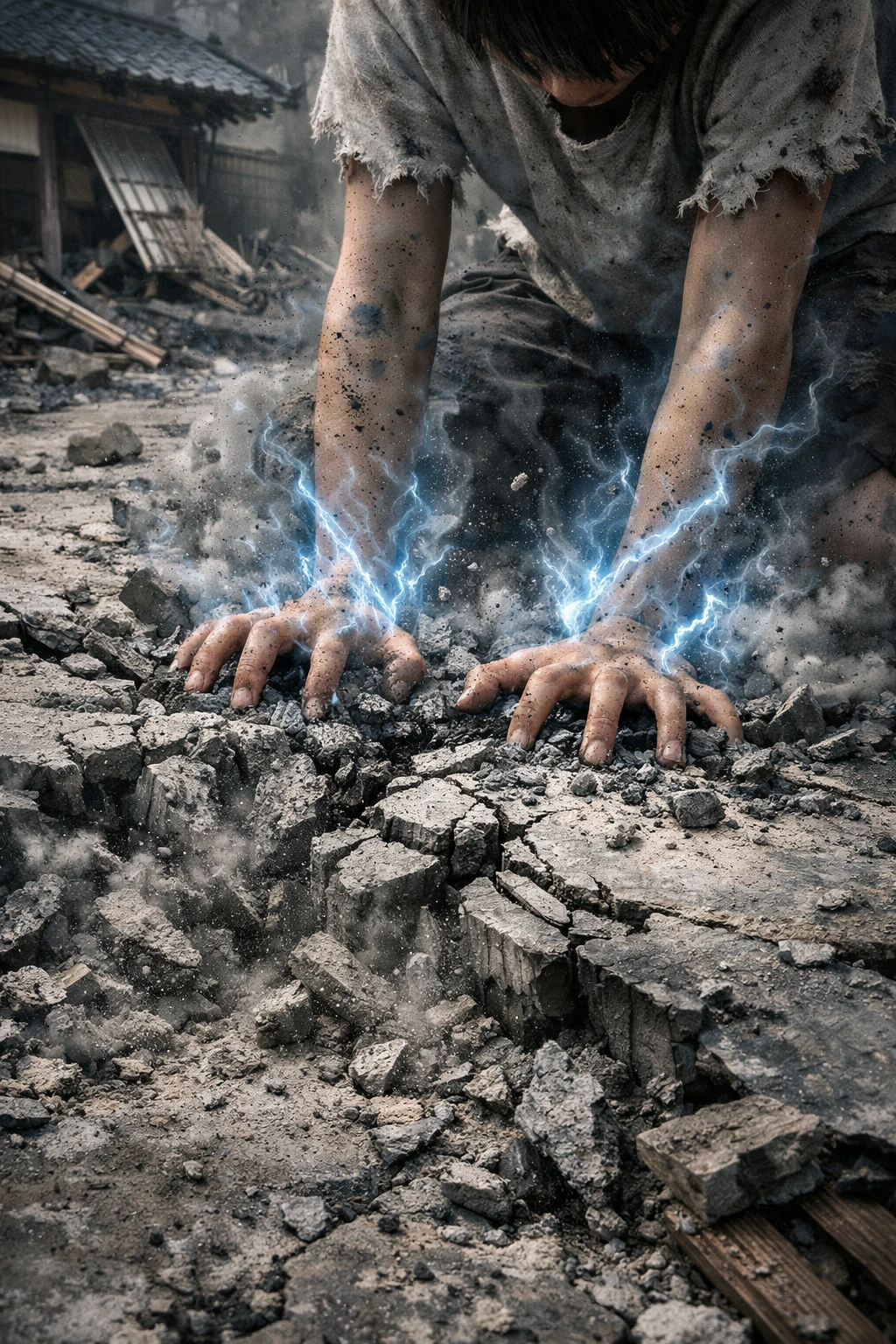
The sequence of events on the night his family died is one of the most harrowing and psychologically complex tragedies in modern manga. It was a rapid descent from a horrific accident into intentional, hate-fueled murder. It began with Mon, the family dog.
Tenko, seeking comfort in the yard after being beaten and locked out by his father, simply hugged his pet. The dog instantly crumbled to dust and blood in his hands. Panic and confusion set in. When his sister Hana came out to check on him, she fled in terror at the sight of the blood, tripping and falling. When Tenko reached out to help her up, begging for help, his panicked touch decayed her as well.
Up to this point, the deaths were tragic, terrifying accidents of an uncontrolled power. His mother and grandparents rushed out, only to be caught in the spreading, uncontrollable wave of decay that began to infect the very ground he touched.
But the narrative pivots drastically when Kotaro, his abusive father, steps into the bloody courtyard. Kotaro, seeing the massacre, does not try to comfort his son; he strikes Tenko across the face with garden shears in a blind panic. This is the breaking point.
After years of abuse, after accidentally killing the only people he loved, the sight of his father raising a weapon against him one last time snaps whatever fragile thread of innocence remained in Tenko’s mind. The final kill was not an accident. With absolute, intentional malice, Tenko lunges at his father. He places his hands on Kotaro’s face with the deliberate intent to kill.
The Relief of Destruction
The most terrifying psychological twist of this entire massacre is what happens immediately after Kotaro’s body turns to dust and the Shimura house collapses into ruins. The unbearable, agonizing itch that had plagued Tenko for his entire life suddenly vanished.
The physical pain stopped. In that dark, blood-soaked moment, Tenko’s deeply traumatized brain made a permanent, catastrophic neurological association. He learned that the only way to alleviate his suffering, the only way to silence the pain, was through absolute destruction.
By destroying his abuser and the prison he called a home, he found a twisted sense of peace. This moment permanently linked the act of murder and devastation with profound emotional and physical relief, laying the inescapable psychological groundwork for Tomura Shigaraki.
The Bystander Effect: The Fatal Flaw of the Golden Age
The Wandering Ghost
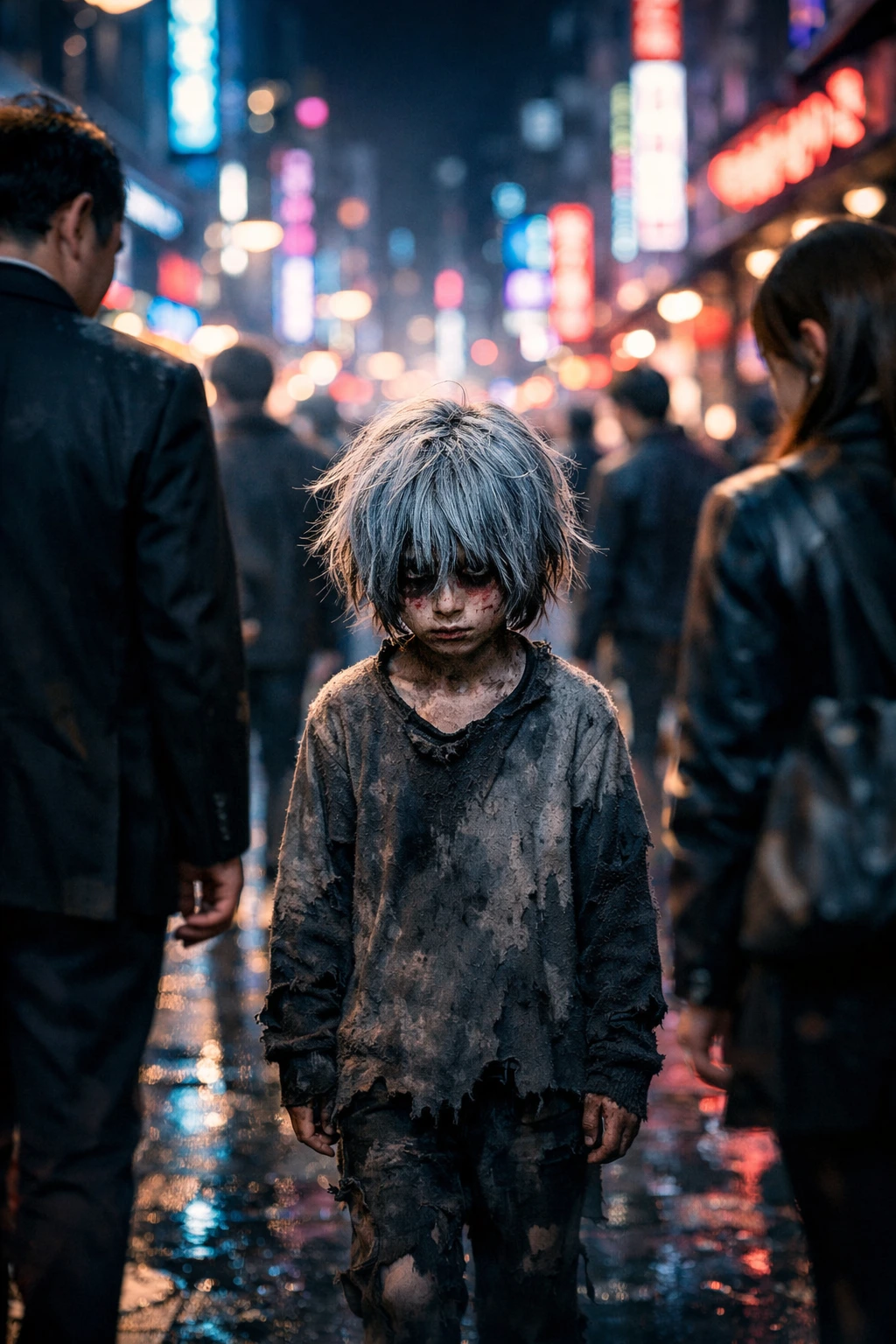
In the immediate aftermath of the slaughter, Tenko is a shattered, hollow shell of a human being. Covered in dirt and the dried blood of his family, the five-year-old boy begins to wander the bustling, brightly lit streets of the city.
He is a walking ghost, a living embodiment of extreme trauma, stumbling through a world that refuses to see him. He is starving, exhausted, and profoundly traumatized, desperately looking up at the faces of passing adults, silently begging for a savior to reach out to him.
This sequence is vital; it proves that even after the horrific events at his home, Tenko was not yet entirely lost. He was still a child looking for help, hoping that the heroes he once idolized, or even just a kind stranger, would come to his rescue.
The Illusion of Peace
However, Horikoshi uses Tenko’s wandering to deliver a devastating critique of the society All Might built. The era of the “Symbol of Peace” was touted as a golden age, a time of unprecedented safety and low crime rates. But this absolute safety created a toxic societal complacency.
As Tenko walks through the crowds, civilians actively look away. They see a blood-covered, starving child on the street, and they make the conscious decision to keep walking. The horrifying justification they whisper to themselves is the poison of this era: “A Pro Hero will take care of it.” “Someone else will handle it.”
Because society had created a designated class of superhuman saviors, the average citizen had completely abdicated their basic human responsibility to their fellow man. They outsourced their compassion to the government and to licensed professionals.
The illusion of peace made people weak, blind, and devoid of empathy. They assumed the system was flawless, and therefore, if a child was on the street, the system would eventually scoop him up. No one wanted to get their hands dirty; no one wanted to disrupt their comfortable routines.
The Point of No Return
As days blur into nights and dozens of people pass him by, a fundamental shift occurs within Tenko. He realizes that in a society completely reliant on designated saviors, a victim who doesn’t fit the clean, easily marketable mold of “a damsel in distress attacked by a visible villain” is simply invisible.
His faith in humanity, already fractured by his family’s betrayal, is completely shattered by the apathy of the masses. The exact moment Tenko stops hoping for a hero is the point of no return. It is the moment the overarching theme of My Hero Academia is crystallized: the greatest threat to peace isn’t a villain with a powerful Quirk; it is a society that has lost its basic human empathy. The bystanders who ignored Tenko are just as responsible for the creation of Tomura Shigaraki as the man who eventually took him in.
The Grooming of a Demon King
The Calculated Savior
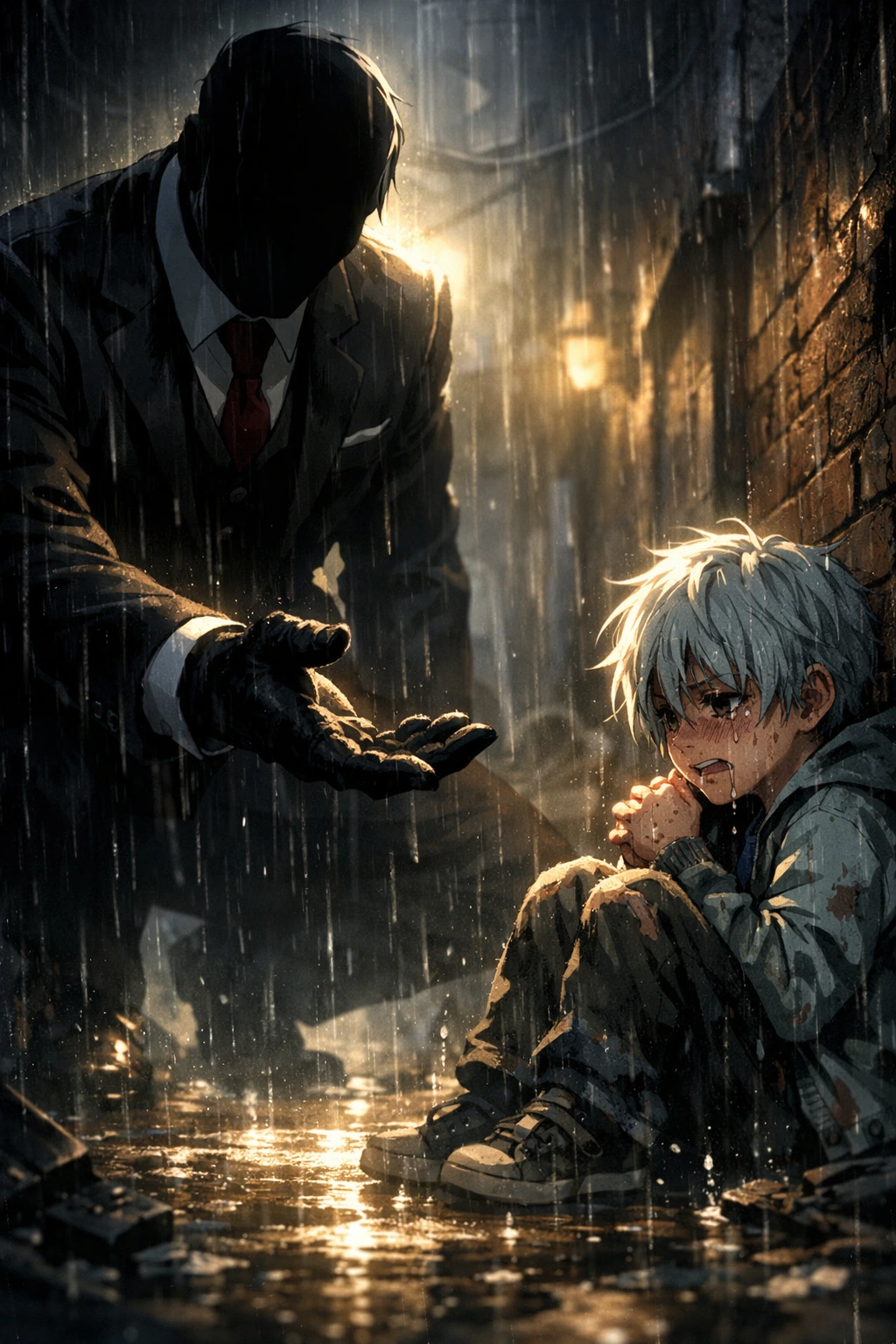
When salvation finally comes to the dying boy in an alleyway, it does not arrive wearing a bright cape or a shining smile. It arrives in the form of a tailored suit and a face obscured by shadow. Enter All For One (AFO), the ancient, immortal overlord of the criminal underworld.
AFO did not stumble upon Tenko by accident; it was a calculated, predatory interception. AFO tracked down Nana Shimura’s grandson specifically for his lineage. He did not care about the boy’s Quirk at first; he cared about the boy’s existence as the ultimate psychological weapon against All Might.
To take the grandson of the woman who passed One For All to Toshinori Yagi, and twist that child into the ultimate symbol of evil, was a masterpiece of spite. AFO presented himself as the only person in the entire world who saw Tenko, who validated his pain, and who was willing to extend a hand when the “heroes” did not.
Rewiring the Brain
The grooming process enacted by AFO is a harrowing study in psychological manipulation and cult-like conditioning. AFO became the perfect surrogate father, providing the shelter and validation that Kotaro had violently denied. However, AFO’s validation was poison.
When Tenko spoke of the itch and the urge to destroy, AFO did not offer therapy or restraint; he offered encouragement. He expertly rewired the boy’s brain by externalizing the blame. He told Tenko that the tragedy wasn’t his fault, but the fault of a society that pushed him to the brink and then ignored his cries for help.
AFO taught him that the “itch” was not a sickness to be cured, but a divine right to exact vengeance. He nurtured the trauma, watering it daily with words of dark encouragement, ensuring that the wound never healed, but rather festered into a weaponized hatred for the world. He stripped away the name Tenko Shimura, christening him Tomura Shigaraki—a name signifying mourning and death, permanently locking him into his new identity.
The Baptism of Blood
To solidify this transformation from victim to predator, AFO knew he had to push Tenko to cross the final moral threshold under his own volition. AFO orchestrated a scenario where Tenko was confronted by the street thugs who had previously harassed him while he was wandering alone.
AFO provided Tenko with a choice, but it was a choice heavily weighted by the grooming he had undergone. Encouraged by his new master to let the itch consume him, to “do what his heart desired,” Tenko unleashed Decay on the thugs, intentionally murdering them in cold blood.
This was his baptism. It was the moment he actively chose the path of the villain, cementing his dark worldview. AFO had successfully convinced a traumatized child that the only way to protect himself and find peace was to destroy anything that caused him irritation. He had built his Demon King.
The Hands of the Father (Psychological Anchors)
Macabre Mementos
One of the most striking and disturbing visual elements of Tomura Shigaraki’s character design is the multitude of disembodied, pale hands that clasp his arms, neck, and face. These are not mere aesthetic choices or costumes; they are literal, macabre mementos of his trauma.
Following the destruction of the Shimura household, AFO had his brilliant and twisted scientist, Dr. Kyudai Garaki, retrieve the physical remains of Tenko’s family from the rubble. Through dark, specialized Quirk science, Garaki preserved the severed hands of Kotaro, the mother, the grandparents, and Hana.
The Weight of Guilt and Comfort
AFO presented these hands to young Tomura as “gifts,” but their true purpose was far more sinister. He forced the boy to wear them as physical, psychological anchors. The hands were a masterstroke of abuser control.
By constantly wearing the physical remains of the people he murdered, Tomura was never allowed to forget his trauma. The hand covering his face—belonging to his abusive father, Kotaro—literally obscured his vision of the world, forcing him to see everything through the lens of his past abuse.
Wearing the hands induced a perpetual state of nausea, guilt, and blistering anger. AFO told Tomura to let the sickness and the rage consume him, using the hands to ensure the “itch” never truly faded. Paradoxically, because his trauma was so deep, the hands also provided a sick form of comfort.
They were the only remnants of his family, a physical weight that made him feel grounded in his twisted reality. They kept him entirely dependent on AFO, forever trapping him in the mindset of the frightened, angry child in the alleyway. The hands were the chains that bound the potential of the Demon King to the will of his master.
Shedding the Past
The brilliant resolution to this psychological bondage occurs during the critically acclaimed My Villain Academia arc. In the brutal battle against Re-Destro and the Meta Liberation Army in Deika City, Shigaraki is pushed to his absolute physical and mental limits.
Through a grueling combat awakening, his repressed memories flood back in their entirety. In a moment of profound, terrifying self-actualization, Shigaraki destroys the remaining hands that bind him, including the hand of his father upon his face.
This act of destroying the hands is heavily symbolic. He is no longer suppressing his past, nor is he being controlled by it. By destroying the hands himself, he breaks the psychological anchors AFO used to control him.
He sheds the lingering trauma of Tenko Shimura, accepts the tragedy of his existence, and fully embraces his nature as an agent of pure destruction. He stops being AFO’s puppet and evolves into a true, sovereign king of villains. The itch is gone, replaced by a terrifying, unshakeable clarity of purpose.
The Duality in the Vestige Realm
The Crying Child
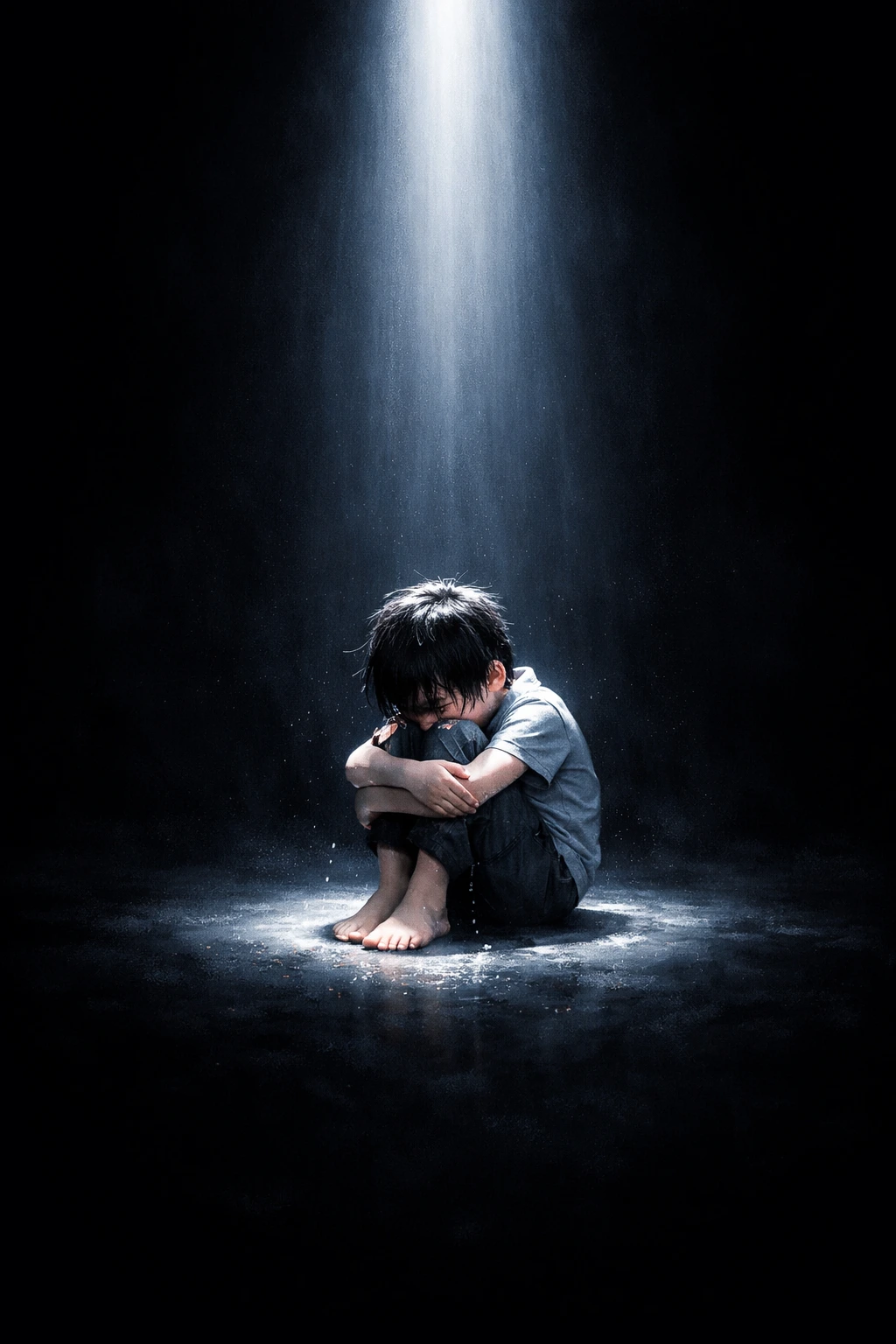
Despite Shigaraki’s evolution into a being of god-like destructive power, Horikoshi introduces a fascinating metaphysical layer to his psychology as the narrative approaches its climax. Through the deep lore of One For All and All For One, we are introduced to the Vestige Realm—a psychic landscape where the consciousness and wills of Quirk factors reside. It is within this psychic architecture that a profound truth is revealed: Tenko Shimura is not entirely dead.
Buried beneath oceans of manufactured hatred, beneath the grooming of AFO, and beneath the terrifying persona of Tomura Shigaraki, the original, innocent core of Tenko remains. In the Vestige Realm, he is depicted as the five-year-old boy he was on the day his world ended, crying endlessly, waiting in the dark for a hero who never came.
This reveals that the villainy of Shigaraki is, in many ways, an impenetrable fortress built around a terrified child. The hatred is real, the body count is real, but at the absolute center of the Demon King’s soul is a boy who is still hurting.
The Ultimate Rescue Mission
This revelation fundamentally alters the trajectory of the series’ protagonist, Izuku “Deku” Midoriya. When Deku glimpses the crying child within the Vestige Realm, his heroic paradigm shifts. He recognizes that Shigaraki is not an absolute, faceless evil like All For One, but a victim of the very society Deku is trying to protect.
Deku’s realization shifts the narrative endgame from a standard superhero trope of “defeating the villain to save the world” to a much more profound and difficult goal: “saving the little boy to save the world.”
Deku understands that simply killing Shigaraki would be repeating the mistakes of the past; it would be society once again ignoring the crying child because it is easier to destroy him than to understand him. The ultimate test of a true hero is not just stopping the monster, but having the empathy to reach through the monster’s armor to save the human being trapped inside. This duality cements the philosophical core of the manga.
Conclusion
Villains Are Made, Not Born
The life of Tenko Shimura stands as one of the most brutal and effective cautionary tales in modern fiction. He is the definitive proof that true, catastrophic villains are rarely born; they are manufactured. His descent into darkness was paved by the bricks of Kotaro’s cyclical abuse, cemented by the cowardice of a family that refused to intervene, and finalized by a society that valued the illusion of peace over the practice of empathy.
Every step toward his transformation into Tomura Shigaraki was a failure of the human safety net. He is the physical embodiment of the phrase, “The child who is not embraced by the village will burn it down to feel its warmth.” AFO simply provided the match; society built the pyre.
Closing Thoughts
Kohei Horikoshi’s handling of Tenko Shimura’s backstory is a masterclass in narrative deconstruction. By taking the classic superhero trope of the “arch-nemesis” and anchoring it in deeply realistic themes of domestic abuse and societal apathy, Horikoshi elevates My Hero Academia from a simple action manga to a profound sociological critique.
Tenko’s story forces the reader—and the heroes within the world—to confront the uncomfortable truth that peace maintained through ignorance is destined to shatter. The greatest threat to the world was never just a villain with a Decay Quirk; it was the chilling reality that a society that stops caring about its most vulnerable members will eventually breed the instruments of its own destruction.
To truly save the future, heroism must evolve beyond punching villains into submission; it must become a proactive force of radical empathy, ensuring that no child is ever left to wander in the dark alone again.