
Solo Leveling Manhwa.
1. Introduction: The Price of Adaptation

You haven’t read the real Solo Leveling.
That might sound like gatekeeping, or perhaps the rantings of a purist, but it is an objective truth that every fan of the franchise needs to hear. If your only exposure to the world of Sung Jin-woo is through the spectacularly drawn panels of the manhwa or the high-octane animation of the anime, you are looking at a compressed, sanitized, and fundamentally altered version of the story. You have experienced the “highlights reel,” not the full match.
Let’s be clear: The late, great artist Dubu (Redice Studio) created a masterpiece. He took a standard power-fantasy light novel and gave it an artistic identity that redefined the industry. The “glow-up” of Sung Jin-woo is iconic because of Dubu’s pencils; the sharp angles, the interplay of shadow and neon blue light, and the sheer kinetic energy of the fights are legendary. However, visual storytelling comes with a steep price—the “Visual Trade-off.” To fit a dense, text-heavy novel into a weekly scrolling comic format designed for quick consumption on smartphones, sacrifices had to be made.
We aren’t talking about minor details, like the color of a shirt, the location of a coffee shop, or a slightly shortened conversation. We are talking about roughly 40% of the internal monologues, world-building, and political intrigue being slashed from the final product. The manhwa is an action blockbuster, akin to a Marvel movie; the novel is a psychological thriller mixed with a geopolitical war drama, closer to a spy novel with magic.
In the manhwa, Jin-woo is cool. In the novel, he is complex. In the manhwa, the world is a stage for fights. In the novel, the world is a terrified ecosystem reacting to the emergence of gods, where governments panic and economies crash in the wake of S-Rank gate openings.
The goal of this breakdown is not to bash the manhwa. It is to reveal the “Lost Context”—the crucial connective tissue that explains the plot holes you ignored because the art was so good. We are going to explore the dark, uncomfortable, and sometimes hilarious truths that were left on the cutting room floor, from anti-Japan politics to the sociopathic tendencies of the Shadow Monarch.
Buckle up. It’s time to awaken.
2. The “Anti-Japan” Politics (The Elephant in the Room)

If you read the manhwa and felt that the Jeju Island Raid arc felt a bit… convenient, you weren’t wrong. The adaptation glossed over one of the most controversial and significant plot points of the entire series: The Japanese Hunter Association didn’t just want to help Korea out of the kindness of their hearts; they wanted to destroy it.
In the manhwa, Goto Ryuji is presented as an arrogant, ambitious man who wants to become a National Level Hunter. His betrayal—pulling his team out and leaving the Korean hunters to die—is framed as a calculated risk to show off his strength or a tactical error born of hubris. It feels like a workplace rivalry gone wrong, a clash of egos rather than nations.
The Novel’s Reality is Far Darker.
In the original text, the entire joint operation was a conspiracy orchestrated by the Japanese government and the Association Chairman, Matsumoto Shigeo. This wasn’t about Goto Ryuji’s ego; it was about national dominance and cold-blooded realpolitik. Japan’s plan was explicitly to let the S-Rank ants wipe out Korea’s S-Rank hunters, effectively committing a proxy massacre.
Why? Because in the world of Solo Leveling, Hunters are nuclear deterrents. A country without S-Rank hunters is a country without defense, economically crippled and vulnerable to dungeon breaks. Japan’s strategy was to use the Jeju Raid to decapitate Korea’s military strength (its Hunters), causing the nation to collapse into chaos. Once Korea was overrun by monsters and defenseless, Japan would swoop in, “save” the peninsula with their superior forces, and effectively annex Korea as a vassal state dependent on Tokyo for survival.
It was a plot rooted in deep historical scars and fictionalized geopolitical ruthlessness. The novel describes the Japanese officials laughing behind closed doors, sipping tea while waiting for the news of the Korean hunters’ gruesome deaths. They weren’t allies; they were executioners in suits, viewing the Korean team not as partners, but as sacrificial lambs for their empire building.
The Manhwa’s Softening & Localization
When the manhwa was adapted, and subsequently the anime, this “Anti-Japan” sentiment was radioactive for the global market. You cannot easily sell a series in Japan where the Japanese government are the irredeemable villains trying to commit genocide against their neighbors using giant ants.
This led to massive changes:
- The Motivation Shift: Goto Ryuji became a victim of his own hubris rather than a pawn in a nationalist conspiracy. The specific scenes of Japanese politicians plotting the downfall of Korea were excised or heavily altered to make the antagonism personal rather than political.
- The Name Changes: In the Japanese localization of the media, the entire setting was moved. “Seoul” became “Tokyo,” and “Sung Jin-woo” became “Shun Mizushino.” The “evil foreign power” was shifted to a fictional country or heavily vague antagonists to avoid the real-world baggage. This localization effectively created two different canons for the story depending on where you lived.
The Impact on the Story
By removing this political venom, the Jeju Island Raid lost its stakes. In the novel, when Jin-woo arrives, he isn’t just saving his friends from ants; he is single-handedly dismantling a geopolitical conspiracy. He humiliates Japan not just by being stronger than Goto, but by saving the country that Japan tried to doom. He proves that one man can outweigh the schemes of an entire nation.
When Beru kills Goto Ryuji in the novel, it is a grim karmic justice. The Japanese hunters, who planned to leave the Koreans to be eaten, end up being the food. The manhwa captures the violence, but it misses the poetic, dark irony of the situation. This change diluted the narrative from a war story to a simple superhero rescue mission, stripping away the layer of grim satisfaction readers felt when the conspirators realized their plan had backfired.
3. Jin-woo’s Inner Darkness
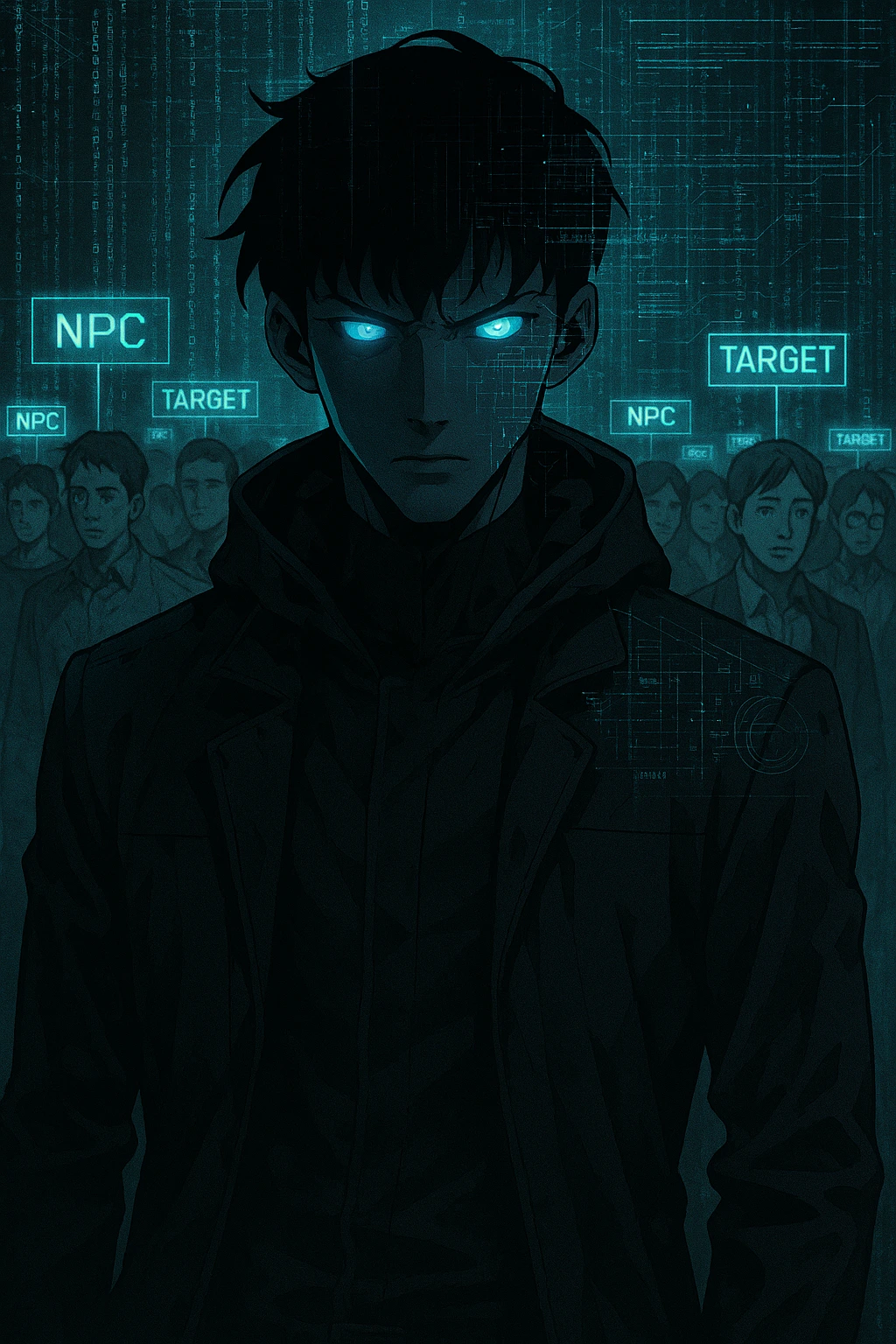
Ask an anime-only fan or a manhwa reader to describe Sung Jin-woo, and they will likely use words like: “Cool,” “Stoic,” “Badass,” or “Protective.”
Ask a novel reader, and they might add: “Terrifying,” “Cold,” “Calculated,” and “Borderline Sociopathic.”
The Psychology of the System
The manhwa visually depicts Jin-woo’s transformation through his physical “glow-up”—he gets taller, his muscles define, and his eyes glow blue. But the novel focuses on his mental transformation, which is far more disturbing. The transition from E-Rank Weakest to S-Rank Strongest isn’t just physical; it requires a rewriting of his psyche.
The “System” doesn’t just give him stats; it slowly erodes his humanity. In the novel, there are pages of internal monologue detailing his growing apathy toward human life. When he becomes a “Player,” everyone else effectively becomes an “NPC.” The System acts like an AI overlay on his consciousness.
There is a specific scene in the novel, shortly after he acquires the Necromancer class, where he looks at normal humans and doesn’t see people—he sees data. He struggles to empathize with fear or grief because the System has “Gamer’s Mind” (passive buff) that forces him to remain calm. This isn’t just “being cool”; it is an emotional suppression mechanism. If he feels too much panic or too much sadness, the System forcibly calms him down, regulating his heart rate and burying the trauma. He is literally incapable of processing trauma like a human being, making him an efficient killing machine but a detached person.
The “Quest Objective” Mentality
In the manhwa, when Jin-woo kills human antagonists (like Hwang Dong-Soo or the B-Rank assassin), it looks like righteous vengeance. In the novel, it reads more like pest control.
The novel clarifies that Jin-woo categorizes living things into two groups:
- Allies/Family: To be protected at all costs.
- Enemies: To be eliminated efficiently.
There is no gray area. The moment Hwang Dong-Soo threatened him, he didn’t just become an enemy; he became a “Quest Objective.” The novel describes Jin-woo’s thought process as cold logic. He doesn’t kill out of rage; he kills because the System dictates that enemies yield XP or loot, and threats must be removed to clear the scenario. It creates a terrifying dissonance where the protagonist views murder with the same emotional weight as deleting a file on a computer.
The Loss of the “Dry Saliva”
On a lighter note, the manhwa removed one of the novel’s most repetitive and meme-worthy phrases. In the text, every time a character was shocked by Jin-woo’s power (which happens every chapter), the author wrote: “He swallowed dry saliva.”
It appears hundreds of times. While the manhwa rightly cut this repetitiveness, it also cut the internal panic of the side characters. In the comic, people look surprised. In the novel, we hear their internal screaming. We hear the S-Rank hunters questioning their own existence because Jin-woo’s power defies the laws of physics they have lived by. The novel emphasizes that Jin-woo is not just strong; he is an anomaly that creates existential dread in those around him. The phrase represented a primal fear response—the body forgetting how to function in the presence of an apex predator.
4. Liu Zhigang (China’s Strongest) Got Nerfed

If you only read the manhwa, you probably know Liu Zhigang as “that cool guy with the dual swords who shows up sometimes and looks strong.”
In the novel, Liu Zhigang is a titan. He is the only National Level Hunter in Asia, a 5-Star entity who commands respect that rivals the US President. The manhwa reduced him to a cameo artist until the final battle, but the novel gave him a distinct arc that explained the global power balance.
The Subplot That Vanished
In the novel, there is a significant subplot involving China’s reaction to the “Gate of Seoul.” China, being a superpower, is constantly monitoring Korea. When Jin-woo starts making waves, the Chinese government is terrified. They assume Korea has secretly developed a biological weapon or found a way to artificially awaken hunters. The political tension is palpable; China considers sanctions or even military intervention to secure this “anomaly.”
Liu Zhigang is the one who cuts through the politics. While the bureaucrats are plotting, Zhigang wants to fight Jin-woo. Not out of malice, but out of the warrior’s spirit. He is bored at the top, and Jin-woo represents the first real challenge he has seen in years.
The novel features dialogue where Zhigang analyzes Jin-woo’s footage with the precision of a master. He is the first person to realize that Jin-woo isn’t just a summoner; he is a fighter who uses summons. This distinction is crucial. Most summoners are weak physically. Zhigang realizes Jin-woo is an assassin-class fighter with a mage-class army, a hybrid that shouldn’t exist.
The “Respectful Rivalry”
The manhwa glosses over the meeting between the two. In the novel, when they finally interact, it is a meeting of kings. Liu Zhigang, who is arrogant to everyone else, bows his head to Jin-woo.
Why does this matter? It explains why China didn’t intervene in the Korean crisis during the massive dungeon breaks. Zhigang blocked the political interference because he recognized that Jin-woo had the situation under control. He acted as a shield for Jin-woo on the international stage, a nuance completely lost in the comic. By recognizing Jin-woo as an equal (or superior), Zhigang validated Jin-woo’s status to the world more than any guild license ever could.
By nerfing Liu Zhigang’s presence, the manhwa makes the world feel smaller. It feels like “Jin-woo and America,” whereas the novel felt like a global crisis involving every major superpower scrambling to adjust to the new hierarchy.
5. The Romance: Cha Hae-In wasn’t just a “Crush”
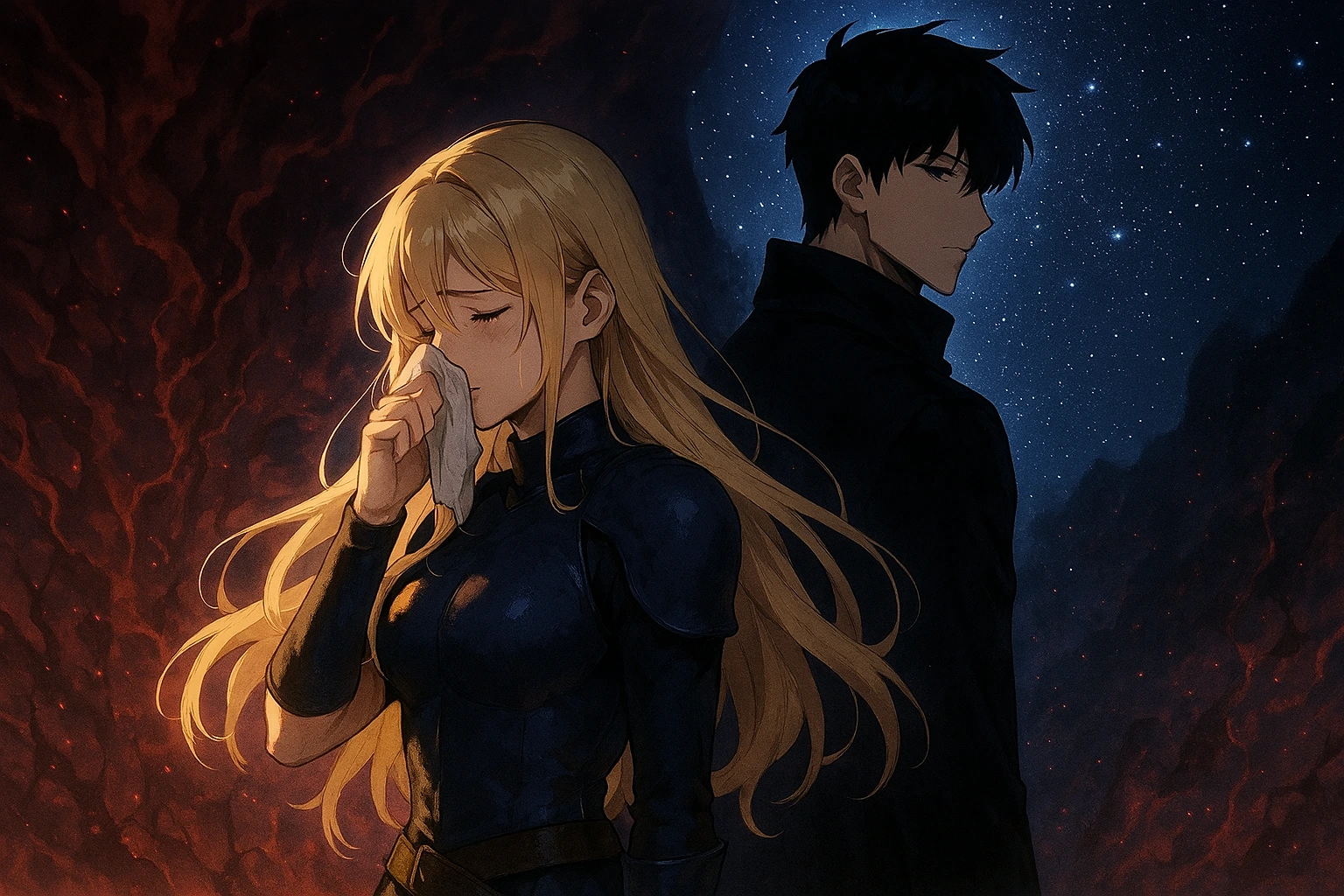
Romance in Solo Leveling is often criticized as being underdeveloped. “She just likes him because he smells nice,” is the common complaint. If you watched the anime or read the manhwa, this criticism is valid. Visual media struggles to convey the sense of smell or the sixth sense of hunters.
However, the novel provides the context that transforms Cha Hae-In from a fangirl into a tragic, sympathetic figure.
The Curse of the S-Rank Nose
Cha Hae-In suffers from a condition unique to her sensitivity. To her, the world stinks. Monsters smell like rotting meat, dungeons smell like sewage, and other Hunters—who channel mana—smell like burning chemicals or decay. Her life is a constant sensory assault. She wears a handkerchief not for fashion, but to keep from gagging. Being an S-Rank hunter is a curse for her; the stronger the hunter next to her, the worse the stench.
Then she meets Sung Jin-woo. Because he is the Player and his power comes from the Shadow Monarch (death), he doesn’t leak mana like a normal hunter. He is a void. To Cha Hae-In, he doesn’t just “smell nice”; he is the only source of fresh air in a world that suffocates her. Standing near him is the only time her senses are at peace.
It’s not just attraction; it’s relief. It’s safety. The novel details her internal monologue, describing how being near him feels like standing in a quiet forest after years of living in a garbage dump. It creates a dependency that is deeply emotional—he is her sanctuary.
The Amusement Park Date
The manhwa depicts their date, but the novel fleshes out the conversation. They talk about their lives outside of hunting. We learn about Cha Hae-In’s regrets, her loss of a normal youth, and her desire to just be a woman, not a weapon. She confesses that she is terrified of fighting, but she does it because she has no choice.
This context makes the ending infinitely more tragic. When Jin-woo decides to use the Cup of Reincarnation to turn back time, he knows he is erasing this connection. He is sending her back to a world where she won’t know him, but she also won’t suffer the “stench” of the hunters because hunters will no longer exist. It is a selfless act of love that the manhwa treats as a plot point rather than an emotional climax. He sacrifices his own happiness with her to give her the normal life she confessed she wanted.
Beru: The Best Wingman
We cannot forget the comedy cut from the novel. In the text, Beru—the terrifying Ant King—becomes obsessed with historical Korean dramas. He watches TV while Jin-woo sleeps. Because of this, Beru develops a warped understanding of romance and loyalty.
In the novel, Beru actively tries to set Jin-woo up with Cha Hae-In because he views her as the “Queen” to his Liege. There are scenes where Beru is mentally critiquing Jin-woo’s dating skills based on the K-Dramas he has watched. The manhwa shows Beru as loyal, but the novel shows him as a hilarious, drama-obsessed fanboy of his own master’s love life, constantly chattering in Jin-woo’s mind with unsolicited relationship advice.
6. The Epilogue: The “Real” Ending

The ending of the Solo Leveling manhwa is controversial. It felt rushed. We got a montage of Jin-woo saving the world in the shadows, a quick look at his family, and then the end.
The novel, however, has an extensive “Side Story” section that is essentially a sequel in itself. This is where the real ending lives, providing the closure fans were desperate for.
The Shadow Detective
In the novel’s epilogue, Jin-woo doesn’t just wander around. He lives a dual life. By day, he is a student/civilian; by night, he helps the police solve impossible crimes using his Shadow Army. He effectively becomes a vigilante superhero in a world that doesn’t know magic exists.
We get detailed arcs about him tracking down criminals, saving people from accidents, and interacting with the shadows of his former enemies (like Greed/Hwang Dong-Soo) who now serve him as loyal soldiers in this new peaceful world. These stories show Jin-woo using his powers for the little guy, solving murders that the police couldn’t crack because his shadows can slip into locked rooms and witness the truth. It grounds the god-like character back into humanity.
The Reunion
The most emotional cut is the reunion with the friends who no longer remember him. The novel spends time on Jin-woo visiting the “Healer Girl” (Lee Ju-Hee) from the Double Dungeon. In the original timeline, she was traumatized, broken, and retired.
In the new timeline, Jin-woo watches her from afar. She is happy. She is living a normal life as a nurse, unburdened by the horror of the statues. Jin-woo realizes that his sacrifice worked. He doesn’t approach her to say “I’m the guy you saved”; he just watches her smile and walks away. It is a bittersweet moment that defines his character growth—he accepts his loneliness so others can have happiness. It is a moment of pure, silent martyrdom that defines his character far more than any dragon fight.
The Setup for Ragnarok
The manhwa treats the potential war in space as a vague cliffhanger. The novel explicitly sets up Solo Leveling: Ragnarok (the sequel series focusing on his son, Su-ho).
The novel details Su-ho’s childhood. It explains that Su-ho inherited his father’s powers and was accidentally flying around the house as a toddler. Jin-woo has to seal Su-ho’s memories and powers so he can have a normal childhood. This dynamic—a father trying to give his son the normality he never had, knowing eventually the war will return—is the emotional core of the epilogue that the manhwa skimmed over. It shifts the genre from action to generational drama, setting the stage for the next hero.
7. The Brutality and Gore
Manhwa is a visual medium bound by platform guidelines. Even though Solo Leveling is violent, there are lines it cannot cross. Text, however, has no censorship board.
The Theater of the Mind
The novel is visceral. It doesn’t just show blood; it describes the texture of it. When Jin-woo fights, the author describes the sound of bones grinding, the spray of arterial blood, and the sensation of a dagger hitting a rib. The sensory details are cranked up to eleven.
The descriptions of the dungeons are horrifying. The smell of sulfur, rotting flesh, and ozone is constantly mentioned. The novel creates a horror atmosphere that the action-focused manhwa misses. In the comic, a dungeon is a battle arena. In the novel, a dungeon is a tomb. The fear is palpable, not just shown on faces but described in the tightening of chests and the trembling of limbs.
Hwang Dong-Soo’s Torture
The most glaring difference is the torture of Yoo Jinho by Hwang Dong-Soo. In the manhwa, Jinho gets beaten up pretty badly. It’s brutal, but standard shonen violence.
In the novel, this scene is torture porn. It is psychological and physical dismantling. Hwang Dong-Soo doesn’t just hit him; he systematically breaks him. He taunts him about his father, about his weakness, about Jin-woo abandoning him. The description of Jinho’s injuries—shattered bones, swollen eyes, internal bleeding—is stomach-churning. We are forced to read every agonizing second of Jinho’s endurance.
This makes Jin-woo’s arrival and subsequent beating of Hwang Dong-Soo much more satisfying. In the novel, when Jin-woo arrives, the rage is palpable. He doesn’t just beat Dong-Soo; he eviscerates him. The disparity in violence levels changes the tone from “Action Hero” to “Avenging Demon.” The reader doesn’t just cheer; they feel a grim sense of retribution that only extreme brutality can satisfy.
8. Conclusion: Which Version Wins?
So, having exposed the lies and the cuts, which version of Solo Leveling is the definitive one?
The Verdict:
- Read the Manhwa for the Hype: If you want adrenaline, world-class art, and the thrill of seeing the Shadow Army rise in full color, the manhwa is unbeatable. Dubu’s art carries an energy that text cannot match. It is the best way to see the story.
- Read the Novel for the Lore: If you want to understand why things happen, if you want the geopolitical intrigue, the psychological depth of Jin-woo’s corruption, and the tragic romance, the novel is the only choice. It is the best way to feel the story.
The adaptation is a masterpiece of visual storytelling, but the book is the “Director’s Cut.” It holds the dark truths, the political scandals, and the emotional beats that transform Solo Leveling from a cool power fantasy into a modern classic of the genre.
If you loved the manhwa, do yourself a favor: Go back and read the side stories in the novel. Fill the void. Learn the truth. Because the Shadow Monarch you know is only half the story.