
The history of Solo Leveling is paved with the corpses of monsters, but rarely does the narrative stop to examine the corpses of the powerful. We are used to seeing weak hunters die. We are accustomed to seeing nameless fodder perish in dungeons. But the annihilation of the Draw Sword Guild—the strongest guild in Japan and one of the most formidable forces in Asia—was not just a plot point; it was a geopolitical earthquake that shattered the balance of power in the East.
This was not merely a failed raid. It was the systematic erasure of a nation’s military might, orchestrated by their own hubris and executed by a creature born from the nightmares of evolution. The death of Goto Ryuji and his elite S-Rank team serves as the darkest turning point in the series, marking the moment where human politics became irrelevant in the face of the Monarchs.
This is the definitive analysis of how Japan’s ambition turned into its graveyard.
1. Introduction: The Ambition of the Rising Sun
The Geopolitics of Mana
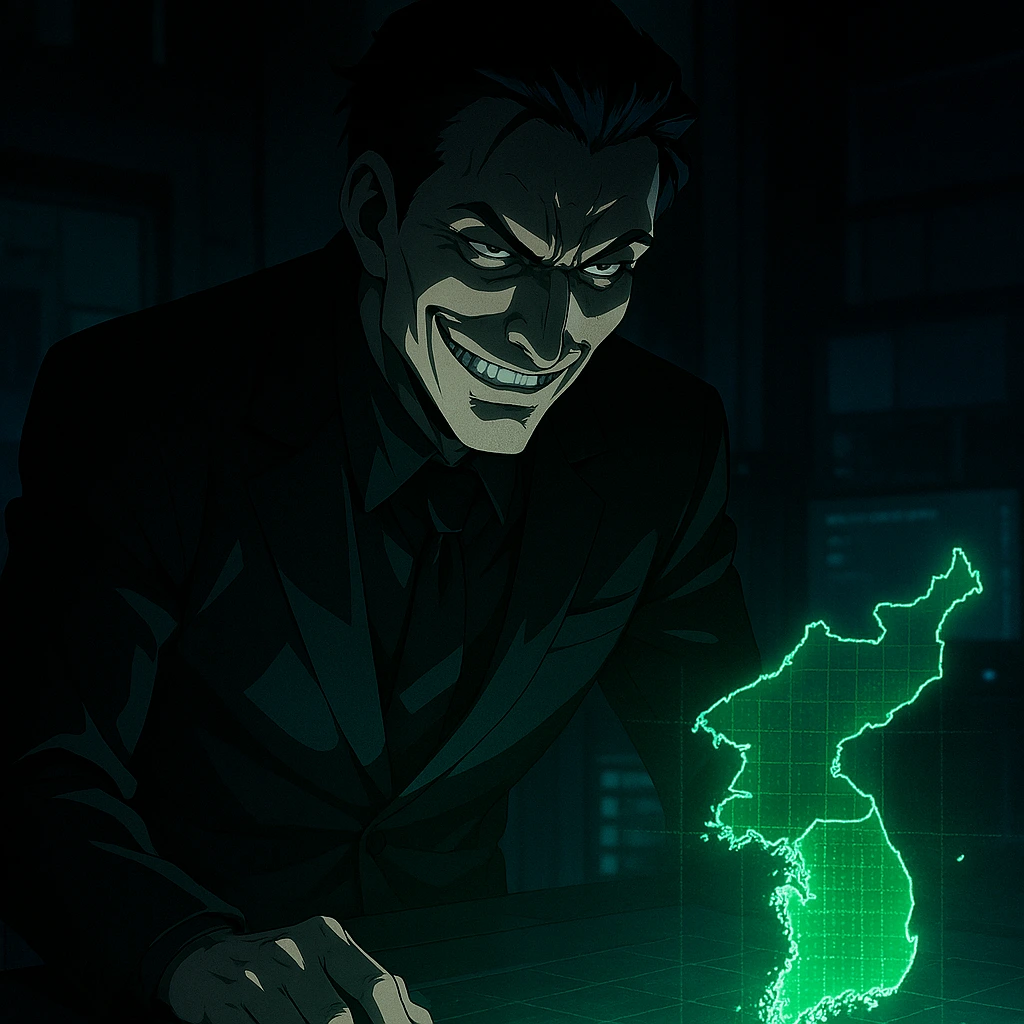
To understand why the Draw Sword Guild died, we must first understand why they were in Korea. On the surface, the 4th Jeju Island Reclamation Raid was a humanitarian mission. The Ant Queen and her brood had turned Jeju into a dead zone, a festering wound on South Korea’s territory. For years, Korea had failed to reclaim it, losing countless hunters and international prestige. To the global community, it appeared as though Japan was extending a helping hand to a struggling neighbor.
Enter Japan.
The Japanese Hunter Association, led by the astute and cunning Matsumoto Shigeo, did not offer aid out of the kindness of their hearts. In the world of Solo Leveling, hunters are not just superheroes; they are nuclear deterrents. A nation’s standing on the global stage is directly dictated by the quantity and quality of its S-Rank hunters. Japan possessed the Draw Sword Guild, a collection of elite sword-masters who functioned less like a guild and more like a specialized military unit. Matsumoto saw the ants not as a threat to be neutralized, but as a tool to be exploited—a biological lever to pry open South Korea’s defenses.
The Trojan Horse Strategy
The plan proposed by Japan was elegant in its cruelty. The Japanese S-Rank hunters would act as the “spear,” drawing the attention of the ant army and pulling them away from the Queen’s chamber. This would allow the Korean S-Rank team—the “shield”—to infiltrate the nest and kill the Queen.
It sounded like a standard divide-and-conquer strategy. However, the hidden directive given to Goto Ryuji was far darker. The Japanese plan was to engage the ants just long enough for the Koreans to enter the trap, and then… withdraw. They would feign a retreat or a tactical error, cutting off communication and leaving the Korean hunters to be slaughtered by the endless waves of ants.
Why go to such lengths? Because if Korea’s S-Rank hunters were wiped out, South Korea would lose its ability to defend itself from even minor S-Rank dungeon breaks. They would be defenseless. Japan would then swoop in, clear the dungeon properly, and effectively turn South Korea into a vassal state dependent on Japanese hunters for survival. It was a colonization of the hunter market, a conquest without a formal declaration of war, achieved not by firing a shot, but by letting monsters do the dirty work.
The Irony of Fate
The tragedy—or perhaps the dark comedy—of this plan lies in its arrogance. Japan assumed that they were the chess masters. They viewed the ants as animals: dangerous, yes, but predictable beasts that operated on simple instinct. They calculated the variables of mana, fatigue, and distance, treating the raid like a controlled simulation.
But they failed to account for evolution.
They treated the Jeju Island raid as a political maneuver, ignoring the fundamental rule of the dungeon: The dungeon does not care about your politics. While Matsumoto and Goto were plotting to kill Korean hunters, the dungeon was gestating a King. The plan to create a power vacuum in Korea worked perfectly, but instead of Japan filling that void, Beru did. The calculated withdrawal created the precise window of isolation needed for the Ant King to be born and hunt down the strongest energy sources on the island—which, ironically, were the very Japanese hunters who thought they were safe.
2. Goto Ryuji: The King Without a Crown
Profile of the Apex Swordsman
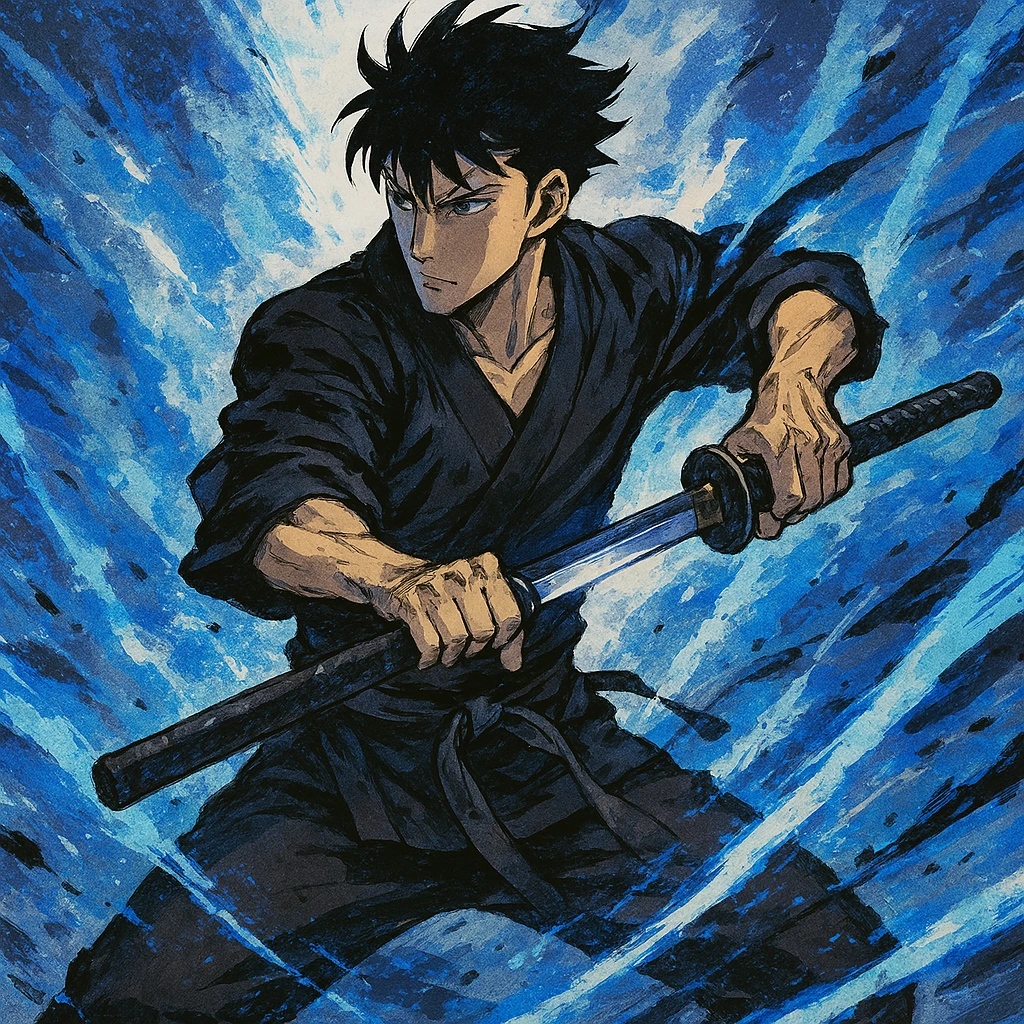
Goto Ryuji was not a weak man. In the context of the pre-Jin-woo world, he was a titan. As the Guild Master of the Draw Sword Guild and Japan’s strongest hunter, he stood at the pinnacle of the Asian hunter community. He was widely considered to be the hunter closest to achieving the title of “National Level Hunter,” a designation reserved for those who could rival the military power of an entire nation.
His reputation was built on precision. Unlike the raw, destructive power of mages or the tanking ability of barbarians, Goto was a technician. He exuded an air of aristocratic superiority. He didn’t just kill monsters; he dismantled them. He moved with the grace of a calligrapher, his sword acting as the brush, and the blood of his enemies as the ink. To the Japanese public, he was more than a hunter; he was a celebrity, a symbol of national strength, and the man who would finally elevate Japan to the level of the United States or China in the hunter rankings.
The Art of the “Draw Sword” (Iaijutsu)
Goto’s fighting style was deeply rooted in the Japanese tradition of Iaijutsu—the art of drawing the sword, striking, and sheathing it in a single, fluid motion. His S-Rank ability allowed him to accelerate this process to supernatural speeds.
To the naked eye, it appeared as if Goto never moved. An enemy would rush him, a flash of silver would distort the air, and the enemy would fall apart, severed into pieces. His attacks cut the air itself, creating vacuums of mana that extended the reach of his blade. He relied on burst speed and overwhelming offense to end fights before they began. This style reinforced his arrogance; he was used to fights that lasted seconds. He was unaccustomed to prolonged attrition or enemies that could tank his severing strikes. His combat philosophy was built on the assumption that if he struck first, he would win—an assumption that held true right up until the moment it didn’t.
The Corporate Hunter
The fatal flaw in Goto’s character was that he had become a “Corporate Hunter.” He was more concerned with his public image, his suits, and his political standing than the raw reality of survival. He had begun to believe his own press releases.
When he arrived in Korea, he brought a media team. He treated the joint training sessions as photo ops. He was obsessed with the narrative of him being the savior of Asia. He believed that the title of National Level Hunter was a bureaucratic promotion he could earn through a successful raid, rather than a testament to surviving apocalyptic threats.
He had never faced a true “monster.” He had faced dungeon bosses, yes, but always with a full team, always with preparation, and always within the known parameters of dungeon logic. He had never faced a Monarch-level threat, a being of pure malice that defied the system. Goto Ryuji was the king of a structured world, unaware that he was about to step into chaos.
3. The Spar: A Warning Ignored
The Gym Fight Analysis
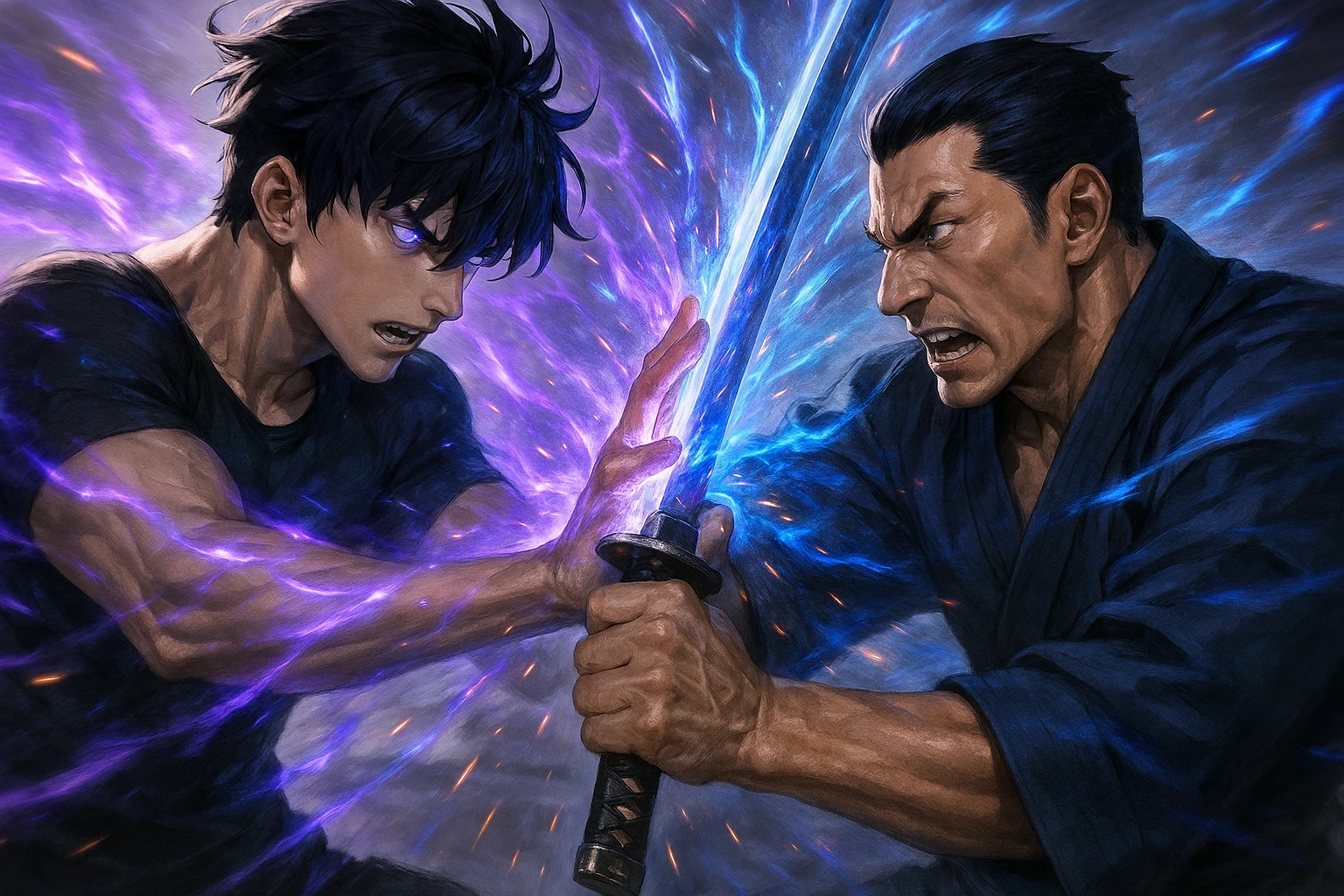
The sparring match between Sung Jin-woo and Goto Ryuji stands as one of the most critical foreshadowing events in Solo Leveling. It was the only time the “False King” met the “Shadow Monarch” before the disaster. It serves as a microcosm of the entire Jeju arc: arrogance meeting reality.
Ostensibly, it was a friendly exchange to test capabilities. In reality, it was a dominance display. Goto initiated the spar to gauge the “unknown variable” that was Sung Jin-woo. He looked at Jin-woo and saw a Mage-class hunter who moved like an Assassin. This contradiction confused him, but his arrogance filled in the gaps. He assumed Jin-woo was simply a specialized assassin type with some summoning quirks.
The Miscalculation of Speed vs. Power
During the fight, Goto ramped up his speed, expecting to overwhelm Jin-woo. He used his signature footwork, vanishing from sight and striking from blind spots. To the onlookers, including heavy hitters like Baek Yoon-ho and Cha Hae-in, Goto was a blur—a display of terrifying skill.
To Jin-woo, Goto was moving in slow motion.
The defining moment occurred when Goto, frustrated by his inability to land a clean hit on a “lower-ranking” hunter, decided to strike with killing intent. He aimed a slash that was not meant to disable, but to maim or kill. It was a breach of etiquette, a moment where his frustration boiled over into genuine malice. In that split second, the atmosphere in the gym shifted.
Jin-woo didn’t dodge. He didn’t use a skill. He simply raised his hand and stopped Goto’s blade—stopped the blade of Japan’s strongest swordsman—with his bare abilities. But it wasn’t just the block; it was the intent.
The Glimpse of the Abyss
For a fraction of a second, Jin-woo’s eyes glowed. The shadow of the Monarch leaked out. Goto Ryuji, for the first time in his life, felt the cold, suffocating grip of Death. It wasn’t the fear of losing a match; it was the primal biological terror of a prey animal realizing it is standing in front of a predator. He saw himself dead. He saw the potential for his own erasure.
Goto froze. He was drenched in sweat, his heart hammering against his ribs. His instincts screamed at him to run. The silence in the gym was deafening, the onlookers stunned by the sudden, oppressive pressure radiating from Jin-woo.
The Denial Mechanism
However, the human ego is a powerful blinder. Immediately after the spar, Goto rationalized the fear away. He told himself it was a mistake. He told himself that Jin-woo was just a surprisingly strong assassin, perhaps nearly S-Rank level. He couldn’t accept the reality: that he, the candidate for National Level Hunter, had been toyed with.
He convinced himself that with his full gear and his guild backing him, he was still the superior hunter. He dismissed the warning. He looked into the abyss, blinked, and decided it was just a shadow. That denial sealed his fate. If he had accepted that fear, he might have realized that there are things in this world that titles and politics cannot defeat. He might have turned the boat around at Jeju.
4. The Betrayal Plan: Politics Over Survival
The Withdrawal Order
The operation on Jeju Island began smoothly. Too smoothly. The Japanese team, acting as the distraction, slaughtered thousands of normal ants. They were efficient, lethal, and confident. They moved through the ant hordes like a scythe through wheat, their coordination flawless.
Then came the signal.
Matsumoto gave the order. The Japanese team began their “tactical retreat.” They intentionally broke formation, allowing the ant swarm to redirect its aggro toward the interior of the island—toward the Korean team.
This was the moment of betrayal. The Japanese hunters turned off their comms to the Koreans. They laughed, joking about how the “poor Koreans” were about to become ant food. They treated the battlefield like a chessboard where they could simply stand up and walk away whenever they chose. They believed they were the players, not the pieces.
The Logic of the Wicked
The logic was sound on paper:
- Ants are territorial.
- If the Japanese leave the territory, the ants will focus on the intruders remaining (Koreans).
- The Japanese conserve stamina while the Koreans are wiped out.
- Japan returns to finish the exhausted Queen.
It was a plan devoid of honor, prioritizing political hegemony over the safety of humanity. It showcased the utter rot within the Hunter Association system, where guilds operated like rival cartels rather than guardians of mankind. They were willing to sacrifice fellow humans—fellow S-Rank hunters—for the sake of a better contract negotiation.
The Birth of the Variable
While the Japanese team was busy patting themselves on the back for a betrayal well executed, a singularity occurred in the Queen’s chamber. The Queen transferred the entirety of her bio-energy into a single larva.
Beru was born.
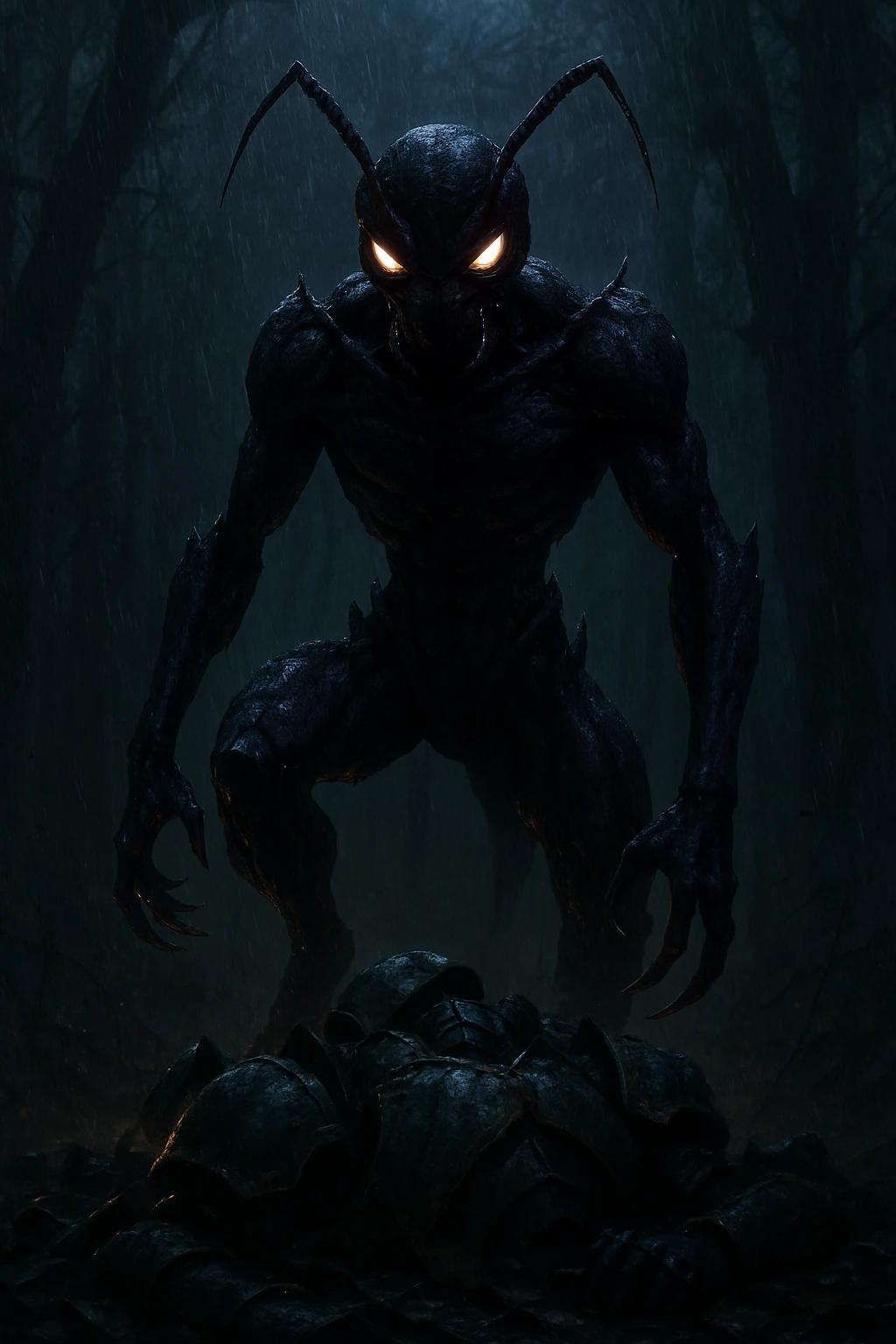
Beru was not just a strong ant. He was a biological weapon designed to kill hunters. He possessed the memories and skills of every human eaten by the colony. He had intelligence. He had mana sensitivity.
And most importantly, he had a hunger for strong mana.
When the Japanese team withdrew, they thought they were removing themselves from the board. In reality, they were grouping up and lighting a flare. By gathering ten S-Rank hunters in one location to retreat, they created a massive beacon of magical energy. To the newborn King, they weren’t retreating soldiers; they were an All-You-Can-Eat buffet.
The betrayal plan backfired in the most catastrophic way possible. By abandoning the Koreans, they left the Koreans engaged with the Queen’s guards, while the King—seeking the strongest prey—bypassed the distraction and went straight for the “main course”: The Draw Sword Guild.
5. The Massacre: 10 Hunters vs. 1 King
The Silence
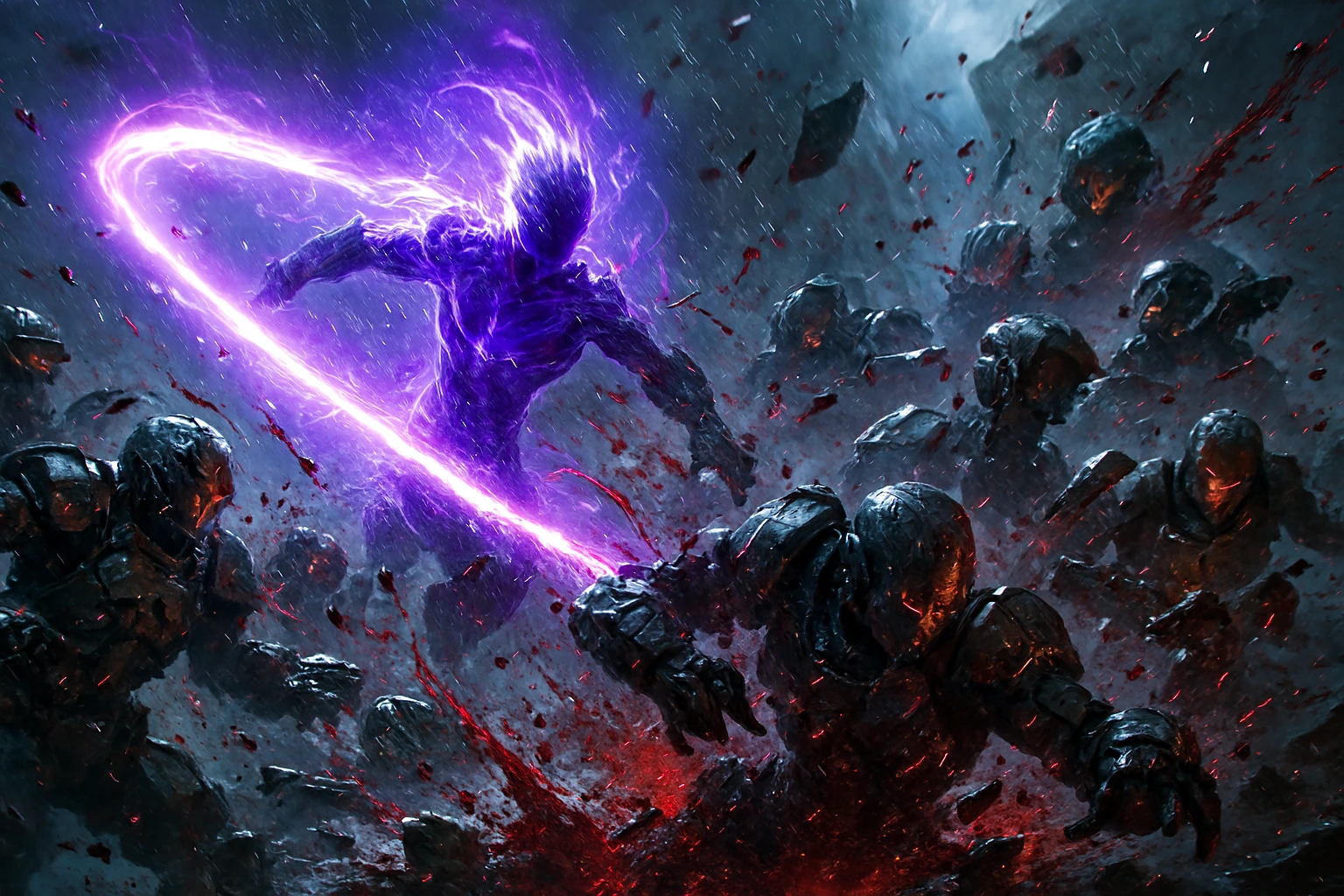
The transition from triumph to tragedy happened in a heartbeat. The Japanese team was moving through the forest, relaxed. The rain was pouring, masking all sound. They were discussing their bonus checks and the future of the guild.
Then, the radar glitched. Or so they thought. A single dot appeared, moving at a velocity that defied physics. It wasn’t approaching; it was arriving. There was no roar, no battle cry. Just a sudden, oppressive presence that silenced the forest.
The First Kill
Standard raid protocol dictates that you protect the Healer. The Draw Sword Guild knew this. But knowledge is useless against speed that transcends reaction time.
Before anyone could shout “Enemy,” Minoru Hoshino, the team’s main support, was dead. He didn’t just die; his head vanished. One moment he was walking; the next, his body was collapsing, a fountain of blood mixing with the rain.
There was no sound of the attack. The sound barrier broke after the kill. That is the terror of Beru. He moved faster than sound. The sonic boom arrived seconds after the death, a thunderclap to herald the massacre.
The Collapse of the Formation
Panic is a contagious disease. These were S-Rank hunters, veterans of countless battles. But they had never seen a comrade liquified in a millisecond. Formation broke immediately.
“It’s just one enemy!” shouted Kumamoto, the tanker. But when he raised his shield—a magically reinforced artifact worth billions, designed to withstand dungeon bosses—Beru simply punched through it. Not around it. Through it. The ant’s fist shattered the shield and the man behind it like wet tissue paper. The tank, the most durable member of the team, was reduced to gore in a single strike.
The scene that followed was not a battle; it was a harvest. Reiji. Akari. Kenzo. Names that were celebrated on Japanese television, faces that adorned billboards in Tokyo. They were dismantled. Beru tore limbs, crushed skulls, and devoured heads with the casual indifference of a gardener trimming weeds. Specifically, the death of the female hunter, Kanae Tawata, emphasized the horror; a master swordswoman who was cut down before she could even complete a swing.
The Visuals of Horror
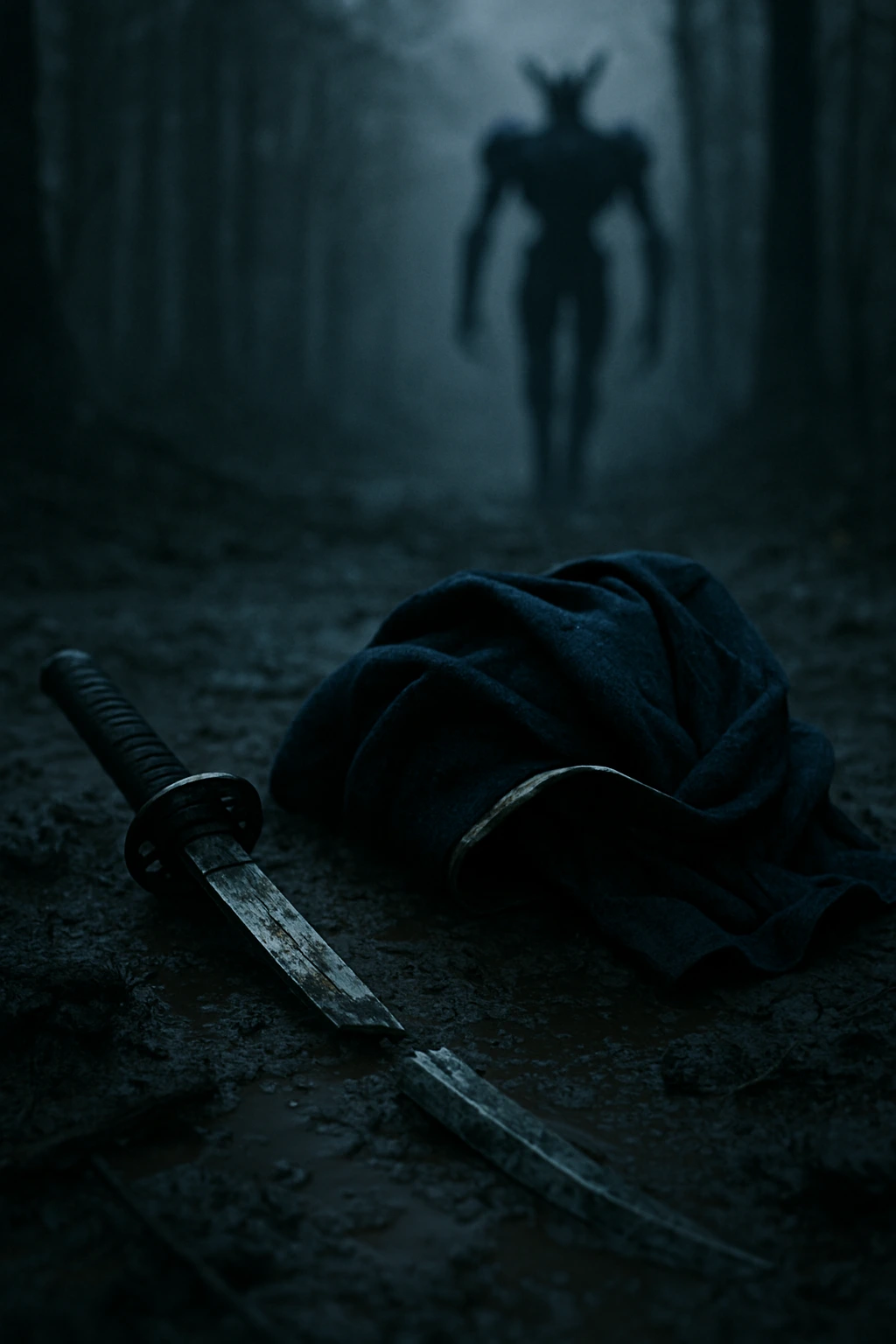
The artistic direction in both the manhwa and the novel emphasizes the gore here to make a point. The bright, heroic auras of the hunters were extinguished by the dark, purple-black exoskeleton of the Ant King. The rain washed away the blood as fast as it spilled, creating a muddy river of death.
The difference in power was absolute. Against Jin-woo, S-Ranks looked weak. Against Beru, they looked like civilians. This segment served to recalibrate the power scale of the entire series. It showed the world that “S-Rank” is just a human classification, and the monsters had stopped playing by human rules.
6. The Death of Goto Ryuji
The Last Man Standing
Eventually, only Goto Ryuji remained. The others were meat on the forest floor. Goto stood alone, his sword drawn, his breathing ragged. The smell of iron and rain filled his lungs.
For the first time, we saw the “Strongest Hunter in Japan” without his mask. His composure was gone. His eyes were wide with a mixture of confusion and terror. He couldn’t understand. He was Goto Ryuji. He was the wind. He was the blade. This wasn’t how the script was written.
He swung his sword. His ultimate technique, the invisible slash that had decapitated dungeon bosses. He poured every ounce of his mana, his pride, and his life into that one strike.
Clang.
It didn’t cut air. It didn’t cut flesh. It bounced off Beru’s exoskeleton with a metallic ring. The Ant King didn’t even dodge. He took the strike to the neck, and it didn’t even leave a scratch. The realization shattered Goto’s mind before Beru shattered his body.
“Are You The King?”
In his final moments, Goto’s obsession with status surfaced. Looking at this creature of infinite power, he asked, “Are you… the King?”
It was a pathetic question. He was desperate to rationalize his death. If this monster was the Dungeon Boss, the King, then perhaps there was honor in dying to it. It would mean he lost to the strongest entity. He needed a hierarchy to make sense of his demise.
Beru, tilting his head with insectoid curiosity, spoke in human tongue. “King?”
Beru didn’t care about titles. He didn’t care about kings. He only cared about the signal he was receiving from the other side of the island—the signal of the real King (Sung Jin-woo).
The Execution
Beru lost interest. He realized Goto was not the source of the power he felt. Goto was just… food. A disappointment. A flickering candle compared to the raging sun that was the Shadow Monarch.
With a casual swipe of his claws, Beru severed Goto’s head. There was no epic duel. No final stand. No flashback to his childhood training. Goto Ryuji died like a fly swatted by a human hand. His head rolled into the mud, his eyes still open, frozen in a realization of his own insignificance.
The symbolism was heavy. The “Head” of the Japanese hunters was physically removed. Japan’s ambition was decapitated in a literal and metaphorical sense.
7. Manhwa vs. Light Novel: The Controversy
The Nationalist Tone of the Novel
It is impossible to discuss this arc without addressing the significant changes between the source material (Light Novel) and the adaptation (Manhwa/Anime).
In the original Light Novel, the author’s tone is heavily anti-Japan. The Japanese characters are depicted as almost cartoonishly evil. They are xenophobic, treacherous, and sadistic. Their plan to destroy Korea is explicit and driven by deep-seated malice. Goto Ryuji is portrayed as a vile, scheming nationalist who detests Koreans.
This narrative choice stems from the complex and often painful historical relationship between Korea and Japan. In the novel, the massacre of the Draw Sword Guild is framed as karmic justice—the evil colonizers being destroyed by the land they tried to exploit.
The Manhwa’s Softening
The Manhwa (and subsequently the Anime) toned this down significantly. While the betrayal plot point remained, the characterizations were nuanced. Goto was depicted more as an arrogant professional than a racist villain. The Japanese hunters were shown as victims of their own government’s scheming rather than inherently evil people.
Why the change? To make the story palatable for a global audience. The heavy-handed nationalism of the novel distracts from the core fantasy. By making Goto simply arrogant rather than “evil,” his death becomes a tragedy of hubris rather than just a revenge fantasy. It shifts the focus from national conflict to the universal theme of pride before the fall.
The “Evil Neighbor” Trope
This arc utilizes a common trope in Korean hunter manhwa: The neighboring country as an antagonist. It taps into the fear of geopolitical vulnerability. The Draw Sword Guild represented the threat of foreign intervention. Their erasure by Beru—and the subsequent saving of the day by Jin-woo—is the ultimate nationalist power fantasy: Korea doesn’t need allies; it has a Monarch.
8. Conclusion: A Nation Crippled
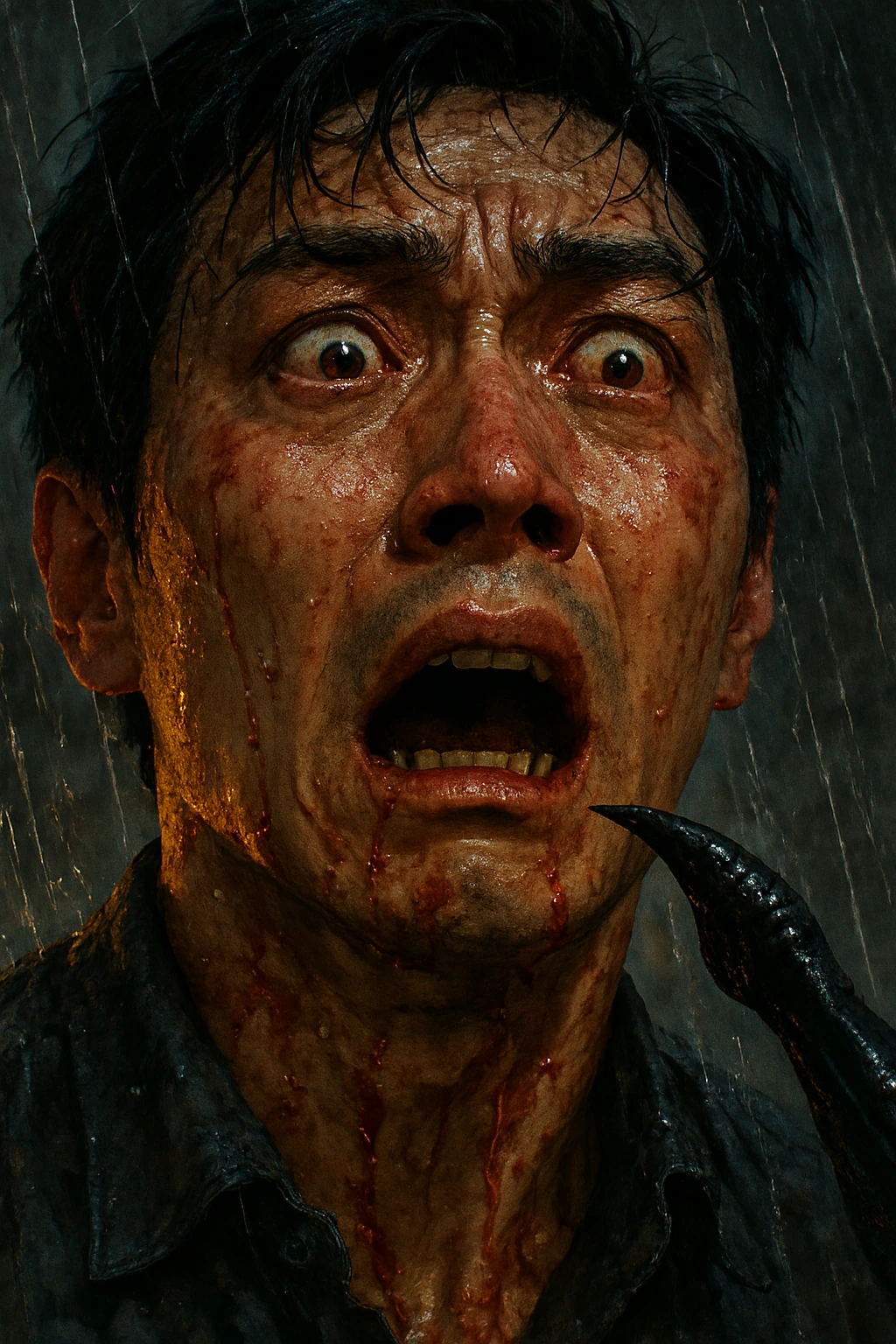
The Power Vacuum
The death of Goto Ryuji and the Draw Sword Guild was not just the end of ten lives; it was the end of Japan as a superpower. In one hour, Japan lost over 50% of its S-Rank combat power.
The aftermath was catastrophic. The yen plummeted. The Japanese government went into a panic. Without their deterrents, they were vulnerable to dungeon breaks that they previously could have handled easily. The balance of power in Asia shifted overnight. Japan went from being the predator to the beggar, eventually forcing them to ask the US and South Korea for help.
Play Stupid Games, Win Stupid Prizes
The erasure of the Draw Sword Guild is the ultimate example of “FAFO” (F* around and Find Out). They tried to weaponize a dungeon. They tried to use monsters as political assassins.
They forgot that in the face of true power, politics is a delusion. Goto Ryuji spent his life sharpening his sword, but he forgot to sharpen his survival instincts. He died not because he was weak, but because he was proud. And in the world of Solo Leveling, pride is the one debuff that cannot be cleansed.
The Night Japan Fell stands as a grim reminder: When you gaze into the abyss, do not be surprised if the abyss sends an ant to eat you.