
1. Introduction: The Nightmare of Jeju Island
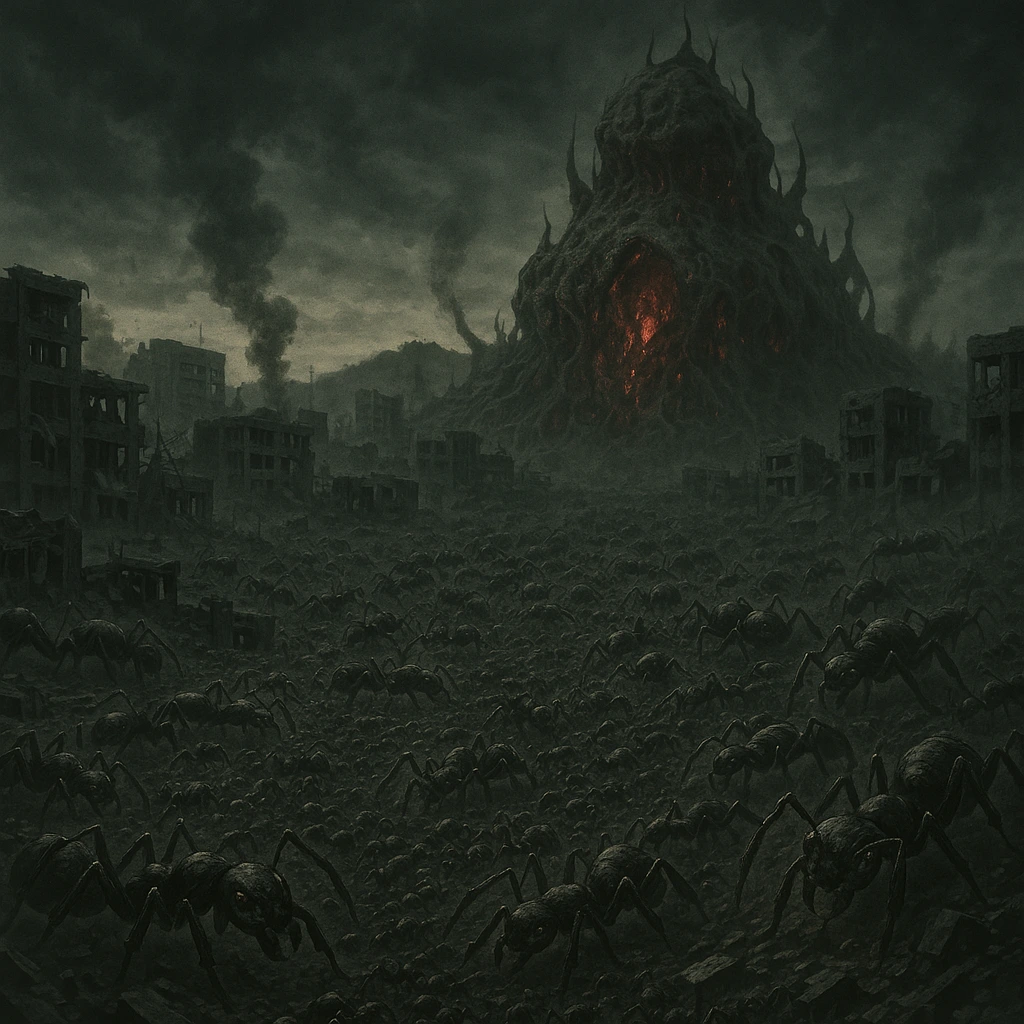
In the annals of Solo Leveling, there is a clear demarcation line: everything before Jeju Island, and everything after. While the earlier arcs introduced us to the concept of Gates, the mechanics of dungeons, and the rigid hierarchy of Hunters, the Jeju Island Raid was the crucible that tested humanity’s survival instinct on a global scale. It shifted the genre from a power fantasy to visceral horror. At the center of this maelstrom was not a dungeon boss waiting passively in a throne room, but a biological nightmare engineered for a singular purpose: the absolute eradication of the weak. This nightmare was the Ant King.
The Context: A Graveyard of S-Ranks
To understand the gravity of Beru’s(ant king beru) existence, one must first revisit the tragic history of the Jeju Island Gate. For four years, this S-Rank Gate remained an open wound on the side of Korea, a reminder of humanity’s fragility. It wasn’t just a dungeon break; it was a terraforming event. The ants had not only overrun the island but had established a colony that actively repelled humanity, turning a once-popular tourist destination into a forbidden zone of death.
Three separate reclamation raids were launched prior to the events of the main story. Three times, humanity’s best were chewed up and spat out, leaving behind nothing but bones and broken equipment. The failure wasn’t due to a lack of firepower or funding; it was a fundamental failure to understand the enemy. The ants were not mindless beasts acting on aggression alone; they were a hive mind adapting to the strategies of Hunters. They learned from every skirmish. By the time the 4th Raid—the massive collaborative effort between Japan and Korea—was sanctioned, the atmosphere was thick with the scent of inevitable death. The world watched with bated breath, believing this was a standard military operation. They were wrong. It was an extermination event, but the Hunters were the pests being fumigated.
The Evolution: Four Years of Gestation
Evolution usually takes millennia, a slow march of trial and error. On Jeju Island, it took four years. The ants began as monstrous insects, formidable but predictable in their movements. However, through the consumption of magic cores and the flesh of Awakened beings from previous failed raids, they accelerated their biological clock at a terrifying rate. They moved from quadrupedal drones to bipedal soldiers, gaining dexterity, weapon usage, and complex coordination that rivaled trained military units.
But the terrifying aspect wasn’t their physical growth; it was their tactical evolution. They evolved beyond instinct into strategy. They learned to ambush from blind spots. They learned to prioritize healers to cut off sustainability. They learned to separate tanks from damage dealers to break defensive formations. This accelerated Darwinism turned Jeju Island into a closed ecosystem where only the strongest traits survived to be passed up the food chain to the Queen. The island became a laboratory of death, and the experiment was nearing its completion.
The Queen’s Biological Directive
The Ant Queen was not merely laying eggs; she was curating a god. Her biological directive was absolute: perpetuate the species and create the ultimate lifeform that could dominate any environment. The colony existed solely to feed energy into the Queen so she could birth a “King” who would stand above all other organisms.
Every soldier ant that died in battle, every Hunter that was consumed, contributed to the genetic code of this singular entity. The Queen knew that for the colony to expand beyond the island and conquer the mainland, they needed a leader who wasn’t bound by the hive’s limitations—a creature that possessed the raw strength of a monster and the cunning intellect of a human. She sacrificed her own energy reserves, channeling the collective power of the colony into a single egg, betting the survival of her species on one champion.
The Silence Before the Storm
The horror of the 4th Raid lies in its pacing and the subversion of expectations. The Japanese Hunters, arguably some of the strongest in Asia, swept through the outer perimeters with frightening efficiency. They slaughtered thousands of drones, making the S-Rank Gate look manageable. It felt too easy. The audience, and the characters, were lulled into a false sense of security.
The “signal jamming” performed by the ants—using winged drones to disrupt communication—was the first clue that something was wrong. It implied a level of coordination that shouldn’t exist in insects. When the Korean S-Rank Hunters finally reached the Queen’s chamber, the silence wasn’t empty; it was heavy with intent. It was the calm before a biological nuclear detonation. The birth of the Ant King was not marked by fanfare or a grand entrance, but by the sudden, visceral erasure of life. The shift from “mission success” to “total slaughter” happened in a heartbeat.
2. Anatomy of the Ant King (Biology of a God)
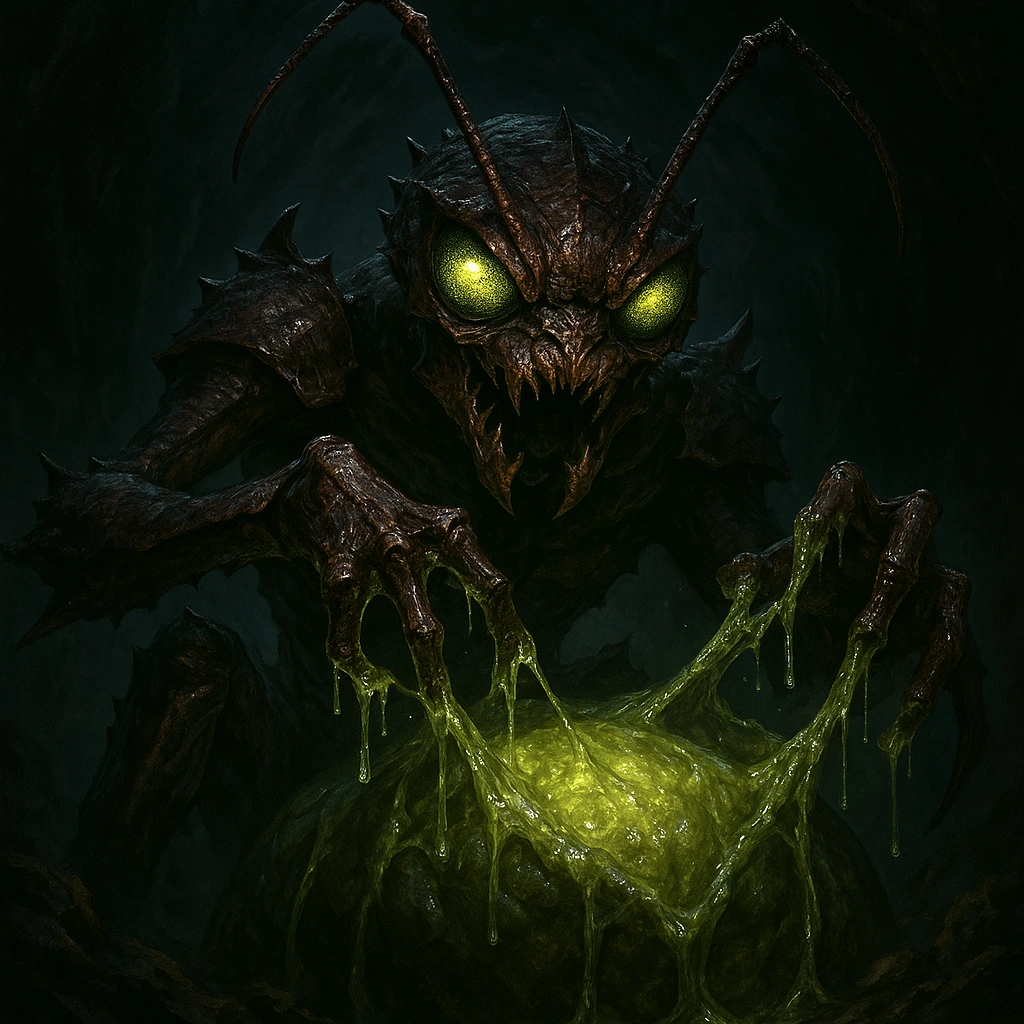
The Ant King, later known as Beru, is a masterclass in creature design and narrative threat. He is the culmination of “survival of the fittest” taken to its absolute extreme. When he tore his way out of the cocoon, he didn’t stumble or cry out like a newborn. He arrived fully formed, fully aware, and insatiably hungry for battle.
Birth of the King: A Visceral Entrance
The hatching of the Ant King is one of the most iconic horror sequences in the series. There was no villainous monologue, no posturing. The first action of the newly born King was a blur of motion that resulted in the immediate, confused death of the chaotic elements in the room.
His target selection was instant and flawless. He didn’t attack the heavily armored tanks or the high-damage dealers first; he went straight for the healer, Min Byung-Gyu. This wasn’t animalistic instinct; it was tactical genius. By removing the source of recovery, he put the entire S-Rank team on a terminal countdown. The brutality of the kill—swift, unceremonious, and final—shattered the morale of Korea’s strongest team instantly. In seconds, he proved that the S-Rank classification was meaningless before true power. He didn’t just kill a man; he dismantled the team’s hope.
Genetic Amalgamation: The Ultimate Hybrid
Beru is a chimera of death, a biological patchwork of the strongest traits found in nature. Through the consumption of organic matter by the colony over generations, the King inherited the best traits of every species the ants had ever encountered, creating a synergy of abilities that had no weakness.
- Exoskeleton: His carapace possessed the hardness of high-grade armor, casually shrugging off magical attacks that would incinerate a tank. Blades bounced off him, and fire magic washed over him like water.
- Flight: Unlike the clumsy drones, his wings were capable of supersonic flight, giving him three-dimensional dominance in combat. He could change direction mid-air instantly, defying physics.
- Stealth: He possessed an innate ability to suppress his magical presence to absolute zero, allowing him to appear behind enemies like a ghost. This made him an assassin as much as a warrior.
- Magic: Perhaps the most shocking trait was his magical capacity. He didn’t just use brute force; he wielded magic power with the density of a high-tier boss, utilizing it to reinforce his strikes or terrify his foes.
The Power Gap: The Execution of Goto Ryuji
If the death of Min Byung-Gyu established the King as a threat, the execution of Goto Ryuji established him as a calamity. Goto Ryuji was Japan’s strongest Hunter, a man aiming for the title of “National Level Hunter.” He was arrogant, confident, and undeniably powerful, representing the pinnacle of human achievement at that time.
The confrontation between Goto and the King serves as the harsh reality check of the series. Goto believed he was the hunter entering a glorious hunt. When he encountered the King, the roles were reversed instantly. He realized he was prey. The King didn’t use special techniques or grand spells; he simply overwhelmed Goto with raw speed and strength that the human eye couldn’t track.
The most chilling moment is the realization in Goto’s eyes. He sees the King not as a bug, but as a towering wall of despair that cannot be climbed. The King asking, “Are you the King of the humans?” before decapitating him with a single swipe is symbolic. It was a rejection of humanity’s hierarchy. The King looked at the strongest human present, found him wanting, and discarded him like trash. That one scene redefined the power scaling of the entire series, showing that human S-Ranks were merely children compared to the true monsters of the world.
Communication: The Horror of Intelligence
Monsters in Solo Leveling (up to this point) generally shrieked, roared, or grunted. They were forces of nature, not conversationalists. When the Ant King looked at the Hunters and spoke in fluent, albeit rasping, human language, the horror shifted from physical to psychological.
His ability to speak signified high intelligence. He wasn’t killing out of confusion or hunger; he was killing out of judgment. He could interrogate, taunt, and strategize. This intelligence made him infinitely more dangerous than a giant dragon or a mindless golem. It meant he could learn. It implied that if he had been allowed to leave Jeju Island, he wouldn’t have just destroyed cities; he would have dismantled human civilization systematically, targeting leadership and infrastructure. He was a general without an army, and that made him terrifying.
3. The Battle of Monarchs: Jin-woo vs. The King
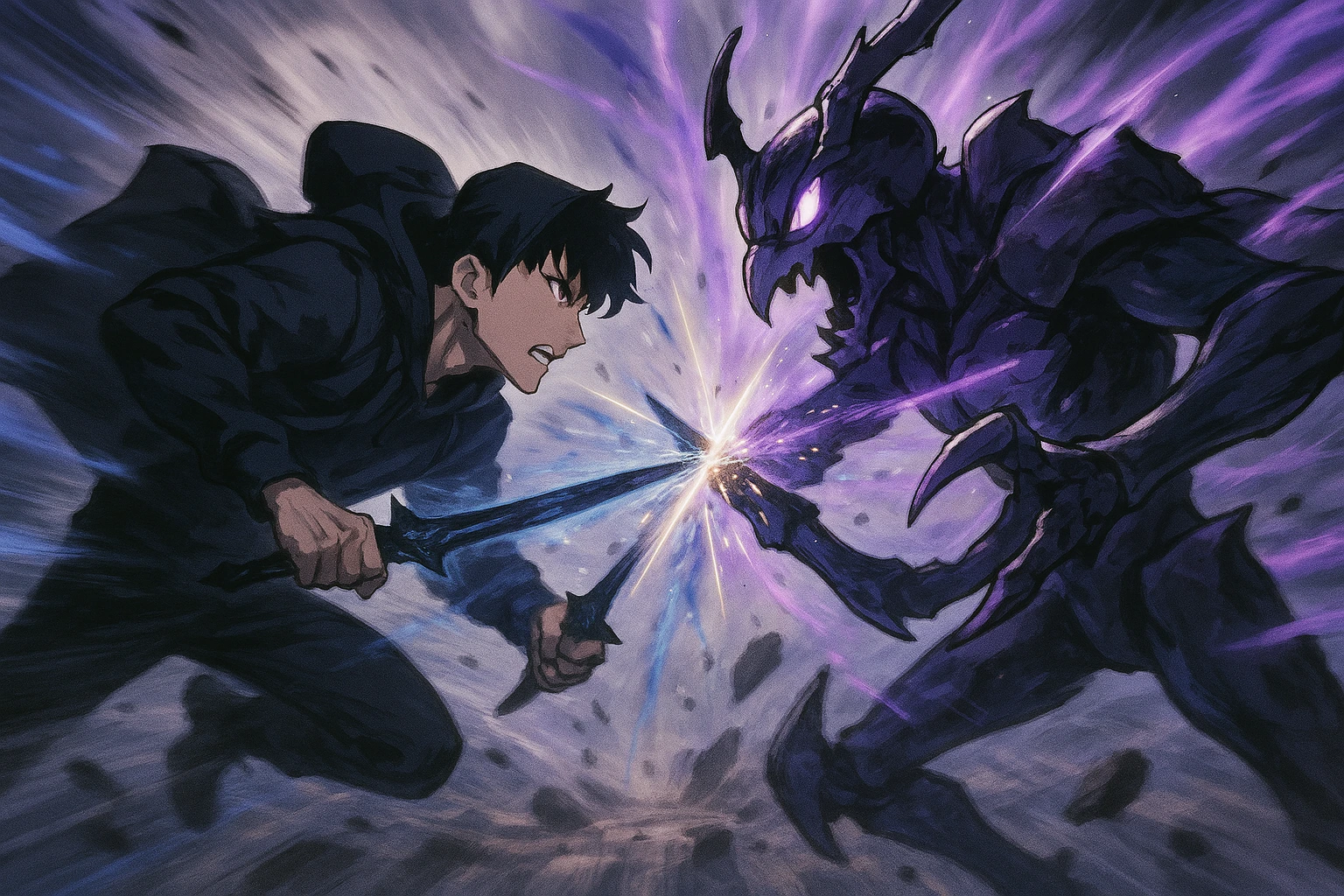
The confrontation between Sung Jin-woo and the Ant King is the climax of the first half of the series. It is a collision between two monarchs: the King of Insects, born of biology and evolution, and the Shadow Monarch, born of the System and death.
The Clash: A Shift in Gravity
When Jin-woo arrives on Jeju Island via Shadow Exchange, the situation is catastrophic. The Korean S-Rank team is broken, physically and mentally. The arrival of Jin-woo changes the atmospheric pressure of the battlefield. The air itself seems to grow heavier.
Unlike the other Hunters who were paralyzed by the King’s “Killing Intent,” frozen in place by the biological imperative to flee a predator, Jin-woo meets it with his own. The King, who had viewed all humans as “weak meat” to be harvested, suddenly pauses. For the first time in his short life, his instincts scream a warning. The exchange of blows that follows is a spectacle of speed and power. The anime and manhwa portray this beautifully—shockwaves shattering the cavern, the sheer kinetic energy of their collision vaporizing the surrounding stone. The S-Rank Hunters, previously the heroes of the story, are reduced to spectators, unable to even track the movements of the two entities, realizing they are watching a battle of gods.
The “Poison” Logic: System Superiority
A pivotal moment in the fight is the King’s attempt to use his ultimate biological weapon: his poison. This toxin was potent enough to melt high-grade tanks and had decimated the raid team with ease. He strikes Jin-woo, injecting a lethal dose, confident in his victory. He expects the human to dissolve.
The result? “The System has neutralized the poison.”
This moment is critical to the lore. It reinforces the idea that Jin-woo is no longer operating on biological rules. He is an avatar of death, a player running on a different operating system entirely. The King’s confusion—his inability to understand why his biological perfection failed against this small human—marks the beginning of his psychological breakdown. His absolute faith in his biological superiority cracks.
The Beatdown: Brute Force and Dominator’s Touch
The dismantling of the Ant King is cathartic for the reader. Jin-woo doesn’t just beat him; he humiliates him. He systematically deconstructs the King’s advantages.
- Physical Domination: Jin-woo matches the King’s strength and exceeds it. He catches the King’s punches with his bare hands. He outspeeds the King’s supersonic flight.
- Dominator’s Touch: When the King tries to use his speed to escape or maneuver for an aerial advantage, Jin-woo utilizes Ruler’s Authority (Dominator’s Touch) to slam him into the ground. It’s a showcase of telekinetic dominance. The King is swatted like the bug he is, dragged out of the air and buried in the earth.
- The Dagger Rush: Jin-woo’s relentless assault with his daggers, carving through the King’s “impenetrable” exoskeleton, strips away the King’s armor and his pride simultaneously. Every cut is a reminder that the King is mortal.
The Fear: The Predator Becomes Prey
The climax of the fight isn’t the final blow; it’s the moment the King feels fear. As he lies broken, regenerating slower than he is being damaged, he looks at Jin-woo and sees the endless abyss of the Shadow Army rising behind him. He sees true darkness.
The King, who was born to rule, realizes there is a higher predator. He calls out to his mother (the Queen) for help, reverting to a terrified child. It is a pathetic end to a terrifying monster, perfectly illustrating the theme: There is always a bigger fish. Jin-woo stands over him not as a hero saving the day, but as an executioner carrying out a sentence. The apex predator of Jeju Island dies trembling.
4. Extraction: The Birth of “Beru”
The death of the Ant King was necessary, but his rebirth was legendary. The Shadow Extraction sequence for the Ant King is arguably the most high-stakes “Arise” in the series, filled with tension over whether the System would allow such a powerful entity to be subjugated.
The Name: Significance and Nuance
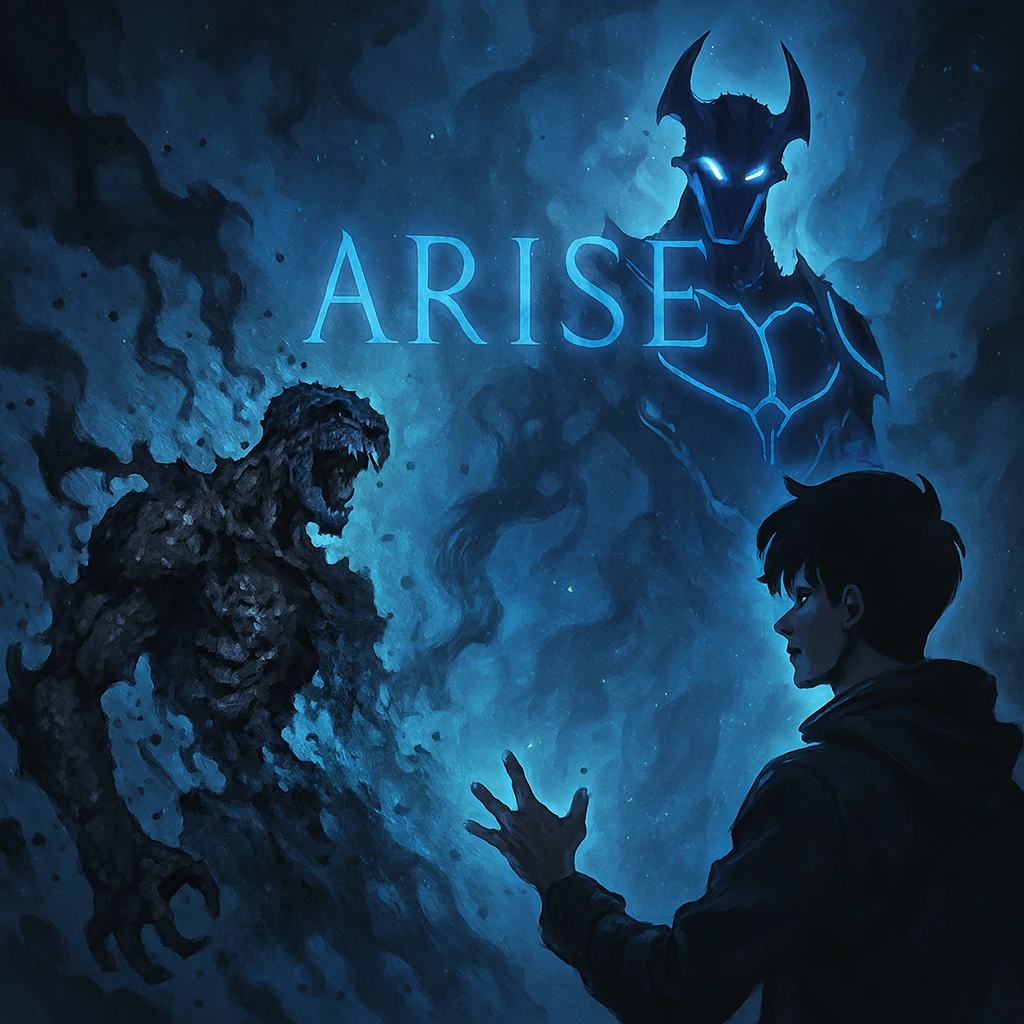
Upon extraction, the monstrous, chitinous form of the King dissolves into the sleek, black-and-blue energy of a Shadow Soldier. The malice disappears, replaced by servitude. He kneels immediately. When Jin-woo prompts him for a name or bestows one, he chooses “Beru.”
In the original novel context, the naming often draws from literary or linguistic references, but in the lore, “Beru” marks his transition from a species designation (Ant King) to an individual identity. It sounds sharp, royal, yet subservient. It strips him of his title “King” and gives him a name that belongs only to Jin-woo. By accepting the name, he accepts his new reality: he is no longer the ruler; he is the highest servant.
The Hierarchy Shift: The Challenge to Igris
Beru’s entry into the Shadow Army disrupts the status quo immediately. Until this moment, Igris (the Blood-Red Commander) was the undisputed ace, the silent, chivalrous right hand of the Monarch.
Beru enters with an explosive personality and an ego to match. He immediately asserts dominance over the other shadows, screeching at them to get in line, bowing only to Jin-woo. He challenges Igris’s position, not out of malice, but out of a competitive desire to be the most useful tool. This creates a fascinating dynamic within the army:
- Igris: The Chivalrous Knight, representing honor, stoicism, and silent protection.
- Beru: The Fanatic General, representing overwhelming power, vocal adoration, and ruthless efficiency.
This rivalry becomes a recurring source of humor and badassery, pushing both shadows to evolve further as they vie for the Monarch’s favor.
Retaining Abilities: The Gluttony Skill
Most shadows retain a portion of their former power, usually slightly nerfed compared to their living counterparts. However, Beru retained his most dangerous ability: Gluttony. Even as a shadow, he could consume the magical energy and flesh of enemies to empower himself and, by extension, his liege.
This made him unique among the shadows. He wasn’t static; he could grow stronger independently by feasting on the enemies of the Monarch. This mechanic ensures Beru remains relevant even as Jin-woo faces god-tier enemies later in the series. He effectively becomes a scaling weapon that grows with the difficulty of the battles.
5. Psychological Profile: The Personality Shift
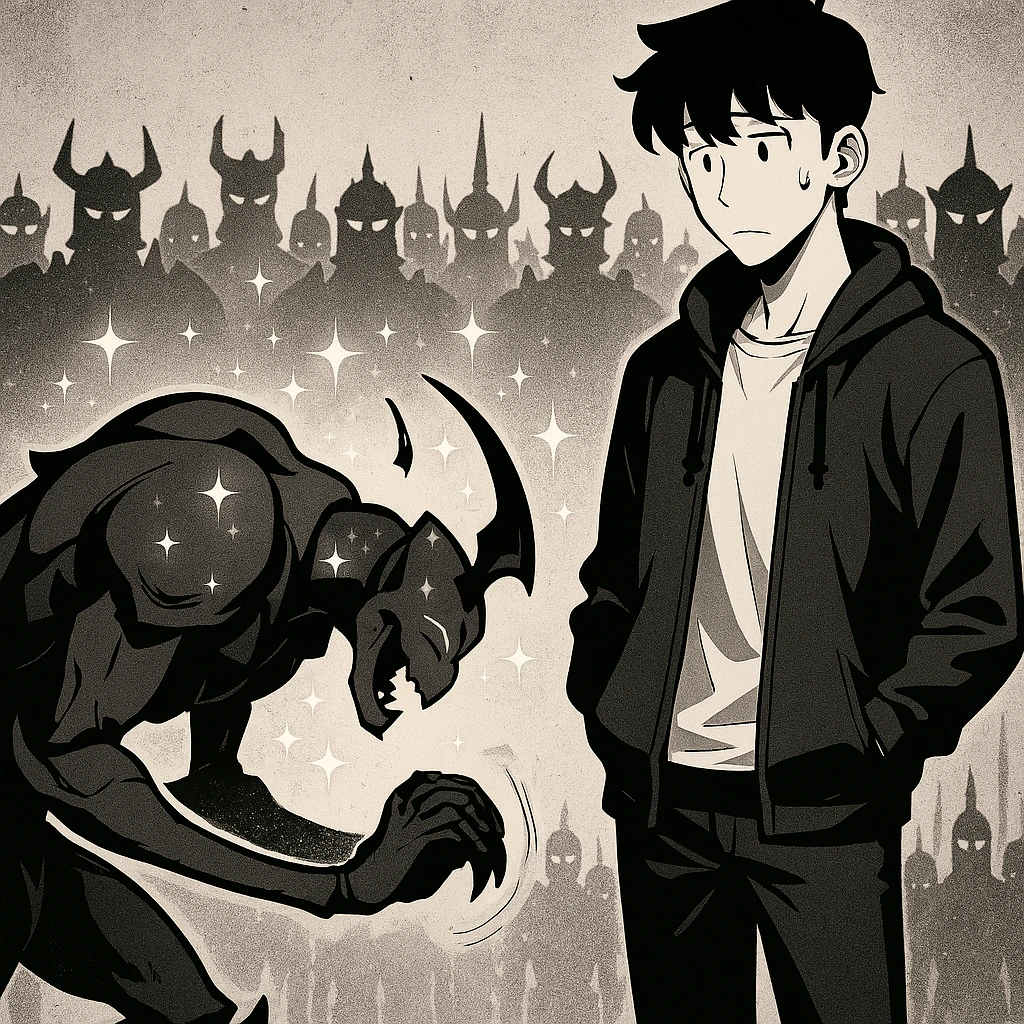
One of the greatest twists in Solo Leveling is Beru’s drastic personality shift. The terrifying alien monster who traumatized a nation becomes the most charismatic, complex, and loyal character in the cast.
The Loyalty: From Ruler to Servant
Beru’s loyalty is not normal; it is fanatical. He worships Jin-woo as a deity. While Igris is the silent bodyguard who stands behind the throne, Beru is the herald who screams the King’s name from the mountaintops.
This extreme devotion stems from his biological programming. He was created to serve the “Strongest.” Since Jin-woo defeated him and resurrected him, Jin-woo became the ultimate purpose of his existence. Beru finds genuine, ecstatic joy in serving. When Jin-woo praises him, Beru radiates happiness (often depicted visually with sparkles in the manhwa). When Jin-woo is threatened, Beru turns into a demon of pure rage, taking any insult to his master personally.
The Comedic Side: The K-Drama Addict
This is the detail that elevates Beru from a cool summon to a beloved character. In the side stories and downtime moments, it is revealed that Beru spends his time in the Shadow Realm or the real world watching historical Korean TV dramas.
Why? To learn how to speak “royally.”
He realized his speech patterns were raspy and insect-like, unfit for the ears of a Monarch. To better communicate with his Liege, he mimics the archaic, courtly language of historical kings and generals found in dramas. Hearing a terrifying monster ant say, “Oh, my Liege, the grace of your power knows no bounds,” in the tone of a Joseon Dynasty minister is comedy gold. It humanizes him without making him weak, showing that he constantly strives to improve himself for Jin-woo’s sake.
The Protector: The Shadow Bodyguard
Beru is often assigned the most critical tasks, including the protection of Jin-woo’s family. Specifically, his role in guarding Jin-woo’s sister, Sung Jin-ah, shows his softer, more nuanced side. He lurks in her shadow, terrifying any potential threats, but he genuinely cares for her safety because she is the “King’s kin.”
There are moments where he debates whether he should kill a minor annoyance (like a rude person) or spare them to avoid upsetting his Liege, showing his internal struggle between his killer instincts and his orders. He learns restraint, something the original Ant King never possessed.
Sentience and Ego
Beru possesses the highest level of ego among the shadows (initially). Low-grade soldiers are automatons. Commanders like Igris and Iron have personalities, but Beru has complex thoughts and emotions. He feels jealousy, pride, shame, and ambition. He can act autonomously, making tactical decisions without Jin-woo’s direct input. This autonomy makes him a Marshal-grade asset—he is a General who can lead a war on a separate front, capable of interpreting his master’s will without needing constant micromanagement.
6. Power Evolution and Feats
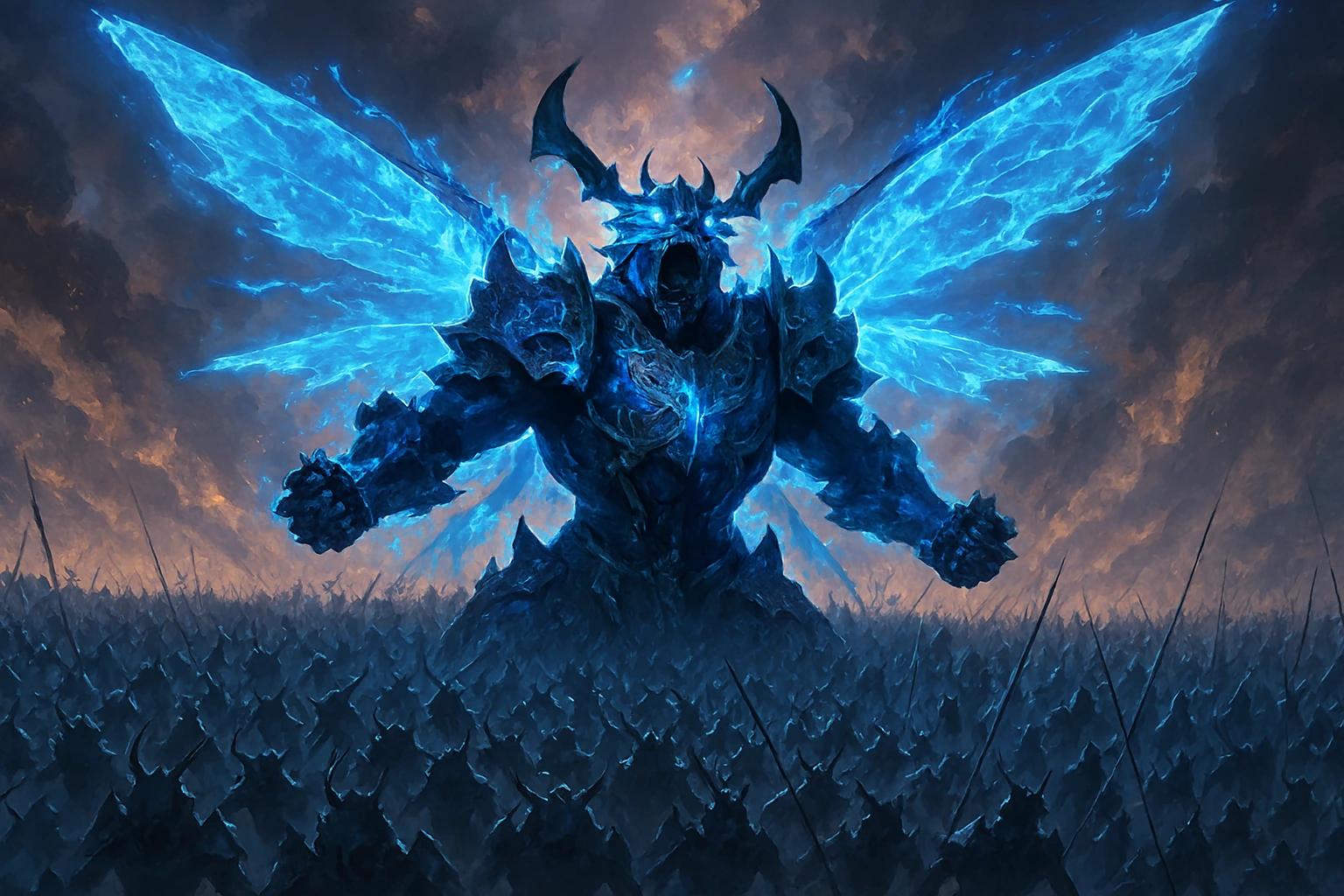
Beru does not stagnate. As the series progresses from S-Rank Dungeons to the War of Monarchs, Beru scales alongside the threats, proving his worth time and time again.
Commander to Marshal
Beru starts as a Commander grade but eventually evolves into a Marshal (Grand Marshal) grade. This evolution physically changes him, making his armor more ornate, his size larger, and his aura more overwhelming. As a Marshal, he commands legions of standard ants and can go toe-to-toe with lesser Monarchs for a short time. He becomes a catastrophic threat in his own right, capable of wiping out armies solo.
The Gluttony Skill in Action
A prime example of his utility is the consumption of the Arch Lich. By eating high-ranking magical beasts, Beru absorbs their mana. This allows him to act as a mana battery or simply increase his own destructive output. He creates a feedback loop: the more enemies he kills, the stronger he gets, making him the perfect snowballing champion in extended wars. He turns the enemy’s strength against them literally.
Healing Magic: The Critical Support
Beru’s most underrated ability is his healing. After consuming Min Byung-Gyu in life, he retained the healing magic. Since the Shadow Army consists mostly of undead warriors who regenerate, healing seems redundant—until Jin-woo fights enemies who can erase shadows or when Jin-woo himself is injured.
Beru becomes the only healer in the Shadow Army capable of healing humans. This is crucial during the later arcs when Jin-woo fights alongside human Hunters (like Thomas Andre or Liu Zhigang). Beru zipping around the battlefield, patching up National Level Hunters while screaming about the glory of his Liege, is a testament to his versatility. He keeps the VIPs alive so Jin-woo can focus on the offense.
Vs. The Monarchs: The Brave Stand
In the final arc, when Jin-woo faces the Monarch of Plagues (Querehsha) and the Beast Monarch, Beru puts up a legendary defense. Despite being outclassed by true Monarchs, Beru fights with zero hesitation. He takes hits that would disintegrate mountains to buy Jin-woo seconds. His scream of defiance against the Plague Monarch—asserting that his Queen is dead and only Jin-woo remains—is his character arc coming full circle. He rejects his biological creator (the insect lineage) for his chosen master, proving his loyalty transcends his genetics.
7. Beru in the Aftermath (Side Stories & Ragnarok)
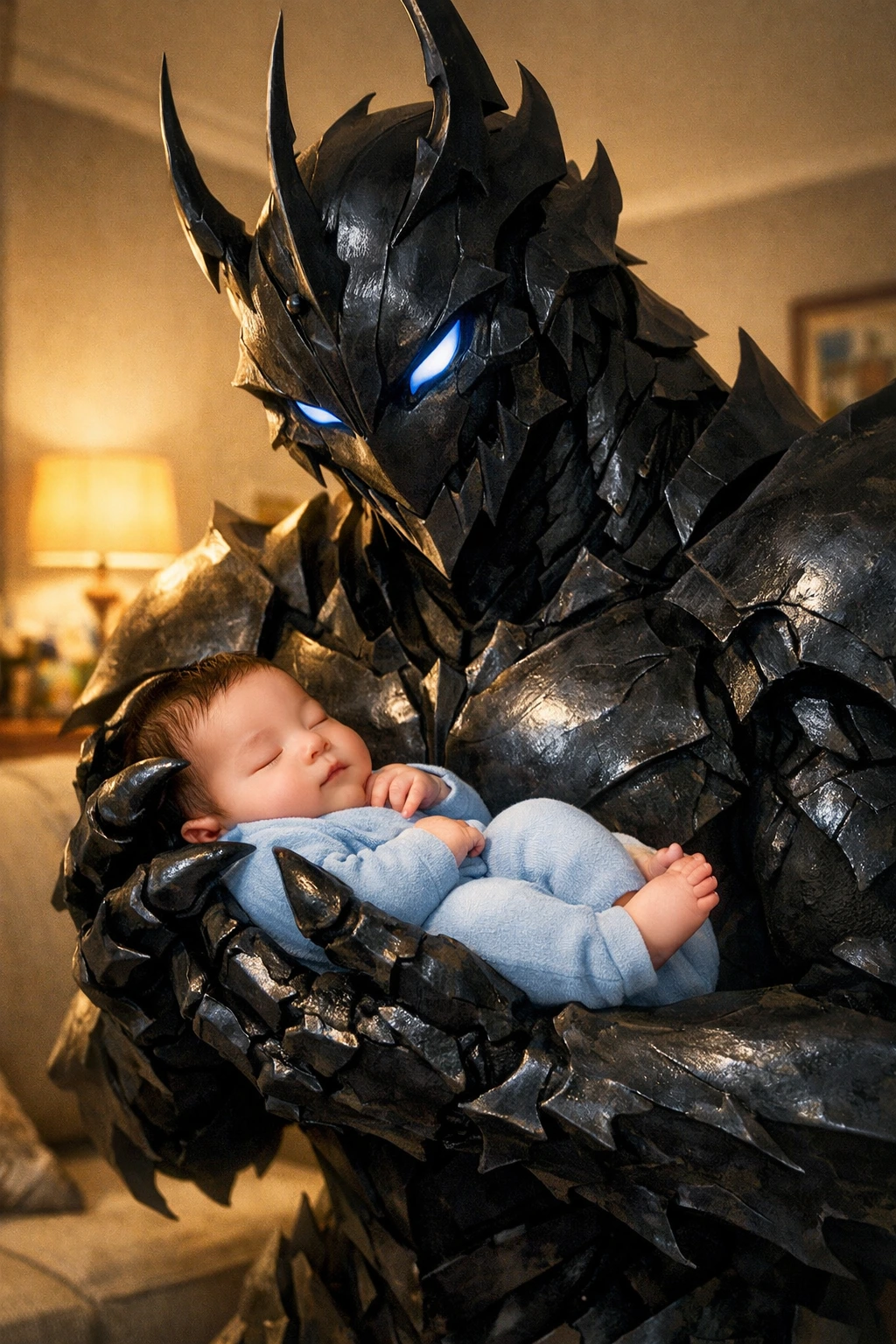
If the main story established Beru as a warrior, the side stories (and the sequel Solo Leveling: Ragnarok) established him as “Uncle Beru,” adding layers of warmth to his character.
The Nanny: Raising the Prince
After the timeline reset, Jin-woo marries Cha Hae-In and they have a son, Sung Su-ho. Who is tasked with babysitting the son of the Shadow Monarch? Beru.
The image of the terrifying Ant King holding a baby, fretting over diapers, and ensuring the child is safe is the most wholesome content in the franchise. Beru treats Su-ho as the “Little Monarch.” He is fiercely protective, often overreacting to minor threats (like a playground bully or a cold breeze) with lethal intent, only to be scolded by Jin-woo. He becomes a doting uncle, showing a capacity for love that seemed impossible for a creature born of hate.
The Teacher: The Strict Instructor
In Solo Leveling: Ragnarok, Beru plays a pivotal role. With Jin-woo fighting a war in outer space against the Itarim, Su-ho is left on Earth with his powers sealed. When the seal breaks, Beru becomes his mentor.
However, Beru is not a soft teacher. He drags Su-ho into the Shadow Realm (World of Sea of Trees) and beats the survival instinct into him. He trains Su-ho the same way the ants were trained: through combat. Yet, underlying the harsh training is deep affection. He wants Su-ho to be strong enough to survive the burden of his bloodline. He passes down the legacy of the Shadow Monarch to the next generation.
The Memories: The Burden of Remembrance
Beru is unique because, alongside Jin-woo, he remembers the original timeline. When Jin-woo used the Chalice of Rebirth to turn back time, he eventually restored the memories of his key shadows. Beru remembers the war. He remembers the suffering. This shared trauma creates a bond between him and Jin-woo that transcends the master-servant relationship. They are war buddies who saved the world, living in a peaceful timeline that doesn’t know they exist. They share the silent burden of a victory no one else recalls.
8. Conclusion: The Perfect Soldier
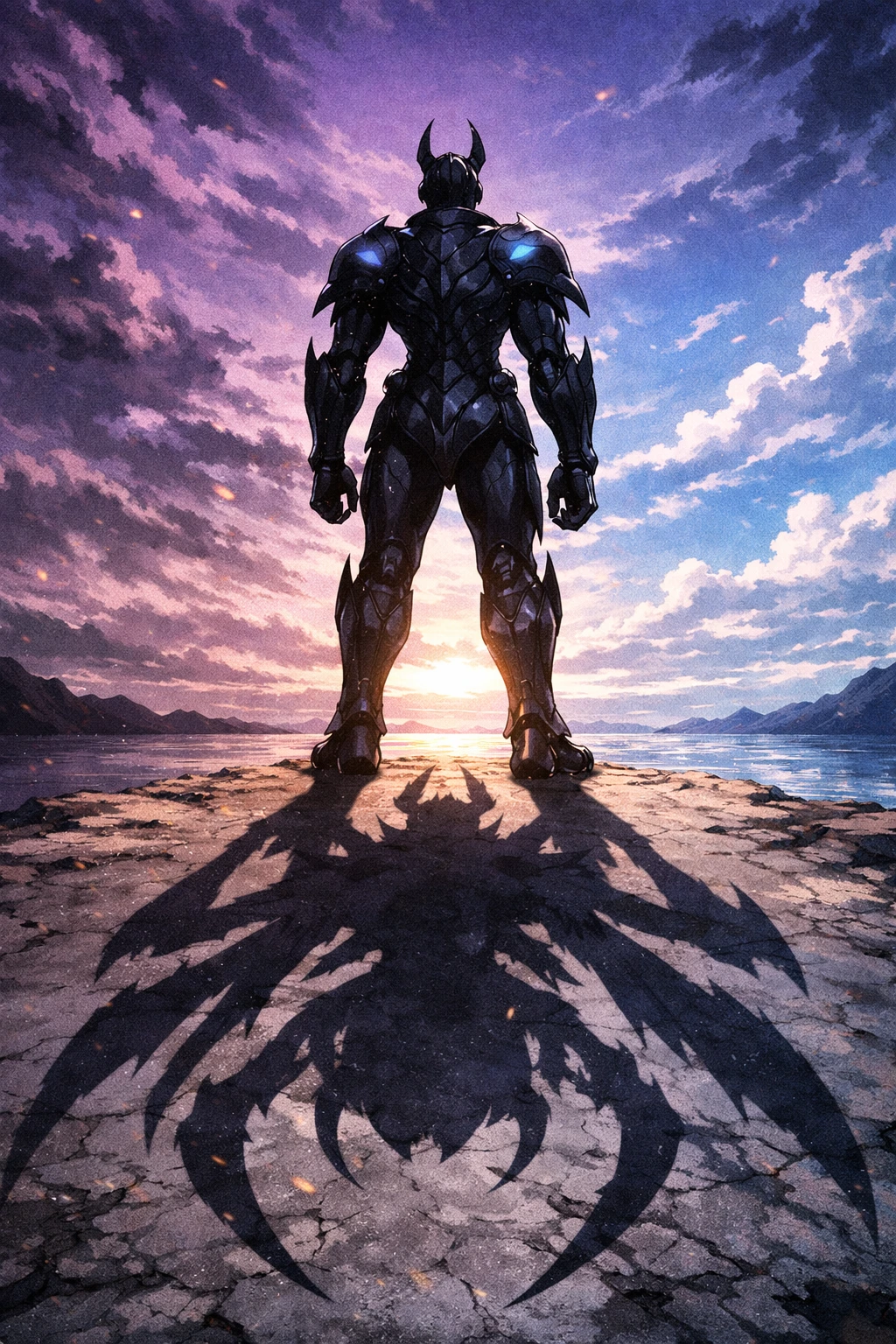
Beru is more than just a cool summon; he is the thematic representation of Jin-woo’s conquest. The Ant King was born to be the apex predator of the natural world, the pinnacle of biological evolution. Jin-woo, the Shadow Monarch, represents the pinnacle of supernatural/systematic power. By subjugating Beru, Jin-woo didn’t just beat an enemy; he tamed nature itself.
The Versatile Shadow
Compare Beru to the other shadows.
- Igris has power and swordsmanship.
- Tusk has ranged magic.
- Tank has defense.
- Kaisel has flight.
Beru has all of them. He has speed, flight, defense, physical strength, magic, healing, stealth, and poison. He is a one-man army. He is the Swiss Army Knife of the Shadow Monarch, capable of filling any role on the battlefield instantly.
From Nightmare to Mascot
The journey of Beru is a testament to excellent character writing. He transitioned from being the source of nightmares—a creature that decapitated fan-favorite characters and traumatized readers—to the source of laughter and comfort. He is the loyal dog, the strict teacher, the fierce general, and the loving nanny.
In the end, Beru stands as the fan-favorite not because he is the strongest (though he is close), but because he loves the main character as much as the audience does. He is the ultimate “hype man” for the Shadow Monarch, and for that, the Ant King will always reign supreme in the hearts of the fans.