
I. Introduction: The Girl Who Waited 2,000 Years
The story of Attack on Titan begins with a cryptic title that haunts the narrative for nearly a decade: “To You, 2,000 Years From Now.” For years, audiences and theorists speculated wildly on the nature of this message. Was it a time loop? A warning from a future Eren to a past Grisha? A prophecy etched into the very fabric of the Eldian timeline? The brilliance of Hajime Isayama’s writing lies in how he subverted every expectation attached to this phrase. It was only in the terrifying, hallowed silence of the Coordinate—a dimension of infinite sand and starlight—that we understood the crushing truth. The title was not a message sent to a hero, nor a decree from a king, nor a tactical instruction for war. It was a desperate, silent plea from a girl who had been waiting in the dark, sculpting sand into monsters, for two millennia. It was a cry for help that took two thousand years to find an answer.
The revelation that the “God” of the Eldian world—the Founding Titan(Founding Ymir), the source of all organic matter, the coordinate where all paths cross—was merely a lonely, enslaved child recontextualizes the entire saga. It shifts the genre from a high-stakes war drama into a tragedy of cosmic proportions. Ymir Fritz is not a villain in the traditional sense, nor is she a victim that fits neatly into a box of innocence; she is the open wound of the world. She is a living testament to how suffering, when left unhealed and unaddressed, festers into a curse that spans generations, cultures, and continents. Her story forces us to look beyond the spectacle of Titans eating humans and confront the uncomfortable reality of what created them: a child’s desperate need to be loved and her inability to escape her abuser.
Ymir Fritz stands as perhaps the most tragic figure in the history of the anime medium. Her existence presents a paradox that defies the logic of power dynamics as we understand them. She possessed the ability to flatten mountains, boil oceans, and reshape the very biology of her descendants. She held the power of creation and destruction in her hands, yet she retained the soul of a slave. She had the power of a god but lacked the will of a human. This fundamental disconnect—between absolute ability and absolute submission—is the engine that drove the history of the world into a bloody spiral for twenty centuries. Why did she stay? Why, when she obtained the power to crush her oppressors into dust, did she return to the man who enslaved her? Why did she continue to build Titans for two thousand years after her physical death, crafting the very instruments of her own people’s suffering?
This analysis seeks to strip away the myth and look at the human girl beneath the monster. We will traverse the ancient history of the Eldian tribe, dissect the biological and mythological implications of the Source of All Living Matter, and perform a deep psychological autopsy on her relationship with King Fritz. We must understand that her chains were not forged of iron, but of a trauma so severe it shattered her concept of self before she even knew who she was. Furthermore, we will explore the controversial, often misunderstood resolution of her arc, positing that while Eren Yeager provided the catalyst for her anger, it was Mikasa Ackerman who provided the blueprint for her freedom. In the silence of the Paths, beneath the starry expanse of an infinite night, we find a story not about the glory of empire, but about a child who simply wanted to be loved, and the terrifying price the world paid for her distortion of that desire.
II. The Origin of Power: The Source of All Living Matter
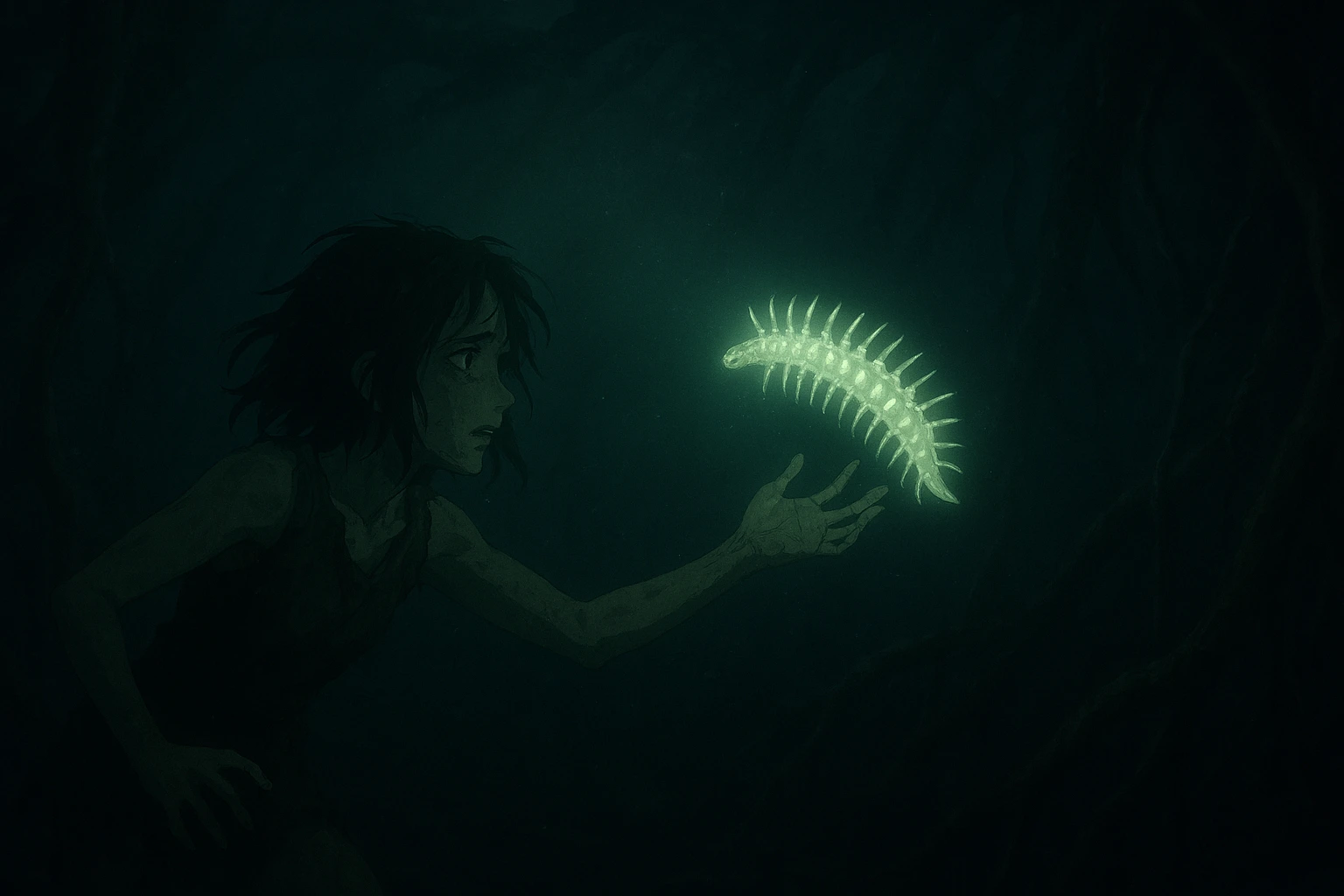
To understand Ymir, one must first understand the moment she ceased to be merely human and became something else. The sequence depicting her transformation is stripped of all glory or divinity. There is no divine light, no angelic chorus, no destined sword in the stone. There is only the frantic, muddy desperation of a hunted animal. Ymir was not chosen for her virtue, her wisdom, or her strength; she was a scapegoat. In a village of slaves, she was the lowest of the low, blamed for releasing pigs by her fellow slaves who were too terrified to take the blame themselves. This moment is critical: her “sin” was seeking freedom for another living creature (the pigs), and her punishment was to be hunted like an animal herself.
Her stumbling into the base of that colossal, hollow tree is a descent into the underworld, a return to the womb of the earth. The imagery here is thick with Norse mythology, evoking the World Tree, Yggdrasil, beneath which lies the source of wisdom and fate. However, Isayama twists this myth into something visceral and biological. Ymir does not find wisdom or a bearded god; she finds a parasite. She finds an anomaly of nature that indifferent to human morality.
The “shiny worm,” or the Source of All Living Matter, is a biological entity that defies easy classification. It appears as a Hallucigenia, a prehistoric organism from the Cambrian explosion, suggesting that the power of the Titans is not magic, but ancient, unrestrained biological evolution. The creature floats in the subterranean water, seeking a host not out of malice, but out of the fundamental drive of all life: survival. When it fuses with Ymir’s spine, it is not granting a wish for world domination; it is granting a wish for life. Ymir, pierced by arrows, missing an eye, and torn by dogs, was dying in that water. The organism bonded with her to preserve its host, and in doing so, it unlocked the potential to manipulate flesh and bone.
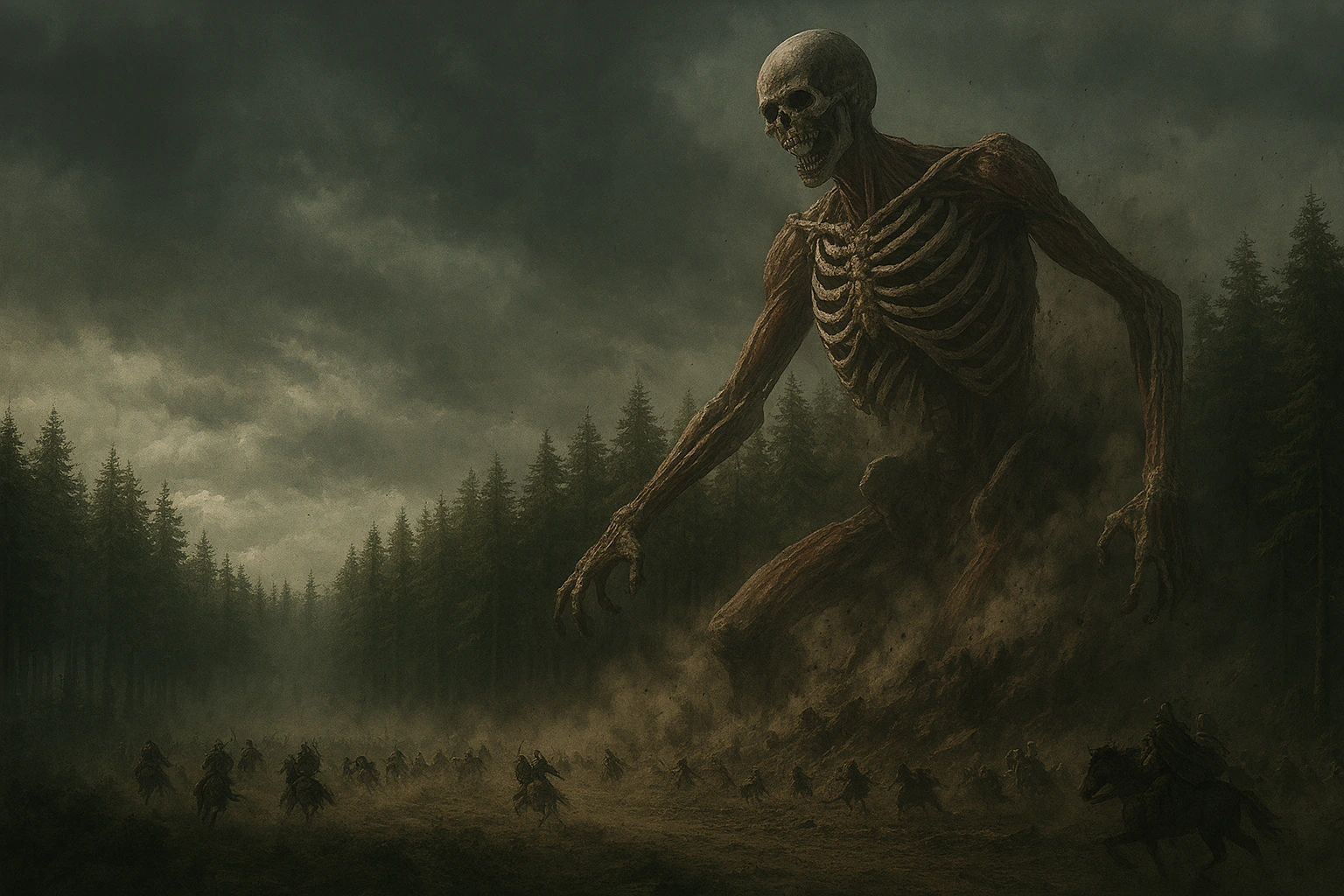
This distinction is crucial to understanding the horror of her existence. Ymir did not seek to become a god. She sought to escape the pain of death. The resulting Titan form—a massive, skeletal giant—was a manifestation of her subconscious need to be big enough to survive, strong enough to never be hurt again. It was a defense mechanism made flesh. The spine, the core of the nervous system and the seat of pain, became the epicenter of her power.
Yet, this survival came with a horrific catch, later known as the Curse of Ymir. The thirteen-year limit on a Titan Shifter’s life is not an arbitrary magical rule set by a deity; it is a timestamp of trauma. Ymir died thirteen years after acquiring the power, sacrificing herself to save King Fritz from an assassin’s spear. Because Ymir died after thirteen years, no successor could ever surpass her existence. The parasite, and the Paths it created, are bound by Ymir’s own psychological limitations. The magic of this world is limited by the mental state of its founder. If she could not live past thirteen years, neither could those who inherited her fragments. The power is stagnant, frozen in the moment of her self-sacrifice.
The visual language of her transformation—the giant ribcage bursting from the earth—speaks of a power that is raw, skeletal, and incomplete. It is the power of flesh without the guidance of a free mind. The tragedy of the Source of All Living Matter is that it amplifies the will of its host, but Ymir had no will of her own. It gave a nuclear weapon to a child who only knew how to obey. Thus, the most advanced biological power in existence became a tool for primitive tribal warfare, used to build bridges and cultivate lands for a tyrant, rather than to liberate the one person who held it. This biological accident created a legacy of cannibalism and warfare, all because the first host could not imagine a world where she was free. The organism simply followed the commands of a broken heart.
III. The Psychology of Chains: Why Didn’t She Rebel?
The most haunting question regarding Ymir Fritz is the question of agency. This is the question that frustrates and confuses the audience: With the power of the Founding Titan, she could have annihilated King Fritz and his entire tribe with a mere thought. She could have crushed his armies, toppled his castle, and ruled the world or isolated herself in peace. Instead, she returned to him. She bore his children. She used her godlike power to cultivate his lands and crush his enemies. When he commanded her to destroy, she destroyed. When he commanded her to die, she died. And even in death, when he commanded his daughters to eat her corpse, she allowed her power to be passed down, locking herself in the Paths for eternity.
This behavior cannot be explained by simple fear. Fear fades when one holds the weapon. If a prisoner is given a gun, they usually stop fearing the guard. But Ymir did not. This is a profound, devastating depiction of trauma bonding and a complex variation of Stockholm Syndrome. Ymir was a slave before she was a Titan. Her identity was systematically dismantled until she believed her only value lay in her utility to her master. In her mind, she was not a person; she was a tool. A tool does not rebel against the hand that wields it. The abuse she suffered was so total that it warped her definition of love.
King Fritz was a monster of the highest order—cruel, dismissive, and entirely exploitative. He never once showed her genuine affection. Yet, to a girl who had nothing, who had been an outcast and a scapegoat, his attention became the center of her universe. We see this in the heartbreaking flashback panel where she looks at a married couple kissing, longing for connection. She did not understand what that connection was, but she craved it. She projected this desire onto Fritz. She believed that if she worked hard enough, if she was useful enough, if she was “good” enough, she might one day be loved.
This is the “Good Girl” complex taken to its most horrific extreme. She equated servitude with affection. Every bridge she built, every enemy she crushed, was a desperate bid for validation from the very man who cut out her tongue. She thought that by making him the King of the World, she would finally earn a place at his side, not as a weapon, but as a person. But Fritz never saw her. He only saw the power she held.
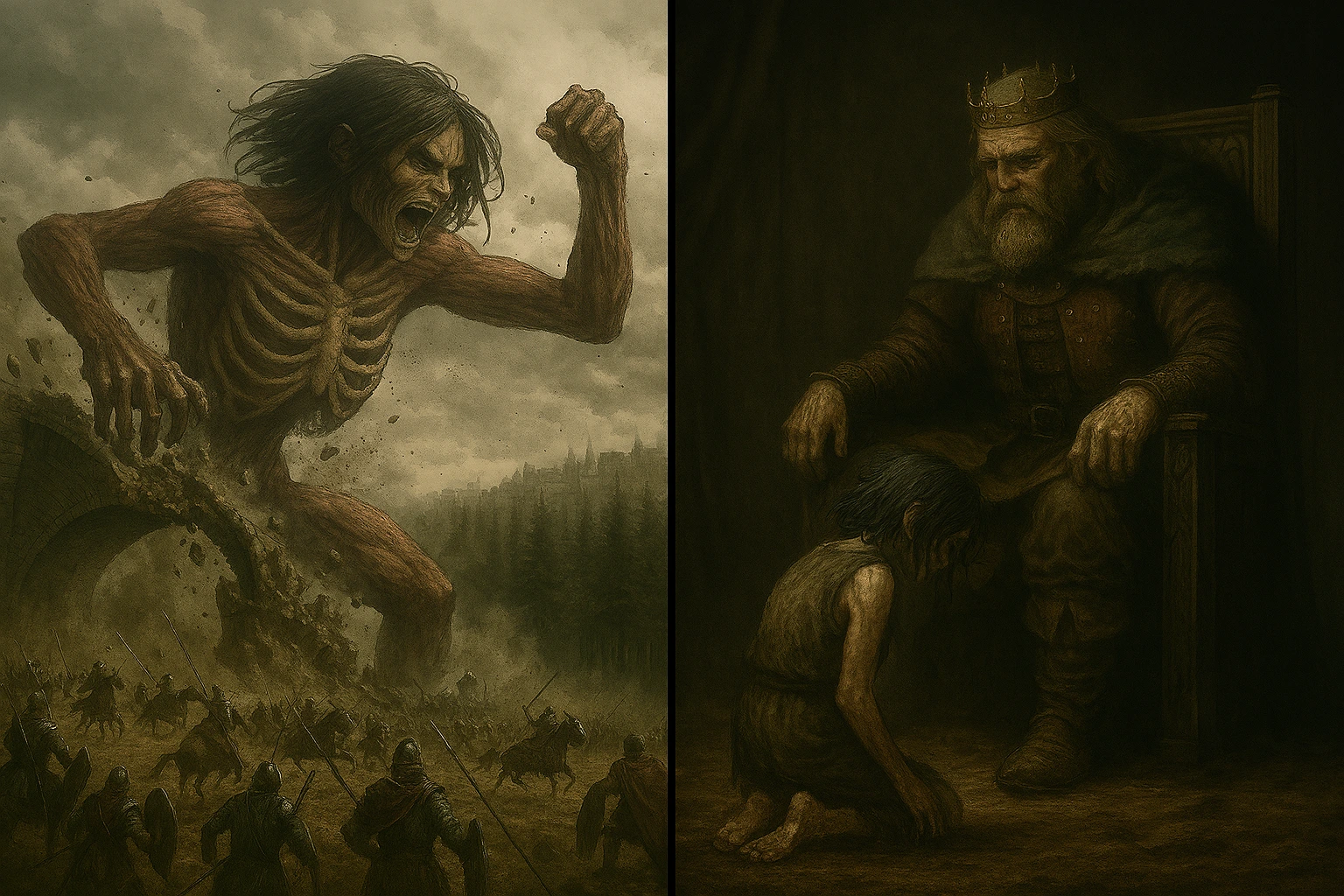
The psychology here is deeply uncomfortable because it reflects the reality of long-term abuse. Victims often do not leave their abusers even when they have the physical means to do so because the psychological chains are far stronger than physical ones. Ymir’s mind was a prison long before she entered the Paths. The King’s words—”My slave Ymir”—defined her reality. Even when she took the spear for him, an act that could be interpreted as a final act of love, his reaction was to callously tell her to get up and work. “I know you won’t die from a spear,” he said, bored. He didn’t see her humanity even as she died for him. And tragically, instead of realizing his cruelty, Ymir retreated into the Paths to continue serving him.
This creates a terrifying dichotomy: the visual contrast between Ymir the Titan, a being of unmatched destruction, and Ymir the girl, kneeling in the mud. She is both the executioner and the victim. Isayama forces the audience to confront the fact that power does not equal freedom. Freedom is a state of mind, and Ymir’s mind was colonized by the will of the King. She remained in chains because she could not conceive of a world where she wasn’t a slave. Her “love” for Fritz was a nightmare from which she could not wake, a delusion that kept the entire world trapped in a cycle of hatred. She was waiting for someone to show her that love and slavery are not the same thing, but for two thousand years, no one came.
The horror continues after her death. The scene where King Fritz forces his daughters—Maria, Rose, and Sina—to eat their mother’s raw flesh is perhaps the most grotesque moment in the series. But from Ymir’s perspective in the Paths, this was the ultimate command. She allowed herself to be consumed so that the King’s empire would not fall. She facilitated the cannibalism of her own body because she believed it was her duty. This submission is what split the power of the Titans into nine, fracturing her soul into aspects of her trauma: the Attack Titan seeking freedom, the Armored Titan seeking protection, the Founding Titan seeking control. All of them are pieces of a broken child.
IV. The Eternal Nightmare: Life in the Paths
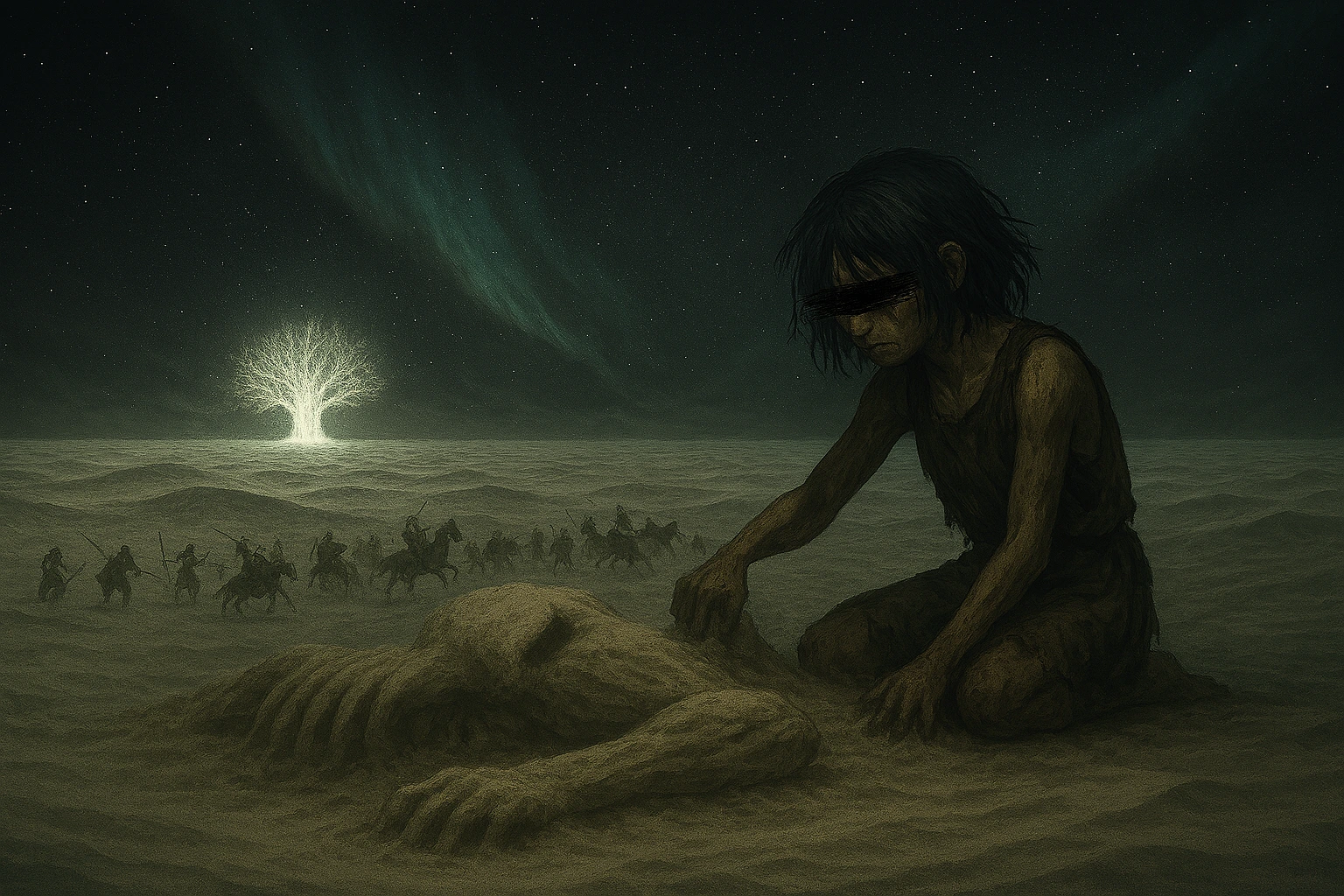
The concept of the Paths introduces a layer of existential horror to Ymir’s suffering that goes beyond physical slavery. The Paths is a realm transcending space and time, a desert of infinite white sand under a star-filled void. Here, time does not flow linearly. An instant in the real world can stretch into an eternity in the Paths. When we see a Titan transformation occur in a flash of lightning in the physical world, the reality is that Ymir spent an agonizing, indeterminate amount of time sculpting that Titan’s body by hand, grain of sand by grain of sand, mixing the earth with water.
Consider the implications of the Rumbling or the sheer number of Titans created over history. Every single Pure Titan that wandered the island of Paradis, every Wall Titan that stood guard for a century, every regeneration of Reiner’s armor or Eren’s limbs—all of it was handcrafted by Ymir. For two thousand years, she has been the sole laborer in a factory of flesh. She has never slept. She has never rested. She has been alone in an infinite desert, slaving away to maintain the cruel empire her master built. The physical exhaustion is unimaginable, but the spiritual isolation is worse. She is a ghost haunting her own creation, bound to the Coordinate, the glowing tree of light that connects all Eldians.
In the Paths, Ymir appears as a child, dressed in the rags she wore as a slave. This self-image is crucial. Despite having the power to appear as anything—a queen, a warrior, an adult—she manifests as the version of herself that was most powerless. The scribbles over her eyes in the flashbacks represent her lack of self; she is unseen, and she does not see. She is a non-entity, a vessel for the will of others. The Paths is not a heaven; it is a purgatory of her own making, sustained by her inability to let go of the King’s commands.
The connection between Ymir and her subjects is absolute. She feels their emotions, hears their screams, yet remains detached, a robotic executor of the royal family’s will. The vow renouncing war, which bound the subsequent Founding Titans like Uri Reiss and Frieda, was essentially Ymir enforcing the King’s ideology upon his descendants. She was the jailer of her own people, trapping them within the walls because she believed it was what Fritz would have wanted. The nightmare of the Paths is the nightmare of stagnation. It is a world where nothing changes, where the dead linger, and where a girl creates monsters because she doesn’t know how to create anything else.
The symbolism of the bucket she carries is potent. Even in a realm of infinite power, she is often seen carrying a bucket of water or sand, mimicking the chores she did as a slave girl. She cannot escape the loop of servitude. The “Coordinate” tree itself is a twisted mirror of the tree she found the worm in—a place of connection that is actually a trap. Every branch of that tree represents a Subject of Ymir, a life she is connected to but cannot touch. She is surrounded by millions of “children” (her descendants) but is profoundly alone. This eternal servitude emphasizes the tragedy: the god of this world is just a lonely child playing in the sand, waiting for permission to stop.
V. The Liberator and The Observer: Eren vs. Mikasa
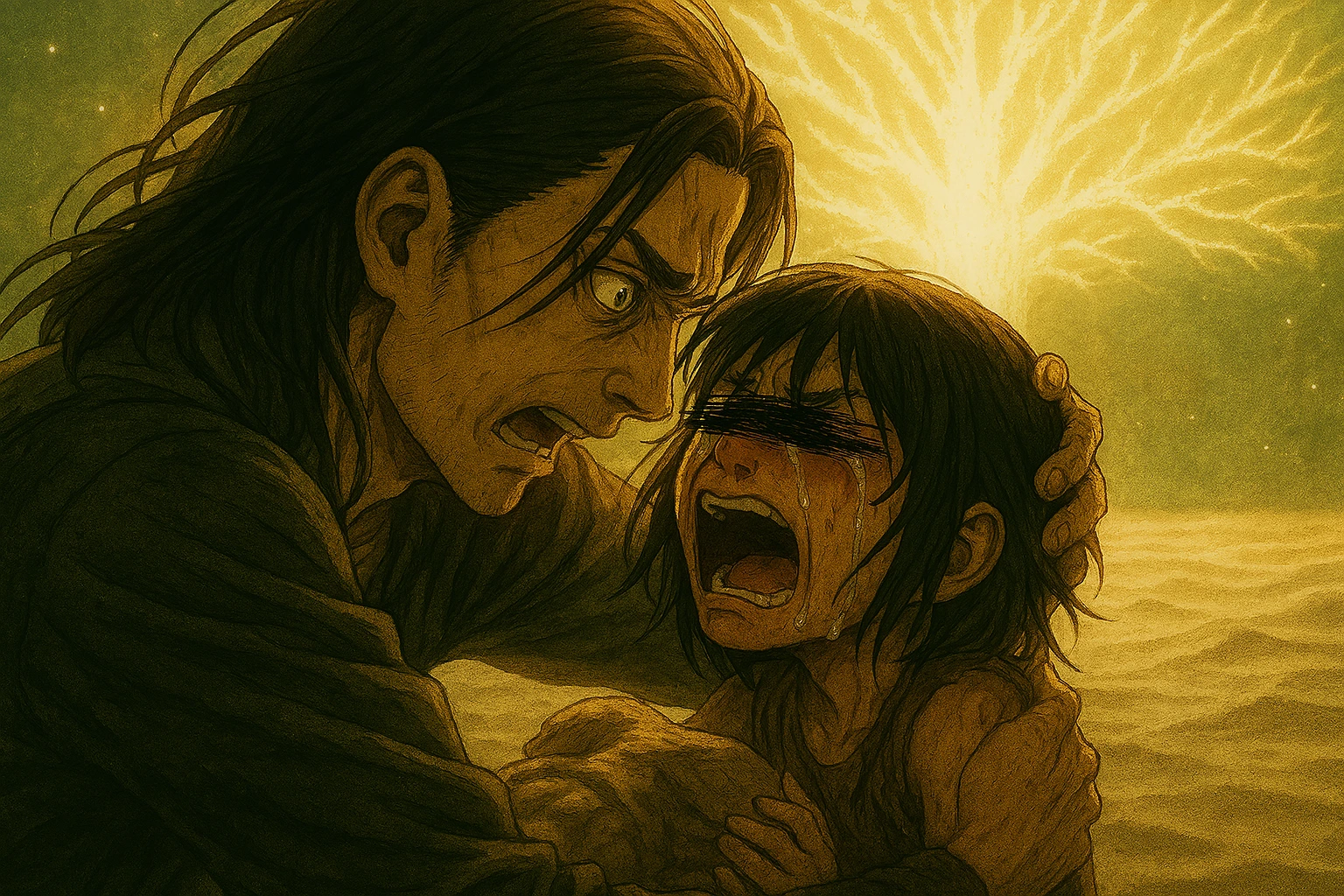
The climax of Attack on Titan hinges on the interaction between Ymir, Eren Yeager, and Mikasa Ackerman. This trio forms a thematic triangle that resolves the core conflict of the series. For years, the narrative framed Eren as the ultimate liberator, the man who would break all chains. And indeed, he plays a crucial role. When Eren enters the Paths, he is the first person in two millennia to treat Ymir as a human being. He bypasses the royal command of Zeke, who commands Ymir like a slave, and instead wraps his arms around her.
Eren screams the words she waited 2,000 years to hear: “You are not a slave. You are not a god. You are just a human being. You don’t have to serve anyone. You can be the one to choose.” This moment is seismic. Eren gave Ymir permission to feel rage. He acknowledged her suffering and offered her a choice: to destroy the world that enslaved her. This ignited the Rumbling. Ymir lent her power to Eren because he understood her pain. He validated her desire for retribution. The image of Ymir opening her eyes—tear-filled, enraged, human eyes—is the turning point of history.
However, Eren could not fully free her. He could only redirect her pain into anger. He was a catalyst, but not the cure. Eren himself was a slave to his own desire for freedom, and his solution was destruction. Ymir followed him because destruction was a language she understood; it was the language King Fritz taught her. But destroying the world didn’t solve the core psychological knot of her attachment to King Fritz. She was still acting out of a reaction to her trauma, rather than healing from it.
This is where Mikasa Ackerman becomes the pivotal figure, a revelation that confused many viewers initially but holds the thematic key to the entire series. Ymir was not just looking for revenge; she was looking for a specific answer to a question about love. She was trapped by a love that was indistinguishable from slavery. She needed to see if it was possible to love someone deeply, ferociously, and yet still defy them for the greater good. She needed proof that love did not mean submission.
Ymir saw herself in Mikasa. Both were incredibly powerful women bound by an intense, protective love to a man who had a darker nature (Fritz / Eren). Mikasa loved Eren with an intensity that paralleled Ymir’s devotion to Fritz. Eren was Mikasa’s savior, her reason for living, the person who gave her the scarf—a symbol of warmth and protection. For years, Mikasa’s arc was defined by her need to protect Eren, often at the cost of her own autonomy. Ymir watched Mikasa from the shadows—the headaches Mikasa suffered were likely Ymir peering into her mind, testing her resolve, observing her choices.
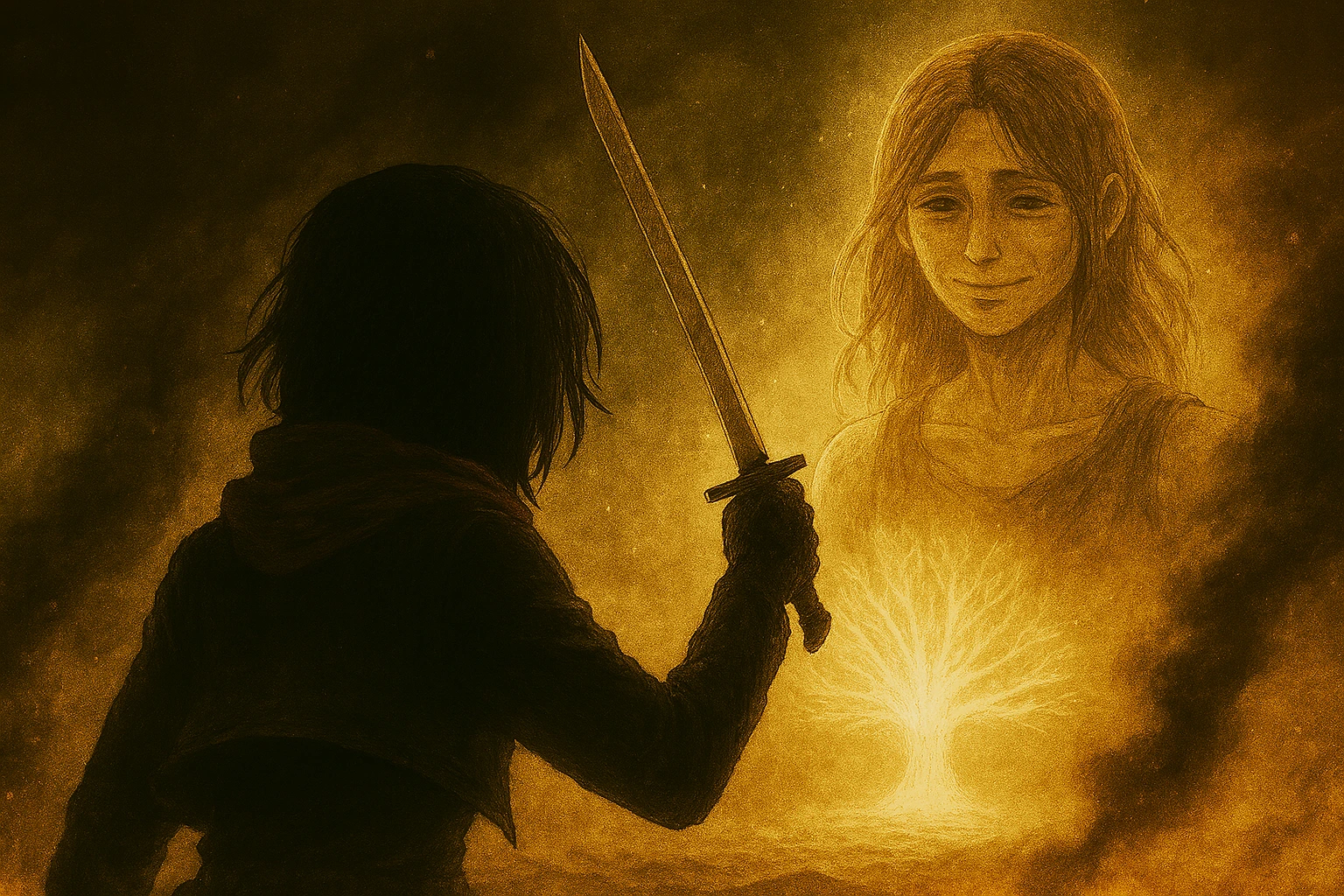
The moment Mikasa severed Eren’s head was the moment Ymir was freed. It was the antithesis of Ymir’s own choice. When Fritz was threatened, Ymir jumped in front of the spear. When Eren became the threat to the world, Mikasa killed him. By killing the person she loved most to save humanity, Mikasa shattered the false dichotomy that had imprisoned Ymir. She showed that true love involves accountability. She demonstrated that you can love someone and still stop them when they are wrong. It was an act of supreme emotional strength that Ymir had been unable to perform 2,000 years ago.
While Eren validated Ymir’s anger, Mikasa validated Ymir’s potential for autonomy. Eren started the fire, but Mikasa extinguished the curse. Ymir smiled at the end, not because of the destruction, but because she finally understood that she could have defied Fritz and still been worthy. She realized her chains were self-imposed by her warped definition of devotion. Mikasa’s choice liberated Ymir from the need to serve the memory of the King, allowing the Titan power to finally vanish from the world.
VI. The Legacy of Ymir: A World Without Titans
The resolution of Ymir’s story is the resolution of the Titan curse itself. When she finally lets go, the Source of All Living Matter—the Hallucigenia—dies. It shrivels away, unable to survive without a host willing to sustain its nightmare. The walls crumble, the Titans evaporate into steam, and the Eldian people are returned to normal human beings. The physical manifestation of 2,000 years of pain vanishes. The “Subjects of Ymir” are no longer subjects; they are simply people. The biological connection that allowed for memory wiping, body alteration, and mass control is severed.
But the cost was astronomical. The world was trampled. 80% of humanity was extinguished. The protagonist, Eren, lay dead at the hands of the woman who loved him. Ymir’s freedom was bought with an ocean of blood. This is consistent with Isayama’s dark realism; there is no clean happy ending. The trauma of centuries cannot be undone without scarring the earth. Ymir does not get a redemption arc where she fixes everything; she simply stops the cycle.
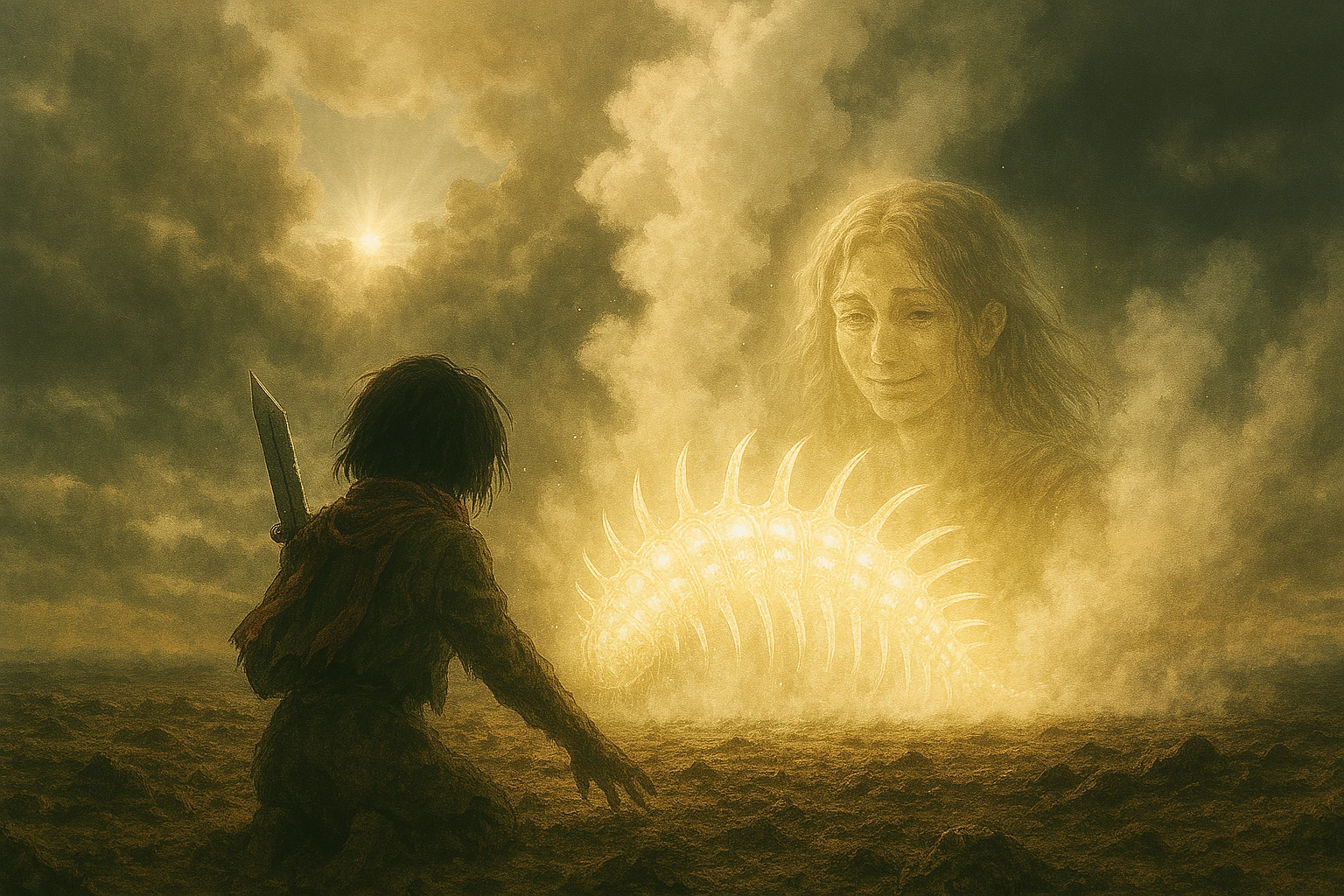
We see a final glimpse of what Ymir truly wanted in the end. It wasn’t power, or an empire, or even revenge. In the ephemeral mist of the fading paths, we imagine her spirit reuniting not with the King, but with her children—Rose, Maria, and Sina—as a mother, not a slave. Or perhaps, simply fading into the nothingness she was denied for so long. The disappearance of the Titans signifies the end of the era of giants, the end of the time when humans were eaten by their own history.
Ymir’s legacy is a warning. It is a cautionary tale about the dangers of dehumanization. It teaches us that when we treat people as things, as tools, or as gods, we create monsters. The world forced a girl to be a goddess, and in return, she gave them hell. Her story forces the audience to look at the silent, marginalized figures in history and realize that they hold the power to shape—or end—the world. The removal of the Titan powers is the removal of the biological determinism that plagued the Eldians. They are no longer defined by their blood or their ancestors’ sins. Ymir, in her final act, granted them the humanity she was denied: the right to be born free, even if the world they are born into is cruel.
VII. Conclusion: The End of the Cycle
Founding Ymir’s journey from a nameless slave to the master of the world and finally to a free spirit is the spine of Attack on Titan. It is a narrative arc that spans millennia but is rooted in the simplest, most painful human emotions: the need for connection and the fear of pain. She was the girl who waited. She waited through the rise and fall of empires, through the screams of millions, through the betrayal of her own descendants. She waited for someone to acknowledge her existence not as a tool, but as a soul.
In the end, her story is not about the grandeur of Titans or the mechanics of war. It is about the resilience of the human spirit’s desire for freedom, and the twisted forms that desire can take when subjected to cruelty. It took a devil (Eren) to wake her up and a human (Mikasa) to set her free. The story that began with a terrified girl running from dogs into a dark tree ends with that same girl, two thousand years later, finally stepping out of the darkness and letting the world heal. She was the root of all power, but her final, most powerful act was simply to let go. The paths vanish, the sand blows away, and for the first time in an eternity, Ymir Fritz is just a girl who can rest.