
Introduction
The Father of the Revolution
In the expansive and morally complex universe of My Hero Academia, villains are often defined by their immediate, visceral impact on society—be it through overwhelming physical power, chaotic destruction, or criminal empires. However, Chikara Yotsubashi, universally known to history and his zealots as Destro, occupies a profoundly different space.
He is not merely a historical terrorist; he is the ideological founding father of the most dangerous, insidious socio-political movement in the history of this fictional world. Destro transcends the traditional role of an antagonist. He is a philosopher of warfare, a martyr for a disenfranchised populace, and the architect of a social revolution that sought to fundamentally rewrite the human condition. To understand Destro is to understand the very cracks in the foundation of Hero Society.
He recognized early on that the true battleground was not in the streets, but in the minds of the people, the laws of the government, and the intrinsic rights of the evolved human being. He did not just want to break the system; he wanted to expose it as inherently unnatural, replacing it with a doctrine of absolute, unbridled personal freedom.
The Ghost of the Past
Perhaps the most terrifying aspect of Destro’s character is that he accomplishes all of this from beyond the grave. He is the ghost of the past that haunts the modern era. Destro died decades before the main narrative of My Hero Academia even begins, long before Izuku Midoriya was born, and long before the symbol of peace, All Might, established his golden age.
Yet, despite his physical absence, Destro managed to orchestrate the near-collapse of modern Hero Society. His influence operates like a dormant virus within the societal bloodstream, waiting for the perfect moment of weakness to strike. While villains like All For One ruled from the shadows through fear and the hoarding of power, Destro ruled through an idea.
And as history has proven time and again, ideas are bulletproof. His ghost lingered in the margins of history books, in whispered conversations among the oppressed, and in the secret boardrooms of radicalized elites. The sheer gravity of his posthumous influence is a testament to the fact that Destro was right about one critical thing: society’s suppression of natural abilities was a pressure cooker, and he was the one who designed the explosive mechanism that would eventually detonate it generations later.
Article Scope
This article serves as the definitive, expert-level breakdown of Chikara Yotsubashi. We will bypass the surface-level villainy to conduct a deep, analytical dive into his tragic origin, examining the historical and sociological conditions that forged his radical worldview.
We will explore the formation of the first Meta Liberation Army, treating it not just as a rogue militia, but as a complex political entity with understandable—if extreme—grievances. We will dissect his philosophical manifesto, Meta Liberation War, which served as the sacred text for his followers.
Finally, we will trace his multi-generational legacy, examining how his bloodline and his ideology survived in the shadows, adapted to the modern corporate landscape, and ultimately collided with the League of Villains in an irony that reshaped the world. This is the complete autopsy of a revolution.
Ground Zero: The Mother of Liberation
The Era of the “Disease”
To comprehend the magnitude of Destro’s radicalization, one must first immerse themselves in the horrific societal conditions of the early generation of quirk-users. When superhuman abilities first began manifesting across the globe, it was not heralded as the dawn of a new, heroic age. Instead, it was greeted with absolute, primal terror.
This period, often glossed over in modern hero education, was an era of profound darkness, prejudice, and systemic oppression. Individuals who manifested these new powers were not called “heroes” or “citizens”; they were treated as anomalies, infected carriers of an unnatural, genetic monstrosity. The sudden emergence of individuals who could breathe fire, manipulate gravity, or exhibit physical mutations shattered the fragile illusion of human normalcy.
Panic led to purges. Governments scrambled to contain what they viewed as an epidemic, leading to widespread segregation, human rights abuses, and the outright demonization of the super-powered minority. It was an age where having a power was synonymous with having a terminal, highly contagious disease. This societal backdrop is crucial; Destro was not born into a world of Pro-Heroes and cheering crowds. He was born into a world that actively, violently hated his very existence before he could even speak.
The First Advocate
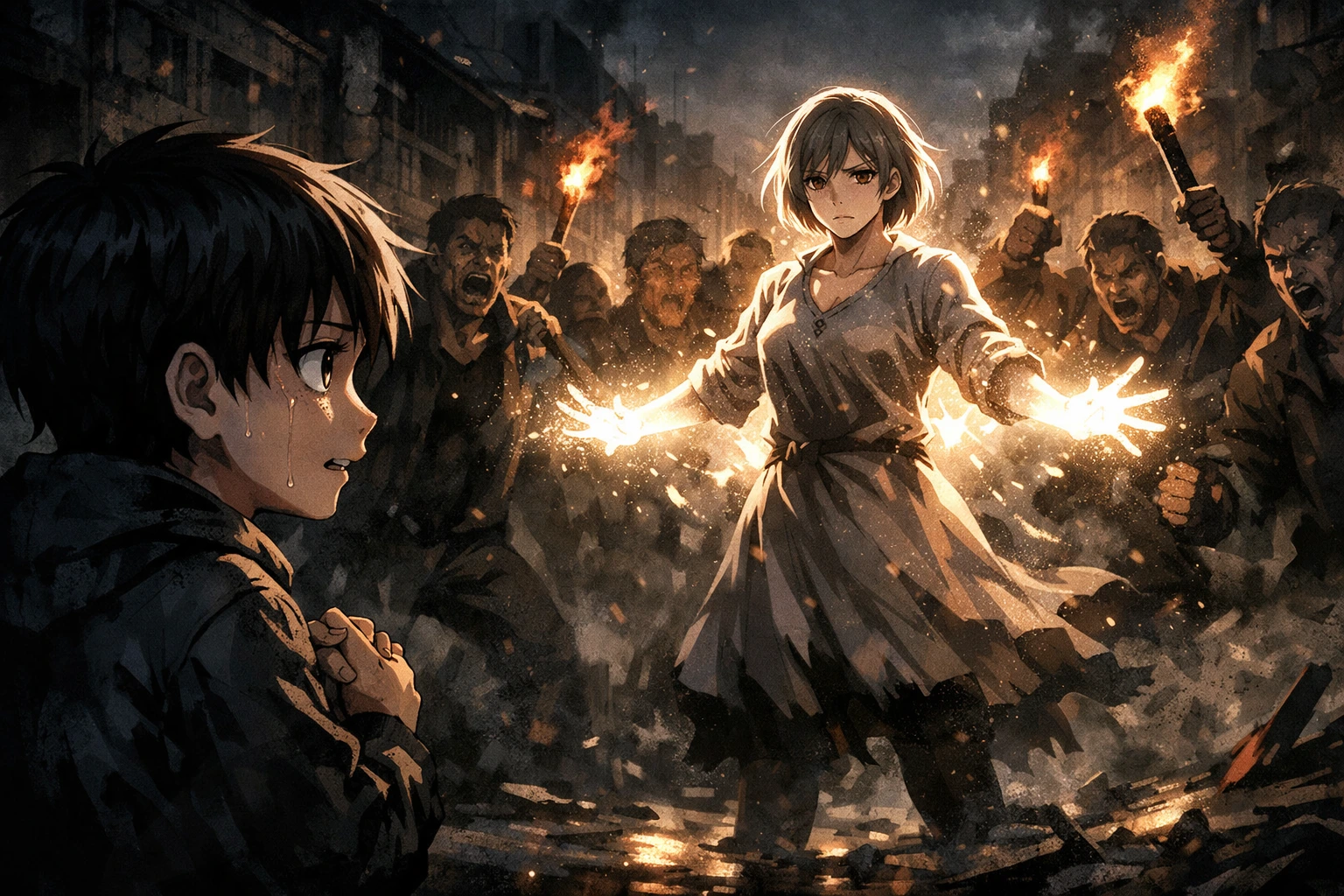
Amidst this global panic and draconian crackdown, a singular, defiant voice emerged: Destro’s mother. In a society paralyzed by fear, she stood as the first true advocate for the rights of the super-powered. Her stance was revolutionary in its pure, unadulterated simplicity.
She vehemently rejected the narrative that these abilities were an illness, a curse, or a disease to be cured. Instead, she boldly declared that her child’s power was a natural biological evolution, a fundamental human right bestowed by nature itself. She became the mother of the liberation movement, a beacon of hope for those forced into hiding.
Her advocacy was not born of a desire for supremacy, but of a mother’s fierce, unconditional love and a demand for basic human dignity. She sought to educate the masses, to bridge the gap of misunderstanding, and to plead for a world where her child could live without fear of persecution. She was a peaceful protester, a visionary who saw the potential for a new humanity long before the government decided how to regulate it. Her voice was the first spark of light in the dark ages of superhuman history.
The Assassination
However, history is rarely kind to peaceful visionaries who challenge the status quo. The tragedy that would forever alter the course of human history occurred when Destro’s mother was brutally murdered. She was not killed by a random accident, but systematically assassinated by anti-mutant purists—zealots who believed that eradicating the “disease” required exterminating those who defended it.
For the young Chikara Yotsubashi, this event was the ultimate, horrifying catalyst. The assassination of his mother shattered any illusion that peaceful protest, diplomacy, or civil discourse could ever secure freedom for power-users.
He watched the world murder the only person who spoke the truth, and in that moment of profound trauma and grief, the peaceful advocate died, and Destro, the revolutionary, was born. The blood of his mother proved to him that the normal human population would never accept them through words. They would only respect power. Her death was the crucible that forged his unyielding belief that freedom could not be asked for; it had to be taken, by force if necessary.
The Ideological War: “Meta Ability” vs. “Quirk”
The Semantics of Control
The conflict between Destro and the prevailing government was not merely fought with fists and weapons; it was fiercely contested on the battlefield of language and psychology. Destro understood a fundamental truth of sociology: whoever controls the language controls the narrative. As society began to stabilize and governments sought to regulate the super-powered populace, they introduced a specific terminology: “Quirk.”
This was a masterstroke of psychological warfare and social engineering. The word “Quirk” (meaning a peculiar behavioral habit or a minor, harmless individuality) was deliberately chosen to pacify the masses. It downgraded god-like abilities, lethal mutations, and world-altering powers into something cute, manageable, and fundamentally harmless.
By labeling these powers as “Quirks,” the government effectively domesticated them in the minds of the public. It made the concept of registering and regulating these powers seem like a reasonable bureaucratic step, akin to registering a unique talent, rather than what it truly was: the systemic suppression of human evolution. It was a linguistic leash designed to keep the extraordinary submissive to the ordinary.
The Rejection of the “Quirk”
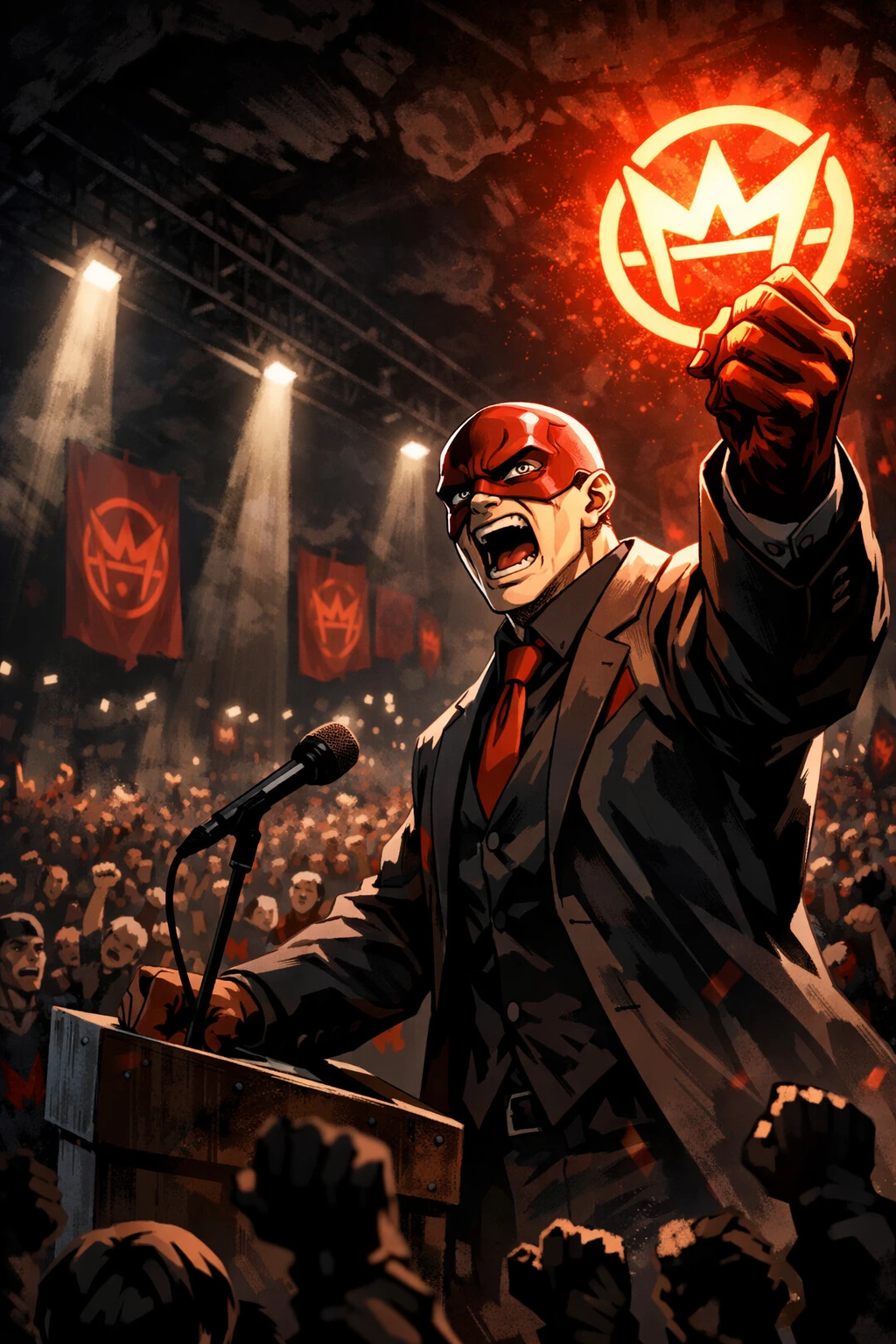
Destro and his followers recognized this linguistic subjugation immediately and rejected it with aggressive, militant fervor. For Destro, accepting the term “Quirk” meant accepting the government’s authority to diminish, regulate, and ultimately control their very nature. They completely refused the term, insisting instead on the phrase “Meta Ability.”
This was not just a stubborn preference for a different synonym; it was a profound ideological statement. “Meta” implies something beyond, something transcendent and superior. By referring to their powers as Meta Abilities, Destro asserted that they were the next step in biological evolution. They were not “quirky” anomalies; they were Homo Superior.
They were the apex predators of the new world. This terminology was designed to instill immense pride, superiority, and a sense of divine right within his followers. It shifted the psychological framing from “we have a weird trait we must control for society’s sake” to “we are a superior species being unjustly caged by inferiors.”
The Core Philosophy
At the very heart of Destro’s movement was a core philosophy that is alarmingly logical when viewed from a purely naturalistic perspective. His central argument was this: a Meta Ability is a physical appendage, a biological function as natural to the user as breathing, walking, or seeing.
Therefore, to enact laws that restrict a human from using their natural-born physical ability—to require a government-issued “license” just to exercise one’s own body—is a fundamental, grotesque violation of inherent human rights. He argued that the government’s Quirk regulation laws were akin to legislating that a bird must have a license to fly, or a cheetah a permit to run.
Destro believed that true freedom meant the absolute, unrestricted right to use one’s power as one saw fit, without governmental oversight, societal guilt, or legal repercussions. This philosophy struck a powerful chord because it bypassed the debate on heroism versus villainy. It appealed directly to the primal human desire for total autonomy and self-determination, making his argument incredibly persuasive to anyone who felt marginalized by the rigid structures of the newly forming Hero Society.
The First Meta Liberation Army
From Civil Rights to Armed Militia
Fueled by the devastating loss of his mother and armed with a potent, uncompromising philosophy, Destro set about changing the world. He took the scattered, grieving, and terrified individuals who had followed his mother’s peaceful civil rights movement and weaponized their grief.
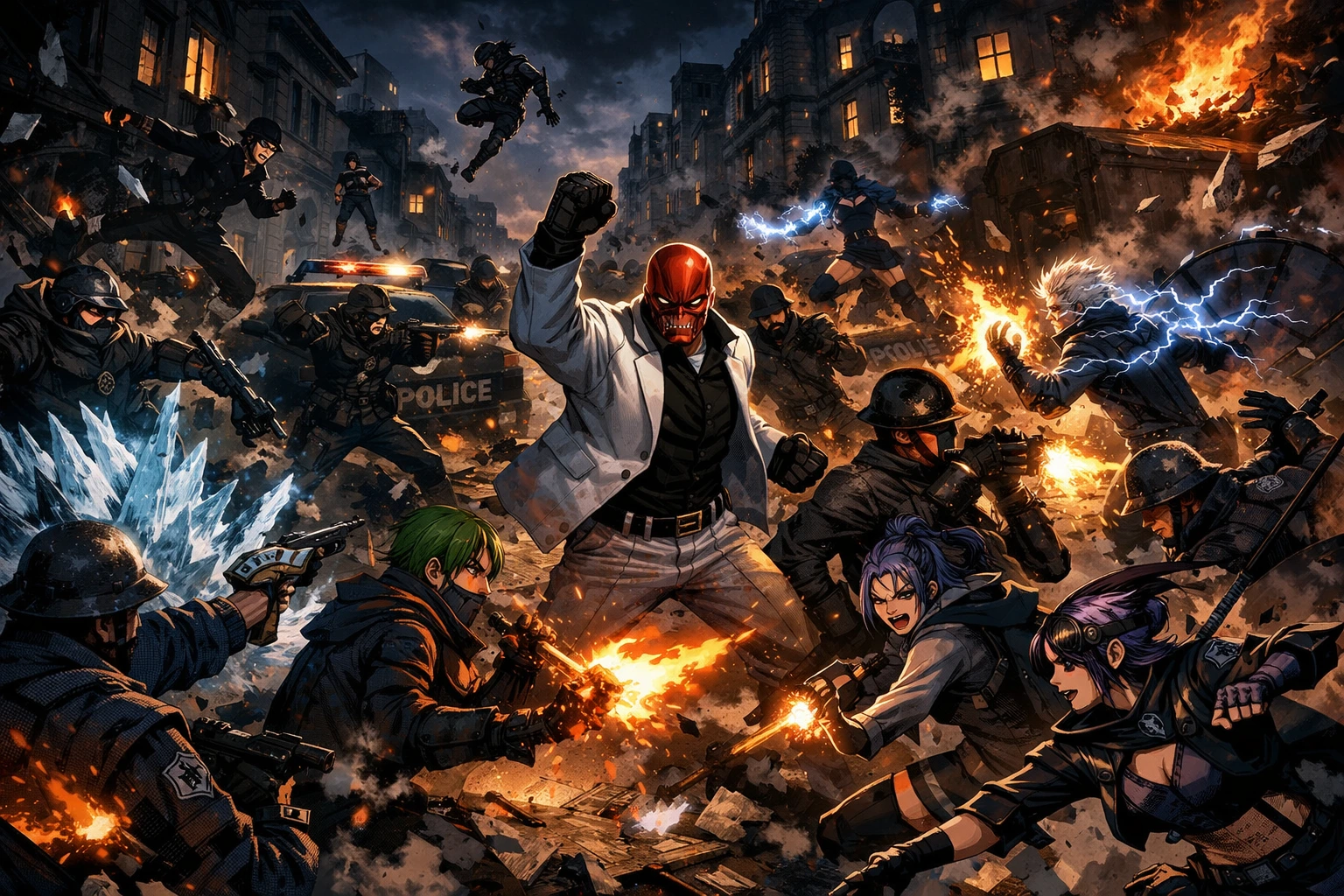
Under Destro’s charismatic and ruthless leadership, what began as a plea for understanding transformed into a highly organized, heavily armed, and deeply fanatical militia: The first Meta Liberation Army. This was not a chaotic gang of street thugs; it was a structured paramilitary organization driven by ideological purity. Destro implemented strict hierarchies, tactical training, and a unified vision.
He taught his followers that their oppression was a state-sponsored act of war, and that they had a moral obligation to fight back. The transition from protesters holding signs to soldiers holding weapons was rapid and terrifying, marking the true beginning of the darkest chapter in the history of super-powered society.
The Shadow War
The subsequent conflict between the first Meta Liberation Army and the state is largely undocumented in modern, sanitized history books. It was a brutal, unrecorded Shadow War. At this point in history, the modern Pro-Hero system did not exist. The government’s forces were largely disorganized, relying on traditional police and military tactics that were wildly ill-equipped to handle organized, coordinated strikes by individuals with devastating Meta Abilities.
The MLA engaged in guerrilla warfare, targeted assassinations of anti-mutant politicians, and massive infrastructure sabotage. They were fighting to completely dismantle the emerging societal order before it could fully solidify its regulations.
The streets ran red with the blood of both sides. It was a chaotic era of intense, visceral conflict where the lines between law enforcement and tyranny, and between freedom fighters and terrorists, were completely blurred. The government fought desperately to maintain the illusion of control, while Destro’s forces fought to tear that illusion down, exposing the fragility of human institutions in the face of post-human power.
The Attraction of the Elite
Perhaps the most dangerous aspect of the first Meta Liberation Army was its demographic makeup. While the movement naturally attracted the oppressed, the mutated, and the outcasts who had been rejected by society, Destro’s ideology had a terrifying secondary appeal: it attracted the elite. Wealthy industrialists, influential politicians, and high-society intellectuals who possessed powerful Meta Abilities were drawn to Destro’s doctrine of genetic supremacy.
They viewed the government’s regulations not just as oppressive, but as an insult to their natural superiority. Destro’s philosophy of “the strong should not be leashed by the weak” resonated deeply with individuals who already held social and economic power, and who now wanted to combine it with their raw, biological power. These elites provided the Meta Liberation Army with immense funding, political cover, access to advanced technology, and inside information.
This combination of desperate, grassroots foot soldiers and wealthy, influential backers made the MLA an existential threat to the very fabric of global governments, transforming it from a mere rebellion into a fully-funded shadow state.
The Fall and the Prison Years
The Defeat
Despite their massive numbers, their immense financial backing, and the raw destructive power of their members, the first Meta Liberation Army could not fight a protracted war against the combined, desperate might of the global status quo indefinitely. The governments of the world, recognizing the existential threat Destro posed, pooled their resources, eventually leading to the militarization of powerful individuals loyal to the state—the proto-versions of what would become Pro-Heroes.
After years of devastating conflict, the tide began to turn. Through a combination of overwhelming force, strategic attrition, and inevitable internal betrayals, the core forces of the MLA were systematically dismantled. Destro’s inner circle was broken, his strongholds were raided, and ultimately, the Father of the Revolution was captured. His defeat marked the end of the open warfare, but as the government would soon learn, capturing the man did not mean capturing the idea.
The Erasure Campaign
Following Destro’s capture, the government faced a monumental crisis: what to do with him. Executing him publicly would instantly turn him into an eternal martyr, sparking immediate, violent uprisings across the globe. Putting him on public trial would give him a global platform to broadcast his highly persuasive ideology to billions.
The state opted for a third, more insidious route: an active campaign of historical erasure. Destro was thrown into the deepest, darkest hole the government possessed—a maximum-security lockdown with zero contact with the outside world. Simultaneously, state-sponsored media and historical records were heavily censored.
The government actively tried to erase his existence, his writings, and the true scale of the Meta Liberation Army’s war from the public consciousness. They sought to reduce a global revolution to a mere footnote about “anarchist riots.” The goal was to let Chikara Yotsubashi rot in absolute silence, ensuring that his name and his philosophy would fade into the forgotten dustbin of history.
The Pen is Mightier
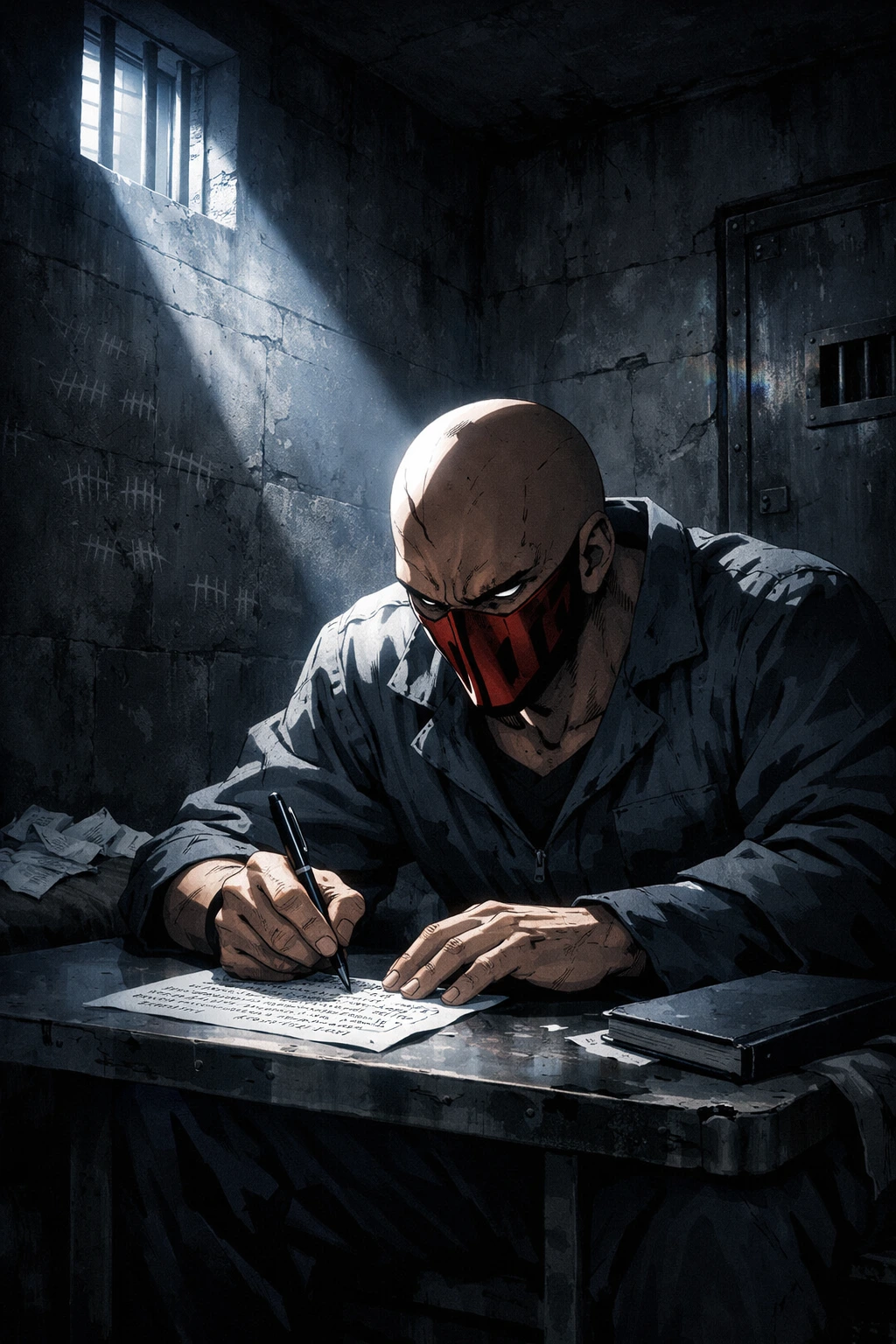
However, the government severely underestimated Destro’s indomitable will and his strategic foresight. Confined to a sterile cell in absolute solitary confinement, stripped of his army, his wealth, and his freedom, Destro did not despair. He did not waste his final years plotting a futile physical escape. Instead, he recognized that his physical body had already played its part; it was time for his mind to secure the future.
He requested a pen and paper. In the suffocating silence of his imprisonment, Destro meticulously documented his entire philosophy, his life story, the tragedy of his mother, and the undeniable logic of his vision for a liberated society. He poured every ounce of his charisma, his intellect, and his unyielding conviction into his writing. He turned his life story into a weapon that could bypass prison walls.
He realized that while the state could cage the revolutionary, they could never cage the revolution if it was immortalized in text.
The Manifesto: “Meta Liberation War”
The Underground Bible
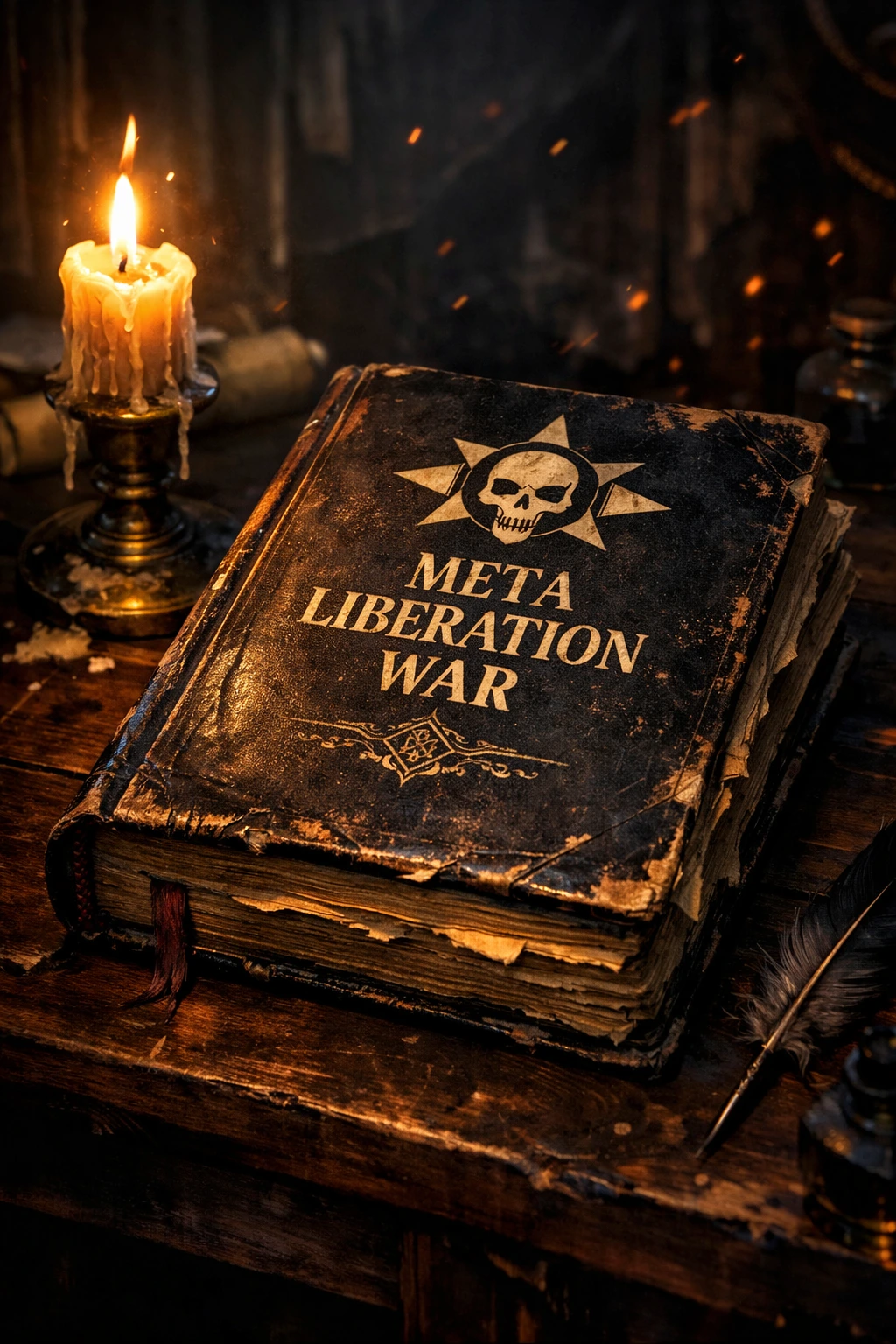
The manuscript Destro penned in his cell eventually made its way out of the maximum-security prison—likely smuggled by sympathetic guards or sleeper agents still loyal to the cause. This text was published under the title Meta Liberation War. The government immediately banned it, making its possession a severe criminal offense, but this only fueled its mystique.
The book became the ultimate underground bible. It was secretly printed, bound in unmarked covers, and distributed through the darkest corners of the criminal underworld, the black market, and encrypted digital networks. Over the decades, it became the sacred, foundational text for future generations of villains, anarchists, and anyone who felt crushed under the weight of Hero Society.
It was passed down like a forbidden relic, read in secret meetings, and memorized by zealots. Meta Liberation War ensured that even as Hero Society entered its golden age under All Might, a shadow society was simultaneously being educated, indoctrinated, and prepared for a future uprising.
The Power of the Written Word
Why was a simple autobiography considered so profoundly dangerous that possessing it was a crime? The answer lies in the sheer rhetorical brilliance of Destro’s writing. Meta Liberation War was not the ravings of a madman; it was a highly logical, deeply emotional, and systematically structured philosophical argument.
Destro masterfully articulated the pain of being born different, the hypocrisy of a society that dictates how one can use their own body, and the inherent violence of state control. The book provided a deeply compelling framework that made the Pro-Hero society—with its licenses, its commercialization of heroism, and its rigid hierarchy—look like fascist oppressors suppressing human evolution.
For a disillusioned youth whose Quirk was deemed “villainous” or useless by society, reading Destro’s book was an awakening. It offered validation, purpose, and a sense of belonging to something greater. It easily radicalized those who fell through the cracks of society, proving that Destro’s words were far more dangerous than his physical power ever was.
The Martyrdom
Having completed his magnum opus and secured the future of his ideology, Destro made one final, calculated move. He committed suicide in his prison cell. This act was not one of despair, surrender, or weakness; it was a profound, strategic psychological victory.
By choosing the exact time and manner of his own death, Destro robbed the government of their final power over him. They could not execute him, they could not break his spirit, and they could not claim they defeated him in the end. His suicide cemented his status as a legendary, unbreakable figurehead.
He died on his own terms, effectively sealing his narrative. In the eyes of his followers, he became a transcendent martyr, a god-like figure who sacrificed his mortal shell so that his ideals could live forever. His death was the ultimate punctuation mark on his manifesto, ensuring his legacy would burn with a fanatical intensity for generations to come.
The Bloodline Legacy: Re-Destro and Detnerat
The Secret Cultivation
The government believed that with Destro dead and his army scattered, the nightmare was over. They were catastrophically wrong. The remnants of the Meta Liberation Army, operating with cult-like devotion, enacted a generational contingency plan.
They protected Destro’s biological lineage with absolute secrecy. His descendant, Rikiya Yotsubashi, was born into this hidden world. From the moment he took his first breath, Rikiya was not raised as a normal child; he was meticulously cultivated, indoctrinated, and molded to become the second coming of the Father.
He was raised on the teachings of Meta Liberation War, surrounded by fiercely loyal zealots who treated him as royalty. He inherited not only his ancestor’s powerful Stress Meta Ability but also the heavy, uncompromising burden of the revolution. He became Re-Destro, the torchbearer of a dormant army, waiting patiently for the modern society of heroes to show a sign of weakness.
Corporate Warfare
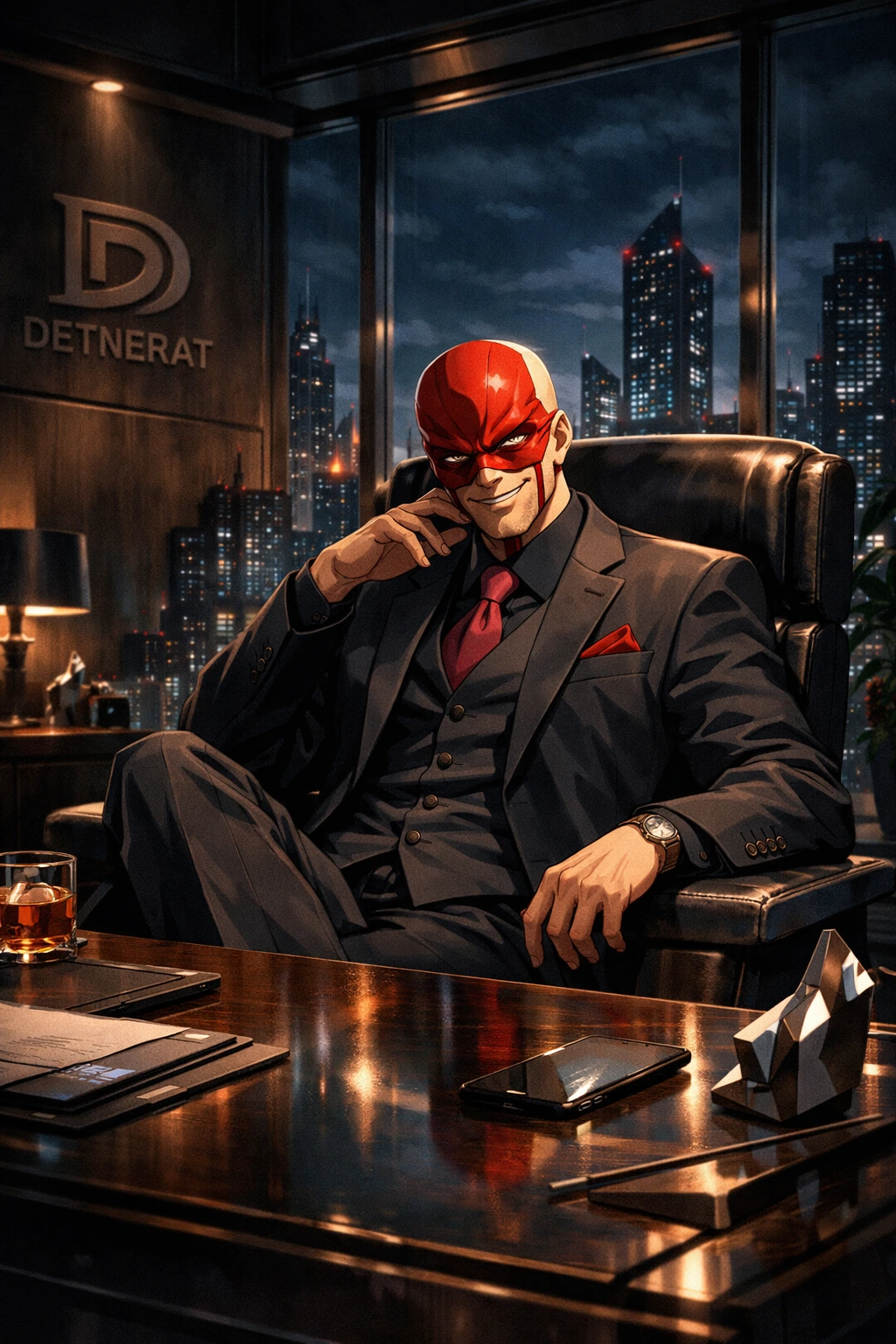
Re-Destro, however, was not a mere carbon copy of his ancestor; he was a brilliant evolution of the concept. He recognized that building a militia in the woods and engaging in open warfare against the modern Pro-Hero system, spearheaded by gods like All Might, would be suicide. Therefore, Re-Destro adapted his ancestor’s ideology for the modern, capitalist era. Instead of an overt terrorist cell, he built a legitimate, massive corporate empire: the Detnerat Corporation.
Under the guise of a lifestyle support company providing items for people with unique body types, Re-Destro amassed billions. He used this wealth and corporate influence to wage a shadow war, infiltrating the hero support industry, funding political campaigns, controlling media narratives, and quietly supplying the criminal underworld. The modern Meta Liberation Army wore tailored suits, sat on corporate boards, and published op-eds.
They aimed to dismantle society from the inside out, using the very capitalist structure of Hero Society to fund its destruction. It was a terrifyingly sophisticated approach to terrorism, proving that Destro’s ideology could adapt and thrive in any era.
The Ultimate Irony
The grand tragedy and ultimate irony of Destro’s multi-generational crusade culminated in the modern era during the clash between Re-Destro’s massive, highly organized army and the chaotic, desperate League of Villains led by Tomura Shigaraki. Re-Destro intended to crush the League to assert the MLA as the true successors to the underworld.
However, in the chaotic battle of Deika City, Shigaraki underwent a horrific awakening, unlocking a level of destructive power that terrified even the leader of the MLA. In a moment of sheer awe and submission, Re-Destro witnessed Shigaraki entirely unchained by societal rules, representing the absolute apex of “Meta Liberation.” Believing Shigaraki to be the living embodiment of his ancestor’s dream—pure, unadulterated freedom through destruction—Re-Destro surrendered his entire corporate empire, his wealth, and his army to him.
The ultimate irony was complete: Destro’s deeply philosophical, structured, and goal-oriented movement for human freedom was violently subjugated and absorbed by a young man who simply wanted to turn the entire world to dust. The Meta Liberation Army became the Paranormal Liberation Front, a tool for sheer annihilation rather than societal reform.
Conclusion
The Delayed Victory
In analyzing the totality of Chikara Yotsubashi’s life and legacy, one must confront a startling, uncomfortable truth: despite his defeat, his imprisonment, his suicide, and the ultimate hijacking of his army by Shigaraki, Destro actually won. His victory was severely delayed, but it was absolute. During the Paranormal Liberation War and the subsequent collapse of Japan, the Pro-Hero system shattered. The laws regulating Quirks became unenforceable.
The government lost its grip on the populace, and citizens were forced to use their Meta Abilities freely just to survive. The exact societal conditions that Destro envisioned in his manifesto—a world completely unchained by Quirk regulations, where the strong utilize their natural abilities without restriction or government oversight—came to pass.
The society that murdered his mother and locked him in a cage was reduced to rubble, and the surviving population was forced to live by the rules of the Meta Liberation War. Destro played a game that spanned generations, and in the end, his ideology outlasted the society that tried to erase him.
Closing Thoughts
Kohei Horikoshi’s creation of Destro is a masterclass in world-building and thematic depth. In a manga genre historically defined by rigid, black-and-white comic book morality—where heroes smile and villains cackle—Destro introduces a vital, complex shade of grey. He represents the uncomfortable reality that oppressive systems create their own worst enemies.
By framing the villain’s origin around a genuine civil rights grievance (the criminalization of natural biology), Horikoshi forces the reader to question the foundational ethics of Hero Society itself. Destro proves that the most dangerous villains are not the ones who want to steal money or conquer cities; they are the ones who believe, with absolute, unwavering conviction, that they are the righteous saviors of humanity.
Chikara Yotsubashi may have died alone in the dark, but his philosophy set the world on fire, cementing his legacy as the most consequential and philosophically terrifying figure in the history of My Hero Academia.