
1. The Sengoku Anomaly: The Golden Age of Slayers
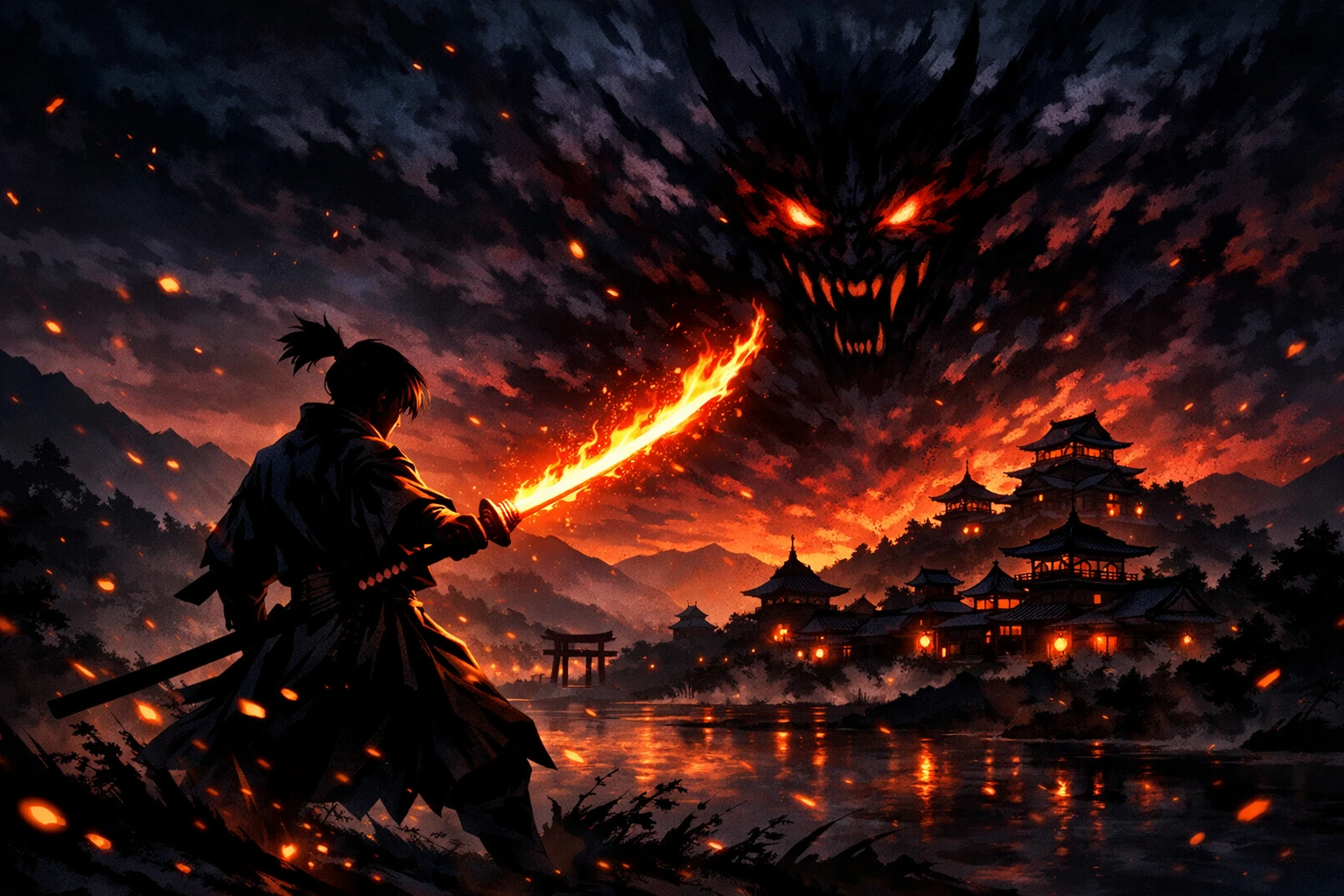
The Sengoku Era of Japan is historically remembered as the “Age of Warring States,” a period characterized by near-constant social upheaval, political intrigue, and relentless military conflict. However, within the hidden, blood-soaked annals of the Demon Slayer Corps, the Sengoku period represents something far more profound: it was the absolute apex of human martial evolution.
It was an anomaly in the timeline of human history, a brief, shining golden age where mankind did not merely survive the demonic threat lurking in the shadows, but actively hunted the apex predators of the night to the very brink of extinction. To understand the gravity of this era is to recognize it not merely as a historical backdrop, but as a crucible that forged the absolute pinnacle of swordsmanship—a pinnacle that the Corps would spend the next four centuries desperately, and fruitlessly, trying to reclaim.
At the very epicenter of this martial renaissance was a singular, terrifying perfection: Sun Breathing. To categorize Sun Breathing merely as the “first” breathing style is a gross understatement; it must be framed as the singular, mathematically and biologically perfect technique from which all other subsequent martial styles tragically degraded. And at the heart of this perfect technique was its creator, Yoriichi Tsugikuni. Yoriichi was not just a swordsman, nor was he merely a prodigy.
In the context of the Demon Slayer universe, Yoriichi must be analyzed as a terrifying, once-in-a-millennium biological anomaly. He was a glitch in the evolutionary matrix, a being born with physical and neurological hardware so advanced that he seemed to belong to an entirely different species than the humans he fought beside. He was the universe’s immune response to the disease that was Muzan Kibutsuji, manifested in human form.
The sheer magnitude of Yoriichi’s existence created a massive, almost incomprehensible disparity in power between the Taisho-era Hashira—whom modern audiences follow—and the Sengoku-era swordsmen. In the Taisho era, the Hashira are revered as demigods among men, yet they routinely face catastrophic injuries, dismemberment, and death when confronting even the lowest ranks of the Upper Kizuki.
They are forced to push their bodies beyond their natural limits, utilizing sheer willpower and imperfect derivative breaths to barely scrape by. Conversely, during the Sengoku era, under the direct tutelage and radiating influence of Yoriichi, the Demon Slayer Corps reached a level of overwhelming lethality that terrified the demon progenitors. The Sengoku swordsmen, awakened by resonance with Yoriichi’s innate power, wielded techniques that effortlessly decoupled demon heads from their shoulders.
Why, then, did the Corps nearly face extinction after this golden age passed? The answer lies in the unsustainable nature of the Sengoku anomaly. The golden age was not built on a foundation of repeatable human achievement; it was built entirely on the back of Yoriichi’s impossible biology and the temporary, localized resonance he shared with his contemporaries.
When Yoriichi and the marked swordsmen of his generation passed away—most succumbing to the fatal biological toll of the Demon Slayer Mark—the Corps was left with a gaping void. They had tasted absolute perfection, but possessed neither the biological hardware nor the comprehensive knowledge to maintain it.
The subsequent generations were forced to rely on fragmented memories and biologically inferior derivative styles, resulting in a devastating power vacuum. The demons, possessing infinite lifespans, simply waited out the storm. The Sengoku era passed into myth, leaving the Taisho-era Corps as a shadow of a former god, fighting a desperate war of attrition against an enemy that remembered the terrifying heat of the Sun.
2. The Anatomy of a God: Yoriichi’s Innate Biology
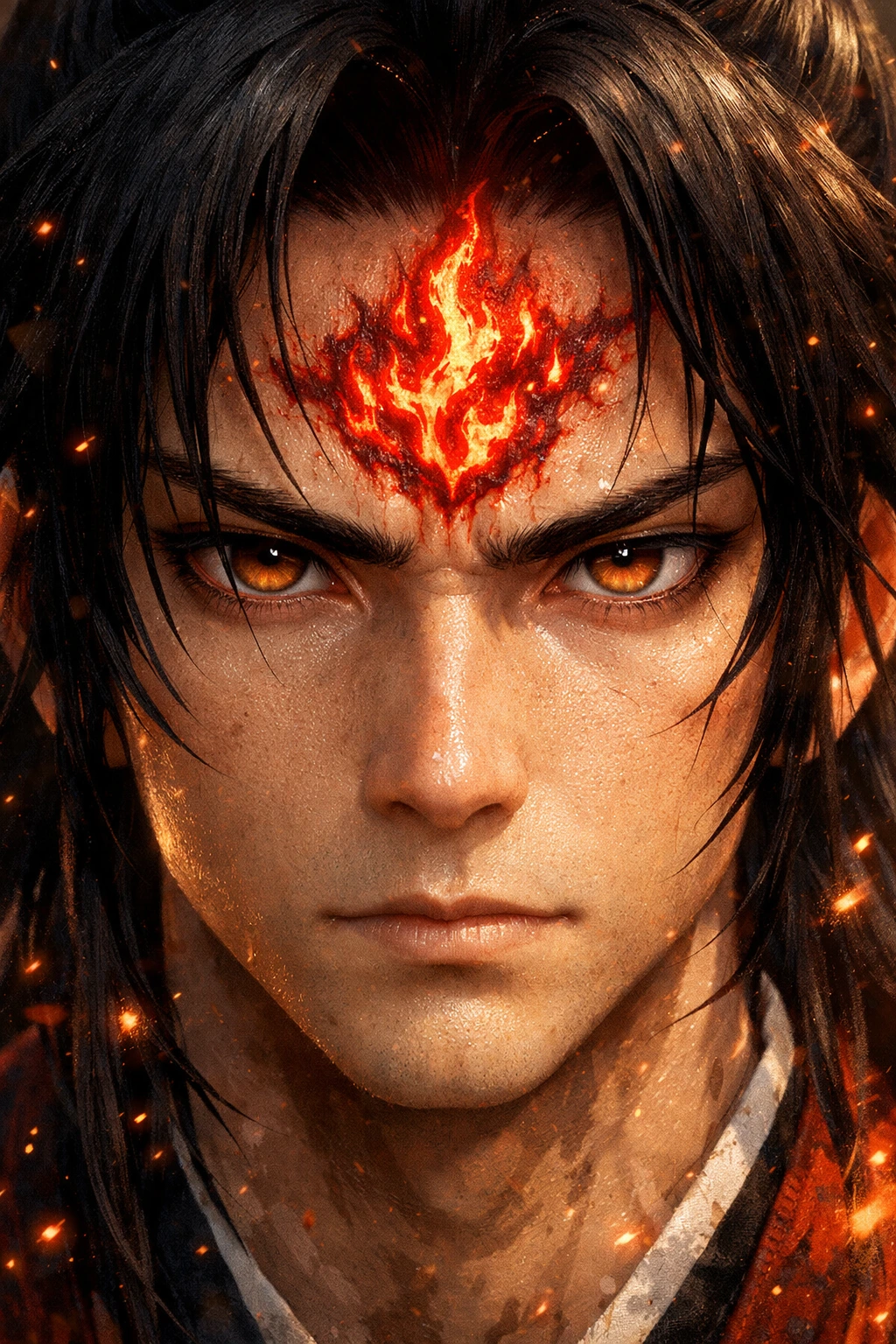
To understand the supremacy of Sun Breathing, one must first dissect the medical impossibility that was Yoriichi Tsugikuni. In the modern Taisho era, the manifestation of the Demon Slayer Mark is a desperate, suicidal gambit.
To awaken the mark, a slayer must force their body into a state of extreme physiological trauma—achieving a heart rate exceeding 200 beats per minute and a core body temperature soaring above 39 degrees Celsius (102.2°F). In any normal human, this state indices rapid protein denaturation, cellular apoptosis, and catastrophic organ failure. The Taisho slayers burn their very lifespans as fuel, accelerating their cellular division to the Hayflick limit, effectively guaranteeing their death before the age of twenty-five.
Yoriichi, however, defied the fundamental laws of human thermodynamics and biology. He was born with the Demon Slayer Mark already emblazoned on his forehead. This was not a temporary state of hyper-arousal induced by life-threatening stress; this extreme physiological overdrive was his resting baseline. From the moment he drew his first breath, Yoriichi’s heart pumped at a hyper-accelerated rate, and his body radiated immense heat, yet he suffered absolutely no cellular degradation.
His biology was perfectly adapted to sustain a state of continuous, maximum output without experiencing the toxic buildup of lactic acid or the deterioration of telomeres. His cardiovascular system was a flawlessly engineered engine that could run at the redline indefinitely. Because his body was native to this state, the “curse” of the Mark did not apply to him.
He lived to be over eighty years old, and even in his final moments, his physical speed and striking power remained absolute, untainted by the ravages of senescence. He was, in every biological metric, a god wrapped in mortal flesh.
Beyond his indestructible physiology, Yoriichi possessed a hyper-evolved state of visual processing and neuroplasticity known as the “Transparent World.” For ordinary slayers, accessing the Transparent World requires immense concentration, pushing their sensory perception to the absolute brink to peer beneath the skin of their opponents.
For Yoriichi, this was simply how his eyes functioned from birth. He did not just see the surface of the world; he perceived the underlying mechanics of life itself. He could see the musculoskeletal structure, the frantic pumping of blood through veins, the expansion and contraction of lungs, and the microscopic firing of muscle fibers before a limb even moved.

This innate ability transformed combat from a physical struggle into a mathematical equation that he solved instantaneously. Because he could see the bio-electric signals traveling through an opponent’s nervous system, he could predict their attacks before the muscles even received the command to twitch.
To fight Yoriichi was to fight a supercomputer capable of calculating millions of variables in real-time. He did not rely on reaction speed; his neuroplasticity allowed him to map out the entire trajectory of a battle before the first strike was thrown, making him effectively untouchable. He saw the world in ultra-slow motion, a serene landscape of moving anatomical parts waiting to be dismantled.
Yet, perhaps the most terrifying aspect of Yoriichi’s anatomy was psychological and physiological rather than purely physical: his permanent existence within the “Selfless State.” In the martial arts of the Demon Slayer universe, every living creature emits an aura of intent, a “Fighting Spirit” or Touki.
This spirit manifests as subtle bio-electric shifts, changes in breathing, microscopic muscle tension, and aggressive neurological impulses. Apex predators like the Upper Moon Three, Akaza, utilize this Fighting Spirit as a compass, allowing them to sense an opponent’s location, intent, and power level with pinpoint accuracy. Muzan Kibutsuji, too, relies heavily on sensing the fear, aggression, and intent of his prey.
Yoriichi, however, possessed a psychological void where his Fighting Spirit should have been. He fought with the emotional neutrality of a falling leaf or a flowing river. He masked his neurological intent to kill so absolutely that he became completely invisible to the predatory instincts of demons. When Yoriichi drew his blade, his heart rate did not spike with adrenaline, his pupils did not dilate with rage, and his muscles telegraphed no malice.
To Akaza’s Compass Needle, Yoriichi would register as a completely inanimate object—like a rock or a tree. To Muzan, who was accustomed to feeling the terrifying, raging auras of those who sought his head, Yoriichi’s approach was an incomprehensible silence. By the time Muzan registered that this unassuming man was a threat, Yoriichi had already calculated the exact angles required to end his immortal existence. This absolute absence of malice, combined with his unparalleled lethality, made Yoriichi a paradox that the demonic ecosystem simply could not process or survive.
3. The Mechanics of Sun Breathing (Hinokami Kagura)

Sun Breathing is not merely a collection of sword strikes; it is a masterclass in bio-mechanical engineering, physics, and advanced respiratory control. To understand the 13 Forms of Sun Breathing (which was later preserved in secret as the Hinokami Kagura), one must break down the sheer, impossible kinetic reality of the technique.
Unlike the derivative breathing styles, which often rely on isolated, explosive bursts of energy that drain the user’s stamina, Sun Breathing is engineered to be a perfect, unbroken loop. It is a continuous chain of kinetic energy where the momentum from one strike flawlessly feeds into the initiation of the next.
When performed perfectly, the user’s respiratory cycle synchronizes exactly with the centripetal and centrifugal forces of the swinging blade. As the user exhales to generate maximum muscular contraction for a strike, the very motion of the sword pulling them forward forces their lungs to expand, drawing in the exact volume of oxygen required for the subsequent technique.
It is an infinitely recycling engine of stamina. A master of Sun Breathing does not experience fatigue in the traditional sense, provided the sequence remains unbroken; the technique self-sustains, using the momentum of the weapon to carry the body through the exhausting demands of combat. It is the physical embodiment of the circle, a perpetual motion machine of death.
But how does a Nichirin sword emulate the devastating power of the sun itself? The answer lies in the physics of generating extreme, localized thermal energy through hyper-accelerated swings. Sun Breathing is designed to maximize the friction and air resistance against the blade. Through the hyper-oxygenation of their blood, the user generates massive amounts of internal body heat (exceeding the 39°C mark), which is then transferred kinetically through their grip into the conductive ore of the Nichirin blade. Coupled with swings that break the sound barrier, the edge of the blade generates a microscopic envelope of plasma—true, literal heat.
This extreme, localized thermal energy is what makes Sun Breathing uniquely devastating to demon flesh. When a Sun Breathing technique strikes a demon, it does not merely cut; it incinerates. The ambient heat generated by the blade cauterizes the wound at a cellular level, completely overwhelming and disrupting the demonic regenerative cells.
For a being like Muzan Kibutsuji, whose regeneration is so fast that decapitation is usually meaningless, a strike from a Sun Breathing blade is a catastrophic event. The solar kinetic energy actively burns the demon’s cellular structure, causing agonizing pain and permanently scarring the tissue, bypassing the regenerative immortality that the demons rely upon.
The true genius of Yoriichi, however, is manifested in the legendary Thirteenth Form of Sun Breathing. This form is not a single strike, but the flawless, continuous execution of all prior twelve forms in rapid succession, designed for one specific, horrifying purpose: the anatomical dismantling of Muzan Kibutsuji. During their fateful encounter, Yoriichi’s Transparent World revealed a biological nightmare—Muzan possessed five brains and seven hearts, constantly shifting within his malleable flesh. Normal decapitation was useless.
The Thirteenth Form was Yoriichi mathematically calculating the exact geometry required to destroy an immortal. He had to calculate the specific angles, the exact rotational velocity of his blade, and the precise respiratory output needed to strike twelve moving vital organs simultaneously before Muzan’s instantaneous regeneration could heal the first wound.
The Thirteenth Form is a masterpiece of kinetic chaining, a sequence where the blade dances through a hyper-complex, multi-dimensional trajectory, ensuring that all twelve vitals are severed in a fraction of a second. It is the ultimate expression of human potential directed toward the singular goal of eradicating the ultimate evil.
4. The Schism: The Evolution of the Derivative Breaths
The profound tragedy of the Sengoku era is that the absolute perfection of Sun Breathing could not be replicated. When Yoriichi attempted to teach his fellow swordsmen the techniques that came so naturally to him, they met with catastrophic failure.
This was not a failure of willpower or a lack of talent on the part of his students; it was a hard biological limitation. The other Sengoku swordsmen simply did not possess the hardware required to run the software of Sun Breathing.
The respiratory demands of inhaling enough oxygen to fuel the continuous, high-temperature loop of the 13 Forms caused ordinary human lungs to hemorrhage. The extreme torque, kinetic chaining, and instantaneous directional changes required to maintain the perpetual motion of the strikes literally tore human muscle fibers from the bone and shattered their joints.
Their alveoli ruptured beneath the atmospheric pressure of the technique. Attempting to emulate the sun was burning them alive from the inside out. Sun Breathing was a technique designed by a god, for a god, and mortal vessels shattered when trying to contain it.
Realizing this fundamental incompatibility, Yoriichi proved himself not just as a supreme warrior, but as a supremely empathetic and genius Cultivator. He did not arrogantly force his perfect style upon bodies that would break under its weight. Instead, he utilized the Transparent World to analyze the microscopic anatomical makeup of his peers. He looked at their individual muscle densities, lung capacities, fast-twitch to slow-twitch muscle fiber ratios, and bone structures. Using this data, he deconstructed his perfect Sun Breathing, diluting and tailoring its components to create specialized, albeit “inferior,” derivatives that mortal bodies could withstand.
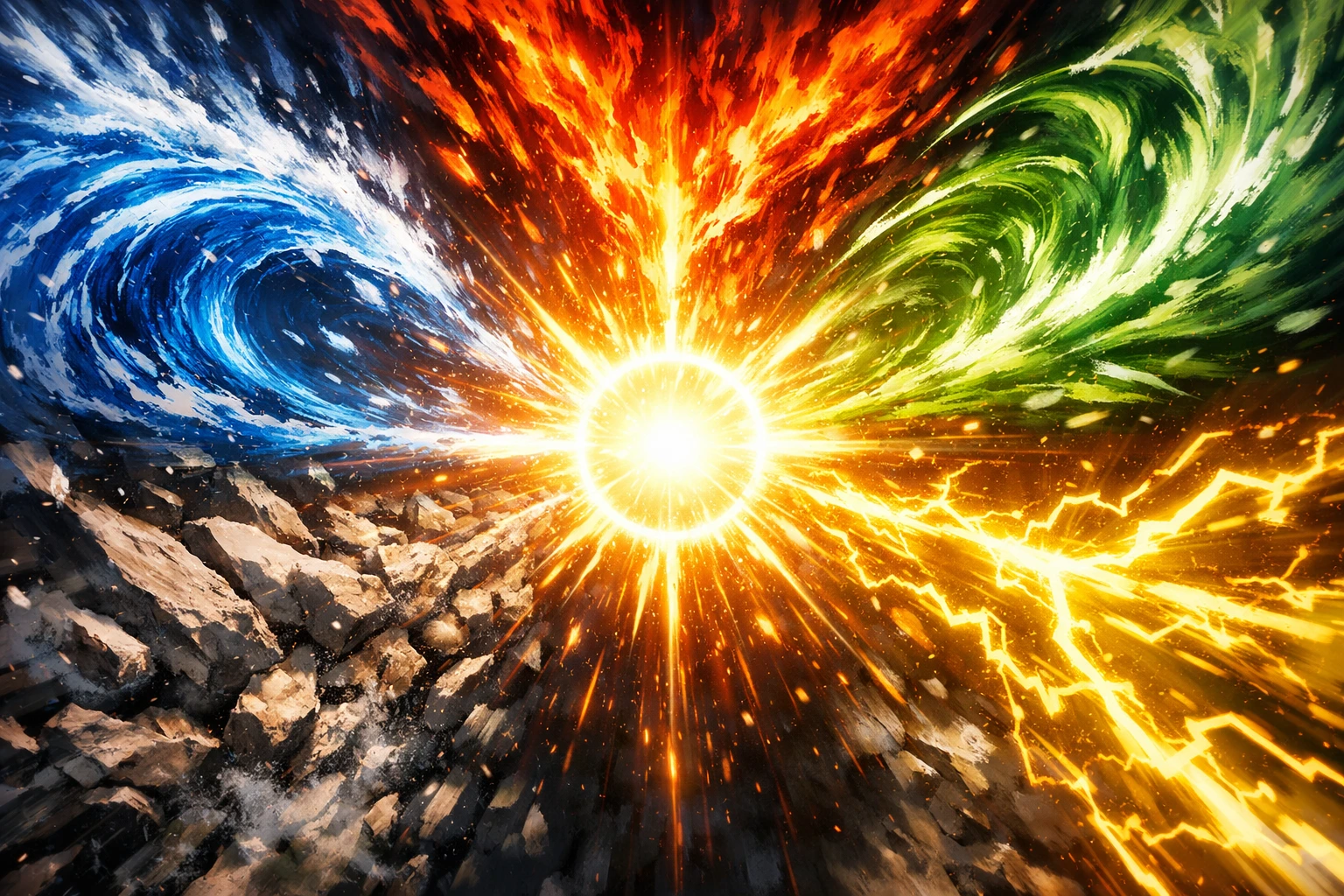
For a swordsman with high flexibility and a fluid muscular structure, he adapted the continuous kinetic chaining of Sun Breathing into a style focused on graceful redirection and defense—thus, Water Breathing was born. For a swordsman with dense, explosive fast-twitch muscles who lacked stamina, he isolated the hyper-accelerated, single-strike elements of Sun Breathing into blindingly fast Iaijutsu techniques—creating Thunder Breathing.
Flame Breathing was tailored for those who could generate immense bursts of thermal energy but couldn’t sustain the continuous loop. Wind Breathing emphasized ferocious, multi-directional slashes for those with extreme upper-body torque, and Stone Breathing was crafted for individuals with massive physical frames and core stability. These five foundational derivatives were acts of necessary compromise—trading absolute perfection for survivability and practicality.
However, this initial schism set into motion a profound generational degradation. As the centuries passed, the descendants of these original students began to iterate upon the derivatives. Over 400 years, the foundational styles branched out even further, leading to the creation of highly specialized, idiosyncratic techniques like Mist, Love, Sound, and Serpent Breathing. While these modern styles were brilliantly adapted to the unique anatomies of their Taisho-era creators (such as Mitsuri Kanroji’s unnatural muscle density or Tengen Uzui’s shinobi physiology), they represented a tragic drift from the source.
With every new branch, the breathing styles became more specialized, focusing on gimmicks, unique weapons, or specific environmental advantages. But in doing so, they drifted further and further away from the holistic, overwhelming, and perfect solar kinetic energy of Yoriichi’s original form. The modern Hashira are masters of their specific niches, but they are wielding fragments of a shattered mirror, entirely unaware of the blinding, unified light of the original Sun Breathing that once made the Demon King tremble.
5. The Great Purge: Muzan’s Eradication Campaign

The encounter between Yoriichi Tsugikuni and Muzan Kibutsuji did not merely end in a physical defeat for the Demon King; it resulted in severe, centuries-long psychological and physiological trauma. Muzan, a being who viewed himself as a flawless apex predator, a natural disaster made flesh, was reduced to a state of absolute, pathetic terror in a matter of seconds. Yoriichi had effortlessly bypassed Muzan’s instant regeneration, slicing through his multiple brains and hearts with a blade that burned like the core of a star.
Muzan barely escaped by detonating his own body into eighteen hundred fragments, but the damage was permanent. The kinetic solar radiation of Yoriichi’s blade was so immense that the physical scars left on Muzan’s body never healed. For over 400 years, at a microscopic, cellular level, those scars continued to burn. Muzan experienced constant, agonizing psychosomatic and actual physiological phantom pains.
Every time he regenerated his flesh, the cellular memory of the Sun Breathing technique fought against it, searing him from the inside. Yoriichi had not just wounded Muzan; he had infected the Demon King’s biology with an incurable, burning terror.
Driven by this overwhelming, PTSD-fueled paranoia, Muzan resolved that the techniques of Sun Breathing must be erased from the face of the earth. He could not risk the possibility of another anomaly like Yoriichi ever rising against him. To accomplish this impossible task of historical erasure, Muzan formed a dark, strategic alliance with his most powerful subordinate: Upper Moon 1, Kokushibo.
Kokushibo was none other than Michikatsu Tsugikuni, Yoriichi’s own twin brother, a Sengoku-era swordsman who had succumbed to jealousy and the fear of the Mark’s death curse, trading his humanity for demonic immortality.
Together, Muzan and Kokushibo enacted the Great Purge. Over the course of decades, they systematically hunted down and slaughtered anyone who knew even a fragment of the Sun Breathing forms. This was not a war; it was a methodical, surgical genocide. Kokushibo, possessing intimate knowledge of the Demon Slayer Corps’ inner workings and the specific individuals who had trained under his brother, was the perfect assassin.
They targeted the masters, the apprentices, and even the families of anyone suspected of harboring the knowledge of the Sun. They burned dojos, destroyed ancient scrolls, and silenced the greatest generation of swordsmen the world had ever known. Any slayer who manifested the Demon Slayer Mark or exhibited techniques remotely resembling the black blade of Sun Breathing was brutally executed before they could pass on their knowledge.
The success of this eradication campaign was absolute, and its consequences shaped the grim reality of the Taisho era. This is exactly why the modern Hashira—the greatest warriors of their generation—are completely ignorant of Sun Breathing. The deliberate assassination of the Sengoku masters created a massive historical blackout. The Corps was plunged into a dark age of lost knowledge. The lineage of the Sun was severed so cleanly that even the existence of Yoriichi faded from institutional memory, becoming a fragmented myth rather than historical fact.
The Demon Slayer Corps of the Taisho era was essentially forced to reinvent the wheel, fighting a desperate, losing battle against Upper Moons because the ultimate weapon against them had been systematically wiped from the archives of human history. Muzan’s terror had successfully altered the course of martial evolution.
6. Conclusion: The Kamado Inheritance
In the end, however, Muzan’s grand eradication campaign—a genocide that spanned centuries and cost the lives of the greatest warriors in history—was undone by an ultimate, staggering irony. In his obsessive hunt for martial artists, marked prodigies, and scholars of the blade, Muzan Kibutsuji completely ignored a humble, impoverished family of charcoal burners living deep in the isolated, snow-capped mountains.
When Yoriichi Tsugikuni, broken by his failure to kill Muzan and his brother’s descent into darkness, wandered the earth, he found solace in the company of Sumiyoshi Kamado. In a final act of preservation, knowing his days were numbered and that the Corps was being purged, Yoriichi did not attempt to teach Sumiyoshi to be a warrior. Instead, Sumiyoshi, possessing an eidetic memory, observed Yoriichi performing the 13 Forms of Sun Breathing not as a martial art, but as a sorrowful, beautiful dance.
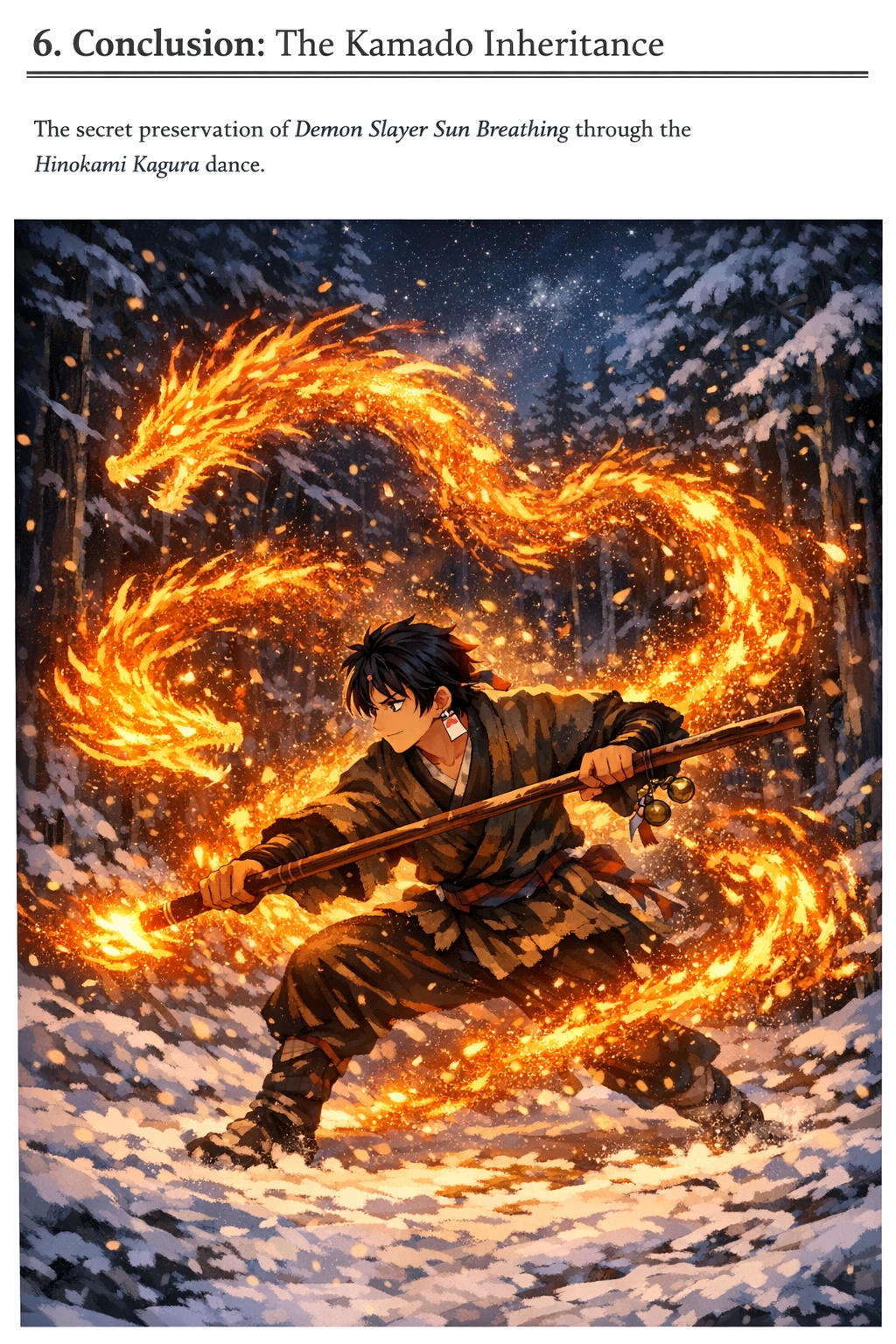
The Kamado family took this devastating combat technique and masterfully disguised it as the Hinokami Kagura—the Dance of the Fire God. They hid the deadliest martial art in human history in plain sight, passing it down through generations as an annual, grueling religious ritual performed from sunset to sunrise to ward off disasters.
This disguise was brilliant. The physical act of baking charcoal naturally expanded the Kamado family’s lung capacities over generations, preparing their biology to endure the excruciating respiratory demands of the continuous loop. Muzan was looking for swordsmen wielding black Nichirin blades; he was not looking for soot-covered peasants dancing with wooden staffs by a fire.
Alongside the dance, Yoriichi left behind his Hanafuda earrings. The passing of these earrings from Yoriichi to Sumiyoshi, down an unbroken lineage to Tanjuro, and finally to Tanjiro, carries a massive symbolic and psychological weight.
They are not merely heirlooms; they are a psychological weapon. When Muzan first encounters Tanjiro in Asakusa and sees those earrings, the sheer terror triggers his cellular PTSD. The earrings are the physical manifestation of his deepest trauma, a promise echoing from the Sengoku era that his sins have not been forgotten. They are a beacon of the Sun in the endless night Muzan sought to create.
Ultimately, an expert analysis of the Demon Slayer universe reveals a profound truth: Sun Breathing was never truly destroyed. Despite Muzan’s desperate, bloody purge, the technique simply went dormant. It retreated into the mountains, incubating within the lungs of charcoal burners, waiting patiently across centuries.
It waited for the biological degradation of the Corps to run its course, and it waited for a human body—tempered by hardship, a pure heart, and an unyielding spirit—capable of enduring its punishing biological toll. Sun Breathing was the universe’s perfect answer to the demon threat, and through the quiet, unshakeable inheritance of the Kamado family, it finally returned to finish the execution that Yoriichi Tsugikuni started four hundred years ago.