
1. The Wisteria Prison: Engineering a Fabricated Hell
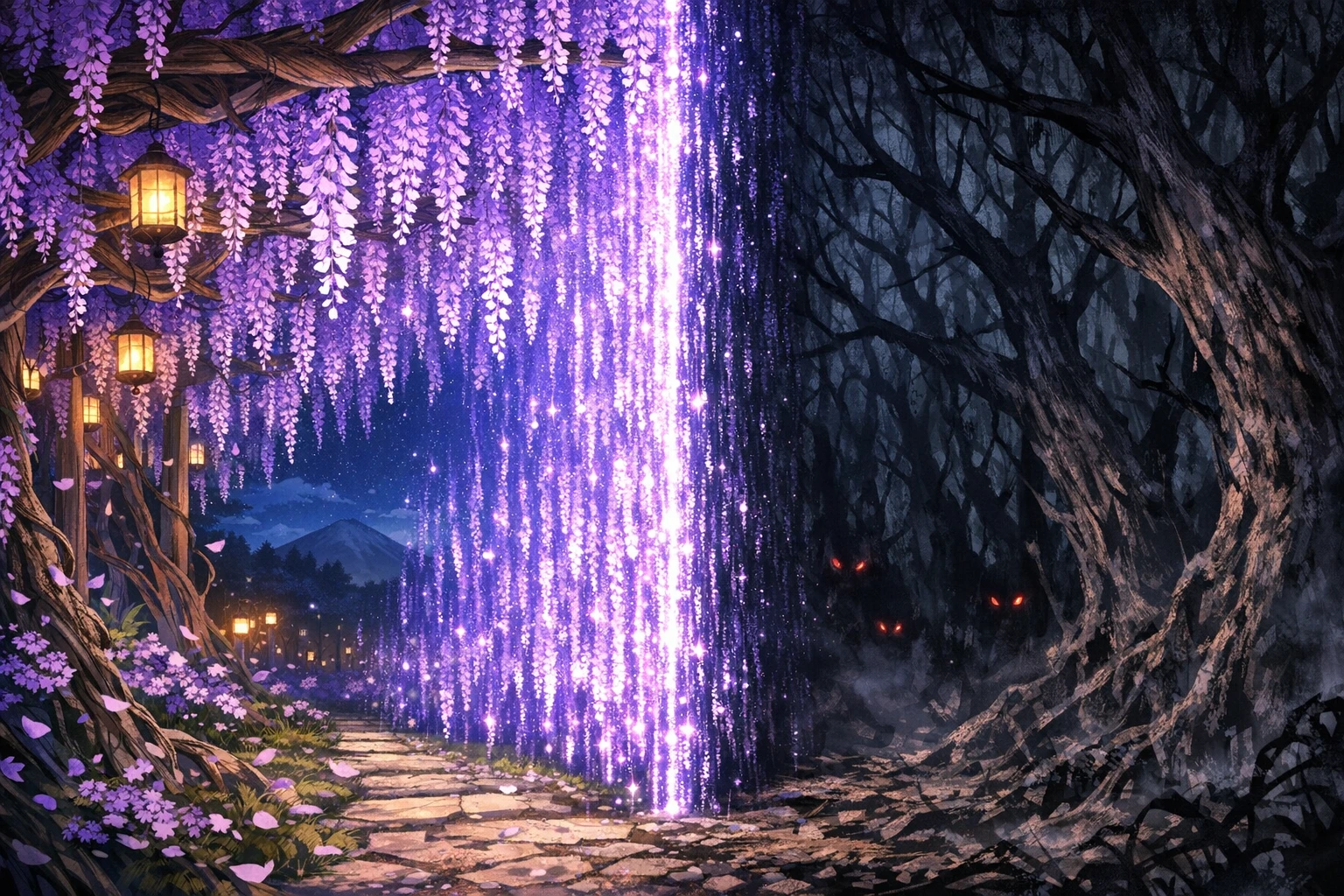
When we first are introduced to Mt. Fujikasane, the visual language presented is one of ethereal, almost overwhelming beauty. A mountain completely blanketed in a sea of blooming purple wisteria flowers, glowing softly under the moonlight. It looks like a sacred sanctuary, a place of peace. However, beneath this deceptive, romanticized facade lies a chilling reality:
Mt. Fujikasane is not a traditional testing ground or a sacred dojo. It is an inescapable, artificially sustained ecological prison, entirely engineered to be a fabricated hell for both the demons trapped within and the children sent to die there.
To truly understand the Final Selection, we must strip away the shonen tropes of “coming-of-age tests” and look at the brutal reality of what the Ubuyashiki estate has created. This mountain is a Darwinian filter, an incredibly ruthless biological cage designed to weed out weakness before it can ever jeopardize the greater Demon Slayer Corps. The entire ecosystem of Mt. Fujikasane is weaponized.
Wisteria, in the world of Demon Slayer, is highly toxic to demons. By cultivating these flowers to bloom year-round from the base to the halfway point of the mountain, the Ubuyashiki family has effectively built an invisible, impenetrable wall. It is a botanical barrier more secure than any iron cage or stone fortress.
But consider the psychological and biological state of the entities trapped within this barrier. The demons on Mt. Fujikasane are not wandering freely in the world; they are cornered animals. Because they cannot cross the wisteria line, their hunting grounds are severely restricted. Their food supply is entirely dependent on the bi-annual influx of Final Selection candidates.
This creates a state of perpetual starvation and hyper-aggression. For six months out of the year, these demons starve, devolving into feral, desperate states of ravenous hunger. When the candidates finally arrive, the demons are not just looking for a meal; they are driven by the agonizing, maddening pain of prolonged cellular starvation.
This artificially engineered environment creates a concentrated hunting zone where the prey (the Slayer candidates) are vastly outnumbered by nocturnal apex predators who have been starved to the point of insanity. The wisteria prison forces a horrific ecological balance. The Ubuyashiki family has essentially created a contained ecosystem where demons are kept alive just enough to serve as executioners for weak Slayers.
The beauty of the blooming flowers at the mountain’s base acts as a stark, mocking contrast to the absolute carnage that occurs just beyond their scent. It is a psychological threshold. Once a candidate steps past the wisteria, they leave the protective scent behind and enter a realm where the only law is predatory consumption.
This is the first dark truth of the Final Selection: the mountain is not designed to test skill in a controlled manner; it is designed to throw human children into a meat grinder of starved, hyper-aggressive predators. It is a closed-loop ecosystem of death, functioning exactly as its architects intended.
2. The Brutal Mathematics of the Corps
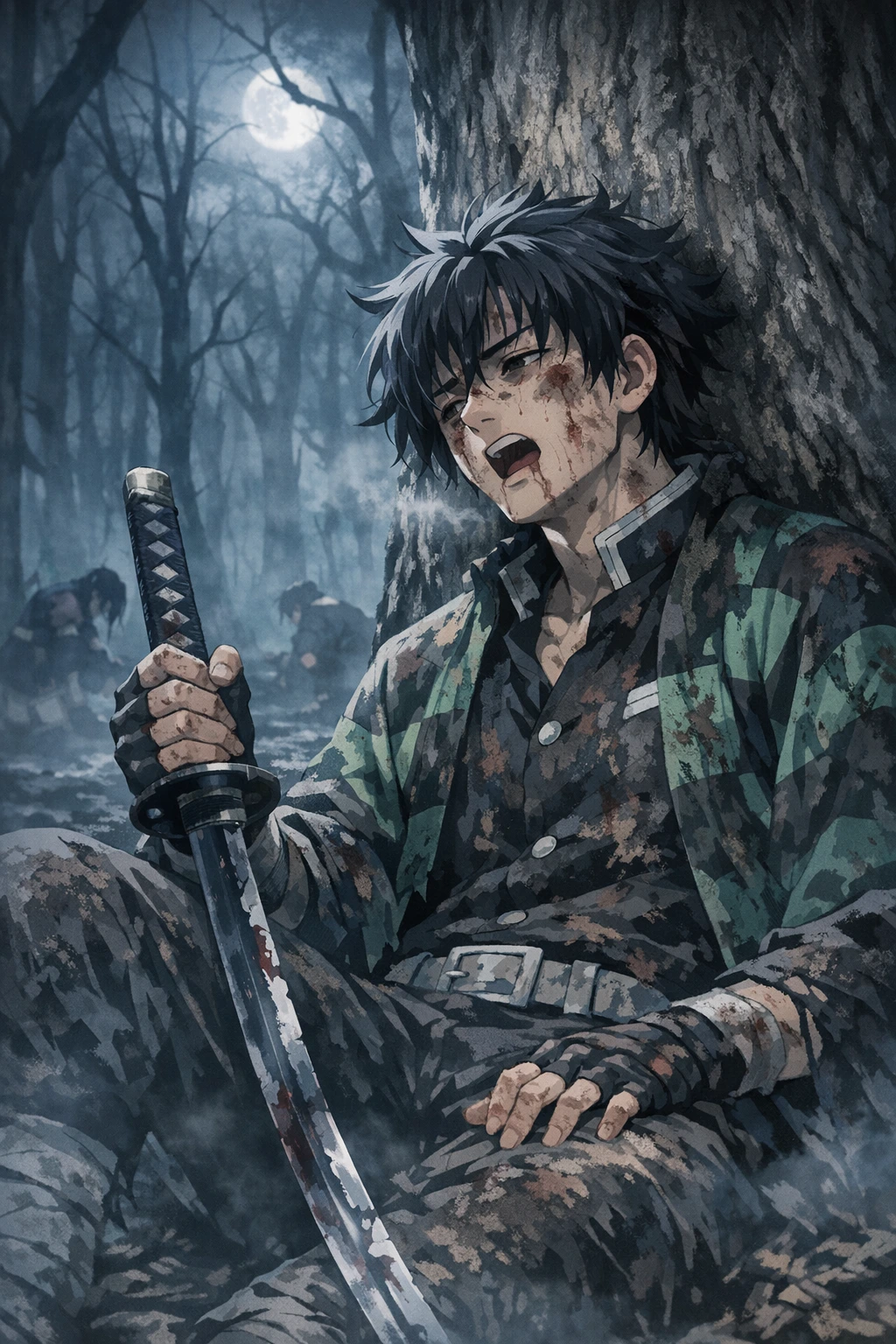
To the casual observer, the Final Selection appears unnecessarily cruel. How can an organization fundamentally dedicated to the protection of human life and the eradication of demons willingly allow a 90% mortality rate among its own recruits?
How can they justify sending dozens of young, hopeful, and trained children into a quarantined zone knowing that only a handful—if any—will survive the week? The answer lies in the cold, brutal, military mathematics of the Ubuyashiki family, a leadership structure that operates on logic far removed from standard human empathy.
A deep dive into this military logic reveals that the 90% mortality rate is not a tragic byproduct of the test; it is the intended feature. The Demon Slayer Corps is fighting an asymmetrical war of attrition against Muzan Kibutsuji, an immortal progenitor who can create biological weapons of mass destruction with a single drop of his blood. In this kind of war, weakness is not just a liability; it is an active threat to the entire species.
The Ubuyashiki family understands a chilling biological truth about their enemy: when a demon consumes a human, it gains strength. But when a demon consumes a trained Demon Slayer—someone whose blood is oxygenated by Total Concentration Breathing, whose muscles are dense, and whose life force is refined—the demon experiences a massive, accelerated evolution.
Herein lies the tactical genius behind the apparent cruelty of the Final Selection. If a weak, unprepared Slayer is permitted to pass into the official ranks and is subsequently killed out in the real world, they do not just die; they become premium, high-octane fuel for a wild demon.
A weak Slayer dying in a populated city could be the exact catalyst a low-level demon needs to mutate, evolve a Blood Demon Art, and potentially ascend to the ranks of the Twelve Kizuki, resulting in the slaughter of hundreds of innocent civilians.
The Final Selection is a quarantine measure. It ensures that if a Slayer is going to fail, if they are going to break under pressure or lack the instinct to survive, they die in a strictly controlled, quarantined zone. By trapping the weak Slayers inside Mt. Fujikasane, the Corps ensures that the demons who consume them and subsequently evolve are permanently locked behind the wisteria barrier.
The tragedy of the dead children is contained. Their deaths do not empower the demons roaming the human world. It is an utterly ruthless, pragmatic calculation: sacrifice twenty children today in a contained zone to prevent the creation of a Kizuki that will slaughter two thousand civilians tomorrow.
Furthermore, we must analyze the specific metric of the test: the Seven-Day survival period. The objective given to the candidates is strictly survival, not extermination. They are not graded on how many demons they kill. This is a profound choice. To survive for seven days against nocturnal predators requires a terrifying level of stamina, resource management, and psychological endurance.
Consider the physiology of a seven-day survival trial. The demons have perfect night vision, limitless stamina, do not require sleep, and heal almost instantly from non-lethal wounds. The human children, however, are bound by their biology. Over the course of 168 hours, candidates face extreme sleep deprivation. Even resting during the day is perilous, as the psychological terror of the coming night prevents true REM sleep. Adrenaline fatigue sets in by day three.
Caloric burn rates skyrocket due to constant movement and panic. The Seven-Day metric is designed to strip away all dojo-learned techniques and reduce the candidate to their most primal, autonomic functions. It tests if their Total Concentration Breathing can be maintained when their central nervous system is completely fried, when they are hallucinating from exhaustion, and when their muscles are failing. Only those who have internalized their training to a cellular level can outlast this grueling biological clock.
3. The Hand Demon Anomaly: A Biological Glitch in the System
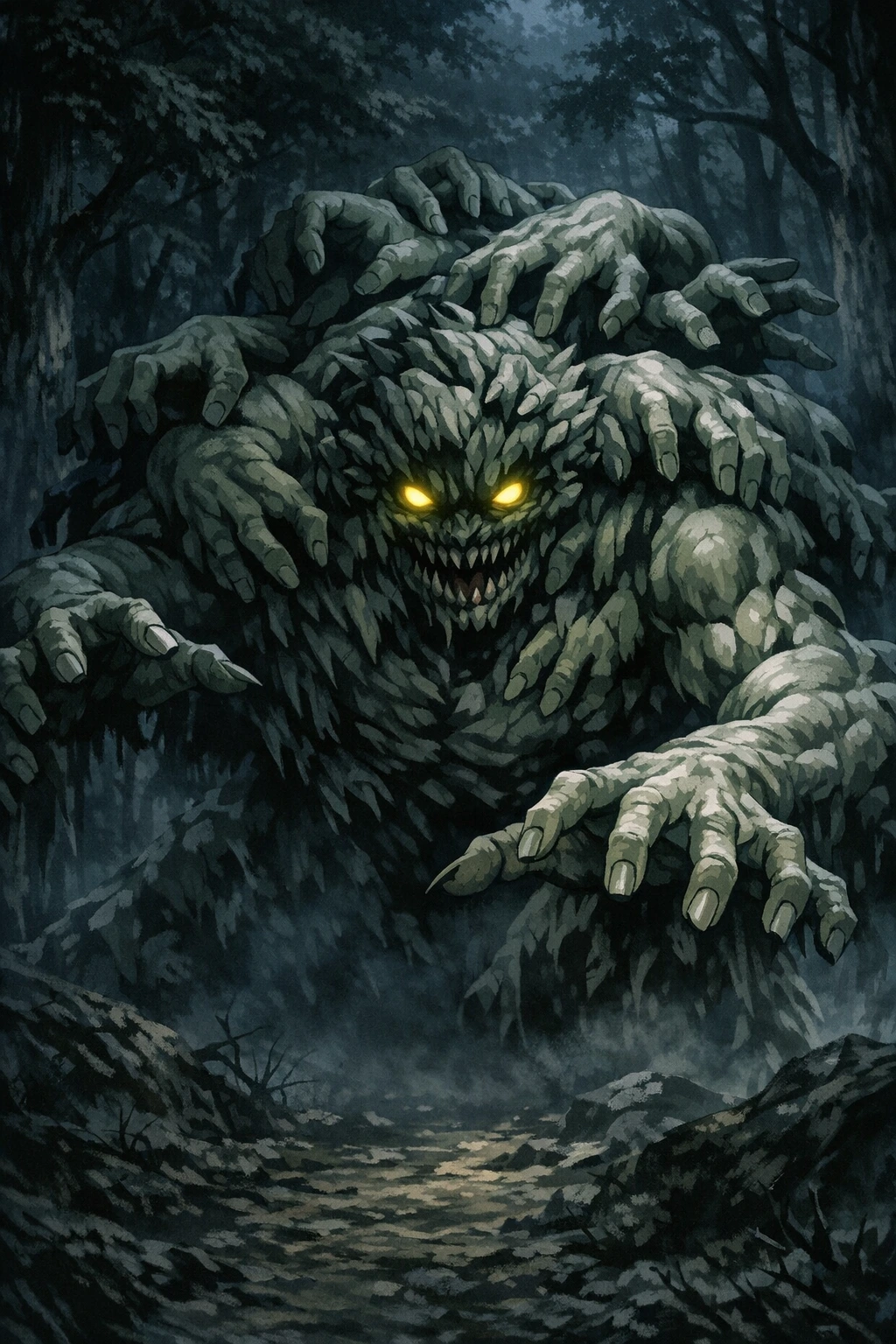
If the Final Selection is a carefully engineered machine designed to filter the weak and contain the strong, then the Hand Demon represents a massive, catastrophic glitch in that system. The existence of this specific demon completely upends the “controlled” nature of the Ubuyashiki family’s ecosystem.
Captured by Sakonji Urokodaki 47 years prior to Tanjiro’s arrival, this entity should not exist. The system is designed so that if a demon gets too strong by eating candidates, a passing prodigy—a future Hashira taking the test—will eventually encounter it and cull it, maintaining the mountain’s ecological balance.
The Hand Demon survived for nearly half a century by subverting this natural order. It did not blindly attack every candidate. It exhibited a horrifying level of predatory intelligence. For 47 years, it likely hid when it sensed overwhelming, Hashira-level auras, choosing instead to target the terrified, the weak, and specifically, the students of its captor. By surviving and consuming over 50 human children—specifically those trained in Water Breathing—the Hand Demon mutated into an anomaly that shattered the expected difficulty curve of the Final Selection.
Let us medically and biologically analyze the Hand Demon’s cellular mutation. Normal demons on Mt. Fujikasane remain relatively humanoid due to their limited diet. The Hand Demon, however, has consumed enough highly-refined human biomass to undergo a radical physical transformation. Its massive expansion of physical mass is not just for intimidation; it is functional biological armor.
The proliferation of arms acts as a redundant, multi-layered defense system. In human anatomy, losing an arm is a catastrophic, shock-inducing trauma. For the Hand Demon, its dozens of arms are expendable appendages used for mobility, overwhelming offense, and environmental sensory input.
More terrifying is its hyper-calcified neck. The singular vulnerability of a demon is the decapitation via Nichirin blade. The Hand Demon, recognizing this evolutionary weak point over decades of combat, focused its mutated cellular regeneration to heavily armor its neck.
The density of the flesh and the interweaving of thick, muscular arms around the cervical spine mean that a standard, panic-driven strike from a novice Slayer will simply bounce off or shatter the blade. It requires a perfectly executed, heavily torqued, and deeply focused strike—something practically impossible for a terrified child to deliver.
But the Hand Demon’s most devastating weapon was not biological; it was its mastery of psychological warfare. The Hand Demon did not just kill Urokodaki’s students; it mentally dismantled them first. It weaponized dialogue. When it confronted Sabito, Makomo, and later Tanjiro, it deliberately revealed its history. It proudly announced its kill count, specifically targeting the emotional tethers the students had to their master.
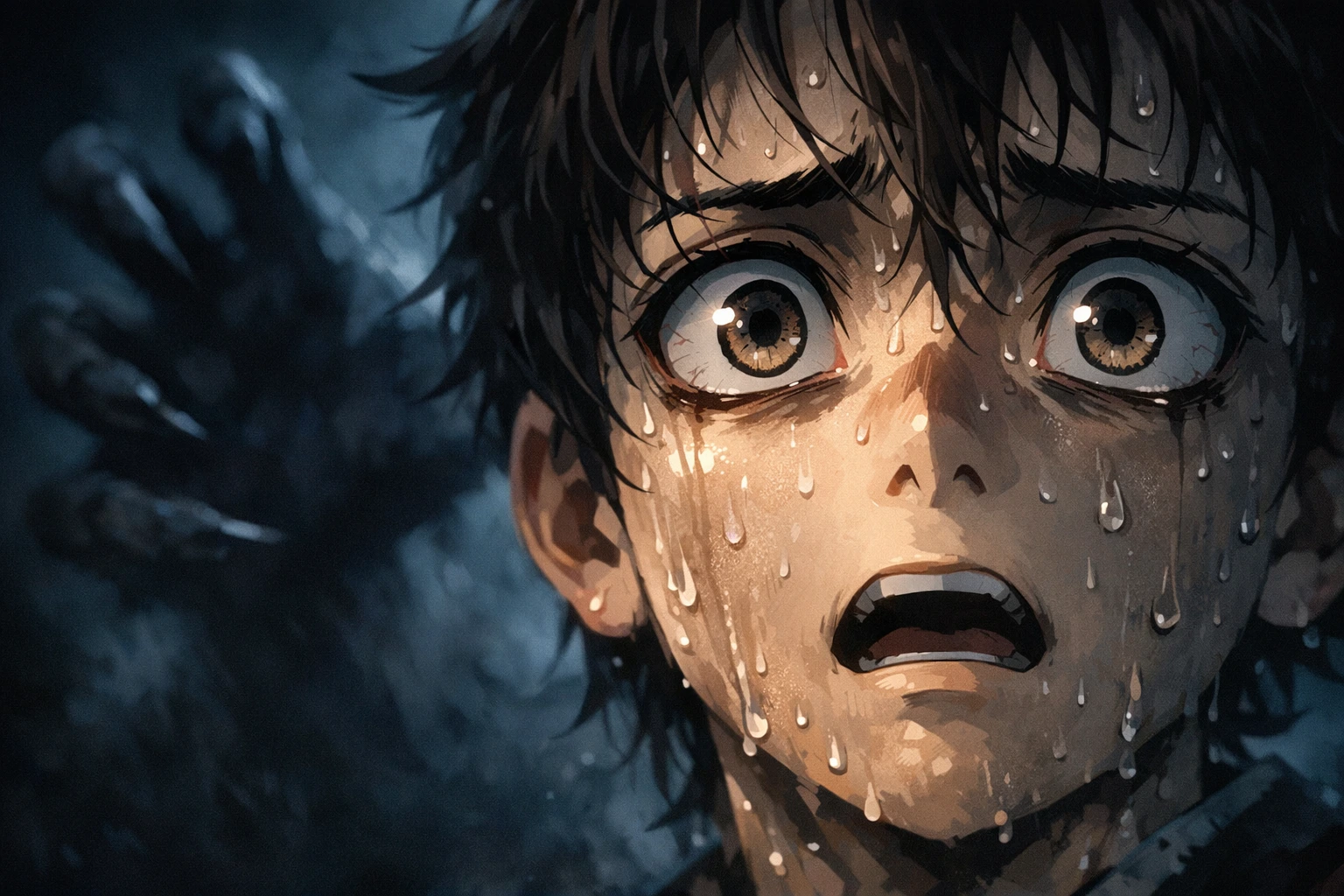
This tactic was brilliantly insidious. By telling the students that their beloved master was the reason they were being targeted, and by boasting about tearing their predecessors apart, the Hand Demon forced its victims into an immediate, severe psychological crisis. It used their trauma and panic to completely bypass their physical defenses.
Total Concentration Breathing requires a calm, centered mind to properly oxygenate the blood and trigger the necessary muscular reflexes. By inducing profound, paralyzing terror and grief, the Hand Demon short-circuited its victims’ breathing. Their lungs constricted, their blood flow became erratic, and their finely tuned Water Breathing techniques unraveled into sloppy, desperate swings. It was an apex predator that understood that breaking a human’s mind is the fastest way to break their body.
4. Urokodaki’s Tragic Irony: The Psychology of the Warding Masks

To understand the full tragedy of the Final Selection, we must shift our gaze from the mountain to the base of Mt. Sagiri, to the mind of the Cultivator. Sakonji Urokodaki, the former Water Hashira, represents the profound, silent suffering inherent in the Demon Slayer Corps’ training structure. What is the psychological profile of a master who spends decades taking in broken, traumatized orphans, feeding them, raising them, teaching them to breathe and fight, only to unknowingly send them to a hunting ground where they are specifically targeted and slaughtered?
Urokodaki is a man defined by his repressed grief. He wears a tengu mask not just to hide his gentle face from demons, but perhaps to hide his endless sorrow from his students. He knows the statistics. He knows the 90% mortality rate. Yet, he is duty-bound to continue forging weapons for the Corps. To cope with this immense psychological burden, Urokodaki engaged in a ritual of hope: the carving of the Warding Masks.
These fox masks were intended to be a symbol of love, a talisman of protection. He carved them with the desperate, quiet prayer that the gods would watch over his children when his own blade no longer could. But here we uncover the most devastating, tragic irony of the entire Final Selection arc. The protective charms were turned into executioners’ marks.
The Hand Demon, nursing a half-century grudge against the man who imprisoned him, recognized Urokodaki’s carving style. He realized that the very item meant to offer spiritual protection was, in fact, a literal tracking beacon. Break down the cruelty of this dynamic: a student survives the grueling, limb-tearing training on Mt. Sagiri. They earn the pride of their surrogate father.
They are handed a mask that represents their graduation, feeling a surge of confidence and security. And the moment they step onto Mt. Fujikasane wearing that mask, an ancient, mutated horror immediately flags them as high-priority prey. Urokodaki’s love was the very mechanism that signed their death warrants. The psychological weight of this realization—when Urokodaki eventually learns of it—is unimaginable.
This brings us to the psychological state of the students themselves. Why did so many talented Water Breathing students—children who could slice boulders and outmaneuver traps—freeze and die? The answer lies in the neuroplasticity of fear and the absolute difference between dojo training and genuine, life-threatening terror.
In a safe environment like Mt. Sagiri, a student can develop perfect muscle memory. They can perform the forms flawlessly because their parasympathetic nervous system (which controls rest and digestion) is dominant. Their prefrontal cortex is active, allowing for logical thought and precise motor control. However, when confronted by the Hand Demon—a towering, multi-limbed monstrosity reeking of blood and radiating malice—their brain undergoes an instantaneous chemical hijack.
The amygdala, the brain’s fear center, screams. It floods the body with massive, overwhelming doses of cortisol and adrenaline. The prefrontal cortex shuts down completely. The sympathetic nervous system triggers the “fight, flight, or freeze” response. For many of the children, confronted by a horror their brains simply could not process, the response was “freeze.” This is a physiological shutdown.
The neuroplasticity of fear overrides years of training. The Total Concentration Breathing stops because the body is gasping for basic, survival-level air. The muscles lock up as the nervous system becomes over-stimulated. They did not die because they lacked technique; they died because human biology has a hard limit when faced with primordial, incomprehensible terror. Sabito’s sword broke, but Makomo’s mind broke first.
5. The Ghosts of Mt. Sagiri: Sabito, Makomo, and Trauma
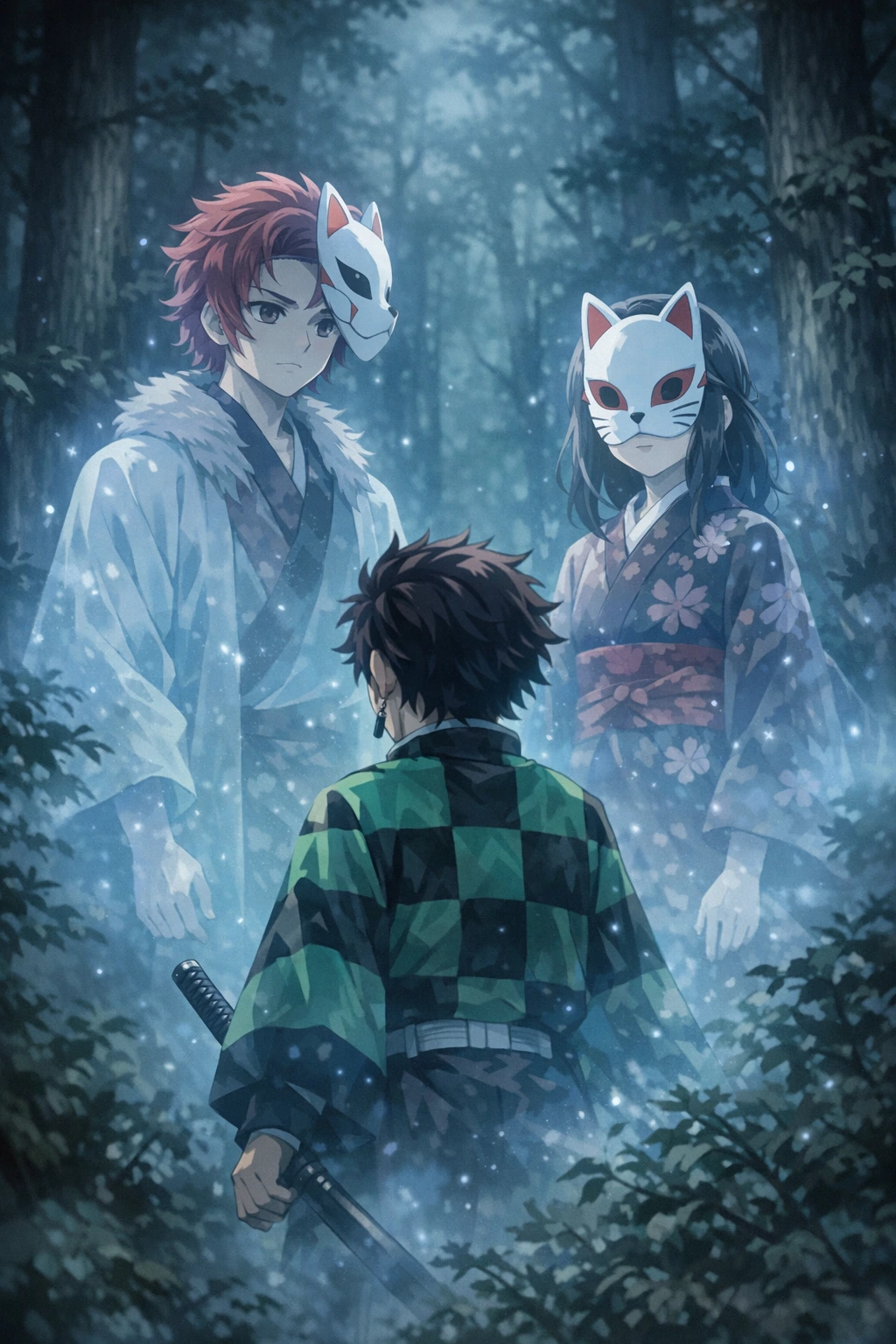
Before Tanjiro could even reach the Wisteria Prison, he had to overcome an impossible physical and psychological barrier: the Boulder Trial. Urokodaki, broken by the loss of his 13 previous students, tasked Tanjiro with slicing a massive, solid boulder with a standard katana. He did this fully believing it was impossible, a desperate, final attempt to legally fail Tanjiro and keep him safe from the mountain of death.
If we look at the physics of slicing a boulder with a katana, it is utterly absurd. Steel cannot cleanly bisect solid stone of that density without shattering upon impact. Tanjiro spent six months swinging his sword at it, relying entirely on his physical strength and the conscious application of his breathing techniques. But his physical training was entirely incomplete without a massive psychological breakthrough. He was trying to cut the stone with his body, not with his spirit. He had reached a plateau that physical conditioning alone could never breach.
Enter the ghosts of Mt. Sagiri: Sabito and Makomo. These spiritual remnants of Urokodaki’s fallen children were tied to the mountain by their lingering regrets and their desperate desire to see their master’s sorrow end. Sabito’s intervention was not a gentle, spectral guiding hand; it was a brutal, physical assault.
We must analyze why Sabito physically beat Tanjiro relentlessly for months. Sabito understood that Tanjiro was thinking too much. When a swordsman has to consciously think, “Breathe in, oxygenate the blood, flex the calf, torque the hip, swing,” they are too slow. Sabito beat Tanjiro to force the Total Concentration Breathing out of his conscious mind and permanently into his autonomic nervous system.
He broke Tanjiro down physically so that his body had no choice but to adapt and maintain the breathing pattern continuously, even while unconscious or in profound pain. Sabito was instilling the muscle memory of survival through trauma. He was overriding Tanjiro’s limits through sheer, unadulterated combat stress, effectively mirroring the conditions of the Final Selection in a controlled environment.
Makomo, conversely, provided the necessary mental alignment. While Sabito integrated the breath into the body, Makomo integrated it into the mind, fixing Tanjiro’s unnecessary movements and teaching him the theory behind the flow state.
When Tanjiro finally slices the boulder, he is not just cutting stone. He is shattering his own psychological limitations. He has achieved a state where his breathing and his blade are one entity. But the true culmination of this spiritual intervention happens on Mt. Fujikasane, facing the Hand Demon.
When Tanjiro is cornered by the beast that killed his predecessors, he experiences the same amygdala hijack that killed Makomo. He smells the blood, he hears the horrific taunts about Urokodaki, and for a terrifying moment, he falters. But Tanjiro does not break. He does not freeze. Why? Because of the weight of the fallen.
Tanjiro is powered by an immense emotional force: survivor’s guilt mixed with profound empathy. He is carrying the spiritual legacy of Sabito, Makomo, and the 11 other children who were consumed in the dark. This weight does not crush him; it anchors him. It gives him a singular, unbreakable focus. When the Hand Demon lunges, Tanjiro does not swing out of panic. Guided by the scent of the “opening thread”—a manifestation of his absolute, razor-sharp focus—he channels the collective grief, training, and spiritual energy of the fallen children into his strike.
It is this emotional anchor that provides the sheer willpower required to maintain perfect Total Concentration Breathing under maximum duress, allowing him to generate the immense torque and power necessary to finally sever the Hand Demon’s hyper-thickened, armored neck. He kills the demon not just as Tanjiro Kamado, but as the final, successful culmination of Urokodaki’s lineage.
6. Conclusion: The True Metric of a Survivor
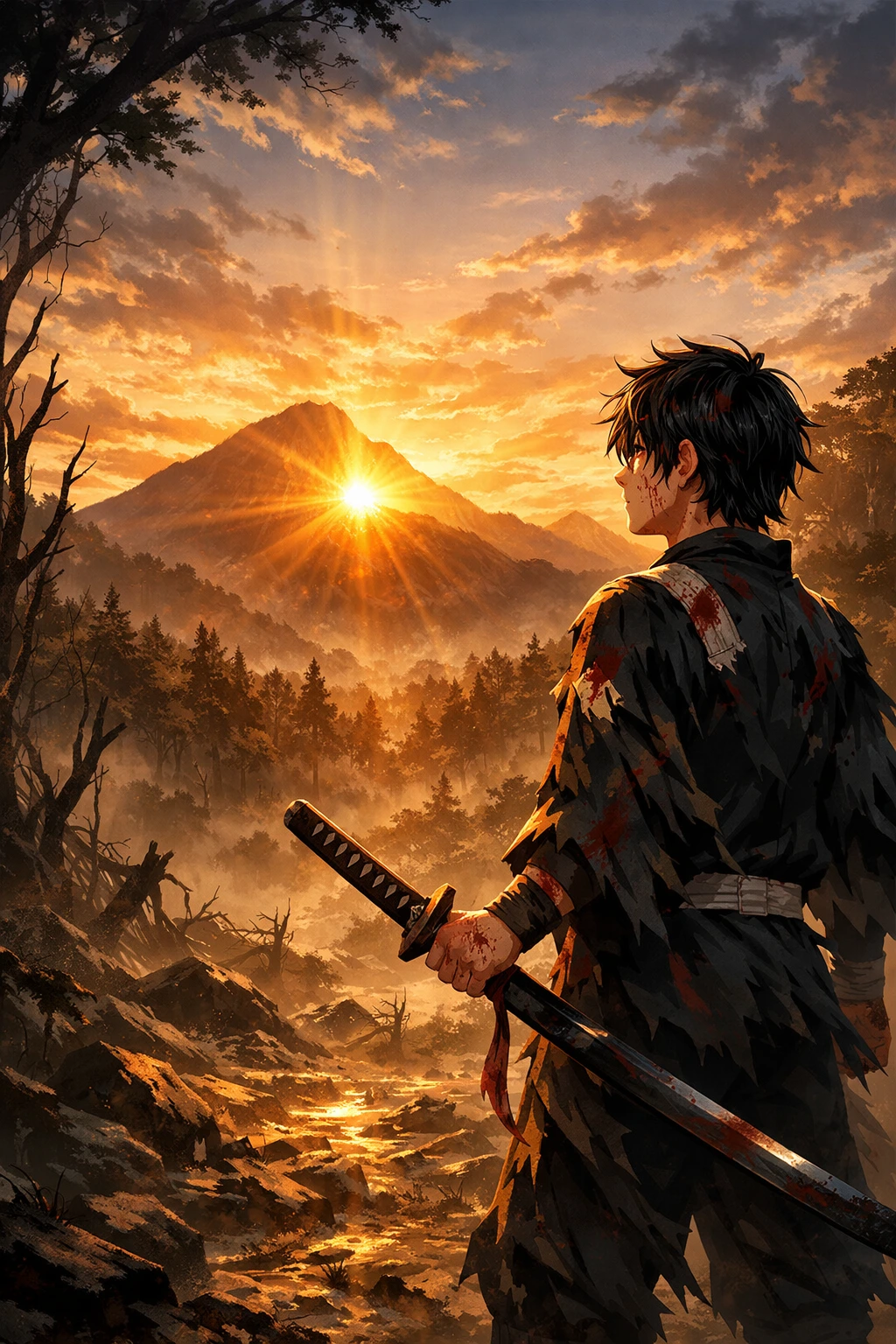
When the sun finally breaches the horizon on the seventh day at Mt. Fujikasane, its light burns away the remaining demons, but it also illuminates a profound, irreversible psychological shift in the surviving candidates. The children who walked past the wisteria barrier seven days prior no longer exist. The Final Selection acts as a fiery crucible, melting away innocence and forging something sharp, cold, and entirely different.
This aftermath is a transition from traumatized prey to official, rank-holding predators. For seven nights, their only imperative was to run, hide, or desperately defend their lives against monsters that viewed them as nothing more than livestock. They were hunted. But as they stand bathed in the dawn light, battered, bleeding, and surrounded by the corpses of those who failed, they have crossed an evolutionary threshold.
They have proven that their will to live, their mastery of their breathing, and their mental fortitude are superior to the demonic forces of the mountain. They are no longer victims; they are initiated Demon Slayers. The trauma they endured has been weaponized into survival instinct.
This psychological transition is immediately solidified by the final act of the selection process: the choosing of the Nichirin ore. On the surface, it is merely picking the metal that will be forged into their swords. But symbolically and psychologically, the Ore Selection is an act of supreme significance. For seven days, these children had zero control over their environment. They were subject to the whims of the mountain, the ferocity of the demons, and the cruel design of the Corps. They survived by reacting.
By stepping forward and independently choosing the specific chunk of Scarlet Crimson Iron Sand and Scarlet Ore that resonates with them, they are taking ultimate, conscious control over their own survival. They are no longer just surviving; they are arming themselves. It is the moment they transition from reactive survival to proactive warfare. Choosing the ore officially binds them to the Corps. It is a silent contract. The ore they select will become the blade that will define their future, protect their lives, and ultimately execute their enemies. It is the physical manifestation of their newly claimed agency.
In the final, expert verdict, we must view the Demon Slayer Final Selection for exactly what it is. It is not a heroic tournament. It is not a fair trial. It is a flawless, if monstrous, military filter. The Ubuyashiki family designed a system that strips away all romantic illusions of heroism, all childish notions of glory, and all lingering weaknesses. It leaves only the cold, hard mechanics of absolute survival.
The 90% mortality rate is a horrific testament to the sheer difficulty of the war the Corps is fighting. By creating a fabricated hell, trapping starved predators within it, and forcing unprepared children to survive it, the Corps ensures that only the most resilient, the most psychologically unbreakable, and the most physically capable individuals ever wield a Nichirin blade. The Final Selection is a tragedy of engineered slaughter, but it is also the singular reason the Demon Slayer Corps has managed to hold the line against Muzan Kibutsuji for a thousand years. It is the dark, necessary truth behind the survival of humanity.