
In the world of Solo Leveling, strength is absolute. It is measured in mana rankings, dungeon clears, and the cold, hard logic of the System that governs the awakened. But amidst the chaotic rise of Sung Jin-Woo from the “Weakest Weapon of Mankind” to the omnipotent Shadow Monarch, there exists a singular anomaly. She is not a Monarch, she is not a Ruler, and she was never part of the Architect’s grand design. She exists outside the binary of the System’s calculations.
She is Hunter Cha Hae-In.
To the casual viewer, she fits the archetype of the “Strong Female Lead”—the S-Rank Vice-Guild Master of the Hunters Guild and the primary love interest. But to the expert eye, Cha Hae-In represents something far more profound. She is the biological and spiritual antithesis to the death that Sung Jin-Woo commands. While Jin-Woo became the King of the Dead, marching towards a lonely throne of eternal darkness, Cha Hae-In remained the ultimate symbol of Life—vibrant, fragile, and essential.
Why was she the only one capable of standing by his side when even National Level Hunters faltered? Why did the System, which viewed all humans as fragile variables or XP sources, pause when she drew her sword? And why, in a world of rotting mana, was Sung Jin-Woo the only person who didn’t “stink”?
This is the definitive analysis of the Dancer of Death, the only exception to the rule.
1. Introduction: The Curse of the Strongest Woman
If you look closely at Cha Hae-In’s character design before you look at her stats, the first thing you notice is the handkerchief. It is her constant companion, a shield she holds against the world. For years, fans assumed this was a quirk of high-society etiquette, a sign of a delicate constitution, or perhaps a visual trope meant to emphasize her elegance. The truth, however, is a grim irony that defines her entire existence and isolates her more effectively than any dungeon barrier.
The Olfactory Nightmare
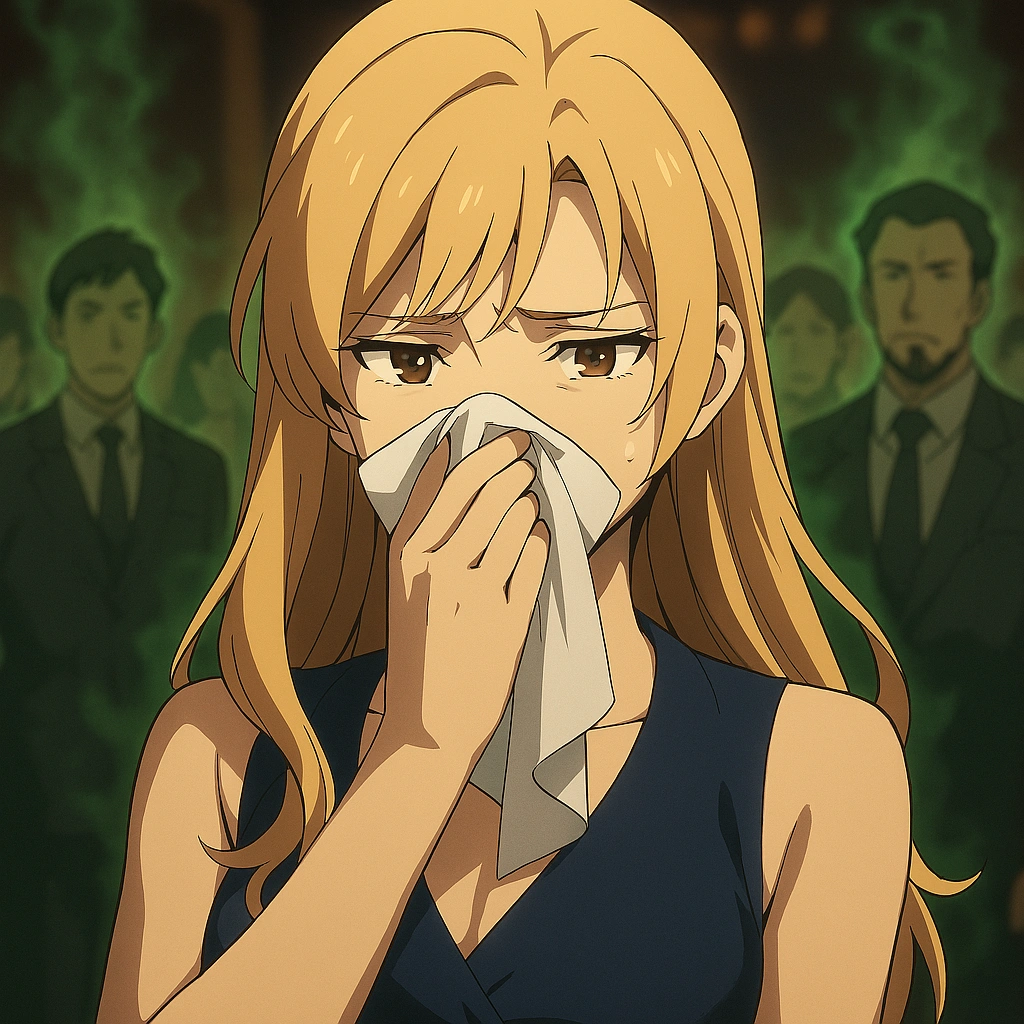
Cha Hae-In suffers from a unique condition known as “Mana Sensitivity,” but to call it “sensitivity” is a gross understatement. It is a sensory curse. To Cha Hae-In, mana—the very power that makes Hunters heroes, fuels the economy of the new world, and dictates the social hierarchy—smells like rotting flesh.
Imagine living in a world where your peers, your allies, and the very air in your workplace reek of sulfur, decomposing organic matter, and old blood. Every time she stands next to a powerful Hunter like Choi Jong-In or Ma Dong-Wook, she isn’t sensing their majestic aura or their heroic potential; she is physically holding back the urge to vomit. The stronger the Hunter, the more pungent and suffocating the stench.
This condition transformed the “Strongest Female Hunter in Korea” into one of the most isolated people on the planet. While other Hunters reveled in their power and formed tight-knit raids, Cha Hae-In was forced to keep her distance. Her strength isolated her, not because she was arrogant or cold, but because the world physically repulsed her. She lived in a perpetual state of holding her breath, surrounded by heroes who smelled like monsters.
The Void in the Rot
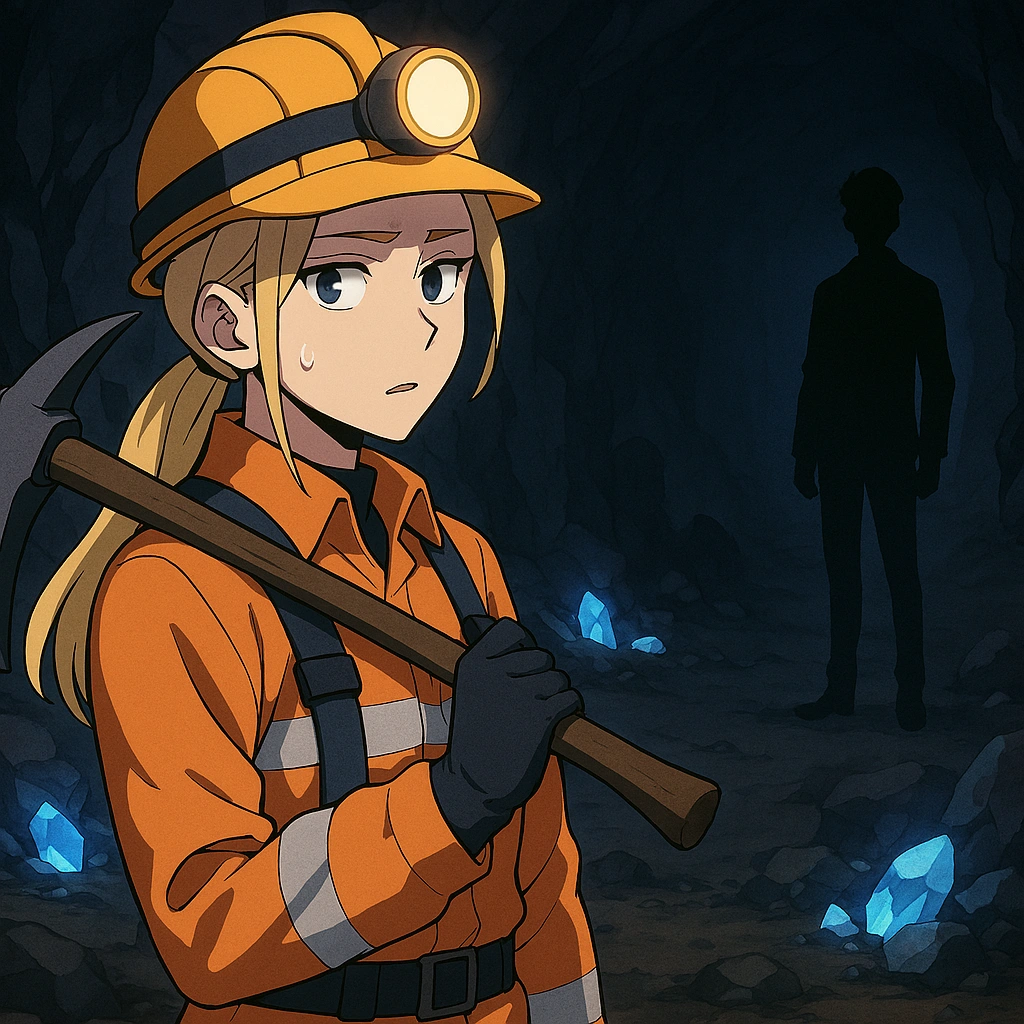
This physiological trauma is what makes her first encounter with Sung Jin-Woo so pivotal. It wasn’t love at first sight; it was relief. It was the cessation of pain.
When she walked past Jin-Woo in the dungeon, and later when she encountered him during the mining operation, she didn’t smell roses or lavender. She smelled nothing. In a world filled with the nauseating stench of mana, Sung Jin-Woo was a vacuum. He was fresh, clean air.
Why?
The lore explanation is fascinating and rooted in the metaphysics of the series. At that stage, Sung Jin-Woo was becoming the vessel for Ashborn, the Shadow Monarch. Unlike other Hunters who borrow power from the Rulers (which emits the “stink” of magical energy outward), Jin-Woo’s power was internalizing. He was becoming a being of pure darkness, a void. Darkness, in the Solo Leveling cosmology, absorbs. It doesn’t project waste; it consumes it.
To Cha Hae-In, Jin-Woo wasn’t just a man; he was a sanctuary. He was the only place in a loud, smelly world where she could finally breathe without a filter. This biological imperative created a bond stronger than simple attraction. She didn’t just want him; she needed him to maintain her sanity. It poses the question: Did she fall in love with the man, or was she addicted to the silence he provided? As the story progresses, we see it evolve from physiological addiction to genuine affection, but the foundation was built on this unique sensory exception—he was the only silence in her noisy world.
2. The Dancer of Death: Analyzing the “Sword Waltz”
Most S-Rank Hunters in Solo Leveling are defined by raw destructive capability. Baek Yoon-Ho transforms into a white beast to shred opponents with primal fury. Choi Jong-In rains down nuclear-level fire that incinerates everything in a specific radius. Ma Dong-Wook acts as an immovable wall of muscle. Their fighting styles are loud, brutal, and earth-shattering.
Cha Hae-In is different. She does not brawl; she dances.
The Waltz of Violence
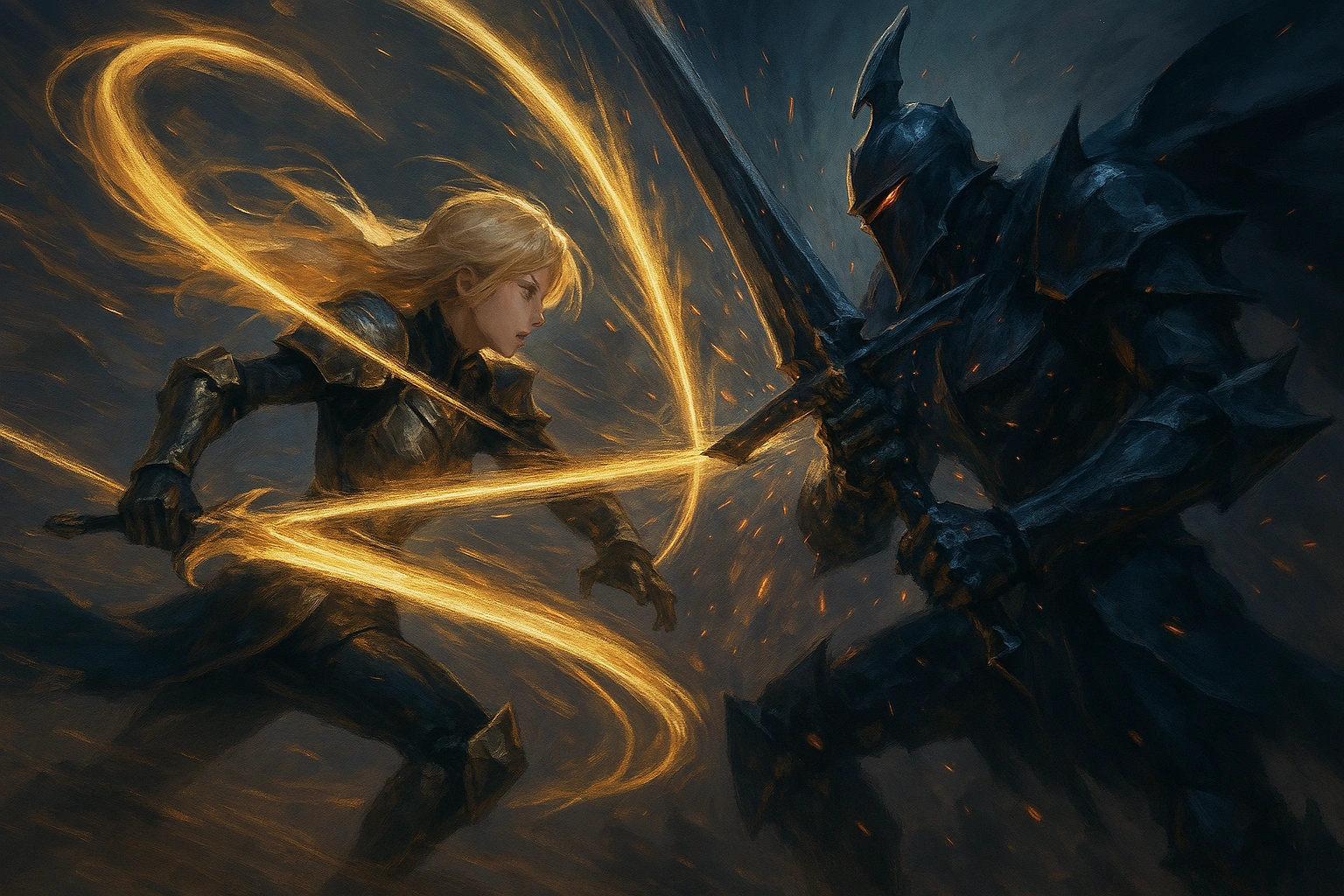
Her fighting style is often described as a “Waltz,” a term that implies rhythm, grace, and structure. Unlike the brute force of other S-Ranks who rely on tanking hits or overwhelming firepower, Cha relies on extreme agility, precision, and impossible attack speed. Her primary skill, often visualized as the “Sword of Light,” allows her to execute piercing attacks at velocities that the human eye cannot track.
This is not just an aesthetic choice by the author; it speaks to her psychology. She is efficient. She doesn’t want to linger in the battle (and the smell of monster blood) longer than necessary. Her movements are economical, fluid, and lethal. She flows through the battlefield like water, seeking the path of least resistance to the enemy’s vital points. Every strike is calculated to end the fight instantly, minimizing her exposure to the filth of the dungeon.
The Mock Battle: Threatening the Marshal
The true testament to her prowess comes during the sparring session at the Ahjin Guild gym. This scene is critical not just for power scaling, but for understanding the System’s recognition of her threat level.
When she requests a spar to prove her worth to join Jin-Woo’s guild, Jin-Woo summons Igris. Igris is a Marshal-grade shadow, a being of immense power, ancient swordsmanship, and chivalry. Yet, during the fight, Cha Hae-In presses Igris so hard that the shadow is forced to abandon his chivalrous restraint and get serious.
The pivotal moment occurs when she deflects Igris’s blade and lunges. The System—the absolute interface governing Jin-Woo’s powers and the logic of the game—issues a generic warning: [The Shadow Soldier is compelled to use lethal force to protect itself.]
Think about the weight of that notification. A human S-Rank pushed a Marshal of the Shadow Army into a corner where its automated defense mechanism triggered a “kill or be killed” response. Jin-Woo had to physically intervene, catching her blade with his bare hand (using the Devil’s Hand ability) to prevent Igris from instinctively executing her. This proved that Cha Hae-In was not just “strong for a human”; she was a legitimate threat to beings of magical origin. She was the only human capable of keeping pace with the Shadow Monarch’s army without borrowing the power of a Ruler or being a vessel.
The Pickaxe Incident
However, the “Dancer of Death” also has a side of obsessive humility that contrasts sharply with her deadly skill. The “Pickaxe Incident” is one of the most amusing yet telling moments in her character arc.
Suspecting Jin-Woo is the one who helped in the Double Dungeon, she doesn’t confront him with a sword or an interrogation team. She joins his mining team. Picture this: The Vice-Guild Master of the Hunters Guild, a woman whose annual salary rivals the GDP of small nations and who is treated like royalty, puts on a hard hat, grabs a cheap pickaxe, and enters a low-rank dungeon just to sniff a man.
While comedic, it underscores her desperation. She was willing to debase herself, to ignore the confusion of her peers, the rumors, and the absurdity of the situation, just to confirm the existence of her “sanctuary.” It highlights that beneath the stoic, elegant swordsman persona, there is a woman starving for normalcy—a normalcy only Jin-Woo could provide. It humanizes her in a way no battle scene could.
3. The Jeju Island Nightmare: Looking into the Abyss
The Jeju Island Raid is the turning point of Solo Leveling. It is where the power scales shift irrevocably, and it is where Cha Hae-In faces the abyss of true despair.
The Strongest Prey
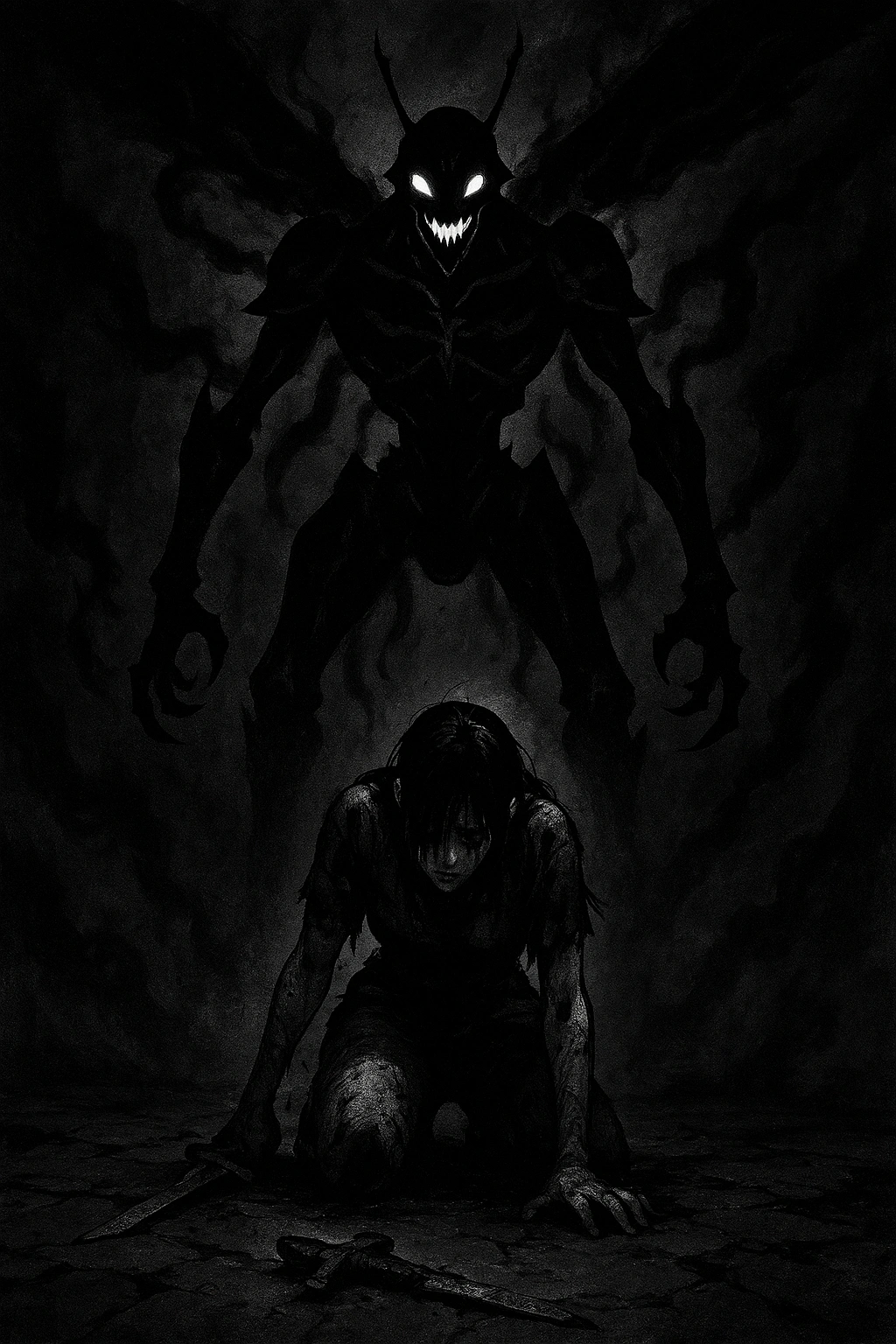
When the Ant King (Beru, before he was named) emerges, he instantly assesses the S-Rank team with cold, insectoid logic. He dismisses the tank, ignores the mages, and makes a beeline for Cha Hae-In.
Why?
Beru says it clearly: “You are the most dangerous one.” (or in some translations, “You have the strongest light.”)
Even among the elite S-Ranks, Cha Hae-In’s mana potency was superior. But this recognition was a death sentence. The ensuing battle is a brutal deconstruction of human arrogance. We watch as the “Dancer” is swatted out of the air like a fly. The speed that dazzled lower-ranking hunters and intimidated monsters was nothing to the Ant King. It was the first time we saw her truly helpless, her “Sword of Light” shattered against an overwhelming force of nature.
The Broken Camera and The Tunnel
The anime and manhwa gloss over the sheer psychological terror of the tunnel scene after the broadcast camera is smashed. This is where Cha Hae-In is stripped of her status. Lying broken against the wall, bleeding out, the “smell” of the Ant King—a concentrate of thousands of consumed hunters and monsters—must have been agonizing. She wasn’t just dying from physical wounds; she was suffocating in the mana stench, a sensory overload of death and rot.
This moment is crucial because it humbles her completely. It strips away the “S-Rank” title, the fame, and the skill, leaving only a frightened woman facing death alone in the dark. It creates a vacancy in her spirit that only a savior could fill.
The Shadow Exchange: A Choice of Heart
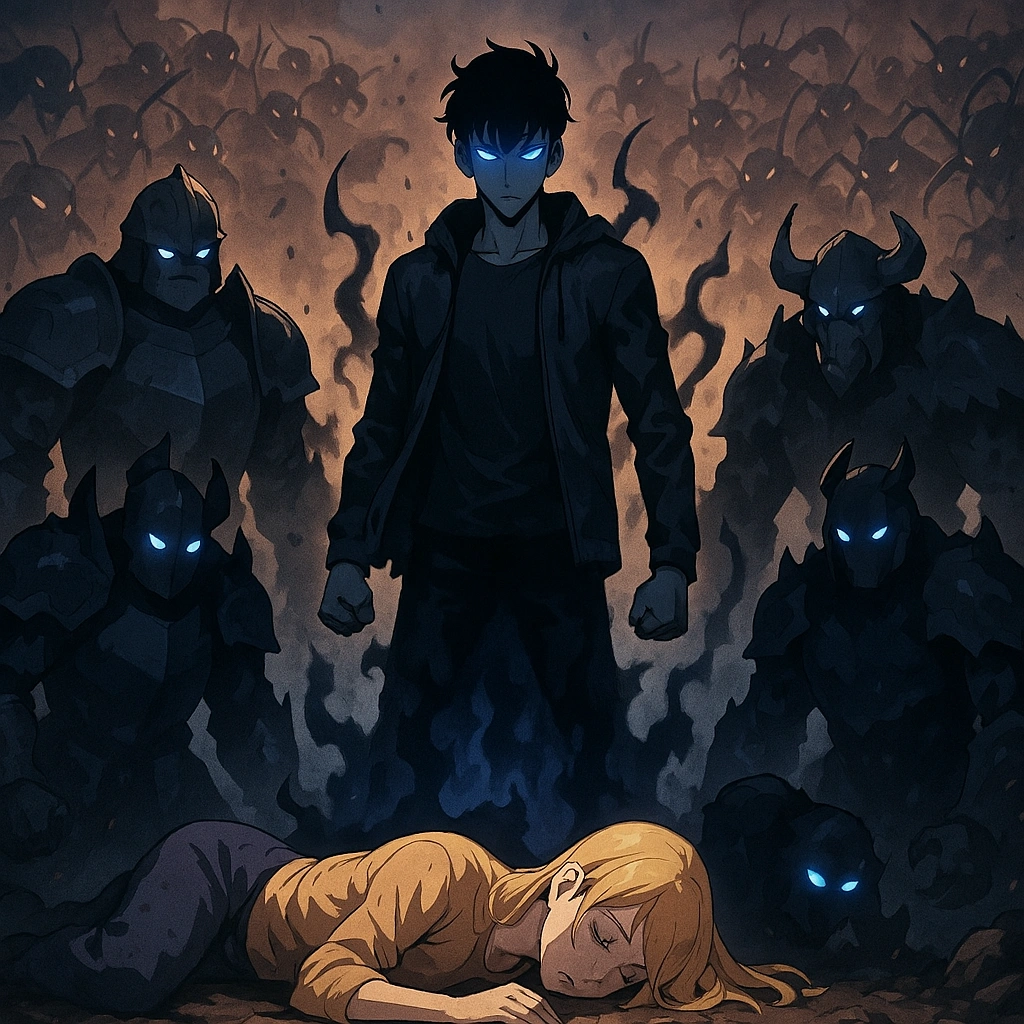
When Sung Jin-Woo finally arrives on Jeju Island, he uses Shadow Exchange. He could have swapped with any shadow soldier planted on the island. He had shadows on the Japanese hunters, shadows near the extraction team, and shadows scouting the perimeter.
But he chose the shadow he placed on Cha Hae-In.
Why is this significant? Because Jin-Woo is a pragmatist. Strategically, swapping to the center of the nest might have been faster for clearing mobs or engaging the King directly. But he prioritized her safety above the mission parameters. He sensed her fading life force (her “flame”) flickering out and abandoned all other tactical considerations to stand between her and the Ant King.
This is the first time we see the Shadow Monarch act not out of duty, quest requirements, or vengeance, but out of protection for a specific individual. He assigns Tusk, Iron, and his best soldiers to guard her unconscious body while he obliterates the ants. It was a definitive statement: The world can burn, but she survives. It marks the shift from him being a solo player to a protector.
4. The Shadow Queen Theory: Was She Chosen?
This leads to the deeper lore questions that fans continue to debate. Why is Cha Hae-In the way she is? The series never explicitly diagnoses her condition beyond “sensitivity,” but looking at the cosmic scale of Solo Leveling, we can theorize about her metaphysical role.
The Architect’s Oversight
The Architect (Kandiaru) designed the System to find a vessel for Ashborn. Every quest, every stat point, every dungeon was calculated to harden Jin-Woo. Cha Hae-In was not part of that calculation. She is a variable that the System didn’t account for—a glitch in the matrix.
When she enters the Boss Room of the Double Dungeon (during the revisit arc), the System allows her entry. Why? Perhaps because her mana signature is so pure it registers differently, or perhaps because by that point, the System was bowing to Jin-Woo’s will, and Jin-Woo’s will desired her presence. She represents the chaos of humanity that the Architect tried to prune away but failed to eliminate.
A Diluted Ruler’s Vessel?
There is a prevailing theory among lore experts that Cha Hae-In’s sensitivity suggests she was a potential “Vessel” for a Ruler, much like Go Gun-Hee or the National Level Hunters.
The Rulers (Fragment of Brilliant Light) require human hosts. These hosts usually display immense power and a specific connection to light mana. Cha’s skill set is entirely light-based (“Sword of Light,” “Blade of Light”). Her ability to sense the “stench” of corrupted mana or standard hunter mana might be a subconscious rejection of anything that isn’t “Brilliant Light.”
However, she was never claimed by a Ruler. She remained human. This makes her unique. She possesses the potential of a Vessel but retains the autonomy of a human. This “middle ground” state allows her to stand next to the Shadow Monarch without being overwhelmed by his darkness. Her internal “light” is strong enough not to be swallowed by the shadow, but not so dogmatic that it rejects him like a Ruler would.
The Guild Proposal: Submission and Power
The scene where she asks to join the Ahjin Guild is often played for laughs—Cha Hae-In flushing, Jin-Woo being dense, and Beru watching aggressive dramas in the background. But analyze the power dynamic.
She is effectively an Empress offering her sword to a rising Warlord. She is willing to leave the prestige of the Hunters Guild (the top guild in Korea) to join a two-man operation. This is a rejection of the established hierarchy. She chooses the “monster” (Jin-Woo) over the “society” (The Hunters Guild). It is her formal declaration that she belongs to his world now, not the human one. It is a submission not of weakness, but of alliance.
5. The Romance of Silence
Romance in shonen anime is often loud. Declarations of love in the rain, screaming names across battlefields, dramatic sacrifices. The romance between Sung Jin-Woo and Cha Hae-In is the opposite. It is a romance of silence.
Not a Fairy Tale
Their relationship is built on a foundation of death. They bond over corpses in a dungeon. They bond over mining rocks. They bond over the trauma of the Jeju Raid. It is a dark, gothic romance disguised as urban fantasy. They do not have normal conversations about hobbies or movies; they communicate through shared survival.
Jin-Woo is a man who speaks to shadows. He is surrounded by an army that worships him, but he cannot truly connect with them because they are dead—echoes of past lives. Cha Hae-In is surrounded by the living, but she cannot connect with them because they “stink.” They are two people isolated by their power, finding the only other person on earth who understands the loneliness of the summit. They are the only two people who can stand in the center of a dungeon and feel “at home” only when they are together.
The Amusement Park Date
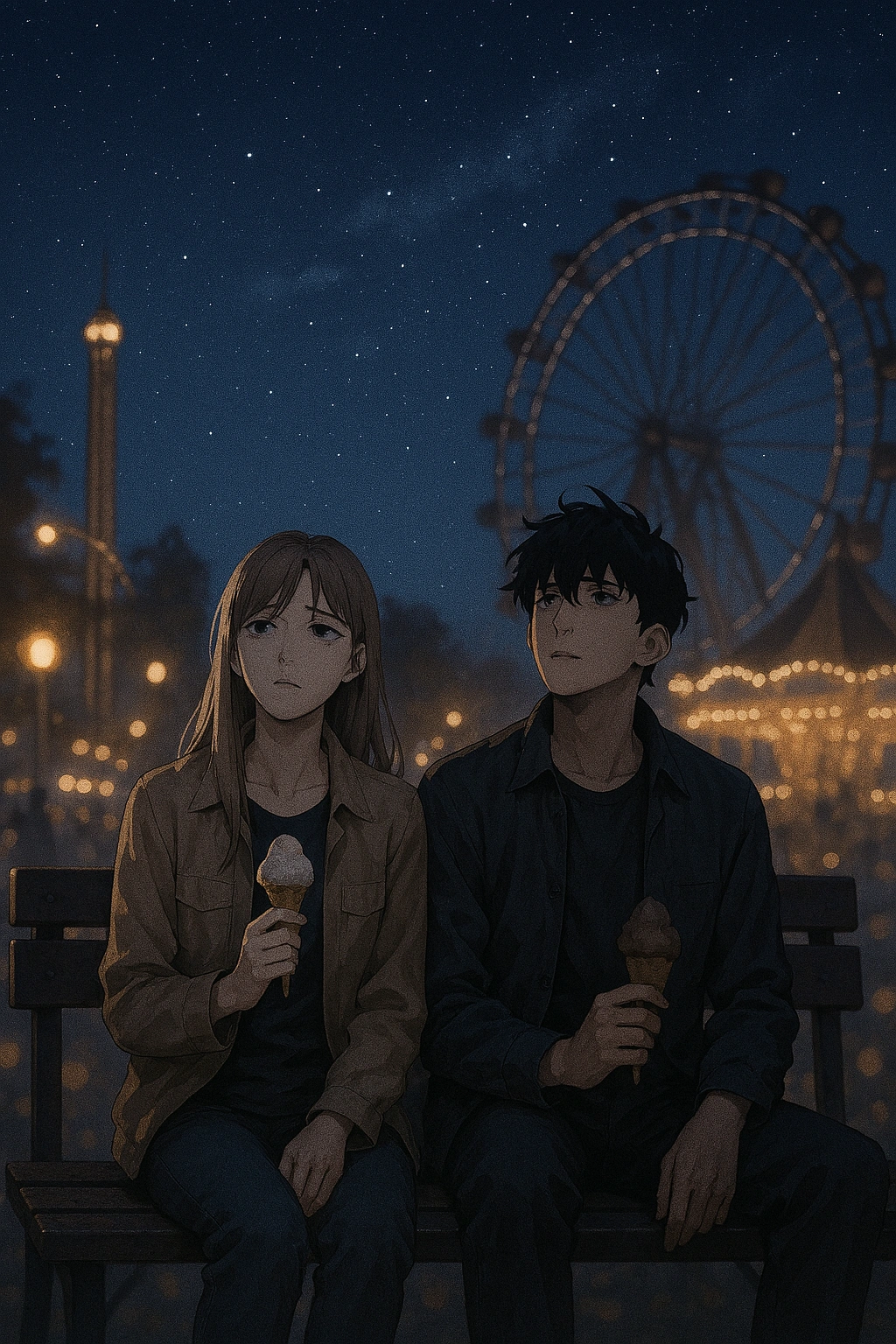
The date at the amusement park is one of the most melancholic scenes in the series. On the surface, it’s cute. They ride rides, they hold hands, they look at the stars.
But the subtext is heavy with impending doom. Jin-Woo is looking at the sky, sensing the approach of the Monarchs and the massive dimensional gate. He knows the end of the world is coming. He knows he might have to use the Cup of Reincarnation (Chalice of Rebirth) to rewrite time.
If he uses the Cup, this date never happened. Cha Hae-In will forget him.
Jin-Woo is effectively taking her on a date to say goodbye, even though he hasn’t admitted it to himself yet. He is memorizing her face. Cha Hae-In, with her sharp instincts, senses his melancholy. She doesn’t push him. She simply stays by his side. It is the silence of understanding. She provides him with a “human anchor”—a memory of what he is fighting to protect. Without this date, without this connection, the Shadow Monarch might have chosen to abandon Earth or rule it as a tyrant. Cha Hae-In reminded him that he was Sung Jin-Woo before he was Ashborn.
6. The Lost Memories: The Tragedy of the Reset
The ending of Solo Leveling is controversial to some, but beautiful to others. Jin-Woo uses the Cup of Reincarnation to turn back time by 10 years. He enters the Dimensional Gap, fights the Monarchs for 27 years alone, and returns to a world that has no memory of dungeons, hunters, or monsters.
In this new timeline, Cha Hae-In is just a normal girl. A talented athlete, perhaps, but not a hunter. She has no trauma, no mana sensitivity, no handkerchief. She is free.
The Soul Remembers
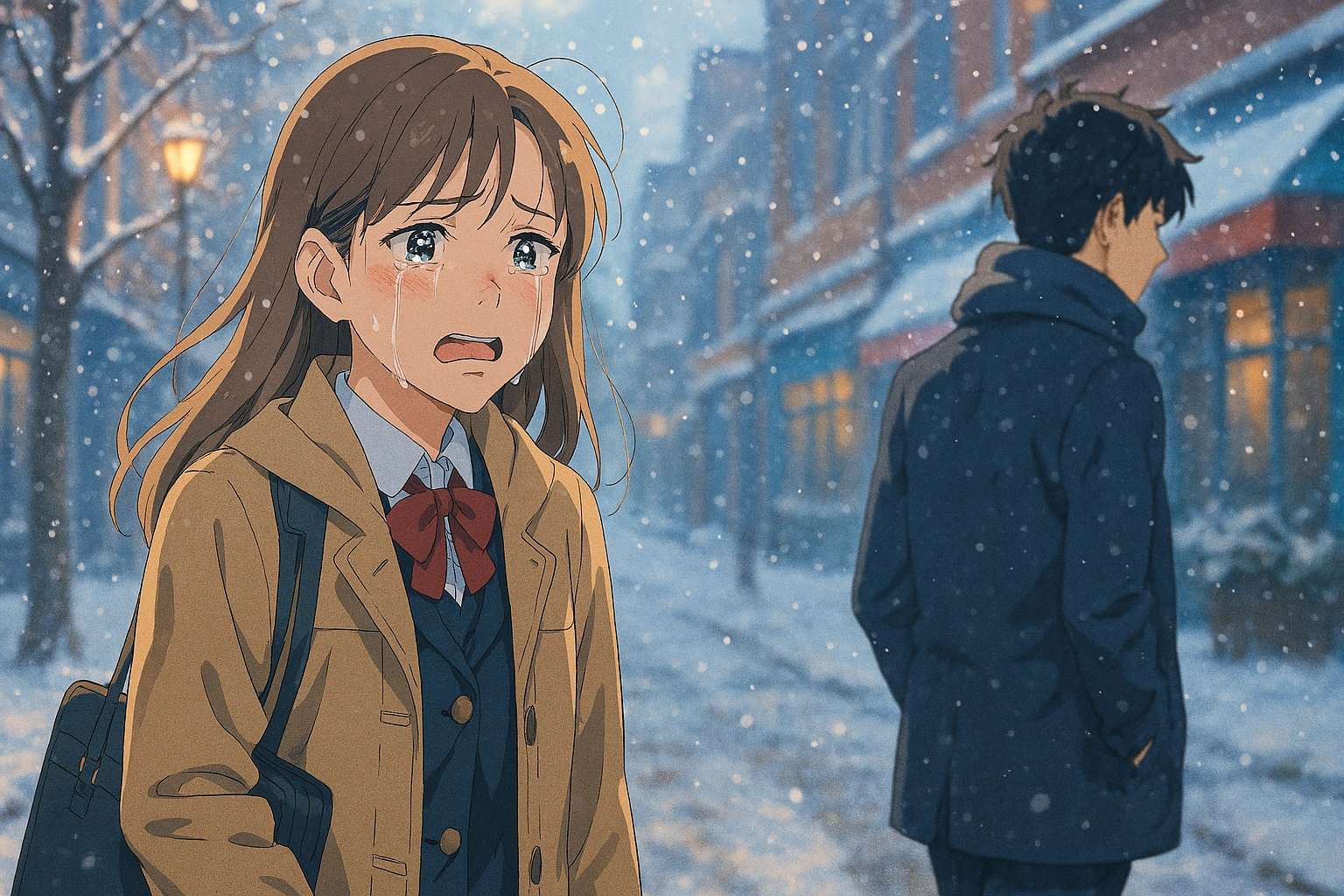
When Jin-Woo returns, he watches her from afar. He intends to leave her be, to let her live a normal life without the stench of death. But fate—or the soul—is stubborn.
When they cross paths, Cha Hae-In stops. She doesn’t know him. To her, he is a stranger passing by on a snowy street. But she cries.
Why?
This validates the concept of Soul Resonance. Even though her brain has been reset, and the timeline has been overwritten, her soul recognizes the “scent” of the man who saved her. Her soul recognizes the void. It is a heartbreaking confirmation that their bond wasn’t just a product of circumstance or the Hunter System. It transcended time and causality. It suggests that her soul was always seeking his, regardless of the dimension or the timeline.
The Track Field Reunion
The final reunion at the track field confirms her status as the exception. In a world of billions of people, she is the one who notices him. The “smell” or the “feeling” draws her back. Jin-Woo realizes that he cannot hide from her, nor does he want to anymore.
By accepting her back into his life in the peaceful timeline, Jin-Woo accepts that he cannot be purely a Shadow. He needs his Light. He needs the one person who saw him not as a monster, but as a sanctuary.
7. Conclusion: The Mother of a God
Cha Hae-In’s story does not end with being a love interest. In the sequel, Solo Leveling: Ragnarok, her importance is cemented not as a warrior, but as a matriarch.
She becomes the wife of the Shadow Monarch and the mother of Sung Su-Ho. This is biologically significant. Sung Su-Ho is born with the blood of a Monarch. A normal human body likely could not have carried the child of a cosmic entity like Jin-Woo. It required Cha Hae-In—a woman with S-Rank vitality, immense mana capacity, and that unique “non-vessel” status—to birth the successor.
She retires from the sword to raise a family, a choice some criticize, but one that fits her character arc perfectly. She never fought for the love of violence; she fought to survive. Once the world was safe (thanks to her husband), she chose the peace she had always craved.
The Human Anchor
Ultimately, Cha Hae-In was the only exception to death because she was the only one who made the God of Death feel alive.
The System couldn’t calculate her worth. The Ant King couldn’t extinguish her light. And Time itself couldn’t erase her memory of him. She was the variable that kept the Shadow Monarch tethered to his humanity. Without Cha Hae-In, Sung Jin-Woo is just a terrifying deity sitting on a throne of shadows. With her, he is a man who just happens to be a King.
She didn’t need to be the strongest in the universe to be the most important. She just needed to be the one person who didn’t hold a handkerchief to her face when the Shadow Monarch walked into the room.
Detailed Analysis by Aniviewer Exploring the depths of anime lore, one shadow at a time.