
In the vast, sprawling pantheon of modern fantasy and manhwa, few endings have sparked as much debate, emotion, and awe as the conclusion of Solo Leveling. To the casual reader, it is a climactic finish to a power fantasy—a story of the “weakest hunter of all time” ascending to the throne of godhood. But to the true analyst, the ending of Solo Leveling—specifically the usage of the Cup of Reincarnation—is a philosophical masterstroke that redefines the very concept of victory.
We often talk about “power scaling,” “dungeon raids,” or the sheer spectacle of the shadow army, but we rarely talk about the timeline that was erased. The timeline where millions died screaming. The timeline where the world ended in fire and ash, only to be saved by a single, desperate wish.
This is the comprehensive analysis of the Cup of Reincarnation, the Lost Timeline, and the 27-year war that Sung Jin-Woo fought alone in the dark so that the rest of us could live in the light.
1. Introduction: The Pyrrhic Victory
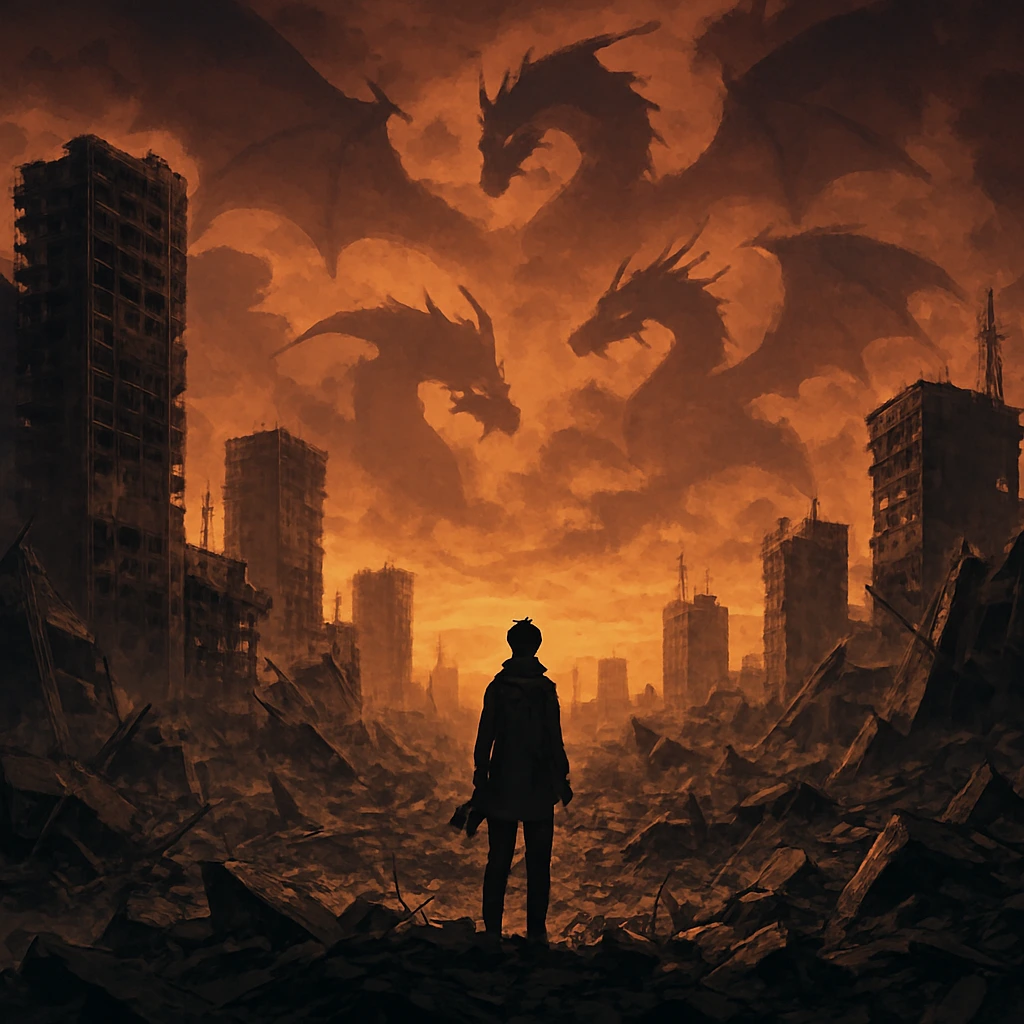
To understand why the Cup of Reincarnation was necessary, we must first dissect the original ending of the war—the timeline that led up to Chapter 177.
Sung Jin-Woo won. Let there be no ambiguity about that. In the original flow of time, the Shadow Monarch stood victorious over Antares, the Monarch of Destruction. The Dragon King’s heart was pierced, his massive draconic form crumbling into nothingness. The armies of chaos were scattered, and the existential threat of the Monarchs was finally extinguished. The System, that cruel interface that had gamified human suffering, was gone. Jin-Woo was the apex predator of the universe.
But look around him.
The victory was hollow. It was the definition of a Pyrrhic Victory—a success that comes with such a devastating toll that it carries the same weight as defeat.
In this “original” timeline, the earth was scorched. Entire cities had been wiped off the map by the Breath of Destruction. The ecosystem was shattered, the sky choked with the ash of burning civilizations. But the physical destruction paled in comparison to the human cost.
Go Gun-Hee, the Chairman of the Korean Hunter’s Association, a man who had been a father figure and a pillar of unshakeable strength for Korea, was dead. His chest had been pierced by the Monarch of Frost, his final moments spent lamenting his inability to fight alongside the young hero. Adam White, the gentle American bureaucrat who believed in international cooperation, had been obliterated, erased from existence in a flash of violence that mocked his diplomacy.
Sung Il-Hwan, Jin-Woo’s own father, had sacrificed his life to buy his son a few mere moments of time. He didn’t die a hero to the world; he died a father protecting his child, fading away into dust in Jin-Woo’s arms, apologizing for being absent when he was needed most.
The Rulers, the angelic beings who had orchestrated this war to protect the planet, descended from the heavens with a sense of relief. They thanked Jin-Woo. “You have saved the world,” they said. In their eyes, the survival of the planet itself—the physical rock floating in space—was the only metric that mattered. If 50% of the population died, but the planet remained intact, it was a “win.” To these cosmic beings, humanity was a statistic, a colony of ants to be preserved in the aggregate, not individuals to be mourned.
But Sung Jin-Woo is not a Ruler. He is a human who became a Monarch. He looked at the ruin of his home, the corpses of his friends, and the terrified faces of the survivors huddled in the rubble, and he realized that this was not a victory he could accept. He could not stand on a throne built upon the graves of everyone he loved.
It was in this moment of quiet despair, amidst the ashes of a “won” war, that Jin-Woo made the most selfish and selfless decision in the history of the series. He looked at the Brightest Fragment of Luminosity and asked the question that would change reality itself:
“Is there a way to turn back time?”
He didn’t want a medal. He didn’t want to be a King of a graveyard. He wanted a do-over. He wanted to use the Cup of Reincarnation.
2. The Mechanics of the Cup of Reincarnation
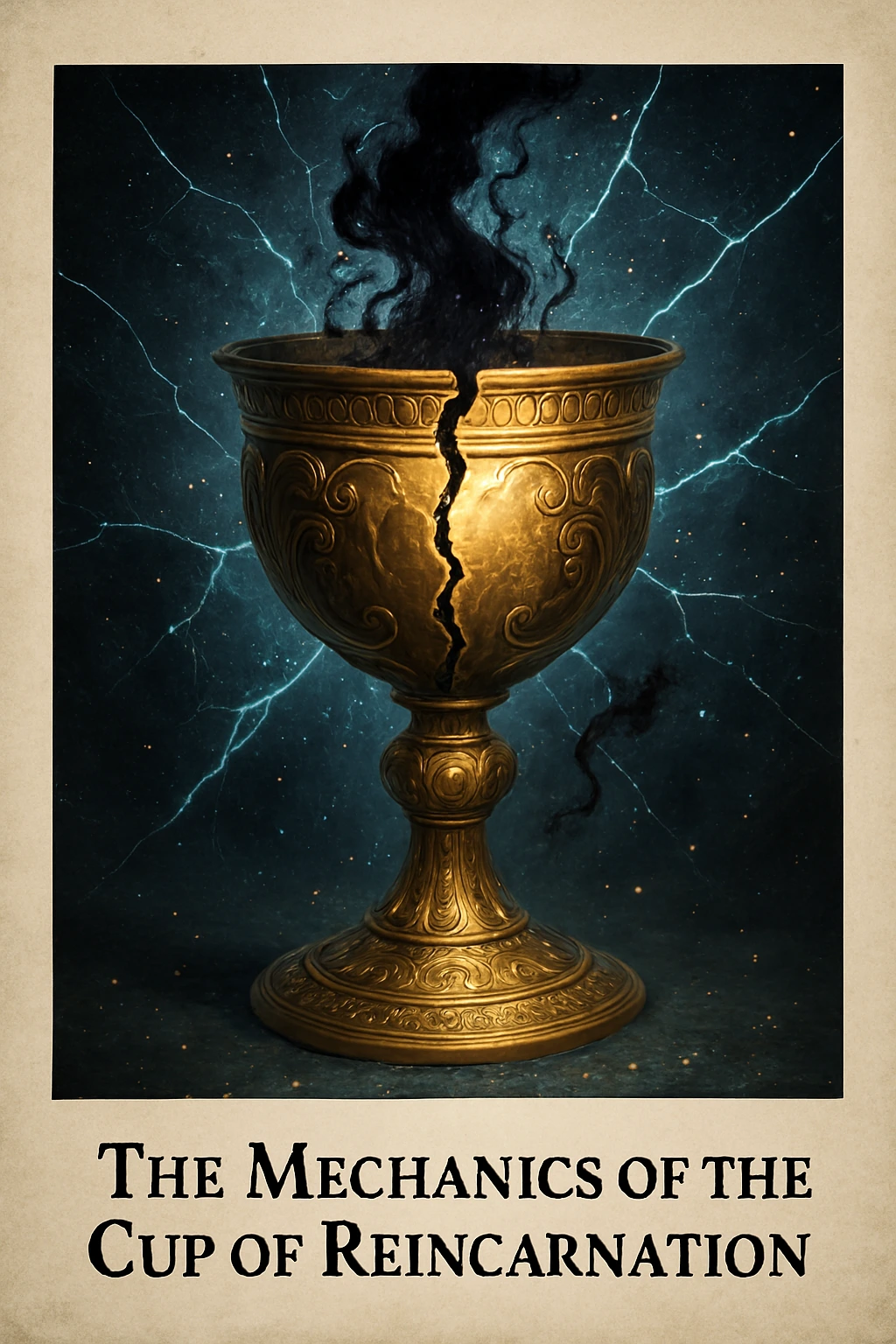
The Cup of Reincarnation is not merely a magical item; it is a narrative device that serves as the ultimate “Save Scumming” mechanic of the universe, but with stakes that go far beyond a video game reset. It represents the ultimate cheat code, but one that comes with a heavy price tag attached to the user’s soul.
Origin of the Divine Artifact
The Cup was created by the Absolute Being (the creator god of the Solo Leveling universe). Why? Not out of benevolence, and certainly not to save humans. It was created out of boredom. The Absolute Being viewed the eternal war between the Rulers (Light) and the Monarchs (Darkness) as mere entertainment. When the war ended too quickly, or when the outcome wasn’t “fun” enough, he would use the Cup to reset the board and watch them fight again.
It is a tool of capricious gods, a plaything for a deity who treated existence like a theater production. Jin-Woo repurposing this tool of amusement into a tool of salvation is one of the greatest ironies of the series.
The 10-Year Rewind Rule
The mechanics of the Cup are precise and immutable. It does not allow for time travel to any specific point chosen by the user. It rewinds time by exactly 10 years.
Why 10 years? In the context of the story, this is the crucial window. Ten years prior to the final battle takes the world back to a time before the Gates fully opened, before the Dungeon Breaks began, and before mana saturated the Earth. It takes the world back to normalcy. It returns humanity to the age of ignorance, before the term “Hunter” existed, and before the world knew fear.
The “Crack in Dimensions” and The Limit
However, the Cup is not an infinite resource. The Rulers warned Jin-Woo that the Cup had been used too many times already by the Absolute Being during the endless celestial wars. The structural integrity of the dimension was weakening.
Using the Cup creates a strain on reality. It is described as “overwriting” data on a hard drive. You can only overwrite the same sector so many times before the data becomes corrupted or the drive fails entirely.
The Rulers explicitly stated: “This is the last time. If you use it now, there will be no turning back. The Cup will break, and this timeline will be permanent.”
This added a layer of absolute finality to Jin-Woo’s choice. If he failed in the new timeline, if he died, or if he couldn’t stop the Monarchs alone, there would be no second chances. No checkpoints. No respawns. He was betting the entire existence of the universe on a single run, accepting a “Permanent Game Over” condition for reality itself.
Memory Retention
The most tragic mechanic of the Cup is memory retention. When time is rewound:
- Normal Humans: Lose all memories. They revert to their past selves completely, their trauma and growth erased as if it never happened.
- Higher Beings (Rulers/Monarchs): Retain their memories. They know time has been reset.
- The User (Jin-Woo): Retains everything. His level, his skills, his Shadow Army, and his trauma.
This distinction is vital. It means that while the rest of the world gets a fresh start, Jin-Woo carries the burden of two lifetimes. He carries the screams of the dying and the horrors of the war into a peaceful world. He becomes the keeper of a history that no longer exists, a living museum of a dead timeline.
3. The Dimensional Gap: The 27-Year War
This is the part of the lore that separates the casual fans from the experts. When Jin-Woo activated the Cup of Reincarnation, he didn’t just “wake up” in his middle school body instantly. The transition was not instantaneous.
He had to travel through the Dimensional Gap.
The Void Between Worlds
Because the Monarchs also retained their memories, they knew what Jin-Woo was doing. As time rewound, the Monarchs realized they were being sent back. They immediately prepared to invade Earth again, hoping to catch Jin-Woo off guard or kill him before he could consolidate his power. They planned to strike the moment the timeline reset.
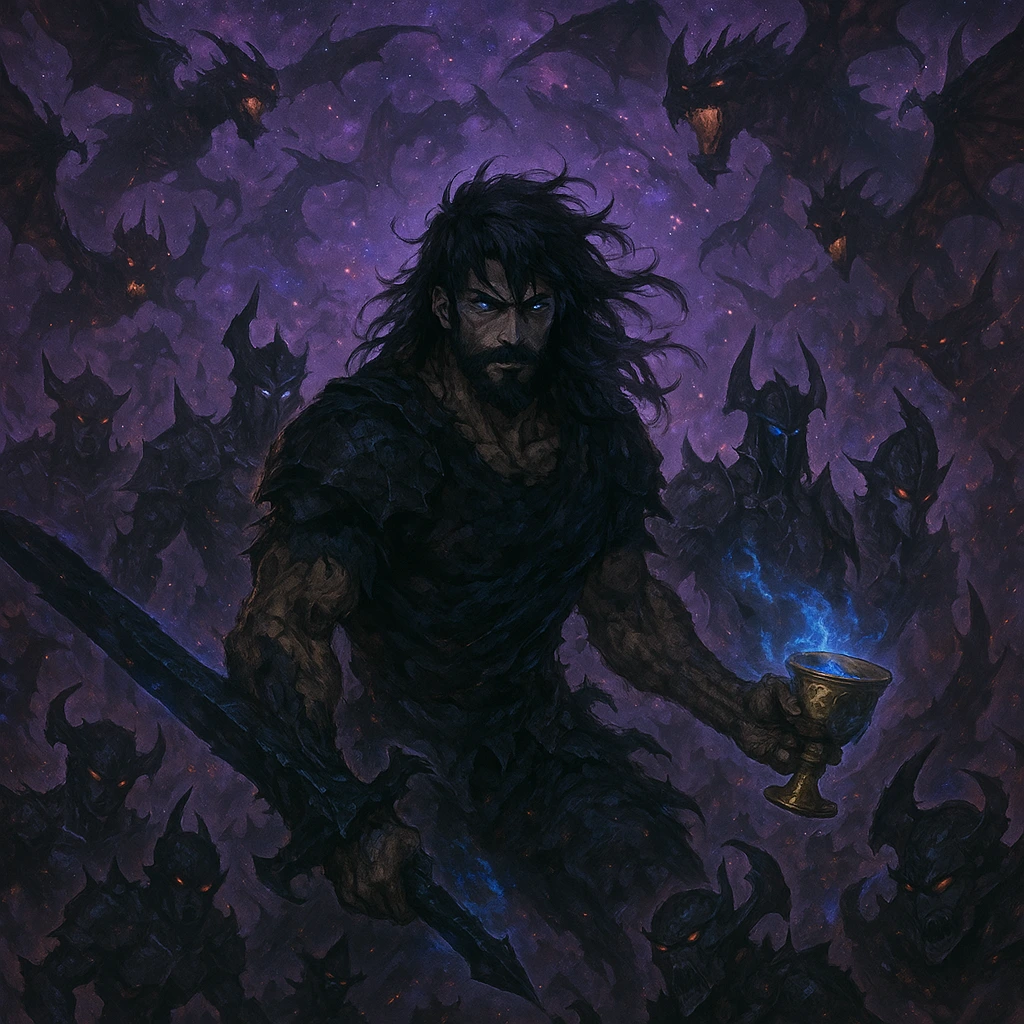
But Jin-Woo didn’t go to Earth. He went into the Gap Between Dimensions—a void of purple shadows and endless nothingness where the Monarchs’ armies were stationed, waiting to descend.
Jin-Woo chose to intercept them. He chose to fight the war outside of time and space, preventing the battlefield from ever reaching Earth.
The Solo War
In the original timeline, the war against the Monarchs took a toll on the entire world. Hunters from every nation fought and died. The collective might of humanity was barely enough to survive. In the new timeline, Jin-Woo decided that no one else would fight.
He entered the Dimensional Gap and waged a war that lasted for 27 years.
Let that number sink in. Twenty-seven years. While Earth enjoyed 2 years of peace (due to extreme time dilation, 27 years in the gap was roughly 2 years on Earth), Jin-Woo was fighting non-stop. Without sleep. Without rest. Without human contact. Without sunlight.
He was fighting:
- The Monarch of Destruction (Antares) and his infinite Dragon Army.
- The Monarch of Iron Body and his constructs.
- The Monarch of Transfiguration and his hordes.
- Legions of millions of demonic beasts.
Imagine the mental fortitude required. Jin-Woo spent longer in that void than he had been alive on Earth. He spent nearly three decades doing nothing but killing, surrounded only by enemies and his own shadows.
The Beard and the Shadow Army
This era gave us one of the most iconic visuals in the side stories: Sung Jin-Woo with a beard.
He wasn’t the clean-shaven, K-Pop idol-looking hunter anymore. He was a rugged, scarred veteran of a cosmic war. He had aged in the gap. He had grown into a true Emperor of Death. His eyes held the weight of centuries.
His army evolved too. This wasn’t just about numbers anymore.
- Bellion (Grand-Marshal)
- Igris (Marshal)
- Beru (Marshal)
These three stood by his side for nearly three decades. Their loyalty transcended the System. They weren’t just summons; they were his only family in the void. They watched their liege slash through dragons and demons, day after day, year after year. The bond forged here is why Beru is so violently protective of Jin-Woo later—he saw the sacrifice Jin-Woo made when no one else was watching. He saw the loneliness of his King.
This 27-year war is the greatest feat of endurance in the series. It proved that Jin-Woo wasn’t just powerful because of the System; he was powerful because of his indomitable will. He tanked the entire aggression of the universe solely to ensure that when he finally returned to Earth, there would be no monsters left to kill.
4. The New Timeline: A World Without Hunters
When the 27-year war ended and Jin-Woo finally returned to Earth, the Cup’s effect fully settled. He merged with his younger self (the middle school student), but with the soul of the Shadow Monarch.
The contrast was jarring. One moment, he was decapitating dragons in a void; the next, he was waking up in his childhood bed.
The Middle School Return
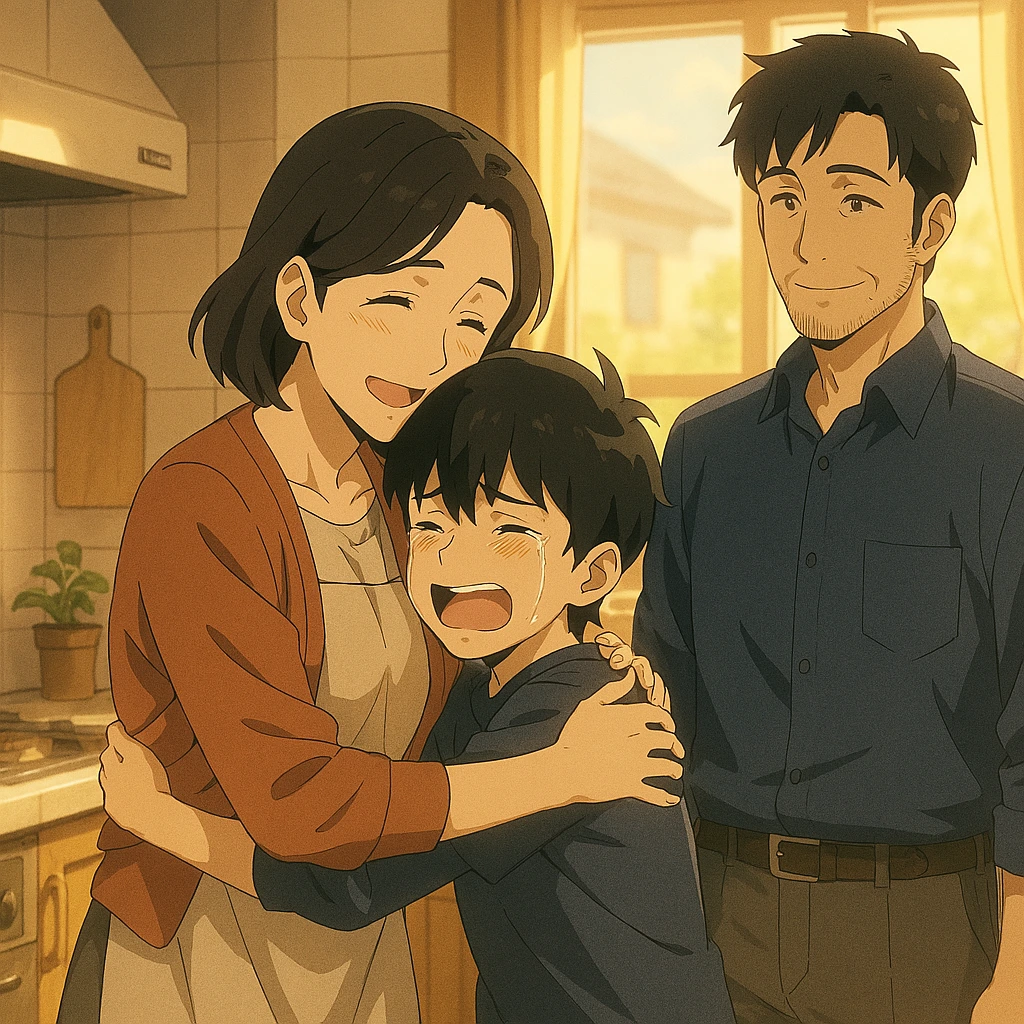
The scene is understated but devastatingly emotional. Jin-Woo wakes up. He smells food cooking—a mundane scent he hasn’t experienced in 27 years. He walks into the living room. He sees his mother. She isn’t comatose. She isn’t hooked up to life support machines because of the “Eternal Slumber” disease (which was caused by mana exposure). She is healthy. She is vibrant. She is cooking breakfast, unaware that her son has just spent a lifetime in hell to see this moment.
Then, he sees his father. Sung Il-Hwan. The man who had been missing for a decade, trapped in a dungeon, and who died in the previous timeline protecting Jin-Woo. He is there. He is alive. He is reading the newspaper, complaining about politics or sports.
Jin-Woo breaks down. The sheer relief washes over him. This was the reward for the 27 years of hell. This moment alone justified everything. The normalcy was the prize.
The Butterfly Effect
The absence of Gates changed everything. Without mana leaking into the world, the tragedies that defined the Solo Leveling universe never happened.
- Go Gun-Hee: In the original timeline, he was a powerful S-Rank hunter but held back by a failing heart, eventually murdered by the Monarchs. In the new timeline, he lives out his life as a successful, healthy business tycoon. He eventually passes away from old age—a peaceful, natural death that Jin-Woo attends invisibly from the shadows, paying respects to the man who believed in him.
- Juhee: The B-Rank healer who was traumatized by the Double Dungeon. In the original timeline, she retired in fear and lived a life of anxiety, forever haunted by the statue’s grin. In the new timeline, she is a normal student, smiling, happy, and completely unaware of the statue that once smiled back with malice. She lives without PTSD.
- Jinho (The Vice Guild Master): He isn’t a hunter desperate to prove himself to his father. He’s just a rich kid with a good heart, who eventually (by fate) becomes friends with Jin-Woo again, though in a much more mundane setting.
The world is boring. It is mundane. There are no fireballs, no dungeon breaks, and no guilds. And to Jin-Woo, this boring world is paradise. He fought for the right to be bored.
5. The Fate of the Villains: “Spawn Camping”
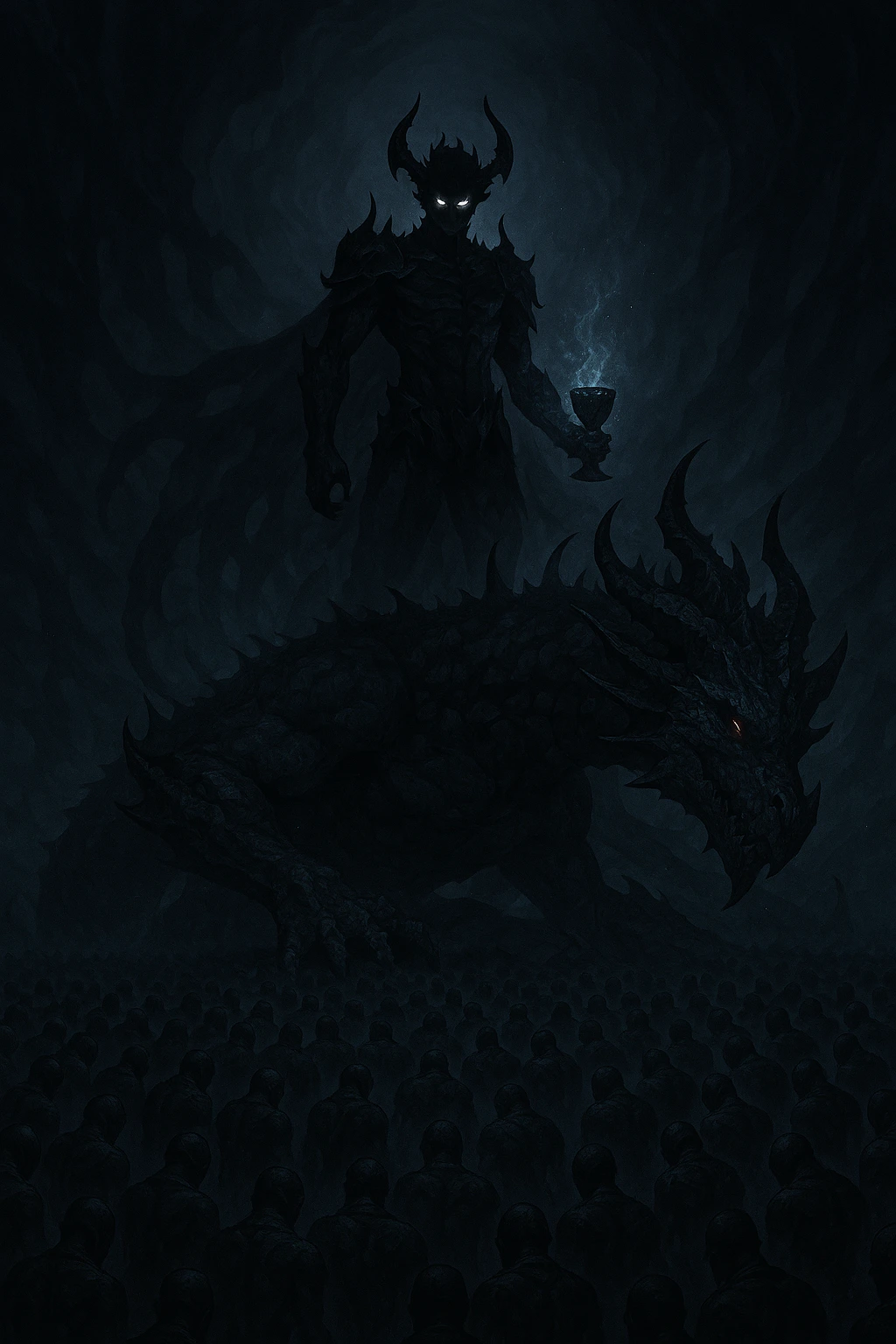
One of the most satisfying aspects of the Lost Timeline is how Jin-Woo dealt with the antagonists. In gaming terms, Jin-Woo effectively “spawn camped” the Monarchs.
Because Jin-Woo retained his memories and power, and because he intercepted them in the Dimensional Gap, the Monarchs never got the chance to initiate their plans on Earth.
The End of Antares
Antares, the Dragon Monarch, was the end-game boss who nearly destroyed the world. In the new timeline, Jin-Woo hunted him down in the gap. It wasn’t a desperate defense of Seoul where civilians were caught in the crossfire; it was an execution in the void. Jin-Woo, with his fully realized Shadow Army, crushed the Dragon forces before they could even sniff Earth’s atmosphere. He ended the war before the opening bell even rang.
The Tragedy of Greed (Hwang Dong-Soo)
In the original timeline, Hwang Dong-Soo was a menace. He was an S-Rank hunter who tortured Jin-Woo (human) and swore to kill him. He was a symbol of how power corrupted hunters. In the new timeline? He is nobody. Without the awakening, he is likely just a thug or a regular person with anger issues. He holds no power over Jin-Woo. He is rendered irrelevant. This is the ultimate punishment for a villain—not death, but insignificance. He lives a life of mediocrity, never knowing he could have been a king.
The Architect’s Deletion
The Architect (the creator of the System) was killed instantly during the war in the gap. This is crucial because it means the System never existed in the new timeline.
- No “Player” status.
- No “Daily Quests.”
- No “Level Up” notifications. Jin-Woo is simply the Shadow Monarch by nature now. He doesn’t need blue boxes to tell him he’s strong. He has surpassed the need for the game interface entirely.
6. The Price of Silence (The Unknown Hero)
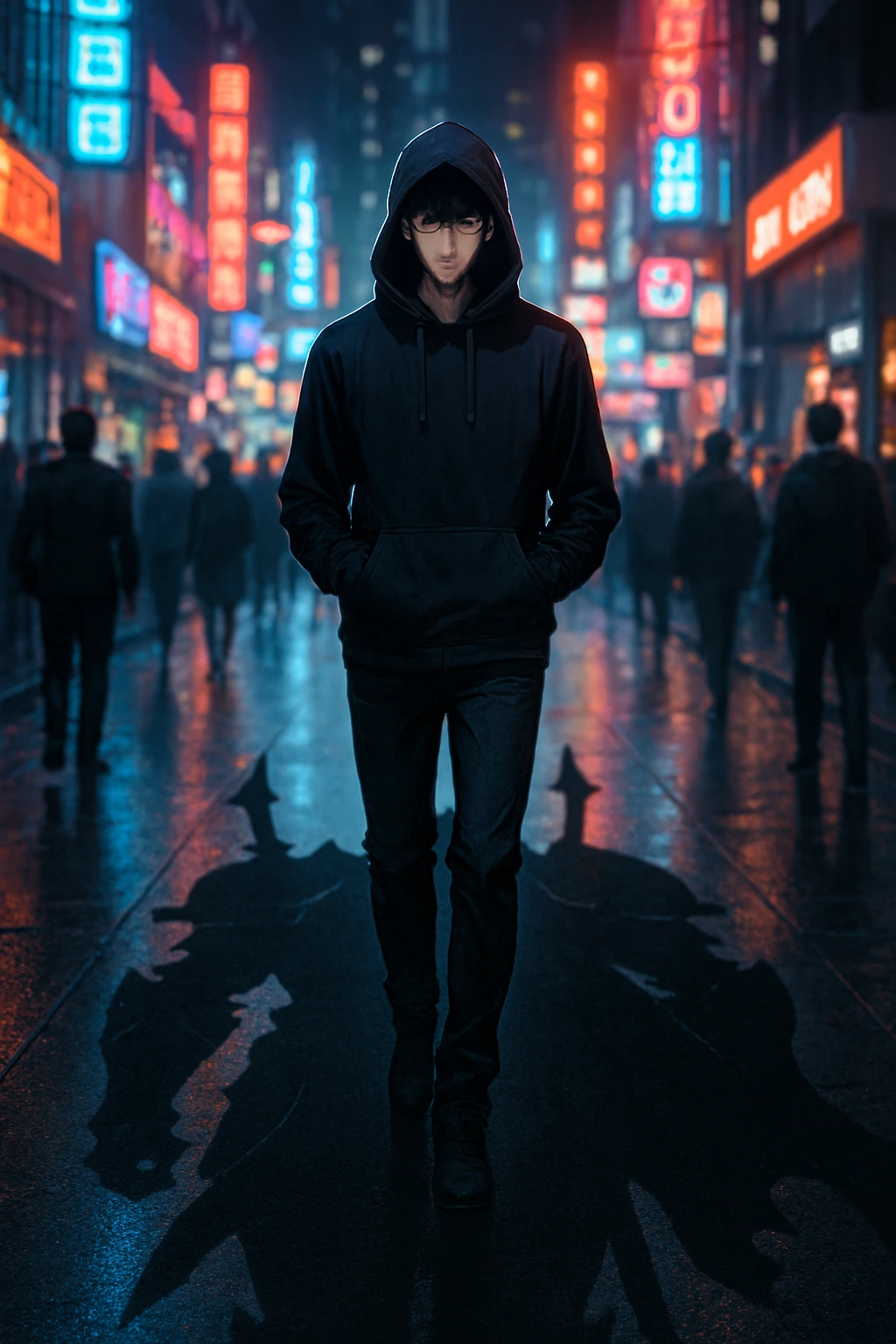
This section delves into the tragedy of the ending. While the physical world is saved, the emotional toll on Jin-Woo is staggering.
The Burden of the “Unknown Hero”
There is a specific kind of loneliness in saving 7 billion people who will never know they were in danger. Imagine walking down the street. You see people laughing, drinking coffee, complaining about traffic or taxes. You know that in another life, these people were being eaten alive by ants or burned by dragons. You know that you spent 27 years in a void to ensure they could complain about traffic.
But you can never tell them. If you told them, they would call you insane. Jin-Woo walks among humanity like a ghost. He is a God pretending to be a high school student. He has to sit through math exams when he knows the secrets of the cosmos. He has to deal with school bullies whom he could vaporize with a mere thought.
This requires a level of restraint that is arguably more impressive than his combat ability. To have the power to rule the world but choose to be a student struggling with homework is the ultimate test of character.
The Woo Jin-Cheol Moment
There is one exception to this crushing loneliness: Woo Jin-Cheol. In the new timeline, Woo Jin-Cheol is a detective (since the HDA doesn’t exist). However, because he was a high-ranking awakened being in the past life, his soul is sensitive.
In a beautifully poignant scene, Woo Jin-Cheol sees a drawing of the Shadow Soldiers and Jin-Woo. A spark of memory ignites. He approaches Jin-Woo, and the memories flood back. He realizes. He realizes that the peaceful world he lives in was bought and paid for by the young man standing in front of him. He realizes the debt that humanity owes this single individual.
“My Liege.”
When Woo Jin-Cheol bows to Jin-Woo in the new timeline, it is one of the most powerful moments in the series. It confirms that Jin-Woo is not entirely alone. Someone knows. Someone remembers. That shared nod of understanding is the only validation Jin-Woo receives from the human world, and for a moment, the weight of the 27 years lifts just a fraction.
7. Reconnecting with Cha Hae-In
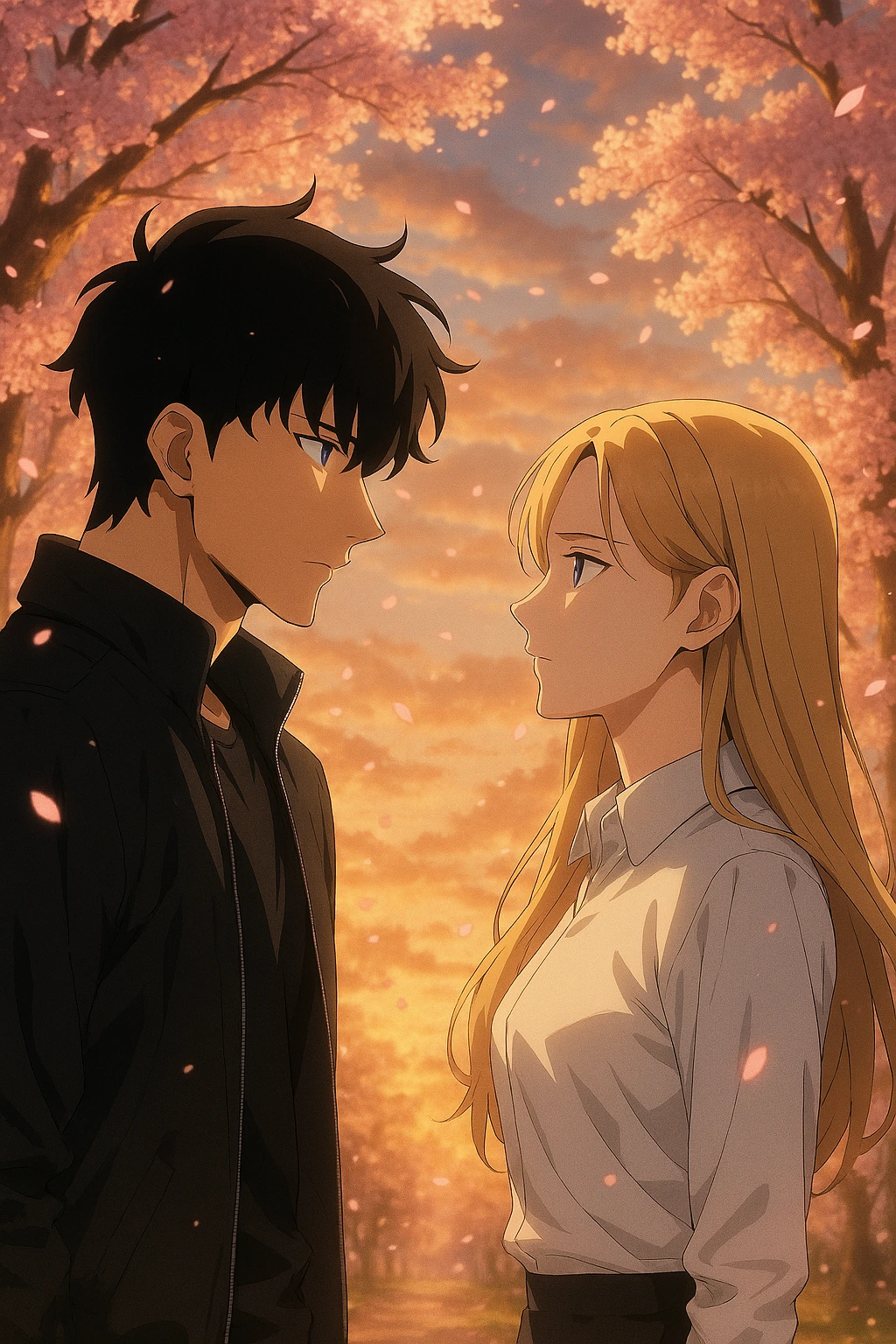
The romance in Solo Leveling was always subtle, but the Cup of Reincarnation takes it to a heartbreaking, yet hopeful, conclusion.
The Reset Relationship
When time rewound, Cha Hae-In lost everything. She lost her S-Rank status, her skills, and her memories of Jin-Woo. She doesn’t remember the raid on Jeju Island. She doesn’t remember the “date” at the amusement park. She doesn’t remember falling in love with the Hunter who saved her.
To Jin-Woo, this must have been agonizing. The woman he loved looked at him with the eyes of a stranger. He had to restart from zero, carrying the memories of a love that technically never happened.
The Soul’s Memory
However, the story posits a romantic theory: The soul remembers what the mind forgets. In the original timeline, Cha Hae-In was drawn to Jin-Woo because he was the only Hunter who didn’t “stink.” Everyone else smelled of rotting monsters to her sensitive nose, but Jin-Woo smelled pleasant.
In the new timeline, there are no hunters, so she doesn’t have that sensory condition. Yet, when she sees him, she stops. The scene under the falling cherry blossoms is the thematic seal of the series. She turns around. She sees him. She doesn’t know him, but she feels him. Her soul recognizes the presence of the man who crossed dimensions to find her.
The Promise Kept
Before using the Cup, Jin-Woo promised he would find her.
“I will come to find you.”
He kept that promise. He waited through the 27-year war. He waited through his childhood. And finally, he stood before her again. Their relationship in the new timeline is purer. It isn’t built on the trauma of war or the necessity of survival. It is built on genuine attraction and a cosmic thread of fate that the Cup of Reincarnation couldn’t sever. They fall in love not because they are the strongest hunter and the strongest huntress, but because they are Jin-Woo and Hae-In.
8. Conclusion: The Perfect Ending?
So, we return to the core question: Was using the Cup of Reincarnation the right choice?
Critics argue that it invalidated the struggles of the side characters. The growth of the other hunters, the sacrifices of the National Level Hunters—all of it was erased. In a way, it was the ultimate act of selfishness. Jin-Woo decided that his version of a happy ending superseded the reality that everyone else had lived. He chose to play god with time.
But to view it that way is to miss the point of Solo Leveling.
The title was never just about a gaming system. It was a prophecy.
- First, he leveled up alone.
- Then, he fought alone.
- Finally, he bears the burden of memory alone.
The ending is perfect because it completes the transition of Sung Jin-Woo from a player to an administrator, from a hunter to a guardian. He sacrificed his own recognition for the safety of others. He chose a world where he is an unknown student over a world where he is a celebrated King of ashes.
He stands now as the Shadow Monarch, hiding in plain sight, watching over a world that is blissfully ignorant of how close it came to extinction. He is the guardian in the shadows, waiting for the threats that may come in the future (Solo Leveling: Ragnarok), secure in the knowledge that this time, he has protected the things that truly matter: a warm breakfast with his mother, a newspaper for his father, and a peaceful walk under the cherry blossoms with the woman he loves.
The Lost Timeline wasn’t “lost.” It was traded. And it was a trade worth making.
Key Takeaways for the Reader
- The Scale: The “Gap” war lasted 27 years, making Jin-Woo physically and mentally much older than he appears. He is an old soul in a young body.
- The Cost: Jin-Woo sacrificed his fame, the shared memories of his comrades, and his accolades to save their lives.
- The Lore: The Cup allows for a 10-year rewind and is a tool of the Absolute Being, now destroyed or depleted, meaning this reality is final.
- The Future: This timeline sets the stage for Ragnarok, where Jin-Woo’s son will eventually have to take up the mantle, inheriting the legacy of the shadow.
This is the hidden depth of the ending. It is not just a reset; it is a redemption.