
1. The Botanical Paradox: The Origin of All Demons
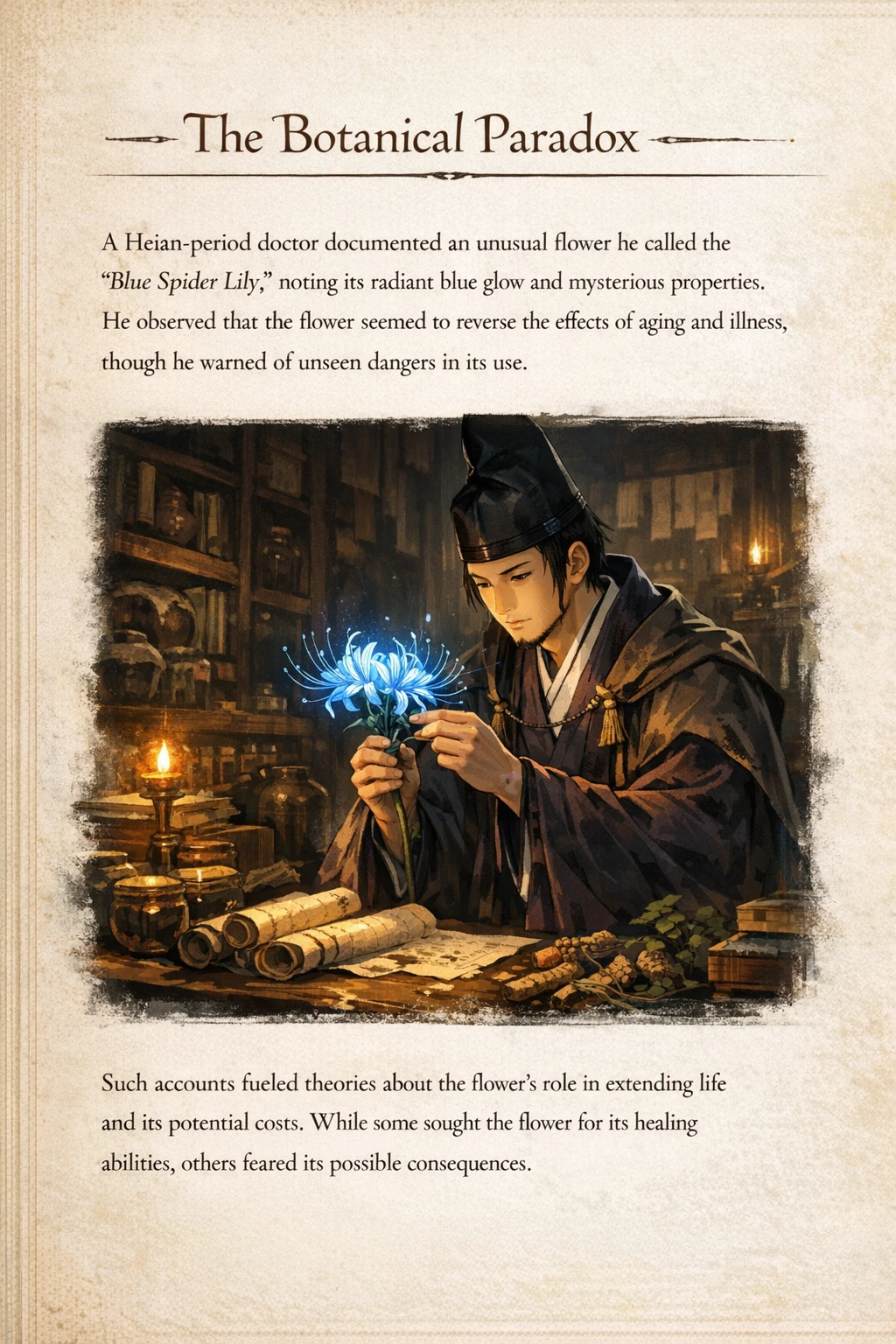
In the vast, blood-soaked tapestry of the Demon Slayer universe, where gods of the sword clash with immortal monsters of the night, there exists a profound and almost cruel irony. The entirety of this 1,000-year war, the rivers of spilled blood, the countless tragedies of the Hashira, and the creation of an unstoppable, flesh-eating army do not revolve around a cursed artifact, a demonic pact, or a fallen deity.
Instead, the axis upon which a millennium of suffering spins is a single, fragile, unassuming weed: the Blue Spider Lily. This botanical anomaly represents the ultimate paradox of the series—a delicate manifestation of nature that accidentally birthed the greatest unnatural catastrophe in human history.
To understand the magnitude of this paradox, one must look back to the Heian Era, a time defined by deep spiritualism, rigid aristocracy, and the nascent stages of medicinal science. It was here that the progenitor of demons, Muzan Kibutsuji, was nothing more than a frail, terminally ill young man, cursed with a body so weak it was a prison of constant agony.
The origin of all demons did not begin with a desire for world domination; it began with a desperate, pathetic gasp for life. Enter the Heian Era doctor, a nameless physician whose profound knowledge of ancient pharmacognosy—the study of medicinal drugs derived from plants and other natural sources—would inadvertently doom countless generations.
This physician was not a dark sorcerer. He was, by all accounts, a well-meaning scientist operating at the absolute bleeding edge of his era’s medical understanding. He sought to cure Muzan’s terminal, wasting disease by synthesizing a revolutionary, experimental medicine. In the Heian period, treatments were often a blend of herbalism, mysticism, and rudimentary alchemy.
The doctor recognized that Muzan’s cellular structure was collapsing, and to reverse this, he needed a botanical catalyst of unimaginable regenerative power. He found this theoretical salvation in the Blue Spider Lily, a flower so impossibly rare that it blurred the line between myth and botanical reality.
The physician’s prescription was a masterpiece of ancient medicine, designed to force the human body to rebuild itself at a microscopic level. It was intended to be a slow, multi-staged process where the human biology would gently assimilate the life-giving properties of the plant. The doctor utilized the Blue Spider Lily not to create an immortal beast, but to act as a stabilizing agent for a failing human heart and lungs.
However, the delicate nature of this treatment required precise timing, specific dosages, and, above all, the complete synthesis of the flower’s unique chemical compounds. By attempting to cure the incurable, this well-meaning doctor unlocked a cellular monster, proving that in the world of Demon Slayer, the road to absolute hell was paved with the best of medical intentions. The Blue Spider Lily was never meant to be a weapon; it was simply a cure that was violently interrupted, trapping its patient in an eternal, predatory purgatory.
2. The Biology of the Bloom: Photoperiodism and Sunlight
To comprehend why the Blue Spider Lily evaded the most powerful, immortal beings for a millennium, one must undertake a deep dive into the harsh, unforgiving science of botany, specifically the phenomenon known as photoperiodism.
The Blue Spider Lily is not merely rare; it is a biological extremist. Photoperiodism is the physiological reaction of organisms to the length of night or a dark period, fundamentally dictating when a plant will germinate, grow, and, most crucially, flower. While most plants have a generous blooming window designed to maximize pollination, the Blue Spider Lily operates under a set of terrifyingly restrictive environmental triggers.
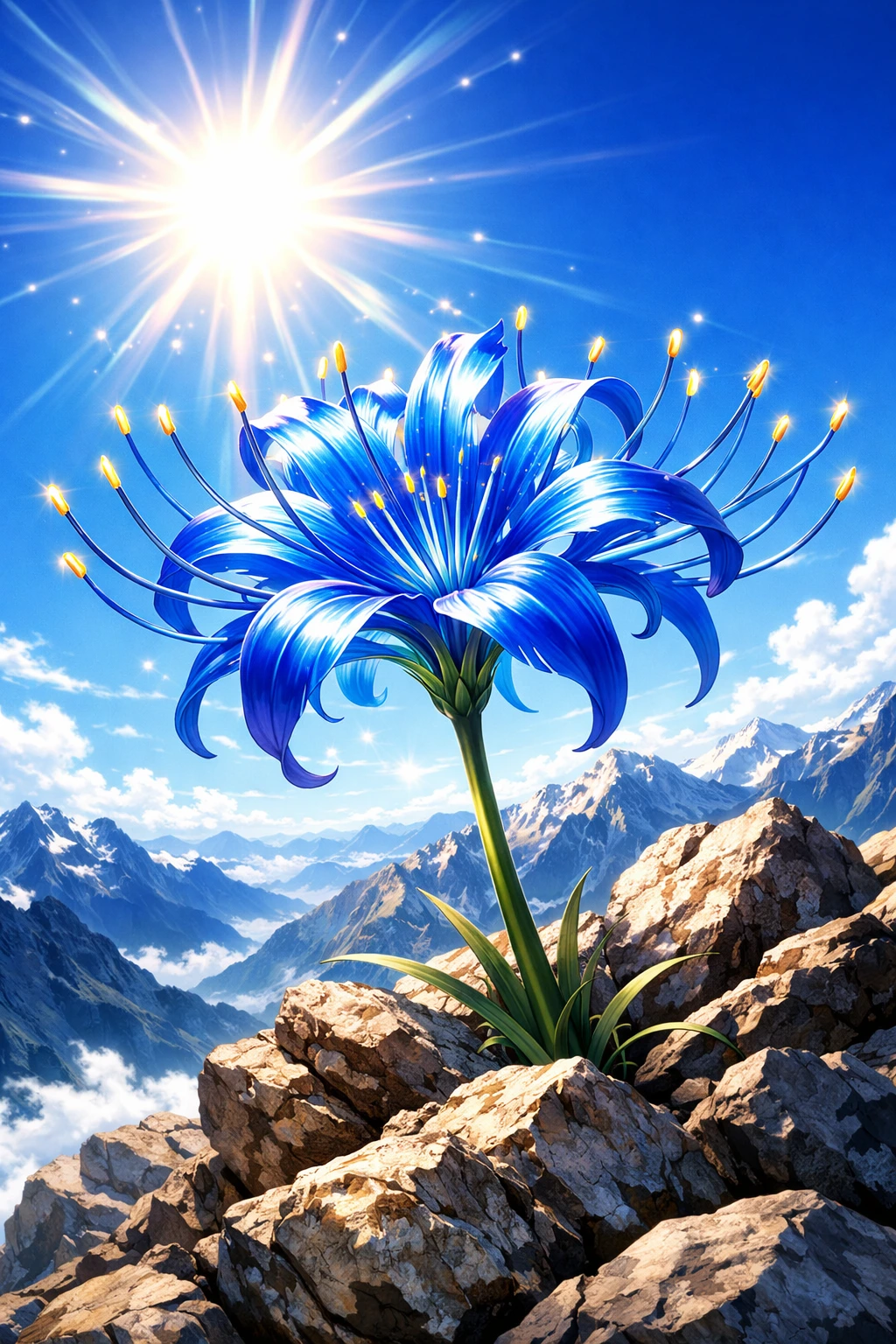
The Blue Spider Lily is an obligate heliophile with a microscopic window of viability. It exclusively blooms during the daytime, and not just any daytime—it requires the absolute peak of solar radiation for a duration of only two to three days out of an entire year. For the remaining 362 days, the flower simply does not exist in a recognizable state.
This daylight requirement is the crux of its biological defense mechanism. The plant absorbs immense amounts of ultraviolet radiation in a condensed period, storing this solar energy within its cellular structure. This rapid, explosive bloom is likely triggered by a hyper-specific alignment of temperature, humidity, and exact solar positioning, making its appearance less like a seasonal occurrence and more like a rare astronomical event.
When the Blue Spider Lily is not in its spectacular, brief state of bloom, it deploys one of the most effective natural camouflages in the botanical kingdom: closed-petal mimicry. Once the two-to-three-day window closes, the brilliant blue petals do not just wilt and fall; they retract, harden, and transform. The plant undergoes a morphological shift, tightly binding its vibrant anatomy into a rigid, unremarkable stalk.
In this dormant state, it perfectly resembles a common, worthless horsetail weed (Equisetum). A person could be standing in a field of a thousand dormant Blue Spider Lilies and perceive nothing but invasive, useless brush. This closed-petal camouflage meant that even if someone were actively hunting for the flower, they would walk right past it unless they possessed the microscopic botanical knowledge to differentiate a specific weed from a dormant miracle. It was completely unrecognizable to anyone who didn’t know the exact minute to look.
Furthermore, the Blue Spider Lily was protected by extreme geographical isolation. It did not, and could not, grow just anywhere. The botanical mutation required to produce its unique, sun-absorbing properties demanded a violently specific ecosystem. We must analyze the hypothetical soil composition: it likely required a highly alkaline environment, perhaps rich in rare volcanic minerals or specific heavy metals that acted as a catalyst for its vivid blue pigmentation and regenerative properties.
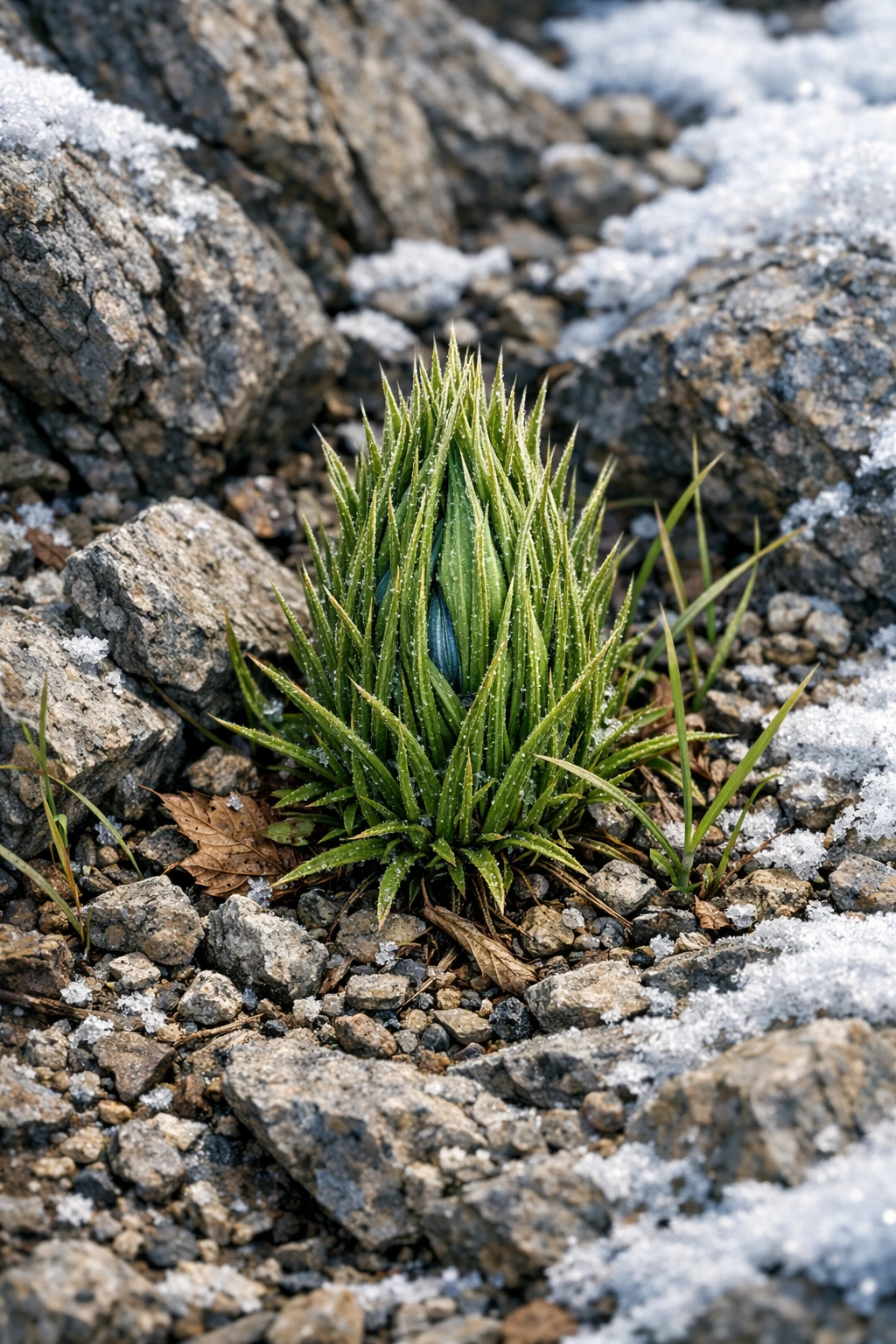
Altitude and climate were equally prohibitive. The flower was hyper-localized to a few specific mountain ranges in Japan—areas where the air was thin, the soil was uniquely stressed, and the microclimate created the exact crucible needed for its survival. These mountains acted as natural fortresses. The plant required the biting cold of high altitudes to temper its roots, followed by the intense, unfiltered UV exposure of a mountain peak during its brief summer bloom.
This extreme geographical isolation meant that the flower was effectively quarantined by nature itself. It was not scattered across the valleys or hidden in deep, accessible forests; it clung to the harsh, unforgiving slopes where human foot traffic was virtually nonexistent, compounding its mythic rarity and ensuring that it remained a phantom to those who sought it.
3. The Chemical Synthesis of Immortality
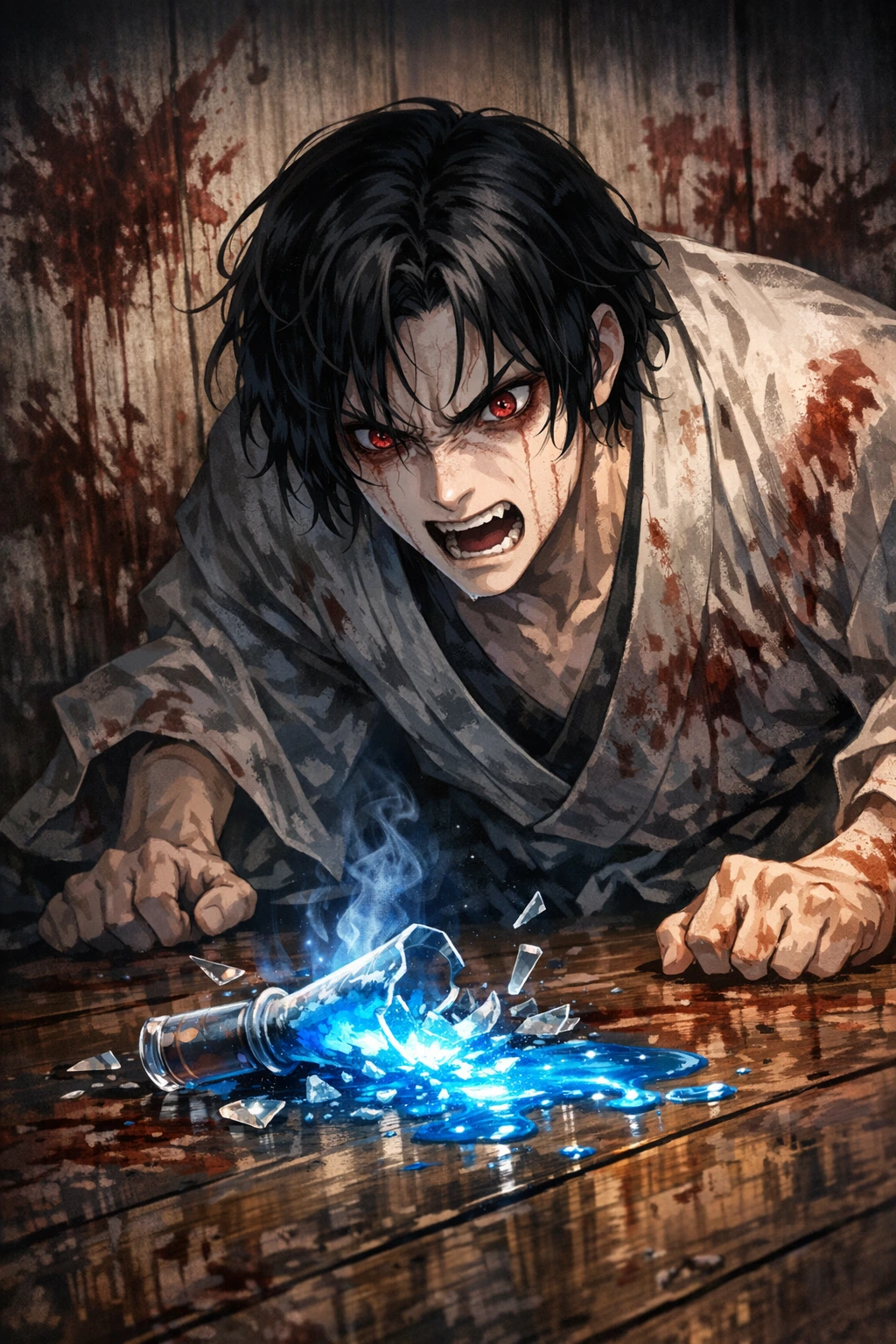
The tragedy of Muzan Kibutsuji, and the subsequent birth of the demon race, is fundamentally a story of an interrupted chemical synthesis. To analyze Muzan’s mutation is to look at a catastrophic failure in biological alchemy. The medicine he was administered by the Heian doctor was not a simple elixir; it was an incomplete, volatile chemical compound. The original treatment was a multi-stage process, likely involving various toxic and regenerative alkaloids that required a final, synthesizing agent to stabilize the patient’s mutating DNA. That final agent was the fully processed extract of the Blue Spider Lily.
When Muzan, consumed by the agonizing pain of his worsening condition and blinded by his own infantile impatience, murdered the doctor in a fit of rage, he severed the chain of this complex chemical reaction. He had already ingested the foundational elements of the medicine—the compounds responsible for rapidly accelerating cell division and forcing the body to heal.
However, before the final, stabilizing ingredient could be fully integrated and its properties unlocked within his bloodstream, the doctor was dead. Muzan was left with a body that had been commanded to mutate, but lacked the blueprint to finalize the process safely.
The science behind this botched cellular mutation centers on the concept of the missing UV catalyst. The Blue Spider Lily, as a plant that explosively absorbs and processes extreme amounts of ultraviolet radiation in its brief bloom, possessed a unique phytochemical makeup. Its extract was meant to bridge the biological gap between fragile human cellular structure and extreme environmental resistance.
In the doctor’s intended cure, the flower’s essence would have coated Muzan’s mutating cells, creating a protective, synthetic barrier that would allow his newly hyper-regenerative body to withstand the harshness of the natural world, specifically the ionizing radiation of the sun. The flower was the biological armor required to contain the raw, volatile energy of the medicine’s other ingredients.
The consequence of Muzan’s impatience was absolute, horrifying power coupled with a debilitating, fatal vulnerability. By killing the doctor, Muzan triggered a botched, runaway cellular mutation. The medicine, lacking the Blue Spider Lily’s stabilizing UV catalyst, went into overdrive.
It granted him the intended hyper-regeneration—allowing his cells to divide, repair, and replicate at a god-like speed, effectively granting him biological immortality and the ability to morph his flesh. He became a perfect, unkillable organism in the dark.
However, because the chemical synthesis was incomplete, his newly mutated cells were left completely raw and exposed to ultraviolet light. Without the Blue Spider Lily’s botanical shielding, Muzan’s hyper-active cells violently reject solar radiation. When a demon is exposed to sunlight, it is not simply “burning”; it is experiencing catastrophic, instantaneous cellular apoptosis (cell death).
The UV rays interact with the incomplete demon biology, causing the volatile cells to instantly break down and disintegrate into ash. Muzan gained the power of a god, but because he could not wait for a simple flower to be prepared, he was chained to the darkness forever. His immortality was a prison built by his own murderous haste, a millennium-long punishment for interrupting a delicate chemical synthesis.
4. Muzan’s Millennium of Futility: A Strategic Autopsy
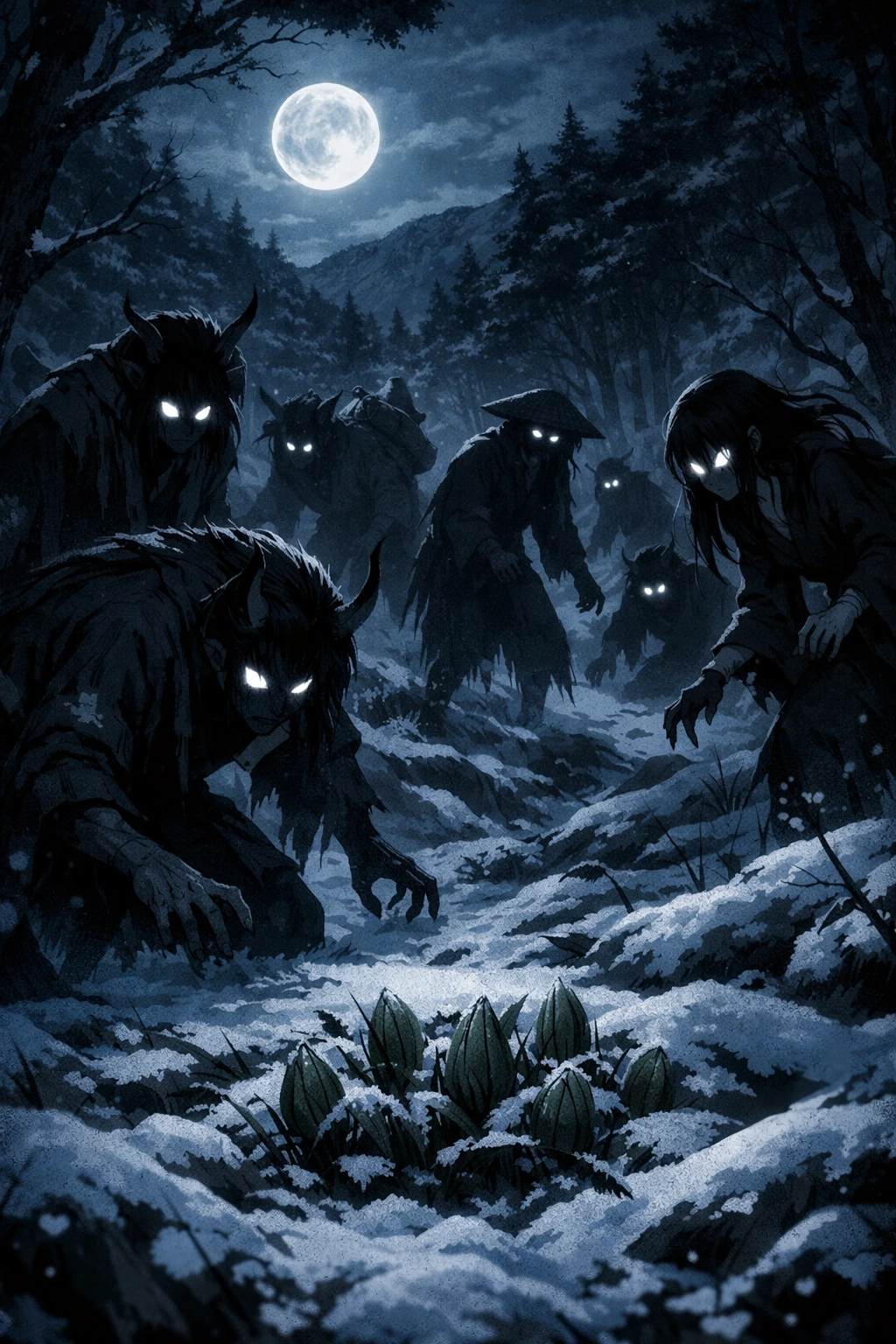
For one thousand years, Muzan Kibutsuji possessed unparalleled physical strength, a hive-mind network of bloodthirsty subordinates, and near-infinite resources. Yet, he failed completely in his singular objective. To understand this failure is to conduct a strategic autopsy on the greatest villain in anime history, revealing a mind crippled by a massive, glaring nocturnal blindspot.
Muzan’s primary strategy for a millennium was to create demons and disperse them across Japan to find the Blue Spider Lily. He poured his blood into creating the Twelve Kizuki, elevating beings like Akaza, Doma, and Kokushibo into walking weapons of mass destruction.
He sent these Upper Moons to scour the earth, turning over every stone and slaughtering anyone in their path. But in doing so, Muzan committed a fatal strategic error born of his own biological limitations: demons burn in the sun, which meant his entire search party only operated at night.
This created a mathematically impossible search parameter. Muzan dispatched thousands of nocturnal creatures to locate an obligate heliophile—a flower that strictly, exclusively blooms during the daylight hours for a maximum of three days a year. When the sun went down, the Blue Spider Lily was already closed, reverting to its indistinguishable, weed-like camouflage.
The Upper Moons could have stood directly on top of a blooming field of Blue Spider Lilies, but because they only emerged after dusk, they would never, under any circumstances, witness the distinct blue petals. Muzan tasked an army of the blind to find a masterwork of light. It was an exercise in absolute futility, a millennium of wandering in the dark searching for a sunbeam.
This massive strategic flaw begs a crucial question: why didn’t Muzan heavily rely on human proxies? The answer lies in the human element failure, a deep psychological flaw rooted in his profound god-complex. Muzan viewed humans as frail, pathetic, and fundamentally inferior.
He was deeply paranoid, constantly shifting his identity, hiding among humans as a child, a woman, or an aristocrat, but never truly trusting them. To delegate his most vital mission to a human organization would mean admitting a limitation, acknowledging that a frail mortal could accomplish something the Demon King could not.
While Muzan did occasionally manipulate humans—such as funding researchers or using human fronts to gather information—he never structured a dedicated, massive human syndicate explicitly for searching every mountain peak during the daylight hours. His paranoia dictated that if a human truly understood the value of the Blue Spider Lily, they might use it against him, or fail out of sheer human incompetence.
His inability to trust, his refusal to build a genuine human alliance, and his absolute reliance on his biologically flawed demonic creations doomed his quest from the start. His ego was a thicker blindfold than the darkness of the night. He was the architect of his own endless frustration, trapped in a cycle of creating monsters that were entirely unequipped for the one job that actually mattered.
5. The Kamado Connection: The Ultimate Irony
The narrative brilliance of Demon Slayer reaches its absolute zenith when the lore of the Blue Spider Lily intersects with the history of the Kamado family. This is not merely a coincidence; it is the ultimate, agonizing irony of the entire series. The Kamado family, humble charcoal burners living a quiet existence on a secluded mountain, held the very secret that the Demon King had spent a millennium butchering the country to find.
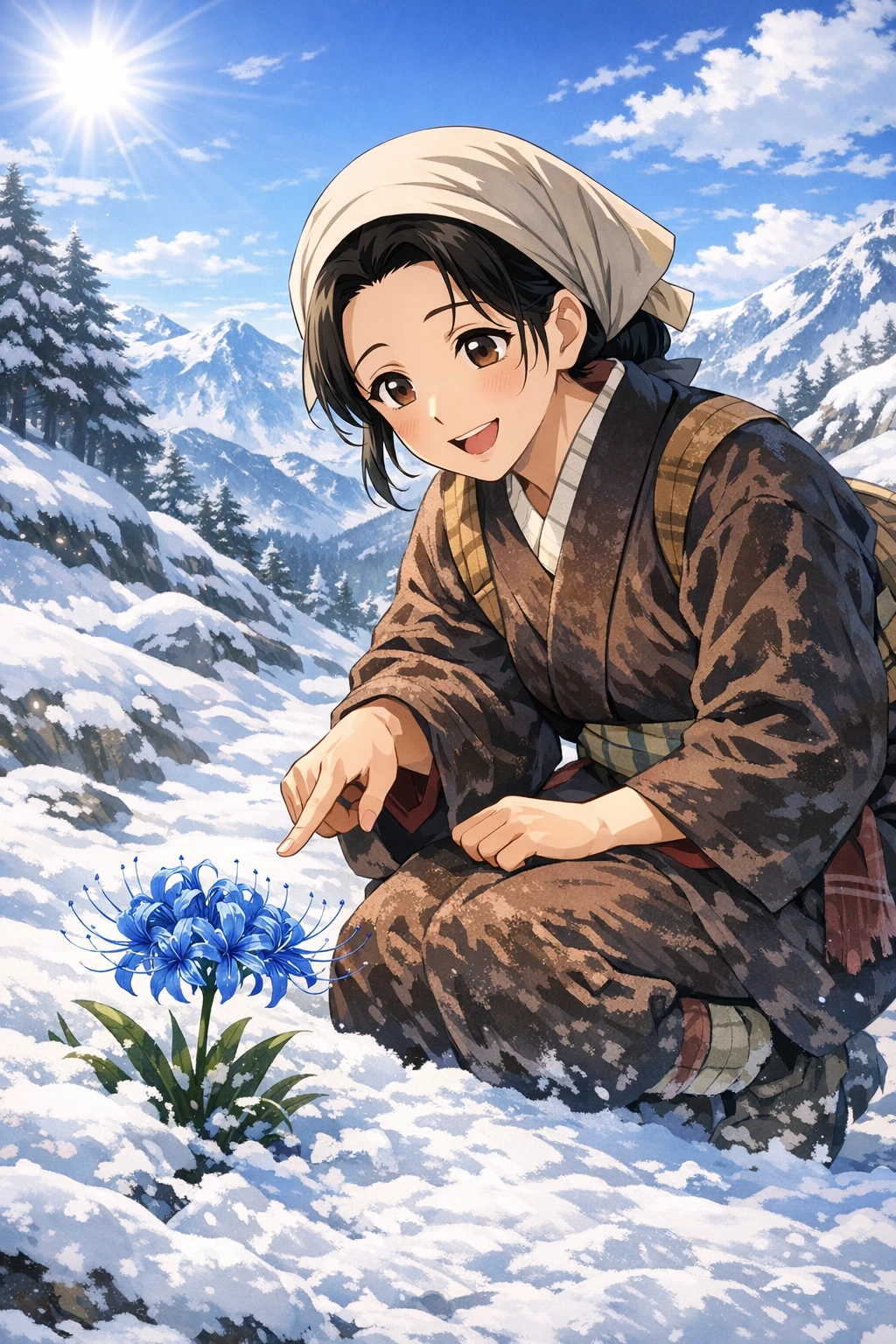
The connection is established through Kie Kamado, Tanjiro’s mother. The deep lore reveals that Kie possessed exact, firsthand knowledge of where the Blue Spider Lilies grew. Because the Kamado family lived high on the specific, rugged mountains required for the flower’s extreme ecosystem, and because they worked outdoors during the daylight hours gathering resources, they were perfectly positioned to witness the impossible bloom.
Kie knew the exact location of the anomaly, and she even showed the blooming Blue Spider Lilies to Tanjiro when he was a young child. To the Kamados, it was just a beautiful, fleeting curiosity of their mountain home—a pretty flower that appeared briefly and vanished. They possessed the Holy Grail of the demon world, yet valued it only for its fleeting aesthetic beauty.
This connection deepens when analyzing the geography of fate. The mountains where the Kamados lived were not just random peaks; they were a geographical nexus of immense historical weight. Generations prior, Yoriichi Tsugikuni, the progenitor of Sun Breathing and the only man Muzan ever truly feared, lived in these same regions. Yoriichi’s pregnant wife, Uta, was murdered by demons, and she was buried on these very mountains. The poetic, almost cosmic connection here is staggering.
The birthplace of the Sun Breath users, the burial ground of the woman who tied Yoriichi to his humanity, and the exact ecosystem required for the sun-absorbing Blue Spider Lily all existed in the same localized, sacred geography. The mountain itself was steeped in the power of the sun, acting as a natural counterbalance to Muzan’s darkness.
All of these narrative threads converge on the night of the Kamado family massacre, creating the most agonizing realization in the entire story. When Muzan Kibutsuji personally arrived at the Kamado household to slaughter them and inject them with his blood, he was standing mere feet away from his salvation. His millennium of searching, the thousands of demons created, the centuries of paranoia and fear—all of it culminated in him physically standing on the exact patch of earth where the Blue Spider Lily bloomed.
Yet, because he attacked at night, the flowers were closed, perfectly camouflaged in the snow and darkness as mere weeds. His arrogance, his cruelty, and his obsession with stamping out any potential threat blinded him to his surroundings. He butchered the woman who knew where the flower was, and he stood on the soil that nurtured it, completely ignorant of his proximity to his ultimate goal. In his desperate attempt to destroy the descendants of Sun Breathing, he literally trampled over the only cure for his demonic curse. It is a masterpiece of dramatic irony: the monster crossing an ocean of blood, only to unknowingly crush his treasure beneath his heel in the dark.
6. Conclusion: Nature’s Final Laugh (Chapter 205)
The saga of the Blue Spider Lily concludes not with a dramatic clash of swords, nor with a final, desperate stand by the Demon Slayer Corps, but with a quiet, almost comical display of human error in the modern era. Chapter 205, the epilogue of the series, brings the 1,000-year mystery to a definitive and highly thematic close through the actions of Aoba Hashibira, the descendant of the boar-headed warrior, Inosuke.
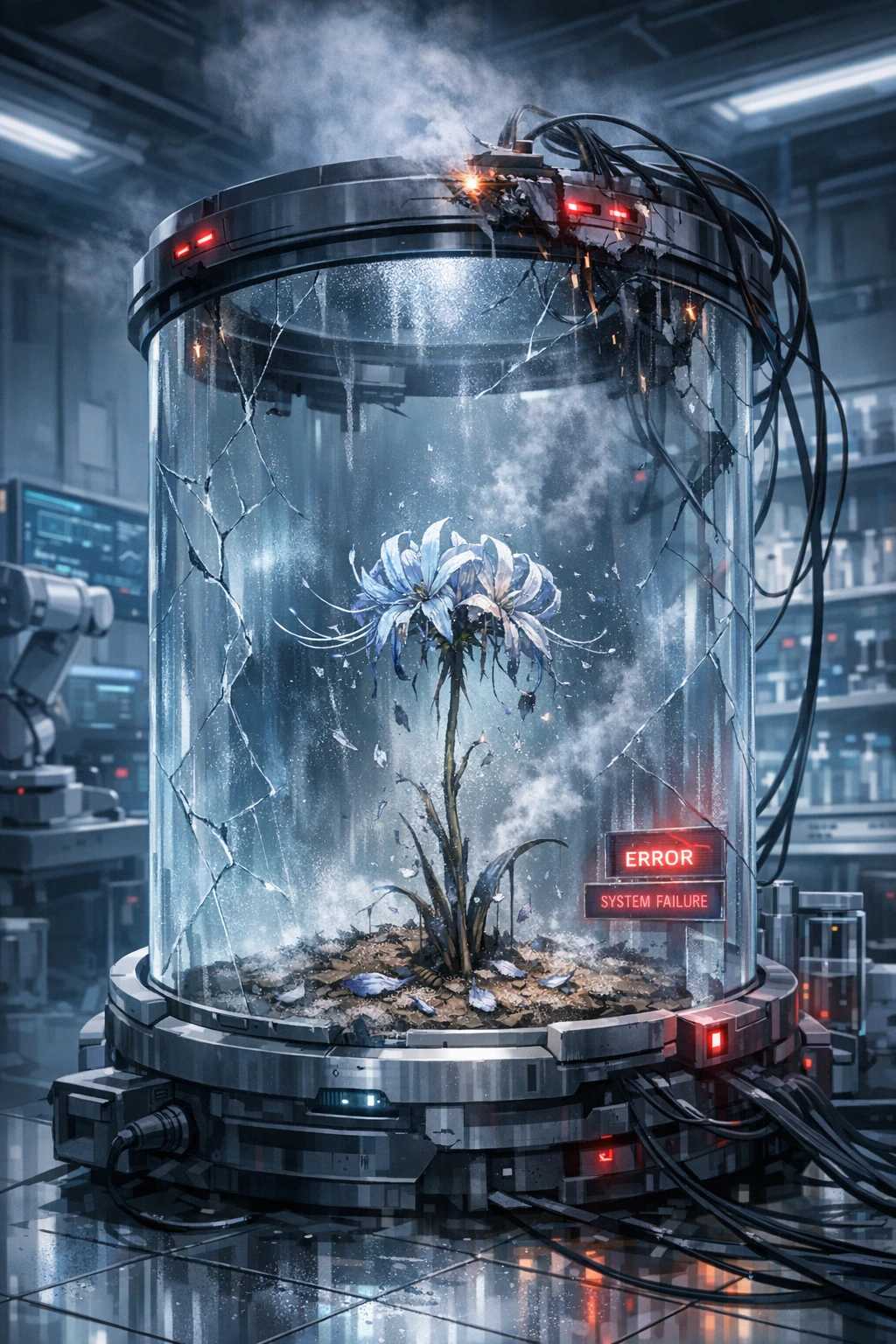
In the modern, demon-free world, science has advanced far beyond the rudimentary pharmacognosy of the Heian period. Aoba Hashibira, working as a botanist, finally discovers the last remaining specimens of the Blue Spider Lily. Through modern research, humanity finally lays eyes on the mythical plant that caused centuries of hidden warfare. However, the plant’s impossibly fragile nature remains its defining trait.
While studying them in a highly controlled laboratory environment, Aoba makes a simple, fatal mistake. Due to a minor climate control error—a slight mishandling of the precise lighting, temperature, or perhaps failing to perfectly replicate the harsh alpine conditions of the Kamado mountain—all the remaining Blue Spider Lilies wither and die.
This ending represents the absolute fragility of power and the thematic brilliance of the series’ creator, Koyoharu Gotouge. The ultimate MacGuffin of the universe, the biological key to creating an immortal, unkillable god, was not destroyed by a god-tier Sun Breathing technique, nor was it eradicated in a massive, fiery war. It was erased from existence by a simple, banal human error in a sterile room. A dropped clipboard, a miscalibrated thermostat, or a forgotten watering schedule accomplished what a thousand years of the Demon Slayer Corps could not: it permanently wiped out the possibility of demons ever returning to the earth.
This conclusion highlights the banality of destruction and delivers a profound poetic justice. The plant that was violently abused by ancient medicine to defy the laws of nature was ultimately reclaimed by nature’s uncompromising fragility. It is a reminder that no matter how much power, blood, or time is invested into unnatural pursuits, the basic laws of biology remain undefeated.
Wrapping up this deep dive into the botanical heart of Demon Slayer, the legacy of the Blue Spider Lily stands as a monument to irony. The greatest villain in anime history, a being of unfathomable power and cruelty, was ultimately defeated not just by the blades of the Kamado siblings, but by his own inherent flaws.
Muzan Kibutsuji‘s 1,000-year reign of terror was undone by his infantile impatience with a Heian doctor, his arrogant refusal to trust humanity, and his sheer inability to comprehend the basic laws of photosynthesis and photoperiodism. Nature had the first word in the creation of demons, and through a simple withering petal in a modern lab, nature enjoyed the final, definitive laugh.