
1. The Apex Predator: The Heian Era Mutation
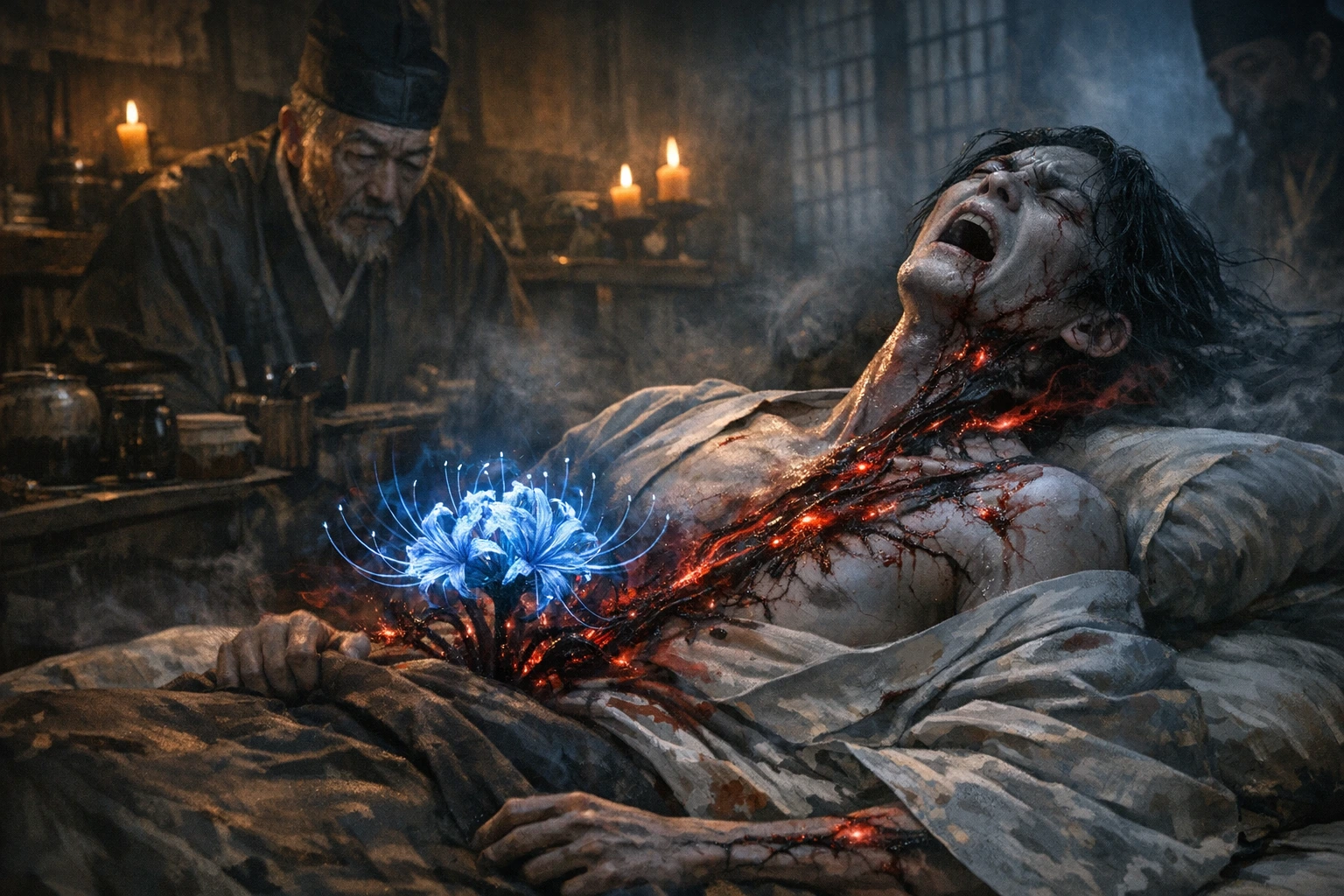
To truly understand the unadulterated terror that is Muzan Kibutsuji, one must first strip away the mythology of demons, magic, and supernatural folklore. When viewed through the cold, analytical lens of biology and medical science, Muzan is not a creature of mystical darkness; he is the devastating result of a flawed, one-thousand-year-old medical experiment. He is the ultimate apex predator born from the desperation of a dying man, an evolutionary anomaly that violently bypassed millions of years of natural selection in a single, catastrophic biological event.
In the Heian Era, humanity’s understanding of medicine was primitive, often bleeding into the realm of alchemy and herbal mysticism. Muzan was born a medical tragedy. His original human condition was defined by profound frailty—a mysterious, fatal disease that began ravaging his cellular structure while he was still inside his mother’s womb. He was born without a pulse, entirely still, a stillborn who only drew breath on the cremation pyre. This initial brush with death defined his entire biological imperative: survival at any absolute cost. His body was a failing vessel, his immune system virtually non-existent, and his organs operating on the very brink of systemic collapse.
Enter the unnamed physician of the Heian period. In a desperate bid to save his patient, the doctor formulated an experimental, highly volatile treatment utilizing the elusive Blue Spider Lily. This botanical compound acted not as a cure, but as an aggressive mutagen. In modern medical terms, the treatment functioned as a radical, uncontrollable retroviral catalyst. It infiltrated Muzan’s frail cells and forcefully overwrote his genetic code. The medicine demanded that his body either adapt instantaneously or perish. Muzan’s cells chose aggressive, violent adaptation.
The mutation was horrific. The treatment triggered an explosive cascade of cellular regeneration, rewriting his DNA to prioritize self-preservation above all earthly limitations. His fragile human physiology was completely overwritten. The disease that had been slowly killing him was consumed by a new, parasitic biological architecture. However, because the doctor was murdered by Muzan before the final phase of the treatment could be administered, the mutation was left agonizingly incomplete.
This incompleteness is the crux of Muzan’s biology. The adaptation granted him near-immortality, unfathomable strength, and hyper-regeneration, but it left him with a catastrophic, fatal vulnerability to ultraviolet radiation. He was no longer a sickly human; he was a biologically immortal, hyper-adaptive organism. Every single cell in his body was now fundamentally weaponized. His body became a living laboratory, a self-sustaining ecosystem designed solely to consume, adapt, and survive.
He is the victim of a pharmacological error that birthed a biological god, turning a terminal patient into the most terrifying evolutionary leap the world had ever seen. The true horror of Muzan Kibutsuji is not that he is a demon, but that he is the physical manifestation of a biological failsafe gone terribly, apocalyptically wrong.
2. The Anatomy of Immortality: 5 Brains and 7 Hearts
In the realm of evolutionary biology, there is a concept known as “biological redundancy”—the presence of multiple, identical biological systems or organs that ensure an organism’s survival even if one system fails. Earthly creatures possess basic forms of this; humans have two kidneys, and cephalopods like octopuses have a decentralized nervous system.
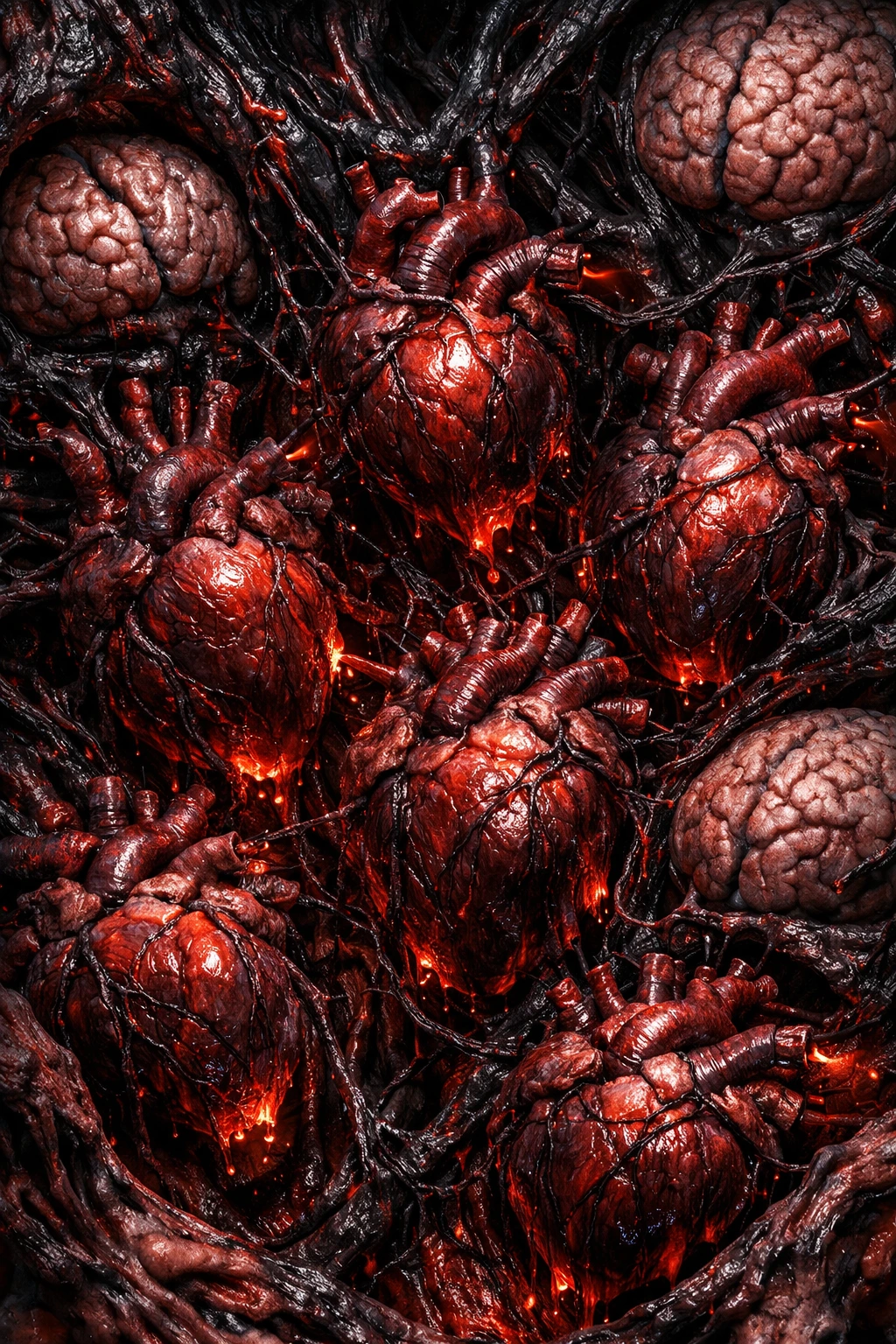
Muzan Kibutsuji, however, takes biological redundancy to a terrifying, god-like extreme. His internal anatomy defies all conventional mammalian logic, boasting a staggering five brains and seven hearts. This anatomical structure is the foundation of his absolute invulnerability and the reason why traditional methods of assassination, including decapitation by a Nichirin blade, are completely ineffective.
To understand why a sword to the neck cannot kill Muzan, we must examine the hyper-circulatory system powered by his seven hearts. In a normal human, the heart pumps oxygenated blood to sustain cellular function. A single devastating strike to the heart or the severing of the carotid artery results in rapid exsanguination and brain death. Muzan’s seven hearts operate in a synchronized, high-pressure circulatory network.
These organs are not just pumping blood; they are distributing a highly volatile, oxygen-rich, hyper-regenerative fluid throughout his body at unbelievable speeds. The hydrostatic pressure within his vascular system is immense. When a Hashira’s Nichirin blade slices through Muzan’s neck, the blade is not just met with flesh; it is met with an instant, violent surge of regenerative cells pushed by seven independent muscular pumps.
The regeneration is so phenomenally fast that the flesh reconnects and heals before the blade has even fully passed through the wound. The seven hearts ensure that even if three or four are destroyed simultaneously, the remaining hearts instantly increase their output to compensate, maintaining the hydrostatic pressure required to keep his cellular regeneration operating at peak efficiency. You cannot bleed out an organism that produces its own hyper-coagulating, self-replicating blood faster than you can spill it.
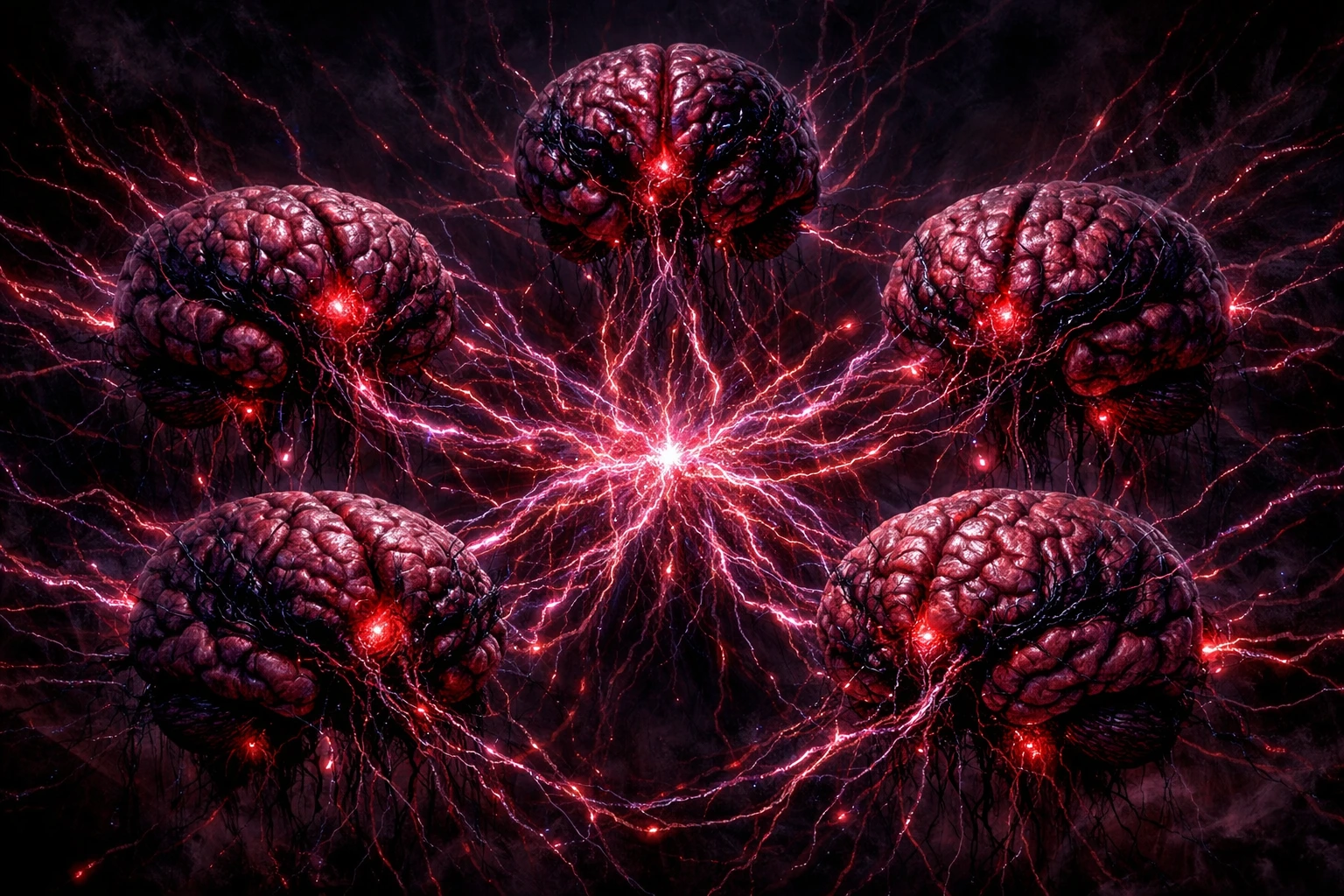
Equally terrifying is his decentralized neural network, commanded by five independent brains. In human biology, the brain acts as the central processing unit; if the head is severed, the body loses all autonomic and voluntary function. Muzan’s five brains are strategically distributed throughout his mass, creating an impenetrable web of cognitive redundancy. This grants him processing speeds, tactical analysis, and reaction times that dwarf even the most highly trained, marked Hashira.
When fighting a Hashira, Muzan is not relying on a single visual cortex or a single set of synaptic pathways. His five brains process combat information simultaneously. One brain may be calculating the trajectory of a blade, while the second analyzes the breathing pattern of his opponent, the third controls the autonomous regeneration of a severed limb, the fourth commands his biomechanical flesh whips, and the fifth coordinates his spatial awareness.
This decentralized cognition means he does not suffer from sensory overload, fatigue, or concussive shock. If a Hashira manages to crush one of his brains, the other four instantly absorb the cognitive load without a single microsecond of hesitation.
This neural network also explains his absolute mastery over his own physical form. With five brains working in perfect synchronization, Muzan possesses absolute, granular control over his own cellular structure. He can consciously alter his appearance, change his vocal cords, shift his mass, and morph his skeletal structure at will. His anatomy is not a fixed physical state; it is a highly fluid, responsive biological clay manipulated by five supercomputers.
The Demon Slayer Corps spent centuries trying to cut off the head of the snake, fundamentally misunderstanding the organism they were hunting. Muzan is not a snake; he is a hydra at the microscopic level, a creature where decapitation is merely an inconvenience to an otherwise flawless biological machine.
3. The Hive Mind: Cellular Command and The Blood Curse
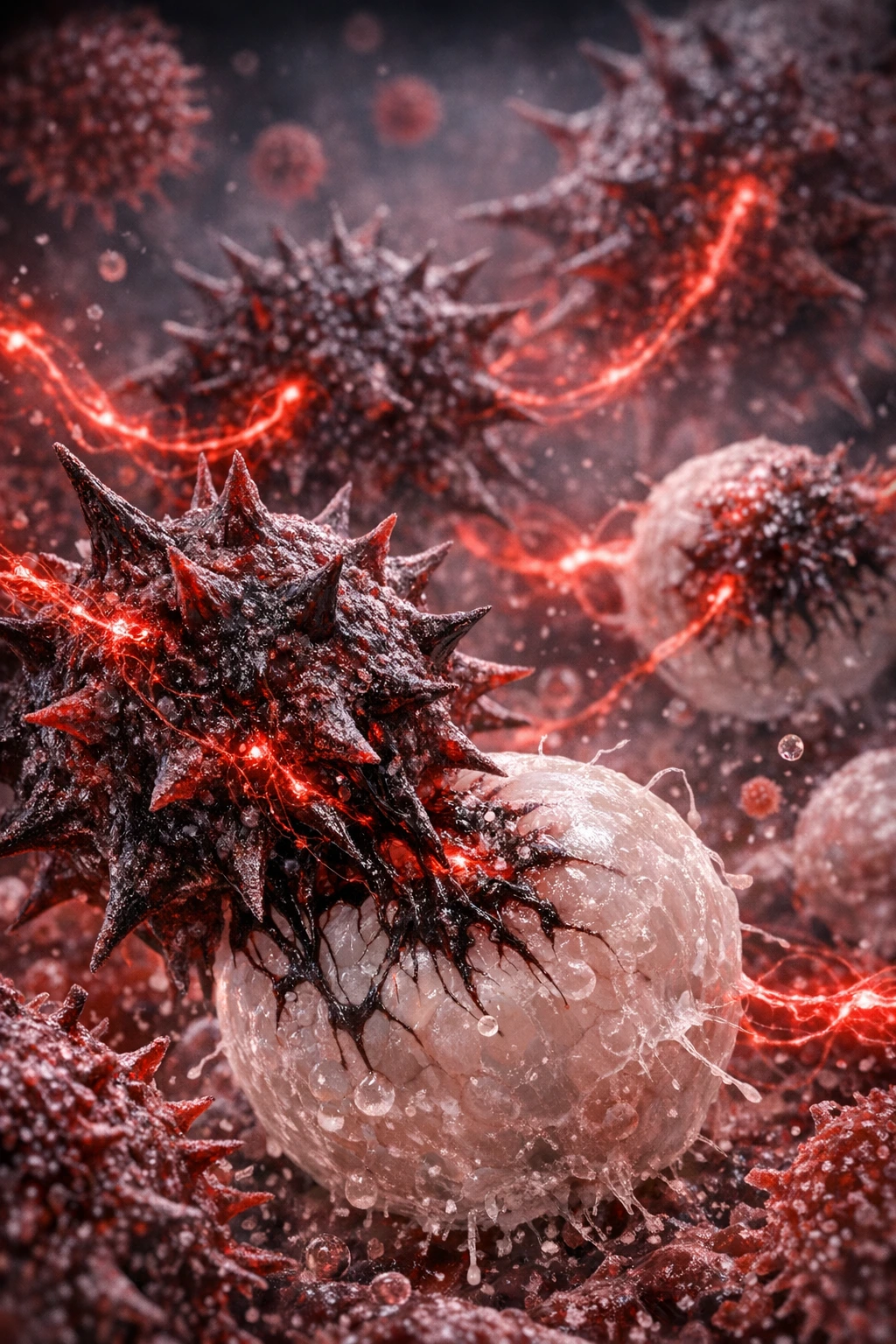
To comprehend the reach of Muzan Kibutsuji’s power, one must look past the illusion of a master and his servants and recognize the grim biological reality: the demons of the Twelve Kizuki are not his followers; they are physical extensions of his own body. Muzan’s blood is not a magical gift or a mystical elixir. It is best described as a highly aggressive, parasitic retrovirus. When Muzan injects his blood into a human, he is essentially infecting them with a sentient, mutating pathogen that forcefully and violently overwrites human DNA.
This viral payload operates with terrifying efficiency. Upon entering a human host, Muzan’s cells act as invasive agents, tearing apart the host’s original genetic sequence and replacing it with demonic biology. The host’s organs mutate, their muscular density explodes, and their cellular regeneration mirrors Muzan’s own, albeit on a drastically smaller scale. However, this biological upgrade comes with an inescapable tether. Because the cells introduced into the host belong to Muzan, they remain fundamentally connected to him. He operates as the biological nucleus of a sprawling, continent-wide hive mind.
This brings us to the horrifying science of the “Kibutsuji Curse.” In supernatural terms, it is seen as a magical vow of silence. In biological terms, it is a genetically coded failsafe, a mechanism of instant cellular apoptosis (programmed cell death) controlled by Muzan’s consciousness. Muzan’s cells inside every demon act as microscopic sentinels. If a demon speaks his name, experiences a thought of betrayal, or acts against his core directives, Muzan’s cells inside them detect the specific biochemical and neurological shifts associated with that intent. Once detected, the failsafe is triggered.
Muzan commands his cells within the host to violently replicate and self-destruct simultaneously. The result is instantaneous cellular degradation—the demon is torn apart from the inside out, reduced to a puddle of decaying biomatter in seconds. The host’s body is essentially hijacked by its own immune system, which has been weaponized by Muzan’s latent DNA.
Furthermore, this cellular connection allows Muzan to engage in constant biological surveillance. He can literally see through the eyes of his demons, read their surface thoughts, and sense their proximity. He is the central server, and every demon is merely a terminal.
But perhaps the most terrifying aspect of Muzan’s cellular command is his ability to assimilate. Muzan does not merely eat humans and demons for sustenance; he consumes them for data. His digestive system acts as a genetic sequencing laboratory. When he absorbs a victim, his cells deconstruct the prey’s DNA, absorbing their memories, their physical strength, their Blood Demon Arts, and any biological immunities they may have developed. He is a walking genetic vault, constantly updating his own biological software by consuming the strongest traits of those around him.
This assimilation is why he creates demons in the first place. He is not building an army for conquest; he is crowd-sourcing his own evolution. He disperses his parasitic blood into the world, allowing his demons to mutate, grow stronger, and face environmental stresses. If one of his creations manages to conquer the sun—as Nezuko Kamado ultimately does—Muzan’s biological imperative is to consume that demon and integrate that specific genetic sequence into his own DNA.
The entire hierarchy of the Moons, the centuries of bloodshed, and the proliferation of demons are nothing more than a thousand-year biological experiment designed to find the missing sequence of his own broken genome. His hive mind is not a kingdom; it is a sprawling, parasitic root system feeding back to a single, ravenous core.
4. The Lethal Payload: Combat Biology and Toxic Blood

When pushed to his absolute limit, Muzan Kibutsuji discards the facade of humanity and unleashes the full, unrestrained potential of his Heian era mutation. His final combat form is not a display of martial arts or magical spells; it is an overwhelming showcase of biomechanical weaponry. He manipulating his flesh at the cellular level to create offensive structures that defy the laws of physics and biology.
In this state, Muzan forces his rapid cellular regeneration outward, extruding hyper-dense, whip-like appendages from his back, arms, and thighs. These are not mere tentacles; they are sophisticated biological weapons. The core of each whip is composed of hyper-condensed keratinized bone, granting them the tensile strength of tempered steel, while the outer layers are sheathed in a highly elastic, muscular tissue that allows them to snap at supersonic speeds. The kinetic energy generated by the sheer speed and mass of these appendages is enough to shatter Nichirin blades and cleave through solid stone effortlessly.
Adding to the nightmare, these biomechanical whips are lined with razor-sharp bone spurs and, disturbingly, fully functional mouths. These mouths are not for show; they serve a dual biological purpose. First, their sharp, jagged teeth act as microscopic serrations, increasing the physical damage of every strike, tearing flesh and armor with equal ease. Second, they act as rapid-intake valves.
During high-intensity combat, Muzan expends astronomical amounts of energy. The mouths allow him to instantly consume the flesh and blood of his opponents mid-strike, simultaneously wounding his enemy and refueling his own hyper-regenerative system. It is a terrifying cycle of violence where his weapons feed the very engine that powers them.
However, the physical trauma of his attacks is entirely secondary to his ultimate biological weapon: the toxic payload of his own blood. Throughout the series, receiving Muzan’s blood has been the catalyst for demonification. But in the final, desperate battle against the Hashira, Muzan flips this dynamic, utilizing his blood not as a mutagenic gift, but as an overwhelming, lethal neurotoxin.
The science behind this tactic is a masterclass in cellular warfare. When Muzan cuts a Hashira, he actively injects a highly concentrated dose of his blood directly into their bloodstream. A small, carefully measured drop of his blood turns a human into a demon over time. But a massive, unadulterated dose acts as an aggressive biological poison. The human immune system and cellular structure are immediately overwhelmed by the sheer volume and ferocity of Muzan’s parasitic cells.
This process is known as rapid cellular necrosis. The injected blood doesn’t have the time or the proper environmental balance to slowly overwrite the Hashira’s DNA. Instead, Muzan’s cells act as a violently corrosive acid, attacking the host’s healthy cells, breaking down cellular walls, and causing systemic organ failure. The Hashira do not turn into demons; their bodies simply begin to rot and disintegrate from the inside out while they are still alive.
The poison disrupts synaptic pathways, causes catastrophic internal bleeding, and induces violent spasms as the nervous system collapses. It is a biological timer; once a Hashira is slashed and injected, they have only minutes before their entire physiology shuts down. This tactic forces the Demon Slayers into an impossible situation. They cannot afford to take even a single scratch, not because the cut is deep, but because the blade carries a microscopic, highly contagious payload of biological death. In his final form, Muzan is less of a swordsman and more of an aggressive, sentient biological weapon, delivering a plague with every swing of his biomechanical flesh.
5. The Sun’s Judgment: The Physics of UV Vulnerability
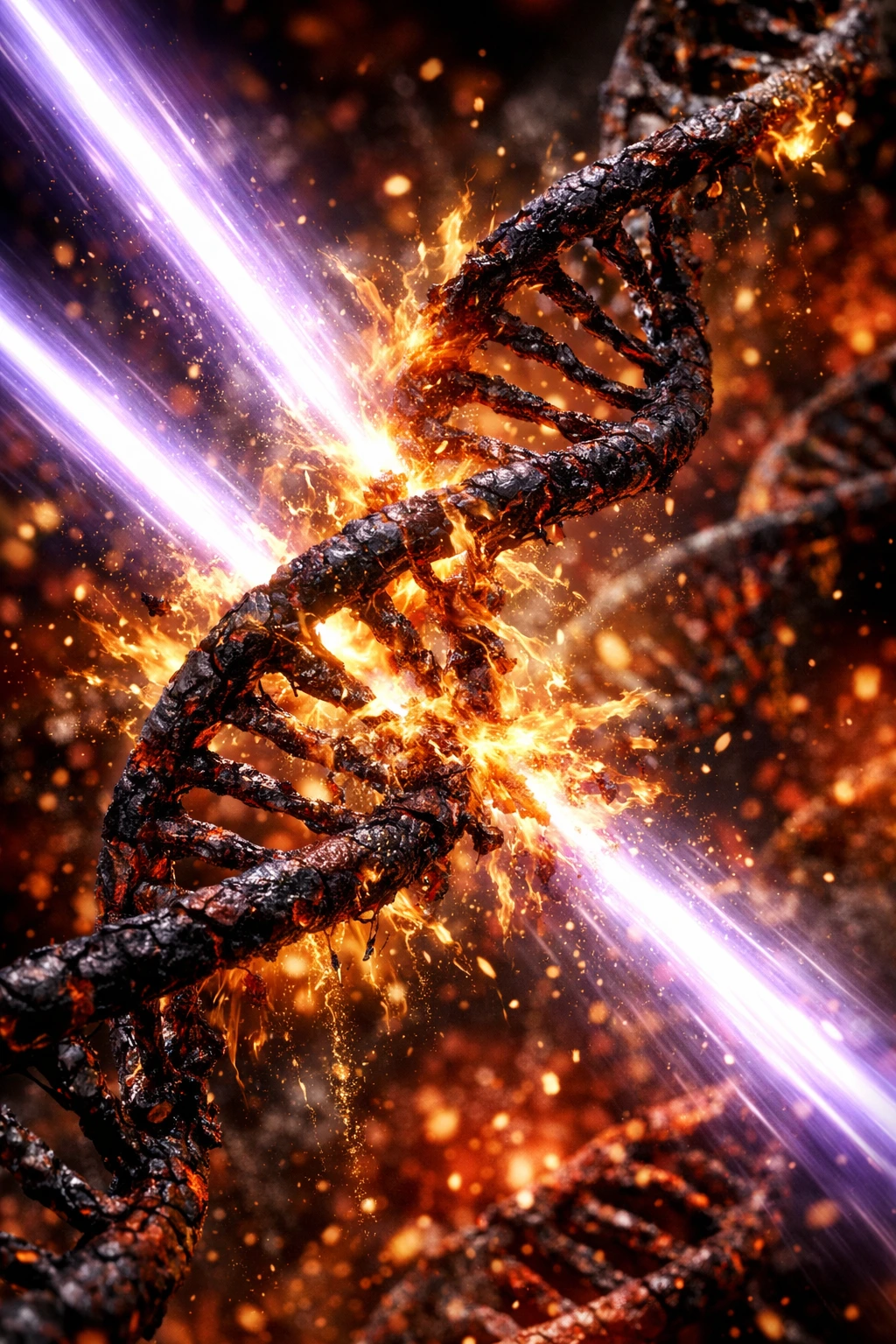
Despite his five brains, seven hearts, hyper-regeneration, and biomechanical weaponry, Muzan Kibutsuji is trapped by a singular, inescapable flaw. He is the ultimate biological organism, yet he cowers before the most basic element of the natural world: the sun. To understand his 1,000-year fear, we must examine the physics of his vulnerability to ultraviolet (UV) radiation, proving that the sun’s judgment is not a magical curse, but a catastrophic cellular breakdown.
At a molecular level, Muzan’s immortality relies on the hyper-active, highly unstable bonds within his mutated DNA. His cells replicate and repair at a rate millions of times faster than a normal human. However, this hyper-activity comes at the cost of extreme photosensitivity. Ultraviolet light consists of high-energy photons. When a normal human is exposed to UV light, it causes minor DNA damage (sunburn), which the body slowly repairs. But Muzan’s demonic cells are uniquely reactive to this specific wavelength of radiation.
When UV photons strike Muzan’s flesh, they do not just cause a burn; they act as a violently destructive catalyst. The radiation instantly shatters the hyper-regenerative DNA bonds that hold his cellular structure together. Because his cells are linked in a continuous, high-speed cycle of regeneration, the destruction of one cell creates a chain reaction.
The UV radiation essentially triggers a catastrophic loop of cellular self-destruction. His hyper-regenerative system actually works against him; as his body frantically tries to create new cells to replace the sun-damaged ones, the ambient UV light instantly destroys the new cells as well, leading to rapid, spontaneous combustion. He does not just burn; his biological matter literally vaporizes at the subatomic level.
This fundamental flaw dictated his entire psychological profile and strategic existence. Muzan’s life for a millennium was characterized by the “Desperation of Shadow.” He is an apex predator forced to live as a nocturnal scavenger. His entire criminal empire, the creation of the Twelve Kizuki, and his endless accumulation of wealth and power were all secondary to his biological need to avoid a single ray of sunlight. The psychological weight of this vulnerability created severe paranoia. He is a god who checks the weather, a king who must flee at dawn.
This biological tightrope he walked was eventually exploited not by a sword, but by the brilliant pharmacology of Lady Tamayo. Knowing that his seven hearts and five brains made him physically unkillable, Tamayo resorted to extreme chemical warfare. She engineered a complex, four-stage biological weapon designed specifically to dismantle Muzan from the inside out.
Tamayo’s drug was a masterpiece of cellular sabotage. The first stage, the humanizing element, attacked the core of his Heian mutation, forcefully attempting to rewrite his demonic DNA back to its frail, human baseline. As his body expended massive amounts of energy fighting off the humanization, the second stage activated: an extreme aging coagulant. This chemical aged Muzan’s cells at a rate of 50 years per minute. Over the course of the final battle, this forced Muzan to age tens of thousands of years, draining his stamina and slowing his instantaneous regeneration to a crawl.
The third stage specifically targeted his biological redundancy. It acted as an aggressive cellular poison that actively inhibited cell division, preventing his five brains and seven hearts from repairing themselves as the Hashira attacked. Finally, the fourth stage was pure cellular destruction, triggered when the other three stages had sufficiently weakened his immune system. Tamayo did not try to overpower Muzan; she used pharmacology to systematically shut down the hyper-circulatory and neural networks that kept him alive, dragging him kicking and screaming out of his biological godhood and into the fatal, burning rays of the morning sun.
6. Conclusion: The Flawed God

The tragedy of Muzan Kibutsuji is rooted in his absolute obsession with perfection, an obsession continually thwarted by his own biological limitations. His entire thousand-year reign of terror was ultimately a desperate, globe-spanning scavenger hunt for a single botanical catalyst: the Blue Spider Lily. He believed that synthesizing the incomplete Heian medicine would stabilize his hyper-reactive DNA, granting him complete immunity to ultraviolet radiation.
The irony of his existence is that despite possessing the strength to slaughter armies, the wealth to control cities, and a biological structure that defied death itself, his entire life was singularly defined by what he lacked. He sought the Lily not to rule the world under the sun, but simply to rid himself of the humiliating, paralyzing fear of it.
Psychologically, Muzan was never the stoic, fearless demon king he projected himself to be. Beneath the flawless skin, the tailored suits, and the god-like posturing, he remained the exact same sickly, terrified human infant from the Heian era. His core defining trait was not malice, but severe hypochondria. Every action he took was born from a cowardly, obsessive clinging to life.
He viewed every Demon Slayer, every Hashira, and every rogue demon as a microscopic pathogen threatening his immune system. His extreme narcissism was a psychological defense mechanism, a mental shield erected to hide the fact that he lived in constant, agonizing terror of death. He was a flawless biological machine piloted by an unimaginably fragile, terrified consciousness.
In the end, the Demon Slayer Corps did not defeat a magical dark lord in a clash of spells and chosen destinies. The final arc of the series is a masterclass in biological siege warfare. The Hashira, the Kamado siblings, and Lady Tamayo methodically dismantled a biological machine through extreme attrition.
They did not win by cutting off his head, for his five brains and seven hearts rendered that impossible. They won by pushing his hyper-regenerative system past its absolute metabolic limit. They won by poisoning his cellular structure, aging his internal organs by millennia, and destroying his cellular division through chemical warfare. The Hashira essentially acted as white blood cells, aggressively harassing the virus to keep it occupied until the true cure could arrive.
Muzan Kibutsuji’s death was a triumph of physics and biology over an unnatural mutation. Stripped of his stamina, his cells collapsing under the weight of Tamayo’s drug, he was finally held in place as the Earth rotated, bringing the sun over the horizon. The ultraviolet radiation pierced his failing flesh, shattering his DNA bonds once and for all. The apex predator, the progenitor of demons, the biological god with five brains and seven hearts, was unmade by the morning light—erased from existence not by a sword, but by the inescapable laws of the natural world he had tried so desperately to outlive.