
In the vast, terrifying, and politically complex world of Attack on Titan, power is usually quantified by sheer scale. It is measured in the colossal height of the Walls that cage humanity, the crushing weight of the Titans that threaten to devour it, and the overwhelming numbers of the Pure Titans roaming the outside world.
To the average observer, this is a story about the small struggling against the large, the weak against the strong. However, as the layers of Hajime Isayama’s narrative peel back, we discover a fundamental truth: the true pivot points of history are not the masses or the giants, but the anomalies.
For the majority of the series, the population within the Walls is presented as a singular, homogenized entity—the “Subjects of Ymir,” bound by a shared bloodline and a shared susceptibility to the Founding Titan’s memory manipulation.
They are a cage of people who can be rewritten at the whim of a King, a collective consciousness that can be edited like a manuscript. But within this meticulously controlled system, there existed a “glitch.” There were bloodlines that refused to be overwritten, minds that could not be wiped, and bodies that held power capable of rivaling the Titans themselves.
These are the Ackerman and Asian Clans (Hizuru).
This article serves as a definitive archive of these minority clans, designed to cover every nuance of their existence. We will dissect the “Titan Science” that created the Ackermans, analyze the lost political history of Hizuru, debunk the persistent myths of the “Ackerbond,” and ultimately explain why the salvation of humanity rested on the shoulders of those who were persecuted for being different.
This is not just a summary; it is a dissection of the biological and political mechanics that allowed the minority to save the majority.
I. Introduction: The Anomalies of the System
The Glitch in the Matrix
From the very first season of Attack on Titan, viewers were presented with questions that seemed to lack logical answers, creating a dissonance in the established rules of the world. In a universe where humans are fragile, “cattle” meant to be eaten, why was Mikasa Ackerman capable of feats that seasoned soldiers found impossible?
Why was she able to lift equipment twice her weight or react faster than the eye could follow? Why was Levi Ackerman referred to not just as a strong soldier, but as “Humanity’s Strongest,” a one-man army capable of dismantling Titans with a speed and ferocity that defied the laws of physics?
Furthermore, small details hinted at a history the textbooks ignored. Why did Mikasa’s mother, an Asian woman in a seemingly European society, insist on passing down a strange embroidery mark (or tattoo) to her daughter? She called it a secret symbol of their clan, yet no such clan existed in the public records.
These anomalies were initially dismissed by audiences as “shonen tropes”—the idea that cool characters are just naturally strong or mysterious. But Hajime Isayama does not deal in unexplainable tropes. Every anomaly in Attack on Titan has a root in biology, politics, or history.
The Thesis of the Minority
In a world controlled by the Founding Titan, the Ackermans and the Asian clan represent a critical failure in the King’s design for a “Paradise.” The King of the Walls, Karl Fritz, sought to create a utopia where humanity was ignorant of the outside world, living in a blissful, fabricated peace. To achieve this, he required absolute control over the minds and memories of his subjects. He needed a blank slate.
The tragedy—and the salvation—of the story lies in the fact that he could not control everyone. The Ackermans and the Asians possess a biological or genetic immunity to the Founding Titan’s mental influence. They are the “Unauthorized Users” in the King’s administrative system.
They are the only subjects within the Walls who truly possess free will in the face of the Coordinate. Because they cannot be controlled, they were feared. Because they were feared, they were hunted.
This article explores the journey of these minorities from the brink of extinction to the vanguard of salvation. We will map the roadmap of their biology, their persecution, and their ultimate destiny, proving that the “glitch” was actually the failsafe humanity didn’t know it needed.
II. The Ackerman Biology: Titans in Human Form
To understand the Ackermans, we must first strip away the mythology and look at the cold, hard science of the Eldian Empire. The Ackermans are not simply “talented humans” who train hard. They are, biologically speaking, genetically modified organisms (GMOs) designed by the ancient Royal Family.

The Origin: Titan Science
During the height of the Eldian Empire, the Royal Family utilized the power of the Titans not just for war and infrastructure, but for experimentation. This field, known as “Titan Science,” sought to bridge the gap between the fragile human form and the overwhelming power of the Titans.
The Titans were powerful but mindless (Pure Titans) or had limited lifespans (Shifters). The Empire wanted the best of both worlds.
The result of these gruesome experiments was the Ackerman clan. They were engineered to be the sword and shield of the King. The goal was to create a human who possessed the power of a Titan without the need for transformation, sunlight, or the loss of intelligence.
In essence, an Ackerman is a Titan condensed into a human container—a biological weapon in a compact, intelligent package.
The Mechanics of Strength
How does this actually work? The series explains that Ackermans have a unique connection to the “Paths”—the metaphysical network that connects all Subjects of Ymir.
When a standard Subject of Ymir transforms into a Titan, their human body is linked to the Coordinate, and Ymir Fritz (in the Paths dimension) sculpts a massive body of flesh and bone which is then sent to the real world.
An Ackerman, however, has a “constant” link that functions differently. It is akin to a broadband connection that is always “on,” whereas a Titan Shifter has to “dial up” to access the power.
- Manifestation of Power: They do not generate a giant body. Instead, they channel the strength of a Titan through their human muscles and skeletal structure. This explains their density, their speed, and their ability to endure impacts that would shatter a normal human’s bones. When Levi lands from a hundred-foot drop or Mikasa kicks a Titan’s jaw off, their bones do not break because they are reinforced by Titan power flowing through them.
- The Combat Experience: This is the most frightening aspect of their biology. An “awakened” Ackerman gains access to the accumulated combat experience of every Ackerman who came before them. The Paths transcend time and space. When Levi spins through the air or Mikasa instinctively knows how to slice flesh she has never touched before, they are downloading the muscle memory of centuries of warriors via the Paths. They are not just one soldier; they are a legion fighting in a single body. This shared database of violence is what makes them instantly proficient with any weapon they touch.
The “Awakening” Moment

This power is not always active. It requires a trigger. The Ackerman biology contains a dormant switch that must be flipped by a moment of extreme survival instinct. This is often referred to as the “Awakening.”
- Mikasa’s Awakening: This is the most visually explicit example. It occurred in the cabin with Eren when she was a child. Paralyzed by fear as a kidnapper strangled Eren, her brain snapped when Eren yelled, “Fight! If you don’t fight, you die!” She describes a physical sensation: a sudden surge of heat, the sound of something snapping inside her head, and the sensation of the world becoming distinct and clear. She stopped trembling and broke the floorboards with a single step, crushing the knife handle in her grip. From that moment on, she was superhuman.
- Levi’s Awakening: While not explicitly shown in real-time, it is implied to have happened in the Underground City, likely during a moment where his survival—or the survival of Kenny—was on the line. Given the brutal nature of the Underground, his awakening likely happened very young, allowing him to survive starvation and violence.
- Kenny’s Awakening: Occurred early in his life in the chaotic violence of the persecution era. He realized that to survive the Military Police hunting his family, he had to become a monster. This awakening turned him into “Kenny the Ripper,” a serial killer so proficient he became a legend.
Once this switch is flipped, it cannot be turned off. The user retains their enhanced physical stats and access to the Paths data permanently.
III. The Ackerbond: Myth vs. Reality
One of the most contentious and misunderstood plot points in Attack on Titan is the concept of the “Ackerbond” or the “Host.” This concept was weaponized by Eren Yeager in Chapter 112 to break Mikasa’s spirit, but a careful analysis of the lore reveals that Eren was masterfully mixing truth with lies to achieve his end.

Eren’s Lie: The Slave Narrative
In the infamous restaurant scene, Eren sits Mikasa down and tells her that Ackermans are genetically programmed to protect a “Host.” He claims that once an Ackerman recognizes someone as a leader (as Mikasa did with Eren during her awakening), they lose their free will and are compelled to obey orders. He attributes her headaches to her “true self” resisting the forced commands of the Ackerman instinct.
He concludes with the devastating line: “I’ve always hated you.”
This was a strategic lie. Eren needed to distance Mikasa from him to ensure she could make the choice to kill him later. He used existing kernels of truth (the awakening, the loyalty) to fabricate a scenario where Mikasa’s love was nothing more than biological slavery. He sought to make her hate him so she could be free of him.
The Truth: Loyalty, Not Slavery
We know Eren was lying because of Zeke Yeager. In a conversation between Eren and Zeke in the Paths, Eren asks about the Ackerman headaches and the bond. Zeke, who is a scholar of Titan science and has access to Marley’s research, admits that while the Ackermans are super-soldiers, there is no evidence of a “slave gene” or a biological compulsion to obey a host.
The “Ackerbond”—the intense loyalty Ackermans show to a specific person (Mikasa to Eren, Levi to Erwin, Kenny to Uri)—is not a genetic mandate. It is a personality trait amplified by their isolation.
- The Nature of the Ackerman: Ackermans are individuals of immense power in a chaotic world. Because they are so strong, they often feel isolated from normal humanity. They seek a purpose or a person worthy of that strength—someone who gives their violence meaning. They choose to serve not because they have to, but because they want
- Levi and Erwin: Levi followed Erwin Smith not because his genes told him to, but because he believed in Erwin’s vision of the world. When the time came, Levi chose to let Erwin die, proving he had absolute agency over his “host.” If the bond were slavery, Levi would have been physically incapable of letting Erwin perish.
- Kenny and Uri: Kenny wanted to kill Uri Reiss. He became his bodyguard only after being moved by Uri’s humility and strength. It was a conscious conversion, a choice made by a man who respected power, not a biological imprint.
The Headaches: Ymir’s Influence
If the headaches weren’t caused by resistance to commands, what caused them? The ending implies that Mikasa’s headaches were a result of Ymir Fritz trying to peer into Mikasa’s mind.
Ymir, the original Founder, was trapped in the Paths for 2,000 years, enslaved by her love for King Fritz. She was looking for someone who could show her how to break free. She focused on Mikasa because Mikasa was in a similar position: a woman with immense power who was devoted to a man who was becoming a monster.
The headaches were the “static” of the Founder’s connection—the result of Ymir’s trauma resonating with Mikasa’s psyche—not a glitch in Mikasa’s programming.
IV. The Asian Clan (Hizuru): The Forgotten Alliance
While the Ackermans represent physical power and internal security, the Asian clan represents political history and the lost connection to the outside world.
Their presence within the Walls is a testament to a geopolitical landscape that existed before the Great Titan War, a time when Paradis was not an island of devils, but the seat of an empire.

Historical Context: The Eldian Alliance
Before the Walls were built, the Eldian Empire was the dominant global superpower. While they oppressed many nations (like Marley), they had allies. The nation of Hizuru (modeled after feudal Japan) was one of them.
The son of the Shogun of Hizuru was on friendly terms with the Fritz Royal Family. This relationship was likely built on trade and military alliances. When King Karl Fritz decided to retreat to Paradis Island and seal the gates to end the war, members of the Shogun’s family accompanied him.
They were guests, allies who chose to stay by the King’s side even as he abandoned the world. This decision trapped them inside the Walls when the King erased the memories of the populace.
The Shogun’s Descendant: Mikasa’s Royal Lineage
This backstory recontextualizes Mikasa entirely. She is not just a random soldier; she is the lost monarch of a foreign nation.
For years, Mikasa’s mother passed down a ritualistic embroidery (later changed to a tattoo in the manga) of the Azumabito family crest—a symbol of three katana blades arranged in a circle.
This was the only link they had to their heritage. When the persecution began, the Asian bloodline was decimated because they, like the Ackermans, remembered the outside world. Mikasa is the last living descendant of that specific royal branch within the Walls, making her a “Queen” in her own right, separate from Historia.
Kiyomi Azumabito: Greed and Humanity
The reintroduction of the Asian clan comes through Kiyomi Azumabito, an ambassador from the modern nation of Hizuru. Her character adds a layer of “realpolitik” to the story.
Initially, Kiyomi is presented as an opportunist. She is not interested in Paradis for humanitarian reasons; she wants the Iceburst Stone, a rare resource found only on the island. This stone, created by the intense pressure of Titan hardening underground, powers the ODM gear and creates massive energy.
Hizuru, having fallen from grace after the Great Titan War, hopes to regain its status as a world power by monopolizing this resource. She sees Mikasa as a bargaining chip to secure trade rights.
However, Isayama adds nuance to her character. While driven by greed, she ultimately refuses to abandon the Eldians when the Rumbling begins. When Floch Forster holds her at gunpoint, attempting to assert Eldian supremacy, she displays a physical courage and a moral backbone that mirrors the stubbornness of the Ackermans.
She represents the complexity of the outside world: they are greedy and calculating, but they are still human, capable of honor and resistance.
V. The Curse of Memory: Why They Were Hunted
The core conflict for these two clans stems from their immunity. This section explores the “glitch” that turned them from bodyguards and guests into fugitives living in the shadows.
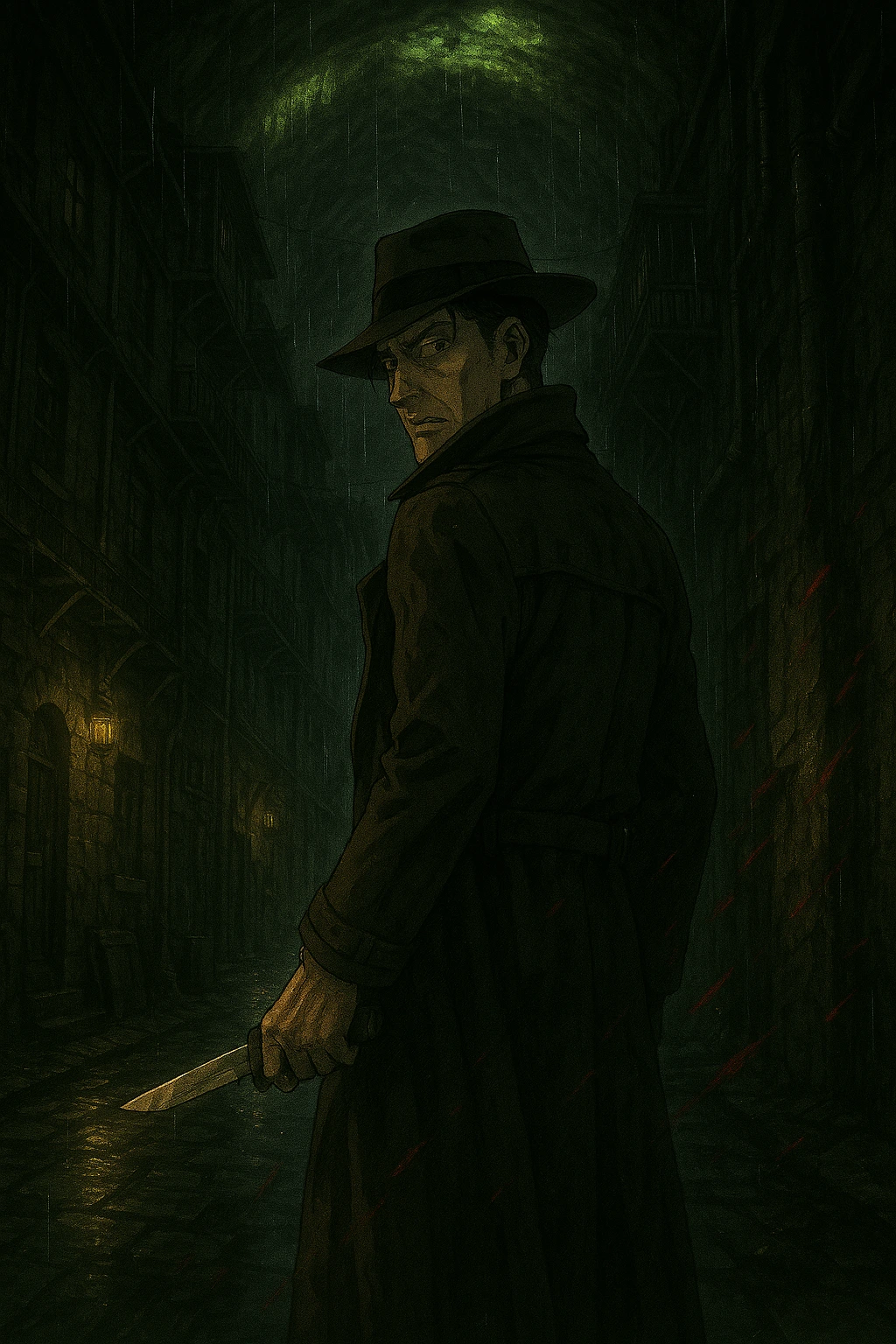
Immunity to the Founder
The Founding Titan possesses the ability to alter the memories and anatomical structure of all Subjects of Ymir. This is how the King erased the history of the world 100 years ago, making the people inside the Walls believe they were the last remnants of humanity, besieged by Titans. He essentially “factory reset” the minds of millions.
However, the Ackerman clan (despite being Eldian by modification) and the Asian clan (who are a completely different race) are immune to this telepathic rewriting.
- The King could shout “Forget the war!” and the masses would forget.
- The Ackermans and Asians would simply stand there, remembering everything. They became living records of the truth the King sought to bury.
The Persecution and The Purge
This immunity made them dangerous. A utopia built on a lie cannot exist if there are people walking around who know the truth. The King feared that the Ackermans would eventually lead a revolt or simply tell their children the true history of the world, shattering the illusion of peace.
To prevent this, the Royal Government initiated a purge.
- The Demand: The King demanded loyalty and silence. He asked them to essentially pretend they had been wiped.
- The Refusal: The heads of the Ackerman and Asian clans refused to submit to the ideology of pacifism and ignorance. They would not betray their history.
- The Slaughter: Because they refused to yield, they were systematically hunted down. The King turned the Military Police against his own elite guards.
This persecution drove them to the fringes of society.
- The Underground: Many, like the Ackerman branch Levi descended from, fled to the Underground City—a sunless, lawless slum beneath the capital where the Military Police rarely ventured. This explains why Levi was born in filth and poverty; the Underground was a concentration camp for those the King wanted to forget.
- The Mountains: Others, like Mikasa’s father (Ackerman) and mother (Asian), fled to the remote mountains near the edge of Wall Maria to live in isolation, hoping distance would keep them safe.
The Irony of the King
There is a profound irony in this history. The Ackermans were created specifically to protect the King. They were the ultimate shield. Yet, the King’s obsession with a “peaceful cage” forced him to destroy his own protectors. He traded his strongest warriors for a false sense of security, weakening humanity’s potential defense against the return of the Titans. He cut off his own hands to ensure no one could open the door.
VI. Case Studies: Three Generations of Power
The narrative of Attack on Titan gives us three distinct lenses through which to view the Ackerman experience: Kenny, Levi, and Mikasa. Each represents a different philosophical response to their power and their persecution.

1. Kenny the Ripper: The Nihilist
Kenny Ackerman represents the trauma of the purge. He grew up knowing only violence. He killed Military Police by the dozens, earning the moniker “The Ripper.” He viewed the world through a lens of absolute Darwinism: the strong survive, and the weak die.
Kenny’s arc is one of power-seeking. He believed that whoever held the most power was the most free. However, his interaction with Uri Reiss (the King) shattered his worldview. When he attempted to assassinate Uri, the King used the Titan power to stop him but then did the unthinkable: he bowed to Kenny and apologized for the persecution of the Ackermans.
Kenny was stunned. He devoted his life to Uri, not out of slavery, but out of a desperate need to understand what Uri saw. Key Philosophy: “Everyone had to be drunk on somethin’ to keep pushing on… Everyone was a slave to something.” Kenny realized that even the King was a slave to his ideology (the Vow Renouncing War).
Even Ackermans were slaves to their drive for power or survival. His death is a moment of release; he gives the Titan serum to Levi, finally choosing to let go of power rather than consume it, realizing he wasn’t fit to be a “God.”
2. Levi Ackerman: The Pragmatist
Levi is the result of Kenny’s training but lacks Kenny’s selfishness. Levi was raised in the Underground, where strength was the only currency, but he chose to use his strength for others.
Levi represents Duty. Throughout the series, Levi is defined by his losses. He loses Furlan and Isabel. He loses his entire squad (Petra, Oluo, etc.). He loses Erwin. He loses Hange. Yet, unlike Eren who destroys the world over his grief, or Reiner who seeks death to escape his guilt, Levi endures.
His strength is not just in his blade, but in his emotional resilience. He fights to give meaning to the deaths of his comrades. He is the one who carries the burden of the “survivor.” His final arc is not about saving the world for abstract reasons, but about fulfilling his final promise to Erwin: to kill the Beast Titan.
Levi is the sword that never breaks, even when it is chipped and dulled. He is the ultimate soldier who fights not for glory, but because someone has to.
3. Mikasa Ackerman: The Protector
Mikasa represents Love. Her strength is inextricably linked to Eren, but her character arc is about separating her identity from him.
For seasons, critics argued Mikasa was too dependent on Eren. But this dependence was the crucible for her development. She is the strongest character in the show physically, yet she is emotionally vulnerable. Her journey is about realizing that protecting someone doesn’t always mean keeping them alive; sometimes, it means stopping them.
Mikasa bridges the gap between the Ackermans and the Asians. She carries the crest of Hizuru (royalty) and the blood of the Ackermans (warriors). She is the culmination of the minority experience: the girl who lost everything, gained power, and had to decide how to use it. She rejects the title of Queen of Hizuru to remain a soldier of Paradis, choosing her home over her bloodline.
VII. The Role in the Ending: The Executioners
The ending of Attack on Titan is controversial, but the role of the Ackermans in it is thematically consistent. The story began with the King trying to control them, and it ends with them breaking the cycle the King created.

Levi’s Conclusion
Levi finally kills Zeke. It is a moment devoid of glory. Zeke effectively gives himself up, realizing the beauty of the world too late. Levi beheads him, fulfilling his vow. It is a grim, necessary act.
But Levi’s true ending is his survival. He is left scarred, missing fingers, blinded in one eye, and wheelchair-bound. Yet, in the final montage, he is seen in Marley, dressed in fine clothes, handing out candy to children. The “monster” of the battlefield becomes a gentle elder.
He is the last relic of the old Survey Corps, living proof that their struggle was not in vain. He survives to remember the dead.
The Final Choice: Why It Had to Be Mikasa
Why did Ymir Fritz wait for Mikasa? Why not Eren? Why not Armin?
Eren sought freedom through destruction. Ymir did not need destruction; she needed emancipation. Ymir was a slave to King Fritz because she loved him, despite his abuse. She had all the power in the world (the Titan power), yet she could not disobey him. She was trapped in a nightmare of her own making, unable to let go of her attachment.
Mikasa was the mirror to Ymir.
- Mikasa loved Eren immensely, perhaps more than anyone else.
- Eren became a monster who destroyed the world, much like King Fritz was a tyrant.
- Mikasa had the power to stop him.
The climax of the series is not Eren’s death, but Mikasa’s choice to kill him. By killing the man she loved to save humanity, Mikasa proved to Ymir that love does not require slavery. You can love someone and still defy them. You can be devoted and still be free.
It was the “Ackerman glitch”—the ability to disobey the King/Founder—that saved the world. If Mikasa had been a normal Subject of Ymir, susceptible to the Founder’s control, she might not have been able to swing the blade. Her immunity was the key. Her refusal to be a slave, even to love, broke the curse of the Titans.
VIII. Conclusion: The Burden of Strength
The history of the Ackerman and Asian clans in Attack on Titan is a testament to the power of the minority. They were anomalies in a system designed for uniformity. They were persecuted because they could not be brainwashed. They were feared because they were strong.
Yet, when the walls crumbled and the Rumbling flattened the earth, it was not the majority who saved humanity. It was the outcasts.
- Levi, the thug from the Underground.
- Mikasa, the orphaned “half-breed” from the mountains.
- Onyankopon and the Azumabito engineers, the foreigners who refused to give up.
Isayama ultimately posits that true strength is not just physical ability (Ackerman) or political lineage (Asian). True strength is the ability to maintain one’s self in the face of overwhelming pressure to conform.
The Ackermans were the only ones who could truly claim to be “Free” inside the Walls because their minds were their own.
In the end, the “glitch” in the system was the only thing that could reboot the world. They carried the burden of strength, and in doing so, they carried humanity into a future without Titans.
The monsters created to protect the King ended up destroying the King’s nightmare, proving that even in a world of predetermined paths, the minority always has a choice.