
Zeke Yeager: The Savior Who Wanted to Stop Life
In the vast, blood-soaked tapestry of Attack on Titan, there are those who fight to live, and there is one man who fought for the right to never exist.
For years, the narrative of Shonen anime has been driven by a singular, pulsating rhythm: the heartbeat of survival. Characters scream, bleed, and break their limits because “being born into this world” is treated as the ultimate gift.
Freedom is usually defined as the ability to live without walls, to explore the unknown, and to leave a legacy. But Hajime Isayama, in his ruthless deconstruction of the genre, introduced a character who looked at the miracle of birth and called it a curse.
Zeke Yeager is the dark mirror of the protagonist. While Eren Yeager screams, “I am free because I was born into this world,” Zeke whispers, “The greatest salvation is to never have been born at all.”
Zeke is not a villain in the traditional sense of a chaotic evil force. He is a Messiah of Nothingness. He is a man who looked at the cruelty of the world—the cycle of hatred, the titans, the racism, the endless wars—and decided that the only compassionate act was to press the stop button on his own race.
He represents the absolute zero of hope. If Hope vs. Reality is one of our core analytical lenses, Zeke represents a terrifying synthesis: he accepts the Reality that the world is hell, and his only Hope is to exit it peacefully.
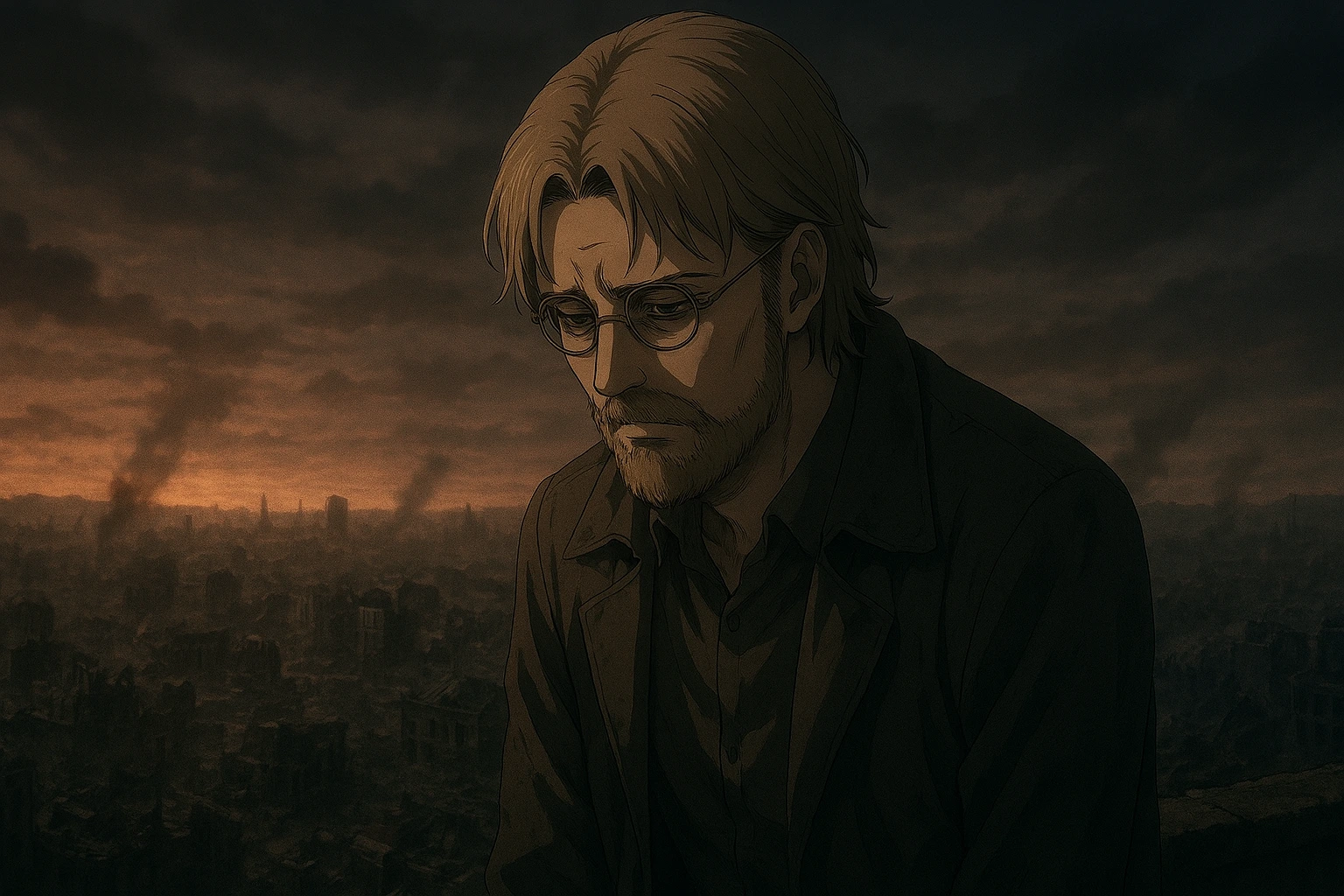
But why did the “Wonder Child,” the Warchief of Marley, and the holder of the Beast Titan come to such a bleak conclusion?
Was he simply a monster, or was he the most empathetic character in the entire series, crushed by a burden no child should carry? To understand the Euthanasia Plan, we must first understand the boy who wished he was never born.
This is the tragedy of Zeke Yeager—the rival who thought he was the main character, only to realize he was merely the key that unlocked the Devil.
The Philosophical Underpinnings: Schopenhauer’s Shadow
To fully grasp Zeke, we must acknowledge the philosophical shadow he casts. He is the embodiment of Arthur Schopenhauer’s pessimism—the idea that the “Will to Live” is a blind, ceaseless striving that results only in suffering.
Most anime characters embody the Nietzschean “Will to Power,” overcoming suffering to find meaning. Zeke rejects this. He believes that as long as the biological imperative to reproduce exists, suffering is guaranteed.
His ideology is not just political; it is metaphysical. He isn’t just fighting Marley or the Eldian Restorationists; he is fighting the biological concept of life itself.
Zeke’s Childhood Trauma: Grisha’s Sins
The concept of Destiny vs. Effort is usually framed as a hero overcoming their lowly birth through hard work. But what happens when “Destiny” is forced upon a child by their parents, crushing their ability to make any effort for themselves?
Zeke Yeager was not born; he was manufactured. He was a project, a tool, a weapon forged by Grisha Yeager and Dina Fritz to restore the Eldian Empire. [Internal Link: Detailed Breakdown of Grisha Yeager’s Parenting Flaws]
The Wonder Child Lie
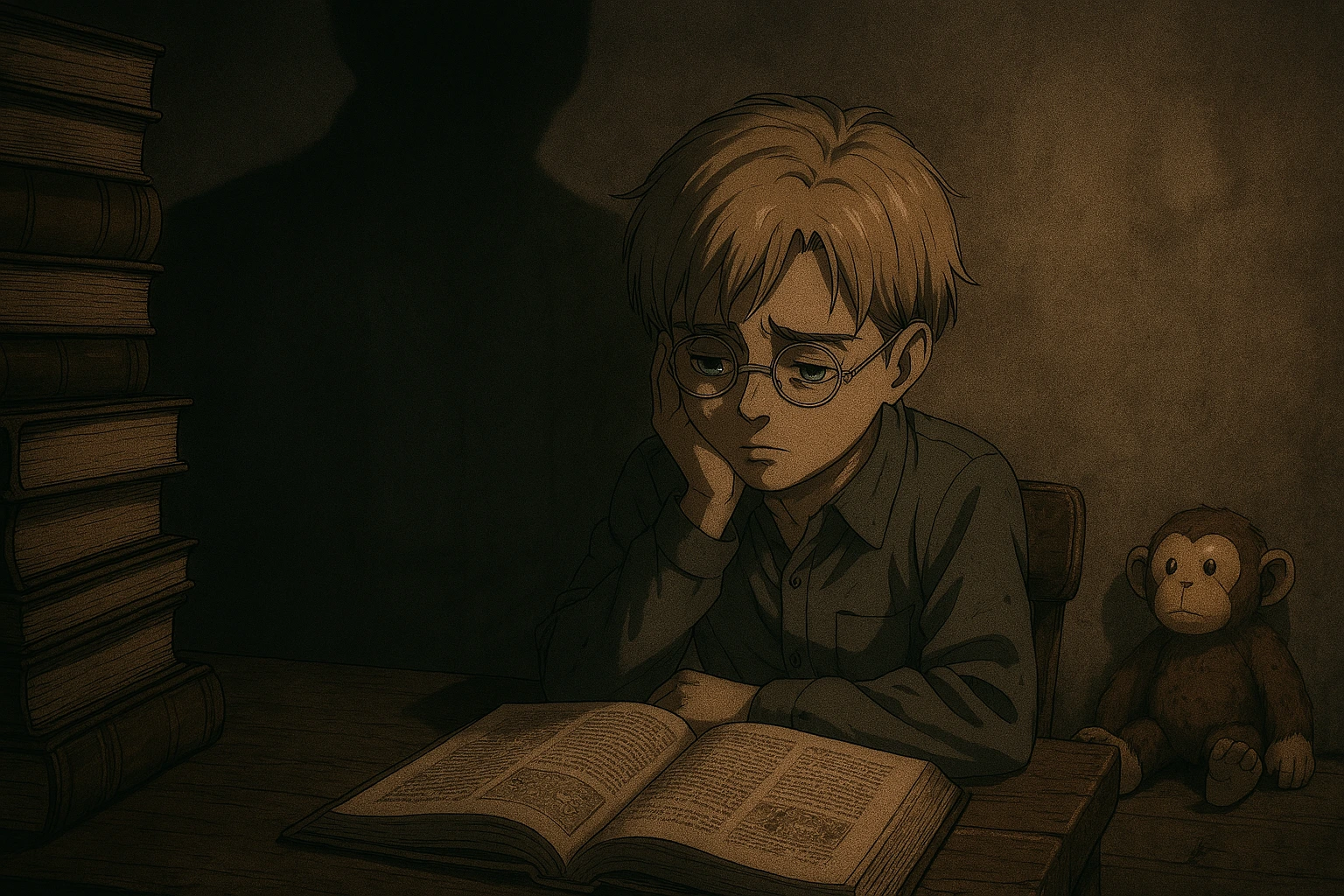
From the moment he could walk, Zeke was stripped of his humanity and reduced to his bloodline. Grisha didn’t see a son; he saw a biological connection to the royal family. He saw a key to a rebellion. The tragedy of Zeke’s childhood is the suffocation of the self.
We see scenes of Zeke playing with a toy monkey—a foreshadowing of his Titan form—only to have it taken away or ignored so he could study history books filled with propaganda. He was forced to be a “double agent” before he could even tie his shoes.
The pressure placed on him was immense. He was told he was the “Wonder Child,” the savior of his people. But in reality, he was an average boy. He wasn’t physically gifted like Annie, nor did he have the innate killer instinct of Mikasa. He was just a gentle child who wanted his father to look at him with love, not expectation.
This is the dark side of “Destiny.” Grisha Yeager, failing to recognize his own limitations, outsourced his ambition to his son.
This is a recurring theme in Attack on Titan: the sins of the father are not just visited upon the son; they are surgically implanted into him. Grisha’s bad parenting is arguably the true villain of the first half of the series.
By treating Zeke as a vessel for Eldian restoration rather than a human being, he broke the boy’s mind.
Dina Fritz: The Silent Enforcer
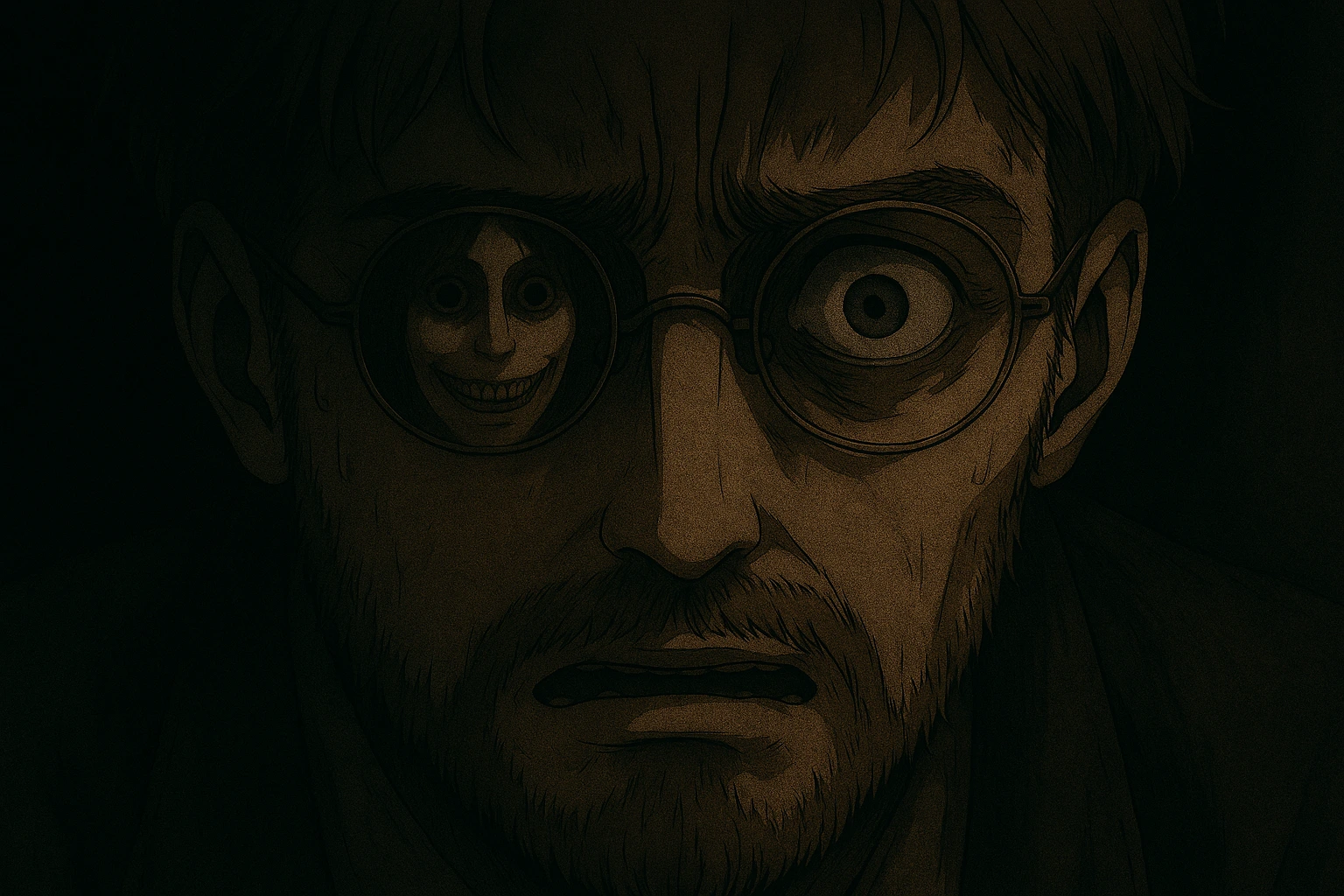
While Grisha often receives the brunt of the criticism for Zeke’s upbringing, we must not overlook the role of Dina Fritz. As the last descendant of the royal family, she carried the weight of the “Royal Blood” narrative. She was not merely a passive observer; she was the enforcer of their heritage.
Dina constantly reminded Zeke of who he was—not Zeke the boy, but Zeke the Prince, Zeke the King who would restore Eldia. Her love was conditional on his utility. When Zeke struggled in the Warrior training program, falling behind the other candidates, the disappointment in his mother’s eyes was just as damaging as his father’s anger.
She reinforced the idea that his worth was tied exclusively to his ability to become a weapon. This maternal betrayal is crucial because it severed Zeke’s connection to the one place that should have been a sanctuary: a mother’s love.
When he later encounters the Smiling Titan (Dina) in his memories or on the battlefield, the horror isn’t just physical; it’s the manifestation of the expectations that consumed him.
The Betrayal: Self-Preservation or Hatred?
The pivotal moment of Zeke’s youth—turning his parents in to the Marleyan authorities—is often debated. Was it an act of loyalty to Marley? No. Was it a calculated political move? Partly. But deeply, it was an act of survival and a scream of rejection.
When Zeke overhears the Marleyan authorities closing in on the Restorationists, he realizes his entire family is doomed to be sent to “Paradise” (turned into Pure Titans). He tries to warn his parents, begging them to stop.
Grisha refuses to listen. Grisha is so consumed by his “mission” that he would rather drag his wife and son into hell than admit defeat.
At that moment, Zeke realizes his father loves the mission more than he loves Zeke.
Turning them in was the only way to save himself and his grandparents. It was the ultimate rejection of his father’s ideology. It was Zeke saying, “I will not be your tool.
I will survive, even if it means killing you.” It was the first time Zeke exerted his own will, but it came at the cost of destroying his family.
The Kenny vs. Zeke Parallel: It is fascinating to contrast Zeke’s rejection of his father with Levi’s relationship with Kenny. Both were raised in brutal environments by father figures who eventually left them (physically or emotionally).
Levi took the skills Kenny taught him—survival, violence—but rejected Kenny’s selfish lifestyle to serve a greater cause (Erwin/Humanity). Zeke, however, rejected his father’s cause entirely but internalized the trauma.
Like Levi with Kenny, Zeke rejects his father’s ideology but carries the trauma forever, shaping his entire worldview around ensuring no child ever has to suffer through what he did.
While Levi used his trauma to protect the living, Zeke used his to condemn life itself.
Tom Ksaver: The Father He Chose
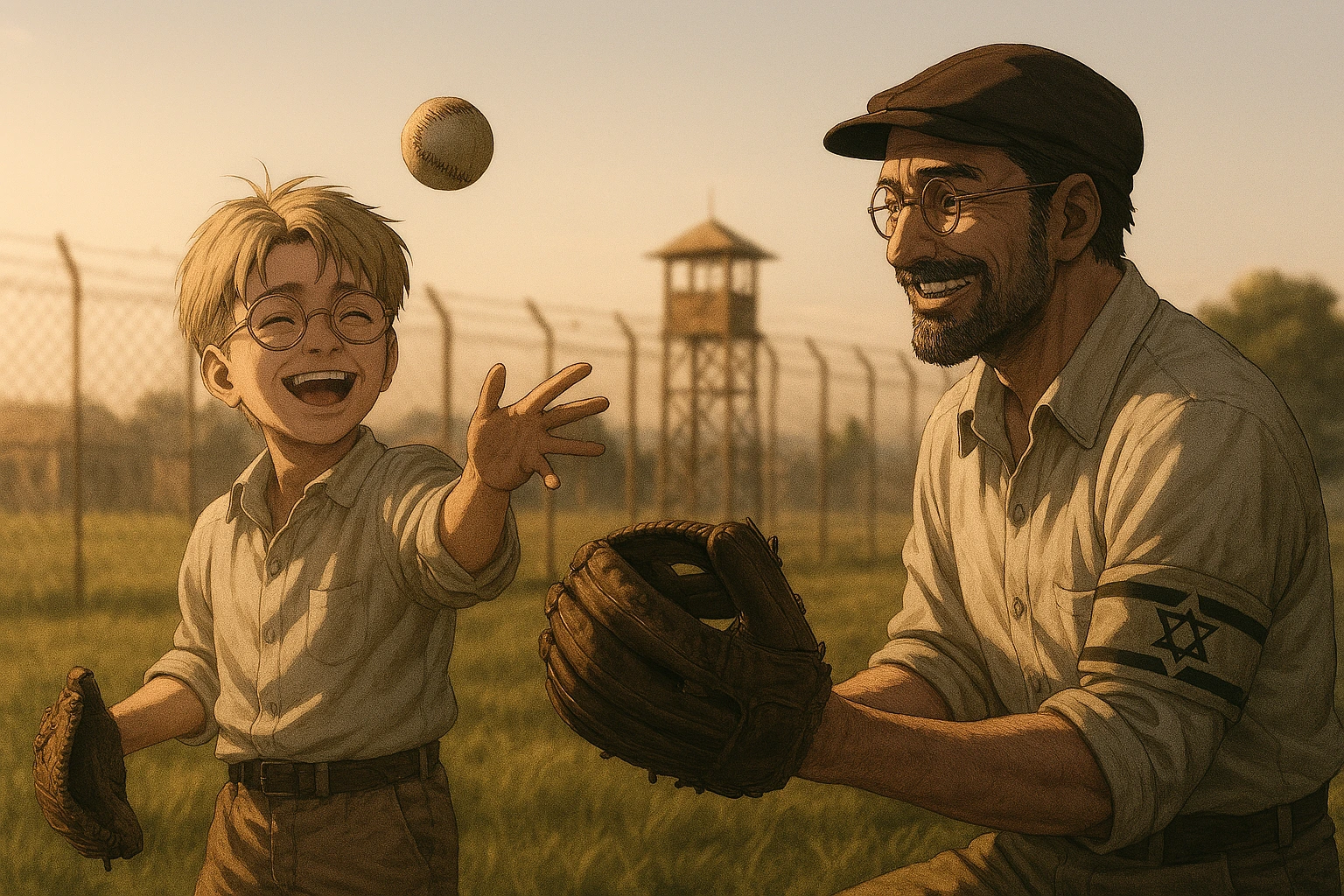
If Grisha was the father of Zeke’s biology, Tom Ksaver was the father of his ideology.
Ksaver, the previous Beast Titan, was everything Grisha wasn’t. He played catch with Zeke. He listened to him. He didn’t demand Zeke become a savior; he accepted Zeke as a failure of a Warrior candidate.
But Ksaver was broken too. He was a man who had lost his wife and child due to the hatred against Eldians, a man who researched Titans solely to find a “spectacular way to die.”
It was Ksaver who planted the seed of the Euthanasia Plan. When Ksaver lamented his own existence, wishing he had never been born into this cruel world, Zeke found validation. For the first time, someone understood the pain of existence.
Zeke’s love for Ksaver warped his worldview. He wanted to “save” people the way Ksaver “saved” him—by validating the idea that non-existence is better than suffering.
The game of catch became their ritual, a symbol of a simple, happy life that Eldians were denied. Zeke resolved to inherit the Beast Titan not for Marley, and not for Eldia, but for Ksaver. To fulfill a promise to “save” the world by ending the Eldian race.
Zeke represents a twisted version of Effort. He worked tirelessly, became the Warchief, and mastered the Beast Titan’s abilities better than anyone in history, all to achieve a goal that rendered all effort meaningless.
Euthanasia Plan Explained: Genocide as Mercy
We must now confront the philosophical core of Zeke’s character: The Euthanasia Plan.
To the average viewer, this plan is horrific. It is genocide. It is the sterilization of an entire race. But to understand Zeke, we must look at it through the lens of utilitarianism and anti-natalism.
The Logic of Nothingness
Zeke’s logic is terrifyingly sound if you accept his premise that “Eldian existence equals suffering.”
- The Problem: As long as Subjects of Ymir exist, the power of the Titans exists. As long as Titans exist, the world will fear and hate Eldians, leading to endless wars.
- The Failed Solutions: King Fritz’s pacifism led to oppression within the walls. The Restorationists’ war led to more death. The Marleyan “Warrior” program only perpetuated the cycle of using Eldians as weapons.
- The Euthanasia Solution: Use the Founding Titan to alter the biology of all Eldians so they can no longer reproduce.
In Zeke’s eyes, this is the “kindest” genocide in history. No one has to die violently. The current generation can live out their lives. But after 100 years, the Eldian race will quietly fade into history.
The Titans will vanish. The world will be “saved” from the fear of the Giants, and the Eldians will be “saved” from the cruelty of the world.
It is a plan born of total despair. It assumes that the world cannot change, that racism cannot be overcome, and that peace is impossible as long as differences exist.
The Mathematics of Mercy
Zeke operates on a cold, utilitarian calculus. He weighs the suffering of the unborn against the desires of the living. To him, the unborn have no voice, yet they are the ones who will suffer the most if brought into a world that hates them.
He views the denial of birth not as a theft of potential, but as the prevention of tragedy. Every child born is another potential victim of war, another potential Titan, another soul trapped in the cycle.
By stopping the birth rate, he believes he is mercifully closing the factory of suffering. He sees himself as a doctor performing a difficult but necessary surgery on the world. The sterilization is the scalpel; the extinction of Eldians is the cure.
The Ultimate Coping Mechanism
Applying our Hope vs. Reality perspective, Zeke’s plan reveals a fascinating paradox. Zeke believes he is the most “Realistic” person in the room. He thinks Eren and the Scouts are delusional for fighting for survival in a world that hates them. He thinks the “Reality” is that Eldians are doomed.
However, the Euthanasia Plan is actually a dark form of “Hope”—or rather, a coping mechanism to deal with reality.
Zeke cannot face the reality of the struggle. He cannot handle the complexity of war, negotiation, and the slow, painful process of changing hearts and minds. It is too hard. It requires too much faith in humanity—faith that Zeke lost when his parents abandoned him.
So, he constructs a “Hope” where everything just… ends. It’s the peace of the grave. It’s the desire to return to the womb, or rather, the void before the womb.
The God Complex
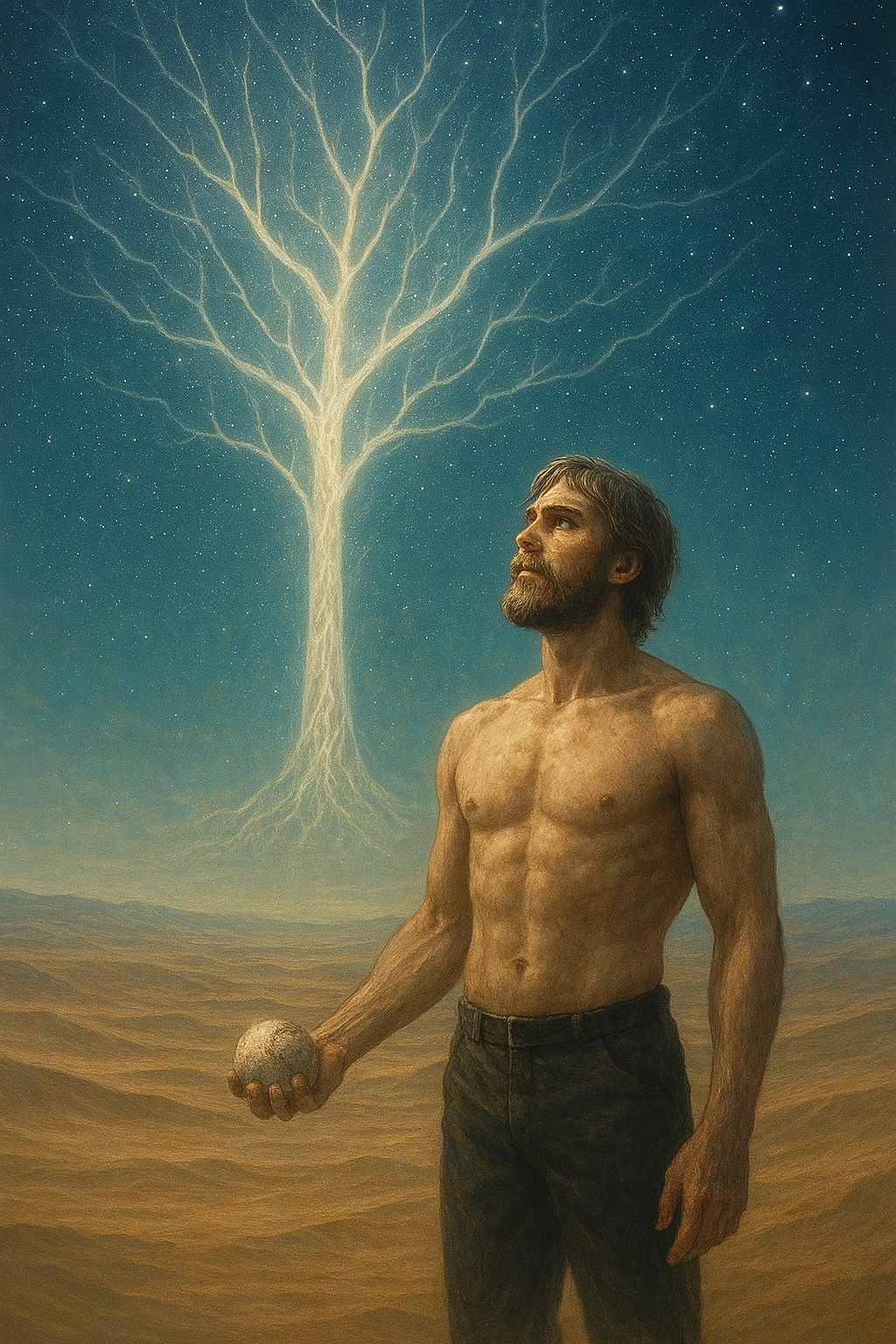
There is a supreme arrogance in Zeke’s humility. He believes he has the right to decide the fate of millions of unborn children. He views himself as a Messiah.
Throughout the series, Zeke refers to his plan as “saving” everyone. “I will save you, Eren,” he says repeatedly. He genuinely believes he is doing a good deed. This makes him far more dangerous than a villain who kills for malice. Zeke kills for “love.”
He crushes the Survey Corps with boulders not out of hatred, but with the detached pity of a man putting down a sick animal. He has detached himself from the value of individual lives because he is focused on the “greater good” of non-existence.
The Rival’s Role: The Key That Unlocked Eren
In standard Shonen anime, the Rival (Vegeta, Sasuke, Bakugo) exists to push the protagonist to become stronger, to challenge their ideals, and eventually, to acknowledge their strength.
Zeke Yeager is the ultimate subversion of the Rival archetype. He fits our analytical definition of the Rival: his main job is to advance the hero and accelerate his growth. But in Attack on Titan, this acceleration leads to the apocalypse. [Internal Link: Eren Yeager Character Analysis & The Rumbling]
The Protagonist of His Own Story
Zeke did not see himself as Eren’s rival. He saw himself as Eren’s savior and the true protagonist of the story. He believed that he and Eren were the same—victims of Grisha Yeager. He projected his own trauma onto Eren, assuming that Eren was also brainwashed and suffering.
He approached Eren with the open arms of a big brother, offering the “truth.” He thought he was the wise mentor who would guide the lost little brother to the correct path (Euthanasia).
This was Zeke’s fatal mistake. He failed to understand the core of Nature vs. Nurture. Zeke was shaped by nurture (Grisha’s pressure, Ksaver’s nihilism).
Eren, however, was shaped by his nature. As Eren chills Zeke to the bone in the Paths: “I have been this way since I was born.”
The False Brotherhood: A Tragedy in the Paths
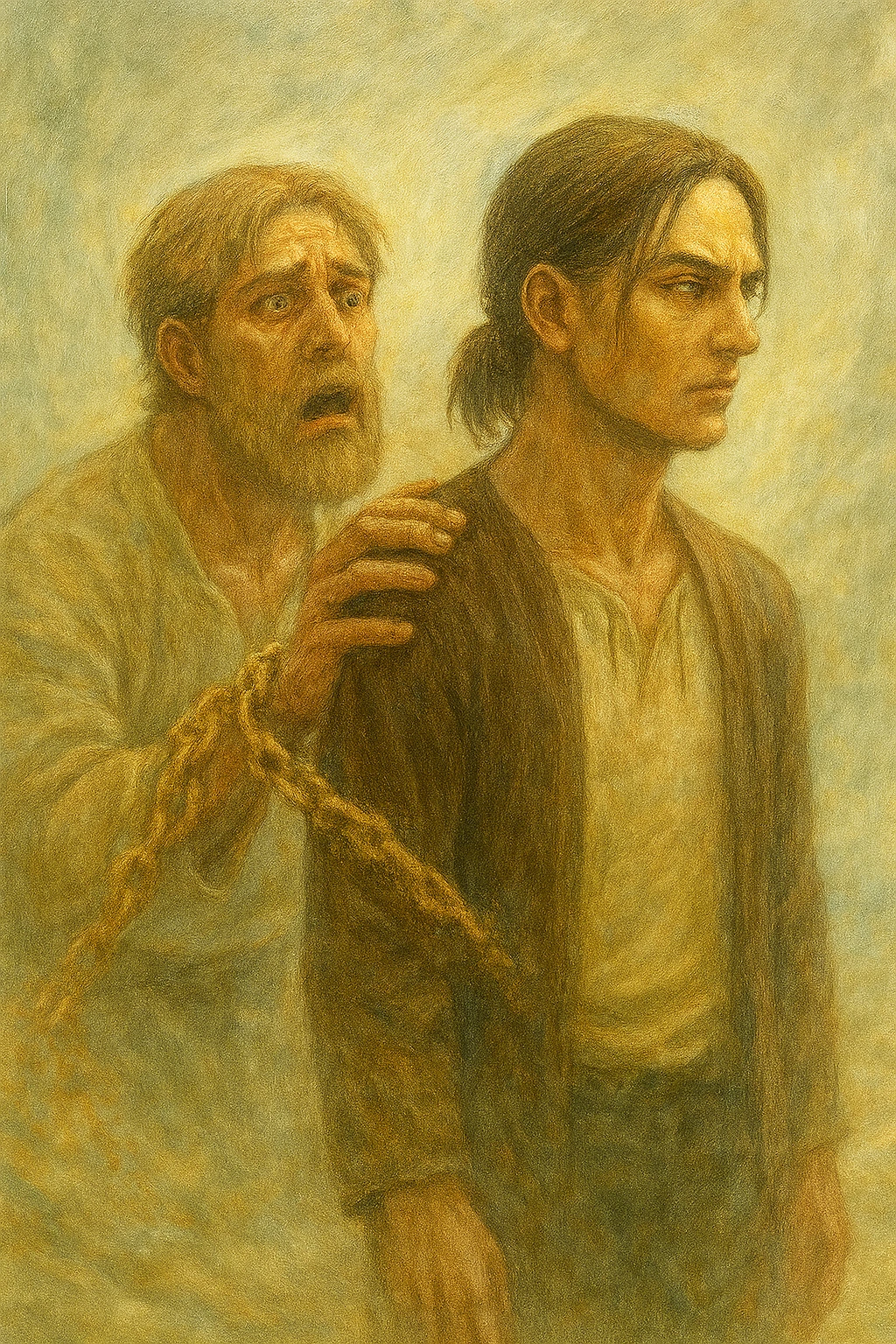
The sequence within the Paths is the narrative climax of Zeke’s character arc. He takes Eren on a journey through Grisha’s memories, fully expecting to vindicate himself.
He wants to show Eren, “Look, our father was a monster. Look how he brainwashed me. Look how he brainwashed you.”
It is a desperate bid for connection. Zeke doesn’t just want an ally; he wants a family. He wants Eren to be the brother he never had—someone who understands the specific pain of being Grisha Yeager’s son.
He pleads with his brother, his voice cracking with the weight of decades of isolation: “I just wanted to save you from this hell.”
But as they walk through the memories, Zeke watches in horror as the narrative flips. He sees that Grisha actually learned from his mistakes with Zeke.
He sees Grisha delaying the mission to play with Eren. He sees a father who loved his second son. And, most terrifyingly, he sees that Eren wasn’t brainwashed. Eren was the one pulling the strings.
The “brotherhood” Zeke sought was a mirage. He was trying to bond with a monster over shared trauma, only to realize the monster had no trauma—only drive.
The Accelerator
Without Zeke, Eren creates nothing. Eren needed a Titan of Royal Blood to bypass the vow of unconditional peace and access the Coordinate. Zeke was the literal key.
Zeke spent years plotting, infiltrating Marley, betraying his comrades, and setting up the chess board, only for Eren to flip the table. Zeke’s role in the narrative was to bring Eren to the Coordinate. He accelerated Eren’s journey. He gave Eren access to Grisha’s memories.
Ironically, it was Zeke taking Eren through Grisha’s memories—an attempt to show Eren how evil their father was—that allowed Eren to influence the past. Zeke caused the very events he was trying to prevent. By trying to “fix” Eren, he allowed Eren to manipulate Grisha into killing the Reiss family.
Zeke, the man who wanted to end the story, unwittingly handed the pen to the man who wanted to burn the book. He wasn’t the player; he was the piece. This realization breaks Zeke completely. The Rival didn’t lose a physical fight; he lost an ideological and metaphysical one. He was outmaneuvered by the sheer force of Eren’s will to live (or rather, will to fight).
Beast vs. Humanity: The Levi Dynamic
No analysis of Zeke is complete without discussing his dynamic with Levi Ackerman. If Eren is Zeke’s ideological foil, Levi is his physical and thematic nightmare. [Internal Link: Levi Ackerman: The Strongest Soldier Analysis]
The Tactical Genius of the Beast
Before dissecting the rivalry, we must acknowledge Zeke’s competence. As the Beast Titan, Zeke revolutionized warfare for Marley. Prior to him, the Beast was considered useless in combat. Zeke used his pitching ability (Effort) to turn the Titan into a long-range artillery unit.
He treated war like a game of chess, positioning his “pieces” (Pure Titans) with his spinal fluid screams. This detached, tactical approach allowed him to dominate the battlefield with zero risk to himself.
He represents the “General” who sits far from the front lines, sending others to die while he calculates the odds. This distance is crucial to his psychology—it keeps the blood off his hands, emotionally speaking.
The Unstoppable Force vs. The Immovable Nihilist
Levi represents the peak of human Effort and the survival instinct. He is a soldier who has watched his friends die countless times but continues to fight for the living. He honors the dead by struggling to survive, giving meaning to their sacrifices.
Zeke represents the mockery of that struggle.
The Battle of Shiganshina perfectly encapsulates this conflict. Zeke stands atop the wall, throwing crushed rocks at the Survey Corps.
He treats it like a baseball game. “Pitching perfectly,” he mutters, celebrating a strike. He creates a cognitive dissonance, turning the slaughter of humans into a sport to distance himself from the guilt. He looks down on the humans scurrying below, pitying their “pointless” efforts to survive.
Then comes Levi.
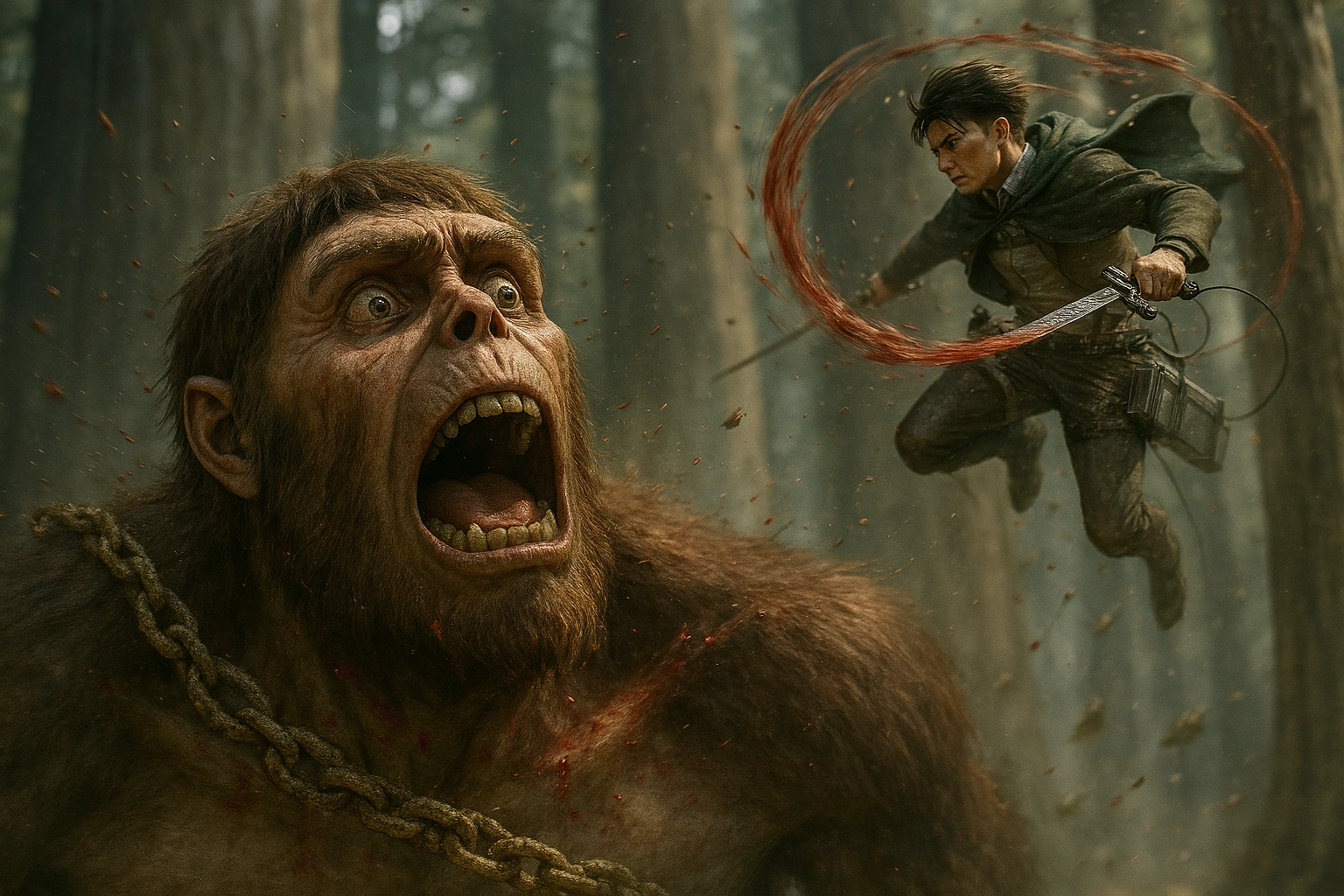
Levi cuts through Zeke’s nihilistic shield—quite literally. Levi doesn’t care about Zeke’s grand philosophy or his daddy issues. Levi is the consequence of Zeke’s actions.
When Levi shreds the Beast Titan, it is Reality crashing down on Zeke’s delusion. Zeke cannot comprehend Levi because Levi represents a force of will that defies Zeke’s calculations.
The Forest of Giant Trees: Rage vs. Apathy
Their second major confrontation in the forest highlights the difference in their view of “comrades.” Zeke turns Levi’s subordinates into Titans, expecting Levi to hesitate. He assumes Levi will be paralyzed by the tragedy of killing his friends.
But Zeke underestimates the resolve of the Scout. Levi slaughters his former comrades not because he doesn’t care, but because he respects them enough not to let them live as monsters. Levi prioritizes the mission (survival of humanity) over sentimentality.
Zeke, who claims to act out of love, uses people as disposable tools. Levi, who appears cold, carries the weight of every life on his shoulders.
Zeke consistently loses to Levi because he underestimates the “Common Man’s” capacity for violence and endurance. Zeke thinks he is a god among insects; Levi reminds him he is just a man in a monkey suit.
Conclusion: The Beauty of a Baseball
In the end, Zeke Yeager spends an eternity in the Paths, building sandcastles in a timeless void. He has given up. Eren has won.
The Rumbling is destroying the world. Zeke has retreated fully into his nihilism. The sandcastles represent the futility of his efforts—structures built from the soil of a dead world, easily washed away by the tide of Eren’s rage.
Then, he speaks with Armin Arlert.
The Meaning of Life: A Leaf and a Metaphor
Armin helps Zeke realize the flaw in his Euthanasia Plan. Zeke measured the value of life by its grand purpose: the absence of suffering, the legacy of history. Since life contains suffering and ends in death, Zeke concluded life was net-negative.
But Armin shows him a leaf. He talks about running up a hill. He talks about the wind. He talks about the moments that serve no grand biological purpose—no reproduction, no survival necessity—but are simply enjoyable.
Whether this conversation was a literal exchange of information or a metaphysical realization sparked by the Paths is open to interpretation, but the effect is absolute: Armin’s words shatter Zeke’s worldview.
Zeke remembers the baseball.
He realizes that the happiest moments of his life were not when he was the Wonder Child or the Warchief. They were when he was just playing catch with Ksaver.
That simple, repetitive act of throwing and catching had no “meaning” in the grand scheme of the universe. It didn’t save Eldia. It didn’t advance the human race. But it was precious.
Zeke realizes that perhaps being born wasn’t a punishment. Perhaps the purpose of life isn’t to avoid suffering, but to find those moments of catch, those leaves, those small connections that make the suffering bearable.
This is the ultimate refutation of his Anti-Natalism. Life justifies itself not through grand narratives, but through small joys.
The Final Pitch
Zeke’s death is his redemption. He doesn’t save the world with a grand plan. He saves it with a small act of Effort. He forces himself out of the Paths, manifesting his body in the real world to stop the Rumbling.
He waves to Levi. He comments on the beautiful weather—a final appreciation of the world he wanted to destroy. He realizes he killed too many people to deserve forgiveness. “I wanted to understand… but that’s asking too much, isn’t it?”
He allows Levi to decapitate him.
This is crucial. Zeke didn’t commit suicide; he allowed himself to be killed to stop Eren’s advance. He finally prioritized the living over the unborn.
He sacrificed his dream of a quiet end for the sake of Armin and the Alliance’s fight for the future. He became the ball, pitched one last time, allowing Levi—the batter—to hit the home run that would save humanity.
Did Zeke Yeager Win?
Zeke Yeager failed. His plan was thwarted. His ideology was deconstructed. He was eaten by the very destiny he tried to escape.
But in his failure, he became one of the most complex characters in anime history. He forces the audience to ask uncomfortable questions. Is suffering inherent to life? Is it better to prevent pain than to endure it?
Zeke Yeager was the perfect rival because he wasn’t just an obstacle of strength; he was an obstacle of philosophy. He challenged the very premise of the Shonen genre. He forced us to justify why we want the heroes to win.
In a world of cruel destinies, Zeke tried to rig the game. He tried to take the ball and go home. But in his final moments, he realized that the game itself—with all its sweat, blood, and pain—was worth playing, if only for the feeling of the ball in his hand.
He was the Messiah of Nothingness who, at the very end, found something.
“Did Zeke Yeager love the world too much to let it suffer, or did he just hate himself too much to live in it? The line between savior and monster is often just a matter of perspective.
As we analyze these dark philosophies, we realize that Attack on Titan isn’t just about fighting monsters; it’s about the monster inside the mirror. Keep analyzing, keep questioning, and remember: effortless victories don’t exist. Until next time.”