
1. The Blood Economy: The Hierarchy of the Twelve Kizuki
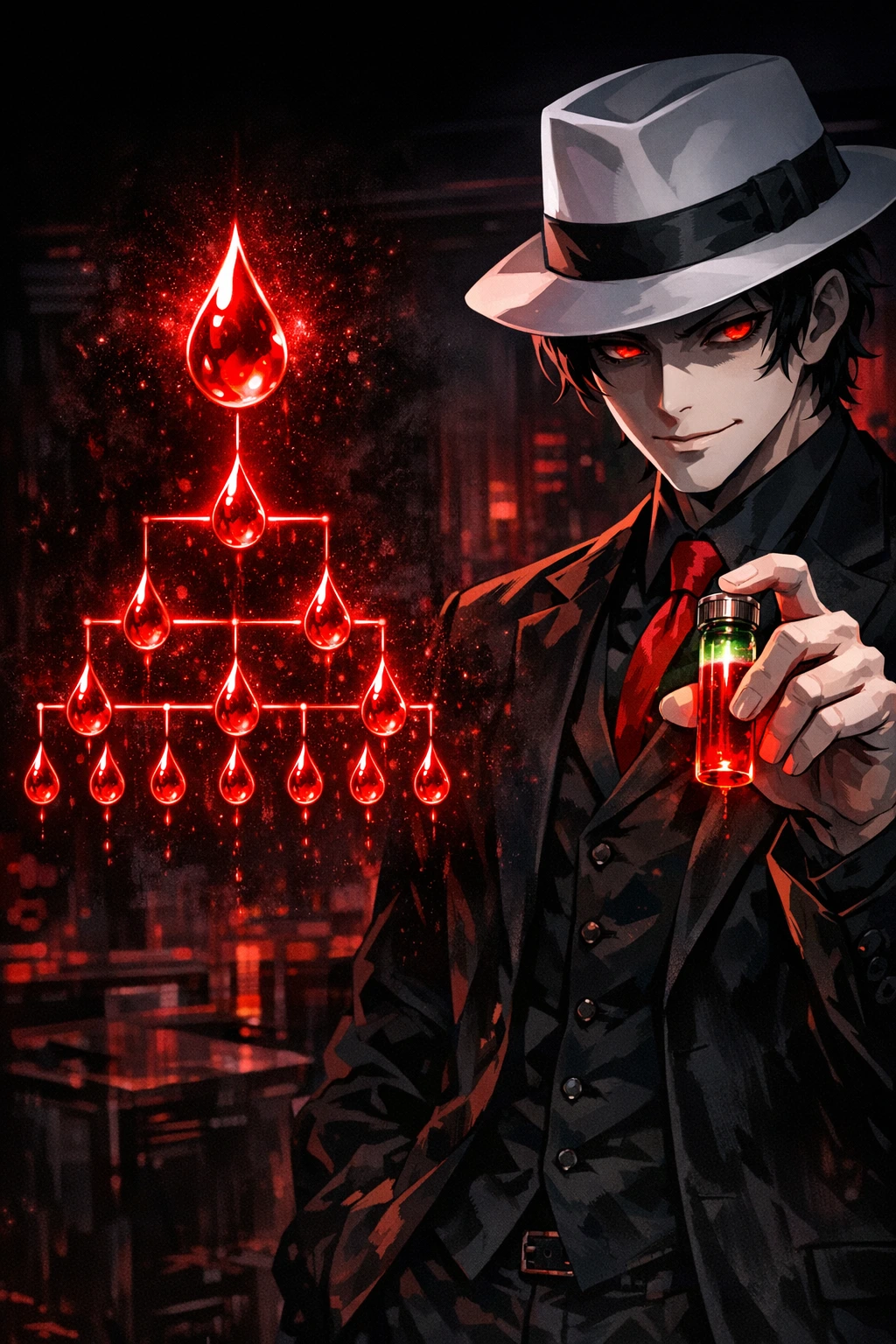
To truly understand the Twelve Kizuki, one must first strip away the supernatural veneer of demons, magic, and folklore. When examined through an analytical lens, Muzan Kibutsuji’s elite guard is not a brotherhood of villains, nor is it a traditional military vanguard. Instead, it operates as a hyper-competitive, cutthroat corporate ladder where the sole currency of exchange, equity, and promotion is literal blood.
Muzan is less of a dark lord and more of a ruthless monopolistic CEO, hoarding the most valuable resource in his world—his own cellular biology. Every drop of his blood is an investment, and the Twelve Kizuki are his board of directors, expected to yield catastrophic returns.
The hierarchy of the Twelve Kizuki is intentionally framed as a flawed military structure. In any functional army, the strength of the unit lies in synergy, communication, and mutual defense. A phalanx is only as strong as the overlapping shields of its soldiers.
However, Muzan’s army is built on the absolute antithesis of cooperation. Their immense individual power is entirely undermined by their absolute inability to cooperate. This is not a tragic accident; it is a deliberate, paranoid design choice by Muzan. By forcing his highest-ranking subordinates to despise one another, constantly jockeying for his favor and threatening each other for higher ranks, Muzan mathematically eliminates the possibility of a unified rebellion.
If the Upper Moons were to ever combine their centuries of combat experience, their Blood Demon Arts, and their sheer physical mass, they would pose a legitimate threat to their creator. Thus, Muzan enforces isolation. He creates solitary predators, ensuring that their greatest hatred is often directed not at the Demon Slayer Corps, but at the demon ranked immediately above them.
This brings us to the concept of the “Cellular Ceiling.” One must ask: if Muzan has been creating demons for a millennium, why do millions of lower-level demons never even glimpse the rank of the Twelve Kizuki? The answer lies in the harsh biological threshold of Muzan’s blood. His cells are essentially a highly aggressive, volatile mutagenic virus.
It is not merely a matter of willpower; it is a matter of strict genetic and psychological compatibility. Only human beings possessing extraordinarily specific traits can absorb massive, concentrated doses of Muzan’s blood without experiencing complete cellular disintegration.
When a standard human is injected with too much of Muzan’s blood, the rapid mutation outpaces their body’s ability to stabilize. Their cells undergo catastrophic replication errors, tearing the host apart from the inside out in a grotesque display of biological rejection. The demons who ascend to the ranks of the Kizuki are those rare anomalies whose DNA acts as a perfect sponge for this mutagen. They are the genetic lottery winners of the underworld.
However, this biological capacity is deeply intertwined with psychological brokenness. As we will see, it is often a human’s pre-existing trauma, sociopathy, or unfathomable despair that hollows them out enough to make room for Muzan’s parasitic power. The blood economy is therefore restricted to a very exclusive elite—those broken enough to need the blood, and biologically resilient enough to survive the transaction.
2. The Lower Moon Purge: Corporate Restructuring via Slaughter
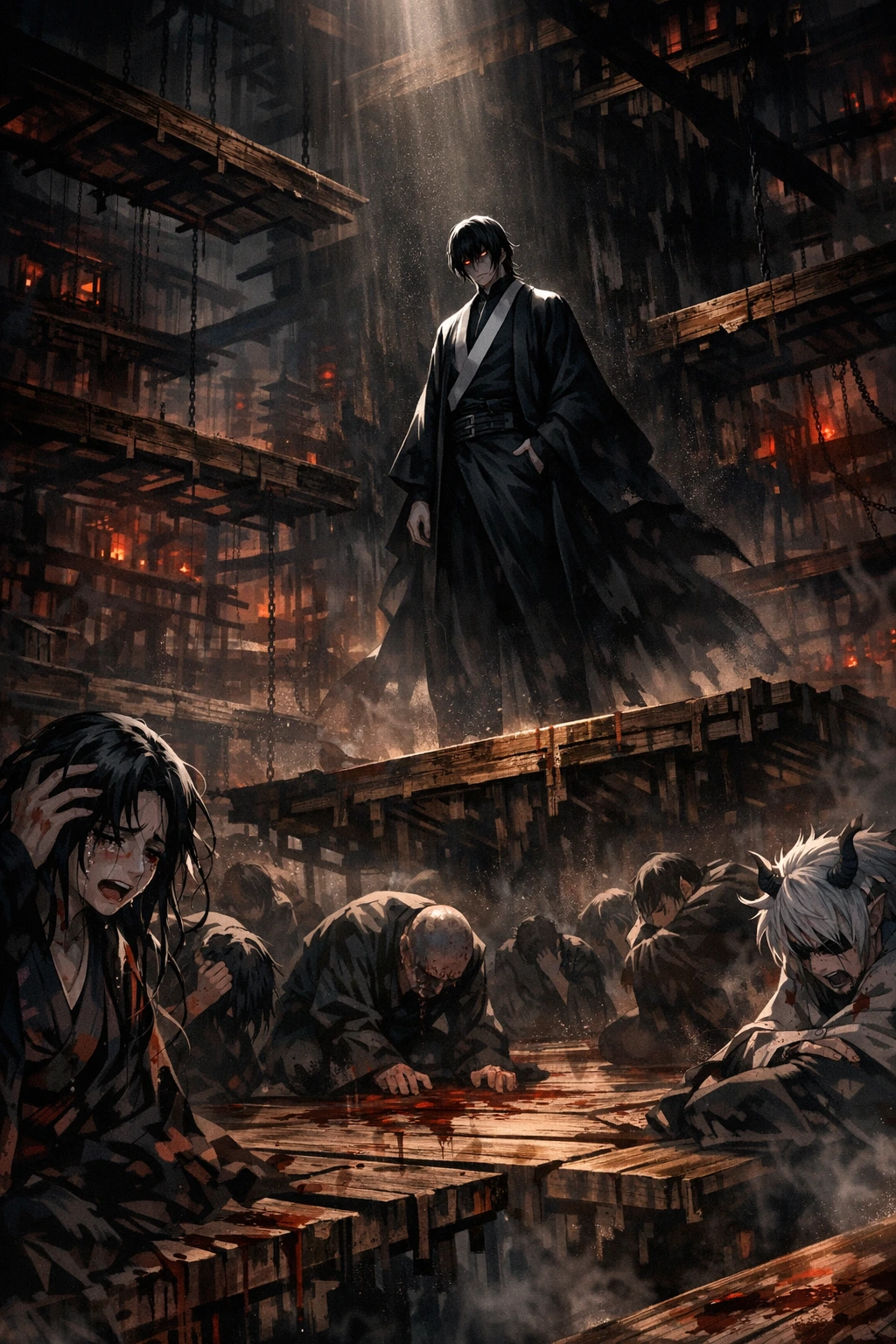
The massacre of the Lower Moons within the shifting, geometric labyrinth of the Infinity Castle stands as one of the most chilling sequences in modern anime. However, beneath the sheer terror of the scene lies a cold, calculated, and entirely mathematical logic.
Muzan Kibutsuji did not execute his own generals in a mindless fit of rage; he executed a brutal corporate restructuring. He liquidated underperforming assets. To comprehend this purge, we must analyze the concept of Return on Investment (ROI) in the context of demonic biology.
As established, Muzan’s blood is the ultimate finite resource. Every drop he bestows upon a demon is an investment meant to yield one of two specific returns: the location of the mythical Blue Spider Lily, or the systematic eradication of the Demon Slayer Corps, specifically the Hashira. For over a century, the Lower Moons had utterly failed to generate a positive ROI.
They consumed high-value equity—Muzan’s blood—but failed to deliver results. They were continually hunted, cornered, and decapitated by the Hashira. Every time a Lower Moon was killed, Muzan’s biological investment evaporated into ash. From a strictly economic standpoint, the Lower Moons had become a massive liability, a net negative asset draining resources without providing dividends.
This leads to the century of stagnation that defined the power gap between the Upper and Lower ranks. For over a hundred years, the roster of the Upper Moons remained completely undisputed and unchanged. They were an immovable oligarchy. Conversely, the Lower Moons were locked in a constant, humiliating cycle of death and replacement.
They acted as mere speedbumps for the Hashira—training dummies that helped the Demon Slayer Corps sharpen their blades and refine their Breathing Styles. Muzan realized that continuing to fund this middle management tier was fundamentally flawed. The power gap between a Hashira and a Lower Moon was too vast, but the gap between a Lower Moon and an Upper Moon was an impassable chasm.
The Lower Moons were not strong enough to disrupt the Slayers’ operations, but they required enough blood that their constant deaths were an insult to Muzan’s pride. Thus, the CEO decided to trim the fat, choosing to consolidate his remaining equity into the top tier of his organization.
During this horrific liquidation, there was exactly one exception: Enmu, Lower Moon 1. Why did this particular demon survive the purge when his peers were slaughtered for saying too much, saying too little, or attempting to flee? The answer provides a terrifying look at Enmu’s sociopathy and Muzan’s deeply flawed reward system.
As the other Lower Moons panicked, begging for their lives or offering desperate excuses, Enmu exhibited a psychological anomaly. He felt no fear. Instead, as he watched his comrades be dismantled, he experienced a euphoric thrill.
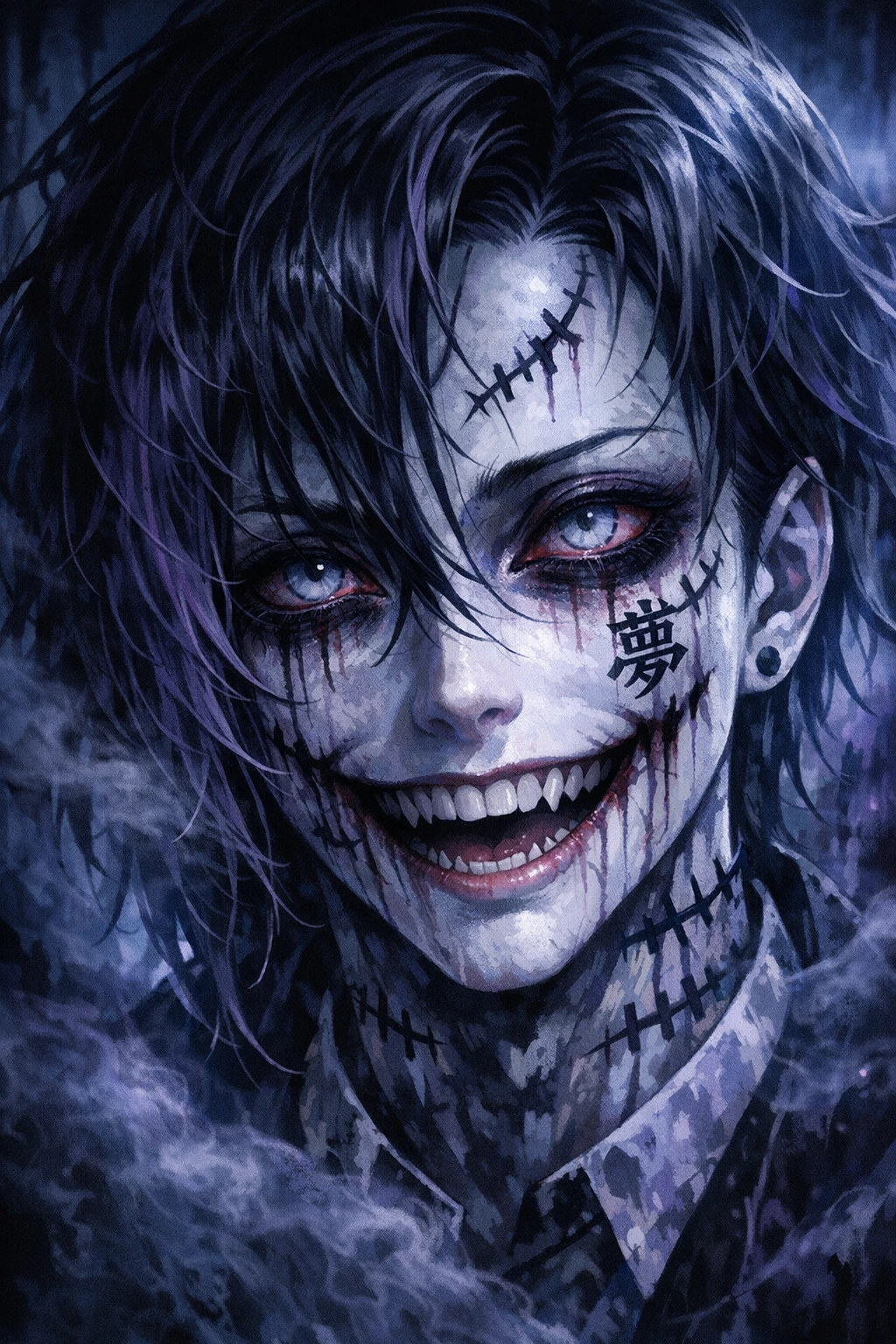
Muzan’s telepathic link allows him to read the minds of his creations, and what he saw in Enmu was absolute, intoxicating subservience paired with psychotic ambition. Enmu did not view Muzan’s wrath as a punishment; he viewed it as a divine privilege. He was eager to die by his master’s hand, completely devoid of the self-preservation instincts that disgust Muzan.
It was this total abandonment of ego, this masochistic delight in the presence of overwhelming power, that stayed Muzan’s hand. Muzan rewards absolute subservience. Enmu’s lack of fear and his perverse eagerness to serve—even in death—earned him the massive blood injection the others had desperately begged for. Enmu survived the corporate slaughter not because he was the strongest, but because he was the perfect, hollow sycophant Muzan always desired.
3. The Biological Vaults: Accumulating a Century of Combat Data
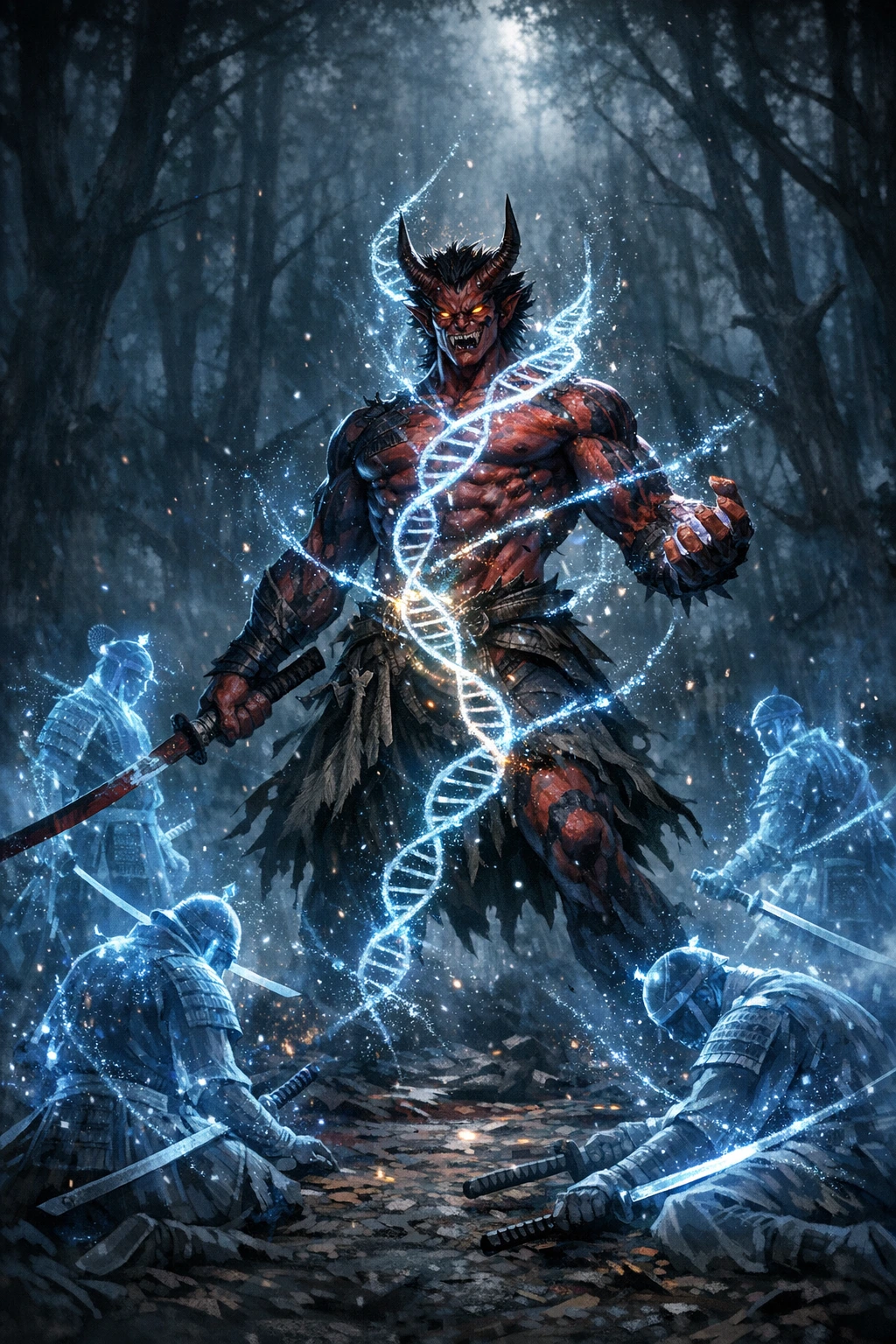
To fight an Upper Moon is not merely to fight a powerful monster; it is to wage war against a living, breathing biological vault. The sheer difficulty of killing a high-ranking member of the Twelve Kizuki cannot be entirely attributed to their physical speed, strength, or regenerative capabilities. The true horror of their existence lies in the mechanics of cellular memory and biological assimilation.
When a low-level demon consumes a human, they are largely doing so for caloric intake and a marginal increase in baseline strength. However, when an Upper Moon consumes a human—especially a highly skilled and trained swordsman—the process is radically different. They aren’t just gaining sustenance; they are biologically assimilating the victim’s muscle memory, kinetic data, and combat experience directly into their own DNA.
The Upper Moons are, in essence, organic supercomputers that have spent centuries downloading the combat data of their enemies. Every Hashira they consume adds a new layer of tactical code to their physical reflexes.
This brings us to the terrifying mathematics of the Hashira kill count. Consider the sheer volume of data the top ranks possess. An Upper Moon who has lived for two hundred years and successfully killed fifteen Hashira is a repository of martial arts history. When a modern Water Hashira swings their blade at Akaza, for instance, Akaza is not seeing the technique for the first time.
He has fought, analyzed, and consumed predecessors who used those exact forms. His body possesses the assimilated kinetic blueprints of Water, Wind, or Flame Breathing. Because of this centuries-deep well of accumulated data, an Upper Moon can mathematically predict the trajectory, speed, and intent of an attack before the Slayer even pivots their foot.
The Slayers are fighting enemies who already hold the answer key to their most secret techniques. This is why the Upper Moons seem practically precognitive in battle; they are referencing a century of accumulated bloodshed, cross-referencing the Slayer’s stance with the ghosts of Slayers past.
Furthermore, this accumulation of data is strictly regulated by the only legal promotion system within Muzan’s empire: the Blood Battle mechanic. Because Muzan forbids his demons from forming alliances or fighting without permission, the hierarchy is largely static. If a Lower rank wishes to usurp an Upper rank, they must formally challenge them to a Blood Battle. This is the absolute peak of demonic Darwinism.
In a Blood Battle, the winner does not simply kill the loser; they physically absorb them. This is an incredibly vital economic mechanic for Muzan. If Upper Moon 2 defeats Upper Moon 3, Muzan does not lose the vast amount of blood he invested in the loser.
Instead, the winner consumes the loser, taking all of their accumulated Muzan cells, their assimilated combat data, and their raw power, consolidating it into a single, even more efficient vessel. The Blood Battle ensures that power within the Twelve Kizuki never dissipates; it only funnels upward.
The strongest become unimaginably denser with Muzan’s cells, creating a top-heavy hierarchy where the top three demons possess a concentration of power that defies the laws of nature. They are walking monopolies of violence, hoarding the genetic memories of thousands of battles within their immortal flesh.
4. The Trauma Trinity: Kokushibo, Douma, and Akaza
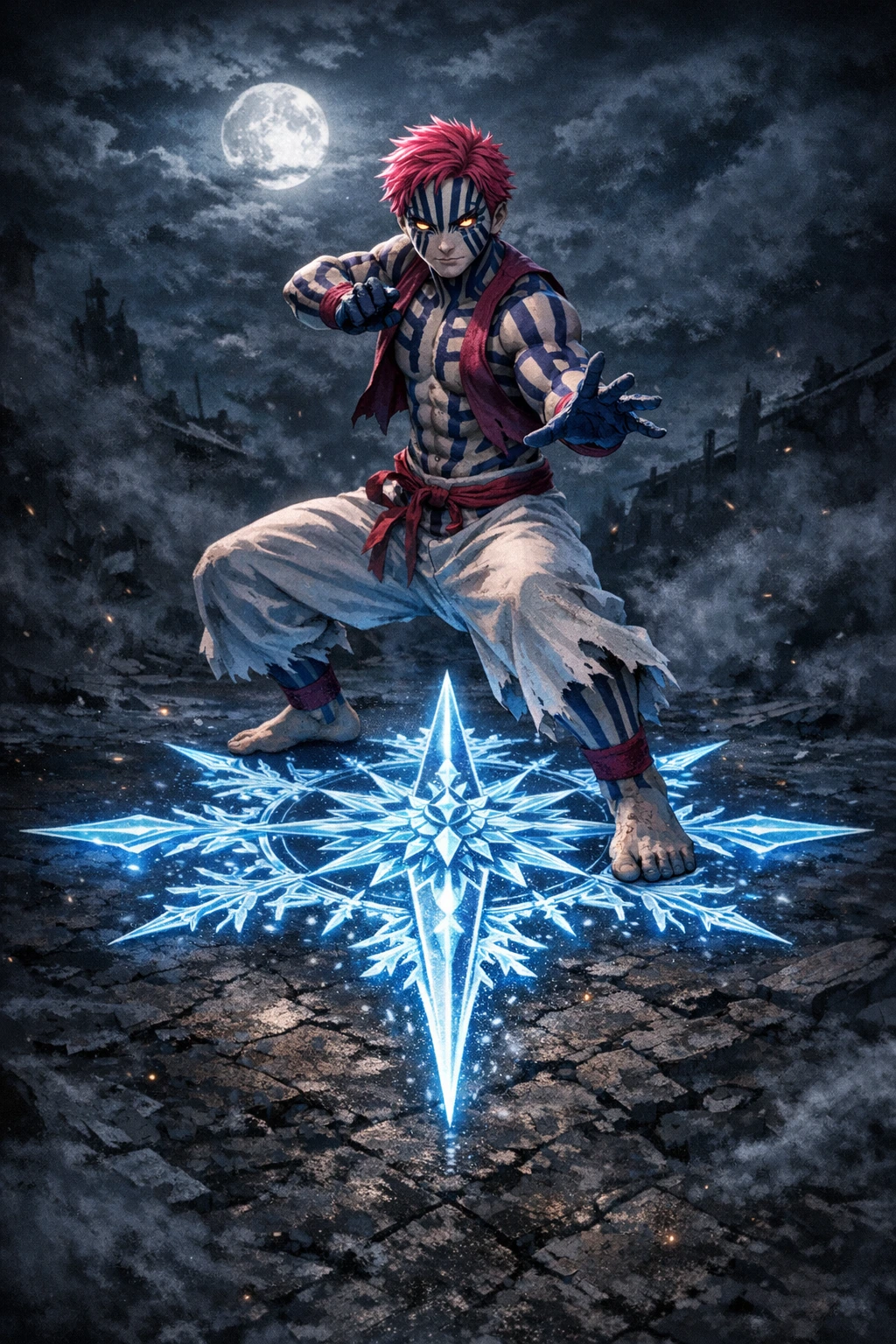
The true brilliance of the Twelve Kizuki’s character design lies in the revelation that their demonic biology is not random. For the highest echelons of Muzan’s army, psychology dictates biology. The top three demons—Kokushibo, Douma, and Akaza—are not merely monsters; they are the ultimate, physical manifestations of severe human psychological damage.
Their Blood Demon Arts, their weapons, and the very shape of their mutated bodies are direct, biological responses to their deepest, most unresolved human traumas. Muzan’s blood acts as a twisted mirror, taking their subconscious pain and weaponizing it.
Nowhere is this more tragically evident than with Upper Moon 3, Akaza. Akaza is a creature defined by subconscious grief. As a human named Hakuji, his entire life was a series of desperate attempts to protect the people he loved—first his ailing father, then his martial arts master Keizo, and finally his beloved fiancée, Koyuki.
He failed all of them. When Muzan turned him into a demon, the trauma was so severe that his brain erased his human memories, leaving behind only the raw, visceral emotion of a protector with no one left to protect.
This grief perfectly sculpted his demonic form. Akaza uses bare-handed martial arts because his master taught him the Soryu style. His Blood Demon Art is triggered by the deployment of a “Compass Needle”—a glowing, geometric array that forms beneath his feet. This compass is shaped exactly like the snowflake hairpin Koyuki wore in her hair.
Even the names of his deadliest techniques are named after the fireworks he and Koyuki watched during their promise to marry. Akaza does not know why he fights. He does not know why he refuses to eat women. He is entirely unaware that his demonic form is a tragic, subconscious attempt to build a fortress around a love he can no longer remember. His biology is weeping for a past his brain has deleted.
In stark contrast stands Upper Moon 2, Douma. If Akaza is defined by an overflow of emotion, Douma is defined by a horrifying, absolute vacuum. Douma’s trauma is his lack of trauma; he is a born sociopath who has never felt love, grief, anger, or joy. Raised as the hollow figurehead of a religious cult, he spent his human life watching people weep and suffer, feeling nothing but a mild, patronizing pity for their “foolish” emotions.
When Muzan’s blood entered Douma, it materialized his psychological void into cryokinesis. Douma’s Blood Demon Art revolves around generating deadly, microscopic ice crystals. This ice is the literal manifestation of his completely hollow, emotionless sociopathy—an emotional absolute zero.
He doesn’t just cut his enemies; he freezes their lungs, suffocating their breath and their passion. His cult of apathy is reflected in his fighting style, which is elegant, detached, and utterly devoid of desperation. He creates ice clones to fight for him because he cannot even be bothered to invest himself in his own survival.
Finally, we reach the apex of the hierarchy: Upper Moon 1, Kokushibo. As the human samurai Michikatsu, he lived his entire life suffocating under the shadow of his younger twin brother, Yoriichi—the greatest swordsman to ever live. Michikatsu’s trauma was not grief or apathy, but an obsessive, acidic, all-consuming envy. He abandoned his family, his humanity, and his honor simply to buy enough time to surpass a brother who was favored by the gods.

Kokushibo’s demonic transformation is a grotesque parody of the samurai ideal, shaped entirely by this envy. He sprouted six eyes, a horrific biological adaptation driven by his desperate, obsessive need to track Yoriichi’s movements and perceive the “Transparent World” as his brother did.
His weapon is not forged of steel, but a blade made from his own flesh, covered in eyes that constantly shift and blink. This flesh-sword represents his endless, gnawing jealousy—a weapon that can never be broken because his envy can never be extinguished. Kokushibo’s body is a monument to an inferiority complex, a biological prison built by a man who hated himself for not being someone else.
5. The Neurological Firewall: Why Demons Forget Their Humanity

One of the most profound tragedies of the Demon Slayer universe is the phenomenon of demonic amnesia. The fact that almost all demons lose the memories of their human lives is not a side effect; it is a highly sophisticated, biological control mechanism engineered by Muzan Kibutsuji. To understand how Muzan commands absolute obedience, we must look at the science of this amnesia.
When Muzan’s blood enters a human host, it operates much like an aggressive, parasitic neurotoxin. The demonic cells specifically target the hippocampus—the center of the human brain responsible for episodic memory, learning, and emotional attachment. Muzan’s cells act as a neurological firewall, deliberately overwriting and burying the host’s human past.
Why? Because memories are the root of empathy. A demon who remembers their mother’s face will hesitate to eat a woman. A demon who remembers human suffering might feel guilt. Guilt, love, and regret are vulnerabilities that Muzan cannot tolerate in his bioweapons. By severing the neural pathways to their past, Muzan ensures that the newly born demon’s only anchor to reality—and their only source of authority—is Muzan himself. The host is reformatted into a blank slate of hunger and loyalty.
This neurological manipulation perfectly explains the fascinating and tragic “Trigger of Defeat.” Throughout the series, we constantly see demons suddenly, violently remember their human lives in the exact moment before they die. Why does this happen? We must analyze the moment a Nichirin blade severs a demon’s neck.
A Nichirin sword absorbs sunlight, the only element capable of destroying Muzan’s cells. When the blade slices through the cervical spine, it does not just decapitate the demon; it systematically incinerates the concentration of Muzan’s blood at the base of the brainstem. In doing so, the blade physically destroys the cellular firewall Muzan erected.
With the parasitic cells burning away, the suppressed human consciousness—which has been trapped behind a biological dam for decades or centuries—violently floods back into the dying brain. In their final, fleeting seconds of life, the neurological block is lifted, forcing the demon to experience the crushing weight of their human memories and the horrifying realization of the monster they became. Decapitation is not just an execution; it is an agonizing restoration of humanity.
We see the foundational example of this psychological tragedy early on with Lower Moon 5, Rui. Rui’s character arc is the blueprint for the neurological brokenness of the Kizuki. As a frail, dying human child, Rui was turned into a demon by Muzan, leading him to murder his own parents when they tried to kill him out of mercy.
The trauma of killing the only people who loved him was so immense that Muzan’s cellular firewall immediately engaged, erasing Rui’s memory of the event and the concept of parental love altogether.
However, the human subconscious cannot be entirely deleted. Rui felt a gaping, bleeding hole in his psyche—a desperate yearning for a family bond he could no longer articulate or understand. This resulted in a state of biological confusion. To fill the void, Rui used his Blood Demon Art to force other lesser demons into playing the roles of his “family.”
He physically altered their faces and bodies, violently enforcing a fake, abusive spider family dynamic. It was a desperate attempt by a brainwashed child to artificially recreate the human warmth he severed when his human life ended. Rui’s tragedy proves that while Muzan’s blood can erase the memory of love, it cannot erase the fundamental human hunger for connection, leaving demons to wander as psychologically starved phantoms.
6. Conclusion: The Flawed Army of Solitary Predators
When analyzing the century-spanning war between the Twelve Kizuki and the Demon Slayer Corps, one must step back and look at the macroeconomics of the conflict. The Upper Moons possessed every conceivable advantage.
They had immortality, centuries of accumulated combat data, instant regeneration, and physics-defying Blood Demon Arts. The humans had fragile, easily broken bodies, a lifespan of less than a century, and blades of steel. Yet, the Twelve Kizuki ultimately lost the war. To understand why, we must look at their ultimate weakness: their absolute, systemic selfishness.
The Twelve Kizuki were never an army; they were a collection of isolated predators. Because of Muzan’s paranoia, they were biologically and psychologically conditioned to care only for their own survival and their master’s favor. When Akaza fought, he fought alone. When Douma was outmatched, no other demon came to his aid.
They had centuries of experience, but their inability to trust, sacrifice, or coordinate meant that their power was forever capped at the individual level. They were incapable of the concept of a tactical retreat to save a comrade, or a self-sacrificial gambit to ensure a wider victory. Their immortality made them arrogant, and their isolation made them brittle.
This stands in blinding contrast to the human synergy of the Demon Slayer Corps. The Slayers understood from the very beginning that as individuals, they were fundamentally outmatched. Therefore, their entire organizational structure was built on synchronized, sacrificial teamwork.
The Slayers did not fight to survive the night; they fought to pass the baton to the next generation. The Hashira operated with a profound understanding of their own mortality. They willingly threw away their lives, losing limbs and shedding oceans of blood, not to kill the demon themselves, but to create a microsecond opening for the Slayer standing next to them.
Furthermore, this synergy extended beyond the frontline combatants. The Kakushi—the unseen, uncelebrated medical and cleanup crews—ensured that the Slayers could recover, regroup, and return to the front. The swordsmiths dedicated their entire lives to forging blades, completely disconnected from the glory of the kill, yet essential to the victory.
The Demon Slayer Corps functioned as a single, massive, breathing organism, where the death of one cell (a Slayer) only fueled the collective will of the whole.
The final, expert verdict on the Twelve Kizuki is one of monumental architectural failure. Muzan Kibutsuji, in his arrogance and cowardice, did not build an army. He built a vault of isolated, traumatized bioweapons. He took broken humans, pumped them full of volatile equity, erased their memories, and set them loose in the dark.
The Upper Moons were terrifying anomalies of biology, but they were defeated the moment they stepped onto a battlefield against humans who were willing to die for the person standing next to them. In the end, the blood economy of the demons went bankrupt, completely overwhelmed by the compound interest of human sacrifice.