
1. Introduction: The Hype of the “Ultimate Soldier”
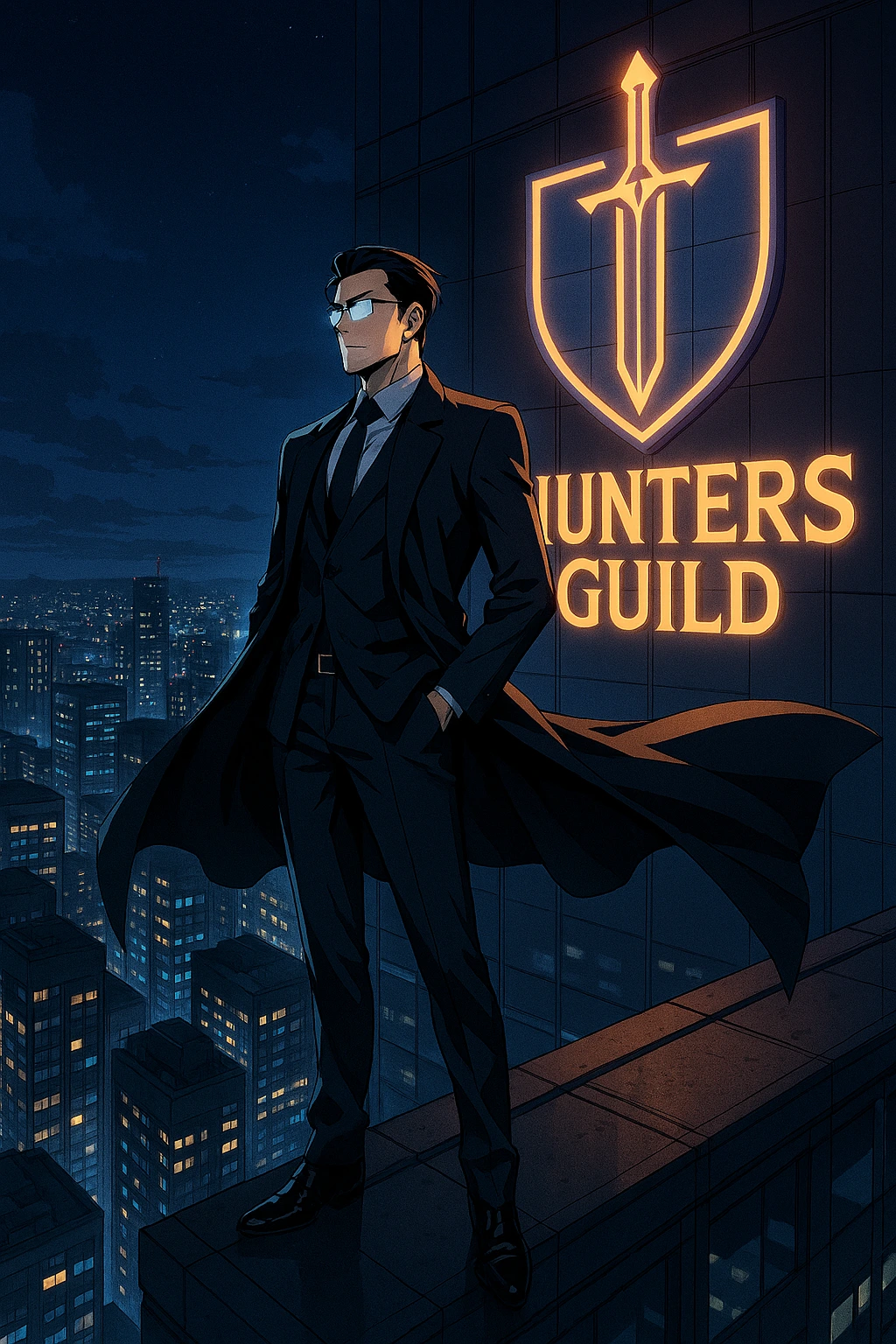
In the vast, monster-ridden world of Solo Leveling, titles mean everything. They are the shorthand for power, the marketing slogans for the superhuman celebrities that protect mankind. We have “The Weakest Hunter of All Time” for the early Sung Jin-Woo, “The Goliath” for Thomas Andre, and “The Nation Level Hunters” for the apex predators of the world. But among the Korean S-Ranks, one title stood out with a promise of absolute, overwhelming destruction: “The Ultimate Soldier.”
This title belonged to Choi Jong-In, the Guild Master of the Hunters Guild and the premier Mage-type hunter of South Korea.
From a character design perspective, Choi Jong-In is flawless. He exudes the aura of a modern-day general. With his sharp suit, rimless glasses, and a cigarette often dangling from his lips or fingers (in the manhwa/novel depictions), he looks less like a dungeon raider and more like a CEO of destruction. He represents the corporate side of the Hunter world—cool, calculated, wealthy, and devastatingly powerful. When he was first introduced, the narrative successfully sold us a bill of goods that we were all eager to buy: that this man was a rival, a powerhouse, and perhaps the pinnacle of what a standard human Awakening could achieve.
The expectation was stratospheric. In a world where tanks like Baek Yoon-Ho relied on beast transformation and assassins relied on stealth, Choi Jong-In was the artillery. He was the man who could purportedly wipe out entire dungeons by himself. The lore stated that his destructive power was unrivaled in Korea. Fans speculated on unmatched feats of pyromancy, envisioning battles where Choi would stand back-to-back with Jin-Woo, raining hellfire upon the Monarchs’ armies. We expected a Roy Mustang (from Fullmetal Alchemist) level of competence and lethality.
The Reality, however, was a cold splash of water.
Or perhaps, more accurately, a fire that refused to burn.
This article presents a controversial but necessary take on one of Solo Leveling’s most prominent figures: Choi Jong-In is the series’ biggest disappointment. Not because he is weak—technically, he is not—but because the narrative turned him into the “Worf Effect” incarnate. For the uninitiated, the “Worf Effect” is a trope where a supposedly powerful character is repeatedly beaten up to show how strong a new villain is.
Throughout the series, the “Ultimate Soldier” finds himself in a perpetual state of being hard-countered. He is the master of flame in a series where the most critical enemies have high fire resistance. He is the leader of the strongest guild who gets overshadowed by his own Vice-Guild Master (Cha Hae-In). He is the premier damage dealer who, in the most critical raids, fails to deal the finishing blow.
As we dissect the tragedy of Choi Jong-In, we must look beyond the cool character design and the flashy spell effects. We have to analyze the fights he took, the devastating matchups the author threw at him, and the ultimate realization that in the face of the Shadow Monarch, even the “Ultimate Soldier” is nothing more than a flickering candle. This is the anatomy of a character who had all the stats to be a hero, but was written to be a bystander.
2. The Flame Master: Anatomy of S-Rank Magic
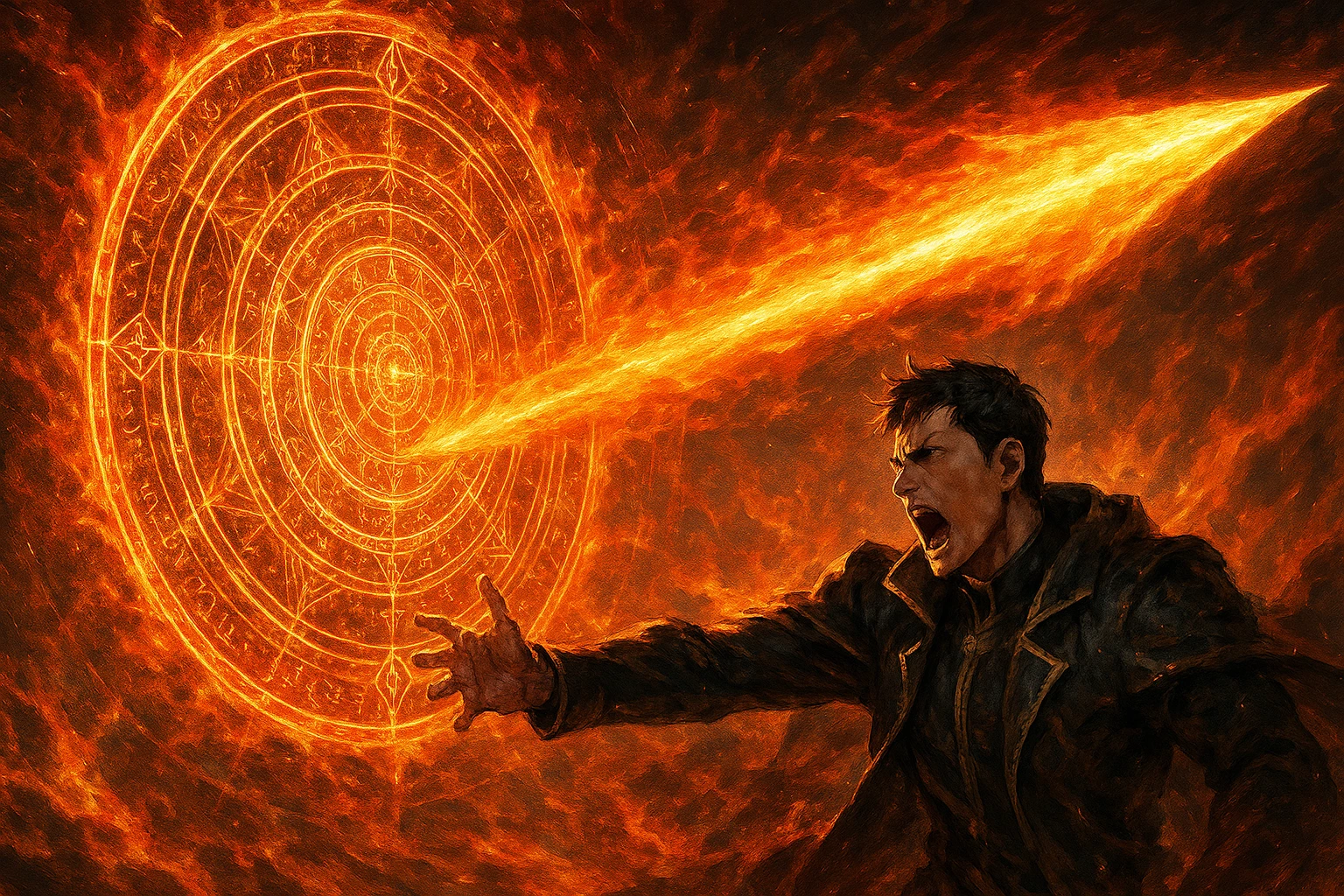
To understand why Choi Jong-In’s lack of impact is so frustrating, we first have to appreciate just how broken his abilities are supposed to be “on paper.” If we look at his stats and abilities in a vacuum, without the context of the specific enemies he fought, Choi Jong-In is a terrifying entity.
The Mechanics of Destruction
Choi Jong-In is a specialized Fire Mage. In the world of Solo Leveling, magic is not about learning spells from a book; it is an innate manipulation of mana. Choi’s flavor of mana manifests as extreme heat and combustion. He does not just throw fireballs; he manipulates the temperature of the battlefield.
His signature technique often involves creating a “Sea of Fire.” This isn’t hyperbole. He can blanket vast areas—city blocks, cavernous dungeon floors, entire forest clearings—in magical flames that do not extinguish until he wills it or runs out of mana. This Area of Effect (AoE) capability is why he holds the title “The Ultimate Soldier.” In a dungeon break scenario where thousands of C-Rank or B-Rank monsters are flooding a city, a single spell from Choi Jong-In is more valuable than a hundred swordsmen. He is a walking weapon of mass destruction designed for crowd control.
Furthermore, his magic possesses intricate versatility:
- Flame Spears: High-velocity projectiles capable of piercing through the thick hides of high-tier magical beasts. These are his “sniper” shots, concentrated thermal energy meant for single-target elimination.
- Flame Prison/Net: He can weave fire into restrictive constructs to trap enemies, burning them while holding them in place.
- Flame Dragons: In the anime and manhwa visuals, his fire often takes the shape of dragons or serpents, indicating a high level of shape manipulation and control, rather than just raw explosion.
The Attack Power Ranking
It is canonically stated that Choi Jong-In possesses the highest Attack Power (AP) among all South Korean Hunters. This is a significant distinction. It puts his raw damage output above Ma Dong-Wook (the Tank), Lim Tae-Gyu (the Archer), and even Baek Yoon-Ho (the Fighter/Tank hybrid).
While Baek Yoon-Ho might win a 1v1 fight due to speed and durability, if the contest is “who can destroy this building the fastest,” Choi wins every time. This high AP is derived from his unique Awakening attribute, which grants him an absurdly large mana pool and highly efficient mana consumption. He can cast S-Rank spells repeatedly without showing immediate signs of magical exhaustion, a feat that would leave lesser mages comatose.
The Gear Dependency
Another fascinating aspect of Choi Jong-In’s power—and a subtle hint at his limitations—is his reliance on artifacts. As the Guild Master of the Hunters Guild (the wealthiest guild in Korea), Choi is draped in the finest magical items money can buy.
- Robes and Suits: His clothing is woven with monster threads that offer protection and mana amplification.
- Rings and Jewelry: He is often seen wearing rings that likely boost his fire affinity or mana recovery rates.
This highlights the fundamental rule of the Solo Leveling universe: Hunters cannot grow. Unlike Sung Jin-Woo, Choi Jong-In hit his level cap the moment he Awakened. To get stronger, he cannot do pushups or meditate; he must buy better gear. This reliance on equipment to push his “Attack Power” creates a glass ceiling. He is a wealthy man buying power because he cannot cultivate it. It makes his flashy displays of magic feel somewhat hollow when compared to the grit of the protagonist, yet it also emphasizes his resourcefulness. He maximizes every percentage point of damage possible through capitalism.
But all that attack power, all that gear, and all that mana efficiency amount to nothing if the target refuses to burn. And this leads us to the greatest tragedy of his career.
3. The Jeju Island Disaster: The Worst Matchup
The Jeju Island Raid arc was the turning point for Solo Leveling. It shifted the scale from local dungeon clearing to national survival. It introduced the S-Rank Hunters of Japan and solidified the hierarchy of power. And for Choi Jong-In, it was supposed to be his magnum opus. Instead, it became his most public humiliation.
The Strategy: Relying on the Flame
The entire Korean strategy for retaking Jeju Island from the ants was predicated on Choi Jong-In. The plan was sound in theory: The Japanese Hunters would draw the attention of the mutated ants, while the Korean team infiltrated the queen’s chamber. Once inside, Choi Jong-In would unleash his “Sea of Fire” to burn the millions of eggs and the queen herself.
This places Choi at the center of the mission. He wasn’t support; he was the win condition. The Association and the Japanese advisors calculated that his fire was the only thing capable of clearing the biomass of the ant colony quickly enough. For the first half of the raid, this seemed to work. We saw glimpses of his power as he incinerated tunnels and held back waves of standard ants. The visuals were spectacular—walls of orange and blue flame holding back a tide of black chitin.
The Narrative Nerf
Then, the narrative rug was pulled out from under him. The author introduced a specific evolution to the ants on Jeju Island: Fire Resistance.
It is almost comedic how specifically tailored this counter was. In almost every fantasy setting, insects are weak to fire. It is a biological constant. But in Solo Leveling, the mutated ants had evolved specifically to survive volcanic environments or extreme heat? The lore explanation was that they adapted, but the meta-explanation is clear: The author needed to render Choi Jong-In useless to pave the way for Sung Jin-Woo.
When the S-Rank Ant (later revealed as the Ant King, Beru) appeared, the futility of Choi’s magic was laid bare.
- Choi unleashed his strongest concentrated flame spells.
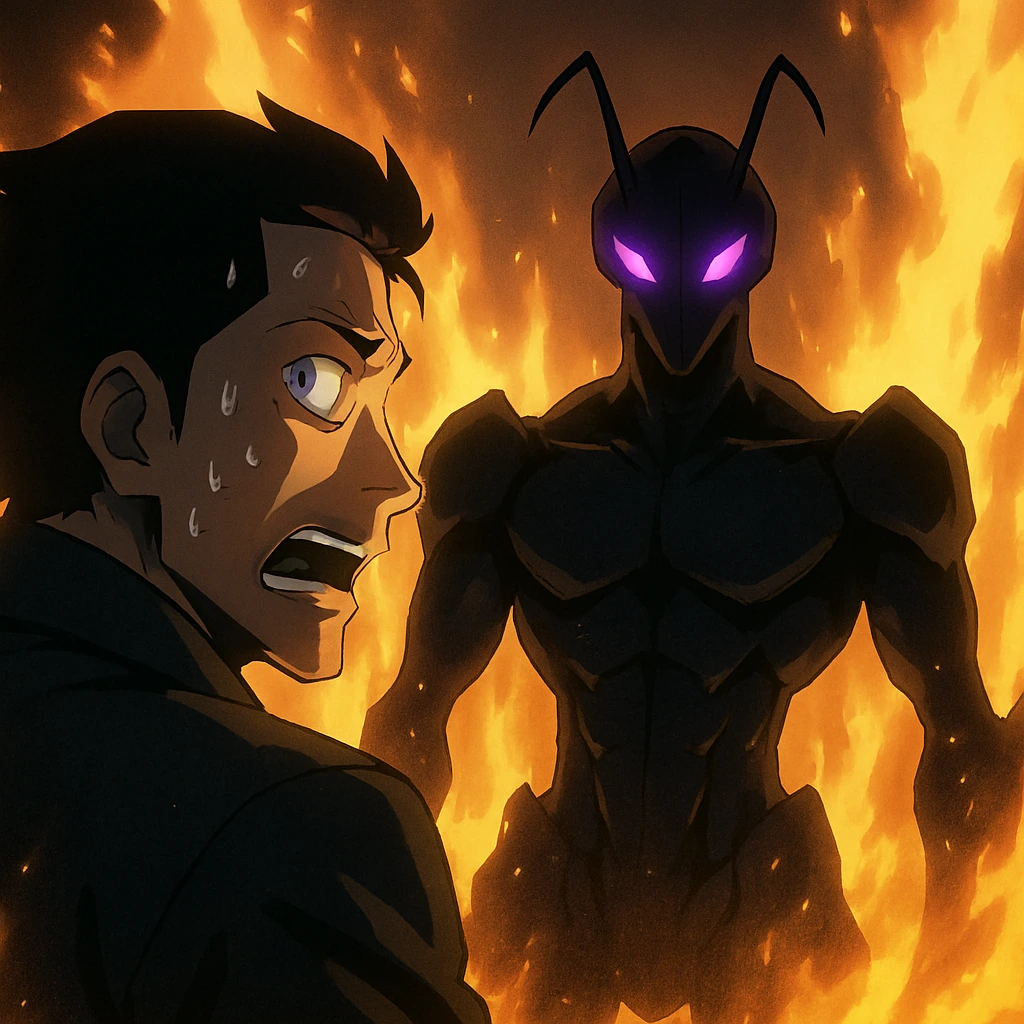
- The Ant King didn’t even dodge. He didn’t block. He simply walked through it.
There is a specific panel in the manhwa that encapsulates Choi’s despair. He is sweating, eyes wide behind his glasses, pouring every ounce of his S-Rank mana into a spell, and the enemy is looking at him with mild curiosity, as if he is a heater that was left on too high.
The Comparison: Baek vs. Choi
The humiliation is compounded when we compare his performance to Baek Yoon-Ho. Baek, the Guild Master of the White Tiger Guild, is a physical fighter. During the raid, Baek managed to dodge, weave, and survive against the Ant King for a significant amount of time. He relied on instinct, beast transformation, and raw durability. Baek felt like a warrior fighting a losing battle.
Choi, on the other hand, felt like a non-factor. Once his magic was negated, he had no backup plan. He had no physical speed to run, no durability to take a hit. He was a sitting duck protected only by the other S-Ranks. The “Ultimate Soldier” became the “Ultimate Liability.”
This raid established a painful precedent for Choi Jong-In: If he cannot one-shot it with fire, he loses. He lacks the versatility of other S-Ranks who can grapple, strategize physically, or use utility skills. He is a one-trick pony, and on Jeju Island, the pony broke its leg.
4. The Shadow of Tusk: Being Replaced by a Dead Orc
If Jeju Island was a tragedy, the High Orc dungeon and the subsequent rise of Tusk was a farce. This is the moment where Choi Jong-In was not just beaten by an enemy, but replaced by a servant.
The High Orc Dungeon Failure
Before the Jeju raid, there was the incident at the double dungeon involving the High Orcs. The Hunters Guild, led by Choi, entered an A-Rank dungeon that turned out to be far more dangerous than expected.
Once again, Choi found himself in a bad matchup. The High Orcs were durable, used totem magic, and came in overwhelming numbers that possessed high magical resistance. Choi’s fire was effective against the grunts, but against the boss (Kargalgan), his magic struggled to dominate. The raid was on the brink of collapse. The “Ultimate Soldier” was unable to protect his own team, leading to the situation where the porters (including Jin-Woo in disguise) were in mortal danger.
Enter Tusk: The New Sheriff in Town
Sung Jin-Woo eventually clears the dungeon and extracts the shadow of the High Orc Shaman, Kargalgan, naming him Tusk.
Later in the series, during the crisis at the school (the Orc dungeon break within the school), and subsequent battles, we see Tusk in action. Tusk is a spellcaster class Shadow Soldier. His element is also fire (among other curses and gravity magic).
The pivotal moment of humiliation comes via the Orb of Avarice. The Orb of Avarice is a legendary magical item that doubles the magical output of the wielder. Sung Jin-Woo obtained it early on. Logically, he could have sold it to Choi Jong-In. Choi, with his billions of won, would have paid any price for it. It would have doubled his “Ultimate Soldier” power, potentially making him relevant again.
Instead, Jin-Woo gives the Orb to Tusk.
The Hymn of the Fire Dragon
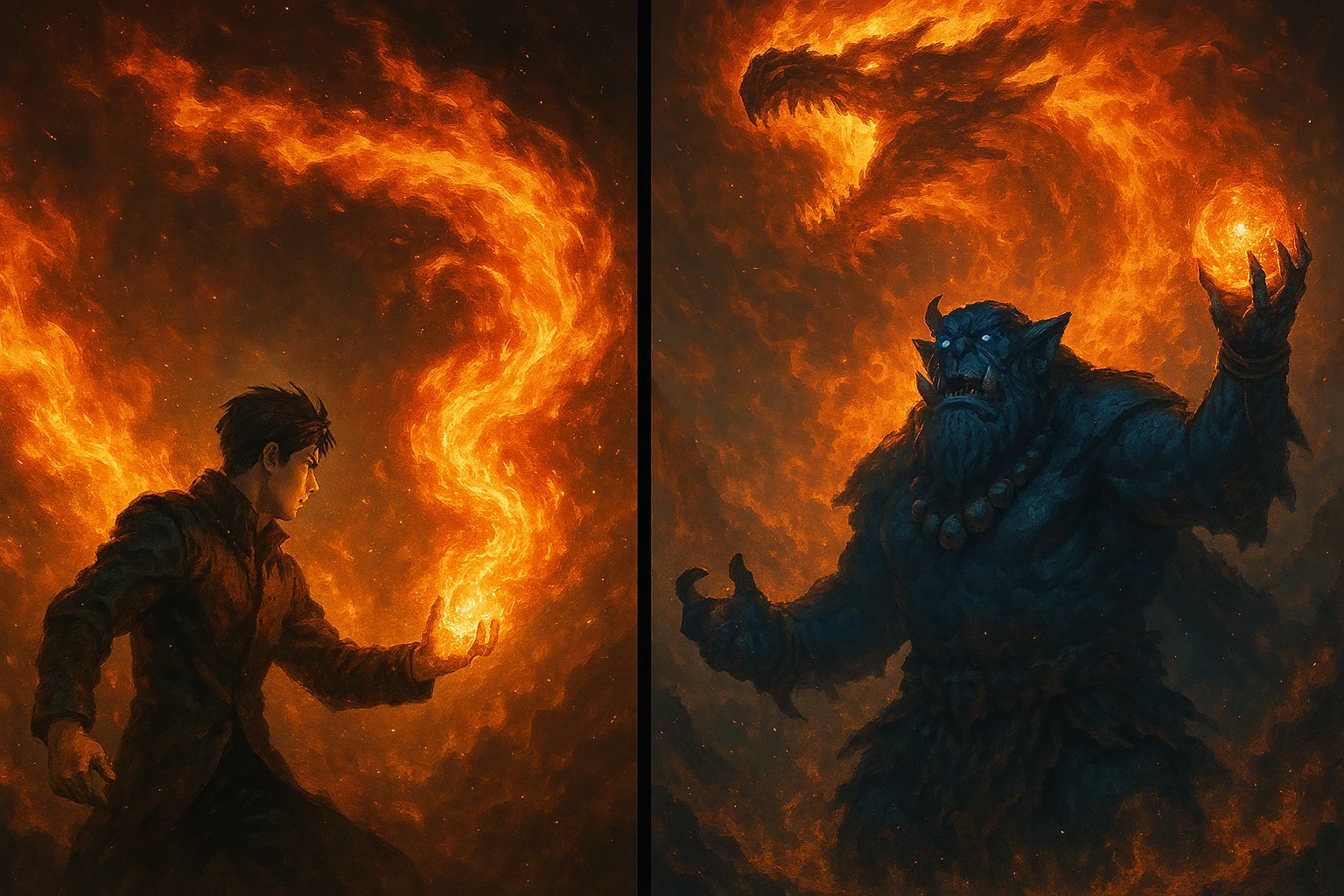
With the Orb of Avarice, Tusk casts the “Hymn of the Fire Dragon.” This spell summons a massive, scorching dragon of fire that dwarfs anything Choi Jong-In has ever produced.
- Scale: Tusk’s fire covers the entire sky.
- Potency: It incinerates demons and high-tier monsters instantly.
- Versatility: Tusk can alter the gravity within the fire to crush enemies while burning them.
The comparison is brutal. Tusk is a dead Orc. He is a summon. He does not have a human brain, he does not have expensive suits, and he doesn’t run a guild. Yet, Tusk became the superior Fire Mage. From a literary standpoint, Tusk rendered Choi obsolete. Why would the reader care about Choi’s “Flame Spear” when Tusk can vomit a nuclear apocalypse at Jin-Woo’s command? Choi Jong-In was stripped of his niche. He wasn’t even the best fire user in the room anymore; he was the second-best fire user in a room containing a dead Orc.
This power creep is emblematic of Solo Leveling’s scaling issue. The human S-Ranks were capped, but the Shadow Soldiers were not. Tusk could level up. Choi could not. It was the final nail in the coffin for Choi’s relevance as a combatant.
5. The Business Genius: His Real Superpower
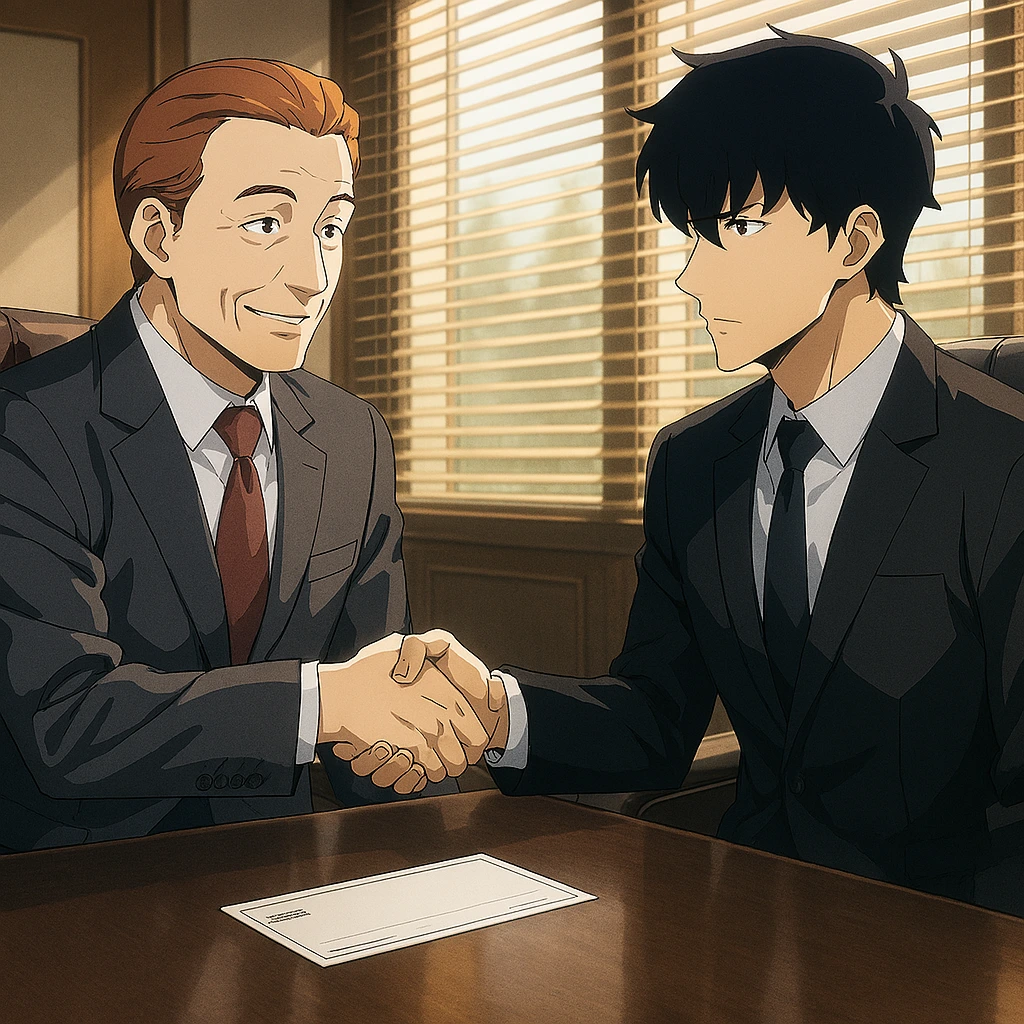
If we stop analyzing Choi Jong-In as a shonen battler and start analyzing him as a corporate entity, his character suddenly makes much more sense. In fact, if we shift the lens, Choi is arguably the most successful character in the series outside of Jin-Woo.
His superpower isn’t fire; it’s Administration and Recruitment.
The Hunters Guild Dominance
Despite his poor showing in major on-screen fights, the Hunters Guild remains the #1 Guild in South Korea for the majority of the series. This is no accident. A guild’s strength isn’t just the Guild Master’s combat ability; it’s the depth of their roster, their financial stability, and their territory control.
Choi Jong-In manages a massive organization. He handles logistics, dungeon rights auctions, public relations, and government contracts. He maintains a pristine public image (the glasses, the smile, the confidence) which keeps stock prices high and investors happy. He is the face of Korean stability. While Baek Yoon-Ho is busy frowning and transforming into a beast, Choi is shaking hands and closing deals.
Managing Cha Hae-In
His greatest executive achievement is the recruitment and retention of Cha Hae-In. Cha is the S-Rank “Dancer,” a swordswoman of immense speed and skill who is arguably stronger than Choi himself in a duel. In many guild dynamics, having a subordinate stronger than the leader leads to friction or coups.
Yet, Choi manages her perfectly. He gives her space, respects her autonomy, and utilizes her as the guild’s spear while he acts as the shield/artillery. He keeps the strongest female hunter in the country loyal to his brand. That takes a level of emotional intelligence and leadership charisma that goes unrecognized.
The Recruitment of Sung Jin-Woo
We must also credit Choi’s intelligence regarding Sung Jin-Woo. When Jin-Woo was re-evaluated as an S-Rank, the guild leaders reacted differently:
- Hwang Dong-Su: Reacted with aggression and vengeance.
- The Association: Reacted with bureaucracy and lack of funds.
- Baek Yoon-Ho: Reacted with suspicion and then desperation.
- Choi Jong-In: Reacted with a Blank Check.
Choi was the first to approach Jin-Woo with pure business logic. He didn’t try to intimidate him. He didn’t try to appeal to his patriotism. He walked up to him, smiled, and essentially said, “I will give you whatever you want.”
Choi realized Jin-Woo’s value faster than anyone. He saw the potential of a “Reawakened” hunter. Even though he failed to recruit Jin-Woo (because Jin-Woo wanted to start his own solo path), Choi’s approach was the most professional and respectful. He pivoted instantly from potential employer to cooperative ally. He didn’t hold a grudge; he sought to maintain a good relationship with the Ahjin Guild. That is the mindset of a winner. He knows that if you can’t own the asset, you ensure the asset doesn’t become your enemy.
6. The Human Limit: The Tragedy of the “Old Guard”
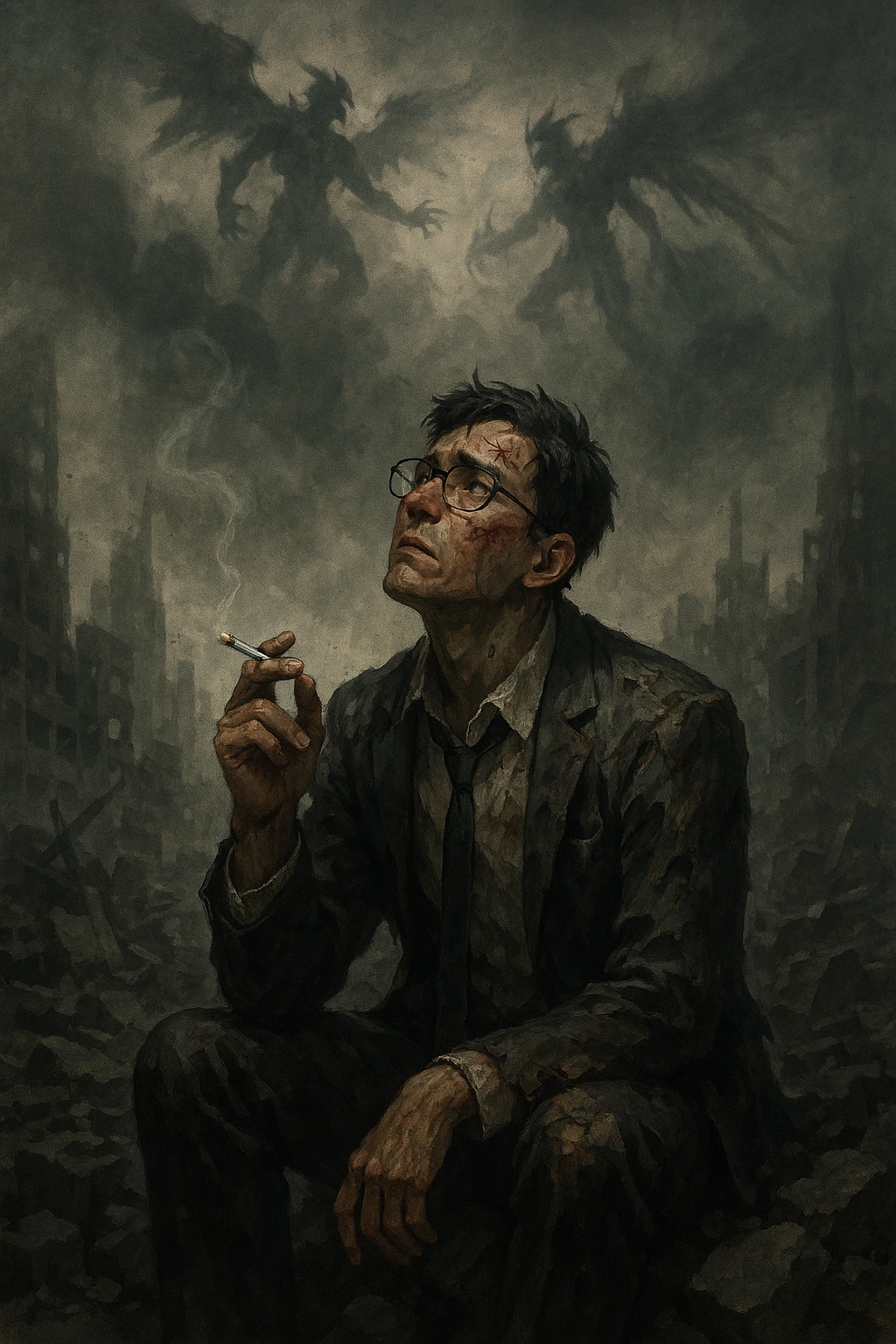
Choi Jong-In serves a vital literary function in Solo Leveling: He represents the Human Limit.
The central premise of the series is that “Hunters do not level up.” Whatever power you awaken with is what you keep until you die. You can improve your technique, buy better gear, or learn strategy, but your stats—Strength, Mana, Agility—are static.
The Ceiling
Choi Jong-In awakened with phenomenal power. For years, he was the ceiling. He was the definition of what a human could achieve. But the threats in Solo Leveling—the Monarchs, the Kamish-level dragons, the high-tier dungeon breaks—are not designed for humans. They are celestial and demonic wars spilling over onto Earth.
Choi represents the “Old Guard.” In a traditional fantasy novel, he would be the protagonist. He has the look, the fire magic, the leadership role. But Solo Leveling is a story about breaking the system. Jin-Woo breaks the system; Choi is the system.
This makes Choi a tragic figure. He is fighting a war he is mathematically incapable of winning. Every time he steps onto the battlefield in the later arcs, he is outmatched.
- Against the Architects? Useless.
- Against the Monarchs? Fodder.
- Against the Titan-sized monsters? A nuisance.
Yet, he keeps showing up. He puts on his suit, adjusts his glasses, and casts his fire spells, knowing full well they might not work. There is a quiet bravery in that. It is easy for Jin-Woo to fight; he knows he is the strongest. For Choi to fight, knowing he has been surpassed by ants and shadows, requires a different kind of resolve.
He becomes a benchmark. The author uses him to show us how strong the enemy is. “Look,” the narrative says, “Even the Ultimate Soldier’s fire doesn’t scratch this guy.” Choi is the measuring stick that gets broken to prove the villain’s strength. It is a thankless role, but a necessary one for power scaling.
The Final War Participation
In the final arc, when the Monarchs descend and the world is ending, Choi is there. He isn’t fighting the big bads—Jin-Woo does that. Choi is on the ground, clearing the mobs. He is using his AoE fire to sweep away thousands of lower-tier soldiers to stop them from slaughtering civilians.
This is his redemption. He acknowledges he is no longer the main character (if he ever was). He accepts his role as “cleanup crew.” He uses his “Ultimate Soldier” status to save the little people while the gods fight overhead. It is a humble ending for a man who started with such arrogance, but it fits the theme of the story: Humanity survives because of the S-Ranks, but the world is saved by the Shadow Monarch.
7. Conclusion: The Best Leader, The Worst Fighter
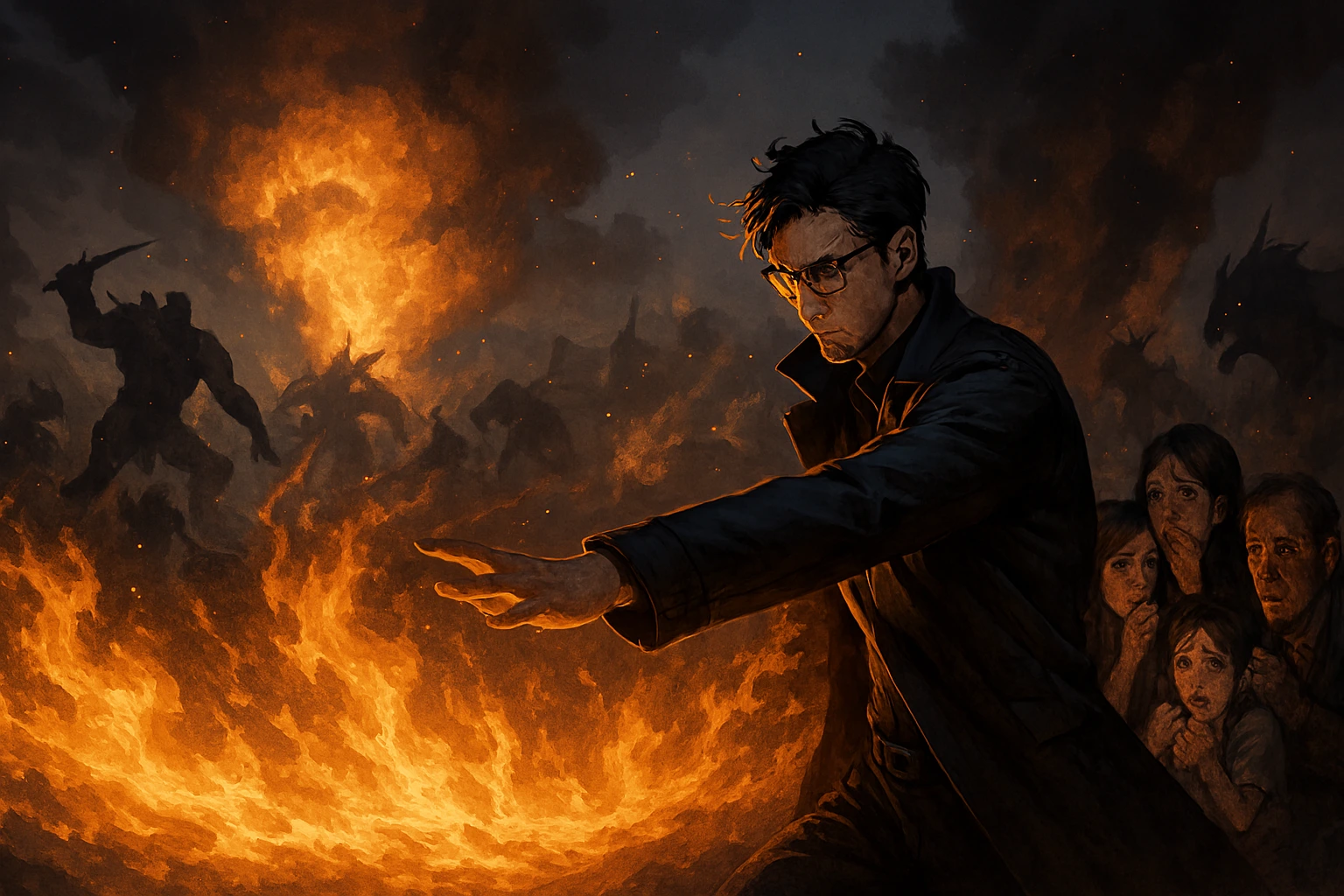
Choi Jong-In is a paradox. If you look at his resume, he is a failure. He failed at Jeju. He failed at the High Orc dungeon. He was outclassed by Tusk. He never defeated a named antagonist on screen. If you look at his legacy, he is a success. He led the strongest guild. He kept the economy of hunting stable. He facilitated the rise of other hunters. He saved countless lives off-screen with his AoE magic.
The Verdict: Choi Jong-In was the series’ biggest disappointment only because the promise of his character was never fulfilled. We wanted to see the “Ultimate Soldier” wage war. We wanted to see him incinerate a boss monster in a blaze of glory. We wanted the “Flame Master” to matter.
Instead, we got a very competent businessman who occasionally threw fire at enemies that were immune to it. He is the definition of a “Glass Cannon” that was never allowed to fire its shot. The author built him up with an S-Rank title and then systematically dismantled him to showcase the power of the protagonist.
However, in the grand tapestry of Solo Leveling, Choi Jong-In remains an essential thread. He reminds us that in this world, being rich, talented, and famous isn’t enough. You have to be a Player. And Choi Jong-In, for all his fire and fury, was just an NPC in Sung Jin-Woo’s game.
He is the man who burned nothing of consequence, but whose fire kept the lights on for everyone else. And perhaps, for the “Ultimate Soldier,” that has to be enough.
Key Takeaways for the Reader:
- The Power Trap: High stats don’t matter if your matchup is bad (Fire vs. Fire Resistance).
- The Static Nature: Choi proves the terrifying reality of the Hunter world—without the System, you cannot improve.
- Leadership vs. Combat: Choi is a Tier-1 CEO but a Tier-2 Fighter in the grand scheme of the lore.
- The Worf Effect: Recognize when a character is being used solely to hype up a villain.
This analysis dives deep into the mechanics and narrative structure of Solo Leveling. For more character breakdowns and controversial takes on your favorite anime, stay tuned to our series.