
In the hidden world of Jujutsu Kaisen, the survival of humanity rests on the shoulders of teenagers. But who trains them? In a nation plagued by millions of curses born from human negativity, it is baffling to the outsider that only two dedicated institutions exist to combat this threat: Tokyo Metropolitan Curse Technical College and Kyoto Prefectural Jujutsu High School.
While they share a name and a general mission—exorcise curses, protect the non-sorcerers—they are fundamentally at war with one another. This isn’t just a rivalry of sports or academics; it is a cold war of ideology. It is a battle between the chaotic, revolutionary future led by Satoru Gojo and the rigid, conservative past upheld by the higher-ups and Kyoto’s administration.
This comprehensive analysis dives deep into the Tokyo vs. Kyoto Jujutsu High dynamic, exploring the philosophical schism that drives the plot, the political maneuvering of the Big Three Families, the breaking down of the Goodwill Event, and ultimately, why one ideology was destined to devour the other.
1. Introduction: Two Schools, One Nation
The Hook: A Monopoly on Violence
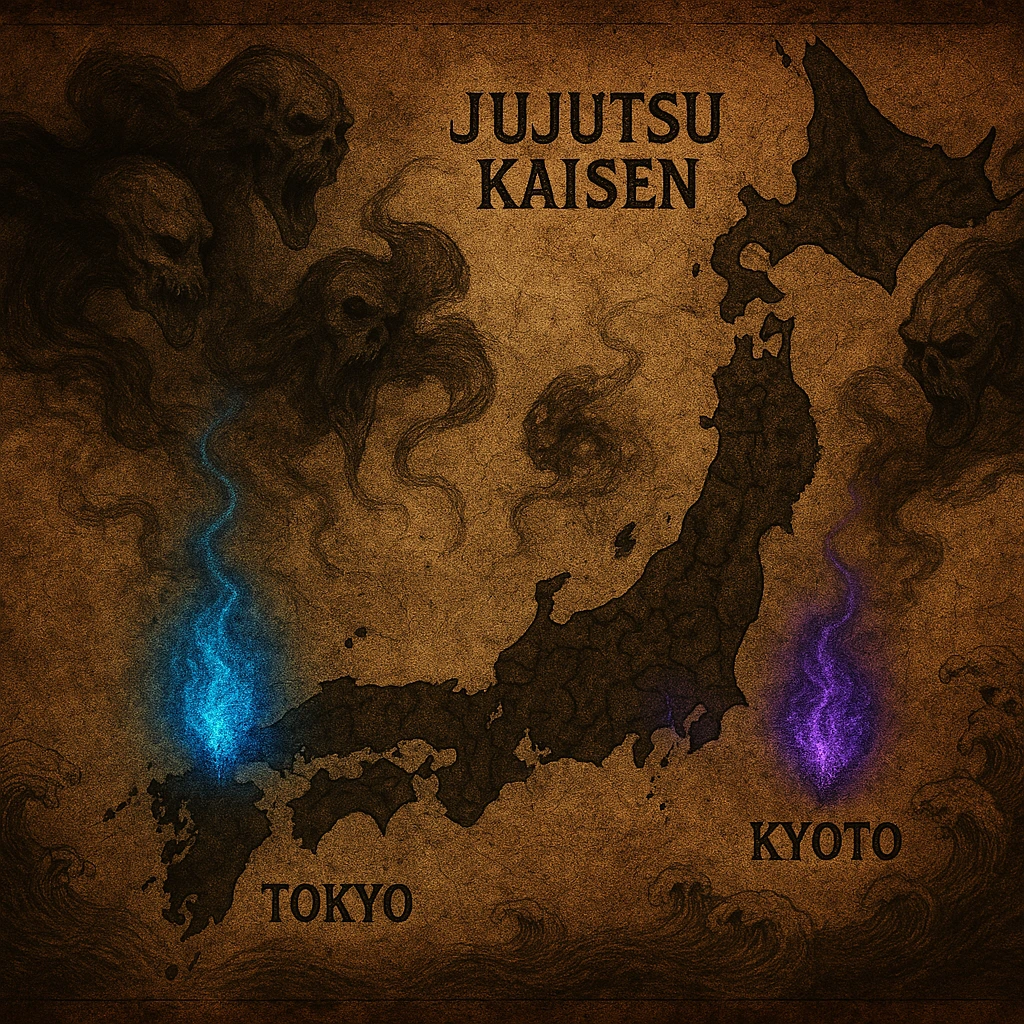
Japan is a hotbed of cursed energy. From the busy intersections of Shibuya to the quiet shrines of Kyoto, curses manifest wherever humans gather and suffer. Logic dictates that there should be a network of academies, a militarized force distributed across the prefectures. Yet, the Jujutsu world operates on an archaic monopoly. There are only two.
Why? Because Jujutsu society is not interested in expansion; it is interested in control.
The existence of only two schools allows the “Higher-Ups”—a council of faceless, conservative elders—to maintain a stranglehold on the cultivation of sorcerers. If you control the education, you control the soldiers. If you control the soldiers, you control the balance of power. The centralization of power in just two locations makes it easier to monitor bloodlines, suppress dangerous techniques, and ensure that the “order” of the Jujutsu world remains undisturbed by modern ideals.
The Religious Facade
To the unsuspecting public, these institutions do not exist as paramilitary training grounds. On paper, both Tokyo and Kyoto High are registered as private religious schools disguised as Buddhist educational facilities. This cover story is genius in its simplicity. Buddhism deals with funerals, spirits, and the afterlife; it provides the perfect veil for the grim reality of what happens behind the campus walls.
Students aren’t just learning sutras; they are learning how to channel negative emotions into weapons of mass destruction. The “religious” aspect is merely a shell to keep the masquerade alive, preventing mass panic in a world that would crumble if it knew monsters were real. This cover also grants the schools a level of autonomy from the Japanese government, allowing them to operate as a sovereign state within a state, governed by their own laws and executing their own justice.
Thesis: The Battle for the Soul of Jujutsu
The core conflict of Jujutsu Kaisen is not just Sorcerers vs. Curses. It is Stagnation vs. Evolution.
- Kyoto Jujutsu High represents the Past. It stands for order, hierarchy, bloodline supremacy, and absolute obedience to the Higher-Ups. It is a system designed to maintain the status quo, even if that status quo is rotting. It honors the “old ways” of the Heian Era, prioritizing technique purity over innovation.
- Tokyo Jujutsu High represents the Future. Under the influence of Satoru Gojo, it has become a sanctuary for the weird, the outcasts, and the rule-breakers. It represents chaos, individualism, and the potential to reshape the world. It embraces the volatility of modern curses and modern sorcerers.
As we dissect these two schools, we uncover that the true war isn’t being fought against Ryomen Sukuna or Kenjaku—it’s being fought in the classrooms.
2. Tokyo Jujutsu High: The Rebel Base
The Philosophy: “Education to Change the System”
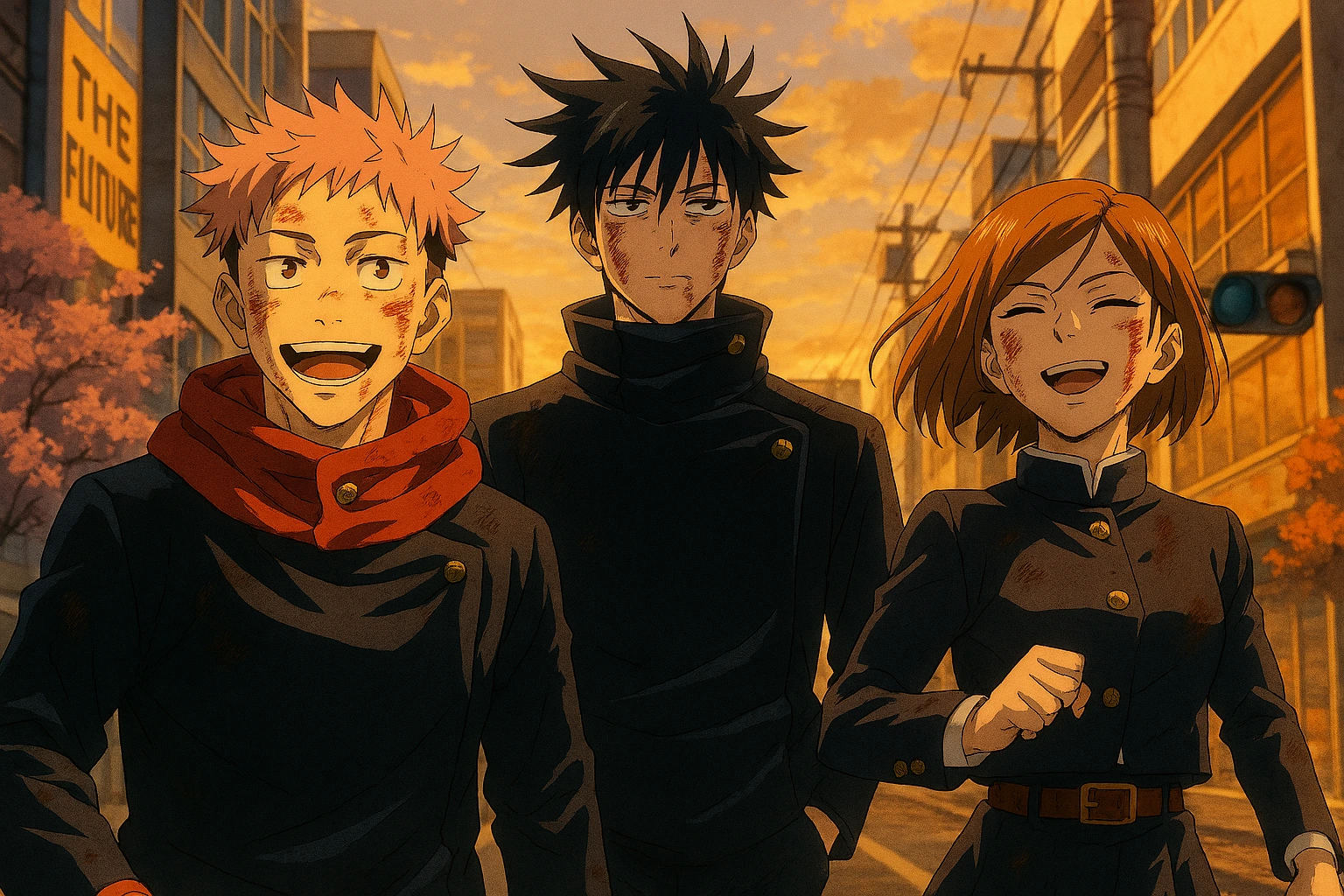
Tokyo Metropolitan Curse Technical College is technically the headquarters of the Jujutsu world in Eastern Japan, but spiritually, it is a rebel base. The ideology of Tokyo High has been hijacked. While the Higher-Ups technically oversee it, the daily operations and the culture are dominated by the strongest sorcerer alive: Satoru Gojo.
Gojo’s philosophy is simple yet radical: The current establishment is garbage. It is a system of old men sacrificing the young to maintain their comfort. He could easily kill all the higher-ups—he explicitly states this—but he knows that violence alone won’t fix the systemic rot. If he kills them, they will just be replaced by other opportunistic conservatives. To truly change the world, he needs to raise a generation that is strong enough to ignore the old rules.
Tokyo High is his incubator. It is a laboratory where he tests the limits of what a sorcerer can be.
The Recruiter: Satoru Gojo’s “Garden of Monsters”
Gojo does not recruit based on obedience; he recruits based on potential and weirdness. He actively seeks out those whom the traditional Jujutsu world has rejected or condemned. Look at the roster:
- Yuji Itadori: A vessel for the King of Curses, slated for execution. Gojo brings him in not just to save him, but because Yuji breaks the laws of nature by suppressing Sukuna. He represents the possibility of coexistence with curses.
- Yuta Okkotsu: A boy haunted by a Special Grade Vengeful Spirit capable of destroying a city. The Higher-Ups wanted him dead; Gojo gave him a uniform. Yuta proves that love—the most volatile emotion—can be the ultimate weapon.
- Hakari Kinji: A student whose technique is literally based on modern gambling (pachinko) and romance manga, confusing the conservative elders so much they threatened to expel him. He represents the modern era’s intrusion into ancient tradition.
- Maki Zenin: A girl with zero cursed energy who was ostracized by her own clan. Gojo gave her a place to sharpen her weapons. She is the ultimate middle finger to the bloodline supremacy of the Zenin clan.
Gojo collects “problem children.” He wants students who can think for themselves. His teaching style is hands-off, chaotic, and often irresponsible, but it fosters independence. He isn’t raising soldiers to follow orders; he is raising peers who can walk beside him.
Principal Masamichi Yaga: The Moral Compass
While Gojo is the visionary, Principal Masamichi Yaga is the anchor. On the surface, Yaga seems strict—he physically beats Yuji with a cursed corpse during his entrance interview. However, Yaga represents the necessary discipline required to survive this life.
Yaga’s core question to Yuji, “Why are you here?”, is the defining ethos of Tokyo High. He forces students to look past the glamour of heroism and confront the reality of death. He demands that they find a resolve that is entirely their own. If they fight for someone else (like Yuji initially saying he’s doing it for his grandpa), they will crumble when they are dying alone.
Yaga teaches that sorcery is a solitary path, even if you have friends. He cares deeply for the “soul” of his students, viewing them as children first and weapons second—a sentiment that eventually costs him his life when the Higher-Ups decide his “Cursed Corpse” knowledge is too dangerous to exist unchecked.
The Faculty: Beyond the Strongest
It isn’t just Gojo and Yaga. The Tokyo faculty includes individuals who bridge the gap between genius and normalcy.
- Atsuya Kusakabe: The only Grade 1 sorcerer without a cursed technique. He relies entirely on sword mastery and the “New Shadow Style.” He represents the Tokyo ethos that hard work and technical knowledge can rival raw talent. He is the grounding force, often acting as the cowardly but competent voice of reason amidst the chaos of Gojo’s whims.
- Shoko Ieiri: The school doctor and Gojo’s former classmate. While not a combatant, her rare ability to output Reverse Cursed Technique (healing others) makes her the lifeline of Tokyo High. She is the silent observer of the tragedy, chain-smoking through the stress of stitching up teenagers sent to die. Her presence ensures Tokyo students survive missions that would kill Kyoto students.
The Environment: A Dysfunctional Family
Despite the darkness of their job, Tokyo High feels like a home. The students—Nobara, Megumi, Yuji, and the second-years—share a camaraderie that transcends duty. They go out for pizza, they shop in Roppongi, and they bicker over petty things. This “Jump Kaisen” dynamic, where they fight together and live together, creates a bond that Kyoto lacks. They fight for each other, not for the system.
This familial bond is crucial because it acts as a buffer against the trauma of their work. When Yuji “dies” early in the series, the grief felt by Megumi and Nobara is palpable. When Nobara is injured, Yuji’s rage is personal. This emotional connection makes them stronger in team fights, allowing for seamless synchronization (like the Yuji and Todo “brother” dynamic, which starts here).
Key Alumni: The Shadow of the Past
We cannot discuss Tokyo without mentioning Nanami Kento and Suguru Geto.
- Nanami represents the realistic burnout. He left Tokyo High to become a salaryman because “Jujutsu sorcerers are shit,” only to return because “Work is shit.” He represents the moral middle ground—doing the job because someone has to, but refusing to romanticize it. He tries to shield Yuji from the “adult” responsibilities, acting as the father figure Gojo can never be.
- Suguru Geto is the ghost that haunts Tokyo High. He was Gojo’s best friend and a believer in protecting the weak, until the sheer weight of the “Monkeys” (non-sorcerers) broke him. His fall into villainy is the catalyst for Gojo’s pedagogical shift. Gojo realized that being the “Strongest” wasn’t enough if he couldn’t save his friend’s heart. He needs to raise students who won’t end up like Geto—isolated by their own power.
3. Kyoto Jujutsu High: The Conservative Stronghold
The Philosophy: “Obedience to the Higher-Ups”
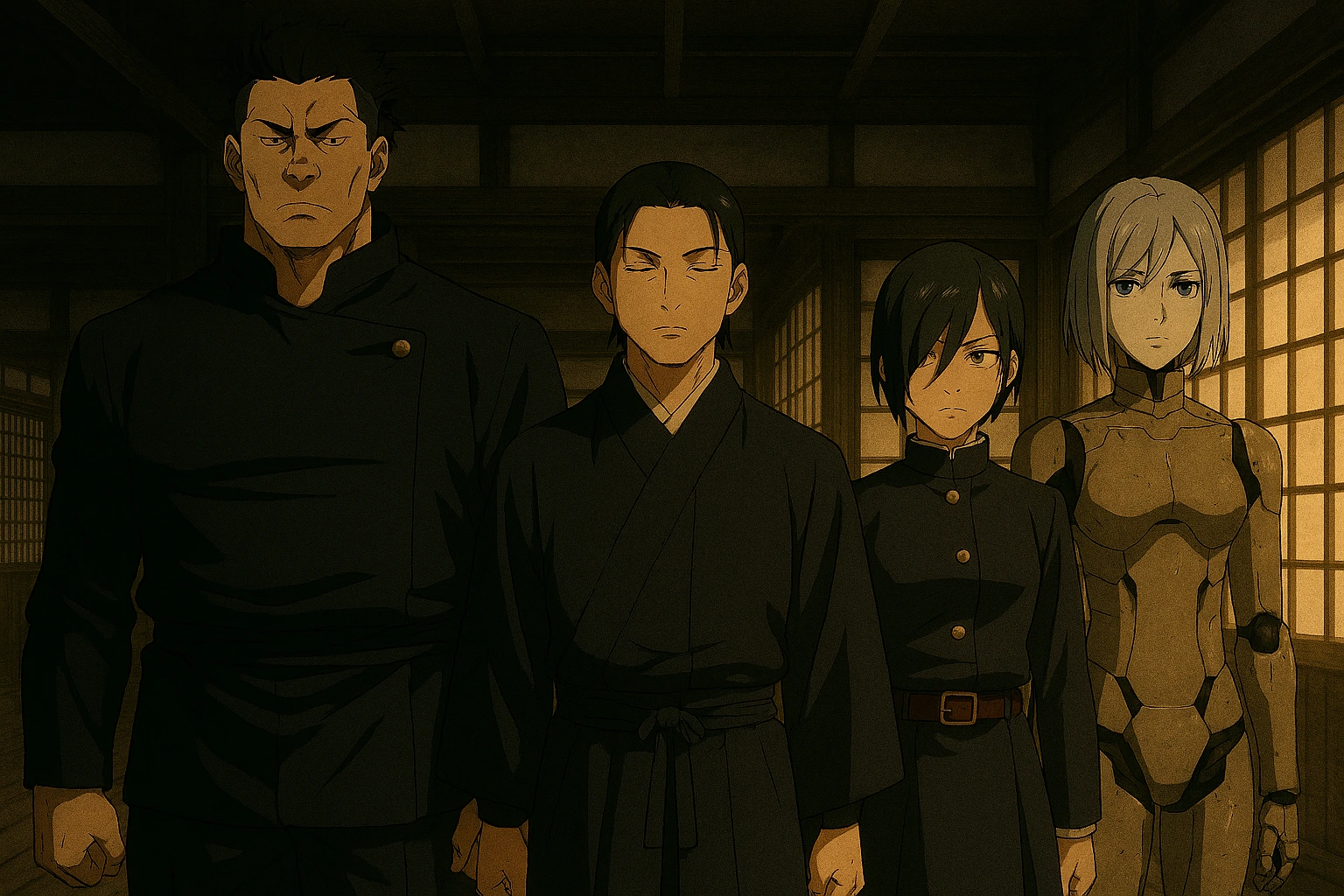
If Tokyo is the rebellious teenager, Kyoto Prefectural Jujutsu High School is the stern grandfather holding a cane. Located in the ancient capital, this school is steeped in tradition. The influence of the “Big Three Families”—specifically the Kamo and Zenin clans—is palpable here. The architecture is traditional, the uniforms are often darker or more standard, and the atmosphere is oppressive.
Kyoto’s ideology is utilitarian and rigid. The rules exist for a reason. Curses are to be exorcised, vessels are to be executed, and orders are to be followed without question. They view Tokyo’s flexibility as dangerous negligence. To them, Gojo is not a savior; he is a loose cannon who threatens the stability of the barrier that separates the normal world from the curse world.
Principal Yoshinobu Gakuganji: The Watchdog
Principal Gakuganji is the antithesis of Yaga. He is a high-ranking conservative who views Yuji Itadori not as a student, but as a ticking time bomb. His orders during the Goodwill Event were explicit: “Kill Yuji Itadori and make it look like an accident.” This order bypasses morality entirely—it is a political hit job sanctioned by the school administration.
Gakuganji represents the “fear” of the old generation. He fears what he cannot control. He fears Sukuna, he fears Gojo, and he fears the changing tides. Ironically, despite his rigid exterior, he is a rockstar—literally. His cursed technique involves using an electric guitar to amplify sound waves into shockwaves. This dichotomy (traditionalist old man playing heavy metal) suggests a hidden complexity. It hints that perhaps, deep down, even the most rigid conservative has a desire to scream, but he suppresses it for the sake of “order.”
Utahime Iori: The Frustrated Mediator
Utahime Iori serves as a supervisor at Kyoto High and acts as a foil to Gojo. While she is often the butt of Gojo’s jokes (“You’re weak, Utahime”), she represents the competent, traditional sorcerer who is constantly disrespected by the prodigies. She cares for her students deeply, perhaps even more openly than the Tokyo staff, but she is constrained by the strict hierarchy of her school.
She is the “normal” person trapped in a system that only rewards the insane. Her frustration is the frustration of the entire Kyoto faculty—overshadowed by the brilliance of Tokyo and bound by the rules of the elders.
The Environment: Professional Distance
The social dynamic at Kyoto is starkly different from Tokyo. It is cold. The students interact more like coworkers than friends.
- Noritoshi Kamo acts as the squad leader, but his leadership is based on hierarchy and duty, not charisma. He is the heir to the Kamo clan, and he carries that weight into every interaction.
- Mai Zenin is abrasive and defensive, pushing people away before they can hurt her. Her relationship with the other students is prickly at best.
- Mechamaru (Kokichi Muta) is physically isolated, interacting only via a robot, which deepens the emotional disconnect. He harbors a deep secret that prevents true connection.
The only genuine bond we see initially is between the girls, Mai, Momo, and Miwa. The rest of the team feels disjointed. They don’t fight “together”; they fight alongside each other. This lack of cohesion is a critical weakness. When the bullets start flying, Kyoto fractures while Tokyo coalesces.
Aoi Todo: The Anomaly
Then, there is Aoi Todo. Todo is a Kyoto student in name only. He hates the boring, stuffy atmosphere of his school. He despises the weakness and lack of ambition in his peers. When he meets the Kyoto principal, he disrespects him openly.
Todo aligns spiritually with Tokyo. He values strength and “vibes” (specifically, what kind of woman you like) over tradition. He becomes Yuji’s “Besto Friendo” instantly because he recognizes a kindred spirit—someone who isn’t bound by the stifling rules of the Jujutsu world.
Todo serves as the bridge, proving that even in the most conservative environment, a strong individualist spirit can emerge (though usually, that spirit just wants to watch Takada-chan concerts). His “Boogie Woogie” technique is the ultimate support ability, yet he finds no one in Kyoto worthy of syncing with it.
4. The Goodwill Event: A Clash of Ideologies
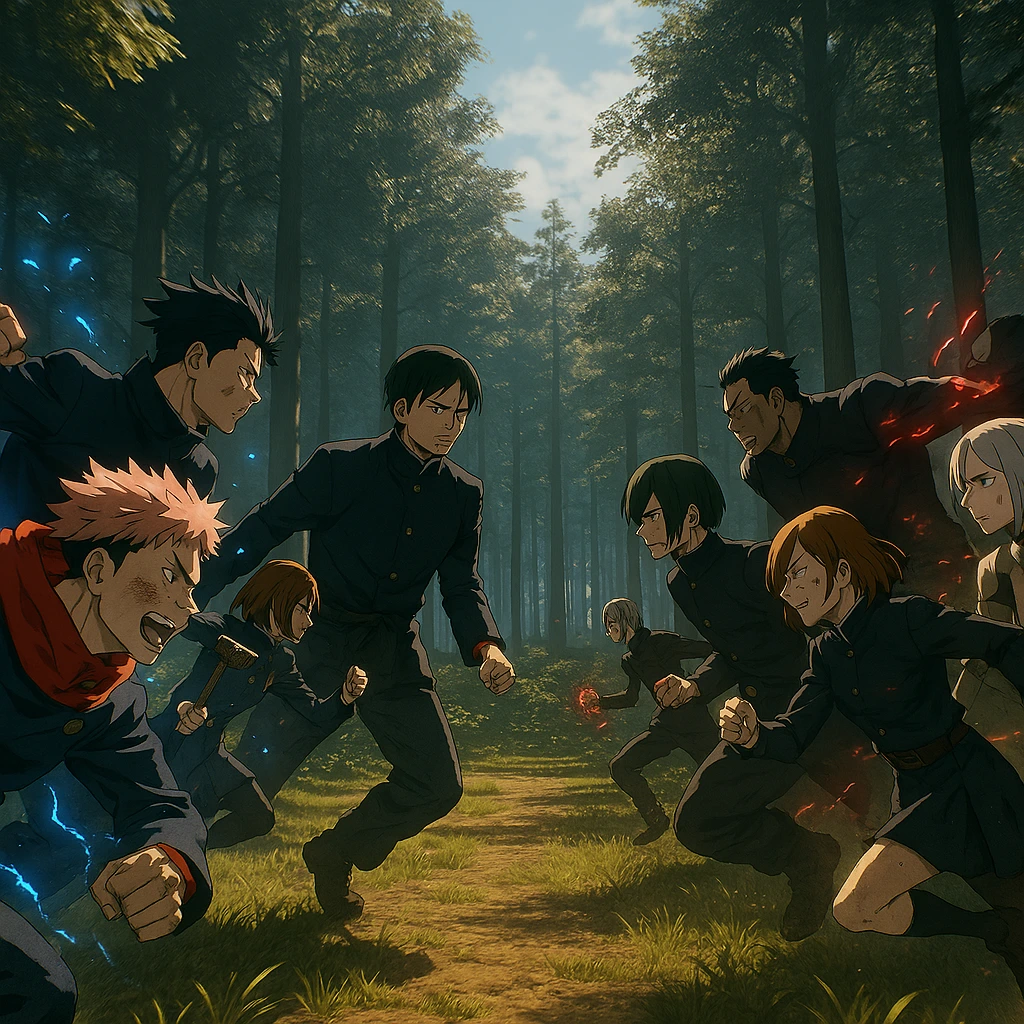
The Kyoto Goodwill Event Arc is not just a tournament arc; it is the physical manifestation of the ideological war between the two schools. The baseball game and the battles are secondary to the conversations happening between the punches. It is here that the cold war turns hot.
The Mission: Assassination vs. Protection
The setup is chilling. Tokyo enters the event thinking it’s a competition to showcase their skills. Kyoto enters with a hit list. Gakuganji orders his students to murder Yuji Itadori in the chaos of exorcising curses. This moment crystallizes the difference:
- Kyoto is willing to murder a child to prevent a potential risk (The Utilitarian Approach). They believe that one life is a small price to pay for stability.
- Tokyo (specifically Gojo’s faction) believes the child deserves a chance to live and learn (The Humanist Approach). They believe that killing Yuji is a surrender to fear.
Noritoshi Kamo vs. Megumi Fushiguro: The Burden of Lineage
The battle between the heirs of the Kamo and Zenin clans is a debate on ethics and legacy.
- Noritoshi Kamo: He carries the burden of his clan’s dark history (his mother was an outcast). He believes he must be the perfect embodiment of a Jujutsu Sorcerer to validate his existence. He tells Megumi that killing Yuji is the “correct” choice because it saves the many. He follows the rules of the track laid out for him. He is the perfect soldier.
- Megumi Fushiguro: Megumi rejects this track. He admits he is not a hero. He says, “I save people unequally based on my conscience.” This is a radical rejection of utilitarianism. Megumi doesn’t care about the “greater good” determined by old men; he cares about the good he can do for the people he He fights for his friends, not for the world.
Kamo fights for duty; Megumi fights for his own morality. Kamo uses a bow (distance, calculation); Megumi uses shadows (adaptability, fluidity).
Maki vs. Mai: The Tragedy of the Zenin Twins
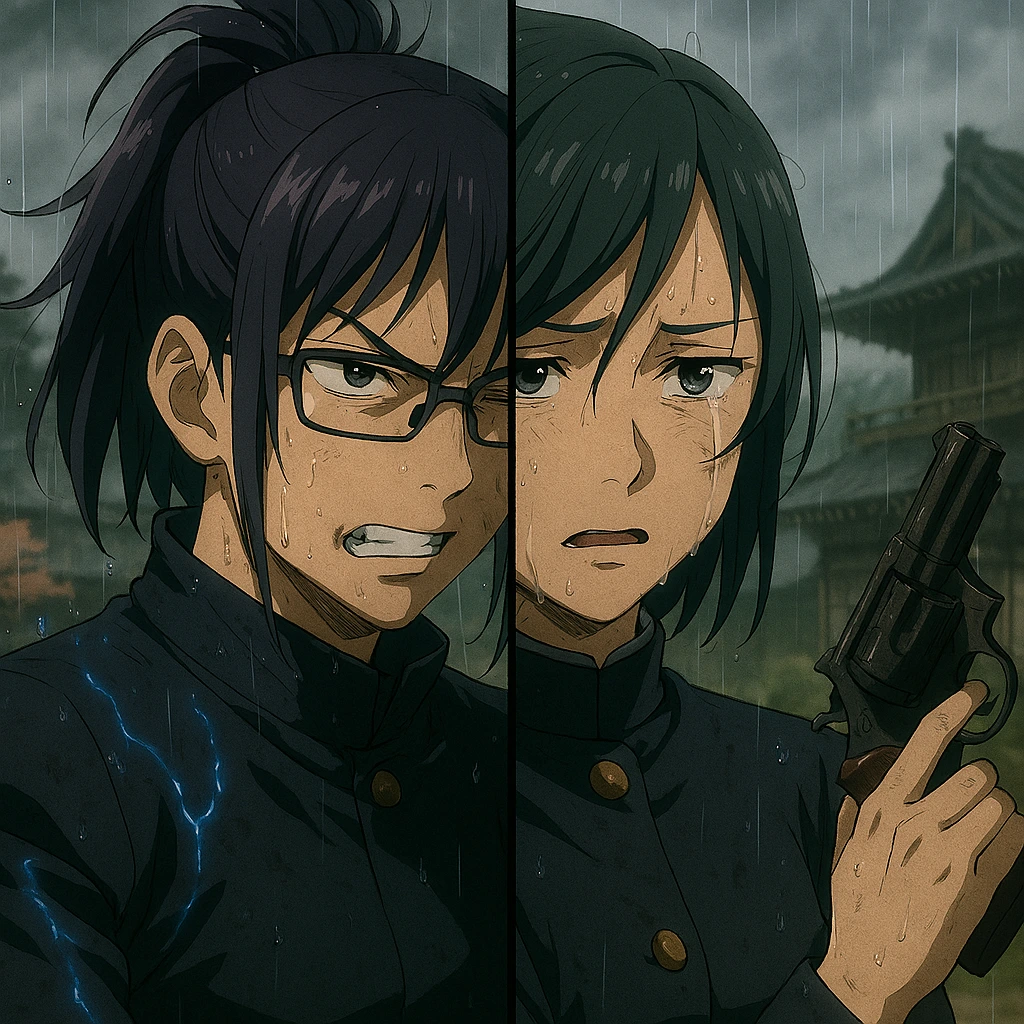
The emotional core of the Goodwill Event is the showdown between the sisters. They represent two different responses to the trauma of the conservative Jujutsu system.
- The System’s Cruelty: The Zenin clan values powerful cursed techniques above all. Twins are seen as bad omens, and women are often subservient. Both Maki and Mai were victims of this abuse.
- Maki (Tokyo): Maki chose rebellion. She left the clan, stripped of her rank, and joined Tokyo High to become a great sorcerer out of spite. She works harder than anyone else to compensate for her lack of cursed energy (at this point in the story). She represents the Tokyo ideal: forcing the world to acknowledge you through sheer grit.
- Mai (Kyoto): Mai chose resignation. She didn’t want to be a sorcerer. She just wanted to live a quiet life doing chores and being with her sister. But because Maki left, Mai was forced to become a sorcerer to maintain the clan’s face. She hates Maki not because Maki left, but because Maki had the courage to try, which forced Mai into a life of violence she never wanted.
Mai represents the tragedy of Kyoto’s conservatism—she is a victim perpetuating the cycle, staying in a school and a system she hates because she feels she has no choice. Maki breaks the cycle. When Maki defeats Mai, it is the victory of agency over fatalism.
Panda vs. Mechamaru: The Definition of Life
This fight offers a fascinating look at the “souls” of the schools.
- Mechamaru (Kyoto): Kokichi Muta is a human living a cursed existence. He would trade all his immense power for a normal body to walk outside with his friends. He is bitter, resentful, and willing to betray the sorcerers for a chance at normalcy. He represents the hidden rot within Kyoto—the neglect of the individual’s happiness for the sake of their utility.
- Panda (Tokyo): Panda is an artificial creation, a Cursed Corpse. Yet, he is the most well-adjusted “person” in the show. He accepts what he is (“I’m a Panda, I’m not a human!”). He shows empathy to Mechamaru, recognizing the human pain behind the metal exterior. This battle proves that Tokyo’s environment (Yaga’s parenting) can nurture a soul even in a doll, while Kyoto’s environment can crush the soul of a living human.
Nobara vs. Momo: The Standards of Beauty and Strength
The philosophical clash extends to gender roles.
- Momo Nishimiya (Kyoto): Complains that female sorcerers have to be “perfect.” They have to be strong AND cute. If they lack either, they are discarded. She fights with the weight of societal expectation, bitter about the unfairness of the industry.
- Nobara Kugisaki (Tokyo): Rejects this completely. Her famous line, “I love myself when I’m dressed up, and I love myself when I’m fighting strong,” shatters Momo’s complaint. Nobara refuses to choose between femininity and brutality. She represents the Tokyo confidence—setting your own standards rather than complaining about the ones set by others.
5. The Influence of the Big Three Families
To understand the schools, one must understand the families that pull the strings. The Big Three Families (Gojo, Zenin, Kamo) are the aristocracy of the Jujutsu world, and their politics bleed into the curriculum.
The Kamo Clan (Ruling Kyoto)
The Kamo clan is heavily tied to the traditionalists. Their influence is why Kyoto High is so conservative. Noritoshi Kamo is being groomed as the next clan head, which means his education is strictly monitored to ensure he upholds the old values. The Kamo clan values bloodline purity and historical techniques (Blood Manipulation). They see the school as a training ground for their heirs and a place to maintain their political leverage.
The Zenin Clan (The Split Influence)
The Zenin clan is a meritocracy of power, but a toxic one. They view the schools as a testing ground. They rejected Maki (sending her to Tokyo effectively as an exile) and pressured Mai into Kyoto. The Zenin clan hates Gojo and, by extension, Tokyo High. They actively impede the promotion of Maki (stalling her at Grade 4) despite her obvious Grade 2 or Grade 1 skill level. Their influence acts as a ceiling for talented students who don’t fit their mold.
The Gojo Clan (The One-Man Army)
The Gojo clan is unique because it is effectively just Satoru. Because he is the “Strongest,” he has absolute political immunity. He uses his family’s status to shield Tokyo High. Without Satoru Gojo, Tokyo High would likely be purged or restructured by the Zenin and Kamo factions. The entire freedom of Tokyo High exists solely because Gojo acts as a nuclear deterrent against the other families.
6. Comparative Roster Analysis (Power & Potential)
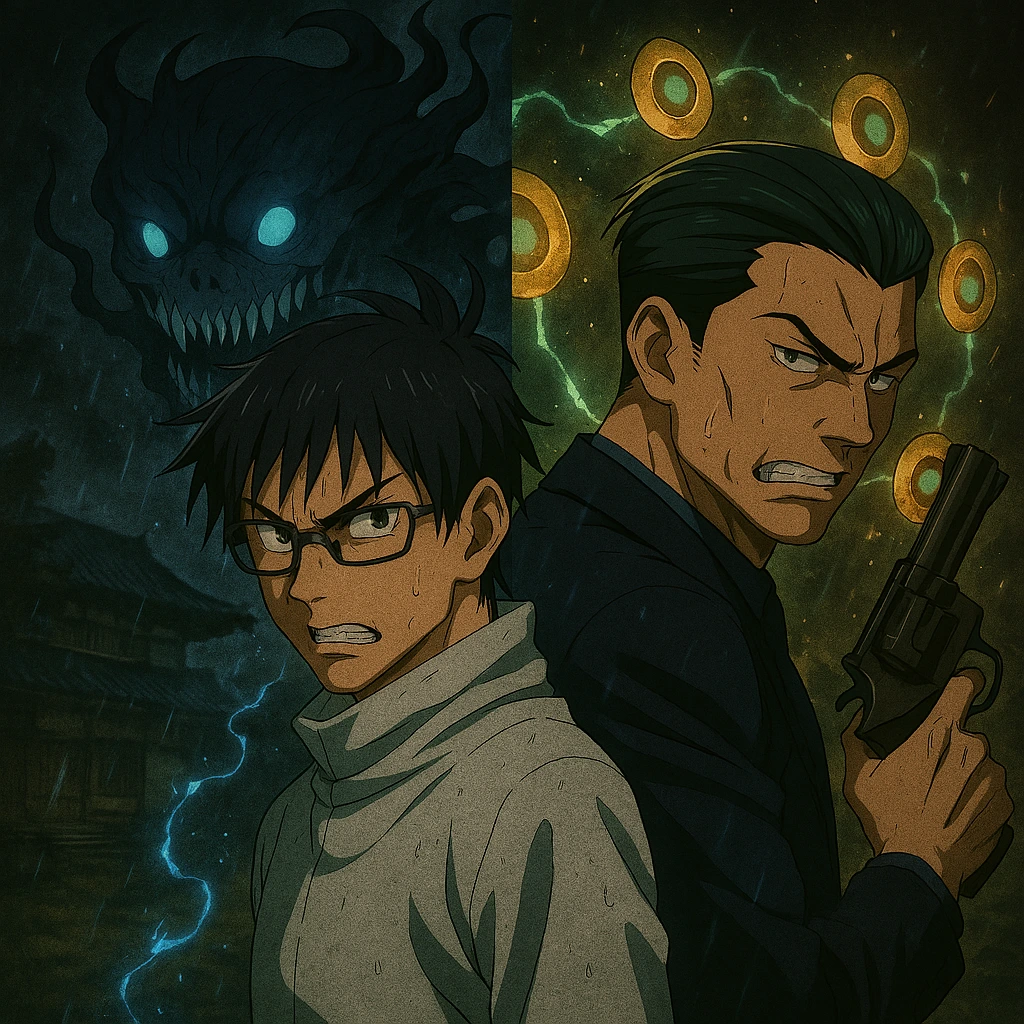
When we look at the raw data, the imbalance between the schools is staggering. Tokyo dominates. But why?
Heavy Hitters Comparison
Tokyo High Roster:
- Yuta Okkotsu: Special Grade. Possesses near-infinite cursed energy and the ability to copy techniques. He single-handedly defeated Geto. He represents the “unknown variable” that Kyoto fears.
- Hakari Kinji: A third-year who Gojo says can one day rival him. His Domain Expansion is a game of probability that grants him immortality. He is the ultimate wildcard.
- Maki Zenin: Even pre-awakening, she is a Grade 1 level fighter. Post-awakening, she is a physical anomaly on par with Toji Fushiguro. She is the “Monster” created by the system’s neglect.
- Yuji Itadori: A physical powerhouse who learns Black Flash in record time and houses the King of Curses. He is the vessel of chaos.
- Megumi Fushiguro: Possesses the Ten Shadows Technique, the only technique historically known to kill a Six Eyes/Limitless user. He is the potential king.
Kyoto High Roster:
- Aoi Todo: Grade 1. An absolute monster in combat with a genius-level IQ. He is the only Kyoto student who can stand on equal footing with Tokyo’s elite. However, his strength comes from his own eccentric training (mentored by Yuki Tsukumo), not Kyoto’s curriculum.
- Mechamaru (Kokichi Muta): Semi-Special Grade potential due to his Heavenly Restriction (immense range and power, but a broken body). His potential was cut short by tragedy.
- Noritoshi Kamo: A solid Grade 1 sorcerer, but his technique (Blood Manipulation) is limited by his human blood supply, unlike his ancestor Choso. He hits a ceiling because he adheres too strictly to the manual.
- The Rest (Mai, Miwa, Momo): They are competent support sorcerers but lack the destructive potential to change the course of a war. Miwa, “Useless Miwa,” is endearing but tragically outmatched.
The Weakness of Kyoto: Why is Tokyo Stronger?
The disparity in power is not a coincidence; it is a direct result of Ideology.
- Risk vs. Safety: Kyoto teaches “safe” jujutsu. They rely on inherited techniques and standard manuals. They suppress dangerous elements. By prioritizing order, they stifle the chaos required for growth. Tokyo, under Gojo, encourages risk. Hakari represents this perfectly. His power is “fever”—it’s gambling. It’s unstable. Kyoto would hate it; Gojo loves it. High risk leads to high rewards.
- Individualism vs. Collectivism: Jujutsu sorcery is, by nature, an individual sport. As Gojo says, “When you die, you die alone.” The pinnacle of Jujutsu is the Domain Expansion—the act of imposing your innate self onto reality. Tokyo students are encouraged to be selfish, to define their own identities. This selfish drive allows them to manifest Domains. Kyoto students (except Todo) are often weighed down by clan expectations (Kamo) or lack of drive (Mai, Miwa). You cannot impose your will on reality if your will belongs to your grandfather.
- The Magnetism of Gojo: Simply put, strong people gravitate toward strength. Gojo acts as a gravity well for powerful outcasts. If you are a freak of nature like Yuta or Yuji, Kyoto tries to execute you. Tokyo gives you a scholarship. Therefore, Tokyo accumulates all the “Special Grade” potential while Kyoto is left with the “safe” Grade 2s.
7. Conclusion: The Winner
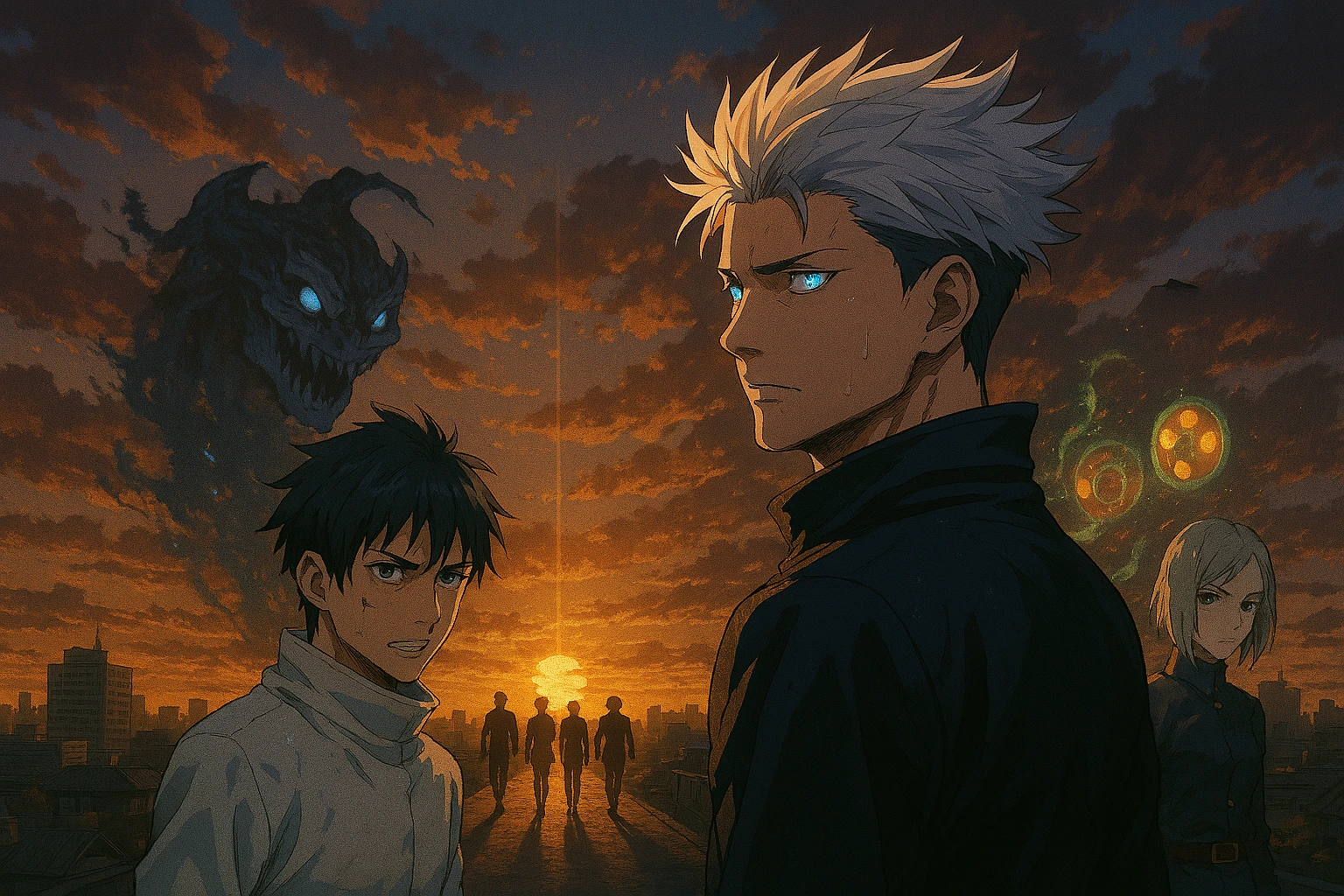
By the end of the Shibuya Incident and entering the Culling Game, the debate is effectively over. The boundaries between the schools dissolve, but the ideological victory clearly belongs to Tokyo.
The conservative structures of the Jujutsu world are decapitated (quite literally in some cases). The Higher-Ups are eventually slaughtered, leaving a power vacuum. In this new, chaotic world of the Culling Games, the “orderly” soldiers of Kyoto (Kamo, etc.) find themselves ill-equipped to lead. It is the rebels of Tokyo—Maki, Yuta, Hakari, Yuji—who step up to save Japan. The “school” system collapses, but the students of Tokyo survive because they were trained to survive chaos, not just to follow rules.
Gakuganji’s Redemption
However, the story offers a nuance. It doesn’t leave the old generation entirely in the trash. Principal Gakuganji undergoes a profound change. Following the death of Yaga—executed by the Higher-Ups for his knowledge of Cursed Corpses—Gakuganji is the one who receives Yaga’s final curse: the secret to creating independent life. In a moment of redemption, Gakuganji does not report this to the superiors. He keeps the secret. Later, he stands with the students against the final threats. He admits that the old ways were wrong, showing that even the rigid Kyoto ideology can bend when faced with the end of the world.
Final Verdict
Tokyo High wins. Not just in a fight, but in philosophy. The world of Jujutsu Kaisen is a world of curses, born from the messiness of human emotion. Trying to control that mess with rigid rules and bureaucracy (Kyoto’s way) was always destined to fail. The only way to combat the chaos is to embrace it, to nurture individual strength, and to build a community based on love and trust rather than hierarchy (Tokyo’s way).
Satoru Gojo’s dream was to reset the Jujutsu world. While the cost was astronomically high, looking at the students left standing, he succeeded. The future belongs to those who were crazy enough to fight for it.