
1. Introduction: The Puppet Masters of Jujutsu
In the brutal, blood-soaked world of Jujutsu Kaisen, sorcery is typically a visceral, physical affair. We see Yuji Itadori shattering concrete with his fists, Aoi Todo swapping places with a clap of his hands, and Satoru Gojo twisting the very fabric of space. Combat is often direct, immediate, and painfully close-range.
However, there exists a subset of sorcerers who operate differently—commanders who dominate the battlefield not through brute strength alone, but through the mastery of intermediaries. These are the Shikigami users, the puppet masters who turn cursed energy into living, breathing weapons.
Shikigami (式神) are familiar spirits, constructs, or monsters summoned and controlled by a sorcerer using their cursed energy. They serve as the user’s eyes, ears, shields, and blades. While the concept of summoning familiars is a staple in fantasy anime, Jujutsu Kaisen treats Shikigami with a specific, rigid set of mechanical rules that elevates them beyond simple “pets.” They are extensions of the sorcerer’s will, requiring a medium, a cost, and often a dangerous ritual to control.
Among all the Shikigami techniques in history, one stands at the absolute apex, revered and feared in equal measure: The Ten Shadows Technique (Jūsshi no Kage Bōjutsu). Passed down through the Zen’in Clan, one of the Three Great Sorcerer Families, this technique is not merely about summoning monsters; it is a complex system of inheritance, fluid combat, and potentially world-ending power. It is the only technique historically capable of rivaling the Six Eyes and Limitless of the Gojo Clan.
This guide is the ultimate compendium on Shikigami in Jujutsu Kaisen. We will dissect the general rules of summoning, the unique mechanics of the Ten Shadows, the terrifying adaptability of Mahoraga, and how a master of this technique can stand at the pinnacle of the sorcery world.
2. General Shikigami Rules: The Laws of Summoning

Before diving into the shadow-manipulating prowess of Megumi Fushiguro or Ryomen Sukuna, it is crucial to understand the foundational laws that govern all Shikigami users. A Shikigami is essentially a mass of cursed energy given form and instruction. Unlike Cursed Spirits, which are born from the negative emotions of humanity and possess their own malevolent autonomy, Shikigami are tools crafted or summoned by sorcerers.
The Medium: Anchoring the Curse
Cursed energy is volatile. To give it a stable shape as a Shikigami, a user generally requires a medium. This medium acts as the catalyst or the bridge between the sorcerer’s energy and the physical manifestation of the creature.
For the vast majority of Shikigami users, this medium is physical:
- Talismans: The most traditional method involves paper charms or talismans. The sorcerer infuses the paper with energy to release the Shikigami. This is the “classic” onmyoji style seen in Japanese folklore.
- Hair: Some users, like the curse user during the Shibuya Incident (fighting alongside Haruta Shigemo), utilize parts of their own body, such as hair, as a disposable medium.
- Technology: In modern interpretations, even mechanical devices or cursed tools can serve as the intermediary.
The reliance on a medium is the standard Shikigami user’s greatest weakness. If they run out of talismans, or if their medium is destroyed, they are left defenseless. This is what makes the Ten Shadows Technique so revolutionary—its medium is the shadow itself, an abundant and indestructible resource.
The Energy Cost & Maintenance
Summoning is not a “fire and forget” ability. It is a constant drain on the user’s cursed energy reserves.
- Activation Cost: A spike of energy is required to bring the Shikigami into reality.
- Upkeep: As long as the Shikigami remains materialized, it continuously siphons energy from the user.
This creates a tactical dilemma. A sorcerer can summon a powerful Shikigami to overwhelm an enemy, but if the fight drags on, they risk exhaustion. Junpei Yoshino, who used the poison-based Shikigami “Moon Dregs,” had to manage this balance carefully. If the user is knocked unconscious or runs out of energy, the Shikigami instantly dispels.
Autonomy vs. Puppetry
Most Shikigami are puppets. They follow mental or verbal commands and possess little to no intelligence of their own. They do not fear death, nor do they strategize; they simply execute.
However, there are rare exceptions where a Shikigami possesses a will of its own. The most notable outlier is Rika Orimoto (specifically the vengeful spirit version associated with Yuta Okkotsu). While functionally acting like a Shikigami/Cursed Spirit hybrid, Rika had her own personality, desires, and autonomy. But in the strict definition of Jujutsu Kaisen systems, standard Shikigami are tools.
The complexity of the commands they can follow depends on the user’s skill. A novice might only be able to command “Attack,” while a master can coordinate complex flank maneuvers or defensive formations without speaking a word.
3. The Ten Shadows Technique (Jūsshi no Kage Bōjutsu)

The Ten Shadows Technique is the hereditary technique of the Zen’in Clan. It is the reason the clan holds such political power and why Toji Fushiguro sold his son, Megumi, back to them (before Gojo intervened). It is a technique of infinite potential, turning the user’s shadow into a gateway to a realm of darkness and beasts.
The Shadow as a Medium
The defining trait of the Ten Shadows is that it requires no external tools. The user uses shadows—either their own or shadows created by the environment—as the medium. This offers unparalleled versatility.
- Ubiquity: Shadows are everywhere. As long as there is light, there is a shadow. This makes disarming a Ten Shadows user nearly impossible unless you plunge the area into total darkness or absolute, shadow-less light (a rare feat).
- Fluidity: The Shikigami of this technique are created from liquid shadows. This allows them to shift states between solid and liquid. A Divine Dog can bite through bone (solid), but can also melt into sludge to avoid an attack (liquid).
The Inventory System
The shadow is not just a summoning circle; it is a pocket dimension. The user can store objects within their own shadow. Megumi Fushiguro utilizes this to carry cursed tools like the Black Sword, Playful Cloud, or medicines, allowing him to adapt his loadout mid-combat.
Furthermore, the user can submerge themselves into the shadow. This acts as the ultimate stealth mechanic. While inside the shadow, the user is undetectable and intangible, though they cannot breathe and must hold their breath, limiting the duration of this infiltration. This mechanic also allows for high-speed travel, moving through the shadows of objects or enemies to appear instantly in their blind spots.
The Ten Shikigami
The technique provides ten specific Shikigami. However, unlike a video game where you unlock skills by leveling up, the Ten Shadows forces you to earn your arsenal through combat. The user is granted two “starter” Shikigami: the Divine Dogs. Every other Shikigami must be obtained through the Taming Ritual.
4. The “Totality” Rule: Inheritance of Power

One of the most distinct and harsh mechanics of the Ten Shadows Technique is its death penalty.
- The General Rule: In standard Shikigami usage, if a familiar is destroyed, it can usually be re-summoned later, provided the medium (talisman) is replaced or the user recovers energy.
- The Ten Shadows Rule: If a Shikigami of the Ten Shadows is completely destroyed or killed by an enemy, it is gone forever. It can never be summoned again. This creates a high-stakes environment for the user. Losing a powerful asset like the Great Serpent is a permanent reduction in the user’s arsenal.
The Inheritance (Totality)
However, the technique has a built-in safeguard known as Totality (Kon). The power and cursed energy of a destroyed Shikigami do not disappear; they flow into the remaining Shikigami. The survivors inherit the traits and power of the fallen.
The most famous example is the Divine Dogs: Totality.
- Originally, there were two dogs: White and Black.
- The White Divine Dog was destroyed by a Special Grade Finger Bearer.
- Its power did not vanish. Instead, it fused with the Black Divine Dog.
- The result is a larger, bipedal werewolf-like beast that possesses the combined speed, strength, and durability of both, magnified significantly.
This implies a terrifying endgame: theoretically, if eight of the nine shadows were destroyed, the final remaining shadow (excluding the unkillable Mahoraga, perhaps) would inherit the power of all its predecessors, creating a singular entity of unimaginable power. This turns the permanent loss of a Shikigami into a strategic sacrifice.
5. The Taming Ritual: The Exorcism
A Ten Shadows user is not born with an army; they are born with a challenge.
The Ritual Process
To gain control of a new Shadow, the user must initiate a Taming Ritual.
- Initiation: The user performs the hand sign and incantation to summon the wild, untamed version of the Shikigami.
- The Rule: The user must defeat the Shikigami alone. No help is allowed. If someone interferes or helps defeat the Shikigami, the ritual is void—the Shikigami is defeated but not tamed.
- Success: If the user forces the Shikigami to submit or destroys it during the ritual, the Shikigami enters their inventory and can be summoned freely.
The “Suicide Move”
Because the ritual can be started at any time with any of the Ten Shadows, it can be weaponized as a last resort. This is Megumi Fushiguro’s trump card throughout the early series.
If a user is facing an opponent they cannot beat (like Sukuna or Haruta Shigemo), they can initiate a ritual involving the strongest, most uncontrollable Shadow (Mahoraga) and force the opponent to participate in the ritual.
- The ritual begins. Mahoraga appears.
- The ritual rules state that the summoner must defeat it. However, since an outsider was dragged in, the ritual will not end until the Shikigami kills both the summoner and the outsider.
- The user effectively says, “I am going to die, but I am taking you with me by locking us both in a cage with a monster neither of us can control.”
This mechanic turns the Ten Shadows user into a walking nuclear deterrent. Even a weaker user can kill a much stronger sorcerer if they are willing to sacrifice their own life.
6. The Shadows: A Detailed Roster
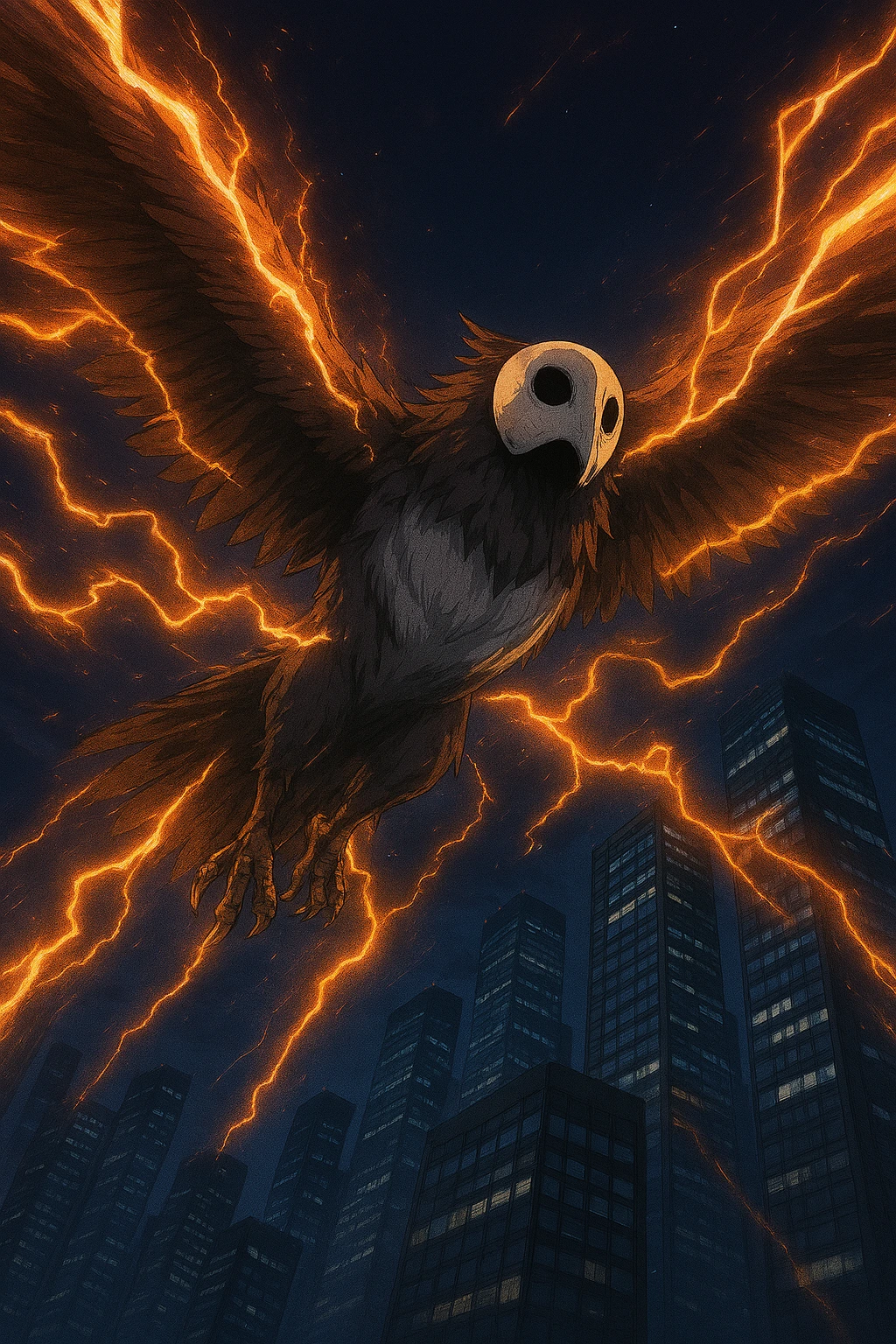
Let us analyze the known Shadows of the technique.
| Shikigami | Form | Abilities & Status |
| 1. Divine Dogs (Gyokuken) | Two large wolves (Black & White). | Ability: Enhanced senses (smell/detection) and lethal claws.
Status: The White Dog is deceased. Its power fused with the Black Dog to create Divine Dog: Totality, a beast capable of damaging Special Grade curses and piercing durable skin. |
| 2. Nue | Giant owl-like creature with a mask. | Ability: Flight and electricity. Acts as aerial mobility and ranged support (stun attacks).
Sukuna’s Variant: A colossal, kaiju-sized bird capable of raining lightning on city blocks. |
| 3. Toad (Gama) | Large frog. | Ability: Long tongue used for grappling, capturing, and rescue. Excellent for crowd control and pulling allies to safety. |
| 4. Great Serpent (Orochi) | Giant white snake. | Ability: Ambush and constriction.
Status: Destroyed by Sukuna. Its power has presumably been distributed. |
| 5. Max Elephant (Banshō, 満象) | Elephant. | Ability: Massive weight and high-pressure water manipulation. Can flood enclosed spaces or crush enemies. High energy cost. |
| 6. Rabbit Escape (Datto) | Swarm of white rabbits. | Ability: Distraction and confusion. Used to swarm the battlefield and block vision. Low offensive power but highly survivable. |
| 7. Round Deer (Madoka) | Large deer. | Ability: Reverse Cursed Technique (RCT). Outputs positive energy to heal the user or neutralize enemy cursed energy. Essential support unit. |
| 8. Piercing Ox (Kanyu) | Bull. | Ability: Linear damage scaling. Moves only in a straight line; the longer it runs, the more powerful its charge becomes. |
| 9. Tiger Funeral (Kosō) | Massive tiger (primarily seen in fusions). | Ability: Immense physical strength and speed for close combat. Contributes raw power and agility to fusions like Chimera Beast Agito. Speculated extensions include curse energy absorption or resurrection traits, based on manga hints during the Shinjuku arc. |
| 10. Mahoraga (Makora) | Towering humanoid with a dharma wheel. | Ability: Adaptation. The ultimate counter to any technique (see below). |
7. Mahoraga: The Divine General Explained
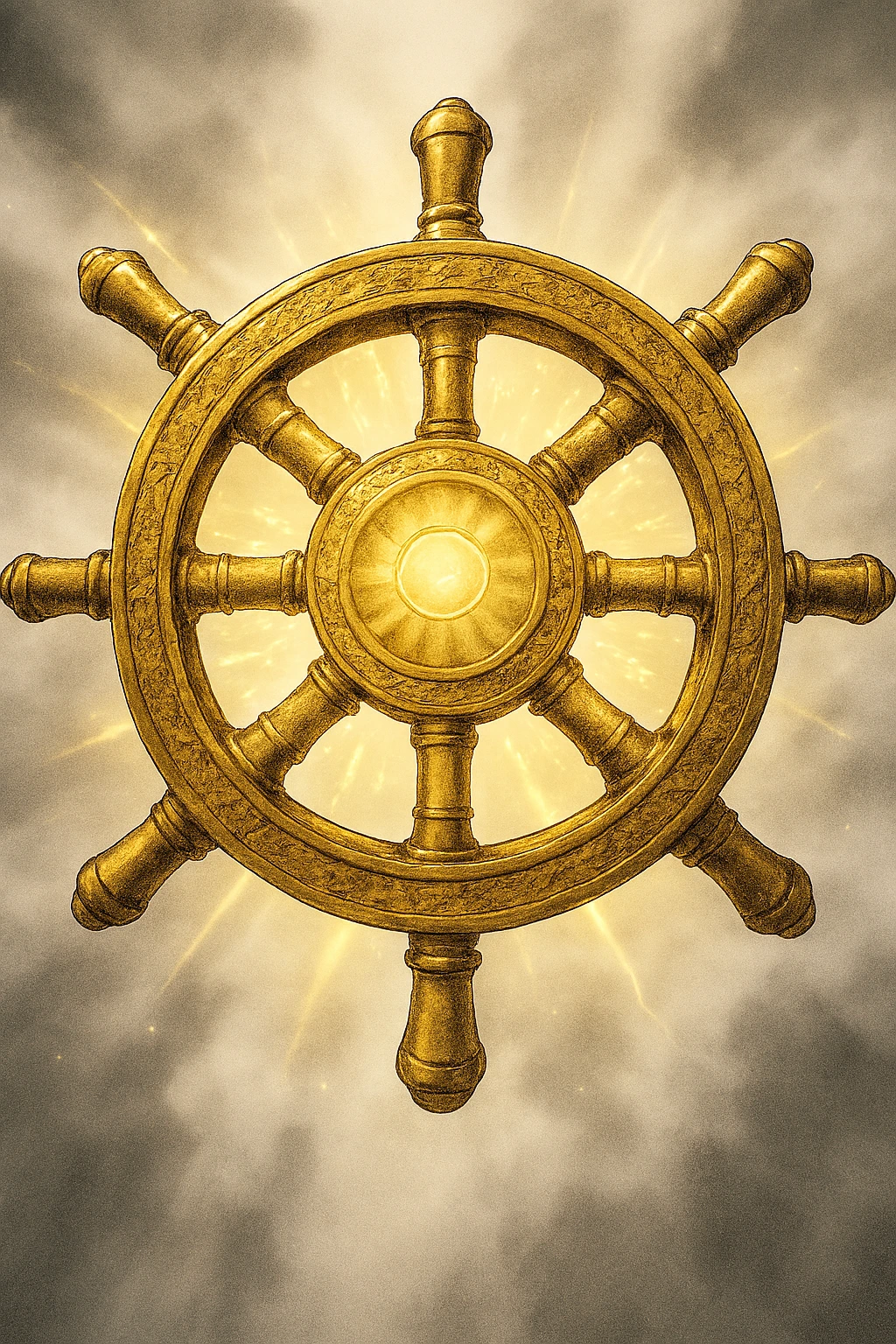
Mahoraga is the reason the Ten Shadows is feared by the Gojo clan. It is an uncontrollable juggernaut that represents the ultimate counter to any technique.
The Mechanism of Adaptation
Mahoraga is equipped with the “Wheel of Adaptation.”
- Analysis: When Mahoraga is hit by an attack, the wheel clicks and turns.
- Adaptation: Once the wheel turns, Mahoraga adapts to that specific phenomenon.
- Defensive Adaptation: It becomes immune or highly resistant to that attack. For example, if hit by slashing attacks, it gains resistance to cutting. If hit by UV (Unlimited Void), it adapts to the information overload.
- Offensive Adaptation: It alters its own attacks to bypass the enemy’s defense. Against Gojo’s Infinity (which prevents things from touching him), Mahoraga adapted its slash to cut not just Gojo, but the space Gojo occupied, thereby bypassing the shield entirely.
How to Defeat Mahoraga
To kill Mahoraga, one must destroy it completely in a single hit with an attack it has not yet adapted to.
- If you use fire, and fail to kill it, it becomes immune to fire.
- If you then switch to ice, you have one chance. If you fail, it becomes immune to ice.
- This forces the opponent to have a deep arsenal of different, high-output finishers. This is why Sukuna defeated it (using Dismantle, Cleave, and finally the Fire Arrow) and why Gojo was a good match (having Red, Blue, and Purple).
The Historical Feud
It is revealed that a previous Six Eyes + Limitless user (Gojo clan head) and a Ten Shadows user (Zen’in clan head) killed each other in a duel. It is heavily implied that the Zen’in head summoned Mahoraga as a suicide move, and Mahoraga killed both of them. This proves that an untamed Mahoraga is strong enough to kill a Gojo-level sorcerer.
8. Strategy & Combinations: The Well’s Unknown Abyss
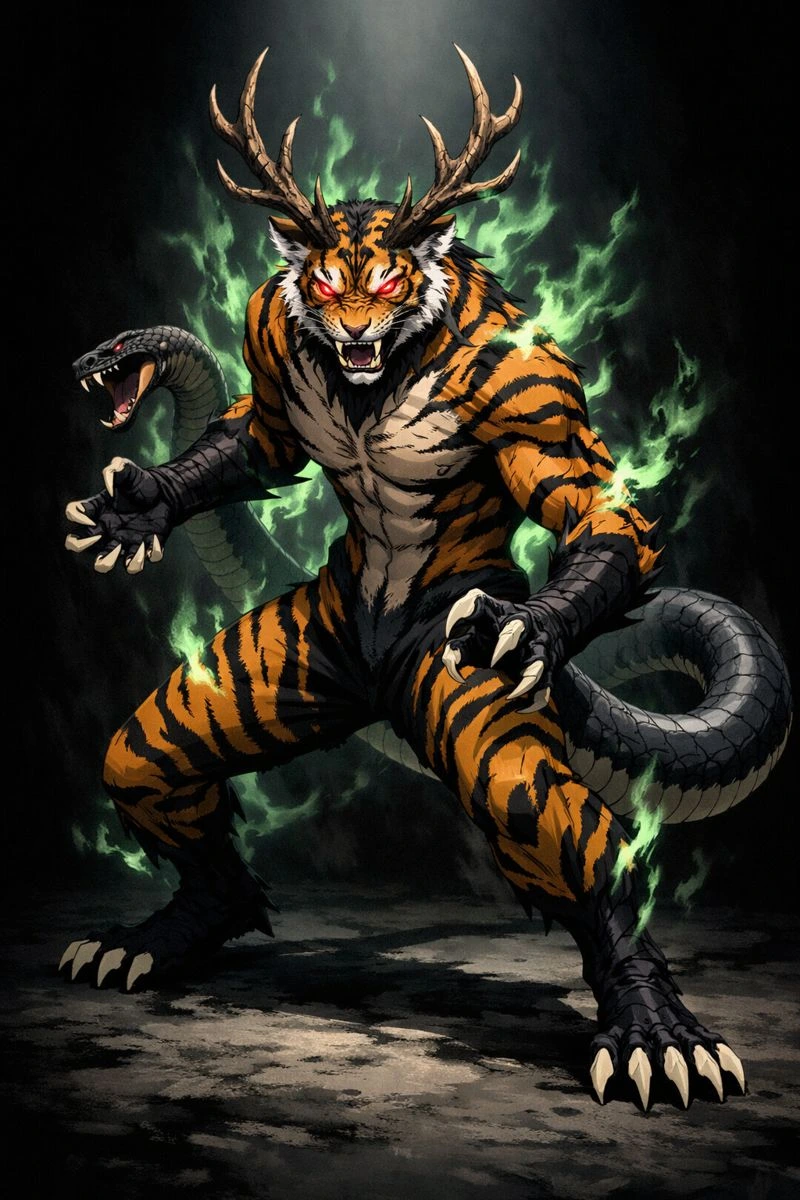
A true master of the Ten Shadows does not just summon one monster at a time. They combine them.
- The Well’s Unknown Abyss (Seiteishirazu, 不知井底): This is a fusion of Toad and Nue. It creates winged toads.
- Benefit: Unlike Totality, which is a permanent fusion following death, this is a temporary combination. The key advantage is that if these fused Shikigami are destroyed, the base Shikigami (Toad and Nue) do not die permanently. This allows the user to spam destructible minions without risking their core arsenal.
- Chimera Beast Agito: Used by Sukuna, this is a “Totality” fusion of Nue, Great Serpent, Round Deer, and Tiger Funeral.
- Result: A humanoid beast capable of high-speed flight, immense physical strength, and self-regeneration (thanks to the Deer). It acts as a perfect tank/partner to fight alongside the user.
- Shadow Manipulation: Beyond the beasts, the user controls the shadows themselves. They can:
- Slip into an enemy’s shadow to attack from behind.
- Store weapons in the shadow for surprise attacks.
- Use the shadow as a fluid trap to trip or sink opponents.
9. Domain Expansion: Chimera Shadow Garden

Megumi Fushiguro’s Domain Expansion, Chimera Shadow Garden (Kango An’eitei), differs from most.
- Incomplete Form: Throughout most of the series, Megumi cannot fully close the barrier of his domain. He must use an enclosed physical space (like a cave or a gymnasium) to act as the shell.
- Effect: The floor becomes an ocean of shadow. Megumi can summon unlimited waves of Shikigami, create shadow duplicates of himself, and hide instantly within the darkness.
- Sure-Hit: Because it is incomplete, it lacks the “sure-hit” guarantee of a standard domain, but it boosts his technique to 120% potential.
- Complete Form (Theoretical/Sukuna’s Usage): A complete Chimera Shadow Garden would likely allow the user to manifest the totality of the shadows’ physics-breaking nature, perhaps allowing them to turn the enemy’s own body (their internal shadows) into a medium for attack.
10. Sukuna vs. Megumi: The Skill Gap
The usage of the Ten Shadows by Ryomen Sukuna when he possessed Megumi highlights the difference between a “User” and a “Master.”
- Partial Summoning: Sukuna does not always summon the full body of the Shikigami. He summons just the head of the Divine Dog to bite, or just the wheel of Mahoraga. This reduces the target area for enemies and likely conserves energy.
- Using the Host: Sukuna placed Mahoraga’s wheel on Megumi’s soul (who was suppressed inside). When Sukuna was hit by Gojo’s Unlimited Void, he transferred the burden of adaptation to Megumi’s soul. Megumi took the damage, and the wheel turned, allowing Mahoraga to adapt to the domain without Sukuna taking the hit.
- Imagination: Sukuna realized that the Shikigami are made of shadow and can be unstable. He didn’t force them to keep a solid shape, making them giant, amorphous, and harder to kill.
11. Conclusion: The Potential to Rival Gods
The Ten Shadows Technique is arguably the most versatile technique in Jujutsu Kaisen. It covers every base of combat:
- Close Range: Divine Dogs, martial arts with shadow clones.
- Long Range: Nue, Max Elephant.
- Support/Heals: Round Deer.
- Defense: Hiding in shadows, Rabbit Escape.
- Ultimate Offense:
While Satoru Gojo is the “strongest” because of his overwhelming innate talent, the Ten Shadows represents the pinnacle of technical sorcery. It rewards tactical intellect, risk management, and the willingness to sacrifice power to gain power.
For a sorcerer like Megumi Fushiguro, the path to mastery was a journey of shedding his mindset of self-sacrifice and embracing the selfishness required to be a top-tier sorcerer. In the hands of Sukuna, the technique showed its true colors: a power capable of cutting through the very fabric of the world. Whether used as a utility belt of support creatures or a weapon of mass destruction, the Ten Shadows stands as a testament to the dark, complex beauty of the Jujutsu Kaisen power system. It is not just about summoning monsters; it is about commanding the darkness itself.
Which Shikigami is your fave? Vote in the comments! Subscribe for more JJK breakdowns.