
In the vast, sprawling lore of Solo Leveling, there are countless dungeons, raids, and dimensional rifts, but none hold the same narrative weight, terrifying atmosphere, or structural importance as the Temple of Cartenon. It is the Alpha and the Omega of Sung Jin-Woo’s journey—the place where the “Weakest Hunter of All Time” died, and where the Shadow Monarch was truly born.
To the uninitiated, it was a tragedy inside a D-Rank dungeon. To the lore expert, it was a meticulously crafted stage designed by a mad genius to test the vessel of a god. The Temple is not just a location; it is a character in itself, a mechanism of ancient magic and sadistic rules that set the tone for the entire series.
This comprehensive analysis delves into the abyss of the Double Dungeon, dissecting the rules of survival, the identity of the Architect, the truth behind the “System,” and the metaphysical transformation that occurred within these cold, stone walls.
1. Introduction: Where It All Began
The deceptive nature of the Solo Leveling universe is perfectly encapsulated in the raid that started it all. It began as a mundane, routine clearing of a D-Rank gate. The party, led by Song Chi-Yul and comprised of seasoned C-Rank and D-Rank hunters, expected a quick paycheck. Among them was Sung Jin-Woo, a man so notoriously weak that his presence was considered a bad omen, a walking injury magnet who struggled against even the weakest goblins.
The D-Rank Gate Deception
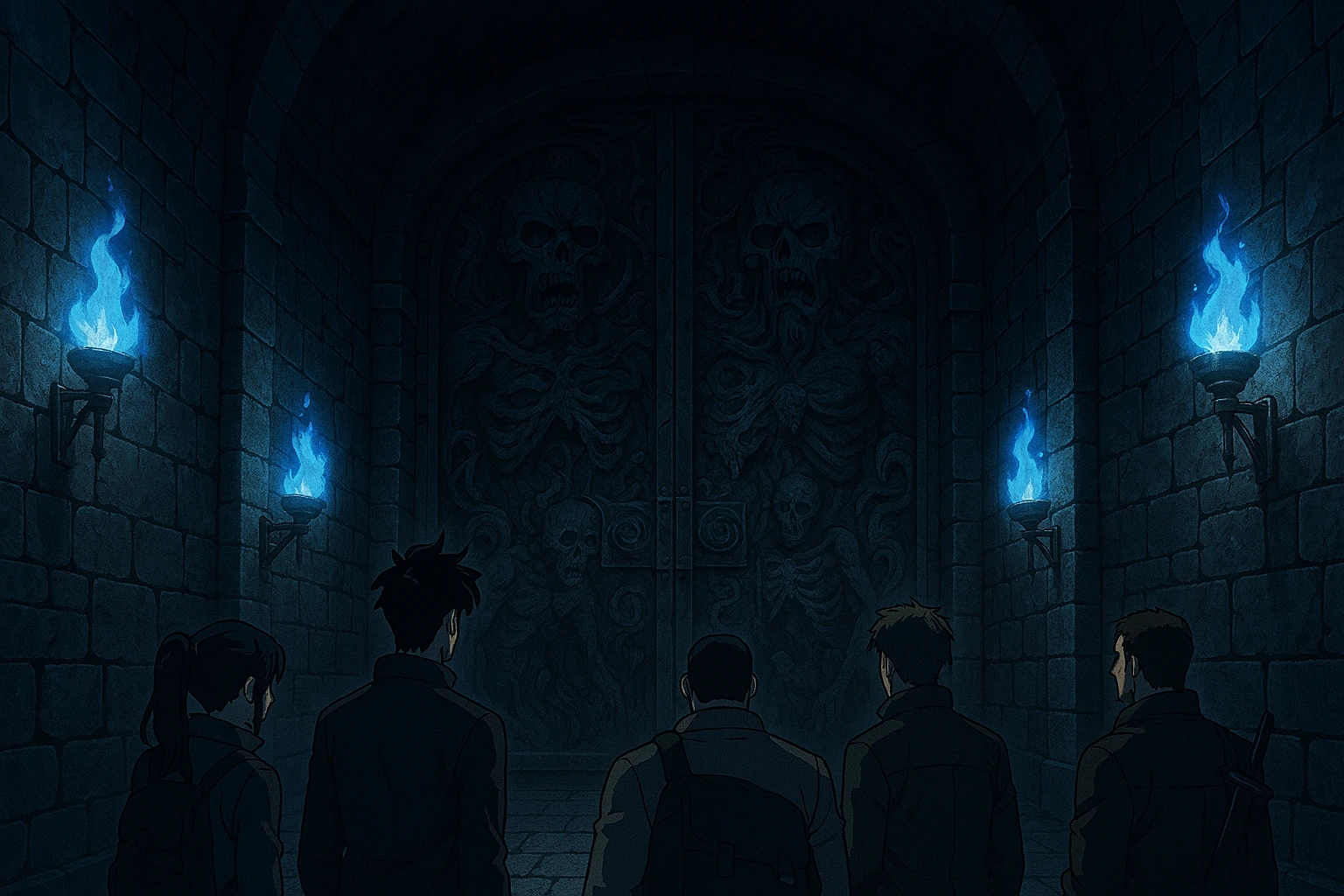
The genius of this narrative arc lies in the subversion of expectations. The dungeon seemed cleared. The boss was defeated. The loot was distributed. By all standard Hunter Guild protocols, the raid was over. However, the discovery of a “Double Dungeon”—a dungeon hidden within another dungeon—broke the established rules of the world immediately.
The long, torch-lit corridor that led to the Temple was the first warning sign. Unlike the rough, cavernous interiors of typical gates, this hallway was structured, artificial, and ominous. The party voted to enter, a democratic decision that would seal the fate of nearly everyone present. This moment highlights the hubris of Hunters who had become complacent with the System’s difficulty rankings. They assumed that because the outer shell was D-Rank, the inner core would be manageable. They were wrong.
The Atmosphere of Absolute Horror
As the massive doors of the temple groaned open, the atmosphere shifted from an adventure fantasy to cosmic horror. The room was cavernous, filled with colossal stone statues that dwarfed the humans. At the far end sat the “God Statue,” a monolithic figure on a throne, eyes closed, exuding an aura of oppressive silence.
The true horror began not when a monster attacked, but when the massive stone doors slammed shut behind them. There was no roar, no screech of a beast—just the mechanical finality of a trap snapping closed. The realization that they were locked in with entities they could not comprehend, let alone fight, created a claustrophobic tension that is rare in power-fantasy manhwa.
The Tablets and the Commandments
In the center of the room stood a statue holding a stone tablet, inscribed with the “Commandments of the Cartenon Temple.” These were not suggestions; they were the source code of the survival game they had unknowingly entered.
- Worship the Lord.
- Praise the Lord.
- Prove Your Faith.
The tablet concluded with a chilling warning: “Those who do not follow these commandments will never leave alive.”
This was the first hint at the “System” that would later govern Jin-Woo’s life. Unlike chaotic monsters that kill on instinct, the Temple operated on rules. It was structured, logical, and cruel—a direct reflection of its creator, the Architect. The mystery that permeated the air was thick: Why was such a high-level, complex structure hidden inside a low-level gate? Why did the statues have mana signatures different from magical beasts? The answer lay in the fact that this was not a dungeon for hunting; it was a testing ground for a vessel.
2. The Three Commandments (The Rules of Survival)
The Cartenon Temple raid is essentially a three-stage boss fight, but one where the players are stripped of their ability to fight back. They are forced to solve puzzles under the threat of immediate, gruesome execution. The genius of these commandments lies in how they force the Hunters to act against their instincts (fight or flight) and instead use observation and submission.
First Commandment: “Worship the Lord”

The first trigger was the most iconic moment in the series. As Mr. Song read the first commandment, the massive God Statue’s eyes began to glow with a crimson, hellish light. The sheer scale of the entity became apparent when it moved.
The Analysis of the “Smile” The “Smile” of the God Statue is perhaps the most famous panel in Solo Leveling. It is the embodiment of the “Uncanny Valley.” Stone should not move. A statue of a god should look benevolent or stoic, not manic and sadistic. The smile broke the Hunters’ minds because it implied malice. It wasn’t a defense mechanism; the statue was enjoying the slaughter.
When the God Statue fired its eye beams, it didn’t just injure; it vaporized. S-Rank equivalent power was unleashed in a D-Rank dungeon. The solution to this phase was submission. Jin-Woo, utilizing his high perception and instinct, realized that “Worshipping the Lord” meant bowing.
The Psychology of Submission To survive, the Hunters had to degrade themselves. They had to kneel before a false idol and press their heads to the floor. This act of forced submission established the hierarchy: The Architect (through the statue) is the God, and the Hunters are merely insects. Those who stood tall, frozen in fear or trying to run, were incinerated. Only those who bowed were spared, but the terror was far from over.
Second Commandment: “Praise the Lord”
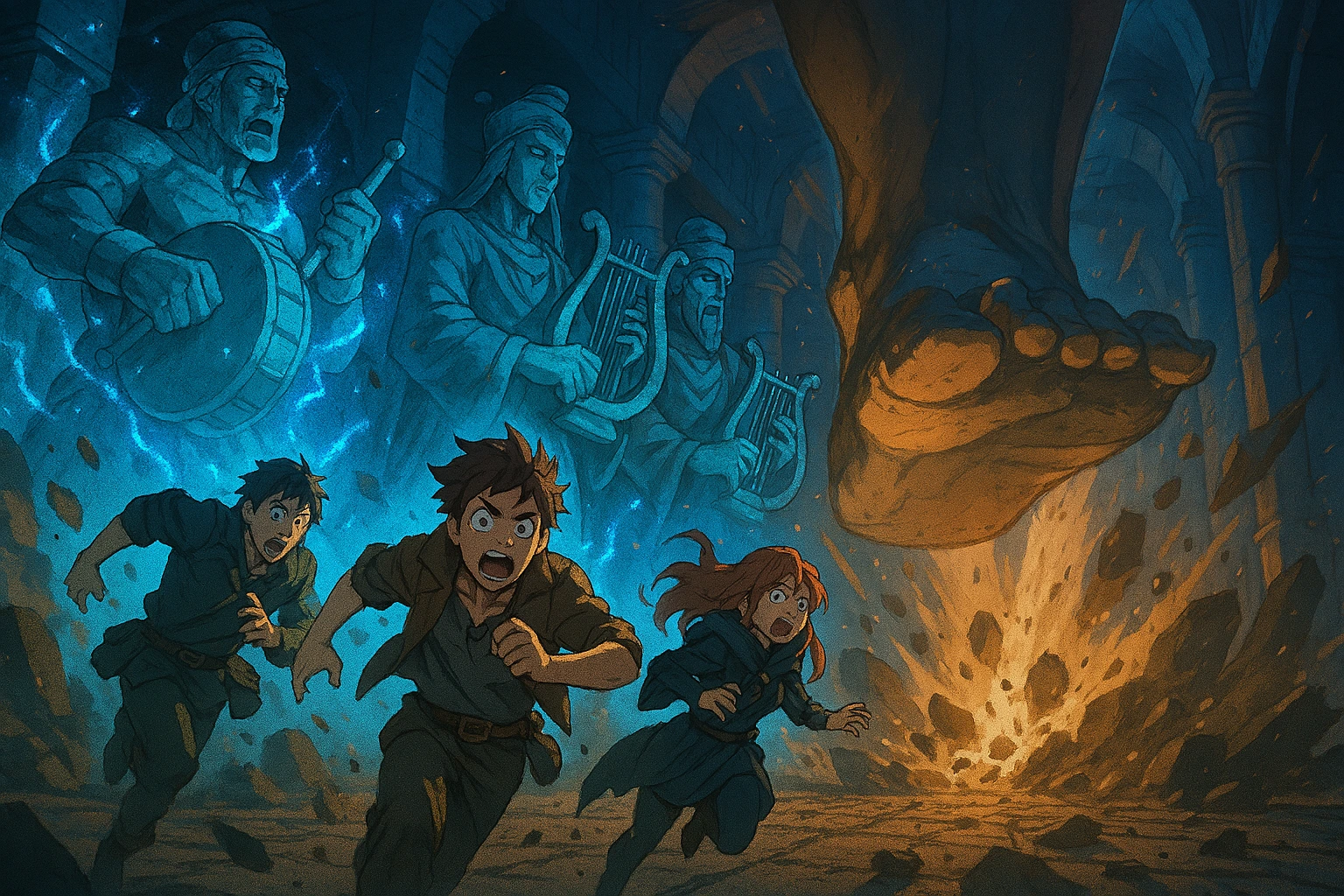
Once the survivors bowed, the God Statue’s expression changed. It stood up. The sheer displacement of air as the titan moved caused shockwaves. The second phase began: “Praise the Lord.”
This phase utilized the secondary statues lining the walls—the ones holding instruments.
- The Mechanic: The God Statue moved toward the Hunters to stomp them into paste. To stop it, the Hunters had to run to the statues holding instruments.
- The Trap: Not all statues were safe. The statues holding weapons attacked anyone who came close. Only the ones with instruments (drums, lyres, flutes) would “play” their song when approached.
This was a test of coordination and speed. It was chaos. The noise of the instruments, the screaming of dying comrades, and the earth-shaking footsteps of the God Statue created a sensory overload. Jin-Woo’s role here was crucial; he acted as the raid leader, directing the panicked survivors to the correct spots. This phase proved that the Temple required logic amidst chaos, a foreshadowing of the intellect Jin-Woo would need to utilize the System effectively.
Third Commandment: “Prove Your Faith”
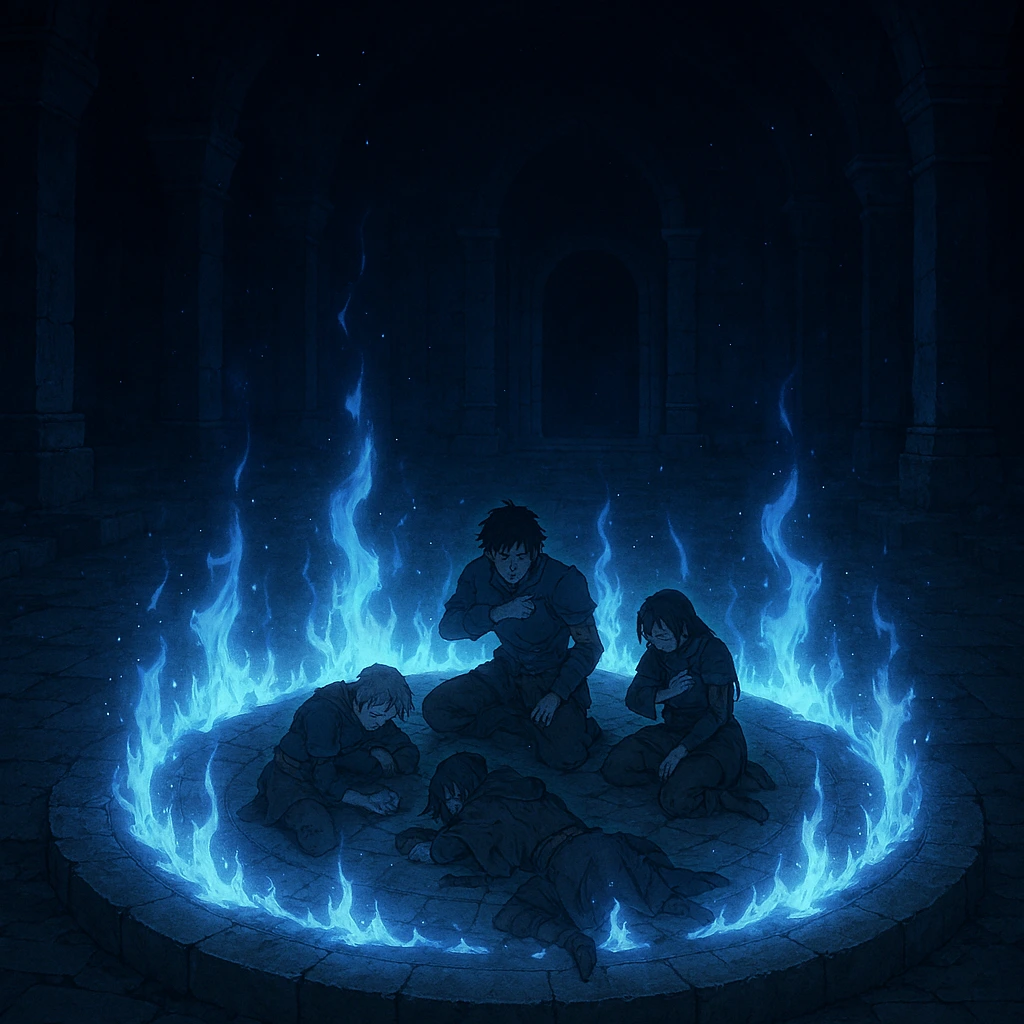
The final phase was the cruelest psychological test. An altar appeared in the center of the room. Orange flames ignited in a circle around it. The surviving Hunters—Jin-Woo, Joohee, Mr. Song, and a few others—gathered at the altar.
The Deceptive Choice When they entered the altar’s circle, blue flames appeared on the perimeter. The door opened. The instinct was to run. “The door is open! We can leave!” But this was the test of “Faith.”
- The Mechanic: For every person who stayed in the circle, a blue flame remained lit. If they looked at the God Statue, it paused. If they looked away or ran, it approached.
- The Timer: The blue flames acted as a timer. The test was not about escaping; it was about sacrifice.
The commandment “Prove Your Faith” implied trust in each other and the willingness to sacrifice for the greater good. However, the human instinct for self-preservation kicked in. One by one, the Hunters broke. They saw the open door and fled, abandoning the group. With every person who left, the defensive circle weakened, and the door began to close.
It ended with Sung Jin-Woo, leg severed and body broken, choosing to stay behind so the last two (Mr. Song and Joohee) could escape. He “proved his faith” through self-sacrifice. This was the quality the Architect was looking for—not just strength, but the will to endure death.
3. The God Statue (The False Idol)
The central antagonist of this arc, the God Statue (often referred to as the Statue of the Creator), is a masterpiece of design and lore implication.
Identity Reveal: Not the Absolute Being
Initially, readers are led to believe this statue represents the actual God of the Solo Leveling universe. In reality, it is a replica. The Architect created this dungeon as a tribute to the Absolute Being, the creator of the Monarchs and Rulers. However, the mockery lies in the nature of the statue. The Absolute Being was cruel and indifferent to the war between Light and Dark. The statue reflects this cruelty. It demands worship but offers no salvation, only death.
The Power Scaling Anomaly
Why was the statue so strong? When Jin-Woo returns later as a near S-Rank Hunter, he notes that the statue is indeed powerful, but not invincible. However, during the first raid, it seemed like an insurmountable force of nature.
- Eye Beams: High-concentration mana blasts capable of vaporizing high-ranking armor.
- Physical Strength: Capable of crushing a human body into nothingness with a single step.
- Speed: Despite its size, it moved with a terrifying fluidity once the “Worship” phase ended.
The statue served as a gatekeeper. If a vessel could not survive the fear induced by this construct, they were not worthy of containing the soul of Ashborn, the Shadow Monarch. The statue was, in essence, a “filter” designed to weed out the weak-willed.
4. The Return: Level 100 vs. The Temple
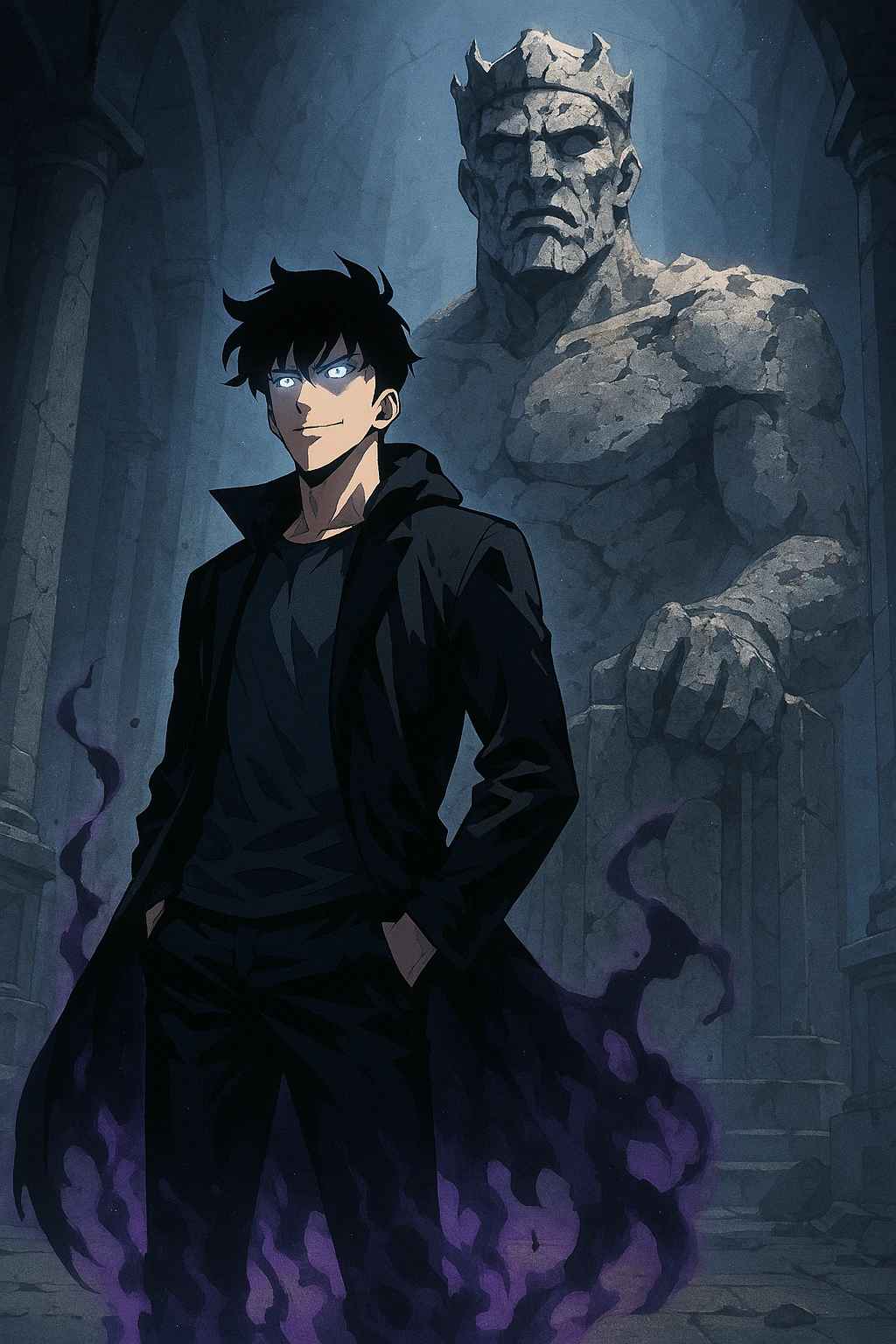
Months later, Sung Jin-Woo had transformed from the world’s weakest Hunter into a burgeoning powerhouse. He received a notification from the System: a hidden quest to return to the place where it all began. He possessed the “Key to the Cartenon Temple.”
The Contrast of Power
The return to the Double Dungeon is one of the most satisfying narrative arcs in the series. It serves as a benchmark for Jin-Woo’s growth.
- E-Rank Jin-Woo: Trembling, crying, unable to move, relying on luck and quick thinking.
- S-Rank Jin-Woo: Calm, hands in pockets, analyzing the mana flow, treating the terrifying statues as mere obstacles.
When Jin-Woo re-entered the temple, the atmosphere was different. The fear was gone, replaced by a cold determination. The God Statue smiled again, but this time, Jin-Woo didn’t bow. He summoned his Dominator’s Touch.
The Blue Statues and System Features
A massive lore reveal occurs during the fight with the secondary statues. Jin-Woo realizes that the statues he fought in the beginning were physical representations of the System’s features that he had been using for months.
- The Statue with the Tablet: Represented the Daily Quest log and the rules.
- The Healer Statues: Represented the “Status Recovery” upon leveling up.
- The Instrument Statues: Represented the alarms and notifications.
Jin-Woo was literally fighting the interface that had governed his life. This was a metaphorical breaking of the shackles. He was no longer just a player following the UI; he was challenging the developer.
Physical Destruction
The fight that ensued was a massacre in reverse. Jin-Woo’s shadows and his own immense physical strength decimated the statues that had once slaughtered his friends. The God Statue, once a figure of absolute terror, was dismantled. Jin-Woo punched through the stone that had seemed indestructible. This wasn’t just a fight; it was therapy. It was Jin-Woo conquering his trauma through violence.
5. The Architect: The Puppet Master
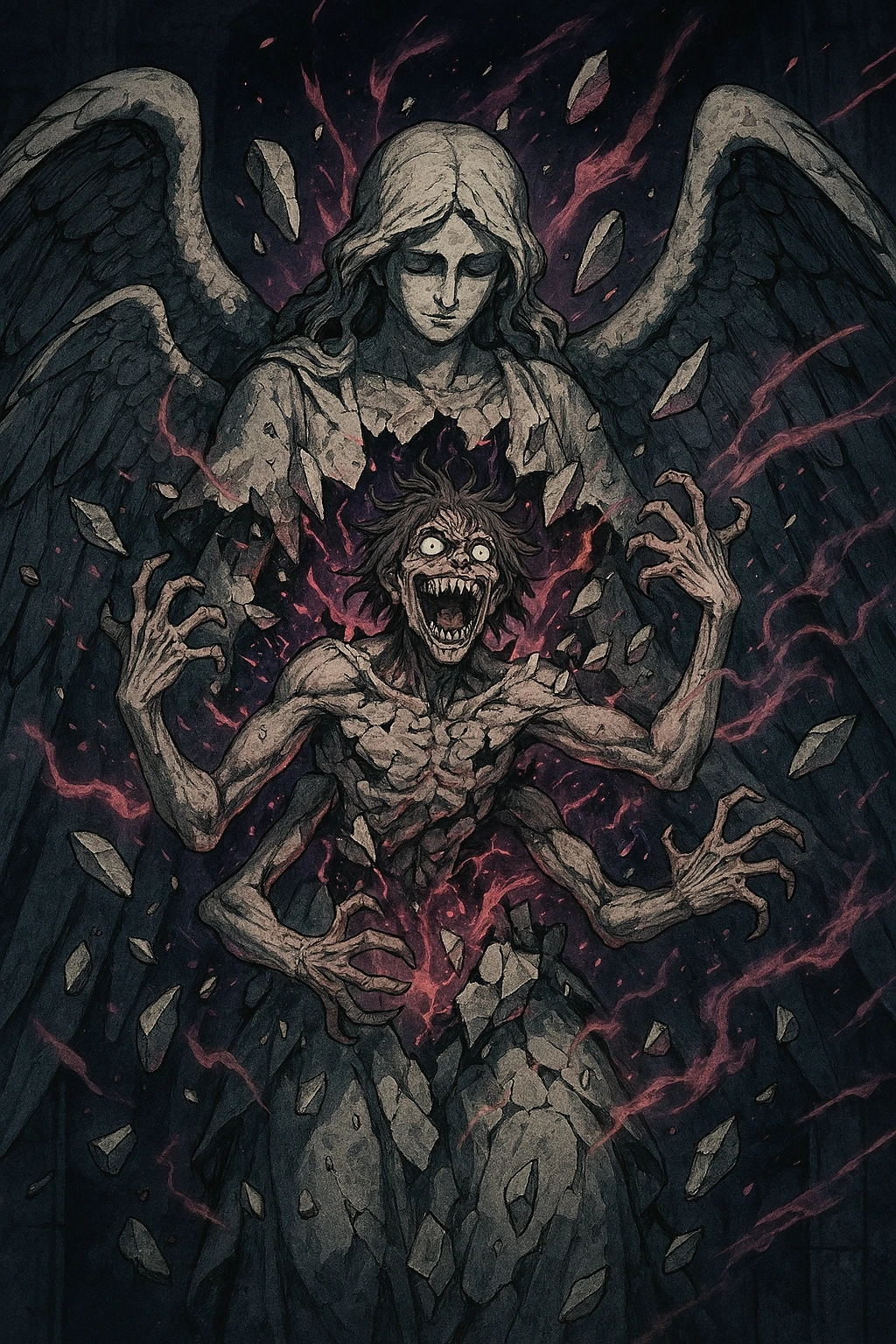
With the God Statue destroyed, the true master of the Temple revealed himself. The angel statue holding the stone slab—the one that had remained motionless during the first raid—cracked open to reveal a grotesque, multi-limbed humanoid creature.
Candia: The Sorcerer of Chaos
This entity was The Architect. His name was Candia, the greatest sorcerer of the Chaos World. Unlike the monsters Jin-Woo had fought, Candia was intelligent, articulate, and arrogant.
- Race: He was not a demon, but a humanoid sorcerer from a dimension of chaos.
- The Creator: He was the one who built the System. The “Player” interface, the leveling mechanics, the inventory, the daily quests—Candia coded all of it using magic.
The Motive: The Deal with Ashborn
Why did Candia do this? The lore explanation is tragic and ambitious. Candia approached Ashborn, the Shadow Monarch, with a proposition. Ashborn was wandering the gap between dimensions, looking for a successor because his power was too great for a normal body to hold.
- The Problem: No human body could withstand the raw power of the Shadow Monarch. They would explode instantly.
- The Solution: The System. Candia designed the System to act as a “training program.” It would take a weak human and slowly acclimatize their body to Ashborn’s power through leveling up. The “Levels” were just measurements of how much of Ashborn’s power the body could currently handle.
- The Price: In exchange for finding a vessel and creating the System, Candia demanded an immortal body. He wanted to escape the cycle of death. Ashborn agreed to the pact.
The Betrayal
However, things didn’t go as Candia planned. He expected the vessel (Jin-Woo) to eventually be erased, with Ashborn taking full control of the body. But Ashborn grew fond of Jin-Woo’s struggle and humanity. The Architect viewed Jin-Woo as a disposable lab rat, while Ashborn viewed him as a true heir. This discrepancy led to Ashborn locking the Architect out of the administrative privileges of the System, trapping Candia in the dungeon he built.
6. The Battle for the Body
The battle between Sung Jin-Woo and the Architect is a clash of distinct ideologies: The Gamer vs. The Game Master.
Fight Breakdown
The Architect was a formidable foe. He possessed multiple arms, immense physical strength, and high-level magic.
- Telekinesis: The Architect threw the massive stone bodies of the destroyed statues at Jin-Woo.
- Muscle Expansion: He could manipulate his own body mass to increase striking power.
- Speed: He kept up with Jin-Woo’s advanced agility.
However, the Architect made a fatal error: He underestimated the “Player.” He assumed Jin-Woo was just a product of his System, a puppet moving on strings. He didn’t account for Jin-Woo’s adaptability and the “will to live” that he demonstrated in the first raid.
The Test of Strength
The Architect was furious. He screamed, “I am the one who created you!” He felt entitled to Jin-Woo’s life. But Jin-Woo fought back with the very skills the Architect gave him, refined by his own experience. The irony was palpable—the creator being beaten by his creation using the tools he provided.
The System Lock Fails
In a desperate attempt, the Architect tried to override the System to shut Jin-Woo down. He attempted a “Force Quit” on Jin-Woo’s life. It failed. The System notification read: “Access Denied.” This confirmed that the Shadow Monarch, the source of the power, had chosen Jin-Woo over the Architect. The “Administrator” no longer had root access. This moment broke the Architect mentally before Jin-Woo broke him physically.
7. The Heart of the Shadow Monarch
Following the defeat of the Architect, the final and most critical event of the Cartenon Temple arc occurred. Jin-Woo didn’t just win; he evolved.
The Black Heart
Jin-Woo’s heart stopped. To the outside world, he appeared dead. But his consciousness was pulled into a void—the realm of the Shadow Monarch. Here, the “Black Heart” was fully integrated into his body. Until this point, Jin-Woo had been using a “battery” of mana assisted by the System. Now, he was given the “reactor.” The Black Heart was the literal heart of Ashborn. It provided infinite mana. It was the engine of death itself.
Data Deletion: The Glitch in the Matrix
This sequence is visually stunning and conceptually profound. As Jin-Woo accepted his role, the “System” began to crumble. The blue windows, the quest logs, the inventory screens—they all shattered like glass.
- The Metaphor: The training wheels were coming off. The System was a limiter, a user interface designed to make the power of a god palatable to a human mind (gamification). Now that Jin-Woo was strong enough, he didn’t need the interface. He didn’t need “skills” with cooldowns; he just had Authority.
The Transition: Player to Owner
Jin-Woo met Ashborn in this illusionary space. They had a conversation that redefined the series. Ashborn didn’t want to possess Jin-Woo; he wanted to become him. They merged.
- “I am you, and you are me.” This wasn’t a takeover; it was a unification. Jin-Woo retained his ego, his memories, and his personality, but he gained the wisdom, memories, and army of the Shadow Monarch.
The Shadow Army’s Return
When Jin-Woo woke up, the transformation was undeniable. The entire dungeon shook. The shadows in the room writhed. The original Shadow Army—the millions of soldiers who served Ashborn—recognized the change. Grand-Marshal Bellion and the true elites of the Shadow Army were waiting in the dimension of death, ready for their new King to call upon them. The Cartenon Temple, once a place of fear, became the throne room of the new Monarch.
8. Conclusion: The Cycle Complete
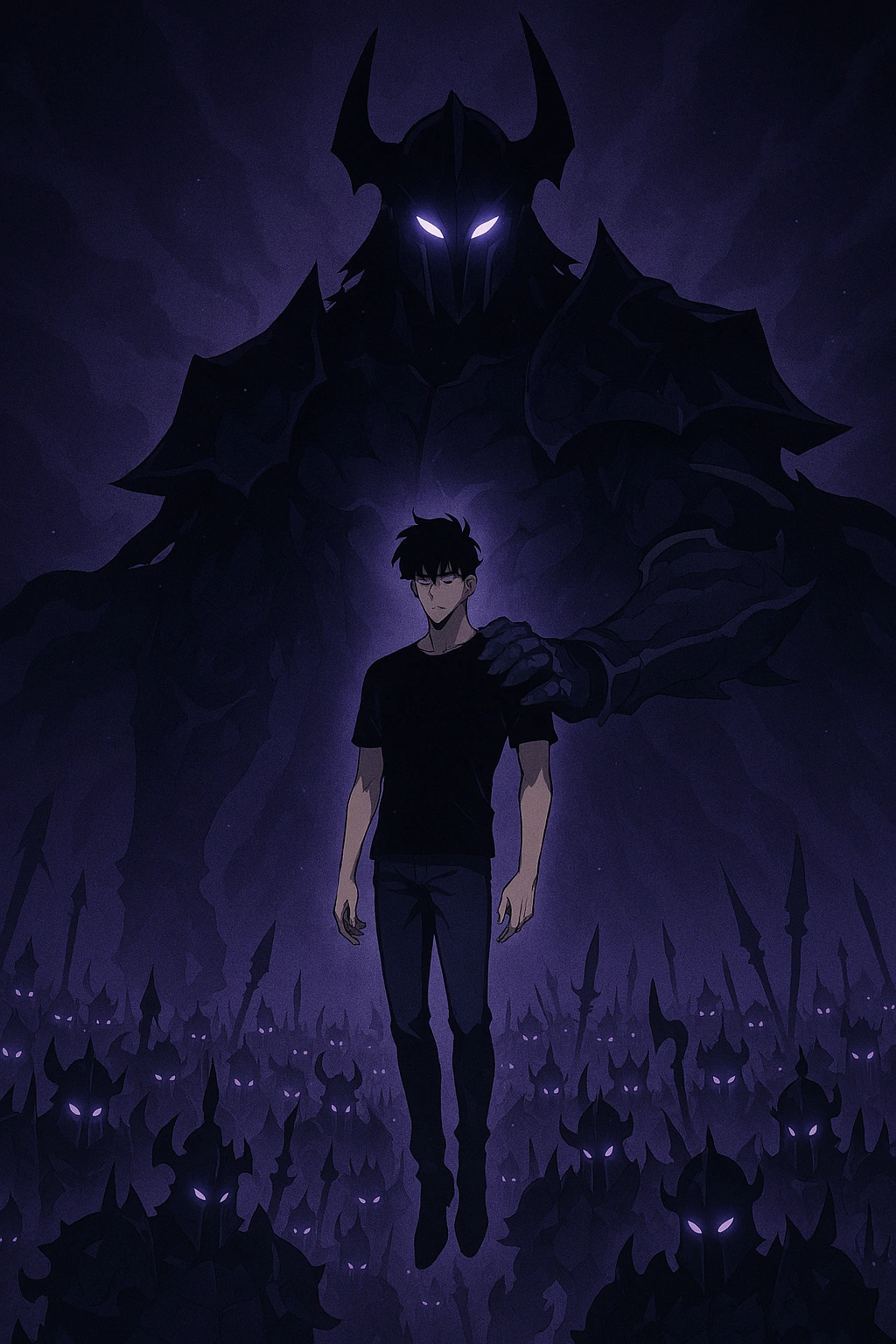
The Temple of Cartenon stands as a monument to the circular storytelling of Solo Leveling.
Symbolism of the Double Dungeon
The story began in this room with a weak boy facing death, and it reached its spiritual climax in the same room with a god conquering death. The statues, the tablets, and the altar were all symbols of a test that spanned the entire narrative.
- The Smile tested his fear.
- The Instruments tested his wits.
- The Altar tested his sacrifice.
- The Return tested his strength.
Fate vs. Choice
The revelation of the Architect begs the question: Did Jin-Woo ever have a choice? Was his survival in the first raid luck, or was it rigged? The answer is a mix of both. The Architect rigged the game, but he rigged it for someone to win eventually. Jin-Woo was the anomaly who played the rigged game better than the creator expected.
Summary
The Cartenon Temple is more than just a dungeon; it is the womb of the Shadow Monarch. It is where the human Sung Jin-Woo died twice—once metaphorically as a weakling, and once physically to be reborn as a King. It represents the brutal, uncompromising nature of power in this universe: Power is not given; it is taken by those who stare into the abyss and refuse to blink.
The Architect’s secret was that there was never a “Player.” There was only a Monarch in the making, and the Temple was the forge that hammered out the impurities until only the Shadow remained.
Detailed Addendum: The Aesthetics of Cartenon
To fully appreciate the “Wow Factor” of this location, one must look at the artistic details that define it. The Temple is architectural brutalism mixed with religious iconography.
- The Scale: The ceilings are lost in darkness. The statues are so large that a human stands only as high as their ankles. This scale emphasizes the insignificance of humanity against the Rulers and Monarchs.
- The Color Palette: The dungeon is defined by cold greys and stones, punctuated by two distinct colors: the Blue of the System/Magic and the Crimson of the God Statue’s rage. This duality represents the conflict between the Order (System) and the Chaos (Destruction).
- The Sound Design (Implied): In the manhwa and anime, the sound is crucial. The grinding of stone on stone. The heavy, rhythmic thudding of the statues. The shrill, discordant notes of the musical instruments. And finally, the absolute, suffocating silence when the King arrives.
The Temple of Cartenon remains the gold standard for “First Level” design in fantasy media. It hooked millions of readers not with action, but with dread. It promised a world where actions had consequences, and it delivered a story where the greatest consequence was becoming the darkness itself.
The Legacy of the Architect
Even after his death, Candia’s legacy remained. The System he built was so robust that Jin-Woo continued to use its interface for convenience even after he transcended it. The Architect was a villain, yes, but he was also a creator of unparalleled skill. He built a bridge between a fragile human and an eternal conceptual power. Without the Architect’s obsession and the Cartenon Temple’s cruelty, the Earth would have been defenseless against the coming war. In a twisted way, the Architect saved the world by creating the monster capable of protecting it.
This concludes the deep dive into the Temple of Cartenon. From the deceptive blue torches of the entrance to the shattering of the System windows, this location is the beating heart of Solo Leveling lore.