
1. Introduction: The Class That Doesn’t Exist
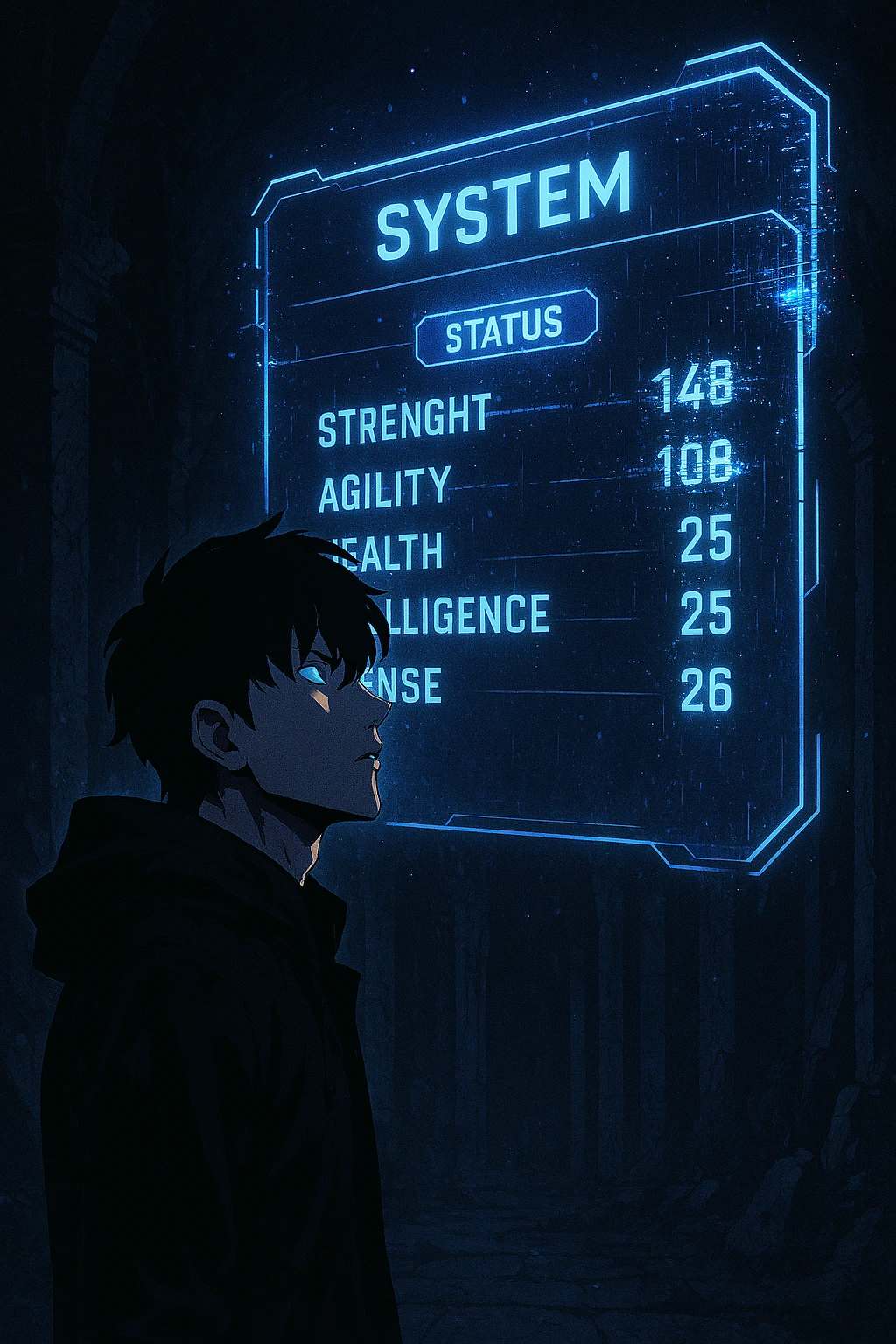
In the vast, calculated universe of MMORPGs (Massively Multiplayer Online Role-Playing Games), there is a holy trinity that governs all existence: the Tank, the Healer, and the DPS (Damage Per Second). This structure is the bedrock of balance. A Tank acts as the anvil, absorbing punishment to protect the party, but they typically deal the damage of a wet noodle. A Mage (DPS) is the hammer, capable of summoning apocalyptic firestorms, but they shatter like glass if an enemy so much as breathes on them. A Rogue (Assassin) possesses incredible speed and burst damage but lacks the crowd control to handle mobs and has zero sustainability in prolonged fights.
The “System” in Solo Leveling was designed with similar rigid parameters. Hunters are awakened into specific classes with pre-determined aptitudes. A Healer cannot decide one day to pick up a shield and become a Tank; their mana efficiency and physical durability simply won’t support it. A Mage cannot suddenly pick up a greatsword and fight on the front lines without getting decapitated. Your class is your destiny, and your limits are absolute.
Until Sung Jin-woo.
Sung Jin-woo represents a “glitch” in the matrix, a singularity that defies the fundamental laws of gaming logic. If we were to look at his character sheet through the lens of a game developer or a balance team, he would be immediately flagged for cheating. His official job class is “Necromancer” (specifically, the Shadow Monarch), which falls firmly under the archetype of a Mage or Summoner. In any balanced game, a Necromancer is a backline commander—physically weak, heavily reliant on a finite mana pool, and completely helpless without their minions to screen for them.
But take a look at his stat allocation.
Instead of dumping points into Intelligence (INT) to boost his summon capacity or mana pool initially, Jin-woo spent the formative levels of his re-awakening dumping everything into Strength (STR) and Agility (AGI). He trained like a fighter, doing his daily 10km runs and pushups. He moved like an assassin, learning to read muscle twitches and breath patterns. He fought with daggers, the signature weapon of the Rogue class, rather than a staff or wand.
The result is a horrific hybrid that creates a tactical nightmare for any opponent. He is a Necromancer who moves faster than the speed of sound. He is a Summoner who can physically overpower a Tank with his bare hands. He is a Mage who doesn’t need to cast spells to kill you because he can just decapitate you with a dagger before you even realize the fight has started.
This hybrid build is the reason no one—not the S-Rank Hunters, not the National Level Hunters, and eventually, not even the Monarchs—could effectively counter him. In a traditional raid, the strategy is simple: dive past the frontline to kill the summoner, and the summons vanish. But against Jin-woo, that logic fails catastrophically. If you dive past his Shadow Army to attack him directly, you aren’t finding a weak point. You are walking into the range of an S-Rank Assassin who happens to be the strongest unit in his own army.
This article delves deep into the mechanics of this “broken” skill tree, analyzing how an Assassin became the greatest Mage in history, and why his specific combination of Active, Passive, and Ruler skills creates the perfect One-Man Army.
2. The Assassin Tree: Speed, Stealth, and the Art of the Critical Hit
Before he was the Monarch of Shadows, Sung Jin-woo was a survivor. His fighting style was born in the brutal, low-level dungeons where he had no mana and no magic to rely on. He learned to fight with his body, forcing the System to reward that grit with skills that belong firmly in the Assassin/Rogue archetype. This physical foundation is what makes him unique among all other magic users, effectively giving him a “dual-class” status that the System never intended.
Stealth (Active): The Absolute Erasure
In most RPGs, “Stealth” or “Camouflage” is a mechanic with hard counters. High-level enemies usually have “True Sight,” or attacking breaks the concealment, leaving the rogue vulnerable. However, Jin-woo’s Stealth is far more potent than a simple visual trick. It is the comprehensive erasure of presence.
When Jin-woo activates Stealth, he doesn’t just turn transparent; he erases his sound, his scent, and most importantly, his magical signature (mana). For a world that runs on tracking mana energy, this is devastating. We see the terrifying efficacy of this skill during the arc involving the assassination attempts by the Scavenger Guild. S-Rank Hunters, who have honed their senses for years to detect monsters by their magical aura, are completely oblivious to him standing inches away. He becomes a ghost in the machine, undetectable by both biological and magical means.
But the true mastery of this skill isn’t just in hiding; it’s in the psychological pressure it exerts. Against the Architect (the creator of the System), Jin-woo used Stealth not to run away, but to reposition constantly, forcing an omniscient being to guess. The Architect, who designed the game, found himself unable to track his own player. When a Necromancer vanishes, the enemy assumes they are fleeing to a safe distance. When Jin-woo vanishes, he is usually already behind you. This forces enemies to keep their guard up in 360 degrees, mentally exhausting them before the first blow is even struck. He uses the threat of his presence to control the enemy’s movements without even attacking.
Sprint (Active) to Quicksilver: Mastering Time Dilation
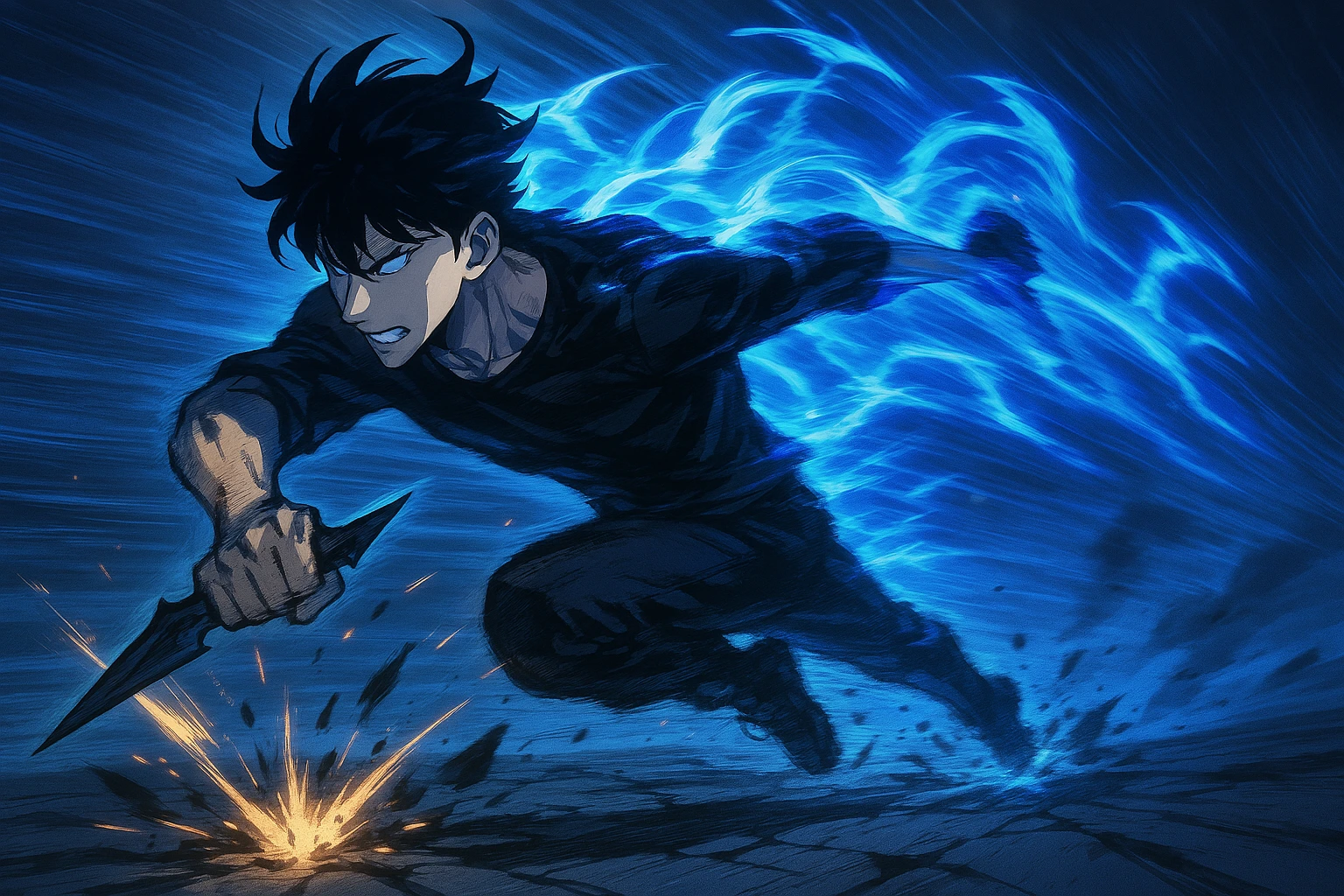
One of Jin-woo’s earliest skills was Sprint, a simple movement buff that increased his speed by 30%. In the early game, this was a survival tool. It allowed him to outrun monsters that should have killed him, like the Blue Venom-Fanged Kasaka. However, as his Agility stat skyrocketed, this skill evolved into something that transcends simple movement: Quicksilver.
Quicksilver is not just “running fast.” It is a form of relativistic combat. At the highest levels, Jin-woo moves so fast that the world around him appears to stand still. This creates a functional time dilation effect. To an observer, he isn’t moving; he is teleporting, leaving behind afterimages that confuse enemy tracking.
The synergy of Quicksilver with his Assassin build is crucial. Velocity is a key component of force ($Force = Mass \times Acceleration$). Even if Jin-woo didn’t have high Strength stats (which he does), the sheer acceleration provided by Quicksilver allows his daggers to impact with the kinetic energy of a wrecking ball. When fighting Igris, and later the Monarchs, this speed allowed him to dodge attacks that were physically impossible to react to, effectively giving him a 100% Dodge Rate against anything slower than light. He essentially acts as a speedster, turning the battlefield into a blur where he is the only clear image.
Vital Strike (Active): Surgical Precision
The Vital Strike (or “Dagger Arts”) is the bread and butter of his DPS output. In gaming terms, this is his “Critical Hit” modifier. The skill highlights the enemy’s vital points, effectively showing him the structural weaknesses in their armor or biology—gaps in chitin, exposed arteries, or mana cores.
This skill transforms Jin-woo from a brawler into a surgeon. It doesn’t matter how much HP a boss monster has or how thick their armor is; if you sever the tendon or pierce the eye, the result is catastrophic. This skill allows Jin-woo to punch significantly above his weight class. It bypasses the need for raw power by substituting it with extreme precision. Combined with his high Agility, Vital Strike ensures that every hit he lands is a “Crit,” maximizing his damage output in a way that raw magical power never could. While a Mage might need a long incantation to deal massive damage, Jin-woo achieves the same DPS with a flick of his wrist.
Mutilate (Active): The Burst Damage King
If Vital Strike is the scalpel, Mutilate is the chainsaw. This skill is the epitome of the “Rogue Burst Window.” It allows Jin-woo to unleash a flurry of slashes in a split second, overwhelming the enemy’s defense through sheer volume of attacks.
We saw the prototype of this during his fight with Igris the Red. When finesse failed and the enemy’s defense was too high for single strikes, Jin-woo resorted to overwhelming speed and aggression. Mutilate is the skill he uses when he needs to shred a target instantly. It utilizes his dual-wielding capability to double the damage output, turning him into a whirlwind of steel.
The brilliance of Mutilate in his “Necromancer” build is that he uses it to create openings for his shadows. He shreds the enemy’s armor with Mutilate, stripping away their defenses, and then his Shadow Army pours into the breach. It is a perfect synthesis of his physical and magical identities—the Assassin opens the door, and the Army floods the room.
3. The Tank/Debuff Tree: Crowd Control and Despair
If the Assassin tree handles single-target damage, the Tank/Debuff tree handles crowd control (CC). This is where Jin-woo begins to break the game mechanics even further. Usually, Assassins have zero crowd control—they can kill one target, but they get overwhelmed by mobs. Jin-woo, however, possesses one of the most potent Area of Effect (AOE) debuffs in the entire series.
Bloodlust (Active): The Weaponization of Killing Intent
Initially obtained fairly early in his progression, Bloodlust was a skill that allowed Jin-woo to project his “killing intent” to intimidate a target. In the beginning, it was a momentary stun—a way to make a monster flinch so he could land a hit. Visually, this is represented by his eyes glowing with a terrifying blue (and later purple) light, freezing enemies in place.
Mechanically, this acts as a “Fear” status effect. In RPG terms, a Fear effect causes the target to lose control of their character or suffer reduced accuracy. However, unlike a game where a “Fear” spell costs mana and has a chance to fail based on resistance, Jin-woo’s Bloodlust is powered by his sheer willpower and the number of lives he has taken. It is a psychological assault that bypasses physical defense. If an enemy has weak mental fortitude, they are essentially paralyzed, their fight-or-flight response short-circuiting instantly.
The Evolution: From Bloodlust to Dragon’s Fear
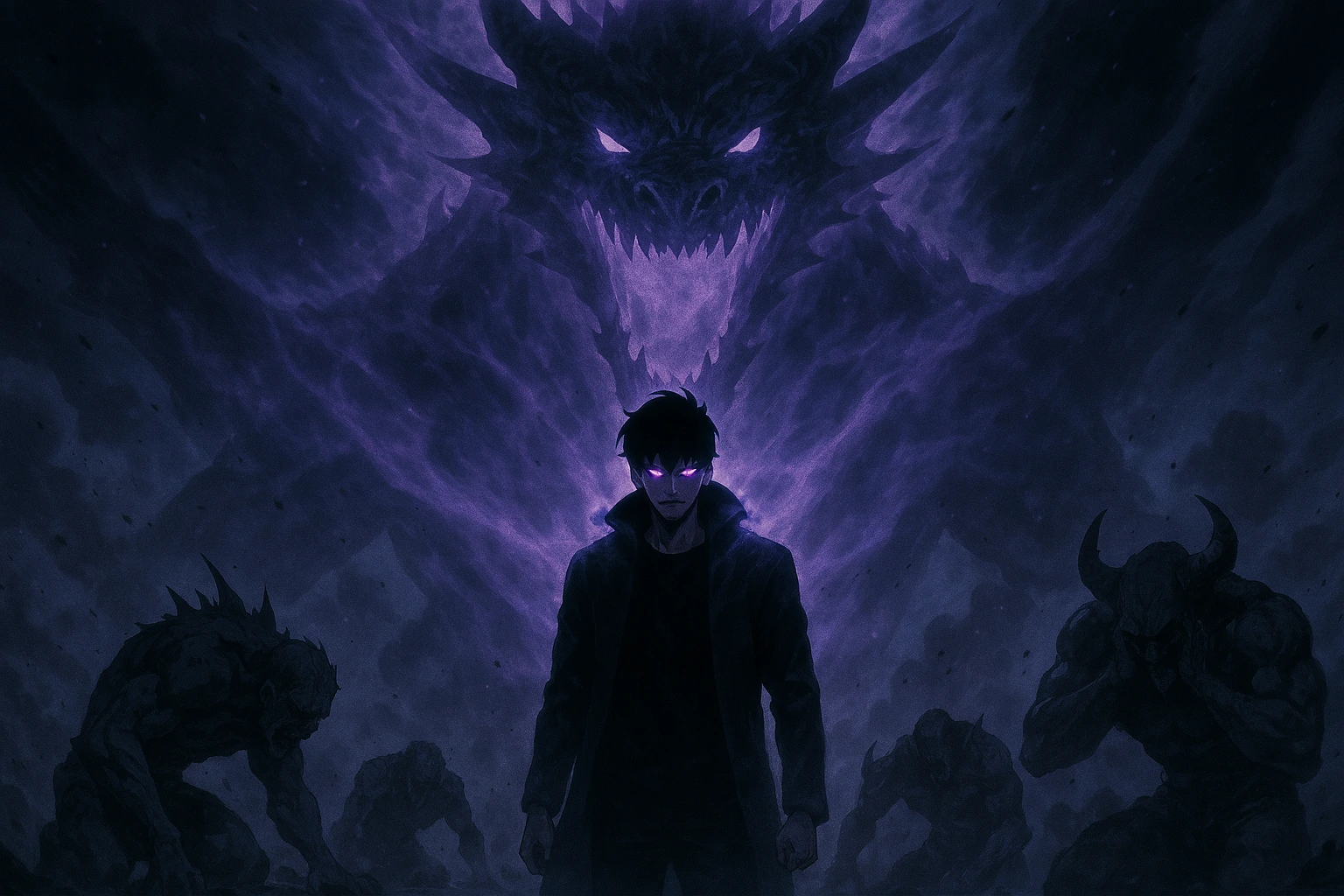
The true game-changer occurred when Jin-woo obtained the Rune from Kamish, the Dragon. Bloodlust evolved into Dragon’s Fear.
This was not a linear upgrade; it was an exponential one. While Bloodlust was a single-target pistol, Dragon’s Fear is a nuclear bomb of psychological pressure. It projects the aura of a dragon—the apex predator of the magical world—across the entire battlefield.
When Jin-woo uses Dragon’s Fear, the mechanics are terrifying:
- AOE Stun: It affects everyone in a massive radius. Friend or foe (though he learns to control it), armies crumble instantly. Weak mobs simply faint or die from the shock.
- The Stat Penalty: This is the most “broken” aspect. Enemies caught in Dragon’s Fear suffer a 50% reduction in all stats.
Let’s analyze that number. Fifty percent. In competitive gaming, a nerf of 5% or 10% changes the meta. A 50% reduction is a “Delete” button. It effectively cuts the enemy’s level in half. An enemy with 100 Strength suddenly hits with 50 Strength. An enemy with 100 Agility moves at half speed.
This skill single-handedly covers the weakness of the Assassin class. Assassins are squishy; they can’t take hits. But if the enemy hits 50% softer, the Assassin effectively becomes a Tank. This debuff allows Jin-woo to walk into the middle of an army, scream once, and turn elite soldiers into frightened children. It is the ultimate “Crowd Control” skill, ensuring that no matter how many enemies he faces, they are fighting at a massive disadvantage. Even against Monarchs, while the effect is diminished, it disrupts their rhythm and weakens their ultimate attacks.
4. The Ruler’s Tree: Psychokinesis and the Power of Light
This section of the skill tree represents the greatest anomaly in Jin-woo’s build. As the Shadow Monarch, his power source is the Darkness (Ashborn). However, he possesses a skill that is explicitly linked to the Rulers (the beings of Light).
Dominator’s Touch (Active): The Skill That Shouldn’t Exist
Dominator’s Touch is, for all intents and purposes, psychokinesis. It allows Jin-woo to move objects with his mind without physical contact.
In the lore of Solo Leveling, this power is known as “Ruler’s Authority.” It is the signature ability of the National Level Hunters (the vessels of the Rulers), like Thomas Andre. The fact that Jin-woo possesses a version of this power—labelled “Dominator’s Touch”—hints early on at the unique nature of Ashborn (who was once a Ruler) and Jin-woo’s unique position as a dual-wielding entity of power. He is a Monarch utilizing the tools of a Ruler.
The Mana-less Advantage
The critical “broken” mechanic of Dominator’s Touch is its cost: Zero Mana.
In any magic system, telekinesis is usually expensive. Lifting a tank or catching a falling building should drain a mage’s reserves instantly. Mana fatigue is a real issue for other Hunters; even S-Ranks get exhausted. Yet, for Jin-woo, this skill consumes no mana. It is as natural to him as moving his own arm.
This allows for infinite utility without resource management.
- Crowd Control: He can slam enemies into the ground or pull them into his dagger range (the “Get Over Here” mechanic), disrupting their positioning constantly.
- Weapon Retrieval: He can throw his daggers and recall them instantly, turning melee weapons into ranged projectiles that return like boomerangs.
- Battlefield Manipulation: He can move obstacles, save allies, or clear debris without pausing his offense or dipping into the mana reserved for his Shadow Soldiers.
Tactical Application vs. Brute Force
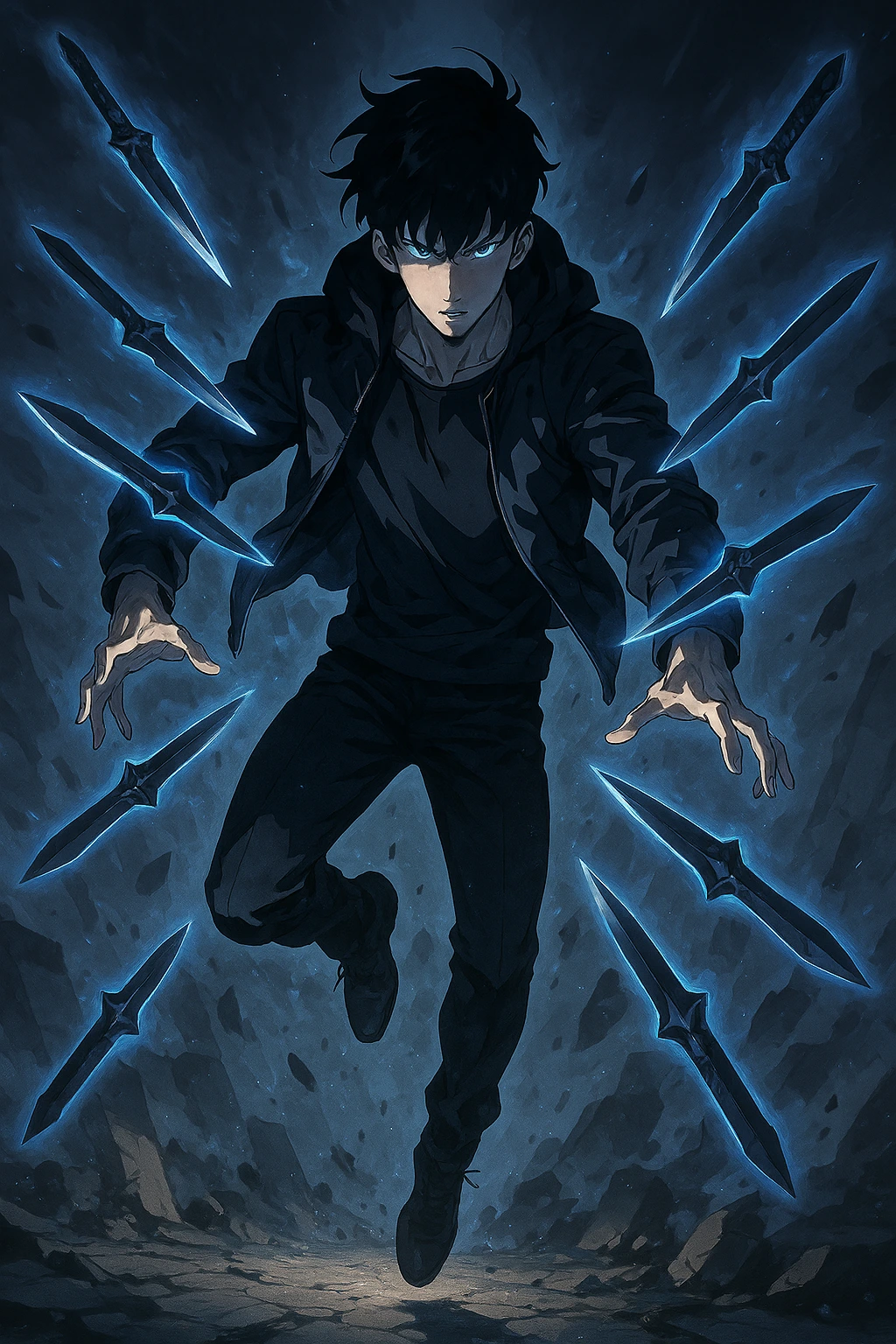
While Thomas Andre uses Ruler’s Authority to crush enemies with gravity (Capture), relying on brute force to flatten targets, Jin-woo uses Dominator’s Touch with the finesse of an Assassin. He uses it to manipulate his daggers in mid-air, creating a “flying sword” style of combat.
This gives him a ranged attack option that doesn’t rely on magic missiles or arrows. He can fight an enemy in melee combat while simultaneously controlling four other daggers to attack the enemy’s blind spots from a distance. During his fight with the Architect, he used this to attack from multiple angles simultaneously, overwhelming the system’s ability to predict his trajectory. It turns a 1v1 duel into a 1v5, even without his summons. It bridges the gap between Melee and Ranged DPS, ensuring that there is literally no “safe distance” to engage him from.
5. The Passive Tree: Immortality, Immunity, and Tragedy
Active skills win fights, but Passive skills win wars. Jin-woo’s passive tree is what provides him with the sustainability to fight for days without rest. It transforms him from a mortal human into something approaching a demigod, removing the biological limitations that hold other Hunters back.
Perseverance (Passive): The “Clutch” Factor
Perseverance is the ultimate safety net. The description states: When health drops below 30%, damage taken is reduced by 50%.
In gaming terms, this is a “Berserker” mechanic or a “Cheat Death” passive. Just when an enemy thinks they have Jin-woo on the ropes, he suddenly becomes twice as durable. This explains how he survived the initial brutal beatings in the high-level dungeons and his duel with the Ant King Beru. Even when Beru was speed-blitzing him, the damage mitigation allowed Jin-woo to tank hits that would have instantly vaporized other S-Rank Hunters.
When combined with the stat reduction from Dragon’s Fear, the math becomes ridiculous.
- Enemy deals 50% less damage (Dragon’s Fear).
- Jin-woo takes 50% less damage (Perseverance). The enemy is effectively hitting him with a pillow. This passive turns the “Glass Cannon” rogue into a tank that becomes harder to kill the closer he is to death, frustrating opponents who believe they have already won.
Will to Rehabilitate (Passive): The Healing Factor
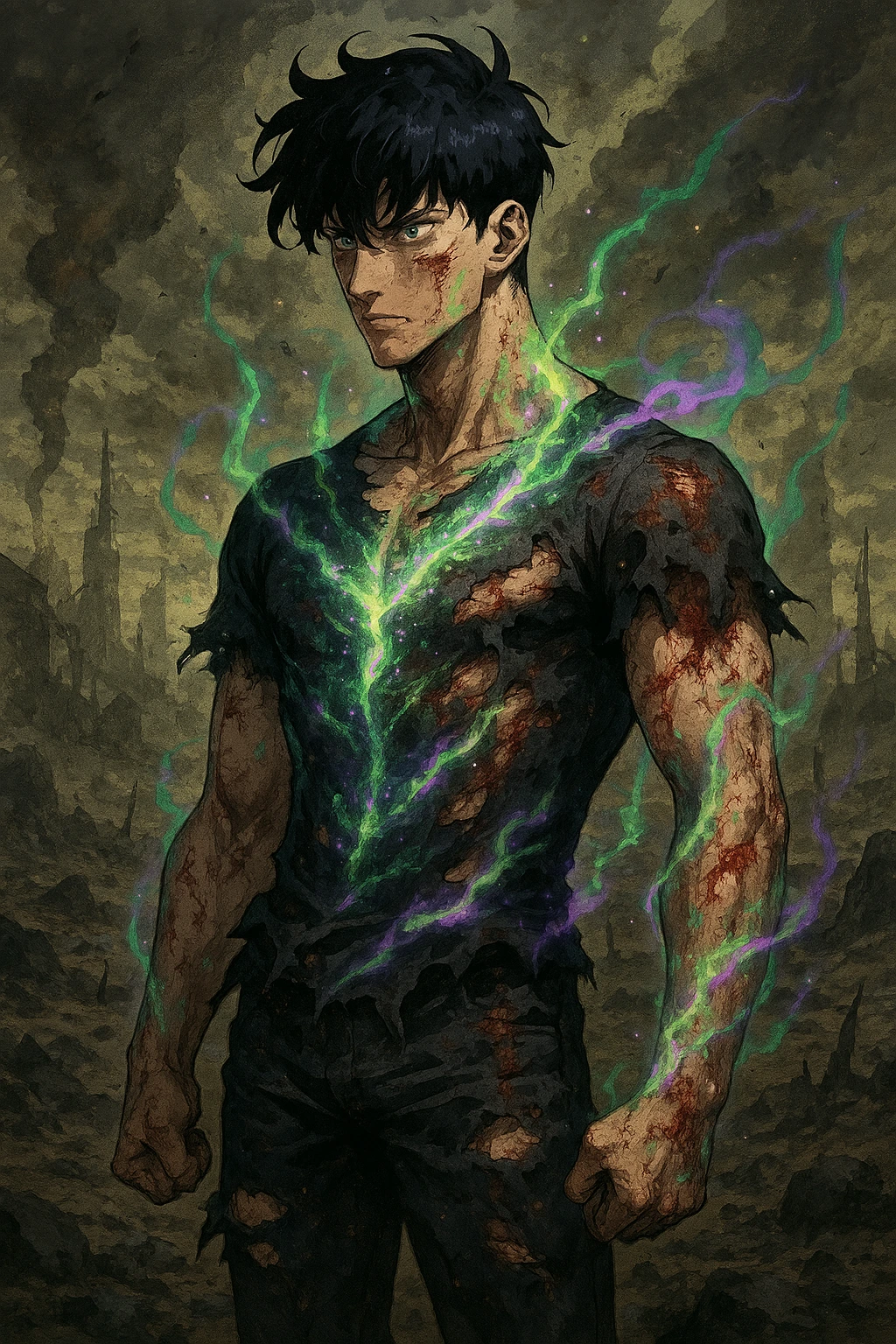
Jin-woo doesn’t need a Healer in his party because he is the Healer. Will to Rehabilitate provides him with a permanent, high-speed regeneration factor. While it cannot instantly regrow a lost limb in seconds (initially), it closes wounds, knits bones, and restores stamina at an accelerated rate.
This allows him to employ “trade” tactics. He can afford to take a stab wound to the shoulder if it means he can drive his dagger into the enemy’s heart. He knows he will heal; the enemy won’t. This attrition strategy is horrifyingly effective against biological opponents. Furthermore, it grants him infinite stamina. During the Jeju Island raid, while other Hunters were gasping for breath, Jin-woo was fresh. This means he never suffers from performance degradation due to fatigue, maintaining peak DPS from the first minute of the fight to the last.
Immunity (Passive): The Blessing and the Curse
The Immunity passive grants him complete resistance to all poisons, diseases, and status ailments.
- The Positive: He cannot be poisoned. When fighting the Ant King or venomous monsters, their primary weapons are useless. He walks through toxic fogs as if they were fresh air, completely negating environmental hazards.
- The “Longevity” Buff: This passive is so potent it extends to his biology, curing him of all ailments. This is the mechanism that allowed him to craft the “Holy Water of Life” to cure his mother’s Eternal Sleep disease.
- The Negative (The Tragedy): The system considers alcohol a poison. Because of this, Jin-woo can never get drunk. This seems like a minor gag, but in the context of the story, it emphasizes his profound isolation. He carries the weight of the world, the memories of the dead, and the trauma of endless battles, but he has no chemical escape. He cannot bond with his friend Jinho over a beer; the alcohol metabolizes instantly. He cannot numb his pain. He must face every moment with razor-sharp clarity. It is a passive skill that enforces his role as the “unwavering guardian,” denying him even the smallest human weakness.
6. The Ultimate Skill: Shadow Extraction
Finally, we arrive at the skill that defines his class: Shadow Extraction. This is the Necromancy skill, but to call it simple necromancy is an insult to the mechanic.
Not Just a Summon: The “Save File” Mechanic
Traditional Necromancy in games involves raising mindless skeletons or zombies from corpses. These minions are usually weak, disposable, and stupid—cannon fodder meant to die.
Jin-woo’s Shadow Extraction is fundamentally different. He extracts the mana and the personality (ego) of the target. He isn’t just animating a corpse; he is copying the “file” of the enemy and pasting it into his own inventory.
- Retention of Skills: The Shadows keep their skills and combat experience. Igris retains his master swordsmanship and chivalry. Beru retains his healing, speed, and ruthless efficiency. Tusk retains his high-level gravity magic. They don’t need micromanagement; they know how to fight.
- Growth Potential: The Shadows can level up. This is unheard of in gaming. Usually, a summon has fixed stats based on the caster’s level. Jin-woo’s army gets stronger as he does, and they get stronger as they fight. It is a snowball effect that never stops rolling.
The Philosophy of “Arise”
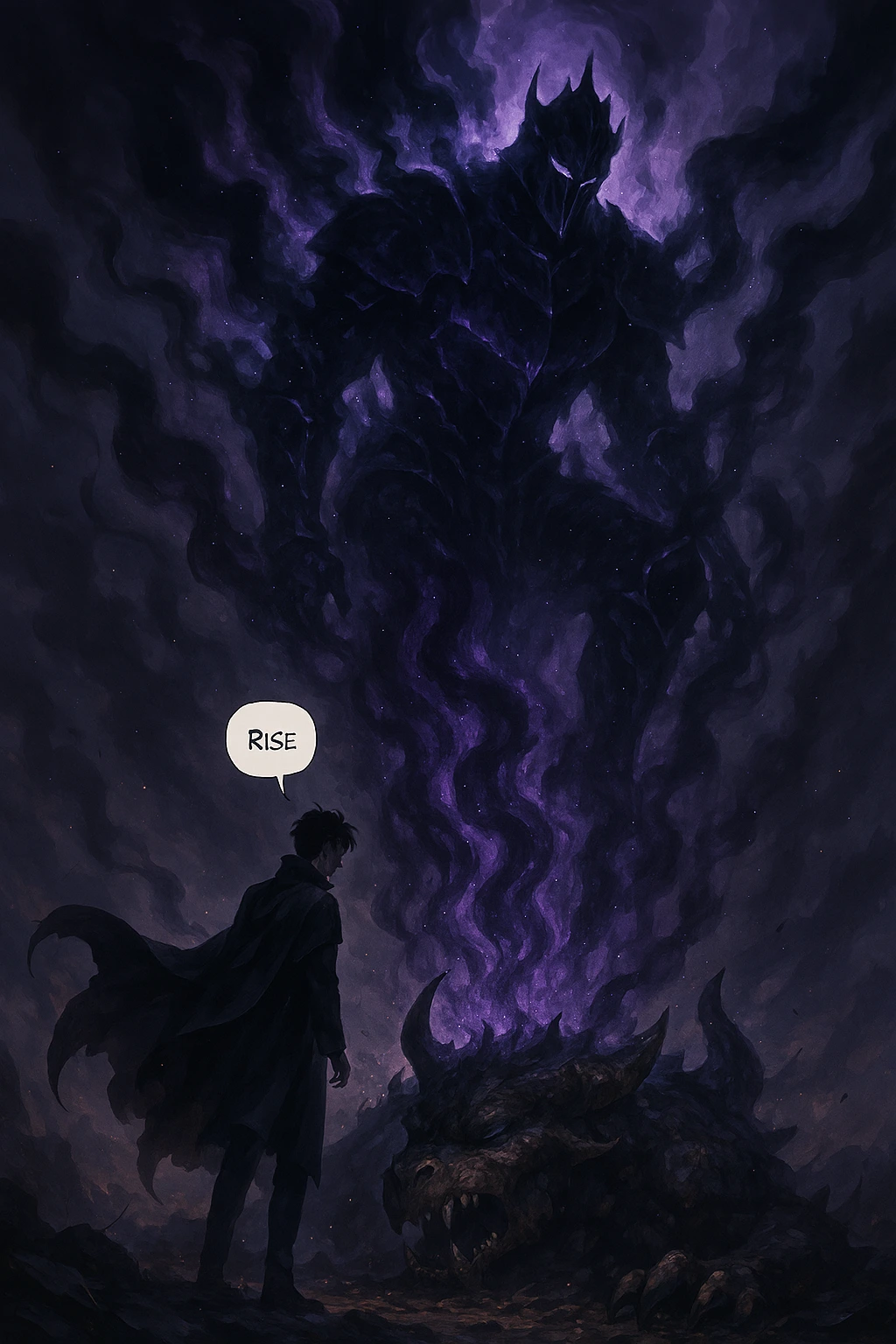
The prompt “Arise” is a command of absolute authority. It recontextualizes the relationship between the killer and the killed. By extracting the shadow, Jin-woo gives the defeated enemy a new purpose. For soldiers like Igris, Iron, or Greed, serving the Monarch allows them to surpass their limits in life. It turns the solitary act of leveling up into a communal growth. The Shadows develop distinct personalities—Iron is a lovable idiot, Igris is a stoic knight, Beru is a fanatical loyalist. They are not tools; they are a court, and Jin-woo is their King.
Shadow Exchange: The Global Blink
If Shadow Extraction is the army, Shadow Exchange is the logistics. This skill allows Jin-woo to swap places with any Shadow Soldier, anywhere in the world.
- Early Game: It had a 3-hour cooldown (later 2 hours). This required strategic placement. He left shadows on his sister or trusted allies as “waypoints,” turning his army into a defensive grid.
- End Game: The cooldown vanishes.
This skill breaks the concept of “distance.” Jin-woo is omnipresent. He can be fighting a boss in Korea, sense danger in America, teleport there instantly, resolve the threat, and return before the boss in Korea has finished its attack animation. It transforms him from a Hunter defending a city into a God defending a planet. It is the ultimate mobility skill, surpassing flight or portals because it is instantaneous. In a war setting, this allows him to reinforce any front line instantly, making it impossible to outmaneuver him.
7. Conclusion: The One-Man Army
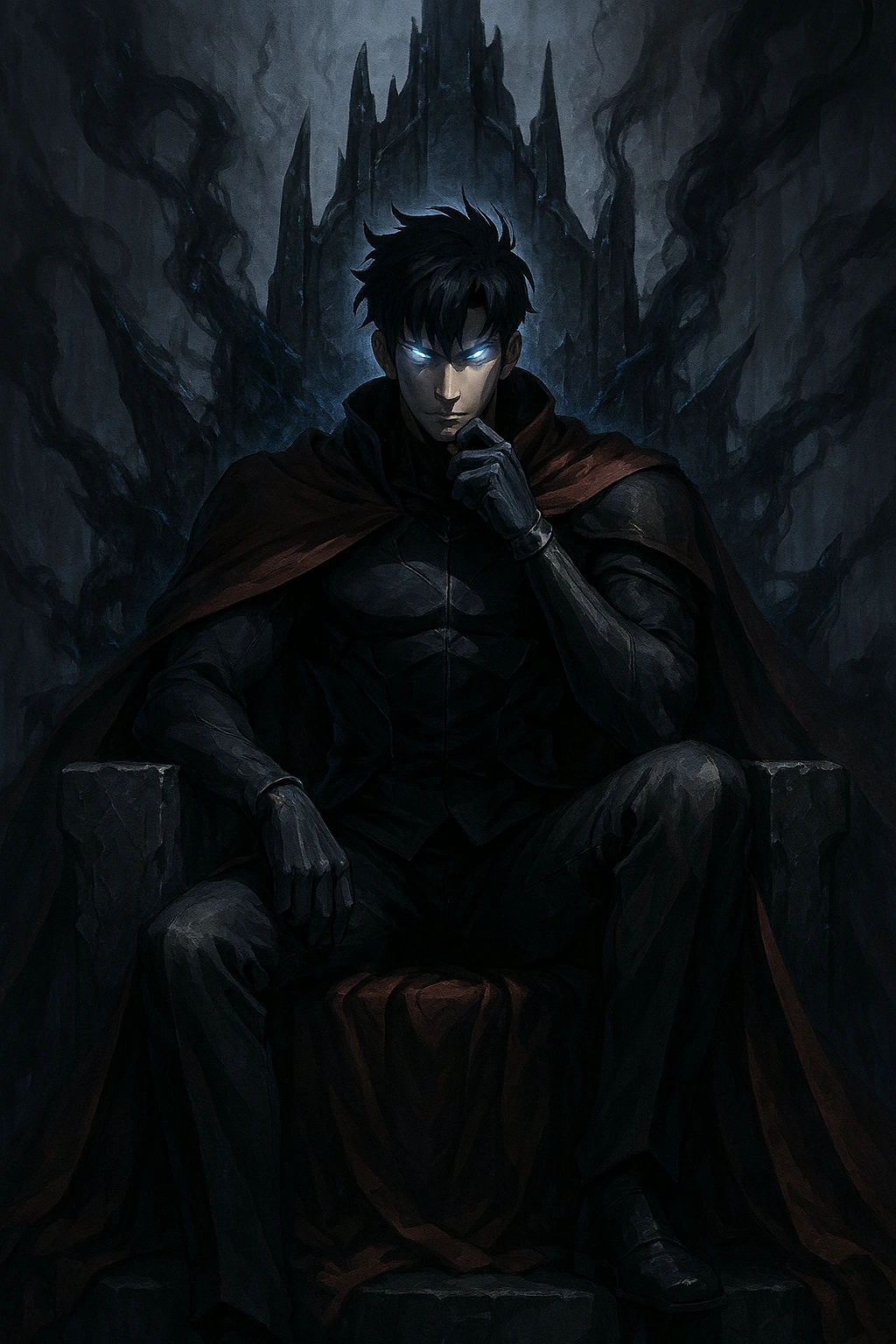
When we step back and look at the entirety of Sung Jin-woo’s skill tree, the picture that emerges is not just of a strong character, but of a fundamentally broken system.
In a balanced game ecosystem:
- You cannot have the Burst Damage of an Assassin AND the Sustained DPS of a Summoner.
- You cannot have the Evasion of a Rogue AND the Damage Mitigation of a Tank.
- You cannot have Stealth AND massive AOE Crowd Control.
Sung Jin-woo has all of these.
He synergizes these conflicting roles into a seamless flow of combat. He uses Stealth to position himself. He uses Dragon’s Fear to debuff the enemy army (-50% stats). He uses Dominator’s Touch to control the battlefield geometry. He sends in his Shadow Army (Tanks and Mages) to draw aggro and deal AOE damage. And while the enemy is distracted by an immortal army of shadow soldiers, he uses Quicksilver and Mutilate to assassinate the enemy commander.
He didn’t just “level up.” He dismantled the rigid class system of the Hunter world and rebuilt it in his own image. He proved that the ultimate build isn’t Strength, or Intelligence, or Agility. The ultimate build is Adaptability.
Sung Jin-woo is the Assassin who strikes from the shadows, the Mage who commands the dead, and the Ruler who controls the flow of battle. He is the glitch in the system, the outlier in the data, and the only Hunter who truly played the game to its absolute limit. He is, quite literally, the Leveling Solo.