
The world of Japanese animation has no figure more universally recognized and consistently effective than the Shonen Protagonist Trope.
This archetype, the center of manga and anime aimed at young male audiences, is not merely a common character type;
It is a meticulously constructed narrative blueprint that encapsulates core human aspirations: growth, resilience, and the relentless pursuit of a grand, often impossible, dream.
From the genre’s earliest pioneers to its latest, most complex subversions, the Shonen Protagonist serves as a dynamic engine for action, emotion, and philosophical inquiry, ensuring the genre’s unparalleled global success.
This exhaustive analysis will delve into the structural, personal, and thematic pillars that define this iconic figure, demonstrating how a simple combination of traits has produced an enduring legacy of heroes.
Part I: The Genesis of the Hero — Defining the Core Blueprint
The Shonen Protagonist’s enduring appeal begins with a calculated contrast between their visible traits and hidden potential.
The Visual Identity: Energy and Rebellion

The hero’s aesthetic is immediately recognizable and deliberately engineered to project a specific image.
Physically, the protagonist maintains a youthful appearance, typically residing in the 13 to 17-year-old demographic, which fosters immediate connection with the target audience.
The most ubiquitous visual element is their spiky, dynamic hairstyle, a feature that defies gravity and symbolizes an unbridled energy and rebellious spirit, differentiating them from the more subdued supporting cast.
Furthermore, their attire often utilizes bright, contrasting colors—like the iconic orange and blue combinations seen in foundational heroes such as Goku and Naruto—making them visually striking during high-octane action sequences.
Crucially, their outfit design is often simple yet iconic, remaining consistent for long periods of the series, providing a strong visual anchor for their enduring identity, irrespective of the massive physical and power-based transformations they undergo.
Personality Contradictions: The Genius of the Simpleton
The Shonen hero’s persona is a fascinating blend of seemingly conflicting traits, a duality that ensures they are both a source of comedy and dramatic tension.
This character is often perceived as a dimwitted or academically poor figure, exhibiting clumsy behavior and a short-tempered, hot-blooded personality.
They are loud, vocal about their strong beliefs, and frequently adopt a rebellious attitude towards authority.
However, this superficial simplicity masks a profound inner world.
What they lack in book smarts, they possess in infallible combat instincts and exceptional battle intelligence.
They can appear as a good-for-nothing reputation to the world, yet they have the capacity for moments of hidden tactical genius during critical battles.
They are fundamentally mischievous and rebellious, yet are always ultimately good-hearted and capable of remaining cool under pressure.
This “Pure of Heart, Dumb of Ass” or Crouching Moron, Hidden Badass trope is essential; it ensures their victories feel earned by willpower and not mere inherited intellect, thereby validating the genre’s central message of hard work.
Part II: Character Archetypes and Taxonomy — The Spectrum of Heroes
While sharing core DNA, Shonen protagonists diversify into distinct archetypes, each offering a different window into the theme of growth.
-
The Hard-Working Idiot (The Default Archetype)
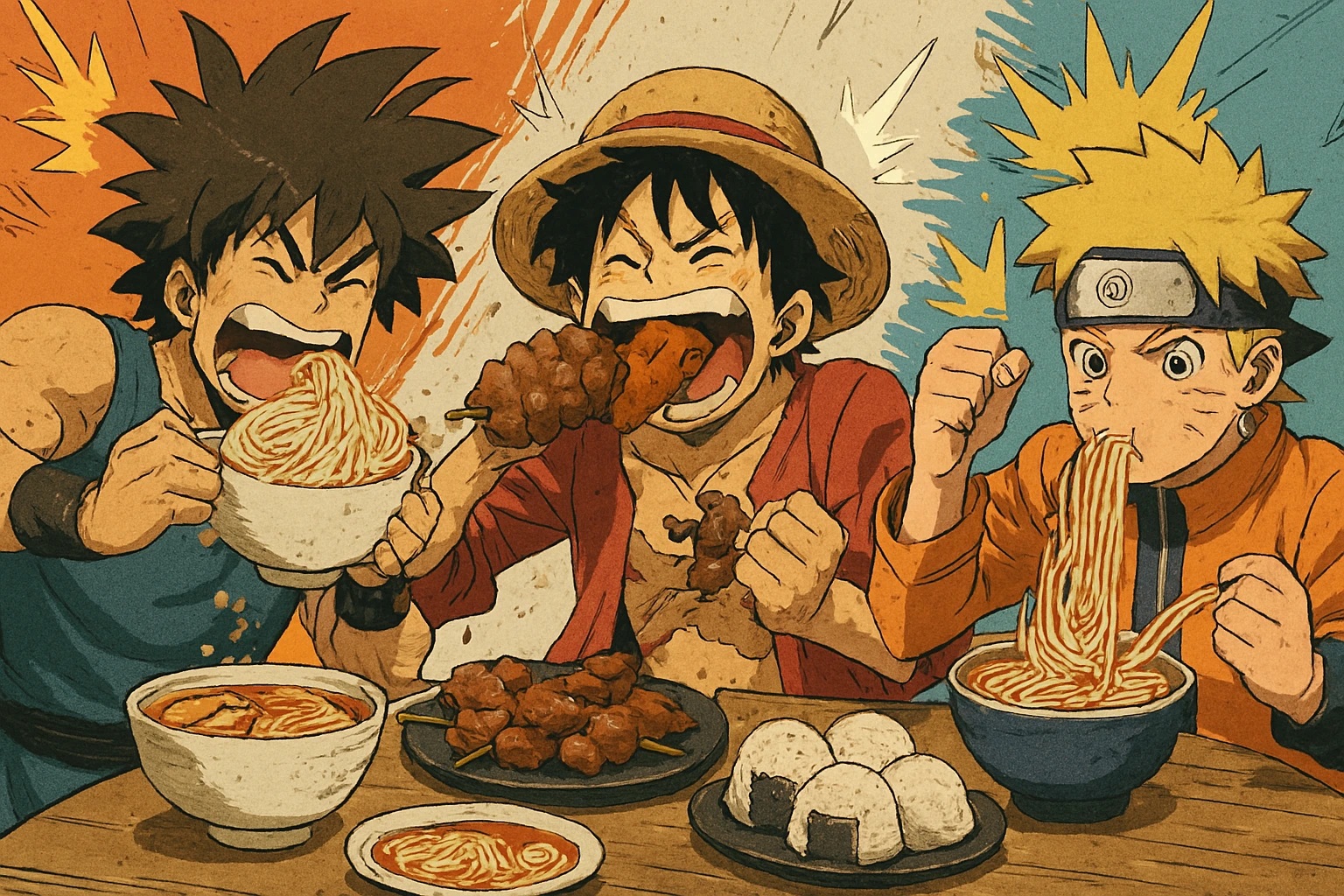
This is the quintessential Shonen protagonist, the blueprint on which all others are based.
Characters like Goku, Luffy, and early Naruto fit this mold, defined by a strong sense of justice and morality coupled with a notable lack of academic prowess.
They win through sheer grit and effort, validating the core never give up attitude.
A humorous but necessary trait is their massive appetite, the Big Eater trope, which subtly reinforces their boundless energy and simple, powerful drive.
Their journey is a testament to perseverance over inherent genius.
-
The Outcast/Underdog
This archetype weaponizes social struggle, making the hero’s quest deeply personal.
The protagonist is initially rejected by society, facing discrimination and ridicule from their community.
Their narrative is defined by a fierce quest for acceptance and belonging.
Often, this hero’s tragic backstory includes being orphaned or suffering parental loss, and they frequently become the host to an evil or dangerous power (like the Nine-Tails or a powerful demon), which further contributes to their isolated status.
Their victory is not just a defeat of the villain but an achievement of communal validation.
-
Noble Punk/Delinquent
This variation introduces an anti-establishment edge.
Heroes like Yusuke Urameshi possess a rough exterior and a rude, confrontational behavior, making them highly street-smart and combat-oriented.
This archetype appeals by showing a hero who operates outside the system, yet whose core remains pure; their defining characteristic is an unshakeable and deep loyalty towards comrades, proving the “golden heart” beneath the delinquent facade.
-
The Nerd/Genius (The Evolved Protagonist)
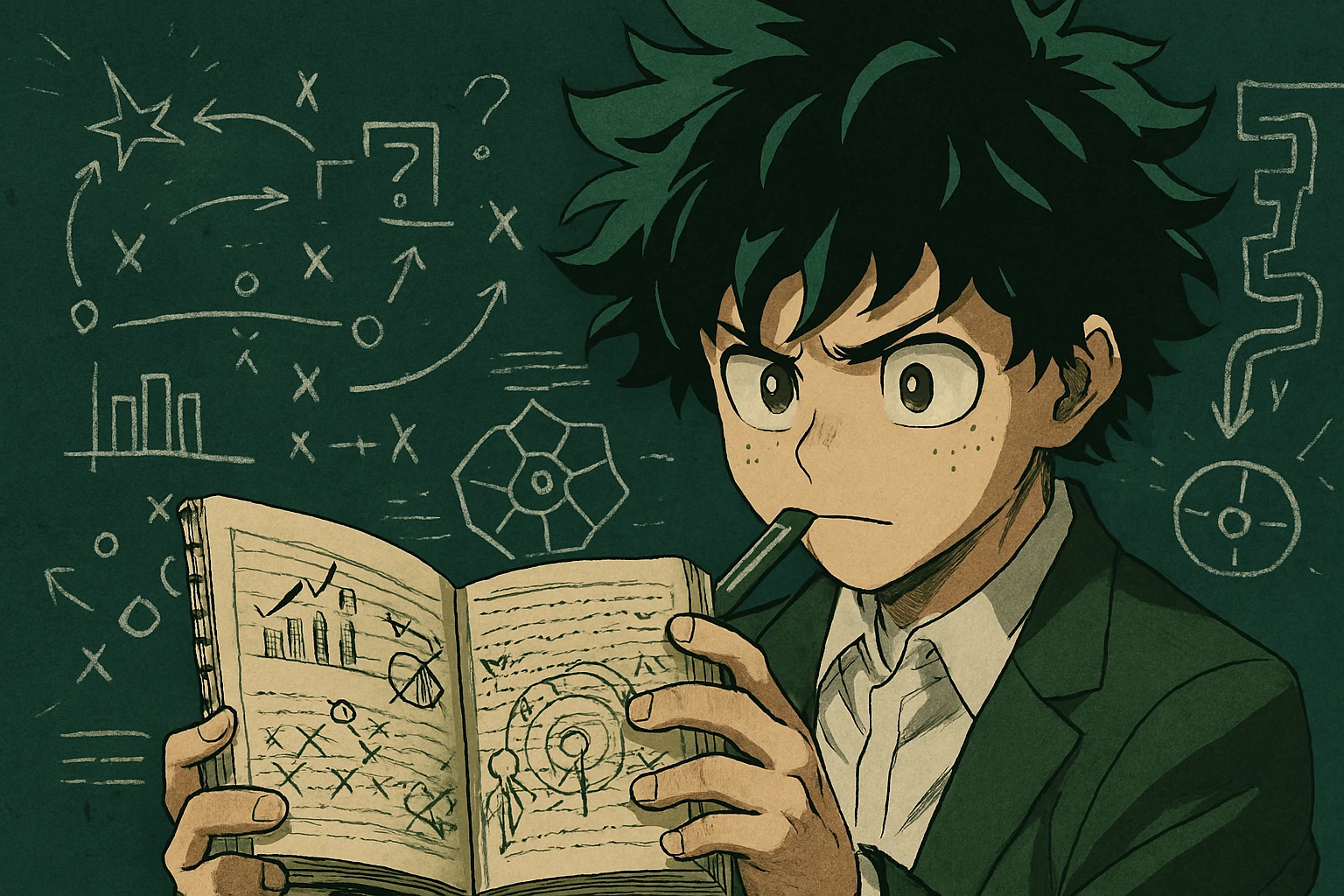
The rise of characters like Izuku Midoriya, Senku, and Edward Elric signals an evolution in the trope.
These protagonists prioritize analytical thinking and strategic planning, subverting the “dumb hero” trope.
While often physically weaker initially, their success is derived from exceptional book knowledge and meticulous study of their opponents and power systems.
Deku, with his analytical hero notebooks, perfectly embodies this new path, demonstrating that strategic intelligence is now a viable, battle-winning Shonen trait.
Part III: The Narrative Framework — Structure and Universal Traits
The Shonen Protagonist’s story adheres to a recognizable and potent structural mold, framed by an inescapable moral code and unwavering commitment.
The Hero’s Journey: The Cycle of Growth
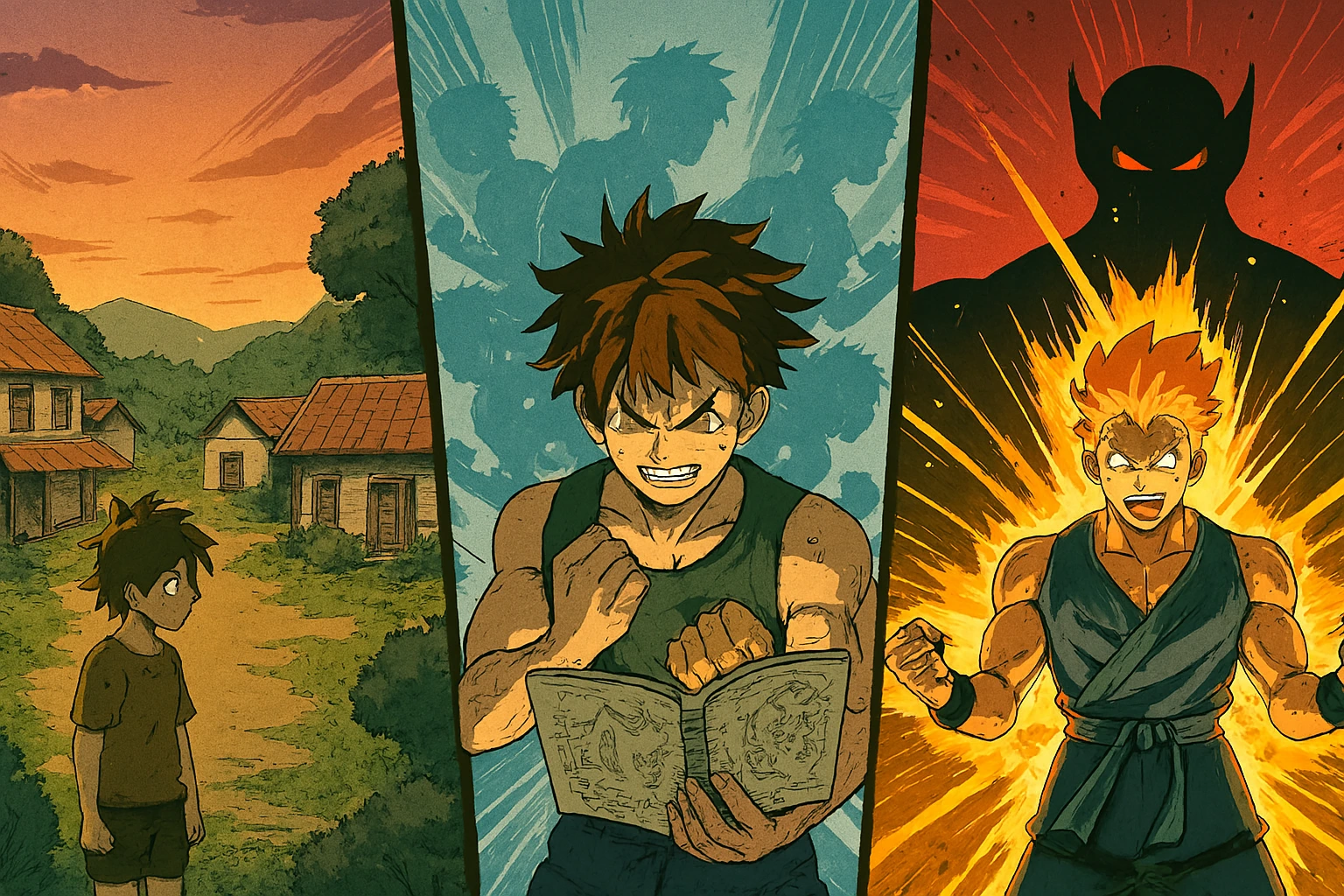
The narrative architecture of the Shonen series is a deliberate, extended iteration of The Hero’s Journey.
It establishes the hero in their Ordinary World—disadvantaged, powerless, or an outcast—before a defining Call to Adventure sets the story in motion.
The bulk of the series is dedicated to Training & Trials, a continuous cycle of intense physical and mental conditioning.
The hero eventually achieves a grand Transformation through earned effort, not birth, leading to a Climactic Battle where maximum power is demonstrated.
The cycle then resets into a New Equilibrium as an even stronger enemy inevitably appears, ensuring perpetual narrative motion.
The Origin Story: Trauma as Motivation
The protagonist’s past is strategically tragic, providing deep-seated motivation.
Tragic childhoods are near-universal, with parental death being extremely common, serving as the source of trauma that drives their ambition.
This, coupled with initial poverty, humble beginnings, or social isolation, grounds the hero in a relatable struggle.
A common, later-revealed element is the Hidden Lineage or special genetics—a special bloodline or chosen one status—which, while appearing to contradict the underdog origin, ultimately justifies the hero’s immense, world-saving capabilities.
The Six Pillars of Character
Regardless of their specific story, every successful Shonen hero is defined by six non-negotiable character traits:
- Unwavering Determination (Grit): This is the ultimate trait. The hero’s journey is defined by their resilience to bounce back from defeats, constantly learning from failure, and possessing an unshakeable belief in their goals despite facing overwhelming odds. This “Never Give Up” attitude is the engine of victory.
- Clear, Big-End Goal: Every hero is driven by a singular, defining aspiration—becoming the Hokage, the Pirate King, or the Greatest Hero. This objective acts as a narrative compass, providing ultimate purpose to every action.
- Proactive Nature: Shonen heroes are dynamic; they are not reactive but actively take initiative to solve problems, rather than waiting for external forces to guide them. They move the plot forward.
- Compassion & Selflessness: Strength is always balanced by gentleness. The hero’s priority is helping others, often involving self-sacrifice for friends and family. This empathy, even for enemies (the Talk no Jutsu trope), marks the moral superiority of the protagonist.
- Bravery & Courage: They possess the resolve to face overwhelming odds and powerful villains, showcasing risk-taking for the greater good and an absolute refusal to succumb to cowardice.
- Hot-Blooded Personality: A passionate and energetic nature is crucial. They are loud, highly vocal about their beliefs, and often display a rebellious attitude when justice is threatened.
Part IV: Relationship Dynamics — The Collective Strength of Nakama
The Shonen Protagonist’s power is fundamentally collective. Their relationships are not auxiliary but are, in fact, the literal source of their greatest emotional and physical power.
The Mentor and The Rival

The hero’s journey is initiated and guided by the Mentor Figure—such as Jiraiya for Naruto, or All Might for Deku—who transfers essential knowledge and techniques, serving as a crucial parental figure replacement.
The mentor’s sacrifice or retirement often acts as a poignant, powerful event that motivates the protagonist to grow stronger to uphold their legacy.
Equally vital is the Rival Character, including iconic pairings like Sasuke-Naruto and Vegeta-Goku.
The rivalry is a central element that provides external competition, forcing continuous growth in both characters.
The rival often starts as an enemy or intense competitor but evolves into a respected ally, acting as a mirror to the protagonist’s strengths and weaknesses.
The Power of Nakama and Romantic Density

The concept of Nakama (chosen family or comrades) is the genre’s highest value. The hero’s ability to attract and unify a diverse, often eccentric, team is their greatest skill.
The Power of Friendship is not merely a metaphor; it is a literal source of strength, with the protection of friends serving as the strongest motivation for crucial power-ups and victories.
The Friend Circle ensures team dynamics and cooperation are prioritized over individual power, providing a moral and logistical support system.
While the Shonen focus is on action, the Love Interest or Heroine is present.
The protagonist is typically romantically dense, with the love interest often taking the form of the Tsundere personality type.
Romance remains secondary, but the eventual resolution often involves marriage and family, marking the hero’s transition to a complete adult life.
Part V: The Mechanics of Progression — The Escalation Engine
The longevity of a Shonen series depends on a continuous, measurable, and justifiable system of power scaling.
The True Underdog Journey
The core tenet is the True Underdog Journey where the hero is initially incompetent or powerless, sometimes even more so than their peers.
This narrative choice stresses that success must be earned through training, NOT birth privilege.
Characters like early Izuku Midoriya and Rock Lee serve as powerful symbols that Willpower and perseverance are the key factors that allow the hero to overcome initial disadvantages, fueling the Hard Work vs. Talent thematic conflict.
Training Arcs and The Time Skip
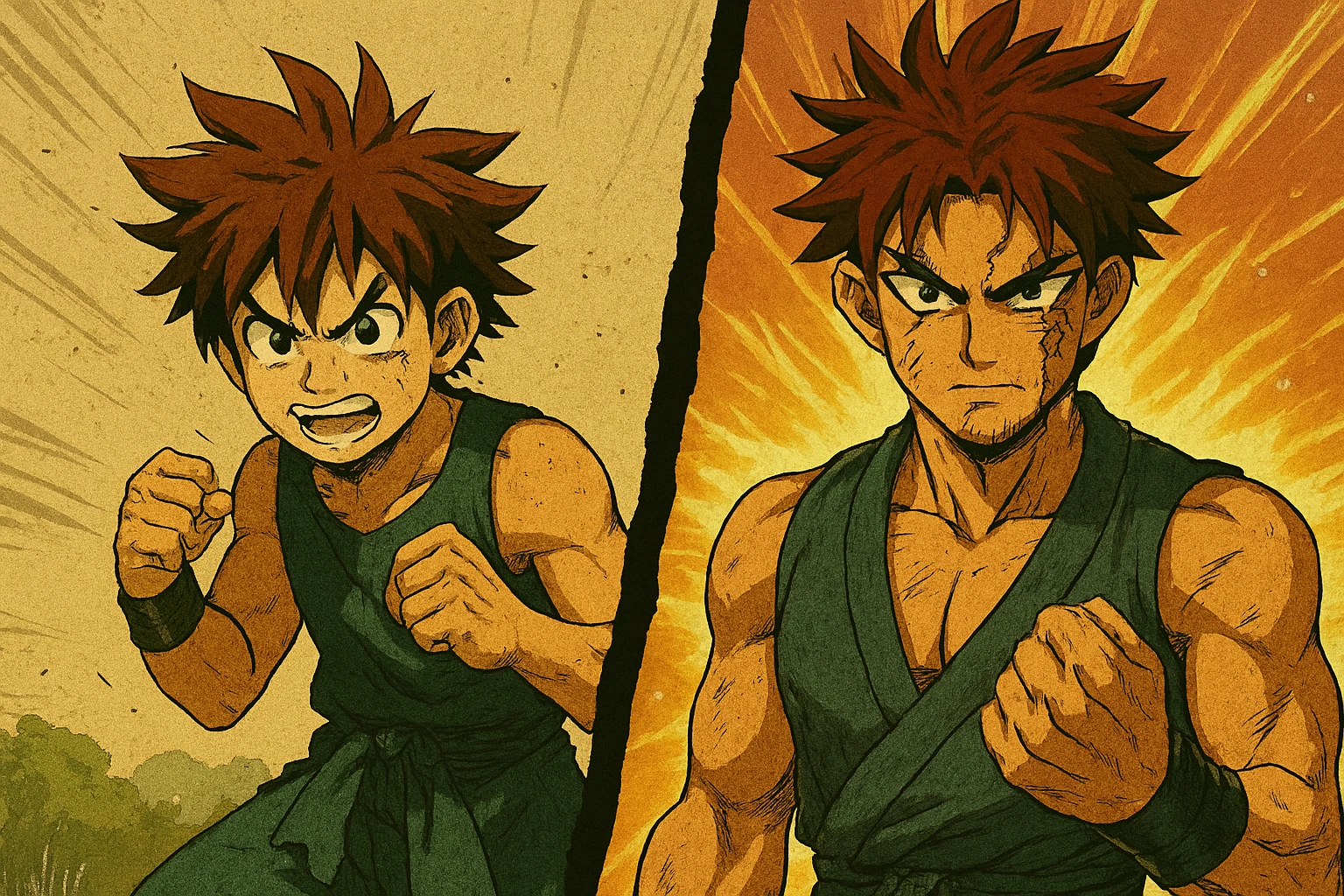
Training Arcs are essential, providing the narrative justification for massive power jumps.
These sections involve intense physical conditioning, technique mastery, and mental discipline.
They often occur in isolated locations under the guidance of a mentor, frequently involving time-based challenges such as the Hyperbolic Time Chamber or a two-year Time Skip.
The Time Skip is a major narrative device (e.g., Naruto Shippuden, One Piece post-timeskip) that allows the hero to return with mastered abilities and significant physical maturation, resetting the power scale for the next saga.
Transformation and Power-Ups

The hero’s progression is visible through a hierarchical system of Transformation and Power-Ups.
This is progressive power scaling, where each new form (Super Saiyan, Sage Mode, etc.) is a narrative milestone, often triggered by a sudden, intense emotional trigger.
A constant threat to this progression is the Superpowered Evil Side—the possibility of a dark transformation involving loss of control, demonic features, and extreme power at the cost of sanity.
The hero’s ultimate victory often involves achieving self-acceptance and control over their inner monster, a profound journey of internal balance.
The ultimate result is the Underdog Victory Pattern, where the hero consistently wins against insurmountable odds through a combination of last-minute power awakening, emotional motivation, and bursts of tactical cleverness.
Part VI: Structural Elements and Thematic Depth
Beyond the character and their relationships, the Shonen narrative relies on certain structural beats and thematic declarations to maintain its relentless pace.
Mandatory Structural Beats
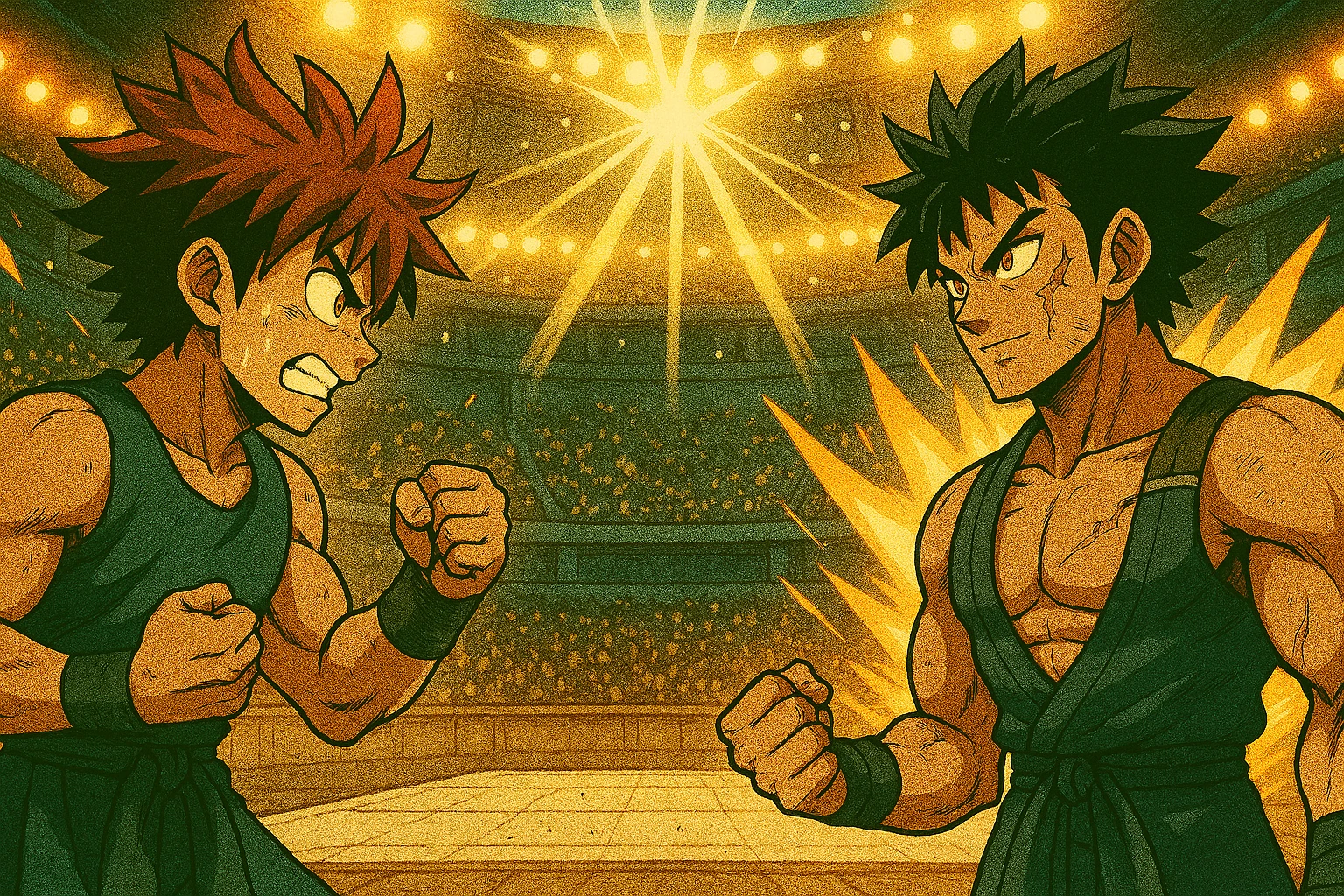
The Tournament Arc is a near-mandatory inclusion, providing an organized format for power level comparisons, character introductions, and focused, multi-opponent fights.
It is a necessary structural break that allows the audience to gauge the hero’s and their allies’ current strength.
The threat often comes from Enemy Organizations—hierarchical villain groups that ensure progressive difficulty scaling, with each member being stronger than the last, leading up to the final boss.
To maintain narrative integrity, many shonen worlds feature Special Schools or Locations (UA Academy, Ninja Academy) that provide structure and a system for peer competition.
Finally, the narrative is built upon a measurable Power Scaling System (Chakra, Quirks, Power Levels), which allows the audience to clearly track the hero’s visible, quantifiable progression.
Core Thematic Conflict: Hard Work vs. Destiny
The hero’s philosophical journey is central to the genre’s message.
The conflict of Hard Work vs. Talent is paramount, with the protagonist’s perseverance validating the belief that effort can triumph over natural ability.
The journey also involves a profound Philosophy Evolution, where the hero’s initial simple right vs. wrong worldview evolves into a complex understanding of morality, shifting from a focus on revenge to forgiveness, and from individual strength to collective power.
This is underpinned by the ideology of Never Give Up, where persistence despite repeated failures and a belief in impossible dreams inspire not just the audience, but often the very characters around the protagonist.
Part VII: Legacy and Evolution — Modern Context and Critical Analysis
The Shonen Protagonist’s legacy is defined both by its successful implementation and its openness to modern critique and evolution.
Subversions and The Anti-Shonen Hero
The contemporary era, written for an audience familiar with the classic blueprint, is characterized by subversion.
The Overpowered Protagonist (Saitama) actively subverts the growth narrative, focusing on comedy and existential boredom rather than struggle.
The Anti-Hero Shonen Lead (Light Yagami, Lelouch) challenges the hero’s strong moral compass by using manipulation and strategy over brute strength and employing morally questionable methods.
The Reluctant Hero (Mob) subverts the Proactive Nature trope by being immensely powerful but desiring normalcy, where his growth is emotional, not power-based, reflecting a preference for grounded, internal conflict.
Critical Analysis: Overused Elements
While popular, the trope is not immune to criticism.
Overused elements often include the Dumb Protagonist Trope Overreliance, which strains credibility, and the Power of Friendship Deus Ex Machina, where bonds provide an unearned, last-minute victory.
The presence of a Fake Underdog, where the hero’s power is eventually justified by a secret divine lineage, can undermine the message of pure hard work.
Similarly, the hero’s romantically dense nature can lead to an over-reliance on the Sexual Attraction Mockery trope, often without meaningful character depth.
The Enduring Appeal
Despite these critiques, the Shonen Protagonist remains a timeless success because of two core appeals.
First, the Relatability of the character, who starts weak or ordinary and achieves greatness through effort, is a powerful form of emotional identification.
Second, the Power Fantasy aspect—the transformation from weak to strong, the gaining of recognition and respect, and the capability of saving the world—is the ultimate wish fulfillment.
In conclusion, the Shonen Protagonist Trope: The Ultimate Blueprint of Anime Heroes is far more than a simple character design.
It is a robust narrative machine built on the principles of collective strength (Nakama), unwavering effort (Ganbatte), and a singular, aspirational dream.
This intricate blend of design, personality, and structural consistency ensures that the story of the disadvantaged youth rising to conquer the world will continue to be the definitive saga of action-adventure for generations to come.
To read more reach our anime concept category.