
In the vast landscape of modern dark fantasy and Shonen-style narratives, few concepts have captured the global imagination as profoundly—and viscerally—as the Shadow Army from Solo Leveling. At the heart of this juggernaut is Sung Jin-woo, a hunter who transcends the limitations of human potential to become the Shadow Monarch.
However, a King is only as powerful as his soldiers, and the Shadow Legion is not merely a collection of summons or mindless drones; it is a sentient, evolving, and terrifyingly loyal extension of the Monarch himself. It is a force of nature that grows with every victory, turning the tide of war by weaponizing the very concept of death.
This encyclopedia serves as the definitive guide to the Shadow Legion, analyzing the intricate mechanics of “Arise,” the rigid hierarchy of the shadows, and the legendary commanders who lead the charge into the abyss.
1. Introduction: The Concept of “Arise”
The word “Arise” (Korean: Okh-ira) has become iconic, but within the lore, it is more than just a vocal command; it is the fundamental activation key of the Shadow Monarch’s authority over death itself. To understand the Shadow Legion, one must first understand the nature of this unique power and the metaphysical weight it carries.
Defining the Power: Beyond Standard Necromancy
In most fantasy settings, necromancy is depicted as the gross reanimation of corpses—puppets made of rotting flesh and bone, driven by dark magic and often spreading disease. The Shadow Monarch’s power is fundamentally different and far more elegant. Jin-woo does not raise bodies; he extracts the ego, the mana, and the soul of the fallen.
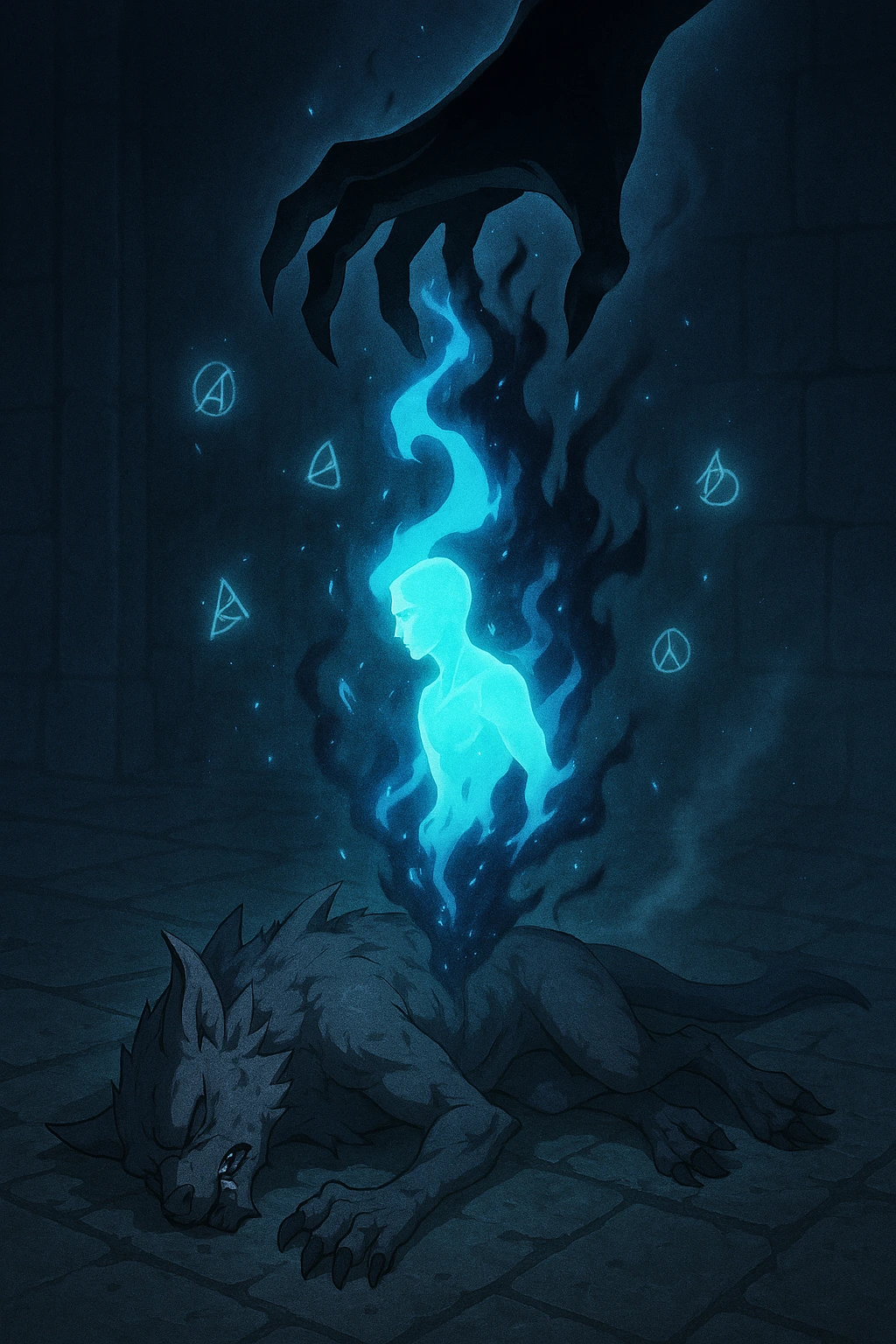
When Jin-woo uses “Arise,” he is reaching into the void—the liminal space where the soul lingers immediately after death—and forcibly pulling it back into the physical realm. This process converts the target’s essence into mana-dense shadows. Unlike zombies or skeletons, these shadows retain their memories, combat skills, and distinct personalities from their previous lives.
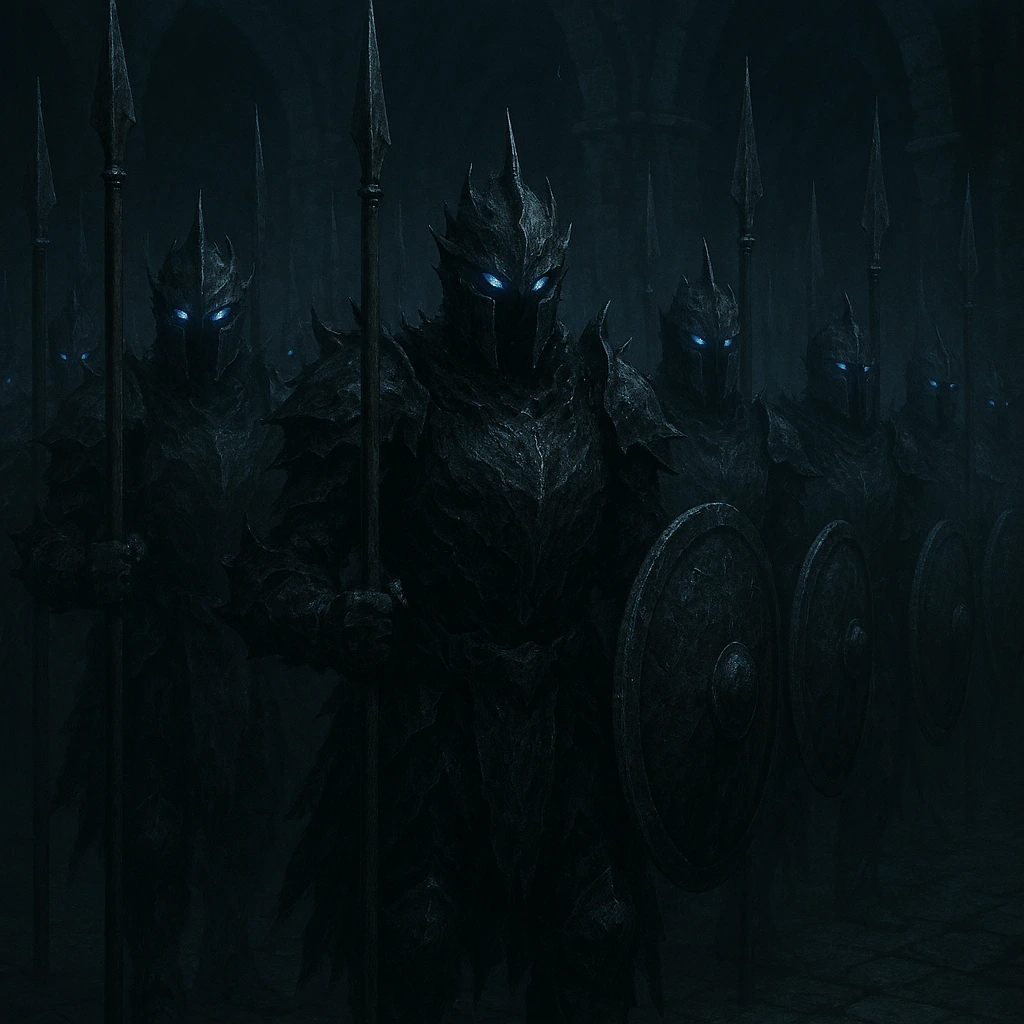
They are reborn entities composed of pitch-black darkness and radiating a spectral blue flame. The transformation is absolute; the corporeal form is discarded, replaced by an armored silhouette that is immune to physical ailments, fatigue, or fear. They are the idealized versions of their former selves, stripped of mortal weakness.
“Eternal Rest” vs. “Eternal Service”
The philosophy behind the Shadow Army is a dual-edged sword that adds a layer of moral complexity to Jin-woo’s character. For many, death is the “Eternal Rest”—a release from the cycle of conflict and suffering. Jin-woo’s ability denies this rest, offering instead “Eternal Service.”
Initially, this may seem cruel, a violation of the natural order. However, the series portrays it as a complex form of salvation for many of the entities involved. The extracted shadows often display a profound sense of gratitude and purpose that they lacked in life. They are freed from the pain of their wounds, the fear of death, and the confusion of their monstrous instincts. They are granted a second chance to serve a Master who treats them with respect, values their contributions, and leads with tactical brilliance.
The service is eternal because, as long as the Shadow Monarch has Mana, his soldiers can never truly die. They exist in a state of suspended animation within his shadow, a sanctuary where they wait for the call to battle, finding glory in their continued existence under a benevolent ruler.
The Emotional Impact of the Iconic Moments
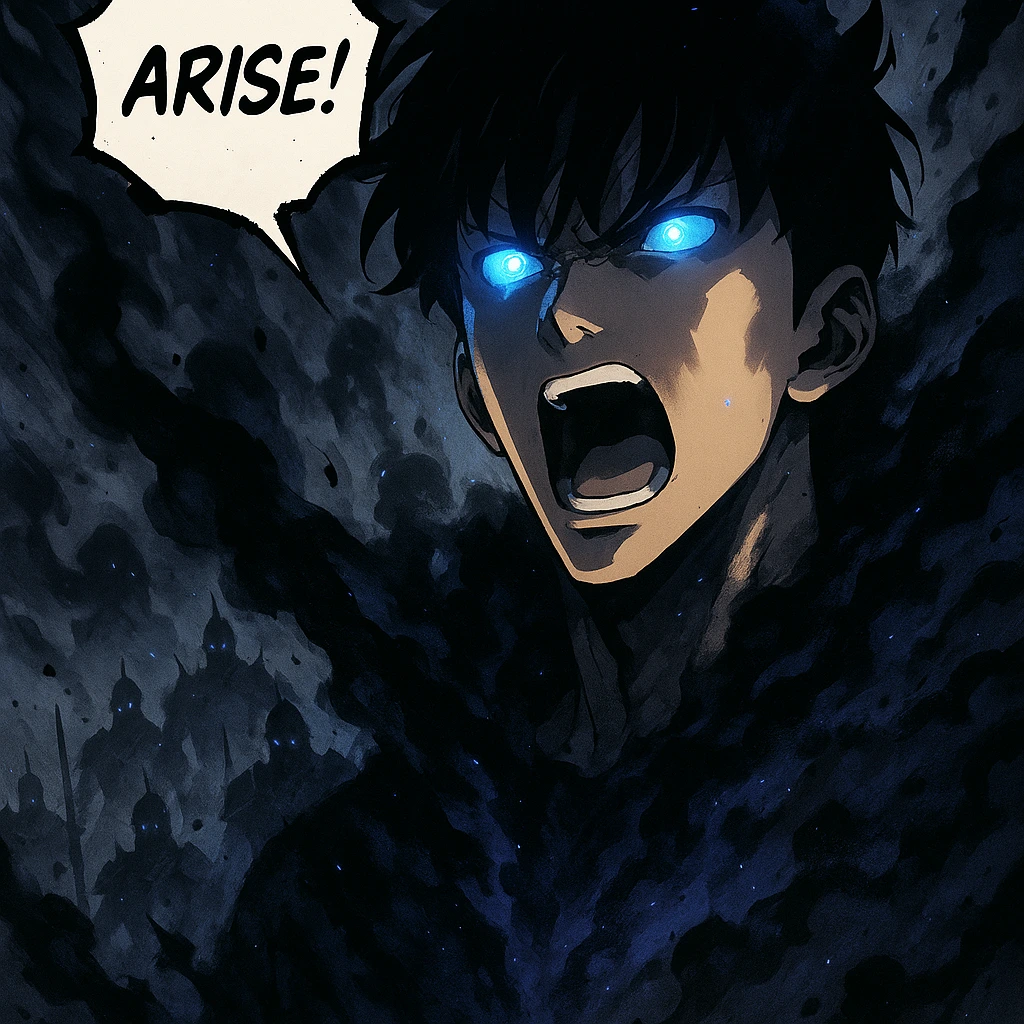
The first time Jin-woo uttered “Arise” to the knight Igris in the empty throne room, the shift in the series’ tone was palpable. It marked his definitive transition from a “Hunter”—someone who hunts monsters for survival—to a “Monarch,” someone who rules them by right. Every subsequent “Arise”—from the chilling extraction of the Ant King Beru on Jeju Island to the massive reclamation of the original Shadow Army—serves as a narrative crescendo.
These moments symbolize Jin-woo’s growth, as he literally carries the history of his battles within his own shadow. The guttural resonance of the command, often accompanied by a surge of dark energy that suppresses everything in the vicinity and turns the very air cold, acts as a definitive stamp of conquest. It is the sound of a new power entering the world stage.
2. The Mechanics of Shadow Extraction
The process of building the Shadow Legion is governed by strict, “gamified” rules that maintain the tension of the series. Jin-woo isn’t omnipotent; he is a master of a complex system that requires judgment, timing, and resource management.
The Three Chances Rule
One of the most critical limitations of Shadow Extraction is the “Three Chances” rule. When Jin-woo attempts to extract a soul, the System grants him exactly three attempts. If the extraction fails thrice, the soul dissipates into the “sea of afterworld,” and the target is lost forever, leaving behind only a lifeless corpse.
This creates immense stakes during the extraction of high-level beings like Igris or the Dragon Kamish. It implies that the Monarch’s authority, while vast, must still contend with the natural laws of the universe and the resistance of the target’s spirit. The countdown adds a layer of desperate tension; with each failure, the soul’s tether to the mortal world weakens, visible as the black smoke struggling to form a shape before scattering. The soul becomes more transparent and intangible until it vanishes into the void, a permanent failure that Jin-woo must accept.
The Influence of Willpower and Loyalty
The success of an extraction is not just dependent on Jin-woo’s level or his ‘Intelligence’ stat; it is heavily influenced by the target’s own spirit and mental state at the moment of death.
- Desire to Live: If a target has an overwhelming regret, unfinished business, or a desperate desire to continue fighting, the extraction is usually easier. The soul wants to be anchored, even if it means servitude. The instinct for self-preservation overrides the natural pull of the afterlife.
- Loyalty to Previous Masters: Targets with intense loyalty to a previous master or an immense ego (like Kamish the Dragon or the former Shadow Army soldiers) can resist the call. In these moments, Jin-woo acts less like a necromancer and more like a diplomat or a conqueror. He must persuade the soul, speaking to its warrior spirit, offering it a new purpose, or intimidating it with his own overwhelming power. This turns the extraction into a psychological negotiation rather than a simple magic spell.
- Time Elapsed: The longer a target has been dead, the harder it is to pull the soul back. Typically, there is a “decay timer” on the soul’s presence in the mortal plane. Once the mana in the corpse has fully dissipated, the connection is severed, making extraction impossible. This forces Jin-woo to make immediate decisions on the battlefield, often amidst the chaos of combat.
Mana Cost and Requirements
Every extraction requires a significant expenditure of Mana, proportional to the strength of the target. Furthermore, Jin-woo has a “Shadow Slot” limit in the early stages of his journey. He cannot keep every monster he defeats. He must choose which souls are strategic assets and which must be released to the void.
As his level increases, his storage capacity becomes virtually infinite, but the initial struggle highlights the tactical logistics of army management. He is often forced to make ruthless decisions, discarding loyal foot soldiers to make room for stronger knights, a practice that weighs on his conscience despite the necessity. This management aspect prevents the army from becoming an mindless swarm and forces Jin-woo to curate a balanced force of tanks, damage dealers, and healers.
3. The Shadow Hierarchy (Ranking System)
The Shadow Legion is organized into a rigid military structure. This hierarchy isn’t just for show; it dictates the intelligence, autonomy, and raw power of each soldier. The difference between ranks is exponential, not linear—a Marshal is not just twice as strong as a Knight, but infinitely so.
Normal & Elite Grade
These are the foundational units of the army, forming the bulk of the swarm.
- Normal Grade: Standard infantry, usually extracted from fodder monsters like Goblins, basic Orcs, or lower-tier beasts. They possess basic combat instincts but no individual ego. They are silent, efficient, and expendable, often used to tire out opponents, test enemy defenses, or form defensive walls to protect the mage units.
- Elite Grade: Soldiers who were slightly stronger in life, such as High Orc warriors or lower-tier magic users. They have better durability and can follow more complex tactical orders. While they cannot speak, they understand formation tactics (like phalanx or pincer maneuvers) and can coordinate attacks with other units without direct input from Jin-woo.
Knight & Elite Knight Grade
This is where the army begins to show its true potential and individuality.
- Knight Grade: This is the rank Igris held when he was first extracted. Knights have physical capabilities far exceeding any A-Rank hunter. They are capable of independent skirmishes and possess a distinct “aura” that can intimidate lesser monsters. They are the squad leaders, capable of commanding small groups of Normal/Elite shadows.
- Elite Knight Grade: These shadows are the “heavy hitters” of the mid-game. They possess specialized skills and can often act as generals for the lower-ranked shadows. An Elite Knight can hold its own against low S-Rank threats for a limited time, acting as a crucial staller or damage dealer. Their armor becomes more distinct, often reflecting their specific combat style.
Commander Grade
The Commander Grade is a pivotal turning point for a shadow’s existence.
- Ego and Speech: At this rank, shadows regain their ability to speak and their full consciousness. This return of ego allows them to express personality, loyalty, and even humor. They are no longer just tools; they are companions.
- Autonomy: They can lead entire divisions of the army without Jin-woo’s direct supervision. Beru and Tusk (after his evolution) are prime examples. Their personalities become much more distinct, often leading to comedic or deeply emotional interactions with Jin-woo. They can interpret the intent behind Jin-woo’s vague orders—such as “keep them busy”—and execute complex strategies on the fly.
Marshal & Grand-Marshal Grade
The absolute peak of the Shadow Legion, representing power that defies logic.
- Marshal Grade: Reserved for the strongest entities in the world. Igris eventually reaches this rank, symbolizing a power level that can rival the Rulers’ or the Monarchs’ vessels. A Marshal’s presence alone warps the mana in the atmosphere, creating a suffocating pressure for any nearby enemies.
- Grand-Marshal Grade: There is only one known Grand-Marshal in the army: Bellion. This rank represents an entity capable of commanding the entire 100,000-strong legion of the original Shadow Monarch. Their power is planetary in scale. A Grand-Marshal does not just lead soldiers; they command the concept of war itself, rallying the army with a presence that rivals the Monarch. When a Grand-Marshal steps onto the battlefield, the war is usually already won.
The Evolution Process
Shadows are not static. They level up alongside Jin-woo. Through continuous combat, shadows gain experience points and can “Rank Up.” This evolution often changes their physical appearance—armors become more ornate, their shadowy aura deepens, and their magical capabilities expand. For instance, a simple soldier might gain a cape, a glowing plume, or a weapon infused with dark magic upon ranking up.
This “growth” mechanic ensures that the shadows Jin-woo obtained early on remain relevant even in the final war, creating a sense of continuity and veteran status among his oldest soldiers, fostering a bond between the reader and the army.
4. The “Big Three” Commanders: Deep Dives
While the army numbers in the thousands, three individuals stand as the pillars of Jin-woo’s military might. They serve as his generals, his bodyguards, and his most trusted confidants.
Igris the Bloodred (The Loyal Knight)
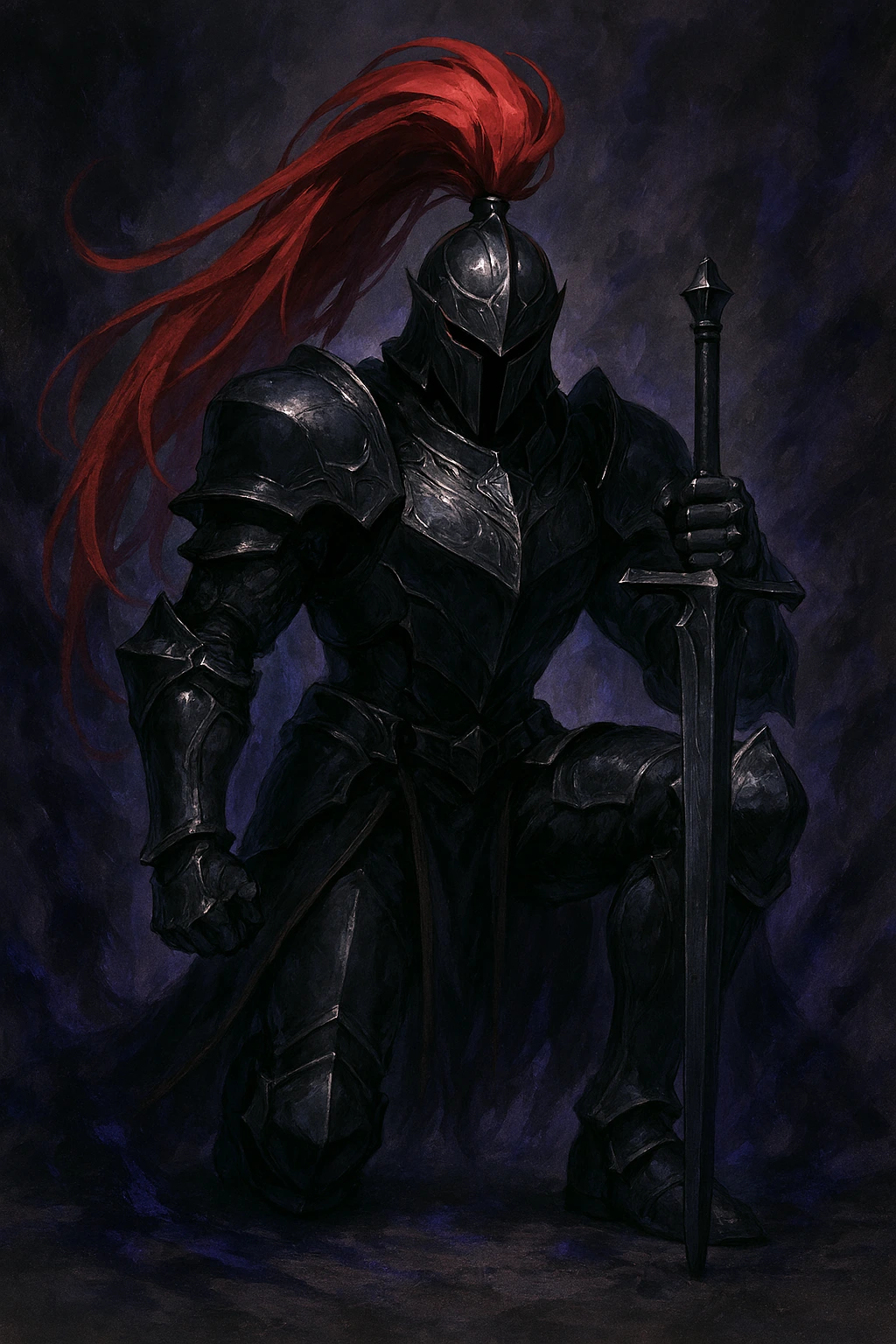
Igris is the fan favorite and the “First Knight.” Originally the protector of the empty throne in a penalty quest, he was Jin-woo’s first major extraction and the turning point of his journey.
- Personality: Igris is the embodiment of chivalry and silent loyalty. He often bows to Jin-woo and handles tasks with a quiet, efficient dignity. Unlike the more chaotic shadows, Igris brings a sense of nobility to the legion. He famously brought the head of a demon king to Jin-woo, kneeling in silence—a gesture of absolute fealty that required no words. He is the stoic guardian who stands at Jin-woo’s right hand.
- Combat Style: A master swordsman. His movements are precise, focusing on speed and lethality. He utilizes the “Dominator’s Touch” in combat (implied through telekinetic-like control of his blade) and possesses high agility. He fights with honor, preferring duels, but is ruthless when his liege is threatened.
- Evolution: Starting as a Knight, he eventually ascends to Great Marshal. His evolution reflects Jin-woo’s own journey—silent, steady, and incredibly disciplined. His armor evolves from a rusty red to a pristine, glowing violet-black, symbolizing his restoration to glory.
Beru the Ant King (The Predatory Protector)
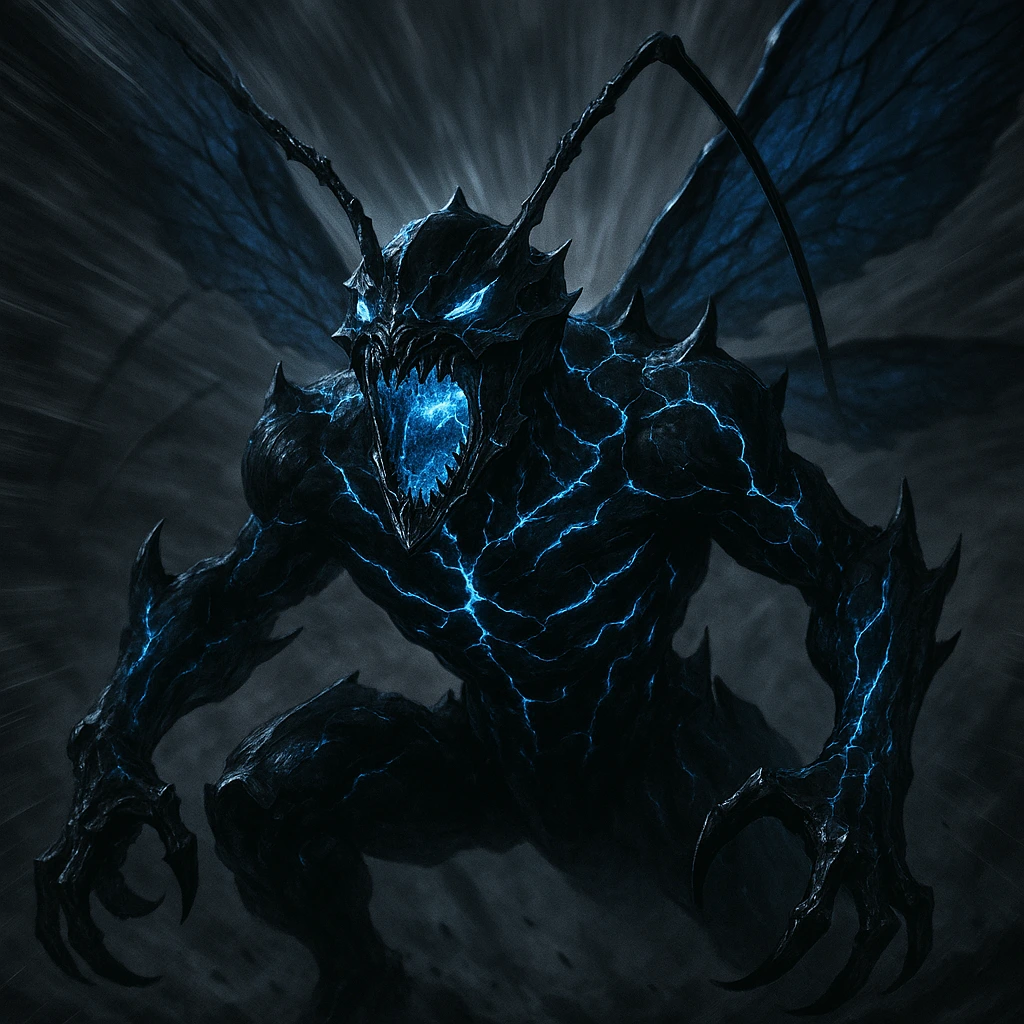
Beru was the primary antagonist of the Jeju Island Arc, a creature designed by evolution to be the ultimate predator to wipe out humanity.
- Personality: After extraction, Beru becomes hilariously and terrifyingly obsessed with his “King.” He is fiercely protective, often flying into a rage if someone disrespects Jin-woo. Interestingly, he develops a love for historical TV dramas, which influences his speech patterns, causing him to speak in an archaic, courtly dialect (“My Liege,” “Thy will be done”) that contrasts sharply with his monstrous appearance.
- Combat Style: Extreme speed, flight, and poisonous attacks. He retains his “Gluttony” ability, allowing him to consume enemies to regain mana or temporarily gain their traits. He also possesses high-level healing magic, making him the army’s primary support and assassin. He is the wildest card in the deck, capable of shifting from court jester to mass murderer in a blink.
- Significance: Beru was the first shadow Jin-woo extracted that could speak, opening the door for the shadows to become actual characters rather than just tools. He represents the wild, uncontrollable power of nature tamed by the Monarch’s will.
Bellion the First Servant (The Wings of the Monarch)
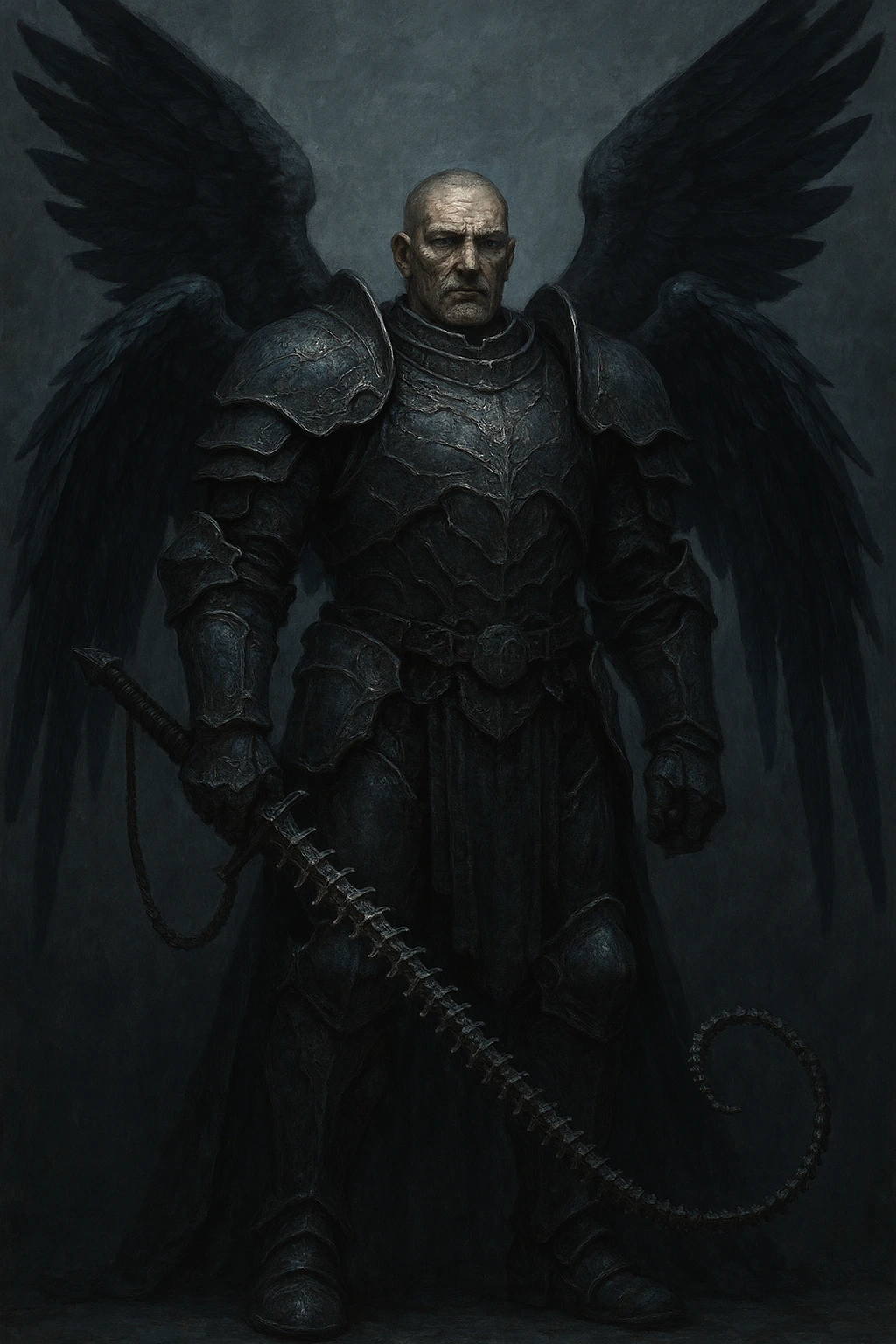
Bellion is the leader of the original Shadow Army that served Ashborn (the former Shadow Monarch).
- Origin: He was born from the fruit of the World Tree and has served the Shadow Monarch since the beginning of time. He is not a monster turned into a shadow; he was born to be a soldier of the heavens. He has no “previous life” as a human or monster—he is pure shadow warrior.
- Physicality: He is distinguished by his two sets of massive black wings (totaling four) and his “serpentine sword” (resembling a whip-sword) which can extend and whip around like a living creature. His armor is ancient, covered in the scars of celestial wars.
- Power: Bellion is so powerful that even Beru, in his most aggressive state, could not defeat him for the title of Grand-Marshal. He represents the “Old Guard” and brings a level of cosmic wisdom to the legion. His loyalty is not just to Jin-woo, but to the title of the Shadow Monarch itself, serving whoever holds the mantle with unwavering discipline.
5. Specialized Shadow Units
A balanced army needs more than just swordsmen. Jin-woo’s legion features several specialized units that allow him to handle any tactical scenario, from siege warfare to aerial dogfights.
Tusk (The High Orc Sorcerer)
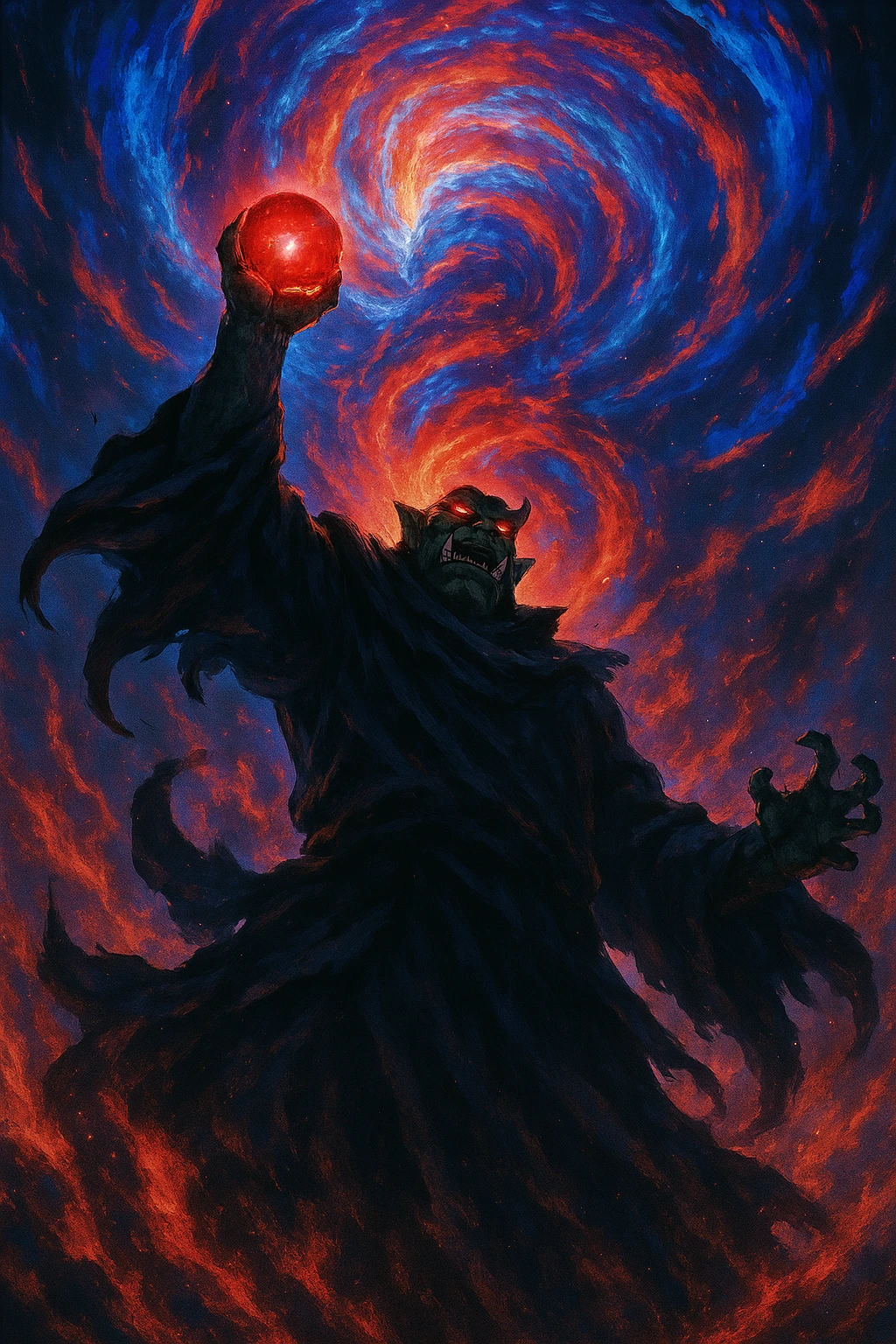
Tusk is the heavy artillery of the Shadow Legion. Originally the boss of an A-Rank dungeon, he provides the magical firepower the army otherwise lacks.
- Magical Prowess: He can use Hymns of Strengthening (buffing allies), Hymns of Shielding, and massive fire magic. His spells are often city-block level in scale, capable of wiping out hundreds of enemies at once.
- Gravity Manipulation: One of his most terrifying abilities is “Hymn of Agony,” which can crush enemies under localized gravity fields, pinning down agile opponents for the infantry to finish off.
- The Orb of Avarice: Equipped with this artifact (which Jin-woo gifted him), Tusk’s magical output is doubled, allowing him to incinerate entire armies with a single breath of fire. He can also change his size, growing into a giant to cast larger spells, acting as a living siege tower that dominates the skyline.
Iron and Tank (The Brute Force)
- Iron: Extracted from the A-Rank hunter Kim Chul, Iron is a “Tanker” unit. He uses a giant shield and a massive axe. His signature move is a “Taunt” shout that forces enemies to focus their attacks on him, allowing Jin-woo or the assassins to strike freely. Despite being a bit dim-witted—often flexing his muscles at inappropriate times—his durability is second to none. He is the anvil against which the enemy breaks.
- Tank: The leader of the Ice Bears. Tank provides raw, animalistic power and serves as a mount for lower-level shadows or even Jin-woo himself during charges. He can crush armored vehicles with his paws and withstand extreme cold. His massive frame allows him to plow through enemy lines, disrupting formations.
Kaisel (The Aerial Superiority)
Kaisel is the shadow of the Wyvern Kaisellin, the mount of the Demon King Baran.
- Role: Kaisel is Jin-woo’s primary mode of transport. In a world where teleportation is limited, having a supersonic flying mount is a massive logistical advantage.
- Tactical Use: Kaisel allows Jin-woo to survey the battlefield from above and provides a platform for Tusk to rain down fire. His speed is such that he creates sonic booms merely by accelerating, allowing for rapid deployment across continents. While he doesn’t engage in melee often, his ability to control the skies prevents enemies from escaping or gaining high ground.
Greed (The Ethical Dilemma)
Greed was extracted from the S-Rank hunter Hwang Dong-su.
- The Controversy: Turning a human hunter into a shadow is a dark turning point for Jin-woo. It signifies that he has moved beyond human morality and now operates as a Sovereign. It raises the uncomfortable question: does the soul find peace, or is this eternal punishment for his crimes against Jin-woo?
- Utility: Greed retains his S-Rank hunter abilities, making him a powerful, albeit begrudged, addition to the ranks. Because he was an enemy in life, he lacks the camaraderie of the other shadows, serving purely out of the system’s compulsion. His existence is a constant reminder of Jin-woo’s ruthlessness.
6. Logistics of the Army
Running an army of 100,000+ soldiers requires more than just a loud voice. The Shadow Monarch’s system provides several “quality of life” features that make the legion an efficient, well-oiled machine.
Shadow Storage (The Infinite Realm)
Jin-woo’s shadows do not walk beside him in the street. They exist within his own shadow. This “pocket dimension” allows him to carry his entire army anywhere, effectively hiding a weapon of mass destruction in plain sight. He can summon one, ten, or all of them instantly. This makes Jin-woo a one-man army capable of launching a full-scale invasion in the middle of a shopping mall or a desolate desert.
The storage is a silent, stasis-like void where the soldiers wait, fully aware but resting, preserving their energy for the moment they are called. It is their barracks, their home, and their sanctuary.
Regeneration Mechanics: The Undying Legion
This is arguably the most broken mechanic of the Shadow Legion. As long as Jin-woo has Mana, his shadows are immortal.
- Auto-Repair: If a shadow is blown to pieces, the smoke-like essence simply reforms. Limbs reattach, heads reform, and weapons materialize from thin air. It is like watching a video rewind; the destruction is undone in seconds.
- Mana Drain: The cost of regeneration is proportional to the damage taken. If the army is getting obliterated repeatedly, Jin-woo’s Mana pool will drain rapidly. This is the only way to “defeat” the legion—by exhausting the King. It turns every battle into a war of attrition where the enemy must outlast Jin-woo’s immense mana reserves, a feat that becomes nearly impossible as he levels up.
Shadow Exchange (The Ultimate Teleportation)
Jin-woo can swap places with any of his shadows, regardless of distance. However, this ability has a cooldown (initially 3 hours, later reduced).
- Global Reach: By leaving a single shadow in South Korea and traveling to the USA, Jin-woo can instantly “swap” back home. This allows for unparalleled mobility, letting him bypass borders, oceans, and blockades.
- Tactical Anchors: He often hides shadows in the shadows of his friends and family (like his sister Jin-ah), acting as a permanent “SOS” button. If they are in danger, he can swap with that shadow and appear instantly to protect them, turning his army into a global surveillance and protection network. This mechanic emphasizes his role as a protector, not just a conqueror.
Telepathic Connection (The Hive Mind)
Jin-woo shares a mental link with every shadow. He can see what they see and hear what they hear. This makes him the ultimate strategist, as he has perfect battlefield awareness. He can issue complex commands to different divisions of his army simultaneously without uttering a single word. He can perceive the battlefield from thousands of angles at once, processing information that would overwhelm a normal human mind. This hive-mind capability ensures that the army moves as a single, cohesive organism.
7. The Total Army Growth (Timeline)
The scale of the Shadow Legion is a reflection of Jin-woo’s progression from the “Weakest Hunter of All Mankind” to the “Sovereign of Death.”
- The Early Days (The Necromancer Job Quest): Jin-woo starts with around 30 shadows, primarily the infantry from the quest and Igris. He struggles with Mana management and shadow slots, often having to unsummon soldiers mid-fight to conserve energy. He is learning to be a leader, stumbling but adapting.
- The Demon Castle Arc: He gains Tusk and a few hundred High Orcs. The army begins to feel like a legitimate force. The visual of hundreds of blue-flame soldiers filling a dungeon room becomes his signature, overwhelming demons with sheer numbers and coordination.
- The Jeju Island Peak: After extracting Beru and the Ant colony, his numbers jump into the thousands. He now has a “Commander” to lead the army, allowing for multi-front battles. The army gains aerial capabilities and a healer, becoming a self-sufficient force.
- The High Orc and Giant Arcs: His army grows to include specialized monsters like Nagas, Giants, and more diverse magical units. The sheer variety of his troops makes him adaptable to any environment. He begins to rely on his army to clear dungeons while he observes, acting as a true General.
- The Final War: Upon inheriting the full power of Ashborn, Jin-woo gains the original Shadow Army. His count jumps to over 100,000 shadows, including dragons, ancient knights, and cosmic-level warriors. He is no longer just a “Hunter”—he is the commander of a force that can challenge the Gods themselves. The sky itself darkens when his full army is deployed, a rolling tide of black and blue that consumes the horizon.
8. Conclusion: The Sovereign of Death
The Shadow Legion is more than a superpower; it is a narrative device that explores themes of loyalty, the weight of leadership, and the isolation of power.
Army of One
The brilliance of the Shadow Legion is that it turns Jin-woo into a “One-Man Army.” He doesn’t need teammates; he is his own team. This reinforces the “Solo” in Solo Leveling. However, as the series progresses, the shadows become his family. His interactions with Igris and Beru show that while he is a Monarch, he is not alone. The army provides him with companionship in a world where he has outgrown humanity, bridging the gap between his human heart and his god-like power.
The Burden of the Monarch
To lead the Shadow Legion is to carry the weight of the fallen. Every soldier in his army is a reminder of a battle won and a life taken. Jin-woo’s growth is measured by his ability to shoulder this burden. He doesn’t just use these souls; he protects them, and in return, they offer him a loyalty that transcends death. It is a symbiotic relationship born of blood and mana, proving that even in the deepest darkness, there is order and purpose.
Final Summary
The Shadow Legion is the ultimate power fantasy, but it is grounded in a deep internal logic and a hierarchy that rewards growth. From the silent, stoic Igris to the chaotic, loyal Beru, the soldiers of the Shadow Monarch are the true stars of the series. They are the “Shadows” that allow Jin-woo to shine as the brightest—and darkest—Monarch in history. As long as his shadow remains, the Legion will stand, ready to “Arise” at a moment’s notice.