
Introduction: The Man Who Couldn’t Die
In the brutal, unforgiving world of Attack on Titan, death is usually a sudden, violent thief. It steals away characters with potential, characters with dreams, and characters who simply wanted to see the ocean. Yet, amidst a graveyard of soldiers who fought desperately to live, there stands one man who actively courted death, begged for it, and was repeatedly denied the release of the grave.

Reiner Braun.
He is the “Armored Titan,” a title that invokes images of invulnerability, strength, and unyielding defense. In the lore of the Titans, the Armored is the shield of Marley, the battering ram that broke the Wall Maria, the physical embodiment of immovable force. But this physical invincibility presents the series’ most tragic paradox: Reiner Braun is the strongest shield physically, but mentally, he is the most fragile character in the entire story.
For the vast majority of the series, we view Reiner through the lens of a villain. He is the traitor, the mass murderer, the face of the enemy that destroyed Shiganshina. But as the layers of the story peel back, specifically in the jarring perspective shift of Season 4, we realize that Reiner isn’t a villain in the traditional sense. He is a warning. He is a tragic case study of what happens when you force a child to carry the geopolitical sins of a nation on his back.
Reiner is the dark mirror of Eren Yeager. While Eren pushed forward into hell to achieve freedom, Reiner was dragged into hell while trying to be a hero. This analysis will dissect the fractured mind of the man who survived everything—Titans, thunder spears, war, and guilt—except his own conscience.
“I don’t know what’s right anymore. But… I do know that I have to face the consequences of my actions… and as a warrior… fulfill my duty to the bitter end.” — Reiner Braun
The Fraud: “I wasn’t Chosen, I was Created”
To understand Reiner’s psychological collapse, we must first dismantle the foundation of his identity. In the world of Shonen anime, we are accustomed to the Destiny vs. Effort trope. Usually, the hero is an underdog who overcomes a lack of talent with sheer grit (Lee Rock from Naruto, Asta from Black Clover). Reiner Braun appears to fit this archetype perfectly at first glance.
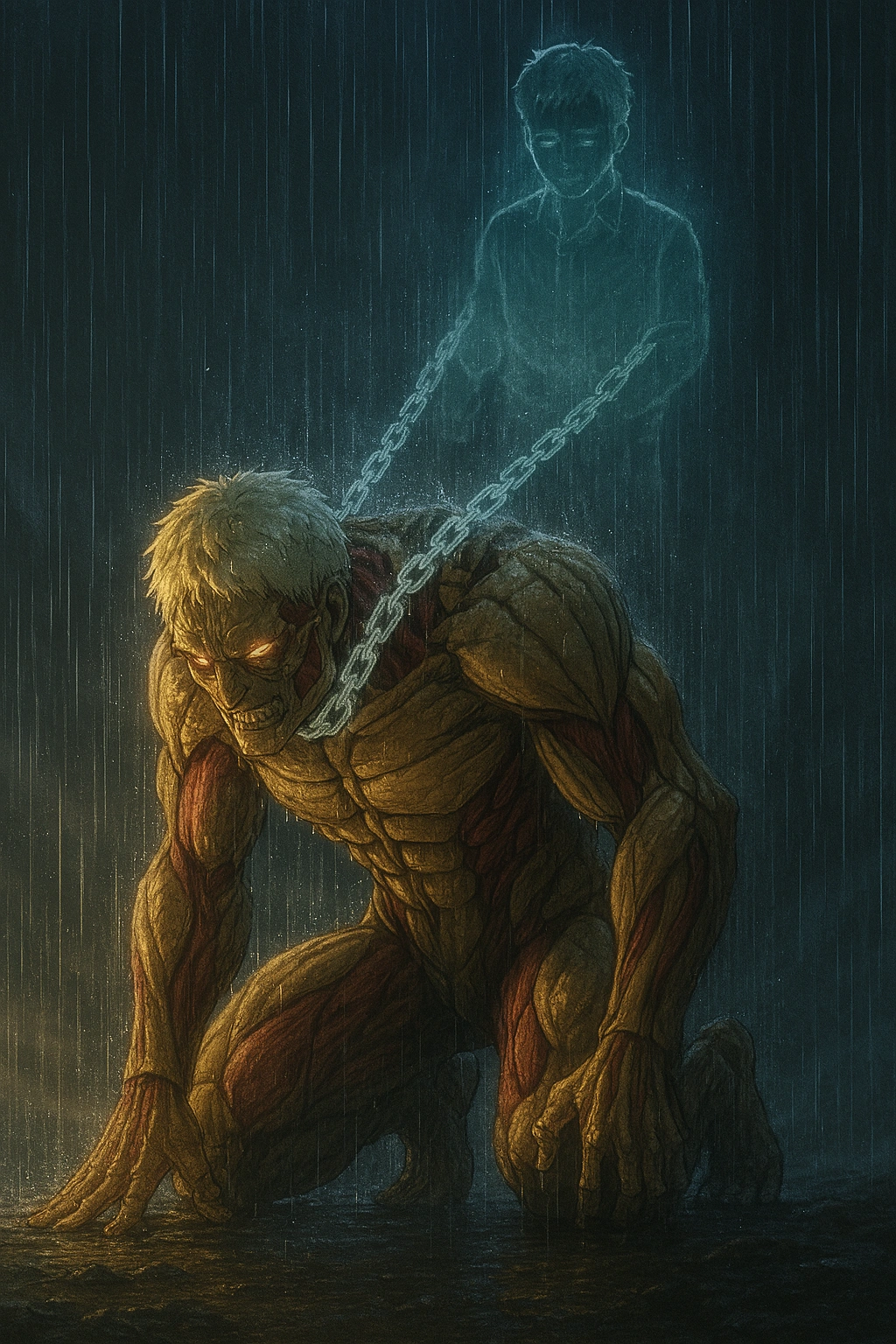
The Failure of Destiny
Among the warrior candidates—Annie Leonhart, Bertolt Hoover, Marcel Galliard, Porco Galliard, and Pieck Finger—Reiner was the runt of the litter. He possessed no exceptional combat skills like Annie. He lacked the raw destructive potential or marksmanship of Bertolt. He wasn’t a brilliant strategist like Pieck.
By all metrics of “Destiny” or natural talent, Reiner was destined to be a nobody. He was the bottom of the class. In a meritocratic system, Reiner Braun should have been sent home to his mother, lived a quiet life in the Internment Zone, and died of old age.
But Reiner had something the others didn’t: a desperate, blinding loyalty to Marley. He had “Effort.” However, this is where Attack on Titan twists the knife. Reiner’s effort wasn’t noble; it was pathetic and manufactured. He didn’t train hard to protect the world; he trained hard because he was brainwashed into believing that becoming a “Honorary Marleyan” would reunite his Eldian mother and Marleyan father. His motivation was a child’s naive wish to fix a broken home.
The Marcel Incident: The Theft of Identity
The revelation that Reiner was never meant to inherit the Armored Titan is the first crack in his psyche. He was chosen only because Marcel Galliard, the clear leader of the group, sabotaged his own brother Porco’s scores. Marcel praised Reiner to the commanders not because Reiner was good, but to save Porco from the curse of the Titan lifespan (13 years).
Reiner wasn’t the “Chosen One.” He was the “Spare.” He was the result of administrative manipulation.
When the group arrived on Paradis Island and Marcel was immediately eaten by Ymir (in pure Titan form), the reality of Reiner’s fraudulence crashed down on him. The moment Marcel died, Reiner should have broken. He should have run back to the ship.
Instead, something terrifying happened. Reiner didn’t just inherit Marcel’s mission; he stole Marcel’s personality.
In a moment of extreme trauma, realizing that without Marcel, the group would fail and they would be executed upon return, Reiner effectively killed “Reiner the Failure” and birthed “Reiner the Leader.” He adopted Marcel’s mannerisms, his bravery, and his “big brother” persona.
This is the root of his Imposter Syndrome. Every time Reiner acted brave in Season 1, every time he helped Eren or Conny, every time he gave a rousing speech, he was subconsciously acting out a role he wasn’t qualified to play. He wasn’t a leader born of experience; he was a terrified child wearing a dead boy’s face. This makes his eventual betrayal infinitely more painful—because the “Big Brother” the 104th Cadets loved was a fabrication constructed from the corpse of the friend he failed to save.
The Performance of Brotherhood
We must look closer at the training arc. Remember the scene where Reiner carries Armin’s pack during the long-distance run in the rain? At the time, we saw this as the ultimate act of selflessness. Reiner risked his own score to help a weaker comrade.
But through the lens of the “Fraud,” this scene takes on a darker tone. Reiner wasn’t just helping Armin; he was performing the role of Marcel. He was desperately trying to convince himself, “I am the leader. I am dependable.” Every act of kindness was a brick in the wall he built to hide his insecurity. He needed the cadets to rely on him because if they didn’t, he would have to face the void of his own inadequacy. He became the “Big Brother” not out of love, but out of necessity.
The Split: Soldier vs. Warrior (Psychological Breakdown)
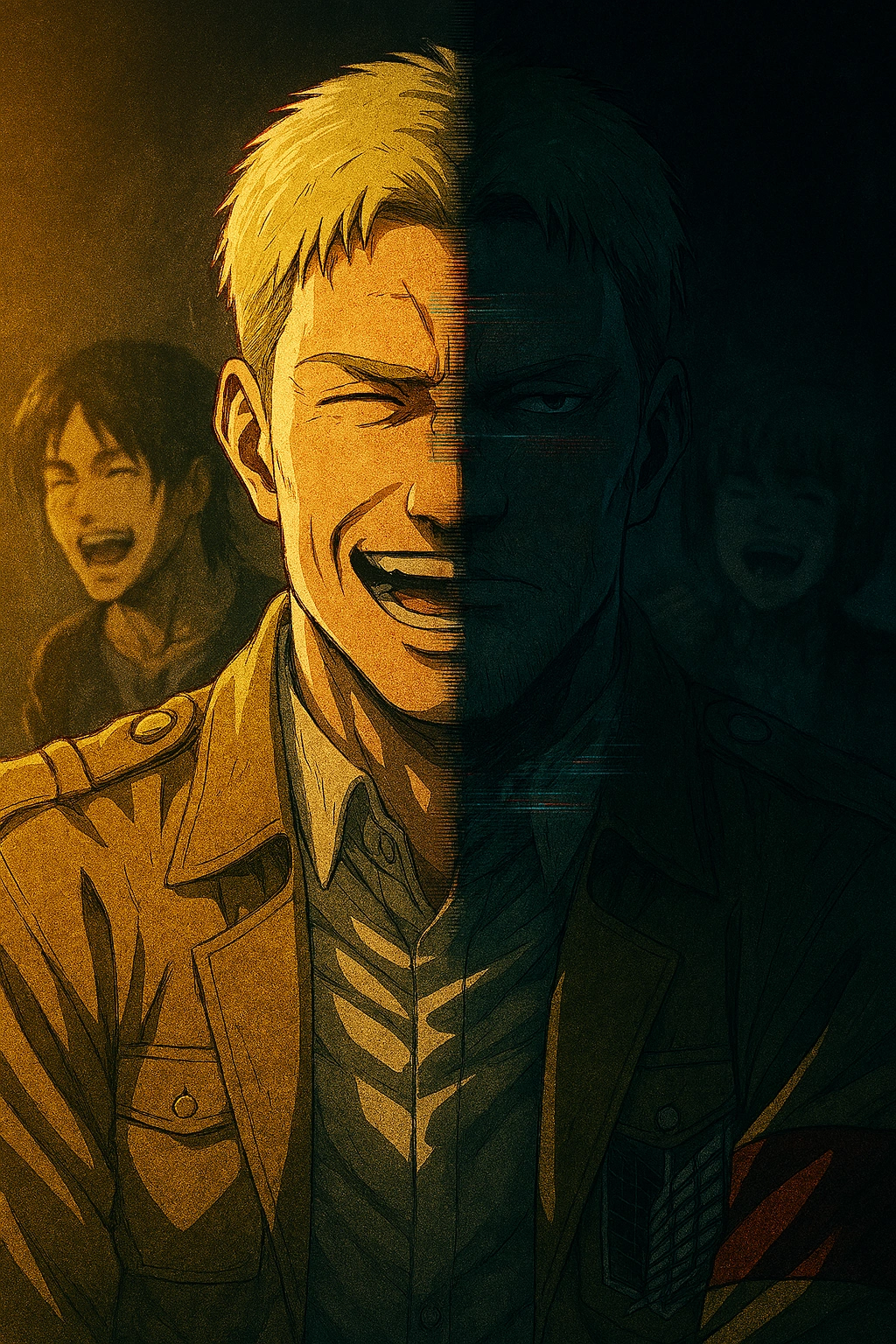
The human mind is resilient, but it has limits. Reiner Braun pushed his mind past those limits, resulting in one of the most accurate depictions of trauma-induced dissociation in fiction.
The Mechanics of Dissociation
Reiner suffers from a severe form of Dissociative Identity Disorder (DID), born from the cognitive dissonance of his mission.
- The Reality: He is a Warrior of Marley. The people within the Walls are “Island Devils.” His mission is genocide.
- The Experience: The people within the Walls are just people. They are kind, funny, stupid, and brave. They are his friends.
These two truths cannot coexist. You cannot break bread with someone, laugh with them, save their life, and simultaneously believe they are a devil deserving of extermination. To survive this contradiction without going insane, Reiner’s mind cleaved in two.
- The Soldier: This personality wasn’t “fake.” This is the tragedy. When Reiner risked his life to save Conny at Utgard Castle, he wasn’t acting. The “Soldier” genuinely forgot he was a Titan. He genuinely loved Historia. He genuinely wanted to help humanity survive. This was his coping mechanism—a fugue state where he could be the hero he always wanted to be.
- The Warrior: This is the cold, indoctrinated child soldier. The one who remembers Marley, the mission, and the sins they committed when they breached Wall Maria.
The Marco Bodt Trauma Loop
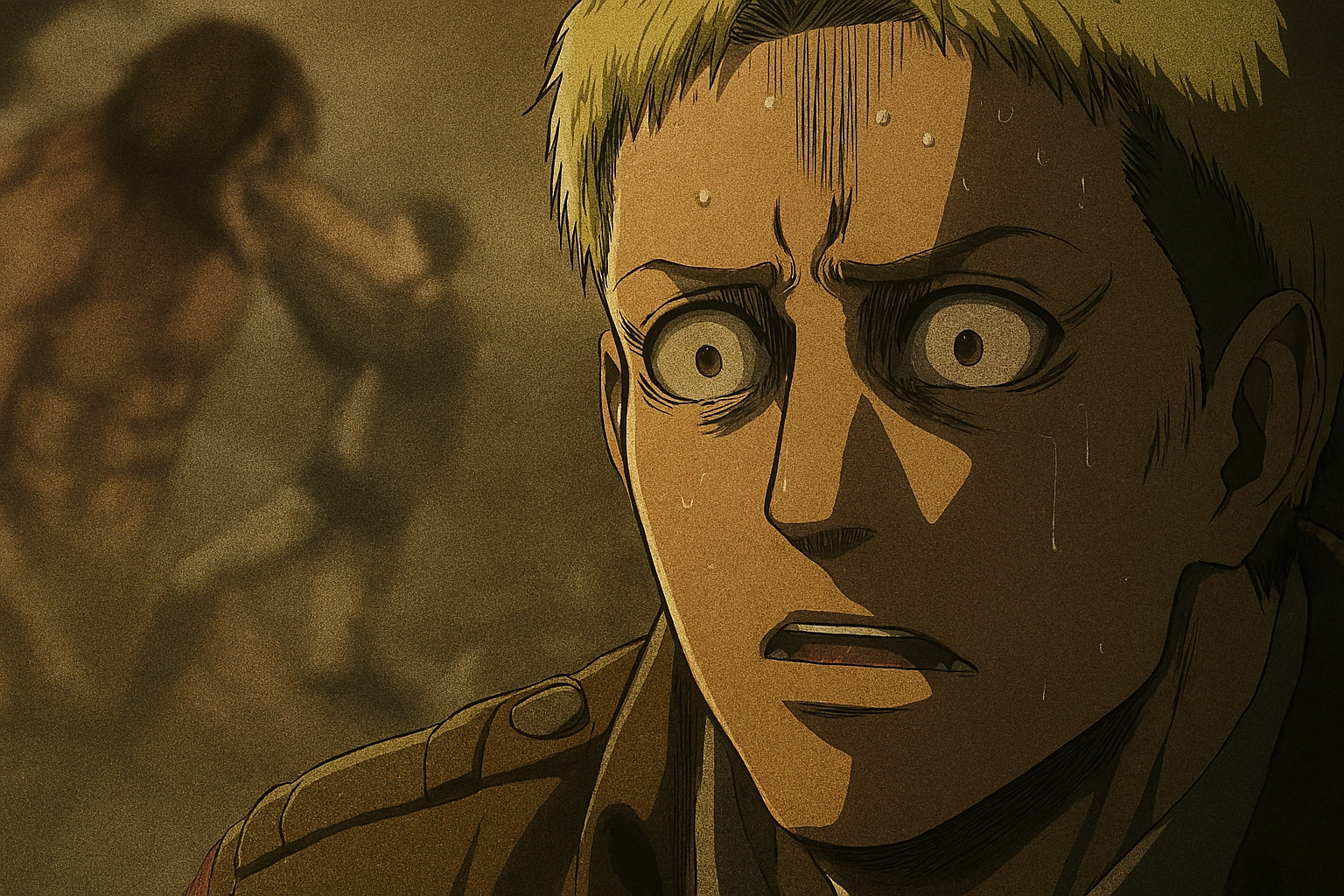
The inciting incident for this mental fracture is often overlooked, but it is the most crucial moment in Reiner’s psychology: The death of Marco Bodt.
During the Battle of Trost, Reiner (The Warrior) overhears Marco discovering their secret. Reiner tackles Marco, pins him down, and orders Annie to strip him of his ODM gear. This is a cold, calculated murder to protect the mission.
But the moment the Titan grabs the defenseless Marco, Reiner’s mind snaps. As Marco screams, Reiner watches with a look of genuine horror and asks, “Hey… why is Marco… being eaten?”
This isn’t bad writing; it is a psychotic break happening in real-time. The guilt of killing a friend was so immense that Reiner’s brain instantly deleted the memory of causing it. He dissociated into the “Soldier” persona while the murder was happening to protect himself from the reality of his actions. This loop—committing an atrocity and then immediately forgetting his role in it—became his standard operating procedure.
The Bertolt Factor
We cannot analyze Reiner without mentioning Bertolt Hoover. While Reiner was the “Leader,” Bertolt was the “Caretaker.” Bertolt was the only one who knew the full extent of Reiner’s madness. He watched Reiner oscillate between personalities, often looking on with a mix of pity and horror.
Bertolt enabled Reiner’s delusions because he knew that without the “Soldier” persona, Reiner would commit suicide. Bertolt allowed Reiner to play house with the 104th because it was the only thing keeping the team intact. This dynamic adds a layer of tragedy to Bertolt’s death; when Armin eats Bertolt, Reiner loses the only person who understood the architecture of his madness. He is left alone with his fractured mind.
The Breaking Point: Castle Utgard
The cracks begin to show during the defense of Castle Utgard. Reiner looks at the Titan biting his arm and thinks, “Wait, why is a Titan eating me? I’m a Titan.” It is a moment of horrific absurdity. His internal monologue is glitching.
But the true shattering of his psyche occurs atop Wall Rose in Season 2. This scene is legendary not for its action, but for its bizarre casualness. “Eren, can we talk for a minute? I’m the Armored Titan and he’s the Colossal Titan.”
Fans were confused. Why reveal the biggest plot twist in anime history in the background of a wide shot, amidst casual conversation?
The reason is mental exhaustion.
Reiner wasn’t plotting a master reveal. He wasn’t trying to be dramatic. He was simply done. The pressure of maintaining two separate realities had crushed him. He was hallucinating that he could just “ask” Eren to come with them, and that somehow, everyone would understand. He had lost the ability to distinguish between the logic of a Warrior and the camaraderie of a Soldier. He revealed his identity because his mind was too tired to keep lying. It was a plea for the nightmare to end.
The Rival’s Role: The Anvil that Forged Eren
If we look at my core perspective on The Rival’s Role, the rival exists to accelerate the hero’s growth. Usually, this is done through competition (Vegeta vs. Goku). In Attack on Titan, Reiner accelerates Eren’s growth through trauma and, later, through validation.
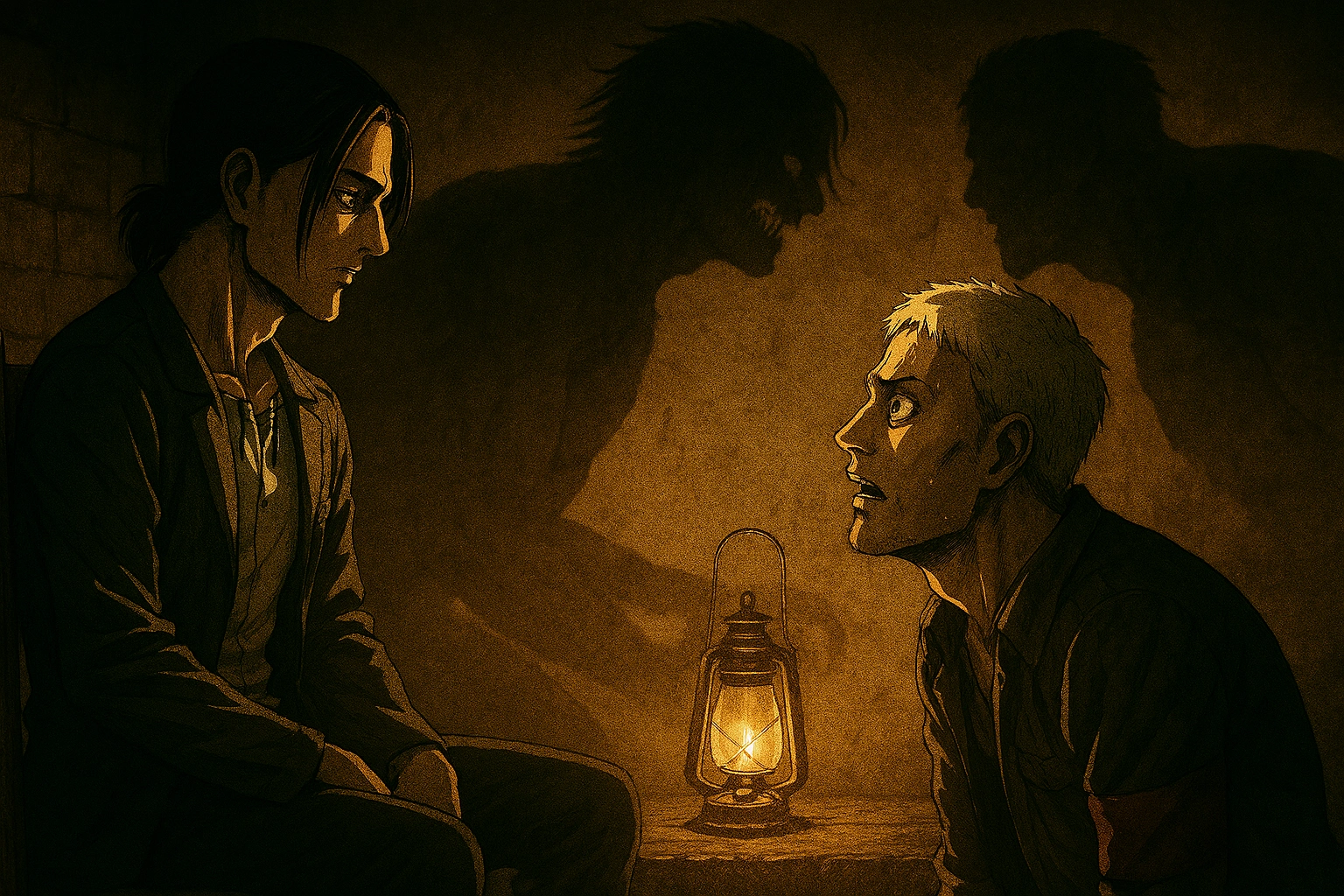
Season 1-3: The False Idol
For the first three seasons, Reiner is the “Hero” figure Eren aspires to be. Eren, who is impulsive and weak, looks at Reiner—strong, calm, respected—and thinks, “I want to be like him.” Reiner teaches Eren the basics of combat. He teaches him mental fortitude.
Their fighting styles reflect this dynamic. Reiner uses an MMA-based grappling style—grounded, heavy, relying on leverage and weight. He represents the established order, the immovable object. Eren, initially, has no style. He learns Reiner’s techniques and adapts them. When they fight as Titans, Eren defeats Reiner using Reiner’s own moves. This is symbolic of the Rival’s purpose: to give the hero the tools to surpass them.
When the betrayal happens, it breaks Eren’s heart, but it also hardens his resolve. Reiner becomes the object of Eren’s absolute hatred. This hatred is the fuel that powers Eren through the early arcs. Without Reiner as the target, Eren might not have pushed himself to master his Titan powers so quickly. Reiner was the anvil upon which the Attack Titan was forged.
Season 4: The Mirror Image
The dynamic flips in the final season. This is where Isayama’s writing transcends the genre. In Season 4, Eren becomes the “monster” attacking the innocent civilians of Liberio. Reiner is the defender trying to save them. The roles are perfectly reversed.
The Basement Reunion beneath the stage in Liberio is the peak of this rivalry. Eren doesn’t scream at Reiner. He doesn’t attack him immediately. He sits him down and talks. When Eren says, “I am the same as you,” it is the most devastating thing he could have said.
If Eren had called Reiner a monster, Reiner could have handled it. He knows he is a monster. But Eren validated Reiner’s humanity.
- Reiner infiltrated the walls to save the world.
- Eren infiltrated Marley to save his island.
- Both committed unspeakable atrocities for what they believed was the “greater good.”
Eren strips Reiner of his excuses. Reiner tries to say, “I had no choice, it was for my country.” But under Eren’s gaze, Reiner breaks down and admits the selfish truth: “No… I wanted to be a hero. I wanted people to respect me. It was me.”
This is the Rival’s ultimate function. Eren forces Reiner to confront his own truth, just as Reiner forced Eren to confront the harshness of the world. They are inextricably linked, two boys pushed into a war they didn’t start, destroying each other to finish it.
The Price of Being the Shield: Suffering as Penance
The “Hope and Reality” perspective is brutal here. There is no hope for Reiner Braun, only the cold reality of survival.
The Obsolescence of Armor
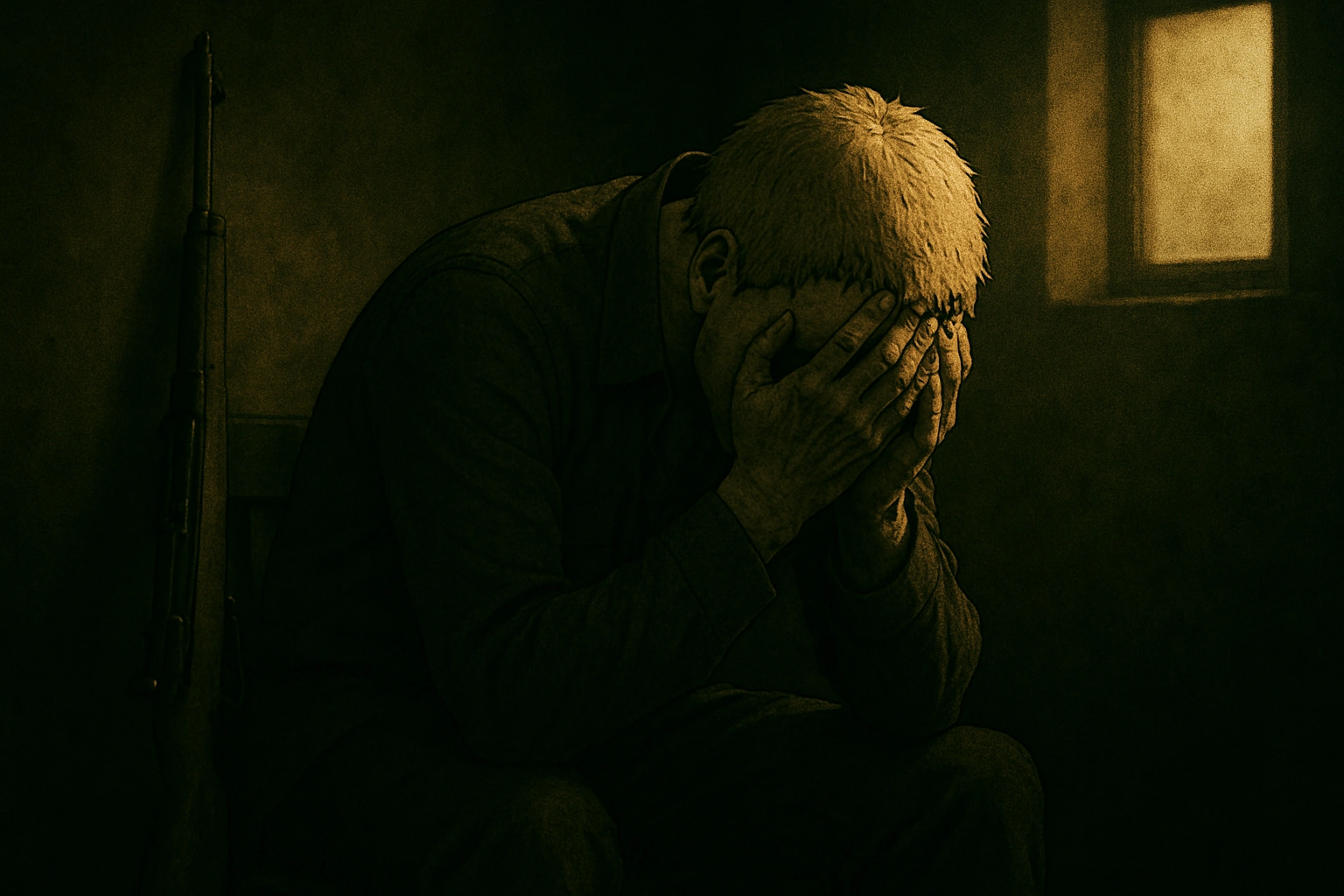
Before discussing his soul, we must discuss his body. The tragedy of the Armored Titan in the final arc is that his defining trait—his armor—has become obsolete. In Season 1, Reiner was invincible. Blades broke against his skin. Cannonballs bounced off. He was a god of war.
By Season 4, technology has caught up. The Mid-East Allied Forces have anti-Titan artillery that can pierce his armor. Thunder Spears can blow him apart. The world has evolved past the need for him. This physical vulnerability mirrors his psychological state. He is no longer the unstoppable force; he is a relic. He is a walking target, enduring pain that used to be impossible. Every battle in the final season involves Reiner being shredded, impaled, and broken, yet he keeps standing up. The “Armor” is no longer a gift; it is a cage that forces him to endure punishment that should have killed him.
The Generational Curse: Gabi and Falco
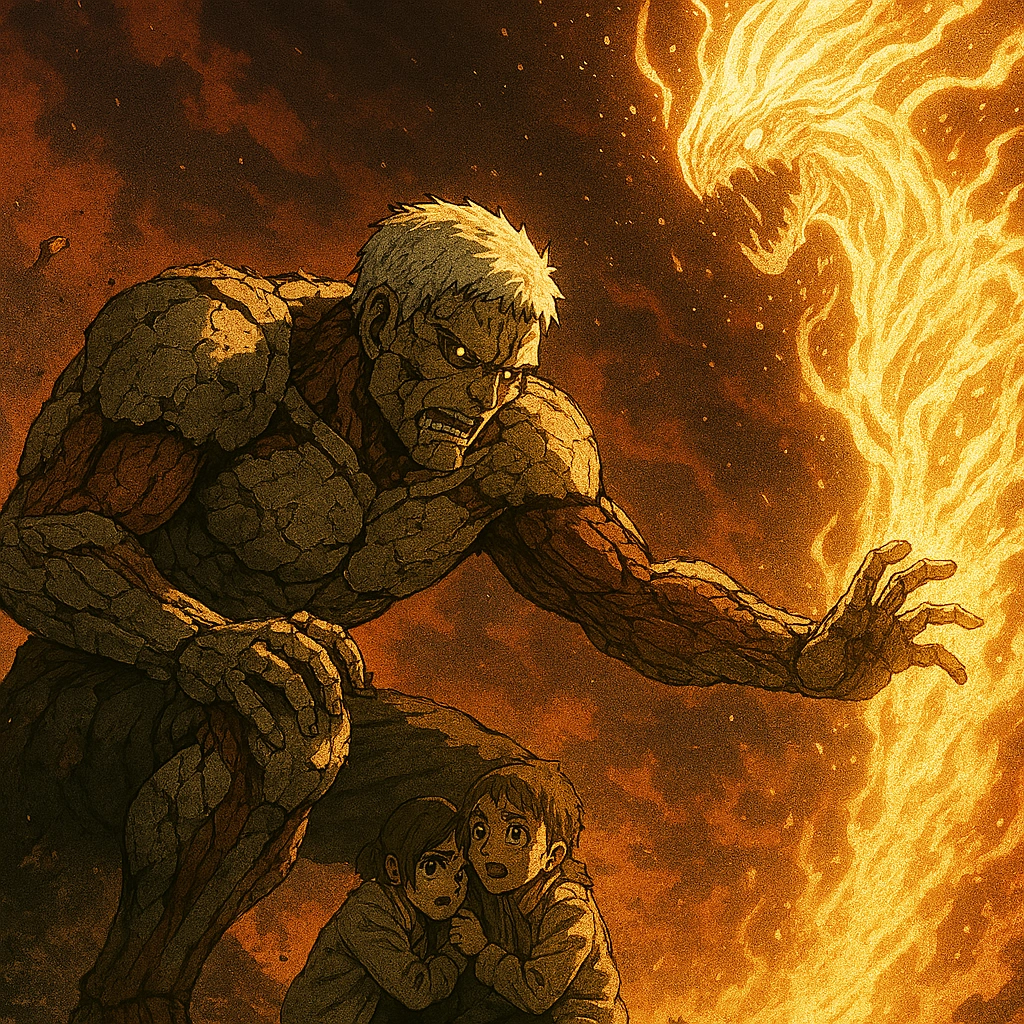
Why does Reiner keep fighting? Why doesn’t he let Eren kill him? Because of the children. Specifically, his cousin Gabi Braun.
Gabi is a terrifying reflection of young Reiner. She has the same blind loyalty, the same desperate desire to prove herself, and the same indoctrinated hatred for the “devils.” When Reiner looks at Gabi, he sees his own tragic history repeating itself. He knows exactly where her path leads: to a rifle in the mouth.
Reiner’s redemption arc isn’t about being forgiven by Paradis or saving Marley. It is about intergenerational trauma. He fights to break the cycle. He conspires to have Falco inherit the Armored Titan instead of Gabi, not because he hates Gabi, but because he loves her enough to spare her the curse of being a “Hero.” In the finale, when Reiner holds back the glowing centipede (Hallucigenia), he is finally doing what he claimed to do in Season 1: acting as the Shield of Humanity. Not for the glory of Marley. Not for the restoration of Eldia. But for the two kids standing behind him. He endures the heat, the crushing weight, and the hopelessness, not because he thinks he will win, but because he refuses to let the nightmare consume the next generation.
The Suicide Attempt: The nadir of Hope
In the beginning of the Marley Arc, we see a scene that recontextualizes the entire character. Reiner puts a rifle in his mouth. He is ready to pull the trigger. This is not a “coward’s way out.” This is the culmination of years of PTSD, guilt, and the realization that his entire life has been a net negative for the world. The rifle scene shows us that Reiner’s armor protects his body, but nothing protects his soul. He is forced to live. He is cursed to survive. The only thing that stops him is hearing Falco outside the room. Even in his darkest moment, his instinct to protect others overrides his desire for peace.
Redemption Through Living
Many fans expected Reiner to die a sacrificial death. A “Hero’s Death” would have been easy. It would have been a release. It would have validated his desire to be a martyr. Isayama gave him a harder punishment: Life.
Reiner survives. He loses his Titan powers. He lives in a world recovering from the Rumbling—a Rumbling he helped precipitate. He has to look Levi in the eye. He has to live with the ghosts of Bertolt and Porco. In the final scenes, we see him sniffing Historia’s letter. It’s a moment of levity, calling him “creepy,” but it signifies something important: Reiner is back to being a human. He is flawed, a bit weird, and alive. He has to carry the weight of his sins not for 13 years, but for the rest of his natural life. That is his penance.
Conclusion: The Weight of Armor
Reiner Braun is a study in contradiction. He is a mass murderer who is deeply empathetic. He is a warrior who hates war. He is a hero who wished for death.
In a show filled with literal monsters, Reiner Braun stands out as the most painfully human character. He represents the “Common Man” caught in the gears of history. He wasn’t a prodigy like Mikasa, a genius like Armin, or a devil like Eren. He was just a boy who wanted his parents to live together, who got swept up in propaganda, and who realized too late that he was the villain of someone else’s story.
His journey teaches us that the hardest battle isn’t slaying the monster outside; it’s living with the monster inside. Reiner’s “victory” wasn’t defeating Eren or saving the world. His victory was simply making it to the next day without pulling the trigger. He proves that sometimes, the bravest thing you can do is simply continue to exist when every fiber of your being wants to quit.
The Armored Titan’s plating eventually shattered, but the man inside, battered and broken, refused to turn to dust. Reiner Braun didn’t get the death he wanted; he got the life he needed to understand the weight of his own actions.
Was Reiner a traitor? Yes. Was he a monster? Yes. But was he also just a scared child wandering through a nightmare, looking for a way to wake up? Absolutely.
And perhaps, in the end, that is why he survived. Because someone had to remain to tell the story—not of the glorious victory, but of the terrible price paid to achieve it.
Call to Action: Does Reiner deserve forgiveness, or is survival his punishment? Share your thoughts on the most tragic character in Attack on Titan below. And if you want to explore the psychology of the man who pushed Reiner to the brink, check out our deep dive into Eren Yeager next.