
Introduction: The Junkyard of the World
In the sprawling, vibrant, and infinitely dangerous world of Yoshihiro Togashi’s Hunter x Hunter, maps are drawn with meticulous care by the V5—the governing coalition of the world’s most powerful nations. These maps chart bustling metropolises, untouched wildernesses, and perilous continents. Yet, nestled within this meticulously documented globe lies a glaring, deliberate omission.
It is an unmapped territory, a geographic anomaly, and a sociological nightmare known as Meteor City (Ryuuseigai). To the official global governments, Meteor City does not exist. It is a massive wasteland, a sprawling expanse of ruin and refuse that has been completely scrubbed from all official cartography. The V5 and the myriad nations under its umbrella turn a blind eye to its borders, treating its immense physical space as a cartographical void.
This intentional ignorance is not a matter of missing geographical data, but a willful, global conspiracy to ignore the festering wound at the heart of human civilization. Meteor City is the ultimate manifestation of the world’s collective shadow, a place where the pristine societies of the Hunter x Hunter universe sweep their darkest, most inconvenient truths.

Within this vast, desolate landscape of endless trash mountains and toxic valleys exists a population of ghosts. Meteor City is home to an estimated eight to ten million inhabitants, a staggering number that rivals major modern metropolises.
Yet, to the bureaucratic machinations of the outside world, not a single one of these individuals is alive. They possess no birth certificates, no official identification, no tax records, and absolutely no legal existence. In a world governed by Hunter Licenses, digital currency, and rigid legal frameworks, the citizens of Meteor City are specters haunting the physical realm.
If a citizen of Meteor City is murdered beyond its borders, no police force will investigate; there is no body on record to be deceased. If they are enslaved, there is no international tribunal to advocate for their freedom. This complete erasure from the human registry shapes the very foundation of their reality. To be born in Meteor City is to be born into a state of absolute nothingness, forcing the population to forge their own identity in a vacuum devoid of human rights or basic societal recognition.
This tragic statelessness is inextricably linked to Meteor City’s primary function in the global ecosystem: it is the world’s ultimate dumping ground. For over fifteen hundred years, the outside world has utilized this designated dead zone to discard everything it wishes to forget. Convoys and aircraft continuously dump an unimaginable volume of refuse into the city.
But this is not merely household garbage. Meteor City is the final resting place for hazardous, radioactive waste, decommissioned illegal weaponry, bio-hazardous materials, and the shattered remnants of failed technologies. More horrifyingly, it is also where the world discards its unwanted human elements. Murder weapons, corpses, and abandoned infants are tossed into the mountains of debris with equal indifference.
The outside world treats Meteor City as an infinite, bottomless void, a magical repository where the concept of consequence goes to die. The people of Meteor City are thus forced to build their lives, their homes, and their society from the literal detritus of a world that despises them. They wear clothes meant for the incinerator, eat food scraped from discarded packaging, and breathe air thick with the dust of forgotten things. This physical reality of living amidst the world’s garbage is the crucible that forges the unbreakable, terrifying spirit of Meteor City’s people.
The Philosophy of the Forsaken
To understand Meteor City is to understand the terrifying core doctrine that governs its society, a philosophy summarized in a single, chilling mandate: “We reject nothing, so take nothing from us.” This is not a plea for peace, nor is it a passive acceptance of their lot in life.
It is an absolute, uncompromising pact of retaliation, a doctrine of mutually assured destruction that serves as the city’s only defense mechanism against a hostile globe. The first half of the phrase, “We reject nothing,” speaks to their tragic reality. They accept the toxic waste, the discarded weapons, the broken outcasts, and the abandoned children.
They take the world’s sin and build a community from it. They have no choice but to accept what is given. However, the second half, “so take nothing from us,” is a blood-soaked promise. Because they have been stripped of everything—identity, rights, dignity, and a place in the world—the few things they do possess (their people, their bonds, their pride) are fiercely protected with an apocalyptic zeal. To steal from Meteor City, whether it be a piece of valuable scrap or a human life, is to invite the wrath of millions of ghosts who have absolutely nothing left to lose.
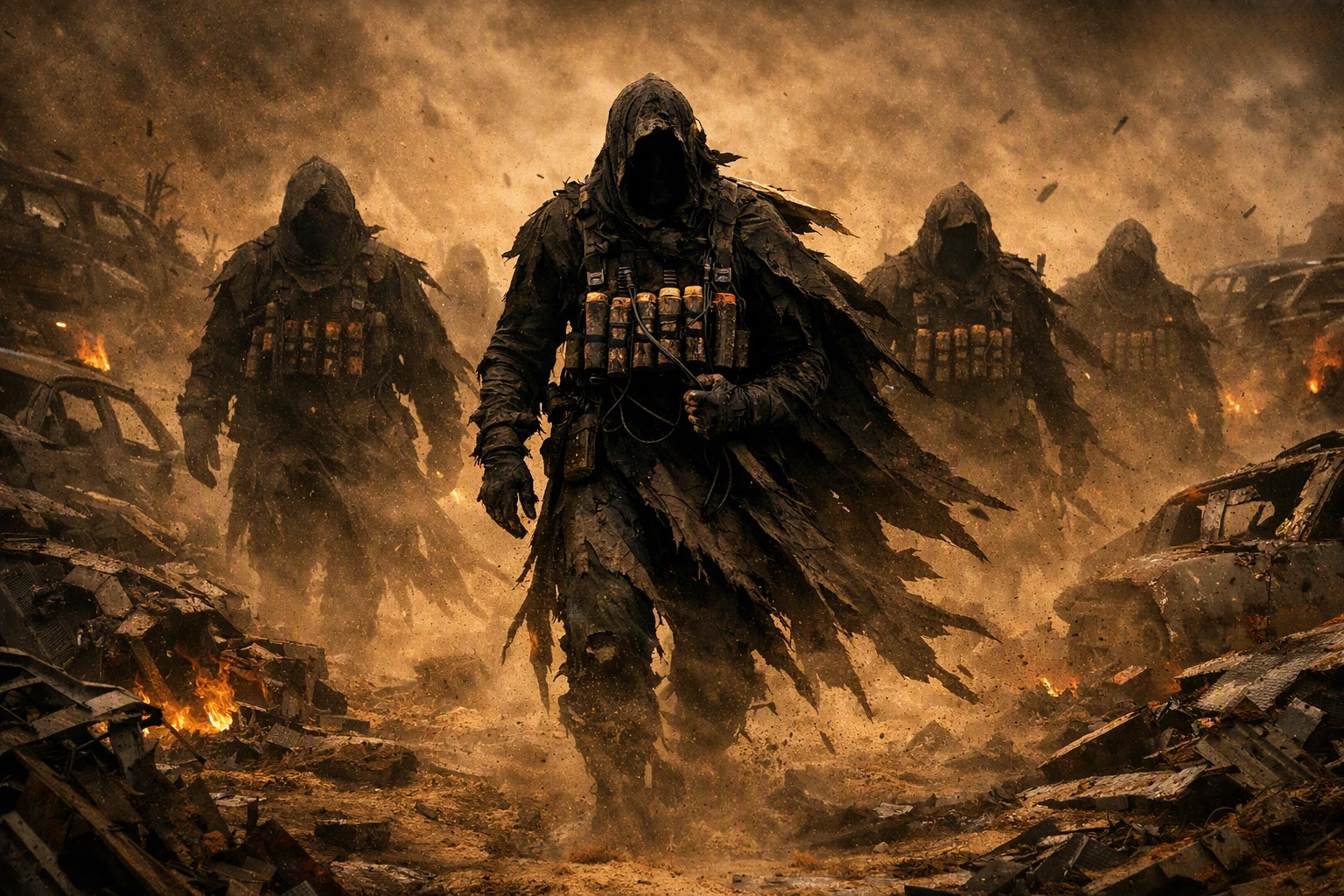
This philosophy is not mere rhetoric; it is a historical reality violently demonstrated in what is known as the “Tramp Incident.” This event serves as the ultimate historical deep dive into the Retribution System of Meteor City. Years prior to the main storyline, a solitary wanderer—a citizen of Meteor City without any official identification—was arrested in a foreign nation.
He was falsely accused of a heinous crime, likely railroaded by a prejudiced justice system that saw an undocumented vagrant as the perfect scapegoat. Despite maintaining his innocence, the man was convicted and sentenced to prison. Years later, the actual perpetrator was caught, proving the tramp’s innocence. However, the tramp had already died in police custody, a victim of systemic abuse and neglect. The outside world viewed it as a minor bureaucratic tragedy, a footnote in their legal system.
Meteor City viewed it as an act of war. In a demonstration of fanatical loyalty that shook the global political landscape, thirty-one citizens of Meteor City infiltrated the nation that had wronged their brother. Over the course of several months, these thirty-one individuals—who had likely never even met the tramp—turned themselves into suicide bombers.
They systematically targeted the police officers, the judges, the lawyers, the politicians, and anyone involved in the wrongful conviction, blowing themselves up with terrifying precision. They smiled as they detonated, leaving notes that simply reiterated their doctrine. This incident established Meteor City’s reputation as an untouchable hornet’s nest. The message was broadcast loudly to the V5 and the world: the lives of Meteor City citizens are bound by an invisible, explosive thread.
This extreme deprivation forges a psychological phenomenon that can only be described as the thin line of brotherhood. In a society where the environment is actively trying to kill you, and the outside world treats you as subhuman, the concept of the individual dissolves into the collective. The citizens of Meteor City operate with an almost hive-mind-like psychological bond.
Their shared trauma, their shared statelessness, and their shared reliance on the garbage of their oppressors create an insular empathy that is incredibly profound, yet terrifyingly restricted. To a citizen of Meteor City, their compatriots are the only beings in the universe that matter. They share a profound, unspoken communion of suffering. Consequently, this intense internal loyalty creates an absolute psychological boundary.
They view outsiders—those who possess IDs, who live in clean cities, who discard things without a thought—as fundamentally different species. Outsiders are not afforded human empathy; they are the “other,” the oppressors who created the junkyard.
This explains how a citizen of Meteor City can display heartbreaking tenderness and self-sacrifice for a neighbor, while simultaneously viewing the murder of an outsider with the same indifference one might have when stepping on an insect. It is an extreme, weaponized form of tribalism, born not from malice, but from the raw, desperate necessity of survival.
The Genesis of the Phantom Troupe
The most infamous export of this wasteland, the Phantom Troupe (Gen’ei Ryodan), is deeply misunderstood by the outside world. To the global populace, they are Class-A bounties, merciless thieves, and mass murderers. But to understand the Spider, one must return to Chrollo Lucilfer’s sandbox—the childhood origins of the Troupe amidst the garbage heaps of Meteor City.
Long before they were feared across continents, Chrollo, Pakunoda, Machi, Uvogin, Nobunaga, Franklin, Phinks, Feitan, and Shalnark were simply children playing in the ruins of the world. Their playground was a landscape of rusted metal and toxic runoff. Their early understanding of the outside world was entirely mediated by the media discarded by that world.
The recent flashbacks in the manga reveal a profoundly poignant origin story: young Chrollo and his friends finding discarded VHS tapes and broken televisions. They became fascinated by a popular, Power Rangers-esque television show from the outside world. Through dubbing over the damaged tapes—specifically creating the “Clean Up Sentai” to match their environment—these children experienced the universal joy of theater, storytelling, and imagination. In a world of rot, Chrollo found a way to create magic for his friends. They were not born monsters; they were imaginative children trying to find light in a city defined by its darkness.
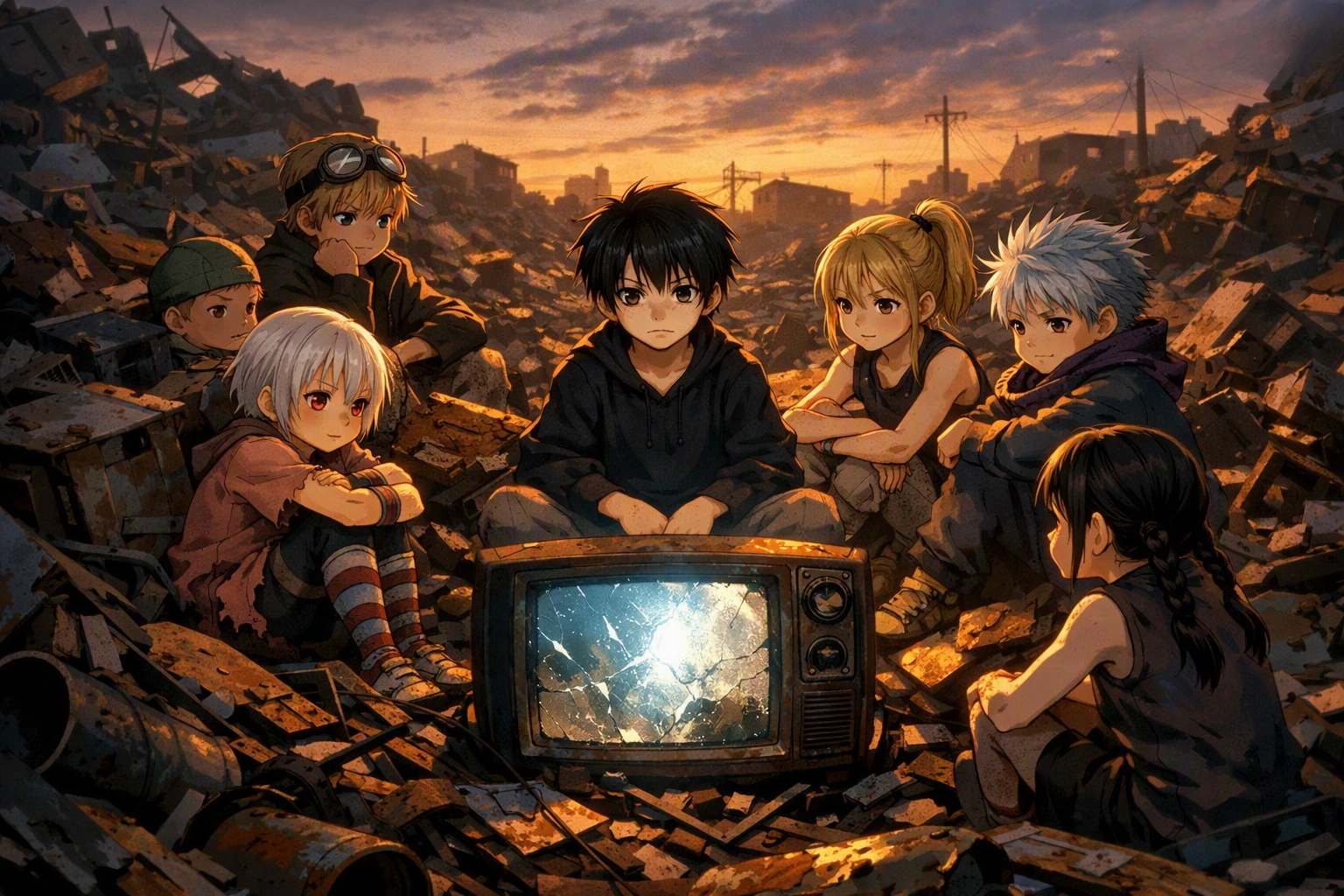
However, the innocence of Chrollo’s sandbox was violently shattered, revealing the true, tragic purpose for which the Spider was actually formed. The catalyst was not a desire for wealth, but a horrific trauma: the abduction, torture, and murder of their young friend, Sarasa, by outsiders. Sarasa’s death was a stark, brutal reminder of Meteor City’s vulnerability.
Because they did not exist on paper, predators from the outside world—human traffickers, snuff film creators, and serial killers—frequently ventured into Meteor City to hunt, knowing no police would ever follow them. Following Sarasa’s death, and the departure of their friend Sheila, Chrollo underwent a terrifying psychological metamorphosis.
He realized that innocence was prey, and that the only way to protect his home was to become a monster so universally feared that the world would never dare touch Meteor City again. The Phantom Troupe was not initially conceived as a band of world-class thieves; it was formed as a ruthless, hyper-lethal defense mechanism.
Chrollo resolved to build an underground network, a dark web infrastructure, to hunt down Sarasa’s killers and to cast a shadow of absolute terror over the city. The Spider was designed to be a venomous deterrent. They would become the villains the world feared, sacrificing their own souls and morality to build an invisible, impregnable wall around the junkyard.
This genesis perfectly explains the seemingly contradictory psychology of the Troupe, a phenomenon of morality operating in a vacuum. To observers like Kurapika or Gon, the Troupe’s actions are incomprehensible. How can they commit mass murder with zero remorse, slaughtering the Kurta Clan or the mafia guards in Yorknew City without batting an eye, yet shed genuine, agonizing tears for their own fallen comrades, as seen in Chrollo’s silent crying for Uvogin?
The answer lies in the deeply ingrained borders of their empathy, drawn by Meteor City itself. The Troupe’s morality is not broken; it is hyper-fragmented and hyper-localized. They have thoroughly internalized the city’s doctrine. They love each other with a fierce, unconditional devotion because they are all pieces of the same discarded soul.
Uvogin was not just a colleague; he was a brother born in the same toxic dust. When he died, a piece of their collective family was severed. Conversely, the people they kill in the outside world are not perceived as human beings in the same category. They are the descendants of the people who throw babies into the trash; they are the society that turned a blind eye to Sarasa’s murderers.
Therefore, killing them evokes no more guilt than tearing up a piece of discarded paper. The Troupe’s empathy is strictly, violently bordered by the city limits of their birthplace. They are the ultimate, tragic expression of Meteor City’s wrath.
The Geopolitics and The Mafia Alliance
Despite its isolation, Meteor City cannot survive entirely without resources, leading to one of the most complex and fascinating geopolitical dynamics in the Hunter x Hunter universe: the symbiotic underworld alliance between Meteor City and the Ten Dons of the global Mafia Community. This relationship was historically deeply ingrained, operating in the shadows away from the purview of the Hunter Association and the V5.
The Mafia, controlling the world’s illicit trade, gambling, and criminal enterprises, required muscle. They needed assassins, enforcers, and bodyguards who were ruthlessly efficient, utterly fearless, and above all, completely untraceable. Meteor City, overflowing with individuals who legally did not exist and who possessed a terrifying disregard for death, was the perfect recruitment ground.
In return, Meteor City—a barren wasteland completely incapable of producing its own agriculture or manufacturing complex goods—needed resources to sustain its massive population of ghosts. They needed clean water, weapons for self-defense, protective gear (like the hazmat suits seen worn by its citizens), and a baseline of political protection from global interference.
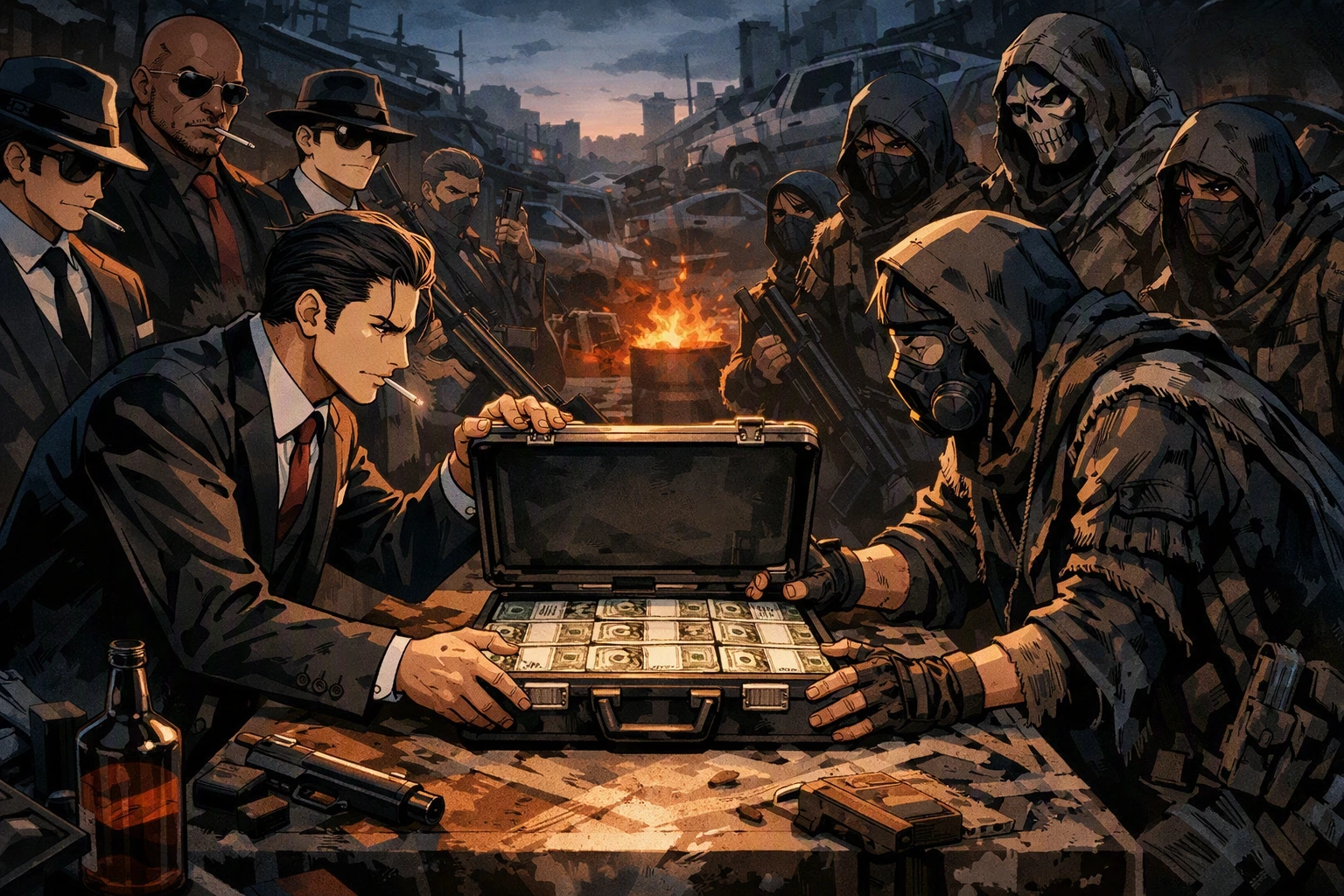
Thus, a morbid economic system was established, functioning on the exchange rate of human lives. Meteor City provided the Mafia with a steady stream of disposable, highly skilled human capital. Organizations like the Shadow Beasts, the Ten Dons’ elite personal guard, heavily utilized individuals who had clawed their way out of the junkyard.
These individuals were traded like currency. In exchange for the blood and loyalty of its most capable fighters, the elders of Meteor City received shipments of essential goods, untraceable weaponry, and a guarantee that the Mafia would use its vast political influence to ensure the V5 continued to look the other way. It was a dark, functional symbiosis.
The Mafia believed they held the leash to the most dangerous dogs in the world, while the elders of Meteor City viewed the Mafia as a necessary, albeit disgusting, pipeline for their city’s survival. This alliance ensured that despite their abject poverty, Meteor City remained a heavily armed and dangerous geopolitical entity, funded by the very criminal underworld it supplied.
However, this delicate balance of power was violently and irrevocably shattered during the events of the Yorknew City Arc, resulting in severed ties that drastically shifted global underworld dynamics. The catalyst was the Phantom Troupe, the very children of Meteor City. Chrollo Lucilfer, operating on his own inscrutable agenda, targeted the Mafia’s underground auction, deciding to rob the hand that fed his homeland. The resulting conflict escalated into a full-scale slaughter.
The Troupe annihilated the Shadow Beasts, slaughtered hundreds of mafia foot soldiers, and ultimately, Chrollo hired Illumi Zoldyck to assassinate the Ten Dons themselves. By decapitating the leadership of the global Mafia, the Phantom Troupe effectively destroyed Meteor City’s primary economic pipeline. This act of spectacular violence highlighted a crucial shift: the Troupe no longer answered to the elders or the pragmatic survival strategies of their city’s past.
They were a law unto themselves. The fallout from this severed alliance left a massive power vacuum in the global underworld and cut off Meteor City from its main source of outside supplies, forcing the city into an even more precarious and isolated position, setting the stage for the vulnerabilities that would soon be exploited by a new, inhuman threat.
The Chimera Ant Invasion (Zazan’s Hive)
The true cost of Meteor City’s absolute isolation was laid bare when the city became the perfect target for a rogue faction of the Chimera Ants. Following the chaotic dispersal of the Chimera Ant forces from the NGL (Neo Green Life) autonomous state, the self-proclaimed Queen Zazan, a fiercely ambitious and vain Squadron Leader, sought a location to build her own empire.
She required a place teeming with human biomass to convert into her loyal subjects, yet sufficiently isolated to avoid immediate detection by the Hunter Association, which was currently occupied with the Royal Guards and the King in East Gorteau.
Meteor City was a strategic masterpiece of a choice. Because the V5 ignored its existence, no satellites monitored its borders, and no official military would respond to distress signals. Furthermore, with eight to ten million unregistered citizens, Zazan had access to an unlimited, expendable food and labor source that the outside world would never miss.
She invaded the junkyard, establishing her massive, grotesque hive within the mountains of trash. She began exploiting the city’s off-the-grid status to mass-produce terrifying human-ant hybrids, utilizing a horrifying stinger to mutate the fiercely proud citizens of Meteor City into grotesque, subservient monsters.
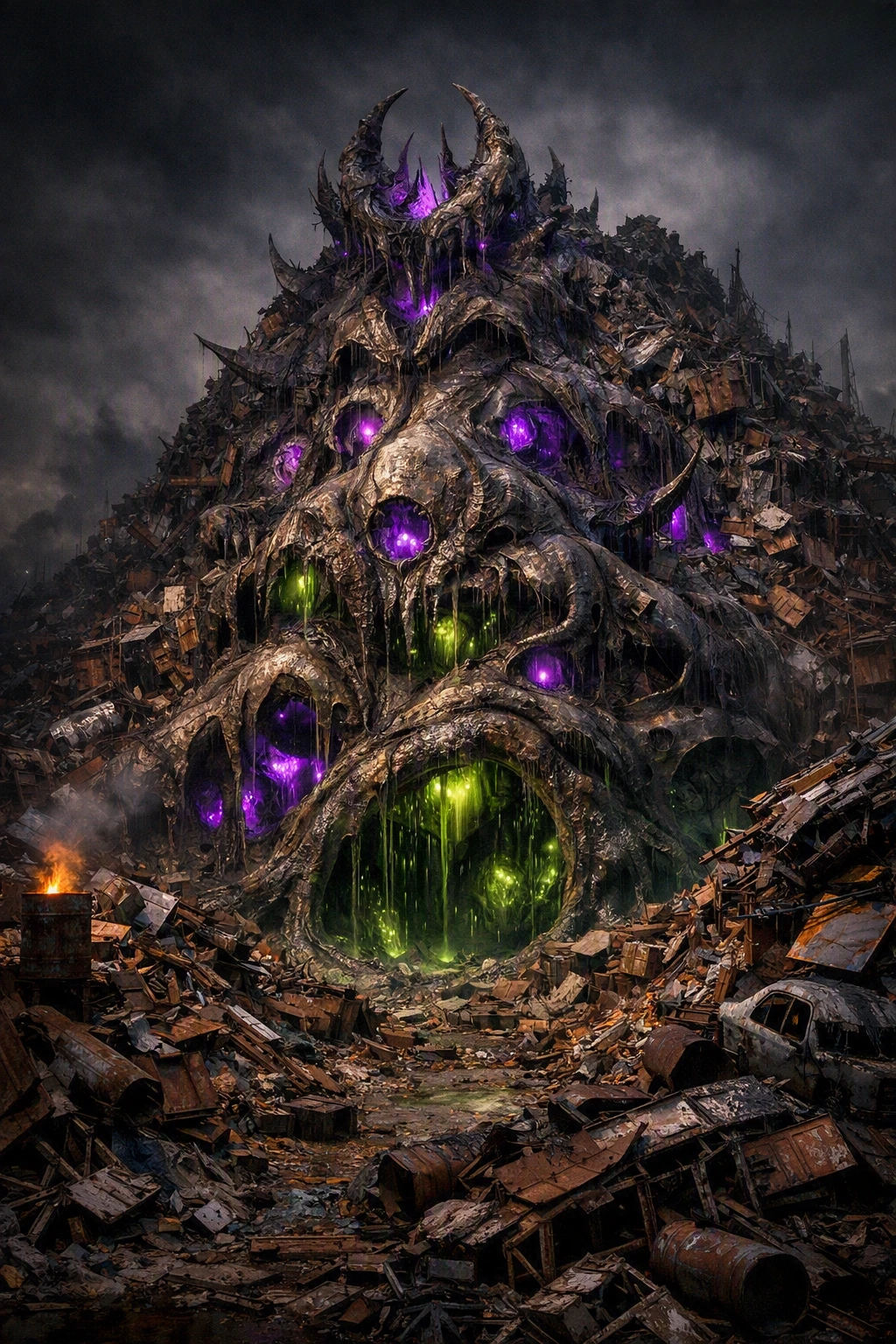
This existential threat prompted a highly significant narrative event: the homecoming of the Phantom Troupe. While Chrollo was away seeking an exorcist for his Nen restriction, acting leader Phinks, along with Feitan, Shizuku, Bonolenov, Shalnark, and the newly recruited Kalluto Zoldyck, returned to their birthplace.
Their arrival to exterminate the infestation is a profound testament to their underlying motivations. The Troupe was not there as heroes of humanity; they had no interest in saving the world from the Chimera Ant threat at large. They returned solely because someone had the audacity to track mud into their home. This arc unequivocally proves their fundamental loyalty to their birthplace over any personal gain, financial theft, or global conquest. When the spider’s web is threatened, the spiders swarm.
The ensuing battles against Zazan’s mutated officers were brutal, highlighting the varied and lethal Nen abilities of the Troupe, culminating in Feitan’s terrifying execution of Zazan using his Pain Packer: Rising Sun, effectively immolating the false queen in a miniature sun. They fought not for justice, but for territorial integrity and vengeance for their fallen brethren.
Equally important during this arc is the depiction of the pride of the outcasts. When the Troupe arrives, they do not find the citizens of Meteor City cowering in fear. Instead, they find the elders and the remaining fighting force armed and holding their ground. Most critically, the citizens absolutely refuse to accept outside help. When it is suggested that they could call upon the Hunter Association or foreign militaries to deal with the Ants, the elders vehemently reject the idea.
Their extreme isolationist pride dictates that they must clean up their own backyard. To ask the world that threw them away for salvation would be a betrayal of their core philosophy (“We reject nothing, so take nothing from us”). They prefer to rely solely on their own kind, tasking the Phantom Troupe—their prodigal, murderous children—with the grim duty of extermination. This includes the tragic, heart-wrenching necessity of the Troupe executing the citizens who had been mutated by Zazan.
The mutated citizens, retaining just enough of their humanity to beg for death, requested to be killed by their own people rather than live as monsters. The Troupe obliged, demonstrating a cold, grim mercy that reinforces the unbreakable, albeit incredibly dark, bond that unites the people of the junkyard.
The Elder’s Legacy: Post-Mortem Nen
The indomitable, terrifying will of Meteor City is perhaps best encapsulated not by a living character, but by the legacy of one of its deceased leaders, manifesting through the Nen ability known as Sun and Moon. This ability originally belonged to an Elder of Meteor City and was later stolen by Chrollo Lucilfer using his Skill Hunter book.
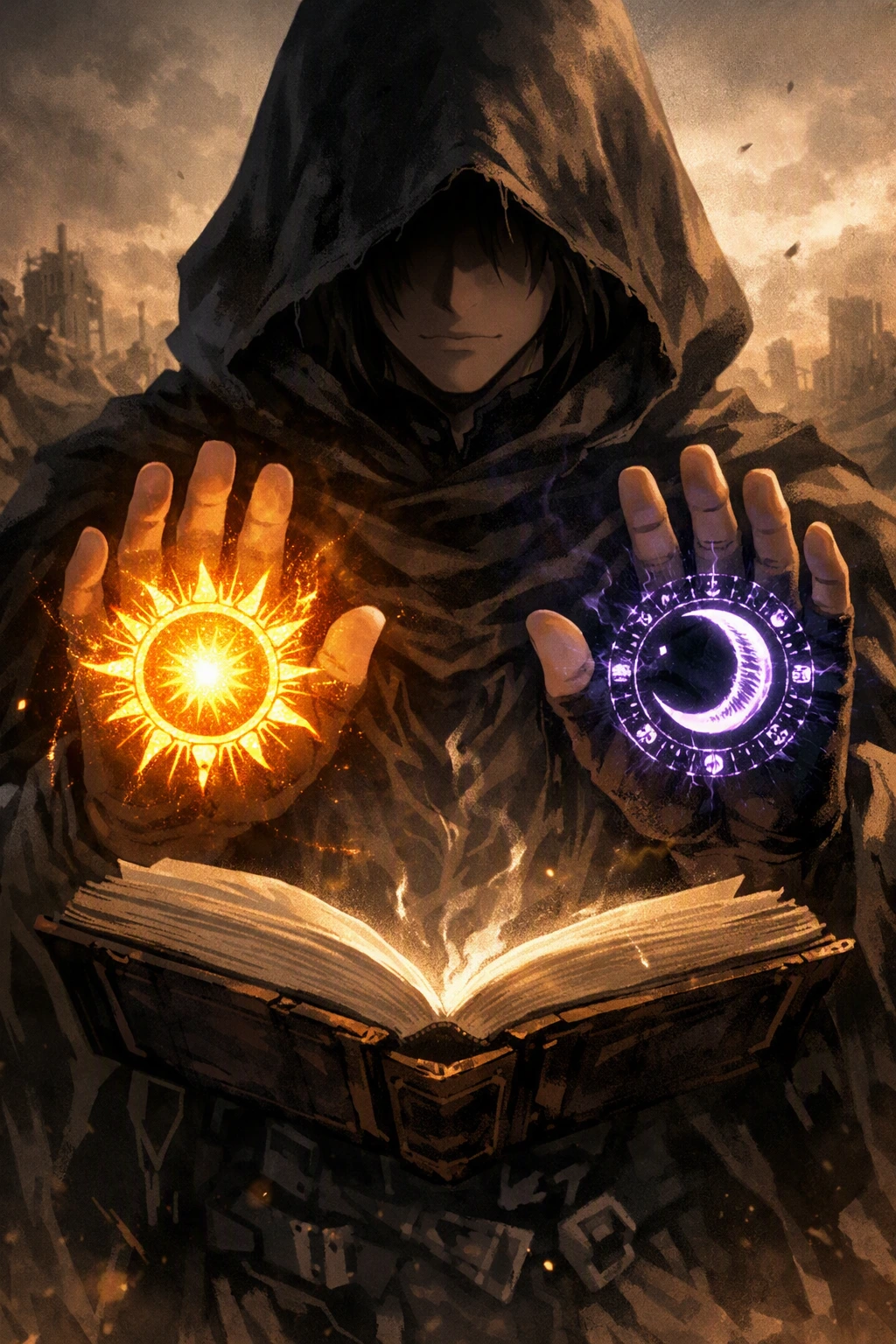
The ability itself is deceptively simple yet devastating: it allows the user to affix a “Sun” (plus) seal with the left hand and a “Moon” (minus) seal with the right hand. When these two seals touch, they trigger an explosion, the yield of which is determined by how long the user physically pressed the seals onto the target. However, the true terror of this ability was revealed during Chrollo’s deathmatch against Hisoka at Heavens Arena, where it became the linchpin of Chrollo’s master strategy.
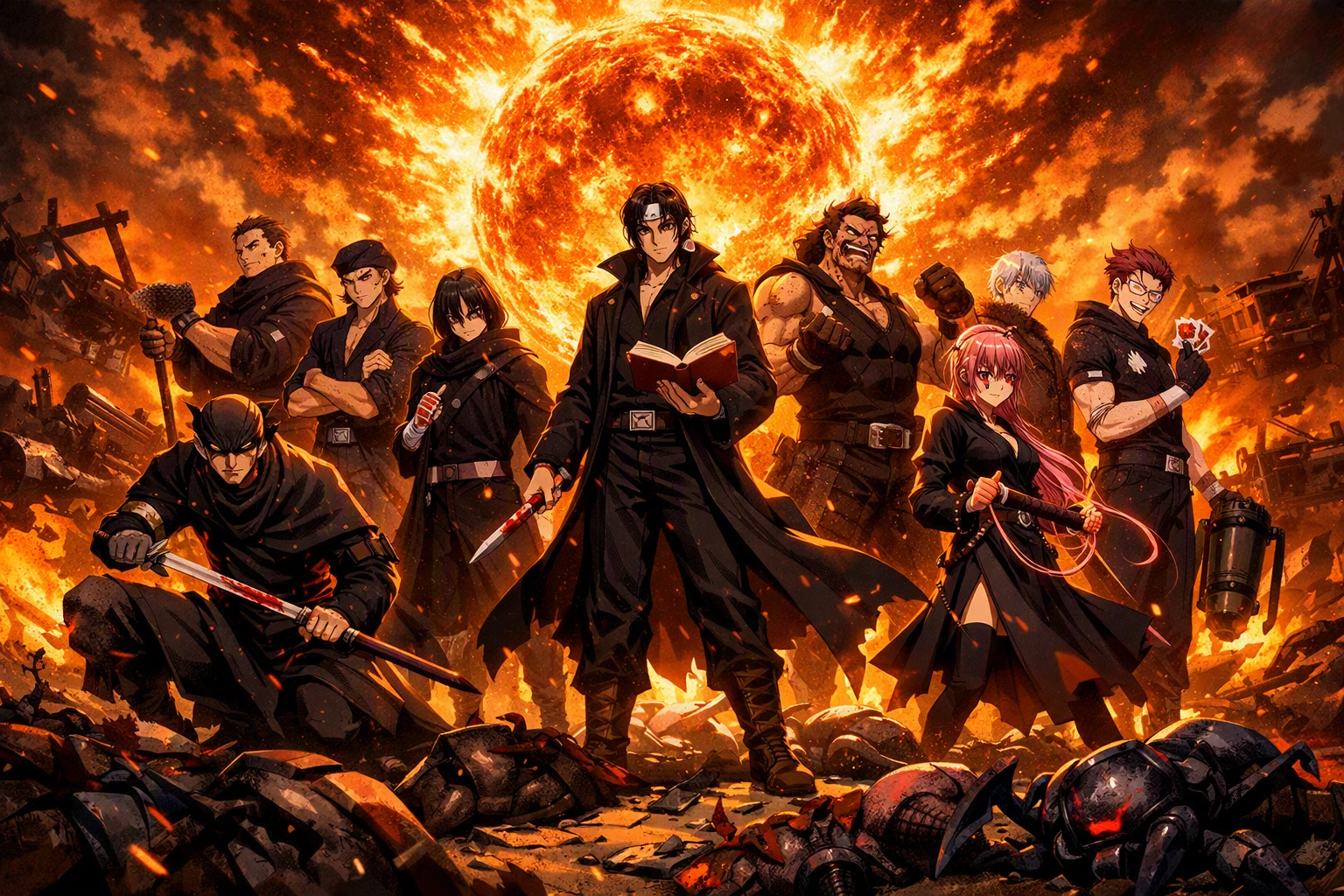
The true power of Sun and Moon lies in the phenomenon of aura fueled by resolve, specifically Post-Mortem Nen. In the Hunter x Hunter universe, a person’s Nen does not always dissipate upon death; if they die with intense emotions—hatred, regret, or an unyielding sense of duty—their aura can persist and even grow exponentially stronger.
The Elder of Meteor City died harboring an unfathomable depth of conviction, an absolute devotion to the city’s ideology of martyrdom and absolute retribution (the very ideology that birthed the 31 suicide bombers). Because the Elder’s resolve was tied directly to the concept of explosive retaliation for his people, his death caused Sun and Moon to undergo a terrifying evolution.
The Nen became permanent. Once Chrollo affixes a seal, it can never be removed or deactivated, even if the conjured book is closed, breaking the fundamental rules of Skill Hunter. The Elder’s collective ideology transformed a simple explosive ability into a permanent, undeletable threat, symbolizing how the ghosts of Meteor City will continue to haunt and destroy their enemies long after they have perished.
Conclusion: The Gathering Storm
The narrative trajectory of Meteor City points toward an even darker future, heralded by Gyro’s arrival. Gyro, the former King of the NGL who was reborn as a Chimera Ant and retained all of his human memories and absolute hatred for humanity, is explicitly stated by the narrator to have migrated to Meteor City. He is currently rebuilding his forces, joined by former Chimera Ants like Welfin, Hina, and Bizeff.
Gyro’s ambition is not mere conquest; it is the utter eradication of human society. For a being composed of pure, unadulterated malice, there is no more fitting crucible than Meteor City. The city, built on the physical and moral refuse of the world, perfectly aligns with Gyro’s nihilistic ethos.
He is moving to the very heart of the world’s darkness to build an empire of pure malice from the ground up, promising a future conflict of apocalyptic proportions where the outcasts of the world unite to tear down the heavens.
In summary, Meteor City remains the ultimate sanctuary for the damned. It is not merely a location, but a living, breathing testament to the consequences of societal apathy. By burying their sins in a forgotten wasteland, the nations of the Hunter x Hunter world cultivated an environment where human endurance was pushed to its absolute, monstrous limits.
It gave birth to the Phantom Troupe, it served as the graveyard for a Chimera Ant Queen, and it now acts as the incubating ground for the world’s greatest impending threat in Gyro. Meteor City stands as the most dangerous, politically untouchable, and deeply fascinating location in the Hunter x Hunter mythos—a stark reminder that what society rejects and throws away will eventually return to demand a terrifying retribution.