
I. Introduction: The Industrialization of Magic
For the first three seasons of Attack on Titan, the narrative perspective was locked to the island of Paradis.
To the Scouts and the citizens within the Walls, the Titans were the stuff of nightmares—incomprehensible, mythological demons that appeared from thin air to devour humanity.
They were treated with fear, reverence, and a sense of hopelessness. The genre was survival horror; the enemy was a force of nature, akin to a hurricane or a plague that could not be reasoned with.
But across the sea, in the nation of Marley, the genre shifts abruptly to a gritty, diesel-soaked war drama. Here, the Titan was something far more terrifying because it was far more mundane: it was inventory.
To the Marleyan High Command, the Nine Titans were not gods, devils, or ancient mysteries to be solved. They were assets.
They were numbered, cataloged, maintained, and deployed with the same bureaucratic detachment as a tank battalion or an artillery regiment.
The “magic” of the Power of the Titans was stripped of its mystique and fed into a cold, calculated industrial machine.
There were no prayers offered to these beings—only maintenance schedules, deployment forms, and performance reviews. The supernatural terror of the Titan was reduced to a line item in a military budget.
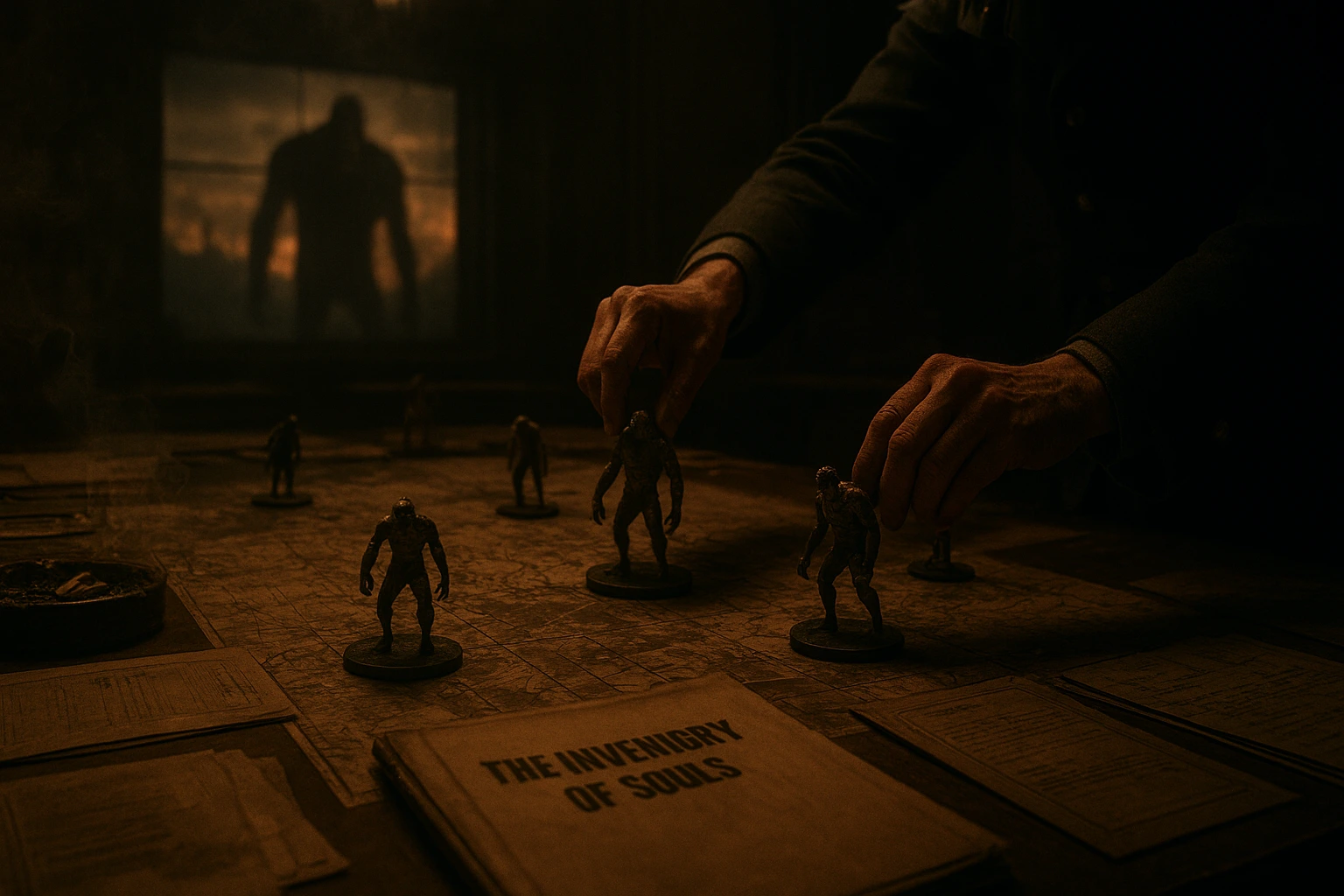
This article dissects the Marleyan Titan-Industrial Complex. We are shifting our scope from the biological rules of the Titans (the Meso-System) to the Macro-Political scale.
We will analyze how a fascist regime exploited the Magic/Power System, weaponized the “Hope” of the Warrior candidates, and ultimately fell victim to the “Reality” of geopolitical warfare.
Through the lens of Cynical Realism, we expose the dark truth behind Marley’s century of global dominance. It was not built on superior strategy, cultural superiority, or technological Effort.
It was built on the systematic enslavement of a race they claimed to despise, turning the “devils” of Paradis into the gears of an empire. However, as we will prove, their reliance on this “magic” became the very poison that led to their stagnation and inevitable collapse.
![A hyper-realistic, gritty wide shot of a Marleyan military airfield at dusk. In the foreground, distinct silhouettes of the Armored and Cart Titans are being prepped by ground crews like fighter jets, surrounded by scaffolding, fuel lines, and steam.
In the background, a massive Zeppelin looms overhead, casting a shadow. The aesthetic is a blend of WWI dieselpunk and cold industrialism. The lighting is desaturated steel-blue and rust-orange. 8k resolution, cinematic composition.]
II. Section 1: The Doctrine of the Warriors—Tactical Integration
In most fantasy or Shonen anime, “magic” users operate outside the bounds of conventional military structures. They are typically lone wolves, heroes, or chaotic forces of nature that defy regulation.
Marley, however, did something unprecedented in the history of the world: they standardized magic. They didn’t just use Titans; they integrated them into a combined-arms doctrine that mirrored early 20th-century industrial warfare.
This is the ultimate application of a Flexible Power System warped by fascism. Marley took the biological rules of the Titans—regeneration, transformation limits, specific abilities—and wrote field manuals for them, creating a rigid system of tactical dependency. They turned the erratic power of Ymir into a standardized operating procedure.
A. The Combined Arms Doctrine: Turning Chaos into Order
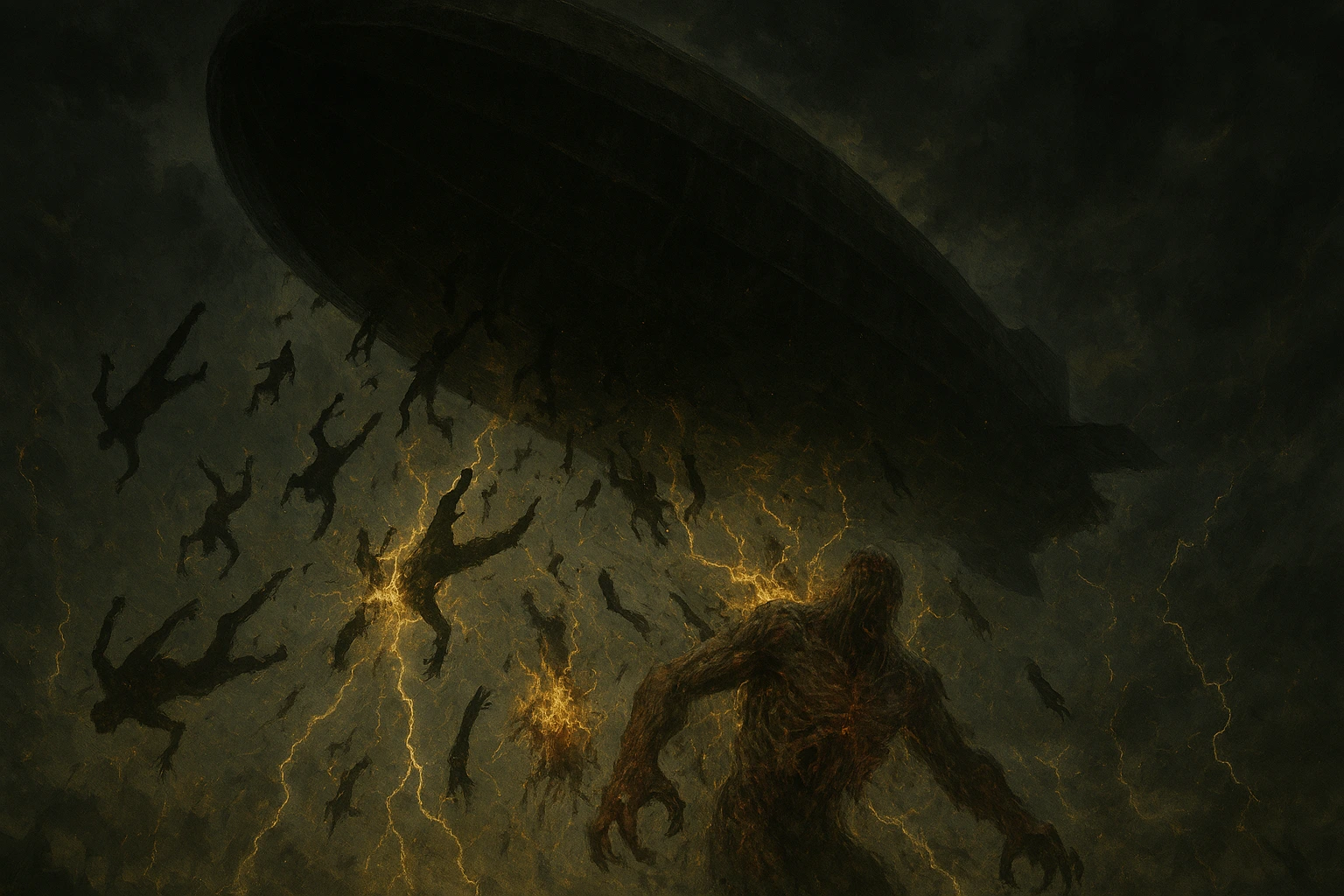
The most chilling aspect of Marley’s strategy was how they utilized the “Pure Titans” (mindless Titans). To the Eldians on Paradis, a Pure Titan is an apex predator.
To Marley, a Pure Titan is a biological weapon—specifically, a precision airstrike that eliminates the need for ground cleanup.
We see this doctrine in its most brutal form during the opening of the war in the Middle East. The “Paratrooper Tactic” is a masterclass in cynical efficiency. By dosing Eldian prisoners with spinal fluid gas and pushing them out of zeppelins, Marley weaponized the very biology of the Eldian race.
They reduced human beings to kinetic ordnance.
Zeke Yeager, the Beast Titan, acts as the detonator. His scream triggers the transformation mid-air. This turns human beings into kinetic bombardment projectiles that regenerate upon impact and immediately begin consuming enemy infantry.
The psychological impact is just as potent as the physical one; enemy soldiers aren’t just fighting an army, they are fighting a nightmare that rains from the sky and eats them alive. It is a tactic designed not just to kill, but to traumatize survivors into submission.
The brilliance—and horror—of this doctrine lies in its disposability. Conventional paratroopers require training, equipment, and extraction plans.
The Eldian “Subject drops” require none of these. They are fire-and-forget weapons. Once dropped, they destroy the enemy infrastructure and morale, and if they survive, they can simply be executed by the Warrior unit later if they become a nuisance.
It is the ultimate expression of the Marleyan view of Eldians: useful only in death or mindless servitude.
This is not a “magical duel.” This is a tactical doctrine:
- The Air Force: The Zeppelins deliver the payload (expendable Eldians).
- The Bomb: The Pure Titans destroy the landing zone and cause chaos, acting as shock troops that cannot be reasoned with.
- The Armor: The Armored Titan drops to secure the ground, acting as a mobile shield for conventional infantry to advance behind.
- The Support: The Jaw and Cart Titans flank the enemy, disrupting supply lines and destroying anti-Titan artillery emplacements.
Marley stripped the Titans of their individuality and forced them to operate as cog-like units within a larger machine. This turned magical chaos into controlled military order.
B. The Classification of Assets and the Titan Biology Research Society
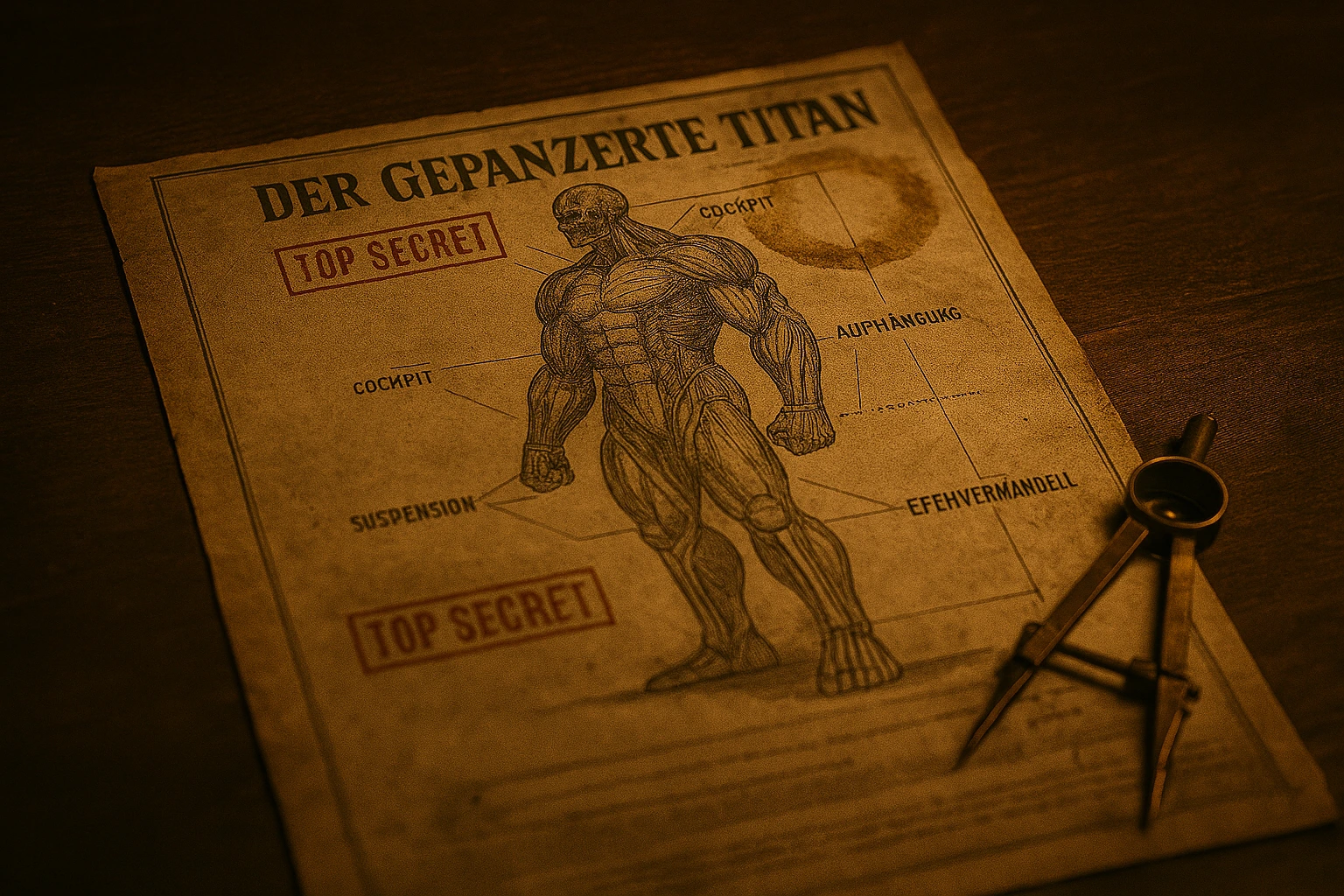
Marley didn’t just use the Titans; they studied them. The Titan Biology Research Society served as the R&D department of this industrial complex. Their job was to quantify the “magic” into data.
They measured regeneration rates, hardening density, and endurance limits. This scientific approach allowed them to categorize the Nine Titans not by their lore, but by their utility and ROI (Return on Investment).
The Colossal Titan: The Strategic Deterrent (The Nuke) Marley rarely deployed the Colossal Titan. In geopolitical terms, the Colossal was a nuclear deterrent. Its transformation creates an explosion equivalent to a small tactical nuke, capable of wiping out fleets or cities in an instant. Simply possessing it kept other nations in check. It was the ultimate “Reality” check for any nation thinking of rebelling against Marley—diplomacy backed by the threat of total annihilation. The mere idea of the Colossal Titan ended wars before they began. Its user, Bertholdt Hoover, was trained to be passive and indecisive precisely because his power was too dangerous for an impulsive soldier.
The Beast Titan: The Field Commander (Artillery) Before Zeke, the Beast Titan was considered a lackluster asset due to its variance in form and unpredictable nature. However, combined with Zeke’s royal blood and pitching ability, Marley reclassified it as a long-range artillery unit and a mobile command center. The Beast provided the range that standard Titans lacked, decimating anti-Titan fleets before they could get close. Zeke effectively became a living siege tower, capable of directing the flow of Pure Titans like a conductor leading an orchestra of violence. His spinal fluid became a secondary weapon—a terror gas used to quell rebellions (like in Ragako Village) without risking a single Marleyan soldier.
The Armored Titan: The Main Battle Tank (MBT) The Armored Titan was the backbone of the ground assault. It served the exact role of a tank in WWI doctrine: to break the stalemate of trench warfare, absorb enemy fire, and allow infantry to advance safely behind it. Reiner’s role wasn’t to be a hero; it was to be a battering ram. His “armor” was not a knight’s plate meant for dueling, but a riot shield meant to clear the way for the “real” soldiers—the Marleyan infantry. The Research Society noted its weakness: speed. Thus, it was never deployed without infantry support to cover its flanks.
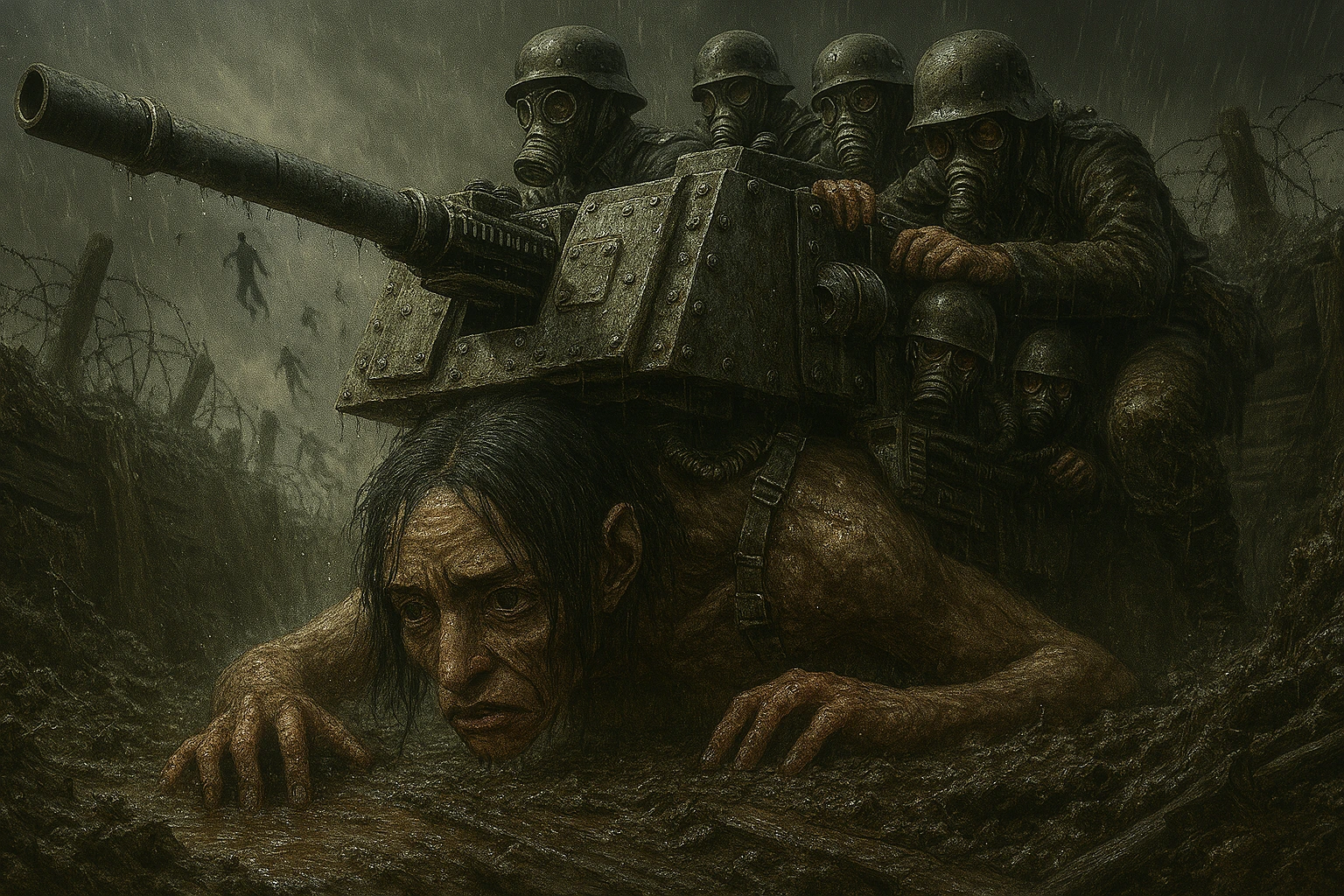
The Cart Titan: The Logistics Platform and the Panzer Unit Perhaps the most “industrial” of all, the Cart Titan was stripped of all glory. Fitted with the Panzer Unit—a custom-made pillbox housing machine gunners—the Cart was the engine of the Marleyan war machine. It proved that in war, logistics often matter more than raw power. The Cart’s endurance allowed Marley to maintain extended campaigns that would exhaust other Shifters.
 th
th
The Panzer Unit represents the perfect synthesis of Titan power and industrial technology. The Cart provided the mobility, while the four heavy machine guns provided the suppressing fire.
The crew operated in a symbiotic relationship with Pieck, treating her not as a monster, but as their vehicle and comrade.
This unit was so effective because it compensated for the Cart’s lack of offensive power with overwhelming ballistic volume.
Pieck Finger would stay in Titan form for months at a time, serving as a supply mule, a scouting unit, and a mobile gun platform simultaneously, often forgetting how to walk on two legs when she finally emerged.
The Female Titan: The Multi-Role Fighter Though Annie was deployed early to Paradis, her Titan was classified as the versatile unit. High mobility, hardening capabilities, and the ability to call Pure Titans made her the equivalent of a multi-role fighter jet—capable of air-to-air combat (Titan vs. Titan) or ground support depending on the mission profile.
She was the “Swiss Army Knife” of the unit, deployed where adaptability was more critical than brute force. Her high stamina and combat proficiency made her the ideal candidate for the infiltration mission, essentially an espionage operative dropped behind enemy lines.
C. The “Warrior” Title as a Political Tool
To make this system work, Marley needed compliant pilots for their biological mechs. You cannot force a Titan to fight if the human inside refuses or turns against you. Enter the rank of “Warrior.”
This title is a masterpiece of propaganda. It creates a designated caste within the oppressed group. It separates the “good” Eldians (weapons) from the “bad” Eldians (devils). By creating this hierarchy, Marley ensured that the Eldians would police themselves.
The system conditioned them to believe that the only way to wash away the “sin” of their birth was to die for the state that enslaved them.
The title of “Warrior” was a promise of integration that was legally hollow. Even as “Honorary Marleyans,” the Shifters were forbidden from intermarrying with Marleyans(history), their movements were tracked, and their families remained hostages in the Zone.
The armband was not a badge of honor; it was a shackle painted gold. It gave them the illusion of agency while keeping them firmly under the boot of the state.
![Detailed schematic blueprint style image of the Armored Titan. The image looks like a technical military document. It features cutaway views showing the muscle density, armor plating thickness, and weak points. Annotations in a German-style script label the ‘cockpit’ (nape) and ‘mobility centers’ (joints).
The background is the texture of aged drafting paper. This visualizes the ‘Titan as Inventory’ concept.]
III. Section 2: The Manufacturing of Martyrs—The Warrior Program
If the Titans are the hardware, the human candidates are the software. And like any software in a cynical system, they are programmed, exploited, and ultimately deleted when obsolete.
This section analyzes the Role of the Common Man (the candidate) and the crushing weight of Hope vs. Reality.
A. The “Hope” of the Honorary Marleyan
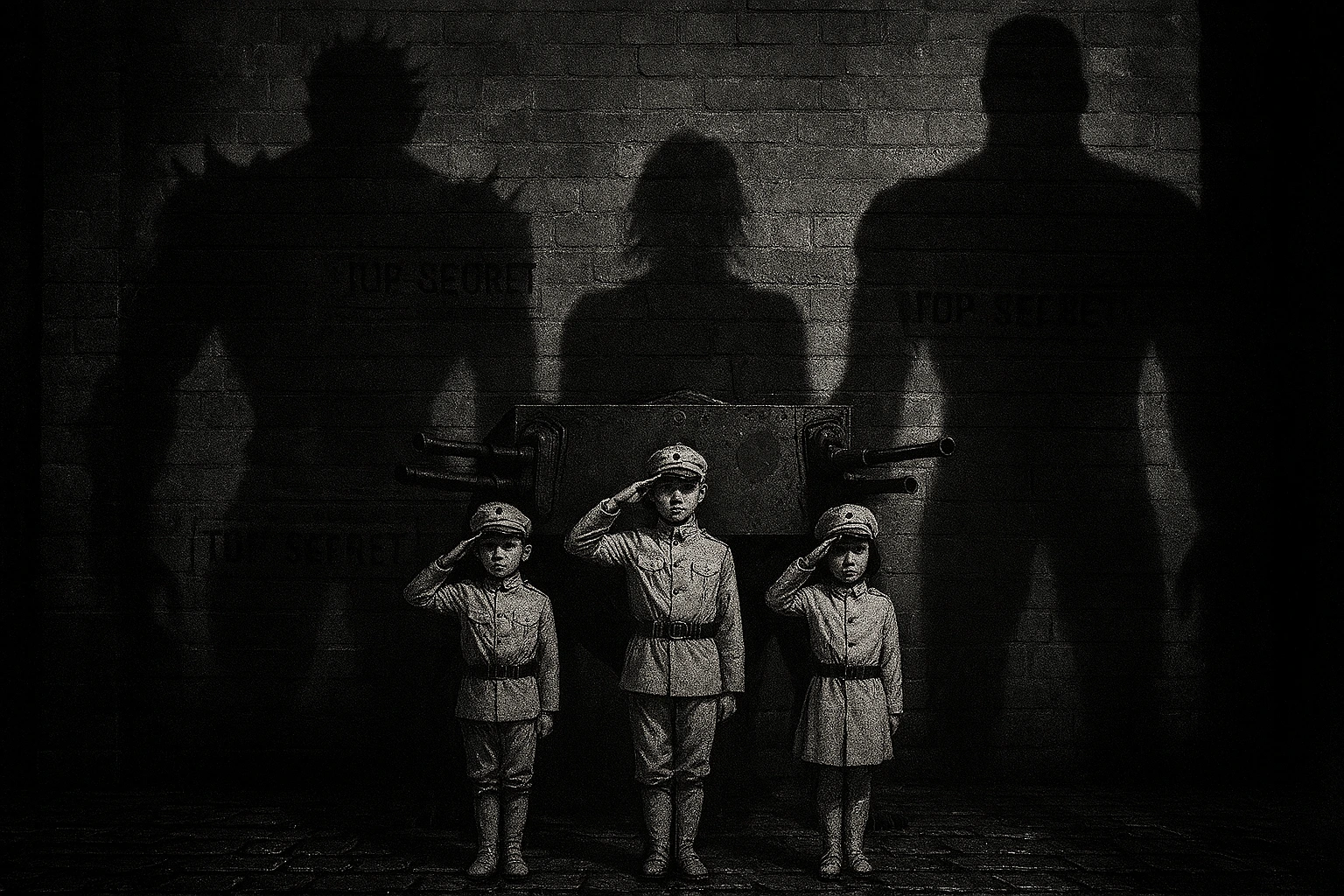
Life in the Liberio Internment Zone is designed to be a psychological hell. It is a pressure cooker of guilt, poverty, and racial hatred, surrounded by walls not unlike the ones on Paradis, but built of ideology rather than stone.
The architecture is cramped, the resources are scarce, and the guards are abusive. In this environment, the Warrior Program is presented not as military service, but as salvation.
This is the “Hope” mechanism weaponized. The title of “Honorary Marleyan” offers the only escape: status, better food, medical care for aging parents, and a semblance of human dignity.
The red armband becomes a symbol of transcendence. Marley dangles this hope to fuel their machine. They need the children to be desperate.
They need them to train harder than any conscript, to compete viciously against one another, and to kill without hesitation.
The propaganda begins at birth. Textbooks in the Zone teach that their ancestors were devils and that their only purpose is atonement.
By the time a child is old enough to volunteer, they are already self-loathing soldiers. The system relies on the fact that these children are fighting for their families’ lives.
It is the ultimate exploitation of love and loyalty—forcing a child to become a monster to save their mother from a life of destitution.
B. The “Reality” of the Child Soldier (The Price of Power)
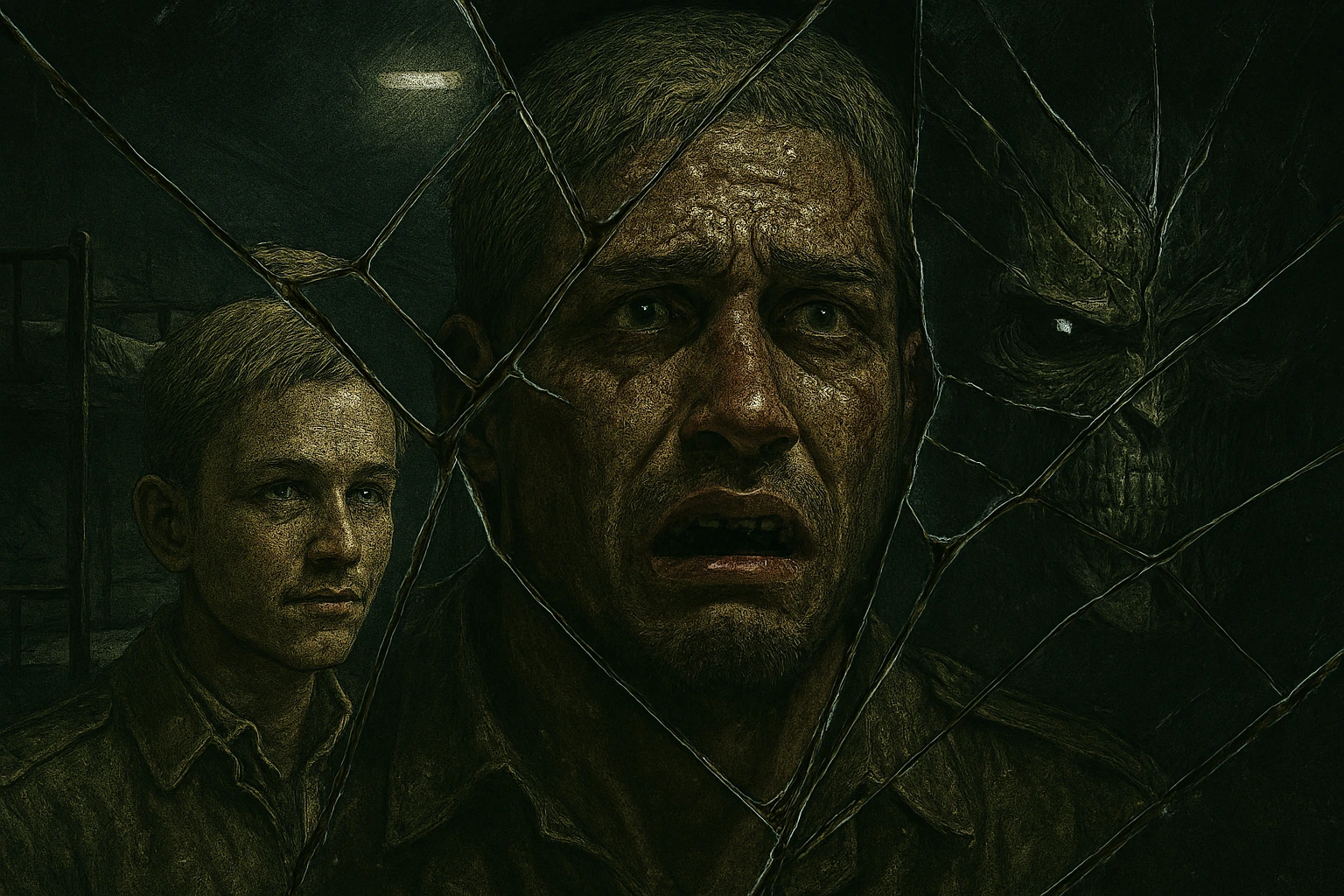
The “Dark Reality” is that the program is a meat grinder. The candidates are not heroes; they are disposable batteries with a shelf life. The selection process is rigged, favoring political utility over genuine skill.
Reiner Braun: The Case Study of Exploitation Reiner’s journey is the most tragic proof of this system. Reiner was not chosen because he was the strongest, the fastest, or the smartest.
By all metrics of Effort, Porco Galliard was the superior candidate for the Armored Titan. Reiner was the bottom of his class, mocked for his lack of physical prowess.
Reiner was chosen for his fanaticism (and through Marcel’s manipulation). The military leadership selected him because his desperation and brainwashing made him easy to control.
They valued a blindly obedient tool over a skilled warrior who might question orders. Reiner’s “talent” was his willingness to believe the lie that becoming a Warrior would reunite his family.
His eventual trauma—his split personality, his suicidal depression—is the direct result of a child forcing himself to fit into the mold of a weapon.
The system broke his mind long before the walls of Paradis broke his body. Reiner represents the “Sunk Cost Fallacy” of the Warrior program: he keeps moving forward not because he believes in the cause, but because stopping would mean admitting that all his suffering was for nothing.
The 13-Year Procurement Cycle To the Marleyan brass, the Curse of Ymir (the 13-year lifespan of a Shifter) is not a tragedy. It is a procurement cycle. They view their “Gods of Destruction” as products with expiration dates. They plan their geopolitical strategies around these dates, ensuring a replacement is ready just before the battery dies.
There is no humanity in this process, only the cold logistics of asset replacement. The transition ceremony is not a funeral; it is an equipment handover. A Warrior is only valuable as long as they have years left on the clock; once they are empty, they are fed to the next generation without ceremony. The “Honorary Marleyan” status does not protect them from being consumed by their own successors.
C. The Magath Perspective
General Theo Magath represents the pinnacle of Cynical Realism within the military command. Unlike the other Marleyan officials who drink their own Kool-Aid of racial superiority, Magath seems to harbor no illusions.
He knows the “Warriors” are victims. He implies heavily that the Helos legend—the story of a Marleyan hero slaying the Devil of All Earth—is a fabrication created to boost morale.
But he operates the machine anyway because he is a pragmatist. He sees the Price of Power clearly: sending children to die to maintain an empire built on hate.
Magath represents the banality of evil: the efficient administrator who keeps the trains running on time, even if the trains are carrying children to their deaths. He doesn’t hate Eldians with the frothing rage of a standard Marleyan citizen; he simply views them as resources to be spent.
His eventual realization—that they were “devils” for sending kids to war—is the only crack in the industrial facade. But for most of the series, he is the conductor of the orchestra, fully aware that the instruments he is playing are human souls.
![A poignant, emotional split-screen composition. On the left, young candidates (Reiner, Bertholdt, Annie) stand in pristine white uniforms, saluting with eyes full of ‘Hope’.
On the right, their older, war-torn selves are covered in grime and blood, with hollow eyes reflecting the ‘Reality’. The background transitions from the clean streets of Liberio to a burning battlefield. The contrast emphasizes the loss of innocence and the cost of the Warrior program. Cinematic lighting, 8k.]
IV. Section 3: The Geopolitical Trap—The Price of Stagnation
This section addresses the Price of Power on a national level. Marley’s reliance on the Titan power answers the question: What happens when a nation chooses “Magic” over “Effort”?
A. The Reliance on “Magic” over “Effort”
The Core of Victory states that Effort (hard work, innovation, struggle) ultimately triumphs over Destiny (lineage, inherent gifts). Marley is the antithesis of this principle.
Because Marley possessed the absolute power of the Seven Titans, they became intellectually and technologically lazy.
They fell into the trap of supremacy. Why invest in better artillery when the Beast Titan can throw rocks with more kinetic energy than a cannon?
Why develop better tanks when the Armored Titan is invincible against conventional steel? Why build an air force when you can air-drop Titans?
The “Magic” became a crutch. While Marley dominated the world through fear, other nations—specifically the Mid-East Alliance—were forced to adapt. Lacking Titans, they poured their resources into Effort: science, ballistics, and anti-Titan technology.
They innovated out of necessity, while Marley stagnated out of arrogance. The empire grew fat on its own power, failing to notice the world changing around it. Marley’s military doctrine was stuck in the past, fighting a 19th-century war with biological cheats, while the rest of the world was entering the 20th century.
B. The Obsolescence of the Titan
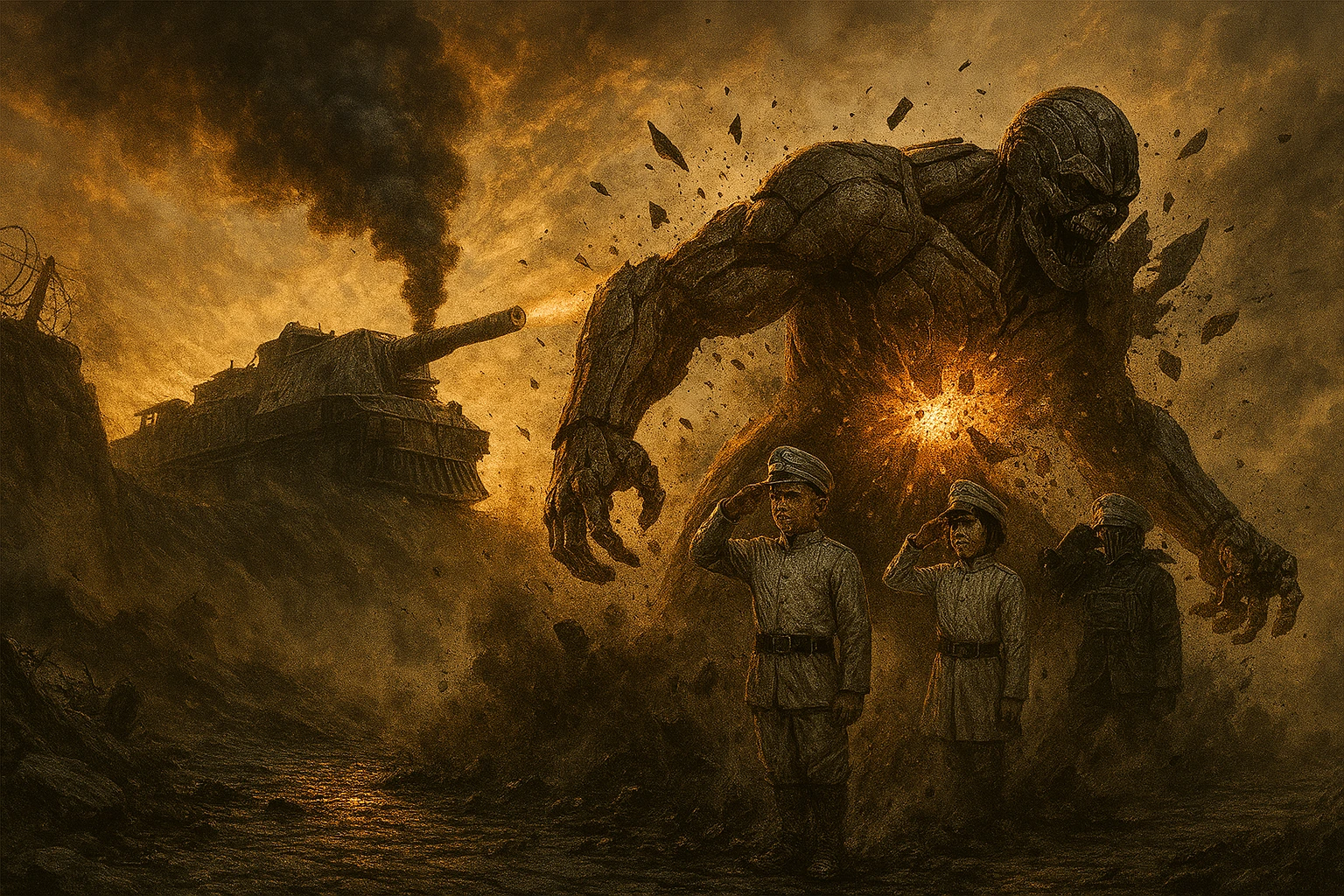
The turning point of this geopolitical era occurs at the Battle of Fort Slava. This battle is significant not because Marley won, but because of how they won. They barely scraped by, and the cost was astronomical.
For the first time, the “Magic” failed against pure human engineering.
- The Armored Train: The Mid-East Alliance developed anti-Titan artillery mounted on armored trains capable of piercing the Armored Titan’s plating. The “invincible” shield was shattered by a manufactured shell. The visual of the Armored Titan—the symbol of Marley’s might—being shredded by industrial machinery signaled the end of an era. The Armored Titan was no longer a god; it was just a target.
- The Naval Barrage: The Beast Titan, usually the range king, nearly succumbed to a coordinated naval bombardment. The Alliance fleet possessed cannons with ranges that rivaled Zeke’s throw, neutralizing his advantage. The Titans could no longer dominate the battlefield simply by existing.
The world had caught up. The exponential curve of technology (Effort) finally intersected and surpassed the static line of Titan power (Magic). A Titan is as strong today as it was 1,000 years ago; its power is fixed. A cannon, however, gets stronger, more accurate, and longer-ranged every year. Marley realized too late that they had built their house on a foundation that was rotting away. They had bet everything on a biological monopoly that was rapidly expiring.
C. The Desperate Pivot
The collapse of the Marleyan Titan-Industrial Complex is the direct cause of the attack on Paradis in the final arc. The Declaration of War was not a move of strength; it was a hail-mary pass born of desperation.
Magath and Willy Tybur realized that without the Founding Titan, Marley would lose its superpower status within a decade. Their conventional military was lagging behind the rest of the world. Their naval fleet was outdated, and they had no aerial superiority fighters. They needed the Founding Titan for two reasons:
- Military: To secure a weapon strong enough (The Rumbling deterrent) to buy them time to modernize their conventional forces.
- Resources: To secure the “Iceburst Stone” on Paradis, a fuel source that would power the next generation of industrial flight.
The entire geopolitical conflict was driven by the failure of their industrial complex. They were an empire in decline, lashing out to seize one last battery to keep the lights on.
The Great Titan War wasn’t reignited by ancient grudges, but by the panic of a superpower realizing its weapons were obsolete. Willy Tybur’s theatrical performance was a calculated gamble to unite the world against Paradis, using the island as a scapegoat to distract the world from Marley’s own weakness.
![A dramatic battlefield scene at Fort Slava. In the foreground, a modern, armored train with massive anti-Titan cannons is firing.
The shell impact is shattering the shoulder of the Armored Titan, sending shards of ‘invincible’ armor flying. In the background, the sun is setting on the battlefield, symbolizing the twilight of the Titan era.
The juxtaposition of steel technology vs. organic Titan flesh is the focus. High contrast, detailed textures.]
V. Conclusion: The Collapse of the Machine
The Marleyan Titan-Industrial Complex was a masterclass in Cynical Realism. It took the chaotic, mythical power of Ymir and forced it into the rigid box of military bureaucracy.
It turned gods into guns and hope into a resource chain.
For a century, it worked. It allowed Marley to dominate the globe through fear and overwhelming force. But the system failed because it underestimated the Price of Power.
By relying on the “Magic” of the Titans, Marley doomed itself to stagnation. They believed their assets were eternal, ignoring the reality that the world was moving forward through Effort.
The tragedy of Marley is that they became the very thing they claimed to fight. They used the “Devils” to conquer the world, justifying their atrocities with historical grievances, only to realize that their reliance on those devils had made them weak.
Ultimately, Marley serves as a warning: an empire built on the exploitation of the past and the weaponization of children will always crumble before the relentless march of the future.
The machine ran out of fuel, and in its desperation to refuel, it ignited the fire that would burn the world to ash.
REACH OUR FULL SERIES.