
1. Introduction: The Gamification of Reality
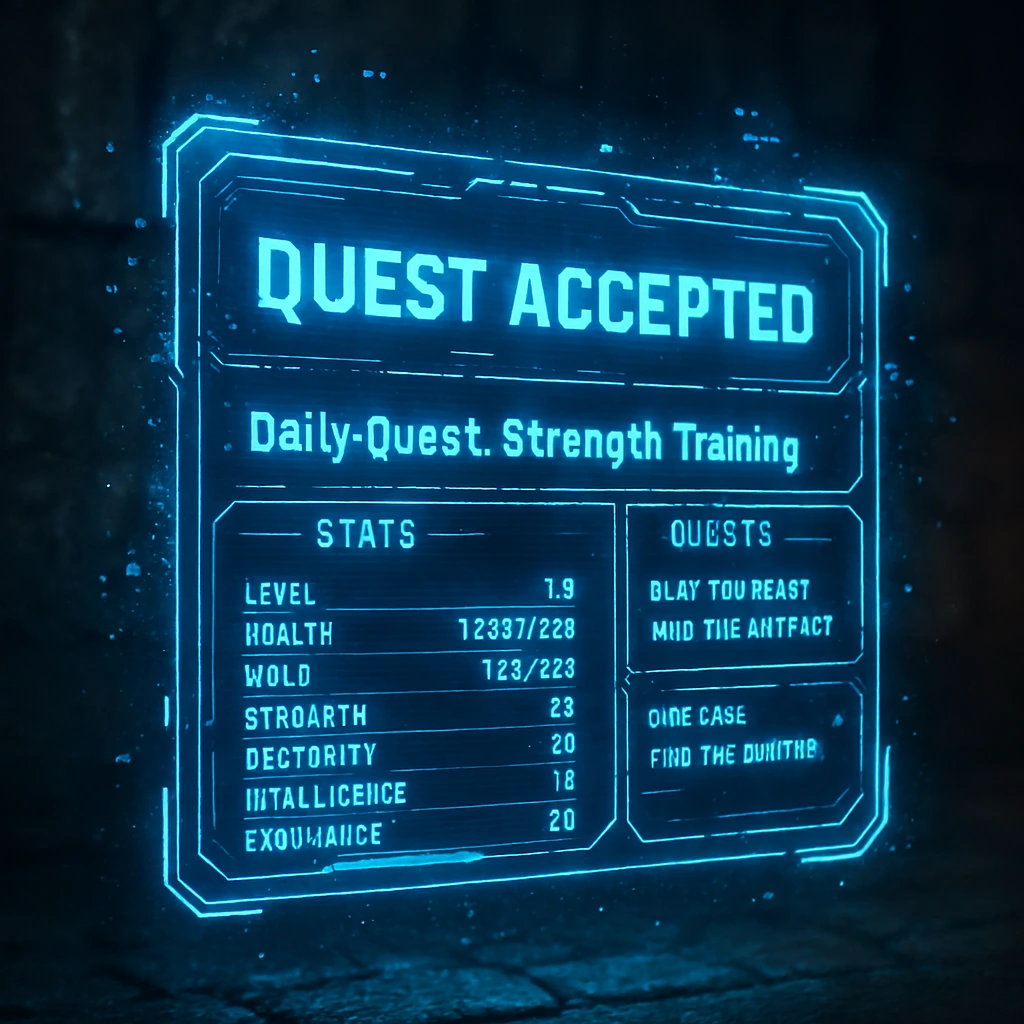
In the pantheon of modern fantasy and dungeon-crawling narratives, Solo Leveling stands apart not because it utilizes video game mechanics, but because it justifies them with a terrifying internal logic. In most “LitRPG” stories, the blue status screen is a given—a universal law of the world that requires no explanation. In the world of Sung Jin-woo, however, the “System” is an anomaly. It is a singular, artificial construct imposed upon reality for a specific, focused purpose.
To the casual observer or the envious hunters surrounding him, the System appears to be a blessing that miraculously transformed the “World’s Weakest Hunter” into an apex predator. It looks like a cheat code. But a deeper analysis reveals that the System was never a gift; it was a cage, a training wheel, and a life-support machine all rolled into one. It was a user interface designed to bridge the insurmountable gap between a fragile human soul and the infinite, chaotic power of the Shadow Monarch, Ashborn. It sterilized the horror of becoming a monster by dressing it up as a game.
The Mystery of the Interface
Why did the power of a primordial Monarch manifest specifically as a Video Game UI? The answer lies in cognitive processing and the specific cultural context of the host. The human mind creates heuristics—mental shortcuts—to understand complex reality. If Ashborn had attempted to bestow his full, raw power onto Sung Jin-woo immediately, or if he had communicated in the eldritch, incomprehensible tongue of the Monarchs, Jin-woo’s mind would have shattered under the sheer weight of the information.
The System was an interpretative layer, a sophisticated middleware. It took the incomprehensible concept of “Death’s Power”—a force of absolute darkness and entropy—and translated it into concepts a 24-year-old Korean man would intuitively understand: Hit Points, Mana, Levels, and Quests. By gamifying the experience, the Architect lowered the cognitive load, allowing Jin-woo to focus on immediate survival rather than existential dread. The blue screens were not magic; they were a user interface (UI) for a biological operating system upgrade. It turned the agony of body reconstruction into a “Level Up” notification, making the pain rewarding rather than traumatic.
The “Player” Status
The exclusivity of the System is its most defining trait. In the established lore of Solo Leveling, Hunters are biologically static. An E-Rank awakens as an E-Rank and dies as an E-Rank. Their mana capacity is biologically fixed at the moment of Awakening, determining their social standing, income, and lifespan instantly. This stagnation creates a rigid caste system within society where effort is meaningless in the face of innate talent.
Sung Jin-woo violates this natural law. As the sole “Player,” he is the only variable in a world of constants. This distinction is crucial because it implies that the “Level Up” mechanic is not natural growth—it is the incremental unlocking of a sealed reservoir. Jin-woo wasn’t creating new power from nothing; he was slowly gaining access to a power that was already waiting for him. The “Player” status was essentially a security clearance level, with each level-up granting him higher administrative access to Ashborn’s dormant energy. While S-Rank hunters like Baek Yoon-ho could sense a terrifying depth within Jin-woo, they couldn’t understand that unlike them, Jin-woo had no ceiling. He was an empty vessel being filled by an ocean, one cup at a time.
System Objectives: Surface vs. Hidden
On the surface, the System presented itself as a benevolence engine, a tool for empowerment.
- Surface Goal: “Make the Player Strong.”
- Method: Provide structured quests, tangible rewards, and instant healing (“Status Recovery”) to ensure the Player survives high-rank dungeons that should logically kill him.
However, the hidden goal was far more sinister and pragmatic. The System was not building a hero; it was crafting a vessel. The human body is frail. It decays, it breaks, and it cannot house the spirit of a higher-dimensional being without disintegrating. The System’s true objective was “Forced Evolution.” Every time Jin-woo leveled up, the System was fundamentally rewriting his DNA, reinforcing his skeletal density, and expanding his spiritual capacity. It was strengthening the container so that when Ashborn finally descended, the vessel wouldn’t burst. The System was a manufacturing process, and Sung Jin-woo was the raw material being forged in real-time.
2. The Architect: The Creator Behind the Code
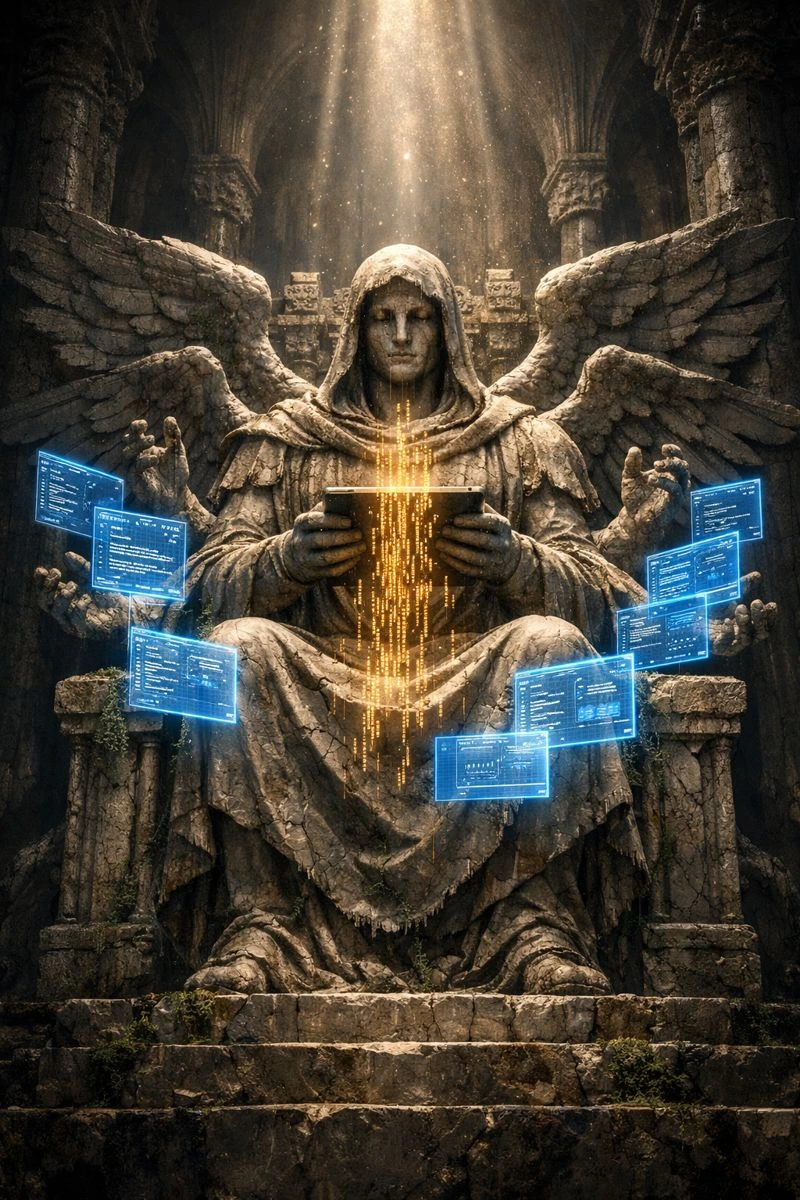
To understand the machine, one must understand the engineer. The System did not spawn from the ether; it was coded, crafted, and maintained by Kandiaru, the Architect.
Who is the Architect?
Kandiaru is one of the most fascinating antagonists in the lore because he is not driven by malice or hatred for humanity, but by an obsession with perfection and immortality. A high-ranking magical being (implied to be connected to the rulers or a neutral chaotic faction initially), Kandiaru possesses an intellect that rivals the Monarchs. His aesthetic—the terrifying angelic statues, the stone wings, the rigid rules of the Cartenon Temple—reflects a personality that values order, symmetry, and absolute obedience.
The “Double Dungeon” (the Cartenon Temple) serves as the Architect’s signature. It is a place of religious terror, yet it operates on strict logic. “Worship the Lord, Praise the Lord, Prove your Faith.” These were not prayers; they were inputs. The Architect views organic life as code to be debugged. When he speaks through the System, he is cold and precise. He is the Game Master who despises the player but loves the game. The eerie smile of the Statue of God wasn’t just for horror; it was a mockery of human emotion, a test to see if the “Player” could suppress fear enough to follow instructions.
The Deal with Ashborn
Why would a celestial engineer serve the King of the Dead? The partnership was born of necessity. Ashborn, the Shadow Monarch, sought a successor (or a new vessel) but found that no human could withstand his power. Every previous host died instantly, their bodies crumbling under the pressure of his mana.
Ashborn approached the Architect with a problem: “How do I put an ocean into a cup?” The Architect’s solution was the System. He proposed a gradual integration. Instead of pouring the ocean in at once, they would reinforce the cup, drop by drop, until the cup became a chalice capable of holding the sea. In exchange for creating this system, the Architect demanded a body of his own—an immortal form born from the Monarch’s power. This transaction defines the System not as a legacy, but as a business contract. The Architect wasn’t helping Jin-woo; he was grooming him to eventually be possessed, hoping to take a cut of the power for himself.
Human Adaptability & The Interface
The Architect’s brilliance lay in his study of humanity. He realized that humans are driven by dopamine loops—effort, reward, growth. By structuring the transfer of power as a “Game,” he hacked Jin-woo’s psychology.
- Levels: Provided a quantifiable sense of progress, addictive in its nature.
- Quests: Provided clear direction in a chaotic life, replacing the uncertainty of survival with clear objectives.
- Items: Provided tangible assets, weaponizing the human desire for accumulation.
This interface allowed the Architect to manipulate Jin-woo’s behavior. If the Architect wanted Jin-woo to become a killer, he didn’t mind-control him; he simply assigned a quest: “Kill the enemy or your heart stops in 0.02 seconds.” He utilized human adaptability against the human host, training Jin-woo like a lab rat in a maze, pressing levers to receive pellets of power. The Architect bet on the fact that a desperate human would do anything to survive, even if it meant shedding their humanity piece by piece.
3. Detailed Stat System Breakdown (The Math of Power)
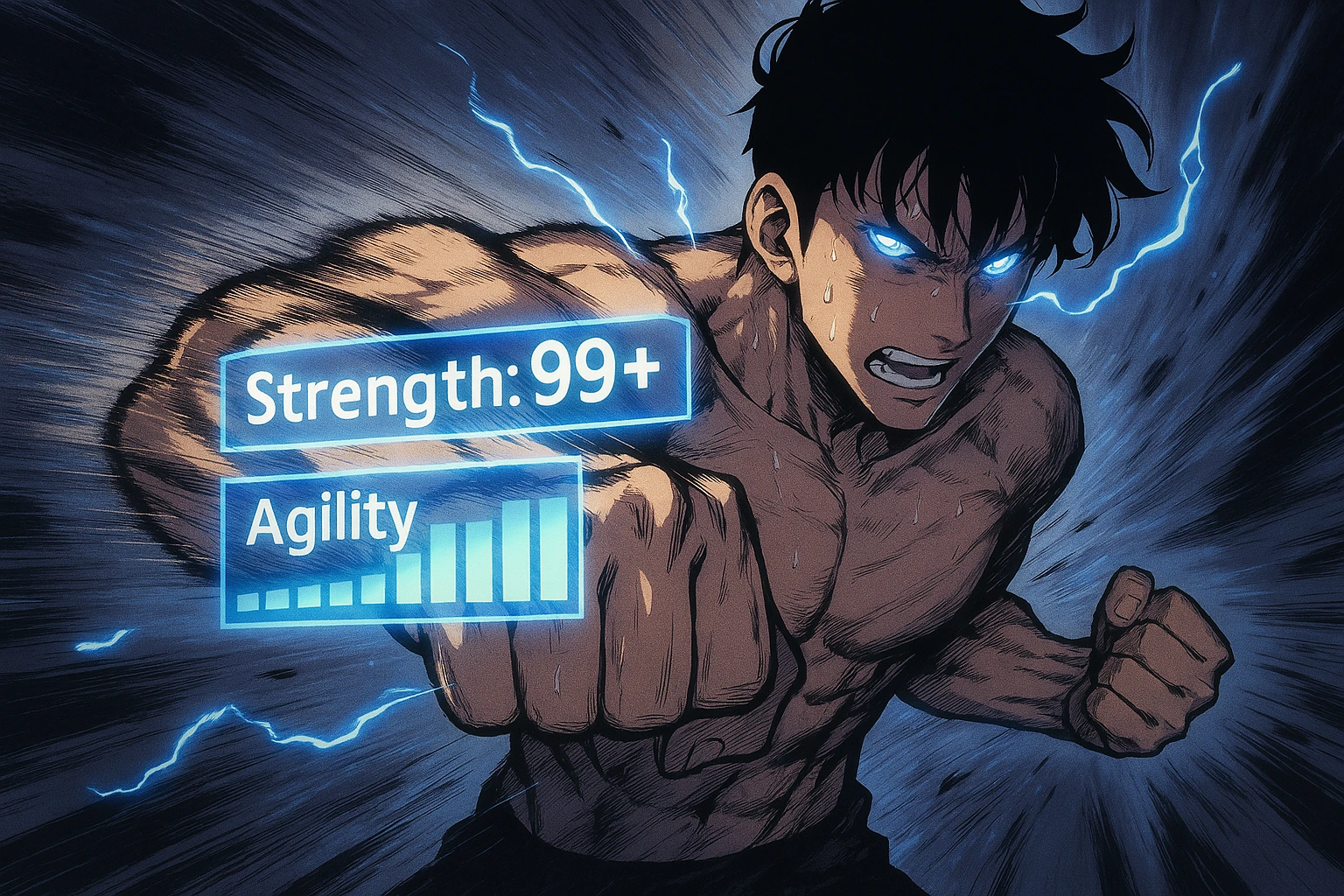
The genius of Solo Leveling lies in the tactile satisfaction of its numbers. The stats—Strength (STR), Agility (AGI), Perception/Sense (SEN), Vitality (VIT), and Intelligence (INT)—were the gears of the System. However, these numbers were not linear; they were exponential multipliers of physical reality.
Strength (STR): The Physics of Destruction
In most RPGs, Strength determines how hard you hit. In the System, STR rewrote the laws of physics regarding Jin-woo’s mass and acceleration.
- Early Game: STR allowed Jin-woo to crush a dagger with his bare hands or decapitate a magic beast. It was purely mechanical force.
- Late Game: STR became conceptual. At higher levels, his physical strikes created shockwaves (air pressure) capable of destroying architecture miles away.
- Analysis: The System applied STR not just to muscle fibers but to the structural integrity of his body. To punch with 100 tons of force, the arm must be able to withstand 100 tons of recoil. Therefore, increasing STR inherently increased the density of Jin-woo’s skeletal structure and skin tensile strength, functioning as a secondary durability stat. By the end, his body was denser than the finest steel, purely to facilitate the output of his strength.
Agility (AGI): The Perception of Time
Agility is often misunderstood as running speed. For Jin-woo, AGI was the processing speed of his brain.
- Reflexes vs. Speed: AGI governed the synaptic firing rate. As he dumped points into AGI, the world began to move in slow motion relative to him. This is evident in his fight against Igris and later the Architect. He wasn’t just moving fast; he was existing in a faster time frame. He could formulate complex strategies in the split second an enemy sword was swinging toward him.
- Evasion: High AGI allowed for the “afterimage” effect. This wasn’t magic; it was sheer velocity outpacing the light reflection reaching the enemy’s eye. It allowed him to exploit the lag in his opponents’ perception.
Sense (SEN): The Sixth Sense
Originally called “Sense” or “Perception,” this stat was the radar.
- Stealth Detection: Vital for his Assassin-type fighting style. It allowed him to perceive the intent of enemies before they moved (killing intent).
- Mana Sensitivity: As SEN increased, Jin-woo stopped seeing the world as matter and started seeing it as flows of energy. This stat was crucial for his survival against Kang Taeshik (the assassin B-Rank Hunter), allowing him to fight purely on instinct when his eyes couldn’t track the target. Eventually, Sense evolved into a form of precognition, allowing him to anticipate danger from miles away.
Vitality (VIT): The Engine of Persistence
Vitality governed HP (Health Points) and Stamina.
- Fatigue Recovery: The System included a “Fatigue” mechanic. High VIT reduced the accumulation of lactic acid and fatigue toxins in the muscles.
- Regeneration: While the System offered “Status Recovery” upon leveling up, high VIT granted a passive healing factor. It turned Jin-woo into a persistence hunter. He could outlast enemies simply because his fuel tank was deeper. In prolonged raids like Jeju Island, where mana and stamina were drained over hours, VIT was the stat that kept him standing when S-Rank hunters were collapsing.
Intelligence (INT): The Shadow Commander’s Fuel
Initially, this was Jin-woo’s “dump stat.” As a physical fighter, he saw no use for it. This was a deliberate misdirection by the System.
- The Mana Pool: Once he unlocked the Shadow Monarch class, INT became the most critical stat. It dictated the size of his Mana army.
- Army Maintenance: Every shadow soldier requires a constant mana upkeep to exist and regenerate. Low INT meant a small army. High INT meant an infinite legion.
- Calculated Growth: The System auto-allocated points to INT after the job change, forcing Jin-woo to adapt from a solo fighter to a commander. It forced him to think about resource management—knowing when to unsummon soldiers to conserve mana for the boss.
The “Hidden Stat”: The Black Heart
Later in the narrative, the stat screen glitches. The numerical values become less relevant after Jin-woo acquires the “Black Heart” of the Shadow Monarch.
- Mana +100,000?: The stats eventually stopped reflecting numerical logic and simply represented “Access.” The Black Heart provided an infinite mana generator, rendering the INT stat theoretically obsolete, yet the System kept the interface to keep Jin-woo grounded. It was a second engine, a perpetual motion machine that allowed him to wage war without end.
4. Quest Varieties and the Penalty Zone
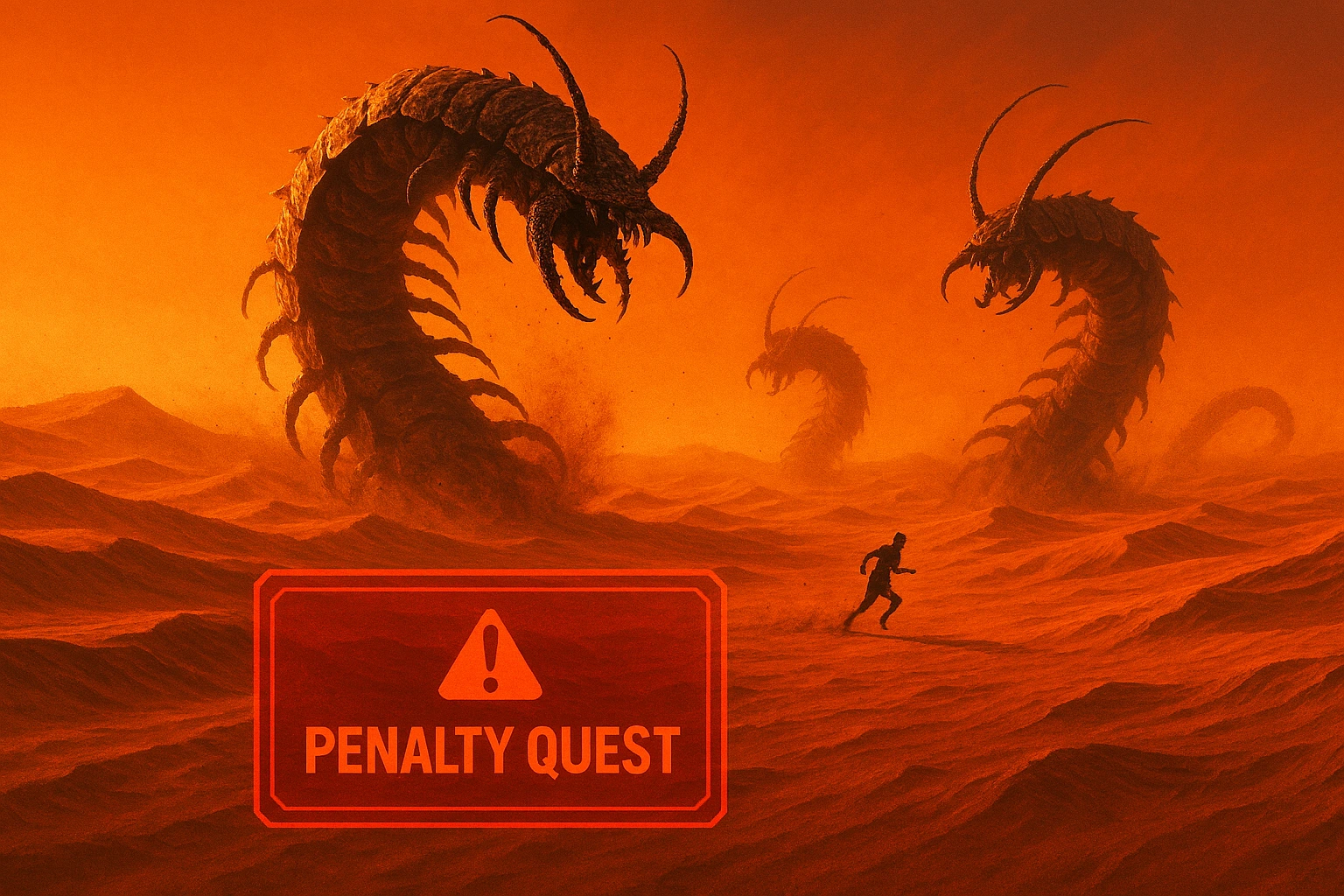
The Quest mechanism was the Architect’s primary method of behavioral modification. It operated on a binary reinforcement model: extreme reward or immediate death.
Daily Quests: The “One Punch Man” Protocol
- The Requirement: 100 Push-ups, 100 Sit-ups, 100 Squats, 10km Run.
- The Logic: Why physical exercise for a magical awakening? The Architect needed to build the hardware (body) to run the software (power). If Jin-woo gained magic without physical density, he would crumble.
- The Conditioning: This created a routine of discipline. It taught Jin-woo that consistency yields results, re-wiring his brain from the “hopeless weakling” mindset to a goal-oriented mindset. It was a grounded, achievable goal that kept him tethered to reality while his world turned upside down.
Emergency Quests: Morality Filters
The System was ruthless. The “Emergency Quest: Kill the Enemies” in the dungeon with the Lizardmen was a turning point.
- The Ultimatum: “Kill or Die.” The System detected bloodlust directed at the Player and forced Jin-woo to reciprocate. A counter appeared, counting down 0.02 seconds—the time it takes for a heart to beat. The threat was clear: hesitation is fatal.
- The Purpose: This was desensitization training. To be a Monarch is to rule over death. A Monarch cannot hesitate to kill. The System forced Jin-woo to shed his human morality and hesitation, stripping away his innocence to prepare him for the brutality of the War of Monarchs. It turned him from a survivor into an executioner.
Hidden Quests: The Reward for Intelligence
The System rewarded curiosity and bravery.
- “Courage of the Weak”: Unlocked by facing death without fleeing.
- Crafting Rewards: These quests proved the System was watching how Jin-woo played, not just what he killed. It encouraged him to explore the mechanics rather than just brute-forcing them. It rewarded lateral thinking, essential for a Monarch who must outsmart other Sovereigns.
The Penalty Zone: The Stick
If the Daily Quest was the carrot, the Penalty Zone was the stick. Failing the daily goal transported Jin-woo to a desert survival dimension for 4 hours.
- The Centipedes: Giant monsters that he had to run from.
- The Hidden Training: Jin-woo realized the Penalty Zone wasn’t just punishment; it was a farming zone. He could heal instantly upon completion and bring items back. He began to weaponize the punishment, purposely failing quests to enter the zone and level up. This showed the Architect that his lab rat was learning to outsmart the maze, a sign that Jin-woo’s adaptability was exceeding the Architect’s projections.
5. Inventory, Shop, and Item Grade System
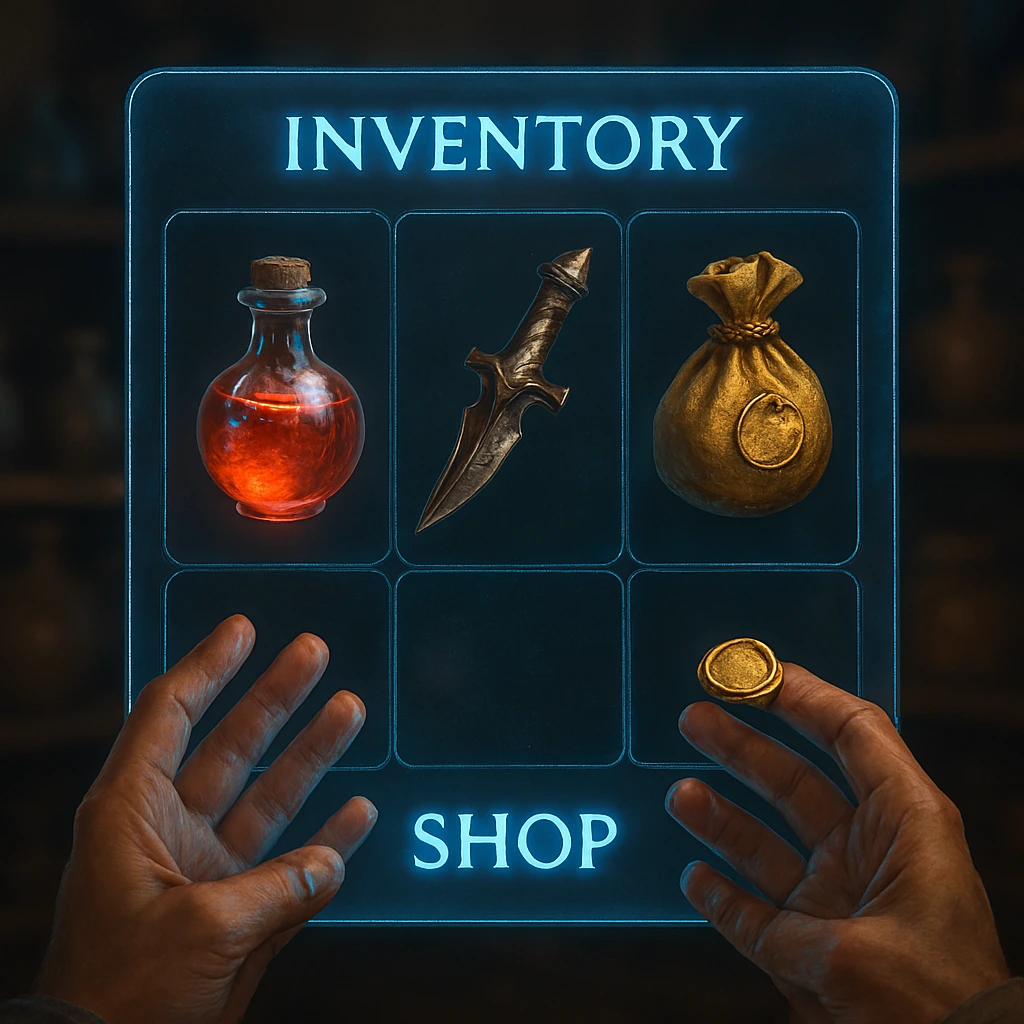
The economic mechanics of the System introduced resource management to magical warfare.
The Inventory Dimension
The “Sub-space” inventory is a classic trope, but in Solo Leveling, it represents spatial magic mastery. Jin-woo could store massive carcasses, weapons, and clothes. This removed the logistic burden of raiding. He became a one-man logistics unit, capable of carrying an entire raid team’s supplies or hiding evidence (bodies) effortlessly. It allowed him to switch loadouts instantly, swapping from a dagger to a longsword to bare hands in a frame, making his combat style unpredictable.
The System Shop: Digitalizing Necessity
The Shop allowed Jin-woo to convert “Gold” (earned from killing monsters) into physical goods.
- Potions: Instant healing. This broke the balance of the world. Healers in the real world have mana limits and casting times. Jin-woo could spam healing potions mid-fight, making him invincible in attrition battles.
- The Logic: The Shop proved the System could materialize matter from energy. It suggests the Architect had a stockpile of resources or the ability to transmute mana into matter instantly. It also kept Jin-woo independent; he never needed to rely on a healer or a support mage, reinforcing the “Solo” aspect of his leveling.
Item Grading
Items were ranked E to S (and later Divine/National Level).
- Knight Killer (B-Rank): Designed for piercing heavy armor.
- Baruka’s Dagger (A-Rank): Lightweight, high agility buff.
- Kamish’s Wrath (S-Rank): Crafted from the fang of a dragon. These responded to the user’s mana.
- Set Bonuses: The “Red Knight” set provided bonuses for wearing multiple pieces. This gamification encouraged Jin-woo to seek out specific gear, driving him into deeper dungeons. It mirrored the loot loops of MMOs, ensuring Jin-woo was always hungry for the next drop.
Special Items: The Cheats
- The Orb of Avarice: Doubled magic damage. A key item for a Necromancer.
- The Elixir of Life: The ultimate carrot. The System showed the recipe early on, motivating Jin-woo to climb the Demon Castle to save his mother. This was emotional manipulation by the Architect—using Jin-woo’s love for his family to force him into the most dangerous dungeon yet. It proved the Architect had done his research on Jin-woo’s personal life and was willing to use his trauma as a motivator.
6. Skills, Titles, and Job Classes
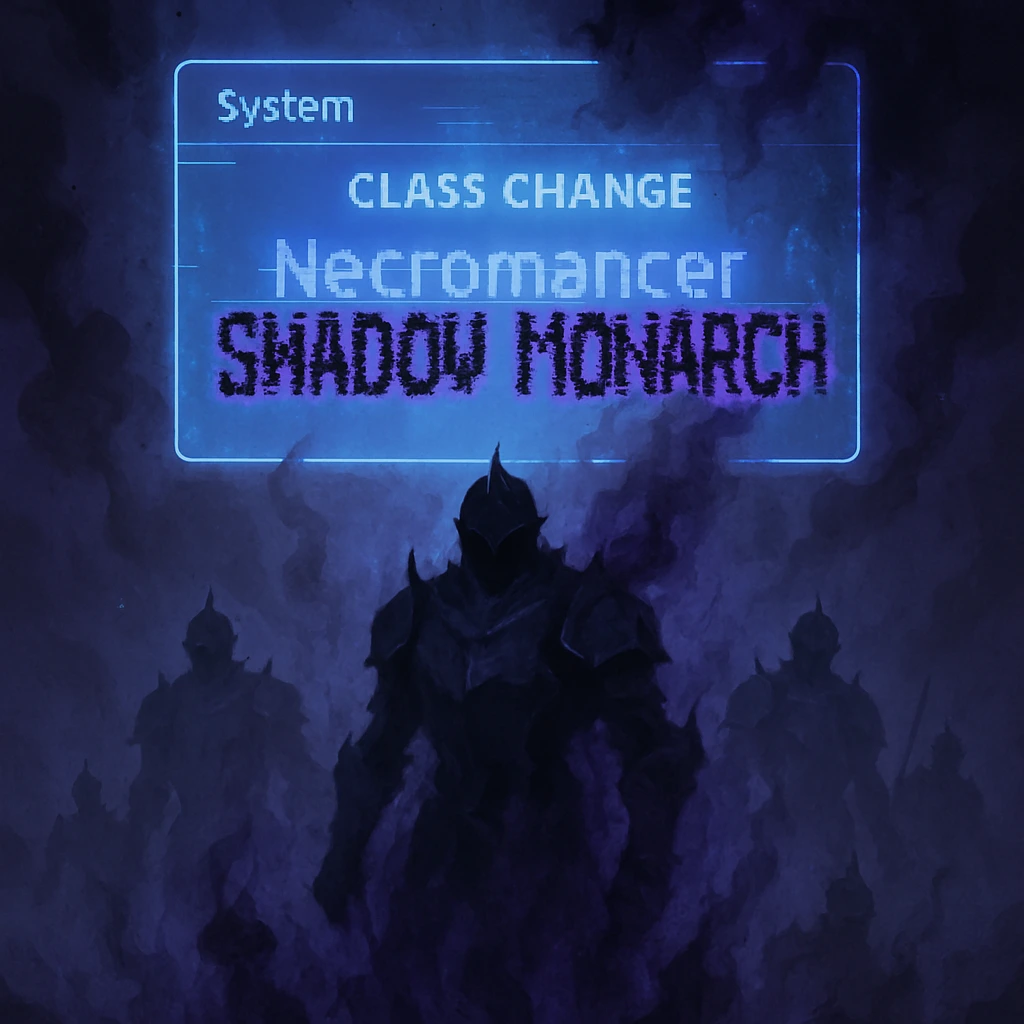
The progression system was designed to mislead Jin-woo into a specific playstyle before revealing his true nature.
Active vs. Passive Skills
- Muscularity (Passive): Aesthetic and functional.
- Sprint (Active) -> Quicksilver: Movement speed buffs.
- Bloodlust (Active): Uses the Monarch’s aura to induce fear. This was the first hint of his true nature—using fear as a weapon is a trait of a ruler, not a hero. It wasn’t just intimidation; it was a status effect that debuffed enemies’ stats.
- Stealth: A standard assassin skill, but vital for the “Shadow” theme. It allowed him to observe, stalk, and strike—behaviors that align with the Shadow Monarch’s dominion over the unseen.
The Power of Titles
Titles were permanent buffs earned through achievements.
- “Wolf Slayer”: Granted +40% damage against beast-type monsters.
- “One Who Overcame Adversity”: Boosted stats when HP was low.
- Impact: Titles acted as passive limit breakers, allowing Jin-woo to punch above his weight class. They served as badges of honor, proving that the System recognized his specific feats.
The Class System: The Great Deception
The most brilliant trick the System played was letting Jin-woo believe he was an Assassin.
- The Path: He used daggers. He used stealth. He relied on speed. The System encouraged this.
- The Reveal: The Job Change Quest (fighting Igris) was setup to test his combat ability, but the Hidden Class was always Necromancer.
- Why Assassin first? A Necromancer is physically weak. If Jin-woo had started as a Mage, he would have died. The System forced him to build a physical tank build (Assassin) before giving him the Mage class. This created the ultimate hybrid: A Necromancer who can speed-blitz you with a dagger while his army eats you alive. The moment the red text “Necromancer” glitched and turned into “Shadow Monarch” remains one of the most pivotal moments in the series, signifying the system acknowledging his potential exceeded standard classifications.
- Shadow Monarch: The final evolution. Not just raising the dead, but extracting their mana essence. The “Arise” command became the most iconic mechanic in the series, representing absolute authority over death.
Leveling Caps
Did the System have a Level 99 limit? No. Jin-woo breezed past Level 100.
- The Limitless Growth: Unlike other games, there was no level cap because there was no limit to Ashborn’s power. The “Level” was just a percentage counter of how much of the Shadow Monarch’s power Jin-woo had successfully assimilated. While other hunters hit a “wall” they could never cross, Jin-woo’s path was infinite, constrained only by his human body’s ability to keep up.
7. System Sentience and Manipulation
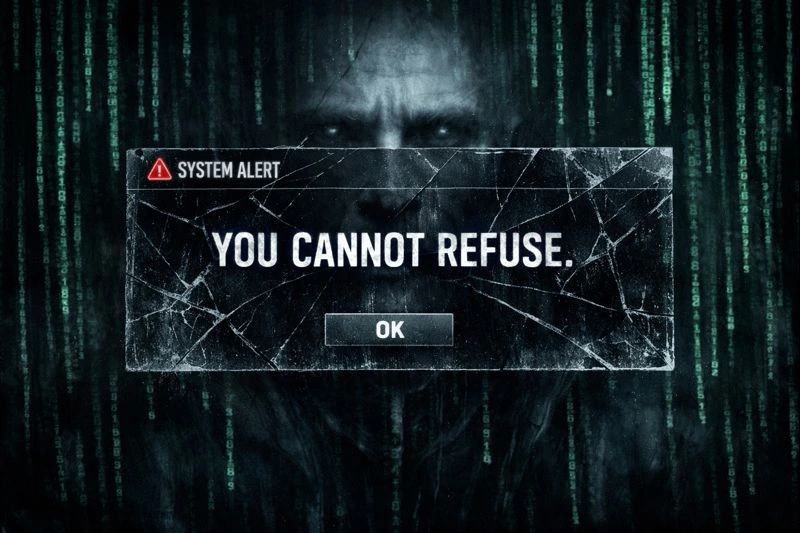
Is the System an AI? A soul? A spell?
The “Voice”
The System communicated via text boxes, but occasionally, it displayed personality.
- Warnings: “The Player is in danger.”
- Clarifications: When Jin-woo tried to exploit a bug or loophole, the System would patch it or issue a warning.
- The Architect’s Ego: During the final confrontation with the Architect, we realize the System is the Architect’s will. The text boxes were his voice filtering through the code. The neutrality of the interface was a facade; behind every notification was a sentient being judging Jin-woo’s performance.
Forced Evolution & Protection
There were moments the System intervened to prevent death.
- The Daily Quest Penalty: Used to save him from powerful enemies (by transporting him away).
- Status Recovery: Healed severed limbs.
- The Logic: The System protected its investment. It couldn’t afford to let the vessel break after investing so much mana into it. This strips away the illusion of Jin-woo’s luck; his survival was mandated by the software. He wasn’t surviving because of fate; he was surviving because the Architect wasn’t done with him yet.
The Illusion of Choice
Was Jin-woo ever free?
- “Accept the Class? (Y/N)” – But the interface implied refusal meant death.
- “Enter the Dungeon?” – If he didn’t, he couldn’t get the Elixir.
- Analysis: The System provided the illusion of free will (RPG choices) while railroading him down a single deterministic path toward becoming the Shadow Monarch. It was a linear story disguised as an open-world game. Every choice was a Hobson’s choice—take the power or die.
8. Conclusion: The Deletion of the System
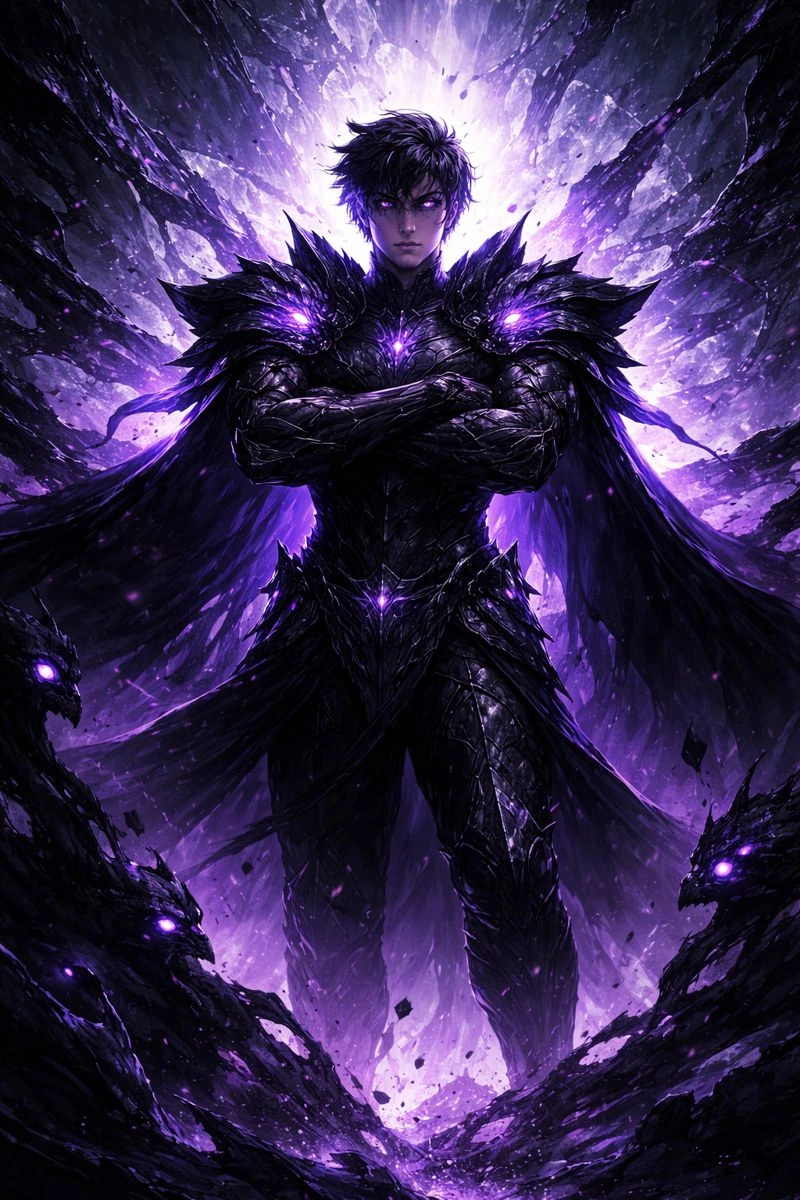
The ultimate narrative arc of the System is its own obsolescence.
The Final Merge
In the climax, when Jin-woo’s heart stops and he meets Ashborn in the realm of death, the truth is revealed. The System was a cocoon. Once the butterfly (the Monarch) is fully formed, the cocoon is no longer necessary.
- Admin Rights: The Architect tries to retain control, but the System’s loyalty was hard-coded to Ashborn, not the Architect. When Ashborn chose Jin-woo, the System betrayed its creator. The tool recognized the true master.
- The Code Breaker: Jin-woo kills the Architect. In doing so, he destroys the server administrator but keeps the server running momentarily to finish the transfer. It is a poetic end: the creator destroyed by his own perfect creation.
System Removal
Once Jin-woo fully accepts his identity as the Shadow Monarch, the interface vanishes.
- No More Blue Screens: He no longer needs a UI to tell him his mana levels; he feels the ocean of power directly. The training wheels are off.
- No More Cooldowns: Skills are no longer restricted by game logic. He can use them at will, limited only by his stamina.
- No More Quests: There is no one left to give him orders. He is the one who commands.
The Result: From User to Source
The disappearance of the System signifies Jin-woo’s graduation from humanity. He transitions from a “User” accessing a database to becoming the “Database” itself. He is no longer playing the game; he is the logic by which the world operates.
The Architect’s masterpiece was a success. It took the weakest hunter of mankind, broke his body, rewired his mind with gamified dopamine loops, and hardened his spirit until he could host Death itself. The System was cruel, manipulative, and terrifying—but without its cold logic, the Shadow Monarch would never have risen. The blue screen was the most powerful weapon in the series, not because it fired beams of light, but because it systematically engineered a God.