
In the world of Solo Leveling, power is often quantified by simple, flashing metrics: Rank, Mana, and Level. Fans obsess over who is an S-Rank and who is a National Level Hunter. But for the discerning eye, the true story of Sung Jin-Woo’s ascent isn’t just about the stats on his system screen—it is about the pile of broken tools he left in his wake.
The narrative of Solo Leveling is, at its core, an industrial tragedy. It is the story of a man growing so fast that the world’s manufacturing capabilities cannot keep pace. Why do National Level Hunters pay billions of won for a single blade? Why did a simple dungeon drop eventually become obsolete against the Architects of the universe? And why, in the end, was a weapon made from humanity’s greatest calamity the only thing capable of scratching the King of Dragons?
This is the definitive analysis of Sung Jin-Woo’s arsenal—from the rusted steel of the E-Rank days to the fang of the dragon that nearly ended the world.
1. Introduction: The Problem with Human Steel
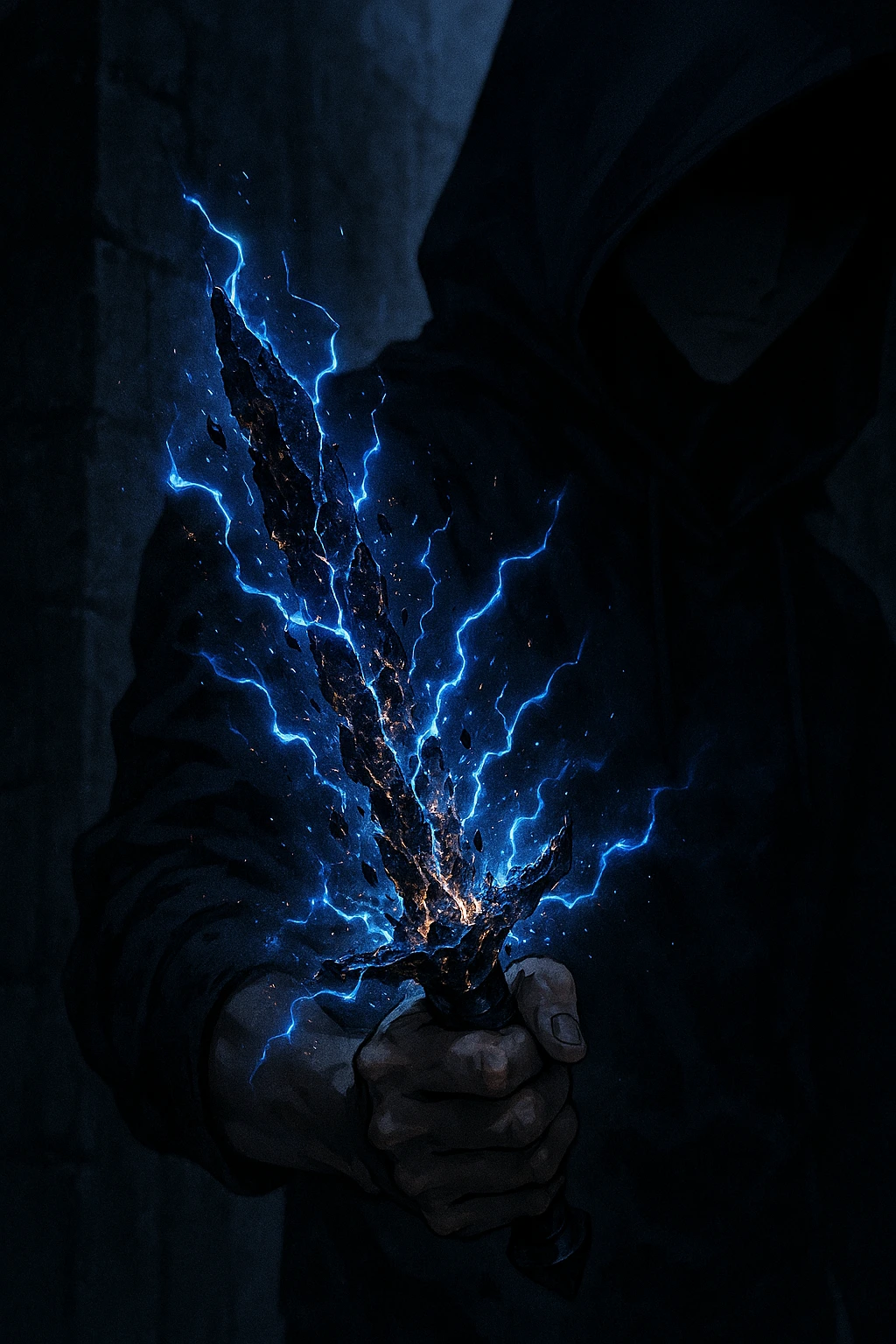
To understand the significance of Kamish’s Wrath, we must first understand the fundamental limitation of the Solo Leveling universe: The fragility of human creation in the face of eldritch power.
In most fantasy RPGs, a weapon is simply a “stat stick.” You equip a sword, your attack goes up by 50 points, and you swing it. The sword is a passive object. However, Solo Leveling introduces a critical pseudo-scientific concept that governs its economy, its politics, and its combat: Mana Conductivity.
The Physics of Magic: Why Steel Fails
When an Awakened being—specifically a Hunter—channels mana, they are essentially conducting a high-voltage current through a physical medium. A Hunter’s body is genetically or magically altered to withstand this flow; their veins and muscles are reinforced by the awakening process. Their weapons, however, are not always so lucky.
Normal steel, titanium, and even advanced modern alloys possess near-zero mana conductivity. They are insulators in a world of conductors. If an S-Rank Hunter were to channel their magical energy into a standard kitchen knife or a military-grade tungsten machete, the weapon wouldn’t just be ineffective; it would physically disintegrate. The molecular bonds of the metal cannot withstand the pressure of the mana. It is akin to trying to pump the water pressure of a fire hose through a paper straw. The straw doesn’t just leak; it explodes in the user’s hand.
This physics engine implies that a Hunter is always holding back unless they have a proper conduit. A sword isn’t just a sharp edge; it’s a circuit board for magical energy.
The Billion-Won Economy
This is why the Hunter economy exists and why it is so inflated. This is why Guilds fight corporate wars over dungeon mining rights and why the White Tiger Guild and the Hunters Guild are practically nation-states. They aren’t just looking for gold or artifacts; they are looking for Essence Stones and Monster Bones. These are materials that are biologically or magically evolved to conduct energy.
An S-Rank Hunter cannot use a B-Rank sword for long. The moment they get serious, the weapon will shatter. We see this struggle define the early chapters of Sung Jin-Woo’s life. As a “Player,” his growth was exponential, while the world’s technology was linear. He was leveling up faster than the global manufacturing industry could keep up with. He was a race car driver forcing a Toyota Corolla to go 300 miles per hour. The engine was fine, but the chassis was falling apart.
The Sound of Shattering Steel
Recall the visceral frustration Jin-Woo felt during his fight with the B-Rank assassin, or during the Red Gate arc amidst the frozen wasteland. Every time he pushed his limits, his inventory grew lighter because his daggers were turning into scrap metal.
- Casaka’s Venom Fang: Chipped and dulled against enemies with higher defense.
- Knight Killer: Effective against armor, but brittle against high-tier magic reinforcement.
- Store-Bought Daggers: Disposable razors that lasted one or two swings before snapping like twigs.
For Jin-Woo, the tragedy wasn’t that he was weak; it was that he was becoming too strong for the world around him. This context is vital. It explains why Kamish’s Wrath wasn’t just a “cool upgrade”—it was a logistical necessity. It was the first time in his life he held something that didn’t feel like it was made of glass.
2. Early Game: The “Status Effect” Meta
Before Jin-Woo became the Shadow Monarch capable of erasing armies with a wave of his hand, he was a rogue. In RPG terms, he was an “Agility/Luck” build struggling to output enough DPS (Damage Per Second) to kill bosses before they killed him.
Because he lacked the raw strength to crush skulls in a single blow like Thomas Andre, and he lacked the mana pool to nuke rooms like Choi Jong-In, Jin-Woo had to rely on the “Meta” of early-game leveling: Status Effects. He couldn’t overpower enemies; he had to outlast them.
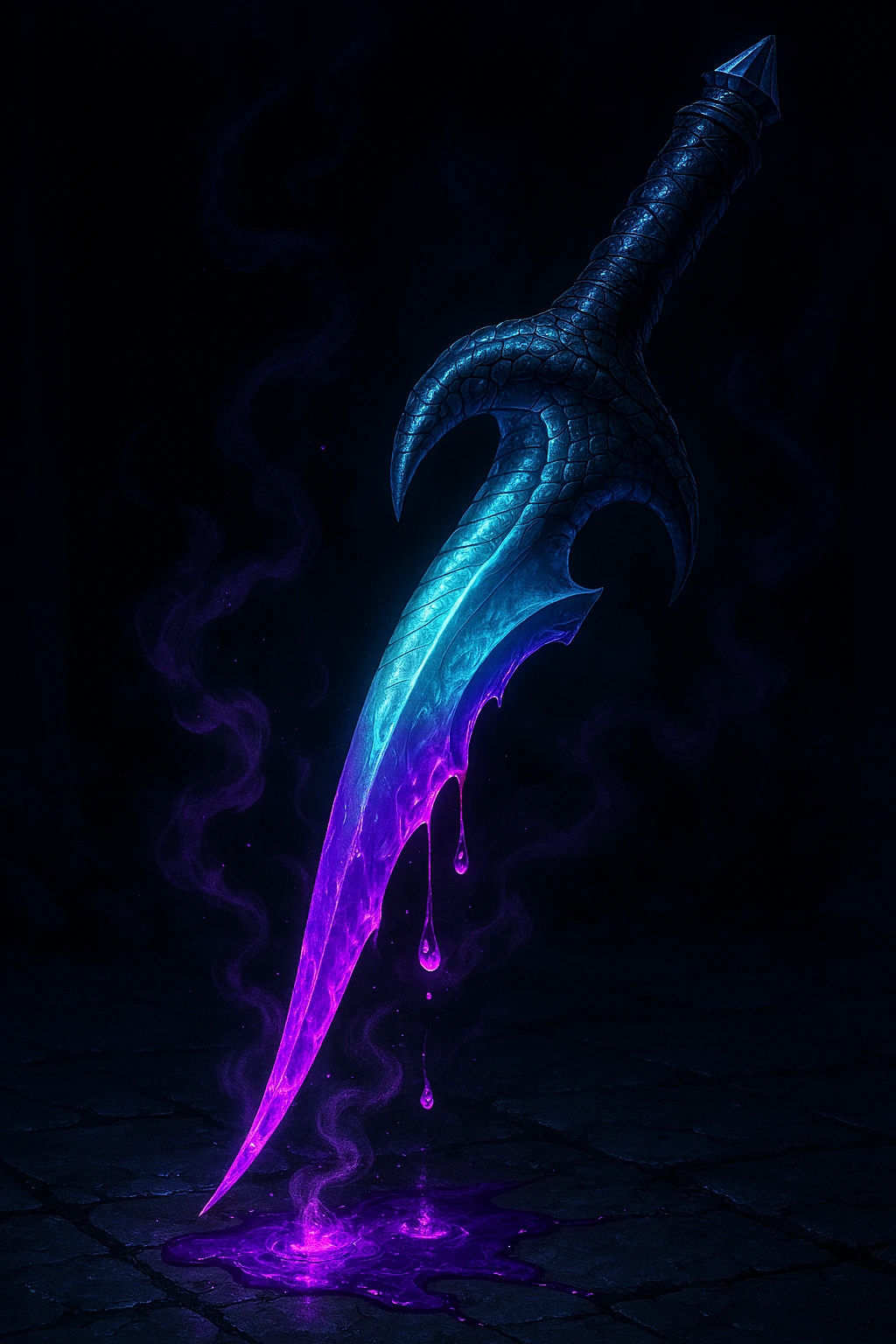
Casaka’s Venom Fang: The First Boss Drop
The fight against the Blue Venom-Fanged Casaka in the subway dungeon was the turning point. Obtaining Casaka’s Venom Fang (C-Rank) changed his combat style from desperate flailing to calculated surgical strikes.
- Attack Power: +25
- Effect: Paralysis and Bleeding.
For a long time, the +25 Attack Power was negligible. Against the C-Rank and B-Rank beasts he fought, that damage was barely a scratch. The MVP of this weapon was the Paralysis debuff. When fighting enemies that were physically stronger than him—like the Cerberus (Keeper of Hades) in the Demon Castle—Jin-Woo couldn’t win a contest of strength. One bite from the Cerberus would have ended him.
He had to kite, dodge, and pray for the RNG (Random Number Generator) of the Paralysis effect to trigger. This dagger represents the “Scrapper” phase of his life. It was ugly, it was weak, but it bought him the seconds he needed to breathe. The “Bleed” effect, which drained 1% of the enemy’s health per second, was the only reason he could whittle down tanky bosses with massive health pools that his raw strength couldn’t dent.
Knight Killer: The “Tank Buster”
As Jin-Woo moved from fighting beasts to fighting humanoids (and eventually the Job Change Quest), he encountered a new problem: Armor.
Casaka’s Venom Fang was useless against plate mail. The tip would slide off or break against the enchanted steel of knights. Enter the Knight Killer (B-Rank).
- Attack Power: +75
- Effect: +25% Damage against Armored Enemies.
This weapon was a specific tool for a specific job. It highlights Jin-Woo’s intelligence. He didn’t just carry one “best” sword; he carried a golf bag of murder weapons. He used Knight Killer specifically to dismantle Igris the Red.
The fight against Igris is legendary not just for the choreography, but for the mechanics. Igris was clad in high-level armor. A normal dagger would have bounced off. Knight Killer was designed to pierce. Without the armor-penetration properties of this dagger, Igris would have been an insurmountable wall. The Knight Killer wasn’t about raw power; it was about bypass. It taught Jin-Woo that precision often beats force.
Baruka’s Dagger: The Agility Booster
When Jin-Woo defeated the Ice Elf Boss, Baruka, he obtained a weapon that shifted his meta again.
- Attack Power: +110
- Effect: Agility +10.
At this stage, Jin-Woo realized that his greatest asset wasn’t strength—it was speed. The +10 Agility bonus was massive at that level. It allowed him to move faster than the eye could follow. Baruka’s Dagger was sleek, light, and sharp. It marked the transition from “surviving” to “dominating.” He was no longer relying on poison or armor piercing; he was simply moving so fast that the enemy couldn’t react.
The Shop System Trap
We must also acknowledge the “System Store.” Jin-Woo spent millions of Gold on store-bought weapons, only to have them break. This served a narrative purpose: it showed that the System could provide him with skills and stats, but it couldn’t provide him with materials capable of housing a Monarch’s power. The System was training him, but the tools it sold were mass-produced garbage compared to what the real world (and the Demon World) had to offer. It reinforced the idea that true power must be earned (dropped), not bought.
3. Mid-Game: The Demon King’s Daggers
The entry into the upper floors of the Demon Castle marked the end of the “Human Realm” of weaponry. The foes here—Demon Nobles, Arch-Liches, and finally the Demon King Baran—were beings of pure magic. Steel, even monster-infused steel, was no longer enough. The physics of the world were shifting from physical to metaphysical.
The Source: Baran, Monarch of White Flames
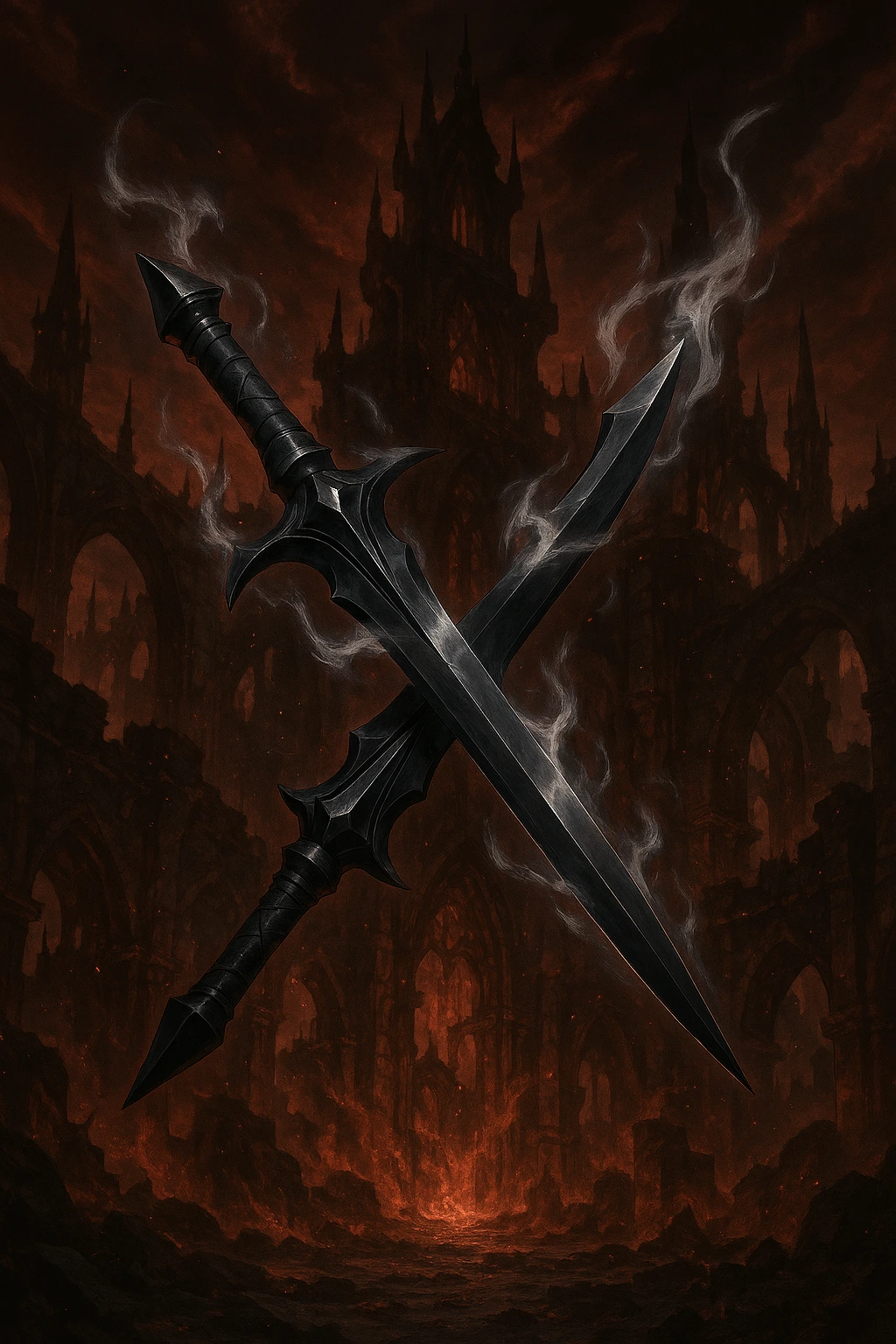
When Jin-Woo defeated Baran, he didn’t just gain experience; he gained the Demon King’s Daggers. These were the first weapons Jin-Woo wielded that could genuinely be considered “S-Rank” or near-National Level in terms of performance. They were forged from the essence of a Monarch, albeit a weakened one.
The Stat Leap: Leaving Humanity Behind
- Attack Power: +220
- Effect: Two is One.
Compare this to Baruka’s Dagger (+110). The damage output literally doubled. A generic S-Rank Hunter usually wields a weapon with around 100-150 attack power. With these, Jin-Woo was hitting nearly twice as hard as the average elite Hunter. He had effectively surpassed the standard equipment cap of the human world.
The “Two is One” Effect
This set bonus was a stroke of genius in game design. The effect allowed the user to utilize the attack power of both daggers even if only one made contact, or to synchronize their movements seamlessly.
More importantly, it had a synergy with his Stealth skill. The daggers didn’t reflect light; they absorbed it. They were weapons designed for an assassin. Visually, they matched his developing aesthetic as the Shadow Monarch.
During the Jeju Island Raid, these daggers were instrumental. They could slice through the carapace of mutated ants that were impervious to tank shells and assault rifle fire. When Jin-Woo decimated the ant army, it was the Demon King’s Daggers that were flashing through the air. They were extensions of his shadow—dark, jagged, and cruel. They allowed him to fight Beru (the Ant King) on relatively even footing before relying on his fists.
The Limitation: The Ceiling of Mortality
However, the Demon King’s Daggers had a fatal flaw. They were created from the power of Baran, a Monarch who had already been defeated and weakened. While they were “S-Rank” by human standards, they were “B-Rank” by the standards of the Rulers and Monarchs.
When Jin-Woo faced the Architect (the creator of the System) in the Double Dungeon revisit, the limitations became glaring. The daggers could not pierce the Architect’s defenses effectively. They bounced off the statue’s stone skin. They lacked the “Authority” required to harm a higher being. They were strong, but they were not God-Killing strong. They were merely tools of a King, not a God. Jin-Woo was outgrowing them. He needed a weapon that didn’t just conduct mana, but amplified the very concept of destruction.
4. The Holy Grail: Kamish’s Wrath
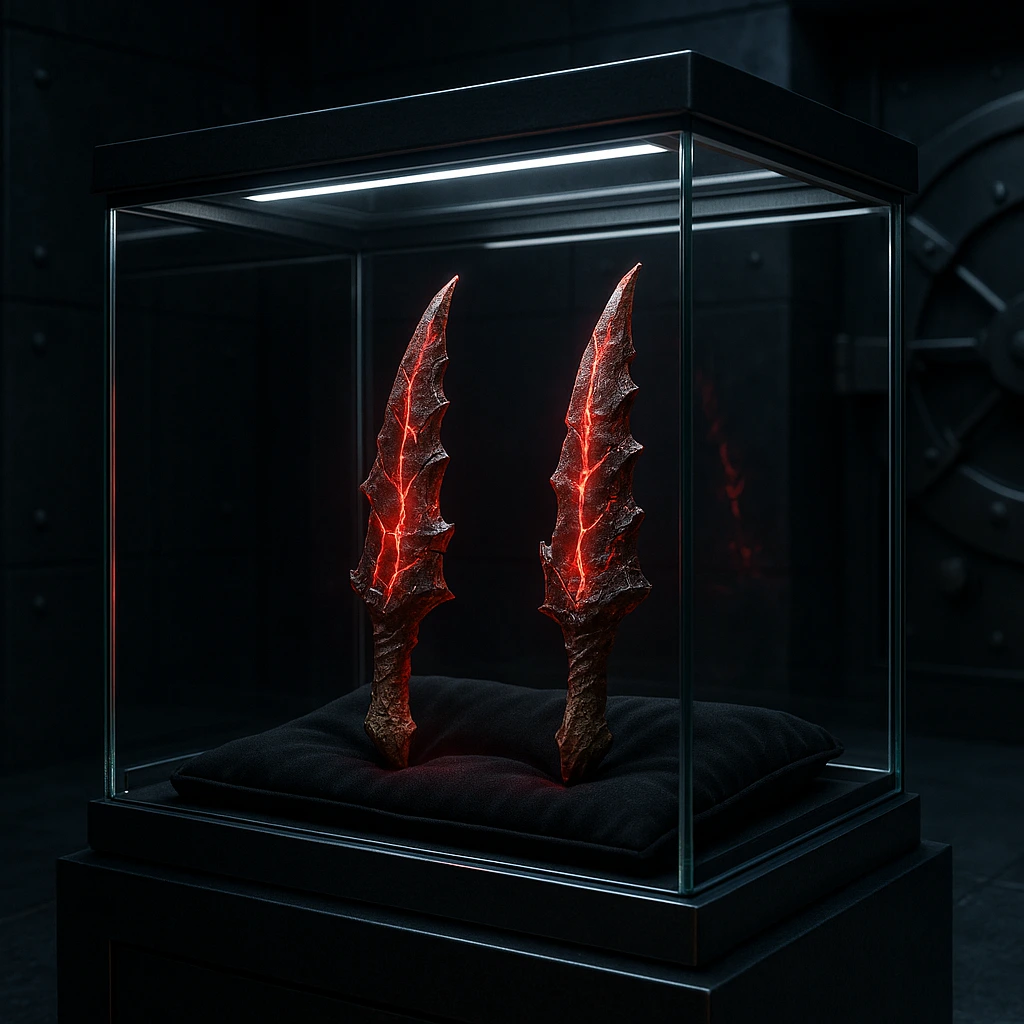
This is the peak. The singularity. The moment equipment ceased to be “gear” and became “mythology.” This is the weapon that defines the endgame of Solo Leveling.
The Origin: Humanity’s Greatest Calamity
To understand the weight of these daggers, we must look at the history of the Solo Leveling world. Eight years prior to the main timeline, a Dungeon Break occurred in America. From it emerged a dragon named Kamish.
This wasn’t a normal boss. Kamish decimated the entire West Coast of the United States. The “Elite” hunters of the world were slaughtered like insects. Only five Hunters survived the raid—these five became the “National Level Hunters.” Their authority and prestige were built entirely on the fact that they survived Kamish.
Kamish was a servant of Antares, the Dragon Monarch. His scales were impervious to physics. His breath melted cities. When he finally died, his corpse became the most valuable resource on Earth. A single rune stone from him was priceless; his teeth were beyond valuation.
The Crafter and the Hoard
The corpse of Kamish was claimed by the United States government and the Scavenger Guild, led by Thomas Andre (The Goliath). Thomas, a man of immense pride, kept the dragon’s greatest asset—its sharpest fang—locked away in his personal armory.
He hired the world’s greatest master blacksmith to forge weapons from this fang. The result was a pair of short swords that defied logic. Yet, they sat unused. Why? Because Thomas Andre is a Tank/Brawler. He fights with his fists. He had no use for delicate daggers, and no other mage or assassin in the guild was worthy of touching them. They waited in the dark for eight years.
The Stats: A Mathematical Impossibility
When Jin-Woo finally held them, the stats appeared on his screen:
- Item Name: Kamish’s Wrath
- Rank: S (System limitation; effectively Mythic/Divine)
- Attack Power: +1,500
- Effect: Mana Conductivity 100%. Sharpness infinity.
Let’s pause and look at the math.
- Casaka’s Fang: +25
- Baruka’s Dagger: +110
- Demon King’s Daggers: +220
- Kamish’s Wrath: +1,500
This is not a linear progression. This is a 600% increase in raw power over his previous best weapon. It is a nearly 7x multiplier. In RPG terms, this is the equivalent of a Level 100 character equipping a “Dev_Tool_Kill_All” weapon. A single swing of these daggers carries more force than a cruise missile.
The Conductivity: Extension of the Soul
The most important stat, however, wasn’t the attack power. It was the Mana Sensitivity.
The description noted that the mana conductivity was so perfect that the daggers felt “weightless.” When Jin-Woo poured his massive Shadow Monarch mana into them, there was zero resistance. Usually, a Hunter fights the resistance of their own weapon—the “lag” caused by imperfect materials. With Kamish’s Wrath, the mana flowed instantly.
If Jin-Woo thought about cutting, the air was already cut. The lag time between “intent” and “action” was reduced to zero. The daggers became liquid black extensions of his will. They glowed with a chaotic, red-black aura that matched his shadows perfectly. This wasn’t just conducting mana; it was amplifying it.
The Gift: Recognition of the New King
Why did Thomas Andre, a man who hoarded power, give these priceless artifacts to Jin-Woo for free?
- Life Debt: Jin-Woo spared Thomas Andre’s life and the lives of his guild members during their confrontation. It was a gesture of supreme mercy from one predator to another.
- Recognition: Thomas Andre was the “Tank.” He realized he was no longer the strongest. He saw in Jin-Woo the only person capable of wielding Kamish. The daggers had been sitting in a case because no one else was strong enough to use them. Giving them to Jin-Woo wasn’t just a gift; it was passing the torch.
When Jin-Woo equipped Kamish’s Wrath, he ceased to be a Hunter. He became a predator capable of hunting Monarchs.
5. The Mage’s Nuke: The Orb of Avarice
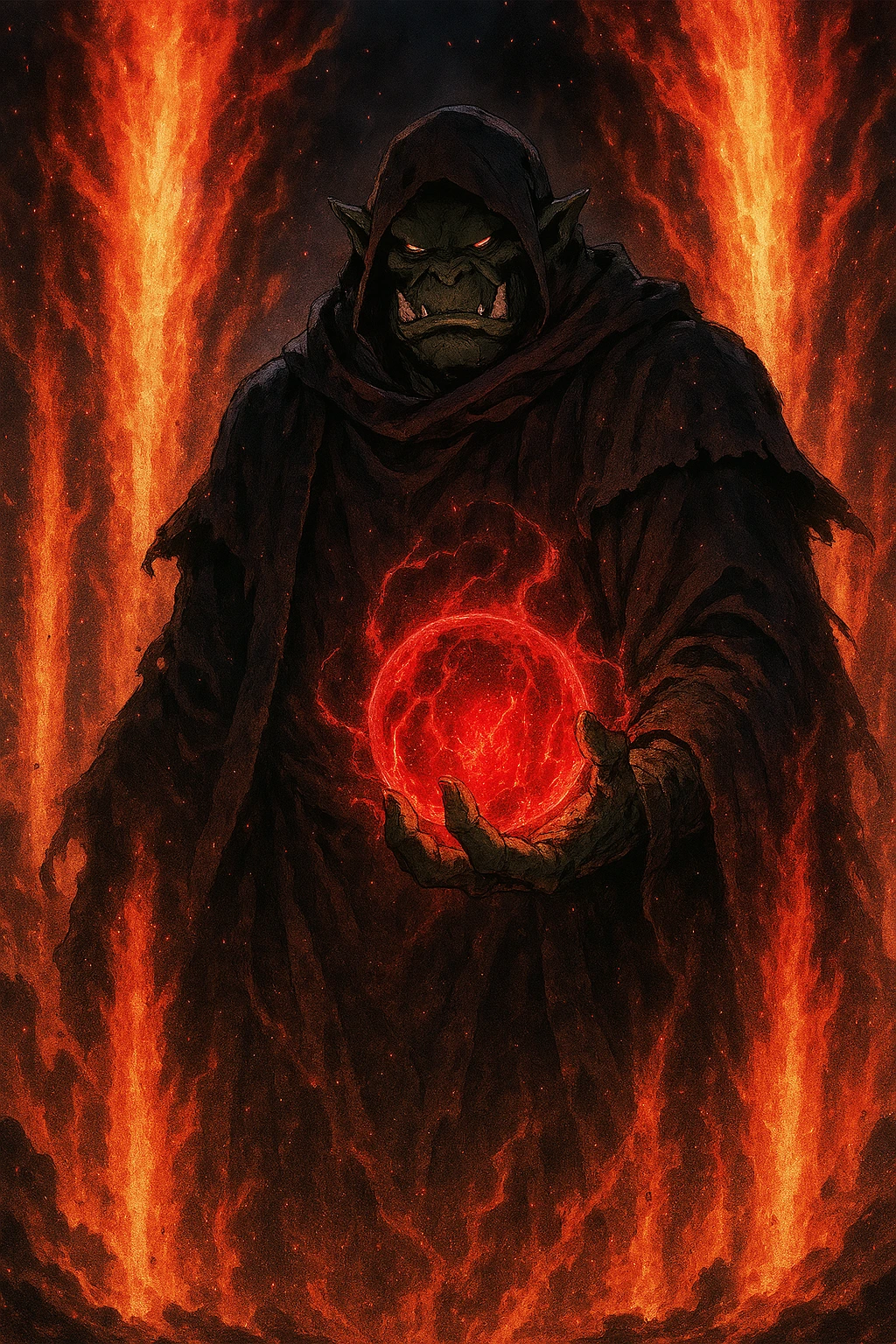
While the daggers garner the most attention, we cannot overlook the sheer tactical brilliance of the Orb of Avarice. This item proves that Jin-Woo isn’t just a berserker; he is a commander.
Not for Jin-Woo
Jin-Woo is a melee fighter. His stats are dumped into Strength, Agility, and Perception. His Intelligence stat (which governs Mana) is high, but he has no “Spells.” He relies on skills like Dominator’s Touch. Therefore, a mage orb is technically useless in his physical hands.
But Jin-Woo possesses the Shadow Army.
Tusk’s Upgrade
When Jin-Woo defeated the High Orc Shaman, Kargalgan, and turned him into the Shadow Soldier Tusk, he gained a heavy artillery unit. Tusk was already capable of S-Rank magic, specializing in gravity and flame magic. But when Jin-Woo handed him the Orb of Avarice, Tusk became a walking natural disaster.
- Item: Orb of Avarice
- Effect: Doubles the destructive power of magic.
Simple. Brutal. Effective. In a game of numbers, a 100% increase in magical potency is broken.
The Hymn of the Fire Dragon
The true power of this combination was revealed during the Crisis in Japan (the Giants Arc). The S-Rank Giants were regenerating too fast for normal hunters to kill. Choi Jong-In, Korea’s strongest mage (The Ultimate Soldier), was struggling to output enough damage to burn through their regeneration.
Enter Tusk. Wielding the Orb, Tusk cast the Hymn of the Fire Dragon. It wasn’t just a fireball; it was a localized nuclear event. A pillar of flame so intense it vaporized the Giants instantly, leaving no trace for them to regenerate from.
By equipping his subordinate with the Orb, Jin-Woo effectively created a “Pocket Mage” that was stronger than the strongest human mage in Korea. This allowed Jin-Woo to focus on the boss while Tusk handled crowd control and AoE (Area of Effect) devastation. It showcased the ultimate versatility of the Shadow Monarch class: You don’t need to be a mage if you own one.
6. The Armor: Why Jin-woo Doesn’t Wear It
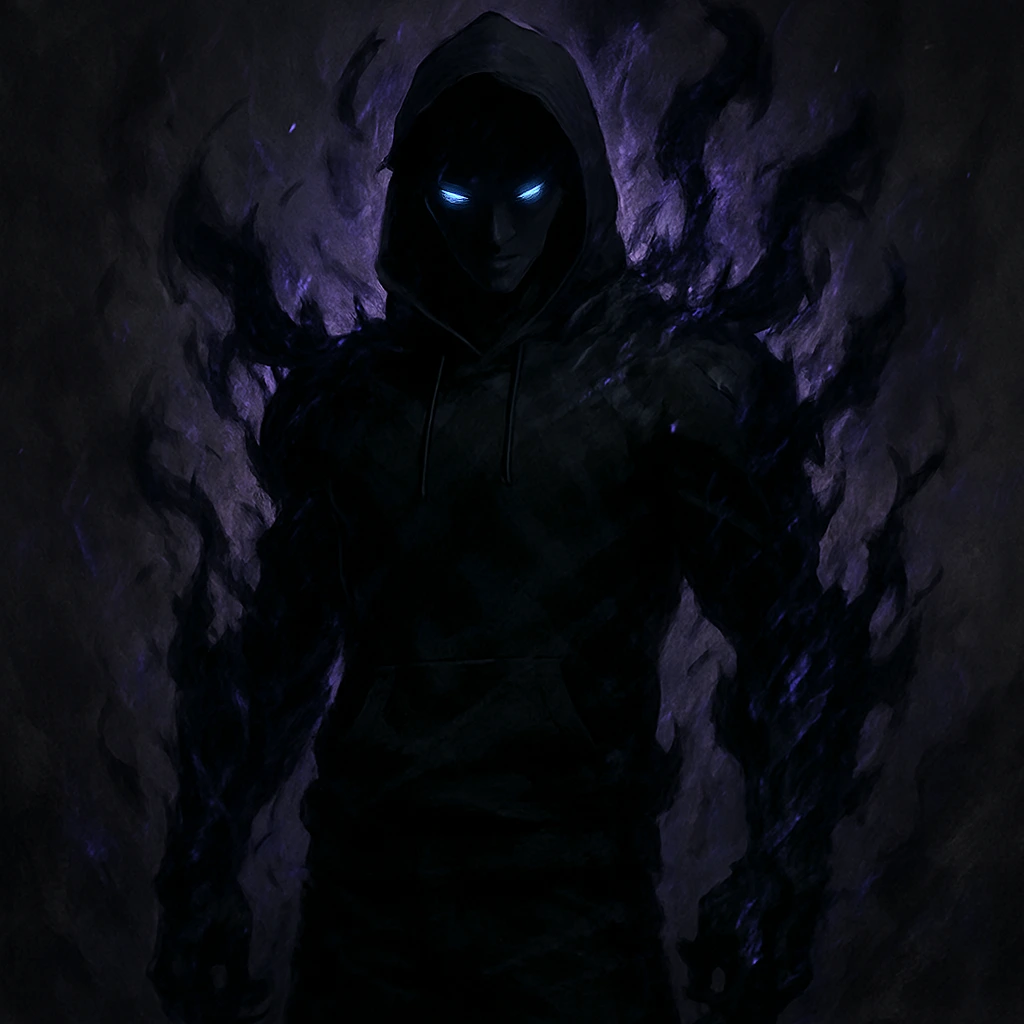
A common question among new fans is: “Why does everyone else wear armor, but Jin-Woo fights in a hoodie or a suit?”
The Visuals: The “Drip” Factor
On a meta-level, Manhwa aesthetics dictate that the strongest characters show their faces and bodies. Armor is for nameless grunts. But there is a lore reason. Jin-Woo’s character design emphasizes speed and casual dominance. Fighting in street clothes sends a message: “I don’t need protection from you.”
The Hidden High-Tier Gear
Jin-Woo does wear armor. He wears the High-Rank Demon Set (Earrings, Necklace, Ring) and later the Red Knight’s Helmet. However, the System allows him to toggle the visibility of these items. He gets the stats without the bulk.
- Demon Noble Set: +Strength, +Vitality.
- Monarch’s Domain: Set bonuses that boost his army.
He specifically keeps the Red Knight’s Helmet invisible because it clashes with his need for peripheral vision and sensory acuity.
Agility vs. Defense
Jin-Woo’s combat philosophy is predicated on evasion. “Don’t get hit.” Heavy plate mail restricts movement. For a hunter whose speed exceeds the sound barrier, air resistance is a legitimate problem. Bulky armor would create drag. Jin-Woo relies on his Sensory Stat to predict attacks and his Agility to dodge them. If he gets hit by a Monarch, physical steel won’t save him anyway. A breastplate won’t stop a hit that can crack a mountain.
The Shadow Armor
In the final arc, physical armor becomes completely obsolete. As the Shadow Monarch, Jin-Woo can drape himself in Black Darkness. He creates armor out of condensed mana and shadows. This armor is weightless, repairs itself instantly, and offers protection superior to any material on Earth. He essentially wears his own power. This is the ultimate defensive form—armor that is not made of matter, but of authority.
7. Conclusion: The Man Makes the Weapon
The tragedy of Kamish’s Wrath is that even the greatest weapon humanity ever forged was eventually not enough.
During the final battle against Antares, the Dragon Monarch, Jin-Woo pushed Kamish’s Wrath to its limit. He stabbed the Dragon King, aiming to pierce the scales. But Antares was the master of dragons. The daggers, made from his subject Kamish, shattered against his skin. The irony was palpable: A weapon made from a dragon could not kill the King of Dragons.
The greatest stats in the world (+1,500) meant nothing against the progenitor of the species.
The Final Form
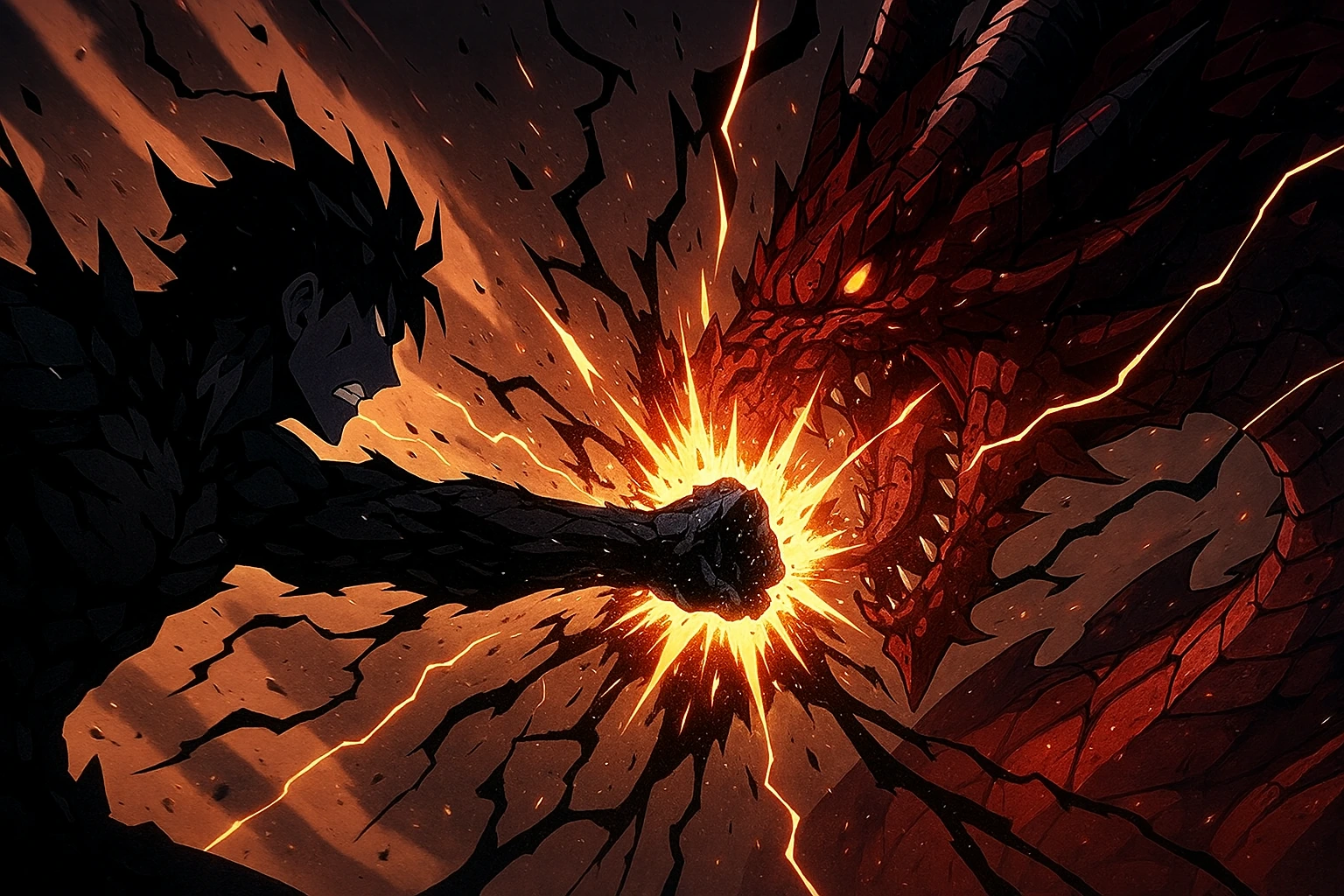
This moment was pivotal. It symbolized the shedding of the last crutch. When the daggers broke, Jin-Woo didn’t panic. He realized that he was the weapon.
He stopped relying on items. He fought Antares with his bare hands, his shadows, and a sword created from pure darkness (in the Light Novel) or simply his fists and shadow constructs. The “System” was gone. The “Store” was gone. The “Items” were gone.
The Verdict
The journey of Jin-Woo’s weapons is a mirror of his own evolution.
- E-Rank: Broken steel (Helplessness).
- C-Rank to A-Rank: Status Effects and niche daggers (Strategy and Survival).
- S-Rank: Demon King’s Daggers (Power).
- National Level: Kamish’s Wrath (Dominance).
- Monarch Level: Empty Hands (Transcendence).
Kamish’s Wrath was the only weapon that could kill a god, until Jin-Woo became a god himself. At that point, the teeth of the dragon were no longer needed. The Shadow Monarch had his own fangs.
Weapons in Solo Leveling are fascinating not because they are magical, but because they are temporary. They are bridges built to cross rivers of blood, discarded the moment the traveler learns to fly.