
1. Introduction: The Era of Chaos

“In the Golden Age, sorcerers sharpened their skills against him and failed.”
To truly grasp the foundational mythos of Jujutsu Kaisen, one must look back a millennium to the Heian Era (794–1185 AD). While mainstream historians characterize this period as the peak of Japanese court culture, poetry, and refined aesthetics, the annals of the Jujutsu world remember it as a “Golden Age” for an entirely different, more blood-soaked reason.
It was not “golden” because of peace or prosperity; it was golden because sorcery reached its most vicious, pure, and evolved state. It was an era where the boundary between the human world and the world of Curses was paper-thin, and the strength of a sorcerer’s soul was the only law that mattered.
The Heian Era was a time without modern sanitization. There were no “Windows” to report sightings, no systematic Jujutsu High to protect the masses, and no Tengen-sanctioned barriers covering the entirety of Japan to suppress the birth of Curses.
Instead, sorcery was a weapon used by clans to maintain brutal political power, and Curses were a daily reality that haunted the shadows of the Imperial Palace and the rural outskirts alike. In this environment of constant, existential conflict, jujutsu techniques were not just inherited; they were forged in the fires of life-and-death struggle.
This was the era that produced the most powerful sorcerers in history—men and women who viewed combat as a sacred ritual and survival as the ultimate proof of their technique. However, standing above the myriad of legendary sorcerers and the terrifying Vengeful Spirits was a single, calamitous figure whose presence defined the era: Ryomen Sukuna.
To talk about the Heian Era is to talk about the shadow he cast over it. It was a time of chaos where the “King of Curses” reigned supreme, not as a ruler, but as a natural disaster that the world was forced to endure, and eventually, to worship out of pure terror.
2. Ryomen Sukuna: The King of Curses
The Misconception: The Human Behind the Legend
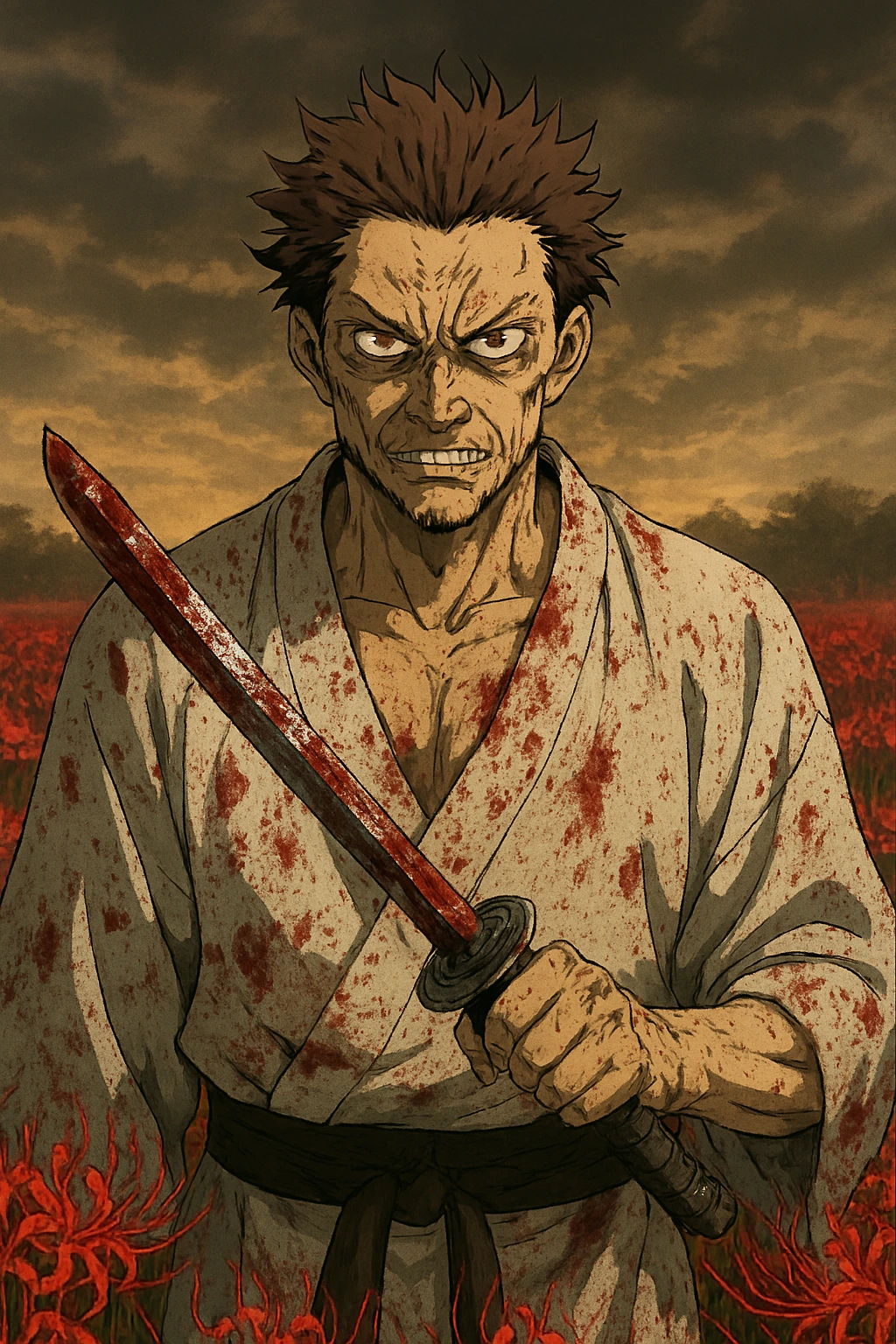
One of the most frequent misconceptions among modern jujutsu students is the belief that Ryomen Sukuna was always a Cursed Spirit. In reality, Sukuna was once a human sorcerer. He was a man who transcended the limits of humanity through sheer malice and an unparalleled understanding of the nature of the soul.
While historical records are fragmented and often shrouded in myth, we know that during the Heian Era, he was a “living calamity”—a man so far removed from human morality that he became the very definition of a Curse.
Upon his death, Sukuna did not simply vanish into the afterlife. Through a complex process involving Kenjaku and the creation of special-grade Cursed Objects, he divided his soul into twenty indestructible fingers, preserved in their own grave wax.
This transition from a human sorcerer to a Cursed Object allowed him to traverse time, but his identity remains rooted in his human origin. He is a “King of Curses” not because of his species, but because of his absolute, uncontested dominance over the art of sorcery.
The Twin Origin: The Beginning of the Hunger
Recent revelations in the Jujutsu lore have added a haunting layer to Sukuna’s origin. It is suggested that Sukuna was originally a twin. In the womb, he consumed his brother to prevent himself from starving—a literal act of prenatal cannibalism. This act set the stage for his philosophy of “eating” and “consumption.”
In the world of Jujutsu, twins are often seen as a single soul split into two bodies, which usually hampers their potential (as seen with Maki and Mai Zenin). By consuming his twin, Sukuna effectively unified that split potential into one terrifyingly complete being. This “original sin” of his existence granted him the vast Cursed Energy reserves and the unnatural physical form that would eventually terrorize the Heian world.
The True Form: The Ultimate Body for Sorcery

In the Heian Era, Sukuna possessed a physical form that defied the laws of nature—a form he eventually reclaimed during the modern Shinjuku Showdown. This “True Form” featured four arms and two faces, a design that was often mistaken by the fearful masses for a mutation or a demonic possession. However, from a jujutsu perspective, this body is the “perfect vessel” for a sorcerer.
The advantages of this four-armed anatomy cannot be overstated:
- Constant Hand Signs: Sukuna can maintain a hand sign (like the Enmaten sign for Malevolent Shrine) with two hands while keeping his other two hands free for physical combat or weapon usage. In a world where hand signs amplify technique output and stability, this is a permanent, passive buff that no other sorcerer can match.
- Continuous Chanting: His second mouth, located on his torso, allows him to chant incantations and perform ritualistic breathing without interruption. In jujutsu, “subtraction” is the act of omitting hand signs and chants to speed up a technique at the cost of power. Sukuna never has to subtract; he can provide the full ritualistic requirements for his techniques while actively engaging in high-speed combat, ensuring his output remains at 100% or higher at all times.
- Physical Dominance: The sheer reach and grappling potential of four arms make him an unbeatable combatant in close quarters. He can pin an opponent’s arms while simultaneously performing a point-blank Cleave to their chest.
The Arsenal: Breakdown of his Shrine (Mizushi)
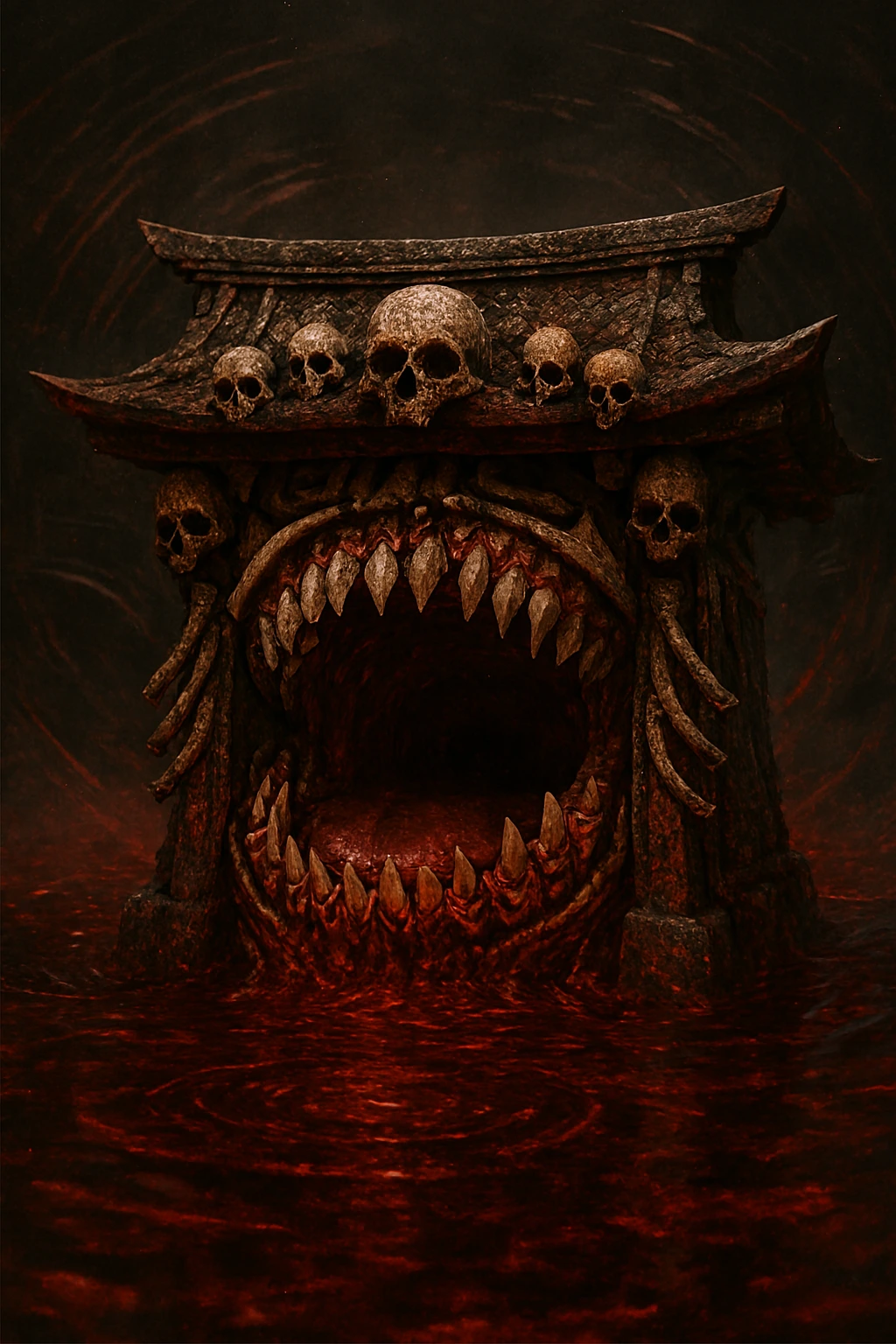
Sukuna’s Innate Technique, “Shrine” (Mizushi), is deceptively simple yet devastatingly efficient. Unlike complex techniques that involve space-time manipulation or convoluted rules, Sukuna’s primary powers are centered on the primordial concept of “cutting” and “preparing.”
- Dismantle (Kai): His default slashing attack. It is typically used for inanimate objects or to “butcher” the environment. It is a swift, invisible blade that severs anything in its path. In the modern era, he evolved this into the “World-Cutting Slash,” a technique that targets the very space and fabric of reality rather than the individual, allowing him to bypass even the most absolute defenses like Gojo’s Infinity.
- Cleave (Hachi): A slash that adjusts itself depending on the target’s toughness and Cursed Energy level to cut them down in one fell swoop. If Dismantle is a kitchen knife, Cleave is a customized guillotine that scales its power to ensure a successful kill. It requires physical contact or extremely close proximity, making it his finishing move.
- Domain Expansion: Malevolent Shrine: Unlike other sorcerers who create a barrier to trap their opponents, Sukuna’s Domain is “divine” because it has no barrier. By allowing an escape route (a Binding Vow), he vastly increases the effective radius of his Domain (up to 200 meters). Within this space, everything—living or non-living—is subjected to a relentless, never-ending barrage of Cleave and Dismantle until nothing but molecular dust remains. It is described as an artist painting on the air itself rather than on a canvas.
The “Open” (Fuga) Fire Arrow: The Black Box
One of the greatest mysteries of the Heian Era was Sukuna’s ability to use fire. During his fight with Jogo and later Mahoraga, Sukuna utilized a technique involving the command “Open” (or “Fuga”). This allowed him to manifest a bow and arrow made of intense, pressurized heat.
The theory suggests that Sukuna’s “Shrine” is not just about cutting, but relates to the concept of a “Kitchen” or a “Divine Larder.” In the Heian period, the Mizushi was the private kitchen of the Emperor. Slashing (Cleave/Dismantle) is the preparation of the meat, and Fire (Fuga) is the cooking process.
This “Black Box” ability hints that Sukuna’s understanding of Cursed Energy is so profound that he can access different “tools” within his innate technique that modern sorcerers haven’t even begun to categorize.
The Cursed Tools of the King: Kamutoke and Hiten
In his Heian prime, Sukuna did not just rely on his bare hands. He was often depicted wielding two legendary Cursed Tools:
- Kamutoke: A vajra-like dagger that could discharge powerful bolts of lightning. This tool allowed Sukuna to exert elemental pressure on his opponents without even using his innate technique, forcing them to defend against unpredictable electric strikes while he prepared his slashes.
- Hiten: A three-pronged spear or trident. While less is known about Hiten’s specific abilities, its presence suggests that Sukuna was a master of weaponry, using the spear’s reach to supplement his four-armed close-quarters combat.
The Philosophy: The Hedonism of a God
Sukuna does not care for the “weak vs. strong” dynamic that consumes characters like Gojo or Suguru Geto. His worldview is purely hedonistic and solipsistic. He famously states, “I eat when I want, kill when I want, and play when I want.”
He views other living beings as insects or, at best, ingredients for his amusement. To Sukuna, the only thing that matters is his own pleasure. He has no grand plan to rule the world; he simply exists as an apex predator.
This absolute lack of empathy or social responsibility is what makes him the “perfect” sorcerer. He is completely untethered from the world, allowing his Cursed Energy to flow without the “cages” of morality, duty, or love.
3. The Opposition: Who Fought Him?
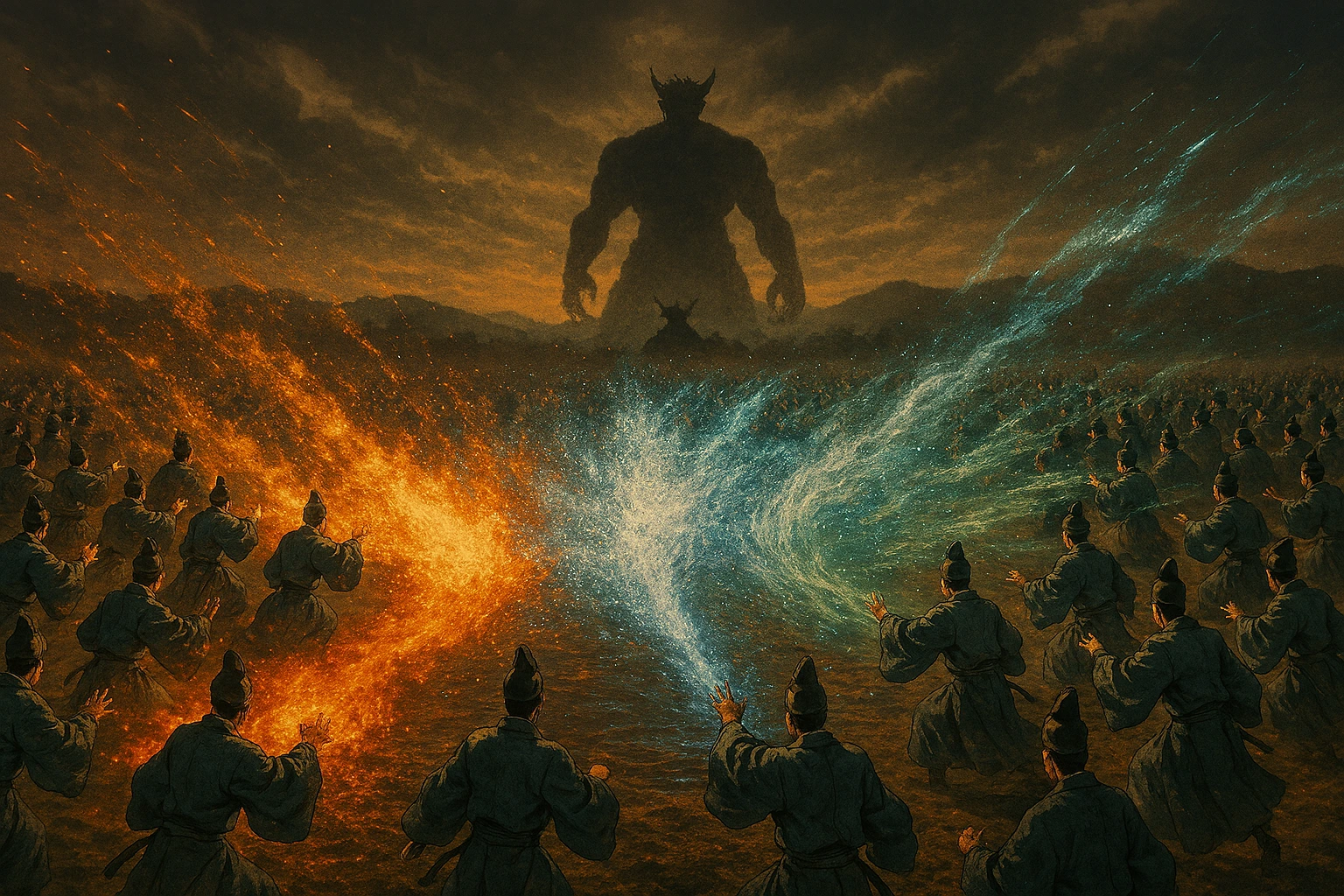
If Sukuna was a calamity, the sorcerers of the Heian Era were the first responders who tried—and failed—to contain him. The manga mentions that in the Golden Age, “every sorcerer sharpened their skills against him.” This wasn’t a series of one-on-one duels; it was a total war involving the entire infrastructure of Japanese sorcery.
The Abe and Sugawara Clans: The Imperial Shields
Historically, the Heian period was dominated by powerful clans like the Fujiwara, but in the world of Jujutsu Kaisen, the focus is on the Abe and Sugawara clans.
- The Sugawara Clan: This is the ancestral line of Satoru Gojo and Yuta Okkotsu. Michizane Sugawara (one of Japan’s Three Great Vengeful Spirits) lived during this time. The Sugawara clan represented the pinnacle of “refined” jujutsu, possessing the early iterations of the Limitless and the Six Eyes. Yet, even their legendary ancestors, despite their mastery over space and energy, could not suppress the King of Curses.
- The Abe Clan: Historically linked to Abe no Seimei, the most famous Onmyoji in Japanese history. These clans deployed their best tactical units to neutralize Sukuna, viewing him as a threat to the Imperial order and the spiritual stability of the nation. They were the “officials” of jujutsu, and their failure marked the end of the belief that sorcery could be governed by laws.
The Desiccated Squads: The Human Wave Tactics
To combat Sukuna, the Heian sorcery world formed elite military units. These were not just groups of students, but battle-hardened veterans specialized in coordinated, multi-layered attacks.
- The Sun, Moon, and Stars Squads: These were elite groups of sorcerers specialized in high-level coordinated strikes. They were the “special forces” of the Fujiwara clan.
- The Toh: An elite group of assassins and warriors (which included Takako Uro) who served the Northern Fujiwara family. They were tasked with high-level eliminations and political stabilization through force.
- The Five Empty Generals: Legendary warriors who led these squads. They were considered the strongest non-Sukuna fighters of the age.
Despite these massive mobilizations, Sukuna slaughtered them all. Records from the era state that he “annihilated the Sun, Moon, and Stars squads and forced the Five Empty Generals into a humiliating retreat.”
It was a slaughterhouse. Sukuna didn’t just win; he broke the spirit of the era’s military jujutsu, proving that numbers and strategy mean nothing against overwhelming individual transcendence.
The Result: An Unbeaten Legacy
The most terrifying fact about Sukuna’s history is that he was never actually defeated in battle during the Heian Era. There was no “Great Sealing” where a hero overcame him with the power of friendship or sacrifice. Instead, Sukuna eventually grew bored or perhaps realized that the era’s power level was declining.
Under the guidance of Kenjaku, Sukuna chose to turn himself into Cursed Objects (the fingers). He entered a state of “suspended animation,” effectively wagering his soul on a future era that might provide him with more entertainment. He bypassed death entirely, leaving the Heian Era behind not as a conquered foe, but as a predator moving to a new hunting ground.
4. Key Figures of the Era (Apart from Sukuna)
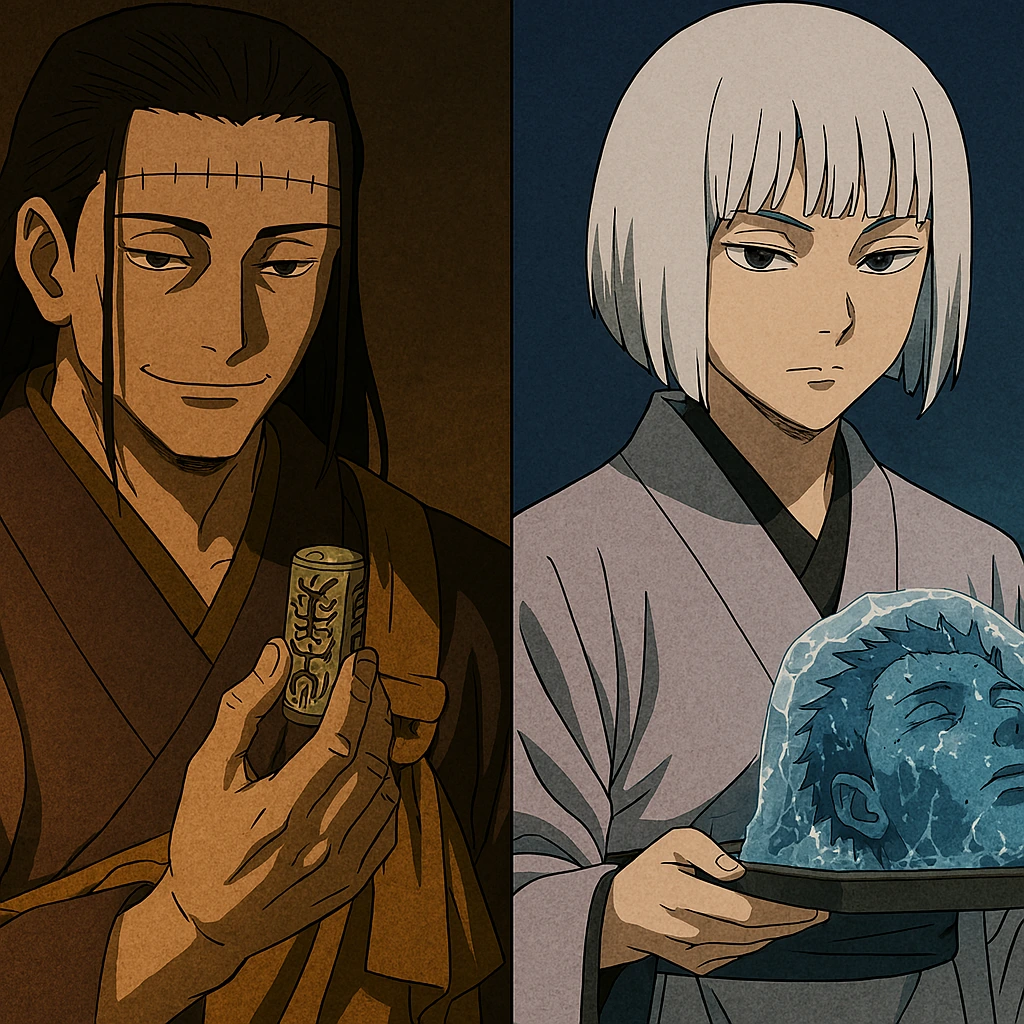
While Sukuna was the sun around which the era revolved, several other figures shaped the Heian landscape. These individuals were so powerful that they survived for a thousand years, either through reincarnation or body-hopping.
Kenjaku: The Mastermind and the Weaver
Kenjaku is the true architect of both the Golden Age and the modern Culling Game. A thousand years ago, he was already an ancient entity, moving from one host body to another (one of his hosts being a member of the Kamo clan, leading to the creation of the Cursed Womb: Death Paintings later on).
- His Role: Kenjaku acted as a “talent scout” and a facilitator. He recognized that the Heian Era was reaching its limit. He approached the strongest sorcerers of the time—those who were unsatisfied with their lives or seeking a “rematch” with destiny—and offered them a Binding Vow.
- The Contract: In exchange for turning them into Cursed Objects, these sorcerers (Uro, Kashimo, Ryu Ishigori, Yorozu) agreed to participate in a future game where they could once again experience the “spark” of battle. Kenjaku wasn’t looking for friends; he was looking for “variables” to induce an evolution in Cursed Energy.
- Relationship with Sukuna: Kenjaku and Sukuna have a business-like relationship of mutual benefit. Kenjaku provided the means for Sukuna’s immortality, likely because Sukuna is the “uncontrollable element” necessary to break the cycle of Fate (the connection between the Six Eyes, the Star Plasma Vessel, and Tengen).
Uraume: The Frozen Star and the Steward
The only person Sukuna has ever tolerated as a companion is Uraume. This isn’t because of sentimentality; Sukuna doesn’t “love” anyone in the traditional sense. He tolerates Uraume because they are uniquely useful.
- The Master Chef: Uraume possesses the “Ice Formation” technique, which is formidable in its own right, capable of freezing entire squads of Grade 1 sorcerers instantly. However, their true value to Sukuna lies in their culinary skills. Sukuna is a cannibal; he enjoys eating humans. Uraume is a master at preparing human flesh, keeping it fresh with ice, and seasoning it to Sukuna’s exact specifications.
- Deep Lore: In the Heian Era, Uraume was the only one allowed to stand by his side because they understood his hedonism perfectly. They don’t demand attention or validation; they simply facilitate his whims, acting as the bridge between his divine violence and his mundane pleasures.
Yorozu: The Obsession of Construction
Yorozu was a powerhouse of the Heian Era who possessed the “Construction” technique. Unlike Mai Zenin, whose low Cursed Energy limited the technique, Yorozu had massive reserves that allowed her to create complex liquid metal armor and weapons.
- The One-Sided Love: Yorozu was obsessively in love with Sukuna. To her, Sukuna was the only being worth her attention. She believed that “love” was something that only the strongest could understand, and she sought to be the one to “kill Sukuna with love.”
- The Gift: Before her death (and subsequent reincarnation), she created a special Cursed Tool for Sukuna—Kamutoke—using her final life force. This highlights the “warrior culture” of the Heian Era, where even love was expressed through the creation of weapons and the desire for mutual destruction.
The Angel (Hana Kurusu): The Purist and the Jailer
Known only as “Angel,” this sorcerer from the Heian Era represents the “moral” and “religious” opposition to Sukuna.
- “The Fallen”: Angel refers to Sukuna as “The Fallen” (Gofuku-no-Tomoshibi), suggesting a mythological or religious fallout between them. Angel views Sukuna not just as a criminal, but as a blasphemy against the natural order of jujutsu.
- The Technique: Angel’s technique involves “Jacob’s Ladder,” a power that nullifies all other Cursed Techniques and Cursed Objects. In an era where sorcerers relied heavily on their Innate Techniques, Angel was the ultimate counter. This rivalry highlights the ideological split of the Heian Era: those who used Jujutsu for “Heavenly” or “Righteous” purposes versus those like Sukuna who used it for “Hellish” or “Selfish” ones.
5. The Architecture of Power: Binding Vows and Simple Domains
The Heian Era was the period where the “science” of Jujutsu was codified. It wasn’t just about raw power; it was about the clever manipulation of the rules of the universe.
The Culture of Binding Vows
In the modern era, Binding Vows are often used sparingly. In the Heian Era, they were the bread and butter of every sorcerer.
- Vows with Oneself: Sorcerers would constantly impose restrictions on their techniques to boost their output. For example, “Showing One’s Cards” (explaining how a technique works) was a standard tactic used to increase the effectiveness of the next attack.
- Vows with Others: Kenjaku’s ability to contract hundreds of sorcerers across centuries is the ultimate testament to the power of Binding Vows. These were inescapable contracts that even death could not fully break.
The Origin of “New Shadow Style” and Simple Domain
Because Sukuna and other monsters of the age possessed devastating Domain Expansions, the “weak” had to find a way to survive. This led to the creation of the Simple Domain by Sadatsuna Ashiya during the Heian Era.
- The “Domain for the Weak”: Simple Domain was a way to neutralize the “sure-hit” factor of a full Domain Expansion without needing to manifest one’s own innate domain. It was a defensive art form that allowed lower-level sorcerers to stand a chance against the elites.
- The Hiden (Secret) Nature: Originally, these techniques were kept secret within specific schools to maintain a tactical advantage, showing that even the “defense against the strong” was used as a political tool.
6. Heian Era vs. Modern Era: The Power Gap
When we compare the “modern” sorcerers of Jujutsu High to the “ancient” sorcerers of the Heian Era, a clear power gap emerges. This gap isn’t just about raw energy; it’s about the mindset and the utility of violence.
The Grade 1 Discrepancy
A “Grade 1” sorcerer in the modern era, like Nanami or Mei Mei, is considered the gold standard of professional jujutsu. However, when these sorcerers are compared to Heian-era counterparts (or those reincarnated from that time, like Reggie Star or Hajime Kashimo), the modern ones often seem lacking in “bite.”
- Reggie Star and Kashimo: These were sorcerers who lived in a world of constant combat. Kashimo, specifically, represents the Heian mindset perfectly. He didn’t care about “saving people” or “exorcising curses.” He lived for the “heat” of battle. His entire life was a pursuit of a fight with Sukuna, and he viewed his own life as a mere currency to be spent on that one moment.
- The Efficiency of Death: Ancient techniques were often more lethal and less “restricted” by modern morals. Reincarnated sorcerers like Ryu Ishigori have the highest Cursed Energy discharge in history, a feat rarely seen in the modern era outside of Satoru Gojo. The modern era focuses on “non-lethal” or “restraining” techniques; the Heian era focused exclusively on “annihilation.”
Mindset: Combat as Life vs. Combat as Job
Modern sorcerers treat Jujutsu as a “job” or a “duty.” They seek to protect the non-sorcerer population. They have hobbies, relationships, and a desire for a peaceful life. Ancient sorcerers, conversely, were “warriors of the soul.” To them, a day without a life-threatening battle was a wasted day.
This thirst for conflict meant their growth was explosive. They mastered Domain Expansions and Reverse Cursed Technique not because they were geniuses, but because they would have died within minutes without them. The “survival of the fittest” was not a theory; it was the daily routine.
The Revival: The Culling Game
The Culling Game is Kenjaku’s attempt to forcibly bring the Heian Era into the 21st century. By awakening ancient sorcerers in modern bodies, he is creating a “refining pot.”
He wants to see if the “viciousness” and “purity” of the Golden Age can overwrite the “softness” and “stagnation” of the modern era, leading to a new peak of Cursed Energy that can merge with Tengen and evolve humanity.
7. The Geography of the Golden Age: Kyoto as the Epicenter
During the Heian Era, Kyoto (then known as Heian-kyo) was not just the political capital; it was the spiritual heart of the world.
- The Feng Shui of Jujutsu: The city was built according to strict onmyōdō principles to keep evil spirits out. However, this high concentration of spiritual energy also made it a magnet for powerful sorcerers and curses.
- The Imperial Palace: Many battles occurred within the very halls of power. The juxtaposition of the refined nobility performing tea ceremonies while sorcerers were being butchered in the gardens outside is the perfect image of the Heian Era. It was a world of masks—where the mask of culture barely hid the face of the monster.
8. Conclusion: The King Returns
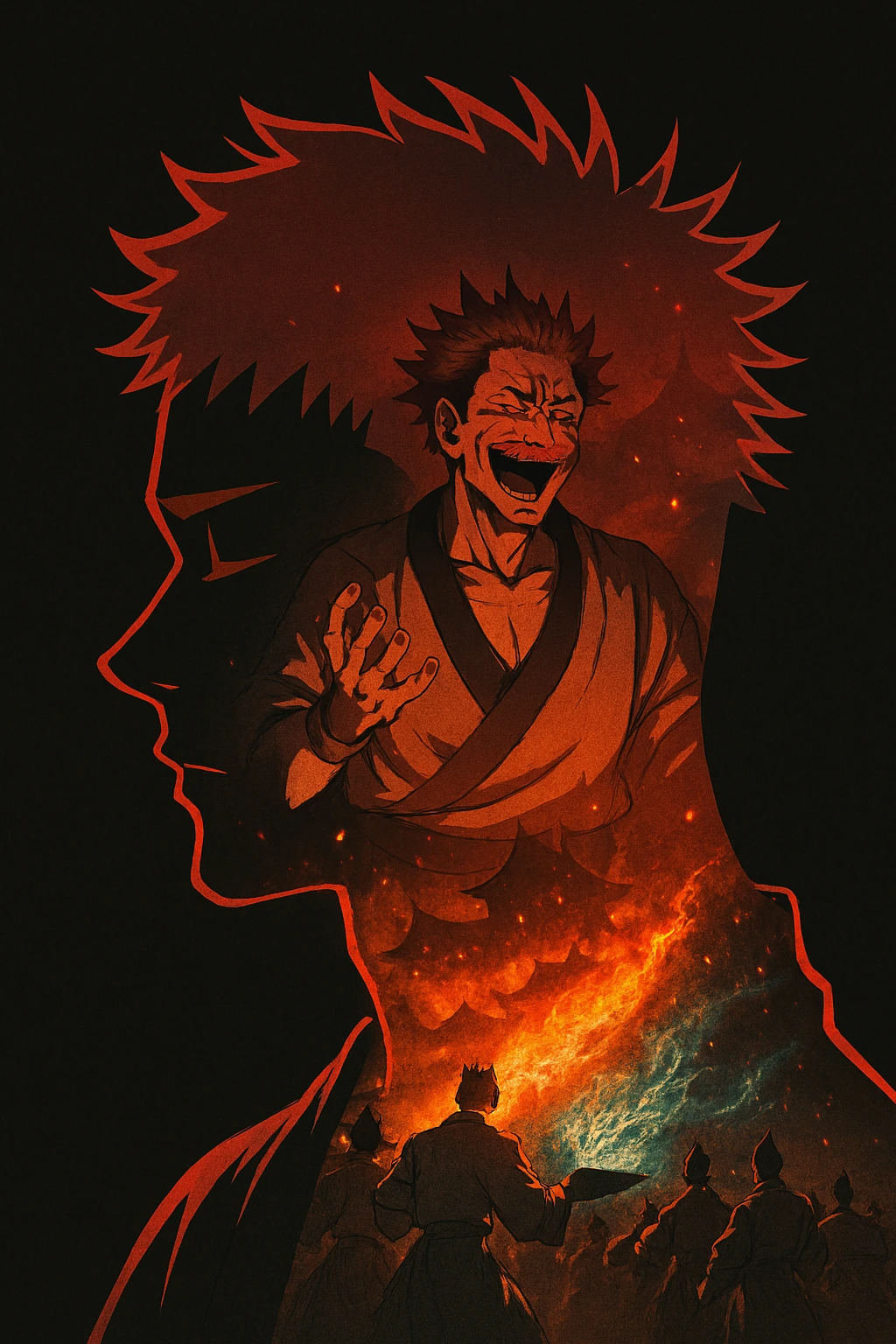
The Heian Era was a time of beautiful, terrifying brutality. It was the “Golden Age” of Jujutsu because it was the only time in history where humanity’s potential for sorcery was fully unleashed, unburdened by the structures of modern society or the guilt of modern morality. Ryomen Sukuna stands as the ultimate symbol of that era—a being of pure, selfish power who viewed the world as his personal banquet and the sky as his canopy.
As the seals on his fingers break and his True Form returns to the modern world, we realize that the Golden Age never truly ended. It was merely a dormant volcano, waiting for the right moment to erupt once more.
Sukuna’s presence in the current timeline is a reminder that Jujutsu, at its core, is not about balance, protection, or “doing the right thing”—it is about the “overwhelming intensity” of one’s own soul and the willingness to consume everything else to reach the peak.
Connecting to Yuji Itadori: The Ultimate Vessel
Why is Yuji Itadori’s existence such a miracle? In the Heian Era, there was no one who could contain Sukuna. He was a force of nature. Yet, a modern teenager was able to act as a “cage” for this ancient calamity. This suggests that while the Heian Era was the peak of sorcery, the modern era might be the peak of vessels.
Yuji is the bridge between the refined brutality of the past and the potential for a different kind of strength in the future—a strength that comes from containment and control rather than explosive release.
The King of Curses has returned, and with him, the rules of the Heian Era have once again become the rules of the world. “I eat when I want, kill when I want.” The struggle of the modern sorcerers is not just a fight for survival; it is a fight to prove that the cycle of the “Golden Age” can finally be broken, and that a new age of humanity can begin, free from the shadows of the four-armed god.
Call to Action: The King of Curses is back, and the world is in ruins. But what about the system that was supposed to prevent this? In our next article, we dive into the shadows of the Modern Jujutsu Headquarters—the corrupt, bureaucratic system that tried to control the chaos and ended up feeding it. Stay tuned to Aniviewer for the full breakdown of the “Higher-Ups” and their eventual downfall.