
1. The Apex Survivor: Feral Evolution on Mt. Omoe
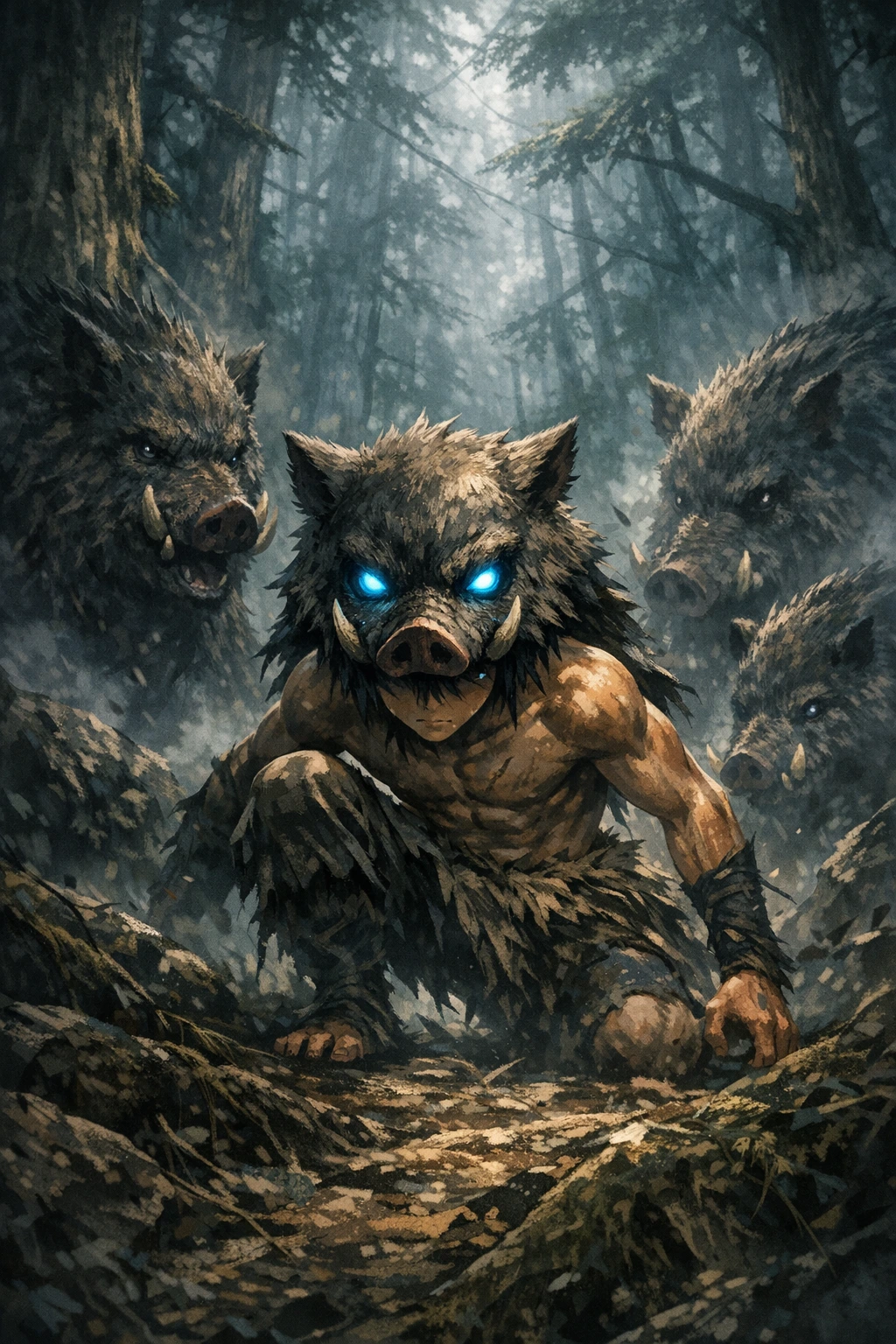
In the strictly regimented and heavily traditional world of the Demon Slayer Corps, where swordsmanship is passed down through generations of bloodlines, grueling apprenticeships, and meticulous cultivation, Inosuke Hashibira stands as a terrifying biological miracle.
To truly understand the sheer magnitude of Inosuke’s existence, one must first recognize that he is the only known Slayer in the entire Taisho era to successfully invent a highly functional, uniquely lethal Breathing Style completely from scratch. He achieved this monumental feat without a single day of formal cultivation, without a master to safely guide his flow of oxygen to prevent lung rupture, and most astonishingly, without any foundational grasp of human language, written history, or societal norms.
Inosuke is not merely a swordsman who learned to mimic an animal in combat; he is a fully realized feral organism that perfectly and violently adapted to the unforgiving, lethal ecosystem of a mountainous wilderness. His creation, Beast Breathing, is not a martial art in the traditional sense. Rather, it is the devastating weaponization of animalistic unpredictability, hyper-sensory evolution, and the raw, unfiltered survival instinct required to rule the wild.
To comprehend the foundation of this feral warrior, we must delve into the profound psychological and physical implications of the “Boar Matrix”—the developmental period during which an infant human was raised exclusively by wild boars on the harsh, predator-dense terrain of Mt. Omoe. Human neurology is heavily dictated by neuroplasticity and the mirror neuron system, which typically wire a child’s developing brain to mimic human speech, register emotional empathy, and master bipedal social mechanics.
Inosuke’s brain, however, developed in a complete and total vacuum of human social conditioning. Bereft of human interaction to mirror, his neurons locked onto the apex predators of his immediate environment. He did not learn to speak; he learned the complex, instinctual language of the forest: the subtle rustle of leaves indicating prey, the barometric scent of sudden seasonal shifts, and the brute-force, physical dominance hierarchy required to lead a boar pack. He mapped the aggressive charge, the territorial defense, and the sheer kinetic violence of survival directly onto his central nervous system.
This complete absence of human socialization allowed his brain to fundamentally bypass the mental limitations and psychosomatic pain responses that typically restrict human fighters. The average human brain enforces strict neurological governors—involuntary fail-safes designed to prevent individuals from exerting 100% of their muscular force to avoid tearing ligaments, snapping tendons, or breaking bones. Because Inosuke was never taught the concepts of physical restraint, societal caution, or inherent human frailty, his neurological wiring simply does not register these governors.
When a normal swordsman feels the agonizing, paralyzing burn of lactic acid buildup or the sharp, blinding warning of a severely strained tendon, their subconscious forces them to pull back and defend. When Inosuke feels that exact same pain, his brain processes it merely as objective environmental data—a metric of friction and resistance—allowing him to consciously push his muscular and skeletal limits well into the realm of the physically impossible. He is entirely unburdened by the psychological fear of mortal injury or long-term consequence, allowing him to fight with the absolute, suicidal ferocity of a cornered wild animal who knows only that the entity in front of it must die for it to live.
2. Anatomical Anomalies: The Physics of Joint Dislocation
While Inosuke’s psychology is fundamentally feral and untethered from human fear, his physiology is a terrifying sequence of anatomical anomalies that outright defy standard medical science. The most glaring, visually disturbing, and tactically advantageous of these anomalies is his total mastery of voluntary subluxation. This is the core medical breakdown of his terrifying flexibility.
In standard human anatomy, the skeletal joints—particularly the ball-and-socket glenohumeral joint of the shoulder, the costovertebral joints anchoring the ribs to the spine, and the hinge humeroulnar joint of the elbow—are tightly secured by a complex, rigid network of ligaments, tendons, and fibrous joint capsules specifically designed to prevent dislocation.
A dislocated joint in a normal human results in immediate, agonizing incapacitation, massive localized swelling, potentially permanent nerve damage, and severe structural weakening of the limb.
Inosuke, however, has evolved the unnatural biomechanical ability to consciously and rapidly dislocate his own skeletal joints at will, overriding the body’s natural stretch reflex. By precisely manipulating the surrounding musculature—selectively relaxing certain anchoring muscle groups to the point of flaccidity while violently contracting opposing muscles—he can audibly pop the heads of his bones completely out of their articular sockets.
This allows him to perform terrifying, unpredictable combat maneuvers, such as extending his striking range by several crucial inches mid-swing to decapitate a retreating demon who believed they were safely out of reach, or collapsing his own rigid skeletal framework entirely.
By dislocating his shoulders and ribs simultaneously, he can squeeze his entirely muscular body through microscopic, maze-like gaps that should be mathematically and physically impossible for a human thorax to traverse. He essentially turns his rigid skeleton from a fixed support structure into a fluid, highly malleable weapon of momentum.
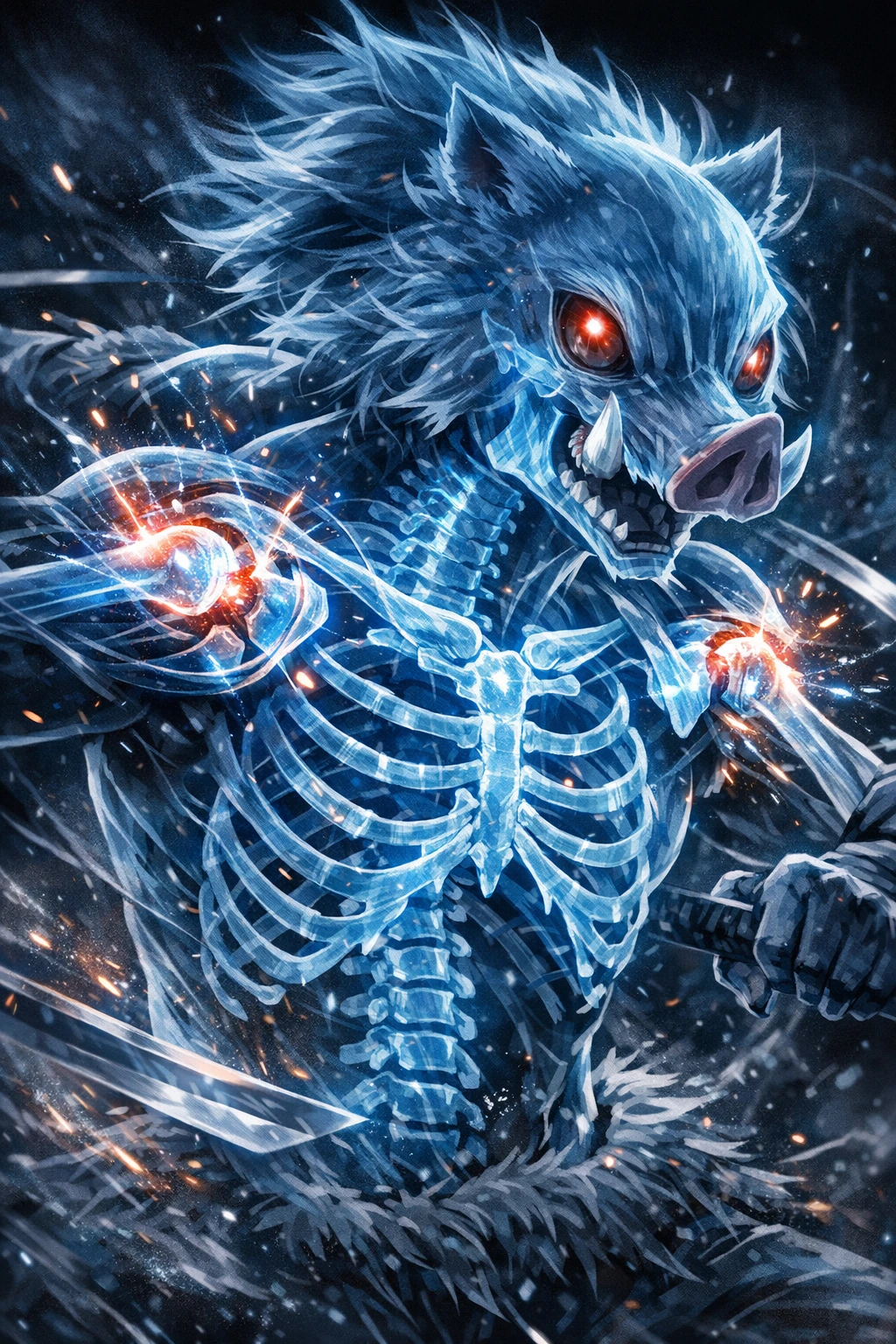
The glaring medical question is: how does he not permanently cripple himself within seconds of combat? The answer lies in the microscopic, mutated structure of his connective tissues. Medically analyzing his anatomy reveals a state of extreme, almost inhuman hypermobility, backed by hyper-elastic tendons and heavily mutated fascia. Fascia is the connective tissue that encases muscles, blood vessels, and organs; in Inosuke, this tissue acts like dense, industrial-grade rubber bands tightly wound around a steel core.
When he dislocates a shoulder to drastically increase the radius and angular velocity of his sword swing, he is essentially stretching these biological tension cables to their absolute maximum threshold. The moment the physical pressure of the kinetic strike is released, the extreme elastic recoil of his fascia and ligaments violently snaps his bones back into the correct anatomical sockets with a sickening crunch.
This instantly and forcefully stabilizes the joint, preparing it for the next explosive movement in a fraction of a second. His musculature acts as a living, self-repairing shock-absorption and suspension system, willfully enduring localized structural failure and completely reversing it before irreversible damage can occur.
Yet, voluntary joint subluxation pales in comparison to the horrifying, medically baffling survival mechanic he utilized during the Entertainment District arc against Upper Moon 6, Gyutaro. Struck by a poison-laced sickle directly to the chest in a blow meant to skewer his vitals, Inosuke should have died instantly from a catastrophically punctured heart. Instead, he revealed his ability to consciously shift his internal organs.
This is a biological impossibility for a standard human. Organs are securely and immovably anchored within the thoracic and abdominal cavities by thick ligaments, the diaphragm, and the mesentery. To avoid Gyutaro’s fatal, piercing blow, Inosuke essentially had to consciously manipulate his diaphragm and deep intercostal muscles with such profound, localized, and agonizing precision that he temporarily relocated his mediastinum—the central compartment of the thoracic cavity housing the heart and major blood vessels.
By forcefully contracting the muscles on one extreme side of his ribcage while drastically expanding the other, and utilizing his easily dislocatable ribs to temporarily alter the internal vacuum pressure of his chest cavity, he physically shoved his own beating heart out of the sickle’s deadly trajectory. This unparalleled feat demonstrates that Inosuke’s somatic nervous system (which controls voluntary movement) has somehow bridged the gap into the autonomic nervous system (which controls involuntary organ function), granting him manual, conscious control over the exact physiological placement of his vital organs to evade death.
3. Beast Breathing: The Erratics of Feral Kinetics
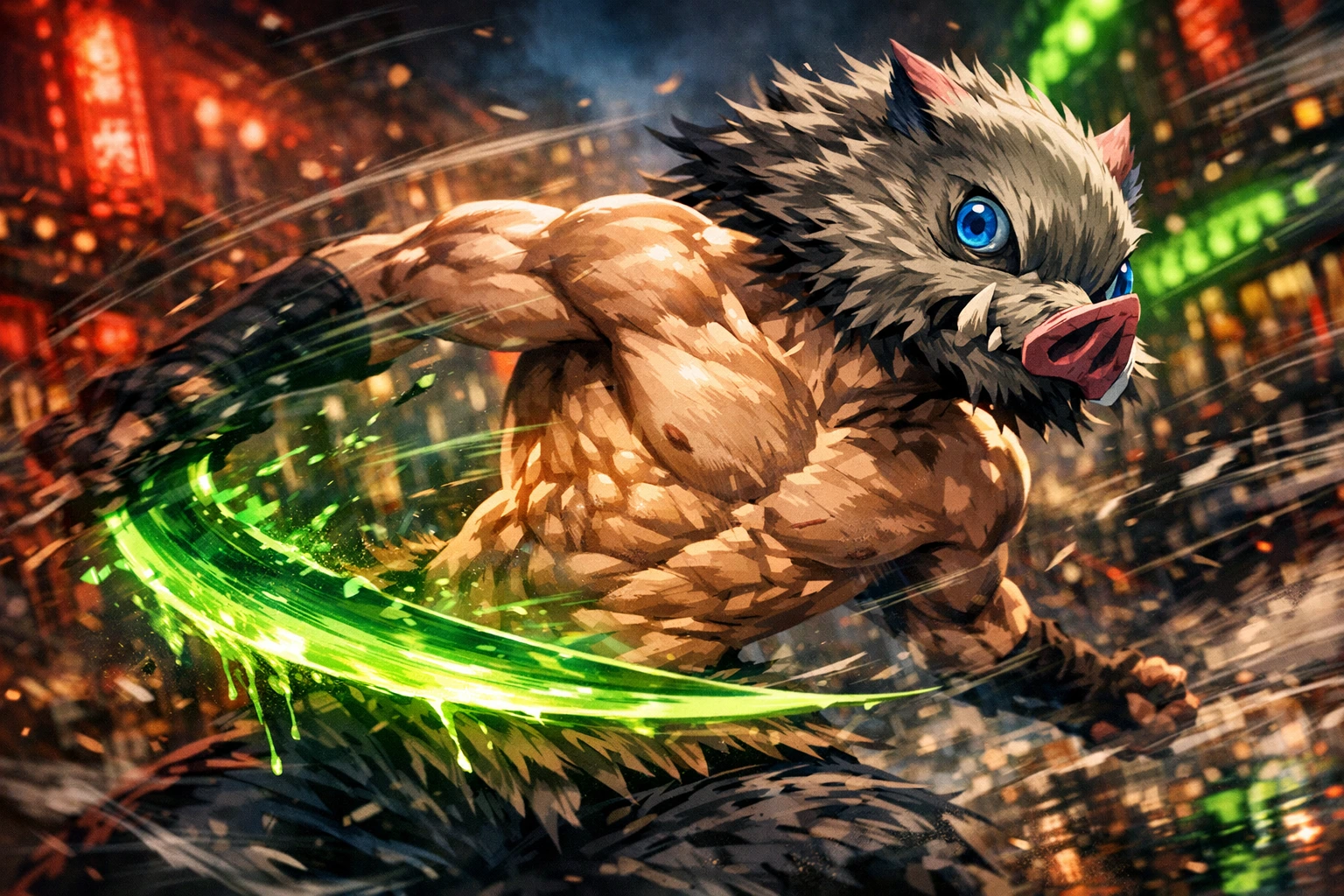
Because Inosuke’s anatomy, neurology, and psychology are so radically divergent from standard humanity, it is only logical that his self-taught martial art follows suit, reflecting the chaotic environment of its inception. Even though he invented it in total isolation on the mountainside, learning purely through the brutal trial-and-error of hunting, Beast Breathing is technically classified by the Demon Slayer Corps as a crude, hyper-aggressive, and highly irregular derivative of Wind Breathing.
It relies on the exact same fundamental principles: extreme barometric pressure manipulation, massive diaphragmatic oxygen intake to supercharge the bloodstream, and explosive, full-body muscular kinetic energy. However, where Wind Breathing channels this immense pressure into focused, cyclical gales and elegant, highly structured sword forms passed down by masters, Beast Breathing completely and utterly discards standard kata, forms, and traditional defensive stances.
It is the absolute erratics of feral kinetics—a chaotic, unreadable, and seemingly formless combat algorithm that relies purely on predatory instinct, overwhelming momentum, and extreme bodily distortion to shatter an opponent’s guard.
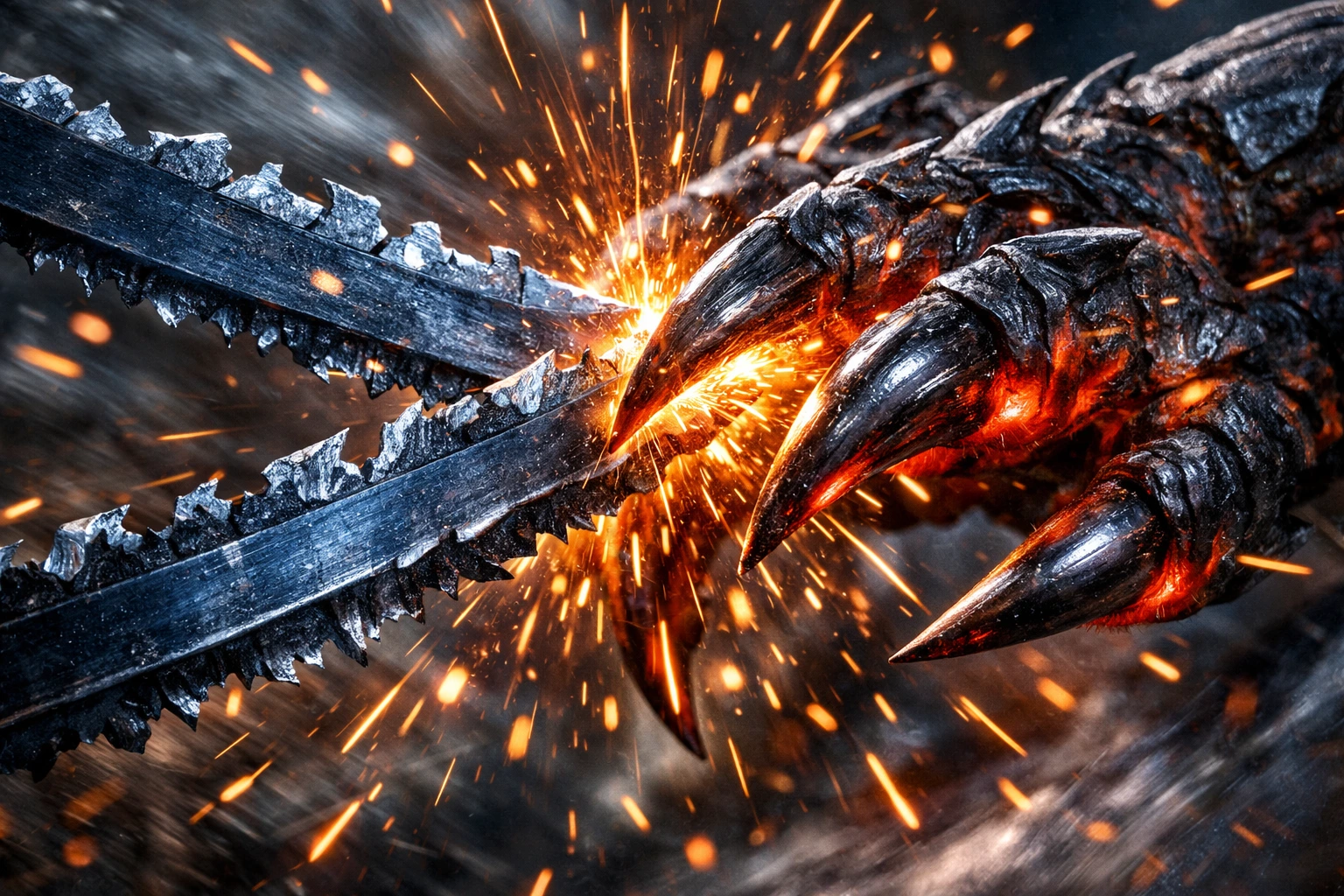
A critical, terrifying component of this chaotic kinetic energy is his absolute reliance on dual-wielding serration. Inosuke actively refuses to use standard, cleanly forged Nichirin katanas. Instead, upon receiving new blades, he intentionally uses heavy rocks to smash massive, jagged chips and deep indentations directly into the cutting edges of his twin swords.
From a traditional swordsmanship and metallurgical perspective, this is absolute heresy; a chipped blade loses its structural integrity, its aerodynamic flow, and its ability to slice cleanly through targets. However, from the perspective of feral, predatory physics, it is a stroke of lethal, torturous genius. Standard katanas act as razor blades, designed to create a microscopic cellular separation that cleanly and painlessly decapitates. Against a high-ranking demon with hyper-regeneration, a clean cut is easily and instantly healed because the cellular tissue remains largely intact, merely separated for a microsecond.
Inosuke’s intentionally broken blades, however, act as brutal biological saws. The physics of his strikes change from the elegance of slicing to the sheer trauma of ripping and tearing. When his serrated, jagged swords impact demonic flesh, they do not cleanly part the cells; they violently hook onto the dense muscle fibers, catch and grind onto the underlying bone matter, and physically tear massive chunks of tissue away with tremendous torque.
The jagged edges create massive, irregular surface areas of catastrophic trauma. This process completely shreds the demon’s regenerative cellular tissue at a microscopic level. Because the resulting wound is brutally ragged and the flesh is pulverized into a pulp rather than cleanly sliced, the demon’s highly evolved cellular regeneration has to work exponentially harder to reconstruct the missing mass.
This drastically slows down their healing factor, expends their demonic energy, and causes excruciating, lingering pain that shatters their focus and disrupts their own Blood Demon Arts.
Furthermore, Beast Breathing completely revolutionizes spatial combat through Inosuke’s masterful utilization of a low-center gravity. Standard Demon Slayers, rigorously trained in human dojos with flat wooden floors, fight upright. They are strictly bipedal swordsmen who rely on structured footwork, pivoting, and maintaining a vertical center of mass.
This inherently creates highly exploitable blind spots—specifically the areas immediately below the knees and directly behind the back. Inosuke, raised among charging boars, fights like a true quadruped. He frequently drops onto all fours, keeping his center of gravity dangerously close, mere inches from the floor. By adopting this animalistic, compressed posture, he mathematically eliminates the lower-body blind spots that plague bipedal fighters.
His physical silhouette becomes incredibly small and erratic, making him exceptionally difficult for an enemy to visually track or physically target. From this ground-level, tightly compressed “spring” state, he can launch massive kinetic strikes from impossible, upward-facing angles. He uses his hands and feet interchangeably to grip the uneven earth, allowing him to rapidly change vectors mid-air, ricochet off the surrounding terrain like a projectile, and attack a demon’s unprotected lower extremities with the explosive, upward momentum of an ambush predator lunging violently from the underbrush.
4. Tactile Radar: The Neurology of Spatial Awareness
While Beast Breathing is universally recognized as a violently offensive and overwhelmingly aggressive tool, its true, hidden power lies in its unparalleled defensive and tracking capabilities, entirely dictated by Inosuke’s highly evolved somatosensory system.
The absolute pinnacle of this neurological adaptation is showcased in his 7th Form: Spatial Awareness. This is not a kinetic sword strike or an attack, but rather a hyper-evolved state of total sensory immersion. It utilizes advanced proprioception (the brain’s innate ability to sense the body’s location, joint movements, and muscular actions in three-dimensional space) and extreme mechanoreception (the skin’s ability to detect minuscule changes in physical pressure, tension, and vibration).
When Inosuke initiates this form, he halts his chaotic movements, plunges his twin swords deep into the earth to ground himself, forcefully drops his center of gravity, regulates his usually loud breathing to a near-silent hum, and fundamentally turns his entire body into a hyper-sensitive, biological radar array.
How exactly does a feral boy from the mountains detect the precise presence and location of demons lurking miles away in dense, visually obstructive forests? The answer lies in the highly intentional exposure of his epidermal layer. Inosuke strips to the waist not out of simple aesthetic preference, brute machismo, or a rebellious disregard for Corps uniform regulations, but out of strict, calculated neurological necessity.
The human skin is packed with millions of microscopic sensory receptors, specifically Pacinian corpuscles (which respond to deep pressure and high-frequency vibration) and Merkel cells (which detect light touch and sustained pressure). By removing the restrictive, heavy, insulating layer of the standard Demon Slayer uniform, Inosuke exposes the maximum possible surface area of his highly conditioned skin to the open environment. His bare torso essentially acts as a massive, hyper-sensitive biological radar dish, constantly scanning the atmosphere.
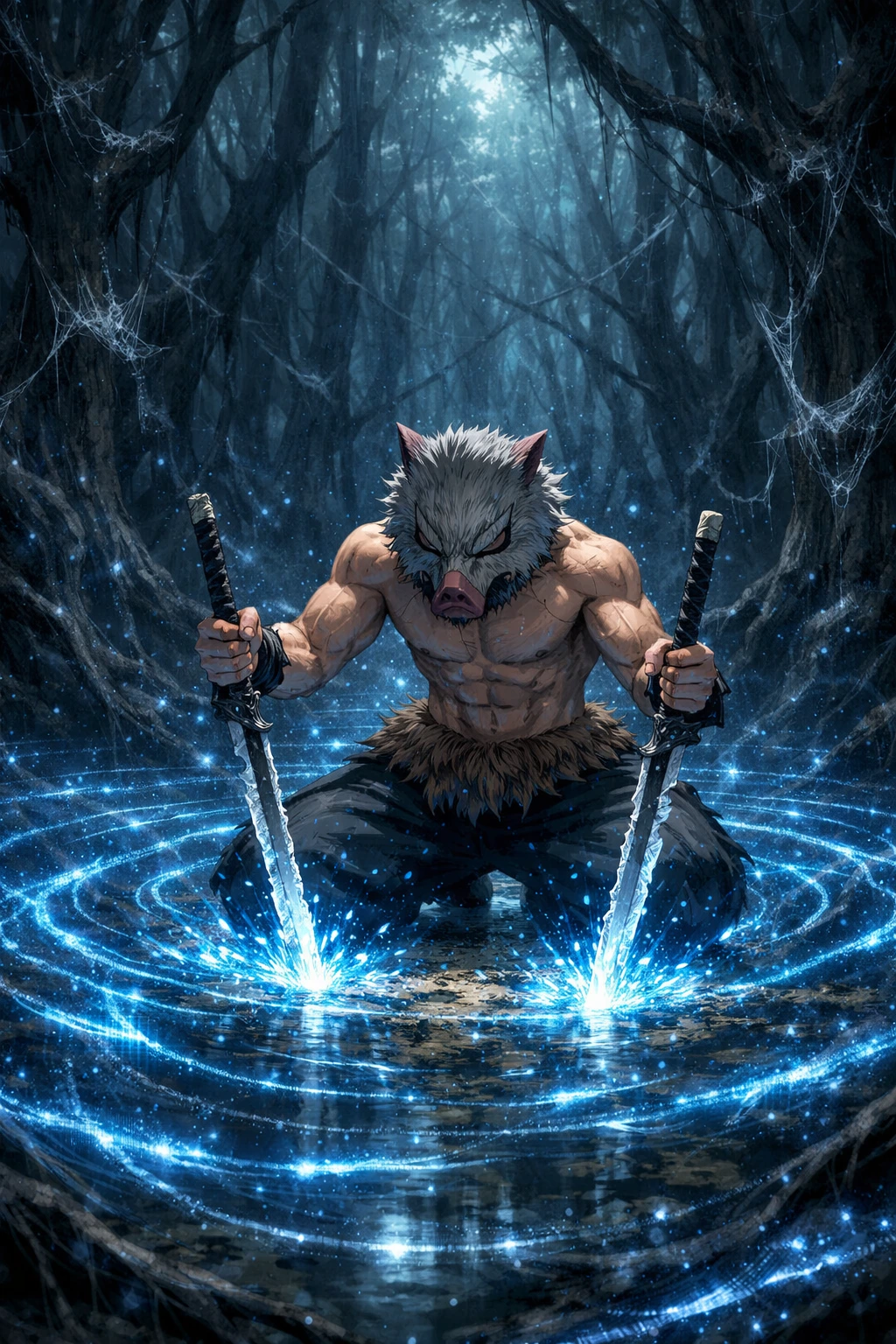
In this deeply focused state, he completely shuts off his reliance on sight (which can be easily tricked by Blood Demon Arts or darkness) and hearing (which can be overwhelmed by ambient noise). Instead, he reads the undeniable truth of atmospheric vibration.
Every single physical movement in the world displaces air. A demon running stealthily through the forest miles away, the distant swing of a hidden weapon, or even the subtle, panicked exhalation of a hiding enemy creates microscopic shifts in air pressure, minute temperature gradients, and localized atmospheric vibrations.
Inosuke’s exposed skin picks up these infinitesimal kinetic ripples rolling through the air, sending massive, instantaneous streams of geographical data directly to his deeply evolved somatosensory cortex. Visual illusions are useless against him, because an illusion cannot displace physical air.
The most profound, chilling case study of this tactile radar in action occurred during the Natagumo Mountain autopsy. The physical environment of Natagumo Mountain was an absolute sensory nightmare designed to disorient intruders.
It was a dark, incredibly dense, chaotic forest filled with swirling, localized wind currents, the constant rustling of millions of broad leaves, the ambient noise of panicked wildlife, and the erratic, horrific movements of fellow Slayers being manipulated like morbid puppets. A normal, highly trained tracker relying on sight or sound would be completely paralyzed and overwhelmed by the sheer volume of chaotic environmental “noise.” Yet, Inosuke was able to plunge his blades into the dirt, close his eyes, and isolate a single, specific, artificial frequency.
He actively and mathematically filtered out the chaotic, natural wind currents of the forest by inherently recognizing their organic, ambient rhythm. Amidst that deafening sensory noise, he felt for the unnatural, geometric vibrations of a predator.
He successfully pinpointed the exact GPS coordinates of the Mother Spider Demon purely by feeling the kinetic ripples of her microscopic, nearly invisible spider threads cutting cleanly through the air and vibrating against the atmospheric pressure. His neurology successfully processed the minute tension of strings being pulled miles away, flawlessly translating invisible air displacement into a precise, three-dimensional topological map within his mind.
5. Feral Toxicology: The Honey Badger Immunity
Beyond his skeletal malleability, erratic kinetics, and supernatural sensory perception, Inosuke’s internal biology possesses a terrifying defensive mechanism that routinely baffles and frustrates the brightest medical minds in the Corps: his feral toxicology.
Throughout his brutal battles, Inosuke is frequently subjected to concentrated chemical attacks, toxins, and venoms that would instantly terminate a standard human’s life. The most glaring and horrifying example of this is his direct exposure to Gyutaro’s deadly Blood Demon Art in the Entertainment District.
Gyutaro’s venom is a highly concentrated, rapidly spreading necrotic neurotoxin specifically designed to immediately break down cellular walls, coagulate the blood into a sludge, and instantly melt a standard human’s central nervous system, leading to rapid, total paralysis followed by an agonizing death.
Normal Hashira, warriors possessing the absolute absolute peak of human physical conditioning and stamina, were shown to be mere minutes away from irreversible death upon even minor exposure. Inosuke, however, took a massive, direct dose of this highly lethal venom straight to his internal cavity and simply continued to violently fight through the carnage.
How does he survive chemical certainty? The medical answer lies in a biological phenomenon that can only be accurately described as hyper-aggressive antibodies, operating on a ruthless biological framework structurally akin to the African honey badger.
Because Inosuke grew up entirely in a harsh, deeply unsanitized wilderness—routinely consuming raw, parasite-riddled meat, drinking unfiltered, bacteria-rich water, and ingesting poisonous flora—his body never experienced the sterile, coddled safety of human civilization.
Consequently, his immune system is perpetually locked in a permanent state of hyper-immunological overdrive, constantly prepared for total biological warfare. His white blood cells, macrophages, and T-cells operate with an aggressive, predatory efficiency that borders on self-destruction. The exact moment Gyutaro’s demonic neurotoxin aggressively entered his bloodstream, Inosuke’s immune system did not react with systemic shock or organ failure; it reacted with overwhelming, violent biological force.
His antibodies instantly swarmed the massive influx of foreign chemical agents, aggressively isolating the necrotic proteins and systematically destroying them with extreme localized fevers before they could successfully latch onto his nervous system receptors. Furthermore, his liver and kidneys function at a terrifyingly hyper-metabolic rate, filtering out and expelling lethal, complex toxins with the brutal efficiency of industrial chemical scrubbers.
However, this incredible, life-saving biological defense mechanism comes with a severe and highly dangerous pharmaceutical blindspot, leading to the tragic, agonizing irony of his immunity. During his extensive recovery periods in the sterile infirmaries of the Butterfly Mansion, this feral toxicology rapidly transforms from a superhuman asset into a massive medical liability, resulting in the deep, exhausting medical frustration of the Insect Hashira, Shinobu Kocho.
The high-grade pharmaceutical medicines, complex wisteria-based antidotes, and powerful, soothing painkillers administered by the highly trained medics are scientifically synthesized, highly concentrated chemical compounds. When injected intravenously into Inosuke’s highly volatile bloodstream, his hyper-aggressive, uneducated immune system simply cannot mathematically differentiate between a lethal, flesh-melting demonic neurotoxin and a meticulously crafted, life-saving medical antidote.
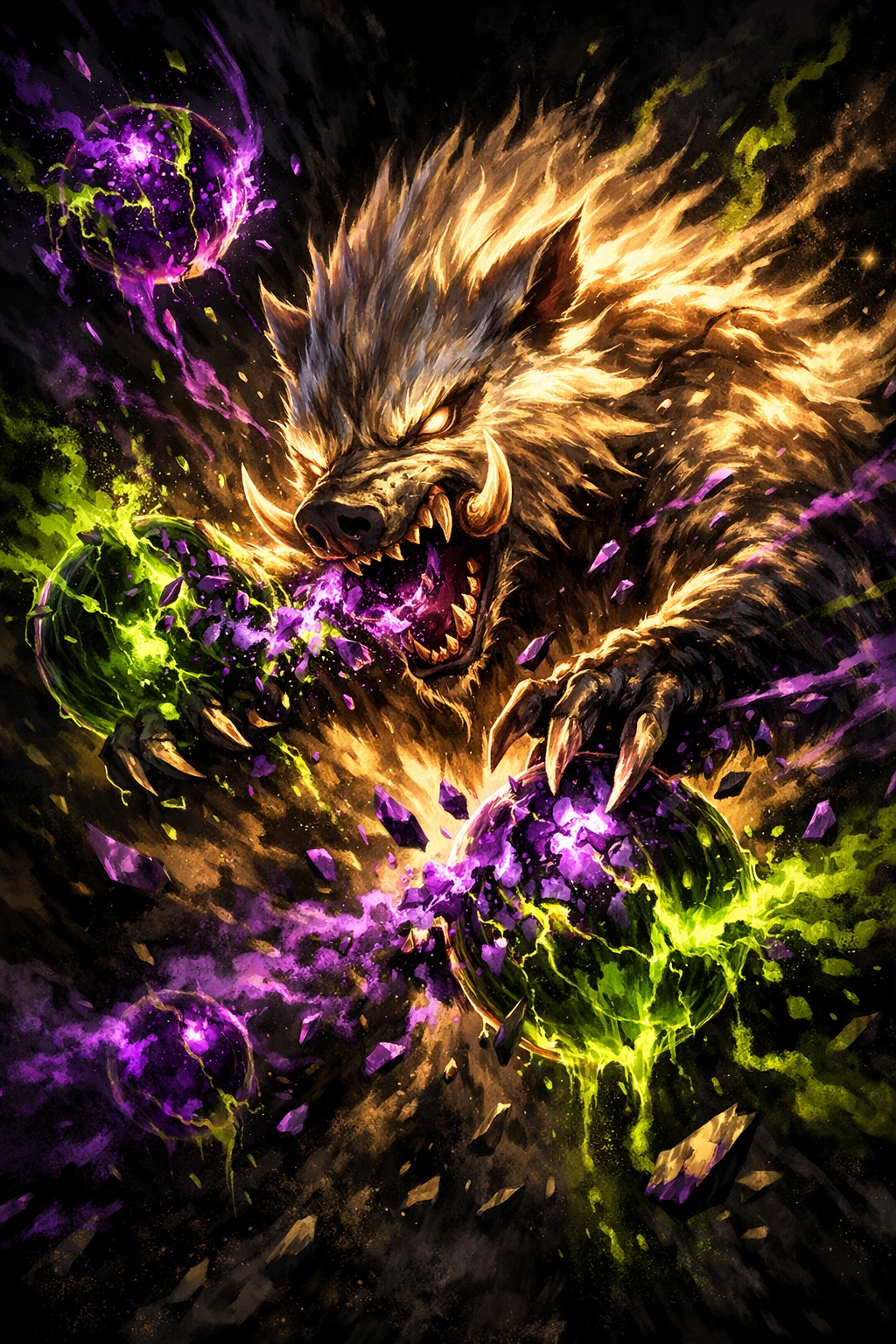
To Inosuke’s honey badger-like internal biology, any foreign substance introduced to the body is immediately classified as a hostile, invasive threat that must be eradicated with extreme prejudice. Therefore, his body viciously attacks, isolates, and completely destroys the very chemical medicines meant to heal him and ease his suffering.
Opiates and painkillers are immediately neutralized and broken down before they can ever successfully bind to his pain receptors; complex wisteria antidotes are ruthlessly dismantled into inert, useless proteins before they can circulate and cleanse his blood of lingering demon cells. This hyper-immune response leaves the brilliant Butterfly Mansion medical staff entirely helpless to assist him.
They cannot artificially numb his excruciating pain, nor can they chemically accelerate his body’s mending process. His greatest biological defense against the horrors of the demon world cruelly forces him to endure the absolute maximum threshold of raw, unfiltered physical agony during his recovery, surviving crushed bones and torn flesh purely on the stubborn, agonizing, and purely organic regenerative grit of his feral constitution.
6. Conclusion: The Boar that Became a Pillar
The true mastery and ultimate tragedy of Inosuke Hashibira is not solely found in his disjointed anatomy, his hyper-immune system, or his chaotic swordsmanship; his legacy is ultimately defined by his profound and beautiful emotional evolution.
He began his journey as a solitary, intensely violent predator—a feral creature of pure, unadulterated id whose only driving motivation was aggressively asserting his territorial dominance, constantly testing his physical strength against larger foes, and violently crushing absolutely anything that stood in his way.
In his early days, he viewed other human beings not as peers, friends, or allies, but strictly through the lens of the forest: as either weak prey to be ignored, strong rivals to be dominated, or physical obstacles to be destroyed. Yet, as the sweeping, overarching narrative of the Demon Slayer Corps progressed, culminating in the horrific, apocalyptic bloodshed of the Infinity Castle arc, the wild boar slowly, painfully learned how to be human.
Through immense loss and shared trauma, he transitioned from a lone, selfish beast fighting only for his own pride into a synchronized, deeply loyal warrior who fully understood the deeply human concepts of self-sacrifice, tactical empathy, and the vital necessity of strategic cooperation. He learned the hardest lesson of all: that true, lasting strength was not simply about surviving the unforgiving wilderness alone, but about sacrificing oneself to protect the fragile, beautiful pack standing courageously beside him.
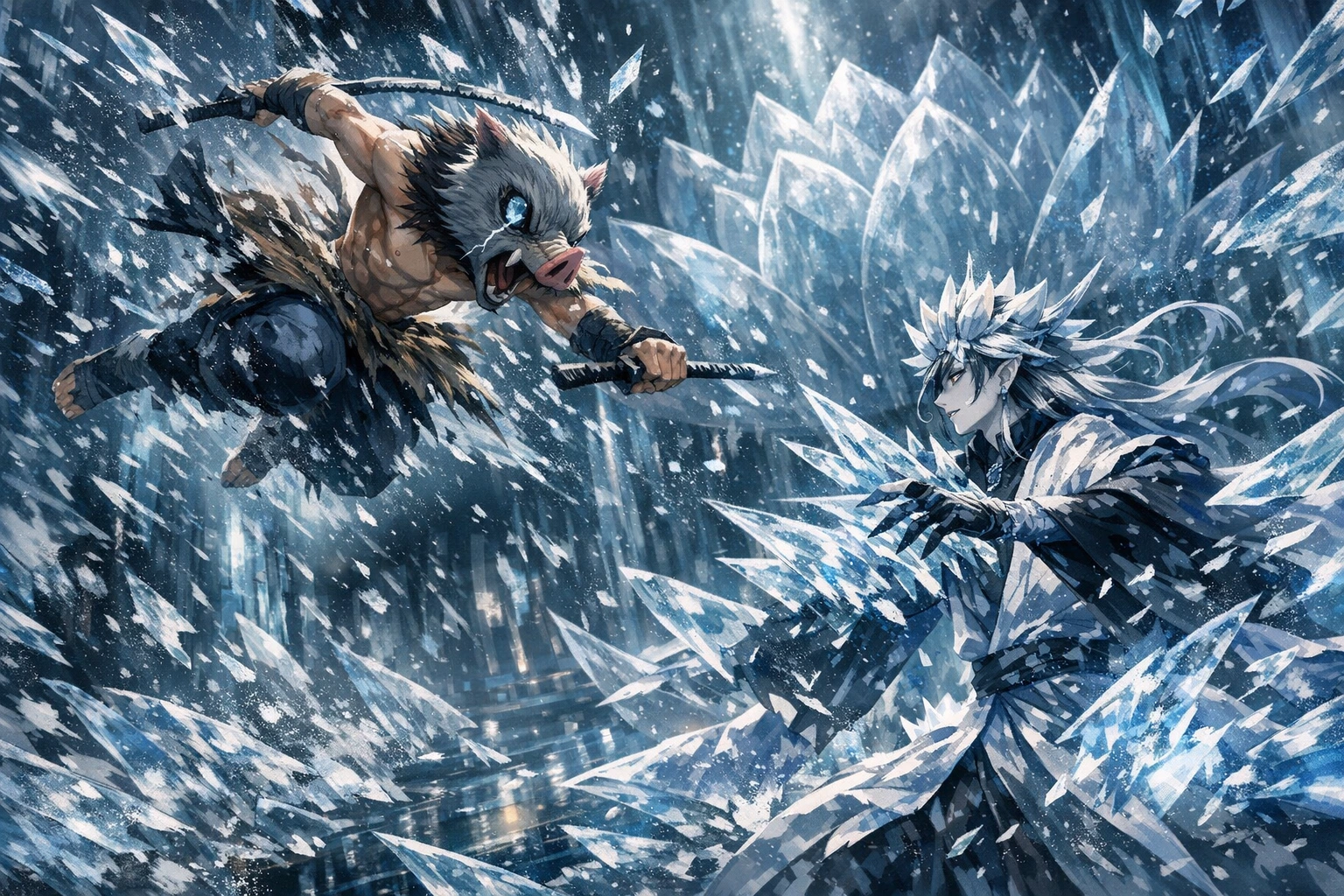
This brilliant thematic arc reaches its absolute, emotionally shattering zenith during his vengeance-fueled, bloody battle against Upper Moon 2, Douma. The narrative and philosophical weight of this confrontation is staggering in its poetry.
Douma is a creature of absolute, chilling apathy—a sociopathic, perfectly emotionless monster masquerading as an enlightened god, who mindlessly consumes human life without a shred of malice, anger, or joy, feeling only a hollow, eternal hunger. It is profoundly, beautifully poetic that Douma, the ultimate, terrifying representation of false, detached, and unfeeling divinity, is ultimately undone and emotionally challenged by a feral boy who was raised in the mud and dirt by beasts.
Inosuke, the child who was cast away by society and abandoned to the violent wild, becomes the ultimate avatar of raw, unbridled, passionately human emotional fury. He fights not just for survival, but to avenge Kotoha, the desperate, loving biological mother he never knew but fiercely mourned. The wild beast who could not initially understand the concept of human tears was ultimately the one who violently, passionately carved justice and consequence out of the most unfeeling, sociopathic demon in existence.
In the final expert verdict, looking back at the history of the Slayers, Inosuke Hashibira must be forever recognized as the Demon Slayer Corps’ ultimate, unsolvable biological wild card. The ancient progenitor of demons, Muzan Kibutsuji, was a creature of vast hyper-intelligence, possessing millennia of accumulated combat data and strategic analysis.
Muzan could easily analyze the lung capacity of the Hashira, he could mathematically calculate the geometric, flowing angles of Water Breathing, and he could predict the explosive, fiery trajectories of the Rengoku lineage. However, Muzan’s vast cellular memory and perfect predictive algorithms mathematically could not comprehend or compute Inosuke.
You cannot predict the next move of a fighter who willingly dislocates his own spine to dodge a fatal strike. You cannot calculate the aerodynamic trajectory of a jagged sword swing that entirely defies the skeletal limits of the human shoulder socket. You cannot successfully poison a hostile bloodstream that actively, violently hunts toxins for sport. By abandoning the safe, predictable evolutionary path of civilized humanity and fully embracing the chaotic, joint-popping physics of a feral boar, Inosuke Hashibira became the one terrifying variable the demons could never truly understand, and thus, the one monster they could never truly defeat.