
Introduction: The Limitless Horizon
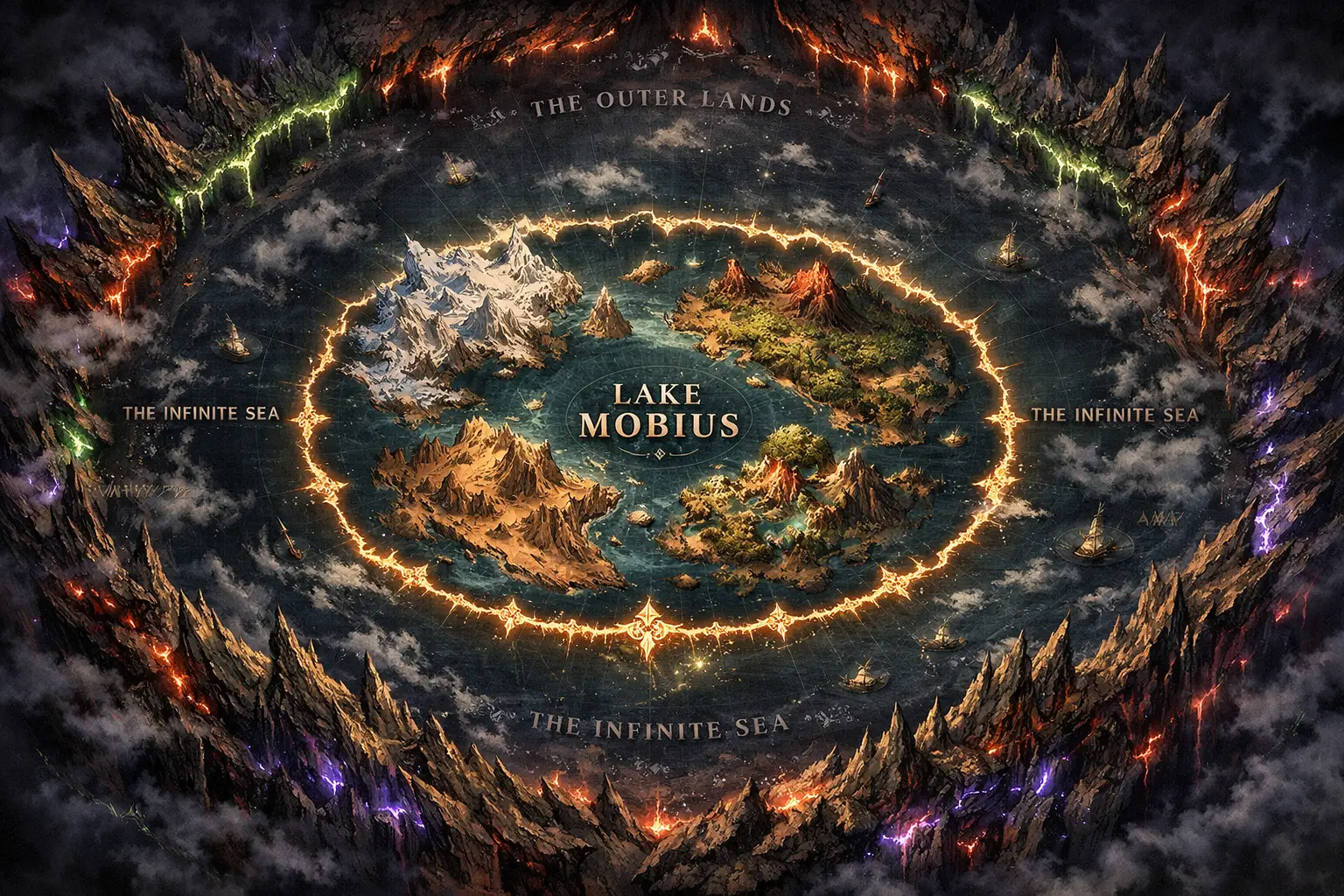
To understand the universe of Hunter x Hunter is to eventually confront a terrifying, paradigm-shifting reality: the world as humanity knows it is nothing more than a fragile illusion of safety.
For generations, the inhabitants of the known world believed their continents, oceans, and nations constituted the entirety of the planet. They mapped their lands, fought their wars, and established their geopolitical hierarchies under the assumption that they were the masters of their domain.
However, the revelation of the Dark Continent shatters this anthropocentric worldview entirely. The entire known world is, in fact, merely a small archipelago of islands situated in the center of a colossal body of water known as Lake Mobius. Everything beyond the shores of this lake—an expanse so vast and incomprehensible that it defies human logic—is the true world: the Dark Continent.
The geographical separation between Lake Mobius and the outside world is not merely physical; it represents the boundary between civilization and absolute, untamed primordial chaos. The known world is a carefully curated terrarium, shielded from the true horrors of the universe. To step beyond the waters of Lake Mobius is to step off the edge of human comprehension.
The flora, fauna, and sheer environmental hostility of the Dark Continent exist on a scale that renders even the most elite human Hunters completely insignificant. It is a place where humanity is not the apex predator, nor even a respected adversary, but merely bottom-tier prey.
Because of the incomprehensible danger this vast landscape presents, the V5—the governing coalition of the known world’s five most powerful nations (Begeross, Saherta, Ockuo, Minbo, and Kukan’yu)—established an absolute, unbreakable directive.
Over two hundred years ago, they drafted a strict international treaty known as the Treaty of Inviolability, officially prohibiting any unauthorized travel to the Dark Continent. This was not a treaty born of political greed or resource hoarding, but of sheer, unadulterated terror. Every time humanity attempted to pierce the veil and explore the outside world, they brought back apocalyptic disasters that threatened the very survival of the human race.
The Dark Continent is officially labeled as “forbidden territory,” a designation that carries a heavy psychological weight over the Hunter Association. For true Hunters—individuals defined by their insatiable curiosity, their drive to explore the unknown, and their willingness to risk everything for discovery—the existence of a forbidden continent is the ultimate paradox.
It is the greatest treasure trove of knowledge and resources in existence, yet it is locked behind a door that promises almost certain death. The psychological impact of this ban on the Hunter Association is profound. It divides the organization between traditionalists who understand the necessity of quarantine, and radicals who believe that humanity’s destiny is to conquer the unknown, no matter the cost. The Dark Continent is not just a location on a map; it is the ultimate test of the human spirit, a limitless horizon that continuously mocks the limits of human potential.
History of the Expeditions
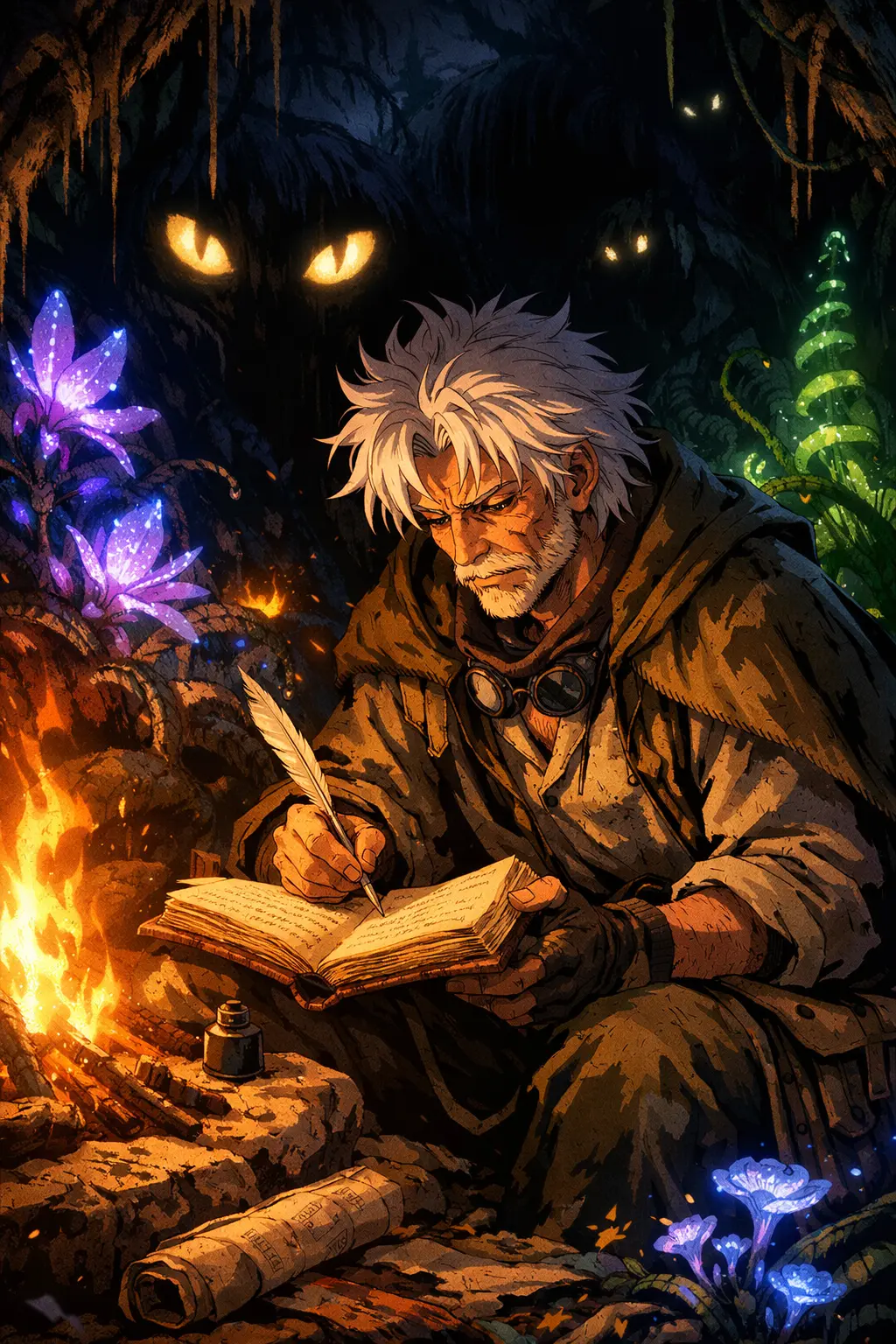
The history of humanity’s interaction with the Dark Continent is written entirely in blood, failure, and unimaginable loss. Despite the V5’s strict embargo, the allure of the unknown has proven too intoxicating for the most ambitious figures in history. Over the centuries, numerous expeditions have been launched, financed by desperate governments, ambitious monarchs, or immensely wealthy individuals seeking ultimate power, immortality, or infinite wealth.
At the center of this bloody history lies the ultimate enigma: the Don Freecss factor. Over three hundred years ago, a legendary explorer named Don Freecss successfully navigated the Dark Continent and survived to document his journey. He authored a comprehensive travelogue titled Journey to the New World. This colossal text was divided into two distinct volumes: the East edition and the West edition.
The East edition was eventually recovered and made its way back to the known world, becoming the holy grail for ambitious Hunters and scholars. It details mind-bending landscapes, terrifying beasts, and miraculous resources that defy the laws of physics. However, the West edition has never been found. The prevailing theory, espoused by Ging Freecss, is that Don Freecss is still alive, wandering the boundless expanses of the Dark Continent for over three centuries, still meticulously writing the West edition.
Whether he achieved this longevity through sheer mastery of Nen, or by consuming the fabled Nitro Rice—a grain found on the continent that grants extreme longevity—remains one of the most profound mysteries in the Hunter x Hunter universe.
Following in the mythological footsteps of Don Freecss, modern humanity has attempted to breach the continent 149 times. The statistics of these expeditions paint a chilling picture of absolute futility. Out of 149 officially recorded human-led expeditions, a staggering 144 ended in complete failure. Entire fleets vanished without a trace, consumed by the environment before they even managed to establish a foothold.
From the thousands of elite combatants, scientists, and explorers who ventured out, only 28 individuals have ever returned alive. However, survival in a physical sense is a cruel technicality when it comes to the Dark Continent. Of those 28 survivors, only three managed to return with their sanity intact.
The rest were reduced to broken, catatonic shells, completely shattered by the psychological and biological horrors they witnessed. This effectively puts the human survival rate at a terrifying 0.04%, a statistical reality that proves the Dark Continent is not a place to be conquered, but an active meat-grinder for human ambition.
Among the few who survived with their minds intact was Isaac Netero, the former Chairman of the Hunter Association, who ventured there in his youth alongside Zigg Zoldyck and Linne Hors d’Oeuvre. Yet, even the great Netero—the undisputed strongest human Nen user of his era—found the Dark Continent utterly unfulfilling. Netero sought a martial artist’s challenge, a place to test his physical limits against an opponent.
What he found instead was a merciless struggle for basic survival against biological anomalies and hostile environments. There was no victory to be found, only endurance. Consequently, Netero banned the Hunter Association from returning, declaring that humanity lacked the necessary strength and unity to survive there.
However, the cost of ambition cannot be contained forever. The geopolitical landscape of the known world has recently been violently disrupted by the Kakin Empire. Under the leadership of King Nasubi Hui Guo Rou, Kakin transitioned into a democracy in name only, using this political shift to circumvent the V5’s ancient treaty. By declaring themselves exempt from past agreements, Kakin publicly announced a massive, heavily financed expedition to the Dark Continent, spearheaded by none other than Beyond Netero, Isaac’s son.
This brazen move cornered the V5. Unable to stop Kakin militarily without causing a catastrophic world war, the V5 was forced into a tense compromise. They invited Kakin to join their ranks, transforming the V5 into the V6, and effectively absorbing the expedition under their official oversight to control the narrative and mitigate the fallout.
This political maneuvering creates intense geopolitical tension within the Hunter Association, forcing them into a reluctant partnership with Beyond Netero and the Kakin Empire to police a journey that every veteran Hunter knows is doomed to end in tragedy.
The Five Threats: The Calamities
When the V5 enacted the Treaty of Inviolability, they did not do so out of fear of the unknown alone; they were terrified by what the known had already experienced. History records that five unofficial, highly classified expeditions successfully managed to navigate the labyrinthine waters, pass the Gatekeeper, and return to Lake Mobius.
However, as the ancient proverb of the Dark Continent warns, “Whenever humanity seeks the riches of the new world, they bring back a disaster.” These are not standard biological threats; they are bio-organic horrors that operate on principles completely alien to human science and Nen.
They are classified by the Hunter Association as Class-A Threats—organisms so incomprehensibly dangerous that they necessitate immediate quarantine and threaten the existence of all mankind. They are known as the Five Calamities.
Hellbell (The Botanical Weapon)
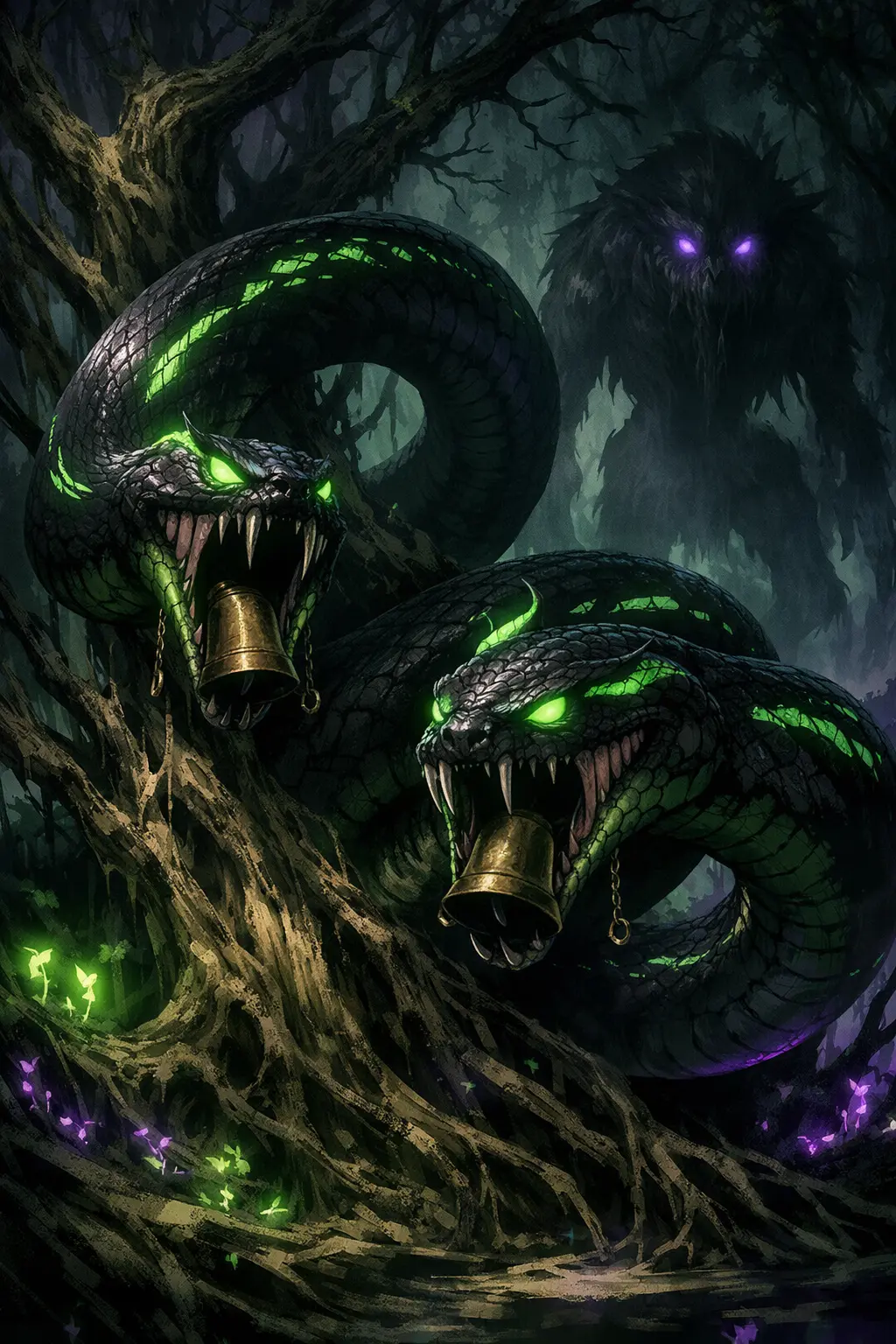
Brought back by an expedition dispatched by the United States of Saherta, the Hellbell is a terrifying creature classified as a two-tailed snake. The Saherta expedition originally ventured into the Dark Continent with a singular, ambitious goal: to locate and harvest the Trinity Elixir, a legendary substance said to cure ten thousand different diseases. However, what they encountered was an organism that Weaponizes psychological trauma and aggressive instinct.
Hellbell does not simply bite and kill its victims with venom; it operates as an insidious psychological pathogen. It infects the minds of any human it encounters, completely overriding their rational thought and replacing it with an overwhelming, uncontrollable homicidal urge.
The creature promotes violent, brutal conflict, turning allies, friends, and highly disciplined Hunter teams against one another in a bloodthirsty frenzy. The true horror of Hellbell lies in its ability to destroy the very foundation of human cooperation—the one tool humanity desperately needs to survive the Dark Continent.
The Saherta expedition utterly collapsed from within, slaughtering each other until only a handful remained to carry the creature back. The psychological influence it exerts on human host behavior is instantaneous and seemingly incurable, making it a walking vector for mass hysteria and mutual annihilation.
Pap (The Human-Keeping Beast)
Originating from a jagged, foreboding mountain range in the Dark Continent, Pap is a creature that flips the established hierarchy of nature on its head, turning humanity’s dominance into a macabre joke. The expedition that encountered Pap was seeking Unmanned Rock, a miraculous mineral that generates heat and electricity when submerged in water. Instead, they discovered a predator that views humans not merely as food, but as domestic pets.
Pap’s methodology is profoundly disturbing. It is a beast that creates a twisted illusion of domesticity, attaching itself to the human skull and completely dominating the host’s nervous system. Victims of Pap are not killed immediately; instead, they are strung up by the creature and physically drained of their life force over time.
The imagery associated with Pap is pure nightmare fuel: emaciated, shriveled human bodies, still technically alive, leashed like dogs and kept in a state of euphoric, vegetative submission while their souls and physical vitality are slowly harvested. It preys on the human desire for comfort and surrender, offering a painless, drug-like oblivion in exchange for total parasitic consumption.
Zobae (The Immortality Disease)
Perhaps the most tragically ironic of the Five Calamities is Zobae, brought back by a Hunter expedition seeking the fabled Nitro Rice—the very grain believed to grant Don Freecss his extended lifespan. Zobae is classified not as a beast, but as a symbiotic infection, a hyper-aggressive pathogen that essentially grants the host’s deepest wish: absolute immortality. However, the cost of this eternal life is the complete and permanent eradication of the host’s humanity.
Once infected with the Zobae disease, a human becomes biologically incapable of dying from natural causes, aging, or standard fatal injuries. However, the disease rapidly consumes the host’s sanity, reducing them to a feral, mindless state. Furthermore, the infection radically alters the host’s biological needs, forcing them into a state of perpetual auto-cannibalism.
The infected individual is driven by a ravenous hunger to consume their own flesh, which endlessly regenerates due to the disease’s immortal properties. Deep within the maximum-security sub-basements of the Hunter Association, a single infected Hunter has been kept alive in a sealed, sterile glass cell for over fifty years, endlessly gnawing on his own arms. He is a living, breathing testament to the cruel monkey’s paw nature of the Dark Continent’s miracles.
Brion (The Botanical Weapon)
Encountered by an expedition from the Begeross Union seeking a miraculous herb capable of curing any ailment, Brion represents an incomprehensible fusion of flora and advanced sentience. Brion is classified as a botanical weapon, a classification that barely scratches the surface of its terrifying reality.
The Begeross expedition discovered Brion guarding the ruins of a massive, ancient labyrinth city deep within the Dark Continent—suggesting a connection between the Calamity and a long-dead advanced civilization.
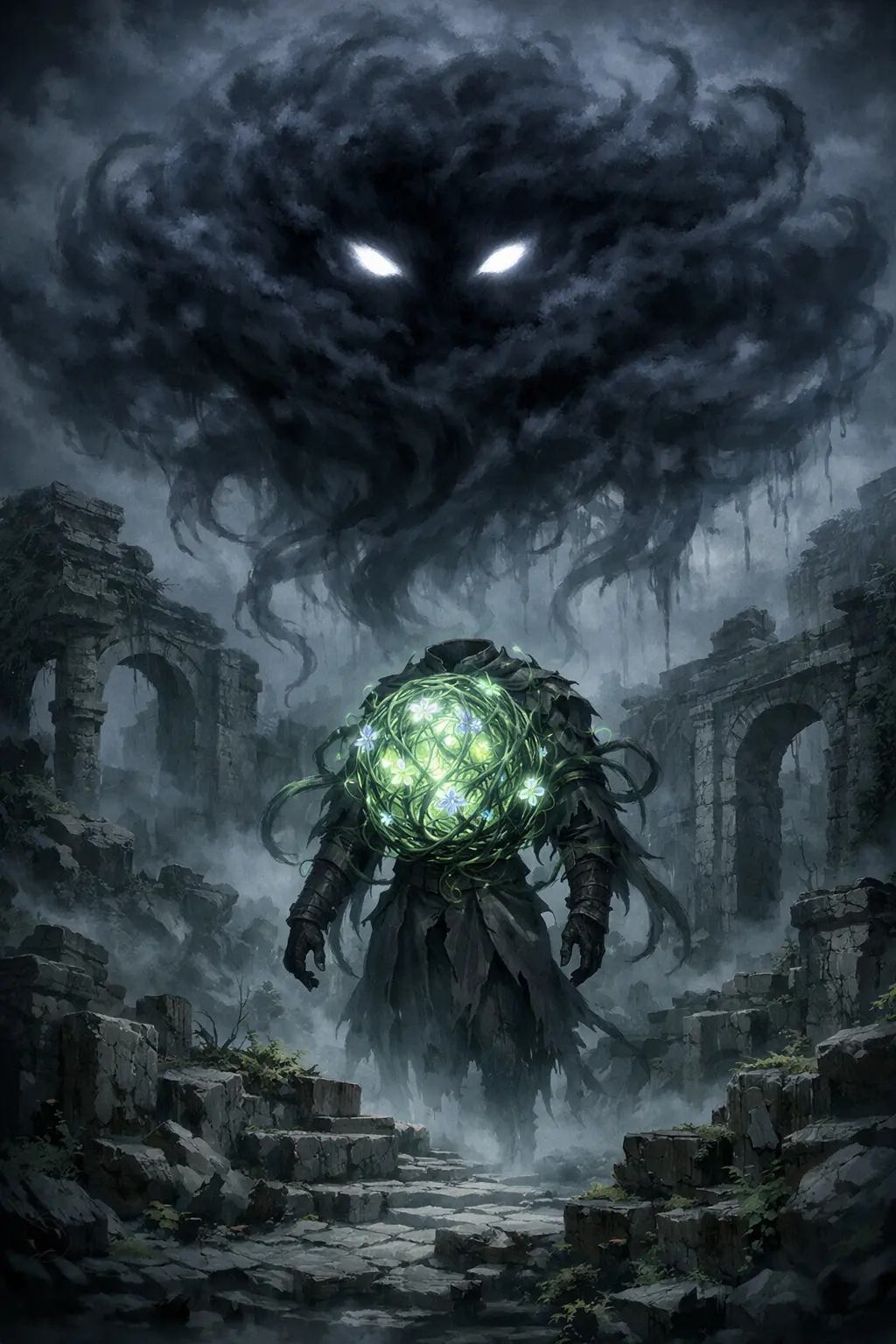
Brion appears as a perfectly spherical, giant plant-like structure that parasitically attaches itself to a decapitated humanoid body. It does not possess a face, eyes, or a mouth, but rather an imposing, featureless orb that completely controls the host body with flawless, terrifying efficiency.
Brion is a guardian, a merciless sentinel that consumes intruders without hesitation or malice. It operates devoid of emotion, neutralizing threats with a cold, calculated precision that overwhelmed an entire heavily armed military escort. The sheer speed and devastating power with which Brion wiped out the Begeross expedition forces humanity to reconsider what constitutes “plant life” in the ecosystem of the Dark Continent.
Ai (The Gaseous Life-form)
The Minbo Republic funded an expedition to secure the “Three Primary Colors,” mysterious artifacts of immense power. What they brought back was Ai, classified as a gaseous life-form, and arguably the most enigmatic and dangerous of all the Calamities. Ai is a sentient, intangible cloud that feeds on co-dependence and human desire. The horror of Ai is intrinsically linked to its “request” system, a lethal game of give-and-take that warps reality itself.
When humans interacted with Ai, they found their deepest desires granted, but always at a catastrophic, exponential cost. The creature demands “requests”—often cruel, impossible, or biologically devastating tasks—in exchange for its miraculous reality-warping phenomena. Failure to fulfill these requests results in horrific, localized spatial-rending deaths, often twisting victims into unrecognizable ribbons of flesh.
The terrifying implication heavily theorized within the lore is that Ai has already infiltrated the known world through the Zoldyck family. The entity known as Nanika, which inhabits the body of Alluka Zoldyck, perfectly mirrors the physical description (greeting others with the word “Aye”) and the devastating wish-granting mechanics of the gaseous life-form. If Nanika is indeed a localized fragment of Ai, it proves that the Calamities are not just physical threats, but cosmic forces capable of subverting the laws of physics and Nen effortlessly.
The Ecosystem of the Dark Continent
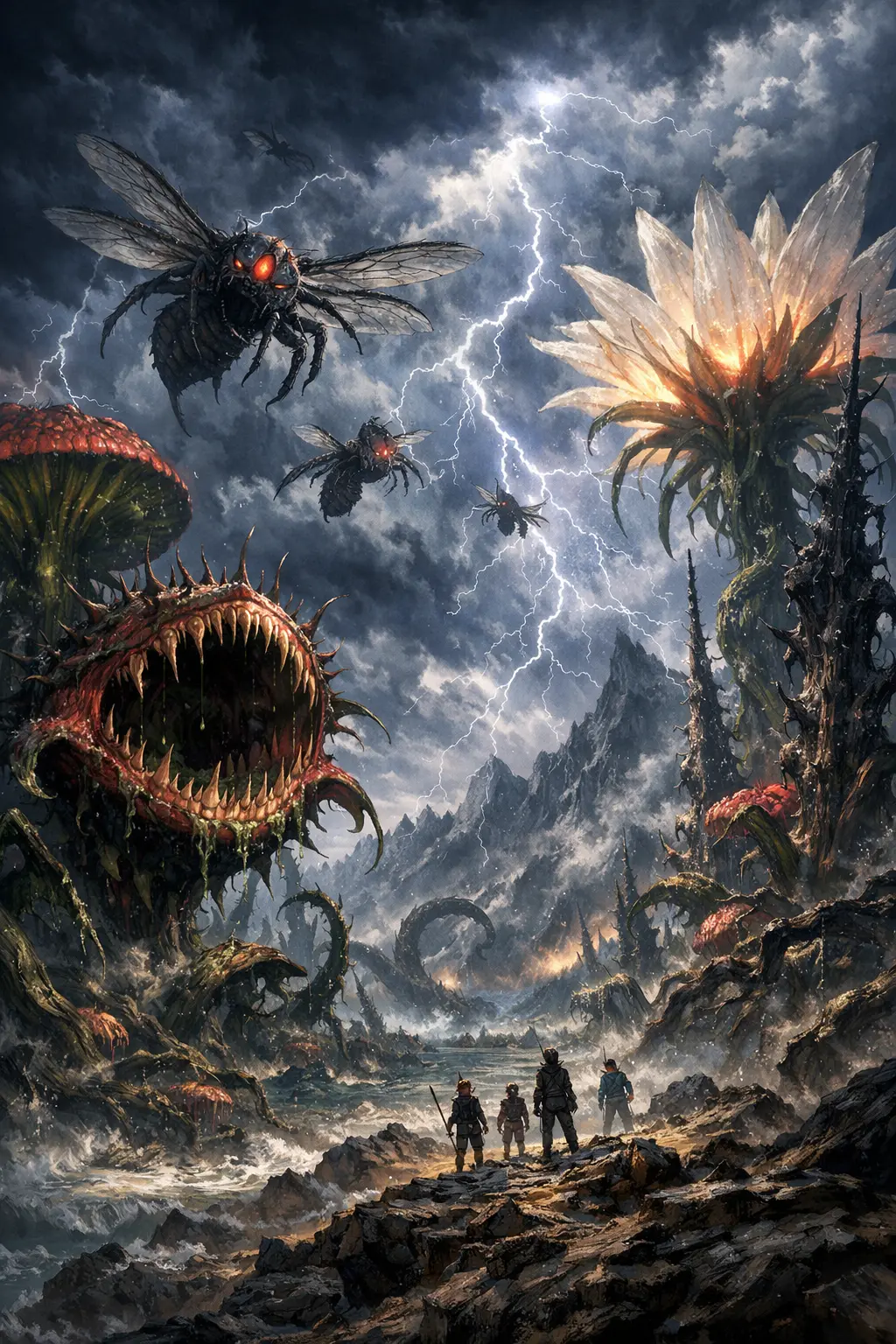
The ecosystem of the Dark Continent operates on a scale of biological diversity and environmental hostility that fundamentally breaks the established rules of the Hunter x Hunter universe. Within the known world (Lake Mobius), Nen is considered the pinnacle of biological and spiritual evolution.
A masterful Nen user can shatter boulders, move faster than sound, and enforce their will upon reality. However, upon crossing into the Dark Continent, the concept of Nen ceases to be a supreme advantage. The flora and fauna of this untamed landmass generally do not utilize the Nen system as humans do. Instead, they rely on millions of years of hyper-accelerated, cutthroat evolutionary traits that make them far more dangerous than any aura-wielding martial artist.
In the Dark Continent, survival of the fittest is taken to its most extreme logical conclusion. The environment itself acts as an apex predator. Explorers are not just fighting monsters; they are fighting the very fabric of the continent. The weather patterns are apocalyptic, capable of wiping out entire armadas in a matter of seconds.
The terrain is geographically unstable, with landmasses that shift, warp, and rewrite their own topography overnight, rendering mapping impossible and compasses useless. There are spatial distortions, fields of lethal radiation, and biomes completely devoid of the necessary elements for human survival. To step into this ecosystem is to step into an active, breathing entity that actively seeks to crush foreign bodies like an immune system attacking a virus.
To truly understand the evolutionary prowess of the Dark Continent, one must analyze the threat level of the Chimera Ants. The Chimera Ant arc presented humanity with an existential crisis. The Ant King, Meruem, and his Royal Guards possessed power so overwhelming that it required the sacrifice of the strongest human in the world and the deployment of a weapon of mass destruction (the Miniature Rose) to stop them. Within the known world, the Chimera Ants were unparalleled gods of destruction.
Yet, within the official threat assessment charts drafted by the Hunter Association, the Chimera Ants are classified as a mere “B-Class” or even “C-Class” threat when contextualized within their natural habitat. They are, essentially, the equivalent of minor pests or stray dogs on the Dark Continent.
They were forced out of their true home because they were incapable of surviving the intense competition against the truly dominant species. The Calamities—Hellbell, Pap, Zobae, Brion, and Ai—are universally classified as “A-Class” threats.
They do not just possess physical strength; they possess conceptual, contagious, and unstoppable attributes that bypass durability and Nen entirely. The fact that an insect species capable of conquering the known world in a matter of months was considered a bottom-tier refugee species perfectly encapsulates the terrifying reality of the Dark Continent’s ecosystem.
Furthermore, the physical scale of life is mind-boggling. The World Tree that Gon Freecss climbs at the conclusion of his journey—a colossal structure piercing the clouds and reaching into the stratosphere—is revealed by Ging to be nothing more than a sapling. The true World Trees, located in the Dark Continent, dwarf it entirely, breaching the very atmosphere of the planet. Everything on the continent, from the insects to the flora, exists on a macro-scale that continually reminds humanity of their status as microscopic anomalies.
The Human-Calamity Symbiosis
Despite the apocalyptic risks, the Dark Continent remains an undeniable magnet for human ambition. This fatal attraction is born from the deeply entrenched theory among top-tier Hunters and scholars that the Dark Continent is the absolute cradle of existence.
It is believed to be the primordial birthplace of all living things, the origin point of magical beasts, and potentially the very source of Nen and Aura itself. The artifacts and specimens scattered across its shifting landscapes are not mere curiosities; they are the ultimate building blocks of creation. From the Trinity Elixir to the Unmanned Rock, these resources hold the key to completely revolutionizing human civilization, solving the global energy crisis, curing all known diseases, and unlocking the secret to eternal life.
However, this potential utopia is permanently tethered to an inescapable symbiosis with catastrophe. The history of human exploration has proven a definitive law of the universe: the Dark Continent demands an equal or greater exchange for its miracles.
The risks of discovery are so profound that bringing back “artifacts” or “specimens” has historically resulted in near mass-extinction events within the known world. Humanity cannot simply take from the Dark Continent; they inevitably bring a piece of its hostility back with them. The Calamities are the immune response of a god-like ecosystem punishing the parasites that tried to steal its lifeblood.
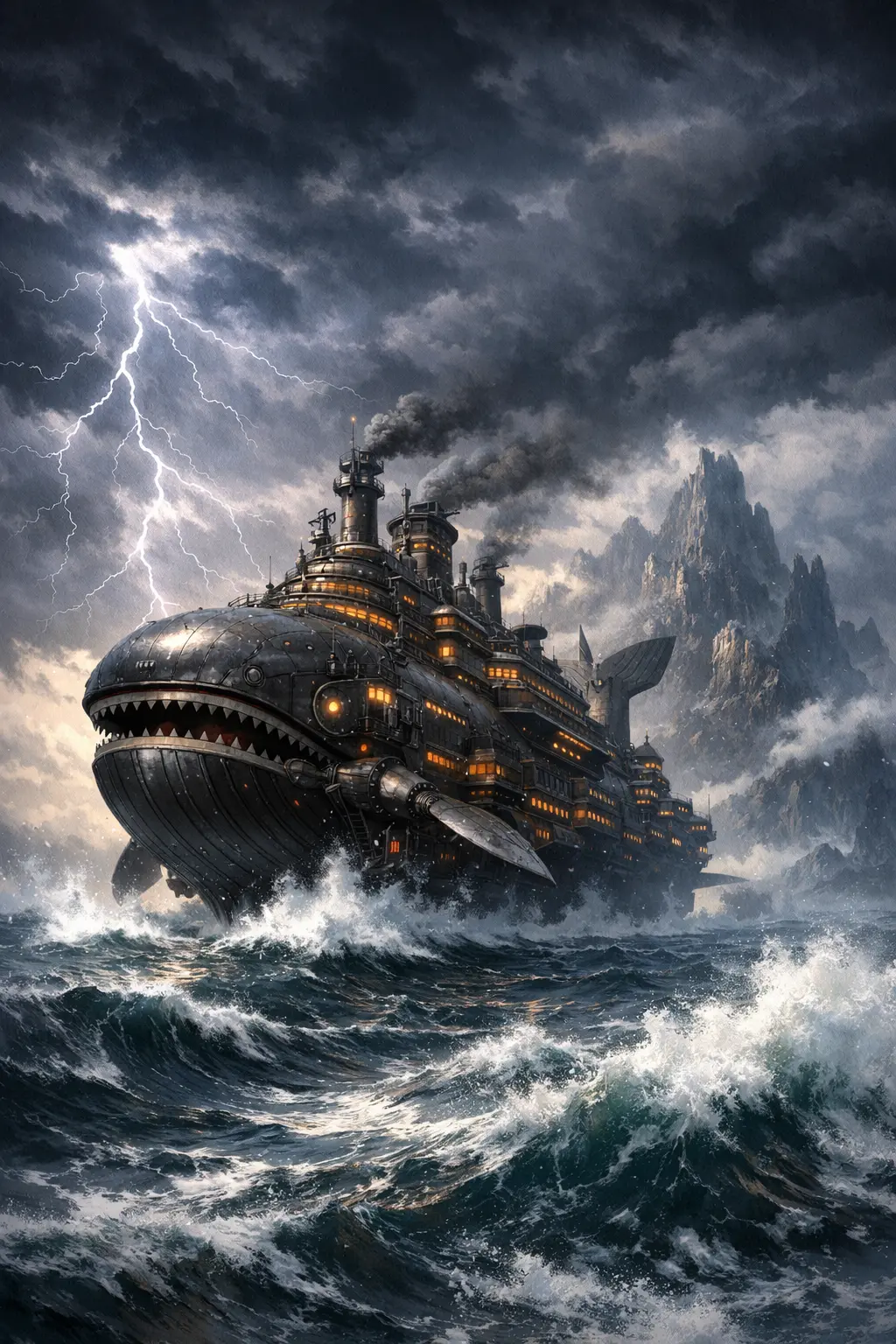
Knowing this terrifying history, Kakin Empire’s current gamble is arguably the most audacious and reckless maneuver in human history. King Nasubi Hui Guo Rou has orchestrated a massive, continent-spanning migration aboard the colossal Black Whale ship, carrying over 200,000 citizens toward what they believe is the “New Continent.”
In reality, this journey is a meticulously calculated blood sacrifice. The King is utilizing the voyage to host the Succession Contest, a brutal, Nen-fueled death game among his fourteen legitimate children to determine the next ruler of Kakin.
This creates a horrifying power dynamic. The King is essentially using the sheer mass of human life aboard the Black Whale as a shield, a distraction, and a fuel source. The passengers are pawns, completely unaware that their destination is a facade. Kakin intends to drop the civilians off at a faux “New Continent” on the outskirts of Lake Mobius, while the true elite, alongside Beyond Netero and the Hunters, plunge into the genuine abyss.
The symbiosis between human greed and the Calamities is playing out on a massive scale: Kakin seeks the ultimate power of the Dark Continent, and in doing so, they have transformed 200,000 innocent lives into potential bait for the most dangerous organisms in existence.
Beyond the Map: Theoretical Geography
To chart the Dark Continent is a fool’s errand, a logistical nightmare that has driven cartographers insane. The landscape is not a static canvas waiting to be drawn; it is a chaotic, infinite expanse that actively resists documentation. The sheer scale of the continent compared to the known world is like comparing a grain of sand to the beach it rests upon. When explorers cross the border of Lake Mobius, they are met with a completely alien cosmology.
The first theoretical barrier is the domain of the Gatekeeper. According to ancient texts and the experiences of Netero’s team, one cannot simply sail onto the shores of the Dark Continent. Explorers must be judged by a mysterious entity known as the Gatekeeper, who summons the “Guide”—a magical beast tasked with navigating worthy travelers through the impassable waters and initial terrain. Without the Guide, the twisting currents, spatial anomalies, and hyper-predators destroy interlopers instantly.
Once past the initial borders, the geography becomes theoretical. Compasses spin wildly due to unique magnetic fields, the stars in the sky align differently, and the terrain itself is said to shift and warp. Massive labyrinthine canyons, forests of towering flora that block out the sun, and oceans of toxic liquid form a geography that defies human physics.
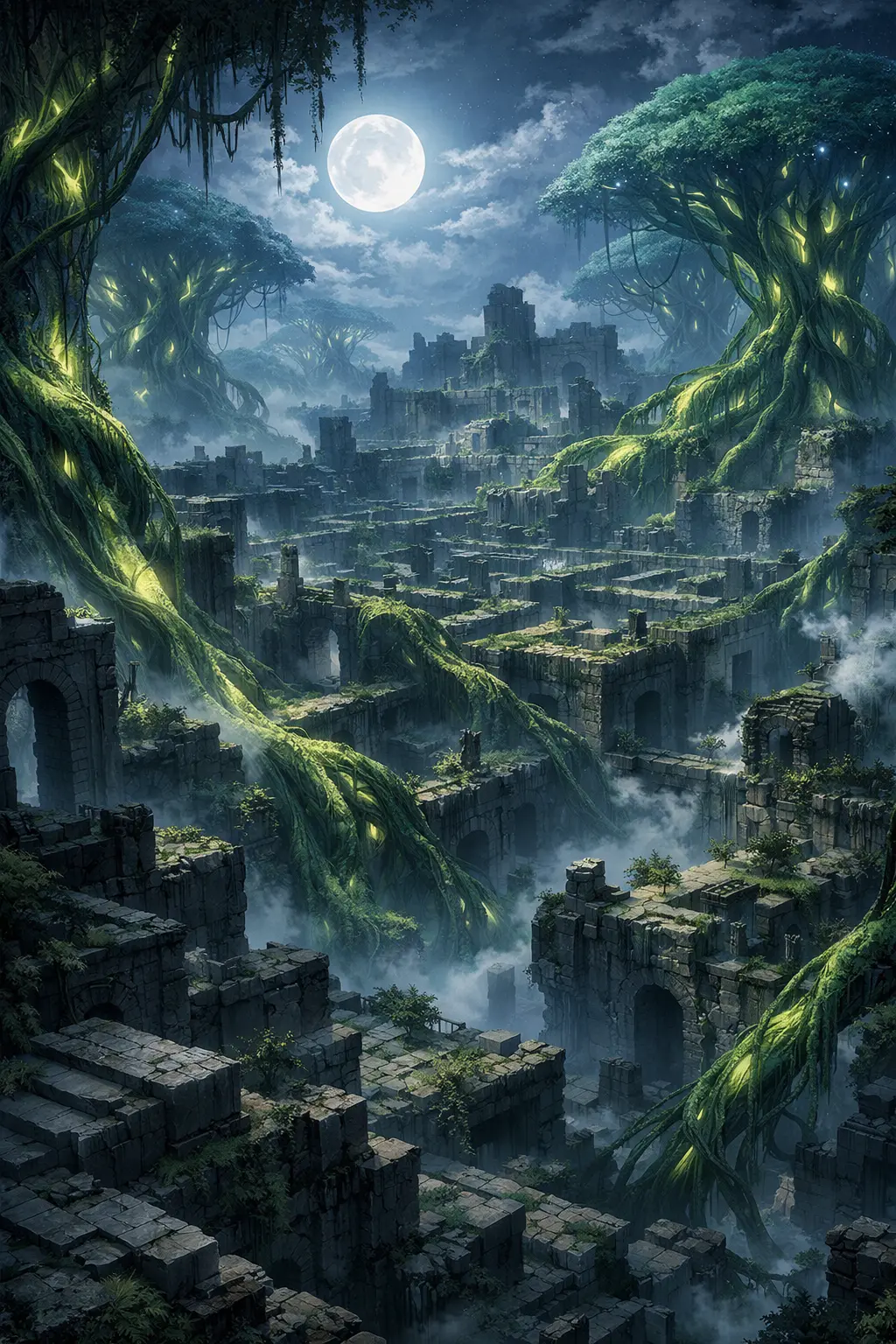
Most intriguing are the scattered reports of ancient ruins. Past explorers have documented colossal, giant-sized artifacts and monolithic cities swallowed by the environment—such as the labyrinth guarded by Brion. These remnants suggest a terrifying theoretical history: that an incredibly advanced, possibly giant civilization once thrived in the Dark Continent before being completely eradicated by the ecosystem, serving as a grim warning of humanity’s inevitable fate should they attempt colonization.
Conclusion: The Final Frontier
The Dark Continent represents the ultimate challenge within the Hunter x Hunter universe. It is the purest distillation of the series’ core theme: the relentless, often self-destructive human drive to confront the unknown. For decades, the narrative centered on mastering Nen, navigating political underworlds, and battling localized threats. But the revelation of the Dark Continent shifts the paradigm entirely, reducing the strongest characters to novices standing at the threshold of true wilderness.
The narrative implications for the main cast are profound and world-altering. For Ging Freecss, the Dark Continent is the culmination of his life’s philosophy—to enjoy the detours, only to arrive at the greatest detour of all. He seeks not to conquer, but to comprehend the incomprehensible.
For Kurapika, the voyage is a descent into hell, forcing him to navigate a bloody succession war to reclaim his clan’s eyes while trapped on a ship sailing toward oblivion. Leorio is thrust into the medical frontline, forced to prepare for biological horrors his textbooks never mentioned. Furthermore, the undeniable connection between the Zoldyck family, Nanika, and the Calamity Ai suggests that the sins of the Dark Continent are already deeply woven into the fabric of the main cast’s lives.
Ultimately, the expedition to the Dark Continent is the inevitable clash between humanity’s insatiable greed and nature’s lethal, uncompromising defense mechanisms. It is the final frontier, not because it is the last place to explore, but because it is the boundary where human ambition meets absolute, uncompromising extinction.