
Introduction: The Gate to the Elite

The world of Hunter x Hunter is one defined by the extraordinary, the dangerous, and the undiscovered. At the absolute apex of this world sits the Hunter Association, a non-governmental organization composed of the globe’s most elite individuals. To become a Hunter is to be granted a license that offers unparalleled freedom: access to 90% of restricted countries, free use of public facilities, impunity for certain crimes, and immense financial credit. However, acquiring this license requires passing the Hunter Exam Phases, a legendary gauntlet known for its staggering 1 in 10 million odds of success. Examining the prestige of the Hunter License reveals that the exam is meticulously designed not just to measure raw physical strength, but to break down and evaluate the absolute mental fortitude, adaptability, and psychological resilience of its participants.
The Hunter Association’s philosophy is brutally pragmatic. The organization understands that its members will be thrust into the most perilous environments imaginable, tasked with hunting down exotic beasts, exploring uncharted continents, capturing A-class bounties, and unearthing ancient ruins. Consequently, the exam acts as a ruthless filtration system. It is not merely a test of who can punch the hardest; it is a meticulously crafted crucible designed to weed out the arrogant, the mentally fragile, and the inflexible. The Association does not want soldiers who only know how to follow orders; it seeks autonomous assets who possess the ingenuity to survive when all conventional systems fail. Every single phase of the exam is orchestrated to simulate the unpredictable and often lethal nature of a Hunter’s daily life, stripping away the candidates’ preconceptions and forcing them to confront their true capabilities.
However, beneath the grueling physical trials and complex survival mechanics lies a “secret” objective that is hidden in plain sight. The true purpose of the Hunter Exam is to observe a candidate’s potential to awaken and master Nen, the manipulation of one’s own life energy. While the concept of Nen is completely hidden from the vast majority of applicants, the examiners—all master Nen users themselves—are constantly evaluating the candidates’ latent auras. The extreme stress, near-death experiences, and insurmountable odds presented in the exam act as catalysts. The examiners are looking for individuals who subconsciously utilize Nen principles under pressure, such as exuding terrifying bloodlust, exhibiting superhuman sensory perception, or displaying unbreakable willpower. The physical and survival challenges are merely the outer shell; the core of the Hunter Exam is a spiritual and energetic assessment, a search for those rare few whose souls are forged strongly enough to handle the true power that governs the Hunter x Hunter universe.
Phase 1: Endurance and Stamina

The opening trial of the Hunter Exam is a masterclass in psychological and physical attrition, brilliantly designed to shatter the illusions of underprepared candidates immediately. Led by the examiner Satotz, the Phase 1 marathon through the underground tunnels and into the Numere Wetlands (often referred to as Swindlers Swamp) serves as the foundational requirement before any combat-oriented test can even be considered. Analyzing this “Marathon of Misery” reveals why testing raw stamina is so critical. In the world of a Hunter, the ability to throw a devastating punch is useless if one cannot survive the arduous journey to reach the target. The endless run is a baseline metric; it demands cardiovascular perfection, muscular endurance, and, most importantly, the mental tenacity to keep moving forward into the absolute unknown. Satotz deliberately withholds information regarding the distance and destination, transforming a simple physical task into an existential nightmare. Candidates are not just fighting fatigue; they are battling the creeping dread of an endless journey.
This deliberate withholding of information is the core of the psychological attrition orchestrated by the examiners. The Hunter Association creates an environment of sheer hopelessness to weed out those who panic under pressure. As the hours drag on and the miles accumulate, the weaker candidates begin to break. The darkness of the tunnel, the repetitive sound of footsteps, and the agonizing physical pain combine to strip away the facade of confidence that many brought to the exam. Those who rely on ego or superficial motivation are the first to collapse. The examiners want to see who possesses intrinsic motivation—who can dig into the deepest reserves of their willpower when there is no cheering crowd, no visible finish line, and no promise of salvation. This phase acts as a harsh mirror, reflecting the grim reality that a Hunter’s life is often characterized by solitary, agonizing endurance rather than glorious combat. It filters out the thrill-seekers and leaves only those with an unshakable core of determination.
Once the survivors emerge from the tunnel, the test immediately shifts to reading the field in the treacherous Numere Wetlands. The necessity of observation, team dynamics, and situational awareness in high-stress, long-duration environments becomes paramount. The swamp is a deceptive ecosystem designed to prey on the exhausted and the gullible. Carnivorous plants, hallucinogenic butterflies, and deceptive predators disguise themselves as harmless flora and fauna or even mimic human cries for help. Here, raw stamina is no longer enough; candidates must maintain razor-sharp cognitive function despite their overwhelming physical exhaustion. Furthermore, the thick fog forces candidates to rely on situational awareness to avoid being separated from the examiner, which means instant disqualification and likely death. It is also in this phase that team dynamics and natural hierarchies begin to form, as seen when characters like Hisoka use the chaos to conduct their own twisted “evaluations” of their fellow examinees. Surviving the wetlands proves that a candidate can not only endure physical torment but can remain analytically observant and strategically sound when the environment itself is actively trying to kill them.
Phase 2: Niche Skill and Discipline

Following the brutal marathon of the first phase, the Hunter Exam abruptly shifts gears, forcing candidates to completely alter their mindset. Phase 2 introduces the Culinary Test, overseen by Gourmet Hunters Menchi and Buhara. To the uninitiated, cooking may seem like a trivial, almost insulting trial compared to the life-or-death marathon that preceded it. However, analyzing why the Hunter Association values Gourmet Hunters reveals a profound truth about survival: the ability to adapt to extreme environments and utilize niche skills is a vital trait. Gourmet Hunters venture into the most inhospitable regions of the globe—venomous jungles, freezing tundras, and active volcanoes—simply to discover new ingredients. Menchi’s challenge is an allegory for this pursuit. It tests a candidate’s ability to enter an unfamiliar ecosystem, identify a specific target, understand its properties, and process it under strict guidelines. The culinary aspect is a metaphor for the meticulous research, specialized knowledge, and precise execution required to succeed in highly specialized Hunter fields.
This phase also serves as a critical lesson in humility, as the examiners deliberately push candidates to realize their limits and understand their insignificance in the face of nature. The majority of the applicants, high on the adrenaline of passing Phase 1, approach the cooking test with arrogance and disdain, viewing it as beneath their martial capabilities. Menchi weaponizes this arrogance. When the candidates fail to produce sushi (or in the revised anime, fail to satisfy her incredibly high standards for roasted pork and other dishes), she fails every single one of them. This mass failure is a calculated psychological blow. It demonstrates that brute strength and endurance are completely invalidated if a Hunter lacks respect for the task at hand and the environment they are operating in. The Association requires Hunters to be students of the world, constantly learning and adapting. Menchi’s initial rejection of all candidates highlights the danger of a closed mind; a Hunter who believes they can solve every problem with their fists is a liability who will eventually be killed by their own ignorance.
Ultimately, Phase 2 is about the triumph of technique over brute force, transitioning the candidates from simple physical endurance to the application of specialized skills. This is perfectly illustrated when Chairman Netero intervenes and redirects the test to the acquisition of Spider Eagle eggs. The challenge suddenly transforms. It is no longer about fighting a massive beast like the Great Stamp; it is about observation, timing, and mastering fear. The candidates must leap into a seemingly bottomless ravine, relying entirely on the updraft to carry them back to safety. It requires trusting the environmental cues and executing a precise physical maneuver. This transition emphasizes that true Hunters must possess a diverse toolkit. They must be capable of tracking elusive prey, identifying subtle chemical properties in ingredients, crafting makeshift tools, and performing acts of incredible finesse. Phase 2 demands discipline—the discipline to follow complex instructions, the discipline to respect the expertise of others, and the discipline to prioritize precise execution over reckless power.
Phase 3: Psychological Warfare and Decision Making

Trick Tower is perhaps the most intellectually and morally taxing segment of the Hunter Exam, operating as a masterclass in high-stakes pressure. Candidates are dropped onto the roof of a massive, trap-filled monolith and given exactly 72 hours to reach the bottom alive. This phase abandons open terrain for a claustrophobic, controlled environment designed specifically to force candidates to choose between time, resources, and morality. The mechanics of the tower, particularly the path of “Majority Rule” undertaken by Gon, Killua, Kurapika, Leorio, and the saboteur Tonpa, represent a brilliant exercise in psychological warfare. Every decision, from which door to open to which path to take, is subject to a vote, forcing a disparate group of strangers—some with actively malicious intentions—to negotiate and compromise under the threat of impending doom. The pressure of the ticking clock forces the candidates to strip away social pleasantries, revealing their core ethical boundaries and problem-solving methodologies when backed into a corner.
The genius of Trick Tower lies in its “Prisoner Gamification.” The Hunter Association utilizes real-world, high-security criminals whose sentences are reduced for every hour they successfully delay the candidates. This scenario is designed to test how candidates manage threats that play dirty, utilizing manipulation, deceit, and psychological terror rather than straightforward combat. The encounters with prisoners like Majtani, who weaponizes Kurapika’s trauma regarding the Phantom Troupe by faking a spider tattoo, or Leroute, who exploits Leorio’s gambling nature and biological urges, are targeted psychological assaults. The Association knows that in the real world, Hunters will rarely face honorable opponents in fair arenas. They will face black-market syndicates, corrupt politicians, and sociopathic Nen users who will exploit any emotional vulnerability. Trick Tower simulates this by turning combat into a game of wits, where reading an opponent’s bluff, managing one’s own emotional triggers, and making cold, calculating wagers are far more vital than the ability to throw a punch.
Furthermore, Trick Tower exposes the complex paradox of the Hunter Exam: while it is ultimately an individual test where only a select few can earn a license, the most difficult phases are designed to fail those who cannot utilize group synergy, trust, or strategic alliances. The candidates are thrust into a prisoner’s dilemma where selfishness is intuitive, yet fatal. Tonpa’s constant attempts to sabotage the group from within serve as an organic stress test of the team’s cohesion and leadership structures. Overcoming the tower requires recognizing the unique strengths of each team member—Kurapika’s encyclopedic knowledge, Leorio’s haggling skills, Killua’s lethal pragmatism, and Gon’s unorthodox, out-of-the-box thinking. The climax of this phase, where the group must choose between a long path that allows all five to pass (but takes too much time) and a short path that requires leaving three behind, is the ultimate moral and strategic crucible. Gon’s ingenious solution—choosing the long path to secure the necessary votes, then immediately breaking down the wall to access the short path—demonstrates the exact type of lateral thinking the Association covets. It proves that a true Hunter does not simply accept the rules of a rigged game; they manipulate the environment to create their own winning condition.
Phase 4: The Apex of Survival
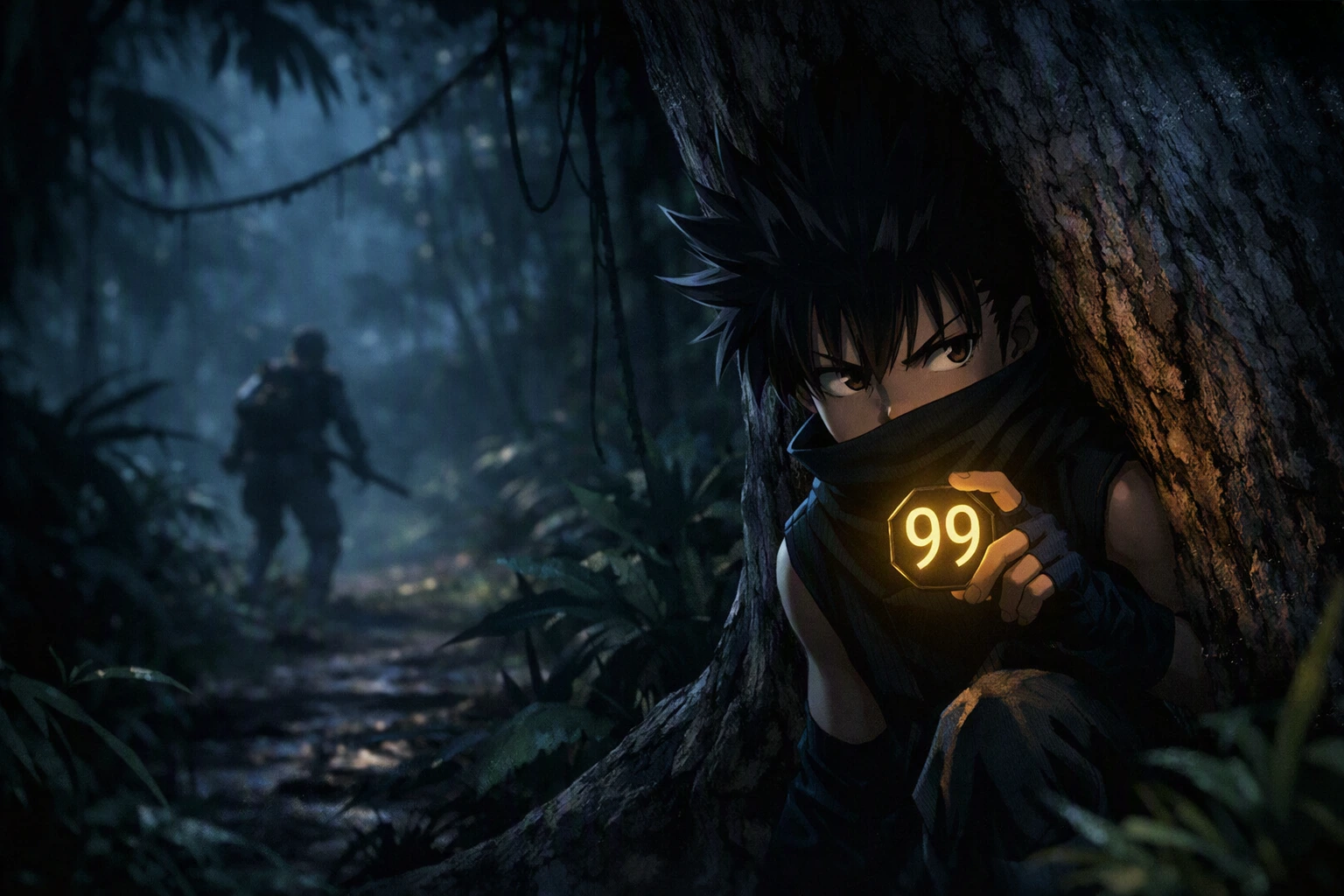
If Trick Tower was an exercise in psychological negotiation, Zevil Island is the ultimate descent into primal, unadulterated survival. Phase 4 transitions the exam into a brutal “Prey vs. Predator” scenario. Upon arriving at the island, each candidate draws a lot corresponding to the ID number of another candidate. The rules are simple yet chillingly effective: a candidate needs six points to pass. Their target’s badge is worth three points, their own badge is worth three points, and any other random badge is worth one point. They have exactly one week to secure their points. This setup strips away any lingering sense of camaraderie or safety. The island is entirely unmonitored, transforming it into a lawless ecosystem where murder is not explicitly forbidden, merely an accepted byproduct of the hunt. This phase demands that candidates synthesize every skill they have learned thus far: the stamina of Phase 1, the environmental adaptability of Phase 2, and the psychological fortitude of Phase 3, culminating in the absolute apex of survival mechanics.
The strategic tracking necessitated by the number plate system creates a brilliantly closed-loop combat environment. Because every candidate is simultaneously a hunter and a target, the dynamics of engagement are incredibly complex. A candidate cannot simply blindly charge after their prey, because doing so leaves them wide open to whoever is hunting them. This closed loop forces a hyper-awareness of the environment and a mastery of stealth. We see Gon spend days meticulously observing the ecosystem, practicing with his fishing rod on moving targets like birds, all while calculating the precise, singular moment he can steal Hisoka’s badge without being killed. The point system ensures that direct confrontation is often the least optimal strategy. Instead, it rewards patience, ambush tactics, and the ability to turn another hunter’s strike against them. The island becomes a massive chessboard where candidates must predict movements, lay traps, and capitalize on the momentary vulnerabilities of others, turning the very act of hunting into a deadly science.
Perhaps the most grueling aspect of Zevil Island is the challenge of managing paranoia. The psychological toll of knowing that an unseen assassin is stalking you—and that it could be literally anyone on the island—is devastating. The constant adrenaline, the inability to sleep deeply, and the rustle of every leaf can drive even seasoned fighters to the brink of madness, as seen with characters who completely break down and hide in caves for the duration of the week. Conversely, apex candidates like Hisoka and Killua weaponize this fear to dominate their targets. Hisoka radiates a terrifying bloodlust that paralyzes his prey, essentially establishing himself as the apex predator of the island ecosystem. Killua, utilizing his assassin training, navigates the island with a chilling nonchalance, dispatching threats before they even realize they are in danger. Surviving Phase 4 requires an absolute mastery over one’s own fear. Candidates must suppress their aura, blend into the wilderness, and operate with the cold, detached efficiency of a true predator, proving they have the psychological resilience to operate in a world where death is always one misstep away.
Phase 5: The Final Duel and Character Judgment
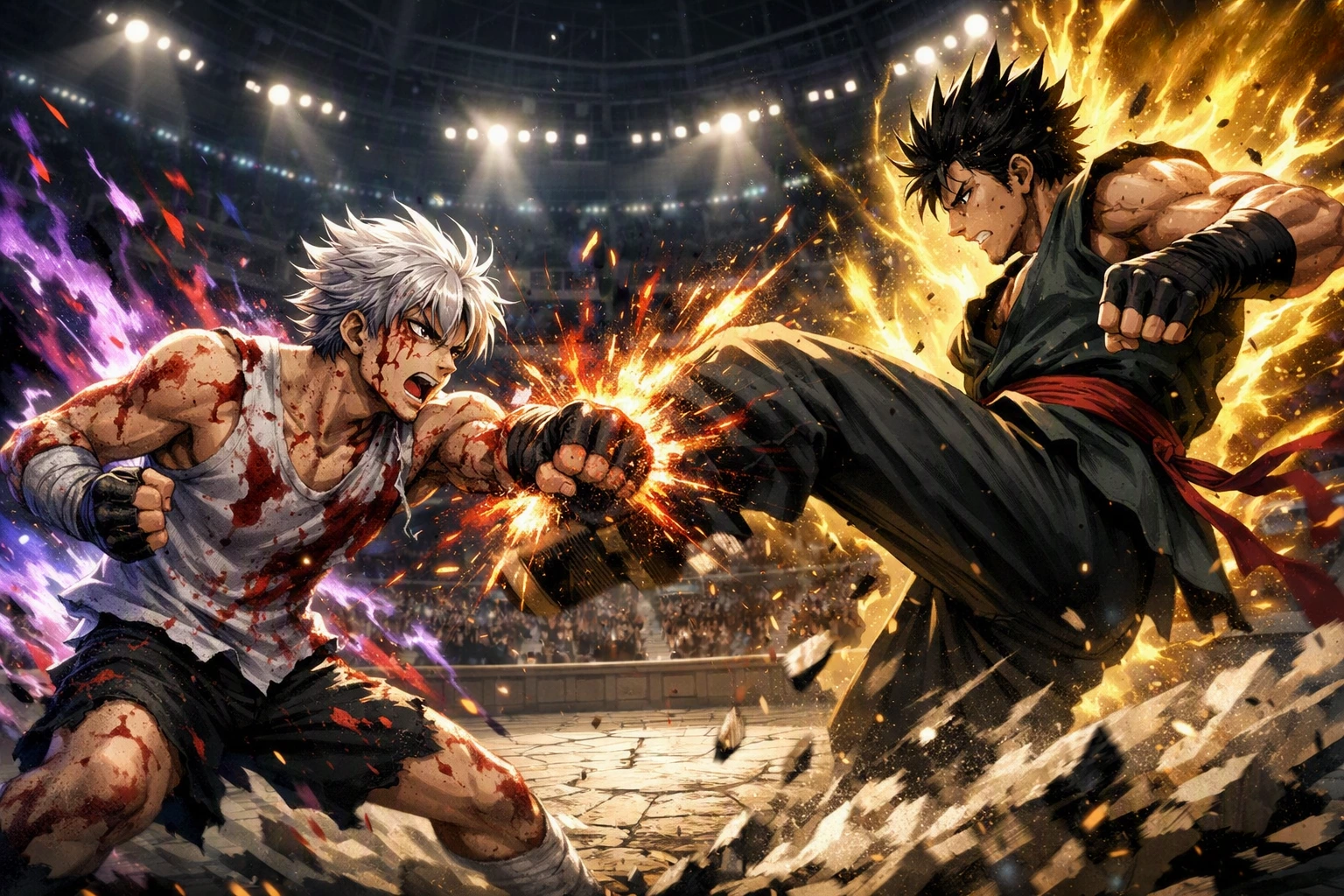
The final phase of the Hunter Exam violently subverts the standard tropes of a shonen tournament bracket. Instead of a straightforward bracket where the strongest fighter advances, Chairman Netero designs a deeply psychological and asymmetrical web of one-on-one combat to evaluate individual resolve, fighting capability, and tactical brilliance. The bracket is structured based on an incredibly complex metric that factors in physical prowess, mental agility, and the “Hunter X-factor”—a subjective measure of a candidate’s potential and sheer stubbornness. The most jarring rule of this tournament is that killing your opponent results in immediate disqualification; victory can only be achieved by forcing the opponent to admit defeat and surrender verbally. This limitation fundamentally alters the nature of the duels, shifting them from battles of physical destruction to battles of psychological domination and spiritual endurance.
This leads directly into the Hidden Test, or what can be termed the “Netero Assessment.” The final phase isn’t just about winning; it is an intimate, magnifying-glass evaluation of how a candidate reacts to their opponent, their sense of honor, and their capability to kill—or choose not to. The fight between Gon and Hanzo is the quintessential example. Hanzo is infinitely stronger, faster, and more skilled than Gon, subjecting him to hours of agonizing torture, breaking his arm and threatening to sever his limbs. Yet, Gon simply refuses to yield, his sheer, terrifying willpower completely overwhelming Hanzo’s martial superiority. Netero’s test reveals that a true Hunter cannot be broken by physical pain alone. Conversely, the test exposes the fragility of those who rely entirely on their upbringing, as seen when Illumi manipulates Killua’s deep-seated psychological conditioning as an assassin, forcing him to forfeit and ultimately murder another contestant out of a warped sense of duty. The final phase is a judgment of the soul, proving that the Hunter Association values unbreakable resolve and the strength of one’s convictions far above the simple ability to inflict violence.
Conclusion: The Hunter’s Path
Ultimately, the Hunter Exam is the perfect microcosm for the Hunter x Hunter world: ruthless, unpredictable, and demanding of total self-mastery. Across its grueling phases, the exam systematically deconstructs its candidates, stripping away their superficial strengths to reveal their true nature. It proves that to be a Hunter is to embrace a life of constant adaptation, where stamina must be coupled with intellect, niche skills must be executed under pressure, and morality is constantly tested against the cold pragmatism of survival. The Hunter Association does not seek perfect beings; it seeks highly adaptable, dangerously determined individuals who can look into the abyss of the unknown and figure out how to build a bridge across it. The license itself is merely a piece of plastic; the true reward of the exam is the forged iron of the candidate’s will.
However, the most profound realization comes at the very end of this agonizing journey. Final reflection shows that surviving the exam is merely the beginning—the true starting line. Passing the physical and psychological gauntlet is essentially just clearing the lobby of the Hunter world. The moment a candidate receives their license, the real journey into the dangerous, Nen-infused world truly starts. The secret exam—the mastery of life energy—awaits them all, and the horrors they faced in the wetlands, the towers, and the jungles will pale in comparison to the supernatural threats that govern the true heights of the Hunter Association.