
Introduction
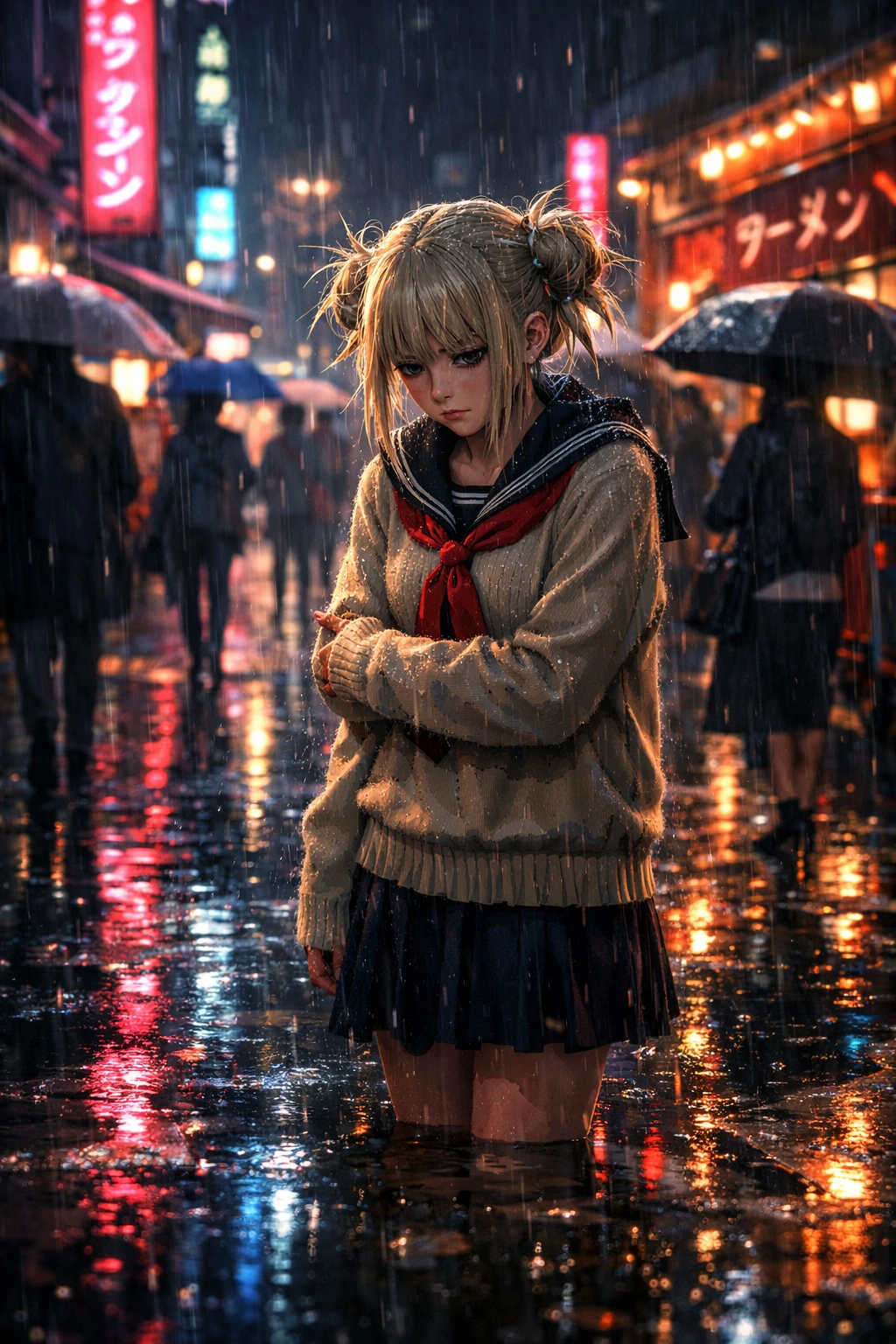
The Tragedy of “Normal” In the sprawling, superhuman-dominated landscape of Kohei Horikoshi’s My Hero Academia, the concept of “normalcy” is weaponized by society as a tool of oppression. Himiko Toga cannot be defined simply as a deranged villain, a chaotic interloper, or a high school yandere trope.
She is, fundamentally, the ultimate and most tragic casualty of Hero Society’s gross negligence. In a world where eighty percent of the population possesses a Quirk, society rushed to build a framework of legislation and heroics to police these powers, but critically failed to provide comprehensive psychological infrastructure.
Quirks are not merely external tools; they are biological extensions of the human body, deeply woven into the DNA and neurochemistry of the user. For individuals with inherently violent, mutation-based, or predatory Quirks, Hero Society offers no safe harbor.
Instead of teaching these vulnerable youth how to safely manage and integrate their biological urges, the system forces them into a binary choice: suppress your very nature to fit a manufactured ideal of “normal,” or be labeled a monster. Himiko Toga’s descent into villainy is a direct indictment of this systemic failure, illustrating the catastrophic consequences of abandoning those whose biological realities clash with polite society.
The Bloody Definition of Love To understand Himiko Toga is to understand a mind where the fundamental wires of human affection and predatory biology have been irrevocably crossed. For the average human, love and admiration are expressed through emotional vulnerability, physical touch, and words of affirmation. For Himiko, her psychological framework is inextricably bound to the physical mechanics of her “Transform” Quirk.
Her body requires blood to function at its peak superhuman capacity, and over time, her brain conflated this biological necessity with emotional desire. To Himiko, the desire to show affection and the visceral urge to consume blood are completely, disastrously intertwined.
When she sees someone she finds beautiful, inspiring, or admirable, her physiological response is not merely to be near them, but to consume them—to literally become them by ingesting their life force. This twisted definition of love forms the core of her tragedy; she is a girl who desperately wants to connect with others, but the only way her body and mind know how to achieve that connection is through an act of fatal violence.
Article Scope This article serves as a definitive, expert-level breakdown of Himiko Toga, moving beyond surface-level observations to deconstruct the complex layers of her character. We will begin with a rigorous scientific analysis of her “Transform” Quirk mechanics, exploring the biology of her hematic fuel system. From there, we will delve into the sociological horror of forced Quirk suppression that defined her childhood, examining how systemic abuse forged a serial killer.
The article will also highlight her unparalleled, almost supernatural espionage capabilities and Quirkless combat proficiency. Finally, we will analyze the catastrophic Quirk Awakening that forever altered the landscape of the Meta Liberation Army conflict, her deep psychological bond with the League of Villains, and her apocalyptic role in the Final War, culminating in her ultimate, tragic sacrifice.
The “Transform” Quirk: Biological Infiltration
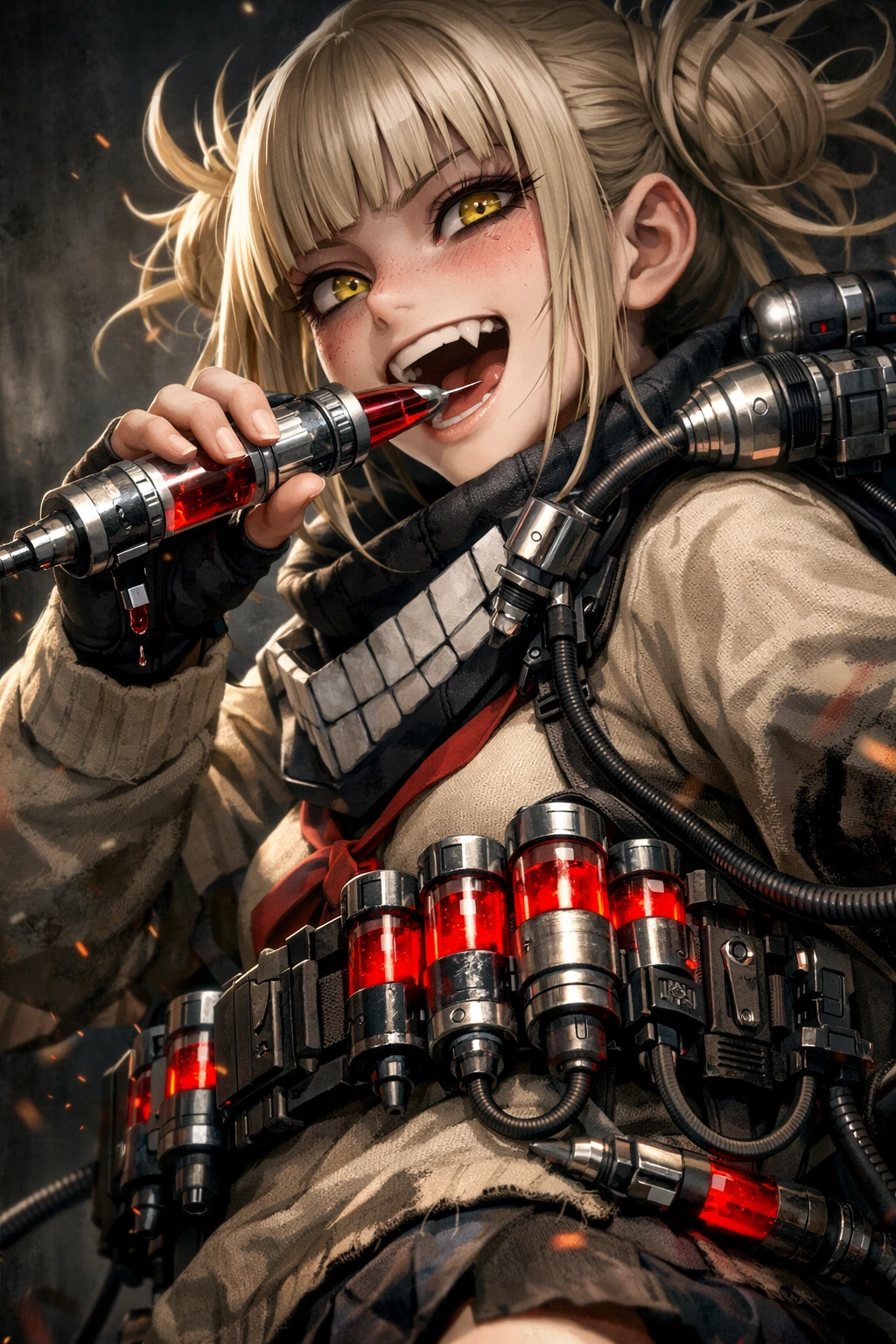
The Hematic Fuel System The science behind Himiko Toga’s “Transform” Quirk is a marvel of superhuman biology, operating on what can be described as a hematic fuel system. Unlike Emitter-type Quirks that rely on stamina or environmental factors, Himiko’s Quirk is strictly conditional and fueled by human blood. The volume of ingested blood mathematically dictates the duration of her transformation.
Horikoshi’s narrative establishes a rough but strict biological metric: approximately one cup of ingested blood yields roughly one day (specifically, around eighteen hours) of continuous transformation. This physiological requirement means her digestive system is uniquely adapted to process human blood not just as sustenance, but as a genetic blueprint.
When she ingests the blood, her body extracts the target’s DNA and immediately synthesizes it, overriding her own physical form. This exactness requires an immense caloric and biological toll, making her reliance on a steady supply of specific blood types a constant, pressing necessity for both her survival and her utility in espionage operations.
The Viscous Shedding The physical mechanics of Himiko’s transformation are both awe-inspiring and grotesque, revealing the true depth of her Quirk’s capabilities. When she activates “Transform,” she does not merely cast a holographic illusion over her body; she undergoes a complete, cellular-level metamorphosis.
She perfectly mimics not just the facial features of her target, but their exact height, bone structure, vocal cords, fingerprints, and physical measurements. She can even replicate the clothing her target is wearing, though doing so requires her to remove her own garments so they do not overlap and ruin the disguise. The conclusion of this transformation is marked by a distinct, horrifying biological process: the viscous shedding.
When her internal blood supply runs out, or when she voluntarily drops the disguise to switch to another, the copied form literally melts off her body. The cellular structure destabilizes, sloughing off her frame as a thick, gray, viscous sludge. This physical shedding serves as a stark visual reminder of the parasitic nature of her Quirk, leaving her exposed and vulnerable once the stolen identity has melted away.
The Storage Limitation Despite its terrifying potential for infiltration, the “Transform” Quirk is bound by severe physiological constraints, primarily rooted in biological storage and processing. Himiko cannot seamlessly swap between multiple ingested blood types at will relying solely on her internal biology.
If she ingests the blood of multiple targets simultaneously without careful management, the genetic blueprints could theoretically overlap or force her to burn through her reserves inefficiently. To maximize her tactical espionage, she requires complex technological support to circumvent these natural limitations. This is where the League of Villains’ support network—and later, the Paranormal Liberation Front’s resources—became invaluable.
Outfitted with mechanized syringe-gear, specialized vacuum tubes, and a network of blood-storage capsules, Himiko could harvest and preserve different blood samples for extended periods. This equipment acted as an external hard drive for her Quirk, allowing her to store multiple identities and inject the specific blood type she needed directly into her system precisely when a mission demanded it, bypassing the limitations of her own digestive tract.
The Mask of Normalcy (A Societal Failure)
The Biological Wiring of Fetish To comprehend the monster society created, one must examine the tragedy of Himiko’s early childhood, long before she became a wanted fugitive. From a remarkably young age, her Quirk fundamentally altered her brain chemistry. In standard human development, children learn to associate positive emotions with smiles, warmth, and gentle actions.
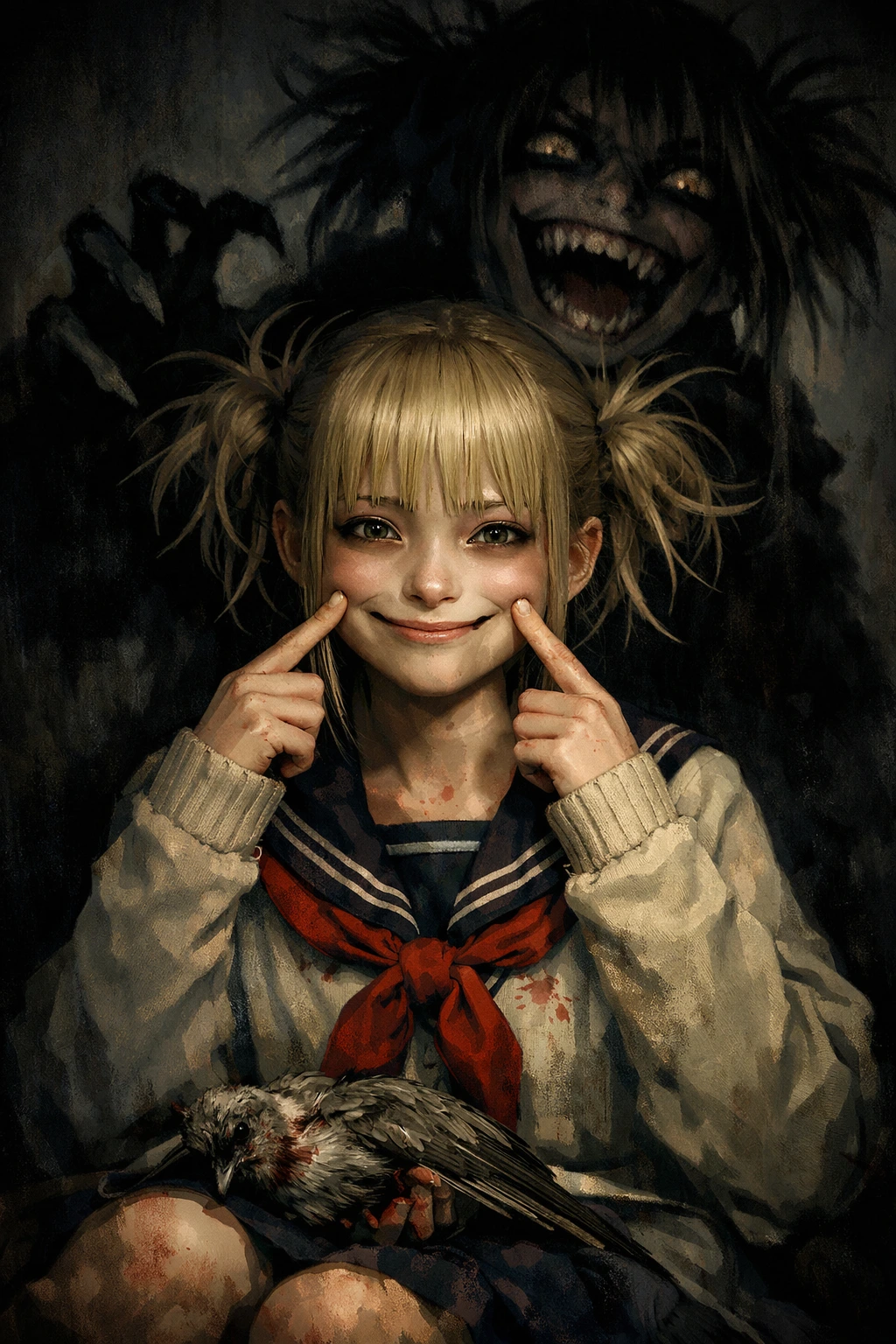
For Himiko, the emerging “Transform” Quirk rewired her neuroplasticity, forcing her to instinctively equate the sight, smell, and taste of blood with profound admiration, beauty, and love. This neurological misfire culminated in the infamous “dead bird incident.” Finding a bloody, deceased bird in her yard, an innocent Himiko did not see a gruesome scene; she saw something overwhelmingly beautiful.
She drank its blood and presented it to her parents with a bright, genuine smile, expecting them to share in her joy. This was not an act of malice, but a child interacting with the world through the only biological lens she possessed. Her tragedy was cemented in that moment: her genuine expression of love was fundamentally incompatible with human morality.
The Parent Trap (Forced Suppression) The sociological horror of Himiko’s upbringing is a damning reflection of Hero Society’s obsession with optics over mental health. When presented with the dead bird, her parents did not see a child in need of specialized psychiatric help and biological regulation; they saw a threat to their social standing.
Disgusted and terrified by her nature, they responded with physical and emotional abuse, branding her a “deviant” and a “demon.” They forced her into strict “Quirk counseling,” a practice that, in this context, functioned more like conversion therapy. Instead of teaching Himiko how to safely manage her biological urges—perhaps through ethical blood donation systems or specialized dietary supplements—the counselors and her parents demanded total suppression.
They forced her to wear a suffocating mask of normalcy, demanding she act like the “ideal young schoolgirl” expected by society. This intense psychological pressure cooker taught Himiko that her true self was a monster that had to be hidden at all costs, denying her any healthy outlet for a biological craving she could not control.
The Psychological Break The human mind can only endure the suppression of its fundamental biological nature for so long before it shatters. For Himiko, this inevitable explosion of repressed instincts occurred during her middle school years. After years of meticulously maintaining her facade as a cheerful, well-behaved student, the dam broke. She developed a profound infatuation—her twisted version of a crush—on a popular boy named Saito.
When she witnessed him bruised and bleeding after a physical altercation, the sight of his blood overwhelmed years of fragile psychological conditioning. The urge to consume, to love, and to become him was too powerful. Succumbing to her nature, she attacked him with a box cutter, using a straw to drink directly from his wounds while weeping in a state of euphoric ecstasy.
This horrific event marked her point of no return. It proved, with devastating clarity, that trying to force a square, mutation-based Quirk into a round, society-approved hole only creates a monster. Stripped of her mask, Himiko fled into the criminal underworld, fully embracing the bloody reality her parents had tried so violently to erase.
The Master of Espionage (Weaponized Stealth)
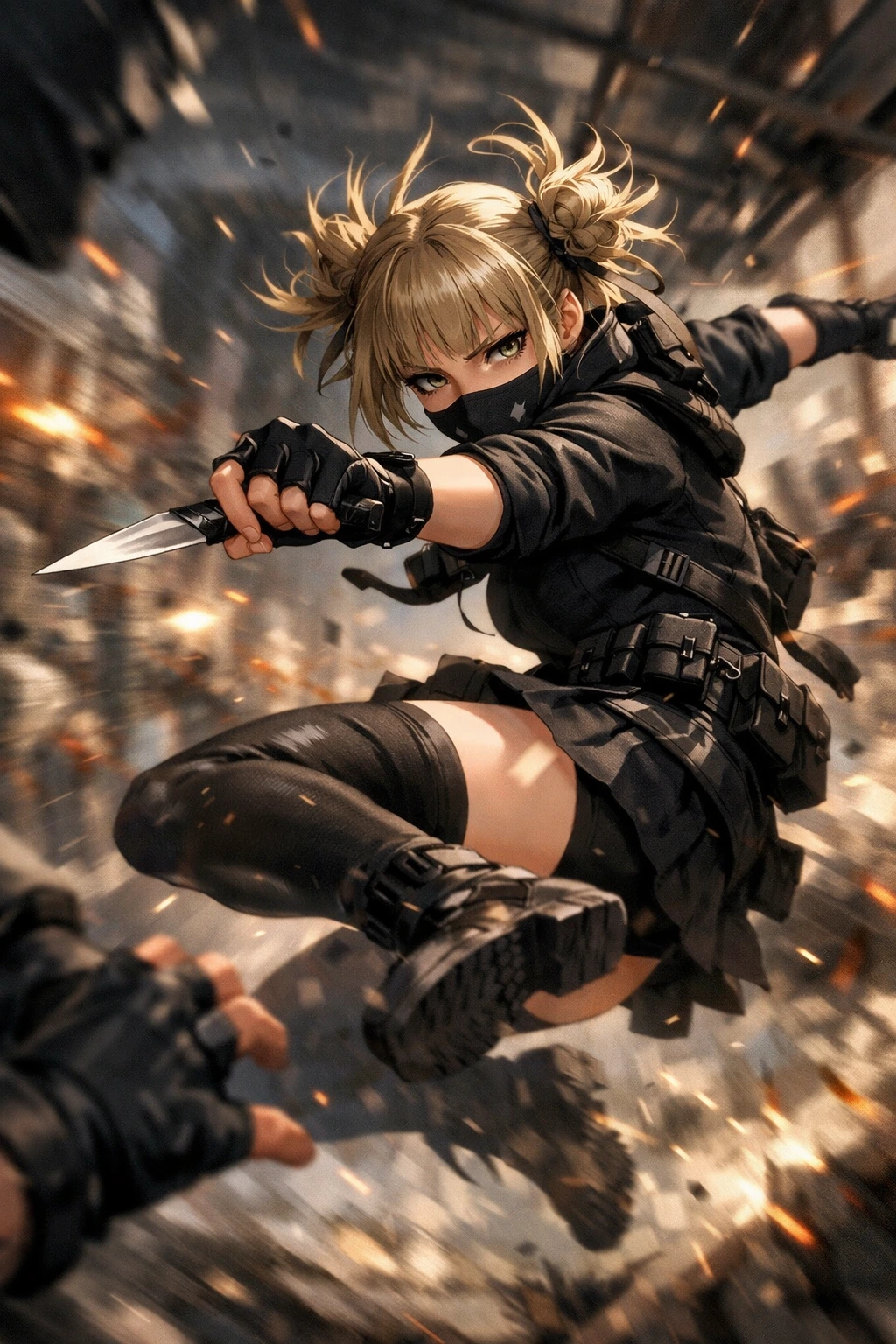
Erasing the “Presence” While her Quirk grants her the face of her enemies, Himiko Toga’s true terror on the battlefield stems from her unparalleled, entirely Quirkless combat skills. Through sheer survival instinct and relentless practice while on the run, she developed an uncanny ability to completely erase her “presence.”
In the high-stakes world of Pro Heroes, combatants rely heavily on sensing bloodlust, intent to kill, and micro-movements to anticipate attacks. Himiko weaponizes her own psychology to bypass this completely. By holding her breath, clearing her mind of all thoughts, and forcing herself into a state of chilling emotional neutrality, she effectively disappears from the visual and sensory fields of highly trained individuals.
Pro Heroes like Eraser Head and tracking specialists find themselves completely unable to lock onto her. She can slip into a hero’s blind spot in a fraction of a second, moving with the silent lethality of a ghost. This mastery of stealth makes her one of the most dangerous close-quarters combatants in the series, as she does not need a Quirk to slit a throat from the shadows.
The Shiketsu Infiltration (Camie Utsushimi) Himiko’s mastery of espionage was put on terrifying display during the Provisional Hero License Exam, an arc that cemented her status as a premier threat. Operating under orders from the League of Villains, she successfully abducted Camie Utsushimi, a highly skilled top-tier student from Shiketsu High School. This was not a simple kidnapping; it was a prelude to a flawless tactical infiltration.
Draining enough of Camie’s blood to sustain her form for days, Himiko infiltrated a heavily monitored government exam completely undetected by the proctors, the security systems, and even Camie’s own classmates. What makes this feat truly horrifying is not just the physical mimicry, but the psychological duplication. Himiko perfectly replicated Camie’s unique mannerisms, her distinctive slang, and her confident personality.
She navigated complex social interactions and intense combat scenarios without ever breaking character, proving that her espionage capabilities extend far beyond stealing a face—she steals the entire essence of a human being, leaving the highest echelons of hero security completely blind to the wolf in their midst.
Psychological Warfare on Midoriya During the Provisional License Exam and throughout the series, Himiko demonstrates a terrifying aptitude for psychological warfare, specifically targeting Izuku Midoriya. Her obsession with Midoriya is rooted in her twisted perception of love; she is captivated by his relentless drive to shatter his own body to save others, finding him most “beautiful” when he is covered in blood and bruises.
In close-quarters combat, she uses his heroic predictability against him. Midoriya’s inherent, ingrained desire to save people forces him to pull his punches and prioritize civilian safety. Himiko exploits this relentlessly, using fluid, unpredictable acrobatics mixed with disorienting affection to throw him off balance. She engages him in conversation while swinging a knife, blending confessions of love with lethal strikes.
This creates a severe cognitive dissonance for Midoriya, who is unequipped to fight an enemy who genuinely believes she is expressing affection through violence. By weaponizing his empathy and her own psychosis, she transforms physical combat into a draining, deeply unsettling psychological ordeal.
Quirk Awakening: The Deika City Massacre
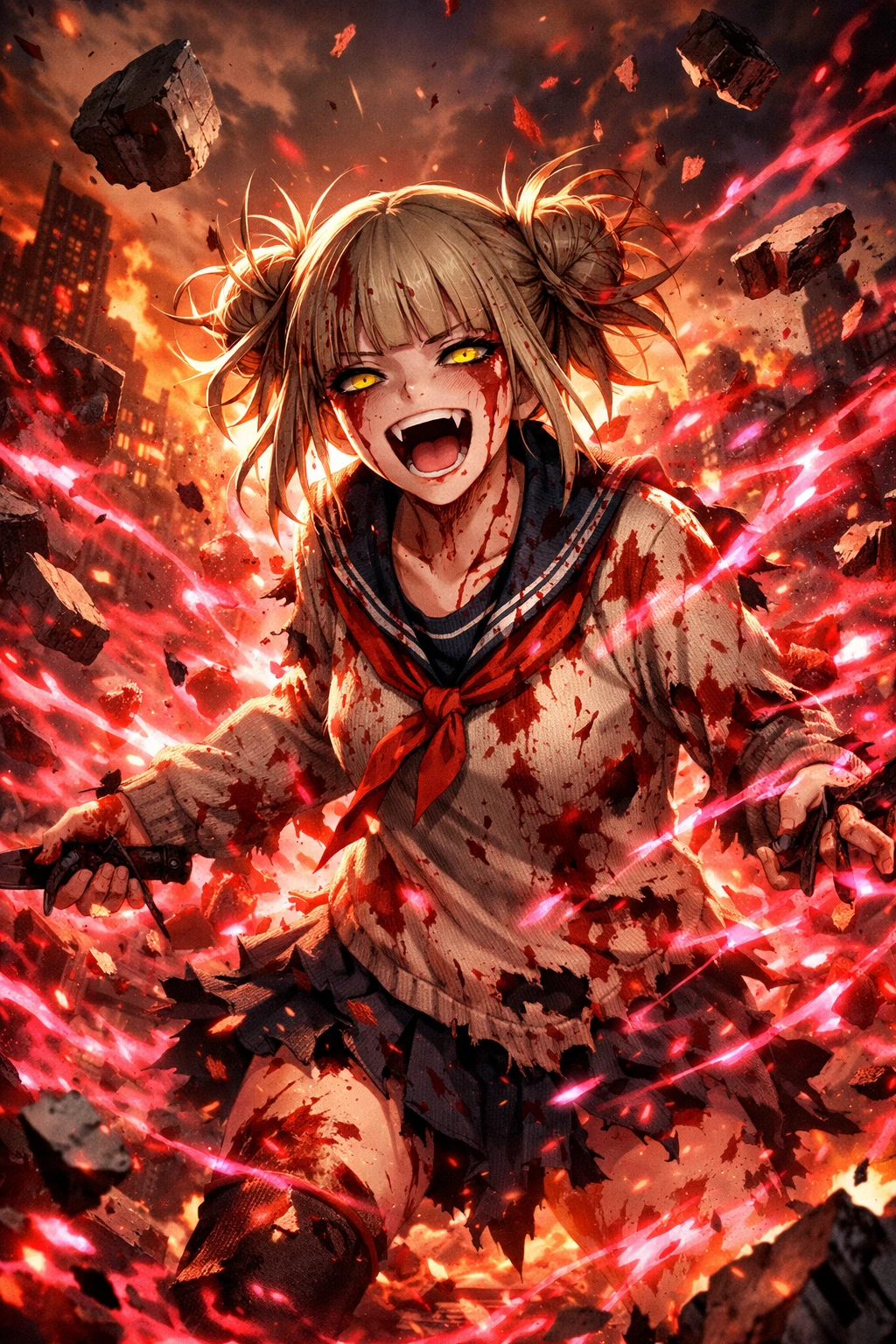
The Ideological Clash with Curious The brutal conflict in Deika City between the League of Villains and the Meta Liberation Army (MLA) served as the crucible that forever altered Himiko’s trajectory. During this battle, she found herself targeted by Chitose Kizuki, also known as the MLA executive and journalist, Curious. Curious represented a different kind of societal threat to Toga: the threat of narrative exploitation.
Seeking to use Himiko as propaganda for the MLA’s cause, Curious attempted to frame her as a pathetic, tragic victim of a restrictive society—a broken bird to be pitied. This framing deeply offended Himiko. While she undeniably suffered under societal norms, Toga genuinely believed she was finally living her best, most authentic life alongside the League of Villains.
She rejected the victim narrative entirely. Her clash with Curious was not just physical; it was a fierce ideological defense of her autonomy. Himiko refused to let her trauma be commodified by a political movement, violently asserting that she loved her life, she loved her friends, and she would kill anyone who pitied her for being true to herself.
The Brink of Death The battle against Curious and her zealous followers pushed Himiko to the absolute brink of biological failure. Outnumbered and outgunned, she was subjected to a relentless barrage of explosive attacks. Curious’s Quirk, which allowed her to turn anything she touched into a detonator, turned the very environment against Himiko.
She suffered massive, catastrophic blood loss, her body riddled with shrapnel and severe burns. More horrifyingly, Curious managed to detonate explosions inside Himiko’s bloodstream by turning small amounts of her own blood into bombs. Stumbling through the streets of Deika City, half-blind and hemorrhaging, Himiko was pushed past the limits of human endurance.
Her physical form was failing, her internal organs were shutting down, and her typical arsenal of stealth and agility was rendered useless by the sheer volume of enemies. It was in this crucible of excruciating pain and imminent death that the fundamental rules of her biology were forced to mutate in order to ensure survival.
The Evolution of “Love” Driven by a desperate will to live and an intense, overwhelming rush of emotion, Himiko experienced a terrifying Quirk Awakening. For her entire life, her “Transform” Quirk was locked behind a genetic wall: she could copy the body, but never the power. However, pushed to the edge of the abyss, her intense, genuine love and admiration for Ochaco Uraraka shattered that limitation.
Because she did not just want to look like Ochaco, but truly desired to be her on a spiritual and emotional level, her biology adapted to bridge the gap. Bypassing the fundamental genetic lock of her Quirk, Himiko transformed into Ochaco and suddenly felt the activation of “Zero Gravity” in her fingertips. This was a paradigm shift in the power scaling of the series.
Utilizing Ochaco’s Quirk with lethal, uninhibited precision, she touched the rushing MLA forces, nullifying their gravity, and then heartlessly dropped them from terminal velocity. This evolution proved that her Quirk was intrinsically tied to her emotional state; true, unadulterated “love” allowed her to assimilate a person’s very soul, granting her the ability to slaughter an army with a borrowed power.
The Bond of Outcasts (The True Family)
Empathy Among Monsters To the outside world, the League of Villains was a chaotic syndicate of terrorists, but to Himiko Toga, they were the only true family she had ever known. The League functioned as a sanctuary for the outcasts, the broken, and the mutated—those whom Hero Society had discarded. Within this found family, Himiko found a level of radical empathy she had never experienced.
No one judged her for her bloodlust; they simply accepted it as a facet of her existence. Her bond was particularly profound with Jin Bubaigawara, known as Twice. Both suffered from severe psychological trauma and societal rejection. Jin, tormented by his fractured identity and the voices in his head, understood Himiko’s struggle with her own mind.
In turn, Himiko treated Jin with a remarkable, tender kindness, famously wrapping a handkerchief around his torn mask to hold his fracturing psyche together. In the darkest corners of the criminal underworld, these two “monsters” found a deeply human connection, proving that even those capable of unspeakable evil are driven by a fundamental need for love and acceptance.
The Murder of Twice The Paranormal Liberation War marked the death of Himiko’s remaining innocence and shattered her worldview irreparably. The turning point was the brutal, calculated execution of Twice by the Number Two Hero, Hawks. For Himiko, Jin was not just a comrade; he was her best friend, her confidant, and the most gentle soul in her life.
When Hawks drove his feathers through Twice’s back, he did more than eliminate a tactical threat; he destroyed the fragile sanctuary the League had built. To Himiko, this execution highlighted the ultimate, sickening hypocrisy of the heroes. Heroes were supposed to save people, yet they slaughtered Jin as he was desperately trying to run away to protect his friends.
The emotional devastation of this event was absolute. The cheerful, chaotic wildcard who killed for “love” died that day. In her place, a cold, vengeance-driven soldier was born, utterly dedicated to tearing down the hypocritical society that deemed her best friend worthy only of death.
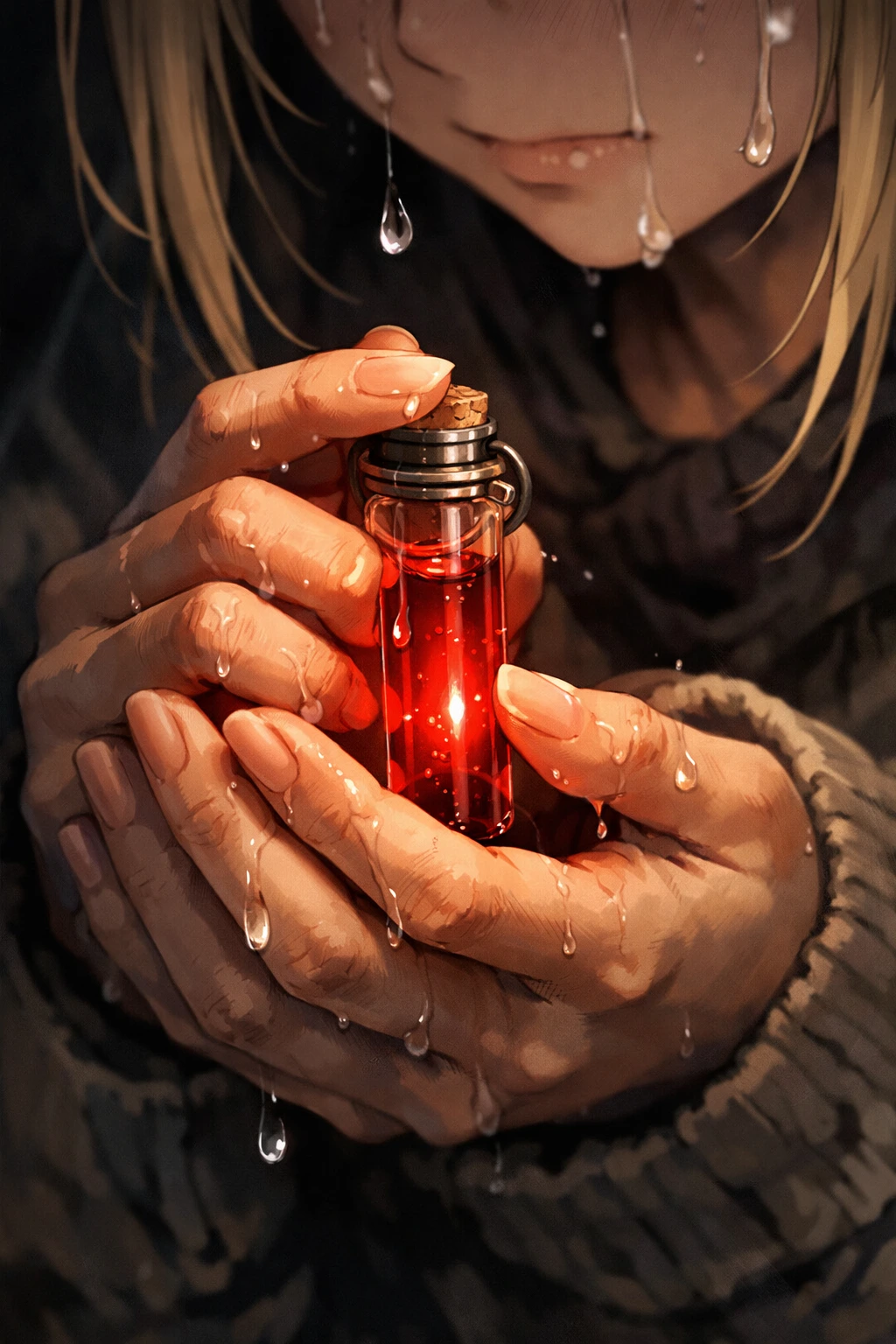
The Stolen Blood Amidst the ash and tragedy of the Paranormal Liberation War, a single, tactical act of foresight set the stage for the apocalypse. Dabi, ever the opportunistic manipulator, managed to secure a small vial of Jin Bubaigawara’s blood before his body was lost. When he later presented this vial to Himiko, it was not merely a tactical weapon; it was a devastating emotional artifact.
Holding the literal lifeblood of her murdered best friend, Himiko was given the means to enact her ultimate revenge. Because she loved Jin genuinely and deeply, her Awakened Quirk would allow her to use his power. This stolen blood became the emotional and biological catalyst for the Final War.
It was the physical manifestation of her grief, compressed into a glass tube, waiting to be unleashed upon the heroes who had taken everything from her. The tactical foresight of holding this blood transformed Himiko from a lethal assassin into a global, apocalyptic threat.
The Final War: Sad Man’s Death Parade
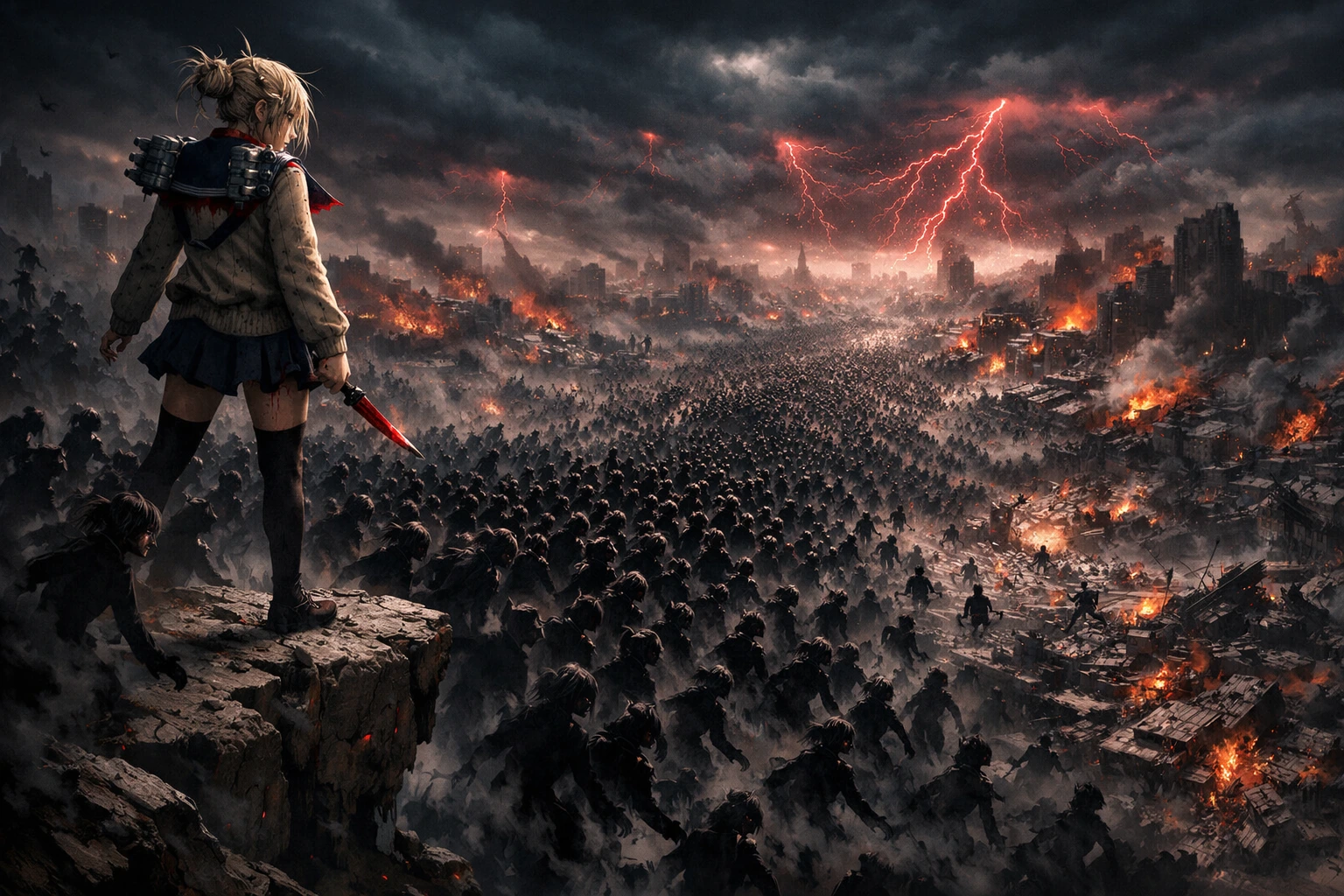
The Biological Nightmare The climax of the Final War brought forth a biological nightmare of unprecedented scale, triggered by Himiko finally ingesting the last remains of Twice’s blood. The moment the blood hit her system, her Awakened Quirk bypassed the standard rules of mimicry.
Because her love for Jin was absolute and unshakeable, she didn’t just take his face; she inherited his apocalyptic potential. Transforming into Twice, she activated his “Double” Quirk, a power Jin himself had hesitated to use fully due to his mental trauma.
Unburdened by Jin’s psychological blocks and fueled by pure, unadulterated rage, Himiko unleashed the “Sad Man’s Death Parade.” This was not just a cloning technique; it was an infinite, exponential tidal wave of flesh, blood, and villainy. She cloned herself as Twice, who then cloned more Twices, creating an endless, cascading ocean of bodies that threatened to drown the entire nation of Japan in a sea of vengeance.
The One-Woman Army The sheer tactical horror of Himiko’s assault during the Final War cannot be overstated. By utilizing the Sad Man’s Death Parade, she transcended the role of an individual combatant to become a true One-Woman Army. Aided by the warp gate capabilities of Kurogiri, the infinite sea of Twice clones spilled out across multiple battlefields simultaneously, swarming both the Gunga Mountain Ruins and Okuto Island.
She single-handedly overwhelmed dozens of top-tier Pro Heroes, U.A. elite students, and heavily fortified defense grids. The heroes found themselves drowning in an unending tide of bodies, unable to stem the exponential growth.
Every clone possessed Himiko’s lethal agility and killer instinct, combined with Jin’s face and voice. She dismantled the heroes’ carefully constructed divide-and-conquer strategies through sheer, insurmountable numbers, bringing the entire hero faction to the brink of total annihilation through the sheer force of her grief.
The Uraraka Confrontation Amidst the apocalyptic chaos of the infinite clones, the narrative zeroed in on the ultimate ideological showdown between Himiko Toga and Ochaco Uraraka. This was not merely a physical brawl; it was the climax of a thematic war regarding the nature of heroics. Hovering above the fray, Himiko forced Ochaco to answer for the foundational hypocrisy of Hero Society.
She screamed her pain at the hero, demanding to know: if heroes exist to save people, why do they only save the “good” people? Why do they draw a line in the sand, deciding who is worthy of salvation and who is destined for slaughter?
Himiko forced Ochaco to confront the reality that society happily ignored the abused, the mutated, and the mentally ill until they broke, at which point heroes were sent in to execute them. This confrontation stripped away the flashy, idealized veneer of heroism, forcing Ochaco to look directly into the bleeding, traumatized heart of a villain who fell through the cracks of a broken world.
The Transfusion (The Ultimate Sacrifice)
The Validation of Existence The resolution of Himiko Toga’s arc is one of the most poignant and emotionally devastating sequences in the entirety of the series. Ochaco Uraraka ultimately defeats the apocalypse not with overwhelming physical force, but with an act of profound, radical empathy. Refusing to strike Himiko down, Ochaco acknowledges her own past failures and reaches out, physically connecting her own blood to Toga.
In the midst of the carnage, Ochaco looks at the serial killer and sees the abused, terrified little girl crying over a dead bird. She validates Himiko’s existence, acknowledging her pain, her love, and her right to smile. This profound act of acceptance breaks through Himiko’s armor of hatred. For the first time in her life, a “hero” does not look at her with disgust, pity, or lethal intent, but with genuine understanding and a desire to connect.
This radical empathy short-circuits the Sad Man’s Death Parade, as the rage fueling the clones evaporates in the face of true, unconditional acceptance.
Reversing the Flow The emotional climax triggers a tragic, beautifully ironic final act. Following their intense mid-air battle, both girls plummet to the earth, severely wounded, but it is Ochaco who is dying from massive blood loss inflicted during the fight. Faced with the death of the girl she loves—the girl who finally understood her—Himiko makes a choice that entirely subverts her biological nature.
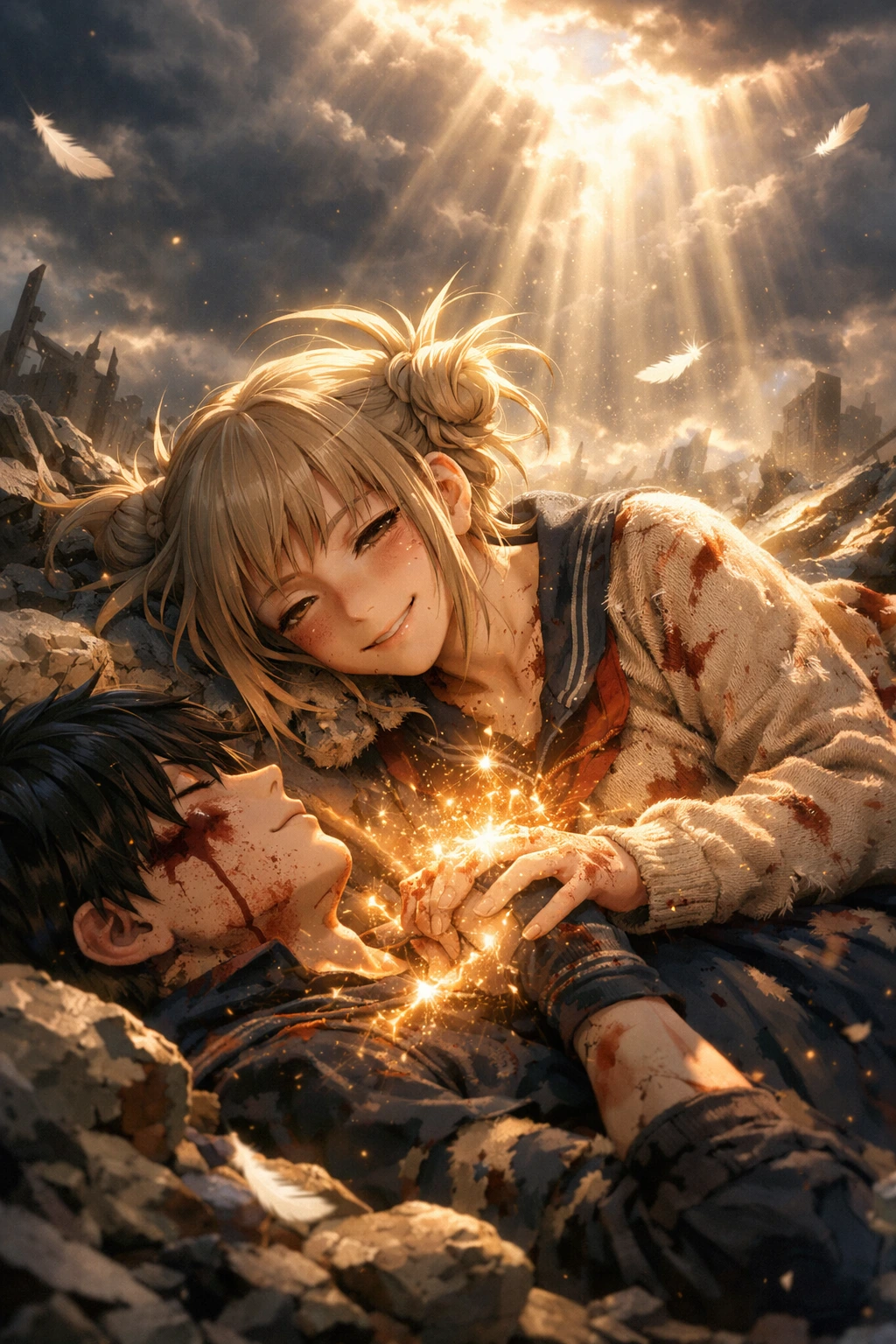
For her entire life, Himiko’s existence was defined by taking blood to survive. She was a biological parasite by design. Yet, in this final moment, she chooses to use her Quirk in reverse. Transforming into Ochaco to ensure perfect blood compatibility, Himiko connects a tube between them and willingly gives all her own blood to save the dying hero. She becomes the donor. This ultimate sacrifice is a breathtaking subversion of her character; the ultimate taker becomes the ultimate giver, sacrificing her own life force to preserve the one person who treated her as a human being.
Death by True Love As the life drains from her body, Himiko Toga experiences a profound, quiet peace that had eluded her since childhood. Lying beside the saved Ochaco, her vision fading, Himiko dies with a genuine, unburdened smile on her face.
She realizes that she finally got what she always wanted: to give her blood, her love, and her entire being to someone she cherished, and to have that love accepted without fear or disgust. Her death is a heartbreaking paradox; she dies committing an act of pure, selfless heroics.
In her final moments, she finally experiences the pure, “normal” connection she had spent her entire life killing for. She leaves the world not as a monster, but as a girl who loved too intensely for a society too rigid to understand her, finding redemption in the ultimate act of true love.
Conclusion
The Indictment of Quirk Counseling Himiko Toga stands as Kohei Horikoshi’s greatest and most devastating critique of the world he built. Her life and death serve as a glaring indictment of a society that prioritizes optics, compliance, and convenience over genuine mental health and empathy.
The practice of “Quirk Counseling” shown in her youth was a systemic failure, an attempt to sweep biological anomalies under the rug rather than integrating them safely into the societal fabric. By demanding that a child suppress her fundamental nature to avoid making “normal” people uncomfortable, society guaranteed the creation of a monster. Himiko’s tragedy proves that when a system refuses to offer a hand to those falling into the dark, it cannot act surprised when they emerge from the shadows armed with knives.
Closing Thoughts The legacy of Himiko Toga is a complex, bleeding stain on the pristine image of Hero Society. Her journey from an abused child to an apocalyptic threat, and finally to a selfless savior, forces the audience to reevaluate the binary concepts of good and evil. Her tragic end provides definitive, expert commentary on the central thesis of My Hero Academia: the line between a “villain” and a “hero” is often incredibly thin.
More often than not, it is simply a matter of who received a steady, guiding hand when they asked for help, and who was met with a closed fist. In saving Ochaco Uraraka, Himiko Toga proved that beneath the blood and the madness, there was always a hero waiting to be seen.