
I. Introduction: The Boy Who Sought the Horizon
If you were to distill the entirety of Attack on Titan down to a single visual, it wouldn’t be the Colossal Titan peering over the Wall, nor the kinetic fury of Levi Ackerman slicing through the air. It would be a pair of teal-green eyes looking up at a bird flying freely over a massive, stone cage.
Eren yeager is perhaps the most fascinating protagonist in modern anime history because his journey is not a straight line; it is a circle, a snake eating its own tail. We begin with a boy who screams at the sky because he is trapped, and we end with a god who screams at the sky because he is trapped.
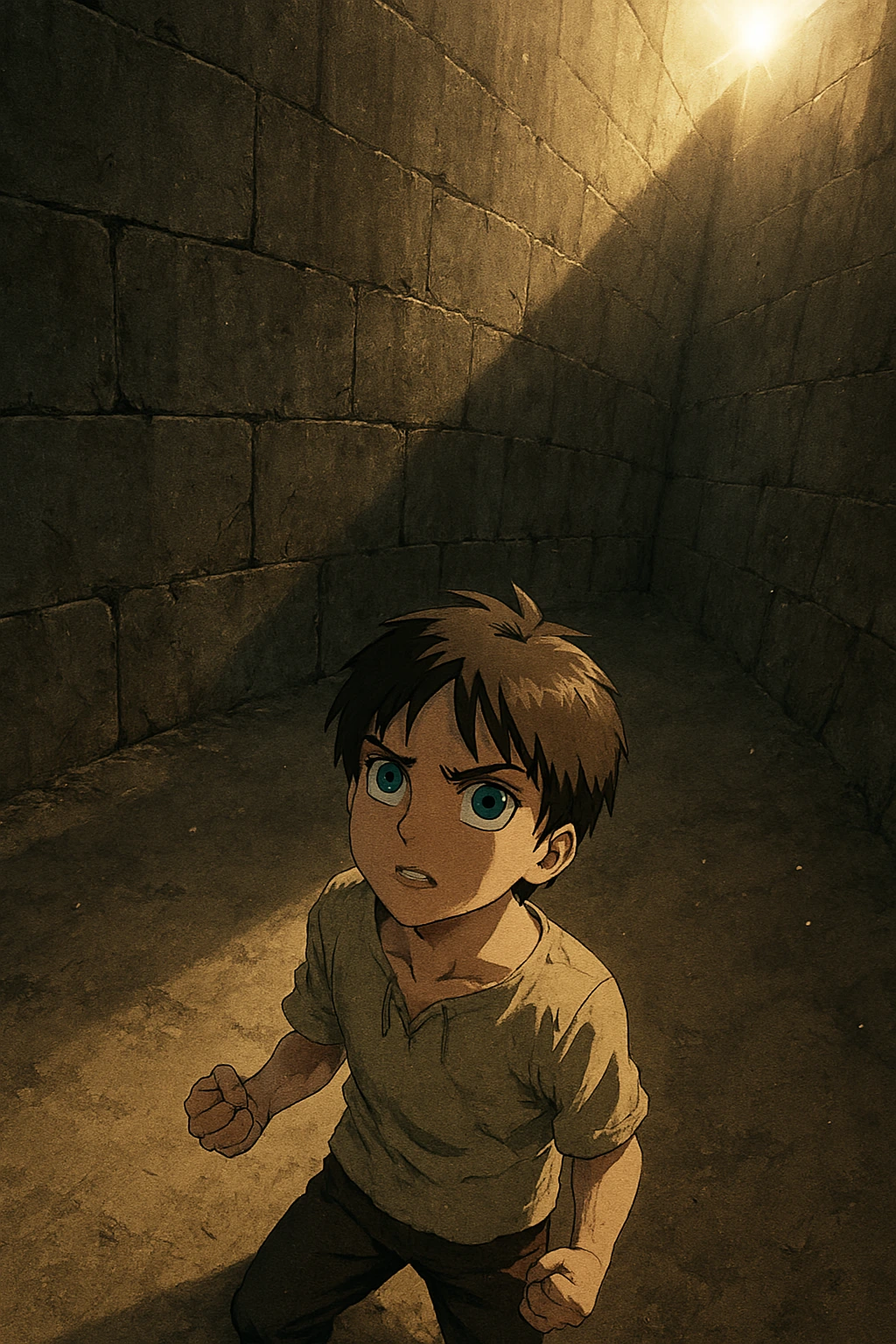
Between those two screams lies a narrative of blood, betrayal, and a desperate, clawing need for something he calls “Freedom.” But as the dust settles on the Rumbling and the steam evaporates from the colossal footprints that flattened the earth, we are left with a haunting question: Was any of this truly his choice?
The ending of Attack on Titan (specifically Chapter 139 and the final anime episode) remains one of the most divisive conclusions in the history of fiction. It tore the fandom in half. Some saw it as a tragic masterpiece that perfectly encapsulated the cruelty of the world; others saw it as a betrayal of the character’s core, a last-minute fumble that reduced a nationalist icon to a pathetic child.
However, when we strip away the shipping wars, the theory-crafting, and the emotional knee-jerk reactions, we are left with a cruel, undeniable irony that serves as the thesis of Eren’s life.
Eren yeager was the most powerful being in the history of his world, holding the power of a god in his hand, yet he was the least free character in the entire story.( the eren yeager freedom)
This article is not just a summary of events. It is an autopsy of a dream. We are going to dissect the definition of “The Scenery,” the trap of determinism, the philosophical clash between Zeke and Eren, the crucial role of Mikasa in Ymir’s liberation, and whether that final, pathetic breakdown in the Paths was character assassination or a masterstroke of realism.
We are going beyond the walls.
II. Defining Eren’s Freedom: “The Scenery” and the Horror of Boredom
To understand Eren’s failure, we must first define his goal. What did “Freedom” actually mean to him? This is where the tragedy begins—with a fundamental misunderstanding between the protagonist and the audience, and even between Eren and his best friend.
For a long time, the audience—and Eren himself—conflated his dream with Armin Arlert’s dream. They sat by the river as children, reading a banned book about the outside world. Armin’s eyes lit up when he read about fields of ice, rivers of fire, and vast, salty waters (the ocean). For Armin, freedom was exploration. It was the addition of knowledge, experience, and wonder. It was about what the world had to offer.
Eren’s definition of freedom was fundamentally different. It wasn’t about presence; it was about absence.
The Disappointment of Reality
The turning point for Eren’s psychology—the moment the villain was truly born—isn’t his mother’s death, nor the discovery of his Titan powers. It is the moment he unlocks his father’s memories in the basement and learns the truth about the outside world.
When Eren looked at the photograph of humanity living comfortably in Marley, he didn’t feel hope. He didn’t feel relief that humans survived. He felt a crushing sense of betrayal. As he confessed to the boy Ramzi in Chapter 131, in one of the most harrowing and honest monologues in the series:
“When I learned that humanity lived beyond the walls… I was so disappointed.”
Why disappointment? Because the existence of other humans meant the world wasn’t the vast, untamed, “blank slate” he had envisioned from Armin’s books. The world was already claimed. It was cluttered with societies, politics, hatred, and history. It wasn’t free. It was just a larger cage with different wardens.
Eren didn’t just want to save Paradis. Deep down, in the darkest recess of his ID, he wanted to wipe the slate clean. He wanted the world to look like the book. He wanted a world without walls, but also a world without people to build them. This is a crucial distinction: Eren fought for the concept of freedom, not the reality of peace.
“That Scenery”
This culminates in the moment known as “The Scenery.”
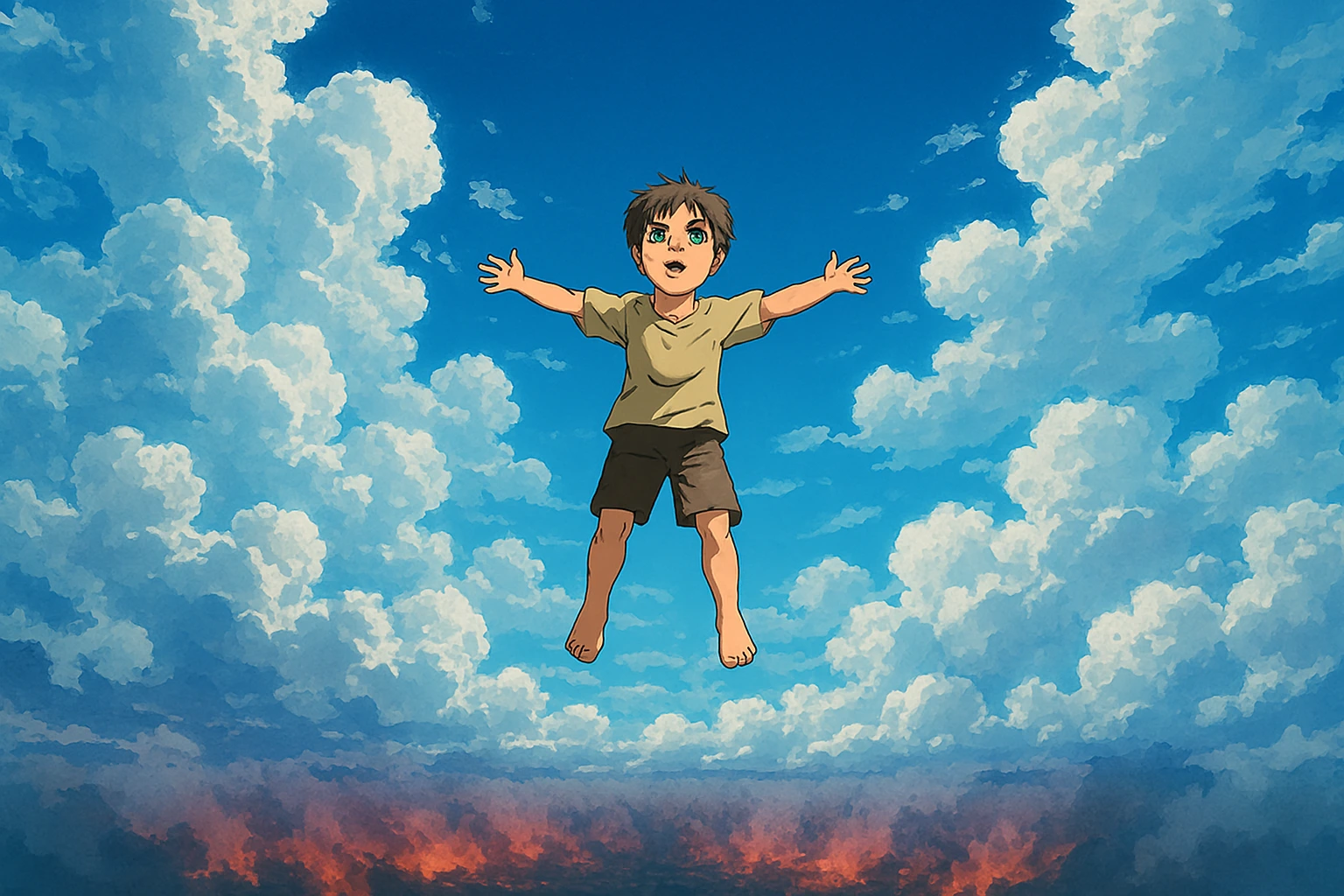
In Chapter 131, while the Founding Titan is trampling millions of people, flattening cities into red paste, and boiling the oceans with steam, we see a jarring transition. We see Kid Eren, arms widespread, floating above the clouds in a bright blue sky.
He looks down, not at the carnage, but at the “freedom” of the open air. He turns to a vision of Armin and says, “Armin, look! This is freedom!”
This is the horror of Eren’s psyche. He could only achieve his sensation of freedom by dissociating from reality. To feel free, he had to reduce the world to a flat, empty surface. The “Scenery” wasn’t the peace that came after the war; it was the act of destruction itself. It was the wind in his hair while he stood atop a pile of corpses.
This distinction is vital. If Eren simply wanted to save his friends, he might have chosen a tactical Rumbling (destroying just the military alliances).
But he chose the full Rumbling because, as he admits in the end, “I wanted to see this sight.” He was driven by a childish, innate, and destructive desire to turn the complex world into a simple one.
The “School Castes” Confirmation
Isayama, the author, provides a chilling confirmation of this in the “Attack on School Castes” fake previews found at the end of the manga volumes. In this alternate universe, Eren is a normal high school student living a peaceful life. And he is miserable.
He complains that “nothing ever happens” and explicitly wishes for a zombie apocalypse or something to destroy his school just so he can feel something.
This proves that Eren’s drive isn’t purely reactive to trauma. Even without Titans, even without his mother dying, Eren yeger is a person who cannot exist in peace. He needs an enemy. He needs a wall to break. If the world is peaceful, he is bored. And for Eren, boredom is a cage.
III. The Slave to the Timeline (Determinism)
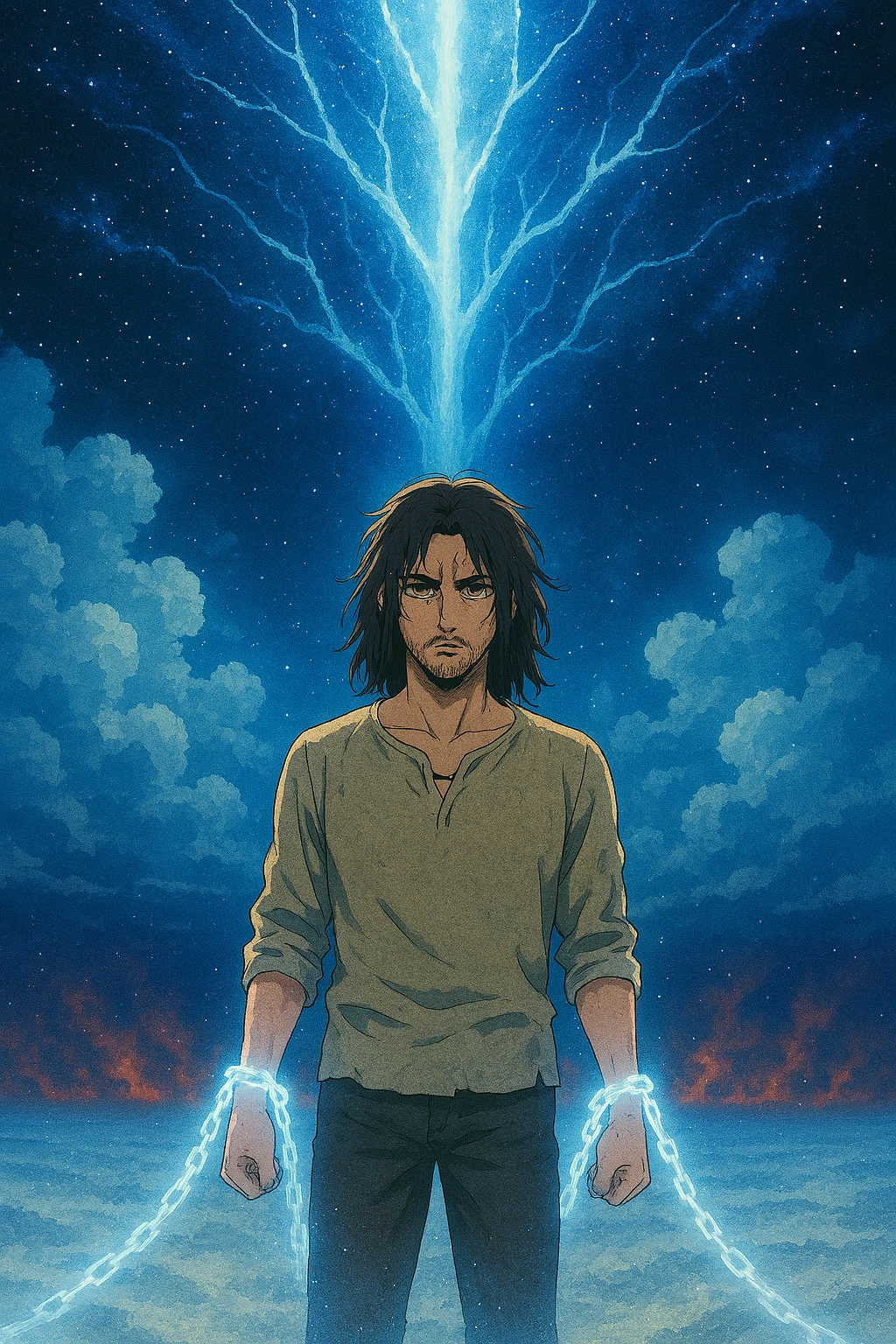
If his desire for “The Scenery” was the engine of his actions, his power—the Attack Titan—was the steering wheel that was welded shut.
Attack on Titan operates on a closed time loop, a bootstrap paradox where the future influences the past. When Eren kissed Historia’s hand at the medal ceremony, he saw the future. He saw the Rumbling. He saw himself manipulating his father, Grisha, to kill the Reiss family.
From that moment on, Eren ceased to be a person living in the present. He became a passenger in his own body, moving toward an inevitable destination.
The Illusion of Choice
Critics often ask: “If Eren saw the future, why didn’t he change it?”
The tragedy is that he tried. The scenes in Marley, specifically the moment with Ramzi, prove this. Eren sees the future memory where he saves Ramzi from being beaten by merchants. In the present, when he sees Ramzi getting beaten, he initially turns to walk away, thinking, “I shouldn’t interfere. I’m going to kill this boy in the future anyway. Being a hypocrite won’t help.”
But he can’t do it. His nature—his core personality—forces him to turn around and save the boy. And in doing so, he fulfills the exact future he saw.
This is the trap of compatibilism in Attack on Titan. Eren is free to act according to his desires, but he is not free to choose his desires. He saves Ramzi because he is Eren yeager. He initiates the Rumbling because he is Eren yeager.
The future is fixed not because of some magical force, but because Eren is who he is, and he will always make the choices that lead to that specific outcome. He is a slave to his own nature.
The Timelessness of the Founder
To make matters worse, once Eren gains the full power of the Founding Titan, his perception of time shatters completely. As he explains to Armin, “The past, present, and future… they all exist at once.”
Imagine the psychological horror of that existence. He is simultaneously a child watching his mother get eaten, a cadet training with his friends, and a monster crushing millions of people. He cannot distinguish between “now” and “then.”
This explains his erratic behavior and his desperate need to push his friends away. His mind was fragmenting under the weight of omniscience. He wasn’t making calculated decisions in the final arc; he was barely holding his consciousness together while the stream of time ravaged his mind.
The Self-Made Hell
This recontextualizes the famous scene where he manipulates Grisha. It looks like a power move—Eren asserting dominance over the timeline. But look closer at Eren’s face in that scene. He isn’t triumphant. He looks desperate. He looks like a man forcing himself to pull the trigger.
He isn’t manipulating the past to change the future; he is manipulating the past to ensure the future happens, because he is terrified of a reality where it doesn’t. He has to create the monster (himself) to reach the end.
Kenny Ackerman’s final words to Levi echo across the entire series: “Everyone had to be drunk on something to keep pushing on… Everyone was a slave to something.”
Eren was a slave to Freedom. The irony is palpable. In his quest to be the freest man alive, he became the only character with absolutely no free will. Mikasa could choose to kill him. Armin could choose to fight him. Levi could choose to save him. But Eren? Eren had to keep moving forward, locked onto a rail he laid down himself.
IV. The “Code Geass” Comparison: The Zero Requiem Fallacy

For years leading up to the finale, the anime community was rife with theories comparing Eren yeager to Lelouch Lamperouge from Code Geass.
The “Zero Requiem” theory posited that Eren was making himself the villain on purpose so that, by defeating him, the Eldians of Paradis would be seen as heroes by the rest of the world. He would unite humanity through a shared hatred of himself.
While there are shades of this in the actual ending (Eren does tell Armin that the Tybur family used Helos in the same way), treating Eren as a Lelouch clone is a fundamental misunderstanding of his character.
The Difference in Motivation
Lelouch was a strategist. His plan was political, calculated, and ultimately selfless. He died for a better world.
Eren explicitly deconstructs this in his final conversation with Armin. When Armin asks if this was all for them, Eren breaks down and admits the selfish truth:
“I don’t know why, but… I wanted to do it. I had to.”
And later:
“Even if I didn’t know that you guys would stop me, I think I still would have flattened this world.”
Eren is not a martyr playing 4D chess. He is a traumatized individual lashed to a destructive impulse. The “Lelouch Plan” requires a level of rationality that Eren never possessed. Eren is a creature of emotion, rage, and instinct. He didn’t rumble the world purely to save his friends; he rumbled the world because the existence of the world outside the walls was an affront to his existence.
The ending makes it clear: The “Hero of Paradis” narrative was a byproduct, a scrap of comfort he left for his friends, but it was not the primary engine. The primary engine was his selfish desire to reach “That Scenery.”
V. The Alternative: Zeke’s Euthanasia Plan (Utilitarianism vs. Vitalism)
To fully appreciate Eren’s radicalism, we must compare him to his foil: his half-brother, Zeke yeager.
Zeke proposed the “Euthanasia Plan”—sterilizing all Eldians so the race would slowly die out over a century. No new children would be born, meaning no new Titans, and the world would be free of the “curse” of Ymir.
From a purely utilitarian perspective, Zeke’s plan was the “moral” choice. It resulted in the least amount of suffering. The current Eldians could live out their lives, and the rest of the world (billions of people) would be spared from the Rumbling.
Eren’s Rejection: “Because I was Born into This World”
Eren rejected this plan violently, not because he had a better political solution, but because it violated his core philosophy: Vitalism.
Eren’s catchphrase, “Because I was born into this world,” is a rejection of the idea that it is better not to exist. Zeke believed that life was suffering and that non-existence was a mercy (an anti-natalist view). Eren believed that the act of being born gives one the inherent right to exist and fight for that existence, regardless of the cost to others.
Eren chose to kill billions of strangers rather than allow his own people to slowly fade away. It is a monstrous, selfish choice, but it is deeply human. It is the ultimate assertion of the self over the collective. Where Zeke wanted to end the story by closing the book gently, Eren wanted to rip the pages out and scream until his throat bled.
VI. The Key Was Always Mikasa: Why Ymir Smiled

One of the most confusing aspects of the finale for many viewers was the revelation that Ymir Fritz—the founder of all Titans—was waiting not for Eren, but for Mikasa Ackerman.
Why Mikasa? Eren was the one with the Founding Titan. Eren was the one who freed Ymir from the Paths in Chapter 122.
The answer lies in the parallel between Ymir’s relationship with King Fritz and Mikasa’s relationship with Eren.
The Twisted Love
Ymir was a slave who gained godlike power, yet she remained a slave to King Fritz for 2,000 years. Even after she died, she continued to build Titans for him in the Paths.
Why? Because, as the story reveals, she loved him. It was a twisted, abusive, Stockholm Syndrome-esque love, but it was a bond she could not break. She was a god enslaved by her own attachment.
Mikasa represents the mirror image of this dynamic. She loved Eren intensely. She was an Ackerman, bound to protect him. To Ymir, Mikasa looked like another girl trapped by love for a “monster.”
The Choice to Kill
Ymir needed to see if it was possible to love someone deeply and yet still defy them for the greater good. She needed to see if a girl could kill the person she loved most to save the world.
When Mikasa severed Eren’s head in the final chapter, she broke the cycle. She proved that love does not equal servitude. She proved that you can love a monster and still stop him. This act gave Ymir the courage to finally let go of her attachment to Fritz and fade away, ending the Titan curse.
Eren was the tool Ymir used to create the situation, but Mikasa was the resolution. Eren was the violence; Mikasa was the liberation.
VII. The Controversy: The “Pathetic” Breakdown
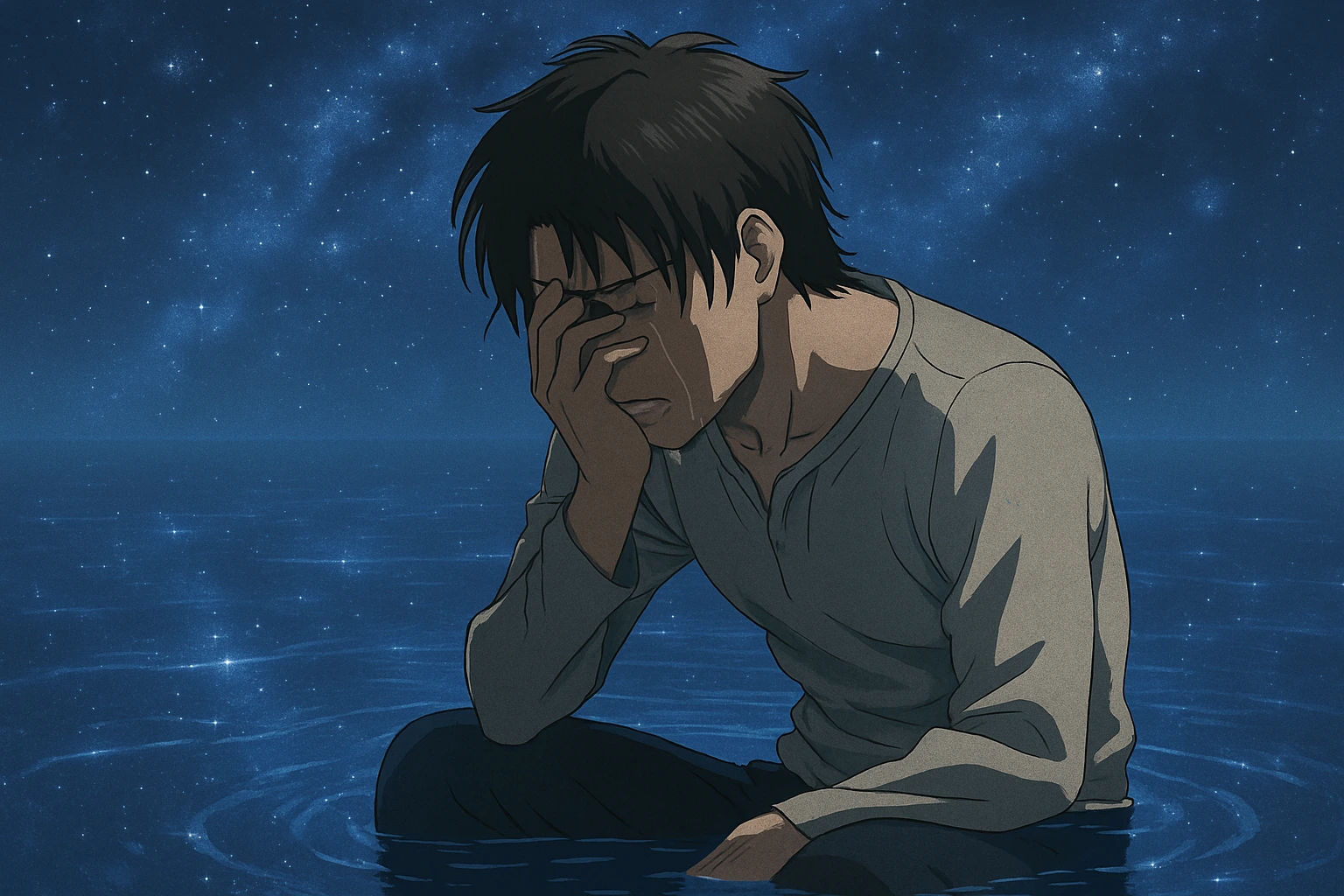
We must address the elephant in the room. The panel that launched a thousand memes. The moment in Chapter 139 (and the final episode) where Eren sits in the metaphysical ocean, cries, and screams about Mikasa.
“No, I don’t want that! Mikasa finding another man…?! I want her to think about me and no one else for the rest of my life! Even after I die… I want to be at the front of her mind for a while! Ten years, at least!”
This scene caused a visceral reaction. Fans who viewed Eren as a stoic, “Chad” nationalist leader felt betrayed. They called it character assassination. They claimed it reduced a complex anti-villain to a whining incel.
However, if we look at Eren’s character trajectory honestly, this scene is not an assassination. It is a revelation.
The Mask Falls Off
For the entire post-timeskip arc (Season 4), Eren was wearing a mask. He was acting the part of the cold, unfeeling revolutionary to push his friends away. He wrapped himself in mystery and stoicism. The “Manbun Eren” who told Mikasa he hated her was a performance.
But who was Eren before the timeskip? He was a crybaby. He was emotional. He was irrational. He was a boy who screamed at Hannes for not saving his mom, who screamed at Mikasa for babying him, who cried in the crystal cave when he realized his father’s sins.
The breakdown in the finale is the moment the mask cracks. It strips away the “Devil of All Earth” persona and reveals the pathetic truth: He is just a 19-year-old boy. He is a terrified kid who is about to die. He is leaving behind the girl he loves, and in a moment of pathetic, human weakness, he admits he doesn’t want to be forgotten.
Is it cringe-worthy? Yes. Is it pathetic? Absolutely. Is it human? Undeniably.
Eren was never a god. He was a human given the power of a god. The story needed to remind us of that before the end. If he had died maintaining the stoic facade, he would have remained a symbol. By breaking down, he became a person again—a flawed, broken, selfish person. It highlights the tragedy that he wasted his life and his love for a dream that turned into a nightmare.
VIII. The Cage of Existence vs. The Freedom of Death
Throughout the series, birds serve as the primary motif for Eren. They soar over walls. They are unburdened by gravity or politics.
In the final moments of the series, after Mikasa buries Eren’s head under the tree where the story began, a bird flies down and wraps the scarf around her neck. This imagery brings us to the final, grim conclusion regarding Eren’s freedom.
Only Death is Free
Eren could not find freedom in life.
- Inside the Walls, he was caged by Titans.
- Outside the Walls, he was caged by enemies (Marley).
- With the Founding Titan, he was caged by the timeline and the curse of Ymir.
Living, for Eren, meant fighting. “Tatakae.” To live is to fight. But to fight is to be bound by the laws of conflict, cause and effect, and survival.
True freedom—the total absence of restriction—is only found in death. In death, he is no longer the Founding Titan. He is no longer the enemy of humanity. He is no longer a slave to the future. He is simply… gone.
The bird wrapping the scarf is a symbol that, perhaps in some metaphysical way, Eren finally achieved the perspective he wanted. He is finally looking down on the world without having to destroy it. But the cost was his humanity, his life, and 80% of the world’s population.
IX. Did He Succeed? The Final Verdict & The Cycle
So, after the genocide, the time travel, and the tragedy, did Eren yeager succeed? Let’s look at the scorecard, paying special attention to the “Extra Pages” included in the final volume.
- Did he save his friends? Partial Yes. Mikasa, Armin, Jean, Connie, and Levi survived. They lived long lives. In this specific, narrow goal, he succeeded. He made them the “Heroes of Helos” who stopped the devil.
- Did he save Paradis? No. This is the most brutal pill to swallow, solidified by the extra pages of the manga and the credits sequence of the anime. We see Paradis develop into a futuristic city, looking like a cyberpunk Neo-Tokyo. But then, war returns. We see bombers flying overhead, and Shiganshina is reduced to rubble.
- Eren bought them time—perhaps a century or two of peace—but he did not end the cycle of hatred. The world eventually retaliated. The hatred he stoked by rumbling 80% of humanity didn’t vanish; it hibernated. By destroying the world to save the island, he guaranteed that the island would eventually be destroyed by what was left of the world.
- Did he achieve freedom? No. He died a slave to a script. He experienced a fleeting illusion of freedom in the clouds, but it was a hallucination induced by the Paths.
The Boy and the Dog: The Cycle Restarts
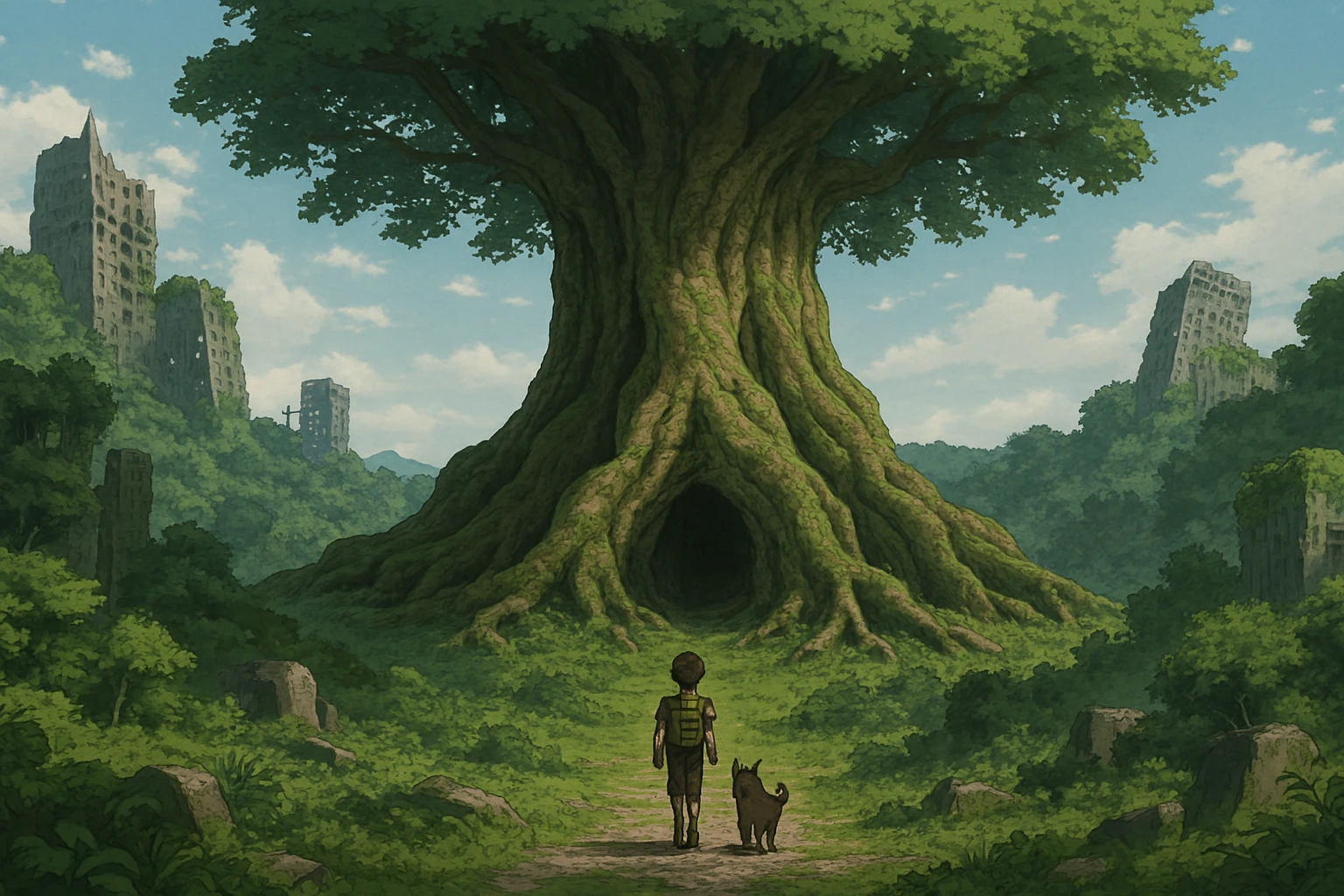
The final image of the series is devastating. Years (perhaps centuries) after Paradis is destroyed, nature reclaims the ruins. A young boy, accompanied by a dog, wanders through the forest. He finds the tree where Eren was buried—which has now grown into a massive, twisted structure resembling the original tree where Ymir fell and bonded with the shining centipede (the Hallucigenia).
The boy approaches the tree.
This image confirms the central theme of Attack on Titan: History repeats itself. The power of the Titans (or something like it) still exists. As long as humans exist, conflict exists. As long as there is fear, someone will seek power. Eren did not break the wheel; he just turned it. The “war for freedom” will happen again, with a new boy, a new power, and a new tragedy.
X. Conclusion: The Devil We Loved
Eren yeager is a cautionary tale about radical freedom. He serves as a dark mirror to the classic Shonen protagonist archetype. Usually, the hero’s “indomitable will” and refusal to compromise is portrayed as a virtue. In Attack on Titan, it is portrayed as a horror.
When you refuse to compromise with the world, when you demand that reality bend to your specific definition of freedom, you don’t become free. You become a tyrant.
Eren’s journey is one of the most beautifully constructed tragedies in fiction. He wasn’t a hero, and by the end, he wasn’t even a villain in the traditional sense. He was a force of nature—a storm that raged because it knew no other way to exist.
He traded the cage of the Walls for the cage of Destiny. He destroyed the world to experience a fleeting breath of air. And in the end, he left us with a question that haunts the silence after the credits roll:
If you have to kill everyone else to be free, were you ever really free at all?
The boy sought the horizon, but he forgot that the horizon is a line that moves away from you the closer you get. Eren chased it until he fell off the edge of the world.