
1. Introduction: The Pinnacle of Sorcery
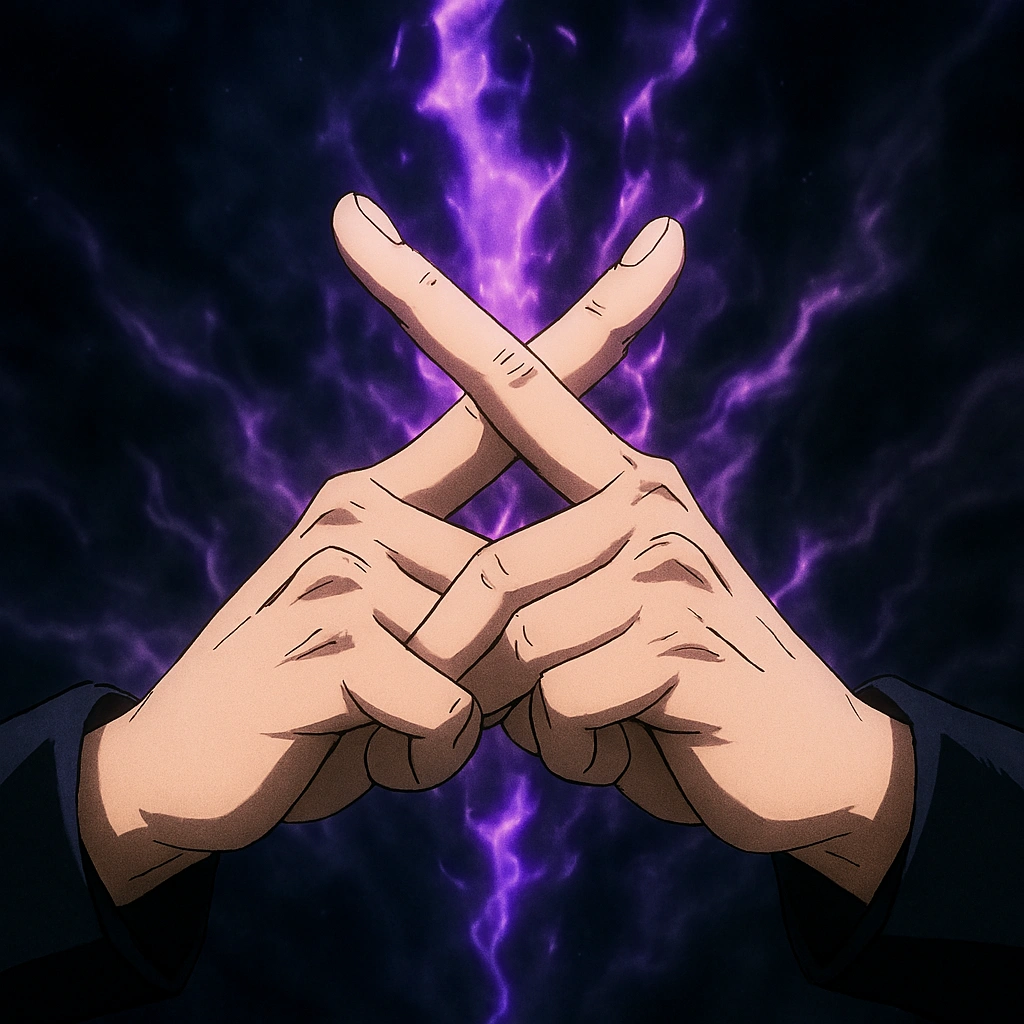
“Ryouiki Tenkai.”
It is a phrase that instantly shifts the gravity of any battle in Jujutsu Kaisen. The moment those words are spoken, the ambient noise fades, the lighting shifts, and the very air seems to thicken with malice. For the uninitiated, it is a spectacle; for a Jujutsu Sorcerer, it is the ultimate checkmate.
Domain Expansion JJK represents the absolute zenith of Jujutsu combat, a technique so advanced and demanding that only the elite of the elite—Special Grade curses and the most gifted sorcerers—can even attempt to manifest it.
At its core, a Domain Expansion is the “Ultimate Secret Art” of Jujutsu. It is not merely a strong attack or a defensive shield; it is the imposition of one’s soul upon reality.
It is the act of taking the “Innate Domain”—the metaphysical landscape that exists within a sorcerer’s mind—and forcing it into the physical world, creating a separate dimension overlaid upon our own.
To achieve this, a sorcerer must expend an immense amount of Cursed Energy to construct a barrier, a shell that separates the inside from the outside. Once the barrier is erected, the sorcerer imbues the enclosed space with their Innate Cursed Technique.
The result is a pocket dimension where the user is effectively god. Their stats are buffed, their environment is tailored to their advantage, and most terrifyingly, their attacks are guaranteed to hit.
In the world of Jujutsu Kaisen, the activation of a Domain is often the signal that the end is near. It is a declaration of victory. Whether it is the infinite void of Satoru Gojo or the grotesque, hand-filled cavern of Mahito, a Domain is the truest reflection of a sorcerer’s ego and power.
However, to view it simply as a “power-up” is to misunderstand the intricate, complex system of rules, binding vows, and architectural logic that governs it. To truly understand why Domain Expansion is the pinnacle, we must dissect the very fabric of how it is constructed.
2. The Architecture: Innate Domain + Barrier + Technique

Understanding a Domain Expansion requires breaking it down into its three fundamental components: the Innate Domain, the Barrier, and the Cursed Technique. It is the synthesis of these three elements that creates the “separate space” characteristic of this technique.
The Innate Domain: The Landscape of the Soul
Before a Domain can be expanded, it must exist internally. The Innate Domain (Seitoku Ryouiki) is the mental landscape inherent to a sorcerer. It is shaped by their personality, their trauma, their cursed technique, and the nature of their soul.
For Ryomen Sukuna, his Innate Domain is a desolate, blood-red shrine littered with skulls and bones—a reflection of his moniker as the King of Curses and his philosophy of absolute ruthlessness. For Megumi Fushiguro, prior to his complete mastery, it manifested as a deep, fluid shadow, a cave of darkness reflecting the abyssal nature of the Ten Shadows Technique.
Every sorcerer has an Innate Domain, but very few can bring it out. The Innate Domain is the “canvas.” Without the canvas, you cannot paint the picture. However, simply having the canvas isn’t enough; you need a frame to hold it. That frame is the Barrier.
The Barrier: The Shell of Reality
The Barrier is the most technical aspect of a Domain Expansion. It is a construct of pure Cursed Energy that defines the boundaries of the Domain. It separates the “inside” from the “outside.”
When a sorcerer shouts “Domain Expansion,” they are essentially projecting their Cursed Energy outwards to create a shell. This shell pushes away the physical reality of the outside world and replaces the interior space with the sorcerer’s Innate Domain. The barrier acts as the container. Without a strong barrier, the Innate Domain would simply leak out and dissipate into the atmosphere, unable to maintain its structure.
Constructing a barrier is incredibly difficult. It requires a precise manipulation of space and volume. The sorcerer must determine the size, the coordinates, and the “rules” of the barrier in a split second. This is why many sorcerers, despite having immense power, cannot perform a Domain Expansion—they lack the architectural imagination and mathematical precision required to build the barrier.
A standard barrier has a specific set of properties:
- Isolation: It cuts off visual and physical contact with the outside world.
- Volume: It creates a space that is often larger on the inside than it appears on the outside.
- Hardness: The strength of the barrier is customizable.
The “shell” of a typical Domain utilizes a common Binding Vow to maximize effectiveness. The barrier is reinforced to be incredibly difficult to break from the inside. This is to trap the opponent, forcing them to endure the user’s attacks. However, as a trade-off for this internal toughness, the barrier is generally weak against attacks from the outside.
The logic is sound: in a one-on-one fight, there is no one outside to break in. However, in group battles, this vulnerability can be fatal, as seen when Yuji Itadori smashed into Mahito’s domain from the outside.
Infusing the Technique
The final step is infusing the barrier with the user’s Cursed Technique. This is the catalyst that turns a simple barrier technique into a Domain Expansion.
If a sorcerer creates a barrier and fills it with their Innate Domain but fails to imbue their technique, it results in an incomplete domain—like Megumi Fushiguro’s “Chimera Shadow Garden” in the detention center. It grants environmental advantages and buffs, but it lacks the critical “Sure-Hit” factor.
When the technique is successfully imbued, the very atmosphere of the domain becomes weaponized. The space itself becomes the sorcerer’s technique. In Jogo’s “Coffin of the Iron Mountain,” the heat is not just a fireball thrown at you; the air is heat. In Gojo’s “Unlimited Void,” the concept of “infinity” is applied to the target’s perception. The technique is no longer an object traveling through space; it is a rule applied to the space.
3. The “Sure-Hit” Effect (Hissatsu)

The most feared aspect of a modern Domain Expansion is the “Sure-Hit” (Hissatsu) effect. This mechanic is often misunderstood as simply “high accuracy” or “homing attacks,” but the reality is far more terrifying.
The Code of Reality
To understand the Sure-Hit effect, one must look at it through the lens of programming or reality manipulation. In a normal battle, if Sorcerer A throws a Cursed Energy blast at Sorcerer B, the blast must travel from point A to point B. Sorcerer B has a chance to dodge, block, or deflect the attack during its travel time.
Inside a Domain, the “travel time” is removed from the equation. The Cursed Technique imbued into the barrier is omnipresent within that space. When the user activates their attack, the attack does not travel to the target; it manifests at the target.
It is comparable to editing a video game. Instead of shooting a bullet that travels across the map, the user edits the code so that the damage value is applied directly to the opponent’s hitbox. The attack is “guaranteed” because it already exists on the target the moment it is activated.
The “Sure-Kill” Misconception
While the term Hissatsu translates to “Sure-Kill,” in the context of Jujutsu mechanics, it refers to the Sure-Hit nature of the attack. Not all Sure-Hit domains are Sure-Kill domains.
Sure-Hit and Sure-Kill (Lethal): These are the most dangerous types. Satoru Gojo’s “Unlimited Void” is the prime example. The moment you are caught inside, the Sure-Hit effect forces infinite information into your brain. It hits instantly and bypasses physical durability. Because the effect incapacitates or kills almost immediately, it is effectively a “Sure-Kill.”

Similarly, Mahito’s “Self-Embodiment of Perfection” allows him to manipulate the soul of anyone inside. Since he doesn’t need to touch you with his hands—the domain is his hand—the transformation is instantaneous and fatal.
Sure-Hit but Non-Lethal: Some domains have a Sure-Hit effect that applies a rule or a condition rather than direct damage. Kinji Hakari’s “Idle Death Gamble” is a Sure-Hit domain, but the “hit” is the force-feeding of the game’s rules into the opponent’s brain.
The opponent is not hurt; they are simply forced to understand the rules of the pachinko game Hakari is playing. Once the rules are transmitted (the Sure-Hit), the game begins.
The Mechanics of Evasion
Because the attack does not travel, you cannot dodge a Sure-Hit attack in the traditional sense. You cannot run away from it, because it spawns on you. There are only three ways to deal with a Sure-Hit effect:
- Overpower it: Engage in a Domain Clash (more on this later).
- Neutralize the Barrier: Break the shell of the domain.
- Neutralize the Sure-Hit: Use “Anti-Domain” techniques like Simple Domain or Falling Blossom Emotion which interfere with the barrier’s ability to target you.
The Sure-Hit effect is what forces the opponent to play by the user’s rules. It removes the variable of luck and evasion, stripping combat down to a contest of raw power, refinement, and cursed energy manipulation.
4. Open Barrier vs. Closed Barrier (The Divine Technique)
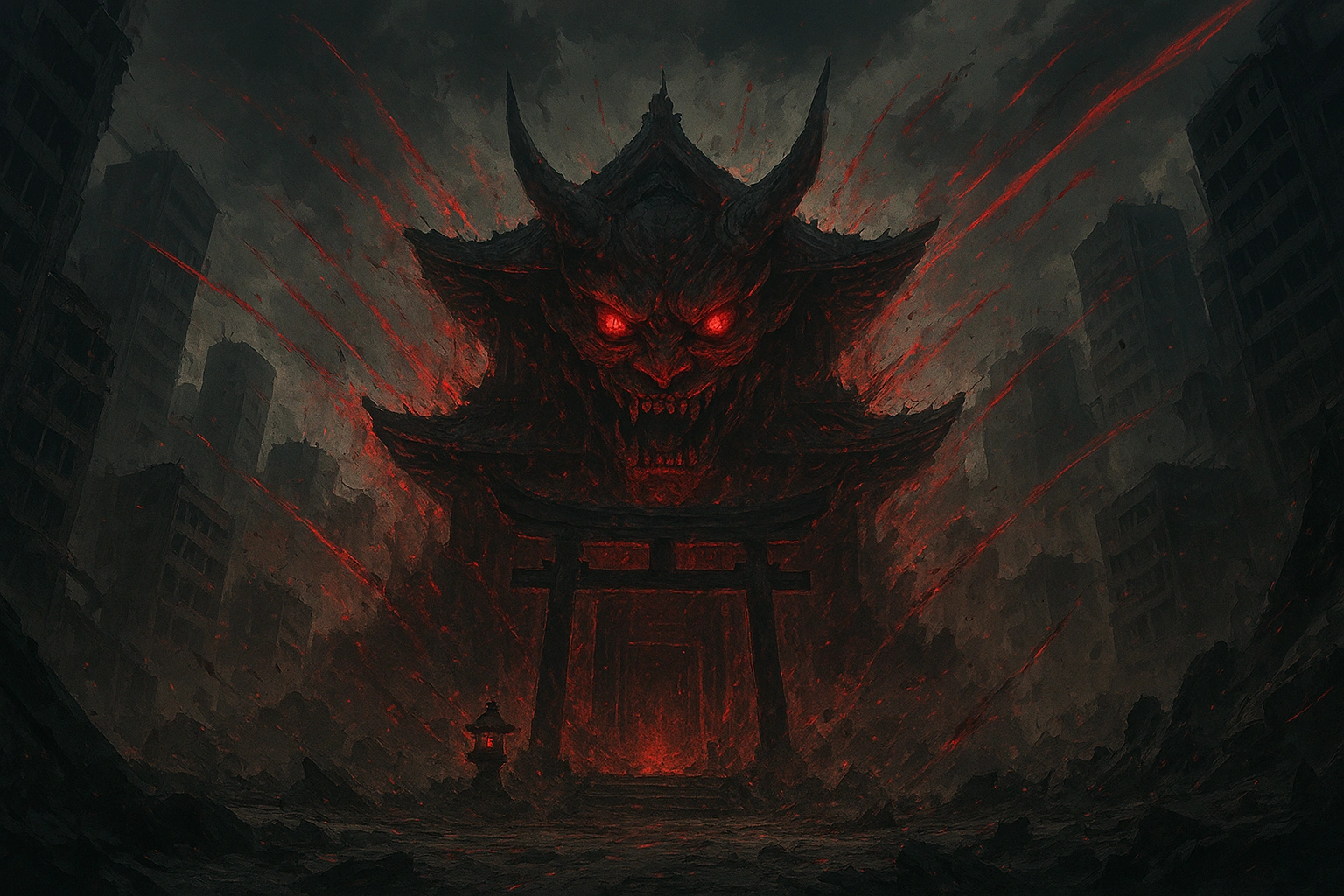
If the Domain Expansion is the peak of sorcery, the “Open Barrier” Domain is the peak of the peak—a technique so sublime it is described as “divine.”
The Standard: Closed Barrier
99% of Domain Expansions utilize a Closed Barrier. As previously discussed, the sorcerer creates a shell that separates the interior from the exterior. This is necessary because projecting an Innate Domain onto reality is physically impossible for most; reality rejects the imposition. The barrier acts as a container, a pressure vessel that holds the domain together.
The advantage of the Closed Barrier is that it traps the opponent. They cannot flee. They are forced to confront the user in a space where the user is god. The disadvantage is that the barrier itself is a physical object that can be attacked from the outside or subjected to specific stresses.
The Anomaly: Open Barrier
Ryomen Sukuna and Kenjaku possess the ability to manifest a Domain without closing the barrier. Sukuna’s “Malevolent Shrine” does not create a separate space. Instead, it paints the Innate Domain directly onto reality.
The description given in the Shibuya Incident paints a vivid picture: “To manifest a domain without a barrier is akin to an artist painting a masterpiece on the air itself, without a canvas.”
This feat is considered impossible because the Cursed Energy should dissipate. However, Sukuna (and Kenjaku) manages to maintain the domain’s structure through a Divine Binding Vow.
The Binding Vow of the Open Barrier
To make the impossible possible, a Binding Vow is formed. The Give: The user deliberately creates an “escape route.” Because there is no closed barrier, the opponent can technically run away. The Take: In exchange for allowing an escape route, the “Binding Vow” vastly increases the effective range of the domain.
While a normal domain might have a radius of a few dozen meters inside the barrier, Sukuna’s Malevolent Shrine can expand up to a radius of 200 meters. This massive range, combined with the Sure-Hit effect, turns the domain into a weapon of mass destruction rather than just a 1v1 tool.
Why Open Barriers are Superior
The Open Barrier is not just about range; it is the ultimate counter to other domains. In a battle between domains (Domain Clash), the barriers usually push against each other. However, an Open Barrier has no shell to push against. It encompasses the physical space around the opponent’s closed barrier.
Because the closed barrier is weak on the outside, Sukuna’s “Malevolent Shrine” can rain down attacks on the exterior of an opponent’s barrier, shattering it effortlessly. This was demonstrated when Sukuna dismantled Gojo’s barrier from the outside. The Open Barrier is the “Domain Killer.”
5. Advanced Barrier Logic: The Shinjuku Evolution
The battle in Shinjuku between the strongest sorcerer of today (Gojo) and the strongest in history (Sukuna) completely revolutionized our understanding of barrier conditions. It proved that the properties of a Domain are not fixed; they are fluid variables that a genius can manipulate on the fly.
Inverting Barrier Conditions
Standard domains are “hard on the inside, soft on the outside.” This is the default Binding Vow to keep enemies trapped. However, during the clash, Gojo realized his barrier was being destroyed from the outside by Sukuna’s Shrine. To counter this, Gojo dynamically altered the Binding Vow of his barrier.
He flipped the toughness. He made the barrier incredibly weak from the inside (allowing Sukuna to technically leave if he wanted) but virtually indestructible from the outside. This allowed his “Unlimited Void” to withstand the relentless slashing of Sukuna’s attacks for significantly longer, forcing Sukuna to engage inside the domain rather than just breaking it from the exterior.
The “Basketball” Domain (Compression)
Perhaps the most absurd feat of barrier engineering is the compression of the domain’s volume. Typically, a barrier is large. Gojo, however, managed to shrink the outer shell of his domain to the size of a small basketball. This should be impossible.
Trapping two full-grown men inside a ball-sized object defies physics. However, the interior space remained vast (due to the distortion of space-time inherent to the Limitless technique), while the exterior shell became incredibly dense. By compressing the barrier, the density of the Cursed Energy constituting the shell increased exponentially.
This “Basketball Domain” was so durable that even Sukuna’s full-power output took minutes to crack it. This technique highlights that a Domain is not just a magical explosion; it is a construct of architectural engineering that adheres to the laws of volume and density.
6. The Phenomenon of the 0.2 Second Domain
While Domains are usually sustained battles for supremacy, there exists a subset of activation known as the “0.2 Second Domain Expansion.” This is a desperate, high-speed maneuver born from extreme necessity.
The Inspiration: Gojo in Shibuya
The concept was pioneered by Satoru Gojo in Shibuya. Surrounded by civilians he couldn’t kill, Gojo needed to incapacitate the Transfigured Humans and the Disaster Curses without exposing the civilians to “Unlimited Void” long enough to fry their brains permanently. He calculated that a 0.2-second exposure would leave the civilians unconscious but alive, with rehabilitation. In that fraction of a second, he deployed the domain, stunned everyone, and deactivated it.
The Imitation: Mahito’s Gambit
Mahito later replicated this feat against Todo and Yuji. His goal was survival, not just offense. Mahito knew that if he kept his domain open for even a second against Yuji Itadori, he would inadvertently touch Ryomen Sukuna’s soul, provoking the King of Curses to kill him instantly.
By activating, attacking, and closing the domain all within 0.2 seconds, he executed a perfect “Hit-and-Run.” He struck before Sukuna could register the insult and retaliate. It wasn’t just a speed flex; it was a desperate tactical evolution born from the fear of death.
7. Modern vs. Old Style Domains (Lethal vs. Rule-Based)
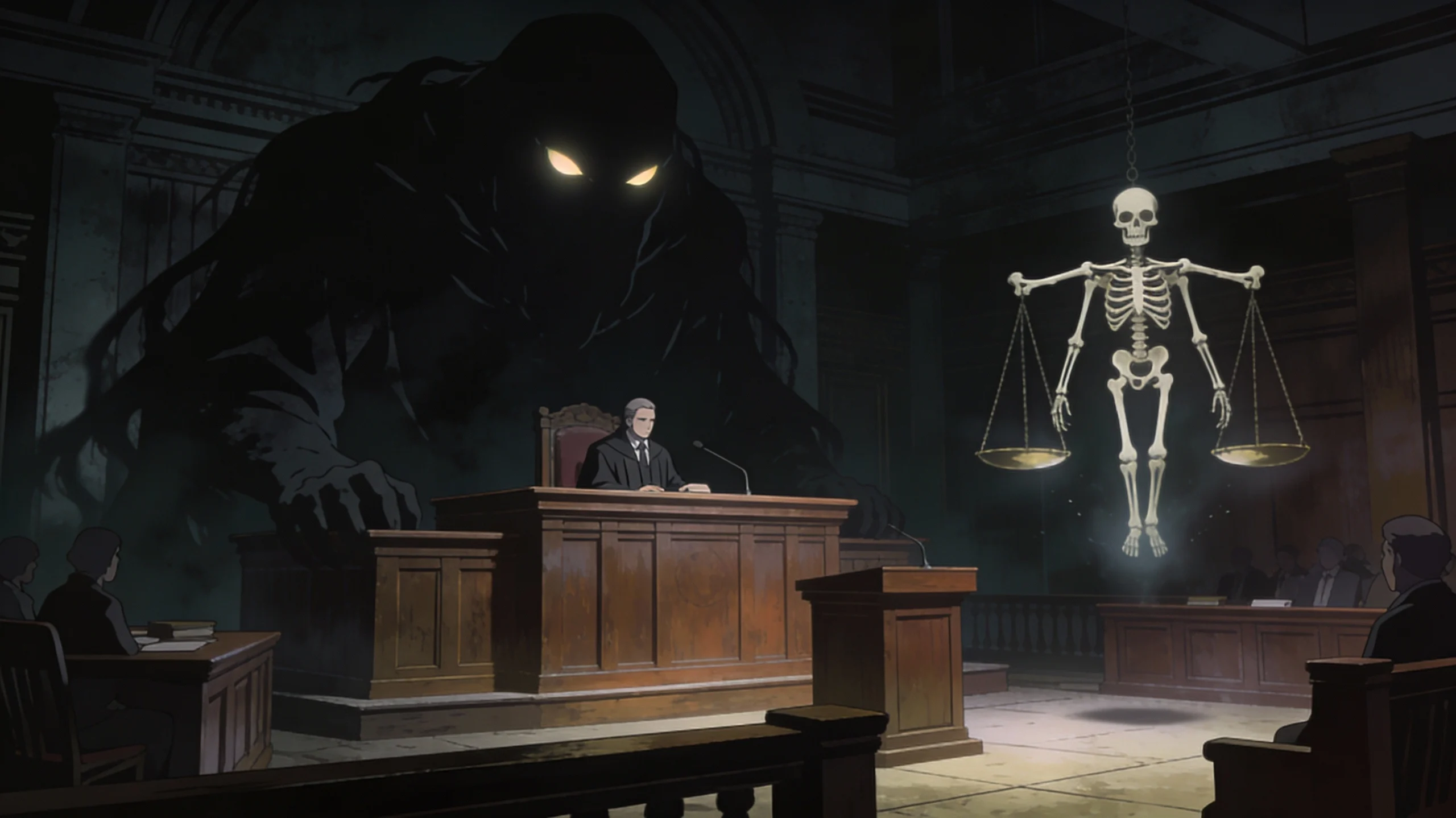
The philosophy of Domain Expansions has evolved over the centuries, creating a distinct dichotomy between “Modern” and “Old Style” domains.
Modern Domains: The Pursuit of Lethality
In the modern era of Jujutsu (represented by Gojo, Jogo, Mahito, Dagon), the meta has shifted entirely toward lethality. A modern domain is designed to kill the opponent as quickly as possible. The construction is difficult, the energy cost is massive, and the Sure-Hit effect is usually a damaging attack.
These domains are high-risk, high-reward. If you activate it and the opponent survives, you are often left with “Cursed Technique Burnout,” leaving you vulnerable. Because the focus is purely on the Sure-Hit kill, these domains are incredibly complex to construct, explaining why so few modern sorcerers can use them.
Old Style Domains: The Rule of Law
In the past (Heian era and prior), domains were more common. They were not necessarily “Sure-Kill” moves but rather techniques to force a specific set of rules upon an opponent.
Hiromi Higuruma and Kinji Hakari are the primary examples of this “Old Style” philosophy (despite being modern sorcerers, their techniques are retro-causal or inherited in a way that mimics older styles).
- Higuruma’s “Deadly Sentencing”: This domain forbids violence. It forces the opponent into a courtroom setting where they must debate their innocence against a Shikigami judge (Judgeman). The Sure-Hit is the confiscation of the opponent’s technique if found guilty. It is a non-lethal domain that cripples the enemy.
- Hakari’s “Idle Death Gamble”: As mentioned, this domain forces a gambling game. It doesn’t hurt the opponent directly; it uses the domain to facilitate a game of chance where Hakari can win “Jackpot” (infinite cursed energy).
Because these domains do not seek immediate lethality, the conditions to construct them are often more lenient. The Binding Vows involved are different. By forcing the opponent to follow “rules” rather than just blasting them, the domain is more stable and faster to activate. This implies that in the Golden Age of Sorcery, battles were often more tactical and rule-based rather than simple overpowering contests.
The “Old Style” domains represent a more civilized, albeit twisted, form of combat. They treat the Domain not as a nuke, but as a wrestling ring with specific regulations.
8. The Physiological Cost: Burnout & The Brain
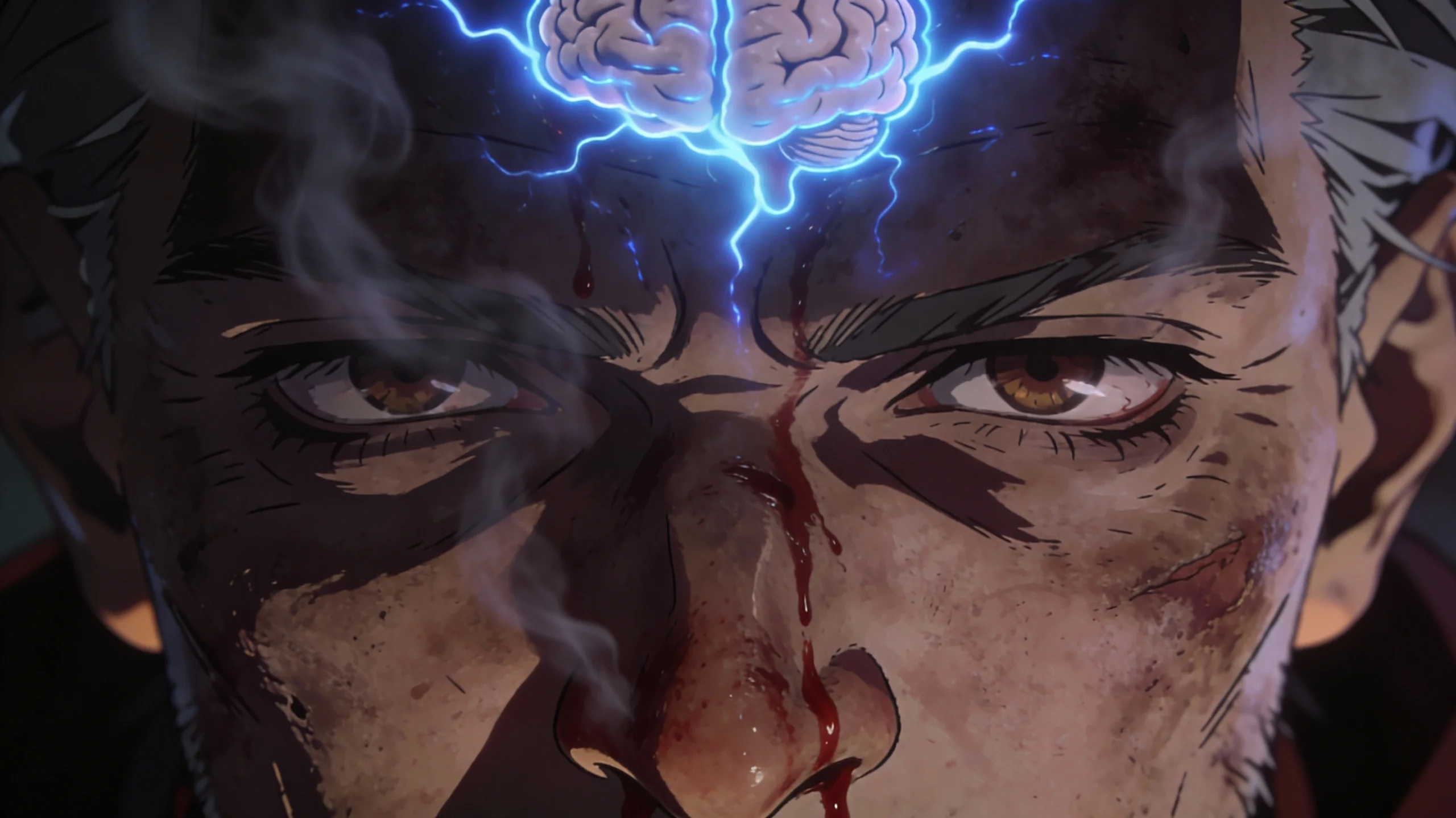
One of the most critical, yet often overlooked, aspects of Domain Expansion is the physiological toll it takes on the user. It is not just a drain on a “mana bar”; it is a physical strain on the brain itself.
Cursed Technique Burnout
Immediately after a Domain Expansion ends (whether voluntarily or by force), the user enters a state of “Cursed Technique Burnout.” The part of the brain that houses the Cursed Technique overheats and becomes temporarily unresponsive. During this period, the sorcerer cannot use their Innate Technique.
They are restricted to basic Cursed Energy manipulation and martial arts. This vulnerability is why expanding a domain is such a gamble. If you fail to kill your opponent inside, you emerge into reality defenseless against their technique.
The “Forbidden Reset” (RCT on the Brain)
In the battle of the strongest, a workaround was discovered, though it borders on madness. Cursed Energy comes from the gut, but the Technique is engraved specifically in the Right Prefrontal Cortex. Burnout is essentially the overheating of this engine. Satoru Gojo and Ryomen Sukuna demonstrated that one can use Reverse Cursed Technique (RCT) to heal this burnout.
However, RCT is designed to heal damage, not “cool down” an engine. To make it work, the sorcerer must physically destroy the right prefrontal cortex where the technique resides using Cursed Energy, and then instantly regenerate it using RCT. This is a cycle of self-lobotomy and regeneration performed in the heat of battle.
While it resets the technique allows for consecutive Domain Expansions, the risks are catastrophic. Mistiming the healing process or doing it too many times results in permanent brain damage, leading to unconsciousness or the inability to manifest a barrier ever again, as seen in the climax of the Shinjuku showdown.
9. Domain Clashes & Countermeasures
When a domain is activated, it is not always “Game Over.” There are specific countermeasures developed over centuries of magical warfare.
Domain Clash (Ryouiki no Oshiai)
The most direct counter to a Domain Expansion JJK is to expand your own. “When two domains are expanded simultaneously, the more refined one dominates.”
This results in a “Tug of War.” The barriers push against each other, and the Sure-Hit effects cancel each other out. Inside the overlapping space, attacks are no longer guaranteed to hit. The battle returns to hand-to-hand combat and technique usage. The sorcerer with the stronger refinement, more Cursed Energy, or superior barrier compatibility will eventually erode the other’s domain.
We see this beautifully in the battle between Gojo and Jogo (a complete stomp) and the three-way deadlock between Yuta Okkotsu, Takako Uro, and Ryu Ishigori. In a three-way clash, the complexity of the barrier conditions becomes so unstable that the barriers often shatter entirely, leaving all participants exposed.
Domain Amplification (Ryouiki Ten’en)
Often referred to as the “Anti-Domain,” Domain Amplification is a technique mastered by the Disaster Curses and Higuruma. It is, in essence, a Domain Expansion without a technique imbued into it. The user creates a fluid, cloak-like barrier that wraps closely around their body.
By not imbuing it with a technique, the “empty” space of the amplification yearns to be filled. When it comes into contact with an opponent’s technique (like Gojo’s Infinity), it “absorbs” or neutralizes it to fill that void.
- The Pro: It allows the user to touch untouchable sorcerers (like Gojo) and dampens the effect of sure-hit attacks.
- The Con: Because you are using the capacity of the domain for amplification, you cannot use your own Innate Technique while Amplification is active. It forces a hand-to-hand brawl.
Simple Domain (Shin Kage-ryu)
Created by Sadatsuna Ashiya during the Heian Era, “Simple Domain” is a technique for the weak to protect themselves from the strong. It involves erecting a very small barrier—just around the user’s body—without an innate technique. By creating this small domain, the user neutralizes the “Sure-Hit” effect of the enemy’s expansion. It does not destroy the enemy domain, but it buys time.
The mechanics are crucial here: Simple Domain does not negate the enemy’s technique (the magma is still hot, the shadows are still deep), but it interferes with the barrier’s targeting system. It creates a blind spot in the code. Recent developments (via Atsuya Kusakabe) have shown that Simple Domain can also be used offensively, allowing for automatic counter-attacks against anything that enters the user’s radius without the need for a full Domain Expansion.
Hollow Wicker Basket (Iya no Kago)
The precursor to Simple Domain. It functions almost identically, neutralizing the Sure-Hit effect by creating a spherical basket-like barrier around the user. It is an ancient technique, used by reincarnated sorcerers like Reggie Star and Hajime Kashimo. While effective, it suffers from a critical flaw compared to Simple Domain: The Hand Sign Restriction.
To maintain the basket, the user must constantly hold a specific hand gesture or mudra. This renders their hands useless for combat while the technique is active, leaving them vulnerable to physical attacks. Simple Domain, once deployed, allows for free movement.
Falling Blossom Emotion (Rakkka no Jou)
A secret art passed down in the Big Three Sorcerer Families. Notable users include the fastest sorcerer of his time, Naobito Zenin, and his brother Ogi Zenin. Unlike Simple Domain, which creates a barrier, Falling Blossom Emotion is a counter-active measure. It coats the user’s body in Cursed Energy that reacts automatically to incoming attacks.
The moment the Sure-Hit attack “spawns” or makes contact, the Cursed Energy counter-attacks with equal force to parry or crush it. It is less about “hiding” from the sure-hit and more about “striking down” the sure-hit the moment it touches you.
10. Conclusion: The Ultimate Checkmate
Domain Expansion remains the coolest, most intricate power system element in modern shonen manga. It perfectly encapsulates the themes of Jujutsu Kaisen: the power of the self, the danger of the mind, and the brutal reality of sorcery.
It serves as the ultimate checkmate because it forces a confrontation on the user’s terms. It strips away the advantages of the environment, negates the possibility of running, and demands that the opponent prove their worth in a space where reality itself is hostile to them.
Yet, as Gege Akutami has shown us through characters like Sukuna and Gojo, even the “Ultimate” technique has layers. From the rough, incomplete domains of fledglings to the barrier-less masterpieces of the divine, Domain Expansion is a spectrum of mastery. It reminds us that in Jujutsu, power is not just about how hard you can hit—it’s about how well you can impose your nightmare upon the world.
Whether it is a lethal void, a gambling parlor, or a shrine of carnage, the Domain stands as the truest definition of a sorcerer’s soul. And once that barrier closes, the only way out is to be stronger than the god you are trapped with.