
1. The Biological Sociopath: Born Without the Limbic System
In the grim and blood-soaked pantheon of Muzan Kibutsuji’s Twelve Kizuki, the origin stories of the most powerful demons are almost universally defined by profound human suffering. Akaza was driven by the agonizing trauma of losing his loved ones and the blinding rage of powerlessness; Gyutaro and Daki were forged in the crucible of absolute societal rejection and starvation; Kokushibo was consumed by a cancerous, all-encompassing jealousy of his brother’s divine talent.
Their demonic transformations were merely amplifications of their deepest human agonies. However, Upper Moon 2, Doma, represents a terrifying deviation from this established biological and psychological baseline. Doma was not broken by the world; he was fundamentally broken from the moment of his conception. He stands as the series’ only true, clinical psychopath—a predatory anomaly born with a complete neurological void where the limbic system should operate.
To understand Doma is to understand the terrifying reality of congenital psychopathy. Medical science dictates that the capacity for human empathy, fear, and emotional resonance is governed primarily by the amygdala and the ventromedial prefrontal cortex. In a normal human brain, these regions communicate constantly, translating external stimuli into emotional responses that guide moral and ethical behavior.
Doma’s neurobiology, however, was a dead zone. From birth, he exhibited the classic markers of profound psychopathy: a glib, superficial charm, a grandiose sense of self-worth, an absolute lack of remorse or guilt, and an chilling inability to feel genuine emotion. When his parents died violently in front of him, spilling their blood across the tatami mats, a normal child’s amygdala would have triggered a massive flood of cortisol and adrenaline, resulting in paralyzing trauma.
Doma, however, only felt mild annoyance at the scent of the blood and the mess it created in the room. This wasn’t a defense mechanism or a suppressed trauma response; it was the terrifyingly rational observation of a biological machine devoid of a soul.

Compounding this psychological void was the catastrophic environment in which he was raised. Doma was born with a rare, stunning genetic mutation: heterochromia combined with prismatic irises that refracted light into a rainbow spectrum. In modern clinical terms, this is merely an ocular anomaly, perhaps a manifestation of sectoral heterochromia iridum or a unique structural mutation of the iris stroma.
But to the deeply superstitious and desperate members of the Paradise Faith cult, these eyes were irrefutable proof of divine intervention. They looked at a genetic quirk and saw the gaze of a god.
Because of this, Doma was raised in an absolute, impenetrable echo chamber of worship. He was never disciplined, never challenged, and never forced to develop cognitive empathy as a survival mechanism in society. Instead, he was surrounded by weeping adults begging a toddler to absolve them of their sins. This created a horrifying psychological feedback loop.
The adults projected their deepest emotional agonies onto a child who possessed absolutely no capacity to understand them. To Doma, human sorrow, desperation, and grief were entirely alien concepts, as incomprehensible as colors to a man born blind. He learned to mimic the facial expressions of pity and compassion purely through cold, calculating observation, effectively creating a “mask of sanity.” When Muzan eventually found him, he didn’t need to corrupt Doma’s soul; there was no soul to corrupt.
Muzan merely provided immortality and supernatural power to a creature that was already the perfect, emotionally impenetrable apex predator, making his psychology mathematically unpredictable and utterly terrifying to any opponent who relied on reading human intention.
2. Thermodynamics of Death: The Ultimate Anti-Breathing Weapon
The foundational combat system of the Demon Slayer Corps is built entirely upon the physiological mastery of respiration. Total Concentration Breathing is not merely a mystical martial art; it is a hyper-accelerated biological process. By drawing in massive, controlled volumes of oxygen, Slayers force their heart rates to skyrocket, flooding their bloodstream with highly oxygenated red blood cells.
This forces a rapid increase in cellular ATP synthesis, allowing normal human musculature to temporarily match the physical output, kinetic energy, and regenerative acceleration of a demon. Without their lungs, the Hashira are nothing more than fragile humans wielding sharp metal. Understanding this biological imperative reveals the true, horrifying brilliance of Doma’s Blood Demon Art.
His cryokinesis is not just an elemental attack; it is the ultimate, biological hard-counter to the entire Total Concentration Breathing system. It is the thermodynamics of death.
Doma’s manipulation of ice is fundamentally different from a standard elemental barrage. He weaponizes cold on a microscopic, molecular level. When Doma executes his techniques, he scatters an invisible, shimmering mist of crystalline ice powder into the immediate atmosphere.
Because Demon Slayers are engaged in Total Concentration Breathing, they are acting as massive biological vacuums, forcefully inhaling the surrounding air deep into their respiratory tracts at a much higher volume and velocity than normal humans. This means they are willingly drawing Doma’s weaponized ice directly into the most vulnerable, unprotected organs in their bodies: the lungs.
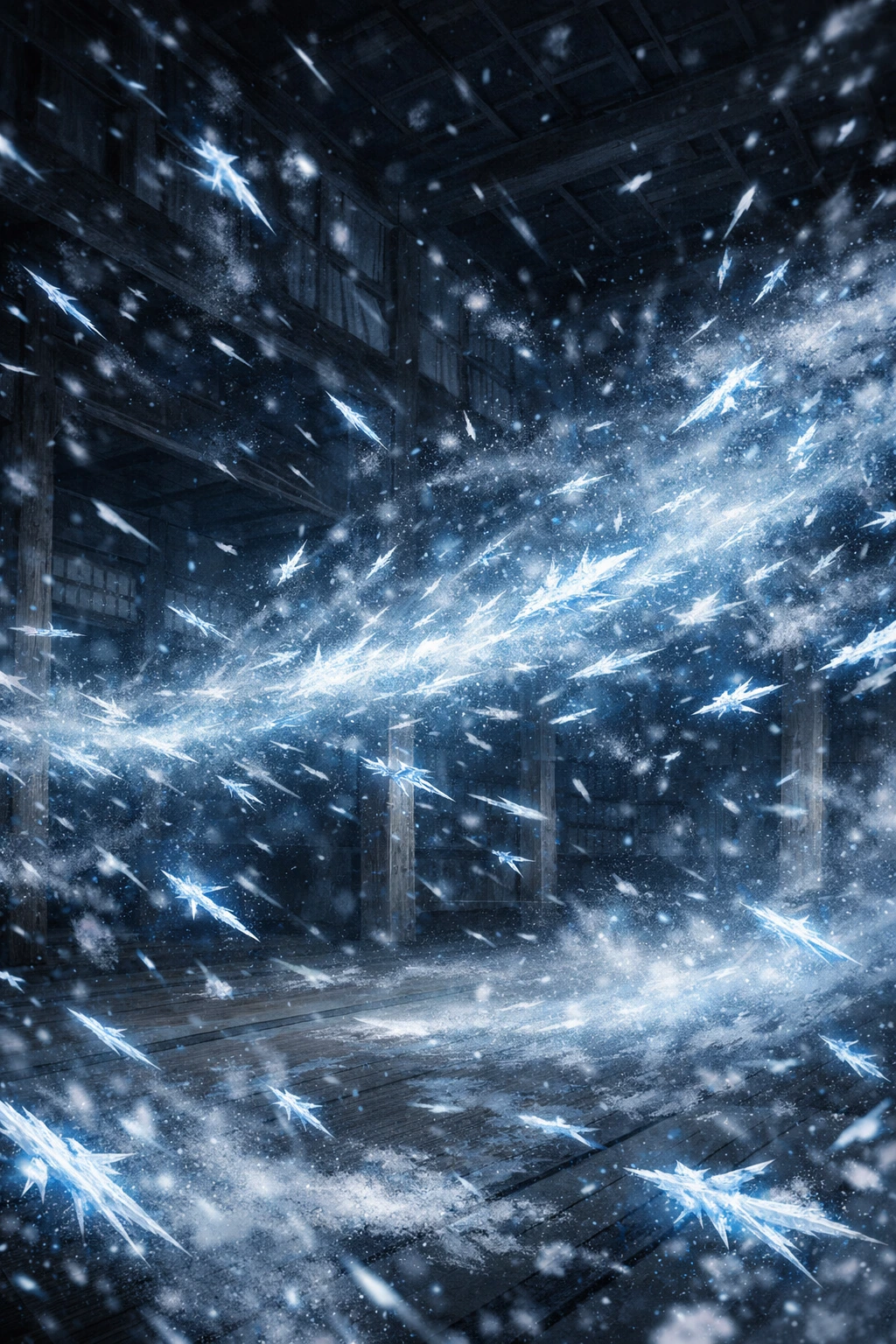
To understand the lethality of this, we must examine the microscopic anatomy of the human lung. The respiratory system terminates in millions of tiny, balloon-like sacs called alveoli, where the actual exchange of oxygen and carbon dioxide occurs.
These alveoli are incredibly fragile and are coated in a thin layer of moisture (surfactant) to maintain their elasticity. When a Slayer inhales Doma’s microscopic ice powder, a devastating endothermic reaction occurs instantly within the chest cavity. The ice powder acts as a nucleation point, dropping the localized temperature inside the lungs well below freezing.
The physics of this are brutally unforgiving. The moisture inside the alveoli undergoes a rapid phase transition, flash-freezing into sharp, microscopic ice crystals. This induces immediate, catastrophic frostbite on internal organs. As the water inside the alveolar cells freezes, it expands, literally rupturing the cell walls from the inside out and causing rapid cellular necrosis.
The localized tissue death triggers massive internal hemorrhaging as the pulmonary capillaries burst. When a Slayer attempts to take another breath to fuel their techniques, they are not inhaling oxygen; they are inhaling a slurry of their own blood and shattered lung tissue. Doma fundamentally weaponizes their own survival mechanism against them.
The harder they breathe to fight him, the faster they drown in their own destroyed respiratory fluids. It is a suffocating, agonizing death that completely neutralizes the physiological foundation of the Demon Slayer Corps.
Furthermore, Doma’s mastery of thermodynamics extends to his ability to create miniature, autonomous ice clones (Crystalline Divine Children). This ability defies the standard rules of demonic energy expenditure. Creating a sentient, physically active clone should require an immense, unsustainable drain on the user’s stamina and Blood Demon Art reserves.
However, Doma frames this as an incredibly efficient expenditure of caloric energy. By manipulating ambient moisture and utilizing his own cells as the structural foundation, he constructs these clones through a highly controlled, localized reduction of entropy.
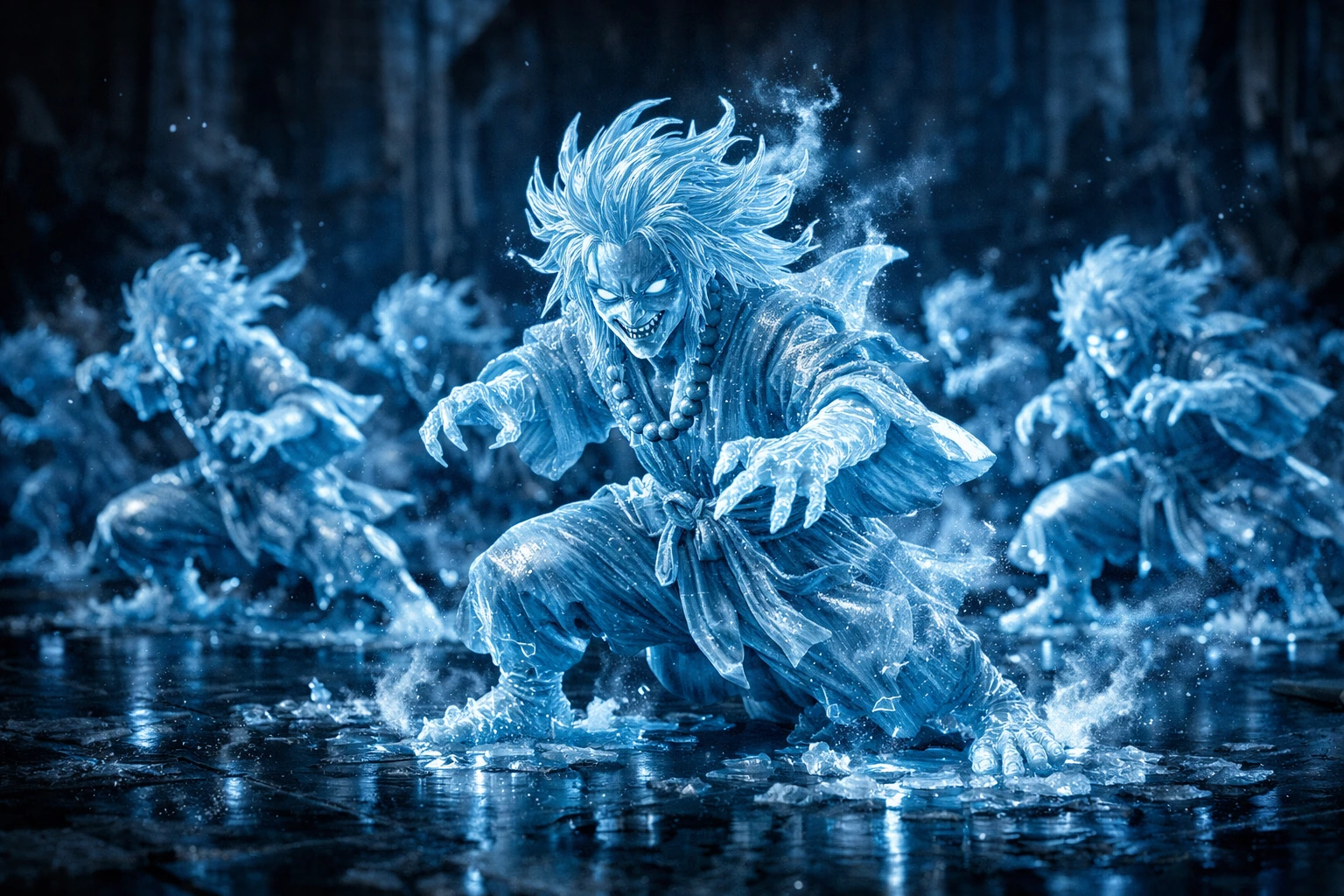
What makes these clones truly terrifying is not just their physical makeup, but their neurological processing power. They possess the exact same combat data, tactical algorithms, and capacity for Blood Demon Arts as the original Doma.
This is not mere duplication; it is decentralized processing. Doma can essentially network his consciousness, allowing the clones to overwhelm Hashira-level targets through sheer, synchronized mathematical precision. Because Doma feels no thrill in combat, no ego, and no desire to “prove” his strength, he is perfectly content to sit back and let his efficient, endothermic constructs do the killing.
He avoids the direct engagement that puts other Upper Moons at risk, choosing instead to drown his enemies in an endless, freezing tide of autonomous, lethal thermodynamics.
3. The Predatory Economics of the Paradise Cult
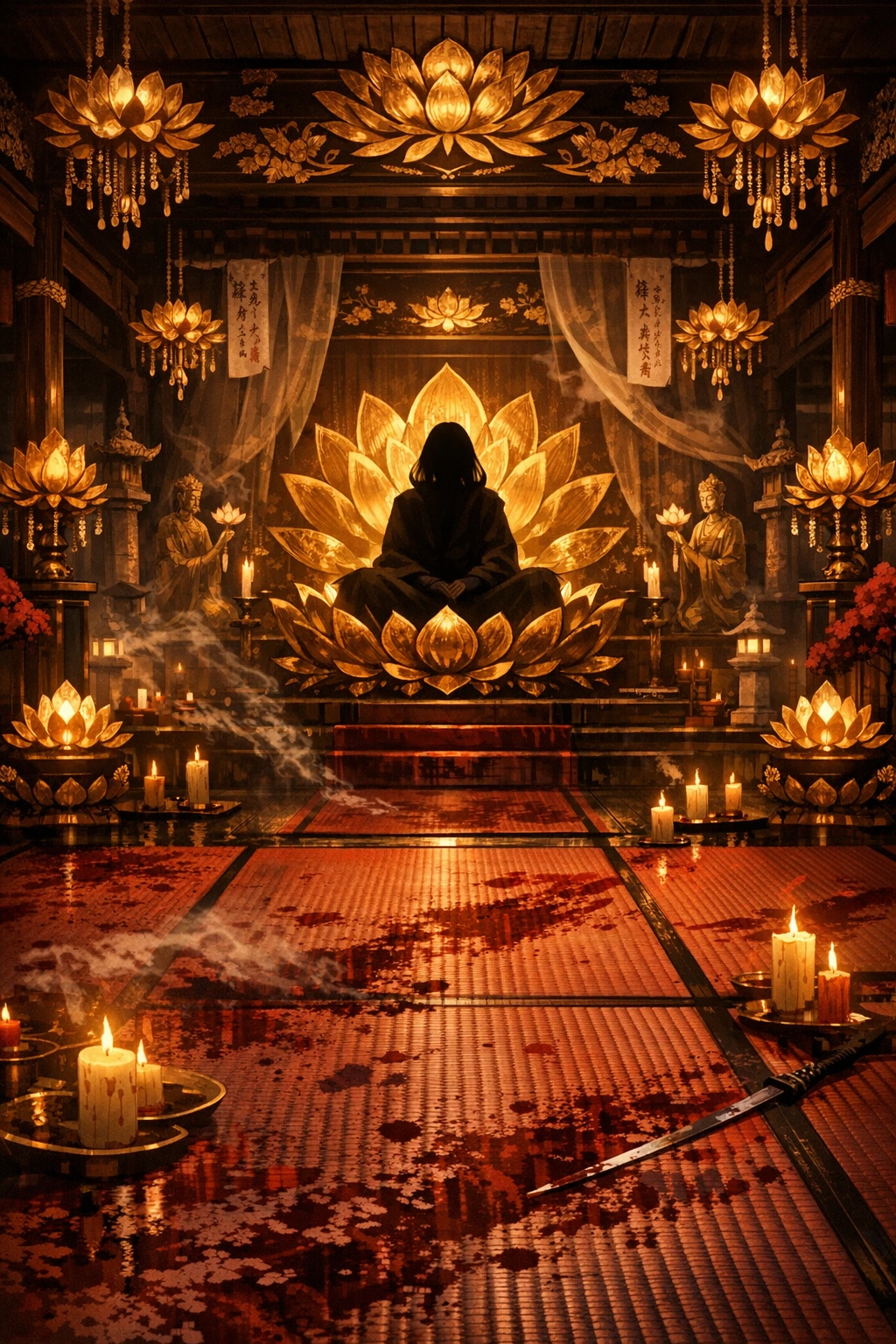
Unlike the chaotic, instinct-driven feeding habits of lesser demons, or even the targeted, territorial hunting of the other Upper Moons, Doma operates his feeding grounds with the chilling efficiency of a sociopathic corporation. The Paradise Faith cult is not merely a religious front; it is a meticulously designed slaughterhouse, a self-sustaining biological ecosystem built on the principles of predatory economics.
While predators in the wild must expend massive amounts of caloric energy tracking, hunting, and subduing their prey, Doma has eliminated the hunt entirely. He has constructed a psychological trap so perfect that his prey willingly, even joyfully, walks directly into his jaws.
Doma’s approach to human consumption is driven by a grotesque, purely mathematical nutritional biology. Early in his demonic existence, he made a calculated observation regarding the biological composition of his victims, leading to his specific, unwavering dietary preference for young women.
From a physiological and endocrinological standpoint, Doma deduced that females possess a higher concentration of the specific biological nutrients necessary to accelerate his demonic evolution.
This is not a matter of taste; it is a matter of biochemical density. Due to reproductive biology, the female body naturally stores higher concentrations of specific lipids, essential fatty acids, and complex proteins required to sustain potential fetal development. Furthermore, the endocrine system of a young woman is rich in hormones like estrogen and progesterone, which interact dynamically with cellular growth.
To Doma’s highly advanced, hyper-adaptable demonic digestive system, these biological factors translate to a higher “octane” of fuel. He mathematically calculated that consuming one young woman yielded the evolutionary equivalent of consuming dozens of adult males.
By exclusively farming this specific demographic, Doma optimized his caloric intake, allowing him to ascend to the rank of Upper Moon 2 with frightening speed, bypassing demons who had lived centuries longer but fed inefficiently.
However, the true horror of the Paradise Cult lies in the psychological delusion Doma uses to justify his predatory economics. Doma is not a sadist in the traditional sense; he does not derive pleasure from the pain or terror of his victims.
Because he lacks a limbic system, he is incapable of feeling the malicious joy that someone like Enmu or Gyokko feels. Instead, Doma has constructed an elaborate, impenetrable psychological rationalization: the delusion of “Salvation.”
When desperate, broken humans come to his cult seeking relief from the agonizing suffering of the mortal world, Doma genuinely believes he is providing them with the ultimate cure. He listens to their tragedies with his perfectly constructed mask of pity, and he concludes that life itself is the disease.
Because he cannot feel emotion, he views human suffering as a tragic, pointless malfunction of the brain. His solution is horrifyingly literal: he eats them. Doma believes that by digesting his followers, he is breaking down their physical forms and merging their cells, their memories, and their consciousness into his own immortal, indestructible body.
In his twisted, psychopathic framework, he is elevating them. He is saving them from the pain of disease, starvation, and heartbreak by housing them within a perfect, eternal vessel. He views his stomach not as a grave, but as a sanctuary.
This absolute conviction strips away all malice from his murders. When he reaches out to absorb a weeping woman, he is not a monster hunting prey; in his own mind, he is a benevolent savior offering the highest form of spiritual and biological salvation. This complete absence of malice makes his aura utterly imperceptible to Slayers who rely on sensing bloodlust, rendering his predatory trap flawless.
4. The Shinobu Kocho Trap: A Masterclass in Chemical Warfare

The battle against Upper Moon 2 is arguably the most brilliant, scientifically complex engagement in the entire Demon Slayer mythos. It was a conflict not won by the crossing of blades, but by the meticulous application of pharmacology, toxicology, and extreme biological self-sacrifice.
The architect of this victory, the Insect Hashira Shinobu Kocho, recognized early on that Doma could not be defeated through conventional kinetic force or standard decapitation. His cryokinesis neutralized Total Concentration Breathing, and his reaction speed dwarfed hers. Therefore, Shinobu discarded the sword in favor of the syringe, orchestrating a masterclass in chemical warfare centered around a staggering, suicidal gambit: the 37-Kilogram Payload.
The sheer biological insanity of Shinobu’s plan cannot be overstated. Over the course of roughly a year (amounting to hundreds of meticulous, agonizing medical procedures), Shinobu systematically altered her own physiology, transforming her circulatory system, her muscular tissue, and her cellular makeup into a living, breathing toxic payload.
She steadily injected highly concentrated Wisteria poison into her bloodstream, continuously increasing the dosage as her body built up extreme tolerances. The goal was not merely to coat her blade, but to saturate her entire being. By the time she confronted Doma, her petite, lightweight frame held exactly 37 kilograms of weaponized Wisteria compound.
To put this in perspective, given Shinobu’s estimated body weight, the poison had fundamentally replaced massive percentages of her natural bodily fluids and lipid stores. She was no longer entirely human; she was a walking, talking, highly pressurized chemical bomb waiting for a detonator.
To comprehend the lethal dosage math of this trap, we must examine the pharmacology of the Wisteria toxin. Under normal circumstances, a few milligrams of standard Wisteria extract injected directly into the bloodstream via Shinobu’s stinger is enough to trigger aggressive necrosis and paralyze a lower-ranked demon.
Upper Moons, however, possess hyper-accelerated immune systems capable of analyzing, isolating, and decomposing complex toxins within seconds of injection. Shinobu knew that micro-dosing Doma through superficial stab wounds was mathematically useless; his liver and cellular regeneration would process the poison faster than it could spread.
Therefore, the payload required to overcome Upper Moon 2’s metabolic decomposition rate had to be astronomically high. By turning her entire body into the delivery mechanism, Shinobu calculated that she was introducing roughly 700 times the lethal dose required to kill a standard demon directly into Doma’s core.
This dosage was calculated with terrifying precision, factoring in Doma’s specific body mass, his estimated metabolic rate, and the exact speed at which his demonic digestive enzymes would break down her physical body to trigger the chemical reaction.
The true genius of the trap, however, lay in the Assimilation Bait. Shinobu weaponized Doma’s own sociopathic arrogance and specific biological feeding habits against him. She extensively researched the Paradise Cult and understood his absolute preference for young, female victims. Furthermore, she knew that Doma’s delusion of “Salvation” dictated that he absorb his victims whole.
He did not tear them apart, chew them, or discard pieces; he liquefied and assimilated their entire biological mass to perfectly integrate them into his immortal vessel.
Shinobu exploited this psychological blind spot flawlessly. By presenting herself as a weak, exhausted, yet incredibly “nutritious” Hashira, she guaranteed that Doma would drop his guard and absorb her completely. This was the critical mechanism of the trap: by bypassing mechanical digestion and being absorbed whole, the 37 kilograms of Wisteria poison entered his system in its most concentrated, undiluted, and systemic form.
The poison didn’t have to fight its way from a localized stab wound on his arm to his vital organs; it was injected directly into the central hub of his circulatory and digestive systems simultaneously. Doma’s own arrogant desire to “save” her was the exact mechanism that triggered his absolute, pharmacological annihilation.
5. Cellular Meltdown: The Collapse of Upper Moon 2
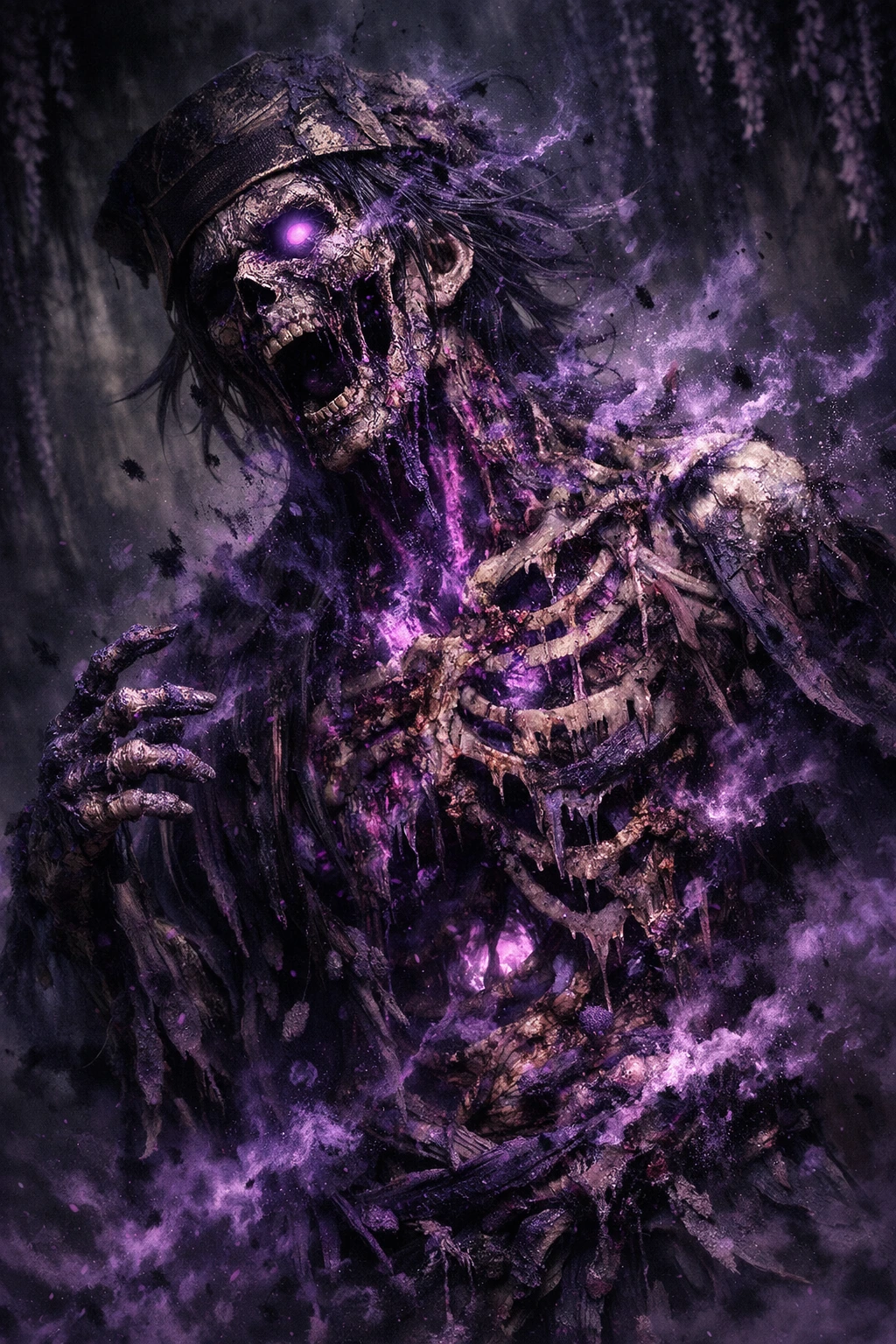
When the 37 kilograms of hyper-concentrated Wisteria poison finally breached the threshold of Doma’s immune defenses, the result was not a slow sickening, but a catastrophic, systemic biological meltdown. The pharmacology of the Wisteria compound designed by Shinobu acted as a highly aggressive, necrotic enzyme, specifically engineered to target and dismantle the foundational building blocks of demonic physiology.
Medically analyzing the exact effects of the massive overdose reveals a horrifying sequence of systemic failures. First, the sheer volume of the poison bypassed his regenerative capabilities by overwhelming his cellular receptors. Normally, a demon’s cells rapidly undergo apoptosis (controlled cell death) and hyper-regeneration to isolate a toxin.
However, the Wisteria acted like a chemical wildfire, binding to the proteins responsible for cellular cohesion. The poison immediately targeted his central nervous system, aggressively stripping the myelin sheaths from his nerves, resulting in catastrophic misfires of motor control and sensory processing.
Simultaneously, the highly acidic nature of the concentrated compound began literally melting his skeletal structure from the inside out. The calcium and dense demonic marrow of his bones were violently dissolved, causing his physical form to liquify and collapse under its own weight as his structural integrity hit absolute zero.
However, Upper Moon 2 was not merely going to dissolve quietly. As his internal organs liquefied and his brain began to undergo severe necrotic decay, his biology triggered a final, terrifying autonomic response: the Bodhisattva Reflex.
As the Wisteria aggressively shut down his higher brain functions and his consciousness began to fracture, his collapsing cellular structure automatically diverted all remaining ATP (adenosine triphosphate—the core energy currency of the cell) away from his failing immune system and into a single, massive burst of Blood Demon Art generation.
This was not a conscious tactical decision; it was the biological equivalent of a decapitated snake instinctively biting its killer. His body violently expelled his remaining cryokinetic energy, generating the colossal, autonomous Ice Bodhisattva statue. This towering construct of freezing death was a decentralized nervous system reflex, designed to blindly execute an AoE (Area of Effect) slaughter even as the host body melted into sludge.

It was within this chaotic, freezing maelstrom of Doma’s cellular collapse that the Kanao and Inosuke Variable proved critical. Shinobu’s poison lowered Doma’s baseline stats—crippling his speed, degrading his kinetic vision, and shattering his autonomous reaction times—but it still required an external kinetic force to achieve decapitation. The two lower-ranked Slayers capitalized on his degradation through extreme biological manipulation of their own.
Kanao Tsuyuri engaged her ultimate technique: the Equinoctial Vermilion Eye. This technique represents a biomechanical overclocking of the human optical system. By forcefully elevating her blood pressure and restricting the blood flow in her body to flood her optic nerves, she hyper-accelerated her brain’s visual processing centers.
The extreme hydrostatic pressure caused the capillaries in her sclera to hemorrhage, turning her eyes blood red, but it allowed her to perceive the world in extreme slow motion. This desperate ocular biology allowed her to track and parry the wildly unpredictable, desperate strikes of the freezing Bodhisattva and Doma’s failing body.
Simultaneously, Inosuke Hashibira provided the perfect sensory counter to Doma’s clinical predictions. Raised by boars, Inosuke’s somatosensory system and kinesthetic awareness were fundamentally disjointed from standard human biology. His joints could dislocate at will, and his attacks carried no traditional martial rhythm or logical trajectory.
To Doma’s dying, analytical brain, Inosuke’s movements were mathematically impossible to predict. It was this chaotic, wild biology, paired with Kanao’s hyper-focused ocular pressure, that successfully navigated the freezing shockwaves of the Bodhisattva reflex. Together, they drove their blades through the melting, necrotic tissue of Doma’s neck, finalizing the chemical assassination that Shinobu had engineered.
6. Conclusion: The Irony of the Void
The demise of Upper Moon 2 is a masterpiece of poetic and biological irony, culminating in a profound psychological shift in his final, fading moments of existence. As Doma’s severed head tumbled to the floor, his connection to Muzan’s regenerative network severed, and his cellular structure finally succumbing to the 37 kilograms of Wisteria necrosis, he found himself in a void—not of his own making, but of absolute death.
It was in this transitional space, a purgatory between the physical world and the crushing depths of hell, that the ghost of Shinobu Kocho appeared to him.
What happened next represents the most shocking neurological event in Doma’s century-long existence: the First and Final Emotion. For his entire life as a human, and his extended eternity as a demon, his limbic system had been a barren wasteland. He had never felt anger, joy, sorrow, or fear. But as he looked up at the ethereal, fiercely smiling spirit of the woman who had just successfully engineered his agonizing death, the void shattered.
As Shinobu ruthlessly mocked him, telling him to rot in hell, a dormant, withered pathway in Doma’s dying brain suddenly fired. The amygdala, silent for over a hundred years, violently flooded his failing consciousness with a cocktail of suppressed human neurotransmitters. He felt his heart—or the spiritual memory of it—skip a beat. His face flushed.
For the first time in his existence, he experienced the intoxicating, terrifying rush of genuine human attraction, intertwined seamlessly with the paralyzing realization of his own absolute defeat. He was mesmerized by her hatred, deeply in love with the architect of his destruction.
This late-stage neurochemical flood was his ultimate punishment; he was granted the capacity to feel emotion only at the exact second he was being dragged down to experience the eternal torment of hell. He died not as a serene, unfeeling god, but as a pathetic, lovesick human, begging a ghost to hold his hand.
This concludes the ultimate hubris of the second most powerful demon in existence. Doma was a creature of absolute, clinical perfection. He possessed a Blood Demon Art that was the thermodynamic bane of the Demon Slayer Corps, an intellect unclouded by emotional irrationality, and a predatory ecosystem that fed him an endless supply of high-yield biological fuel. Yet, he was completely dismantled.
He wasn’t overpowered by a stronger sword technique; he was not blasted away by the blinding heat of the Sun Breathing. He was systematically dismantled by biology, chemistry, and the absolute self-sacrifice of a physically weaker opponent. Shinobu Kocho, a woman who lacked the muscular density to even sever a demon’s head, weaponized mathematics, pharmacology, and Doma’s own psychopathic psychology against him.
The final expert verdict cements Doma as the absolute apex of terror in the series—a clinical, biological anomaly who represented an insurmountable wall of freezing, unfeeling death. Yet, his legacy is one of supreme irony. The monster who viewed human emotion as a pathetic malfunction was ultimately eradicated by the most profound human emotion of all: the willingness to die so that others might live. He was a god of ice, shattered by the precise, unrelenting science of a venomous butterfly.