
1. The Clash of Eras: Samurai in a Modernizing World

Imagine a cinematic panorama where the shadows of antiquity are violently pierced by the blinding glare of modernity. On one side of the frame, young warriors clad in traditional haori and wielding ancient, hand-forged Nichirin katanas move with the silent grace of a bygone era. On the other side, they stand beneath the harsh, electric hum of newly installed streetlights, their traditional geta sandals clicking against paved roads as they prepare to board massive, coal-belching steam locomotives.
This is the arresting visual juxtaposition that defines Demon Slayer: Kimetsu no Yaiba. However, the Demon Slayer Taisho Era (1912–1926) serves as far more than just a striking aesthetic backdrop or a stylistic choice for the narrative. It is a critical, highly volatile, and deeply transformative historical period that actively forced both the deeply entrenched Demon Slayer Corps and Muzan Kibutsuji’s millennial demonic forces to radically alter their ancient tactics.
For over a thousand years, the war between humans and demons was fought in the agrarian shadows of feudal Japan. Battles were waged in isolated mountain passes, dense bamboo forests, and remote, superstitious villages where the disappearance of a traveler could easily be blamed on wolves or vengeful spirits.
But the Taisho Era changed the battlefield parameters overnight. Following the rapid westernization of the Meiji Restoration, Japan entered a period of unprecedented industrial and cultural upheaval. The sudden influx of Western technologies, Victorian-style architecture, mechanical infrastructure, and new modes of transportation created a chaotic transitional period.
This era was characterized by the “Taisho Roman” cultural movement, a blending of traditional Japanese aesthetics with European romanticism and industrial progress. For the hidden world of demons and Slayers, this rapid modernization was both a tactical nightmare and an unprecedented opportunity.
The old world of the samurai was rapidly dissolving, replaced by an industrialized nation hurtling toward global superpower status. As telegraph wires crisscrossed the skies and factories churned out mass-produced goods, the supernatural entities of the night found themselves forced to adapt to a world that was literally shining a light into their darkest hiding places.
The Taisho Era was the absolute perfect crucible for hiding a supernatural war. The chaos of rapid urbanization, shifting social structures, and the blending of old and new created massive blind spots in society. People were simultaneously looking toward the mechanized future and holding onto the superstitious past, creating a psychological gray area where demons could operate undetected.
The introduction of Western clothing, electric lighting, and mechanized travel didn’t erase the demons; it simply gave them new camouflage. Both the Demon Slayer Corps and the demons themselves realized that whoever mastered the logistics and technologies of this new modern world would ultimately win the millennia-old war. The Taisho period was not just a setting; it was the final, ticking clock on a supernatural ecosystem that was about to be overwritten by the unstoppable march of human industry.
2. The Mugen Train Infrastructure: Logistics and Iron Predators
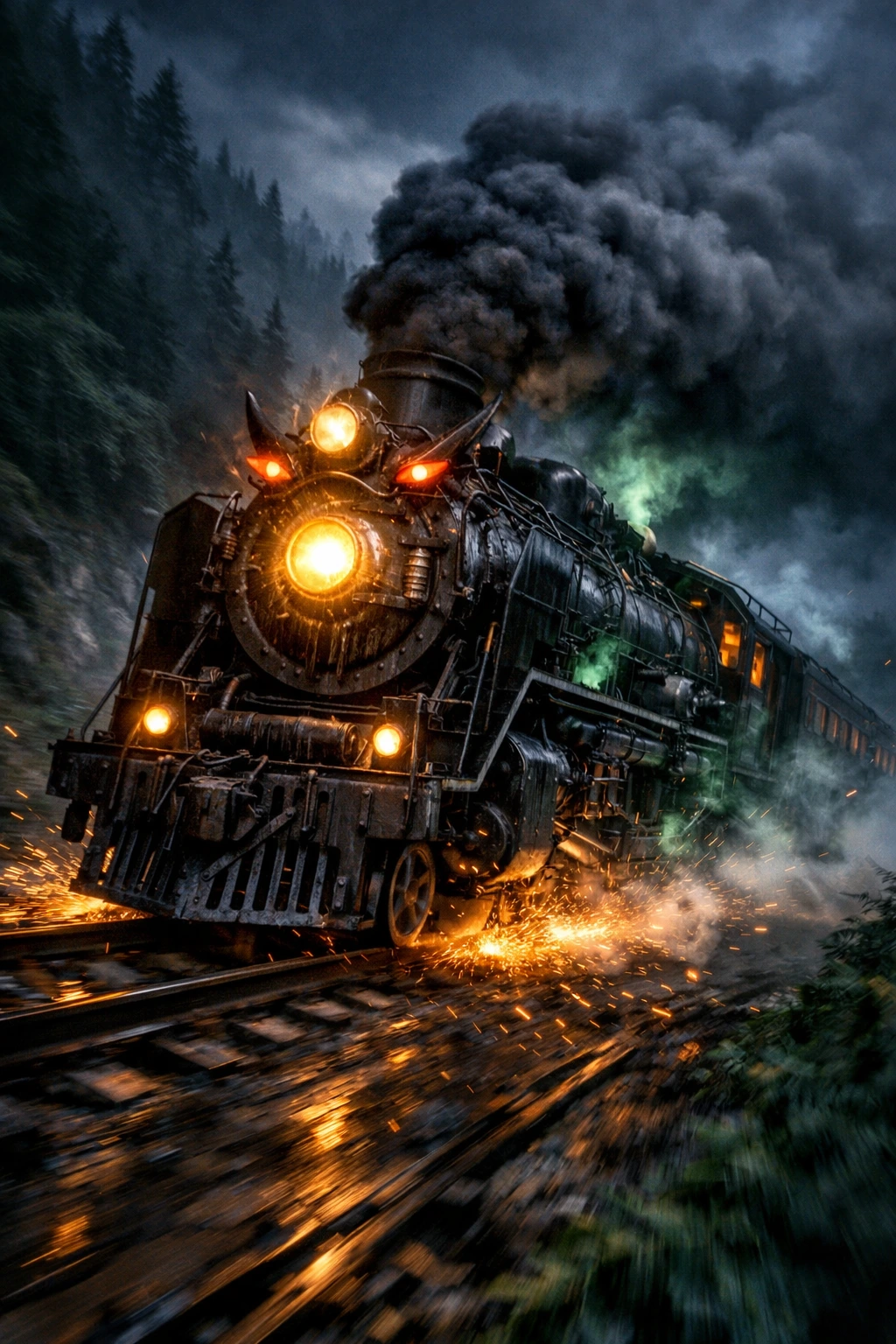
To truly understand the tactical shift of the Taisho Era, one must examine the crown jewel of its industrialization: the railway network. During the early 20th century, Japan’s railway system underwent massive expansion, spider-webbing across the mountainous terrain and connecting previously isolated prefectures at unprecedented speeds. For the Demon Slayer Corps, this new infrastructure completely revolutionized their strategic logistics.
For centuries, Slayers had to travel by foot or horseback, often taking weeks to respond to rumors of demon activity. By the time a Slayer arrived at a remote village, the demon had often already consumed the population and moved on. The steam locomotive changed this paradigm. It allowed the Ubuyashiki estate to deploy Slayers—especially their elite Hashira—rapidly across vast distances. A journey that once took a month could now be completed in a matter of hours. The Corps became a highly mobile strike force, utilizing the very veins of modern industry to hunt their ancient prey.
However, this technological leap was a double-edged sword. The demons, fundamentally predatory and highly adaptable, quickly learned to weaponize this modernity. There is no greater example of this terrifying adaptation than Enmu, the Lower Rank One of the Twelve Kizuki, and his assault on the Mugen Train. Enmu recognized that a train was not just a vehicle; it was an enclosed, mobile feeding ground.
By fusing his demonic flesh with a 300-ton industrial machine, Enmu achieved a logistical nightmare that earlier demons could only dream of. He turned the locomotive into a massive, iron predator. The sheer terror of this concept lies in its industrial efficiency. Instead of hunting humans one by one in the woods, Enmu trapped hundreds of captive, sleeping humans inside a sealed, moving steel tube.
The train provided perfect cover; it was a normal part of the modern world, entirely unsuspicious to the Taisho authorities, yet functioning as a supernatural slaughterhouse traveling at sixty miles per hour.
Fighting within this closed ecosystem presented a severe tactical disadvantage for the Demon Slayers. The combat environments of the past—open fields, sprawling forests, and large traditional courtyards—allowed swordsmen to utilize the full range of their Breathing Techniques.
Traditional swordsmanship, especially styles like Water Breathing and Flame Breathing, relies heavily on expansive footwork, wide-arcing slashes, and acrobatic evasions. The Mugen Train stripped all of these advantages away.
The narrow, industrialized corridors of the passenger cars severely restricted the Slayers’ movements. A wide horizontal slash would catch on wooden paneling and steel frames, blunting the attack and potentially damaging the structural integrity of the train. Furthermore, the train was packed with sleeping civilians.
The Slayers could not use their most devastating, large-scale attacks for fear of collateral damage. Kyojuro Rengoku, the Flame Hashira, had to meticulously calculate every single strike, using his flames to burn away Enmu’s flesh without incinerating the innocent passengers or derailing the train.
The physics of fighting on a rapidly moving, vibrating platform, combined with the spatial constraints of a narrow hallway, forced the Slayers to abandon their traditional combat doctrines and engage in a desperate, highly precise form of close-quarters urban combat. The Mugen Train arc perfectly encapsulates the central conflict of the era: ancient, mystical martial arts violently colliding with the unfeeling, mechanical brutality of the industrial revolution.
3. The Asakusa Incident: Urbanization and Demonic Camouflage
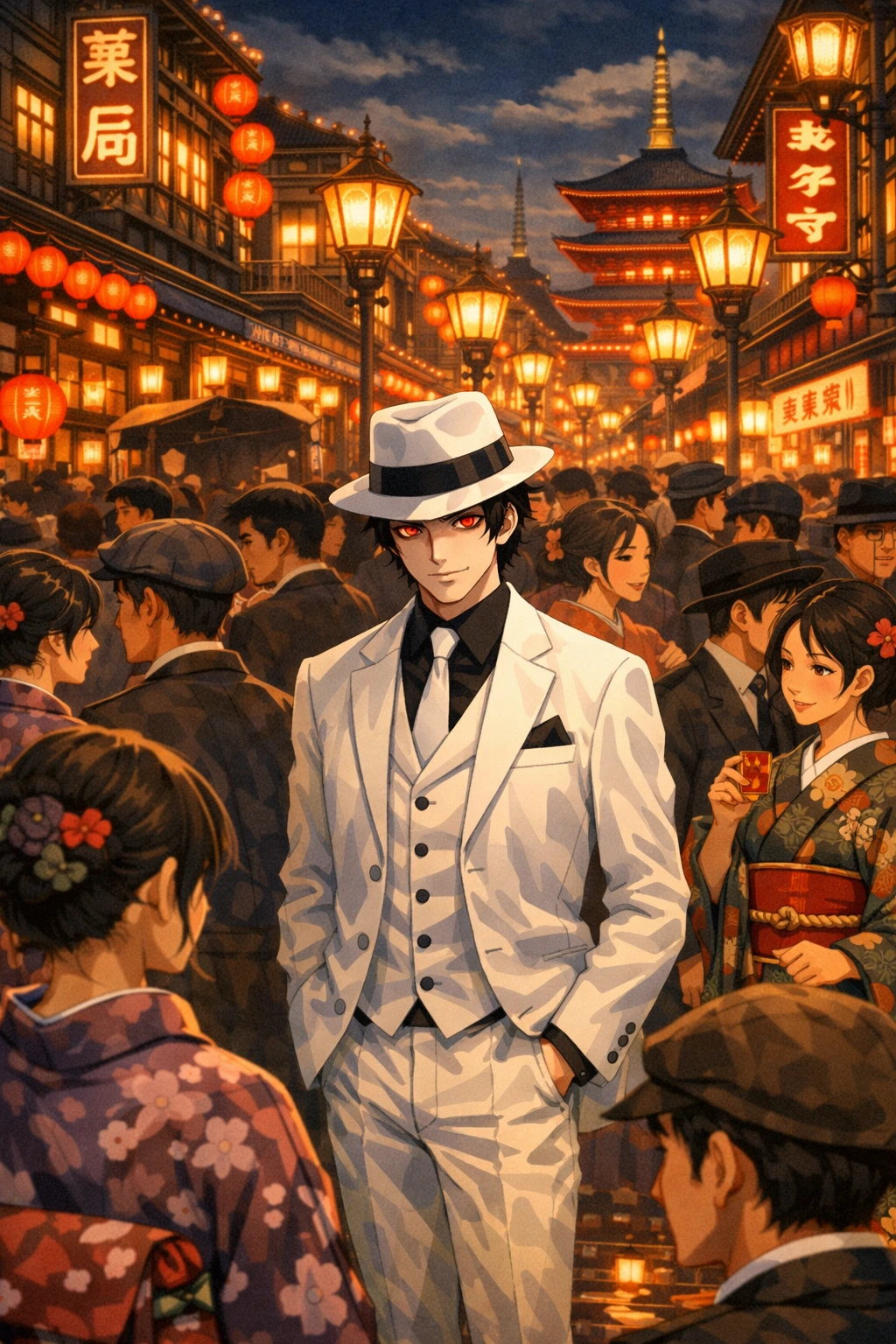
If the railway represented the industrialization of demon logistics, the city of Tokyo—specifically the booming district of Asakusa—represented the ultimate evolution of demonic camouflage. For centuries, Muzan Kibutsuji operated like a traditional folklore monster, hiding in remote mountain fortresses, deep caves, or isolated manors to avoid the deadly rays of the sun.
But the Taisho Era brought the rise of the Japanese megacity. Following the Meiji Restoration, cities like Tokyo experienced explosive population growth, rapid urbanization, and massive structural overhauls. Muzan, possessing unparalleled intelligence and a survival instinct honed over a millennium, realized that isolation was a vulnerability. To survive the modern era, he abandoned the remote hideouts and moved directly into the heart of the densest, most heavily industrialized urban center in the country.
The Asakusa Incident is a masterclass in psychological warfare and urban camouflage. When Tanjiro Kamado first encounters Muzan, the progenitor of demons is not lurking in a blood-soaked dungeon; he is walking through a bustling, brightly lit city street.
He is dressed in an immaculate, tailored Western suit, wearing a fedora, and accompanied by a human wife and daughter who believe him to be a wealthy, respectable gentleman. This is the “Megacity Shield.” By living as a wealthy, westernized human in the heart of Tokyo, Muzan uses the sheer volume of city-dwellers as a biological meat-shield.
This sociological camouflage is brilliant. The Demon Slayer Corps is an unacknowledged, unofficial organization. A Hashira cannot simply draw a katana in the middle of a crowded Tokyo intersection and decapitate a seemingly innocent, high-society gentleman without causing a massive public panic and bringing the full weight of the national military down upon the Corps.
Muzan knows that the Slayers’ morality—their vow to protect humanity—is their greatest weakness in an urban environment. He surrounds himself with thousands of potential hostages, ensuring that any direct assault on him would result in unacceptable civilian casualties. When Tanjiro confronts him, Muzan doesn’t fight; he simply scratches a random passerby, turning him into a demon to create a distraction, and calmly walks away into the crowd. The city itself becomes his greatest weapon and his impenetrable armor.
Furthermore, the advent of the megacity fundamentally altered the relationship between demons and light. Before the Taisho Era, demons ruled the absolute pitch-black of the rural night. But the industrial revolution brought light pollution. Asakusa in the Taisho period was famously bright, illuminated by gas lamps, early electric bulbs, glowing storefronts, and a bustling nightlife that lasted until dawn.
One might assume that this abundance of light would deter demons, but the opposite was true. Because artificial light does not possess the ultraviolet properties of sunlight, it is completely harmless to demons. Instead of hurting them, the chaotic, fractured light of the city created a new kind of darkness. Demons no longer had to rely entirely on the silence of the woods; they could hunt in the chaotic, noisy, and visually overwhelming shadows of the metropolis.
The alleyways between towering brick buildings, the dark underbellies of elevated tram lines, and the secluded corners of bustling entertainment districts became prime hunting grounds. The sensory overload of the modern city—the smells of street food, the roar of engines, the blinding electric lights—served to mask the scent of blood and the sounds of a struggle, making urban demons far deadlier and much harder to track than their rural counterparts.
4. The Government Blindspot: The Haitorei Edict and Illegal Weaponry
To fully grasp the tension of the Demon Slayer Corps operating in the Taisho Era, one must understand the socio-political reality of the time, specifically the legacy of the Haitorei (Sword Abolishment Edict). Issued in 1876 during the Meiji period, the Haitorei explicitly banned the carrying of swords in public by anyone other than military personnel and police officers.
This single piece of legislation effectively ended the era of the samurai and ushered in the modern Japanese state. By the time of the Taisho Era, carrying a katana in public was not just anachronistic; it was a serious federal crime.
This historical reality places the Demon Slayer Corps in a deeply precarious position. They are a shadow military, an ancient, unsanctioned paramilitary organization operating entirely outside the boundaries of modern law. The Slayers are, in the eyes of the Taisho government, highly dangerous, armed vigilantes. This creates immense legal friction between the modern Japanese police force and the Corps. The Slayers are dedicating their lives to protecting a populace that would gladly arrest them on sight.
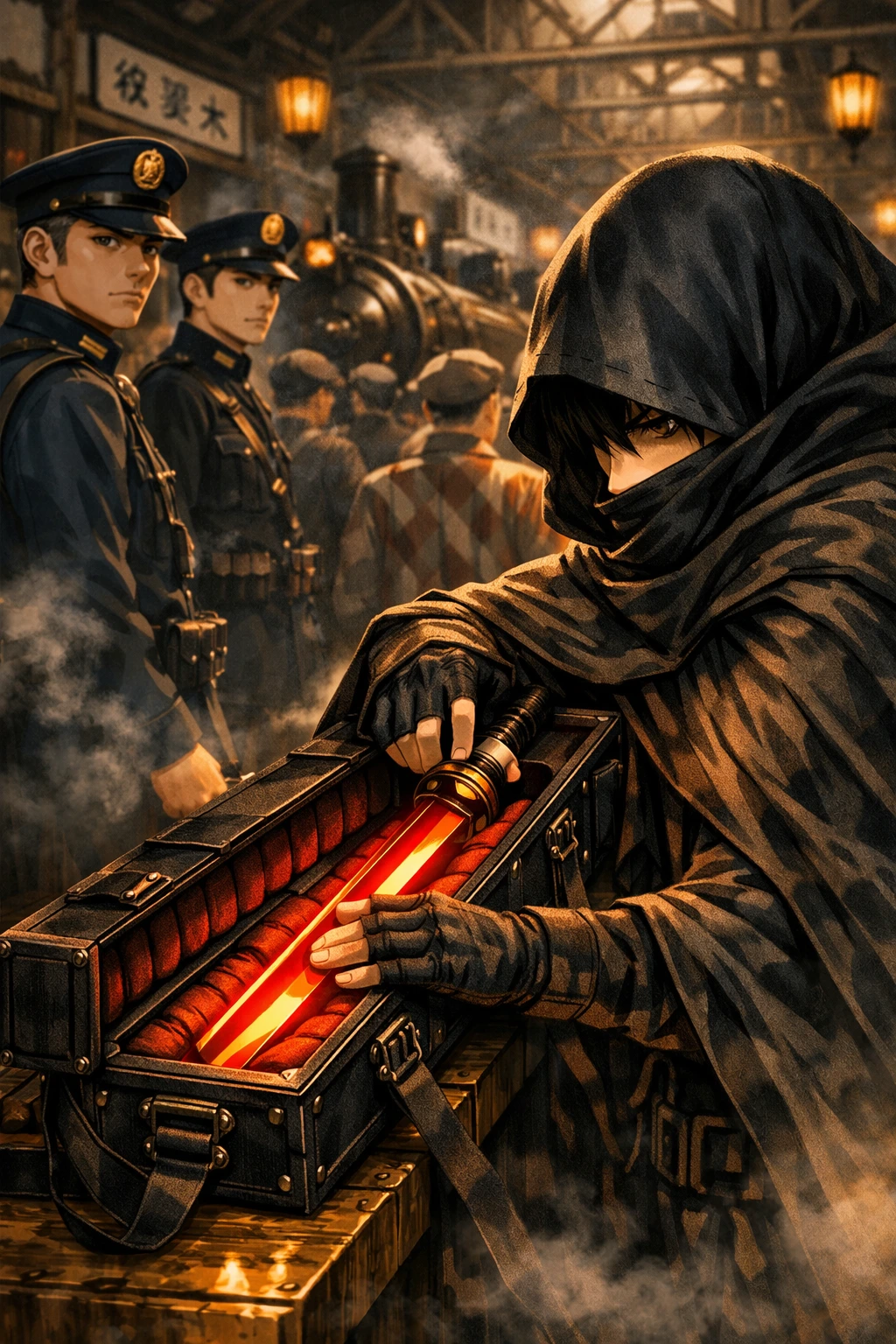
Because the government officially refuses to acknowledge the existence of demons—dismissing them as outdated superstitions or folklore—the Corps receives no federal funding, no legal protection, and no jurisdictional authority. This forces the Slayers to employ highly stressful “concealed carry” tactics to navigate the modern world. They cannot simply walk down a city street with a Nichirin blade strapped to their hip.
They must hide their weapons in specialized, innocuous-looking carrying cases, wrap them tightly in thick cloth, or conceal them beneath oversized cloaks and haoris. When Slayers travel on trains or walk through heavily policed urban centers, they must constantly evade the watchful eyes of Taisho-era officers, train inspectors, and beat cops. The tension of trying to save a train full of people while simultaneously hiding from the very train conductors who enforce the law adds a layer of mundane, bureaucratic anxiety to the supernatural terror.
Operating this massive, illegal shadow military requires astronomical resources and brilliant political maneuvering, which is where the true power of the Ubuyashiki family comes into play. Kagaya Ubuyashiki is not just a spiritual leader; he is the CEO of a covert, multi-generational supernatural defense conglomerate. The Ubuyashiki estate utilizes its massive, accumulated wealth to keep the Corps entirely off the government’s radar.
This involves an incredibly complex shadow economy. The Ubuyashiki family must continuously bribe local officials, manipulate land records to hide their training facilities and the Butterfly Mansion, and employ legions of intelligence gatherers to monitor police activity.
Most importantly, they manage the “cleanup.” When a massive, destructive battle occurs—such as the catastrophic confrontation in the Entertainment District, which leveled multiple city blocks—the government cannot be allowed to investigate too closely. If the national military found out about immortal, regenerating monsters, they would deploy thousands of troops with firearms, resulting in a wholesale slaughter of humans, as conventional weapons are useless against demons.
Therefore, the Ubuyashiki family deploys the Kakushi—their cleanup and logistics brigade—to arrive at battle sites before the police. The Kakushi erase evidence, forge incident reports (blaming destruction on gas explosions or fires, which were common in Taisho cities), and evacuate the Slayers before the authorities arrive. The Corps survives not just through the strength of its swordsmen, but through its ability to perfectly exploit the bureaucratic blindspots of the Taisho government.
5. Medical Advancements: The Butterfly Mansion’s Evolution

While the Slayers’ combat techniques are rooted in ancient martial arts, their survival and recovery depend entirely on the bleeding edge of Taisho-era science. The transition from the Meiji to the Taisho period saw a massive revolution in Japanese medicine, heavily influenced by Western practices. The reliance on traditional Kampo (Chinese herbal medicine), prayers, and simple bandaging was rapidly replaced by modern pharmacology, germ theory, and surgical intervention. Within the Demon Slayer Corps, this medical revolution is perfectly encapsulated by the Butterfly Mansion and its lead physician, the Insect Hashira, Shinobu Kocho.
Shinobu represents the absolute pinnacle of Taisho-era scientific advancement applied to supernatural warfare. She is not merely a warrior; she is a brilliant pharmacologist, chemist, and medical researcher. In a Corps dominated by physical brawn and mystical breathing techniques, Shinobu bridges the gap between ancient demon-slaying and modern science. Her laboratory in the Butterfly Mansion is equipped with microscopes, chemical distillation apparatuses, centrifuges, and rows of meticulously cataloged synthesized compounds.
The most profound example of this scientific approach is the weaponization of Wisteria. Historically, Wisteria was used by the Corps as a passive ward—a flower that naturally repelled demons due to its scent and composition. Shinobu, however, takes this natural resource and applies modern chemical extraction methods to it. She isolates the active toxins within the flower, concentrates them, and synthesizes them into highly lethal, fast-acting liquid poisons.
Because she lacks the physical strength to decapitate a demon, she uses a heavily modified, needle-like Nichirin blade to inject these synthesized neurotoxins directly into the demon’s bloodstream, causing massive cellular necrosis. Furthermore, her understanding of modern chemistry allows her to develop rapid-acting antidotes to demonic Blood Demon Arts, such as the deadly venom used by the Upper Rank demon Gyutaro. By analyzing the venom’s chemical structure on a microscopic level, she synthesizes a cure that can be administered intravenously, a medical procedure that would have been impossible in previous centuries.
Beyond chemical warfare, the Butterfly Mansion operates as a highly advanced, systematized trauma center. The physiological rehabilitation of injured Slayers is treated with a regimented, almost clinical approach that mirrors modern physical therapy. When a Slayer sustains catastrophic injuries—shattered bones, torn muscles, severe concussions—the Kakushi act as modern paramedics, performing battlefield triage and transporting them rapidly to the Mansion.
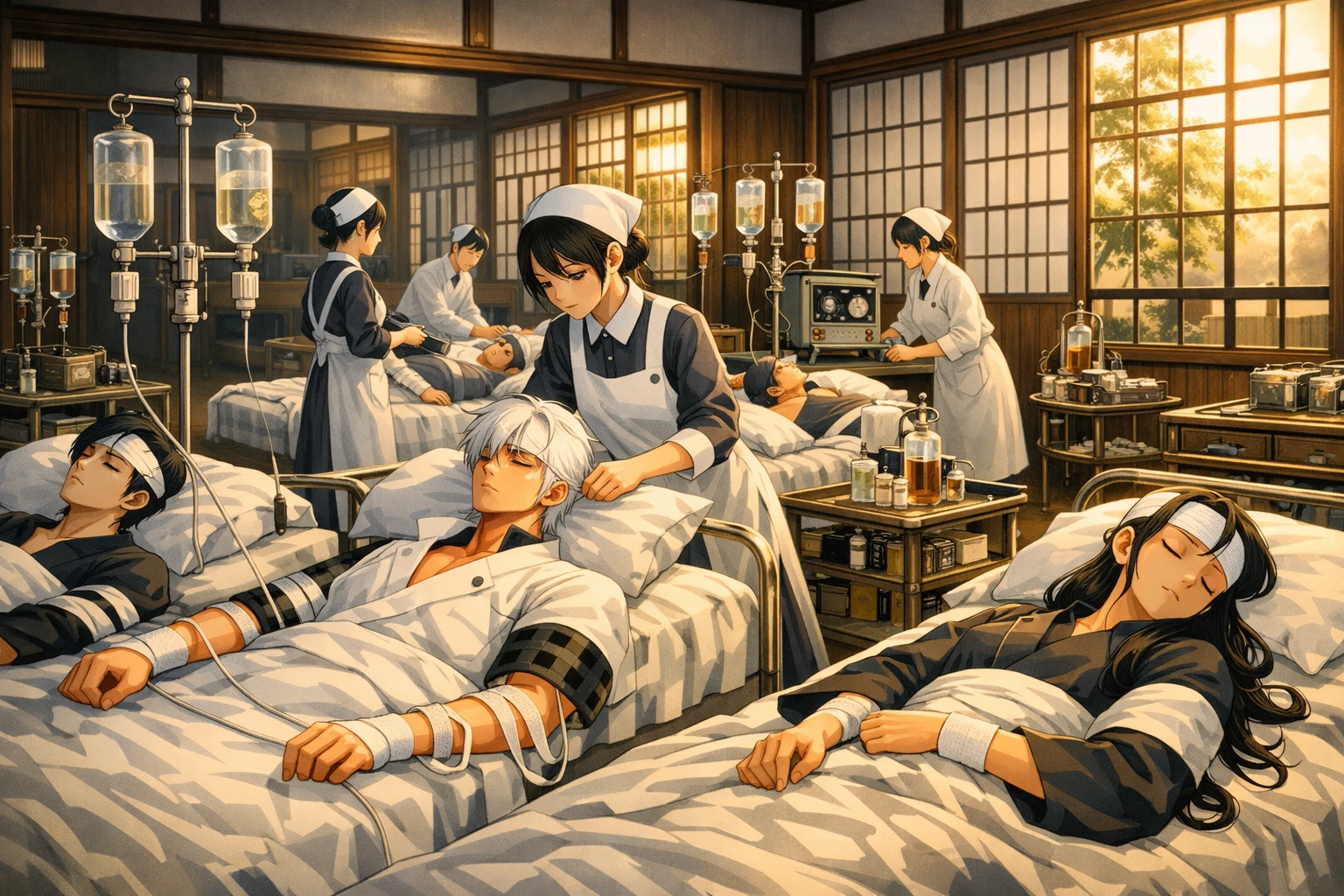
Once there, the Slayers are placed in sterile hospital beds and hooked up to intravenous drips to replenish lost fluids and deliver medications. The rehabilitation process is brutal but scientifically calculated. The nurses at the Butterfly Mansion guide the Slayers through intense physical therapy regimens, including deep tissue massage, flexibility training, and reflex-enhancement games designed to rebuild shattered nervous systems.
They utilize devices like reinforced gourds to measure and forcibly expand the Slayers’ lung capacity, applying the principles of respiratory therapy to enhance their Total Concentration Breathing. This modernized, logistical approach to medicine drastically reduces recovery times, ensuring that the Corps’ incredibly limited number of elite fighters are patched up and sent back to the front lines as quickly and efficiently as humanly possible.
6. Conclusion: The Last Generation of Swordsmen
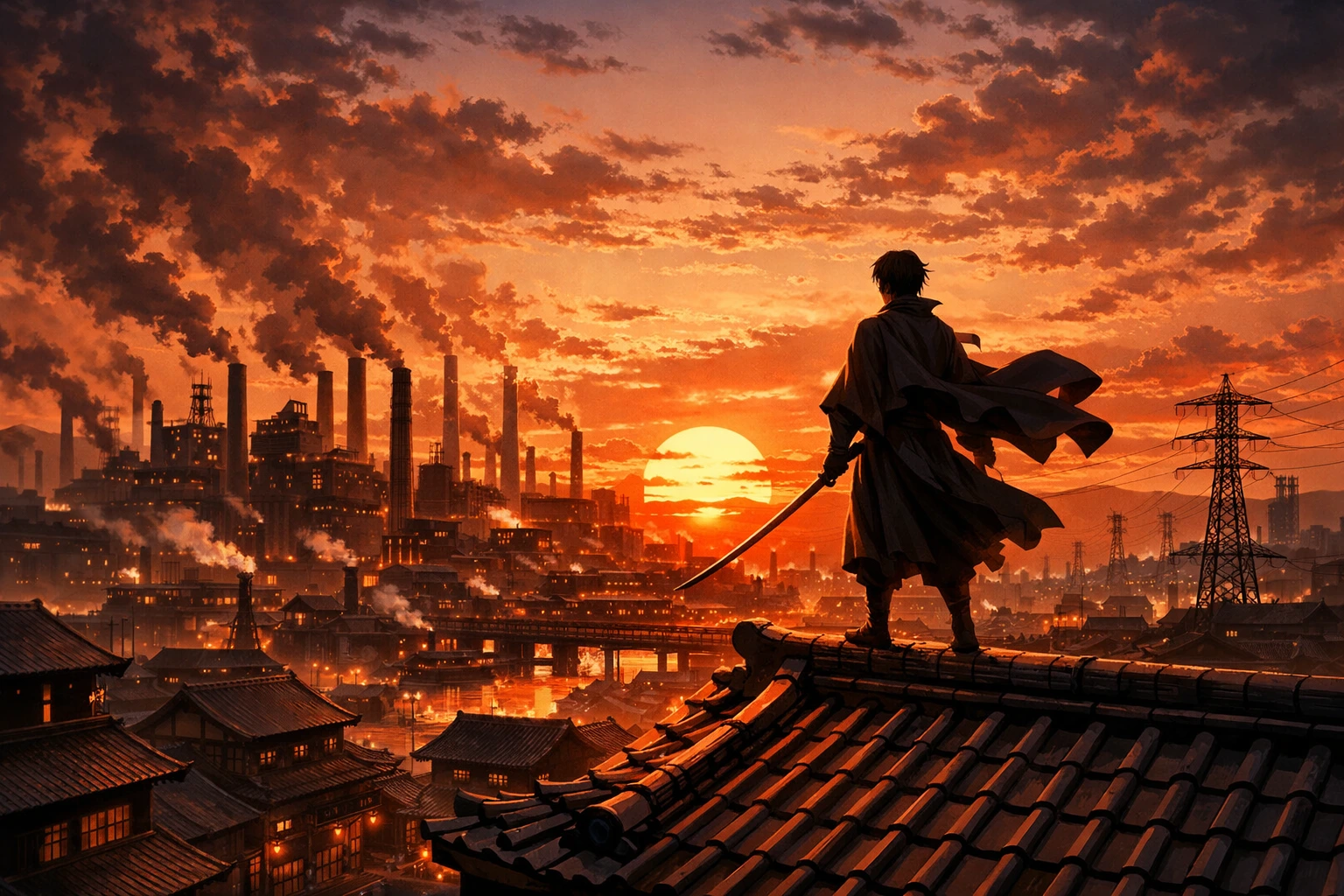
Ultimately, the Taisho Era is the only historical period where the story of Demon Slayer could be told with such profound thematic weight. It is an era fundamentally defined by its ephemeral nature, lasting a mere 14 years before giving way to the highly militarized, fully industrialized Showa period. By placing the narrative in this specific, fleeting window, the story establishes a quiet, underlying tragedy: the Demon Slayer Corps is fighting a war that is rapidly becoming obsolete.
This is the end of an era. The Hashira, for all their superhuman strength and dazzling sword techniques, represent the twilight of the samurai. They are the last generation of swordsmen in a world that is quickly figuring out how to split atoms and mass-produce machine guns. If Muzan Kibutsuji had managed to survive for another twenty or thirty years, the nature of the war would have changed irrevocably. By the advent of World War II, demons would not have been facing young men with katanas; they would have faced armored tank divisions, aerial bombardment, and rapid-fire modern artillery.
Alternatively, Muzan, ever the opportunist, may have shed his civilian camouflage and infiltrated the highest echelons of the Japanese military-industrial complex, manipulating the entire nation’s war machine from the shadows. The clash in the Infinity Castle is not just the end of a long feud; it is the final midnight of the old, mystical world.
The battle against Muzan and the Upper Moons represents the ultimate, explosive climax of the ancient era before Japan fully steps into the mechanized, unromantic future. Every swing of a Nichirin blade is a defiance against both the demons and the march of time. The Slayers are fighting to protect a future that has no place for them. Once the demons are eradicated, the need for Breathing Techniques, superhuman swordsmanship, and shadow warriors evaporates entirely.
The surviving members of the Corps will fade into obscurity, their epic, world-saving battles completely unrecorded by modern history books, dismissed as myths by a society focused on factories and stock markets.
In final expert analysis, the brilliance of the Taisho setting cannot be overstated. It is not merely a costume or a backdrop; it is the absolute, essential catalyst for the story’s tension. It is the exact historical intersection—the very razor’s edge—where ancient, esoteric martial arts and the dawn of modern infrastructure perfectly collided.
It provided the Slayers with the modern logistics and medical science necessary to finally corner their ancient enemy, while simultaneously providing the demons with the dense urban camouflage and industrial machinery to push back with unprecedented ferocity. The Taisho Era was the only time in human history where a boy with a sword could stand on top of a speeding steam train and end a 1,000-year war before the modern world woke up and rendered them both obsolete.