
Introduction
The Manifestation of Sins In the sprawling, hyper-commercialized world of My Hero Academia, villains are often born from the margins of society—outcasts rejected by a system that prizes flashy Quirks and marketable heroism.
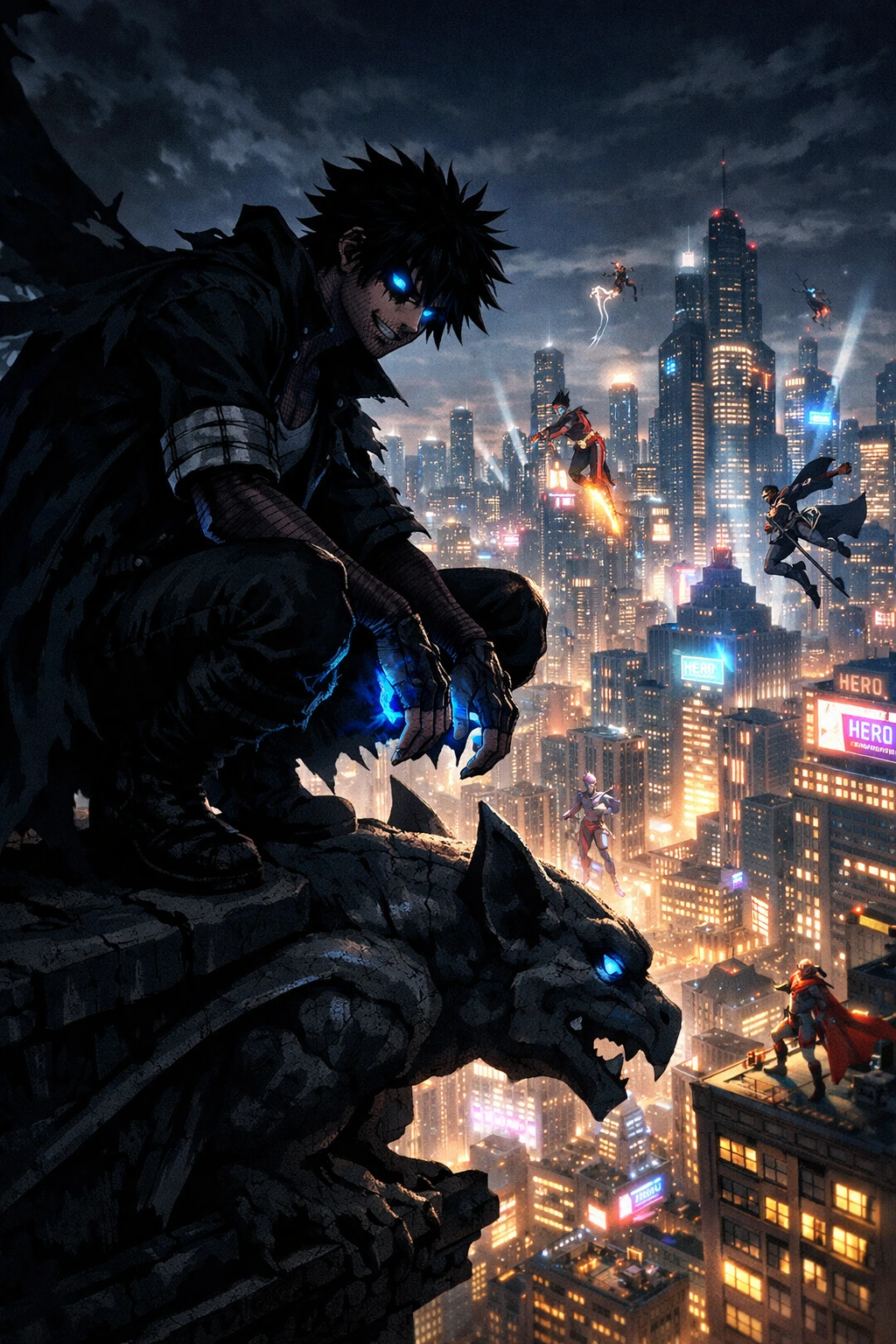
However, Dabi represents a fundamentally different and far more terrifying breed of antagonist. He is not an external anomaly or an alien threat invading from the fringes; he is the manifestation of Hero Society’s most closely guarded sins.
Dabi is the walking, burning consequence of a culture that commodifies human genetics and prioritizes the curation of power over the basic tenets of parental love and human decency. To define him merely as a high-tier villain within the Paranormal Liberation Front or the League of Villains is to severely misunderstand his narrative purpose.
Dabi is the inescapable reckoning of the “Pro Hero” industry’s darkest obsession with eugenics and genetic supremacy. He is the grotesque byproduct of Quirk Marriages—a socio-biological practice wherein human beings are bred like livestock to produce the ultimate, mathematically perfect offspring. Hero Society built its towering monuments of peace on the broken backs of discarded children, and Dabi is the ghost of that foundational cruelty, returned from the ashes to burn the entire edifice to the ground.
The Long Con Unlike his contemporaries within the League of Villains, Dabi’s motivations are startlingly singular and deeply intimate. Tomura Shigaraki desires the total annihilation of society due to his intrinsic psychological decay and the grooming of All For One. Overhaul sought to cure the “disease” of Quirks to return power to the Yakuza. Dabi, however, operates on a completely different ideological axis.
He does not harbor grand delusions of ruling the world, nor does he particularly care about reshaping the societal hierarchy in his image. His objective is a meticulously crafted, decades-in-the-making “Long Con” aimed at a single target: Enji Todoroki, the Flame Hero known as Endeavor.
Dabi’s existence is entirely predicated on a singular, terrifying objective—to systematically, brutally, and publicly dismantle the life, the pristine reputation, and the very sanity of his father. Every alliance he makes, every murder he commits, and every calculated move he executes on the geopolitical chessboard is designed to inflict maximum psychological torture upon Endeavor.
He is a surgeon of suffering, operating with a cold, detached patience, waiting for the precise moment when his father reaches the zenith of his career only to orchestrate a plunge into absolute despair.
Article Scope This article will serve as the definitive, expert-level breakdown of one of modern anime and manga’s most complex and tragic figures. We will delve beyond surface-level character summaries to conduct a comprehensive psychological and physiological autopsy.
This analysis will deconstruct the terrifying physics and self-destructive biology of the “Blueflame” Quirk, laying bare the grim reality of his combat mechanics. We will explore the psychological horror of the Touya Todoroki origin story, examining the transition from a desperate, love-starved child to a nihilistic mass murderer.
We will dissect the absolute tactical masterpiece that was his broadcasted confession, arguably the most devastating societal blow in the series’ history. Finally, we will confront the visceral, medical reality of his decaying anatomy and the final, fiery climax of the Todoroki family saga. This is the anatomy of a corpse kept alive by pure hatred.
The “Blueflame” Quirk: Biological Self-Immolation
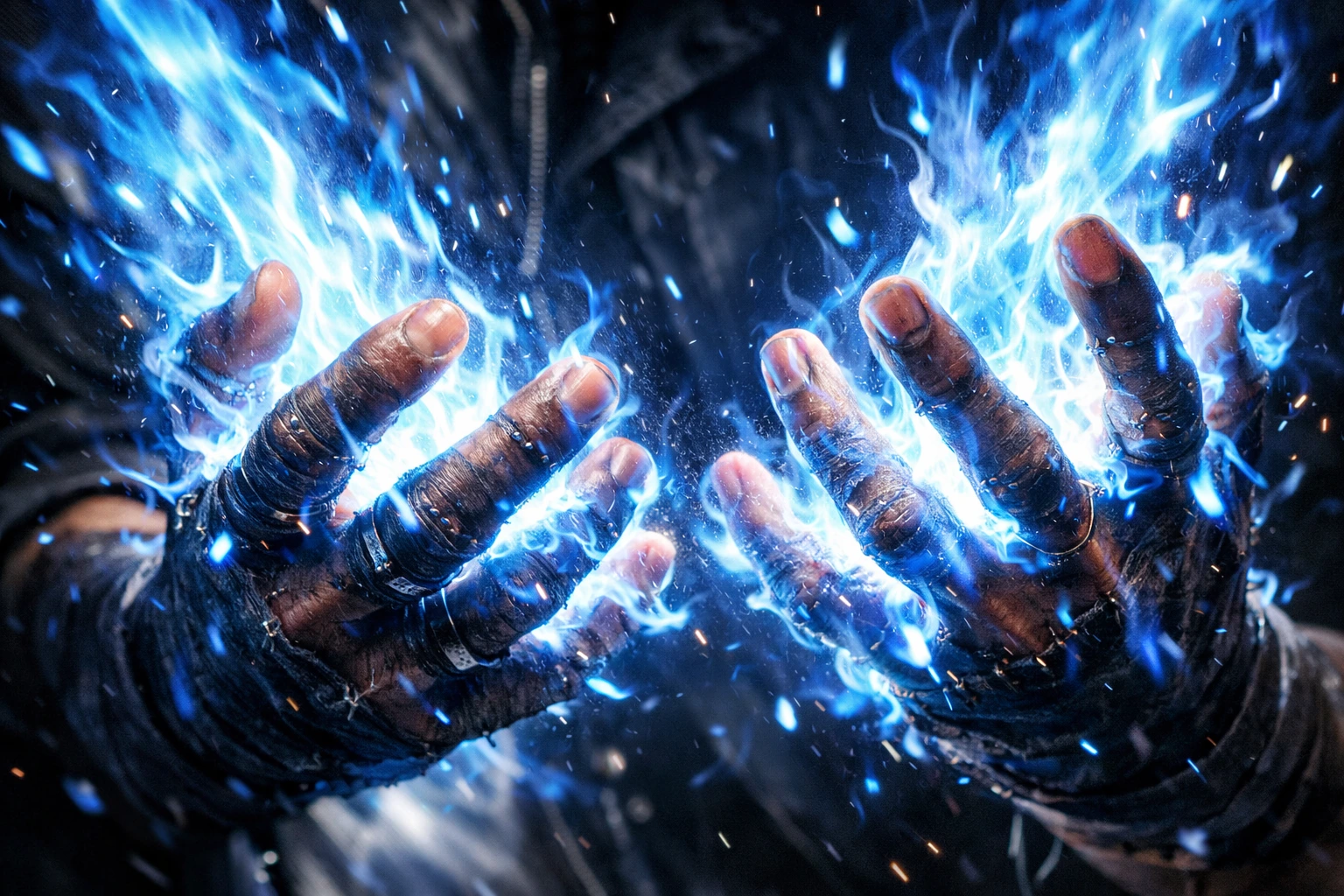
The Thermal Ceiling To understand the sheer terrifying nature of Dabi, one must first deconstruct the terrifying physics of his primary weapon: the Blueflame. In the realm of thermodynamics and combustion, flame color is a direct indicator of thermal output and combustion efficiency.
While standard red or orange fire burns between 600°C and 1,000°C, blue fire represents near-perfect combustion, indicating an environment devoid of unburnt carbon particles and reaching staggering temperatures well over 2,000°C (upward of 3,000°F). Dabi’s flames shatter the thermal ceiling of standard fire Quirks, massively exceeding the thermal output of even Endeavor’s legendary Hellflame.
When Dabi ignites, he is not merely producing fire; he is generating localized super-heated plasma capable of vaporizing stone, instantly turning human flesh to ash, and melting the structural foundations of city blocks.
His application of this power is bifurcated into two distinct styles: raw, unrefined omnidirectional blasts that consume everything in his immediate vicinity with overwhelming AoE (Area of Effect) devastation, and highly concentrated, pressurized beams such as his replication of his father’s Flashfire Fist and Prominence Burn.
The sheer kinetic force of his concentrated blasts rivals high-yield military explosives, making him one of the most lethal offensive powerhouses in the entire My Hero Academia universe.
The Hardware Mismatch Yet, the true horror of the Blueflame Quirk lies not in its external destructive capacity, but in the ultimate genetic tragedy of its wielder. Touya Todoroki is the victim of a fundamental, catastrophic biological flaw—a cruel roll of the genetic dice that turned his own body into a torture device.
In the eugenic pursuit of the perfect child, Endeavor sought to combine his own Hellflame with his wife Rei’s ice-manipulation Quirk. The intended result was a child with immense firepower and a biological cooling system. Instead, Touya inherited the absolute worst-case scenario: he received Endeavor’s terrifying, unparalleled firepower (the Software) but inherited his mother Rei’s weak, ice-resistant constitution (the Hardware).
His body was evolutionarily designed to withstand freezing temperatures, completely lacking the natural heat resistance required to handle even a fraction of the thermal energy his Quirk produces. It is a biological paradox. He is a high-performance engine strapped to a fragile, combustible chassis.
This genetic betrayal meant that from the moment his Quirk manifested, Touya was physically incompatible with his own existence, doomed to be destroyed by the very power his father demanded of him.
The Price of Output Because of this hardware mismatch, Dabi’s combat scenarios are a gruesome physiological reality. He is not merely fighting his opponents; he is constantly battling his own mortality. Every single time he activates his Quirk, he is physically cooking himself alive from the inside out. The blue flames sear his own skin, char his muscle tissue, and relentlessly fry his nerve endings.
The iconic, horrific patches of purple, stapled skin that cover his body are not aesthetic choices; they are massive, necrotic, third-degree burn scars resulting from his own power. Prolonged use of his Quirk literally melts his own anatomy. He emits the odor of burning flesh in battle because it is his flesh that is burning.
Furthermore, the extreme heat has entirely incinerated his tear ducts, meaning that when he experiences profound emotional distress, his eyes cannot produce tears; instead, they bleed. His power is not a gift; it is a literal suicide mechanism. Every blast of Blueflame brings him one step closer to complete physiological collapse.
Dabi’s fighting style is therefore an exercise in nihilistic attrition. He fights with the reckless abandon of a man who has already accepted his death, knowing that the only way to inflict the damage he desires is to immolate himself in the process.
The Touya Todoroki Tragedy (The Discarded Prototype)
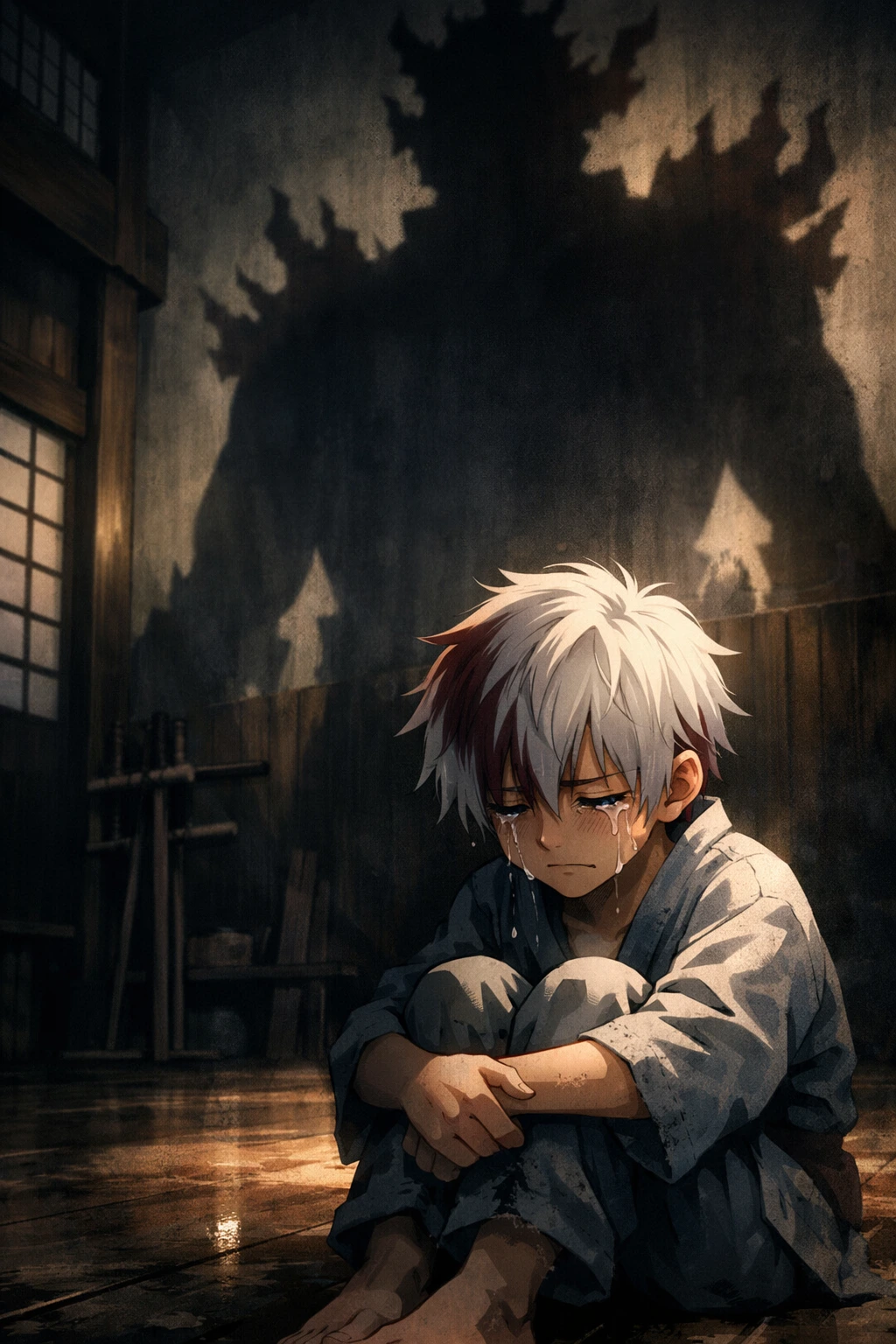
The Burden of the Masterpiece The psychological architecture of Dabi’s madness was laid during his early childhood, a period defined by conditional love and the suffocating weight of an impossible expectation. In his earliest years, Touya was not neglected; in fact, he was smothered with Enji Todoroki’s fervent attention.
Endeavor, desperate to breed a successor capable of surpassing the invincible Symbol of Peace, All Might, initially viewed Touya as his masterpiece. He recognized the boy’s immense firepower and showered him with validation, affection, and purpose. Enji deeply instilled the singular goal of “surpassing All Might” into the deepest recesses of Touya’s young, malleable psyche.
Touya was psychologically groomed to believe that his entire worth as a human being, his sole reason for existing, and the only way to secure his father’s love was to become the ultimate instrument of Endeavor’s ambition.
This early period of intense focus created a child who was neurotically attached to his father’s approval, defining himself entirely through the lens of Enji’s narcissistic dreams. Touya did not just want to be a hero; he needed to be Endeavor’s vindication.
The Genetic Betrayal The psychological foundation of Touya’s identity shattered completely when the biological flaw of his Quirk was discovered. As Touya trained and his flames grew hotter, the burns began to manifest on his skin. When Enji realized that his “masterpiece” was biologically defective and fundamentally incapable of sustaining the intense training required to surpass All Might, the father’s reaction was swift, brutal, and utterly devastating.
Endeavor did not try to help his son cope with this limitation; instead, he immediately discarded Touya, shifting his eugenic focus entirely to the creation of a new, perfect child—Shoto. This sudden withdrawal of affection and purpose was a psychological betrayal of the highest order. Touya, who had been conditioned to believe his fiery power was his only value, was suddenly rendered obsolete.
He was reduced to the status of a failed experiment, a discarded prototype. He watched from the sidelines as the love, attention, and training that was promised to him was redirected to his younger brother. This abandonment completely shattered Touya’s identity and sense of self-worth.
He was left in an agonizing limbo, possessing the burning ambition of his father but denied the right to execute it. The rejection bred a toxic, festering resentment, transforming his desire for approval into a desperate, manic obsession.
Sekoto Peak (The Descent into Madness) The horrifying climax of Touya’s youth occurred on the fiery slopes of Sekoto Peak, a location that would serve as the crucible for his dark rebirth. Driven mad by neglect and the desperate need to reclaim his father’s attention, Touya continued to train in secret, ignoring the severe burns ravaging his body.
He pushed his physiology past the absolute breaking point, his emotional instability causing his flames to evolve from crimson to a blinding, scorching blue. On that fateful day, he begged his father to come to the peak, to look at him, to finally acknowledge the terrifying power he had cultivated. He just wanted Enji to see him. But Endeavor, consumed by his training of Shoto, never arrived.
The realization that he was truly, unequivocally forgotten triggered a catastrophic emotional and psychological break. The despair and rage caused his Quirk to violently spiral out of control. The resulting inferno was a cataclysm of blue fire that incinerated the mountainside. Unable to turn off the very power his father had demanded, Touya was engulfed in an agonizing blaze of his own making.
When the flames finally died down, all that remained was a scorched landscape and a fragment of a jawbone. The boy named Touya Todoroki was supposedly burned to ash, but in reality, the fire merely burned away his innocence, leaving behind a charred, vengeance-fueled entity.
The League’s Nihilist (Exploiting the Vanguard)
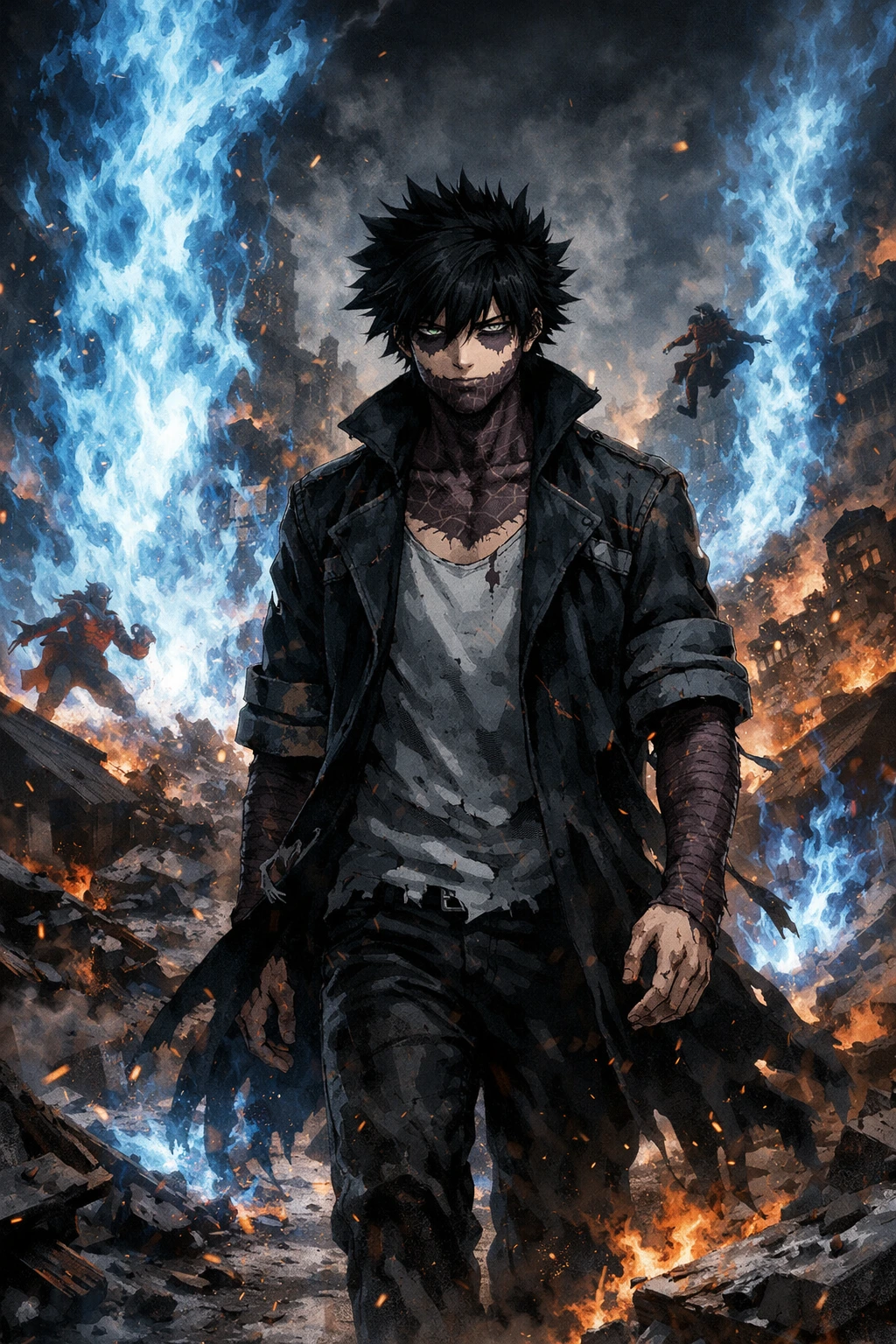
The Stain Facade When Dabi emerged from the shadows to join the League of Villains, he presented himself as a devoted disciple of Chizome Akaguro, the Hero Killer: Stain. He claimed to be driven by Stain’s philosophy, arguing that modern Pro Heroes were self-serving hypocrites obsessed with fame and wealth, and that society required a violent “cleansing” to return to true heroism.
However, a deep analysis of Dabi’s actions reveals this to be a masterful, sociopathic facade. Dabi cared absolutely nothing for the “cleansing of society,” the integrity of the hero profession, or the establishment of a purer world. He recognized that Stain’s ideology had become a powerful, viral recruitment tool for disenfranchised villains.
Dabi cynically adopted this manifesto as a convenient mask to gain entry into the Vanguard Action Squad and access the resources of the League of Villains. He used the League as a heavily armed vehicle to advance his own, intensely personal vendetta.
While Spinner genuinely worshipped Stain, and Shigaraki sought to destroy all of society, Dabi merely utilized the chaos they generated as a smokescreen, positioning himself on the board to eventually strike at the true target of his hatred: Endeavor.
Apathy in Combat Dabi’s psychological profile is most starkly illuminated in his approach to combat. Unlike Tomura Shigaraki, who fights with a chaotic, unbridled rage stemming from childhood trauma, or Himiko Toga, who views violence through the twisted lens of psychosexual “love” and connection, Dabi fights with a chilling, cold, and detached sadism.
He is a sociopath in the purest sense of the word when on the battlefield. There is no passion in his killing, only a grim, theatrical cruelty. He engages in relentless psychological warfare, taking immense pleasure in casually mocking Pro Heroes, exposing their insecurities, and belittling their ideals while simultaneously burning them to death. This is terrifyingly evident in his murder of the Sand Hero, Snatch.
As Snatch pleaded with him, asking if he ever thought about the grieving families of the people he murdered, Dabi coldly responded, “I thought so hard about it, I went crazy,” before mercilessly incinerating the hero. This apathy demonstrates a man whose capacity for empathy was entirely burned away at Sekoto Peak. He views human life as utterly disposable, mere kindling to fuel the fires of his grand, vengeful narrative.
The Shadow Strategist Throughout his tenure with the League of Villains and later the Paranormal Liberation Front, Dabi operated as a shadow strategist, consistently maintaining a subversive independence. He was never a true subordinate; he was a parasite, feeding off the League’s infrastructure while advancing his own covert agenda.
He deliberately kept his true identity a secret from his allies, trusting absolutely no one. This independent operation peaked during the Pro Hero Arc, where he secretly manipulated the deployment of the High-End Nomu (Hood). While it appeared to be a standard League attack, Dabi orchestrated the encounter specifically to test Endeavor, who had just ascended to the position of the Number One Hero following All Might’s retirement.
Dabi needed to gauge his father’s current strength, resolve, and public standing. He watched the brutal battle from the shadows, calculating the exact amount of force required to break Enji. When Endeavor barely survived, triumphant but battered, Dabi stepped out of the darkness, not to kill him, but to taunt him.
He realized that killing Enji then would be a mercy. He needed his father to reach the absolute pinnacle of society’s adoration before orchestrating his precipitous, agonizing fall.
The Masterpiece: “Dabi’s Dance” (The Societal Collapse)
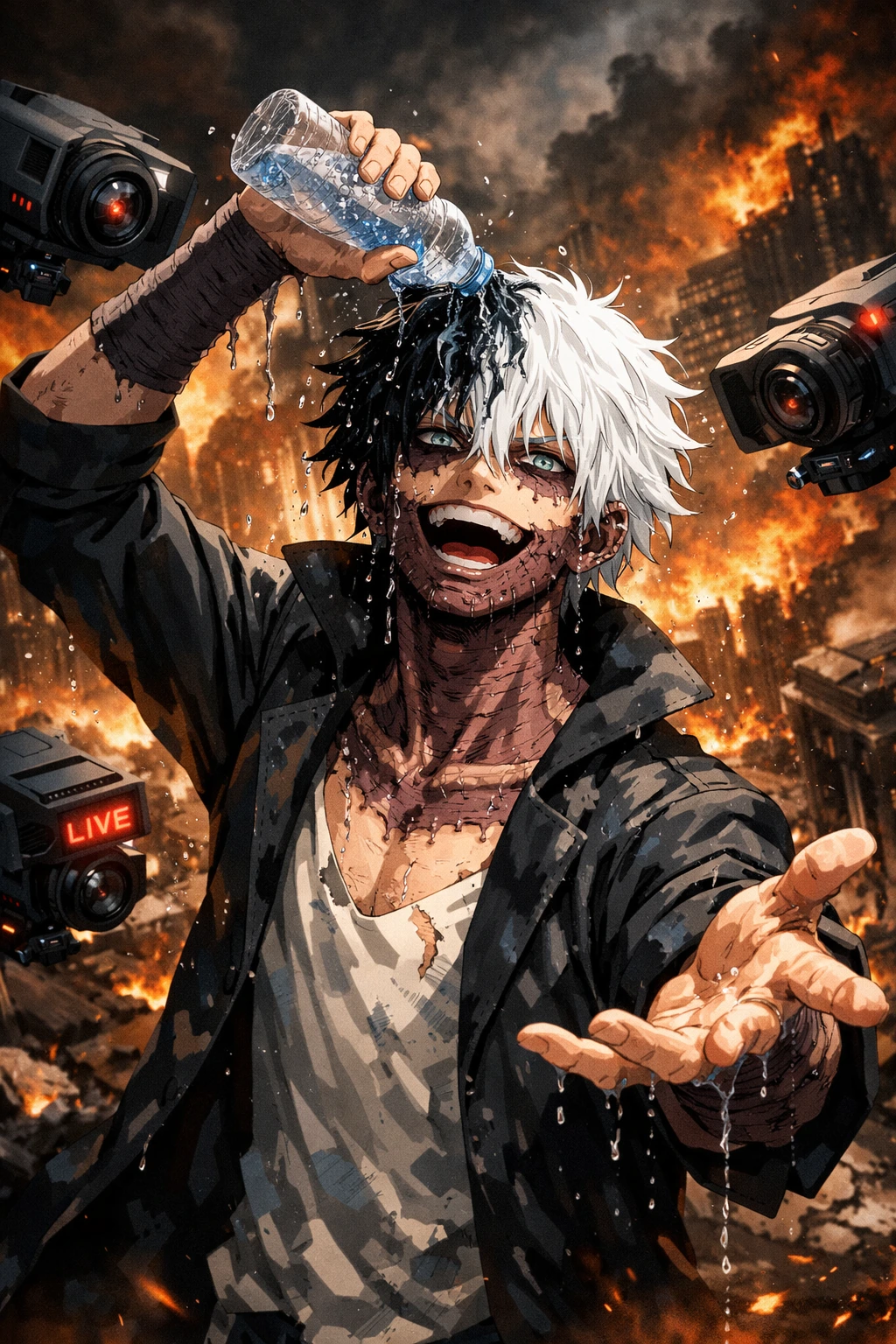
The Timing of the Broadcast In the annals of manga history, few moments rival the absolute tactical brilliance and psychological devastation of the chapter aptly titled “Dabi’s Dance.” Dabi’s masterstroke was not a feat of raw power or a physical assassination; it was an act of informational warfare. The sheer genius of the broadcast lay in its immaculate timing.
He released his pre-recorded confession precisely during the climax of the Paranormal Liberation War. The Pro Heroes were heavily battered, fighting a losing battle against Tomura Shigaraki and Gigantomachia. The civilian populace was glued to their screens, watching in horror as their protectors failed to stem the tide of destruction.
It was at this exact moment of maximum societal vulnerability—when faith in the heroes was already fracturing—that Dabi hijacked the national television signals. He did not attack their bodies; he attacked the foundational trust that held Hero Society together. By airing his broadcast when the entire nation was watching in desperation, he ensured that his message would inflict the deepest, most irreparable wound possible upon the collective psyche of Japan.
Weaponizing the Truth The most chilling aspect of Dabi’s broadcast is that he did not rely on fabrication, propaganda, or hyperbole. He weaponized the unadulterated, indisputable truth. To destroy Hero Society, he simply exposed the grotesque realities hidden behind the PR campaigns and heroic smiles.
He stood before the cameras, washed the black dye from his hair to reveal the stark white of the Todoroki bloodline, and methodically laid bare the sins of the Number One and Number Two heroes. He provided DNA evidence proving he was Touya Todoroki, exposing Endeavor’s long history of domestic abuse, eugenic obsession, and the psychological destruction of his own family.
He then immediately pivoted to Hawks, broadcasting footage of the hero ruthlessly murdering the retreating, mentally unstable villain, Twice, stabbing him in the back. Dabi masterfully framed these facts to prove a horrifying thesis: the “Symbols” of justice, the men the public trusted with their lives, were monsters behind closed doors.
By revealing that the Number One hero was a domestic terrorist and the Number Two hero was a government-sanctioned assassin, Dabi effectively shattered the moral absolute of the hero system. He proved that the line between hero and villain was a fabricated lie.
The Joy of Destruction As the broadcast echoed across the nation, the physical reality on the battlefield devolved into a nightmare of psychological horror. Dabi, standing atop Gigantomachia, engaged in a literal, psychotic “dance.” Analyzing the chilling psychology of this moment reveals the sheer, unadulterated euphoria he experienced.
After a lifetime of physical agony, emotional neglect, and simmering hatred, this was his catharsis. It was a macabre celebration of destruction. The sheer joy on his deteriorating face as he finally revealed his identity to Endeavor and Shoto is deeply unsettling. He reveled in the shock, the horror, and the immediate, crushing realization that dawned on his father’s face.
“The past never dies!” he screamed, pirouetting amidst the chaos. He wasn’t just defeating Endeavor; he was watching his father’s mind completely break in real-time. Enji, the indomitable Flame Hero, was paralyzed by the sins of his past made flesh, incapable of raising a hand against the monstrous son he had created.
For Dabi, this emotional paralysis was sweeter than any physical victory. He had successfully orchestrated the collapse of his father’s world, and he danced in the ashes of the society Enji had sworn to protect.
The Anatomy of a Corpse (Dr. Garaki’s Intervention)
The 3-Year Coma To fully comprehend the sheer improbability of Dabi’s continued existence during his attack on society, one must dive deep into the lost years following the catastrophic fire at Sekoto Peak. Touya Todoroki did not miraculously survive the inferno on his own.
As he lay dying, his flesh charred beyond recognition, he was secretly recovered by the supreme villain, All For One, and his brilliant, twisted scientist, Dr. Kyudai Garaki. Touya plunged into a profound, agonizing three-year coma within the sterile confines of an underground orphanage.
During this time, AFO and Garaki attempted to groom him, viewing his immense firepower as a potential backup vessel or a powerful pawn in their grand design. However, when Touya finally awoke, his immediate instinct was not to embrace villainy, but to return home. He escaped the facility, desperately hoping to apologize to his family and seek comfort.
The true tragedy struck when he arrived at the Todoroki estate, only to find that his supposed death had changed nothing. Endeavor was still ruthlessly abusing Shoto, still obsessively chasing All Might. The realization that his death was a mere inconvenience, and that he truly meant nothing, snapped the last remaining threads of Touya’s sanity. He abandoned his name, his family, and his humanity, walking away to fully embrace the mantle of Dabi.
The Medical Impossibility The physical state of Dabi following his awakening is a masterclass in visceral, physiological horror. He is, by all medical definitions, an impossibility. The fire at Sekoto Peak was so intense that it completely incinerated vast swaths of his epidermis. He lacks a functioning outer layer of skin over his lower face, neck, chest, and limbs.
The raw, purple, wrinkled tissue that remains is highly susceptible to infection and agonizingly sensitive, yet paradoxically numbed due to the severe deadening of his pain receptors. To keep his decaying skin from sloughing off his muscle tissue, he resorts to using crude, surgical staples, violently piercing his own flesh to hold his anatomy together.
Furthermore, as previously noted, his tear ducts were completely burned away, leaving him physically incapable of crying normal tears. When overwhelmed by the psychotic joy or profound grief of his twisted existence, blood violently hemorrhages from his eyes, staining his scarred cheeks. He is a walking patchwork of necrotic tissue and surgical steel, a macabre Frankenstein’s monster whose very appearance is a testament to the horrific abuse of Quirks.
Fuel by Hatred The most terrifying aspect of Dabi’s anatomy is not the extent of his injuries, but the dark scientific anomaly of his survival. Dr. Garaki, a man who has manipulated biology to create immortal Nomus, meticulously studied Dabi’s physiology and arrived at a chilling conclusion: Dabi should have biologically died years ago.
Given the catastrophic extent of his burns, the constant deterioration of his tissues from using his Quirk, and the failure of multiple vital organs, his continued existence defies all laws of medical science. Garaki noted that there is no biological mechanism keeping Touya Todoroki alive. The only thing maintaining his bodily functions, forcing his damaged lungs to draw breath and his failing heart to beat, is pure, concentrated, psychopathic hatred.
His desire to inflict pain upon Endeavor is so absolute, so fundamentally ingrained into his being, that it has superseded his own biology. He is a man literally animated by spite. This revelation elevates Dabi from a mere villain to a terrifying force of nature—a revenant who refuses to cross into the afterlife until he has dragged his father down to hell with him.
The Final War: The Family Pyre
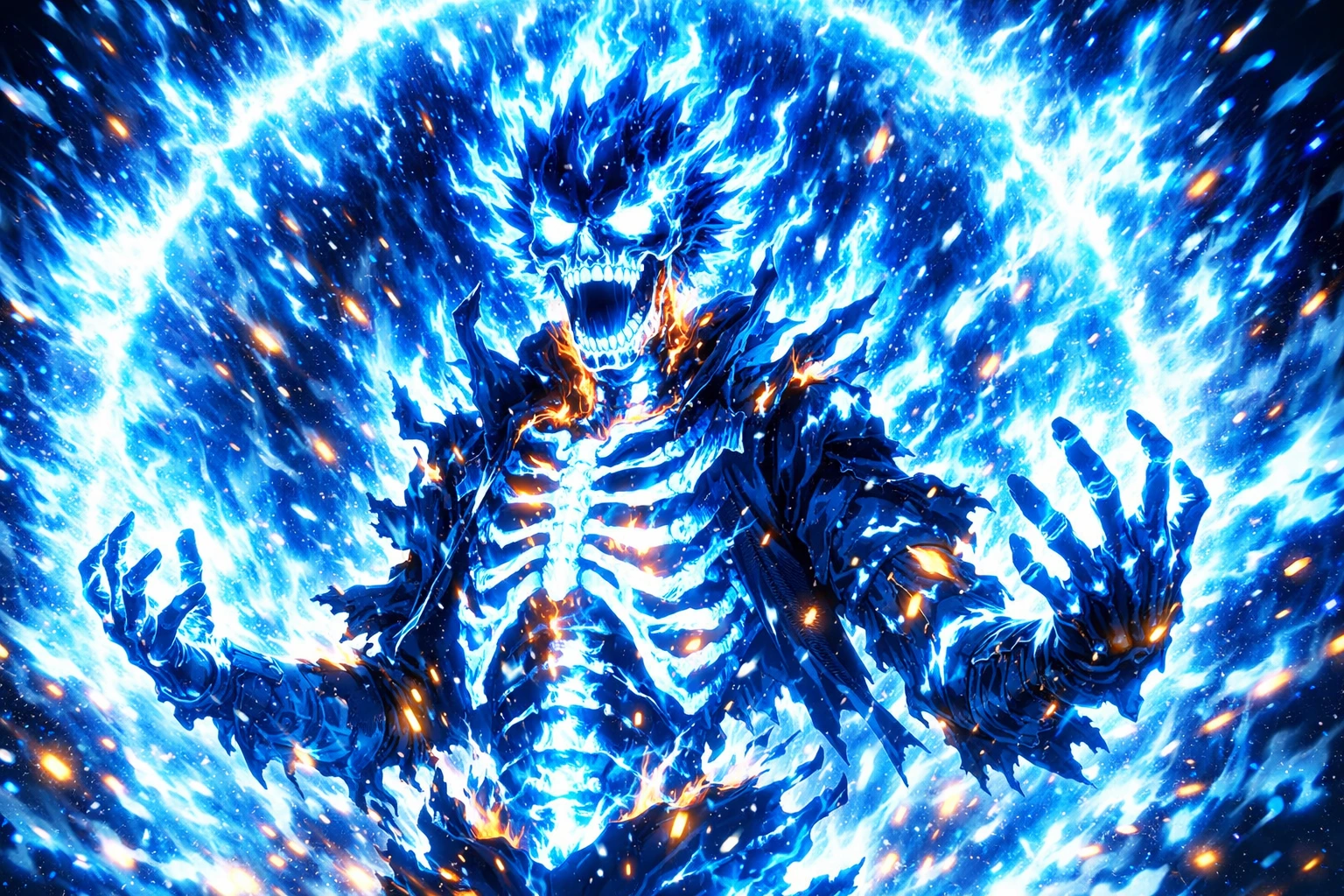
Brother vs. Brother The Final War arc brings the Todoroki family tragedy to its inevitable, apocalyptic conclusion, centering on the tactical and deeply thematic battle between Dabi and his youngest brother, Shoto. This is not merely a clash of powerful Quirks; it is the ultimate confrontation between the “failed prototype” and the “perfect masterpiece.”
Dabi represents the accumulated, festering sins of the past, consumed by vengeance and defined entirely by his father’s failures. Shoto, conversely, represents the difficult path of healing, having confronted his trauma and chosen to forge his own identity outside of his father’s shadow. The battlefield breakdown highlights this dichotomy.
Dabi attacks with overwhelming, apocalyptic waves of Blueflame, fighting with zero regard for his own survival, seeking only mutual destruction. Shoto fights with precision, control, and a desperate desire to save his brother from himself. It is a heartbreaking visual representation of a family tearing itself apart, the blazing blue inferno of hatred clashing against the multifaceted power of acceptance.
Phosphor (The Ultimate Counter) The turning point of this familial war hinges on Shoto’s masterful, thematic utilization of his Quirk. Understanding that Dabi’s thermal output is essentially unstoppable through conventional means, Shoto develops an ultimate technique: Phosphor.
By circulating both the hot and cold halves of his biology simultaneously, routing them through his very heart, Shoto achieves a state of perfect thermodynamic equilibrium. He creates “cold fire”—a manifestation of his Quirk that pacifies and neutralizes extreme heat rather than adding to it. Phosphor is the ultimate tactical counter to Dabi’s Blueflame, capable of freezing the super-heated plasma and extinguishing the seemingly unquenchable inferno.
But the significance of Phosphor extends far beyond combat mechanics. It is the profound thematic resolution of the Todoroki bloodline. Shoto finally utilizes the perfect genetic combination that Endeavor sought to create—not to conquer villains or surpass All Might, but in a desperate, loving attempt to save his brother. It is the family’s collective attempt to finally extinguish the devastating fire that Endeavor carelessly started all those years ago.
The Skeleton of Spite However, Dabi’s response to Phosphor demonstrates the terrifying depth of his resolve, pushing the battle past the boundaries of death itself. As Shoto’s cold flames begin to neutralize him, Dabi refuses to yield. Driven into a corner, he taps into a hysterical, gruesome reserve of power. He pushes his thermal output so high that he begins to literally burn away his own flesh, muscle, and sanity.
The horrific climax sees Dabi reduced to a blazing, skeletal core of thermal energy. His skin turns to ash, his internal organs begin to vaporize, and he becomes a walking, talking structural fire. He ceases to be human, transforming into a literal bomb of condensed, apocalyptic heat.
His singular, desperate goal in this skeletal state is to reach critical mass and detonate, intending to vaporize himself and take the entire Todoroki bloodline—Enji, Rei, Fuyumi, Natsuo, and Shoto—with him in one final, glorious pyre. It is the ultimate, horrific expression of his self-destructive nature: he is willing to completely erase his own existence if it guarantees the erasure of the family that broke him.
Conclusion
The Inevitable Consequence In the final analysis, Touya Todoroki, the entity known as Dabi, cannot be dismissed as a mere anomaly, a “bad seed,” or an unpredictable glitch in the system. He is the mathematically guaranteed result of Enji Todoroki’s ruthless, eugenic ambition.
When a society treats children as biological raw materials, valuing them only for their potential combat output and discarding them when they fail to meet specifications, a monster like Dabi is the inevitable consequence. He is the physical embodiment of the karma accrued by a culture obsessed with power.
Dabi stands as the ultimate, indisputable proof that you cannot build a peaceful, shining society on the broken bones and charred souls of abused children. His blue flames are the chickens coming home to roost, burning down the false idols of a society that turned a blind eye to domestic horrors in exchange for the illusion of safety.
Closing Thoughts As a character study, Dabi is a triumph of tragic writing within the shonen genre. He perfectly forces the “heroes” of the narrative—and the audience themselves—to confront the uncomfortable reality that not all villains are born from inherent evil or the machinations of a dark lord.
Some of the most terrifying, destructive forces in the world are created entirely by the “good guys.” The heroes, in their pursuit of justice and perfection, often leave behind a trail of collateral damage. Dabi is that damage, weaponized and returned to sender.
His arc is a harrowing reminder that the flames of ambition, if left unchecked by compassion and basic humanity, will inevitably consume everything they touch, leaving nothing but ashes and the haunting echo of a boy who just wanted his father to look at him.