
In the treacherous world of Jujutsu Kaisen, raw talent and massive reserves of Cursed Energy are often treated as the gold standard of strength. We look at Satoru Gojo’s Six Eyes or Yuta Okkotsu’s bottomless reserves and assume that genetics are destiny.
However, beneath the flashy Domain Expansions and destructive Cursed Techniques lies a more fundamental, almost bureaucratic law that governs the universe: The Law of Equivalent Exchange.
This law is codified through Binding Vows (Shibari).
A Binding Vow is the great equalizer. It is the mechanic that allows a Grade 1 sorcerer to punch above their weight class, or a King of Curses to bypass the strongest defenses in history. It is a system where power is not just generated; it is bought. And the currency is risk, freedom, and sacrifice.
While Cursed Techniques are the engines of combat, Binding Vows are the gears and levers that allow a sorcerer to redline that engine without blowing it up—or to purposefully blow it up to take their enemy with them.
In this comprehensive analysis, we will dissect the mechanics of Binding Vows, exploring how they serve as the backbone of Jujutsu combat. We will analyze the difference between self-imposed pacts and contracts with others, and we will conduct deep-dive case studies on the masters of risk management: Nanami Kento, Ryomen Sukuna, Kinji Hakari, and Yuta Okkotsu.
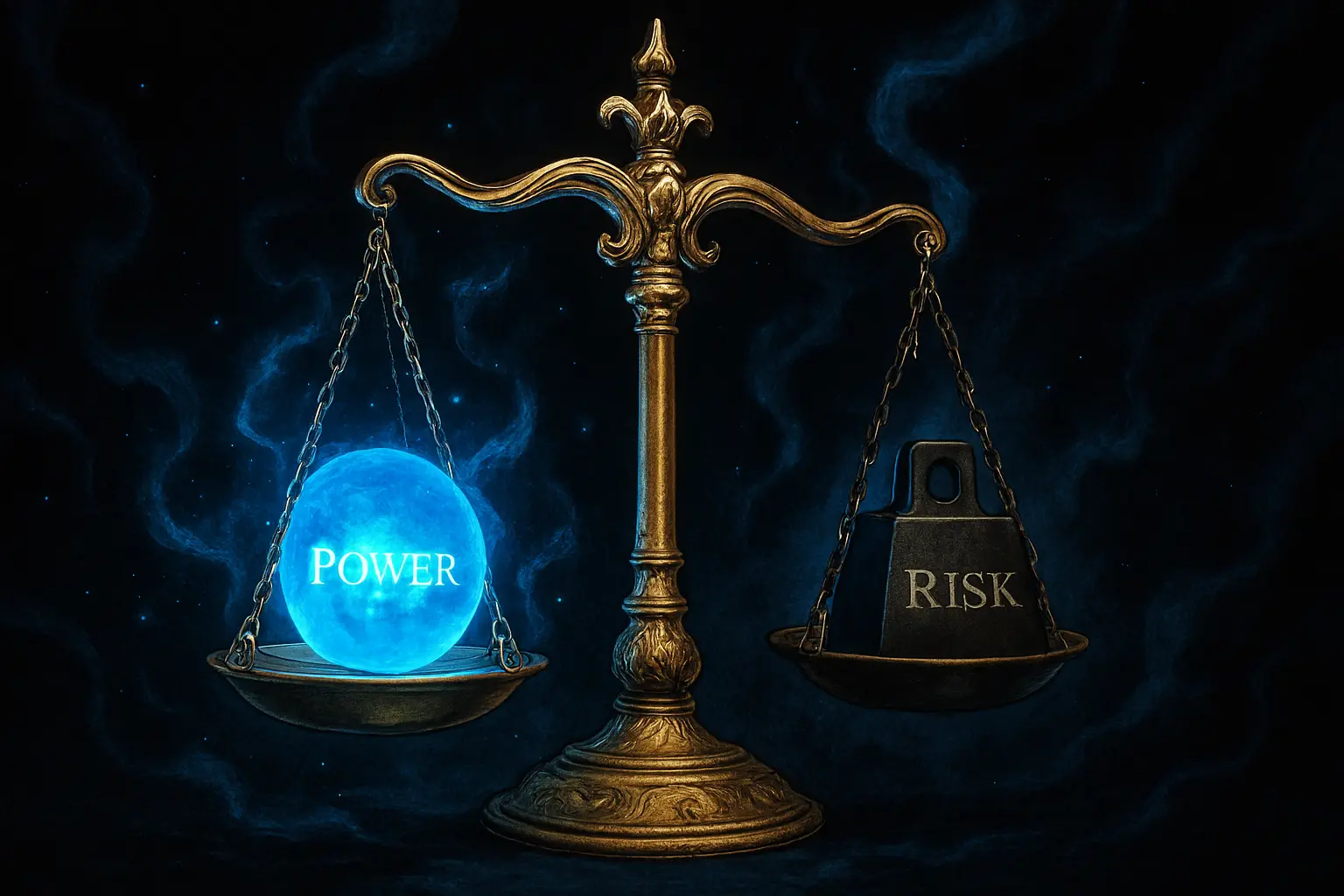
1. Shibari (Binding Vow): The Law of Equivalent Exchange
To understand Binding Vows, one must first understand the nature of Cursed Energy itself. Unlike the mana in typical fantasy settings or Ki in Dragon Ball, Cursed Energy is inherently negative. It is born from human emotion—fear, anger, regret. It is volatile and chaotic. It is the literal manifestation of human stress and negativity leaking out into the world.
However, the application of this energy follows a strict, almost mathematical logic. In Fullmetal Alchemist, the Law of Equivalent Exchange states that “to gain something, something of equal value must be lost.” Jujutsu Kaisen adopts a similar philosophy but twists it into a cosmic gamble.
In JJK, nothing is truly free. A Binding Vow is essentially a contract created using Cursed Energy. It is a hack to the system, but authorized by the system itself. The universe of Jujutsu Kaisen is sentient enough to recognize when a sorcerer is intentionally disadvantaging themselves.
It functions like a cosmic bureaucracy or a sentient bank. The system looks at a sorcerer giving up their safety and responds, “Because you have made yourself vulnerable, I will grant you power equal to that vulnerability.”
The Concept of “Risk” as a Multiplier
The core principle of a Binding Vow is Risk. In a standard power system, Power = Energy Output. In Jujutsu Kaisen, Power = Energy Output × Risk Factor.
By increasing the risk (the “cost”), a sorcerer artificially inflates their power output without actually increasing their total Cursed Energy reserves. This is why intelligent fighters often defeat stronger ones. They aren’t generating more energy; they are leveraging risk more efficiently.
This dynamic creates a fascinating meta-game. If a sorcerer creates a vow that says, “I will not use my Cursed Technique on Sundays,” the universe interprets this restriction. If the sorcerer is attacked on a Sunday and adheres to the vow, the energy they saved or the “karma” they built up does not vanish—it is often redistributed to make their technique significantly stronger on the other six days of the week.
This turns combat into a high-stakes poker game. The sorcerer bets their life, their limbs, or their future potential. The bigger the bet, the bigger the payout. But as we will see, if you bluff the system and lose, the house always wins. The system cannot be cheated, only negotiated with.
2. The Taxonomy of Pacts: Two Types of Binding Vows
While the variations are endless, Binding Vows fall into two distinct categories based on who the contract is with. The distinction is crucial because the penalties for breaking them differ wildly.
Comparison of Vow Types
| Feature | Self-Imposed Vow | Consensual Vow (With Others) |
| Partner | Yourself | Another Living Being |
| Purpose | Boost Stats / Power Up | Trust / Deal Making |
| Penalty | Loss of gained power (No backlash) | Unpredictable Calamity / Karma |
| Risk Level | Low (Reversible) | Extreme (Existential Threat) |
Type 1: Vows with Oneself (Self-Imposed Restrictions)
This is the most common form of Binding Vow seen in combat. A sorcerer imposes a handicap on their own behavior or technique to gain a buff. This is a solitary contract, a deal struck with one’s own soul and the universe.
The Mechanism: The sorcerer mentally or verbally commits to a restriction. The stricter the restriction, the greater the power boost. The key here is intent. You cannot accidentally make a binding vow; you must intentionally restrict yourself.
- Example: Limiting the range of a Domain Expansion to allow an escape route (Sukuna’s Malevolent Shrine).
- Example: Restricting the number of projectiles fired to increase their individual speed.
- Example: Todo Aoi revealing his switching technique to Hanami.
The Penalty for Breaking: This is the lenient side of the law. If a sorcerer makes a vow with themselves and then breaks it, the penalty is simply the loss of the gained power. There is no karmic backlash. No lightning strikes them down. They simply lose the buff.
For instance, if Nanami Kento decided to use 100% of his power during his shift hours (breaking his “Overtime” vow), he wouldn’t die. He would simply lose the ability to access the 120% boost during overtime later. He returns to baseline. This low penalty encourages sorcerers to experiment with vows freely during combat.
The “Revealing One’s Hand” Phenomenon: The most ubiquitous example of a self-imposed vow is the anime trope of explaining one’s powers. In many series, characters explain their abilities for the audience’s benefit. In Jujutsu Kaisen, this is weaponized as a tactical Binding Vow. By explaining how their Cursed Technique works to an opponent, a sorcerer creates a disadvantage for themselves.
- The Give: You are giving up the tactical advantage of surprise and information. You are helping the enemy understand how to counter you.
- The Take: In exchange for this massive tactical disadvantage, the effectiveness of the technique is boosted. The energy becomes denser, the effect more potent, or the guarantee of a hit increases. It is a gamble that says, “I am telling you how I will kill you, and because I told you, my attack is now strong enough that you cannot stop it even though you know it’s coming.”
Type 2: Vows with Others (Consensual Contracts)
These are agreements made between two or more living entities. These are far more dangerous and binding. They are the bedrock of trust in a society of liars and murderers.
The Mechanism: Two parties agree to terms. “I will heal your arm if you agree to help me kill Kenjaku.” “I will let you live if you agree to serve me.” These vows require mutual consent. One cannot force a Binding Vow onto another person without their agreement (though coercion to get that agreement is fair game). Once agreed upon, the vow is etched into the participants’ very souls.
The Penalty for Breaking: Unlike self-imposed vows, breaking a vow with another person invites Unpredictable Calamity. The punishment is not immediate death, but it is described as “Karma.” The backlash can strike at any time, in any form. It is a Sword of Damocles hanging over the breaker’s head.
Because the penalty is unknown and potentially infinite, sorcerers—even the strongest ones like Kenjaku and Sukuna—are terrified of breaking vows with others. They will twist the wording, find loopholes, and exploit specific phrasing, but they will never directly violate the terms of the pact. The risk is simply too high. This makes Binding Vows the only true law in the Jujutsu world.
3. The Ritual of Subtraction: Chants, Dances, and Hand Signs
Before diving into specific characters, we must address a subtler form of Binding Vow: the use of chants and hand signs.
In the modern era of Jujutsu, sorcery is about efficiency. Sorcerers learn to activate techniques with minimal movement—a single finger twitch, a thought. This is “subtraction.” However, true masters like Sukuna and Gojo understand that adding these unnecessary steps back in is a form of Binding Vow.
The Logic of the Chant: Why does Satoru Gojo chant “Nine Ropes, Polarized Light, Crow and Declaration, Between Front and Back” before firing a 200% Hollow Purple? Strictly speaking, he doesn’t need to. He can fire Purple without it. But by choosing to recite the full incantation, he is spending time. In a high-speed battle, time is a luxury. Spending 3 seconds chanting is a massive risk. Therefore, the universe treats the chant as a Binding Vow.
- Cost: Time and telegraphed intent.
- Gain: Massive output increase (e.g., to 120% or 200%).
This is why Sukuna, in his Heian form, is so terrifying. He has two mouths and four arms. He can fight with two arms while the other two form hand signs, and he can breathe/trash-talk with one mouth while the other chants incantations. He can perpetually maintain the “Chant Buff” without losing combat efficiency. He is a walking, breathing cheat code for this specific type of Binding Vow.
4. Case Study: Nanami Kento (Overtime)

The Corporate Sorcerer and the Economy of Time
Nanami Kento is the embodiment of the “salaryman” archetype, and his Cursed Technique and Binding Vows reflect a transactional view of reality. He does not fight for passion; he fights for a paycheck. Consequently, his Binding Vow is structured around the concept of labor laws.
The Structure of “Overtime”
Nanami’s primary Binding Vow is explicitly tied to the clock.
- The Restriction: During official working hours (typically 9:00 AM to 5:00 PM), Nanami restricts his Cursed Energy output to approximately 80-90% of his maximum potential.
- The Trade-off: By artificially suppressing his power during the day, he accumulates a “debt” of energy.
- The Payout: Once the clock strikes 5:00 PM and his shift ends, if he is still fighting, he enters “Overtime.” The vow activates, releasing the suppressed potential. His energy output spikes to 110-120% of his baseline maximum.
Tactical Analysis
Why would a sorcerer choose to be weaker for the majority of the day? This seems counter-intuitive for survival. However, Nanami’s vow is a masterclass in Resource Management. Most curses Nanami deals with on a daily basis are Grade 2 or lower. He does not need 100% of his power to exorcise them. Using 100% would be a waste of stamina. By operating at 80%, he conserves physical and mental stamina while “charging up” his vow.
When he encounters a Special Grade or a difficult situation that drags on (like his fight with Mahito), the fight inevitably goes into overtime. Suddenly, he has access to a tier of power he effectively should not have. The 120% output allows him to damage opponents that should logically be out of his league. It is crucial to note that this is a consistent stat buff—unlike the momentary critical hit of a Black Flash, Nanami’s Overtime allows him to operate at a higher permanent baseline for the duration of the fight after hours.
This vow turns time into a weapon. It forces Nanami to be efficient. He tries to wrap up fights quickly (before 5 PM) to avoid the hassle, but if he is pushed, the system rewards his “unpaid labor” with a massive buff. It is a perfect thematic resonance with his character: he hates working overtime, so when he is forced to do it, he becomes significantly more dangerous to ensure he can clock out immediately.
5. Case Study: Ryomen Sukuna (The Master of Vows)
Weaponizing the Fine Print
If Nanami represents the standard use of Binding Vows, Ryomen Sukuna represents the absolute pinnacle of their abuse. Sukuna is not just a monster; he is a glitch hunter. He finds the bugs in the universe’s code (Binding Vows) and exploits them to bypass patches (Infinity). He understands the “terms and conditions” of sorcery better than anyone else.
Sukuna treats Binding Vows not as desperate gambles, but as flexible tools to rewrite the conditions of victory. He uses them to alter the parameters of his techniques on the fly.
The “Enchain” Vow: The Long Con
Early in the series, Sukuna makes a vow with Yuji Itadori to bring Yuji back to life. The Terms:
- When Sukuna chants “Enchain,” he takes control of Yuji’s body for one minute.
- During this minute, Sukuna cannot kill or hurt anyone.
- Yuji will forget that this vow essentially exists/the details of the pact.
The Execution (The Loophole): In the Shibuya Incident/Culling Game arc, Sukuna utilizes this vow to enact his master plan. He chants “Enchain.” He takes over. He then rips off his own finger (containing Yuji’s body part) and force-feeds it to Megumi Fushiguro. Here is the genius of Sukuna’s interpretation:
- Did he hurt anyone? Technically, no.
- Yuji did not stipulate “you cannot hurt yourself.” Ripping off his own finger was self-harm, which was not forbidden.
- When he force-fed the finger to Megumi, the act of feeding isn’t inherently an attack. The result (Megumi being possessed) is catastrophic, but the action during the one-minute window technically adhered to the letter of the law.
Sukuna exploited the vagueness of the word “hurt.” He bypassed the spirit of the contract by adhering strictly to the letter, allowing him to steal a Ten Shadows user’s body without triggering the punishment of the Binding Vow.
The Open Barrier Domain: The Divine Feat
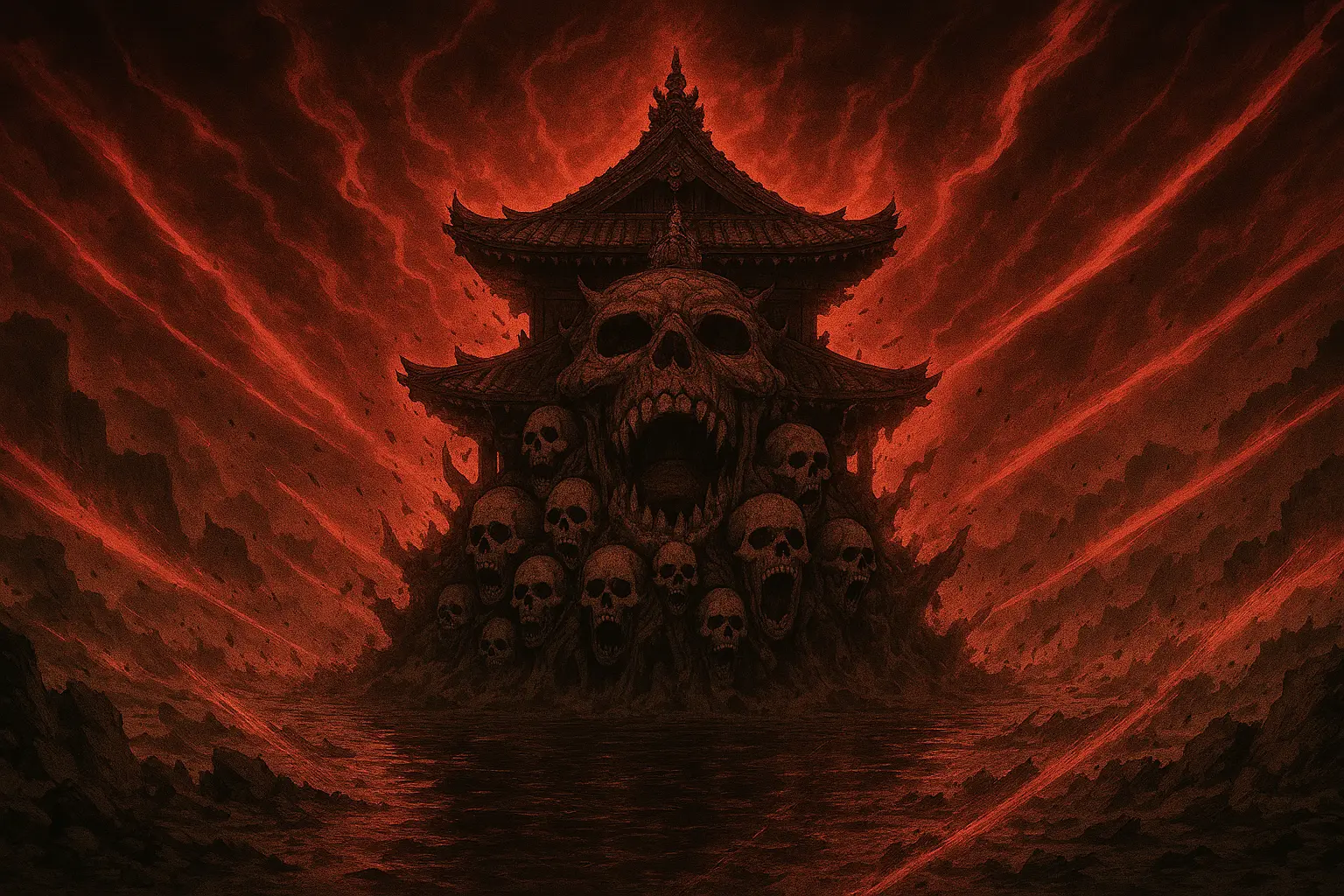
Perhaps the greatest display of Binding Vow mastery is Sukuna’s Domain Expansion: Malevolent Shrine. Most domains work by creating a barrier (a shell) that traps the opponent inside.
- The Restriction: Sukuna makes a Binding Vow to remove the barrier shell. He gives the opponent an escape route. Because there is no barrier, the opponent can theoretically just run away.
- The Payout: In exchange for allowing an escape route, the “Binding” area of effect is vastly increased. The range expands to a maximum of 200 meters.
- The Result: He doesn’t need to trap you to kill you. The range is so massive that “running away” is impossible before you are shredded to dust. He traded “inescapability” for “total destruction of the landscape.”
The World-Cutting Slash: Trading the Future for the Now
The most controversial and brilliant use of a Binding Vow occurs in the battle of the strongest: Gojo Satoru vs. Ryomen Sukuna.
Toward the end of the fight, Sukuna found a blueprint to bypass Gojo’s Infinity (via Mahoraga). He needed to fire a slash that cut “the world itself,” targeting the space Gojo occupied rather than Gojo himself. However, Sukuna was battered. He had low output, missing hands, and was physically wrecked. He likely could not perform the necessary hand signs and chants required to fire that specific, complex dismantle.
So, he made a Binding Vow in a split second.
The Deal:
- The Goal: Fire the World-Cutting Slash instantly, without the required hand signs or charge-up time, to catch Gojo off guard.
- The Cost (The Permanent Sacrifice): In exchange for this one-time instant activation, Sukuna rewrote the activation requirements for the World-Cutting Slash for all of eternity.
- Previously, it might have required a simple sign or just intent.
- Now, to use it ever again, he must adhere to a strict Three-Step Process:
- Enmaten Hand Sign (Requires 2 hands)
- Chants (Requires a mouth)
- Directional Pointing (Requires 1 hand)
The Analysis: Sukuna sacrificed the convenience of the technique forever to secure a single victory in the present. This new requirement effectively demands three arms to execute without pause, explaining why his Heian form (with four arms) is so lethal, while his Megumi form would struggle to perform it fluently. He knew that against Gojo, he would not get a second chance.
Speed was the only variable that mattered. He traded the future efficiency of his strongest move for an immediate execution (Instant Cast). This is the ultimate example of “Equivalent Exchange.” To kill the strongest sorcerer of the modern era, Sukuna permanently crippled his own best technique, making it cumbersome and telegraphic for all future fights. It was a calculated loss to secure the ultimate win.
6. Case Study: Kinji Hakari (The Gambler)
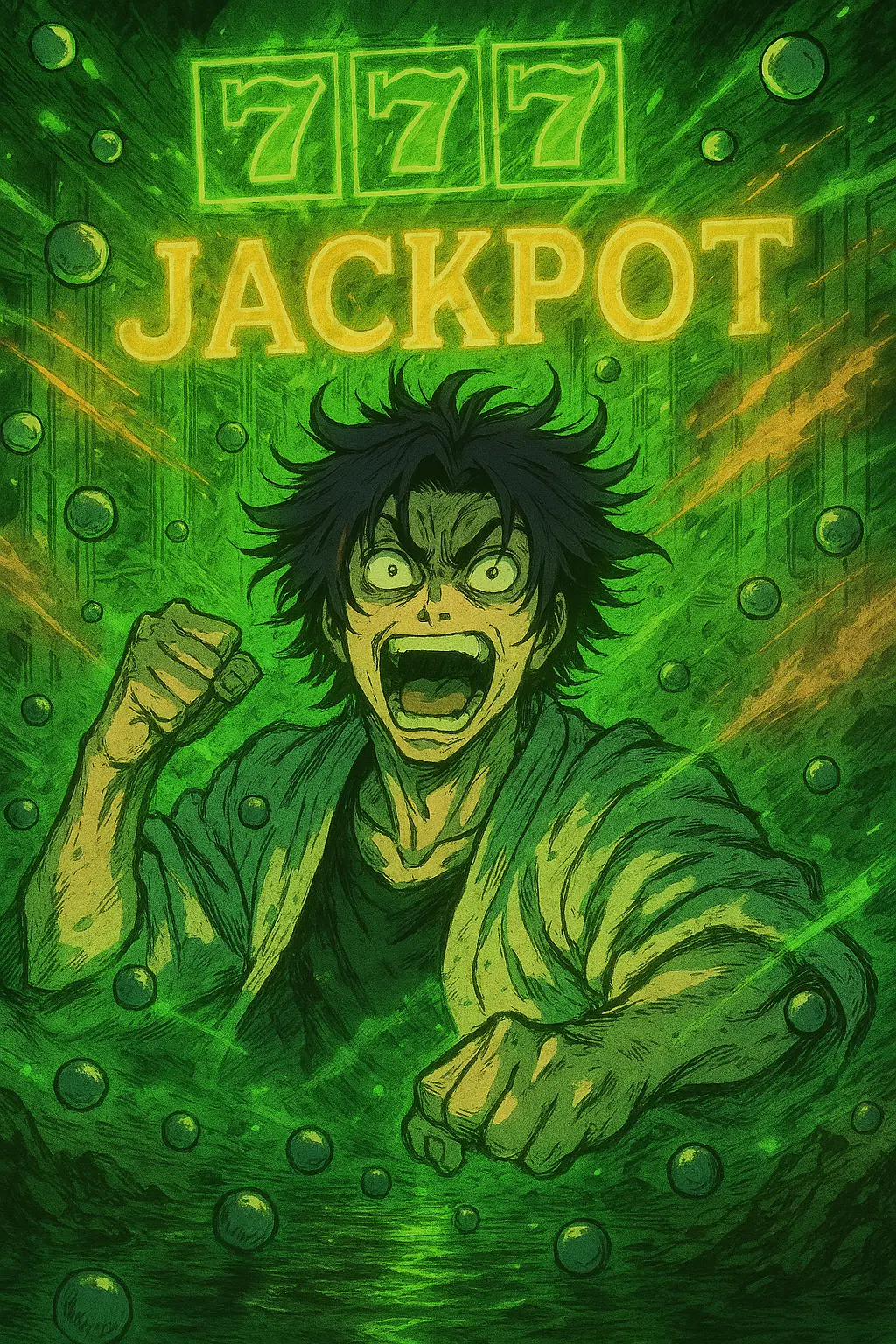
Risk as a Lifestyle
If Sukuna is the legal scholar, Kinji Hakari is the addict. His entire fighting style, technique, and Domain Expansion are built on the foundational concept of the Binding Vow: Probability.
Hakari’s Domain, Idle Death Gamble, is a literal pachinko machine. Most domains guarantee a hit. Hakari’s domain guarantees a game. He binds himself to the rules of a romance manga pachinko scenario. He cannot attack directly with lethal force inside the domain until the scenario plays out. He forces himself to endure the “spins.”
The Jackpot Vow:
- The Risk: Hakari is vulnerable while the game plays. He might not hit the jackpot. He could die while waiting for the numbers to align.
- The Reward: If he hits a Jackpot (probability 1/239), he gains Infinite Cursed Energy for 4 minutes and 11 seconds. During this time, his body reflexively heals any damage (Reverse Cursed Technique) automatically. He becomes effectively immortal.
Hakari loves the “fever.” He intentionally breaks parts of his own body or sacrifices defense to increase the “excitement” (probability) of the next spin. He treats Binding Vows not as contracts, but as wagers. “I’ll bet my left arm that the next spin is a jackpot.”
By risking his life so brazenly, the “risk factor” of his vows skyrockets, making his “luck” unnaturally high. He essentially bullies the Law of Equivalent Exchange into giving him what he wants because he is willing to lose everything on a single roll.
7. Case Study: Yuta Okkotsu (The Suicide Pact)

The Weight of Love
Yuta Okkotsu demonstrates the most raw, unrefined power of a Binding Vow in Jujutsu Kaisen 0. Facing Suguru Geto, who had unleashed a maximum Uzumaki utilizing thousands of curses, Yuta needed power that exceeded his limits.
The Vow: Yuta made a vow with the Vengeful Spirit Rika Orimoto. He said, “I’ll give you my future. I’ll give you my heart. I’ll give you my body. We’ll be together forever.” He offered his Life as the cost.
The Result: This is a “Death Binding Vow.” It removes the limiter completely. Because the cost is the ultimate price (death), the power output becomes infinite. Rika unleashed a beam of pure Cursed Energy that obliterated Geto’s strongest attack and half the city block.
The Twist: Yuta survived because Rika refused to take the payment. Or rather, the curse was broken before the payment could be collected. But the mechanics stand: The only way for a novice to overpower a Special Grade veteran like Geto was to put their own life on the scale. It is the ultimate “all-in” move.
8. Case Study: Miwa (The Ultimate Sacrifice)

The Tragedy of All-or-Nothing
While Sukuna and Yuta show the power of vows, Kasumi Miwa serves as a tragic warning of what happens when a novice tries to make a master’s bet without the chips to back it up.
In the Shibuya Incident, Miwa is overcome with grief and rage. Standing before the ancient sorcerer Kenjaku, she realizes she is hopelessly outmatched.
The Vow: Driven by pure emotion, Miwa creates a Binding Vow on the spot. She pledges: “I will never swing a katana again.” She sacrifices her entire future as a swordsman. Every potential slash she would ever make in her life is condensed into this one single strike.
The Result: She unleashes a Batto-sword drawing technique fueled by the entirety of her future potential. However, Kenjaku simply catches the blade with his bare hands. The blade snaps. Why? Because Potential is finite. A Binding Vow acts as a multiplier, but $0 \times 100$ is still $0$.
Or rather, $Low \times High$ is still not enough to reach $Infinity$. Miwa was a Grade 3/Grade 2 level sorcerer. Even by sacrificing her entire future sword skills, the total energy output generated wasn’t enough to breach the defenses of a Special Grade sorcerer with millennia of experience.
The Aftermath: The tragedy is not just that she failed, but that the Vow holds. In the Culling Games and subsequent arcs, Miwa can no longer use a sword. Note: While the vow specifically forbids ‘Katanas,’ the psychological weight of this failure effectively retired her from front-line combat, reducing her to a support role.
The system accepted her payment (her future), but the product she bought (the attack) wasn’t strong enough. This highlights the cruel impartiality of Binding Vows. The system does not care about your resolve, your emotions, or your “protagonist moment.” It only cares about the math. If the value of your sacrifice doesn’t meet the defense of your opponent, you lose everything.
9. Heavenly Restriction (A Forced Vow)
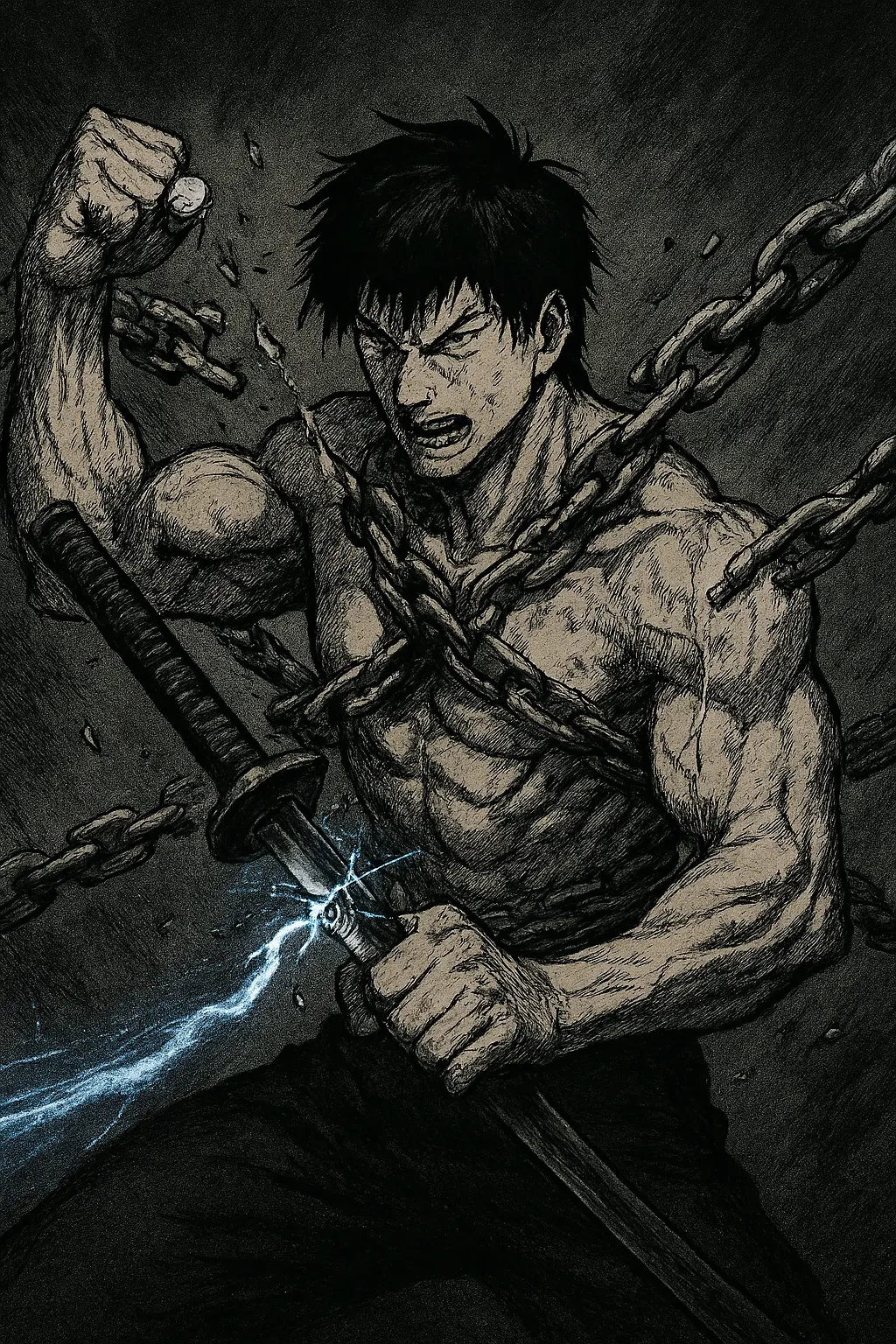
The Contracts Signed at Birth
While most Binding Vows are voluntary transactions, there exists a subclass of vows imposed by biology and fate: Heavenly Restrictions.
These are Binding Vows forced upon a sorcerer at birth. The sorcerer has no say in the matter; the “payment” is taken from them the moment they are born, and the “power” is thrust upon them.
The Case of Toji Fushiguro and Maki Zenin
Toji and (fully realized) Maki represent the extreme end of Heavenly Restriction.
- The Cost: Total elimination of Cursed Energy. They have zero. Not a drop. They are invisible to sensors, cannot use techniques, and cannot reinforce their bodies with energy.
- The Gain: Physical prowess that transcends humanity. They gain senses that can detect changes in air density, strength that can shatter special grade curses, and speed that rivals the fastest sorcerers.
This is the ultimate Binding Vow because it removes the user from the logic of Cursed Energy entirely. Because they have no Cursed Energy, they cannot be trapped in sure-hit domains (which rely on tracking energy). They become glitches in the matrix. The “binding” here is absolute.
They cannot “learn” Cursed Energy later. The sacrifice is permanent and total. Toji Fushiguro famously broke the gears of fate simply because he existed outside the machinery of Cursed Energy that controlled everyone else (like Gojo and Tengen).
This concept of “Body beating the Soul” reaches its peak in the Shibuya Incident. When a séance technique summons Toji’s body information into a grandson’s vessel, Toji’s Heavenly Restricted body is so potent that it overwrites the soul of the vessel. The body itself has a will, proving that in JJK, the flesh is as significant as the spirit.
The Case of Kokichi Muta (Mechamaru)
On the opposite end of the spectrum lies Mechamaru.
- The Cost: A body born without right arm and legs, skin so sensitive that moonlight burns it, and constant, excruciating chronic pain.
- The Gain: Vast Cursed Energy reserves and an output range that covers the entire country of Japan.
Mechamaru’s existence proves that Heavenly Restrictions are not always “fair” in the eyes of the holder. He would have gladly traded all that power for a healthy body. This reinforces the idea that Binding Vows are cold mechanisms of balance, devoid of morality. The universe saw a broken body and poured power into it to fill the void, regardless of whether the vessel wanted it.
10. Conclusion: The Smartest Fighter Wins

Jujutsu Kaisen is often praised for its complex power system, but the jewel in the crown is undoubtedly the Binding Vow. It shifts the genre from a “screaming contest” (who can yell louder and glow brighter) to a battle of Intellect and Risk Assessment.
The strongest characters in JJK—Sukuna, Kenjaku, Gojo, Hakari—are not just strong because they hit hard. They are strong because they understand the art of the deal. They approach combat like lawyers and gamblers.
- They know when to reveal their hand to boost a technique.
- They know when to sacrifice a limb to survive a domain.
- They know exactly what they are worth and what they can buy with that worth.
The tragedy of characters like Miwa or the triumphs of characters like Nanami teach us that in this world, desire alone is not enough currency. You must be willing to give something up.
Ultimately, Binding Vows serve as a grim reflection of reality. We all make binding vows. We sacrifice sleep for grades. We sacrifice health for money. We sacrifice freedom for security. Jujutsu Kaisen simply takes this universal human truth—that everything has a cost—and manifests it as a monster that can cut through space itself.
In the end, the sorcerer who wins isn’t just the one with the most cursed energy. It’s the one who negotiates the best contract with hell.